
Transgenic Cotton Plants Expressing Spidroin Gene Presenting Increased Fiber Quality
Introduction: Spider silks are the strongest and most elastic fibers known in the nature. Cotton is also one of the most important crops in the world which increasing the quality of its fibers is of great importance in the textile industry, so the production of longer and stronger cotton fibers is of great importance. The aim of this study was to produce transgenic cotton fibers containing MaSp1 cobweb protein. Material and Methods: A synthetic construct was designed based on a selected fragment of Latrodectushesperus MaSp1 gene. The gene was then cloned twice inpCAMBIA1304 binary vector using different restriction enzymes (NcoI and NheI; EcoR1 and NheI). Agrobacterium tumefaciens LBA4404strain was transformed by recombinant vectors which are used to transform cotton plants. The accuracy of the results was confirmed using PCR, hygromycin resistance gene and recombinant protein expression. Finally, the fiber strength of transgenic cotton was measured by two vectors. Result: MaSp1 synthetic gene was transferred to the plant meristem. The study of transgenic plants in the next generations confirmed the accuracy of gene transfer and expression of recombinant protein. Conclusion: Considering the economic role of cotton in the world and also having the third rank among the industrial plants of the country, this study succeeded in producing transgenic cotton plants expressing Masp1 protein with increased fiber quality
Introduction
Gossypium hirsutum as a member of the family Malvaceae is called cotton, that is the most economical and valuable natural fiber in the world [1]. Cotton is a valuable agricultural product with more than 8000 years of history which is native to tropical and subtropical regions of the world [2]. The multi-million dollar industry of production, marketing, and trade of cotton products has led to its high value, in such a way that it has received the title of white gold. Despite the progress of industry and technology in the textile industry and the production of synthetic fibers, cotton due to having stronger fibers and greater resistance to moisture than other fibers, still retains its position and importance [3]. Since fiber determines more than 90% of the value of cotton grain, fiber quaand genetic development of fiber yield is an important goal in fiber biotechnology [4]. Flity or this reason, increasing the yield and improving the quality of crops is one of the most important goals of genetic modifiers. Determining and identifying the best genetic modification method that has the highest efficiency, is not possible without considering genetic engineering techniques [5]. One of the methods that can be effective in strengthening the structure of cotton is the expression of protein of spider silks in cotton plants. Spider silk fiber as the strongest fiber known in the nature is a unique natural substance and is very important from the economic and biopharmaceutical point of view due to its significant mechanical properties [6]. Cobwebs are stronger, lighter, and more flexible than steel (live steel) based on the weight, which makes it an attractive model for commercial applications [6]. Also its high energy absorption can be ideal for making medical, sports or protective devices in war fields.
The aim of this study was to assess the permanent expression of synthetic protein based on the amino acid pattern of MaSp1 in cotton fibers and to investigate the expression pattern of the desired gene and its effect on the quality of cotton fibers. Using this method, it is possible to produce elastic and resistant fibers that transgenic cotton fibers possessing spider silk properties such as elasticity and tensile strength, which can be used in spinning and related industries.
Materials and Method
Construct Design and Synthesis
In order to study the expression of MaSp1 gene under control of two promoters, CaMV35S and GaRDL1, the gene fragment was synthesized by Shine Gene Company, China. Specific primers of MaSp1 gene fragment and hygromycin resistance gene were designed using Oligo7 software, Bio Edit 7.0.5.3 and NCBI site and synthesized by Sinaclon, Iran.
Transfer of masp1 gene construct to pCAMBIA 1304 binary vector
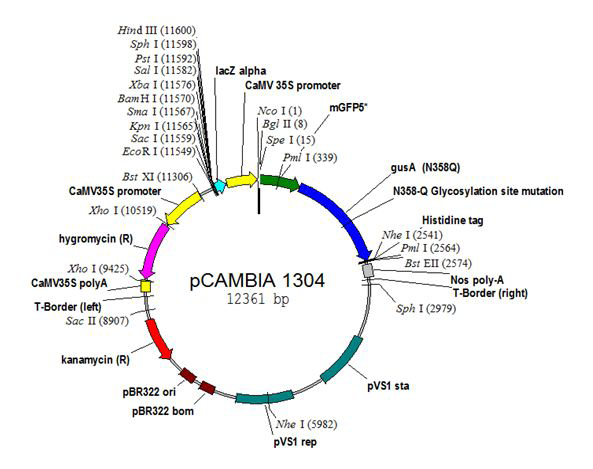
Ligation reaction and transfer to the competent cell: The puc57 + masp1 synthetic construct was cloned into E. coli DH5α cell using standard electroporation method [7]. E. coli DH5α transgenic cells were grown in LB Agar medium containing 50 mgL-1 kanamycin. Then, the recombinant plasmids were extracted by alkaline lysis method [8]. In order to transfer the masp1 gene to the pCAMBIA 1304 vector, first an enzymatic digestion reaction was performed on puc57 + masp1 and pCAMBIA 1304 using two restriction enzymes NheI and Nco1. Reaction mixtures were incubated at 37°C for 5 h. The reaction product was then run in a 1.2% agarose gel with a voltage of 50 for one hour to confirm the desired fragment. After extracting the desired fragment, the ligation processes were performed in both vectors. The recombinant vectors obtained from two restrict ion enzymes of EcoR1/NheI (pCAMBIA1304+MaSP1 [pCsP]), and NcoI/NheI(pCAMBIA1304+MaSP1 ([pC35sSP]) were then transferred to the E.coli DH5α competent cell using the standard heat shock method.
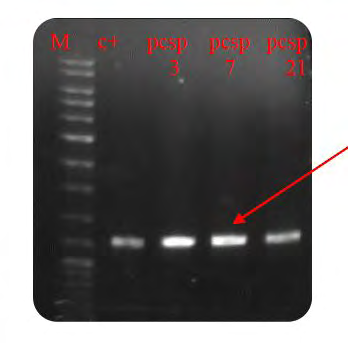
Recombinant cells were cultured on kanamycin- containing LB agar medium with a final concentration of 50 mg/Land then incubated overnight at ℃ 37°C. In order to confirm the presence of the gene, PCR reaction was applied using specific primers of MaSp1gene: spF: 5’-ctatccatgggaggtgcaggtcaa-3 and spR:5’- atatgctagcggctgctgctgctg-3’.To confirm the correctness of the ligation and total TDNA vector transmission, PCR reaction was conducted by specific primers of resistant kanamycin gene: HygF-ctcggagggcgaagaatctc and HygR-catatacgcccggagtcgtg. The PCR reaction for two vectors was conducted at 94°C for 5 min, followed by 30 cycles at 94ºC for 5 min, 65ºC for 30s, 65°C for 3s, and a further extension in 72°C for 5 min. The PCR product (5μL) was electrophoresed on 0.8% agarose gel for 30 minutes at 90 v.
Transfer of Plasmid into Agrobacterium
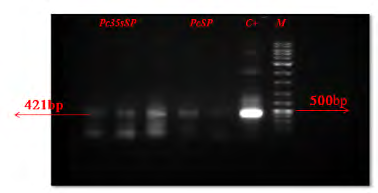
Since E. coli is not able to use for developing a transgenic plant, the competent cell of Agrobacterium tumefaciensLBA4404 was used. 200 μL of Agrobacterium tumefaciens LBA4404 competent cells allocated for two falcons equally, one of them was transformed using1 μg of pC35sSP plasmid and another were also transformed using 1 μg of pcSpvia standard heat shock method [9]. After growing colonies on YEP solid medium containing 50 mg/L kanamycin at 28°C for two days, single colonies were incubated in 1 ml YEP liquid medium containing 50 mg/L kanamycin at 28°C, under shaker operating conditions of 190 rpm, overnight. After plasmids extraction, for transgenic confirmation, PCR reaction was performed according to the conditions mentioned for MaSp1 gene using specific primer of MaSp1 gene (Figures 1-5)
Transient Transgenic Cotton Plant
Optimization of transient transgenic method: To optimize the transient expression of MaSp1 gene in pC35sSp construct, the cotton plant was transfected with Agrobacterium tumefaciens LBA 4404 containing non-transgenic pCAMBIA 1304 plasmid containing GFP marker gene.
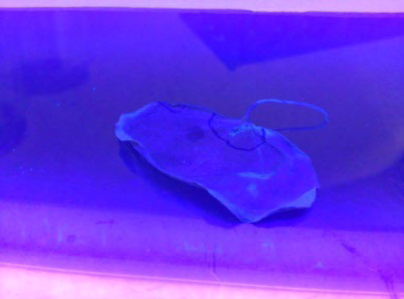
Iranian cotton cultivar seeds (Varamin) were planted for 10 days in soil containing peat moss and compost in greenhouse conditions to fully open its two cotyledons. Agrobacterium containing non-transgenic pCAMBIA 1304 plasmid containing GFP marker gene was cultured in YEP + Kanamycin (50 mg /L) at 28°C, at 190 rpm, for 24 hours to reach OD = 1. Then each plant was immersed in the infiltration solution (pH = 5.6) and transferred to a desiccator and a vacuum of 0/6 mbar was consecutively applied 5 times. Then it was kept in greenhouse conditions for 1 week. A number of cotton plants were also transfected with Agrobacterium solution containing plasmid pCAMBIA1304 by standard agroinfiltration method [10]. After one week, GFP expression was examined with an ultraviolet lamp. GFP fluorescence was observed in different leaf and hypocotyl regions of transgenic plants by both methods (Figure 6).
Investigation of permanent gene expression in transgenic cotton plants Shoot apical meristems (shoot apex): Varamin cultivated cotton seeds were delineated using concentrated sulfuric acid. After extensive rinsing, it was sterilized for 20 minutes in 10% sodium hypochlorite, and then washed 3 times with sterile distilled water. The sterile cotton seeds were then kept in a small amount of sterile distilled water for 3 days to germinate slightly for removing their shells. Transgenic Agrobacterium tumefaciens of LBA4404 strain containing pC35s Sp and pCSP were incubated in YEP medium (20 ML) for 2 days at 25°C (at 190 rpm) toreachan OD of 1. The transgenic Agrobacterium was then centrifuged (6000 rpm, 40°C, 15 min) and the supernatant were discarded. The same volume of it Infiltration medium (0.001% μlIGPAL; PH = 5.6) and 100 μlacetosyringone was added to the resulting precipitate. The germinated cotton seed pods were then removed.
Apex shoots were detached along with the hypocotyl using a scalpel to increase growth strength. The apex shoots were then suspended in the above solutions and exposed to ambient temperature for h1. Then they were incubated for 120 minutes on shaker with 120 rpm at c260 temperature followed by vacuum infiltration (P = 0.6 mbar and TIME = 1,2,3,4 min). After transfection, the above solutions were vacuumed again for 1 hour in an incubator shaker at 100 rpm (T = c260).
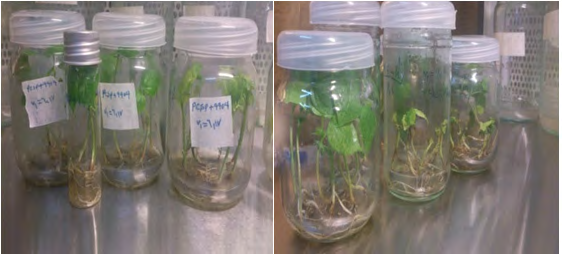
Then the transgenic apex shoots were cultured on solid MS medium containing%6 sucrose and incubated in the germinator at 23°C in the dark for 2-3 days. They were then washed with distilled water containing cefotaxime. The above cultures were then sub cultured on MS medium (GLU) containing 20 mg/L hygromycin for transgenic plants selection during 6-8 weeks (Figure 7). In order to confirm transgenic, DNA extraction from the leaves of the studied samples was performed using the standard method [10]. Then the PCR reaction was performed according to the conditions mentioned for MaSp1 gene using a specific primer of MaSp1 gene.
Hardening and Transfering of transgenic seedlings to pots: After transgenic samples were cultured on selection medium including hygromycin (20 mg/L) and Ms (Glu). Seedlings were grown for 1-2 months to enter the greenhouse environment on peat moss substrate. The transgenic seedlings were taken out of a sterile environment; their roots were washed and placed in pots. The pots were placed in a plastic box and the bottom was poured a little water. The boxes containing the plant were then covered with cellophane wrap for hardening. After 2 to 3 weeks, the seedlings were taken out of the box and placed in the greenhouse.
Confirmation of Masp1 protein production in transgenic cotton fibers Extraction of recombinant protein: Extraction of recombinant MaSp1 protein from cotton plant leaves was performed by combined method of Cervon and Favaron with slight changes [11, 12]. The leaves of the transgenic plant were frozen in liquid nitrogen after collection and placed in a freezer at minus 80° C until extraction. During the extraction, the leaves were first powdered in liquid nitrogen and then the obtained leaf powder was used to extract the protein.
500 μl of lysis buffer containing 15% sucrose, 60 mMTris- HCL, 2 mM EDTA and 0.1% SDS were added. The supernatant was centrifuged at 5000 rpm and 4°C for 15 minutes. The supernatant was transferred to a clean microtube and stored at minus 20°C (Figure 9) [13].
Western Blot Analysis
50 μg of the recombinant protein samples were electrophoresed on 12% acrylamide gel (SDS-PAGE). The protein bands were then transferred to PVDF membrane at 120 volts for 120 minutes. The membrane was coated for 90 minutes at room temperature using a blocking solution (1X PBS buffer containing 5% skim milk). After 3 washes using a wash buffer, nitrocellulose paper with anti-His-tag mice was incubated for 120 minutes at room temperature. After washing, the membrane was coated with anti-mouse IgG/HRP for one hour at room temperature. The membrane was then incubated in the staining solution. In order to stop staining, the membrane was placed in distilled water (Figure 10) [13].
Transgenic Plant Fiber Quality
After blooming and ripening of the fibers, the quality of fibers obtained from transgenic plants was assessed by HVI device based on the grams per tex at Amir Kabir University (Iran) (Table1).
Investigation of Gene Transfer in the First Generation (T1)
Seeds from transgenic T0 parent plants (pc35s Sp and PcSp) were cultured on MS + hy (15 ppm) medium to investigate permanent expression or gene transfer to the next generation. After growth, PCR reaction using specific primers of MaSp1 gene was used to confirm the presence of the gene (Figure 11)
Results
Examination ofMaSp1 gene ligation in pCAMBIA1304 vector using PCR reaction showed that 400bp MaSp1 gene was correctly cloned on the vector and transferred to E. coli DH5α cell (Figure 2).
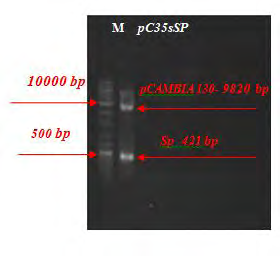
Double-digestion reaction on the recombinant pCAMBIA1304 vector produced two bands on the agarose gel, including the 9820 bp band of the pCAMBIA1304 vector and the 421 bp band of the MaSp1 gene, which was removed from the vector by enzymatic digestion using two Nco1 / NheI enzymes (Figure 3).
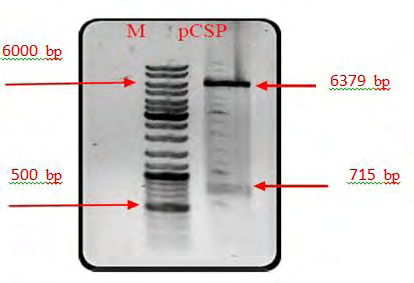
Double-digestion reaction on the recombinant pCAMBIA1304 vector produced two bands on the agarose gel, including the 6379bp band of the pCAMBIA1304 vector and the 715bp band of the PcSp gene, which was removed from the vector by enzymatic digestion using two EcoR1 / NheI enzymes (Figure 4).
Recombinant plasmid pCAMBIA1304 was extracted from Agrobacterium tuienmefacs cell and PCR reaction was performed using specific primers of MaSp gene. Finally, the results showed that the MaSp1 gene in pCAMBIA1304 vector was properly transfected in Agrobacterium tumefaciens competent cell (Figure 5).
Transient expression of non-transgenic vector 1304 in cotton leaves by agroinfiltration and vaccum infiltration method was performed by Agrobacterium containing pCAMBIA 1304 vector containing GFP gene. The results showed that the designed structure is suitable for permanent transformation (Figure 6).
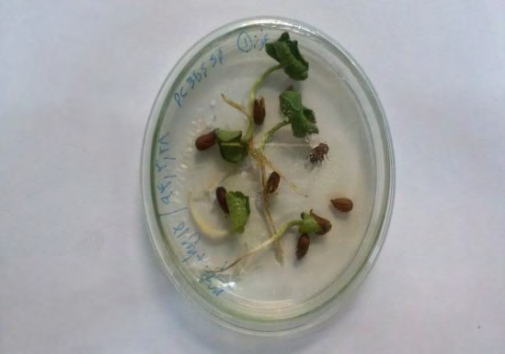
After ensuring the transient expression of the desired gene in cotton, they were transformed by infiltration method to obtain permanent expression of cotton seeds (Figure 7). After transgenic seeds were grown on MS (GLU) medium containing 20 mg/L hygromycin (plant selection) for selection, the subcultures were stored for 6-8 weeks. Survival of the samples indicated transgenicity and expression of hygromycin resistance gene (marker gene) in cotton (Figure 7).
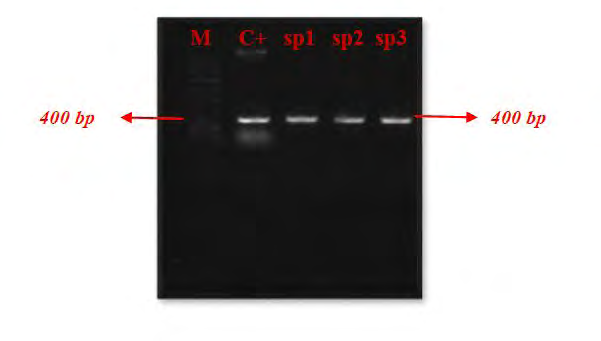
DNA extraction of part of the leaf was performed to evaluate the transgenicity of seedlings and PCR reaction was performed with specific primers of MaSp1 gene. Running the PCR product on the gel electrophoresis showed the presence of a band with a size of 400 bp, which indicates the presence of a structure in the genome of the samples (Figure 8).
SDS PAGE analysis was used to evaluate the total plant protein, which shows the extraction of high quality total protein and high concentration (Figure 9).
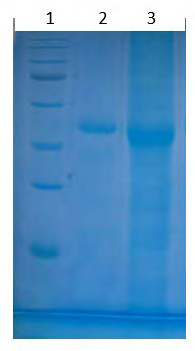
Western blotting on the recombinant protein showed that the MaSp1 gene was properly transformed and expressed in the cotton plant (Figure 10).

Cultivation of seeds from transgenic plants (F1) in selective culture medium containing hygromycin showed that transgenic plant F1 grew well on selective culture medium (Figure 11).
Measurement of fiber quality obtained from mature bolls of transgenic plants (Table 1) showed well that the strength and elasticity of fibers from transgenic plants increased significantly, which means that the MaSp1 gene is expressed in cotton plant (Table 1).
| Sample transgenic with PCsp | Degree of fiber quality | Sample transgenic with Pc35sSp | |
|---|---|---|---|
| 43/2 | Sample 1 | 45/3 | Sample 1 |
| 39 | Sample 2 | 37/24 | Sample 2 |
| 33/5 | Sample 3 | 30/5 | Sample 3 |
| 31/6 | Sample 4 | 30/8 | Sample 4 |
| 25/4 | Control Sample | 25/4 | Control Sample |
Table 1: Investigation of blooming and fiber ripening using HVI device.
Discussion
Cotton is one of the most important fiber crops in the world that, like other plants, is affected by biological and abiotic stresses [14] that has a lot of effects on the yield and quality of cotton fiber, on the other hand, the damage caused by biological stresses in this plant (76 to 85%) is much higher compared to other plants [14]. This plant is a good experimental model for studying plant cell elongation and cell wall biosynthesis [15]. Fiber also provides about 94% of the value of cotton and the properties and quality of cotton fibers, which include the length, durability and maturity of the fibers are very important in the textile industry [15]. Genetic engineering of fiber-related genes in cotton has led to improved length, strength, quality, color and fiber-related characteristics [16].
Li, et al. in 2004 [17] improved fiber quality by transferring the genes responsible for cellulose synthesis (acsA and acsB) from the gram-negative bacterium Acetobacter xylinum to cotton. Chen, et al. [18] also improved the fiber quality of fibroin protein from silkworm to cotton. Chen, et al. [18] stated that the special crystalline structure of this protein gives the cotton tissue elasticity and softness. In 2013, Bajwa, et al. [19] increased the fineness and strength of the fibers compared to the control cultivar by transferring a gene related to fiber synthesis from the source of Calotropis procera to a local cotton cultivar. The expression plasmids of pCAMBIA1304 are more economically available and adaptable than other expression plasmids in eukaryotes for various purposes. Due to the limitations in the use of mammalian cells, measures such as the use of strong promoters, appropriate signal peptides, optimization of gene codons, selected introns, and the transcriptional control region have been performed to improve them [20].
So far, efforts have been made to express fiber-specific genes under the control of fiber promoters to study biology, physiology, or improve fiber quality. The expression of many genes including GUS gene under the control of cotton A4 cellulose synthase promoter [21], cotton actin protein under the control of GhACT1 [21] GUS and GFP under the control of GhSCFP promoter [22] has been previously investigated. In this study, MaSp1 spider protein was specifically expressed in fibers and the whole plant.
Our study is the first study to investigate the expression of Masp1 protein in cotton plant fibers using the pCAMBIA1304 vector, while most studies in this field have been performed on tobacco plants. In 2004, Arpat, et al. Transferred the MaSP1 gene to tobacco cells using two different promoters, CaMV 35s enhancer and structural TcUP. This gene has been successfully transformed in tobacco and has led to the positive accumulation of transgenic plants in greenhouses and fields [23, 24]. In our study, the recombinant pC35sSpvector was used to transfer the Masp1 gene to the cotton plant, which produced a transgenic fiber with the Masp1 protein from the shoot apical meristem.
The two synthesized structures are a combination of the GaRDL-1 promoter nucleus with a length of bp302 and a synthetic sequence of the Masp1 gene with a length of 390 bp, and the other is a combination of the pC35s promoter and a synthetic sequence of the Masp1 gene that plays a key role in spider web structure. Since E. coli is not able to transfect the plant, Agrobacterium tumefaciens LBA4404 was transfected by pCSP and pC35sSP. The results confirm that the bacterium carrying the plasmid pCSP or pC35sSp is suitable for transferring the desired gene to plant tissue.
This study is the first successful approach in the regeneration of transgenic cotton fibers by cobweb protein. Cloning was successfully performed based on dual enzymatic digestion and PCR. The fibers produced in the transgenic cotton plant showed high temperature resistance, which causes the fibers to be purified by a simple and effective method. Cultivation of cotton apical meristem was successfully performed in vitro by obtaining fiber. Transgenicity of apical meristem by transgenic Agrobacterium and recombinant plasmid pc35sSp has been successful based on the results of measuring the quality of fibers obtained from transgenic plants.
Fiber growth and successful expression of the gene under the control of the fiber-specific promoter means that the promoter, which is the core part of the whole promoter, played an expressive role in this type of cotton. On the other hand, the gene with its specific animal structure was expressed in the cotton plant without codon optimization. Cultivation of first generation seeds in a selective medium containing hygromycin also indicates the transfer of the synthetic gene to the next generation and permanent gene expression.
Conclusion
Considering the economic role of cotton in the world and also having the third rank among Iranian industrial plants, this study succeeded in producing transgenic fiber with Masp1 protein from the apical meristem, which can pave the way for mass-production of the transgenic cotton with longer and stronger fibers.
References
-
Gutiérrez SP, Saberianfar R, Kohalmi SE, Menassaet R (2013) Protein body formation in stable transgenic tobacco expressing elastin-like polypeptide and hydrophobin fusion proteins. BMC Biotechnology 13(1): 40.
-
Vafaie TM, Talat F (2008) Quantitative and Qualitative Traits of Some Promising Cotton Cultivars in Varamin Region. Dynamic Agriculture 5(2): 245-256.
-
FaryadresV, Chyzry A, Morady E, Measure (2001) Compare the performance of cotton in Agriculture and Development 10(40).
-
Kim HJ, Williams MY, Triplett BA (2002) A novel expression assay system for fiber-specific promoters in developing cotton fibers. Plant Molecular Biology Reporter 20(1): 7-18.
-
Baogong J (2004) Optimization of Agrobacterium mediated cotton transformation using shoot apices explants and quantitative trait loci analysis of yield and yield component traits in upland cotton (Gossypiumhirsutum). LSU Doctoral Dissertations, pp: 1-106.
-
Ayoub NA, Garb JE, Tinghitella RM, Collin MA, Hayashi CY (2007) Blueprint for a High-Performance Biomaterial: Full-Length Spider Dragline Silk Genes. PLoS ONE 2(6): e514.
-
Potter H, Heller R (2018) Transfection by electroporation. Current protocols in molecular biology 121(1): 9-3.
-
Green MR (2014) Howard Hughes Medical Institute, University of Massachusetts Medical School; Joseph Sambrook, Peter MacCallum Cancer Institute,. Molecular Biology; Genetics, 4th (Edn), Laboratory Techniques: A Laboratory Manual) Melbourne, Australia, pp: 6-33.
-
Rahimzadeh M, Sadeghizadeh M, Najafi F, Arab S, Mobasheri H (2016) Impact of heat shock step on bacterial transformation efficiency. Molecular biology research communications 5(4): 257-261.
-
Behnam M, Davarpanah S J, KarimianR (2016) Designing and cloning a MaSp1-based synthetic gene in binary vector for transient expression in cotton fiber. Nova Biologica Reperta 3(3): 238-248.
-
Favaron F (2001) Gel detection of Allium porrumpolygalacturonase-inhibiting protein reveals a high number of isoforms. Physiological and Molecular Plant Pathology 58(6): 239-245.
-
Cervone F, De Lorenzo G, Degrà L, Salvi G, Bergami M (1987) Purification and Characterization of a Polygalacturonase-Inhibiting Protein from Phaseolus vulgaris L. Plant Physiol 85(3): 631-637.
-
Khezri G, Baghban Kohneh Rouz B, Ofoghi H, DavarpanahSJ (2020) Heterologous expression of biologically active Mambalgin-1 peptide as a new potential anticancer, using a PVX-based viral vector in Nicotianabenthamiana. Plant Cell, Tissue and Organ Culture 142: 241-251.
-
Baltes NJ, Hummel AW, Konecna E, Cegan R, Bruns AN, et al. (2015) Conferring resistance to geminiviruses with the CRISPR-Cas prokaryotic immune system. Nature plants 1(10).
-
Bakhsh A, Siddique S, Husnain T (2012) A molecular approach to combat spatio-temporal variation in insecticidal gene (Cry1Ac) expression in cotton Euphytica: Netherlands Journal of Plant Breeding 183(1): 65-74.
-
Shanmugaraj B, Bulaon CJI, Phoolcharoen W (2020) A Viable Platform for Recombinant Biopharmaceutical Production. Plant Molecular Farming 9(7): 842.
-
Chen H, Zhu LJ, Min SJ (2003) Progress of studies on fibroin genes of Bombyxmori. Bull Science Technology 19(3): 260-263.
-
Bajwa KS, Shahid AA, Rao AQ, Kiani MS, Ashraf MA, et al. (2013) Expression of Calotropisproceraexpansin gene CpEXPA3 enhances cotton fibre strength. Australian Journal of Crop Science 7(2): 206.
-
Zhang Z, Wang P, Luo X, Yang C, Tang Y, et al. (2019). Cotton plant defence against a fungal pathogen is enhanced by expanding BLADE-ON-PETIOLE1 expression beyond lateral-organ boundaries. Communications biology 2(1): 1-5.
-
Li XB, Fan XP, Wang XL, Cai L, Yang WC (2005) The cotton ACTINI gene is functionally expressed in fiber and participates in fiber elongation. Plant cell 17(3): 859-875.
-
Hou L, Liu JB, Yang X, Xiao YH, Luo M, et al. (2008) SCFP, anovel fiber-specific promoter in cottn-chinese Sci Bull 53: 2639-2645.
-
Mahajan C, Naser R, Gupta S (2020) Transient expression of SbDhr2 and MeHNL in Gossypium hirsutum for herbivore deterrence assay with Spodopteralitura. Journal of Cotton Research 3(1): 1-2.
-
Wang S, Wang JW, Yu N, Li CH, Luo B, et al. (2004) Control of plant trichome development by a cotton fiber MYB gene. Plant Cell 16(9): 2323-2334.
-
Li X, Wang XD, Zhao X, Dutt Y (2004) Improvement of cotton fiber quality by transforming the acsA and acsB genes into Gossypium hirsutum L. by means of vacuum infiltration. Plant cell reports 22(9): 691-697.
- Hydrogen Peroxide Scavenging by Methanolic Extracts of Coriander: An In Vitro Antioxidant Study
- Aromatherapy in Palliative Care: A Fragrant Quest for Relief
- Empowering Women, Securing Futures: Contraception’s Role in Socioeconomic Progress in India
- Effect of Crospovidone, Croscaramellose Sodium in Combination on the Drug Release of Anti diabetic Medication in Tablet Form
- Knowledge, Attitudes, Anxiety, and Preventive Behaviors Regarding Covid-19 Affliction among Healthcare Workers in Pakistan
- “Competitive Landscape and Brand Equivalents: Implications for ANDA (Abbreviated New Drug Application) Approval”