
Revolutionizing Drug Delivery: Targeted Approaches and Innovations for Effective Treatment
Targeted drug delivery, also referred to as intelligent drug delivery, is a therapeutic approach that aims to enhance drug concentration in specific regions of the body relative to others. There are two strategies employed to target drugs to specific organs or tissues: passive targeting and active targeting. Drug delivery vehicles are utilized to transport the medication to the desired location. An ideal drug delivery vehicle should have the ability to overcome barriers such as the blood-brain barrier. Conventional drug delivery systems distribute drugs throughout the body via the bloodstream, resulting in only a small fraction of the drug reaching the affected organ. Smart drug delivery focuses on delivering the drug to the absorption site while minimizing its distribution in other tissues. This approach enhances effectiveness and reduces side effects by evading the body’s defense mechanisms and non-specific distribution. When designing a targeted drug delivery system, various factors such as drug characteristics, side effects, administration route, target site, and the specific disease must be taken into consideration.
Misbah Ul Haq M*, Shahidulla SM, Atiqh Ur Rahman M, Munaf Ur Razzak M and Arif Uddin M
Introduction
Targeted drug delivery systems, also known as smart drug delivery, aim to optimize drug absorption in specific areas of the body [1]. The use of nanomedicine, which employs nanoparticle-mediated drug delivery, offers a promising approach to overcome the limitations of conventional drug delivery [1]. By loading drugs onto nanoparticles and targeting them to diseased tissue while avoiding healthy tissue, these systems can prolong, localize, and protect the interaction of drugs with the intended target [1]. In contrast to the conventional drug delivery system, which involves drug absorption across biological membranes, targeted drug delivery systems release drugs in a controlled dosage form [1]. This approach offers advantages such as reduced dosing frequency, more uniform drug effects, decreased side effects, and minimized fluctuations in circulating drug levels [1]. However, the high cost of targeted drug delivery systems poses challenges to their productivity and dose adjustment capabilities [1]. Targeted drug delivery systems have evolved to optimize regenerative approaches, relying on techniques that deliver therapeutic agents over an extended period to specific diseased areas [2]. This strategy ensures sufficient drug levels in the target tissue and limits potential harm to healthy tissue [2]. Collaboration among experts from various fields, including biologists, chemists, and engineers, is essential due to the highly integrated nature of drug delivery systems [2]. To enable targeted drug delivery, nanoparticles are utilized to avoid interactions with healthy tissue and are loaded with drugs to specifically target diseased tissue [3]. While the targeted delivery system releases drugs in a controlled dosage form, the conventional drug delivery system involves drug absorption across biological membranes [3]. The primary goal of targeted drug delivery systems is to protect the drug and facilitate its interaction with the diseased tissue while achieving localization and prolonged action [3].
In the development of new therapies, controlled microenvironments are crucial, and targeted drug delivery plays a vital role in minimizing side effects [4]. Advancements in regenerating cardiac tissue, for example, will greatly benefit from targeted drug delivery approaches [4]. Two main types of targeted drug delivery are active targeted drug delivery, which involves antibody drugs, and passive targeted drug delivery, which capitalizes on the enhanced permeability and retention effect [4]. Targeting methods in targeted drug delivery systems can be categorized into two approaches: active targeting and passive targeting [4]. Nanoparticles achieve the ability to specifically target diseased tissue using one or a combination of these methods [4].
Targeting Methods
Nanoparticles can selectively concentrate in the affected tissue by employing one or both of the subsequent targeting techniques: active targeting or passive targeting.
Active Targeting
Active targeting of drug-loaded nanoparticles enhances the efficacy of passive targeting, enabling more precise localization of nanoparticles to the desired site. There are various methods available for achieving targeting. One approach involves identifying the specific receptor type on the target cell, which allows for the selective targeting of diseased tissue in the body. Researchers can utilize cell- specific ligands that facilitate the binding of nanoparticles to cells expressing the corresponding receptor [5]. For instance, the conjugation of transferrin, a cell-specific ligand, to nanoparticles has proven successful in targeting tumor cells that possess transferrin-receptor mediated endocytosis mechanisms on their surface [5]. This strategy has shown increased uptake compared to non-conjugated nanoparticles. Another active targeting approach involves the use of magneto liposomes, which serve as contrast agents in magnetic resonance imaging [6]. By incorporating the desired drug into these liposomes and leveraging magnetic positioning, targeted drug delivery can be achieved. Additionally, nanoparticles can be designed to respond to specific triggers at the target site, such as pH-responsive substances [6]. Different regions of the body exhibit varying levels of acidity, allowing nanoparticles to deliver the drug payload upon encountering the appropriate pH conditions [7]. Another triggering mechanism relies on the redox potential, which can be altered in the vicinity of tumors due to hypoxia [8]. By modulating the redox potential, the release of the drug payload from the nanoparticles can be tailored to specific types of tumors. In addition to targeting methods based on receptor binding, magneto liposomes, and pH responsiveness, another promising approach involves exploiting the altered redox potential in the tumor microenvironment caused by hypoxia [8]. Tumors often exhibit areas of low oxygen concentration, leading to changes in the redox potential of the surrounding tissues. This unique characteristic can be leveraged to design nanoparticles that are specifically triggered by the altered redox environment. By incorporating redox-responsive components into the nanoparticle formulation, such as disulfide bonds or redox- active molecules, the release of the drug payload can be precisely controlled based on the redox potential within the tumor vicinity. The reducing conditions present in hypoxic regions trigger the cleavage or dissociation of these redox-responsive components, resulting in the release of the encapsulated drug [8]. This mechanism allows for the targeted delivery of therapeutics to specific types of tumors that exhibit distinct redox profiles. By harnessing the tumor microenvironment’s redox potential as a trigger, the release of the drug payload from nanoparticles can be tailored to match the specific conditions of different tumor types. This approach offers the advantage of localized drug delivery to the tumor site while minimizing off-target effects on healthy tissues. Moreover, it provides a more precise and controlled drug release strategy that can enhance the therapeutic efficacy and reduce potential side effects associated with systemic drug administration.
Passive Targeting
Passive targeting in drug delivery relies on the circulation time of the drug, which can be enhanced through the use of nanoparticle coatings [9]. One commonly employed coating material is Polyethylene Glycol (PEG), which renders the nanoparticle hydrophilic by allowing water molecules to bind to the oxygen molecules on the PEG surface through hydrogen bonding. This bonding creates a hydration layer around the nanoparticle, imparting it with antiphagocytic properties [9]. Consequently, the drug-loaded nanoparticle can remain in circulation for an extended period of time, benefiting from the hydrophobic interactions typically encountered in the Reticuloendothelial system [9]. Nanoparticles ranging from 10 to 100 nanometers in size have been shown to circulate systemically for a prolonged duration through passive targeting mechanisms [10]. By combining both passive and active targeting strategies, drug-loaded nanoparticles offer distinct advantages over conventional drugs. They can circulate throughout the body for an extended period, gradually accumulating at the target site through the use of cell-specific ligands, magnetic positioning, or pH-responsive substances. This targeted approach significantly reduces the side effects associated with conventional drugs since the drug-loaded nanoparticles primarily affect diseased tissues [9]. It is important to note that the field of nanotoxicology is emerging, raising concerns about the potential adverse effects of nanoparticles on both the environment and human health [11]. While drug-loaded nanoparticles offer numerous advantages in targeted drug delivery, careful consideration must be given to ensure their safety and mitigate any potential risks associated with their use. Furthermore, active targeting can also be achieved by employing peptide-based drug targeting systems, which utilize peptides specifically designed to bind to target cells or tissues [12]. These peptides can serve as ligands for the drug- loaded nanoparticles, facilitating their specific accumulation at the desired site (Figures 1 & 2).
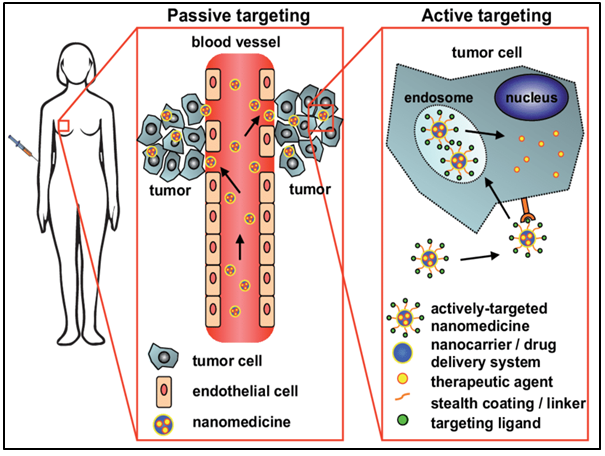
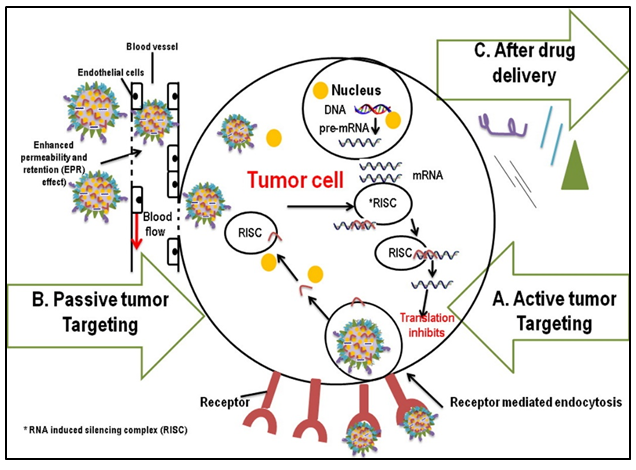
Figure 2: Targeted drug delivery to tumors. Passive targeting of nanomedicines is accomplished by virtue of their ability to extravasate out of the leaky tumor vasculature in combination with ineffective lymphatic drainage, also known as the enhanced permeability and retention (EPR) effect. Active targeting is realized by functionalizing nanomedicines with targeting ligands that recognize tumor cell markers to increase cell specificity and uptake.
Delivery Vehicles
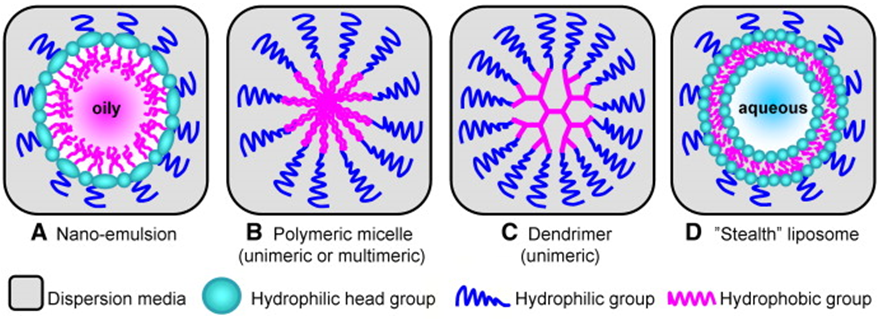
For effective drug delivery, an optimal vehicle should possess certain characteristics, including biodegradability, biocompatibility, non-immunogenicity, and non-toxicity, in order to evade recognition by the body’s defense mechanisms [12]. Various types of drug delivery carriers have been developed to fulfill these requirements. Examples of such carriers include liposomes, polymer micelles, dendrimers, lipoprotein-based drug carriers, nanoparticle drug carriers, and others.
Liposomes
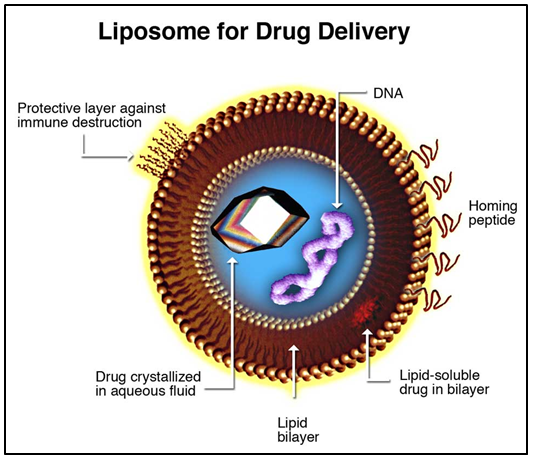
Liposomes are the most commonly utilized vehicles for targeted drug delivery [13]. Composed of phospholipids, liposomes are composite structures capable of encapsulating small molecules. While liposomes can vary in size, unilamellar liposomes, depicted here, are typically smaller and can be modified with targeting ligands on their surface. This enables their attachment and accumulation in diseased areas for effective treatment. Liposomes exhibit desirable properties such as non-immunogenicity, non-hemolytic nature, non-toxicity even with repeated injections, as well as biocompatibility and biodegradability. They can also be engineered to avoid clearance mechanisms, including reticulo endothelial system (RES), renal clearance, chemical or enzymatic inactivation, and more [14, 15]. In lipid- based nanocarriers coated with ligands, the payload can be collected in the hydrophobic shell or the hydrophilic interior, depending on the specific drug or contrast agent being transported [12]. However, liposomes face challenges related to rapid uptake and clearance by the RES system in vivo, as well as moderate stability in vitro. To overcome these limitations, polyethylene glycol (PEG) can be added to the liposome surface. Increasing the mole percentage of PEG on liposomes by 4-10% significantly prolongs their circulation time in vivo, from 200 to 1000 minutes [12]. PEGylation of liposomal nanocarriers extends their half-life and enhances the passive targeting mechanism typically associated with lipid-based nanocarriers [16]. Additionally, liposomes can be designed to exhibit controlled instability, allowing selective release of the encapsulated therapeutic agent in close proximity to the target tissue or cell in vivo. This nanocarrier system is commonly employed in anti-cancer therapies, where the acidic microenvironment of the tumor triggers drug release due to its reliance on glycolysis [16, 17] (Figure 3).
Micelles and Dendrimers
Polymeric micelles are an alternative type of drug delivery carrier that is employed to transport drugs with poor solubility [2]. Innovative techniques involving reactive polymers and hydrophobic additives have been developed to enable the formation of larger micelles with a range of sizes [18]. These micelles are composed of amphiphilic copolymers, which consist of both hydrophilic and hydrophobic monomer units. However, this approach offers limited control over the size and flexibility of the micelles. Dendrimers, on the other hand, are polymer-based drug delivery vehicles that exhibit unique characteristics. They possess a core structure with branching units at specific intervals, resulting in small, spherical, and highly compact nanocarriers [19]. Dendrimers offer promising advantages in terms of their structure and properties for drug delivery purposes (Figure 4).
Biodegradable Particles
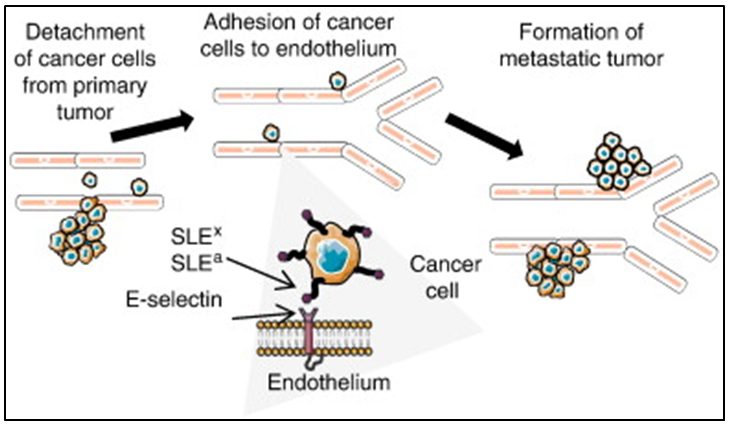
Biodegradable particles provide a method for controlled- release therapy, allowing the gradual release of therapeutic agents [20]. Moreover, these particles have the capacity to target diseased tissue. By incorporating ligands specific to P-selectin, endothelial selectin (E-selectin), and ICAM- 1, biodegradable particles have demonstrated the ability to adhere to inflamed endothelium [21]. Consequently, biodegradable particles can be employed for targeting cardiac tissue as well (Figure 5).
Artificial DNA Nanostructures
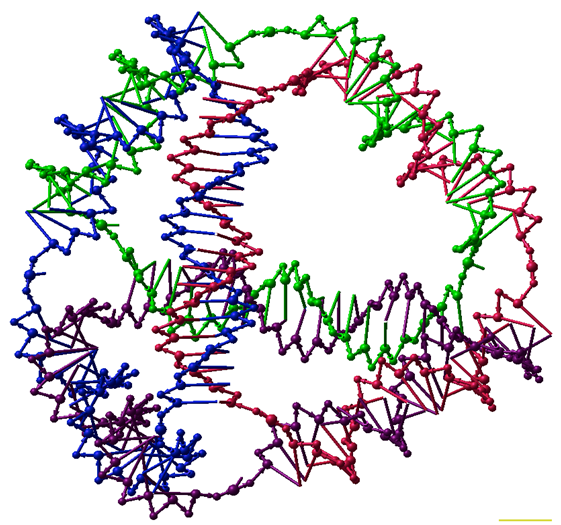
The advancements in DNA nanotechnology have paved the way for the creation of artificial nanostructures using nucleic acids, specifically DNA. These engineered structures, coupled with the development of DNA computing systems, have sparked interest in utilizing artificial nucleic acid nanodevices for targeted drug delivery. These techniques primarily employ DNA as a structural and chemical material, rather than relying on its biological function as a genetic information carrier. One promising approach involves the use of nucleic acid logic circuits that can serve as the central component of a drug delivery system, triggering the release of a drug in response to specific stimuli, such as a particular mRNA molecule [22]. Another breakthrough involves the construction of a DNA “box” with a controllable lid, achieved through the DNA origami technique. When in the closed state, this structure can encapsulate a drug, and it opens only in response to the desired stimulus, facilitating controlled drug release [23] (Figure 6).
Applications
Targeted drug delivery systems (TDDS) offer potential benefits in the treatment of various diseases, including diabetes, cardiovascular diseases, and especially malignant tumors. When targeting tumors, the passive approach utilizes the enhanced permeability and retention effect (EPR), which is specific to cancerous growth characterized by rapid blood vessel formation and poor lymphatic drainage. The increased blood vessel formation leads to large fenestrae, allowing enhanced entry of nanoparticles ranging from 100 to 600 nanometers in size. Furthermore, the inadequate lymphatic drainage prevents the efficient clearance of nanoparticles from the tumor, resulting in their prolonged retention and improved treatment efficacy [11]. Cardiovascular disease, identified as the leading cause of death in the United States, demands an optimal recovery system. Pharmaceutical drugs targeted directly to the diseased tissue hold the key to addressing this challenge. Targeted drug delivery systems can contribute to regenerative techniques aimed at curing heart disease. Stem cell therapy has emerged as a potential approach for regenerating myocardial tissue and restoring heart function, creating a favorable microenvironment before a myocardial infarction (MI). The progress made in targeted drug delivery to tumors has provided a foundation for the growing field of targeted drug delivery to cardiac tissue, opening new possibilities for treating cardiovascular diseases [12]. In the treatment of tuberculosis, liposomes have been explored as drug delivery vehicles. Conventional chemotherapy for tuberculosis often fails to achieve effective concentrations at the infection site. Liposomes offer improved penetration into macrophages and facilitate the accumulation of drugs at the infection site. Liposomal drug delivery can be administered intravenously or through inhalation, while oral intake is not recommended due to the breakdown of liposomes in the gastrointestinal system [24]. Doctors are also utilizing 3D printing to enhance the targeting of cancerous tumors. By printing a 3D plastic model of the tumor and filling it with drugs used in treatment, the flow of the liquid can be observed, allowing for modifications in drug doses and targeting locations. This approach enables more efficient and precise drug delivery to tumors [25].
Discussion
Targeted drug delivery systems (TDDS) have emerged as promising approaches for the treatment of various diseases, including diabetes, cardiovascular diseases, and malignant tumors. These systems offer the potential to enhance therapeutic efficacy, minimize side effects, and improve patient outcomes. In this discussion, we will explore the application of TDDS in these disease areas, highlighting the advantages, challenges, and future prospects of targeted drug delivery.
One of the most important applications of targeted drug delivery is in the treatment of malignant tumors. Traditional cancer treatments often suffer from limited selectivity, leading to off-target effects and systemic toxicity. TDDS provides an opportunity to specifically target tumor tissues, increasing drug accumulation and reducing adverse effects on healthy tissues. The passive targeting approach takes advantage of the enhanced permeability and retention (EPR) effect exhibited by tumors. The EPR effect is characterized by the presence of leaky blood vessels and impaired lymphatic drainage in tumor tissues, allowing for the accumulation of nanoparticles and drug carriers. This phenomenon enables increased nanoparticle entry into tumors and prolonged retention, leading to improved treatment outcomes [11]. In addition to passive targeting, active targeting strategies have been developed to enhance the specificity of drug delivery to tumor tissues. Active targeting involves the use of ligands or targeting moieties that recognize specific receptors or biomarkers on tumor cells. These ligands can be attached to the surface of drug carriers, such as liposomes or nanoparticles, enabling selective binding and internalization into tumor cells. Various targeting ligands, such as antibodies, peptides, and small molecules, have been explored to achieve site-specific drug delivery. For example, transferrin, a cell-specific ligand, has been successfully conjugated to nanoparticles for targeting tumor cells that express transferrin receptors [5]. This active targeting approach enhances the uptake of drug-loaded nanoparticles and improves treatment efficacy compared to non-conjugated nanoparticles. Cardiovascular diseases, including myocardial infarction (MI) or heart attack, represent a significant health burden globally. The effective delivery of therapeutic agents to the diseased cardiac tissue is crucial for promoting tissue regeneration and restoring heart function. Stem cell therapy has emerged as a potential strategy for myocardial tissue regeneration. Targeted drug delivery systems can complement stem cell therapy by providing localized and sustained release of therapeutic agents. By incorporating drugs into drug carriers, such as liposomes or nanoparticles, and targeting them specifically to cardiac tissue, it is possible to enhance the delivery of therapeutic agents to the site of injury. This targeted approach can improve the efficacy of drug therapy and promote the regeneration of myocardial tissue [12]. The development of targeted drug delivery systems for the treatment of tuberculosis (TB) addresses the challenges associated with the conventional treatment of this infectious disease. TB chemotherapy often fails to achieve sufficient drug concentrations at the infection site, leading to suboptimal treatment outcomes. Liposomes, as drug delivery vehicles, offer advantages in terms of improved penetration into macrophages and enhanced drug accumulation at the infection site. Liposomal drug delivery can be administered intravenously or through inhalation, providing options for systemic or localized drug delivery. However, oral intake of liposomes is not recommended due to their breakdown in the gastrointestinal system [24]. The application of targeted drug delivery systems in TB treatment holds promise for improving drug efficacy and reducing treatment duration.
Furthermore, technological advancements, such as 3D printing, have revolutionized the field of targeted drug delivery. 3D printing allows for the precise fabrication of drug delivery systems, enabling the customization of drug carriers according to specific patient needs. In the context of cancer treatment, 3D printing has been utilized to create plastic 3D models of tumors, simulating the tumor microenvironment. By filling these models with drugs used in treatment, the flow of the liquid can be observed, facilitating the optimization of drug doses and targeting locations. This approach offers a novel way to tailor drug delivery strategies and optimize treatment outcomes [25]. While targeted drug delivery systems hold tremendous potential, there are still challenges that need to be addressed. One of the key challenges is the optimization of drug release kinetics. Achieving controlled and sustained release of therapeutic agents from drug carriers is essential for maintaining therapeutic concentrations at the target site over an extended period. Various approaches, such as stimuli-responsive drug release systems and nanocarriers with tunable properties, are being explored to address this challenge. Another important consideration is the safety and biocompatibility of targeted drug delivery systems. The materials used in drug carriers should be non-toxic, biodegradable, and non-immunogenic to minimize adverse effects on the body. Extensive research is being conducted to develop biocompatible materials and evaluate their long-term safety profiles. Additionally, the potential impact of drug carriers on the environment should also be taken into account, with the field of nanotoxicology focusing on assessing the environmental and health risks associated with nanoparticle-based drug delivery systems.
In conclusion, targeted drug delivery systems offer great promise in the treatment of various diseases, including cancer, cardiovascular diseases, and infectious diseases. Passive targeting exploits the unique characteristics of tumor tissues, such as the enhanced permeability and retention effect, to improve drug accumulation and retention in tumors. Active targeting strategies enable the specific delivery of therapeutic agents to diseased tissues through the use of ligands that recognize biomarkers on target cells. The application of targeted drug delivery systems in cardiovascular diseases and tuberculosis addresses the challenges associated with conventional treatments, providing opportunities for improved therapeutic outcomes. Technological advancements, such as 3D printing, further contribute to the development of personalized and optimized drug delivery strategies. While significant progress has been made in this field, further research is needed to overcome challenges related to drug release kinetics, biocompatibility, and environmental impact. The continuous exploration and refinement of targeted drug delivery systems hold the potential to revolutionize the field of medicine, providing more effective and safer treatments for patients worldwide.
References
-
Müller R., Keck C (2004) Challenges and solutions for the delivery of biotech drugs – a review of drug nanocrystal technology and lipid nanoparticles. Journal of Biotechnology 113(1–3): 151-170.
-
Saltzman WM, Torchilin VP (2008) Drug delivery systems. AccessScience, McGraw-Hill Companies.
-
Trafton A (2009) Tumors Targeted Using Tiny Gold Particles. MIT Tech Talk 53(4): 4-4.
-
Bertrand N, Leroux JC (2011) The journey of a drug carrier in the body: an anatomo-physiological perspective. Journal of Controlled Release 161(2): 152- 163.
-
Galvin P, Thompson D, Ryan KB, McCarthy A, Moore AC, et al. (2011) Nanoparticle-Based Drug Delivery: Case Studies for Cancer and Cardiovascular Applications. Cell Mol Life Sci 69: 389-404.
-
Noyhouzer T, L’Homme C, Beaulieu I, Mazurkiewicz S, Kuss S, et al. (2016) Ferrocene-Modified Phospholipid: An Innovative Precursor for Redox-Triggered Drug Delivery Vesicles Selective to Cancer Cells. Langmuir 32(17): 4169-4178.
-
Mitra AK, Kwatra D, Vadlapudi AD (2015) Drug Delivery. 1st(Edn.), Jones & Bartlett Learning, pp: 480.
-
De Jong WH, Borm PJA (2008) Drug Delivery and Nanoparticles: Applications and Hazards. Int J Nanomedicine 3(2): 133-149.
-
Sagnella S, Drummond C (2012) Drug Delivery: A Nanomedicine Approach. Australian Biochemist 43(5): 5-8.
-
Vlerken LEV, Vyas TK, Amiji MM (2007) Poly(Ethylene Glycol)-Modified Nanocarriers for Tumor-Targeted and Intracellular Delivery. Pharm Res 24(8): 1405-1414.
-
Gullotti E, Yeo Y (2009) Extracellularly Activated Nanocarriers: A New Paradigm of Tumor Targeted Drug Delivery. Mol Pharm 6(4): 1041-1051.
-
Scott RC, Crabbe D, Krynska B, Ansari R, Kiani MF (2008) Aiming for the heart: targeted delivery of drugs to diseased cardiac tissue. Expert Opinion on Drug Delivery 5(4): 459-470.
-
Cobleigh M, Langmuir VK, Sledge GW, Miller K, Haney L, et al. (2003) A phase I/II dose-escalation trial of bevacizumab in previously treated metastatic breast cancer. Semin Oncol 30(16): 117-124.
-
Seidman A, Hudis C, Pierri MK, Shak S, Paton V, et al. (2002) Cardiac Dysfunction in the Trastuzumab Clinical Trials Experience. Journal of Clinical Oncology 20(5): 1215-1221.
-
Brufsky A (2009) Trastuzumab-Based Therapy for Patients With HER2-Positive Breast Cancer. Am J Clin Oncol 33(2): 186-195.
-
Lee JH, Yeo Y (2015) Controlled drug release from pharmaceutical nanocarriers. Chemical Engineering Science. Pharmaceutical Particles and Processing 125: 75-84.
-
Cho K, Wang X, Nie S, Chen ZG, Shin DM, et al. (2008) Therapeutic nanoparticles for drug delivery in cancer. Clinical Cancer Research 14(5): 1310-1316.
-
Macosko CW Polymer Nanoparticles Improve Delivery of Compounds. University of Minnesota Office for Technology Commercialization, USA.
-
Pili R, Rosenthal MA, Mainwaring PN, Srinivas S, Dreicer R, et al. (2010) Phase II Study on the Addition of ASA404 (Vadimezan; 5,6-Dimethylxanthenone-4-Acetic Acid) to Docetaxel in CRMPC. Clin Cancer Res 16(10): 2906-2914.
-
Homsi J, Simon GR, Garrett CR, Springett G, Burton MK, et al. (2007) Phase I Trial of Poly-L-Glutamate Camptothecin (CT-2106) Administered Weekly in Patients with Advanced Solid Malignancies. Clin Cancer Res 13(19): 5855-5861.
-
Vogel VG, Costantino JP, Wickerham DL, Cronin WM, Cecchini RS, et al. (2006) Effects of Tamoxifen vs Raloxifene on the Risk of Developing Invasive Breast Cancer and Other Disease Outcomes: The NSABP Study of Tamoxifen and Raloxifene (STAR) P-2 Trial. JAMA 295(23): 2727-2741.
-
Kahan M, Gil B, Adar R, Shapiro E (2008) Towards Molecular Computers that Operate in a Biological Environment. Physica D: Nonlinear Phenomena 237(9): 1165-1172.
-
Andersen ES, Dong M, Nielsen MM, Jahn K, Subramani R, et al. (2009) Self-assembly of a nanoscale DNA box with a controllable lid. Nature 459(7243): 73-76.
-
Liposomes as Drug Delivery Systems for the Treatment of TB (2011) Medscape from WebMD.
-
Hirschler B (2014) 3D Printing Points Way to Smarter Cancer Treatment. Reuters.
- Hydrogen Peroxide Scavenging by Methanolic Extracts of Coriander: An In Vitro Antioxidant Study
- Aromatherapy in Palliative Care: A Fragrant Quest for Relief
- Empowering Women, Securing Futures: Contraception’s Role in Socioeconomic Progress in India
- Effect of Crospovidone, Croscaramellose Sodium in Combination on the Drug Release of Anti diabetic Medication in Tablet Form
- Knowledge, Attitudes, Anxiety, and Preventive Behaviors Regarding Covid-19 Affliction among Healthcare Workers in Pakistan
- “Competitive Landscape and Brand Equivalents: Implications for ANDA (Abbreviated New Drug Application) Approval”