
The Impact of the Covid-19 Pandemic on Syrian Refugees and Turkish Citizens in Turkey
There is no doubt that the pandemic has already led to devastating social, economic and political effects that left deep and longstanding scars. In the longer term, we should look at ways to better prevent and manage such crises and ensure that the world makes full use of what we will learn from this one. Therefore studies based on real data on Covid-19 are important to strengthen the fight against the pandemic. This is extremely useful for developing an integrated global response as an investment for our future. For this reason, we carried out this research to explore the relationship between SARS-CoV-2 infection and socio-demographic factors, severity of disease, mortality rates and comorbidity on 26,835 inpatients and 47, 875 outpatients with Covid-19, whom 2066 (7.7% of inpatients) and 2090 (4.4% of outpatients) were Syrian refugees hospitalized and admitted to the outpatient clinics located in 6 different regions of the country, between March 2020 and June 2022. The main objective of this research is to explore the differences of socio- emographic factors, comorbidities, treatment schemes etc. between Syrian refugees and Turkish citizen as well as identified the associations between co-morbidities and clinical outcomes, and its impact on the mortality of inpatients with Covid-19. The research also investigated the frequency of SARS-CoV-2 infection symptoms, the treatment applied, length of stay in ICU and hospital, clinical symptoms and radiological findings, the impact of comorbidity, vaccination status and other factors on the course of Covid-19 diagnosed patients among two different populations. Out of 4.395 Syrian refugees and patients with other nationalities whom diagnosed as Covid-19; 50.7 % are found to be male 49.3 % female among Syrian refugees. The mean age is found to be 33.1 among Syrian refugees while this is 52.5 for Turkish Citizen and the relationship between age groups and nationality is determined statistically significant. Having at least one Covid symptoms is 57% among Syrian refugees while this has been determined as 66.9% among Turkish citizen. It was found that out of 69.815 Turkish citizen 39.1 % and 4.156 Syrian refugees 22.3 % with Covid-19 have co-morbid conditions. It was determined that 11.1% of Syrian patients with COVID-19 were smokers. In Turkish citizen patients, this rate is 8.5%. The mortality rate among Syrian patient was determined as 13.0%, while this amount is 15.1% among Turkish patients.
Introduction
The coronavirus COVID-19 pandemic is the defining global health crisis of our time and the greatest challenge we have faced since World War Two. Since its emergence in Asia in 2019, the virus has spread to every continent except Antarctica. There is no doubt that the pandemic has already led to devastating social, economic and political effects that will leave deep and longstanding scars. Especially refugees are among the most unguarded groups in terms of healthcare because of difficult living conditions, sheltering and nutrition problems, difficulties at getting healthcare and social services and violence [1].
The ongoing Syrian civil war, which began in 2011, has led to one of the largest refugee crises in the world. The Syrian conflict has displaced millions of people, both internally within Syria and to neighboring countries and beyond and millions of Syrians have sought refuge in neighboring countries like Turkey, Lebanon, Jordan, and Iraq. Turkey is one of the primary host countries for Syrian refugees. Turkey is positioned as a bridge between prosperous European countries and some Middle East and Asia countries suffering from conflicts and instability. Today, Turkey stands out as an immigration country rather than an emigration or a transit country. According to the global humanitarian aid report, Turkey is the first country which supported the refugees internationally and hosts more than 4 million of Syrian refugees as of September 2023. Many Syrian refugees in Turkey are granted Temporary Protection status, which allows them to reside in Turkey and access certain services, such as healthcare and education. Syrian refugees in Turkey live in a variety of settings, including urban areas, official refugee camps, and informal settlements. Some live in rented apartments, while others reside in collective or informal settlements [2].
Syrian refugees with Temporary Protection status have access to healthcare services in Turkey, including primary care and benefit from all healthcare services for free in their provinces of residence, just like nationals. If necessary, they are transferred to university or private hospitals. In such cases, they can benefit from the healthcare services for free as well. Medication is provided in pharmacies for free. Even, those without TP (Temporary Protection) status can benefit from immunization and emergency services for free. Syrian children under temporary protection are vaccinated according to “National Immunization Schedule”. Complementary and supporting doses are administered when necessary [3]. Efforts are exerted to address infectious diseases that are common among Syrians (ie, leishmaniosis, tuberculosis, malaria).However, there may be barriers related to language, transportation, and specialized care. Syrian refugees often face high levels of stress, trauma, and mental health challenges due to the experiences they’ve endured [4].
The pandemic is much more than a health crisis and it is also an unprecedented socio-economic crisis. In the longer term, we should look at ways to better prevent and manage such crises and ensure that the world makes full use of what we will learn from this one.
Therefore studies based on real data on Covid-19 are important to strengthen the fight against the pandemic. This is extremely useful for developing an integrated global response as an investment for our future.
Methodology
The study is carried out on 26,835 inpatients and 47, 875 outpatients with Covid-19, whom 2066 (7,7% of inpatients) and 2090 (4.4% of outpatients) were Syrian refugees hospitalized and admitted to the outpatient clinics located in 6 different regions of the country, between March 2020 and June 2022. The main objective of this research is to explore the differences of socio-demographic factors, comorbidities, treatment schemes etc. between Syrian refugees and Turkish citizen as well as identified the associations between co- morbidities and clinical outcomes, and its impact on the mortality of inpatients with Covid-19 [5]. The dependent variable is the country of residence, the independent variables are socio-demographic characteristics, date of onset of the SARS-CoV-2 infection, fever status, symptoms of COVID-19, pre-existing health conditions and comorbidities, radiological findings, treatment received and course of the disease. The data was extracted from the health information management systems of all hospitals. There are effective information management systems and effective digital platforms in all the hospitals. Those patients have been followed up symptomatically every day. Permission from the University and Ministry of Health and ethics committee approval were obtained for the study. SPSS Version 24 package program was used for statistical analysis. As per personal data protection law, all patient information has been anonymized and masked. In addition, the data taken from the hospital information systems and from different modules in the systems were merged with the help of a computer engineer, distributed according to the dependent and independent variables. Any missing information was collected by evaluating the patient files and other hospital data collection systems one by one, and the reliability and accuracy of the data were ensured [6].
Findings
The data analyzed in this paper pertain to a total of 69.815 Turkish citizen, 239 patients with other nationalities and 4.156 Syrian refugees whom diagnosed as Covid-19.
COVID Cases and the Sociodemographic Characteristics
Out of 69.815 Turkish citizen and 4.395 Syrian refugees and patients with other nationalities whom diagnosed as Covid-19; 50.7 % are found to be male 49.3 % female among Syrian refugees while this rate is 49.0% male, 51 % female among other nationalities and 54.0% male, 46% female for Turkish citizens. The mean age is found to be 33.1 among Syrian refugees while this is 52.5 for Turkish Citizen and the relationship between age groups and nationality is determined statistically significant (Figure 1).
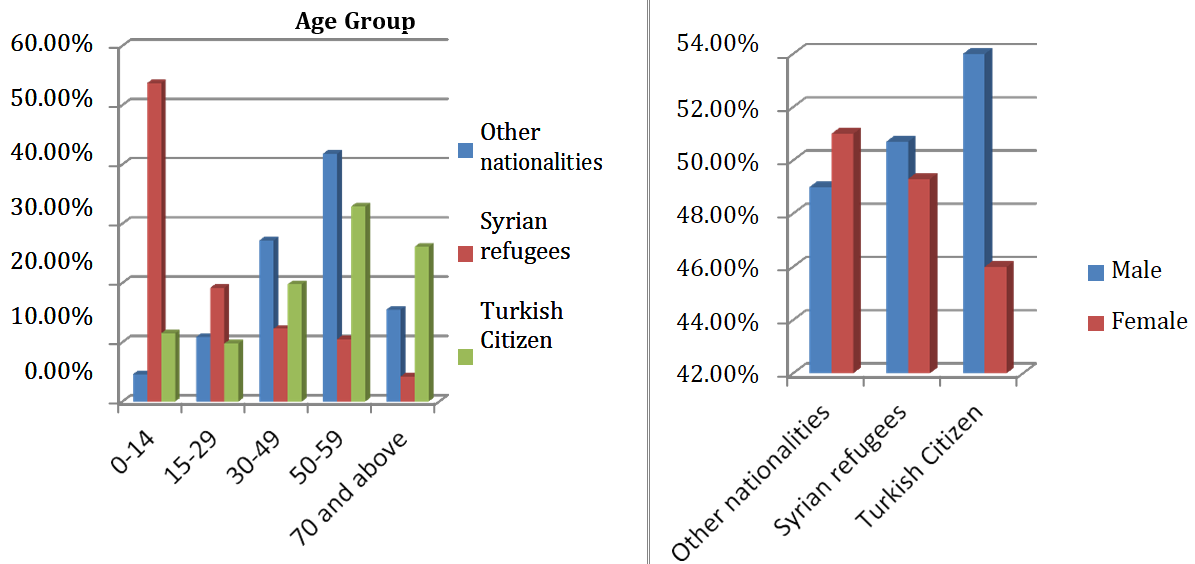
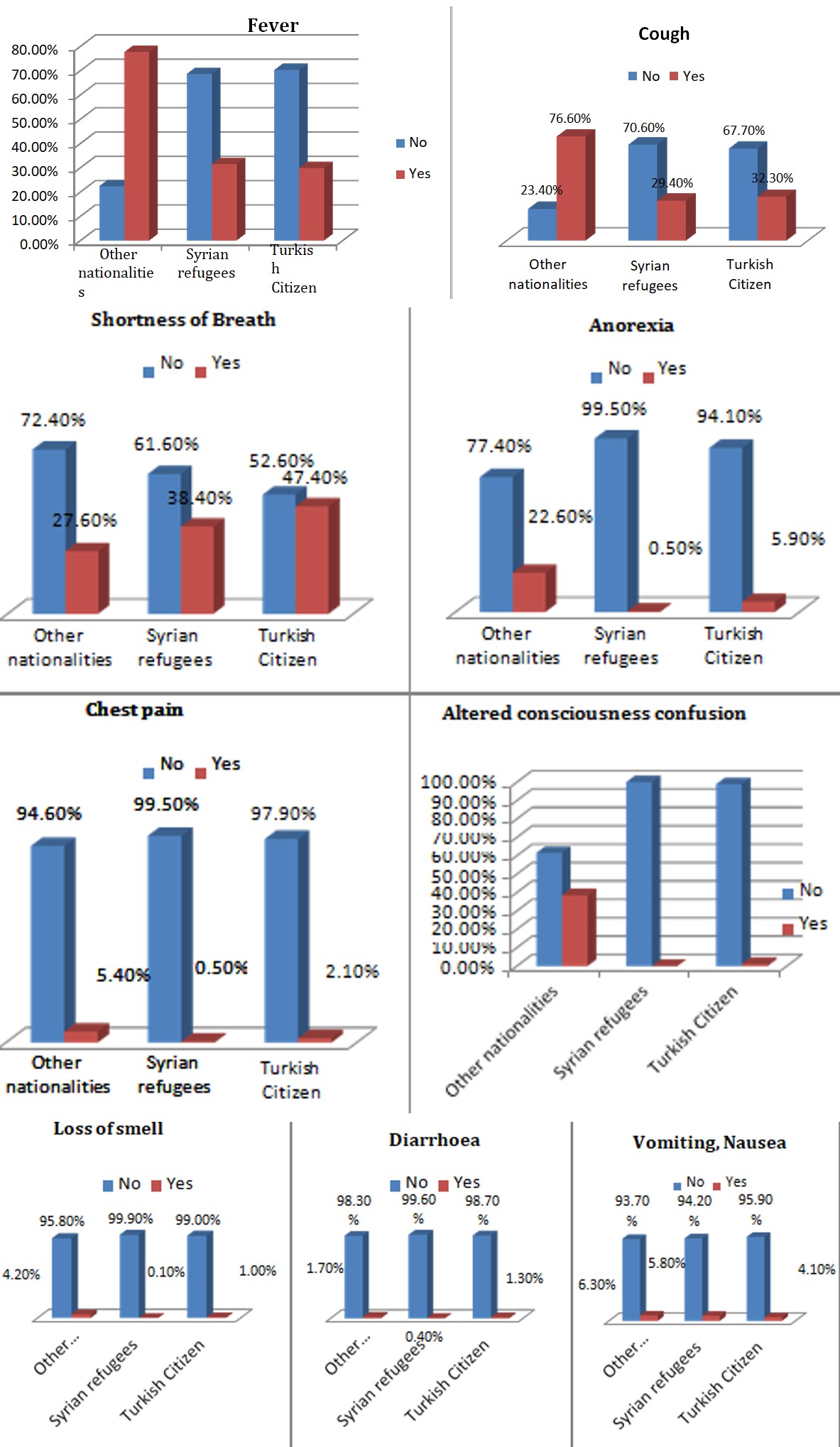
Some of the common symptoms observed among Syrian refuges apart from fever (31.4%) are, cough (29.4%) shortness of breath (38.4 %), vomiting/nausea (5.8 %), and headache (0.59 %). The various symptomatic expressions contracting the infection are presented in Figures 2 & 3.
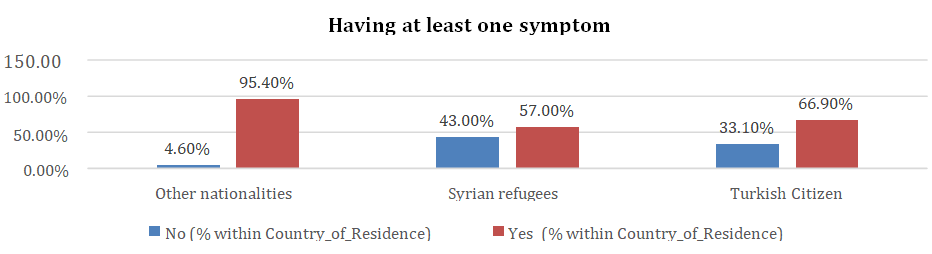
As seen in Figure 2, having at least one Covid symptoms is 57% among Syrian refugees while this has been determined as 66.9% among Turkish citizen. The distribution of the symptoms is presented in Figure 3.
Comorbidity among Syrian Refugees with COVID-19
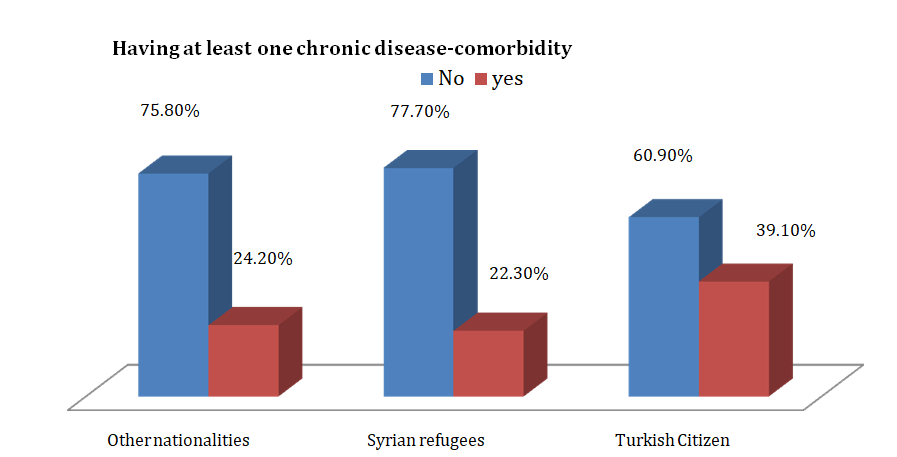
It was found that out of 69.815 Turkish citizen 39.1 %
and 4.156 Syrian refugees 22.3 % with Covid-19 have co- morbid conditions. This percentage is 24.2% in the patients with other nationalities (Figure 4).
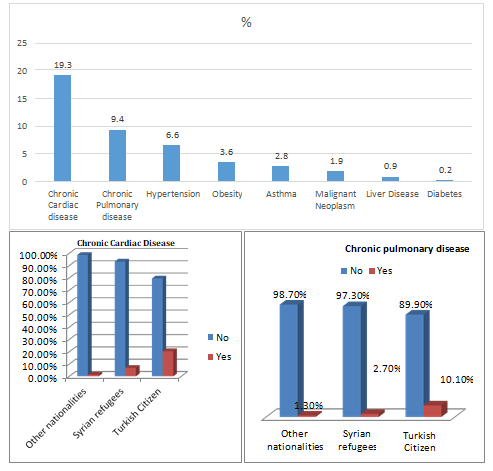
It was assessed that chronic cardiac disease is the most comorbid condition (19.3%) followed by chronic pulmonary disease and hypertension among Syrian patients, while this was determined as hypertension and asthma among Turkish patients [7]. There were also a few patients with obesity, asthma, chronic liver disease and malignant neoplasm among Syrian refugees with Covid-19 (Figure 5 & Table 1).
| Country_of_Residence | ||||||
|---|---|---|---|---|---|---|
| Other nationalities | Syrian refugees | Turkish Citizen | Total | |||
| Having at least one chronic disease | No | N | 179 | 1606 | 14849 | 16634 |
| % | 75.80% | 77.70% | 60.90% | 62.40% | ||
| Yes | N | 57 | 462 | 9521 | 10040 | |
| % | 24.20% | 22.30% | 39.10% | 37.60% |
Table 1: Distribution of Length of Stay among the Study Population.
Table1: Distribution of Having at Least One Chronic Disease-Com among Syrian Refugees with COVID-19 Türkiye.
Risk factors
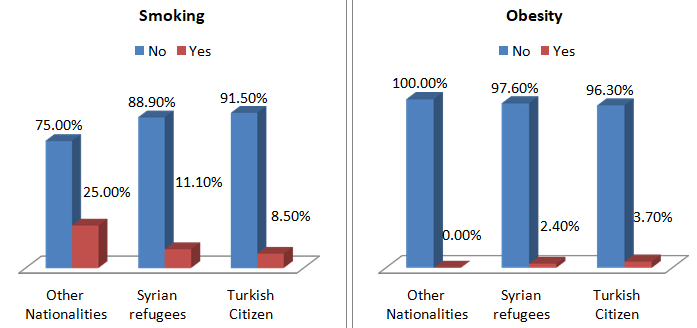
It was determined that 11.1% of Syrian patients with COVID-19 were smokers (Table 2). In Turkish citizen patients, this rate is 8.5%. The presence of more than one chronic disease in smokers and non-smokers was a statistically significant [8]. While no correlation was found between risk factors, a statistically significant correlation was found between nationality and comorbidity and having more than one COVID related symptom in COVID-19 patients (Figures 6 & 7).
| Country_of_Residence | ||||||
|---|---|---|---|---|---|---|
| Other nationalities | Syrian refugees | Turkish Citizen | Total | |||
| Having at least one chronic disease | No | N | 179 | 1606 | 14849 | 16634 |
| % | 75.80% | 77.70% | 60.90% | 62.40% | ||
| Yes | N | 57 | 462 | 9521 | 10040 | |
| % | 24.20% | 22.30% | 39.10% | 37.60% |
Table 2: Distribution of Length of Stay among the Study Population.
Table1: Distribution of Having at Least One Chronic Disease-Com among Syrian Refugees with COVID-19 Türkiye.
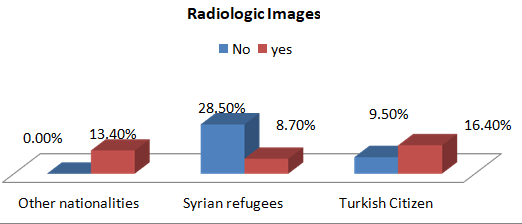
While the result of tomography was positive in 8.70 % of Syrian refugees, this rate was 16,4% in Turkish citizen patients and the relationship between them was statistically significant [9].
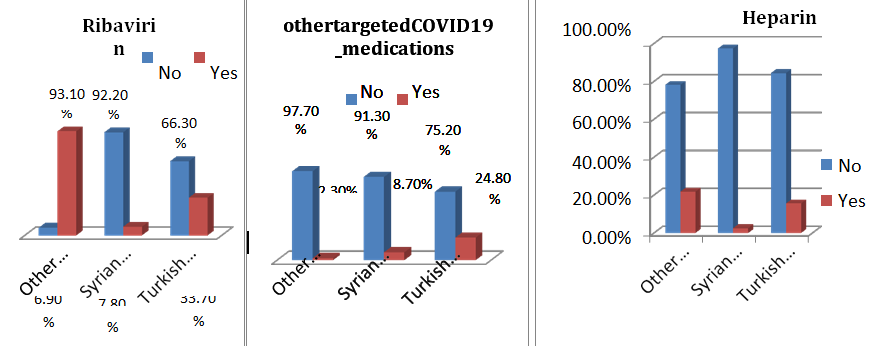
Figure 8 shows some of the treatments given to 74.210 COVID patients. As seen 33.7% of the Turkish patients were given Ribavirin while this rate is 7.8 % among Syrian patients.
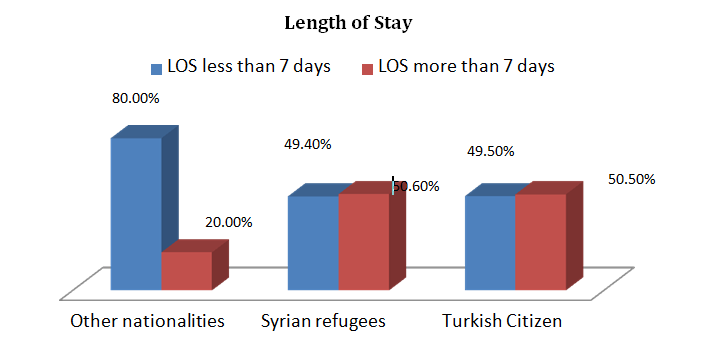
| Length of Stay(LOS) | |||||
|---|---|---|---|---|---|
| Other nationalities | Syrian refugees | Turkish Citizen | Total | ||
| LOS less than 7 days | N | 64 | 624 | 8340 | 9028 |
| % | 80.00% | 49.40% | 49.50% | 49.60% | |
| N | 16 | 639 | 8504 | 9159 | |
| % | 20.00% | 50.60% | 50.50% | 50.40% | |
| Total | N | 80 | 1263 | 16844 | 18187 |
| % | 100.00% | 100.00% | 100.00% | 100.00% |
Table 3: Distribution of Length of Stay among the Study Population.
| country_of_residence | ||||||
|---|---|---|---|---|---|---|
| Other nationalities | Syrian refugees | Turkish Citizen | Total | |||
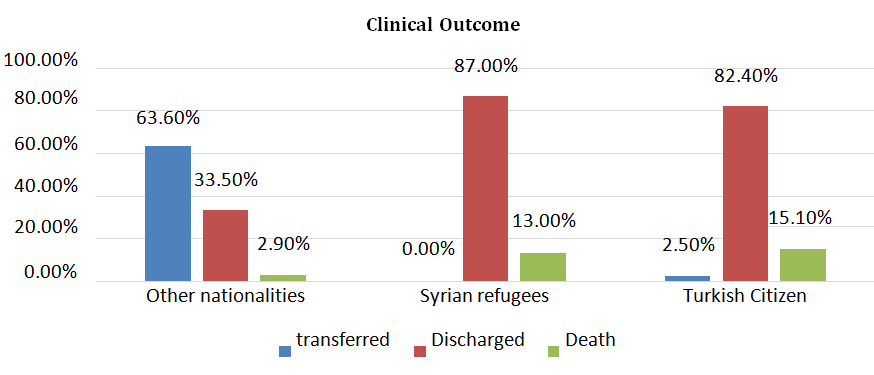
| Clinical outcome | Transferred | N | 152 | 0 | 605 | 757 |
| % | 63.60% | 0.00% | 2.50% | 2.80% | ||
| Discharged | N | 80 | 1800 | 20099 | 21979 | |
| % | 33.50% | 87.00% | 82.40% | 82.40% | ||
| Death | N | 7 | 268 | 3677 | 3952 | |
| % | 2.90% | 13.00% | 15.10% | 14.80% |
Table 4: The Clinical Outcome of the COVID-19 Patients in Türkiye Country_of_Residence.
| Variables | (p value <0.05) | Relative Risk |
|---|---|---|
| Gender | 0.63 | 1.031 |
| Having at least one symptom | 0.058 | 1.134 |
| Comorbidity | 0.013 | 0.825 |
| Lenght of stay | 0 | 1.348 |
| Age | 0 | 0.386 |
| smoking | 0.748 | 1.039 |
Table 5: Logistic Regression (Bacward model) Factors affecting Mortality and COVID-19 patients in Türkiye, (March 2020-June 2022,
Backward logistic regression model was applied to control the correlations between variables and confounding factors on being Syrian refugees and the mortality. At the last stage, the variables remaining in the model are the presence of COVID symptoms, gender, severity of the disease, and smoking status (tables 3 & 4). If the Syrian patient with Covid 10 is smoking the relative risk of having Covid-19 is higher than non-smokers. The relative risk is also high among the Syrian patients who stayed at the hospital more than 7 days. The other risks are having at least one Covid symptom [10, 11, 12, 13, 14].
Discussion
The data analyzed in this paper pertain to a total of 74.210 patients with Covid-19. Out of 69.815 Turkish
citizen and 4.395 Syrian refugees and patients with other nationalities whom diagnosed as Covid-19; 50.7 % are found to be male 49.3 % female among Syrian refugees while this rate is 49.0% male, 51 % female among other nationalities and 54.0% male, 46% female for Turkish citizens.
The mean age is found to be 33.1 among Syrian refugees while this is 52.5 for Turkish Citizen and the relationship between age groups and nationality is determined statistically significant. Being aged was considered as risk factors to COVID-19 in our study.
Fever and cough were the main clinical symptoms in both Syrian and Turkish patients, which was consistent with previous studies. Some of the common symptoms observed among the Syrian patients apart from fever shortness of breath (38.4 %), vomiting/nausea (5.8 %),), headache (0.59 %) , etc.)The percentage of having at least one Covid symptoms is 57% among Syrian refugees while this has been determined as 66.9% among Turkish citizen. Out of 69.815 Turkish citizen 39.1 % and 4.156 Syrian refugees 22.3 % with Covid-19 have co- morbid conditions. This percentage is 24.2% in the patients with other nationalities. Based on our results, we found that severe COVID-19 patients may be usually combined with comorbidities on admission especially as diabetes, hypertension and cardiovascular disease.
The incidence of comorbidity in the smoking group in Syrian patients with Covid-19 was found to be higher than in non-smokers. While the result of tomography was positive in 8.70 % of Syrian refugees, this rate was 16,4% in Turkish citizen patients and the relationship between them was statistically significant. While 22.3 % % of Syrian patients with comorbidities have at least one serious symptom, this rate is only 6.2% in patients without comorbidity. (p<0.00000) Many factors have been associated with COVID-19 symptoms and also increased risk of transmission and development of infection such as age, sex, ethnicity, body mass index (BMI), smoking, deprivation, pre-existing comorbidities (particularly diabetes, hypertension and cardiovascular disease), cardiorespiratory fitness, 25‐ hydroxyvitamin D level, and inflammation. However, individuals with pre-existing health conditions have been found to have the highest risk of developing severe SARS- CoV-2 infection, as shown in a number of studies from early research based in Wuhan to recent studies across the globe [14].
Although, pre-existing health conditions or comorbidities have no direct impact on the cure rate and mortality rate of general patients, they increased the mortality rate and reduced the cure rate of critical patients. However, it is not known which of these components has the strongest prognostic power in predicting adverse health outcomes in COVID-19 because there is significant overlap between them. So we need comprehensive data to understand the complex and interrelated impact of socio-demographic factors and comorbidity on transmission, incidence and adverse outcomes in COVID-19.
It is found that chronic cardiac disease is the most comorbid condition (19.3%) followed by chronic pulmonary disease and hypertension among Syrian patients, while this was determined as hypertension (9.9%) among Turkish patients. There are also a few patients with obesity, asthma, chronic liver disease and malignant neoplasm among Syrian refugees with Covid-19. In clinical symptoms, comorbidities and complications in severe and non- severe patients with COVID-19; were more likely to develop severe COVID-19, which was consistent with the findings of, Zhufeng Wang, et al study. In this study, the most prevalent comorbidity was found to be hypertension followed by diabetes and cardiovascular diseases.
The Covid-19 pandemic has had a significant impact on Syrian refugees and Turkish citizens in Turkey, exacerbating existing vulnerabilities and introducing new challenges. Syrian refugees face challenges in accessing healthcare even in normal circumstances, and the pandemic further strained healthcare systems. They may not have had access to testing or treatment for Covid-19, which puts them at higher risk. Overcrowded living conditions in refugee camps and urban areas make social distancing and isolation also affected the Syrian Refugees. The pandemic exacerbated these issues, especially due to isolation, uncertainty, and the fear of contracting the virus. Language barriers and limited access to reliable information sources can also hinder refugees’ ability to understand and respond to Covid-19-related guidelines, leading to increased risks.
Conclusion
It is against such a background that this research was carried out to estimate the relative weightage of being a refugee versus citizens with respect to various outcomes. We examined the relationship between SARS-CoV-2 infection and especially being a refugee, other socio- demographic factors, severity of disease and comorbidity regarding 72.554 Turkish citizen and 4.156 Syrian refugees, total 74.710 patients with Covid-19. The study also investigated the frequency of SARS- CoV-2 symptoms, pre-existing comorbidities, the treatment applied and radiological findings, as well as the impact of comorbidity and other socio-economic factors on the course of Syrian refugee patients. This is the first study to investigate socio- demographic characteristics, risk factors, comorbidity, treatment scheme among Syrian refugees and the difference between Syrian refugees and Turkish citizen in such a large population diagnosed with SARS-CoV-2 infection in the country.
Ensuring equitable access to healthcare for refugees, including Syrians, can be a complex task although Turkish Ministry of Health is spending great efforts. Barriers such as language, documentation, and mistrust in healthcare systems may hinder those efforts. Lockdowns and restrictions may have limited refugees’ ability to access community and support networks, exacerbating feelings of isolation and dependence on external aid during this huge epidemic.
References
-
Fang H, Liu Q, Xi M, Xiong D, He J, et al. (2021) Impact of comorbidities on clinical prognosis in 1280 patients with different types of COVID-19. J Investig Med 69(1): 75-85.
-
Sanyaolu A, Okorie C, Marinkovic A, Patidar R, Younis K, et al. (2020) Comorbidity and its Impact on Patients with COVID-19. SN Comprehensive Clinical Medicine pp: 1069-1076.
-
Guan WJ, Liang WH, Zhao Y, Liang HR, Chen ZI, et al. (2020) Comorbidity and its impact on 1590 patients with COVID-19 in China: a nationwide analysis. Eur Respir J 55(5): 2000547.
-
Monroy-Castillero P, Friedman E, Revuelta-Herrera A, Yochelis A (2021) Assessing the impact of multiple comorbidities on fatal outcome in young COVID-19. medRxiv preprint.
-
Honardoost M, Janani L, Aghili R, Emami Z, Khamseh ME (2021) The Association between Presence of Comorbidities and COVID-19 Severity: A Systematic Review and Meta-Analysis. Cerebrovasc Dis pp: 1-9.
-
Becerra-Muñoz VM, Iván JNG, Charbel ME, Aguado MG, Romero R, et al. (2020) Clinical profile and predictors of in-hospital mortality among older patients hospitalised for COVID-19. Age Aging 50(2): 326-334.
-
Gold MS, Sehayek D, Gabrielli S, Zhang X, McCusker C, et al. (2020) COVID-19 and comorbidities: a systematic review and meta-analysis. Postgraduate Medicine 132(80): 749-755.
-
Hannawi S, Hannawi H, Naeem KB, Elemam NM, Hachim MY, et al. (2021) Clinical and Laboratory Profile of Hospitalized Symptomatic COVID-19 Patients: Case Series Study From the First COVID-19 Center in the UAE. Front Cell Infect Microbiol 11.
-
Callender LA, Curran M, Bates SM, Mairesse M, Weigandt J, et al. (2020) The Impact of Pre-existing Comorbidities and Therapeutic Interventions on COVID-19. Front Immunol 11: 1991.
-
Mahmoud M, Carmisciano L, Tagliafico L, Muzyka M, Rosa G, et al. (2021) Patterns of Comorbidity and In-Hospital Mortality in Older Patients With COVID-19 Infection. Front Med 8: 726837.
-
Ayisi-Boateng NK, Owusu M, Tawiah P, Ampah BA, Sylverken AA, et al. (2020) Profile and outcomes of hospitalized patients with COVID-19 at a tertiary institution hospital in Ghana. Ghana Med J 54(4): 39-45.
-
Richardson S, Jamie SH, Narasimhan M, Crawford JM, McGinn T, et al. (2020) Presenting Characteristics, Comorbidities, and Outcomes Among 5700 Patients Hospitalized With COVID-19 in the New York City Area. JAMA 323(20): 2052-2059.
-
Osibogun A, Balogun M, Abayomi A, Idris J, Kuyinu Y, et al. (2021) Outcomes of COVID-19 patients with comorbidities in southwest Nigeria. PLoS ONE 16(3): e0248281.
-
Ejaz H, Alsrhani A, Zafar A, Javed H, Junaid K, et al. (2020) COVID-19 and comorbidities: Deleterious impact on infected patients. Journal of Infection and Public Health 13(12): 1833-1839.
- Measuring What Matters: Data Gaps, Certificate of Need Reform, and Pediatric Psychiatric Inpatient Capacity in North Carolina
- Intersecting Epidemics and Climate Vulnerabilities in Conflict- Driven Displacement: Epidemiology, Systemic Challenges, and One Health Gaps in South Sudan
- Advancing Domestic Health Financing for Community Health System Sustainability in South Sudan: The Boma Health Initiative Model (2025–2035)
- Prevalence and Correlates of Post-Exposure Prophylaxis Uptake among Men Who Have Sex with Men in Kisumu County, Kenya
- Medical, Ethical, and Legal Conflicts Surrounding Euthanasia in Argentina. Its Global Implications
- Knowledge and Attitude on Menstrual Hygiene among Adolescent Girls Studying in Secondary Level in Public Schools of Chitwan District, Nepal