
Study on Prevalence and Associated Risk Factors of Indigestible Foreign Bodies in Rumen and Reticulum of Cattle Slaughtered at Selected Districts of East Ararge Zone Municipal Abattoirs
Ingestion of indigestible foreign bodies by ruminants is becoming a common worldwide problem which is the associated with a shortage of feed as well as increased pollution of grazing lands with indigestible materials. A cross-sectional study was conducted from April 2023 to March 2024 with the aim of assessing the prevalence of indigestible foreign bodies and associated risk factors in cattle slaughtered at Selected districts of east Ararge municipal abattoirs. A total of 384 cattle were selected randomly and examined to check for the presence of indigestible foreign bodies in the rumen and reticulum of study animals. Among them, 109(28.39%) were found positive for the occurrence of indigestible foreign bodies in rumen and reticulum. Age, body condition and origin of the animals were determined during ante mortem examination while animals were examined for indigestible foreign bodies during postmortem examination. Age, body condition score and origin of animals had significant (P<0.05) effect on the prevalence of foreign bodies. Foreign bodies were highest in cattle old age groups 58(36.71%) followed by young 28(23.53%) and adult 23(21.50%). The prevalence rate recorded in poor, medium, and good body condition of cattle were 62(68.89%), 34(32.69%) and 13(6.84%), respectively. The significantly (P=0.000) higher foreign bodies in rumen and reticulum were found in cattle originated from Babile 58(60.42%) followed by kombolcha 24(25.00%) and Girawa 17(17.71%) and the lower prevalence were observed in Gorogutu 10(10.42%). Out of 109 (28.39%) total positive cases of foreign bodies 56(14.58%), 35(9.11 %) and 18(4.69 %) prevalence rate of foreign bodies were observed in rumen, reticulum and both rumen and reticulum, respectively. Rumen harbored mostly non-metallic foreign materials while reticulum was the major site for the retention of metallic objects. Plastic 38(9.90%) were recovered as the most common foreign bodies followed by rope 16(4.17%), cloth and plastic 6(4.17%), Nail 13(3.39%), wire 12 (3.13%), cloth 7(1.82 %), and rope and plastic 7(1.82 %). Presence of the foreign bodies in the rumen and reticulum of the current study area was expose cattle to health associated problems and contribute for reduction in production. Consequently, appropriate solid waste disposal system need to implement in the study area to prevent health risk of ruminants and also to protect the environment.
Introduction
The livestock sector is increasingly organized in long market chains that employ at least 1.3 billion people globally and directly support the livelihoods of 600 million poor smallholder farmers in developing world. Keeping livestock is important risk reduction strategy for vulnerable communities. Globally livestock are important providers of nutrients and contribute 17% to kilo calorie consumption and 33% to protein consumption [1].
Africa is Livestock rich continent represent one-third of the world Livestock population. Across the continent, livestock is considered as one of the most valuable assets for the rural and urban poor, especially women and pastoralists. Livestock sector accounts for about 40% of agricultural GDP, ranging from 30% to 80% in individual countries. East Africa’s livestock sector generates more than US$1 billion annually through exports [2].
Ethiopia has the largest livestock population in Africa, with 65 million cattle, 48.9 million sheep, 51 million goats, 8.6 million equine and 59 million poultry [3]. East Ararghe zone is one of the richest livestock population in Ethiopia having 1,775,404 cattle, 385,098 Sheep, 353,385 Caprine, 137,926 (Donkey, Horse and Mule), 2,066,678 Poultry and 620,397 Bee colonies [4]. This Livestock provides high-quality food for human consumption and contributes to the country’s economic development by producing hides, skins, manure as fertilizer, income, and foreign exchange, as well as drought power in working agriculture to help smallholder farmers increase their output CSA. However, livestock contributions to the country’s economic development are below their predicted potential due to frequent livestock diseases, poor management systems, poor genetic performance, appropriate veterinary services, lack of government attention, and recurring drought [5, 6].
Gastrointestinal foreign bodies are among the most common surgical emergency in veterinary medicine. Cattle are more susceptible to foreign body syndrome than small ruminants because cattle do not use their lips for prehension, they are more likely to ingest foreign bodies than small ruminants as they are more likely to eat chopped feed in which foreign bodies may be incorporated Bayne and Edmondson. Environmental pollution is one of the growing problems for grazing animals due to absence of recycling industries, cleaning of environment cultures, improper disposal of plastic bags; free grazing animals eat plastic bags especially in towns and villages [7, 8]. These plastic bags are indigestible and their accumulation in the rumen of grazing animals may lead to adverse effect on health [9]; plastic bags resist to biodegradation and pollute for decades and centuries and pose great risk to human health and environment [10]. Feed shortage usually occurs at specific time of the year in most part of Ethiopia. Moreover, most owners do not provide supplementary feed to animals. These in turn may predispose the animals to negative energy balance and force them to feed on unusual materials including plastics, clothes, ropes and even metallic substances [7, 5].
The ingestion of foreign bodies causes various problems in different organ of the animal mainly in rumen and reticulum. The problem that are caused vary with the duration that the foreign body has been present, the location of foreign body, the degree of obstruction that is caused as well as problems associated with the material of the foreign body. Glossitis, esophagitis, ruminitis, impaction of rumen, traumatic pericarditis (TP) and traumatic reticulo peritonitis (TRP) are the possible health problems which can be caused by the ingestion of foreign bodies by the cattle [5]. Traumatic reticulo-peritonitis disease in cattle is caused by the ingestion of foreign bodies in the reticulum swallowed metallic objects such as nail or pieces of wire fall directly on the reticulum or pass into the rumen and subsequently carried over the rumeno -reticular folds into the cranioventral part of the reticulum [11, 12]. There is no published information on prevalence and associated risk factor of foreign bodies in the rumen and reticulum of cattle slaughtered at selected district of east ararghe zone municipal abattoirs. Therefore, the objective of this study was:-
- To estimate the prevalence and occurrence of foreign bodies in the rumen and reticulum of cattle slaughtered at selected districts of east ararghe Municipal Abattoir.
- To identify common foreign bodies in the rumen and reticulum of cattle in the study are
- To identify the risk factors a2ssociated with its occurrence
Literature Review
Etiology
Swallowed metallic object such as nails or piece of wires, fall directly into the reticulum or pass in to the rumen and are subsequently carried over the rumen reticular folds into the carnio ventral part of the reticulum. The reticulo-omasal orifices elevated above the floor, which tends to retain heavy object in the reticulum and honey comb like reticulo mucosal surface traps sharp object [11]. Compression of rumino reticulum by the uterus in late pregnancy, starting during parturition and mounting during estrus increases likely hood of an initial penetration of reticulum and May also disrupt adhesion caused by earlier penetration. Perforation of the wall of reticulum allows leakage of ingesta and bacteria which contaminates the peritoneal cavity Kahn.
In addition vigorous contraction of reticulum aided by the movement of diaphragm make the thin potential foreign body to penetrate through the reticular wall at different sites and in varying direction Sharma and Pankaj. Rumen tympany due to metallic or nonmetallic (mostly polythene material) foreign bodies are among the most common cause of gastrointestinal disorders in ruminants. Plastics can be termed as wide range of chemical materials either synthetic or semi synthetic solid materials like polyethylene, polyvinyl chloride and polystyrene largely used in plastics manufacturing industry, which pose a threat to livestock and environment. Plastic garbage continues to increase in modern world, more concentrated in cities and towns [10].
Types of Foreign Bodies
Metallic Foreign Body
Cattle are very prone to pick up and swallow metallic foreign bodies of various kinds, including needles, nails staples, wire, umbrella ribs, and pieces of iron. Wires account for approximately 70% of ingested foreign bodies, 3while nails and steel objects make up other 30% [13]. Remodeling of livestock housing, careless handling of baling wires, pins, feed sack bags and wires, using old buildings sites for hay fields, often occur in female shortly after calving, often occur in male shortly after or during extensive uses for breeding Schipper. Non-Metallic Foreign Body Some of non-metallic foreign bodies are clothes, robes, clay, and plastic materials, broken glass, paper clip hair ball, indigestible hard pasture and other materials. Stray cattle are generally seen on the road sides eating away the plastic bags and their contents in search of food items. The ingested polythene hinders the process of fermentation and mixing of contents leading to indigestion. They also obstruct the orifice between reticulum and omasum. If not removed though surgery, polythenes may become fatal. The plastic bags cannot be digested or passed as such through faces by an animal Singh, et al.
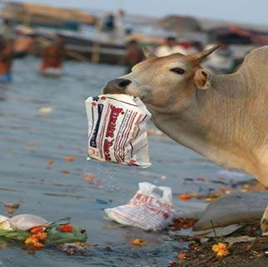
The incidence of non-metallic foreign bodies mostly polythene material was explored by various investigators mostly in cattle. The factors that are responsible for higher incidence of non- metabolic foreign bodies are rapid industrialization, increase in the garbage disposal mostly in plastic bags, more urbanization, higher rise in deficiency of minerals like calcium and phosphorus and other micronutrients in the soil along with the management of animals in towns by letting the animal loose for grazing, insufficient feeding of the animals by the owners, deprived appetite, increase in the number of animals on the existing land space Sharma, et al. Increase in the construction activity in cities and towns, besides the indiscriminate habit of animals the absence of recycling industries and increase in the number of units producing the plastics, frequent droughts force the animal to graze down closer to ground leading to increased incidence during the period, inappropriate disposal of wastes by humans, increased pollution of grazing land by plastic of some form at the road point near to highways (Figure 1).
Epidemiology
Occurrences
Cattle are more likely to ingest foreign bodies than small ruminant since they don’t use their lips for prehension and are more likely to eat a chopped feed. The majority of affected cattle (87%) are dairy cattle and 93% are older than two years of age. It is hypothesized that dairy cattle are more commonly affected than beef cattle since they are more likely to feed a chopped feed such as silage or hay. The disease is usually sporadic but out breaks has occurred when sources of wire have become mixed in to feed supplies. Adult dairy cattle are most commonly affected because of their more frequently exposure Kahn.
Risk Factor
The condition tends to be more common during drought because animals are grazing closer to the ground or are being fed harvested material that is contaminated with foreign objects, such as short ends of baling wire Mohammad, et al. There are a number of influencing factors. These include remodeling of livestock housing, careless handling of baling wires, pins, feed sack bags and wires, using old buildings sites for hay fields, often occur in female shortly after calving, often occur in male shortly after or during extensive uses for breeding, rapid industrialization and rapid civilization has resulted in increased incidence of the Foreign Body Syndrome, due to spread of metallic and non-metallic garbage and waste and thus more incidence of these cases are reported in highly industrialized and urbanized areas [14].
Due to intensive system of livestock rearing for maximal production, high-rise in deficiency state especially of calcium, phosphorus and micro-minerals, has resulted in perverted appetite, which is one important factor for intentional ingestion of foreign objects rapid industrialization and rapid civilization has resulted in increased incidence of the foreign body syndrome, due to spread of metallic and non- metallic garbage and waste and thus more incidence of these cases are reported in highly industrialized and urbanized areas [15]. Due to intensive system of livestock rearing for maximal production, high-rise in deficiency state especially of calcium, phosphorus and micro-minerals, has resulted in perverted appetite, which is one important factor for intentional ingestion of foreign objects Schipper. Pathogenesis When cattle swallowed foreign body reach the stomach then fall directly into the reticulum or pass into the rumen and are subsequently carried over the rumeno-reticular fold into the cranioventral part of the reticulum by ruminal contraction Gokce, et al. The elevated reticuloomasal orifice is above the floor, tends to retain heavy objects in the reticulum, and the honey comb like reticular mucosa traps sharp objects Kahn. The honeycomb-like structure of the reticulum provides many sites for fixation of a foreign body, and contractions of the reticulum may be sufficient to push a sharp foreign body through the wall, inducing the disease. Increased intra-abdominal pressure due to advanced gestation, tympani, intussusceptions, sudden fall or accident, parturition, straining, and mounting during estrus increase the likelihood of an initial penetration of the reticulum and may also disrupt adhesion caused by an earlier penetration Gokce, et al. Mostly nonmetallic foreign body is accumulating in rumen due to low density and lake of sharpness Ghanem.
Diagnosis
History and Clinical Sign
History and clinical findings of the cow is examined when signs initially appear. Without an accurate history and when the condition has been present for several days or longer, diagnosis is more difficult. Other causes of peritonitis, particularly perforated abomasal ulcers, can be difficult to distinguish from traumatic reticuloperitonitis. Differential diagnoses should include conditions that can produce variable or non-specific gastro-intestinal signs like indigestion, lymph sarcoma, or intestinal obstruction. Abomasal displacement or volvulus should be ruled out by simultaneous auscultation and percussion Ghanem.
Pleuritis or pericarditis of no traumatic origin produces signs similar to those associated with foreign body perforation. Tympanic sounds were heard on percussion with simultaneous auscultation of par lumbar fossa. The main diagnostic sign noticed was bilateral sunken flank region with doughy hard impaction of rumen Turkar, et al. Low-pitched reticular sounds audible on auscultation at 7th to 8th rib on left side with severe distention in left par lumbar fossa and slight distention in right flank for diagnosis in foreign body associated with plastics in 4-year-old crossbred cow. The rectal palpation is one of the most reliable methods of diagnosing the rumen impaction in cattle Vijaya, et al. The disease is common when green chop, silage, and hay are made from fields that contain old rusting fences or balling wire, or when pastures are on area or sites where buildings are recently constructed, burned or torn down. The grain ration may also be a source due to accidental addition of metal Kahan. The disease is much more common in cattle fed on prepared feeds, especially those fed inside for part of the year. It is almost unknown in cattle fed entirely on pasture [11].
Clinical and Pathological Findings
The initial penetration of the reticulum is characteristically, the onset is sudden with complete anorexia, rumino reticular atony and marked drop in milk yield usually to about one third or less of the previous milking Andrews, et al. The animal is reluctant to move and does so slowly walking; particularly downhill is often accompanied by grunting. The heart rate is normal or slightly increased, and respiration is usually shallow and rapid. Initially, the animal exhibits an arched back; an anxious expression; a reluctance to move; and an uneasy, careful gait. Forced sudden movements as well as defecating, urinating, lying down, getting up, and stepping over barriers may be accompanied by groaning. A grunt may be elicited by applying pressure to the xiphoid or by firmly pinching the withers, which causes extension of the thorax and lower abdomen [16].
Most animals prefer to remain standing for long periods and lie down with great care and arching of the back occurs in about 50% of cases, along with the appearances of tenseness of the back and the abdominal muscles so that the animal appears gaunt or “tucked up”. Defecation and urination cause pain and the acts are performed infrequently and usually with grunting. This result in constipation scant feces and in some cases retention of urine [11]. Rumination is absent and reticular and rumen movements are markedly depressed and usually absent and pain can be elicited by deep palpation of the abdominal wall just caudal to the sternum Gokce, et al. In chronic peritonitis, the appetite and milk yield does not return to normal after prolonged therapy with antimicrobials. The 7body condition is poor, the faces are reduced in quantity and there is an increase in undigested particles. A persistent slightly elevated temperature is supportive evidences of the presences of a chronic inflammatory lesion. Clinical signs associated with chronicperitonitis include anorexia, unthriftiness, decreased milk production, rumen hypomotility and change in manure consistency Cavedo, et al. Localized traumatic reticulo peritonitis is characterized by varying degrees of locally extensive fibrinous adhesions between the cranioventral and the ventral aspects of the reticulum. Adhesions and multiple abscesses may extend to either sides of the reticulum involving the spleen, omasum, liver, abomasums and ventral aspects of rumen. Large quantities of turbid foul-smelling fluid containing clots of fibrin are usually present [11].
Metal Detection
Metal detectors were used at one time to aid in the diagnosis of traumatic reticulo peritonitis. Ferrous metallic foreign bodies can be detected with metal detectors. An electronic metallic detector may identify metal objects in the reticulum but does not distinguish between perforating and non-perforating foreign body [16].
Laparoscopy
Laparoscopic surgery is a modern surgical technique in which operations are performed far from their location through small incisions (usually 0.5–1.5 cm) elsewhere in the body. There are a number of advantages to the patient with laparoscopic surgery versus the more common, open procedure. Pain and hemorrhaging are reduced due to smaller incisions and recovery times are shorter Ghanem. The key element in laparoscopic surgery is the use of a laparoscope, a long fiber optic cable system which allows viewing of the affected area by snaking the cable from a more distant, but more easily accessible location. Laparoscopy in cattle is a promising tool for clinical diagnosis and treatment. The application of this tool during abdominal explorations biopsies allows the avoidance of invasive and useless surgical interventions and even diagnosis and prognosis of certain conditions Athar, et al.
Wither Pinch and Grunt Test
Many gastrointestinal diseases cause abdominal pain in the cattle. Cattle with gastro-intestinal pain often stand hunched up with their elbows abducted. The withers can be pinched as shown in the above picture (sometimes it r8equires two hands) Seida, et al. A normal cow will flex her back ventrally when her withers are pinched as seen above. A cow who is painful will not flex ventrally. False negatives are common. Common reasons for abdominal pain are hardware, abomasal ulcers, or distention of the small intestine with gas. Grunt test is a clinical test in which a positive result is an audible grunt by the subject when lift sharply on a beam of wood held under the sternum behind the elbows. Either by using your fists pushed up with your knee or by using a board with one person of each side lifting the board up; apply pressure to the xiphoid region. If the cow grunts, kicks, or acts uncomfortable, you can assume she is painful Seida, et al. Often, you have to listen over the trachea during the peak of inspiration while simultaneously applying pressure to the xiphoid area to hear a grunt [17]. Physical examination the foreign body syndrome can be diagnosed by palpation on both sides of abdomen and with a stethoscope for evidence of grunt [18]. Wither test by pinching withers to cause depression of back and eliciting grunt is effective diagnostic tool usually heard 2-3 seconds before primary ruminal contraction can be felt through the left flank [11].
Ultra-Sonography and Radiography
Ultrasonography of the ventral abdomen is the most accurate means of diagnosing localized Peritonitis near the reticulum and characterizing the reticular contraction frequency, it rarely identifies the presence of a penetrating object, Ultrasonography of the heart and thorax is very useful in the diagnosis of pleuritis and pericarditis as squeal to traumatic reticuloperitonitis. Ultrasonography provides more precise information about the contour of the reticulum and reticular motility [11]. In cattle ultrasonography can be used to identify morphological changes in region of cranial, ventral or caudal reticular wall. Radiography can help identity perforating foreign bodies in the reticular areas. Lateral radiographs of the cranioventral abdomen can detect metallic material in the reticulum but should only be taken after oral administration of a magnet. To determine whether the reticulum is currently perforated, the foreign body must be visible beyond the border of the reticulum, unattached to the magnet in the reticulum, or positioned off the floor of the reticulum [11].
Portable radiographic units cannot penetrate the reticular area of standing adult cattle, and the cow may need to be transported to where there is equipment with sufficient power Boodur, et al. The cow should not be placed in dorsal recumbency in order to obtain radiographs because such manipulation places stress on adhesions and may lead to a localized peritonitis becoming a diffuse peritonitis due to gravitational spread of infection. With the animal standing, horizontal beam is centered on the reticulo diaphragmatic region in cranioventral or caudoventral Tyagi, et al. Radiography obtained allows the identification of radio plaque bodies and gas/ fluid interfaces typical of an intra- abdominal abscess. The drawback of this technique is that not all heavy sharp objects will have sufficient density to show on an x-ray Boodur, et al.
Complication
Reticular abscesses are a common complication of TRP. Also, if the foreign body migrates through the diaphragm and into the pericardium, it can result in septic pericarditis and congestive heart failure. Less common complications include reticular fistulation, vagal indigestion, diaphragmatic hernia, traumatic pleurisy, pneumonia, rupture of gastroepiploic artery, diaphragmatic abscess, formation of abscess on the lateral and ventral wall of abdomen in which foreign body lodges. The acute local peritonitis causes immediate cessation of ruminal movements, however, persistent ruminalatony or irregular motility with gradual onset of bilateral abdominal distension, in appetence and decreased milk production may ensue clinically. This is referred to as vagus indigestion; it may also be sequel to abomasal displacement. Mechanical impairment of reticular motility and esophageal groove dysfunction as a result of reticular adhesion is probably the most important causes of syndromes Latimer, et al.
Treatment
Treatment of the typical case seen early in its course may be surgical or medical. Either approach improves the chances of recovery from 60% in untreated cases to 80–90%, Conservative treatment includes administration of diuretics to reduce edema, although of limited value, and appropriate antimicrobial therapy Tyagi, et al. Antimicrobials should be administered per operatively. Medical treatment involves administration of antimicrobials to control the peritonitis and a magnet to prevent recurrence. Because of the mixed bacterial flora in the lesion, a broad-spectrum antimicrobial agent such as oxy-tetracycline and penicillin is used widely and is effective in many cases despite its limited spectrum. Supportive therapy, such as oral or occasionally IV fluids and SC calcium borogluconate, should be administered as needed. Rumen inoculation is beneficial in some cases with prolonged ruminal stasis and loss of normal flora, for penetrating foreign body Boodur, et al. Conservative (medical) therapy comprises immunization of the animal by administration of antimicrobial for the inflammation for 3-5 days [11]. A magnet administered orally falls into the cranial sac of the rumen, but normal ruminal contraction usually brings the magnet to the reticulum and foreign bodies still partially in the lumen of the reticulum that have injured the reticular wall are attracted to and fixed to the magnets, thus preventing their migration from continuing and most times returning the foreign body into the lumen of reticulum [18]. Surgery involves rumenotomy with manual removal of the object(s) from the reticulum; if an abscess is adhered to the reticulum, it should be aspirated and then drained into the rumen. For non-penetrating foreign body emptying the rumen by rumenotomy is considered as rapid and quick method of relieving the problem of the animals [9]. Rumenotomy along with Transplantation of fresh ruminal cud is the best technique for restoration of ruminal function at fluid level for ruminal impaction due to plastics in cattle and buffaloes Ravindra, et al. More advanced cases, those with obvious secondary complications, or those that do not respond to initial medical or surgical therapy should be evaluated from an economic perspective; if the cattle are of limited value, slaughter should be considered if the carcass is likely to pass inspection Turkar, et al.
Control and Prevention
Prevention of hard ware disease in dairy cattle involves around managing animal feed and animal grazing areas so they avoid ingestion of heavy sharp object. Magnets should be installed in feed mills and for age harvesting equipments (baler). Bovine eating habits cannot be altered and prevention of sharp objects in the feed is not entirely possible, so prophylactic insertion of magnets at the early ages is a good idea [11]. Eliminating sources of sharp foreign objects in the feed supply prevents TRP. Installation of large magnets on feed handing equipment and prophylactic administration of the fore stomach magnets to all animal at 6to8 month of ages prevent almost all cases caused by magnetizable object Smith. Prevention of TRP is preferred to either conservative medical treatment or surgery. Although one source does not believe magnets are an effective preventative measure the majority of clinicians agree that all cattle over one year of age should have a prophylactic magnet placed in the reticulum [13]. Cattle should be kept away from construction sites and crop fields should be monitored for metal d1e1bris. Also, processed feed can be passed over magnets to recover any magnetic foreign bodies prior to being fed to cattle Buczinski.
Materials and Methods
Study Area
The study was conducted in four randomly selected districts of east Ararghe zone (namly, Babile, Girawa, Gorogutu, and Kombolcha of East Ararghe zone. The zone was located at 400km from Adis Aba, the capital city of the country to the east. Eastern Hararghe have 19 districts, out of which four districts are pastoral and the rest 15 are mixed crop-livestock systems [19]. Kombolcha is one of the eighteen districts (woredas) in the east Hararghe zone which is located about 514 km from Addis Ababa and 14 km northwest of Harar town, the capital of the Harare people Regional state. The district is bordered by the Dire Dawa City Administration to the North, Harari Regional State to the South, Jarso district to the East, and Haramaya district to the West [20]. Kombolcha district has 86,942 cattle,
79,804 sheep, 82,873 goats, 273 camels, 228 poultry, 23,905 donkeys and 2552 Horses [21].
Babile is one of the districts in the East Hararghe Zone of Oromia Region in Ethiopia. The area located 561km away from the capital city (Addis Ababa) at 8°39’5999” N latitude and 42°24’5999” E longitude and the elevation is ranges from 1450- 1700 meters above sea level. The weather conditions characterized by semi-arid and arid climate with average annual temperature and the annual rain falls is ranged from 24 to 28 °C and 410 to 800mm respectively. Agro pastoral and pastoral is the main occupation of the population of the area. According to Teferi Atlaw, et al. report, the livestock population estimated as 76,161 cattle, 11,470 sheep, 20,644 goats, 7,393 donkey, 15,430 camel and 21,114 poultry.
Girawa (also called Girawa Meyu Mulike) is one of the Districts in the Oromia of Ethiopia. Part of the East Hararghe Zone, Girawa is bordered on the south by Gola Odana Meyu Muluke, on the west by Bedeno, on the north by Kurfa Chele, and on the east by Fedis. The administrative center of the woreda is Girawa. The dist1ri2ct has 66,942 cattle, 59,709 sheep, 52,754 goats, 462 camels, 5428 poultry, 2,905 donkeys and 2565 Horses [21]. Goro Gutu is one of the districts in the East Hararghe Zone and is bordered on the south by Deder, on the west by the West Hararghe Zone, on the north by the Somali Region, and on the east by Meta. The administrative center is Karamile. The livestock population estimated as 98,314 cattle, 13,673 sheep, 34,436 goats, 32,659 donkey, 20,546 camel and 45, 468 poultry Gorogutu, et al.
Study Animals
The study was conducted on all apparently healthy cattle slaughtered at Babile, Gorogutu, Girawa, and Kombolcha municipal Abattoirs.
Study Design
A cross-sectional study was conducted from March April 2023 to March 2024 to estimate the prevalence and associated risk factor of foreign bodies in the rumen and reticulum of cattle slaughtered at selected districts of east ararghe zone municipal abattoirs.
Sample Size Determination
The study was carried out by determining the sample size according to Thrusfield M [22], for an infinite population with 95% confidence level, 5% desired absolute precision by considering 50% expected prevalence of the rumen and reticulum foreign bodies in cattle in the study area. Based on the following formula 384 of the cattle were tested during this study.
( ) 2 2 exp 1 exp P P n Z d ∗ ∗ − =
Where: n = required sample size; Z=reliability coefficient(1.96), Pexp= expected prevalence (50%); d2= desired absolute precision (0.05). Therefore the minimum of 96 sample were collected from each districts (Babile, Gorogutu, Girawa and Kombolcha).
Sampling Technique
Systematic random sampling technique was used to select study animals. This was based on giving an equal chance or probability of selecting each unit from the population with corresponding to their identification number. In such a way that study animals were selected at equal intervals with the first animal being selected randomly. All days of the weeks visit was made for ante mortem and postmortem examination of slaughtered animals. The visiting days of the abattoirs was continues until the sample size reached the required number. The study area was purposively selected based on the availability of cattle population and facility structure of the abattoirs.
Animals of different, age, sex, origin and body condition was recorded. The body condition score was according to the rule of Hersom, et al. Animals were divided into three categories based on their body condition, good, medium, and bad. The study animals were grouped into three age groups as young (< 5 years), adult (5-10 years) and old (> 10 years) Nebyou, et al. The age of the animal was also scored according to Mccurnin, et al. [23] based on dentition. Merchant of the animals were interviewed using a semi- structured questionnaire about the origin of the study animals and recorded on data record book.
Study Methodology
Ante Mortem Examination
Ante-mortem inspections were conducted on individual animals while the animals were entering into the lairage and after they entered in to the lairage in mass. Both sides of the animals were inspected at rest and in motion. The general behaviour, reflexes, fatigue, excitement, gait, posture; vital parameter (temperature, heartbeat, pulse rate, respiratory rate) was recorded. Evidence of cruelty, level of nutrition, symptoms of diseases, or any other abnormalities should be closely observed and registered according to the standard ante mortem inspection procedures [24].
Post-Mortem Examination
During post-mortem examination, the stomach was removed from the abdominal cavity and rumen and reticulum were examined by visual inspection and palpation which were followed by incision and examination of the whole contents for the presence of foreign bodies. When foreign bodies are encountered, they were removed, washed and the location and type of the foreign bodies was recorded otherwise recorded as negative in post-mortem record sheet. Data Management and Analysis Data collected from each study animal and laboratory analysis were coded and entered in a Microsoft Excel spreadsheet. All statistical analyses were performed using STATA 14 software (Stata Corp. 4905 Lake way drive College Station, Texas 77845, USA). The point prevalence was calculated for all data as the number of positive individuals divided by the number of individuals sampled x 100. The association between prevalence of indigestible foreign bodies in rumen and reticulum of study animals and different risk factors (origin, age, sex and BCS) was analyzed using Pearson chi square (χ2) test. For (χ2) test, p-value < 0.05 were considered significant whereas p-value > 0.05 considered non-significant.
Result
Overall Prevalence of Foreign Body in Rumen and Reticulum of Cattle
From the total of 384 cattle examined for the presence of indigestible foreign bodies in their rumen and reticulum, 109(28.39%) were found to be positive. Of this 56(14.58%) of foreign bodies were found in the rumen while 35(9.11 %) were found in the reticulum and the rest 18(4.69 %) were found in both rumen and reticulum. The types of foreign bodies detected were plastic 38(9.90%), rope 16(4.17%), cloth and plastic 16(4.17%), Nail 13(3.39%), wire 12 (3.13%), cloth 7(1.82 %), rope and plastic 7(1.82 %).
Occurrence of Foreign Bodies in Relation to Risk Factors
Occurrence of Foreign Bodies with Regard to Age
From 384 animals examined in different age groups the higher prevalence of foreign body was observed in old age groups 58(36.71%) and the lowered prevalence was recorded in adult 28(23.53%) flowed by young 23(21.50%). The variation in the foreign body prevalence was significant difference (p = 0.010) among the age group (Table 1).
| Variables | No.of animals examined | No. of Positive | Chi-square (X2) | P-value |
|---|---|---|---|---|
| Age | ||||
| Adult | 107 | 23(21.50%) | 9.264 | 0.01 |
| Young | 119 | 28(23.53%) | ||
| Old | 158 | 58(36.71%) | ||
| Sex | ||||
| Male | 181 | 39(21.55%) | 7.8765 | 0.005 |
| Female | 203 | 70(34.48%) | ||
| Body condition | ||||
| Good | 190 | 13(6.84%) | 116.9606 | 0 |
| Medium | 104 | 34(32.69%) | ||
| Poor | 90 | 62(68.89%) | ||
| Origin | ||||
| Babile | 96 | 58(60.42%) | ||
| Gorogutu | 96 | 10(10.42 %) | 69.626 | 0 |
| Girawa | 96 | 17(17.71%) | ||
| Kombolcha | 96 | 24(25.00%) |
Table 1: Prevalence of foreign bodies in relation to risk factor.
Prevalence of Foreign Bodies in Relation to Origin
Animals slaughtered at study area during this study was came from four different peasant association. The highest and lowest prevalence was observed in cattle brought from Babile 58(60.42%) and Gorogutu 10(10.42 %) districts respectively. The result revealed that there was statistically significant difference (p= 0.000) in the prevalence or occurrence of the foreign bodies in the study animals that were brought from the different areas of the district (Figure 2).
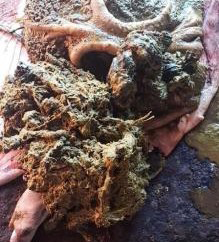
Source: Mobile phone photo. Figure 2: Indigestible foreign bodies in rumen and reticulum of study animals.
Prevalence of Foreign Bodies in Relation to Body Condition
The animals brought to the abattoir to be slaughtered were comprised of good, medium and poor in body condition score. From those animals examined with good, medium and poor body conditions,13(6.84%), 34(32.69%) and 62(68.89%) were positive for foreign bodies, respectively. There was statistically significant difference (P=0.000) between different body condition scores and foreign body distribution in the rumen and reticulum of the study animals (Table 1). Occurrence of Foreign Bodies in Relation to Sex From 109(28.39%) positive animals, 70(34.48%) and 39(21.55%) were detected in female and male animals, respectively. There was statistically significant association (P=0.005) in the occurrence of the disease between male and female (Table 1).
Discussion
The current study revealed that overall foreign bodies prevalence was 109(28.39%) in cattle slaughtered at study districts. This finding was agreement with the study of Duresa LA, et al. [25] who reported the prevalence of 30.68% foreign bodies in the rumen and reticum at Bishoftu Elfora export abattoir. The present prevalence rate was higher than the finding of 17.16% by Bassa, et al. the report of 17.07% by Rahel M [26] and reports of 13.22% by Tesfaye D, et al. [27] who indicated the prevalence of foreign bodies in wolaita sodo, Hawasa, and Jimma municipal abattoir of Ethiopia respectively.
The increased frequency of foreign bodies in the current study region is most likely due to the extensive usage and incorrect disposal of plastic bags and other indigestible materials. The scarcity of grazing pasture in this research area is exacerbated by the fact that tiny rural agricultural land is nearly entirely filled by chat (known locally as “Jimaa”), and shortage of animal feed. Because of these conditions, animals were more likely to consume indigestible foreign stuff that was strewn over the area. Specifically, nutritional deficits calcium, phosphorus, and other micronutrients cause animals to eat indigestible foreign material indiscriminately [28]. However, the result obtained from this study is substantially low compared to previous studies by Gonenci, et al. [29] who reported prevalence of 73.4% cattle slaughtered at Iskenderun slaughter house in turkey. These regional variations in the distribution of foreign bodies may be due to differences in animal management setup and the origin of animals presented for slaughter and the presence of negligent disposal of less biodegradable wastes like plastics, as well as lack of mineral and vitamin supplementation, especially during less available feedstuffs such as the dry season. Similarly, in Ethiopia, there is a feed scarcity, particularly during the prolonged dry season, and most small ruminant owners do not provide extra feed to their animals.
In present study, the higher prevalence 70(34.48%) of foreign bodies was detected in female cattle than male 39(21.55%). These results are in agreement with the findings of Vanitha V, et al. [30] stating that, the foreign bodies were found more frequently in female cattle than male in their study. Similarly [31] reported that higher level of occurrence of foreign bodies in female cattle in retrospective study of clinical cases of farm animal in three years period in University of Gondar Veterinary Clinic. Magarsa MM [32] have also reported that higher degree of occurrence of foreign bodies was found in female 80/160 (50%) ruminants compared to male 56/224(25%). In present study, the higher prevalence in female cattle, may be due to female animals are more exposed to the environmental pollution as they kept for production purpose for longer period of time and there might be increased appetite of female animals due to the nutritional demands during pregnancy and lactation.
The highest frequency of occurrence of rumen and reticulum foreign bodies were detected in animals of old age groups 58(36.71%) followed by young 28(23.53%) and the lower prevalence was detected in adult 23(21.50%). The highest prevalence of foreign bodies in old age groups was also stated in other studies by Duresa LA, et al. [25] who reported the higher prevalence 33/84 (39.3%) of foreign bodies was found in old and the lower 39/127(30.71%) in young and 46/174 (26.59%) were in adult age groups. Rahel
M [26] also reported higher frequency of foreign bodies in rumen and reticulum in the old age groups than other age. The highest frequency of occurrence of rumen and reticulum foreign bodies in the current study may be a result of the gradual accumulation of indigestible matls ingested over a prolonged period of time. In the present study there was a statistically significant difference (P=0.010) between age of cattle and prevalence of foreign bodies in the rumen and reticulum. This study also identified the highest prevalence of rumen and reticulum foreign bodies were detected in animals with poor body condition 62(68.89%) followed by medium 34(32.69%) and good body condition 13(6.84%) score animals. This finding was similar with the work of Tesfaye D, et al. [27] who recovered foreign body at higher prevalence from the rumen and reticulum of poor body conditioned animal 8(72.72%) than medium 23(35.94%) and good 30(7.33%) body condition. Poor body condition by itself might be due to the contribution of the foreign body that is the animal loss weight after it has been exposed or it might be due to the interference of foreign body with the absorption of volatile fatty acid (VFA) and thus causes reduced weight gain reported by [26].
In this study, the highest prevalence of foreign body was observed in animals that were originated from Babile 58(60.42%) and the lowest was in those originated from Gorogutu 10(10.42 %). This finding was similar with other studies by Igbokwe, IO et al. [33, 34] who reported as prevalence of foreign body in the rumen and reticulum were associated with the origin of animals. The differences in the prevalence rate might be due to the differences in the origins of the animals presented for slaughter and the types and waste management systems between the sites (Urban and rural). In urban areas, pieces of metallic materials from old fences, from construction of buildings and also materials used for packaging of commodities are usually left or disposed unwisely. Thus animals in such areas have more chance of acquiring foreign bodies than the rural ones.
The highest frequency of occurrence of rumen and reticulum foreign bodies was detected in rumen 56(14.58%) while 35(9.11%) were detected in reticulum and the rest 18(4.69 %) were found in both rumen and reticulum. This is in agreement with the report of Ame MM, et al. [35] who stated the highest occurrence of foreign bodies in the rumen 131(68.0) flowed by reticulum 17(18.1%) and lower12 (12.0%) were observed in both rumen and reticulum. The highest occurrence of foreign bodies in the rumen of the current study may be due to the fact that many ingested feed goes to the rumen. This study also indicated that Metallic foreign bodies were most frequently recovered from reticulum, while nonmetallic foreign bodies were detected from rumen. Metallic foreign bodies were most frequently recovered from reticulum due to retention of foreign bodies by the honey b structure of the reticular mucosa and their heavy weight result in gravitational attraction force of these heavy foreign bodies to the ventral part of the fore stomach. In the present study the prevalence of plastics foreign body 38(9.90%) is higher followed by rope 16(4.17%) and cloth and plastic 16(4.17%) among the examined foreign body. The lower prevalence observed in the current study was Nail 13(3.39%), wire 12(3.13%), cloth 7(1.82 %), and rope and plastic 7(1.82%). This study is in line with the report of Yohannes H, et al. [36, 37, 38, 39, 40, 41] at Assosa municipal abattoir, western Ethiopia who stated the prevalence of plastics foreign body 54(36.7%) is higher followed by rope 40(16.8%) and cloth and plastic 34(10.5%) and disagreement with the finding of Ducharme NG, et al. [13], they have reported that wires account for approximately 70% of ingested foreign bodies and nails and other objects make up the other 30% [42, 43, 44, 45, 46, 47]. The difference in the prevalence rate might be due to differences in the origin of animals presented for slaughter and type of waste management system between the study areas [17].
Conclusion and Recommendations
The current prevalence (28.39%) of indigestible rumen and reticulum foreign bodies of selected districts of east ararge zone municipal abattoirs indicates ingestion of foreign bodies, particularly plastic materials, rope and cloth by animals due to lack proper waste management and shortage of feed in urban area increases the likelihood of ingestion of foreign bodies. Those foreign bodies have great economic significance associated with reduced production and productivity of animals. Sex, age, origin and body condition of animals are considered as a risk factors for the occurrence of foreign bodies in the rumen and reticulum of animals.
The following recommendation should be forwarded based on the preceding conclusions:
- To eliminate plastics and other indigestible environmental contaminants, the community should promote the use of biodegradable paper bags, and the responsible government and community should focus on preventing the situation from getting worse.
- To prevent pollution of the environment, the government should enact rules regarding proper trash disposal from families and factories, as well as require factories to replace non- biodegradable plastics with biodegradable plastic paper.
- Farmers must correctly manage their animals.
- Animals should be supplied with sufficient feed to reduce the problems of ingestion of foreign bodies.
- Further research should be made to emphasize the importance of the problem and address the prevention and control measures were recommended.
References
-
Thornton PK (2010) Livestock production: recent trends, future prospects. Philosophical Transactions of the Royal Society B: Biological Sciences 365(1554): 2853-2867.
-
Panel MM (2020) Meat, milk and more: Policy innovations to shepherd inclusive and sustainable livestock systems in Africa. Intl Food Policy Res Inst pp: 94.
-
CSA (2020) Agricultural sample survey (2019/18). Statistical bulletin pp: 585.
-
Abera Z, Degefu H, Gari G, Kidane M (2015) Sero- prevalence of lumpy skin disease in selected districts of West Wollega zone, Ethiopia. BMC veterinary research 11: 1-9.
-
Tesfaye D, Chanie M (2012b) Study on rumen and reticulum foreign bodies in cattle slaughtered at Jimma Municipal Abattoir, South West Ethiopia. Semantic Scholoar.
-
Nejash A, Kula J (2016) Impact of climate change on livestock health: A review. Global Veterinaria 16(5): 419- 424.
-
Reddy MVB, Sasikala P (2012) A review on foreign bodies with special reference to plastic pollution threat to livestock and environment in Tirupati rural areas. International Journal of Scientific and Research Publications 2(12): 1-8.
-
Reuters (2019) Govt shelves plan on countrywide ban on single-use plastic products: Report. DNA.
-
Ghurashi MAH, Seri HI, Bakheit AH, Ashwag EAM (2009) Effect of surgical removal of foreign body from goat’s rumen with special reference to the prevalence of foreign body in goats in Southern Darfur. Australian Journal of Basic and Applied Sciences 3(2): 664-668.
-
Ramaswamy V, Sharma HR (2011) Plastic bags–Threat to environment and cattle health: A retrospective study from Gondar City of Ethiopia. IIOAB Journal 2(1): 7-12.
-
Radostits OM, Gay CC, Hinchcliff KW, Constable PD, Jacobs DE, et al. (2007) Veterinary medicine: a textbook of the diseases of cattle, sheep, pigs, goats and horses.
-
Braun U, Warislohner S, Torgerson P, Nuss K, Gerspach C (2018) Clinical and laboratory findings in 503 cattle with traumatic reticuloperitonitis. BMC Veterinary Research 14(1): 66.
-
Ducharme NG, Fubini SL (2004) Farm Animal Surgery, In: 1st (Edn.), Elsevier Health Sciences.
-
Amin I, Fentahun T (2020) Postmortem study on indigestible foreign bodies in rumen and reticulum of cattle (case: Haramaya and Awaday municipal abattoirs, Eastern Ethiopia). Online Journal of Animal and Feed Research 10(4): 172-179.
-
Remi-Adewunmi BD, Gyang EO, Osinowo AO (2004) Abattoir survey of foreign body rumen impaction small ruminants. Nigerian Veterinary Journal 25(2): 32-38.
-
Roman T, Hiwot Y (2010) Occurrence of rumen foreign bodies in sheep and goats slaughtered at the Addis Ababa Municipality Abattoir. Ethiop Vet J 14: 91-100.
-
Hewot Y (2008) Occurrence of rumen foreign bodies in sheep and goats slaughtered at Addis Ababa municipal abattoir. DVM thesis, Faculty of Veterinary Medicine, Addis Ababa University, Debrezeit, Ethiopia.
-
Gilo BN, Berta TS (2016) Assessment of livestock feed resources and feeding systems in Haramaya district, Eastern Ethiopia. International Journal of Livestock Production 7(11): 106-112.
-
Disasa DD (2020) Lice Infestations in Sheep and Goats in Kombolcha District, East Hararghe Zone, Oromia Regional State, Ethiopia. Veterinary Medicine International pp: 1-4.
-
(2007) Population census of Ethiopia, Population and Housing Census Report-Country- 2007, Central Statistical Agency, Addis Ababa, Ethiopia.
-
Thrusfield M, Christley R, Brown H, Diggle PJ, French N, et al. (2018) Veterinary epidemiology. John Wiley & Sons.
-
Mccurnin DM, Bassert JM (2006) Clinical textbook for veterinary technicians. In: 6th (Edn.), St.Louis Elsever Saunders, Ethiopia, pp: 224-244.
-
Herenda DC, Chambers PG, Ettriqui E, Seneviratna P, Da Silva TJP (2007) Manual on meat inspection for developing countries (No. 119). FAO Animal Production and Health Paper 119 pp: 1-486.
-
Duresa LA, Kitessa JD, Feyissa CT (2022) Prevalence of indigestible foreign bodies and its associated potential risk factors in rumen and reticulum of domestic ruminants at Bishoftu Elfora Export Abattoir. Veterinary Medicine and Science 8(6): 2623-2630.
-
Rahel M (2011) Study on fore stomach foreign body in cattle Slaughtered Hawassa Municipal Abattoir. Ethiopia, DVM thesis Gondar University, Faculty of Veterinary Medicine, Gondar, Ethiopia pp: 3-9.
-
Tesfaye D, Yismaw S, Demissie T (2012) Ruminal and reticular foreign bodies in small ruminants slaughtered at Jimma Municipal Abattoir, Southwestern Ethiopia. Journal of Veterinary Advances 2(8): 434-439.
-
Hailat N, Nouh S, Al-Darraji A, Lafi S, Al-Ani F, et al. (1997) Prevalence and pathology of foreign bodies (plastics) in Awassi sheep in Jordan. Small Ruminant Research 24(1).
-
Gönenci R, Yıldırım M (2008) Investigation of foreign bodies and their complications in rumen and reticulum of the cattle brought to Iskenderun Slaughterhouse. Yüzüncü yIl Üniversitesi Veteriner Fakültesi Dergisi 19(2): 31-36.
-
Vanitha V, Nambi AP, Gowri B, Kavitha S (2010) Rumen impaction in cattle with indigestible foreign bodies in Chennai. Tamilnadu Journal of Veterinary and Animal Sciences 6(3): 138-140.
-
Zegeye B (2011) Retrospective Study on Disease of Farm Animals. Senior Paper, Presented to Gondar University Veterinary Clinic, Faculty of Veterinary Medicine, University of Gondar, Ethiopia, pp: 21.
-
Mahammed Mussa M (2022) Study on assessment of foreign body in rumen and reticulum of Cattle slaughtered at boko town slaughter house of fedis District, eastern Ethiopia. I. R.J.M.E.T. and S 4(10).
-
Tesfaye D, Chanie M (2012) Study on rumen and reticulum foreign bodies in cattle slaughtered at Jimma Municipal Abattoir, South West Ethiopia.
-
Igbokwe IO, Kolo MY, Egwu GO (2003) Rumen impaction in sheep with indigestible foreign bodies in the semi- arid region of Nigeria. Small Ruminant Research 49(2): 141-146.
-
Ame MM, AHA MU, Mokria E, Abdella M (2022) Study on prevalence of indigestible foreign bodies in rumen and reticulum of cattle slaughtered at Bedeno Woreda Municipal Abattoir, Eastern Ethiopia. International Journal of Veterinary Sciences and Animal Husbandry 7(3): 01-05.
-
Yohannes H, Mulusew K, Ahemed M, Senayt Z (2019) Prevalence of rumen and reticulum foreign bodies and its associated risk factors in cattle slaughtered at Assosa municipal abattoir western Ethiopia.
-
CSA (Central Statistical Agency) Federal Democratic Republic of Ethiopia. Agricultural sample Survey 2010 (2001 E.C). Report on livestock and livestock characteristics (Private peasant holding), Addis Abeba 2.
-
Tiruneh R, Yesuwork H (2010) Occurrence of rumen foreign bodies in sheep and goats slaughtered at the Addis Ababa Municipality Abattoir. Ethiopia Veterinary Journal 14(1): 91-100.
-
Atlaw T, Girma Y (2019) Sero-Prevalence of Caprine Brucellosis in Babile Woreda, Eastern Hararghe, Ethiopia. Dairy and Vet Sci J 10(3): 555789.
-
Bassa K, Tesfaye W (2017) Study on Rumen and Reticulium foreign bodies in cattle slauthered at WolaitaSodo municipal Abattoir, Ethoipia. International Journal of Advanced Multidisciplinary Research 4(1): 11-19.
-
Bayne JE, Edmondson MA (2021) Diseases of the gastrointestinal system. pp: 63.
-
CSA (2013) Agricultural Sample Survey and Report on Livestock and Livestock Characteristics. Federal Democratic Republic of Ethiopia pp: 8-50.
-
(2013) EHOARD Eastern Hararghe Office of Agriculture and Rural Development. Eastern Hararghe Office of Agriculture and Rural Development, Annual plan.
-
Om M, Thrift T, Yelich J (2015) Implications of Cow Body Condition Score on Productivity. Askifas 2015(7): 6-6.
-
(2011) HDAO Haru District Agricultural Office. Haru District Livestock production and Productivity Report pp: 3-8.
-
Mushonga B, Habarugira G, Musabyemungu A, Udahemuka JC, Jaja, FI, et al. (2015) Investigations of foreign bodies in the fore-stomach of cattle at Ngoma Slaughterhouse, Rwanda. Journal of the South African Veterinary Association 86(1): 1- 6.
-
Osei-Somuah A, Agyei AD, Otsyina HR, Kumi SG (2004) Stomach impaction of sheep with plastic materials. Bulletin of Animal Health and Production in Africa 52(3): 212-214.
-
Reddy YR, Latha PA, Reddy S (2014) Review on metallic and non-metallic foreign bodies: A threat to livestock and environment. International Journal of Food, Agriculture and Veterinary Sciences 4(1): 6-14.
- Measuring What Matters: Data Gaps, Certificate of Need Reform, and Pediatric Psychiatric Inpatient Capacity in North Carolina
- Intersecting Epidemics and Climate Vulnerabilities in Conflict- Driven Displacement: Epidemiology, Systemic Challenges, and One Health Gaps in South Sudan
- Advancing Domestic Health Financing for Community Health System Sustainability in South Sudan: The Boma Health Initiative Model (2025–2035)
- Prevalence and Correlates of Post-Exposure Prophylaxis Uptake among Men Who Have Sex with Men in Kisumu County, Kenya
- Medical, Ethical, and Legal Conflicts Surrounding Euthanasia in Argentina. Its Global Implications
- Knowledge and Attitude on Menstrual Hygiene among Adolescent Girls Studying in Secondary Level in Public Schools of Chitwan District, Nepal