
Abuse and Misuse of Tramadol among the Youth in the Wassa Amenfi West Municipality in the Western Region of Ghana
Tramadol is a synthetic (man-made) pain reliever (analgesic). Researchers and doctors do not know the exact mechanism of action of tramadol, but it is similar to morphine. The proliferation of tramadol has become popular among the youth in the Wassa Amenfi West district in the Western Region of Ghana which calls for concern and coordinated efforts by all stakeholders to get rid of this drug from the open markets and unapproved sources. The objective of the study was to assess the knowledge and contact traces of tramadol among the youth in Wassa Amenfi West District in the Western Region of Ghana. A descriptive cross-sectional survey was adopted using structured questionnaire as the major instrument for the collection of data- this was both closed and open-ended. A sample size of 300 respondents was used through the use of simple random sampling technique. Quantitative data analysis methods were used with the aid of Statistical Package for Social Sciences (SPSS) version 21.0 in the analysis of the data. The study found that majority (84.7%) of respondents knew about tramadol of which more happened to be males. A chi-square test revealed a significance association between knowledge on tramadol and demographic variables. There is a significance evidence of association between the use of tramadol and demographic variables with probability value less than alpha (α=0.05). The study found that participants take higher doses of tramadol. The chi-square test computation revealed a significant association between the doses of tramadol taken per day and respondents’ demographic variables. The study found that preponderance (84%) of respondents knew people who use tramadol of which majority were their friends and coworkers. It also turned out that (69.3%) of the respondents knew where tramadol is readily available. In determining the
Introduction
Background Statement
Tramadol is a synthetic (man-made) pain reliever (analgesic). Researchers and doctors do not know the exact mechanism of action of tramadol, but it is similar to morphine. Like morphine, tramadol binds to receptors in the brain (narcotic or opioid receptors) that are important for transmitting the sensation of pain from throughout the body to the brain.
There are many different forms, strengths and brands of tramadol. Some are immediate release formulations that start working quickly to ease the pain, while others are sustained or delayed release thus releasing the active moiety, tramadol more slowly, over several hours, to provide a constant and more even pain control. In most countries, it is a prescription-only medicine. But for Ghana, the story is quite different.
In a statement copied to Joy News, the Pharmaceutical Society of Ghana stated that “the strengths approved for use in Ghana by the FDA are the 50mg and 100mg oral capsules,” not 200mg/250mg as it has found to be circulating in markets in the country [1]. Just recently Ghana News Agency (2017) [2] reported that Food and Drugs Authority (FDA) has decried the increasing abuse of Tramadol, a pain reliever, among the youth and called for concerted effort by stakeholders to curb the trend. The proliferation of this higher strength tramadol that has become popular among the youth in the Wassa Amenfi West district calls for concern and coordinated efforts by all stakeholders to rid our markets of this unregistered and unapproved product which has the tendency to threaten the gains made in the provision of healthcare in the country. Tramadol is a prescription only medicine used to treat moderate to severe pain. When taken, it works on the nervous system and the brain to reduce the feeling of pain.
Problem Statement
There is a growing concern among medical officers in the Father Thomas Alan Rooney Memorial Hospital that the youth in Wassa Amenfi West Municipality have been seriously abusing and misusing Tramadol in a bid to increase sexual performance, boost their energy, ecstasy among others. An interview by Dr. Adamoko with some clients revealed that some of them even put high doses of tramadol in energy drinks for quicker results. Tramadol is supposed to be taken under doctor’s monitoring and supervision. However any attempt to subject the drug to constant use precariously leads to addiction which can result in death in some situations.
Again, it should be noted that the perception of good feeling that leads to abuse and misuse of tramadol can lead to long term consequences such as weakness, sleepiness, insomnia, panic attacks and other symptoms of opioid dependence. In some cases, overdose of tramadol may lead to difficulty in breathing and even death.
Tramadol abuse liability is underestimated and the evidence of abuse and dependence is emerging in the Wassa Amenfi West Municipal Assembly in the Western Region of Ghana. It has many health and social consequences especially among the youth. This emerging incidence has not been properly researched. It is therefore based on this context that there is an urgent need to study the abuse and misuse of tramadol among the youth in the Wassa Amenfi West Municipality for immediate action to be taken.
Objective of the study
The objective of the study is to assess the knowledge and contact traces of tramadol in Wassa Amenfi West Municipality.
Specific Objectives
- To assess the effect of socio demographic factors on tramadol abuse.
- To assess the knowledge and practice on the abuse of tramadol.
- To find out the reasons underlying the use of Tramadol.
Significance of the Study
The study will help reduce the abuse of tramadol in the community. This study will help in identifying some of the roots in which this drug gets into the open market and to devise appropriate ways of curtailing its entry by collaborating with regulators. After the findings of this study intensive public health education will be organized to educate the youth on the harmful effects of tramadol.
Literature Review
Introduction
This section presents the views of the authors and findings of other researches on tramadol.
Drug or substance abuse comes in various shades. This involves taking too much of a drug at one time or small doses at shorter intervals. Taking a drug at regular intervals but far beyond the duration given or taking it for a wrong reason is also abuse. A drug again can be abused if it is taken in combinations with other drugs knowingly or unknowingly. From the view point of the researchers, tramadol abuse can be defined as use of tramadol without medical reasons, and the daily dose excess 400-600 mg.
The Effect of Socio Demographic Factors on Tramadol Abuse
Socioeconomic characteristics of a population is expressed statistically, such as age, sex, education level, income level, marital status, occupation, religion, birth rate, death rate, average size of a family, average age at marriage. A census is a collection of the demographic factors associated with every member of a population. In this case the study will explore some related literature and surveys on the effects of socio-demographic factors that influence the use of tramadol.
A survey conducted by Viney S (2012) [3] found strong correlations between drug use and education and employment. Those with only a primary school education or less were most likely to become drug abusers. The unemployed, trade laborers and artists also represented the highest percentages of addicts.
It also shows that males are three times more likely to use substances than females, and the youngest recorded age of an addict has now dropped to only 10 years old, where previously it was thought to be 12 or 13 years old. Religion was also considered, finding that Christians are more likely to casually use drugs, but Muslims are more likely to develop an addiction Viney S (2012) [3]. In view of this, Progler Y (2010) [4] indicated that among people who abuse opioids, who formed the predominant in- treatment population, most individuals develop dependence in their late teens or early twenties, several years after first using Tramadol, and continue using over the next 10–30 years.
Although drug abuse can affect all socioeconomic groups, deprivation and social exclusion are likely to make a significant contribution to the maintenance of drug abuse ACMD (1998) [5]. That said, an association has been found between income in adolescence and early adulthood Makkai T, McAllister I (1997) [6], which may reflect the recreational nature of the majority of Tramadol use.
Knowledge and Practice of Tramadol
Tramadol is one of the most popular and potent prescription painkillers than have been widely prescribed for long-term management of severe pain. Although the dependence potential of Tramadol is low, it is still one of the most widely abused painkillers AERS (2004) [7]. Abuse of tramadol has become a serious problem in Egypt and abuse has also been reported in Iran, Jordan, Lebanon, Libya, Mauritius, Saudi Arabia and Togo. In 2010, an increase of non-medical use (abuse) of tramadol in Gaza was reported Progler Y (2010) [4]. In the United Arab Emirates the phenomenon of selling Tramadol in an unlawful manner has been on the rise.
According to Hassan N (2018) [8] Health workers, parents, civil society organizations and the security agencies, are all worried about the abuse of Tramadol in the Kpandai District, little did they know that there are more dangerous substances that are killing the youth slowly. Whilst the use of Tramadol has gained notoriety among the drugs that the youth widely abuse in the District, there are more dangerous substances in the communities which are abused on daily basis. The smoking of substances such as nim tree and pawpaw leaves and soaking of “wee” leaves in alcohol which is consumed as breakfast, the inhaling of psychoactive substances such as petrol, turpentine and Venegra among the youth to get them intoxicated.
Reasons Underlying the Use of Tramadol
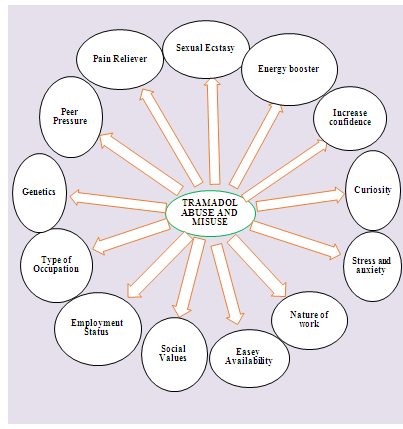
People abuse drugs for various reasons. These may range from curiosity, availability and previous drug use to emotional and social pressures. Drug use and abuse as a habit unfortunately could begin quite early in life as part of culture in some societies. There is a substantial body of literature on the reasons or motivations that people cite for using alcohol, particularly amongst adult populations. For example, research on heavy drinkers suggested that alcohol use is related to multiple functions for use Sadava S (1975) [9]. Similarly, research with a focus on young people has sought to identify motives for illicit drug use. There is evidence that for many young people, the decision to use a drug is based on a rational appraisal process, rather than a passive reaction to the context in which a substance is available Boys A, et al. (2000a), Wibberley C, Price J (2000) [10, 11].
Reported reasons vary from quite broad statements (e.g. to feel better) to more specific functions for use (e.g. to increase self-confidence). However, much of this literature focuses on `drugs' as a generic concept and makes little distinction between different types of illicit substances [12]. People may abuse Tramadol because it causes a sense of extreme relaxation or euphoria. Those who have severe pain may take more than recommended in an attempt to treat their conditions. Tramadol’s lower price and availability with or/and without prescription makes it very popular.
A WHO (2004) [13] report, entitled “Neuroscience of Psychoactive Substance Use and Dependence”, details many environmental and individual factors, including genetics that contribute to Substance Abuse and Addiction. Genetics contribute to the increased likelihood that an individual will abuse drugs, and to what extent the substance abuse may escalate. Environmental risk factors include availability of drugs, poverty, social changes, peer influences, employment status, type of occupation and cultural attitudes. Individual risk factors include: being a victim of child abuse, personality disorders, and extreme changes in family situation, inter-family dependence problems, academic stress, poor academic performance, social deprivation, depression, and suicidal behavior. College student are particularly influenced by a number of different factors, including peer pressure, separation from family and friends, academic performance pressures, and biological mental duress. Teenagers and college students are among the largest groups who abuse prescription pain medications. This is due to the fact that they are usually easy to access, they are fairly inexpensive compared to many kinds of street drugs, and they are perceived as safer than illegal drugs because they are often prescribed by a doctor.
Also, Hassan N (2018) [8] reported that some youth in the Kpandai District in the Upper West Region have become addicted to Tramadol, using it in large doses and mixing it with some energy drinks such as Storm, 5star, Rush and many others to boost their energy without medical prescription. He believes that, the youth, including students, reportedly also take the drug to increase their desire during sexual intercourse with their partners and also to help them to sit over night to learn, which is not healthy for the human body [8].
Research Methodology
Profile of Study Area
The Amenfi West Municipality is located in the middle part of the Western Region of Ghana. It has an estimated total land of 1,448.56sq Km; representing 6.1% of the size of the region. The projected population for 2017 is 115,242 with males dominating by 50.5% (Source- 20110 Population and Housing Census, Ghana Statistical Survey) using an annual growth rate of 2%. The major occupation of the people is farming and trading in farm produce. The topography of the Municipality is generally undulating with summits averaging 153metres above sea level (500ft). The main mineral found in the district is gold.
Three types of vegetation cover are found in the Amenfi West Municipality. These are the semi- deciduous forest found in the northern part, the tropical rainforest to the south where rainfall is heaviest and the transitional zone situated between the two. The Municipality has forest reserves covering a total area of 64,242.81 hectares, which include Bura, Angoben and Totua Forest reserves. The Municipality has fifty-three (53) health facilities which are evenly distributed. These facilities comprise of three (3) Hospitals, two (2) Health Centers, four (4) Private Clinics, twelve (12) Maternity Homes, and thirty (30) Functional CHPS zones.
Research Design and Type
The research design for this study was a cross- sectional-survey. According to Avoke M (2005) [14], descriptive surveys are designed to portray accurately the characteristics of particular individuals, situations or groups. It is used as needs assessment tool to provide information on which to base sound decisions and to prepare the background for more constructive programme of educational research. It also serves as a foundation for more vigorous and precise investigation. The study type was descriptive quantitative study since the researchers provide more information as possible and describes Tramadol abuse and misuse in the Wassa Amenfi West Municipality.
Study Population
In this study, the target population of the study included youth in the Wassa Amenfi West Municipality. This population was chosen because it enabled the researchers to generate reliable answers to the research questions regarding tramadol abuse.
Sample Size and Sampling Techniques
Proceeding to the selection of respondents for the study, the municipality was alienated into four zones specifically North, East, South and West and sample was taken from all these zones by means of simple random sampling. The communities within the zones were selected using simple random sampling techniques. The lottery draw under the simple random sampling techniques was used to select communities for the study. The number of respondents chosen from exact area depends on the dimension of the population of the area.
| Sampling Unit | Target Population |
|---|---|
| Asankrangwa Township | 100 |
| Asankran-Breman, | 70 |
| Amoaman | 50 |
| Wasa Dunkwa | 50 |
| Saa | 30 |
| Total Sample size | 300 |
Table 1: Selection of the Study Population In determining the sample size, the single proportion rate formula by Rexroat et al.
1+𝑁(𝑎2) (Source: Rexroat et al., 1992)
Where n = sample size N = Sampling Frame 1 = Constant a = Margin of error The formula above was used because of the data availability for all variables. The 2017 projected population of the Wassa Amenfi West Municipality at 115242formed the sample frame. With a confidence level of 95%, and a margin of error (a) of 5%, the result for the sample size is as follows:
N
115242 n =
2 n =
2 n= 398.6 ) N(a + 1
) 5 115242(0.0 + 1 Rounded up to 400 for precision n = 300 respondents N= 115242 a= 5% 1= constant The researchers chose this sample size due to cost, and time constraints as well as to achieve higher response rate.
Data Collection Tools/Instruments
Both secondary and primary data collection methods were used during the research. Secondary data sources were used to access information from books, journals, magazines, reports and the Internet. Under the primary data collection method, quantitative (survey structured questionnaire) was used through well-structured questionnaire. The questionnaire was the major instrument used for the collection of data. The questionnaire has some open-ended questions as well as closed or multi-choice questions that required respondents to choose from already listed possible answers.
Data Analysis Methods
Quantitative data analysis methods were used with the aid of Statistical Package for Social Sciences (SPSS) version 21.0 in the analysis of the data. By the use of this software, appropriate tables, frequencies and charts were generated which aided in easy understanding of the research results.
Limitations of the Study
The limitations of this study include factors such as time constraints due to the fact that the researchers have to spend much time at the study area in data collection and the inability to reach some respondents at the right time since most of these people are famers and galamsey operators in the municipality. Language barrier served as one of the limitations of the study- to overcome this, research assistants who were fluent in Twi were recruited to participate in the survey so as to facilitate easy communication.
Presentation of Results
This chapter is primarily devoted to the analysis of primary data obtained from the field survey.
| Variables | Response | Frequency (N=300) | Percentage (%) |
| Sex | Male | 258 | 86.0 |
| Female | 42 | 14.0 | |
| Total | 300 | 100.0 | |
| Age Group (years) | 11-15 | 12 | 4.00 |
| 16-20 | 85 | 28.3 | |
| 21-25 | 138 | 46.0 | |
| 26-30 | 47 | 15.7 | |
| >30 | 18 | 6.00 | |
| Minimum = 13; Maximum = 35 | |||
|---|---|---|---|
| Total | 300 | 100.0 | |
| Marital Status | Married | 81 | 27.0 |
| Single | 137 | 45.7 | |
| Co-habitation | 82 | 27.3 | |
| Total | 300 | 100.0 | |
| Religious Affiliation | Christian | 243 | 81.0 |
| Moslem | 35 | 11.7 | |
| Traditionalist | 22 | 3.7 | |
| Total | 300 | 100.0 | |
| Level of education | Basic | 118 | 39.3 |
| S.H.S | 97 | 32.3 | |
| Tertiary | 27 | 9.0 | |
| 58 | 19.3 | ||
| Total | 300 | 100.0 | |
| Type of Occupation | Artisans | 100 | 33.3 |
| Small scale miners | 76 | 25.3 | |
| Farming | 60 | 20.0 | |
| Unemployed | 24 | 8.0 | |
| Trading | 19 | 6.3 | |
| Employed by Formal sector | 12 | 4.0 | |
| Employed by Private sector | 9 | 3.0 | |
| Total | 300 | 100.0 | |
Table 2: Demographic Variables of Respondents.
Source: Field Survey (2018) Table 2: Demographic Variables of Respondents.
Demographic Variables of Respondents
The study found majority (86%) of the respondents were males whereas the remaining (14%) were females. This could be attributed to the fact that more males are involved in activities that trigger them to use tramadol. But a higher number (46%) of respondent were between the ages of 21-25 years, followed by (28.3%) who were between the ages of 16-20 years. The minimum age was
13 years whereas the maximum age was 35 years. A close look at the age category of the respondents implies that this age group of respondents is in their early and late twenties. This is the age range where the youth is very viable and energetic to learn and contribute to their wellbeing and society as whole. Religious affiliation indicated that preponderance (81%) of the respondents were Christians. The means that the communities under the study were Christian dominated in the municipality. One will therefore be tempted to think that since respondents were Christians the level in which they abuse tramadol including other substances such alcohol, marijuana, cigarette among others will be minimal; but this is not so. Therefore, has the proliferation of churches contributed positively or negatively to the moral upbringing of the youth is our society? level education, (32.2%) were Senior High School graduates, (19.3%) of the respondents had no education, whereas just few of the respondents had tertiary level of education. Finally, when it comes to type of occupation, high number (33.3%) of the respondents were Artisans, (25.3%) were small scale miners, this was immediately followed by (20%) of the respondents who were into farming. It is deduced from the above that, the study considered different category of respondents with respect to sex, marital status, religious affiliation, educational level, and type of occupation which enabled the researchers to obtain varied information to satisfy the intended purpose of study.
The study found that a high (45.7%) number of the respondents were single followed by those who were co- habitating and married respectively (27%). In terms of educational status, (39.3%) of the respondents had basic
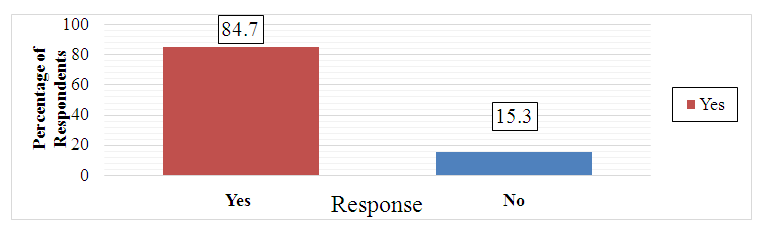
Source: Field Survey (2018) Figure 2: Whether Respondents Know About Tramadol.
| Response | Have you heard of tramadol before? | |||||
|---|---|---|---|---|---|---|
| Sex | Yes | No | Total | Chi-Square | P-value | |
| Sex | (Frq.)(%) | (Frq.)(%) | ||||
| Sex | Male | 216(72.0) | 42(14.0) | 258 | 19.270a | 0.002 |
| Sex | Female | 38(12.7) | 4(1.30) | 42 | ||
| Sex | Total | 254(84.7) | 46(15.3) | 300 | ||
| Age group | 11 - 15 | 12(4.00) | 0(0.00) | 12 | 18.618a | 0.001 |
| Age group | 16 - 20 | 76(25.3) | 9(3.00) | 85 | ||
| Age group | 21 - 25 | 104(34.7) | 34(11.3) | 138 | ||
| Age group | 26 – 30 | 45(15.0) | 2(0.60) | 47 | ||
| Age group | 30 > | 17(5.70) | 1(0.30) | 18 | ||
| Age group | Total | 254(84.7) | 46(15.3) | 300 | ||
| Marital status | Married | 70(23.3) | 11(3.70) | 81 | .446a | 0.800 |
| Marital status | Single | 114(38.0) | 23(7.60) | 137 | ||
| Marital status | Cohabitation | 70(23.3) | 12(4.00) | 82 | ||
| Marital status | Total | 254(84.7) | 46(15.3) | 300 | ||
| Religious affiliation | Christian | 208(69.3) | 35(11.6) | 243 | 11.130a | 0.004 |
| Religious affiliation | Moslem | 24(8.00) | 11(3.70) | 35 | ||
| Religious affiliation | Traditionalist | 22(7.30) | 0(0.00) | 22 | ||
| Religious affiliation | Total | 254(84.7) | 46(15.3) | 300 |
| Basic | 108(36.0) | 10(3.30) | 118 | 16.331a | 0.001 | ||
| Level of education | S.H.S | 71(23.6) | 26(8.70) | 97 | |||
| Level of education | Tertiary | 22(7.00) | 5(1.60) | 27 | |||
| Level of education | 53(17.7) | 5(1.60) | 58 | ||||
| Level of education | Total | 254(84.7) | 46(15.3) | 300 | |||
| Level of education | Type of occupation | Artisans | 86(28.7) | 14(4.70) | 100 | 16.718a | 0.001 |
| Employed by Formal sector | Type of occupation | 10(3.30) | 2(0.60) | 12 | |||
| Employed by Private sector | Type of occupation | 8(2.60) | 1(0.30) | 9 | |||
| Farming | Type of occupation | 54(18.0) | 6(2.00) | 60 | |||
| Small scale miner | Type of occupation | 57(19.0) | 19(6.30) | 76 | |||
| Trading | Type of occupation | 18(6.00) | 1(0.30) | 19 | |||
| Unemployed | Type of occupation | 21(7.00) | 3(1.00) | 24 | |||
| Total | Type of occupation | 254(84.7) | 46(15.3) | 300 |
Table 4: Chi-Square Test between Demographic variables and Respondents knowledge on tramadol.
Source: Field Survey (2018) Table 3: Chi-Square Test between Demographic variables and Respondents knowledge on tramadol.
Table 3 illustrates the relationship between what tramadol is and the demographic variables. The study found that majority (84.7%) affirmed they know about tramadol whereas (15.3%) stated otherwise. By the cross tabulation, it was found that, out of 300 respondents, (72%) males knew about tramadol as compared to females (12%). With respect to the age group, (34.7%) of the respondents between the ages of 21-25 years knew about tramadol.
A chi-square (“goodness of best fit”) test was conducted at 95% confidence level and alpha value 0.05 (α=0.05) to determine the association between knowledge on tramadol and demographic variables. A probability value (p < 0.05) less than alpha (α=0.05) means that there is an association. A chi-square test indicated that there is a significance association between knowledge on tramadol and demographic variables such as sex, age group, religious affiliation, educational level and type of occupation with probability values less (p= .002, .001, .004, .001, and .001 respectively) than alpha (α=0.05). However, there is no relationship between marital status and respondents’ knowledge on tramadol.
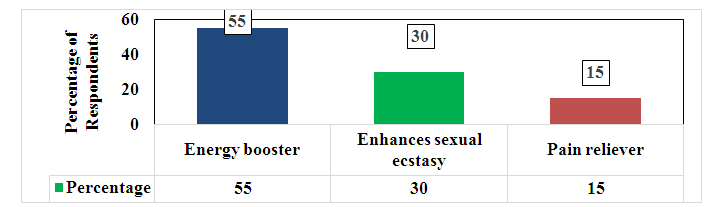
Data gathered from the above chart found that more than half (55%) of the respondents affirmed the main purpose of tramadol as energy booster, (30%) said it enhances sexual ecstasy, whereas (15%) of the respondents indicated relieving of pains.
| Response | Have you ever used tramadol before? | |||||
|---|---|---|---|---|---|---|
| Sex | Yes | No | Total | Chi-Square | P-value | |
| Sex | (Frq.)(%) | (Frq.)(%) | ||||
| Sex | Male | 136(45.3) | 99(33.0) | 235 | 15.43a | 0.013 |
| Sex | Female | 3 (10.7) | 33(11.0) | 65 | ||
| Sex | Total | 168(56.0) | 132(44.0) | 300 | ||
| Age Group | 11 - 15 | 8(2.70) | 4(1.30) | 12 | 3.946a | 0.413 |
| Age Group | 16 - 20 | 42(14.0) | 43(14.3) | 85 | ||
| Age Group | 21 - 25 | 77(25.7) | 61(20.3) | 138 | ||
| Age Group | 26 - 30 | 31(10.3) | 16(5.30) | 47 | ||
| Age Group | 30 > | 10(3.30) | 8(2.60) | 18 | ||
| Age Group | Total | 168(56.0) | 132(44.0) | 300 | ||
| Marital Status | Married | 49(16.3) | 32(10.7) | 81 | 8.703a | 0.000 |
| Marital Status | Single | 83(27.7) | 54(18.0) | 137 | ||
| Marital Status | Cohabitation | 36(12.0) | 46(15.3) | 82 | ||
| Marital Status | Total | 168(56.0) | 132(44.0) | 300 | ||
| Religious Affiliation | Christian | 134(44.7) | 109(36.7) | 243 | 4.897a | 0.086 |
| Religious Affiliation | Moslem | 17(5.60) | 18(6.00) | 35 | ||
| Religious Affiliation | Traditionalist | 17(5.60) | 5(1.70) | 22 | ||
| Religious Affiliation | Total | 168(56.0) | 132(44.0) | 300 | ||
| Level of education | Basic | 54(18.0) | 64(21.3) | 118 | 9.490a | 0.023 |
| Level of education | S.H.S | 64(21.3) | 33(33.0) | 97 | ||
| Level of education | Tertiary | 17(5.70) | 10(3.30) | 27 | ||
| Level of education | 33(11.0) | 25(8.70) | 58 | |||
| Level of education | Total | 168(56.0) | 132(44.0) | 300 | ||
| Type of Occupation | Artisans | 52(17.2) | 48(16.0) | 100 | 15.193a | 0.019 |
| Type of Occupation | Employed by Formal sector | 6(2.00) | 6(2.00) | 12 | ||
| Type of Occupation | Employed by Private sector | 4(1.30) | 5(1.60) | 9 | ||
| Type of Occupation | Farming | 26(8.7) | 34(11.3) | 60 | ||
| Type of Occupation | Small scale miner | 51(17.0) | 25(8.30) | 76 | ||
| Type of Occupation | Trading | 16(5.3) | 3(1.00) | 19 | ||
| Type of Occupation | Unemployed | 13(4.30) | 11(3.7) | 24 | ||
| Type of Occupation | Total | 168(56.0) | 132(44.0) | 168(56.0) |
Table 5: Chi-square Test between Demographic variables and use of Tramadol.
Source: Field Survey (2018) Table 4: Chi-square Test between Demographic variables and use of Tramadol.
Data obtained from table 4 portrayed a chi-square computation test between demographic variables and use of tramadol. Proportion by cross tabulation indicated that more than half (56%) of the respondents attested they have ever used tramadol while (44%) indicated no.
A chi-square test revealed a significance evidence of association between the use of tramadol and demographic variables such as sex, educational level and type of occupation with probability values less than alpha (α=0.05)(p= 0.013, 0.023, and . 0.019 respectively) with chi-square values (X2 = 15.43a ,8.703a, and 15.193a).
| Number of Doses per day | Chi-Square | P-value | ||||||||
|---|---|---|---|---|---|---|---|---|---|---|
| Age Group | 1-2 | 3-4 | 5-6 | 7-8 | 9-10 | 11+ | Total | |||
| Frq. (%) | Frq. (%) | Frq. (%) | Frq. (%) | Frq. (%) | Frq. (%) | |||||
| 11 - 15 | 0(0.00) | 0(0.00) | 0(0.00) | 5(1.60) | 2(0.60) | 5(1.60) | 12 | |||
| 16 - 20 | 8(2.7) | 9(3.00) | 18(6.00) | 11(3.70) | 31(10.3) | 8(2.80) | 85 | |||
| 21 - 25 | 6(2.00) | 7(2.30) | 40(13.3) | 13(4.30) | 31(10.3) | 41(13.7) | 138 | |||
| 26 - 30 | 0(0.00) | 0(0.00) | 0(0.00) | 15(5.00) | 27(9.00) | 5(1.60) | 47 | |||
| 30 + | 0(0.00) | 0(0.00) | 6(2.00) | 2(0.60) | 9(3.00) | 1(0.30) | 18 | |||
| Total | 14(4.70) | 16(5.30) | 64(21.3) | 46(15.3) | 100(33.3) | 60(20.0) | 300 |
Table 6: Relationship between Age group and Doses of Tramadol Taken per day.
From table 5, (33.3%) of the respondents takes 9-10 doses of tramadol, (21.3%) takes 5-6 doses , (20%) more than 11 doses, while (5.3%) and (4.7%) take 3-4 and 1-2 doses respectively.
From the chi-square test, it is clear that there is a significant association between age group of respondents and the doses of tramadol taken per day (Chi-square X2 =85.234a, p=0.000).
| Number of Doses per day | Total | Chi-Square | P-value | |||||||
|---|---|---|---|---|---|---|---|---|---|---|
| Marital status | 1-2 | 3-4 | 5-6 | 7-8 | 9-10 | 11+ | Total | |||
| Frq. (%) | Frq. (%) | Frq. (%) | Frq. (%) | Frq. (%) | Frq. (%) | |||||
| Married | 7(2.30) | 5(1.60) | 22(7.30) | 16(5.30) | 25(8.30) | 6(2.00) | 81 | |||
| Single | 0(0.00) | 11(3.70) | 39(13.0) | 13(4.30) | 50(16.6) | 24(8.00) | 137 | |||
| Co-habitation | 7(2.30) | 0(0.00) | 3(1.00) | 17(5.60) | 25(8.30) | 30(10.0) | 82 | |||
| Total | 14(4.7) | 16(5.30) | 64(21.3) | 46(15.3) | 100(33.3) | 60(20.0) | 300 |
Table 7: Relationship between Marital Status and Doses of Tramadol Taken Per Day.
Source: Field Survey (2018) Table 6: Relationship between Marital Status and Doses of Tramadol Taken Per Day.
tramadol by respondents (Chi-square X2 =59.203a, p=0.000).
| Attributes | Number of Doses per day | Chi-Square | P-value | |||||||||||
|---|---|---|---|---|---|---|---|---|---|---|---|---|---|---|
| Level of education | 1-2 | 3-4 | 5-6 | 7-8 | 9-10 | 11+ | Total | 44.239a | .000 | |||||
| Frq. (%) | Frq. (%) | Frq. (%) | Frq. (%) | Frq. (%) | Frq. (%) | |||||||||
| Basic | 14(4.60) | 8(2.60) | 20(6.70) | 18(6.00) | 37(12.3) | 21(7.00) | 118 | |||||||
| S.H.S | 0(0.00) | 7(2.30) | 23(6.70) | 19(6.30) | 27(9.00) | 21(7.00) | 97 | |||||||
| Tertiary | 0(0.00) | 0(0.00) | 9(3.00) | 6(2.00) | 11(3.60) | 1(0.30) | 27 | |||||||
| None | 0(0.00) | 1(0.30) | 12(4.00) | 3(1.00) | 25(8.30) | 17(5.70) | 58 | |||||||
| Total | 14 (4.70) | 16(5.30) | 64(21.3) | 46(15.3) | 100(33.3) | 60(20.0) | 300 |
Table 8: Relationship between Level of education and Doses of Tramadol Taken per day.
Source: Field Survey (2018) Table 7: Relationship between Level of education and Doses of Tramadol Taken per day.
level of education and the doses of tramadol by respondents (Chi-square X2 =44.239a, P=0.000).
Attributes Number Of Doses Per Day Chi-Square P-value Type of Occupation 1-2 3-4 5-6 7-8 9-10 11+ Total 56.927a .002 Frq.(%) Frq.(%) Frq.(%) Frq.(%) Frq.(%) Frq.(%) Artisans 3(1.00) 8(2.70) 18(6.00) 16(5.30) 26(8.70) 29(9.70) 100 Employed by Formal sector 0(0.00) 0(0.00) 1(0.30) 0(0.00) 10(3.30) 1(0.30) 12 Employed by Private sector 1(0.30) 0(0.00) 2(0.60) 1(0.30) 5(1.70) 0(0.00) 9 Farming 5(1.70) 6(2.00) 19(6.30) 7(2.30) 15(5.00) 8(2.70) 60 Small scale miners 2(0.60) 2(0.60) 20(6.70) 11(3.70) 25(8.30) 16(5.30) 76 Trading 0(0.00) 0(0.00) 0(0.00) 5(1.70) 10(3.30) 4(1.30) 19 Unemployed 3(1.00) 0(0.00) 4(1.30) 6(2.00) 9(3.00) 2(0.60) 24 Total 14 (4.7) 16(5.30) 64(21.3) 46(15.3) 100(33.3 60(20.0) 300
- Data gathered from table 8 showed that there is an tramadol taken by respondents per day (Chi-square (X²)
Table 9: Relationship between Type of Occupation and Doses of Tramadol Taken per Day.
tramadol taken by respondents per day (Chi-square (X2) =56.927a, P=0.002).
| Response | Frequency (N) | Percentage (%) |
| 1-3 Months | 9 | 5.40 |
| 4-6 Months | 20 | 12.0 |
| 1-3 Years | 90 | 53.4 |
| 5-6 Years | 49 | 29.2 |
| Total | 168 | 100.0 |
Table 10: How Long Respondents Have Used Tramadol.
Source: Field Survey (2018) Table 9: How Long Respondents Have Used Tramadol.
| Response | Frequency (N) | Percentage (%) |
|---|---|---|
| Swallow with water | 26 | 8.7 |
| Add to Alcoholic beverage and drink | 187 | 62.3 |
| Add to Energy drink and take it | 87 | 29.0 |
| Inject to my veins or muscles | 0 | 0.00 |
| Other | 0 | 0.00 |
| Total | 300 | 100.0 |
Table 11: Mode of Taking Tramadol by Respondents.
Source: Field Survey (2018) Table 10: Mode of Taking Tramadol by Respondents. Data per the above table revealed that more than half (53.4%) of those respondents who have ever used tramadol said they have been using tramadol for 1-3 years, (29.2%) 5-6 years, (12%) 4-6 months and the remaining (5.4%) 1-3 months.
Data obtained from table 10 found that majority (62.3%) of the respondents mostly take tramadol along with alcoholic beverage, (29%) indicated they add tramadol to energy drink and take, just few (8.7%) of the respondents swallow the tramadol with water. Strangely, it was further indicated by respondents that they sometimes use tramadol for enema as a way of preventing stomach upsets.
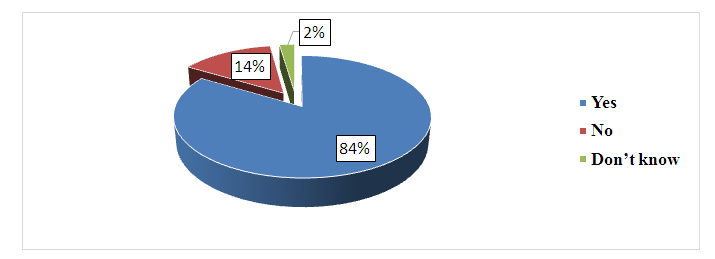
Above pie chart revealed that, preponderance (84%) of respondents affirmed they knew people who use tramadol while the remaining (14%) indicated No. From table 3,(56%) affirmed that they have ever used tramadol before as compared to responses from figure 4 who attested that they know people (probably peers) who use tramadol.
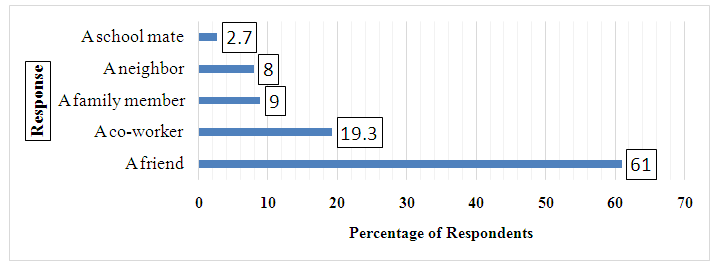
Source: Field Survey (2018) Figure 2: How are you related to this person?
When respondents were asked how they are related to those who take tramadol, the study found that majority (61%) of the respondents stated they were their friends, followed by (19.3%) of respondents who said they were co-workers, few (9%), (8%) and (2.7%) of the respondents indicated they were related as family members, neighbors and school mates respectively.
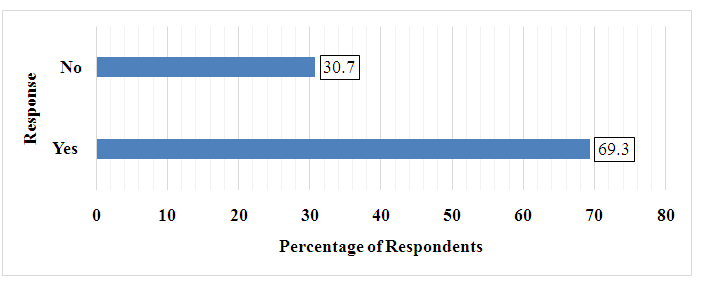
Source: Field Survey (2018) Figure 3: Whether respondents knew where tramadol is readily available.
From figure 6, majority (69.3%) of the respondents affirmed that they knew where tramadol is readily available whereas the remaining (30.7%) indicated no.
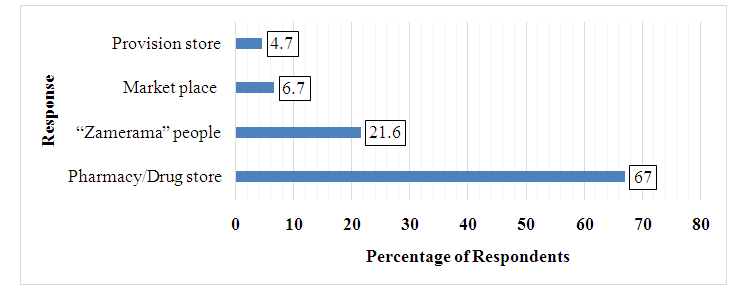
Source: Field Survey (2018) Figure 4: Where Tramadol can be obtained.
Ascertaining where tramadol can be obtained from figure 7, majority (67%) of the respondents attested that tramadol is obtained from the pharmacies and drug stores, (21.7%) of the indicated it is obtained from the “Zamerama” people, (6.7%) and (4.7%) of the respondents also stated tramadol can be obtained from the market and provision stores. Other places indicated by respondents included “boys boys base”, and some drinking spots. According to the respondents when buying tramadol from pharmacies there is a common sign that both the customer and the pharmacist know in that when exhibited, the drug will be sold to them.
Attributes Source of information Chi-Square P-value
Age Group Peers/friends Radio/TV/
Internet Pharmacies or Drug stores Books and magazines Total
.000 Frq. (%) Frq. (%) Frq. (%) Frq. (%) 11 - 15 12(4.00) 0(0.00) 0(0.00) 0(0.00) 12 16 - 20 62(20.7) 15(5.00) 8(2.70) 0(0.00) 85 21 - 25 121(40.3) 1(0.30) 11(3.6) 5(1.60) 138 26 – 30 46(15.3) 0(0.00) 1(0.30) 0(0.00) 47 30 + 10(3.30) 0(0.00) 8(2.70) 0(0.00) 18 Total 251(83.7) 16(5.30) 28(9.30) 5(1.60) 300
72.074a
- Data gathered from table 11 showed higher number old From the Chi-square test the study found a strong
Table 12: Relationship between Age group and Source of Information.
Data gathered from table 11 showed, higher number (40.3%) of respondents heard the information on tramadol from their friends and peers between the ages of 21-25 years, this was followed by (20.7%) and (15.3%) of those within the ages between 16-20 and 26-30 years old. From the Chi-square test, the study found a strong evidence of association between the age distribution of respondents and the source of information on tramadol (Chi-square (x2 ) =72.074a, P=.000) where p-values is less than alpha (α=0.05).
| Attributes | Source of information | Chi-Square | P | -valu | e | ||||||||||
|---|---|---|---|---|---|---|---|---|---|---|---|---|---|---|---|
| Marital Status | Peers/friends | Radio/TV/ Internet | Pharmacies or Drug stores | Books and magazines | Total | 55.958a | .000 | ||||||||
| Frq. (%) | Frq. (%) | Frq. (%) | Frq. (%) | ||||||||||||
| Married | 59(19.7) | 14(4.6) | 3(1.00) | 5(1.60) | 81 | ||||||||||
| Single | 125(41.6) | 2(0.60) | 10(3.30) | 0(0.00) | 137 | ||||||||||
| Co-habitation | 67(22.3) | 0(0.00) | 15(5.00) | 0(0.00) | 82 | ||||||||||
| Total | 251(83.7) | 16(5.30) | 28(9.30) | 5(1.60) | 300 |
From table 12, higher number (41.6%) of those who were single according to the survey had information from their peers and friends. The study found that there was a relationship between the marital status of respondents and the source of information about tramadol (Chi-square x2) = (55.958a, p=.000) where p-values is less than alpha value (α=0.05).
| Attributes | Source of information | Chi-Square | P-value | ||||
|---|---|---|---|---|---|---|---|
| Religious Affiliation | Peers/friends | Radio/TV/ Internet | Pharmacies or Drug stores | Books and magazines | Total | 21.403a | .002 |
| Frq. (%) | Frq. (%) | Frq. (%) | Frq. (%) | ||||
| Christian | 206(68.7) | 14(4.60) | 18(6.00) | 5(1.60) | 243 | ||
| Moslem | 25(8.30) | 0(0.00) | 10(3.30) | 0(0.00) | 35 | ||
| Traditionalist | 20(6.7) | 2(0.70) | 0(0.00) | 0(0.00) | 22 | ||
| Total | 251(83.7) | 16(5.30) | 28(9.30) | 5(1.60) | 300 |
Source: Field Survey (2018) Table 3: Relationship between Religious Affiliation and Source of information.
Data gathered per above table 13 revealed that majority (68.7%) of Christians obtained information on tramadol from their peers and friends as compared to Moslems and traditionalist. The results from the chi-
| Attributes | Source of information | Chi-Square | P-value | ||||
|---|---|---|---|---|---|---|---|
| Level of education | Peers/friends | Radio/TV/ Internet | Pharmacies or Drug stores | Books and magazines | Total | 52.407a | .000 |
| Frq. (%) | Frq. (%) | Frq. (%) | Frq. (%) | ||||
| Basic | 109(36.3) | 6(2.00) | 3(1.00) | 0(0.00) | 118 | ||
| S.H.S | 81(27.0) | 1(0.30) | 15(5.00) | 0(0.00) | 97 | ||
| Tertiary | 22(7.30) | 5(1.70) | 0(0.00) | 0(0.00) | 27 | ||
| None | 39(13.0) | 4(1.3) | 10(3.30) | 5(1.60) | 58 | ||
| Total | 251(83.7) | 16(5.30) | 28(9.30) | 5(1.60) | 300 |
Source: Field Survey (2018) Table 4: Relationship between Level of education and Source of information.
When it comes to respondents’ education level, the chi-square test from table 14 indicated that there is a significant association between ones level of education and source of information (Chi-square X2 )= 52.407a, p=.000) where p-values is less than alpha (α=0.05).
| Attributes | Source of Information | Chi-Square | P-value | ||||||||||||
|---|---|---|---|---|---|---|---|---|---|---|---|---|---|---|---|
| Type of occupation | Peers/ friends | Radio/TV/ Internet | Pharmacies or Drug stores | Books and magazine | Total | 40.150a | .002 | ||||||||
| Frq. (%) | Frq. (%) | Frq. (%) | Frq. (%) | ||||||||||||
| Artisans | 86(28.7) | 6(2.00) | 3(1.00) | 0(0.00) | 100 | ||||||||||
| Employed by Formal sector | 8(2.70) | 0(0.00) | 4(1.30) | 0(0.00) | 12 | ||||||||||
| Employed by Private sector | 9(3.00) | 0(0.00) | 0(0.00) | 0(0.00) | 9 | ||||||||||
| Farming | 44(14.6) | 7(2.30) | 9(3.00) | 0(0.00) | 60 | ||||||||||
| Small scale miner | 67(22.3) | 2(0.60) | 7(2.30) | 0(0.00) | 76 | ||||||||||
| Trading | 19(6.30) | 0(0.00) | 0(0.00) | 0(0.00) | 19 | ||||||||||
| Unemployed | 18(6.00) | 1(0.30) | 5(1.60) | 24 | |||||||||||
| Total | 251(83.7) | 16(5.30 | 28(9.30) | 5(1.60) | 300 |
information (Chi-square X2 )=40.150a, p=.002) where p- values is less than alpha (α=0.05).
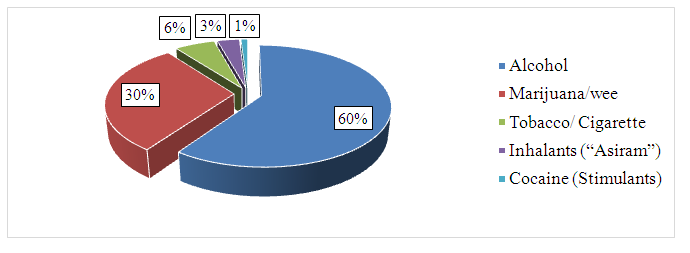
Source: Field Survey (2018) Figure 5: Other Substances Commonly Taken by Respondents Figure 8 showed other substances commonly taken by respondents apart from tramadol. The data obtained revealed that majority (60%) of respondents commonly take alcohol, followed by marijuana (30%), while just few (6%), (3%) and (1%) commonly take tobacco/cigarette, inhalants and cocaine respectively.
Knowledge and Practice on the Abuse of Tramadol
With respect to the doses of tramadol taken by respondents, the study found (33.3%) of respondents abuse tramadol between 9-10mg of tramadol and (20%) take more than 11gm of tramadol, while the remaining take between 5-6, 1-2 and 3-4mg of tramadol. But it should be noted that, these doses taken by respondents are based on the Milligrams contained in the drug. They indicated that the tablets give them quicker results as compared to capsules. It for this reason that most youth from Wassa Amenfi West Municipality and its environs report series of cases due to tramadol abuse of which some end up dying while others suffer from severe heath conditions including motor accidents in the Father Thomas Allan Rooney Memorial Hospital in Asankrangwa in the Western Region of Ghana. The main interest is to achieve desired results but due to lack of knowledge on the required doses needed to be taken with respect to the age, the weight will not be considered by such victims. Milligrams (Mg) usually taken by respondents include, 50mg, 100mg, 150mg, 200mg, 250mg, 300mg, 350mg, 400mg, 450mg, and 500gm. These milligrams of tramadol taken is based on its type [capsules (low mg) or tablets (high mg)].
The chi-square test computation revealed that there is significant association between the doses of tramadol taken per day and demographic variables of respondents such as age group, marital status, level of education, and type of occupation (X2 =85.234a , P=0.000, X2 =59.203a, p=0.000, X2 =44.239a, p=0.000, and X2 =56.927a, p=0.002) respectively. Per the results obtained, there is enough evidence to support that doses of tramadol taken by respondent per day has a bearing on the demographic variables of respondents. The study revealed, more than half (53.4%) of respondents have been using tramadol for 1-3 years and (29.2%) for 5-6 years. however, some also, started using drugs for 1-6 months; this is represented by (17.5%). This implies that participants started using tramadol at different duration and this difference could partly be attributed to the time he/she got to know about the drugs, peer, curiosity, availability, among others. Soliciting the views of respondents on how they take tramadol, it turned out that majority (62.3%) of respondents mostly take tramadol along with alcoholic beverage, (29%) indicated they always add tramadol to energy drink and take it, while few swallow the tramadol with water. This practice among tramadol abusers is to heighten the effects of the drugs in their body. This can pose a very serious health threat to these individuals in our community. More so, the use of alcoholic aphrodisiacs as sex enhancers have also become the order of the day predominantly among the youth. This therefore informs the reason why these individuals prefer mixing these drinks with tramadol for quicker reaction. Strangely, it was further indicated by respondents that they sometimes use tramadol for enema as a way of preventing stomach upsets which is quite dangerous.
By contact tracing from the study, preponderance (84%) of respondents affirmed that they know people who use tramadol while (56%) attested (table3) that they have ever used tramadol before. By comparison, it can be deduced that majority of respondents were able to indicate those who use tramadol but not same proportion of respondents agreed that they have ever used tramadol. From a considered view from the study, there is some kind of relationship between these individual and may probably taking tramadol with them. When respondents were asked their relationship with such persons , the study found that majority (61%) of the respondents attested to the fact that they were their friends, followed by (19.3%) those who indicated they were co-workers, few of the respondents were their family members, neighbor and school mates. As indicated, because of the kind of bond that exists among them, the likelihood of peer influence will be high.
The study found that majority (69.3%) of the respondents affirmed they knew where tramadol is readily available. Ascertaining where tramadol can be obtained, majority (67%) of the respondents attested that tramadol is obtained from the pharmacies and drug stores, while some participants indicated that, it can be obtained from “Zamerama” people, market places and provision stores. Other places indicated by respondents include “boy’s boys bases”, and some drinking spots. According to the respondents when buying tramadol from pharmacies there is a common sign that both the customer and the pharmacist know in that when exhibited, the drug will be sold to them. It can be deduced that, users of the drug from the various communities have different means of obtaining the tramadol that it requires strategic methods to curtail the level of entry of tramadol in the municipality.
Again, study sought to establish the source of information on tramadol and demographic variables of respondents. The study found that majority (84%) of the respondents affirmed they got information from their friends/peers. However out of that, (64%) were males while the rest females. It is deduced that more males had the information on tramadol than females according to the survey. Higher number (40.3%) of respondents had information on tramadol from their friends and peers between the ages of 21-25 years. From the Chi-square test, the study found a strong evidence of association between the age distribution of respondents and the source of information on tramadol (Chi-square (X2) =72.074a, P=.000) where P-values is less than alpha value (α=0.05).
With respect to marital status of respondents, higher number (41.6%) of those who were single according to the survey had information from their peers and friends. The study found that, there is a relationship between the marital status of respondents and the source of information about tramadol (Chi-square X2)= (55.958a, P=.000) where P-values is less than alpha value (α=0.05). It is also revealed that majority (68.7%) of Christians obtained information on tramadol from their peers and friends as compared to Moslems and traditionalist. The chi-square computation revealed that, there is a significant association between respondents’ religious affiliation and the source of information on tramadol (Chi- square X2) = 21.403a, P=.002) where P-values is less than alpha value (α=0.05).
When it comes the respondents’ education level, the chi-square test indicated a significant association between one’s level of education and source of information (Chi- square X2 )= 52.407a, P=.000) where P-values is less than alpha value (α=0.05). In this context, [10] and [11] argued that for many young people, the decision to use a drug is based on a rational appraisal process, rather than a passive reaction to the context in which a substance is available. Again the study found an association between the type of occupation of respondents and source of information (Chi-square (X2 )= 40.150a, p=.002) where p- values is less than alpha value (α=0.05). It means that the kind occupation informs the person to device alternative means of performing on the job especially if such kind of work requires a lot of energy. Indicated already by respondents, majority affirmed that the main reason for using tramadol is to boost their energy level.
The Reasons Underlying the Use of Tramadol
Ascertaining the main reasons why participants use tramadol, it turned out that more than half (55%) of the respondents affirmed the main purpose of tramadol as energy booster, (30%) of the indicated it enhances sexual ecstasy, whereas (15%) stated that tramadol is for relieving pain. It implies that participants have varied reasons for using tramadol of which energy booster and sexual ecstasy seem to be the other of the day in such communities. However, one can also say that per the responses, boosting energy levels in order to perform can also have a relation on sexual ecstasy since both involve exertion of energy. Some are even of the view that their girlfriends or wives will leave them if they fail to sexually satisfy them. This is consistent with Hassan (2018) who reported from the Kpandai District in the Upper West Region that youth including students, reportedly take tramadol drug to increase their desire during sexual intercourse with their partners and also to help them sit over night to learn, which is not healthy for the human body.
In relation to that, when participants were further asked to state the uses of tramadol, it turned out that higher number (40.7%) indicated tramadol is used to boost their energy level, this was followed by (26%) sexual performance. The remaining also attested that, they take tramadol to: feel high, increase confidence level, cope with everyday problems, overcome feeling of inadequacy, and overcomes stress and anxiety. In this case, the main purpose of tramadol as pain reliever has totally been defeated by the youth in recent times due to its misuse and abuse.
The study also found other substances commonly taken by respondents apart from tramadol. It was revealed that majority (60%) of respondents commonly take alcohol, followed by marijuana (30%), whereas the remaining commonly take tobacco/cigarette, inhalants and cocaine. It is not therefore so surprising when abusers of tramadol usually take it along with alcoholic beverages to heighten its effect in the body. Another worrying issue indicated by respondents in Wassa Dunkwa is that a certain young man between the ages of 20-25 took very high doses of tramadol along with alcoholic drink while having sexual intercourse with his girlfriend. In the process, he collapsed and died. When that happened, the lady ran away. More importantly, ladies, both married and unmarried, also influence the abuse of tramadol. This because ladies are fond of complaining if men are not able to satisfy them sexually. In a bit satisfy their ladies in bed, guys/men would have no option than to resort to taking tramadol along with other alcoholic aphrodisiacs in order to perform well in bed.
Conclusions and Recommendations
This section focuses on the conclusion and the recommendation of the study.
Conclusion
The study found that majority (84.7%) of respondents knew about tramadol of which more happened to be males. Majority (69.3%) of Christians knew about tramadol. Their knowledge on this drug could have a negative influence on the kind of family they are coming from. The type of occupation has a very strong influence on the abuse of tramadol according to the study. A chi- square test revealed a significance association between knowledge on tramadol and demographic variables. The study revealed more than half (56%) of the youth who have ever used tramadol with age category of 16-20, 21- 25, and 26-30 where (44.7%) were Christians. There is a significance evidence of association between the use of tramadol and demographic variables with probability valueless than alpha (α=0.05) The study found that participants takes higher doses of tramadol. These doses taken by respondents were based on the Milligrams contained in the drug. The chi- square test computation revealed a significant association between the doses of tramadol taken per day and demographic variables of respondents such as age group, marital status, level of education, and type of occupation ( p=0.000, p=0.000, p=0.000, p=0.002) respectively. The study again found majority (62.3%) of respondents mostly take tramadol along with alcoholic beverage, whereas (29%) add tramadol to energy drink and take it. This practice among tramadol abusers is to heighten the effects of the drugs in their body.
The study found that preponderance (84%) of respondents knew people who use tramadol of which majority were their friends and co-workers. The study revealed majority (69.3%) of youth knew where tramadol is readily available. Ascertaining where tramadol can be obtained, majority (67%) attested that tramadol is obtained from the pharmacies and drug stores, “Zamerama” people, market places and provision stores. Others places include “boys boys bases”, and some drinking spots. It was revealed that majority (84%) of the respondents obtained information on tramadol from their friends/peers. There is a strong evidence of association between source of information and demographic variables of respondents. Determining the main reason why participants use tramadol, it turned out that more than half (55%) of the respondents affirmed the main purpose of tramadol as energy booster, (30%) attested sexual ecstasy, sexual performance and the remaining also attested that, they take tramadol to feel high, increase confidence level, cope with everyday problems, overcome feeling of inadequacy, and overcome stress and anxiety. In this case, the main purpose of tramadol as pain reliever has totally been defeated by the youth in recent times due to its misuse and abuse.
In conclusion, the availability of tramadol in our Ghanaian community should be highly regulated since its abuse among the youth is on the ascendency. It is a real issue and should be tackled with concerted effort to curtail this menace. It is time to act now.
Recommendations
Based on the aforementioned findings of the study, the researchers recommend the following:
- Since Tramadol is currently not under national control, government should prevent the sales of tramadol in the open market and other deadly drugs. The appropriate authorities should strictly enforce its existing laws against the abuse of tramadol through its regulatory agencies such as Food and Drug Authority (FDA).
- The church must also lend its support to the effect.
Preachers must incorporate in their sermons, hints on the dangers of tramadol abuse. The media, television, newspapers must all join the crusade against Tramadol abuse. Educational institutions are also encouraged to join in this crusade against tramadol abuse.
References
-
Pharmaceutical Society of Ghana warns against abuse of Tramadol.
-
Ghana News Agency (2017) Abuse of Tramadol among the Youth Worrying-FDA.
-
Viney S (2012) As drug addiction rises in Cairo, experts offer recommendations.
-
Progler Y (2010) Drug addiction in Gaza and the illicit trafficking of tramadol. Journal of Research and Medical Science 15(3): 185-188.
-
Advisory Council on the Misuse of Drugs ([ACMD], 1998). Drug Misuse and the Environment. London: Stationery Office.
-
Makkai T, McAllister I (1997) Marijuana Use in Australia: Patterns and Attitudes. Canberra: Australian Government Publishing Service.
-
Adverse Event Reporting System (2004) Freedom of Information Report. Rockville, Md: Office of Drug Safety, Food and Drug Administration.
-
Hassan N (2018) Tramadol has become a household for the Youth of Kpandai District.
-
Sadava S (1975) Research approaches in illicit drug use: a critical review. Genetic Psychology Monographs 91: 3-59.
-
Boys A, Fountain J, Marsden J, Griffiths P, Stillwell G, et al. (2000a) Drug Decisions: A Qualitative Study of Young People, Drugs and Alcohol. Health Education Authority, London.
-
Wibberley C, Price J (2000) Patterns of psycho- stimulant drug use amongst ‘social/operational users': implications for services. Addiction Research 8(1): 95-111.
-
McKay JR, Murphy RT, McGuire J, Rivinus TR, Maisto SA (1992) Incarcerated adolescents' attributions for drug and alcohol use. Addictive Behaviors 17(3): 227- 235.
-
WHO (2004) Neuroscience of psychoactive substance use and dependence. Geneva: World Health Organization
-
Avoke M (2005) Special Education Needs in Ghana: Policy Practice and Research. Winneba: University of Education.
- Occupational Stress and Mental Health Outcomes Among Police Officers: A Mini Review
- The Experience of Counterproductive Leadership on Mental Health and Impact on Retention in U.S. Marines: A Phenomenological Study
- Nomophobia in the Digital Age: A Study on College and University Students
- Emotional Regulation in Children with Autism and Learning Disabilities
- Antisemitism on American College Campuses and Its Impact on Jewish Students
- Exploring the Role of Empathy in the Associations of Family Functioning and Purpose in Life with Attitude towards Abortion among Undergraduates: A Moderation Analysis