
Are We Stressed?: Women of Color and Discrimination
The discussion of health outcomes among women of color has taken the front seat in the ongoing discussion of health equity. Senator Kamala Harris, has been outspoken about the poor maternal and child health outcomes of Women of Color (WoC). Women of Color’s health outcomes are impacted by the world around them as they continue to have higher mortality and morbidity rates in the U.S. Research continues to illustrate that WoC have multiple sources of stress that can results in a higher allostatic load which has been found to significantly contribute to negative health outcomes such as cardiovascular disease, cancer, hypertension, low birth weight babies, pre-term labor and Hemolysis, Elevated Liver Enzymes, Low Platelet count syndrome (HELLP syndrome). Additional daily stressors often include reports of exposure to multiple forms of discrimination and bias associated with gender and racial/ethnic characterization. In order to effectively achieve health equity among WoC, it is imperative to understand how WoC define, understand and cope with their daily stressors and racial and gender bias, as well as possible health impacts and outcomes. This study aims to add to the continuing discourse examining WoC stress and methods of coping with acute and chronic stressors. An electronically based survey was distributed utilizing a snowball distribution technique via social media, email as well as more traditional methods in order to cast the widest net possible for participation. The research identified the intersection between Women of Color from various cultural, socioeconomic, and educational backgrounds their experience of gender and racial/ethnic discrimination and the coping mechanism utilized. Ninety six percent (96%) of the respondents identified as Women of Color, 68% having attained a Master’s degree or more, earning more than $100k annually (88%). The respondents indicated that they sometimes experience discrimination based on race and gender and they have been limited in actions due to their race and gender. Coping mechanism utilized vary among the women with the majority, 80% spend time alone in response to race and gender bias. Over all Women of Color perceive that they experience racial and gender bias with negative health impacts. The coping mechanisms utilized including spending time alone require better definition and understanding to determine if it mitigates the impact of the stress associated to bias. The next steps include mixed methods research to better understand how bias impacts WoC as well as what is needed to support healthy coping skills.
Background
As defined by Lazarus & Folkman, stress occurs when individuals experience demands or threats without sufficient resources to meet these demands or mitigate the threats [1, 2, 3, 4, 5, 6, 7, 8, 9, 10]. Stress is a natural response to any perceived threat. Studies have proven long term stress to be detrimental to a persons’ health. Routinely dealing with stressors, such as consistent exposure to racial bias and prejudice, over a prolonged period can invoke life- threatening effects. Overexposure to stress increases the risk of health problems including anxiety, depression, digestive problems, heart disease, headaches, weight gain, sleep problems, memory and concentration impairment [11]. Women of Color tend to be disproportionately affected by external stressors, thus contributing to higher incidences of negative health outcomes. Stress is generated not only from acts of bias and racism but also from culturally incompetent health care providers, socio economic demands, as well as environmental limitations. The way WoC process, confront and cope with these stressors has not been well defined. However, studies reveal that Women of Color have an increased allostatic load of stress which has been found to contribute to negative health outcomes such as cardiovascular disease, cancer, hypertension, low birth weight babies, pre-term labor and HELLP syndrome [3, 4, 5, 6, 7].
Women of Color report having increased exposure to multiple forms of discrimination and bias associated with racial and gender characterization. Over the last fifty years’ research has proven stress has negative impacts on brain functions resulting in health complications. Chronic stress produces structural changes in the brain with lasting effects on the nervous system. Elevated blood pressure and heart rate are also life-threatening conditions that can be the result of long-term stress. Over time, hypertension can lead to serious health problems such as a heart attack or stroke [2].
Women of Color’s ability to successfully reproduce without complications are also effected by correlates of stress. Women that suffer from higher levels of stress have a more difficult time getting pregnant; while pregnant mothers under high stress are more likely to experience preterm labor and experience hypertensive diseases during pregnancy [12, 13]. Maternal stress is a potential explanatory factor for excess preterm delivery among WoC because of their associated stress [13]. In the 2007 study by Jackson, it was found that WoC perceived stress as one of the greatest threats to the wellbeing of themselves and their child [14].
Syndromes such as; The Strong Black Woman Syndrome, Sojourner Syndrome and John Henry Syndrome were defined largely by and for Women of Color [15, 16, 17, 18]. All the fore mentioned conditions seek to identify and outline the physical and mental impact of long-term stress exposure on a woman. WoC not only experience higher cumulative amounts of stress but may not have effective mechanisms to cope with the stress thus also contributing to poor health outcomes.
Coping is a term used to describe the adaptive and maladaptive strategies that are employed to reduce stress. Many coping mechanisms are learned socially throughout formative years and therefore socially derived [19]. Furthermore, it has been well documented that the preponderance of stress among WoC shortens their life expectancy, increases their risk of chronic disease and reduces their chances of successful birth outcomes.
A challenge still remains: How do you measure the stress associated with intentional /un-intentional bias, micro and macro aggressions among WOC? How and what prevention measures can be taken to reduce stress and increase life expectancy and improve quality of lives for WOC across the lifespan. This research seeks to identify how often WoC perceive they experience racism, bias, and micro/macro aggressions, as well as what, if any coping mechanisms WoC may employ to manage the stress associated with such experiences.
Methods
A short electronic survey was created utilizing valid and reliable survey items that collected demographic, health and stress measures. Additional questions were created to identify Women of Color’s perceptions and impact of experiencing stress, acts of bias, aggression and racism as well as, diagnosed health conditions and coping mechanisms. The survey collection system provided for anonymous completion of the survey, as well as the opportunity to provide personal contact information for follow up and the opportunity to share the survey with friends and family who may have been interested in completing the survey. The survey was distributed utilizing a snowball technique it was made available via email, and social media with options to forward or share with others [20].
The survey consisted of 25 questions with: 12 demographic, 9 discrimination, 5 coping, 2 health status and an opportunity to provide contact if there was a desire to participate in further exploration. The survey was available for completion for 6 weeks in the spring of 2019. A total of 522 surveys were began. Thirty - six (36) (7%) of the surveys were incomplete. There was one survey completed by a person who identified as male and along with those who identified as not Women of Color were removed from the analysis. The majority of the surveys were accessed anonymously or via social media (N = 494). All of the surveys were completed in English.
Results
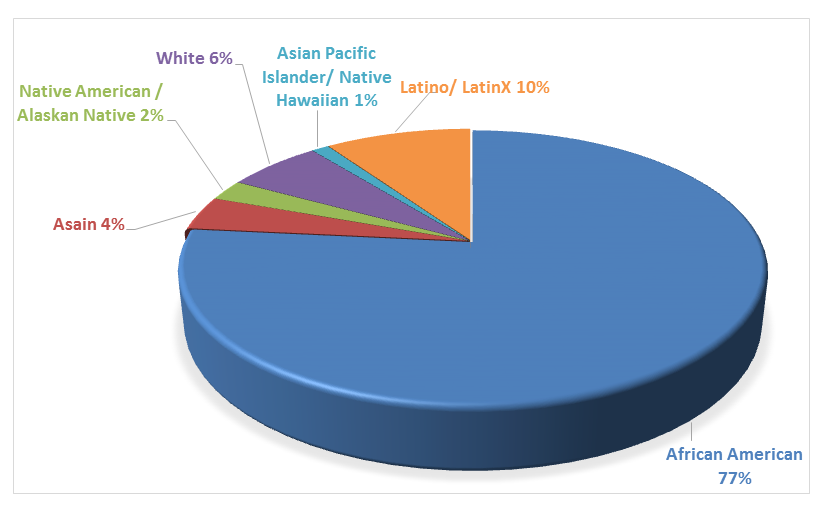
The majority of the women who completed the survey identified as African American (77%) (Figure 1: Race and Ethnicity of the Participants). Only the participant responses that identified their gender as women were utilized in the analysis (99.2%). The majority (91.8%) of the respondents identified as heterosexual (Table 1: Sexual Orientation). The average household income of the respondents was between $100k - $149k, and overwhelming 93% identified as not dependent with 94% reporting that they had access to health insurance. The majority (68%) of the respondent reported that they had attained at least a master’s degree. Over half, (51%) identified as single with 59% reporting having no dependent children or elderly.
| Response | % | Count | ||||||
|---|---|---|---|---|---|---|---|---|
| Heterosexual | 91.77% | 435 | ||||||
| Lesbian | 1.90% | 9 | ||||||
| Queer | 1.48% | 7 | ||||||
| Bisexual | 2.53% | 12 | ||||||
| Pansexual | 0.84% | 4 | ||||||
| Asexual | 0.21% | 1 | ||||||
| Other | 1.27% | 6 | ||||||
| Total | 100% | 474 |
Table 1: Coping with stress related to Discrimination.) Over half of the participants reported experiencing at least one chronic
The majority of the women reported that they “sometimes” experience racial/ethnicity and gender discrimination however, the majority reported to “never” experiencing discrimination based on sexual orientation. The participants perceive that their race and gender “never/sometimes” prevent them from doing something however many reported that their sexual orientation served as a hindrance to doing something “about half of the time.” Over 85% of the WoC reported feeling as though they have been expected to act as the representative for their race/ethnicity and over 60% for their gender.
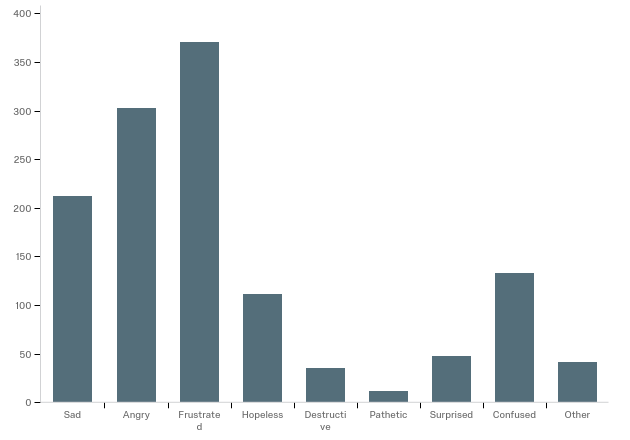
The majority of women (59%) indicated that they act in response to racial discrimination while the balance accepts it as a fact of life. Women had a varied response on how they relieve stress related to discrimination. Most feel frustrated or angry by discrimination (Figure 2: Emotional response to Discrimination). The top 5 ways of coping with stress include: spending time along (78%), eating (71%), listening to music (71%), spending time with friends and family (70%) and watching television or movies (70%). (Table 2: Coping with stress related to Discrimination.) Over half of the participants reported experiencing at least one chronic disease or condition related to stress and almost half (47%) of the respondents believed that discrimination contributes to their health conditions.
| Response | Count | Frequency | Response | Count | Frequency | ||||||||||||
|---|---|---|---|---|---|---|---|---|---|---|---|---|---|---|---|---|---|
| Exercise | 32 | 68% | Praying | 21 | 45% | ||||||||||||
| Drinking Alcohol | 33 | 47% | Reading | 27 | 57% | ||||||||||||
| Working | 14 | 30% | Sex | 8 | 17% | ||||||||||||
| Dancing | 18 | 38% | Masturbation | 12 | 26% | ||||||||||||
| Eating | 27 | 57% | Watching TV or Movies | 33 | 70% | ||||||||||||
| Doing Arts and Crafts | 18 | 38% | Listening to Music | 33 | 70% | ||||||||||||
| Smoking Cigarettes or Tobacco | 2 | 4% | Singing or Playing Instruments | 7 | 15% | ||||||||||||
| Smoking Marijuana | 5 | 11% | Cooking | 20 | 43% | ||||||||||||
| Street Drugs | 0 | 0% | Thrill-Seeking | 2 | 4% | ||||||||||||
| Spending Time with Animals | 17 | 36% | Self-Harm | 1 | 2% | ||||||||||||
| Spending Time with Friends / Family | 40 | 85% | Volunteering / Philanthropy | 6 | 13% | ||||||||||||
| Spending Time Alone | 34 | 72% | Playing Video Games | 5 | 11% | ||||||||||||
| Crying | 28 | 60% | Shopping | 23 | 49% | ||||||||||||
| Meditating | 20 | 43% | Travel | 8 | 17% | ||||||||||||
| Going to Therapy | 12 | 26% | Other | 7 | 15% |
Discussion
The findings of this survey provide insight into a rarely discussed segment of the population. The women who participated in this survey were independent, educated, employed and reported access to healthcare. This is the exact population that continues to have the worst reproductive health outcomes in the United States [13]. Many recognize the presence of racial/ethnic and gender discrimination in their lives however not sexual orientation discrimination. Given the overwhelming heterosexual orientation the participants the lack of experiencing sexual orientation discrimination is predictable. WoC do perceive that their exposure to discrimination impacts their health negatively and feel frustrated and angry about the exposure. The coping mechanisms employed by the women in response to discrimination were varied; in moderation could prove to be beneficial however the top two ways of coping isolation and/or eating in excess could lead to detrimental health concerns. Women reported acting in the presence of discrimination however, from this survey we cannot discern how they choose to act on discrimination and what impact that may have on their perceived stress or health outcomes.
Conclusion
This survey explores a unique subset of Women of Color and serves as a first step in understanding how women perceive discrimination, as well as, how they manage the stress associated with the discrimination. The self-report nature of a survey create opportunity for recall and social desirability response bias. However, the health outcomes of Women of Color support the findings of this survey. This population deserves more attention not only to continue to define how they experience discrimination but also how it impacts their lives and their health in order to help develop systems, programs and interventions to support stress management and reduce the deleterious impact of stress associated with discriminations among this population.
Declarations
Ethics approval and consent to participate
This research was reviewed and declared exempt by the University of Nevada, Las Vegas Institutional Review Board. Informed consent was utilized as part of the data collection. No identifying data was utilized in the data and/or dissemination.
Data Availability
The datasets generated during and/or analyzed during the current study are not publicly available due but are available from the corresponding author on reasonable request.
Competing Interest
The author’s declare that they have no competing interest.
Funding
This research was funded by the The Lincy Institute, University of Nevada, Las Vegas.
Author’s Contribution
Dr. Shegog – design, implementation, analysis and authoring of manuscript Alexandria Evans – dissemination, literature review and editing Dr. Vanisha Brown – instrument development, dissemination and data analysis Darick Wilus – data analysis and graph and table creation Axenya Kachen – instrument development, literature review
References
-
Mason M (2019) Kamala Harris and other Democrats point to racial gap in care of pregnant Black Women.
-
Centers for Disease Control and Prevention Office of Women's Health (2017) Leading Cause of Death (LCOD) in Females United States, 2014 (Current Listing). Health equity.
-
Harrell SP (2000) A Multidimensional Conceptualization of Racism-Related Stress: Implications for the Well-Being of People of Color. American Journal of Orthopsychiatry 70(1): 42-57.
-
Manuck S, Kamarck T, Kasprowicz A, Waldstein S, Blascovich J, et al. (1993) Cardiovascular reactivity to psychological stress and disease. Washington, DC, US: American Psychological Association, pp: 225-237.
-
Schernhammer E, Hankinson S, Rosner B, Kroenke C, Willett W, et al. (2004) Job stress and breast cancer risk: the Nurses' Health Study. Am J Epidemiol 160(11): 1079-1086.
-
Troxel WM, Matthews KA, Bromberger JT, Sutton- Tyrrell K (2003) Chronic stress burden, discrimination, and subclinical carotid artery disease in African American and Caucasian women. Health Psychology 22(3): 300-309.
-
Williams Keith P, Wilson S (1997) Ethnic variation in the incidence of HELLP syndrome in a hypertensive pregnant population. In Journal of Perinatal Medicine 25(6): 498-501.
-
Calvin R, Winters K, Wyatt SB, Williams DR, Henderson FC, et al. (2003) Racism and Cardiovascular Disease in African Americans. The American Journal of the Medical Sciences 325(6): 315-331.
-
Lewis TT, Everson-Rose SA, Powell LH, Matthews KA, Brown C, et al. (2006) Chronic Exposure to Everyday Discrimination and Coronary Artery Calcification in African-American Women: The SWAN Heart Study. Psychosomatic Medicine 68(3): 362-368.
-
Lazarus RS, Folkman S (1984) Stress Appraisial and Copong New York: Springer.
-
APA Working Group on Stress and Health Disparities (2017) Stress and Health Disparities: Contexts, Mechanisms, and Interventions among Racial/Ethnic Minority and Low Socioeconomic Status Populations, pp: 1-76.
-
Ghosh G, Grewal J, Männistö T, Mendola P, Chen Z, et al. (2014) Racial/ethnic differences in pregnancy- related hypertensive disease in nulliparous women. Ethnicity & Disease 24(3): 283-289.
-
Hogue CJR, Bremner JD (2005) Stress model for research into preterm delivery among black women. American Journal of Obstetrics & Gynecology 192(5): S47-S55.
-
Jackson FM (2007) Race, Stress, and Social Support: Addressing the Crisis in Black Infant Mortality Retrieved from Washington DC, pp: 1-10.
-
Harris-Lacewell M (2001) No Place to Rest. Women & Politics 23(3): 1-33.
-
Howard-Hamilton MF (2003) Theoretical frameworks for African American women. New Directions for Student Services 2003(104): 19-27.
-
Lasaki-Kosoko S, Cook CT, O'Brien RL (2009) Cultural Proficiency in addressing Health Disparities. Sunbury, MA: Jones and Bartlett Publishers, pp: 434.
-
Schulz AJ, Mullings L (2006) Gender, Race, Class, & Health Intersectional Approaches. San Francisco, CA: Jossey-Bass, pp: 448.
-
Snyder C (1999) Coping: The Psychology of What Works. New York Oxford Press.
-
Mullings L (2005) Resistance and Resilience: The Sojourner Syndrome and the Social Context of Reproduction in Central Harlem. Transforming Anthropology 13(2): 79-91.
- Occupational Stress and Mental Health Outcomes Among Police Officers: A Mini Review
- The Experience of Counterproductive Leadership on Mental Health and Impact on Retention in U.S. Marines: A Phenomenological Study
- Nomophobia in the Digital Age: A Study on College and University Students
- Emotional Regulation in Children with Autism and Learning Disabilities
- Antisemitism on American College Campuses and Its Impact on Jewish Students
- Exploring the Role of Empathy in the Associations of Family Functioning and Purpose in Life with Attitude towards Abortion among Undergraduates: A Moderation Analysis