
Analysis of the Influence of Regulatory Enforcement Shifts from Coercive to Collaborative on Compliance Behaviors within the Pre-Tertiary Education Regulatory Environment
The use of the coercive (traditional enforcement) approach in enforcing regulatory compliance to aspects of the Education Regulatory Act, 2020 (Act 1023), that is overseen by the National Schools Inspectorate Authority (NaSIA), led to media clamor and a high level of non-compliance, which necessitated the development of a new collaborative approach to change non-compliance behavior in the education regulatory environment. With critics raising alarm over the tendency of the new approach to deepen the level of non-compliance instead of solving the problem, there was a need to explore this new approach to understand the effectiveness and efficiency of the new collaborative approach. The research design used to address the research problem was divided into two (2) phases. The main approach focused on using situational analysis of a case to describe the regulatory environment of NaSIA before and after the change in the regulatory enforcement approach of the regulator and the compliance behavior of the regulated entities. The second phase entailed the use of descriptive statistics to analyze survey data of regulated entities (pre-tertiary education institutions) to verify the veracity of the attitudes or thoughts identified in the situational analysis. The study showed that the adoption of the new approach reduced the level of agitation and clamor in the media, and the level of regulatory compliance increased, leading to over six thousand (6000) pre-tertiary education institutions that were considered non-compliant in 2021 attaining full compliance at the end of 2022. This is a 75% improvement in regulatory compliance over the previous year, demonstrating the success of the new strategy in attaining the regulator’s primary goal.
Introduction
The early days of the National Schools Inspectorate Authority’s (NaSIA) work as a regulator of pre-tertiary education institutions in Ghana were greeted with some discontent amongst many private schools and school associations, which was expressed widely in the media and at various forums. Some level of pushback was expected, but the level of expression of detestation of the work of the regulator, which to some extent spiraled toward the leader, was unimaginable. The “outpouring of anger” [1] against Ofsted in the U.K. in the past few days, where schools have called it “unfit for purpose” [2], was not surprising or out of the norm. The situation facing Ofsted today mirrors the challenges faced by NaSIA a few years ago, when some school associations issued statements describing the situation at NaSIA as a square peg in a round hole” [3]. Those were challenging times for NaSIA, which, as a new regulator with new regulations and a new leader, was trying to understand the behaviors of the regulated entity and the regulatory framework in order to carry out its mandate and ensure the achievement of its purpose [4]. However, this was not to be because of encumbrances in the form of strong resistance from the regulated entity.
Before delving into the details of this NaSIA regulation issue, there is the need to clarify what regulations mean. Regulations are actions taken by a governmental body to control socially desirable activity consistently and specifically [4] for the public good. The focus on the public in the definition suggests that, although there may be varying beneficiaries of the outcome of the socially desirable activity, the focus of regulation is the benefit to the public. The pursuit of achieving the “public good” as an outcome of regulations does not necessarily make regulation or regulatory compliance easy or achievable. The difficulty arises because of opposing voices to the implementation of the regulations, resulting sometimes from genuine concerns expressed by business owners about the introduction of additional costs (compliance costs) that may negatively impact them but also from persons with vested interests in both public and private institutions that benefit from the status quo and thus resist the change (new regulation) [5]. Regulations will always be resisted, either by all or a section of the regulated entity, but where that resistance becomes an impediment to the point of obstructing the objective of the regulator, the creativity of the regulatory body is called into question. Does the regulating authority respond by enforcing the law through coercion? Or do they employ an innovative strategy of collaborating to win over the regulated entity? The alternatives of collaborating or using coercion each have merits and downsides, which has been and remains NaSIA’s conundrum.
Background
The National Schools Inspectorate Authority (NaSIA), formerly known as the National Schools Inspectorate Board (NIB), was created by the Education Regulatory Bodies Act, 2020 (Act 1023), which replaced the Education Act, 2008 (Act 778) and gave it new powers, including the ability to register, maintain a register of schools (sections 89(2)(d) & (4)), develop and enforce the highest quality standards for quality education in public and private schools (section 88(1)), a mandate it carries out through the process of school licensing. The new powers made NaSIA an authority and separated it from the Ghana Education Service (GES), thereby making it a new regulator. It was also provided in Section 122(1)(b) of the ERBA, 2020 (Act 1023), that the regulatory body could charge fees for these services as a way of ensuring the sustainability of the regulatory body for the public good.
Weak structures and fallen educational standards were identified as inspiration for educational reforms in 2007, which led to the passing of Education Act 778 in 2008 [6]. Similarly, poor education outcomes and the identification of outdated and ineffective regulations prompted further reforms in 2018, which resulted in the passing of the Education Regulatory Act 1023 in 2020 [7]. Although the purpose of these regulations and many others before them was to ensure that high standards of education were maintained in Ghana, which is a good thing that did not necessarily mean compliance with those regulations was assured. Most proprietors of schools are entrepreneurs who see these types of regulations as an impediment to their profit or an additional cost that will negatively impact their bottom line and therefore do anything to resist them [8]. As a result, resistance is unavoidable, but regulatory officials continue to explore strategies to overcome this impediment in order to reach an acceptable degree of regulatory compliance.
Regulatory Challenges
The enactment of a law by itself does not ensure compliance. Neither does knowledge of the benefits to the public necessarily ensure compliance. Particularly when such services are provided by private organizations that must adhere to multiple regulations from different regulators, each of which has a cost associated with it. The education regulatory environment where NaSIA is a regulator was so frustrated with resistance and agitations when they tried to enforce the regulations the following year after the passing of the new law that gave them more powers of enforcement. The resistance impacted their ability to enforce compliance to the extent that the level of compliance with its regulations in 2021 was only 56.99%, falling short of the assumption that the increased authority or powers would allow them to enforce compliance in every school.
Although the National Schools Inspectorate Authority (NaSIA) existed prior to 2020 as the National Inspectorate Board (NIB) and non-compliance existed then, much resistance and disagreement was not heard, especially in the media, because the NIB then did not have the requisite laws to enforce compliance, and when it was clothed with the powers of enforcement under NaSIA in 2020 and attempted enforcement, “all hell broke loose.” The summary of reasons for non-compliance that came up strongly in the investigations by the organization to determine what was accounting for the strong resistance to NaSIA’s regulatory mandate was:
- General lack of awareness and understanding of NaSIA’s mandate.
- Influence of some schools that felt bigger and more powerful than the regulator.
- Confusion between the mandate of NaSIA as regulator and the previous mandate of the Ghana Education Service (GES), the implementer of Government education policies.
Several schools questioned what NaSIA was doing for private schools to justify the fees and charges associated with regulatory compliance. The confusion between the Ghana Education Service (GES) and NaSIA’s mandate in the early months following the establishment of NaSIA did not help matters. It further frustrated regulatory enforcement efforts, deepening the instances of non-compliance and agitation, mostly in the media, with constant comparisons between GES and NaSIA. The initial decision to combat deepening agitation and non-compliance was to further tighten legislation or close loose ends to existing legislation to clothe NASIA with more powers in line with the coercive approach, also known as the traditional approach to enforcement [9]. However, further analysis of the situation led to suggestions for a softer approach. Critics of the softer approach, however, raised concerns that this approach could reinforce the already existing culture of non-compliance, which could cause regulatory failure. With critics raising the issue of risk concerning the soft approach to enforcement, one wonders whether NaSIA should continue with the new enforcement (soft) approach or go back to the use of coercive enforcement, considering the negative experiences of NaSIA regarding this approach. The difficulty in deciding on the best regulatory enforcement strategy that can ensure regulatory compliance in the educational setting is the impetus for this triangulated exploratory study.
Method
The main goal of this triangulated exploratory study is to highlight the difficulties associated with enforcing regulations, particularly when both the regulation and the regulatory body are new. It is also aimed at understanding how NaSIA, by employing a novel enforcement strategy, was able to reduce agitation while also significantly increasing acceptance and compliance. The research design used to address the research problem was divided into two (2) phases. The main approach focused on using situational analysis of a case to describe the regulatory environment of NaSIA before and after the change in the regulatory enforcement approach of the regulator and the compliance behavior of the regulated entities. The second phase entailed the use of descriptive statistics to analyze survey data of regulated entities (pre- tertiary education institutions) to verify the veracity of the attitudes or thoughts identified in the situational analysis. The study required a research approach that was well suited for a specific real-world subject while also providing concrete, in-depth knowledge [10] about public policy implementation challenges that would enable the reader to appreciate the complexity of the regulatory environment. This resulted in the use of a situational analysis, case study, and descriptive statistical research design [11] to perform this triangulated exploratory study.
Situational Analysis Case Study
Situational analysis (SA) is a qualitative research method that has its roots in the grounded theory approach [12]. It was developed by Barney Glaser and Anselm Strauss in 1967 and popularized by sociologists Adele Clarke in 2005 [12]. It is currently the most often used type of interpretative analysis in the social sciences and humanities globally [12]. A case study, on the other hand, is a form of research methodology that aims to produce a thorough, comprehensive understanding of a challenging issue in a real-life context [13] and has been used extensively since the early 1920s [14].
A combination of the two methods that form the situational analysis case study forms an approach to research that uses a grounded theorizing methodology to identify, describe, and identify social worlds and channels of action to demonstrate complexity through evaluations of a single subject that do not discuss the findings [15]. It facilitates the development of a thorough grasp of the social environment of a particular subject where the channel of action is presented [16]. The situational analysis was used as the overarching research design to study information from the case of the study and the object, which is the analytical frame through which the subject was viewed and explained. The framework of situational analysis made the situation itself the unit of study and allowed the analyst to utilize the mapping of the situation of the case or object of the study in the social world to examine the scenario identified in the situational maps, social worlds/arenas maps, and positional maps [17]. Situational analysis may be used in a variety of research projects that draw on interview, ethnographic, historical, narrative, visual, and other discursive materials [17]. As a result, it is especially helpful in studies that combine various methodologies to meet research objectives [17]. The exploration of the types of regulatory challenges encountered by NaSIA, the object of this case study, prompted the use of social worlds/arenas mapping for the situational analysis to demonstrate how elements that constituted the situation of inquiry interacted during the use of the old and new enforcement approaches to understand the effect on non- compliance behavior. Social worlds or arena maps described these relationships but placed emphasis on how and where the various components of the organization and institutional elements in the situation of inquiry were connected through commitment [18].
Descriptive Statistics
The focus of the study hinged on the results obtained from the situational analysis of the case in the study. However, descriptive statistics had to be introduced to verify the veracity of the situational analysis and ensure the consistency of the outcomes of the methods in phases one (1) and two (2) of the study to ensure the validity and reliability of the research, respectively. The multiple perspective design of this research is described as a form of triangulation by Vogl, et al. [19] and determined by Moon [20] as one of the approaches that helps to increase the validity and reliability, which inform the credibility, dependability, confirmability, and transferability of the research findings.
The descriptive statistics aspect of the study was based on purposively sampled pre-tertiary school leaders in Ghana. The purposive sampling method was chosen because the people to be interviewed must be people who have the power to make decisions regarding licensing of a school or complying with regulations of NaSIA. To ensure the element of bias that is associated with purposive sampling was mitigated, the author had to rely on a population she did not directly sample but had the required characteristics for the research. The conference of executives of one of the school associations who are leaders or owners of pre-tertiary education institutions numbering fifty (50) represented the appropriate sample frame for the study. Fifty (50) survey questionnaires were distributed to participants at the annual executive conference of one of the school associations in Ghana, and twenty-seven (27) responses, representing 54%, were received. The respondents were a mix of male and female school leaders who responded to the questionnaire. Descriptive statistics were applied to analyze the data. The results of this aspect of the research were presented using infographics. The delivery of the information in infographics helped communicate the complex results succinctly, and the use of visually appealing elements was applied with the intention of capturing the attention of the reader to help comprehension of the information and improve retention [21]. The analysis of the multiple methods employed in the study was integrated to develop a comprehensive understanding of the phenomena [22], and the convergence of information obtained from the situational analysis and the descriptive statistics helped to validate the research strategy adopted for the study [22].
Regulation
A “regulation” is a rule that has been put in place to regulate and control a system, activity, or process [23]. Frenchman Destanne de Bernis, who sought to apply the strategy as a systems theory to modernize Marxian economic analysis, invented the word “regulation” [24]. Regulations are imposed on businesses and individuals by regulatory agencies to meet international standards or government objectives [25]. While studies have shown that overregulation stifles innovation and growth [26], it has also been shown that a lack of regulations results in human exploitation and poor performance outcomes, particularly on measures that degrade the country’s ranking on the global scale [27].
There are two schools of thought regarding regulatory theories: positive theories of regulation and normative theories of regulation [27]. These theories infer that regulation happens for one of four reasons: 1) Governments regulate to protect consumers from companies exhibiting market power when competition is nonexistent or ineffective; 2) operators advocate for regulations to protect themselves from rivals; or 3) operators advocate for regulations to protect themselves from government opportunism [27]. Positive theories of regulation examine the reasons why regulations are formulated. Such theories of regulation include theories of market power, interest group theories that describe stakeholders’ interests in regulation, and theories of government opportunism that explain the reasons government rules or standards may be necessary for the sector to provide efficient services for customers [27]. According to normative theories of regulation, regulators should promote competition where practicable, reduce the costs of information asymmetries by obtaining information and providing operators with incentives to improve their performance, provide for price structures that enhance economic efficiency, and establish regulatory processes that ensure that the regulator is independent, transparent, predictable, legitimate, and credible [27].
Regulatory compliance
Compliance is the act of adhering to set rules or specifications [28]. There are two forms of compliance: corporate and regulatory [28]. Corporate and regulatory compliance are quite similar, with the key distinction being whether the policies governing them are based on internal or external regulations [28]. Corporate compliance refers to the rules, regulations, and operating procedures or practices an organization puts in place as a way of mitigating against all forms of risk, including legal, default, reputation, insolvency, etc. Regulatory compliance is the adherence to laws, rules, regulations, procedures, standards, and guidelines of regulatory, supervisory, or quality assurance institutions by a regulated entity. In other words, regulatory compliance refers to the act of regulated entities, such as businesses, complying with government regulations for purposes of ensuring quality standards or any form of standardization. There are usually repercussions for not complying with such regulations. Violating or breaching regulations or not complying with regulatory standards could lead to serious consequences. The most well-known result of non-compliance with regulations is financial loss because of government action, which can take the form of fines, restrictions on the institution’s operations, legal fees associated with legal challenges, and, in extreme cases, the closure of the business or a jail term [29]. It has been established that the cost of non-compliance when caught is nearly three times higher than the cost of compliance [30].
Regulatory Compliance Behaviors
Majority of organizations that adhere to or endorse international standards voluntarily put measures in place to ensure regulatory compliance to improve their competitive edge and avoid reputational damage resulting from regulatory sanctions. This suggests that regulatory compliance may not always be voluntarily adhered to Langham, et al. [31], in their study on whether the theory of planned behavior can predict business compliance, found that even the most willingly regulated entity may not necessarily comply with regulations. They conducted discriminant analyses to identify the variables that could correctly predict behaviors that influence regulatory compliance, such as tax payment, which was the main variable under study [31]. The results showed that intention and business turnover had the highest scores, while awareness was low [31]. This means that although awareness contributes to regulatory compliance, the mere creation of awareness may not necessarily lead to regulatory compliance. However, an institution with high business turnover and a high intention of being compliant is most likely to ensure regulatory compliance. They also identified that awareness of regulations and the complexity or efficiency of the regulatory system influence the level of voluntary compliance of institutions with the intention to comply [31].
![Figure 1: Regulatory compliance behaviors scale (adopted from Langham, et al., [27] study of planned behavior of business compliance and additional component from Parker [4]).](/fulltextimages/10491/fig_1.jpeg)
| Intention to comply. | |
|---|---|
| Admin. effectiveness | |
| Intention to comply. | |
| No admin. effectiveness |
| No intention to comply. | |
|---|---|
| Admin. effectiveness | |
| No intention to comply. | |
| No admin. effectiveness |
| No admin. effectiveness | Intention to comply unknown. |
|---|
The Organization for Economic Co-operation and Development (OECD) affirms that in any regulatory environment, full compliance with regulations is not always feasible to achieve [4]. Figure 1 (adopted from Parker [4], and Langham et al., [31] studies on regulatory compliance and compliance behaviors, respectively) illustrates that in any regulatory environment, there are likely to be people who will willingly comply (deliberately compliant), others who refuse to comply at the initial instance but later comply because they realize that they need the license or clearance of the regulator for an urgent transaction (accidentally compliant), those who intended to comply but some challenges prevented the person from complying (accidentally non-compliant), then there are those who are aware of the regulations and have no excuse but just refuse to comply (deliberately non- compliant), and lastly, those who do not comply simply because they are either not aware of the existence of the regulations or the compliance process (unintentionally non- compliant). In effect, the behavior of regulated entities can be characterized as one of the following:
- Deliberately compliant: It is most likely that the regulated entity in this case has the intention to comply with regulations and/or there is a clear system of compliance (administrative effectiveness).
- Accidentally compliant: It is most likely that the regulated entity in this case has no intentions to comply with regulations, but there is a clear system of compliance (administrative effectiveness).
- Accidentally non-compliant: It is most likely that the regulated entity in this case has good intentions to comply with regulations, but there is no clear system of compliance to engage such regulated entities (administrative effectiveness).
- Deliberately non-compliant: It is most likely that the regulated entity in this case does not have intentions to pay, although the regulator is administratively effective.
- Unintentionally non-compliant: The regulator is considered to be administratively ineffective, and the intention to comply or not cannot be determined.
All five regulatory compliance behaviors (deliberately compliant, accidentally compliant, accidentally non- compliant, deliberately non-compliant, and unintentionally non-compliant) exist and will always exist in the pre-tertiary regulatory environment where NaSIA is the regulator as long as the institution continues to be a going concern. Since the regulatory environment will always have categories like deliberately non-compliant institutions, a regulator cannot rely solely on voluntary compliance to achieve an appreciable level of compliance with regulations [28]. A system of enforcement must be put in place to ensure compliance, especially where it is detected that the regulation is being deliberately flouted.
Regulatory Enforcement
Regulations are only useful when properly enforced or complied with. Improper regulatory enforcement is one of the main limitations associated with regulations intended to safeguard people and the environment [32]. Regulatory enforcement is the act of a government body requiring regulated entities to comply with rules through inspections, investigations, and the ability to sanction or prosecute noncompliers on behalf of the public [33]. One will think that being clothed with the power to enforce regulation on a regulated entity is easy, but it is far from it. When the regulation being enforced or the regulator enforcing it has not been accepted by the regulated entity or the regulation is not understood by the regulated entity, enforcing the regulation is like pouring liquid from a jar into a tube with a narrow opening without a funnel. Although some water will end up getting into the tube, a large portion of the water will be spilled and will not get into the tube as expected, thereby making the process of filling the bottle ineffective and the objective not being met.
NaSIA’s Early Days of Regulatory Enforcement – Coercive (Traditional) Style of Regulatory Enforcement
The National Schools Inspectorate Authority (NaSIA) was born out of the Inspectorate Department of the Ghana Education Service (GES), then known as the National Inspectorate Board, and later became the National Schools Inspectorate Authority (NaSIA) in 2020. This exercise was developed from a larger reform in the education ministry to ensure that GES, as a proprietor of public schools, does not ultimately preside over the enforcement of regulations on its schools and the schools of other proprietors. There was a need for an independent body to develop and enforce educational standards for both public and private schools to avoid the possibility of an inspector’s judgment being conflicted. While GES was going to remain an implementor of government education policies, NaSIA had been established to preside over enforcement of government regulations through school inspections to ensure that the implementation of government education policies in the various districts and regions was being done according to set standards and feedback given to the various agencies and the Ministry of Education to enable them to have reliable, evidence-based data, which can be used to review and develop further policies for socioeconomic improvement.
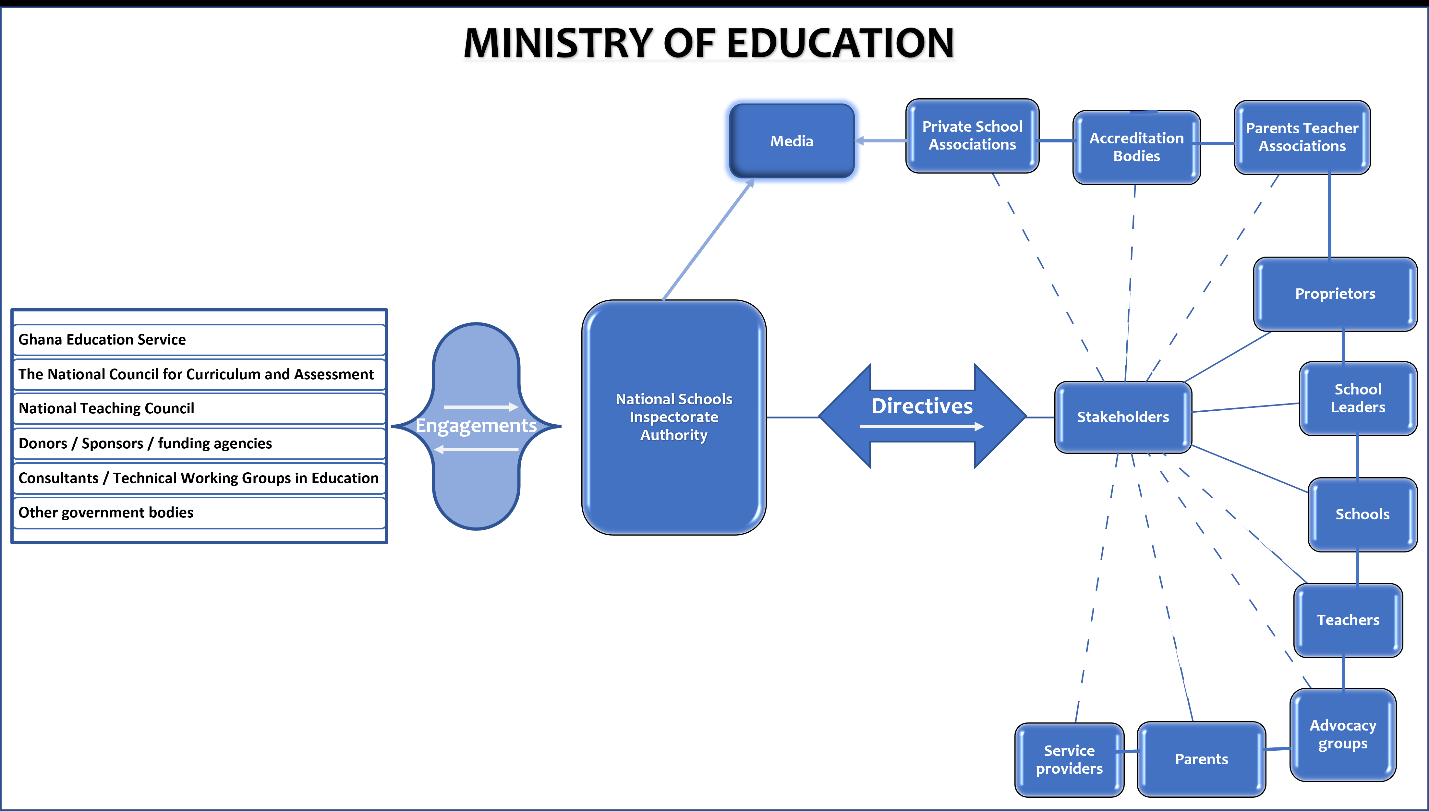
The initial thought was that NaSIA, having been carved out of GES, would carry out its new mandate as an upgrade of its previous inspection role, riding on the back of the visibility it had through GES without any challenges. The regulator found out shortly after issuing a few directives to private schools that the road to regulatory enforcement was not going to be smooth. As shown in Figure 2 below, the regulatory enforcement practice of NaSIA followed the traditional style of regulatory enforcement, where the regulator, although engaging other agencies under the Ministry of Education, does not necessarily engage all stakeholders but rather attempts to use coercive force to ensure compliance. This style was akin to an institution or person exercising authority, with the expected outcome aligning with the principles of the classical deterrent theory [34]. The classical deterrent theory suggests that punitive action is necessary for enforcement in that, when punishment is severe, certain, and swift, a reasonable person will consider prospective gains and losses in violating the regulation and will be deterred from breaching the regulation if the loss is greater than the gain [34].
Although there is no proof that NaSIA intended to or imposed sanctions on pre-tertiary education institutions, the tone of voice in their communication gave the impression that the regulator would penalize schools that fail to comply with their regulations, irrespective of the challenges that led to non-compliance. Information was primarily sent in one way to regulated entities (pre-tertiary education institutions), and input was not frequently requested. Additionally, stakeholders in the sector - both regulators and regulated entities spoke more to the media than they did to one another. The problem of regulatory standards generated so much media clamor that the regulations’ efficacy and goal could not be met. The stakeholders could not advance in achieving the goals of establishing high standards in the education sector because they were not listening to one another. The degree of regulatory compliance at the time fell significantly short of expectations, which prompted a decision to reassess the method and approach used to enforce regulations [35]. The lapses identified in the reevaluation of the traditional regulatory enforcement approach of NaSIA led to the development of a new strategy for bringing stakeholders of pre-tertiary education institutions closer rather than keeping them at bay [35]. The evaluation of the previous strategy unearthed the need to engage the regulated entity on policy directions, explain challenges and the basis of regulations, and solicit their views to make them feel part of decision- making so that new directives will be seen as a collective decision and hence embraced rather than rejected [35].
Collaborative Style of Regulatory Enforcement
Figure 3 shows the same actors as in Figure 2, but this time there is reciprocal interaction taking place, which forms a network of collaboration to achieve a common goal. Figure 3 reflects the current system of regulatory enforcement in NASIA. Four essential factors were considered while developing the new regulatory enforcement strategy by NaSIA [35]. These are:
- Engagement and collaboration with all stakeholders, including other agencies in the education environment and schools.
- Encouraging schools to form associations based on common interests (e.g., associations formed based on curriculum offerings, types of teaching approaches, levels of education, etc.).
- Rebranding NaSIA to project an image of being more than a regulator by offering other demand-driven services within the educational environment.
- Collaborating with other governmental bodies interconnected to NaSIA and pre-tertiary education institutions providing essential services to make the legally mandated services of NaSIA a requirement for other social services to encourage compliance.
Well-designed engagements and collaborations are linked to the development and implementation of regulatory delivery policies and systems that help achieve the best possible outcomes through the highest levels of compliance while keeping the costs and burden as low as feasible [36]. This new regulatory enforcement strategy was therefore designed with a heavy emphasis on engagement and collaboration. To this end, NaSIA encouraged schools to form associations or join existing ones to facilitate such engagements. Although there was a need for NaSIA to engage schools as often as possible directly, the revaluation revealed that it would be quicker, easier, and more efficient to engage school associations representing various schools on issues requiring quick decisions or when contentious issues have to be brought to the table for negotiation or collaboration.
The new regulatory enforcement approach that NaSIA created also demanded that NaSIA present itself as more than just a regulator, which led to NaSIA rebranding as an essential service provider within the education service environment. Some of the service offerings developed through the rebranding were differentiated school inspections, school licensing to determine and enforce quality, and monitoring, which were the aspects of services defined by law, but others, such as the issuance of letters of attestation or introductory letters for schools to access funding or participate in international conferences/programs, the issuance of validation letters to international accreditation bodies, and the validation of schools for learners in various private schools, were additional services introduced to create the need for the regulated entities (pre-tertiary education institutions) to want to associate with NaSIA. While the additional services encouraged compliance because full compliance was a prerequisite to the provision of those demand-driven services, NaSIA engaged and collaborated with other governmental bodies to make the submission of evidence of compliance with NaSIA a condition precedent to accessing their services.
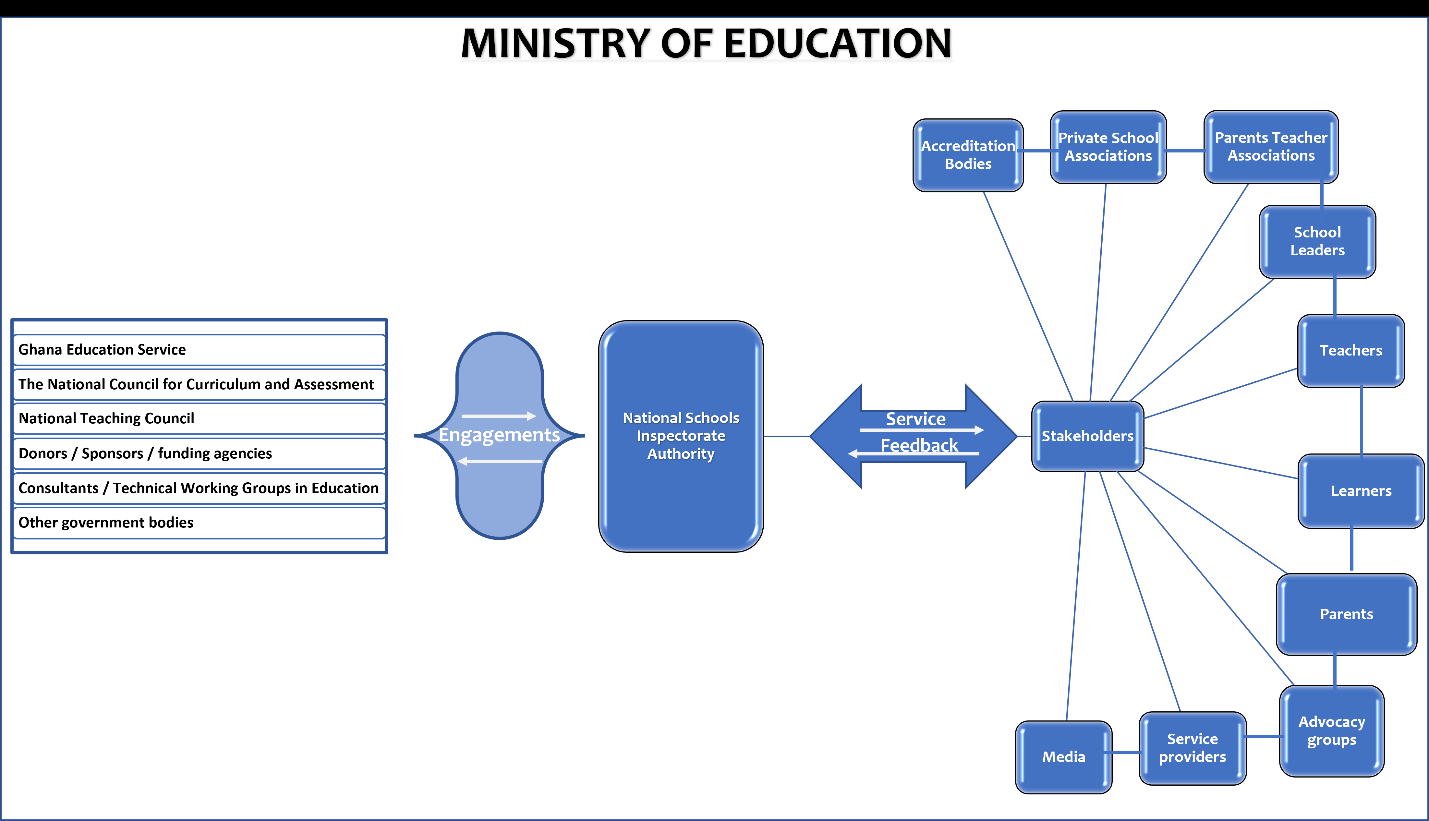
This new collaborative approach to regulatory enforcement minimized the media clamor and increased regulatory compliance as more schools began moving from accidentally and deliberately non-compliant behaviors to accidentally and deliberately compliant behaviors. The collaborative form of regulatory enforcement demystified the education regulatory environment, thereby making schools see and access the service offerings of NaSIA as a first step to obtaining other services from other regulators or to meet their peculiar needs. This new form of regulatory enforcement has been described as a form of soft regulation [37], where the regulated entity (pre-tertiary education institutions) is given the opportunity to participate in the regulatory process, comply, and, where compliance is not possible, engage the regulator [38].
This new form of enforcement seemed to be effective because the level of regulatory compliance has grown steadily since it was implemented. Over six thousand (6000) pre-tertiary education institutions that were considered non- compliant in 2021 attained full compliance at the end of 2022 [35]. This represents an over 75% increase in regulatory compliance [35]. While some of the reasons for compliance may be due to the creation of awareness, most compliance was recorded after the issuance of a communiqué indicating engagement and collaboration between school associations and NaSIA [39] and [40].
Results of Descriptive Statistics
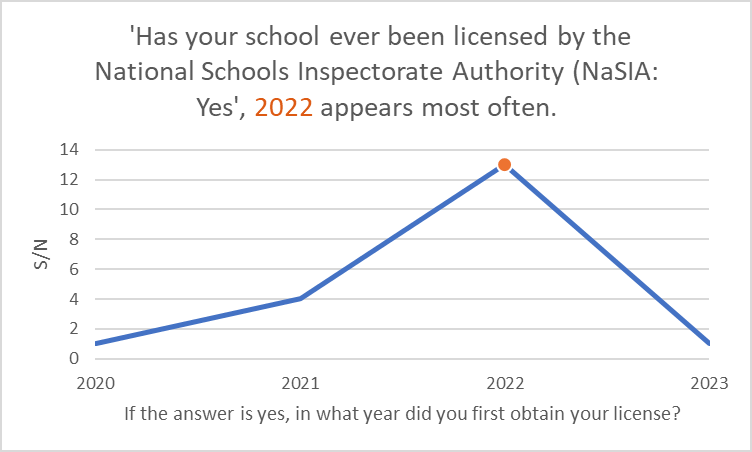
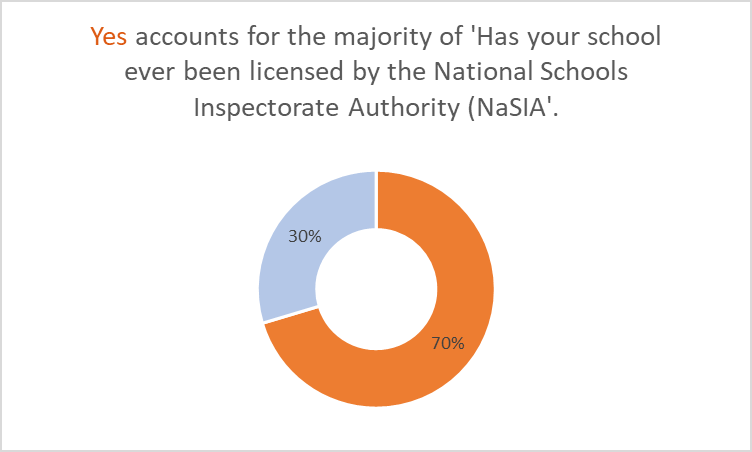
Figure 4 shows responses that confirm the regulated entity’s compliance status. Seventy percent (70%) of respondents confirmed that they have obtained a license to operate a pre-tertiary education institution from the regulator (NaSIA).
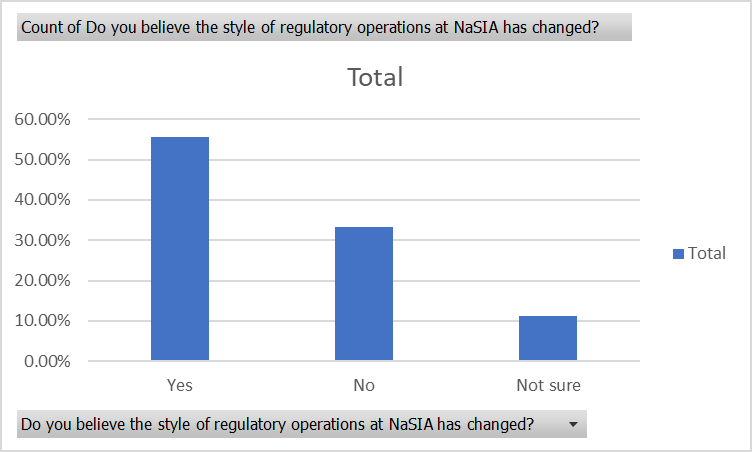
Figure 5, which shows the year the pre-tertiary education institutions (schools) complied with NaSIA’s regulations, indicates that many of the schools will receive their licenses in 2022.
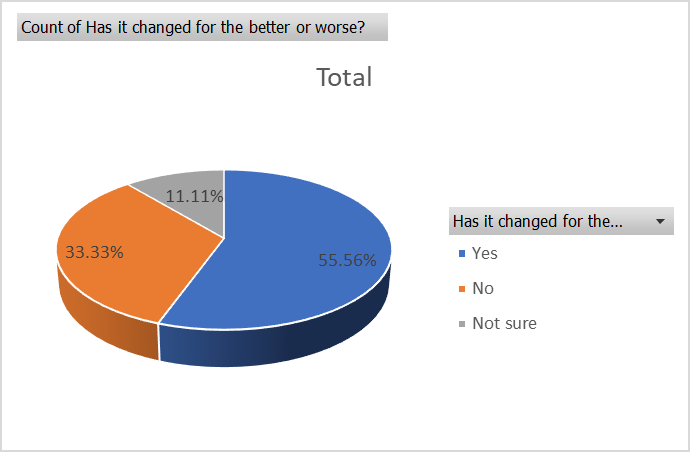
Figures 6 and 7 highlight the judgment of the regulated entity regarding the behavior of the regulator. According to the findings in Figure 6, more than half of schools noticed a change in the regulating style of the regulator in 2022. Over 50% of those who thought the regulator’s regulation style had changed said it had changed for the better.
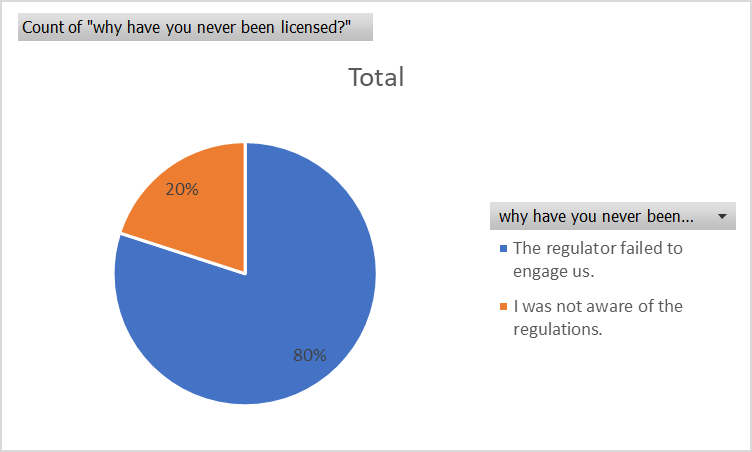
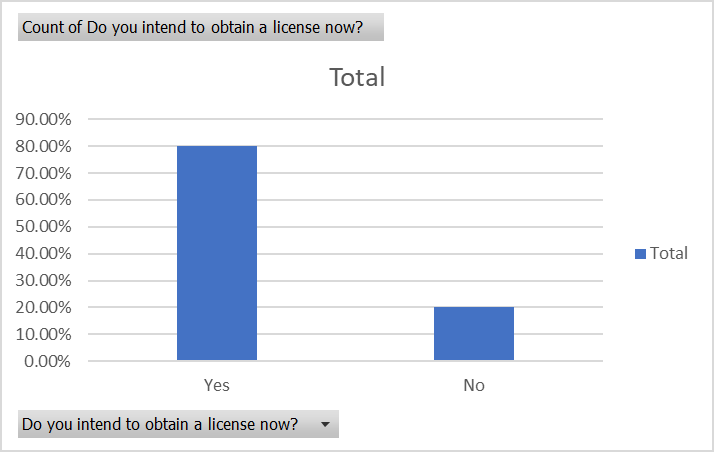
Eighty percent (80%) of the respondents who responded that they had never been licensed indicated that NaSIA’s failure to include them in the regulatory process was the reason for their non-compliance, while 20% said lack of awareness accounted for the reason for non-compliance. Eighty percent (80%) of the non-compliant pre-tertiary education institutions, however, indicated their desire to become licensed in the future, while 20% stated that they had no intentions to become licensed in the future.
Discussion
The triangulation of the study design has proven very useful because, while the situational analysis described the observed behavior and outcome of the behavior of the regulator and regulated entity, it could not establish the thoughts or reasons behind the behavior of the regulated entity. The use of multiple methods ensured that the limitations of one type of method were mitigated by the strengths of another [41].
The evaluation made in Figure 2 of the situational analysis, which explained the coercive (traditional) regulatory enforcement regime of NaSIA in 2020 - 2021, which were the early days of NaSIA, where the authority operated in a non-participatory manner, aligned with the results of the descriptive statistics in Figure 8, where eighty percent (80%) of people failed to comply with school licensing regulations because of the failure of NaSIA to engage them. The information espoused in Figures 2 and 8 is affirmed by Short [42] in his study of “The Politics of Regulatory Enforcement and Compliance: Theorizing and Operationalizing Political Influences.” Short [42] admitted that a cooperative approach to regulatory enforcement may result in quite different compliance outcomes. Short [42] further theorized that cooperative or facilitative regulatory techniques might provide better compliance outcomes than strongly punitive regulatory strategies. The results shown in Figure 5 confirm Short’s [42] theory of cooperative technique providing a better compliance outcome than a strongly punitive traditional regulatory enforcement approach. The transition of NaSIA from a coercive to a cooperative style of enforcement depicted in Figure 3 led to a sharp increase in regulatory compliance by the regulated entities (pre-tertiary education institutions) in 2022.
While the improvement in regulatory compliance recorded in 2022 is encouraging, Figures 8 and 9 remind us of the sharp realities of the varying behaviors of the regulated entity in a regulatory environment depicted in Figure 1, which NaSIA should be mindful of. The reality of the situation is that there will always be non-compliant regulated entities within the regulatory environment. There are regulated entities that remain non-compliant because they are unaware of the regulations, as shown in Figure 8, but a 100% compliance rate may never be achieved [4] because, irrespective of the regulator’s strategies, there may be “the stubborn academy” [43] regulated entities who will choose to remain non-compliant, as shown in Figure 9, for no reason. Although the “Stubborn Academy Effect”, which describes characters who are aware of laws, regulations, or the right thing but deliberately refuse to do it, exists in any regulatory environment, Alemanno [44] affirms that effective consultation, sensitization, and stakeholder engagement have the potential to increase the level of regulatory compliance.
Gunningham [45] asserts that in the absence of consensus regarding the standards or measurement of performance of an enforcement strategy, the effectiveness and efficiency of the intervention to meet the desired outcome should be accepted as the criteria for measurement of performance. By applying Gunningham’s [45] logical definition of a successful enforcement strategy, it is safe to say that NaSIA’s new collaborative approach to regulatory enforcement, which has decreased the media clamor between NaSIA and the various school associations and resulted in a 75% increase in regulatory compliance from the previous year [35], is a successful regulatory enforcement strategy that other regulators should consider adopting. Nevertheless, because of the existence of regulated entities with deliberately non-compliant behaviors, NaSIA must not abandon the traditional approach to enforcement entirely. The new collaborative regulatory enforcement approach should be the main enforcement approach since it seems to be working, but regular assessments of the approach should be conducted to ensure that regulated entities with deliberately non-compliant behaviors who fail to comply despite the collaborative efforts of the regulator must be coerced to comply under the traditional enforcement approach. This will ensure that their non-compliant behavior does not infect others and cause the regulations to fail, and that the achievement of regulatory goals and a well-functioning regulatory environment are sustained.
Implications for research and practice
Regulations are essential to the efficient operation of societies and economies [46]. They support markets, safeguard, and ensure the safety of individuals’ rights, and guarantee the provision of public goods and services [46]. Regulation is deemed effective if it achieves the goals or outcomes expected [47], whether through regulatory compliance on the part of the regulated companies or regulatory enforcement on the part of the regulatory body. The disruptive nature of the global economy, especially that of sub-Saharan Africa, has made compliance quite challenging for many regulated entities. These disruptions have pushed many companies from categories of deliberately compliant behavior to accidentally non-compliant behavior on the regulatory behavior scale. The dynamics of our world have changed and will continue to change to the extent that the old and traditional way of enforcing regulations, where the first remedial or corrective action for a minor or first-time violation of a regulation is high-handed punishment, is no longer effective [36].
In today’s 21st-century world, such high-handedness could make the regulated entity develop resentment and defiance towards the regulator, which could increase the level of non-compliance [26], leading to an increase in the cost of enforcement. According to Shapiro, et al. [48], regulatory bodies can undermine voluntary compliance if they aggressively pursue and punish minor breaches in regulations instead of relying on more collaborations. But then again, too much cooperation or collaboration leads to impunity [32] which some scholars have described as regulatory capture. Regulatory capture is an economic hypothesis that suggests regulatory bodies may become captured by the interests they regulate rather than the public interest. As a result, the agency behaves in ways that favor the interests it is designed to regulate, thereby decreasing compliance [49]. While NaSIA’s experience with collaboration is yielding results, Shapiro, et al. [48] assert that the policy evidence of the utility of the collaboration approach to ensuring regulatory compliance is equivocal. The discussion in this paper suggests that collaboration with a community of interest assures the expected outcome with a quick turnaround time at minimal enforcement cost to the regulator and lower non- compliance risk to the regulated entity but the regulator must be mindful of the risk of regulatory capture. Regulators can use this new collaborative approach to regulatory enforcement to identify communities of interest to engage in mapping and developing enforcement strategies to develop an effective and appreciable level of regulatory compliance. While this paper compared the previous traditional punitive enforcement approach of NaSIA to this new collaborative approach to make a case for the need to relook at regulatory enforcement, future work could be extended to examine the extent to which overreliance on collaboration or traditional enforcement can undermine regulatory compliance or lead to regulatory capture.
Conclusion
The main goal of this article was to highlight the difficulties associated with enforcing regulations and show how NaSIA, by employing a novel enforcement strategy, was able to reduce agitation while also significantly increasing acceptance and compliance. One would have thought that the traditional way of enforcement, which aligns with the principles of the classical deterrent theory, which sort of scares people from violating regulations for fear of being punished, would deter regulated entities from being non- compliant, but the level of compliance then compared to now, when the new collaborative method was introduced, showed a vast difference. The significant degree of non-compliance that NaSIA encountered while using the traditional (coercive) method of enforcing laws demonstrates that regulations by themselves do not always result in compliance. Furthermore, having the authority to impose restrictions or penalize non- compliance does not ensure that regulations are followed; good policies and effective stakeholder engagement or consultation during policy formulation and implementation will lead to the achievement of high regulatory compliance within the regulatory environment.
References
-
Fazackerley A (2023) ‘Unfit for purpose’: Ofsted could face legal challenge from school leaders.
-
Shearing H (2023) Ofsted unfit for purpose, says ex- inspector. BBC News.
-
Nartey L (2021) National schools inspectorate authority struggling due to square peg in round hole – Group. 3News.com.
-
Parker C (2000) Reducing the risk of policy failure: Challenges for regulatory compliance: Final version. Organization for Economic Co-operation and Development.
-
OECD (1997) The OECD report on regulatory reform synthesis report: Synthesis report.
-
Education Ghana (2014) The falling standard of the basic education in Ghana.
-
Education reform (2022) Ministry of Education Ghana - Changing Ghana through Education.
-
Noah T (2011) Businesses don’t like regulation. What else is new? Slate Magazine.
-
OECD (2010) Better regulation in Europe: United Kingdom 2010.
-
McCombes S (2023) What is a case study? | Definition, examples & methods. Scribbr.
-
Nagai M, Serbina I, Brunova Kalisetska I, Danylov S, Ieligulashvili M, et al. (2019) Situational Analysis Case Study. International Alert.
-
Clarke AE (2016) Situational analysis. The Blackwell Encyclopedia of Sociology 1-2.
-
Crowe S, Cresswell K, Ann Robertson A, Huby G, Avery A, et al. (2011) The case study approach. BMC Med Res Methodol 11(100).
-
Joanne GS (2016) Case study research. The SAGE Encyclopedia of Online Education.
-
Martin W, Pauly B, MacDonald M (2016) Situational analysis for complex systems: Methodological development in public health research. AIMS Public Health 3(1): 94-109.
-
International Atomic Energy Agency (2023) Atoms for Peace and Development. Situational analysis.
-
Clarke AE (2005) Situational analysis: Grounded theory after the postmodern turn. SAGE.
-
Clarke AE, Washburn R, Friese C (2022) Situational analysis in practice.
-
Vogl S, Schmidt E, Zartler U (2019) Triangulating perspectives: Ontology and epistemology in the analysis of qualitative multiple perspective interviews. International Journal of Social Research Methodology 22(6): 611-624.
-
Moon MD (2019) Triangulation: A method to increase validity, reliability, and legitimation in clinical research. Journal of Emergency Nursing 45(1): 103-105.
-
(2023) Presenting research in infographics. Research Retold.
-
Carter N, Bryant-Lukosius D, DiCenso A, Blythe J, Neville AJ (2014) The use of triangulation in qualitative research. Oncology Nursing Forum 41(5): 545-547.
-
Kennedy I (2022) What is Regulation. Government Regulation on Business.
-
Regulation school (2013) Wikipedia, the free encyclopedia.
-
Kriptos (2023) The importance of regulatory compliance according to information security. Automatic Classification of Information.
-
Ross DB (2007) Overdose how excessive government regulation stifles pharmaceutical innovation. Journal of Clinical Investigation 117(12): 3598-3598.
-
Theories of regulation (2012) Regulation Body of Knowledge.
-
Gillis AS (2021) What is compliance. Data Management.
-
Motiwalla A (2022) Risks of non-compliance - What you need to know.
-
Gayda S (2022) The true cost of non-compliance. Intelligent Information Management Online Community | AIIM - The Association for Intelligent Information Management.
-
Langham J, Paulsen N, Härtel CE (2012) Improving tax compliance strategies: Can the theory of planned behavior predict business compliance. E Journal of Tax Research 10(2): 364-402.
-
Lack of regulation enforcement (2022) Interconnected Disaster Risks -United Nations University.
-
(2021) Enforcement power. LII / Legal Information Institute.
-
Abramovaite J, Bandyopadhyay S, Bhattacharya S, Cowen N (2022) Classical deterrence theory revisited: An empirical analysis of police force areas in England and Wales. European Journal of Criminology.
-
National Schools Inspectorate Authority (2022) 2022 Standards and Licensing Annual Report_._ NaSIA - Accra.
-
OECD (2018) OECD regulatory policy outlook 2018. OECD Publishing.
-
Schrempf-Stirling J, Wettstein F (2023) The mutual reinforcement of hard and soft regulation. Academy of Management Perspectives 37(1): 72-90.
-
Roberts J, Sanderson P, Seidl D (2023) ‘Soft regulation: Conforming with the principle of ‘Comply or explain’. Centre for Business Research.
-
Abronoma KN (2022) Private education coalition lifts embargo on financial transactions with Nasia. Bryt FM.
-
(2022) [NaSIAgh] National Schools Inspectorate Authority (NaSIA). Engages the leadership of PEC Facebook.
-
Combine qualitative and quantitative data. (2022) Better Evaluation.
-
Short JL (2019) The politics of regulatory enforcement and compliance: Theorizing and operationalizing political influences. Regulation & Governance 15(3): 653-685.
-
(2023) Medikal - Stubborn Academy FT Shatta wale. HitxGh.Com.
-
Alemanno A (2015) Stakeholder engagement and regulatory policy. OECD Regulatory Policy Outlook 2015: 69-91.
-
Gunningham N (2015) Compliance, Enforcement, and Regulatory Excellence. Regulatory Institutions Network Australian National University: 1-18.
-
OECD (2011) Regulatory policy and governance supporting economic growth and serving the public interest. OECD Publishing.
-
Sheetal Radia S (2011) Effective Regulation. CFA Society: 1-9.
-
Shapiro SA, Rabinowitz R (1999) Voluntary Regulatory Compliance in Theory and Practice: The Case of OSHA. Social Science Research Network 52(1): 97-155.
-
Kenton W (2010) Regulatory capture definition with examples. Investopedia.
- Occupational Stress and Mental Health Outcomes Among Police Officers: A Mini Review
- The Experience of Counterproductive Leadership on Mental Health and Impact on Retention in U.S. Marines: A Phenomenological Study
- Nomophobia in the Digital Age: A Study on College and University Students
- Emotional Regulation in Children with Autism and Learning Disabilities
- Antisemitism on American College Campuses and Its Impact on Jewish Students
- Exploring the Role of Empathy in the Associations of Family Functioning and Purpose in Life with Attitude towards Abortion among Undergraduates: A Moderation Analysis