
A Review on Neuroesthetics and Neurosart
Man has always felt different and special from other living things in the universe he lives in. He makes sense of the world he lives in, thinks about it, and brings theories and explanations about existence. He wants to be freed from his impulses, he rejects his animal nature. For example, if he is making love, it is out of love. While this whole point of view does not make man as free as a cat in living his impulsiveness, man is nevertheless willing to separate his animal nature from other species with thick lines by means of art and aesthetics. Because to the extent that art and aesthetics distance people from their predatory nature, they will provide safe spaces for them. Since the pictures he drew on the cave walls, he is now on a higher level dominating nature. He will not eat every dish that is put in front of him, for example, he will look for artistic touches. With all these aspects, it would not be wrong to say that art and aesthetics have a very old history. As in almost every subject, art and aesthetics also have points in terms of neuroscience. In this sense, Neuroesthetics and Neuroart provides explanations about the nature of human, art and aesthetics. It explores how the enormous synaptic connections, the neuroplastic brain, reach a line of transformation with artistic and aesthetic stimuli. In our study, we will focus on the contribution of art and artistic stimuli to the simultaneous development of the right and left brain, especially to the orbito prontal part of the brain. However, within the scope of neuroaesthetics, the effects of aesthetics on the nucleus accumbens (reward center) as well as the effects of art on the release of the happiness hormone oxytocin and its beneficial reducing effect on mental disorders such as depression will be emphasized. In addition, the differences in the amygdala region of the brain in syndromes such as autism, unlike healthy groups, and the outcomes of this difference in the artistic field will be discussed. In addition to all these, emphasis will be placed on early diagnosis methods of diseases such as stroke and Alzheimer’s through artistic works. In creating this review article, publications of refereed journals published in fields such as Google Academy, master’s and doctoral theses published in national and international thesis centers, and some books and additional resources published in the field of neuroaestheticsneuroart were used methodologically. In our related study, experimental designs made in this sense will be included in the literature and theories on the indispensability of art and aesthetics for human nature will be included.
Introduction
What would you sacrifice if you thought some things in your life would be taken away from you for free? Or in other words, what are the facts that will leave your life colorless and lightless? Is it love, passion, desire, color, sound, enthusiasm? There are elements in a noisy life that make life more meaningful, more passionate, more colorful, and sometimes life becomes more livable just because they exist. Art and aesthetics color our colorless life to the extent that love creates passion, sound and enthusiasm. Maybe that’s why art and aesthetics have always existed in our lives since prehistoric times. In this respect, scientists do not even need to look at the pictures they draw in caves, even without light. Human beings have felt a deep need for art and aesthetics in every period of their lives. When looked at, the need experience of art and aesthetics, which are at the bottom of Maslow’s history of basic needs, seems to be hidden in his memory. Although functionality seems to be at the forefront in our choices, it is developed based on aesthetics and art and never leaves us. So much so that we cannot help leaving aesthetic and tactile touches on the exteriors of the changes we make, on the things we eat and wear, on the cars we drive, on the cover of a book we write. So what exactly is the neurobiology of these developments? Why are aesthetics and art at such a meaningful point for us, why can’t we completely give up on the aesthetic and artistic at the expense of losing our time, effort and money? While searching for answers to all these questions, we come across some approaches in the literature. One of these approaches is that since ancient times, man’s tendency towards art and aesthetics stems from the need to domesticate the environment in which he lives by decorating it with paintings and visuals and to relax with this thought. In this way, people will feel the environment they live in is safer and more their own [1, 2]. This evaluation seems meaningful in terms of man’s tendency to paint on cave walls since ancient times and subsequently placing art at an indispensable point, because every individual wants to be safe. However, tying art and aesthetics only to a need for security seems to be an inadequate evaluation. One of the different approaches on this issue is that art and aesthetics activate the reward center of the brain at the point of production and consumption. Some experimental studies underline that visual works of art and visual pleasure stimulate some pleasure centers in the brain and that they are significantly related to visual literacy. In addition, physical beauty is very important for each of us. Proportional facial features, proportionality of physical measurements, neatness and symmetry concepts are very important in our lives. Beauty has always provided individuals with a certain advantage in choosing a partner, in a social environment, in job and promotion opportunities. Research at this point has led to the definition of the brain part related to physical needs and tendencies as the “physical module” and in this respect, the concept of “Visual Pleasure” to come to the fore. The reasons for the wars that have been waged for centuries for what is aesthetic and beautiful seem to be related to the relevant pleasure center of the brain. The concept of aesthetics seems to be closely related to the development of abstract abilities. On a universal basis, man’s journey to discover his inner world along with the development of his abstract abilities has revealed the “ability to attribute meaning” at the evolutionary stage and opened the door to the concept of aesthetics Aesthetics and Evolution: What and Why Do We Find Beautiful? Even if the efforts to compare the world and the outside world are not conscious, they help us establish our mental balance autonomously in mental development. Some research points to some modules defined as the Art Ladder. When looked at, each module of the brain has different needs and the need to produce works of art. As long as these needs continue, people will always need to create works of art and aesthetics [3].
![Figure 1: Maslow’s Art Ladder for the Hierarchy of Needs [3].](/fulltextimages/12094/fig_1.png)
“La beaute n’est que la promesse du bonheur, (Beauty’s promise of happiness)” by Stendhal is consistent to a certain extent with the results of studies in the field of neuroaesthetics, because the importance the brain attaches to beauty and the fact that a beautiful object creates the potential for happiness at the point of basic needs, visual pleasure It is explanatory at this point. Research shows that even turning to the beautiful stimulates the visual pleasure center and causes the secretion of the happiness hormone. Again, research has shown that looking at what is beautiful and aesthetic increases strength in terms of resistance to pain. On the contrary, it is reported that ugliness carries the meaning of danger and warning [4]. In addition to this information, it is known that the left side of our brain is specialized in analytical processes, while the right side is specialized in processes related to imagination and artistic action [5].
Neurobiology of Art
Before contributing to the neurobiology of art and death, it is first important to consider art and participation. In this respect, aesthetics deals with the wide and wide range of geometric mechanisms in our perception of the external world and the relations between the brain structure and the expansion of beauty. Vitrivuan Aesthetics is a very important concept for the period in which it was first defined. There are two conditions that stand out for this period; proportion and symmetry. The Renaissance painting called Vitrivue Man by Leonardo Da Vinci stands out in terms of the history of perspective, as it emphasizes the proportion and symmetry between the whole and the parts. While there are some cultural and individual differences regarding attractiveness and beauty, it has also been determined that what is seen as attractiveness is common in many cultures [6]. As a subject in which symmetry comes to the fore, the handicap theory could not explain the peacock’s tail (in 1860), an evaluation that contradicted Charles Darwin’s “epidemic of natural formation”, and in the later period, Darwin laid the foundations of the “epidemic of sexual formation”. The details of the peacock will make it difficult to escape from predators, so why such an evolutionary order? The theory of sexual regulation explained this aesthetic existence, which would then lead to mating and could be an indicator of healthy performance. In other words, from an evolutionary perspective, keeping aesthetics/health healthy is also a thing, because only a healthy creature can use such an aesthetic organ [7]. The spread of aesthetics as a “science” occurred within the framework of the rules specified by Baumgarten in the 18th century [8].
Neuroaesthetics is; It is a field of science that examines the neurobiological meanings and mechanisms of aesthetic perception, production, judgment and sensation. At this point, art is “a concept that consists of works that are wrapped in the perception of individual creativity, the mathematical and geometric aspects of which are not noticed at first or remain in the background, that are specific to the maker, or that remind the maker after they are finished, or that will be remembered with his name.” Neuroart; It is a field of science that includes art and aesthetics and is defined as the examination of the relationship between the brain and creativity individually, for everyone, and as a result of diseases [8]. When looked at, it is possible to talk about many studies in the literature on the effects and differences created by aesthetics and art in the brain regions. According to some research findings using imaging methods, beautiful pictures stimulate some brain regions in people [9]. Kawabata, et al. [9] constitute an important source for the literature, as they found that viewing beautiful and ugly paintings affects the orbito-frontal cortex and motor cortex differently, and that different picture categories give different brain activation patterns.
![Figure 2: Area of the Human Brain Stimulated by Beautiful Pictures [9].](/fulltextimages/12094/fig_2.png)
According to another finding of the same research, there are different stimulation regions of the brain in different works such as portraits, landscapes and still lifes. This indicates that there are different stimulation points for vital images in the brain. The effect of art and aesthetic stimuli on stimulating different parts of the brain is promising for the development of intervention methods for some psychopathology and neurological diseases. More experimental designs in this field seem to be very important for the development of early diagnostic criteria in the field of neuroscience.
![Figure 3: Regions in the Brain Stimulated by a) Portrait b) Landscape c) Still Life [9].](/fulltextimages/12094/fig_3.png)
One of the studies conducted in this field is an experimental design conducted by Rebecca Chamberlain and her colleagues [10] from KU Leuven University in Belgium [10, 11]. In the said research, a screening method called voxel- based morphometry (VBTM) was used on observational drawing ability on a total of 44 students, 21 of whom were art students and 23 non-art students.
![Figure 4: Drawing on the Right Side of the Brain [10].](/fulltextimages/12094/fig_4.png)
According to research findings, structural brain differences related to expertise have been found. In the relevant study, students were given a drawing task, and an increase in gray and white matter volume in the cortical and subcortical structures, and matter density in the left anterior cerebellum and right medial frontal gyrus were observed in the brain structures of students with observational drawing ability. According to research findings, the areas that control fine motor performance and procedural memory in the brains of the artist group appear to have more developed structures. Looking at the research details, gray matter was significantly more visible in the precuneus region of the parietal lobe of the artist group. However, gray and white matter were found to be more dense in the cerebellum and supplementary motor areas in the artist group who were skilled in drawing. Another important outcome of the relevant research belongs to Elen Winner from Boston College, USA; According to this evaluation, claims that artists use the right side of their brains are simplistic approaches, because according to relevant research findings, gray and white matter volumes are seen to be equivalent in both the right and left parts of the artist group’s brain [10].
![Figure 5: a) Gray matter volume has a significantly positive relationship with drawing accuracy: b) Gray matter volume is significantly positively correlated with cluster-level drawing accuracy [10].](/fulltextimages/12094/fig_5.png)
According to a study conducted by Walker, et al. [12], students studying art and students studying psychology were compared by taking geometry tests and it was seen that the group receiving art education was more successful in the relevant tests. The emphasis of the research is on science and technology courses, science and technology courses in academic art programs. The tendency is to include art courses in technology programs [12]. In an article published in Capital magazine, Jonah Lehrer emphasizes that our brain is a basic organ and neurons immediately get used to what they see, and emphasizes the importance of what is looked at in the brain’s expectations and decision making The Beginning of Art is in the Brain. Some evaluations regarding creativity cause confusion between the concepts of intelligence and creativity. Howard Gardner draws attention to different types of intelligence by defining “multiple intelligences”. For example, dancing ability falls within the field of creative intelligence as a different type of intelligence [13]. However, a study was conducted by Johnson, et al. [14] on children and adolescents, and the development of environmental stimuli in brain structures (hippocampus, amygdala, cortical areas, prefrontal cortex) was compared. According to this research, the brain development of children exposed to negative stimuli in poor areas produces negative outcomes [14]. Children in poor areas have less economic ability to participate in artistic activities, so children’s deprivation of artistic stimuli in this sense seems to have a negative impact on their brain development. For example, it is often emphasized that musical activity is very important for the development of both brain regions in children. A study on this subject has revealed that music, as an artistic activity, strengthens memory and increases the existing capacity and efficiency of the brain by using both the right and left lobes [15]. Another issue regarding artistic stimuli is the “sub- attention system”. In this system, directing and placing visual stimuli is essential. Perception, visual and spatial attention are used to process new information, and the most basic structures related to this are the posterior parietal cortex, lateral pulvinar, hippocampus and anterior cingulate cortex. Artistic and aesthetic stimuli have the power to activate many different mechanisms of the brain simultaneously and increase synaptic connections [16]. While some studies shed light on some activities in the name of “balancing the brain”, it is pointed out that people with this balance consist of great thinkers, artists and inventors [17]. In another study conducted by Kawabata, et al. [18], an experimental design was made with the f-MR method on beautiful, neutral and ugly photo sets classified as neutral, and at this point, in line with other research results, orbito-frontal cortex, Differences in the anterior cingulate cortex, parietal cortex and motor cortex have been pointed out [18].
![Figure 6: f- Stimulation Points Imaged with MRI [18].](/fulltextimages/12094/fig_6.png)
![Figure 7: f- Stimulation Points Imaged with MRI [19].](/fulltextimages/12094/fig_7.png)
In another study published in Frontiers in Human Neuroscience and conducted by Kawabata, et al. [18], participants were given 60 mathematical formulas to score between (-5) and (+5) in terms of beauty. The results were visualized with f-MRI, and according to the research findings, the perception of beauty related to mathematical formulas is related to the same part as the perception of emotional beauty, that is, the activity of the orbito-frontal cortex. What creates the perception of beauty is related to symmetry, reality, elegance and the unchanging expression of truth. Dr. In the “Brain Exercise” method developed by Taner Akman for confusion, distraction and similar brain problems, artistic activities are emphasized, reading poetry, looking at a beautiful painting or photograph every day, listening to a favorite music with closed eyes (also classical It has been pointed out that music improves the brain (it adds 7 points to intelligence). In addition, it is emphasized in the relevant article that looking at aesthetic works improves aesthetic perception. According to an article published by Zaidel, et al. [20] from the University of California, art is a unique human activity fundamentally associated with symbolic and abstract cognition. Its application in human societies around the world, combined with its apparent non-functionality, gives rise to three main brain theories of art.
(1) Localized brain regions and pathways connect distribution to multiple neural regions. (2) The display of art and aesthetic theory depend on the biological motivation for curing animals and their methods of mate selection. (3) Critically important brain-brain connections in Homo sapiens whose evolutionary theory supports the symbolic nature of art and the increasing development of language and technological social grouping. Collectively, these theories point to a multi-process cognition dependent on various brain regions of the system and redundancy in art-related functional representation [20].
![Figure 8: Dimensions of Art [20].](/fulltextimages/12094/fig_8.png)
Neuroimaging studies of brain activation and works of art have focused on art audiences rather than the artists themselves, and primarily on aesthetic preference. With neuroimaging techniques (usually functional magnetic resonance imaging), subjects view works of art and indicate their preferences while their brains are scanned [20]. Vartanian, et al. [21] found that subjects shown both representational and abstract pictures found increased activation in the right caudate nucleus as well as increased activation in the bilateral occipital gyrus, left cingulate sulcus, and bilateral fusiform gyrus as a function of increased preference for pictures [21]. According to a study, Van Gogh paintings stimulate the visual cortex region because they evoke the feeling of movement. However, while portraits activate the fusiform lobule because they are associated with face recognition, the parahippocampal gyrus is activated when looking at landscape pictures [22]. Although neuroimaging techniques can potentially reveal much about the nature of art from the viewer’s perspective, the challenge remains the artist’s brain, which appears difficult to achieve with the limitations of current techniques and methodologies [23].
![Figure 9: Brain Connections of Experimental Tasks [23].](/fulltextimages/12094/fig_9.jpeg)
How do Artistic and Aesthetic Stimuli Improve the Brain?
Although proportion, symmetry and harmony are talked about in terms of aesthetics (beauty), each individual’s perception of beauty will be shaped differently by their vital experiences. However, the part that is activated when a person experiences aesthetics/beauty is considered the “reward center”. Looking at beautiful objects creates a feeling of pleasure in individuals. At this point, regardless of the form of the work, all kinds of artistic production/experience and viewing activate the reward system of the brain. However, experimental studies on art have revealed that individuals try to activate different parts of the brain to understand works of art, and this contributes to the development of the brain and enables the formation of new neural pathways in the brain. Therefore, it is not possible to talk about a single brain region for the stimulation points created by artistic works. The basic mechanism here lies in the logic that art and aesthetics stimulate the emotional pleasure center, especially through visual stimuli, and as this center is activated, other parts of the brain coordinate to understand the origin of this stimulus [24]. At this point, we can say that art and aesthetics are very useful for brain development and the establishment of new neural networks [22]. People can be exposed to aesthetic stimulation in many different areas of art such as dance, theater, visual representation and music. At this point, the relevant artistic/aesthetic stimulus may activate a different part of the brain. Research has revealed that not a single region is activated regarding art. Evaluations regarding the artistic and aesthetic are closely related to the interaction of many parts of the brain. Imaging techniques used in the context of neuroaesthetics are based on imaging techniques such as FMRI and MEG. Research conducted in this context draws attention to the fact that enormous synapses are formed in the brain while artistic works are produced and consumed.
In this sense, neuroaesthetics is connected to many areas of the brain. Especially the prefrontal cortex, orbitofrontal cortex (OFC), frontal lobe, bilateral occipital gyri, prefrontal dorsolateral cortex (PDC) and other brain regions are important study areas for neuroaesthetics. For example, the prefrontal cortex is stimulated for colorful objects and decision-making, and the orbitofrontal cortex (OFC) is stimulated for stimuli that are considered aesthetically pleasing.
![Figure 10: Art and Related Brain Regions [22].](/fulltextimages/12094/fig_10.png)
OFC activates the reward system in terms of unraveling the perception of beauty and the meaning behind art. However, the representational visual occipital gyrus, an abstract image, can create activation in the bilateral fusiform gyrus and left cingulate sulcus in the brain. A research conducted gives interesting results in terms of showing the attention and photography area of photographers, beginners in the art of photography, and an ordinary individual when scanning an artistic photograph [25].
![Figure 11: Photographic Art and Eye Movements [25].](/fulltextimages/12094/fig_11.png)
Another important outcome showing that art supports brain development is about autism syndrome and music. The American Music Therapy Association draws attention to the importance of music therapy for disabled individuals (children requiring special education) [26]. Again, in a symposium on child and youth development, the importance of children’s books, literature and other similar branches of art in children’s socialization, individualization and creating a positive self-perception was mentioned. The neuroplastic structure of the brain is restructured every day with artistic activity in terms of originality, creative thinking, intuition, pattern perception and mind building, with its holistic working principle [27]. A study on visual arts education draws attention to the advantage of educational methods regarding the use of visual arts in primary school students in terms of cognitive flexibility; in this way, students can develop the ability to evaluate complex and irregular fields of knowledge together [28]. It provides developmental support in terms of exposing children to versatile artistic stimuli through original paintings, cartoons, music, films, audio- visual tools, including multiple sensory organs in teaching processes with aesthetic stimuli, gaining the ability to think, expressing their thoughts and ensuring their democratic participation in discussion environments [29, 30] . In light of all these evaluations, the general outcomes of artistic and aesthetic experiences in individuals are as follows [22].
- It activates the areas of the brain involved in emotion, identity, imagination and self-awareness.
- It ensures the secretion of happiness hormones such as serotonin, dopamine and oxytocin.
- Reduces stress.
- Reduces symptoms of anxiety and depression.
- Provides advantages for managing dependencies.
- It can be complementary in the treatment of mental disorders.
- By increasing brain activity, it increases blood flow, increases concentration with increased oxygen, reduces headaches and improves memory.
- Increases resilience and increases emotional control capacity.
- By stimulating the reward mechanism, it ensures the secretion of happiness hormone and improves mood.
- Reduces stress, lowers cortisol.
- Promotes sensory regulation by activating different parts of the brain.
- It supports the development of motor functions, facilitates communication, and reduces autism symptoms.
The Relationship between Neuroart, Neurological and Psychiatric Diseases
Disruption of the general functioning mechanism of the nervous system sometimes manifests itself in two ways. While the first of these may indicate a significant loss of general function of that area due to damage to a region of the brain, sometimes the deterioration may also manifest itself with an undesirable increase in electrical charge. The outcomes in both cases will be completely different from each other. At this point, neuroart focuses on the cognitive outputs in artistic works and focuses on developing scientific methods in order to make some inferences about pathologies based on these outputs. An injury that prevents electrochemical progress in the nervous system may reduce the electrical charge transmission of the relevant neuron, or sometimes an abnormal increase in electrical charge may occur due to overstimulation. The first of these is stroke and the second is epilepsy. At this point, a decrease or increase in neuroaesthetic perception due to damage may indicate meaningful outcomes for neuroart to the extent that it is reflected in the relevant artistic work. The increase or decrease in artistic creativity in the brain due to pathologies constitutes an important data source for the research fields of neuroart. Before examining the dimension of neuroart and diseases, it is useful to focus on the concept of Network Neuroscience [8].
Network Neuroscience
Research shows that the human brain is a giant network consisting of approximately 80 billion neurons and various connections between these neurons [8]. This giant network is an enormous structure consisting of sub-networks with different functions. A complete understanding of creativity is closely related to the understanding of network neuroscience. Because creativity will require the investigation of various sub-networks of the brain on a ground where feelings and emotions, as a special type of mind and sensation, cannot be analyzed. Network neuroscience gives its historical first examples with Carl Wernicke’s description of the comprehension - repetition regions of the left side of the brain and Paul Broca’s description of the “language network”. Today, brain functions are explained by 5 defined main networks. These; They are Executive Network, Limbic Network, Language Network, What Network and Where Network [8]. When we look at the issue from the perspective of “creativity” and “art”, we can say that although each lobe has a basic function, creativity and art are neither related to a single brain region nor a single brain network. At this point, it would not be wrong to say that artistic creativity is a complex process that involves the connectivity of more than one network. Inter-network connections are in the form of multi-purpose (heteromodal) structures and these areas require connectivity between paralimbic and limbic areas. Productions can be created by the interaction of these different networks. For example, the effective functioning of the language network is closely related to the limbic network, and a third network, the executive network, is needed for the effective use of the language from time to time (for the decision to remain silent or speak). All these connections show that showing meaningful behavioral integrity is closely related to the effective functioning of inter-network connections. Nervous system structures in the brain in terms of neuroaesthetics and neuroart have been revealed by some studies. Research in the field of neuroaesthetics is for the three components of aesthetics and the relevant nervous system; It carries findings related to firmitas (endurance) = sensorimotor system in the brain, utilitas (usefulness) = information - meaning system in the brain, venüstas (beauty) = emotion - valuation system in the brain [8]. Samir Zeki, who is most mentioned in the field of neuroaesthetics, developed some neuroaesthetic laws on the visual brain. These are the laws of Abstraction and Constancy [31]. Another important name in this field is Vilanayur Ramachandıran. Ramachandıran has developed 8 main principles on the relevant subject; a) Supernormal effect, b) Isolation effect, c) Contrast principle d) Grouping e) Perceptual problem solving, f) Having a Unique Point of View, g) Visual Metaphors, h) Symmetry [8]. Another study in this field was put forward by Kenneth Heilman [32], in this context, there are three stages of creativity; Preparation, Innovation and Production [32]. Apart from this, an important study in the literature on creativity and art was conducted by Beaty, et al. [33], and three cognitive areas and two brain networks associated with creativity were identified, these cognitive processes; Goal - Directed Memory Retrieval - With the Limbic and Executive network, Suppression of Intervening Distractors (Pre-Potent Response Inhibition) - With the Executive Network, Attention to Thoughts Awakening from Within Oneself (Internally - Focused Attention) - Where
and Executive It is defined as being related to the network. According to the research, other networks that affect creativity are; The Brain-Background Network (Default Network) is the Executive Control Network [33].
![Figure 12: Background Network - Default Mode [8].](/fulltextimages/12094/fig_12.png)
Neuroart: Understanding Art through Brain Diseases
Various neuroart research is carried out to understand and interpret the relationship between brain and art. However, it is not easy to understand this complex process. Recently, the University of California, Los Angeles (UCLA) has pointed to a technology that can be carried on the back and can perform mobile deep brain recording and stimulation. This device is defined as a Brain Back Pack and provides recording and traceability of an artist’s brain regarding the preparation and creation phase, while also having the ability to stimulate the completion of his work [34].
![Figure 13: Brain Back Pack [34].](/fulltextimages/12094/fig_13.png)
However, such technologies have not yet become widespread, so for now the only way to understand the effects of neurological diseases on creativity is research in the field of neuroart. Studies in the field of neuroart are meaningful in terms of revealing that some neurological diseases increase the power of creativity, while others have the opposite effect, and in the context of investigating the relationship between creativity and art. One of these diseases is the stroke suffered by Federico Fellini (at the age of 73) [8].
![Figure 14: Stroke Suffered by Federico Fellini [8].](/fulltextimages/12094/fig_14.png)
In the stroke table, a stroke on the left side results in partial vision towards the left side due to the cross- relationship between the brain and the body, and attention deficit and neglect towards the left body half and the left space area due to the dominant role of the right brain in spatial attention. The related disease affected Fellini’s art with outcomes such as left-sided paralysis, loss of vision in left downward gaze, attention deficit and semi-spatial neglect. Brain-mind tests (neuropsychological tests) were performed on him during the relevant period. According to the results of the tests; Areas related to the ability to plan and program, orientation, form perception and attention are affected by the disease and manifest itself in left-hemispace neglect drawings [8]. Another important research in the field of neuroart is on Alzheimer’s disease. Alzheimer’s is a brain disease that gradually destroys functions such as memory, attention, planning, programming, language and execution and has no physical-stimulating symptoms. The aesthetic impoverishment that was gradually reflected in William Utermohlen’s art after he contracted Alzheimer’s disease in 1995 is meaningful for his works of art to be treated like a laboratory analysis. In this respect, when the artist’s self- portrait made between 1967 and 2000 is examined, the amount of damage to the memory and related areas of the brain due to Alzheimer’s disease seems to be visibly felt [8].
![Figure 15: Utermohlen Artifacts [8].](/fulltextimages/12094/fig_15.png)
![Figure 16: A Research on Iris Murdoch [8].](/fulltextimages/12094/fig_16.png)
Regarding this disease, the works of Salvador Dali, Willem de Kooning and Utermohlen were examined. Certain methods are used in these examinations. One of these methods is brushstroke strokes and the other is fractal (in mathematics, it is the common name for geometric shapes that show self-similarity or proportional refraction). While conducting relevant research, Neuroart also included studies with control groups from time to time and made comparisons with control groups between painters with and without the relevant disease. In a study conducted by Forsythe, et al. [35] and his colleagues on this subject, the works of some of the artists examined were evaluated longitudinally and the aesthetic richness of the works produced in different periods was compared. Aesthetic impoverishment over time in the works of artists suffering from the relevant disease is an issue that is underlined as a criterion for early diagnosis [35]. Another important study on this subject was conducted by MacLellan T [36] at the University of Liverpool, and in the relevant research, more than two thousand paintings of the mentioned artists were analyzed with relevant scientific techniques and significant differences were found between Alzheimer’s disease and control groups [36]. In the field of literature, a research on Iris Murdoch, Dr. It was conducted by Peter Garrard, and the relevant literary works were evaluated using automatic text analysis technique using parameters such as word count (vocabularies), grammar (grammatics), meaningfulness, syntax (syntactic). During the development of the relevant disease, neuropsychological tests (attention, memory, general knowledge, language tests), MRI and mini- mental test results performed to diagnose Murdoch and the results of tests measuring the number of words, grammar and semantic loads in his works indicate the relevant disease [8].
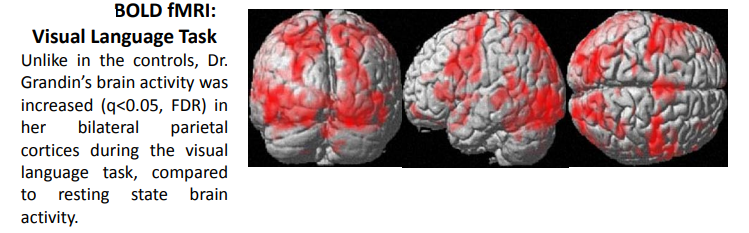
![Figure 17: MRI on Temple Grandin [40].](/fulltextimages/12094/fig_17.png)
At this point, significant differences have been identified between the works written by Murdoch in different periods of his life (before and after Alzheimer’s) [37]. In addition to some diseases that harm artistic creativity, some research findings indicate that Temporal Lobe Epilepsy, Frontal Lobe Dementia and autism increase creativity [8]. According to research, the feeling of extreme pleasure that suddenly develops during an epileptic seizure originates from the nucleus accumbens, the reward-pleasure center of the brain. In patients with epilepsy, an effect called “epileptic personality” may occur during non- seizure periods, and depending on the brain region where the seizure originates, behavioral and emotional intensities may be observed instead of arm and leg contractions. This type of epileptic picture can be defined as a temporal lobe seizure, and in such patients, intensifications in emotion and memory may be observed during non-seizure periods. Each lobe and each colored area in the brain may have its own different epilepsies. At this point, research on Dostoyevsky reveals that the type of epilepsy he had was Temporal Lobe Epilepsy (TLE), which increases creativity [8]. In this sense, it would not be wrong to say that an approach that considers epilepsy to consist only of convulsions knows very little about the nature of the disease and only expresses an epilepsy that belongs to the blue area of the frontal lobe of the brain. Another disease that has recently been reported to increase artistic creativity is Frontal Lobe Dementia. Dr. According to a study conducted by Bruce Miller and his colleagues [38, 39], Frontal Lobe Dementia interestingly increases creativity. At this point, it is claimed that in the disease in question, the prefrontal cortex, which monitors areas such as attention, logic, and sociality, is negatively affected by the frontal lobe disease, and the lobe regions that are located at the back and manage the areas related to perception are released, and this increases creativity in the relevant disease [8]. According to research, another disease that increases artistic creativity is Autism Syndrome. On this subject, Neuroscientist Jason Cooperrider and his colleagues [40] from the University of Utah conducted a study on Temple Grandin, who has autism syndrome. In the research in question, Diffusion Tensor Imaging (DTI) and Functional MRI (f-MRI) methods were used to see the connections between MRI, brain regions. According to the research findings, the left brain is larger than the right brain relationship in the brain was reversed, the amygdala, which encodes fear and distress, was found to be larger than normal, and the fusiform gyrus area, which is associated with face recognition in social relations, was found to be smaller than normal. According to relevant research, the right brain region contributes to artistic creativity to the extent that it is related to imagination and artistic field, and autism syndrome increases artistic creativity [40].
![Figure 18: Diffusion Tensor Imaging (DTI) on Temple Grandin [40].](/fulltextimages/12094/fig_18.png)
![Figure 19: Functional MRI (f-MR) on Temple Grandin [40].](/fulltextimages/12094/fig_19.png)
Another dimension that should be considered in terms of pathologies and creativity is psychiatric diseases. Interestingly at this point, there are some opinions that psychiatric disorders increase creativity. However, another view is that psychiatric diseases negatively affect creativity, but related disorders affect creative brains. So actually there is an illusion at this point. Of course, focusing on scientific research results rather than these basic assumptions on the relevant subject will provide the most accurate and clear information. Research on psychotic art indicates that even in the “golden age” of this period, only less than 2% of patients showed creative activity [41]. With this result, it is quite appropriate to say that being mentally ill or psychotic did not create the “schizophrenic artist”. However, the most basic situation that fuels the discussions on this issue is that the 2% group that demonstrates creative power consists of psychotic individuals who have previously received art education or who have revealed their creative power with a tremendous increase after being confined to a mental hospital. At this point, Prinzhorn’s view that “psychotic illness activates the potential creativity of people” emerges in the literature. The most important reasons supporting this view are that while psychotic individuals produce unique and striking works after being hospitalized, isolated and without treatment, their artistic productions have become commonplace when the acute phase of the disease is over, the patients are socialized and under the influence of medication. Prizhorn defined this situation as “instinctive, aimless, seemingly unaware, exploding without any external guidance, seeking creative shaping.” In a view that supports Prizhorn, Forel put forward the view that “he stopped fighting the disease and even admired it and fed on it, turning creation into a support for living” [41]. Contrary to these views, the 18th century pointed out the existence of a healthy functioning brain mechanism for creativity. To date, the relationship between madness and creativity has been tried to be clarified through various studies. Some of these studies were carried out as “biographical studies”. Biographical studies investigating psychiatric disorders have been conducted for some artists who died in the late 19th and early 20th centuries. These studies are in the form of case reports on creativity and psychiatric disorders. In a study conducted by Lombroso, et al. [42], he revealed that the rate of manic-depressive illness was extremely high in people who could be considered geniuses [42]. Juda [43] produced one of the most comprehensive studies on this subject. The research in question was conducted with 113 people on German artists, composers, architects, writers and scientists, and according to the research findings, “manic depressive disorder” was commonly detected in scientists and “schizophrenia and psychotic diseases” were commonly detected in artists [43]. The findings of the relevant research were later confirmed by some studies conducted on artists. Another important study in this field was conducted by Jamison [44] and the relationship between mood problems and creativity was examined. According to the findings of the relevant research, 38% of the artists had mood problems, and this rate was evaluated to be much higher than the social prevalence of the disorder in question [44]. One of the studies that most clearly revealed the relationship between creativity and psychiatric disorders was conducted by Andresan, et al. [45]. In the study, mood disorders and depressive diseases were prioritized and a control group was used. Accordingly, the rate of psychotic disorder in the authors group is 80%, while in the control group this rate is only 30% [45]. The results of case studies (on deceased artists) and control group studies on living artists have yielded consistent results. In addition, family studies are also important in terms of creativity and psychotic disorders. Some family studies on the relationship between creativity and psychotic disorder were conducted by Lombroso, et al. [42], Jamison [46] and Karlsson [47], and according to the findings of the studies on this subject, the rate of psychotic disorder in the first-degree and more distant relatives of artists is much higher than the social prevalence [42, 46, 47]. In particular, these disorders indicate mood disorders, especially manic and depressive. Although psychotic disorders appear to be common in first- degree relatives of the artists involved, suicide rates are higher than the social prevalence. Regarding the studies in question, Goodwin, et al. [48] underlined that psychotic disorders should not be confused with schizophrenia and particularly drew attention to the correlation between creativity and manic-depressive disorder [48]. The relationship between bipolar disorder and creativity was later proven by different researchers [49, 50, 51]. Although the correlation of creativity in bipolar patients has been clearly proven, there are differences of opinion regarding the reason for this; 1) Bipolarity may cause creativity, 2) The gene that causes bipolar disorder and the genes that support creativity may come from parents independently of each other, 3) Family environment and environmental conditions may cause creativity and bipolarity at the same time, 4) What causes creativity and bipolarity genes are linked to each other and may be passed on through generations [49]. Although there are disagreements on this issue in the literature, the relationship between bipolarity and creativity is mostly explained by genetic transmission. To sum up, it is possible to talk about creativity in psychiatric disorders, especially in manic-depressive states. However, studies show that creativity is high in these patients during the hypomanic period or when milder effects such as cyclothymia are observed, and this effect decreases in the disruptive and severe stages of the disease [41]. At this point, a linear correlation between bipolarity and the degree of creativity cannot be fully mentioned. The relationship between creativity and other psychotic disorders such as schizophrenia and schizophreniform disorders other than bipolar disorder has not yet been clearly demonstrated by research results.
The reason for this is that many psychotic disorders were initially defined as schizophrenia, and correct diagnoses of the participants used in the research were only made at later stages. However, the number of famous painters with schizophrenia, schizophreniform disorder, schizoid and schizotypal disorders, such as Giorgio de Chirico, is quite common in the art world, which points to the need for more research designs on this subject [52]. A study conducted by Kari Stefansson, et al. [53] on 86 thousand Icelanders points to the connection between creativity, creativity and diversity, and this provides information about DNA molecules. According to the findings, the incidence of schizophrenia and bipolar disorder with high productivity is higher than the social prevalence. The research in question distinguished individuals with high creativity, such as painters, musicians, artists, writers, and different groups such as farmers, vendors and manual workers. Accordingly, the rate of the creative group having the gene capacity that causes schizophrenia and bipolar susceptibility is 25% healthier than the other group. However, according to another finding, this gene capacity in those who are members of art centers is 17% higher than in the non-member group. Kari Stefansson compared the results with Dutch and Swedish databases and found that the probability of having this genetic trait was 25% higher in the 35 thousand people most known for creativity. According to Stefansson, this situation, especially in genes, increases the risk of schizophrenia and bipolar disorder and supported the old “crazy genius” theory [53]. The deterioration of Harvard University psychology Albert Rothenberg thinks differently on this issue. According to him, a clear gap between mental illness and creativity has not been proven, because many people who are creative do not have mental illness, that is, the opposite of the picture, sciences cannot be linked with higher rates, but creative individuals continue to process different thoughts [54]. Prof. on the relevant subject. Dr. Kemal Arıkan’s important evaluations are very valuable in terms of adding a different perspective to the discussions on this subject. According to Arıkan, a relational link between creativity and psychiatric disorders exists through neighboring genes that are very similar to each other, and bipolar disorder in particular has proven that world-famous artists are born on this subject. At this point, the background points that should be taken into consideration are that individuals with similar genes: 1) Their ability to see and feel things that do not exist is higher than normal people, 2) These individuals are more inquisitive than normal people, 3) These individuals have a higher ability to solve the mysteries behind events than normal individuals. is too much. Therefore, both the occurrence of psychiatric disorders and high creative output in individuals with this gene are related to these three characteristics. At this point, the two points that Arıkan particularly underlines are very striking and should not be forgotten; a) Individuals with psychiatric disorders are not idle members of society;
giant artists and geniuses who make great contributions to humanity grow from these individuals. b) Famous and giant names with high creative abilities also suffer and may struggle with vital problems and even experience psychiatric problems [55].
Conclusion and Recommendations
When Da Vinci’s Vitrivue Man crashed into Duchamp’s urinal and broke in 1917, all balances regarding art and aesthetics changed. Proportion, symmetry, balance and classical aesthetic understandings - all accepted general perspectives, place structure - were left to postmodern art with a dismantling perspective. The poststructuralist perspective reached the depths of art and aesthetics, cutting and pasting entire classical paintings to re-understand them. He was asking this person what he understood? When looked at, Duchamp was not a neurologist, but his revolutionary perspective developed in terms of art and aesthetics was a tremendous disruption in terms of making people think more about aesthetics and art. According to Duchamp, the artist was not a “craftsman”; the work was not just a product that he was responsible for creating. With his choice of ready-made objects, Duchamp enabled the human center to encourage production for art and aesthetic purposes, and opened a very important door for neuroscience without his knowledge. According to him, fifty percent of the work belonged to the artist, and the rest could be completed with the infinite creative power of the human brain. For this reason, everyone who looked at the work would rediscover and recreate it with their own uniqueness. In this sense, many of the paradigms we have examined in the literature have led us in a similar way. The human brain forms enormous synapses with art and aesthetics, modular structures that work from time to time and accelerate with selectable neurological circuitry. With artistic and aesthetic stimuli, the human brain primarily sends stimulation to the orbital-prontal cortex, and with the activation of this area, which is one of the important parts of stopping the emotional problem, many regions of the brain are simultaneously stopped to cut off the “meaning”. By activating many regions receiving stimulation simultaneously, the selective suite of synaptic compartments and neurobiological diversity were enriching at a significant rate. For example, with the imaging effect, the field (left brain) and the emotional field (right brain) were adapted simultaneously, increasing the connectivity between the two hemispheres. The most important contribution of art and leakage to the human brain was that people remained with accumulations to think about and ponder. In this sense, art and aesthetics not only protect the human brain, but also serve positive health through the feeling of superior security and stimulation of the reward center (nucleus accumbens). Artistic production and consumption created a feeling of pleasure by stimulating the reward center in the human brain. The stimulation of the stimulation areas of art and shine to happiness hormones such as oxytocin and serotonin becomes an important tool in eliminating many negative situations, especially the positive ones, and serves positive well-being. In the literature, the emphasis is on studies conducted abroad on the exercise areas of production and consumption in the human brain and their positive outcomes. However, the artistic activity of the human brain has not been reached through daily longitudinal studies. It is important as one of the leading psychotherapy methods in intervening in various psychological problems, especially art and paralysis, loss of effect in the human brain, psychopathologies of malfunctioning, progressive comprehensive interventions and therapies with new and different designs. Because art has a healing power, obtaining detailed information in which area it works in this significantly growing region will provide important outputs to repair and work on problem areas. The survival of the entire vital structure of humans and other species is regulated, and art is an invaluable means of re-existence given to humans in this sense. When Kundera says “he is creating a story in my size, now it is your turn”, he makes a nice reference to the enormous creative power of the human brain. Neuroart opens the doors to important areas such as laboratory analysis of art products with different algorithms developed by this technology. With the biographical and longitudinal studies described in this field or studies with control groups, new developments have been made in the early diagnosis of psychiatric disorders with some treatments. Some research in the field of neuroart sheds light on some neurological and psychiatric diseases that positively affect creative power and art. Some pathologies, at the point where they make themselves felt through the aesthetic impoverishment seen on the work of art, have been made early recognizable with special methods developed by neuroart. According to research conducted in this field, some diseases such as Alzheimer’s disease and stroke, which reduce brain volume and disrupt synaptic flow, negatively affect the creative power, and this causes serious impoverishment in works of art. However, temporal lobe epilepsy, autism, frontal lobe dementia and bipolarity increase creativity and artistic power. Although there are some disagreements in the literature regarding psychiatric disorders and creativity, the positive linear relationship between bipolar disorder and creative power seems to have been proven by many experimental designs, and this view is generally accepted in the literature. At this point, some genetic factors are pointed out. More research seems to be needed for creativity and other pathologies. However, although genetic factors are emphasized in the relationship between creativity and pathologies, high art is generally formed not in periods and conditions when everything goes well, but in conditions and strains where people and societies suffer and object, and in these environmental conditions, there is actually intense stress level. However, it should be considered that it may predispose to some disorders. Another important point that should be mentioned about neuroart is related to the methodologies used by neuroart in research. When conducting research on relevant subjects, neuroart does not use random methods, but systematic analysis methods depending on the type of artwork. For example, in painting art studies, some measurable methods such as brush-stroke stroke numbers, aesthetic richness and depth of the work are preferred, while in literary works, concept-term richness, number of words (vocabularies), grammar (grammatics), meaningfulness, phrasal order (syntactic) are preferred. Automatic text analysis technique is used using parameters. In biographical case studies, completely objective measurement and evaluation methods such as neuropsychological tests (attention, memory, general knowledge, language tests), Mini Mental Test, MRI, Functional MRI (f-MR), Diffusion Tensor Imaging (DTI) are used. It seems very important to expand the framework of studies in the field of neuroart and neuroaesthetics in terms of neurological and psychiatric diseases. At this point, there are some deficiencies in the literature; The first of these is that the diseases studied generally have similar clusters. Especially in terms of psychiatric diseases, bipolar disorder and schizophrenia stand out as disorders where there is clustering in research. Research findings for different psychiatric disorders are quite limited [56]. Similar accumulations have been observed in the dimension of neurological diseases, and it would be appropriate to emphasize that it would be meaningful to increase the range of diseases. However, while creativity and diseases are examined, another accumulation occurs in the types of art; At this point, it has been frequently used in painting, literary arts and music research designs, but not many research designs in different branches of art have been found.
To summarize, even though art and aesthetics have moved to a more elitist and elitist area with modernism, it seems that the neurobiological structure of the human being is built on the indispensable unity of humans and art. Even though we are living in the age of science and space, it seems that humans cannot help but open the fascinating door of aesthetics and art, because art is an act of human creation, both evolutionary and as an inner feeling [57]. In this sense, introducing the child’s brain, especially during the developmental process, to art and aesthetics is very valuable in establishing tremendous synaptic connections. In addition, it is an invaluable tool for understanding art and aesthetic pathologies, developing preliminary diagnostic criteria and improving treatment processes through art therapies. Increasing the number of researches to be carried out in related fields will open the door to new knowledge and methods in the neuroart and neuroaesthetic dimensions every day [58]. Finally, we can say that art is indispensable for human nature, with this acceptance, art will continue to be indispensable to the extent that it can liberate people, and as long as the world we live in continues to be unsafe, we will retreat to the safe shelters we have created in our magnificent brains and continue to create art with an endless power of creation. It looks like [59, 60, 61, 62].
References
-
Csikszentmihalyi M (1997) Creavity - Flow and the Psychology of Discovery and Invention. Harper Perennial, New York, USA.
-
Dissanayake E (1992) Homo Aestheticus. University of Washington Press, USA pp: 320.
-
Çiftçi T (2018) Artistic and Scientific Creativity from the Perspective of Neuroaesthetics and Visual Thinking. Işık University, Institute of Social Sciences, Art Science Doctorate Program Doctoral Thesis.
-
Tommaso M, Sardaro M, Livrea P (2008) Aesthetic value of paintings affects pain thresholds. Consciousness and Cognition 17(4): 1152-1162.
-
Bilginer O (2010) Research on the Cognitive Functions of the Brain and Its Reflections on Native Language Education. Mustafa Kemal University, Faculty of Education, Department of Turkish Education,Turkey, pp: 27.
-
Ertuğrul E, Polat, Gülüstan (2017) Güzellik Algılamasının Nörobiyolojisi ve Evrimsel Temelleri. Düşünen Adam: Journal of Psychiatry & Neurological Sciences 30(4): 368-388.
-
Güner K, Kantarcıoğlu S (2022) Cognitive Stimuli in Adnan Çoker Paintings in the Context of Neuroaesthetic Theory. Fine Arts Magazine 41: 196-211.
-
Tanrıdağ O (2022) Aesthetics and Art Moles in the Brain - Introduction to Neuroaesthetics and Neuroart. İn: 1st (Edn.), Uskudar University publication, Turkey.
-
Kawabata H, Zeki S (2004) Neural Correlates of Beauty. J Neurophysiol 91(4): 1699-1705.
-
Chamberlian R, Mcmanus C, Brunswick N, Rankin Q, Riley H, et al. (2014) Drawing On The Rıght Sıde Of The Brain: A Voxel – Based Morphometry Analysıs Of Observatıonal Drawing. Neuralmage 96: 167-173.
-
Chamberlian R, Wagemans, Johan (2016) The genesis of errors in drawing. Neuroscience & Biobehavioral Reviews 65: 195-207.
-
Walker CM, Winner E, Hetland L (2011) Visual Thinking: Art Students Have an Advantage in Geometric Reasoning. Creative Education 2(1): 22-26.
-
Bahri K (2009) Creative Brain. Science and Technology. University of Iowa, US pp: 1-6.
-
Johnson S, Riis J, Kimberly G, Noble G (2016) Poverty and The Devoloping Brain. Pediatrics 137(4): e 20153075.
-
Yalçın C (2014) Music Uses and Develops Both Lobes of the Brain. Yenişafak.
-
(2023) Beynin İşlevi Nedir. Cognitif Research.
-
Abdullah O (2022) Eight Activities for Right Brain and Left Brain. Health Corner.
-
Kawabata H, Zeki S (2003) Neural Correlates of Beauty. The American Phsiological Society 91(4): 1699-1705.
-
Dahlia Z (2010) Art and Brain: İnsights From Neuropsychology, Biolog and Evolution. Journal of Anatomy 216(2): 177-183.
-
Nadal M, Munar E, Capó MA, Rosselló J, Cela Conde CJ (2008) Towards a framework for the study of the neural correlates of aesthetic preference. Spat Vis 21(3- 5): 379-396.
-
Vartanian O, Goel V (2004) Neuroanatomical correlates of aesthetic preference for paintings. NeuroReport 15(5): 893-897.
-
Baran C (2021) Neuroaesthetics: How Does the Brain React to Art? Artistic Rezo Club. Sincrire ala newsletter.
-
Jacobsen T, Schubotz RI, Hofel L, Von Cramon DY (2006) Brain correlates of aesthetic judgment of beauty. NeuroImage 29(1): 276-286.
-
Cavdarbasha D, Kurczek J (2017) Connecting The Dots: Your Brain and Creatıvıty. Neurosıence 19.
-
Eren F (2021) The Field Where Science Meets the Art of Photography: Neuroaesthetics. Aydınlık Publication.
-
Songül P (2016) The Importance of Music Education in Children Diagnosed with Autism Spectrum Disorder. Journal of Art Education 4(1): 1-16.
-
Güney E, Uysal S (2021) Generative Art: Post Digital Transformations in the Relationship between Neuroplasticity and Deep Learning. Yıldız Technical University Publications. Yıldız J Art Desg 8(2): 62-74.
-
Öztürk A (2019) Transformation of Cognitive Flexibility into Creative Values in Learning and Teaching Processes through Visual Arts Education. Journal of Interdisciplinary and Intercultural Art. 4(9): 1-10.
-
Turhan AH (2016) The Effect of Multi-Stimulus Educational Environments on Students Reading Comprehension and Written Expression Skills. Journal of Language Education and Research 2(3): 16-50.
-
Sevil H (2018) Multi-Stimulus Educational Environment in Native Language Teaching and the Importance of Components of This Environment. Turkish Studies Educational Sciences 13(19): 895- 922.
-
Zeki S (1993) A Vision OF The Brain. Blackwell Scientific Publications, Oxford, USA.
-
Heilman KM Nadeau SE, Beversdoof DO (2003) Creative İnnovation: Possible Brain Mechanısms.Neurocase 9(5): 369-379.
-
Beaty RE, Seli P, Schacter DL (2019) Network Neuroscience of Creative Cognition: Mapping Cognitive Mechanisms and Individual Differences in the Creative Brain. Curr Opin Behavior Science 27: 22-30.
-
Topalovic U, Aghajan ZM, Villaroman D, Hiller S, Christov- Moore L, et al. (2020) Wireless Programmable Recording and Stimulation of Deep Brain Activity in Freely Moving Humans. Neuron 108(2): 322-334.
-
Bravo JA, Forsythe P, Chew MV, Escaravage E, Savignac HM, et al. (2011) Ingestion of Lactobacillus Strain Regulates Emotional Behavior and Central GABA Receptör Expression in a Mouse Via the Vagus Nerve. Proceedings of the National Academy of Sciences 108 (38): 16050-16055.
-
Volkow ND, Koob GF, Mclellan AT (2016) Neurobiologic Advances from The Brain Disease Model of Addiction. New England Journal of Medicine 374(4): 363-371.
-
Garrard P, Maloney LM, Hodges JR, Patterson K (2005) The Effects of Very Early Alzheımer’ s Diasease on the Characteristics of Writing by a Renowned Author. Brain 128(2): 250-260.
-
Miller BL, Cummings J, Mishkin F, Boone K, Prince F, et al. (1998) Emergence of Artistic Talent in Frontotemporal Dementia. Neurology 51(4): 978-982.
-
Miller BL, Hou CE (2004) Portraits of Artists: Emergence of Visual Creativity in Dementia. Arch Neurol 61(6): 842- 844.
-
Cooperrider JR, Grandin T, Bigler ED, Anderson JS, Lange N, et al. (2011) Dr. Temple Grandin: A Neuroimaging Case Study. Harvard Üniversity Schools of Medicine Public Health.
-
Yazıcı, O (2016) Creativity, Psychiatric Illness, Bipolarity. Psychopathological Art and Creativity.
-
Lombroso CT (1983) A Prospective Study of İnfantile Spasms: Clinical and Therapeutic Correlations. Epilepsia 24(2): 135- 158.
-
Juda A (1949) The relationship between highest mental capacity and psychic abnormalities. Am J Psychiatry 106(4): 296-307.
-
Jamison KR (1989) Mood disorders and patterns of creativity in British writers and artists. Psychiatry 52(2): 125-134.
-
Andreasen NJ, Powers PS (1975) Creativity and psychosis: An examination of conceptual style. Arch Gen Psychiatry 32(1): 70-73.
-
Jamison KR (1993) Touched with fire: Manic-Depressive Illness and the Artistic Temperament. Free Press, New York, USA.
-
Karlsson JL (1970) Genetic association of giftedness and creativity with schizophrenia. Hereditas 66(2): 177-182.
-
Goodwin FK, Jamison KR (2007) Manic-Depressive Illness Bipolar Disorders and Recurrent Depression In: 2nd (Edn.), Oxford University Press, USA.
-
Simenova DI, Chang KD, Strong C, Ketter TA (2005) Creativity in familial bipolar disorder. J Psychiatr Res 39(6): 623-631.
-
Akiskal KK, Savino M, Akiskal HS (2005) Temperament profiles in physicians, lawyers, managers, industrialists, architects, journalists, and artists: A study in psychiatric outpatients. J Affect Disord 85(1-2): 201-206.
-
Nowakowska C, Strong CM, Santosa CM, Wang PW, Ketter TA (2005) Temperamental commonalities and differences in euthymic mood disorder patients, creative controls, and healthy controls. J Affect Disord 85(1-2): 207-215.
-
Sass LA (2013) Madness and Modernism. In: 1st (Edn.), Alfa Printing Publishing Distribution, Istanbul, Turkey, pp: 750.
-
Stefansson K, Stefansson H, Sarginson J, Kong A, Yates P, et al. (2003) Association of Neuregulin 1 with Schizophrenia Confirmed in a Scottish Population. Am J Hum Genet 72(1): 83- 87.
-
Rothenberg A (2001) Bipolar Ilness, Creatıvıty and Treatment. Psychiatric Quarterly 72 (2): 132- 147.
-
Arıkan K Creative Power and Psychiatric Diseases.
-
Bora E, Alper Y (2005) Artistic Creativity and the Brain. Sanatsal Yaratıcılık Yeni Symposium 43(1): 3-8.
-
Sedat S (2007) II. Natıonal Chıldren’s And Youth Literature Symposıum Book. Ankara University Press, Ankara, Turkey, pp: 998.
-
(2023) Mathematical Beauty Activates the Part of the Brain That Art and Music Affect. Turkish Intelligence Foundation.
-
Muftuoglu O (2023) Rest Your Brain.
-
Hogenboom M (2023) Artists brains are structurally different. BBC News Turkey.
-
Yazio KI (2023) The Beginning of Art is in the Brain.
-
Bhupal M, Bakırcı CM, Karahan CK, Demir E, Gürkan S (2022) Aesthetics and Evolution: What do we find beautiful and why.
- Occupational Stress and Mental Health Outcomes Among Police Officers: A Mini Review
- The Experience of Counterproductive Leadership on Mental Health and Impact on Retention in U.S. Marines: A Phenomenological Study
- Nomophobia in the Digital Age: A Study on College and University Students
- Emotional Regulation in Children with Autism and Learning Disabilities
- Antisemitism on American College Campuses and Its Impact on Jewish Students
- Exploring the Role of Empathy in the Associations of Family Functioning and Purpose in Life with Attitude towards Abortion among Undergraduates: A Moderation Analysis