
Haiti’s Tree Angels
Haiti has been 97% deforested by Europeans and American businesses for profit. Britannica defines deforestation is defined as the clearing and removal of trees by humans. Deforestation ranks as the largest issue in global land use, historically for agriculture use, fuel, manufacturing, and construction. However, Haiti’s deforestation resulted in the lumber from the trees being exported and nothing being imported or built to replace the trees. Consequently, the ground in Haiti where the trees have been removed has lost its ability to sustain the impact of earthquakes and floods. As such, homes are destroyed and people are displaced following these natural disasters. The aim of Tree Angels for Haiti (TAFH) is to reforest Haiti by planting one tree at a time.
Abbreviations
TAFH: Tree Angles for Haiti; WHO: World Health Organization; GDP: Gross Domestic Product; USD: United States Dollars; NGO: Non-Governmental Agencies; SDOH: Social Determinants of Health; ODPHP: Office of Disease and Prevention and Health Promotion.
Introduction
Purpose of Report
To educate the readers about the deforestation of Haiti. In addition, to educate readers on the relationship between mental health and green spaces it addresses the current conditions that Haitian people and their communities experience because of deforestation and a model non- profit organization named Tree Angels for Haiti. Lastly, it is widely known and reported that there are mental health benefits achieved when individuals can sit in green spaces. For example, researchers note that spending time in green spaces has been found to improve sleep and reduce stress. All of which the people of Haiti could benefit from.
Trees for Haiti
Trees are needed in Haiti, as such there are several nonprofit organizations established since 2010 following a devastating earthquake focused on forestation. Extraordinary volunteers have worked with the Haitian community at the local to replant trees to reinforce the ground and land which helps to defend the community from earthquakes. One organization that stands out is Tree Angels for Haiti, a non- profit agency that believes in empowering the people who live in the communities. Moreover, has developed a roadmap for other non-profit organizations to model.
This philosophy and model is not lost on Haitian people. Haiti is a country due to its protracted history of destruction, aggression, oppression, and occupation from other countries, according to Bob Corbett, director of People to People, who is in daily need of help and assistance from nonprofit organizations. In his work, he highlights the damage that the foreign occupation of Haiti caused in a recently published paper. Bob writes a major root cause of Haiti’s poverty, and miseries is past foreign occupation: The international community’s role such as French Colonial contributions, the French debt of 1838, and the United States occupation which lasted from 1915-1934, played a significant role in the financial ruins of Haiti. In addition, he explains that the role of Haitians rulers-maintained slave-like labor systems, protection of the elite’s wealth at all costs, Haitian corruption, and the use of human rights violations as tools to maintain the practices of oppression. Secondary concerns and issues of Haiti’s poverty according to Mr. Corbett can be seen in Table 1 below.
| Language as an oppressor | Ignorance and illiteracy |
|---|---|
| Education system | Soil erosion (deforestation) |
| Export of crops vs local food crops | Poor infrastructure, inadequate roads, water system, schools, medical services |
| Unemployment | Under development in an age of economic competition |
| Haitian self-image | deforestation |
Table 1: Secondary Causes of Haiti’s Poverty.
The mission of one successful non-profit organization Tree Angles for Haiti (TAFH) is relative to the secondary concerns listed in Table 1. Tree Angels’s primary mission is to reduce environmental degradation through educational programs and community revitalization planting projects which will improve the poor infrastructure. The TAFH leadership believes that there is an urgent need to replant trees to help stabilize the heavily deforested land in Haiti because of foreign occupation and government corruption. This goal of reforesting Haiti will help to decrease environmental catastrophes caused by earthquakes, subsequently decreasing the displacement of families and serving as a stopgap for generational homelessness and poverty. The August 2021, earthquake is listed by many as the deadliest natural disaster of 2021 with 2,248 deaths and 12,763 people injured. According to a report by the Associated Press (2021), more than 800,000 people were impacted, at least 137,500 buildings were damaged and destroyed and more than 300 people were missing at the time this article was released.
During an interview with the director of Tree Angels, she reported that historically there was a massive amount of tree cutting leading to 97% deforestation in several areas of Haiti. Both American and French companies were mainly responsible for the massive number of trees that were cut, removed and exported to make furniture [1, 2]. This act alone left Haitian citizens who lived in the deforested areas more vulnerable to the destruction of earthquakes. Moreover, she stated that when the land is unstable, housing is destroyed, food becomes scarce, and families are displaced. The collective goals of her organization are to promote environmental growth and economic stability by educating and empowering the local people of Haiti to depend on their community and solve identified problems from within the community. In turn, this will promote improvement in public health problems associated with poverty and illiteracy, both of which are social determinants of health and will be further discussed in this report. Getting “buy-in” from the community takes patience because the Haitian people were distrustful of many outside organizations and volunteers. There was a pattern of poor follow-through on promises to improve the quality of their life, however, once the funds dried out the organizations would leave Haitians with broken promises, stated the director of Tree Angels
Historical View of Haiti
On January 12, 2010, Haiti was hit by a devastating earthquake that killed over 230,000 people and left millions homeless, hungry, and wounded. Port au Prince is the capital of Haiti and housed historical cathedrals which were also demolished.
Haiti was once a rich and prosperous country and was intimately intertwined with the United States and Europe, collectively for three centuries [1]. However, now Haiti is viewed as a primitive, poor country with a government that barely functions.
Laurent Dubois [1] stated that 200 years ago Haiti was a French colony named Saint-Domingue that was rich with sugar cane and coffee. It was also inhabited by people who were enslaved, which made it possible for slave owners who were White Frenchmen to be financially secure and rich. However, in 1791 there was a slave revolt and revolution that ended slavery but not its independence from French rule which was by the way supported by the United States. Dubois [1] writes that between 1794 and 1801 Haiti (once known as Saint-Domingue) remained a French colony, but it was governed by Toussaint Louverture a former slave who followed the French government. It was not until decades later that Haiti was given its independence from France and changed its name from Saint-Dominque to Haiti [2]. However, Haiti was made to pay France roughly 3 billion dollars to compensate slaveholders for their losses when they were made to leave the country. Of course, the Haitian government could not pay this bill so they took loans from French banks to pay the indemnity. More than half of Haiti’s government budget went to paying France and by 1914 that proportion had climbed to more than 80% [2].
Shortly following independence from the French, Haiti was immediately occupied by the United States. The Marines invaded the country and occupied the country until 1938 [2]. During this time the United States controlled Haiti’s revenues and the banks while forcing a new Haitian constitution that governed everything except education and language which remained French (Corbett). It is noted that aid packages were provided to the Haitian government and the elite but nothing else was contributed to help the poor people. According to World Health Organization (WHO), in 2017 the Gross Domestic Product (GDP) of Haiti was 783 in United States Dollars (USD). 59% of the Haitian population lives under the national poverty line of 2.41 USD per day and 24% live under the national extreme poverty line of USD 1.23 per day. Today, Haiti continues to struggle financially.
There is also little to no infrastructure, unstable educational and medical systems, and the social infrastructures are also fractured. U.S. occupation in Haiti accomplished very little to stabilize Haiti’s economic and political system [2]. Some say it has only increased Haiti’s dependence on outside power. There have been consistent missionaries, non-governmental agencies (NGO), governmental agencies, and various envoys inside and outside Haitian communities offering assistance, however, when the grant funds run dry these agencies leave Haiti along with the hope the Haitians had to improve their lives [1]. Not only hope is lost but feelings of abandonment, hostility, and lack of trust for outsiders pursue and persist today.
Social Determinants of Health
Social Determinants of Health (SDOH) are defined by the Office of Disease and Prevention and Health Promotion (ODPHP) to discuss the conditions in the environment where people are born, live, learn, work, play, worship, and age. Moreover, we know that the environment impacts a wide range of health, overall functioning, and quality of life concerning outcomes and risks. There are five SDOH domains [3]; (1) economic stability, (2) education access and quality, (3) healthcare access and quality, (4) neighborhood and built environment, (5) social and community context. Haiti has low to little functioning in all 5 domains. However, TAFH has been able to provide sustainable aid to 4 of the 5 domains over the last decade to several communities, specifically, social and community context, neighborhood and built environment, education access quality, and economic stability. However, neighborhood and community building are the top priority for TAFH, followed by social and community quality education and economic stability. Trees are planted and seedlings are prepped to be planted once they have sprouted tall enough by the local Haitian people. This partnership between the non- profit Tree Angels and the Haitians builds the neighborhood and community. In addition, this partnership provides these families the opportunity to make income and to feed their families, especially when fruit trees are planted.
In summary, the focus is reforesting the land with trees, and improving green spaces with the trees planted by local people who are hired and help to earn money to take care of their families.
Political Determinants of Health
Satcher, et al. [4] Health Leadership Institutes reported that political determinants of health create social drivers including poor environmental conditions, inadequate transportation, unsafe neighborhoods, and lack of healthy food options that affect all other dynamics of health. Dawes DE [5] posits that political determinant of health influence policy, community infrastructures, administrating power, and systematic relationships. It can also be argued that political determinants of health impact social determinants of health. One example that comes to mind is that the policy to deploy COVID-19 vaccines through major neighborhood drug stores. If a person lives in a pharmacy desert, meaning no pharmacy within 5 miles of where they live they are unable to obtain a vaccine. Why is the nearest pharmacy 5 miles or more away? Perhaps it is because of a policy written by someone in the seat of power, in addition to the possible disconnect between the people at the top and the people at the bottom of the social economic system. Political determinants of health and social determinants of health mutually influence and reinforce one another in a manner that builds opportunities that can advance health equality or highlight health inequities [5].
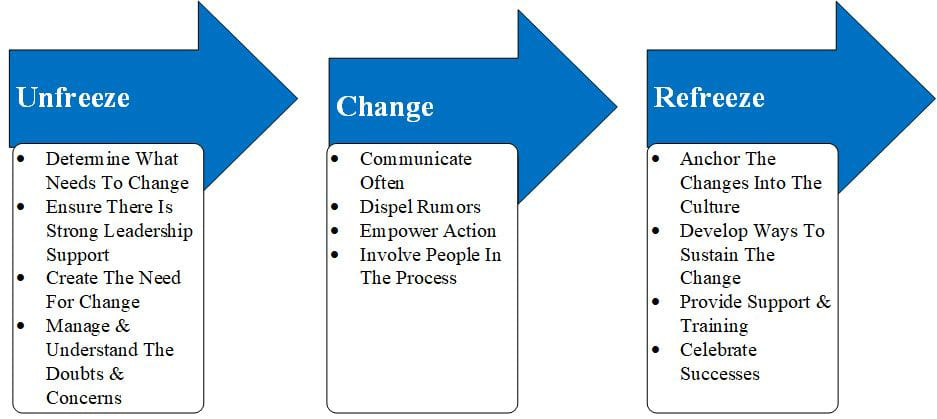
Lewin’s theory on change proposes that individuals, groups, and communities of people are influenced by their environment which contains restraining forces, obstacles, or counter-driving forces aimed at keeping them in an oppression position or status quo [6]. It is the work of the driving forces, or positive forces that are needed for change to happen. This model is very appropriate and applicable to the work that is needed to support the communities of Haiti. This psychologist believes that all forms of meaningful learning and change in life come with some fraction of emotional pain, dissatisfaction, or frustration. In examination of the Unfreeze domain: determine what needs to change was identified following the 2010 earthquake. Non-profits like Tree Angels for Haiti identified that the trees were missing. Tree roots help to keep the ground intact, which supports infrastructure and houses in the community. Thus, keeping families in their communities.
Moving to the Change domain in the model: replanting the trees needed to rebuild the roots that stabilized the ground and kept Haitians in the communities can stay in their homes. This was evident this year during the 2020 earthquake. Each community that had partnered with Tree Angels suffered minimal damage due to the trees planted in 2010, per the Tree Angel director [7, 8, 9].
The Refreeze domain includes methods to sustain the changes made and to provide support and training. Non- profits must maintain a small but robust team on the ground with their community partners who communicate weekly and are committed to the long haul. Too many times non- profit organizations have a short-time vision. Tree Angels not only have a long-term vision but have a strategy in place to help the communities by teaching them to grow fruit trees and once harvested sell the fruit to earn money for their families [10, 11, 12, 13]. These community members also pledge to donate what they can back to the Tree Angel’s organization. These funds are then used to help other communities in Haiti to include the schools. In addition, the Tree Angel’s organization with the help of the local people created a botanical garden that serves as a green space. The local Haitian community is invited to go and visit the garden to meditate, pray, or just sit which enhances their mental health and community cohesion.
Implementation and Discussion
This year, the Tree Angel organization has planted a total of 19,128 trees in Haiti. Over 6,000 of these trees have been fruit trees, specifically banana, breadfruit, mango, and papaya. Since its conception, this organization has planted over 200,000 thousand trees in Haiti. Their partnership with community schools has also supported tree nurseries in the community by teaching the students TAFH philosophy and the purpose of Haitians helping Haitians. This approach and philosophy have proven to be more sustainable. This organization pledges to plant trees for the next ten years with plans to grow and plant for another 20 years with donations and grants. Funds are raised by small donations and fundraisers which provide funds to buy tree seedlings. These seedings then support the planting of over 1,000 trees.
Lastly, Haiti’s history is rich and tells the story of how occupation and oppression ruined a community for decades.
More importantly, the Tree Angels organization provides a roadmap that combines the power of health education and prevention, partnered with public health and mental health can work to improve the quality of life for others.
References
-
Dubois L (2012) Haiti: The aftershocks of history. Metropolitan Books.
-
Renda MA (2001) Taking Haiti: Military occupation and the culture of US imperialism, 1915-1940. Univ of North Carolina Press 30(3): 471-476.
-
World Health Organization (2020) Social determinants of health (No. SEA-HE-190). WHO Regional Office for South-East Asia.
-
Satcher D, Nottingham JH (2017) Revisiting oral health in America: A report of the surgeon general. Am J Public Health 107(S1): S32-S33.
-
Dawes DE (2020) The political determinants of health. Johns Hopkins University Press.
-
Manchester J, Gray Miceli DL, Metcalf JA, Paolini CA, Napier AH, et al. (2014) Facilitating Lewin’s change model with collaborative evaluation in promoting evidence based practices of health professionals. Evaluation and program planning 47: 82-90.
-
Burnes B (2004) Kurt Lewin and the planned approach to change: a re‐appraisal. Journal of Management studies 41(6): 977-1002.
-
Harris R, Ofili E (2004) The Satcher Health Leadership Institute’s Transdisciplinary Collaborative Center for Health Disparities.
-
Schein EH (1996) Kurt Lewin’s change theory in the field and in the classroom: Notes toward a model of managed learning. Systems practice 9(1): 27-47.
-
Mishori R (2019) The social determinants of health? Time to focus on the political determinants of health. Medical care 57(7): 491-493.
-
Romulus S (2021) Personal Interview.
-
Office of disease prevention and health promotion (2020) Social Determinants of Health. Health people 2030.
- Occupational Stress and Mental Health Outcomes Among Police Officers: A Mini Review
- The Experience of Counterproductive Leadership on Mental Health and Impact on Retention in U.S. Marines: A Phenomenological Study
- Nomophobia in the Digital Age: A Study on College and University Students
- Emotional Regulation in Children with Autism and Learning Disabilities
- Antisemitism on American College Campuses and Its Impact on Jewish Students
- Exploring the Role of Empathy in the Associations of Family Functioning and Purpose in Life with Attitude towards Abortion among Undergraduates: A Moderation Analysis