
Prevelance of occult Hepatitis B Virus (HBV) Infection among Hemodialysis Patients in Northern State, Sudan
Introduction: Occult HBV infection (OBI) is the persistence of viral genome in the liver tissue in individuals negative for HBsAg. Hemodialysis patients are at risk of acquiring parenterally transmitted infections such as HBV, OBI, because of the large number blood transfusions they receive, invasive procedures they undergo, shared dialysis equipment, impaired host immune response, and lower response rates to HBV vaccination. Materials and Methods: This study was a cross-sectional study conducted at three health centers in the Northern State, Sudan. Following strict inclusion and exclusion criteria, ninety haemodialysis patients were enrolled. Antigen capture enzyme linked immunosorbent assay (ELISA) to detect hepatitis B surface antigen (HBsAg), competitive ELISA to detect Hepatitis B core antibody (HBcAb) antibodies and polymerase chain reaction (PCR) to detect hepatitis B virus (HBV) DNA were used in this investigation. Results: out of the 90 patients sampled, 51 were males, 39 were females, and their ages ranged between 18 and 80 years. Two of patients (2/90; 2.2 %) were positive for HBsAg and were subsequently excluded from the study while (88/90; 97.8%) were negative for HBsAg. Out of these17 (19.4%) showed positive HBcAb of which 14(82.3%) tested positive to HBV DNA. It is recommended that in order to prevent HBV transmission among haemodialysis patients in Sudan,molecular detection techniques must be considered in detecting occult HBV in these patients.
Introduction
Hepatitis B virus (HBV) is a species of the genus Orthohepadnavirus, which belongs to the family of Hepadnaviridae virus [1]. HBV is highly contagious, and is considered as the most commonly transmitted blood borne virus in the health care setting worldwide. Globally, Hepatitis B virus infection remains a major health problem leading to considerable morbidity and mortality although vaccines and antiviral treatments are available [2]. HBV affects all age groups and can lead to liver disease, liver cancer and death in many of those afflicted [3, 4, 5, 6, 7]. There remain many unanswered questions regarding its pathogenesis and clinical significance, but should be considered a potential risk factor in the development of hepatocellular carcinoma (HCC) whenever it is encountered [3, 5, 8]. World Health Organization (WHO), estimates that approximately 2 billion people worldwide have been infected with the hepatitis B virus (HBV), of which 350 million people are chronic carriers of the virus and 600 000 die each year as a result of either acute or chronic infection with the virus [2]. The use of hemodialysis (HD) for end-stage renal disease (ESRD) has increasingly expanded in the past decades. Hemodialysis patients are at risk of acquiring parenterally transmitted infections such as HBV, because of the large number of received blood transfusions, invasive procedures they undergo, shared dialysis equipment, impaired host immune response and their lower response to HBV vaccination [2]. Transmission generally occurs from patient to patient or from patients to health care personnel via contaminated surfaces, instruments, or accidental needle-stick or sharps injuries. The virus can be transmitted directly through body fluids to mucous membranes, cutaneous scratches, abrasions, burns or other lesions. Indirect transmission can occur from surfaces contaminated with blood or body fluids to mucous membranes. HBV has been shown to survive in dried blood on surfaces at room temperature for at least a week [3, 2]. Occult HBV infection (OBI) is the persistence of viral genome in the liver tissue in individuals negative for HBsAg. OBI is defined by the presence of HBV DNA in the liver (with detectable or undetectable HBV DNA in the serum) in patients with serological markers of previous infection (anti-HBc and/or anti-HBs positive) or in patients without serological markers (antiHBc and/or anti-HBs negative) [2, 5, 9]. Occult HBV infections are more frequently detected in individuals with antibodies to hepatitis B core antigen (anti-HBc), as a unique marker of HBV infection. However, recent studies suggest that up to 20% of individuals with occult HBV could be negative even for anti-HBc antibodies or any other serological indicator of exposure to HBV. This infection may persist in some individuals for years without emerging symptoms of overt HBV infection and is characterized by very low viral load (usually below 104 copies/mL) [2, 10, 11]. The prevalence of occult HBV infection is most common in regions of the world where HBV is endemic, while it is less common in regions with intermediate HBV prevalence rates and least common in areas, where HBV is relatively uncommon [3]. However, the trend of the prevalence is not yet documented in Sudan since only few studies have been conducted [2]. Occult hepatitis B has been observed in patients with cryptogenic chronic liver disease, in patients with hepatocellular carcinoma (HCC), in patients with chronic hepatitis C,and in patients with fulminate hepatitis [12, 13, 14]. When Occult hepatitis B becomes established, however, the presence of severe liver injury that was due to hepatitis B infection might be preserved obscuring the original cause of injury [15]. Many epidemiological and molecular studies indicate that HBV presence may play a critical role in the development of HCC. Indeed, in areas where HBV is present, occult hepatitis B mono infection or co-infection with hepatitis C virus (HCV) was reported to be associated with HCC. In the world, the incidence of occult HBV was reported to range between 0 to 58%. The incidence of occult HBV in Sudan was reported to range between 0 to 11.5% [10, 16].
The diagnosis for HBV infection is made following serologic tests for the virus, such as ELISA. ELISA is used to detect HBsAg and HBc antibodies or by molecular biological techniques such as polymerase chain reaction (PCR). On the other hand, diagnosis of occult HBV infection requires sensitive HBV-DNA PCR assay [17]. The aim of this study was to determine the prevalence of occult HBV infection among hemodialysis patients in Northern State of Sudan.
Materials and Methods
Study Area and Period
This study was conducted on haemodialysis patients in Northern State, Sudan during the year 2016. Target population and sample size. A cross-sectional study was carried out in 2016 to investigate a population of 90 haemodialysis patients of between 18 and 80 years old at three Health centers in Northern State, Sudan. All participating patients were given written informed consent. The collected data included age, gender, date of sample collection and length of time in dialysis. Plasma was separated by centrifugation and stored frozen at - 20°C until further analyses.
Serology
Commercial ELISA kits (Diagnostic automation/cortez diagnostics.inc) were used to detect HBsAg and HBcAb according to the procedures described by the manufacturer.
DNA Extraction
DNA was extracted from patient’s materials using commercial Kit (Vivendi's, Malaysia) according to manufacture instructions. The extracted DNA was stored at -20°C until used.
Polymerase Chain Reaction (PCR)
The PCR was performed by processing the extracted DNA from plasma with primers that are specific for the HBsAg gene of HBV. The primers used consisted of forward primer 5'TCGGAAATACACCTCCTTTCCATGG3' (HBVgenome1353-1377) and reverse primer, 3’GCCTCAAGGTCGGTCGTTGACA-5' (HBV genome1 702- 1681). The reaction was performed in 20 μl total volume using Solis Bio dyne master mix. The volume included 4 μl master mix, 1 μl forward primer, 1 μl reverse primer, 5 μl Out of the 90 samples tested for HBsAg, eighty eight samples (88/90; 97.8%) (50 males and 38 females) were negative for HBsAg by ELISA. On the other hand, two samples (2/90; 2.2%) (1 male and 1 female) samples tested positive for HBsAg (Table 1).
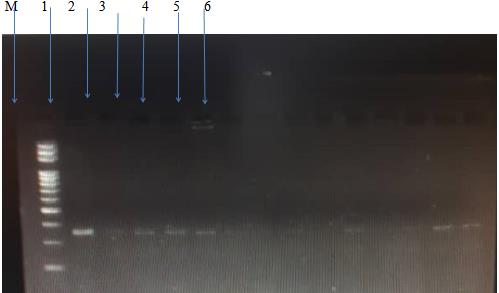
extracted DNA and 9 μl distilled water. The DNA was amplified in thermo- cycling conditions using PCR machine (Techno, Japan) as follow: initial denaturation at 94°C for 5 min, followed by 35 cycles of denaturation at 94°C for 1 min, annealing at 62°C for 1 min and extension at 72°C for 1 min, with a final extension 72°C for 7 min. 10 μl of the amplified product was subjected to direct analysis by gel electrophoresis in 2% Agarose, the gel was prepared by adding 0.7 g of Agarose to 35 ml 5X Tris Borate EDTA buffer. The product was visualized by staining with 0.15% Ethidium bromide using UV gel documentation system INGeNius (country?). The expected size of surface antigen gene (sAg gene) amplicon was 350 bp.
Results
Detection of HBsAg
| ELISA HBsAg | |||||
|---|---|---|---|---|---|
| Gender | Negative (%) | Positive (%) | Total (%) | ||
| Male count | 50 (55.6) | 1 (1.1) | 51 (56.7) | ||
| Female count | 38 (42.2) | 1 (1.1) | 39 (43.3) | ||
| Total | 88 (97.8) | 2 (2.2) | 90 (100) |
Table 1: Frequency of HBsAg in haemodialysis patients at Northern State health centers, Sudan.
A total of 88 samples that were HBsAg negative were tested for HBcAb using ELISA. Out of these seventy one samples, (71/88; 80.6%) (40 males and 31 females) were
| ELISA HBcAb | |||||
|---|---|---|---|---|---|
| Gender | Negative (%) | Positive (%) | Total (%) | ||
| Male count | 40 (45.4) | 10 (11.4) | 50 (56.8) | ||
| Female count | 31 (35.2) | 7 (8) | 38 (43.2) | ||
| Total | 71 (80.6) | 17 (19.4) | 88 (100) |
Table 2: Frequency of HBcAb in haemodialysis patients at Northern State health centers, Sudan.
Detection of Hepatitis B DNA
A total of 17 patients that was positive for HBcAbs were tested for HBV DNA using PCR. HBV DNA was detected in 14 (14/17; 82.3%) samples (5 females and 9 males). The rest of the samples (3/17; 17.17) were negative (Table 3, Figure 1).
| PCR HBsAg gene | |||||
|---|---|---|---|---|---|
| Gender | Negative (%) | Positive (%) | Total (%) | ||
| Male count | 1 (5.9) | 9 (52.9)(9.1%) | 10(58.8) | ||
| Female count | 2 (11.8) | 5 (29.4) (5,6%) | 7 (41.2) | ||
| Total | 3 (17.7) | 14 (82.3) (15.5%) | 17 (100) |
Table 3: Frequency of HBV DNA in haemodialysis patients at Northern State health centers, Sudan.
Discussion
In this study, 17 out of 80 (19.4%) samples were found seroreactive to anti core antigen and 14 (82.3%) out of these 17 were found positive for HBV DNA, representing 15.5% of the total patient investigated. This prevalence is in agreement with the results in the literature, among haemodilysis patients that range between 0 to 58% in countries such as Canada, Turkey, Italy, Spain, Iran, Brazil and Egypt [5, 7, 18, 19] and it is also in agreement with the findings studies conducted in Khartoum State, (1), West kordofan State, Sudan [2] and in El Gazeera State, Sudan [20] in which the frequencies of OHB among haemodialysis patients was 3.3%, 17.5% and 11.5%, respectively but disagrees with studies from Sudan in which no OHB was detected among haemodialysis and blood donors patients respectively [6, 15] and a study from Iran in which no OBH cases were found among haemodialysis patients. Although, the results of the present study and other studies [1, 2, 20, 21];
highly supported the existence of OHB in hemodialysis patients, more studies are needed to fully elucidate the incidence of OHB in Sudan [22, 23]. The conflicts in the reported incidences of occult HBV infection among several studies, including this study, could be attributed to several factors such as the sensitivity of the various molecular biology techniques used in detection of HBV DNA, the prevalence of HBV in geographical area, the storage of the sample, the age and sex of patients and the differences in the studies sample size [14, 24, 25].
Conclusion
The level of occult HBV infection observed in this study clearly indicates that testing for HBSAg should always be backed up with HBV DNA PCR testing to investigate possible occult HBV infection and that every effort should be made to introduce PCR test as a routine in to investigating HBV infection in hemodialysis centers in Sudan to prevent virus transmission.
Acknowledgment
The authors would like to thank health centers in Northern State, Sudan, for allowing them to collect the sample from patients. The authors also acknowledge the Central Laboratory, Ministry of Higher Education and Scientific Research, Sudan for funding this research work.
Conflicts of Interest
The authors declare that they have no conflicts of interest.
References
-
Abdalhafeez A, Khalid AE, Osama MK, Mohammed OH, Abdel Rahim ME, et al. (2015) Prevalence of occult hepatitis B virus (HBV) infection in haemodialysis patients in Khartoum State, Sudan from2012 to 2014. Journal of Medical Laboratory and Diagnosis 6(4): 22- 26.
-
Ajisa A, Ibrahim TI, Omar YA, Abdalhafeez AM, Ashraf I, et al. (2016)Prevalence of Occult Hepatitis B Virus Infection in Febrile Patients in West Kurdofan State, Sudan. EC Microbiology 4(3): 671-677.
-
Minuk GY, Sun DF, Ulanova J, Zhang M, Caouette S, et al. (2005) Occult hepatitis B virus infection in a North American community-based population. J Hepatol 42(4): 480-485.
-
Sowole L, Labbett W, Patel M, O'Riordan A, Cross J, et al. (2015) The prevalence of occult hepatitis B virus (HBV) infection in a large multi-ethnic haemodialysis cohort. BMC Nephrol 16: 12.
-
Lai CL, Ratziu V, Yuen MF, Poynard T (2003) Viral hepatitis B. Lancet 62(9401): 2089-2094.
-
Kalantari H, Ferdowsi F, Yaran M (2016) prevelance of occult hepatitis b virus infection in haemodialysis patients in Isfahan, iran. Adv Biomed Res 5: 151.
-
Bréchot C, Thiers V, Kremsdorf D, Nalpas B, Pol S, et al. (2001) Persistent hepatitis B virus infection in subjects without hepatitis B surface antigen: Clinically significant or purely "occult"? Hepatol 34(1): 194-203.
-
Majed AA, El Hussein ARM, Ishag AEH, Madni H, Mustafa MO, et al. (2018) Absence of Occult hepatoitis B virus infection in Haemodialsis patients in White Nile State, Sudan. Virol Immunol J 2(11): 000199.
-
Su T, Li C, Wang J, Chen Q, Feng Y, et al. (2015) Study on risk factors of hepatitis B virus infection among patients receiving hemodialysis by multi-level statistical model analysis. Zhonghua Liu Xing Bing Xue Za Zhi 36(5): 510-514.
-
Raimondo G, Allain JP, Brunetto MR, Buendia MA, Chen DS, et al. (2008) Statements from the Taormina expert meeting on occult hepatitis B virus infection. J Hepatol 49(4): 652-657.
-
Liedó JL, Fernández C, Gutiérrez ML, Ocaña S (2011) Management of occult hepatitis B virus infection: an update for the clinician. World J Gastroenterol 17(12): 1563-1568.
-
Hass M, Hannoun C, Kalinina T, Sommer G, Manegold C, et al. (2005) Functional analysis of hepatitis B virus reactivating in hepatitis B surface antigen-negative individuals. Hepatol 42(1): 93-103.
-
Fang Y, Shang QL, Liu JY, Li D, Xu WZ, et al. (2009) Prevalence of occult hepatitis B virus infection among hepatopathy patients and healthy people in China. J Infect 58(5): 383-388.
-
Hisham I, Mohamed S, Nahed I (2010) Occult hepatitis B virus infection in Egyptian hemodialysis patients with or without hepatitis C virus infection. Pathol Lab Med Int 2: 113-120.
-
Nafisa AI, Wafa IE (2013) Occult Hepatitis B Virus infection in Sudanese haemodialysis patients. Lab Med J 1: 43-49.
-
Hunt R (2007) Hepatitis viruses. Department of Pathology and Micro Biology, University of Southern California.
-
Ke-Qin H (2002) Occult hepatitis B virus infection and its clinical implications. J Viral Hepatitis 9(4): 243- 257.
-
Sagnelli E, Imparato M, Coppola N, Pisapia R, Sagnelli C, et al. (2008) Diagnosis and clinical impact of occult hepatitis B infection in patients with biopsy proven chronic hepatitis C: a multicenter study. J Med Virol 80(9): 1547-1553.
-
Ana CC, Maria RC, Marcílio FL, Regina CM (2012) Occult hepatitis B virus infection in hemodialysis patients in Recife, State of Pernambuco, Brazil. Rev Soc Braz Med Trop 45(5): 558-562.
-
Hassanein EH (2013) Molecular Detection of Occult Hepatitis B Virus DNA in Haemodialysis Patients in El Gazeera State, Sudan. MSc Thesis. Sudan University of Science Technology Khartoum.
-
Chemin I, Zoulim F, Merle P, Arkhis A, Chevallier M, et al. (2001) High incidence of hepatitis B infections among chronic hepatitis cases of unknown aetiology. J Hepatol 34(3): 447-454.
-
Hollinger FB, Sood G (2010) Occult hepatitis B virus infection: a covert operation. J Viral Hepatol 17(1): 1- 15.
-
Jamshid A, Somayeh J, Mohammad SY, Roya H, Mahmood V, et al. (2016) The Prevalence of Occult Hepatitis B Virus in the Hemodialysis Patients in Yazd, Iran. Acta Medica Iranica 54(12): 784-787.
-
Mast EE, Alter MJ (1993) Prevalence of hepatitis B virus among health 4. Care personnel. In Ellis RW, ed. Hepatitis B vaccine in clinical practice. Marcel Dekker, New York, pp. 295-307.
-
Yari A, Yousefzadeh H, Tahaghoghi S, Ghazvini K (2016) Prevalence of Hepatitis B and C among Patients Looking for Hospital Care; Five Years' Study in Mashhad, Iran. Acta Med Iran 54(1): 54-57.
- hMPV: Is It Another Covid-19 Like Situation?
- Streptomyces: Sources of Novel Discoveries in Antibiotic Research to Combat Antimicrobial Resistance
- A Review of Mosquitoes (Diptera: Culicidae) and Their Biodiversity, Medical and Veterinary Importance
- Past and Current Immunotherapy in Cancer
- Hematological Cancer and Viral Infection
- The Growing Threat of Antimicrobial Resistance in India: Challenges and Solutions