
The Quarantine Effect on Vitamin D Level and the Immunity against COVID 19 Viruses
COVID-19 is abbreviation for Coronavirus disease 2019 refer to an infectious disease caused by severe acute respiratory syndrome coronavirus 2 (SARS-CoV-2).
Editorial
COVID-19 is abbreviation for Coronavirus disease 2019 refer to an infectious disease caused by severe acute respiratory syndrome coronavirus 2 (SARS-CoV-2). The disease was first identified in 2019 in Wuhan, Central China, and has since spread globally, resulting in the 2019–20 coronavirus pandemic (With more than 3.5 million infections until now) [1].
In a move that was not possible to think of just months ago, the outbreak of the Corona epidemic started in all countries of the world, especially with the beginning of February 2020, which led to many countries taking some precautionary measures, including distance learning, distance work, and the commitment of the home, and thus not subject to adequate vitamin D, which is necessary for bone growth and the immunity acquisition which is necessary to combat diseases.
What is the Relation between Vitamin D in Human Body and Sunlight?
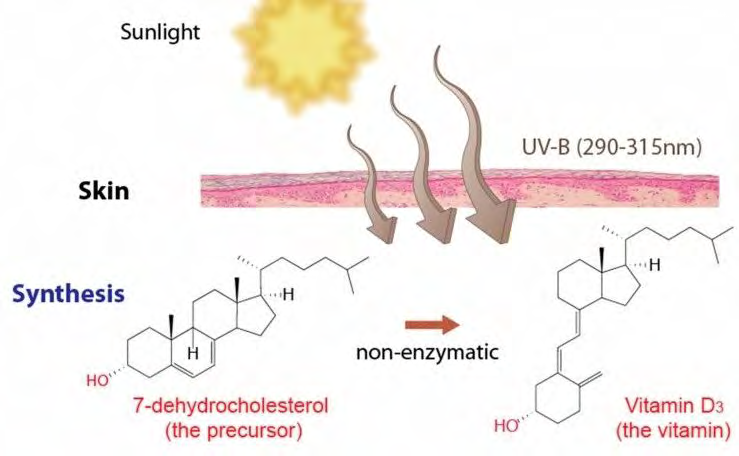
Vitamin D is called “the sunshine vitamin.” When the skin is exposed to sunlight, it makes vitamin D from cholesterol (Figure 1). The sun’s ultraviolet B (UVB) rays hit cholesterol in the skin cells, providing the energy for vitamin D synthesis to occur [2].
The Relation between the Quarantine and COVID-19 Infection
People in all countries are under quarantine in order to reduce the spread of the virus, which then also lessens the impact on medical resources. Since quarantine is associated to the interruption of the work routine, this could be result in boredom. Boredom has been associated with a greater energy intake, as well as the consumption of higher quantities of fats, carbohydrates, and proteins [3]. Further, during quarantine no enough exposure to sunlight and this led to decrease the immunity in human body and led to the high potential for infection by covid 19 viruses.
Thus, during this time it is important to take care of nutritional habits and behaviour by following a healthy and balanced nutritional pattern containing a high amount of natural antioxidants (especially with the rich sources of vitamins such as from fruits and vegetables) because it can boost immune function, in addition to exposure to the sun’s ultraviolet B (UVB) rays for 10 min for 3 days per week.
References
-
(2020) National Health Commission. Archived from the original on 28 February 2020.
-
Kolick MF (2016) Biological Effects of Sunlight, Ultraviolet Radiation, Visible Light, Infrared Radiation and Vitamin D for Health. Anticancer Res 36(3): 1345- 1356.
-
Moynihan AB, van Tilburg WA, Igou ER, Wisman A, Donnelly AE, et al. (2015) Eaten up by boredom: consuming food to escape awareness of the bored self. Front Psychol 6: 369.
- hMPV: Is It Another Covid-19 Like Situation?
- Streptomyces: Sources of Novel Discoveries in Antibiotic Research to Combat Antimicrobial Resistance
- A Review of Mosquitoes (Diptera: Culicidae) and Their Biodiversity, Medical and Veterinary Importance
- Past and Current Immunotherapy in Cancer
- Hematological Cancer and Viral Infection
- The Growing Threat of Antimicrobial Resistance in India: Challenges and Solutions