
Physiotherapy and Cardiopulmonary Rehabilitation Approaches in SARS-CoV-2 Infection
An arising of infectious outbreaks lately December of 2019 has been reported as pneumonia of unknown cause appeared in Wuhan city, China which called SARS-CoV-2. Globally, 12 July 2023, there have been 767.972.961 confirmed cases of COVID-19, including 6.950.655 deaths, reported by WHO. As of 8 July 2023, a total of 13.474.185.140 vaccine doses have been administered. In 2013, the number of people has been died from cardiovascular disease more than 17.3 million and representing an increase from 1990 of 40.8%. Evaluating the effects on cardiopulmonary physiology has an important place among the parameters of the COVID-19 pandemic affecting public health. For this reason, we evaluated physiotherapy and rehabilitation approaches as a for CBRN threats and disaster risk management policies by associating cardiopulmonary physiology with the effects of the COVID-19 (SARS-CoV-2) pandemic.
Introduction
Natural or human-induced holistic state happenings is examined in the disaster that events improvement suddenly, whose needs a systematic approach. Disasters are a huge impact on society which can interrupt or inhibits social life and leads life loss, and often cannot be fix with local capacity [1, 2]. Within the scope of CBRN Threats (Chemical, Biological, Radiological and Nuclear Threats) and Disaster Risk Management policies, physiotherapy and rehabilitation studies are thrown into the background and ignored [3, 4]. The COVID-19 pandemic, which takes its place as a biological disaster among CBRN threats, has a significant impact on public health to evaluate approaches in cardiopulmonary physiology. The lately December of 2019, an mysterious outbreaks are emerged in Wuhan city, Hubei Province, China which called SARS-CoV-2 (Betacoronavirus and subgenus Sarbecoronavirus). Although up to now various airborne viruses are described such as adreno-, entero-, influenza-, rhino-, and coronavirus, SARS-CoV-2 get the highest attention because of the devastating impacts and results on people throughout the pandemic [5, 6]. Globally, 12 July 2023, there have been 767.972.961 confirmed cases of COVID-19, including 6.950.655 deaths, reported by WHO. As of 8 July 2023, a total of 13.474.185.140 vaccine doses have been administered [7]. More than 17.3 million people are suffered from cardiovascular disease in 2013 and representing an increase from 1990 of 40.8% that ratio is important to understand the change in the number of deaths attributed to population aging and population growth [8] . Because of the population growth and epidemiologic changes in disease, the deaths from cardiovascular disease are increasing globally. These two actual impacts are affected on mortality and important for the future health care system planning and benchmarking progress toward the reduction of cardiovascular disease. Evaluating the effects on cardiopulmonary physiology has an important place among the parameters of the COVID-19 pandemic affecting public health. For this reason, we evaluated physiotherapy and rehabilitation approaches as a case study for CBRN threats and disaster risk management policies by associating cardiopulmonary physiology with the effects of the COVID-19 pandemic.
Theoretical Basics
Three coronavirus family have been taken a huge role on life of people as Severe acute respiratory syndrome (SARS- CoV) raised in Guangdong, China, Middle East respiratory syndrome coronavirus (MERS-CoV/SARS-CoV-1) emerged in Saudi Arabia, and nowadays SARS-CoV-2 is firstly obtained in Wuhan city, Hubei Province, China [9, 10]. SARS-CoV-2 is a positively stranded RNA viruses and genera of SARS-CoV-2 is classified into four main genera as beta, alpha, gamma, and delta. 30 kb genome and 14 open reading frames (ORF) of SARS-CoV-2 encodes a spike protein (S), nucleocapsid protein (N), a small membrane protein (SM), an additional membrane glycoprotein (M), and membrane glycoprotein (HE) [11, 12]. Spike protein is important section to bind to the specific host receptor, angiotensin converting enzyme-2 (ACE2), as shown in Figure 1.
![Figure 1: Structure of SARS-CoV-2 and its protein [5].](/fulltextimages/10596/fig_1.png)
Two subunit of S protein termed with amino terminal subunit (S1) and a carboxyl terminal subunit (S2) are taken a role when the S protein encounter with the host receptor. On the other side, when the genetic similarity of SARS-CoV-2 examine, it shares 79.5% identitiy with SARS-CoV and 96.2% with RaTG13 genome region originating from CoV bats (Figure 2).
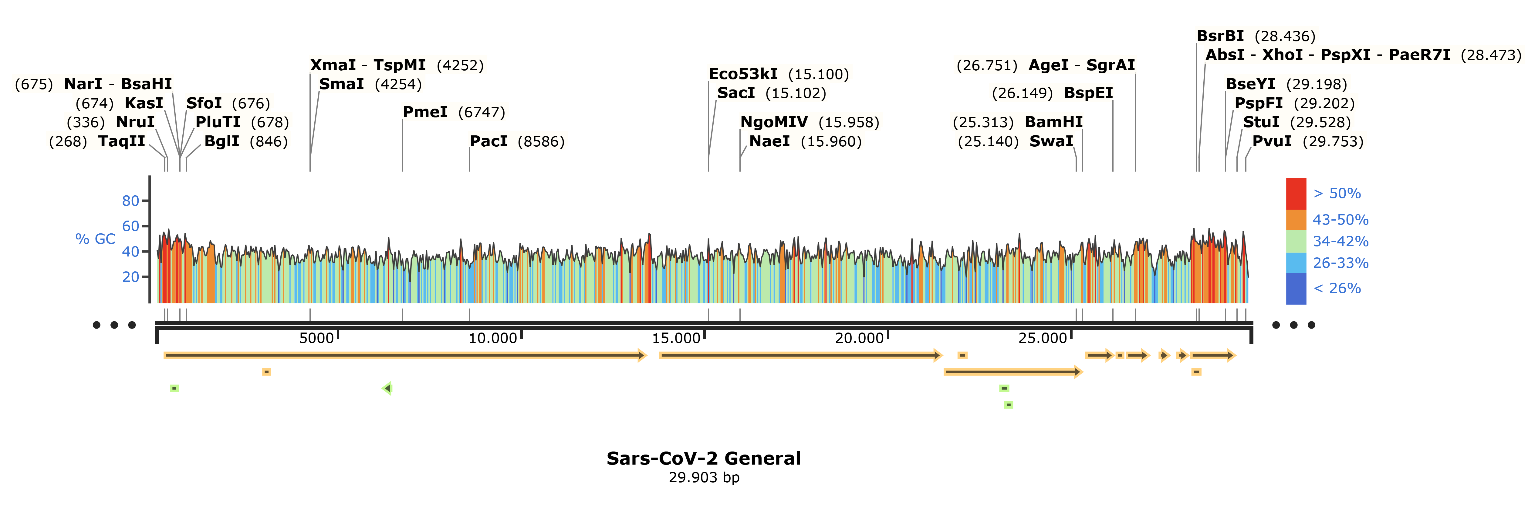
The disease transmission is occurred with airborne droplets from person to person, contaminated objects, and direct or indirect contacts of the virus. Alongside symptomatic patients, asymptomatic patients are detected with positive polymerase chain reaction (PCR) results [13] . Incubation time is the foremost to understand the disease clinical situations updated as 6.4 days [14]. The loss of smell and tastes, cough, fever, and diarrhea are the main symptoms of the disease. Moreover, multiorgan system failure as a result of respiratory failuresand cytokine storm are observed in severe cases [15].
Relationship of SARS-CoV-2 with Cardiovascular Systems
SARS-CoV-2 infection severity is caused from mostly patients’ chronic health conditions. These have more serious impacts in patients with cardiovascular diseases, autoimmune diseases, medical genetic-based chromosomal diseases called vulnerable group, and comorbidities such as acute blood pressure, diabetes and obesity [16]. Another important group most affected by SARS-CoV-2 disease is the rapid progression of respiratory failure, which requires hospitalization and even intensive care unit (ICU) treatment as a result of exposure of people with diseases that cause lung diseases [17]. In these units, especially systemic endothelitis, severe cytokine storm and active coagulation are seen in individuals exposed to infection caused by SARS-CoV-2 disease [18]. Therefore, COVID-19 mortality is fairly high rate [19]. In survived patients, cardiorespiratory deconditioning occurs, which can be defined as a form of Post-ICU Unit Syndrome (PICS), such as decreased lung function, critical illness polyneuropathy, and myopathy after COVID-19 [20]. Individuals who survived the disease stated that all activities of daily living were significantly impaired. In this context, they need multimodal rehabilitation. Additionally, cardiovascular and pulmonary medicine is primarily utilized for the rehabilitation [21]. Moreover, anxiety and depression is the main impacts after ICU treatments [22]. Hospitalization for COVID-19 in these patients may be associated with patients and families’ fear of survival [23].
The cardiovascular disease deaths and circulatory diseases are rising day by day, globally, including in developed countries. When this increase in the COVID-19 pandemic was evaluated over the deaths caused by SARS-CoV-2, cardiopulmonary diseases were put into the background. In the evaluation of disease prevention strategies in the population growth policies of countries, in the examination of deaths from cardiovascular diseases and deaths after COVID-19; by drawing an abnormal graphic curve, the systems in which the problems such as population growth of low-income countries and population aging of developed countries come to the fore are seen. Changes in the epidemiology of epidemics in cardiovascular disease in CBRN threats and disaster risk management policies are crucial to unraveling the forces of observed trends in global mortality rates [8, 24].
Because of the population growth and epidemiologic changes in disease, the deaths from cardiovascular disease are increasing globally. These two actual impacts are affected mortality which is significant for planning the future of the health care system and benchmarking progress toward the reduction of cardiovascular disease. Especially, COVID-19 effects are observed in daily life as physiologically, and sociologically. On the other hand, patients with mild symptoms are cured with symptomatic treatment, and in severe cases, oxygen therapy is chosen. Moreover, mechanical ventilation can be needed in some devastating patients in cases of respiratory failure resistant to oxygen therapy and for septic shock, hemodynamic support could be significant. Although there are no approved antiviral drugs, drugs usage such as remdesivir, lopinavir/ritonavir, favipiravir, chloroquine, emtricitabine, and hydroxychloroquine, and drugs such as azithromycin has been suggested. As an RNA polymerase inhibitor, Remdesivir is an ideal example which is active on many RNA viruses, including Ebola virus. It can be considered as an alternative treatment. Moreover, for the virus infections, some alternatives can be chosen for example Hepatin, Azithromycin, Meropenem, Chloroquine, Hydroxychloroquine or Levofloxacin. Additioanally, herbal drugs as Glycyrrhizae Radix et Rhizoma (Gancao), Saposhnikoviae Radix (Fangfeng), Fructus forsythia (Lianqiao), Armeniacae Semen Amarum, Astragali Radix (Huanggi), Gypsum Fibrosum, and Ephedra Herba are suggested for symptomatic and antiviral treatments of COVID-19 by Chinese researchers. On the other side, detailed clinical experiments are required to provide and develop the safety and efficiency of these traditional Chinese medicines on individuals. Hydroxychloroquine and Chloroquine drugs can be generalized as urticaria, pruritus, dry skin, rashes and event Steven s–Johnson-like syndrome, mucocutaneous dyspigmentation, alopecia, and hair bleaching while Azithromycin can be generalized as cutaneous severe skin reaction associated fever, angioedema, skin pain, toxic pustuloderma, anaphylaxis, and DRESS syndrome [1].
Pulmonary Rehabilitation in SARS-CoV-2
Pulmonary Rehabilitation (PR) is important to develop the psychological and physical well-being of patients with chronic respiratory disease including comprehensive interventions. It is planned based on a long-term commitment to health-promoting attitudes to a detailed patient assessment that includes, but is not limited to patient-specific education, exercise, and behavioral changes [25]. The respiratory system failures are dominantly observed in COVID-19 patients in the stages of the disease from mild pneumonia to severe pneumonia and from severe pneumonia (Acute respiratory distress syndrome ARDS). Thus, PR procedures will be absolutely necessary for the right patient at the right time.
The main goals of PR are [26]:
- Recovering functional loss
- Improving quality of life
- Reduce anxiety and depression
- Improve endurance and general exercise tolerance,
- Improving chest mobility and preventing and/ or correcting secondary postural deformities with appropriate exercises,
- To slow down the respiratory rate with an appropriate breathing model that reduces the work/load of breathing and reduces air trapping,
- Reduce shortness of breath and provide relief
- Maintaining respiratory flow along the way; reducing resistance by positioning, mobilization, effective coughing and other bronchial hygiene techniques; and improve ventilation The scope of Public Relations includes the following components [26]:
- Use of non-invasive and invasive mechanical ventilation
- Long-term oxygen therapy
- Psychosocial assessment and support
- Nutritional assessment and support
- Occupational therapies
- breathing strategies
- Bronchial hygiene techniques
- Respiratory and peripheral muscle training
- Family and caregiver education Exercise training, one of the PR elements, is the foremost and mandatory way in achieving PR goals. Especially, a multidisciplinary and holistic approach to the management of COVID-19 includes PR with the selection as listed above according to the needs of each patient. Although the PR indications specific to COVID-19 are still unclear, the general determiners can be categorized as follows, involving consequences of the disease on the respiratory system [26]:
- Shortness of breath, cough, difficulty in producing sputum, respiratory failure in the acute disease stage
- Nutritional deficiency
- Impaired quality of life
- psychosocial problems
- Decreased job performance/productivity
- Increased use of medical resources associated with hospital and emergency room admissions due to chronic respiratory problems due to COVID-19.
Postoperative pulmonary complications are a condition that is seen at a high rate in thoracic surgeries and prolongs the hospital stay of the patients and causes an increase in morbidity and mortality rates [27]. Pulmonary rehabilitation applications in the preoperative and postoperative period are very important in thoracic surgeries to prevent or reduce the complications that may occur and to return the patients to their normal lives [28]. Pulmonary rehabilitation programs consisting of deep breathing exercises, coughing exercises, ambulation and exercises for pain control have been clinically proven to be effective [29]. Pulmonary rehabilitation programs have also been found to reduce the rate of postoperative pulmonary complications, length of stay of patients, and thus treatment costs [30]. Considering all these benefits, giving importance to pulmonary rehabilitation practices in thoracic surgery clinics is important in terms of the success of the surgery, reducing health costs and patient health [31]. Respiratory physiotherapy applications before and after thoracic surgery have the following objectives [32]:
- Improving effective breathing by increasing ventilation and respiratory capacity
- To ensure the removal of mucus that may accumulate in the respiratory tract.
- To provide bronchial hygiene against infections that may arise from accumulated mucus
- Increasing oxygenation
- Reducing the stress caused by difficult breathing in the patient, providing relaxation
- Increasing forced vital capacity
- Reducing the patient’s pain
- To prevent all respiratory complications, especially atelectasis - To increase strength in both the thorax region and the surrounding muscles
- To prevent complications that may occur due to immobilization due to lack of oxygenation
- Developing the patient’s individual self-sufficiency
- Ensuring the patient’s early return to active life
- Reducing the health costs of the patient
- Prolonging the quality of life of patients Physiotherapy procedures to be carried out can be summarized under the following headings: 1. Postoperative early pulmonary rehabilitation a. Techniques that increase ventilation (Deep breathing exercises, incentive spirometry, non-invasive mechanical ventilation) b. Bronchial hygiene techniques (Coughing, huffing, PEP) c. Early ambulation, general and shoulder girdle exercises d. Pain control exercises
2. Postoperative late pulmonary rehabilitation: a. Active individual exercise practices b. General breathing exercises
Conclusion
COVID-19 treatment has not been understood completely and still experimental stage. Symptoms could be observed even after the disease such as shortness of breath, muscle wasting, fatigue, and decreased functional capacity. In the post-discharge period, cognitive, psychosocial and occupational deteriorations related with COVID-19 are evaluated and a rehabilitation program is organized with a holistic approach. Cardiopulmonary rehabilitation mostly provides development in functional capacity, therapeutic application, and quality of life. Although after the COVID-19 disease has been observed severe variability, improved functional capacity has been provided. These ongoing health problems are sometimes called post-COVID- 19 syndrome, post-COVID conditions, or sequelae of the SARS-COV-2 infection [33]. Additionally, a cardiopulmonary rehabilitation program is very effective on post-COVID-19 to develop the functional capacity [23]. In this context, physical exercise programs are utilized with cardiovascular and pulmonary rehabilitation which are taken a role as positive effect on the disease healing. The place and model of application (inpatient, outpatient, hospital-based control, home-based program or re-rehabilitation etc.) should be determined according to the scope of the rehabilitation program [26] . Cardiopulmonary rehabilitation is the solution way to alleviate dyspnea, anxiety, and depression in the short-term period when it is effective to maximize the functionality of the patient, the quality-of-life development, and facilitate her return to society in long-term. These kinds of rehabilitation programs drive on mainly via videos, brochures, or online to inhibit cross-infection for the patients with COVID-19 which is multidisciplinary evaluation and clinically necessary. The airway cleaning techniques, breathing exercises, and assistive devices, exercise training, and respiratory muscle training should not be focused on the acute period based on currently published guidelines and protocols state [34].
Conflict of Interest Statement
The authors have no conflicts of interest to declare.
Author Contributions
Contributions have been made as Yakup ARTİK1: Scanned the literature, and vouched for it, Deniz DEMİRCİ2: Provided support on academic consultancy and management within the entire research process. Mehmet Serhan KURTULMUŞ3: Revised the article.
References
-
Artik Y, Cesur NP, Kenar L, Ortatatlı M (2021) Biological Disasters: An Overview of the Covid-19 Pandemic in the First Quarter of 2021. Afet ve Risk Dergisi 4(2): 163-182.
-
Varol N, Kırıkkaya EB (2017) Afetler Karşısında Toplum Dirençliliği. Resilience 1(1): 1-9.
-
Artik Y, Komurcu, Kazezoglu C, Guner AE, Yilmaz H, et al. (2023) Evaluation of post-vaccination antibody response of biochemical analysis in SARS-CoV-2 inactivated vaccine strategy. Journal of Contemporary Studies in Epidemiology and Public Health 4(1): ep23005.
-
Komurcu SZM, Artik Y, Uyar Y, Hizel N, Sur H, et al. (2022) The effect of q-RT-PCR analysis method on saline gargle samples in SARS-CoV-2 clinical diagnostic methods. Electronic Journal of General Medicine 19(6): em418.
-
Artik Y, Kurtulmus MS, Cesur NP, Kurtulmus MS, Komurcu SZM, et al. (2022) Clinic Evaluation of The Destrovir Spray Effectiveness in SARS-CoV-2 Disease. Electron J Gen Med 19(2): em357.
-
Artik Y, Kurtulmuş MS, Uyar Y, Tekol SD, Hızel N, et al. (2023) In-vitro for Q-RT-PCR clinical evaluation of oscardia ledovir spray effectiveness on SARS-CoV-2 and its effective variants. Explor Res Hypothesis Med 8(2): 119-132.
-
Who (2023) World Health Organization.
-
Roth GA, Forouzanfar MH, Moran AE, Barber R, Nguyen G, et al. (2015) Demographic and epidemiologic drivers of global cardiovascular mortality. New England Journal of Medicine 372(14): 1333-1341.
-
Komurcu SZM, Artik Y, Cesur NP, Tanriverdi A, Erdogan DC, et al. (2021) The evaluation of potential global impact of the N501Y mutation in SARS-COV-2 positive patients. Journal of Medical Virology 94(3): 1009-1019.
-
Gulec EY, Cesur NP, Fazlioğlu GY, Kazezoğlu C (2021) Effect of Different Storage Conditions on Covid‐19 RT‐ PCR Results. Journal of Medical Virology 93(12): 6575- 6581.
-
Komurcu SZM, Artik Y, Cesur NP, Kazezoğlu C, Sutaşır YT (2022) Evaluation of SARS-CoV-2 patients with annual RT-PCR analysis results. J CLIN EXP INVEST 13(4): em00804.
-
Artik Y, Cesur NP (2022) General Evaluation of Covid-19 Diagnosis Methods. Cohesive J Microbiol Infect Dis 5(5).
-
Artik Y, Cesur NP, Laçin NT (2022) SARS-CoV-2 Mutations, Diagnosis and Their Concern. Archives of Molecular Biology and Genetics 1(2).
-
Artik Y, Varol N, Cesur NP (2022) Hospital Disaster and Emergency Plan in Biological Disasters (HDEP): Coronavirus (SARS-CoV-2) COVID-19 Pandemic System Model Example. Journal of Contemporary Studies in Epidemiology and Public Health 3(1): ep22003.
-
Artik Y, Coşğun AB, Cesur NP, Hızel N, Sur H, et al. (2022) Comparison of COVID-19 laboratory diagnosis by commercial kits: Effectivity of RT-PCR to the RT-LAMP. Journal of medical virology 94(5): 1998-2007.
-
Lew HL, Oh-Park M, Cifu DX (2020) The war on COVID-19 pandemic: role of rehabilitation professionals and hospitals. Am J Phys Med Rehabil 99(7): 571-572.
-
Murthy S, Gomersall CD, Fowler RA (2020) Care for critically ill patients with COVID-19. JAMA 323(15): 1499-1500.
-
Varga Z, Flammer AJ, Steiger P, Haberecker M, Andermatt R, et al. (2020) Endothelial cell infection and endotheliitis in COVID-19. The Lancet 395(10234): 1417-1418.
-
Guzik TJ, Mohiddin SA, Dimarco A, Patel V, Savvatis K, et al. (2020) COVID-19 and the cardiovascular system: implications for risk assessment, diagnosis, and treatment options. Cardiovasc Res 116(10): 1666-1687.
-
Rawal G, Yadav S, Kumar R (2017) Post-intensive care syndrome: an overview. J Transl Int Med 5(2): 90-92.
-
Zhao HM, Xie YX, Wang C, Chinese Association of Rehabilitation Medicine, Respiratory Rehabilitation Committee of Chinese Association of Rehabilitation Medicine, et al. (2020) Recommendations for respiratory rehabilitation in adults with coronavirus disease 2019. Chin Med J (Engl) 133(13): 1595-1602.
-
Simpson R, Robinson L (2020) Rehabilitation after critical illness in people with COVID-19 infection. Am J Phys Med Rehabil 99(6): 470-474.
-
Hermann M, Pekacka-Egli AM, Witassek F, Baumgaertner R, Schoendorf S, et al. (2020) Feasibility and efficacy of cardiopulmonary rehabilitation following COVID-19. Am J Phys Med Rehabil 99(10): 865-869.
-
Varol N, Artik Y, Gültekin T (2022) Risk Management Implemented by Turkey during the COVID-19 Pandemic Disaster. Archives of Molecular Biology and Genetics 1(2): 69-83.
-
Spruit MA, Singh SJ, Garvey C, ZuWallack R, Nici L, et al. (2013) An official American Thoracic Society/European Respiratory Society statement: key concepts and advances in pulmonary rehabilitation. Am J Respir Crit Care Med 188(8): e13-e64.
-
Aytür YK, Köseoğlu BF, Taşkıran OO, Ordu-Gökkaya NK, Delialioğlu SU, et al. (2020) Pulmonary rehabilitation principles in SARS-COV-2 infection (COVID-19): A guideline for the acute and subacute rehabilitation. Turk J Phys Med Rehabil 66(2): 104-120.
-
Nici L (2009) The role of pulmonary rehabilitation in the lung cancer patient. Seminars respiratory and critical care medicine 30(6): 670-674.
-
Özalevli S (2015) Toraks Cerrahisinde Postoperatif Pulmoner Rehabilitasyon. Toraks Cerrahisi Bülten 6(1): 16-25.
-
Miyoshi S, Yoshimasu T, Hirai T, Hirai I, Maebeya S, et al. (2000) Exercise capacity of thoracotomy patients in the early postoperative period. Chest 118(2): 384-390.
-
Roceto LS, Galhardo FDM, Saad IAB, Toro IFC (2014) Continuous positive airway pressure (CPAP) after lung resection: a randomized clinical trial. Sao Paulo Medical Journal 132(1): 41-47.
-
Reeve J, Denehy L, Stiller K (2007) The physiotherapy management of patients undergoing thoracic surgery: a survey of current practice in Australia and New Zealand. Physiotherapy Research International 12(2): 59-71.
-
Varela G, Ballesteros E, Jiménez MF, Novoa N, Aranda JL (2006) Cost-effectiveness analysis of prophylactic respiratory physiotherapy in pulmonary lobectomy. European Journal of Cardio-Thoracic Surgery 29(2): 216-220.
-
Mahmood MM (2023) So, What after Corona?. African Journal of Medicine and Pharma Research 1(1): 35-36.
-
Kunduracılar Z (2020) The role of cardiopulmonary rehabilitation in patients with infected COVID-19. Aurum Journal of Health Sciences 2(1): 37-44.
- hMPV: Is It Another Covid-19 Like Situation?
- Streptomyces: Sources of Novel Discoveries in Antibiotic Research to Combat Antimicrobial Resistance
- A Review of Mosquitoes (Diptera: Culicidae) and Their Biodiversity, Medical and Veterinary Importance
- Past and Current Immunotherapy in Cancer
- Hematological Cancer and Viral Infection
- The Growing Threat of Antimicrobial Resistance in India: Challenges and Solutions