
Polymorphism of KIR Genes in Women with Human Papillomavirus Infection
Molecular biology screening techniques for early detection of human papillomavirus (HPV) infection in the National Cervical- Uterine Cancer Program in Cuba provide the opportunity to treat premalignant lesions and prevent progression to cervicaluterine cancer. Objectives: To identify 14 high-risk HPV genotypes in women aged 30 to 50 with negative previous cytology and to identify the polymorphism of killer immunoglobulin-like receptor (KIR) genes in a subsample of HPV-positive women.Methods: HPV screening tests were performed on 3,115 women using the COBAS 4800 system with the HPV COBAS kit (Roche, Germany). For KIR gene typing, 60 randomly selected HPV-positive women were analyzed using a molecular method based on hybridization probes on a LUMINEX flow analyzer with the LIFECODES KIR-SSO typing kit (Immucor, USA). Results: 295 (9.5%) women tested positive for one of the 14 high-risk genotypes. The highest percentage of positive women was found among those aged 30 to 39 years (12.0%). Fourteen women had coinfection with HPV16 or HPV18 along with another highrisk genotype. There was a high frequency of genes encoding activating receptors such as KIR 2DL1 (98.3%), KIR 2DL3 (98.3%), and KIR 2DS4*all full length (93.3%). Conclusions: The prevalence of HPV in Cuban women with normal cytology is lower than the global average, with activating KIR genes predominating among positive cases.
Introduction
Human papillomavirus (HPV) is a viral infection that affects epithelial cells of the skin and mucous membranes. HPV infection is the most common sexually transmitted infection (STI) worldwide, as approximately 90% of sexually active individuals are infected with these viruses. There are more than 120 HPV genotypes, around 40 of which can cause genital warts, while others can increase the risk of cervical, anal, and oropharyngeal cancer. Although most HPV infections are asymptomatic and resolve spontaneously, some become persistent and can lead to precancerous changes and cancer. HPV vaccination and regular screening can help prevent these complications [1].
Molecular biology screening techniques for early detection of HPV infection in the National Cervical-Uterine Cancer Program in Cuba provide the opportunity to treat premalignant lesions and prevent the progression to cervical cancer [2]. Cervical cancer is the result of chronic HPV infection, and the HPV genome is detected in almost all cases of cervical cancer. HPV 16 and HPV 18 are the most common genotypes and are involved in 70% of cervical cancers. Other high-risk HPV genotypes include 31, 33, 35, 39, 45, 51, 52, 56, 58, 59, 66, and 68 [3].
Genetic factors influence the persistence of HPV infection and the risk of cervical cancer. Among these factors play an important role, natural killer (NK) cell genes, which are crucial for viral infection elimination and antitumor immunity? NK cells play a pivotal role in the immune system’s defense against viral infections and cancer. These potent effector cells are regulated by a family of genes known as Killer-cell Immunoglobulin-like Receptors (KIR genes), which encode proteins present in NK cells [4, 5]. The functional outcome of NK cell responses is heavily influenced by the dynamic interplay between two distinct types of KIR genes: activating and inhibitory. Activating KIRs stimulate NK cell activity upon recognizing specific ligands on target cells, whereas inhibitory KIRs counterbalance the activation signals and prevent unwanted immune responses against healthy tissues. This delicate balance is essential for maintaining immune homeostasis [6].
The regulation of NK cell responses is further influenced by the genetic diversity of both KIR genes and the major histocompatibility complex (MHC) genes encoding the human leukocyte antigens (HLA). The HLA molecules, expressed on the surface of most nucleated cells, act as ligands for inhibitory KIRs, providing a critical checkpoint for NK cell activity and viral clearance [4, 7]. The present research was conducted with the aim of identifying 14 high-risk HPV genotypes in women between 30 and 50 years old with a previous negative cytology and to identify the polymorphism of the Killer-cell Immunoglobulin-like Receptor (KIR) genes in a subsample of HPV-positive women.
Method
A study was conducted at the Department of Molecular Genetics of the “Hermanos Ameijeiras” Hospital to detect high-risk genotypes of HPV using the Cobas® 4800 HPV test as part of the cervical cancer screening program in Cuba. A total of 3,115 women between the ages of 30 and 50, residing in Havana and Villa Clara, were included in the study. All participants underwent cervical sample collection for cytology and HPV testing at the time of examination. Subsequently, a study was conducted at the Department of Histocompatibility of the Institute of Hematology and Immunology (IHI) in Havana to perform molecular typing of KIR genes in a sample of positive women.
Endocervical cell collection was performed using a cytology brush. Once the sample was obtained, the brush was gently rotated three to four times inside a vial containing Cobas PCR cell collection media (Cobas® PCR Cell Collection Media, PreservCyt®, Roche Diagnostics), which allows for the preservation of cells stored at room temperature for up to 6 months after the collection date. The samples were kept at room temperature in the preservation medium for a period of 4 to 6 months until processing.
Viral nucleic acid (DNA) extraction and purification were performed using the Cobas x480 instrument, and the presence of HPV was detected using the Cobas 4800 HPV Test kit (Roche Diagnostics). The Cobas z480 real-time PCR system (Roche Diagnostics) was used to amplify a 200-base pair sequence of the L1 region of the HPV genome and the human β-globin gene, with a 330-base pair sequence used as an internal control for process validation. TaqMan® probes labeled with four different fluorophores were used for the detection of amplified PCR products. The results were interpreted by the Cobas® 4800 System using the PA Cobas® HPV version 2.0 software [8].
For the KIR gene typing, DNA from 60 positive women was randomly selected. Genomic DNA was also obtained from the same cervical swab. A molecular method based on hybridization probes was used on a LUMINEX analyzer. The typing kit used was the LIFECODES KIR-SSO. Statistical analysis was performed using the Compare Groups package of the R statistical system (R Computing, Vienna, Austria). Odds ratios (OR) and their associated 95% confidence intervals (CI) were calculated. A p-value < 0.05 was considered statistically significant in all analyses.
Results
A total of 295 women tested positive for high-risk HPV genotypes, representing a prevalence of 9.5%. The mean age of positive women was 37.7 years, while the mean age of negative women was 40 years. The age group with the highest percentage of positive cases was women aged 30- 39 years (Table 1). Statistically significant differences were found between the ages of HPV positive and negative women.
| Age Range | Negative No. (%) | Positive No. (%) | Total No. (%) | |
|---|---|---|---|---|
| Under 30 | 22 (0.7) | 3 (0.1) | 25 (0.8) | |
| 30-39 | 1339 (43.0) | 184 (5.9) | 1531 (49.1) | |
| 40-49 | 1248 (40.1) | 87 (2.8) | 891 (28.6) | |
| más 50 | 200 (6.4) | 21 (0.7) | 221 (7.1) | |
| Total | 2820 (90.5) | 295 (9.5) | 3115(100.0) |
Table 1: Distribution of HPV infection by age groups.
- When analyzing the frequency of positive cases among the studied residence regions, no differences were found between these areas, one region was located in the western part of the country and the other in the central part (Table
- 2). A total of 49 women tested positive for HPV 16, 25 tested
- HPV Genotypes
- Havana N=1141(%)
- Villa ClaraN=1974(%)
- [TOTAL]N=3115(%)
- OR p. overall
- Other HR-HPV:
- Negative
- 1046 (33.6)
- 1823 (58.7)
- 2869 (92.4)
- Positive
- 94 (3.0)
- 141 (4.5)
- 235 (7.57)
- 0.86 [0.66;1.13]
- 0.311
- VPH16:
- Negative
- 1121 (36.1)
- 1934 (62.3)
- 3055 (98.4)
- Positive
- 19 (0.6)
- 30 (1.0)
- 49 (1.6)
- 0.91 [0.51;1.66]
- 0.88
- VPH18:
- Negative
- 1133 (36.5)
- 1946 (62.7)
- 3079 (99.2)
- Positive
- 7 (0.2)
- 18 (0.6)
- 25 (0.8)
- 1.48 [0.64;3.86]
- 0.484
- Total
- Negative
- 1024 (33.0)
- 1785 (57.5)
- 2809 (90.5)
- Positive
- 116 (9.5)
- 179 (5.7)
- 295 (9.5)
- 0.88 [0.69;1.13]
- 0.332
Table 2: Frequency of HPV genotype infection according to studied provinces.
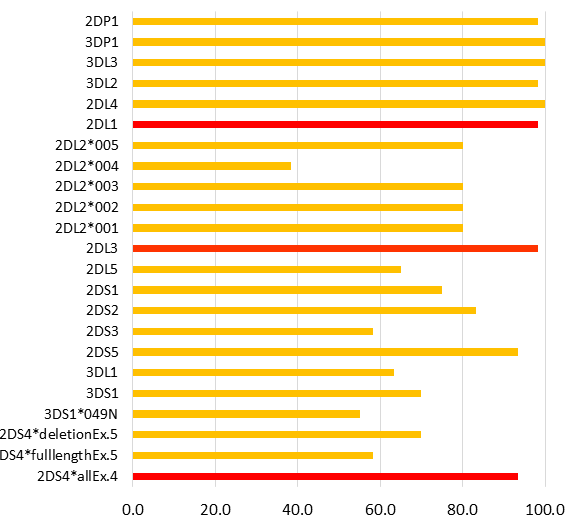
Table 2: Frequency of HPV genotype infection according to studied provinces. HR-HPV: High-risk HPV. OR: Odds ratios. p.ratio: p-value A high frequency of genes encoding activating receptors such as KIR 2DL1 (98.3%), KIR 2DL3 (98.3%), and KIR 2DS4*allEx.4 (93.3%) was found. These genes are part of the A haplotype, which consists of 7 coding genes and is characterized by the presence of KIR 2DS4 (Figure 1).
Discussion
The results of this research constitute the first experience of implementing molecular HPV testing in CCU screening in Cuba. The introduction of the Cobas® HPV test aims to improve surveillance of the female population of reproductive age susceptible to HPV infection. In Cuba, previous studies have been conducted to detect circulating HPV genotypes in the Cuban population across different population groups, including women over 30 years old. A study conducted on women with negative cytology reported higher proportions of genotypes 16 and 18, which differs from the findings of this research where the panel of 12 high- risk genotypes predominated [9].
The regulation of HPV immune response by the host leads to cervical lesions. In particular, NK cells are crucial for HPV control [10, 11]. In this research, the high frequency of genes encoding activating receptors such as KIR 2DL3 is comparable to what was found by Rizzo et al., who analysed HLA-C and KIR alleles in HPV infection and lesion development in 150 cases, demonstrating an increased presence of HLA-C1/KIR 2DL2 and HLA-C1/KIR 2DL3 pairs in patients infected with high-risk HPV (OR 3.05, 3.24) [12].
With this initial study conducted in the country on KIR gene polymorphism and the presence of HPV infection, the vari- ability of these genes in the population is evident, with the predominance of activating genes in almost all analysed sam- ples. Further investigations are needed to explore the asso- ciation between KIR genes and HLA-C alleles as risk markers for HPV infection and lesion progression.
Conclusion
The prevalence of HPV in Cuban women with normal cytology is lower than the global average, with activating KIR genes predominating among positive cases.
References
-
Broutet N, Jeronimo J, Kumar S, Almonte M, Murillo R, et al. (2022) Implementation research to accelerate scale- up of national screen and treat strategies towards the elimination of cervical cancer. Prev Med 155: 106906.
-
MINSAP (2020) Anuario estadístico de salud. Dirección de registros médicos y estadísticas de salud, pp: 1561- 4433.
-
Brisson M, Kim JJ, Canfell K, Drolet M, Gingras G, et al. (2020) Impact of HPV vaccination and cervical screening on cervical cancer elimination: a comparative modelling analysis in 78 low-income and lower-middle-income countries. Lancet 395(10224): 575-590.
-
Tembhurne AK, Maheshwari A, Warke H, Chaudhari H, Kerkar SC, et al. (2023) Killer cell immunoglobulin- like receptor (KIR) gene contents: Are they associated with cervical cancer? Journal of medical virology 95(1): e27873.
-
Bao X, Hanson AL, Madeleine MM, Wang SS, Schwartz SM, et al. (2018) HLA and KIR Associations of Cervical Neoplasia. J Infect Dis 218(12): 2006-2015.
-
Mora-Bitria L, Asquith B (2023) Innate receptors modulating adaptive T cell responses: KIR-HLA interactions and T cell-mediated control of chronic viral infections. Immunogenetics 75(3): 269-282.
-
Gwozdowicz S, Nestorowicz K, Graczyk-Pol E, Szlendak U, Rogatko-Koros M, et al. (2019) KIR specificity and avidity of standard and unusual C1, C2, Bw4, Bw6 and A3/11 amino acid motifs at entire HLA:KIR interface between NK and target cells, the functional and evolutionary classification of HLA class I molecules. Int J Immunogenet 46(4): 217-231.
-
Heideman DA, Hesselink AT, Berkhof J, van Kemenade F, Melchers WJ, et al. (2011) Clinical validation of the cobas 4800 HPV test for cervical screening purposes. J Clin Microbiol 49(11): 3983-3985.
-
Guilarte-Garcia E, Soto-Brito Y, Kouri-Cardella V, Limia- Leon CM, Sanchez-Alvarez ML, et al. (2020) Circulation of Human Papillomavirus and Chlamydia trachomatisin Cuban Women. MEDICC Rev 22(1): 17-27.
-
Song MJ, Lee CW, Kim JH, Lee SJ, Kim CJ, et al. (2013) Association of KIR genes and HLA-C alleles with HPV- related uterine cervical disease in Korean women. Tissue Antigens 81(3): 164-170.
-
Seneldir H, Kir G (2019) Prevalence of high-risk human papilloma virus in liquid-based cervical samples from Turkish women with normal and abnormal cytology. Diagn Cytopathol 47(2): 100-104.
-
Rizzo R, Gentili V, Rotola A, Bortolotti D, Cassai E, et al. (2014) Implication of HLA-C and KIR alleles in human papillomavirus infection and associated cervical lesions. Viral immunology 27(9): 468-470.
- hMPV: Is It Another Covid-19 Like Situation?
- Streptomyces: Sources of Novel Discoveries in Antibiotic Research to Combat Antimicrobial Resistance
- A Review of Mosquitoes (Diptera: Culicidae) and Their Biodiversity, Medical and Veterinary Importance
- Past and Current Immunotherapy in Cancer
- Hematological Cancer and Viral Infection
- The Growing Threat of Antimicrobial Resistance in India: Challenges and Solutions