
Cutaneous Dissemination of Herpes Simplex Virus: A Complication of Hailey-Hailey Disease
Hailey-Hailey is a rare genetic blistering condition that commonly occurs in flexural areas of the body. The most common complications are superimposed infections of bacterial, viral or fungal microbes. We present a case of a cutaneous disseminated herpes simplex virus over sites of Hailey-Hailey rash.
Introduction
Hailey-Hailey is a rare genetic blistering condition that commonly occurs in flexural areas of the body. The most common complications are superimposed infections of bacterial, viral or fungal microbes. We present a case of a cutaneous disseminated herpes simplex virus over sites of Hailey-Hailey rash.
Case Report
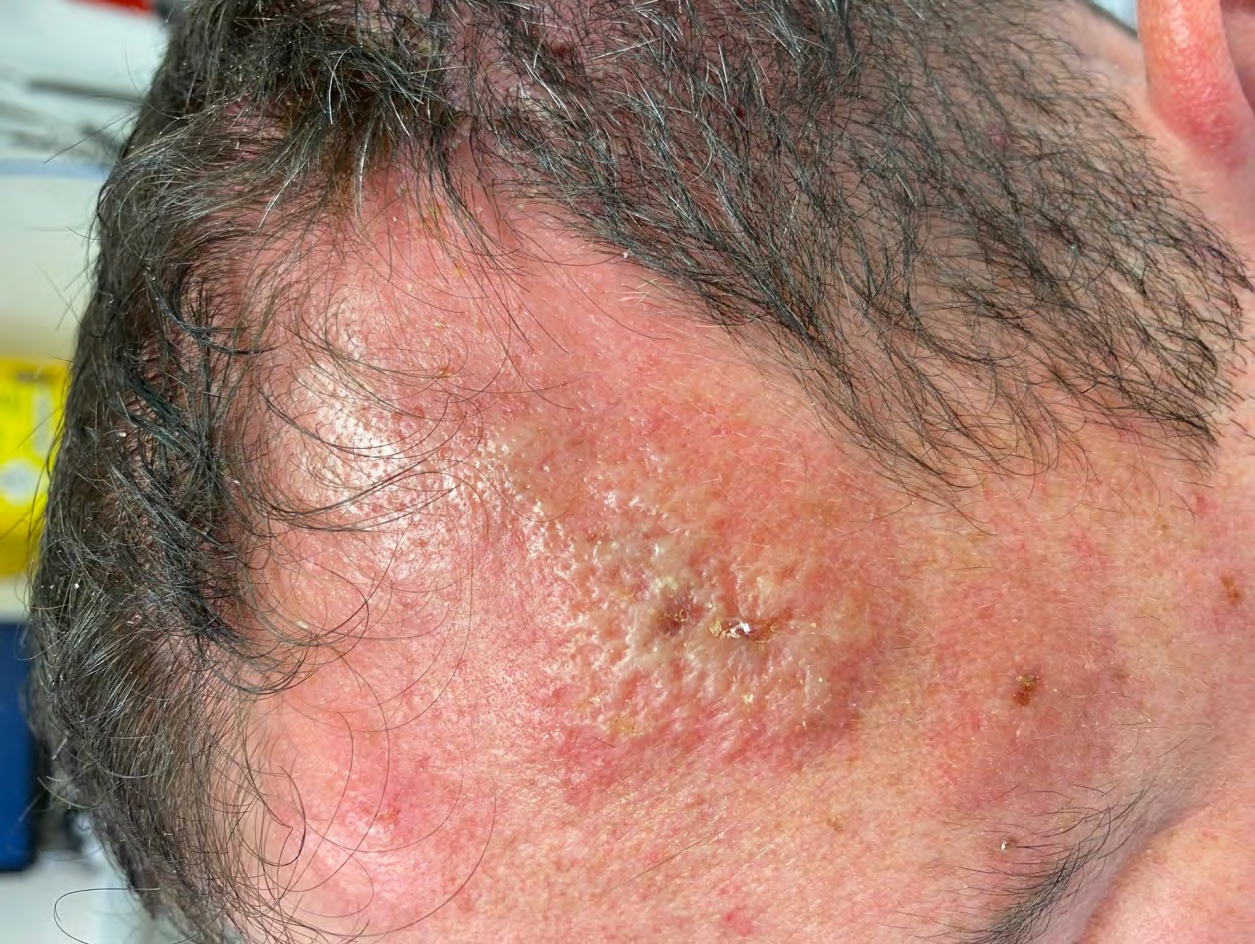
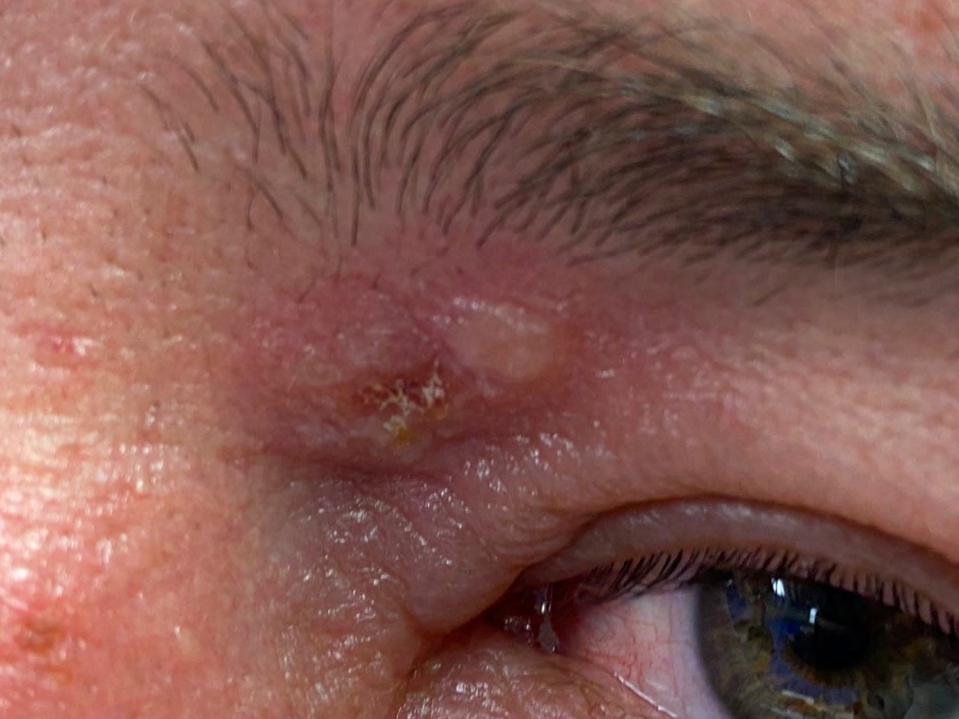
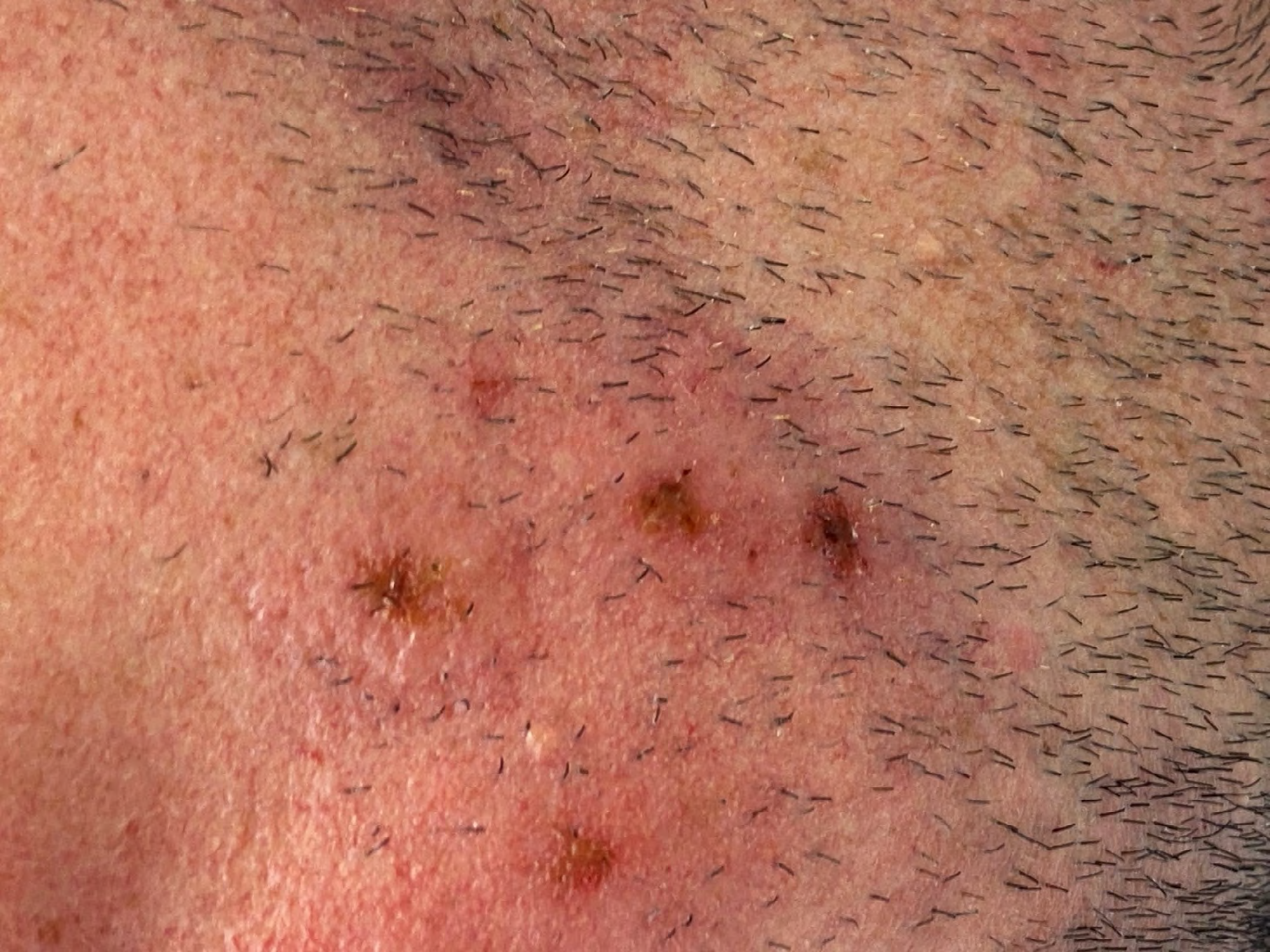
A 33 year old male with a background of Hailey-Hailey disease presented to the emergency department with extensive face lesions which were vesicular and crusted and also had mild periorbital swelling. The rash started six days prior on the left frontal scalp with what the patient described as a pimple. The lesions then spread to his forehead, neck, chest and left ear (Figures 1-3). While the rash was contained to the left side, it did slightly cross the mid-line. The patients General Practitioner had prescribed a course of mupirocin ointment and oral cephalexin over the last days with no improvement. The lesions were not painful and not pruritic at the time. The patient had a background of Hailey-Hailey disease for which he was previously reviewed by a Dermatologist but had not attended for about 3 years. His Hailey-Hailey disease rash was usually on the back of his neck and he required semi-regular courses of antibiotics for superimposed bacterial infection. He reported a similar appearance to the rash to his usual Hailey-Hailey rash around the face a week prior when symptoms first arose. He also had a history of recurrent perioral herpes simplex outbreaks.
Dermatology was consulted and the vesicles were swabbed for varicella and herpes simplex virus. The swab was positive for herpes simplex virus 1 and the patient was treated with valaciclovir for a week. While awaiting the swab result the patient developed two new lesions on bilateral groin which were believed to be self-inoculation due to the patient touching his facial lesions. The lesions did become itchy and painful after one to two days of leaving the hospital however after three days of antiviral treatment most of the lesions were crusting over and no new lesions had formed. The patient was advised to follow up with his General Practitioner and Dermatologist to ensure resolution and for further treatment of his Hailey-Hailey disease.
Discussion
Hailey-Hailey Disease, also known as benign familial pemphigus, is a rare genetic blistering condition named after the Hailey brothers who first described the condition in 1939. There is a genetic defect in the gene ATP2C1 which is on chromosome 3q21-24. This results in a defect in the calcium manganese pump, which leads to a calcium deficit and resultant defect in the structure and function of desmosomes which normally hold the keratinocytes together.
The typical rash of Hailey-Hailey disease is a crusty, erosive rash most commonly in flexural areas such as the axillae, neck, sub mammary area, perineum, and groin. Lesions most often recur in the same areas of the body. The patches can be become cracked, painful and malodorous. Superimposed bacterial infections with Staphylococcus or Streptococcus are a common complication and can require courses of oral antibiotics to control. Dermatophytes or Candida yeast can also colonise and cause superimposed infections. Flares of Hailey-Hailey can occur following exposure to ultraviolet radiation, sweating, heat, friction, and, as stated, other skin infections. Herpes Simplex Virus can also disseminate through patches of Hailey-Hailey rash in a similar way to eczema herpeticum [1, 2].
Management of Hailey-Hailey disease involves anti- inflammatory agents such as topical steroids or calcineurin inhibitors or topical antimicrobial agents such as mupirocin, clindamycin, ketoconazole creams and antibacterial washes to control superimposed infections. Oral antibiotics and antifungals can be used for severe and recurrent infections. Second line treatment includes botulinum toxin to reduce sweating or steroid sparing agents such as methotrexate, cyclosporin or acitretin. Laser or surgical options can also be considered for severe or troublesome disease.
Conflicts of Interest
No conflicts of interest to declare. No identifiable patient information has been used however consent has been obtained from the patient for use in publication.
References
-
Morell D (2019) Hailey-Hailey disease (benign familial pemphigus).
-
Lamb S (2001) Benign Familial Pemphigus. Dermnet NZ.
- Epithelioid Granuloma; 3cases with Different Clinical Features
- Advancing Representation in Dermatology Clinical Trials: Ethical, Scientific, and Regulatory Imperatives for Inclusion Across all Fitzpatrick Skin Types
- A Case of Atopic Dermatitis with Concurrent Psoriasis Vulgaris: Successful Treatment with Upadacitinib
- Innovation Lifting Eyeshadow: A Synthesis of Makeup and Optical Illusion
- Distinguishing Superficial Actinic Porokeratosis from Actinic Keratosis with UVF Dermoscopy: A Case Report
- High Mobility Group Box 1 (HMGB1) in Cutaneous Inflammation: An Immune Modulator Bridging Cellular Stress, Ferroptosis and Danger Signaling