
Essential Genes Associated with Diabetic Nephropathy
The main source which causes kidney diseases is Diabetic Nephropathy, consider as a causative factor leading to significant morbidity and death rate among diabetic patients. The developments of disease risk factors seen in DN are strongly concerned with genetic factors in diabetic patients which eventually develop kidney disease. Numerous genetic factors that are considered to be a risk variant and each possess an insignificant effect, and they are collectively involved in causing disease. The vulnerability loci of several genes like MTHFR, ACE, FRMD3, GLUTI, and TNF-α, eNOS, VGFR, UMOD and RAGE are suspected for developing diabetic nephropathy which is eventually increasing several times. Evolving works in current research recommending that the mutable genetic risk factors associated with DN. In this article mainly highlights the four major genes ACE, TNF-α, UMOD and NOS3, identification of those novel genes can be used as prognostic biomarkers for screening and better understanding of DN pathogenesis.
Introduction
A cluster of disease that alters the typical biological mechanism in human with the prevalence of elevated blood sugar over a prolonged period is known as Diabetic Mellitus (DM). This disease is classified as two major types either it is due to the pancreas, which doesn’t produce sufficient amount of insulin or the type the body cells are not properly functioning to the produced insulin [1]. DKD have enhanced the mortality and morbidity in many countries and it is mainly caused by both types 1&2 diabetes disorders which deliberate to be the primary single source that leads to chronic illness in kidney [2]. In presence of persistent microalbuminuria is the clinical categorization of DN in synchronicity with types 1 and 2 diabetes [3]. The progressive increase of albuminuria and subsequent decline seen in GFR the patient medical history of diabetes for several years and renal failure develops DN. Though, current studies presenting that the development of ESRD are observed in patients with autoimmune diabetes progress as compared to those with type 2 DM [4]. The progression of DN associates with Hyperglycemia, congealing of the Glomerular basement membrane and Glomerular hyper-filtration (Figure 1).
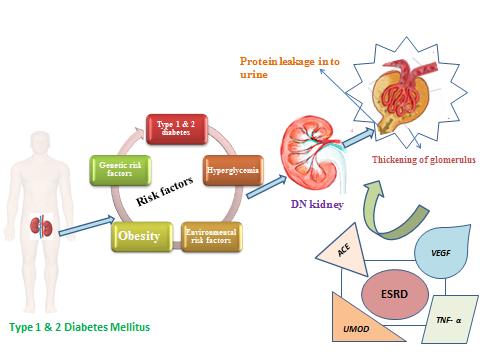
Figure1: Representing the progression of DN in Type 1 and 2 Diabetes patients.
| Abbreviations: | DM: Diabetic Mellitus; ACE: | |
|---|---|---|
| Angiotensin-Converting Enzyme; UMOD: Uromodulin; | ||
| TNF-α: Tumor Necrosis Factor; NOS3: 12. Nitric Oxide | ||
| Synthase 3. |
Prevalence of DN
The prevalence of this disease globally reached the widespread proportions. Though diabetes will affect 8% worldwide which is already predictable but this is foreseeable to increase in upcoming years [5]. Every year diabetic nephropathy disease tends to increase randomly every year. This disease is recognized as the most common problem in diabetes patients. It has been estimated diabetic about 40% patients are predisposed to emerging renal dysfunction, and family-based studies stated that a significant genetic component deliberates risk for DN who will get ESRD requiring renal replacement therapies (dialysis and or transplantation) [6, 7, 8, 9]. Governments expend huge amounts for kidney disease patients every year due to its collective occurrence in Native Americans, Mexican-Americans, Asians, Indians and white Europeans was tended to possess the maximum prevalence of DN [10].
Pathogenesis of DN
The presence of microalbuminuria is the initial clinical symptoms of nephropathy. Proteinuria occurs when the micro albuminuria progresses over the following 7 to 10 years (Figure 2). Kidney function progressively drops and after 10 years ESRD will occur once over proteinuria develops. Many mechanisms donate to the growth and Ramakrishnan V, et al. Essential Genes Associated with Diabetic Nephropathy. Diabetes Obes Int J 2019, 4(1): 000192.
results to DN [11, 12, 13]. The two main mediators which involve in the kidney injury are Hyperglycemia-induced metabolic and hemodynamic stimuli, these factors stimulate inflammatory, pro-oxidant, and a fibrotic pathway eventually leads to the buildup of mesangial matrix, podocyte effacement loss and congealing of the GBM followed by endothelial dysfunction and renal arteriolar hyalinosis.
![Figure 2: Representing pathogenesis of DN to ESRD [14].](/fulltextimages/3360/fig_2.png)
Genetic Aspects of DN
Diabetes kidney disease is the multifaceted disorder that tends to cluster in relations. This disease and DKD- related behaviors are assessed between 30–75% [14, 15, 16, 17]. Intended for many years, investigators have been identifying the predisposition of genetic factors that cause DK. Multiple genes have been found to be complicated in the development of DN with many allele polymorphisms showing properties on the development of the disorder therefore possessing to the overall risk. Familial aggregation of this disease has shown a positive association in many populations. The hereditary origin of kidney complication of DM is heterogeneous, suggesting that the involvement of individual genetic factors is uncertain. Several genetic variants related with human metabolic disorders data’s have been already provided to us by Genomics research tools likewise candidate gene approach, SNP detection, linkage analysis has identified the genetic risk factors of Diabetic nephropathy. Based on the biological process the susceptibility genes which are directly involved with this disease have been listed out in Table1.
Copyright© Ramakrishnan V, et al.
| Authors | Gene | SNP-ID | Risk-allele | Chromosomal location | Phenotype | Clinical significance | Global MAF |
| Zhou TB, et al. [17] | ACE | rs4341 | C/G | 17:63488629 | Type 2 diabetes | Benign | G=0.4700/2354 |
| Zhang, et al. [18] | MTHFR | rs1801133 | C/T | 1:11796321 | Type 2 diabetic | drug-response | A=0.2454/1229 |
| Buffon, et al. [19] | FRMD3 | rs1888747 | C/G | 9:83540636 | Type 2 diabetes | Nil | C=0.1979/991 |
| Marques, et al. (2017) | GLUT1GLUT1 | rs3820589rs1385129 | A/TA/C/G | 1:429603731:42943295 | Type 1 diabetes | Nil | T=0.0988/495A=0.2404/1204 |
| Umapathy, et al. [20] | TNF-α | rs1800629 | A/G | 6:31575254 | Type 2 diabetic | drug-response | A=0.0903/452 |
| Saliha Rizv, et al. [21] | eNOS | rs1799983rs2070744 | A/G/TC/T | 7:1509990237:150992991 | Type 2 diabetes | Pathogenic other | T=0.1763/883C=0.2344/1174 |
| Li Sun [22] | VEGF | rs3025039 | C/T | 6:43784799 | Diabetes mellitus | Nil | T=0.1336/669 |
| Kumar.v, et al. [23] | UMOD | rs4293393 | C/T | 16:20353266 | Type 2 diabetes | Nil | G=0.1997/1000 |
| Ying Zhang, et al. [18] | RAGE | rs1800625 | C/T | 6:32184665 | Type 2 diabetes | Nil | G=0.1366/684 |
Table 2: Predominant functional candidate genes studied in DN [17-23].
Major Genes Associated with Diabetic Nephropathy
In general, initial genetic factors associated studies for DN focused on aspirant genes that had biologically probable roles in the development of this disease. Various genes and SNPs were stated to be significantly related with DN. In this review, we empathize the current scenario, recent advancements and enduring challenges of susceptibility of four major genes associated with DN those are progressively involved in the development of ESRD according to their function.
Angiotensin-Converting Enzyme (ACE) Gene
The translation of angiotensin II is encoded by enzyme catalyzing of ACE gene. The effective use of two peptides that are vasopressor and aldosterone-stimulating peptide usually regulates BP and also balances the fluid- electrolyte when it is passed out by Angiotensin II. This ACE gene extends 21 Kb (26 exon) on chromosome its genomic position is 17q23 [19, 20]. The Genetic polymorphism studies describing that ACE projecting as an assumed negotiator of DN. This ACE gene polymorphism was related with ACE levels and involve as a key role in controlling of bp, sodium breakdown and kidney hemodynamics because it acts as a key enzyme in the reninangio-tensin system (RAS) and sensible to conjecture that genetic dissimilarity of ACE I/D subsidizes to the growth of DN and many studies emphasize the functional part of this gene in the multifaceted factor of DN. The pathway of DN the leading source of ESRD which is not clearly understood, but the administration of ACE Ramakrishnan V, et al. Essential Genes Associated with Diabetic Nephropathy. Diabetes Obes Int J 2019, 4(1): 000192.
gene tends to possess beneficial effects in retarding the development and progression of DN.
Uromodulin (UMOD) Gene
The gene which is exclusively involved in expression of thick ascending loop in Henle and distal convoluted tubule of the mammalian kidney and secreted into the urine is UMOD gene [22, 23] . The copious protein in normal individual’s urine under various physiological conditions is the protein encoded by this gene. Biological function remains elusive for this gene. This gene is present in human chromosome number 16 that converts protein uromodulin which is otherwise called as urinary protein in normal individuals [24]. This gene is copied particularly in the kidneys and infrequent alterations in this gene are related with monogenic forms of renal disease [23]. The biological properties of UMOD make it an aspirant for presents a host defense feature used in clearance of microorganism from the urinary tract [25, 26]. The UMOD mutation occurs in clinical phenotype is characterized by dominant inheritance; so far, above 100 mutations in this gene have been recognized by various genetic studies out of which the majority UMOD mutations collection reported in exonic region 4 and 5 [23].
Tumor Necrosis Factor (TNF- α) Gene
A TNF α gene is a multifunctional proinflammatory cytokine which belongs to a TNF super family. The Class III location of the MHC on chromosome number 6 is the locus of gene TNF [27]. The TNF-α_gene production occurs in transcriptional and post-transcriptional stages, with regulatory sequences occurring within the 5’end of TNF-_ Copyright© Ramakrishnan V, et al.
α_gene regulating the rate of transcription mechanism. This gene is associated with pathological processes, like cell death, proliferation, inflammatory response and immune-regulation. Possible effects of SNP within TNF- αon inflammatory response disorders have concerned with wide attention [28]. In human _TNF-α gene promoter region has been identified with several SNPs has the possible cause involve the changes within structural functional sites which would alter the regulatory pathway in TNF-α production amplified the prospect that SNPs within this locus may subsidize the growth of the extensive range of diabetes diseases [28].
Nitric Oxide Synthase 3 (NOS3) Gene
NOS3 is a Protein coding genes act as a biological mediator in several factors and its genomic location is 7q36.1. The other name of this gene is eNOS. L-arginine by eNOS gene produces NO, a vasodilator molecule. It involves has a key factor in the regulating of homeostasis and mainly regulates endothelial function. The complication in endothelial dysfunction leads to nephropathy in the presence of eNOS gene variants through reduced production of NO. In intron 4 region of NOS3, number of variable tandem repeats has been reported in association with cardiac and kidney diseases [26]. The two allelic polymorphisms of this gene comprise 27-repeats tandem repeats with 4 and 5 tandem repeats with 4b. Pathogenesis mechanism in DN has been altered due to the endothelial dysfunction. The eNOS gene has an important function in the regulatory pathway of endothelial function by producing NO [29]. The abnormal level eNOS might be involved in the progression of High blood pleasure, atherosclerosis and Reno vascular associated injury in diabetic patients due to variations seen in NOS3 polymorphism.
Conclusion
In conclusion, DN consider to be a one of the major common causes of ESRD and there is now a consensus that genes contribute to risk for DN. Emerging evidence also suggests that patient with type 1 and 2 diabetes likely to show different cause of this disease and diverse racial population may tend to have varying risk factors linked with precise genes there is a still challenging issues ongoing in this area of research. It is important to emphasize the current issue with DN in which various genes show the positive correlation. Hence, this assessment highlights the essential focus on genetic changes and structural dissimilarity of ACE, UMOD, TNF- Ramakrishnan V, et al. Essential Genes Associated with Diabetic Nephropathy. Diabetes Obes Int J 2019, 4(1): 000192.
α and NOS3 genes, so that these variants can be used as potential bio markers in early diagnosis and drug target for Diabetic Nephropathy.
References
-
Siegel K, Narayan KM (2008) The Unite for Diabetes campaign: overcoming constraints to find a global policy solution. Globalization and health 4(1): 3.
-
Mousavi SSB, Hayati F, Mousavi M (2012) What is the Difference between Causes of ESRD in Iran and Developing Countries? Shiraz E-Medical Journal 13(2): 63-71.
-
Group CDR (1995) Effect of intensive therapy on the development and progression of diabetic nephropathy in the Diabetes Control and Complications Trial. Kidney International 47(6): 1703-1720.
-
Adler AI, Stevens RJ, Manley SE, Bilous RW, Cull CA (2003) Development and progression of nephropathy in type 2 diabetes: the United Kingdom Prospective Diabetes Study (UKPDS 64). Kidney international 63(1): 225-232.
-
Andersen AR, Christiansen JS, Andersen JK, Kreiner S, Deckert T, et al. (1983) Diabetic nephropathy in type 1 (insulin-dependent) diabetes: an epidemiological study. Diabetologia 25(6): 496-501.
-
Krolewski AS (1999) Genetics of diabetic nephropathy: evidence for major and minor gene effects. Kidney international 55(4): 1582-1596.
-
Iyengar SK, Fox KA, Schachere M, Manzoor F, Slaughter ME, et al. (2003) Linkage analysis of candidate loci for end-stage renal disease due to diabetic nephropathy. Journal of the American Society of Nephrology 14(S2): S195-S201.
-
Seaquist ER, Goetz FC, Rich S, Barbosa J (1989) Familial clustering of diabetic kidney disease. New England Journal of Medicine 320(18): 1161-1165.
-
Placha G, Canani LH, Warram JH, Krolewski AS (2005) Evidence for different susceptibility genes for proteinuria and ESRD in type 2 diabetes. Advances in chronic kidney disease 12(2): 155-169.
-
Raju KT (2007) 76th SBCI. Copyright© Ramakrishnan V, et al.
-
Anderson JW, Blake JE, Turner J, Smith BM (1998) Effects of soy protein on renal function and proteinuria in patients with type 2 diabetes. The American journal of clinical nutrition 68(6): S1347- S1353.
-
Freedman BI, Spray BJ, Tuttle AB, Buckalew VM (1993) The familial risk of end-stage renal disease in African Americans. American journal of kidney diseases 21(4): 387-393.
-
Freedman BI, Soucie JM, McClellan WM (1997) Family history of end-stage renal disease among incident dialysis patients. Journal of the American Society of Nephrology 8(12): 1942-1945.
-
Quinn M, Angelico MC, Warram JH, Krolewski AS (1996) Familial factors determine the development of diabetic nephropathy in patients with IDDM. Diabetologia 39(8): 940-945.
-
Spray BJ, Atassi NG, Tuttle AB, Freedman BI (1995) Familial risk, age at onset, and cause of end-stage renal disease in white Americans. Journal of the American Society of Nephrology 5(10): 1806-1810.
-
Hubert C, Houot AM, Corvol P, Soubrier F (1991) Structure of the angiotensin I-converting enzyme gene. Two alternate promoters correspond to evolutionary steps of a duplicated gene. Journal of Biological Chemistry 266(23): 15377-15383.
-
Zhou TB, Qin YH, Su LN, Lei FY, Huang WF, et al. (2011) The association between angiotensin- converting enzyme insertion/deletion gene variant and risk of focal segmental glomerulosclerosis: A systematic review and meta-analysis. J Renin Angiotensin Aldosterone Syst 12(4): 624-633.
-
Zhang Y, Jia N, Hu F, Fan N, Guo X, et al. (2017) Association of single-nucleotide polymorphisms in the RAGE gene and its gene-environment interactions with diabetic nephropathy in Chinese patients with type 2 diabetes. Oncotarget 8(57): 96885-96892.
-
Buffon MP, Carpena MP, Sortica DA, Santer A, Carlessi R, et al. (2016) rs1888747 polymorphism in the FRMD3 gene, gene and protein expression: role in diabetic kidney disease. Diabetology & metabolic syndrome 8(1): 3.
-
Umapathy D, Krishnamoorthy E, Mariappanadar V, Viswanathan V, Ramkumar KM (2018) Increased Ramakrishnan V, et al. Essential Genes Associated with Diabetic Nephropathy. Diabetes Obes Int J 2019, 4(1): 000192. levels of circulating (TNF-α) is associated with (- 308G/A) promoter polymorphism of TNF-α gene in Diabetic Nephropathy. International journal of biological macromolecules 107: 2113-2121.
-
Rizvi S, Raza ST, Mahdi F (2014) Association of genetic variants with diabetic nephropathy. World journal of diabetes 5(6): 809-816.
-
Sun L, Yuan Q, Cao N, Guo W, Yao L, et al. (2014) VEGF genetic polymorphisms may contribute to the risk of diabetic nephropathy in patients with diabetes mellitus: a meta-analysis. The Scientific World Journal 2014: 624573.
-
Kumar V, Yadav AK, Kumar V, Bhansali A, Jha V (2017) Uromodulin rs4293393 T> C variation is associated with kidney disease in patients with type 2 diabetes. The Indian journal of medical research 146(S2): S15-S21.
-
Mattei MG, Hubert C, Alhenc Gelas F, Roeckel N, Corvol P, et al. (1989) Angiotensin-i converting enzyme gene is on chromosome-17. In cytogenetics and cell genetics, Allschwilerstrasse 10, ch-4009, basel, karger, Switzerland, 51(1-4): 1041-1041.
-
Rigat B, Hubert C, Alhenc-Gelas F, Cambien F, Corvol P, et al. (1990) An insertion/deletion polymorphism in the angiotensin I-converting enzyme gene accounting for half the variance of serum enzyme levels. The Journal of clinical investigation 86(4): 1343-1346.
-
Hoffmann SC, Stanley EM, Cox ED, DiMercurio BS, Koziol DE, et al. (2002) Ethnicity greatly influences cytokine gene polymorphism distribution. American Journal of Transplantation 2(6): 560-567.
-
Spriggs DR, Deutsch S, Kufe DW (1992) Genomic structure, induction, and production of TNF- alpha. Immunology series 56: 3-34.
-
Boraska V, Rayner NW, Groves CJ, Frayling TM, Diakite M, et al. (2010) Large-scale association analysis of TNF/LTA gene region polymorphisms in type 2 diabetes. BMC medical genetics 11(1): 69.
-
Neugebauer S, Baba T, Watanabe T (2000) Association of the nitric oxide synthase gene polymorphism with an increased risk for progression to diabetic nephropathy in type 2 diabetes. Diabetes 49(3): 500-503. Copyright© Ramakrishnan V, et al.
- Investigation of Polymorphisms in PPAR-Ɣ and TRHR Genes and their Impact on Turkish Diabetic and Obese Individuals
- The Impact of Aircraft Noise Exposure on the Efficacy of Empagliflozin Therapy in an Animal Model of Obesity
- Rooibos Mitigates Metabolic and Inflammatory Dysfunctions in Mice Fed a High-Carbohydrate Diet
- Synergistic Effect of Combined Leaf Extract of Vernonia amygdalina, Ocimum gratissimum, and Zingiber officinale Tuber on Phytochemical Profile, Antioxidant Activity, Serum Insulin, and Biochemical Parameters in Streptozotocin-Induced Diabetic Rats
- Investigation of Cardiovascular Responses to Aerobic Exercise in Obese University Students
- A Look at the Phase Angle Obtained by Electrical Bioimpedance