
Effect of Reconditioning on Discrepant Cocoa on the Quality of Cocoa Beans
Reconditioning of cocoa beans which involves re-drying, sieving, sorting and re-bagging of cocoa beans is a very important process in the cocoa industry. The study was conducted to identify the fungi on and in cocoa beans before and after reconditioning. Defective cocoa beans namely, Damp, Wet, Not Thoroughly Dried (NTD), Mouldy beans and Good beans (control) were placed on water agar and Potato Dextrose Agar before and after reconditioning to isolate and identify external and internal fungi following the cut test technique. The result showed that a total of ten fungal species were isolated from the types of defective beans before and after reconditioning. These were; Absidia spp, Aspergillus flavus, A. niger, Fusarium spp, Mucor spp, Paecilomyces spp, Penicillium spp, Rhizopus spp, Syncephalastrum spp. and Trichoderma spp. However, after reconditioning the number of fungi reduced to five (5) that is Absidia spp, Aspergillus flavus, A. niger, Mucor spp and Rhizopus spp in the various treatments. The cut test also showed five internal fungi in the various treatments and these were Aspergillus flavus, A. niger, Mucor spp, Penicillium spp, and Rhizopus spp, High moisture content of the cocoa beans recorded before reconditioning was reduced to the acceptable safe moisture content of 7.5% or less after reconditionig. The FFA levels for the healthy beans (control) (0.77%), wet beans (1.64%), Damp beans (1.43%) and NTD beans (1.65%) were significantly lower (p
Introduction
Cocoa (Theobroma cacao L_._) is typically a tropical crop plant indigenous to South America and is often described as the ‘Golden Tree’. It has an apt description because cocoa has indeed become more than gold to many countries, especially West Africa countries, particularly Ghana, because of its immense contributions to economic development. In Ghana, cocoa is grown commercially for the production of seeds (beans) for chocolate making, for export and extraction of cocoa butter.
As cocoa beans production level is increasing, pre and post-harvest problems associated with its production also tend to increase. Some of the immediate problems are pest infestations and their control, efficient and proper use of chemicals, tools of trade, transportation, marketing, human resource, sustenance of the quality and quantity of the cocoa beans in storage especially due to insects infestation and fungi infections. The presence of these organisms in dry cocoa beans during storage causes reduction in quality (increase in free fatty acids and loss of chocolate aroma or flavor) and quantity [1].
Fungal infestation in cocoa beans is considered a serious defect which results from various factors such as contamination during fermentation, drying and storage [2]. Damp beans, Not Thoroughly Dry beans (NTD) and wet beans resulting from inadequate drying or rain wet during transportation if not handled carefully may lead to fungal contamination. All these factors result in the increase of mouldiness in the beans. Thus, there is the need to recondition the cocoa beans by drying properly to salvage them from further deterioration. Reconditioning of the cocoa beans is normally done by spreading the damp, wet, NTD and some mouldy beans in the sun on a large mat or on a large gas- proof sheet or on a tarpaulin spread on a concrete floor. The damp or wet beans are turned intermittently to allow the beans to dry properly [3]. Later, visibly mouldy beans are handpicked from the consignment. Sometimes fungi which have grown on the surface of the beans and appear white or coloured are wiped or cleaned with rags during reconditioning.
Cocoa is graded on the basis of the count of defective beans in a ‘cut test’. The cut test reveals the presence of certain defects which may cause off-flavors and indicates the degree of fermentation of the beans which has a bearing on the flavour and quality of the beans. Cocoa beans meant for export are usually subjected to cut testing after reconditioning to determine the presence of fungi found in a particular consignment of beans. Presence of fungi in cocoa beans during cut testing reduces the grade of the beans, sometime from grade I to grade II or to substandard depending on the percentage of mouldy beans found in a particular consignment [1]. Mould defects are normally irreversible because the fungi feed on the nib of the beans and produce enzymes (lipases) which increase or facilitate the production of free fatty acids (FFA) in the beans [4]. In order to salvage further deterioration of NTD beans, Damp beans and wet beans, recondition is the best option. However, the types and quantity of fungi present and extent of reduction of the quality of non-reconditioned beans are not known or documented. There is the need to identify these fungi for documentation and also to mitigate the factors that cause their growth. The main aim of the study is to examine the effect of reconditioning of discrepant cocoa and mouldy cocoa on the quality of cocoa beans.
Materials and Methods
Experimental Site
The study was conducted at the Microbiology and Biochemistry Laboratory of the Research Department of Quality Control Company Limited (COCOBOD) in Tema.
Experimental Design
The experiments were conducted in a Completely Randomized Design (CRD), with five treatments namely, damped beans, wet beans, mouldy beans, NTD beans and a control. Each treatment was replicated three times.
Source and Method of Cocoa Beans for Trial
Samples were collected during the main cocoa season. Samples of each treatment were collected from a total of one hundred bags in the shed. Out of the 100 bags, samples were taken at random using the metal horn from the various consignments for reconditioning. The treatments were; Damp beans, wet beans, mouldy beans, Not Thoroughly Dried beans (NTD) and healthy bean (control). Also, damp beans were taken from damped and torn cocoa bag at the buying center, wet beans from wet cocoa bags stacked in the shed mouldy beans from mouldy cocoa bag, NTD beans from not thoroughly dry cocoa bags and healthy beans from well dried cocoa in bags as control.
Nature of Samples Used for Trial
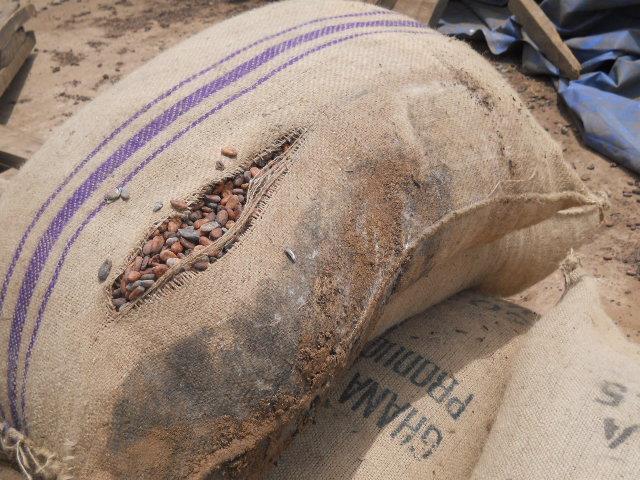
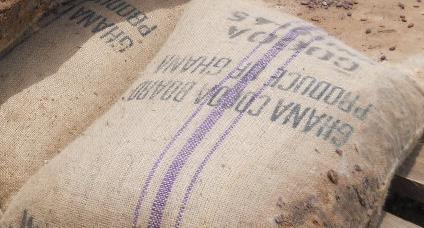
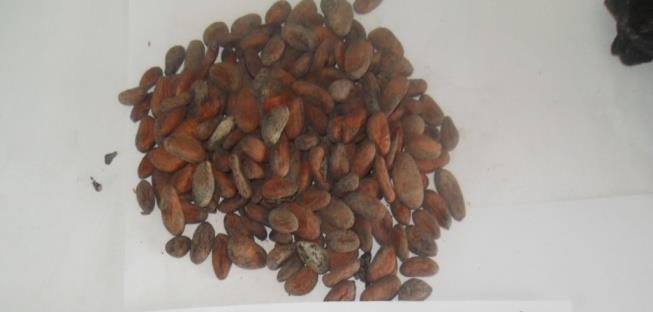
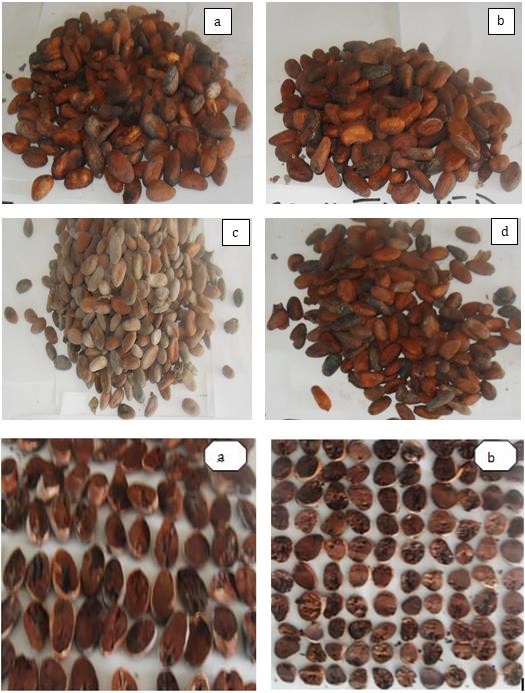
Damp beans (Figure 1) becomes stacked together or caked when taken with the hand but this is short lived and it also appeared deeper in colour and very difficult to break. It occurs when cocoa bags are placed on the bare floor in a high humid environment. The moisture content was between 8.5 -10.5% when checked with the Aqua-boy moisture meter.
Wet bean (Figure 2) appeared deeper in chocolate colour with thin film of water surrounding the beans when held with the hand. This occurs when bags become wet when accidental water fall or rain wetting during
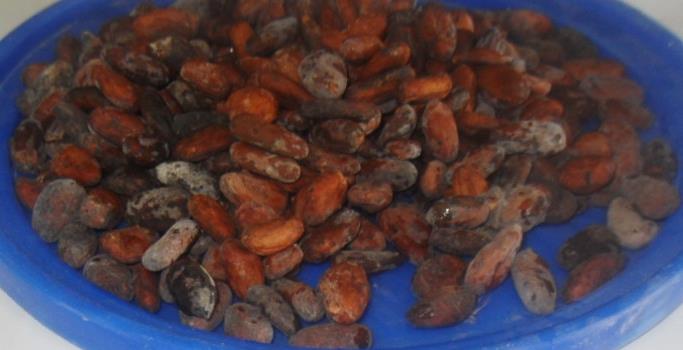
transit. The moisture content ranged between 10-12%. Some of the beans had external whitish and blackish colouration.
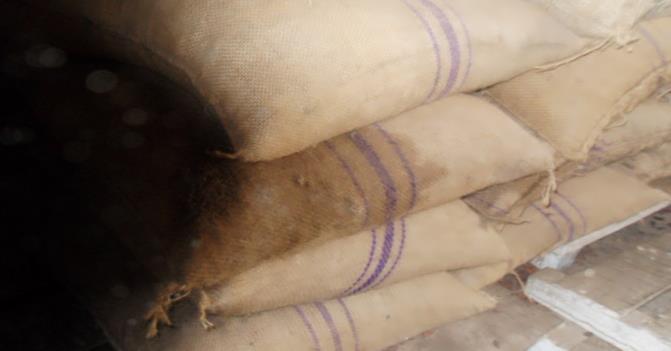
NTD beans (Figure 3) appeared just like healthy cocoa beans, where their chocolate colour was not deep, but when checked with the Aqua-boy moisture meter, the moisture content was above the recommended 7.5%. The cotyledon and the nib were damp, while the testa of the beans was dried.
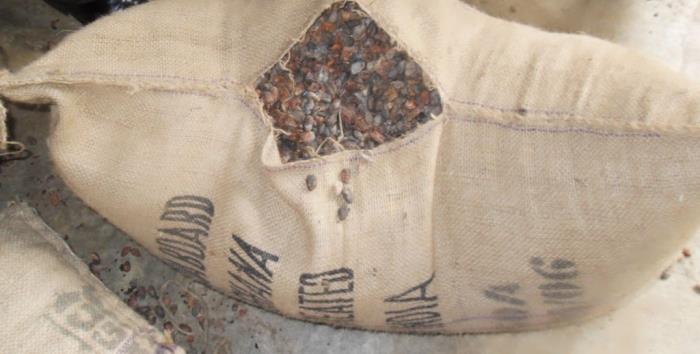
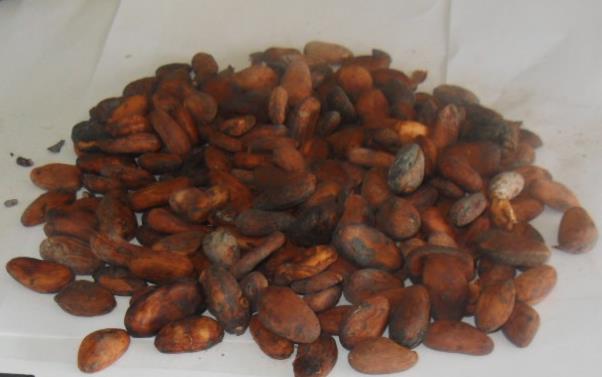
Mouldy beans (Figure 4) had external whitish or grayish or pale greenish colouration with a musty smell. Beans were difficult to break with moisture content
usually above 12% and it sometimes becomes caked with the chocolate aroma scent absent.
Healthy cocoa beans (Figure 5) were of uniform brown chocolate colour, well dried and could easily be broken with hand. They produced a rattling sound when rubbed
in the palm. Beans slips over each other when heaped together. They had good chocolate flavor or aroma.
Isolation and Identification of External Fungi on Cocoa Beans before Reconditioning
Media Preparation: Water agar was prepared by dissolving 6g of agar powder in 500ml of sterile distilled water and autoclaved at 1.05kg/cm2 pressure at 121°C for 15 minutes. The Potato Dextrose Agar was also prepared by weighing 39g in one litre of distilled water and autoclaved as done for the water agar. The Petri-dishes were sterilized in an oven at a temperature of 175°C for 90 minutes. It was then allowed to cool and was transferred to the laminar flow. The PDA was poured into 9 cm Petri-dishes and allowed to cool. Isolation before Reconditioning: The samples were subjected to microbial isolation and identification before reconditioning process. Sub samples of cocoa beans for each treatment namely damp beans, wet beans, NTD beans, mouldy beans and healthy beans were taken and surface sterilized in 1.0% sodium hypochlorite solution for three minutes at room temperature and later blotted dry in a sterile clean tissue paper. They were plated wholly first on water agar for three days and were sub- cultured on a Potato Dextrose Agar in a sterilized Petri dishes for 3-7 days to obtain a pure culture for identification purposes. Inoculating pins were flamed and used to transfer the fungi from the cocoa beans on water agar unto the PDA in the dishes aseptically. Clean cellophane bags were used to tie up plates and incubated for 3 days in the laboratory at room temperature.
The same procedure was repeated after reconditioning of beans to compare the mycoflora in both types of beans processes. The cultures were then identified using features such as growth rate and colour, conidia and sporulating structure and morphology of mycelia as described by [5].
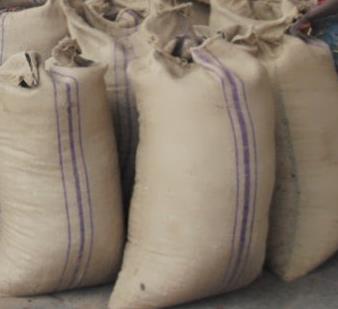
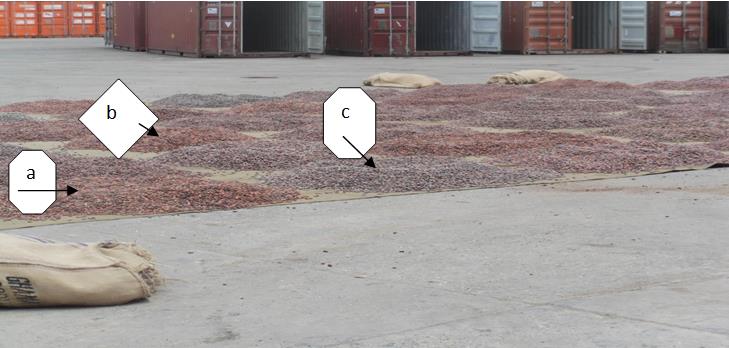
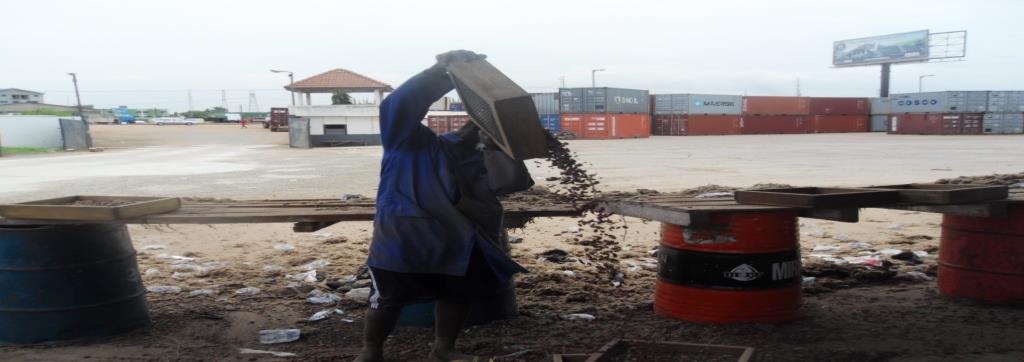
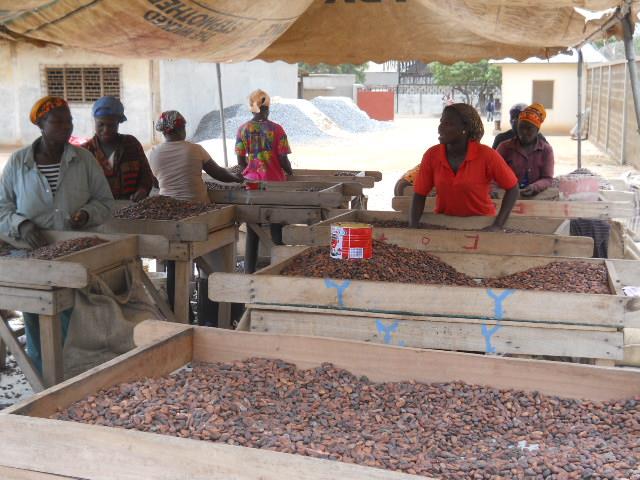
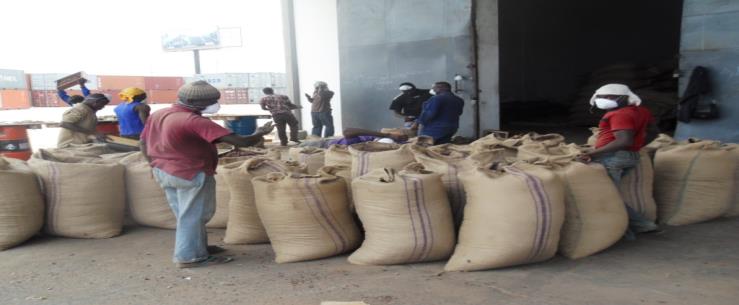
Reconditioning of Cocoa Beans: Wet, Damped, and NTD samples were sun-dried by spreading on a large tarpaulin sheet (Figure 6). The samples were sieved through a wire mesh to get rid of cocoa frass and unwanted foreign materials such as stones, pieces of paper etc (Figure 7). The sieved samples were sorted by removing unusual and foreign materials that could not penetrate through the mesh (Figure 8). The reconditioned beans were then re- bagged in new cocoa sacks for storage (Figure 9). The moisture content for each sample was measured using the Aqua-Boy moisture meter.
Detection of Internal Fungal Infection by the Cut Test Method After Reconditioning
Cut Testing of Reconditioned beans: Samples of reconditioned beans of the various treatments were collected for cut testing. A quarter of the composite sample (bulk beans) of each treatment was taken for cut testing. This consisted of cutting the beans lengthwise with a sharp knife so as to expose the maximum cut surface area of the cotyledon for inspection. Cut pieces were grouped according to the various defects. The samples were taken to the laboratory for isolation and identification of the defects in the internal part of the beans. Isolation and Identification of Fungi: The cut beans were surface sterilized in 1% NaOCl solution plated on water agar for three days and sub-cultured on a Potato Dextrose Agar for 3-7 days to obtain a pure fungal culture for identification. The growth rate and colour of hyphae and fruiting bodies were examined under microscope.
Effect of Reconditioning on the Quality of Dry Cocoa Beans
Determination of Moisture Content: The moisture contents of the cocoa beans from the various treatments were determined using the Aqua-Boy moisture meter cup electrode (Figure 10).

The cup electrode was filled with a quantity of the beans and closed tightly for the beans to get in contact with the teeth of the electrode in order to give an accurate reading of the moisture in the beans. Each treatment was replicated three times before and after reconditioning. Determination of Free Fatty Acids (FFA): Samples from each treatment (NTD beans, Wet beans, Damp beans, Mouldy beans and control) were subjected to FFA determination. These were determined before and after reconditioning.
A 5.0g sample of powdered cocoa beans from each treatment was weighed into an extraction thimble and defatted using standard procedure for cocoa powder defatening with soxhlet extractor. Hexane used as the solvent was evaporated off after deafening. The residue (fat extracted) together with the Erlenmeyer flask were dried in an oven at 105°C for at least 2 hours. The flask with the fat were allowed to cool in desiccators for 30 minutes and weighed again with the residue. The fat content was expressed as percentage.
The FFA for each treatment was determined by adding 25ml of 95% ethanol and 25ml diethyl ether to the extracted fat and gently swirled to obtain a homogenous mixture. The mixture was titrated against 0.1M NaOH using phenolphthalein as an indicator and the titre value was recorded. The free fatty acids (FFA) was calculated as Oleic acid and expressed as a percentage by the formula:
%FFA = (V N F 100)/ (SW 1000)
Where: V = volume of NaOH required N = Normality of the NaOH F = equivalent weight of the FFA expressed in oleic acid equivalents SW = sample weight Data Analysis: Numerical data were subjected to Analysis of Variance (ANOVA) with Gen Stat version 9.2 where significant differences were observed, the Least Significant Difference (LSD) at 5% was used to separate the means.
Results
Incidence of External Fungi in Dried Cocoa Beans before Reconditioning
A total of ten fungal species were identified from cocoa beans prior to reconditioning (Table 1). These were Absidia spp, Aspergillus. Aspergillus Flavus, Aspergillus Niger, Fusarium spp, Mucor spp_, Paecilomyces_ spp_, _Penicillium spp, Rhizopus stolonifer Syncephalastrum spp, and Trichoderma spp_._ All the ten fungi were present in mouldy beans.
In wet and damp beans four fungi namely A. flavus, A. niger, Mucor spp_. and _Rhizopus spp. were isolated while in the NTD beans one additional fungus (Penicillium spp.) was isolated. For the control only Mucor spp, and Rhizopus spp. were isolated.
Mucor spp_. and _Rhizopus spp_. were found in all the five treatments. However, _Fusarium spp_., Paecilomyces_ spp_., _Trichoderma spp_., Absidia_ spp_. and _Syncephalastrum spp_._ were found only in mouldy beans.
A total of five fungal species were isolated from the various defects after reconditioning (Table 2). These were A. Niger, A. flavus, Rhizopus spp_., Mucor_ spp_. and _Absidia spp. Rhizopus spp_. was the predominant fungi isolated in all the treatments. Mouldy beans had all the 5 fungi species. NTD beans had _A. flavus and Mucor spp. whiles in the damp beans and the control only Rhizopus spp_. were present. _A.niger and Absidia spp_. were isolated only from the mouldy beans. However, _A. flavus was absent from the damp and the control, whiles Mucor spp_._ was present only in the NTD and mouldy beans.
| Fungi | Wet Bean | Damped Beans | NTD Beans | Mouldy Beans | Healthy Beans | ||||||||||||
|---|---|---|---|---|---|---|---|---|---|---|---|---|---|---|---|---|---|
| A.flavus | + | + | + | + | - | ||||||||||||
| A. niger | + | + | + | + | - | ||||||||||||
| Absidia spp. | - | - | - | + | - | ||||||||||||
| Mucor spp. | + | + | + | + | + | ||||||||||||
| Rhizopus spp. | + | + | + | + | + | ||||||||||||
| Penicilluim spp | - | - | + | + | - | ||||||||||||
| Fusarium spp. | - | - | - | + | - | ||||||||||||
| Paecilomyces varioti | - | - | - | + | - | ||||||||||||
| Trichoderma spp. | - | - | + | - | |||||||||||||
| Syncephalastrum spp | - | - | + | - |
Table 1: External Fungi found on Dried Cocoa Beans before Reconditioning.
| Fungi | Wet Bean | Damped Beans | NTD Beans | Mouldy Beans | Healthy Beans | ||||||||||||
|---|---|---|---|---|---|---|---|---|---|---|---|---|---|---|---|---|---|
| A.flavus | + | - | + | + | - | ||||||||||||
| A.niger | - | - | - | + | - | ||||||||||||
| Absidia spp. | - | - | - | + | - | ||||||||||||
| Mucor spp. | - | - | + | + | - | ||||||||||||
| Rhizopus spp. | + | + | + | + | + |
Table 2: External Fungi found on Dried Cocoa Beans after Reconditioning.
After reconditioning, the whitish appearance of the mouldy beans before reconditioning had reduced slightly. Some beans were dark- brown, and others were black in appearance (Figure 11a). In the damp beans the external appearance of the whitish colour of the testa had reduced
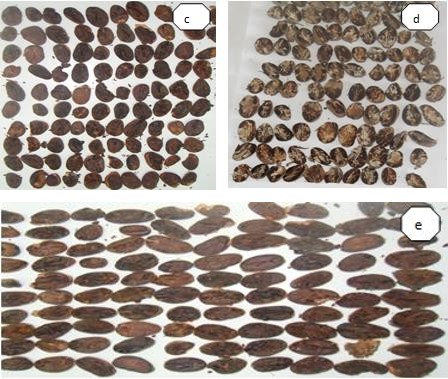
Appearance of Internal Surface of Beans Through Cut test After Reconditioning
In the wet beans it was observed that the internal surface had a light brownish chocolate colour with a few of them being dark brown and black in appearance (Figure 12a). In the damp beans (Figure 12b) the internal surface had chocolate brown colour when cut length wise, with a few beans having a whitish colour at the center. The NTD beans generally appeared dark brown with no whitish coloration of the cotyledons (Figure 12c). The mouldy beans (Figure 12d) generally appeared whitish especially at the center of the cotyledons. A few of the cotyledons had a pale yellow appearance and some were dark brown to black in colour. The healthy beans (control) were light brown in appearance and were cut to expose the cotyledons; they had the well fermented chocolate brown colour (Figure 12e).
Internal fungi found in dried cocoa beans after reconditioning and cut test
Five fungi namely A. flavus, A. niger, Mucor spp_. _Rhizopus spp. and Penicillium spp. Rhizopus spp_._ were isolated the various treatments after reconditioning through the cut test of which all the fungi species were present in the mouldy beans (Table 3). These were the common fungi isolated internally from all the treatments.
| Fungi | Wet Bean | Damped Beans | NTD Beans | Mouldy Beans | Healthy Beans | ||||||||||||
|---|---|---|---|---|---|---|---|---|---|---|---|---|---|---|---|---|---|
| A.flavus | + | - | - | + | - | ||||||||||||
| A. niger | - | - | - | + | - | ||||||||||||
| Absidia spp. | - | - | + | + | - | ||||||||||||
| Mucor spp. | + | + | + | + | + | ||||||||||||
| Rhizopus spp. | - | - | - | + | - |
Table 3: Internal fungi found in dried cocoa beans after reconditioning and cut test.
Effect of reconditioning on the quality of dry cocoa beans
Change in moisture content cocoa beans after reconditioning: (Table 4) shows moisture content of dried cocoa beans before and after reconditioning. There were significant differences in moisture contents of the samples before reconditioning. The moisture content of the control was significantly lower (p<0.05) than the other beans before reconditioning. However, there was no significant difference (p>0.05) in moisture content between NTD and damp beans. Damp and wet beans were statistically similar before reconditioning. After reconditioning, the control recorded the lowest moisture content but it was not statically different (p> 0.05) from the damp beans but was however different from the NTD, wet and mouldy beans. The moisture content for the wet, NTD and mouldy beans were similar.
| Moisture Content (%) | ||||||||
|---|---|---|---|---|---|---|---|---|
| Type of cocoa beans | ||||||||
| Before reconditioning | After reconditioning | |||||||
| Damp beans | 10.2a | 7.0a | ||||||
| Wet beans | 10.6a | 7.4b | ||||||
| NTD beans | 9.2b | 7.3b | ||||||
| Mouldy beans | 12.6c | 7.4b | ||||||
| Control (Healthy beans) | 7.2d | 6.9a |
Table 4: Moisture content of dried cocoa beans before and after reconditioning. **Change in Free Fatty Acids of cocoa beans after
Means across each column with similar or same superscripts are not significantly different at p>0.05, n=3 Table 4: Moisture content of dried cocoa beans before and after reconditioning. Change in Free Fatty Acids of cocoa beans after reconditioning: Table 5 shows the levels of FFA in dried cocoa beans before and after reconditioning. It was observed that there were significant differences (p<0.05) between the control and the other four treatments with the control recording the lowest FFA content before reconditioning. The FFA content for the wet, damp and NTD beans were similar while mouldy beans had the highest FFA content before reconditioning. However, the FFA content for the control, wet, damp and NTD beans showed no significant difference (p>0.05) after reconditioning. The mouldy beans still recorded the highest FFA content after reconditioning.
| Free Fatty Acid Content (%) | ||||||||
|---|---|---|---|---|---|---|---|---|
| Type of cocoa beans | ||||||||
| Before reconditioning | After reconditioning | |||||||
| Damp beans | 1.34a | 1.43a | ||||||
| Wet beans | 1.60a | 1.64a | ||||||
| NTD beans | 1.65a | 1.65a | ||||||
| Mouldy beans | 18.24b | 21.90b | ||||||
| Control (Healthy beans) | 0.77a | 0.77a |
Table 5: FFA content of cocoa beans before and after reconditioning.
Means across each column with similar or same superscripts are not significantly different at p>0.05, n=3 Table 5: FFA content of cocoa beans before and after reconditioning.
Discussion
Isolation and Identification of Fungi from Different Cocoa Beans
Ten fungal species were identified on the cocoa beans before reconditioning. They were Absidia spp., Aspergillus flavus, A. niger Fusarium spp., Mucor spp., Paecilomyces varioti, Penicilluim spp., Rhizopus spp_., Syncephalastrum_ spp. and Trichoderma spp. The moisture content measured in each of the treatments before reconditioning was high to support the growth of fungi. The recommended moisture content for dried cocoa beans for storage is 7.5% or less [6]. Moisture content for the damp beans (10.2%), wet beans (10.65), NTD beans (9.2%) and mouldy beans (12.6%) were favorable for the growth of fungi before reconditioning. This could be attributed to inadequate drying, rain water pouring or dropping on the consignment during transit and poor storage management such as poor ventilation that caused an increase relative humidity. Also leakages from the roof of warehouses and accidental dropping of water on the cocoa bags by personnel can also lead to the rise in moisture content. Fungi grow rapidly on the cocoa beans during fermentation and drying; these are externally mouldy beans. When the beans are well dried, penetration of the testa (shell) may not occur. However, when drying is too slow or inadequate the fungal hyphae or rhizoids penetrate the shell and cotyledons and cause internal fungal infection of the beans [7]. Development of fungi inside the beans is a very serious defect because a small percentage of mouldy beans would cause the chocolate to taste musty. The predominant fungi isolated in all the samples were Mucor spp. and Rhizopus spp_. This fungal species are normally widely distributed in the environment. _A. flavus and A. Niger were also present in the damp, wet, NTD and mouldy before reconditioning. However, after reconditioning, some fungi identified before were not present in all the treatments. This could be attributed to the fact that activities of such fungi were arrested through the reconditioning process.
Internal mouldiness in dried cocoa beans has been used in the determination of bean quality. This is achieved through the cut testing and isolation of the fungi found in the beans. This current study confirms work done by Fagbohun et al. [8]. They also isolated various fungal species on stored cocoa beans in different cocoa stores in Nigeria. Their study showed that Aspergillus spp., Penicillum spp. and Mucor spp. were common in all the locations, while those rarely isolated were Fusarium spp. and Absidia spp. These results are also in agreement with the work of Oyeniran [9] and ICCO [10] that worked on cocoa beans and reported the isolation of various species of fungi associated with internal mouldiness of cocoa beans in Ibadan. The results of ICCO also showed that Mucor spp., Rhizopus spp. and Aspergillus spp. were all isolated from cocoa beans from the three sheds in Ibadan. Copetti, et al. [11] and Magalhães, et al. [12] also reported the isolation of Aspergillus flavus, A. niger Penicillium spp_. and _Absidia corymbifera from the dried and stored cocoa beans. The presence of these fungi agrees with the findings of Mounjouenpou, et al. [13] and Sánchez-Hervás, et al. [14] who also found A. niger to be associated with the processing and storage of cocoa beans in Cameroon.
Further studies by Mounjouenpou, et al. [13] Also listed some filamentous fungi associated with dried cocoa beans during processing, these include; Penicillium spp., Aspergillus spp_., _Trichoderma spp_., Rhizopus_ and Fusarium spp.
Effect of Reconditioning on the Quality of Cocoa Beans
The quality of dried cocoa beans depends widely on their free fatty acids content (FFA). High FFA content is a serious quality defect and reduces the technical and economic value of the cocoa beans [15]. According to Jonfia-Essien & Navarro [6], the free fatty acids (FFA) content in dried cocoa beans is expected to be less than the acceptable level of 1.75% in cocoa butter. Fungal infection of cocoa beans in storage results in the breakdown of fat by the toxins produced, releasing the fatty acids freely. This affects the chemical composition and the quality of the cocoa butter making it rancid. Although the FFA levels in the NTD beans (1.65%), wet beans (1.6%) and damp beans (1.43%) were significantly higher compared to the healthy beans (control) (0.77%) after reconditioning, it was still within the internationally acceptable limit of 1.75%. It was observed that reconditioning was effective in preventing further deterioration of cocoa beans in storage. The mouldy beans with high fungal population had very high FFA level (18.24%). This could be attributed to the high moisture content in the beans before reconditioning. This implied that high moisture content results in high fungal infection with subsequent increase in FFA levels. It was observed that, there was a direct relationship between moisture content and FFA levels in dry cocoa beans. In the damp, NTD and wet beans, as moisture content reduced to the acceptable level after reconditioning; the FFA level remained almost the same, however in the mouldy beans because the moisture content was high, it took some time for the beans to attain the acceptable moisture content. During this period, the activities of fungi were on-going causing a significant increase in FFA level of 21.9% after reconditioning. This could imply that the low moisture in the beans were unfavorable for the fungal activities which might lead to further breakdown of fats resulting in the subsequent increase in FFA.
Barel [16] stated that following poor drying due to a surface crust clustered cocoa beans always show high moisture content which favoured mould growth. According to Raghavendra & Prakash [17] foodstuff with high moisture content were easily attacked by moulds. These moulds could produce lipase Wood & Lass [4] which in contact with cocoa butter of broken cocoa nibs released FFA from triglycerides.
Low moisture content can limit the increase in FFA, which are carboxylic acids released from triglycerides Selamatel et al. [18] facilitated by lipids or oxidation. Moreover the risks of oxidation are negligible in cocoa butter due its low unsaturated fatty acid content Whitefield [19] and high content of polyphenols, natural antioxidant, in cocoa beans [20].
Conclusion
It was observed that the presence of fungi have potential effect on the quality of cocoa beans by increasing the FFA levels. It has been evidently shown that reconditioning of cocoa can help in reducing the number fungal species on the cocoa beans hence reducing the moisture content and therefore maintaining the quality of the discrepant beans
Acknowledgement
Samples of cocoa beans and laboratories for the project were provided by Quality Control Division of Ghana Cocoa Board.
References
-
QCC (Quality Control Company, Ghana COCOBOD) (2011) QCC Newsletter 9th (Edn.), 9.
-
Rohan TA (1957) Observations on the fermentation of West African Amelonado cocoa. Report of the 1957 London conference, The cocoa, chocolate and confectionery Alliance, pp: 203-206.
-
QCC (Quality Control Company, Ghana COCOBOD) (2010) QCC Newsletter. 8th (Edn.), 8.
-
Wood GAR, Lass RA (1985) Cocoa. 4th (Edn.), Longmans, UK, pp: 620.
-
Barnett HL, Hunter BB (2006) Illustrated Genera of imperfect Fungi. 4th (Edn.), The American Phytopathological Society, St Paul Minnesota.
-
Jonfia-Essien WA, Navarro S (2010) Effect of storage management on free fatty acid content in dry cocoa beans. 10th International Working Conference on Stored Product Protection Julius-Kühn-Archiv 425: 963-968.
-
Appiah V (2001) The use of ionizing radiation from 60Co gamma source in controlling mouldiness in dried cocoa beans. University of Ghana, Ghana.
-
Fagbohun E, Anibijuwon I, Oluwole E, Opeyemi L (2011) Fungi associated with spoilage of dried cocoa beans during storage in Ekti state of Nigeria. Journal of Microbiology Biotechnology and Food Sciences 1(2): 204-214.
-
Oyeniran JO (1976) Studies on the mould deterioration of commercial cocoa in Nigeria. PhD Thesis, University of Ibadan, pp: 269.
-
ICCO (2004) International Cocoa Organisation. Annual Report, pp: 11-24.
-
Copetti MV, Iamanaka BT, Frisvad JC, Pereira JL, Taniwaki MH (2011) Mycobiota of cocoa: From farm to chocolate. Food Microbiol 28(8): 1499-1504.
-
Magalhães JT, SodréG A, Viscogliosi H, Grenier- Loustalot F (2011) Occurrence of Ochratoxin A in Brazilian cocoa beans. Food Control 22(5): 744-748.
-
Mounjouenpou P, Gueule D, Fontana-Tachon A, Guyot B, Tondje PR, et al. (2008) Filamentous fungi producing ochratoxin A during cocoa processing in Cameroon. Int Journal of Food Microbiol 121(2): 234- 241.
-
Sánchez-Hervás M, Gil JV, Bisbala F, Ramónb D, Martínezculebrasa PV (2008) Mycobiota and mycotoxin producing fungi from cocoa beans. In International Journal of Food Microbiol 125(3): 336– 340.
-
Guehi TS, Dingkuhn M, Cros E, Fourny G, Ratomahenina R, et al. (2008) Impact of cocoa processing technologies in free fatty acids formation in stored raw cocoa beans. African Journal of Agricultural Research 3(3): 174-179.
-
Barel MA (1998) Premiere transformation du cacao. Formation de l’arome cacao. In: Pontillon J. Cocoa and chocolate: production, utilization, characteristics Paris: Techniques et documentation Lavoiser, pp: 96- 115.
-
Raghavendra MP, Prakash V (2002) Phenylcoboronic acid- a potent inhibitor of lipase from Oryzae sativa. Journal of Agricultural Food Chemical 50(21): 6037- 6041.
-
Selamatel J, Hamid MA, Mohamed S, Man CY (1996) Physical and chemical characteristics of Malaysian cocoa butter. In: Selamat J, Lian, BC, Lai TK, Ishar WRW, Mansor M (Eds), Proceeding of the Malaysian international cocoa conference Kuala, Lumpur, pp: 351-357.
-
Whitefield R (2005) Making chocolate in the factory. Kenedy’s publications Ltd, London.
-
Nickless H (1996) Cocoa butter quality**.** _In:_ Selamat J, Lian BC, Lai TK, Ishar WRW, Mansor M (Eds), Proceeding of the Malaysian international cocoa conference Kuala, Lumpur, pp: 322-336.
- The Role of Podocyte Apoptosis and the Involvement of SIRT1 in Diabetic Nephropathy
- Dealcoholization of Beer by Osmotic Distillation for the Beverage Industry
- Biopolymer-Based Edible Packaging- Biomaterials, Methods, and Applications in Food Industry: An Updated Review
- Influence of Bioprocessing Methods on 'China Rice' (Gawal R1), and Soyabean Supplementation on the Quality of Complementary Food
- Cassava (Manihot esculenta) Varietal Growth, Yield and Cyanide Content Performance in Three Sites in the South- Eastern Semi Arid Regions of Kenya
- Food Waste Treatment, Recycling, Management and Production of Value-Products-An Update on Methodologies and Current Trends