
Food Waste Treatment, Recycling, Management and Production of Value-Products-An Update on Methodologies and Current Trends
Food wastage encompasses any sustainable food or inedible parts of food that is removed, disposed or discarded from the food supply chain. Research estimates food loss or waste generated accounts to 35% of the total global food production. Also, food waste impacts social, economic, sectors of the society and also adversely impact the environment. Thus, food waste has become a global scourge requiring innovative and sustainable solutions to combat the scourge and its attendant effects. The present review in an effort to cover several areas of food waste to assess the present methods and trends. With introduction to global statistics, waste composition and policies we cover the area of treatment with details to discuss the variables and applications with case studies to reflect global statistics. Next, we highlight the present trends in value-added products and ecofriendly reuse of the products. Application of newer molecular biology and microbial community along is covered to gain insights to these modern methods. It is imminent and timely to review the current trends and methodologies in this area of concern both individually and globally. Such efforts are expected to enable better treatment, management methods and set new goals for research and development and develop new value-added products
Prasanna Kumar BO¹, Ravikumar Patil HS¹* and Kiran Kumar HB²
¹Department of Studies in Food Technology, Davangere University, India ²Nrupathuga University, India
Abbreviations
FAO: Food and Agriculture Organization; SWM: Solid Waste Management; MOEF: Ministry of Environment, Forests; CC: Climate Change; DBT: Department of Biotechnology; UNSPSC: United Nations Standard Products and Services Code; VFAs: Volatile Fatty Acids; OLR: Organic Loading Rate.
Introduction
India is the second-largest food producer in the world, accounting for around 10.1% of global food output. Forty percent of India’s total food production is considered food waste (FSSAI, 2025). Every year, one person wastes about 50 kg of food [1]. Food is defined as any material that is primarily meant for human (or other animal) ingestion, whether it is raw, semi-processed, or processed [2]. Frequently, “food” is accompanied with its opposite, “inedible parts,” which are unfit for human consumption. “Food waste” refers to the removal, disposal, or discarding of any sustainable food or inedible portions of food from the food supply chain prior to and after consumption [3].
Composition, Global Statistics, And Policies
A variety of sources, such as homes, the hospitality industry, and food processing facilities, release both leftover and precooked food [4]. Food waste can be either liquid or solid, from semi-solid to solid. Generally high in starch, cellulose, lignin, and monosaccharides, food waste primarily consists of the food items themselves, portions of the food items, or other parts or objects related to specific food items [5]. Therefore, food waste may be categorized as “avoidable,” “potentially avoidable,” or “unavoidable” to examine and classify the extent to which food waste could or could not be controlled.
According to Baykoca, et al. [6], 1.3 billion tons of food— including fresh fruits, vegetables, meat, baked goods, and dairy products—are wasted within the food supply chain. Different types of food waste have different compositions depending on their ingredients. The primary components of food waste include lipids, proteins, carbohydrates, and trace amounts of inorganic substances. Table 1 lists food waste along with a chemical description of each. According to Guggisberg and Tonini, et al. [7, 8], food waste that contains rice and vegetables is high in carbohydrates, but food trash that contains meat and eggs is high in proteins and fats. The primary causes of food waste are store operations, services, and customer behaviour.
| S/N | Food waste Classification | pH | Total solid (%wb) | Volatile Solid (%wb) | Total organic Compound (%) | Total Nitrogen (%) | Fat (%) | Protein (%) | Carbohydrate (%) | Phosphorus (%db) | Potassium (%db) |
|---|---|---|---|---|---|---|---|---|---|---|---|
| 1 | Dairy product | 6.29 | 35.54 | 36.65 | 29.72 | 1.58 | 28.43 | 14.05 | 57.51 | 1.33 | 0.87 |
| 2 | Fats, oil,and grease | 3.55 | 60.75 | 59.29 | 65.64 | 0.64 | 91.19 | 1.23 | 7.59 | 0.12 | 0.08 |
| 3 | Ice cream | 4.84 | 11.38 | 10.91 | 26.5 | 0.37 | 39.6 | 8.9 | 53.1 | 0.28 | 0.53 |
| 4 | Fruit and vegetable | 5.69 | 13.87 | 12.71 | 19.57 | 0.62 | 1.36 | 5.2 | 39.01 | 0.67 | 3.28 |
| 5 | Confectionery (canned goods) | 5.72 | 22.93 | 18.43 | 17.38 | 1.24 | 2.79 | 24.38 | 72.83 | 0.91 | 2.61 |
| 6 | Cereals and cereal products | 5.84 | 90.33 | 72.21 | 14.79 | 2.07 | 3.83 | 11.19 | 84.98 | 0.64 | 0.35 |
| 7 | Bakery wares | 5.5 | 88.81 | 71.51 | 43.14 | 2.37 | 6.03 | 12.92 | 81.05 | 0.44 | 0.15 |
| 8 | Meat and Meet products | 6.2 | 46.99 | 41.6 | 25.18 | 4.32 | 57.74 | 25.17 | 17.1 | 0.76 | 0.63 |
| 9 | Fish and Fish products | 6.49 | 46.12 | 39.25 | 17.72 | 4.38 | 65.53 | 27.48 | 6.98 | 1.48 | 1.46 |
| 10 | Eggs and Egg products | 7.43 | 49.64 | 22.77 | 16.26 | 3.04 | 73.06 | 19 | 7.94 | 0.88 | 1.13 |
| 11 | Sweeteners and sweet goods | 5.49 | 70.51 | 63.94 | 32.98 | 1.01 | 16.21 | 5.85 | 77.89 | 0.23 | 0.43 |
| 12 | Sauces, spices, and soups | 6.09 | 46.44 | 34.58 | 23.85 | 1.82 | 1.35 | 11.32 | 87.33 | 0.42 | 2.03 |
| 13 | Beverages | 4.25 | 36.36 | 33.69 | 4.75 | 2.13 | 0.07 | 14.98 | 84.95 | 0.23 | 1.66 |
| Ready to eat food or restaurant waste | 5.88 | 64.84 | 44.18 | 39.5 | 2.31 | 13.05 | 15.59 | 65.36 | 0.56 | 1.96 | |
| 15 | Other expired food | 6.38 | 58.85 | 47.13 | 42.36 | 2.13 | 16.96 | 18.58 | 64.46 | 0.19 | 0.57 |
Table1: Food waste categories and their chemical characterization.
According to data collected by the Food and Agriculture Organization (FAO) in 2025, the percentage of food loss or waste generated was close to 35% of the total amount of food produced worldwide (FAO). Gross food waste makes up around one-third of global food output, according to the FAO. Nearly 14% to 21% of food losses in developing and underdeveloped countries have been observed and reported to occur during processing stages (a significant portion of post-harvest sorting and grading losses, such as fruit and vegetable waste), whereas under 2% have been reported for the same in developed and industrialized nations [9, 10, 11].
According to studies, developed nations produce 225 million tonnes of food waste at the consumer level from a variety of sources worldwide. This amount is almost equal to the total amount of food produced, when compared to other significant values [12]. Fruit and vegetable processing waste was identified as the fifth highest contributor to total food waste (equating to 8% of total food waste) in nations such as Europe [13]. According to a Southern Asia UNEP research, food waste (kg/capita) is estimated to be 50 kg/capita in India, 79 kg/capita in Bhutan, 65 kg/capita in Bangladesh, and 82 kg/capita in Afghanistan annually (UNEP).
According to studies, the food waste in Uttarakhand and Andhra Pradesh is 73 and 20 kg/capita, respectively, whereas Rajam, Andhra Pradesh, has an estimated 58 kg/ capita. An estimated 68,760,163 tonnes of food waste are produced annually in Indian households [14]. India’s FW composition is almost the same as China’s, with water making up 57, protein 7.4, fat making up 3.7, and carbs making up 32. However, FW from Brazil and the USA has been observed to have relatively higher protein content [15]. Food waste from fruit and vegetable markets, homes, and juice bars had an 85% moisture content, according to Indian domestic food waste characteristics. Approximately 89% of total solid and a ratio of C/N of 36.4, which was comparable to other South Asian countries [16].
Segregation at the source was the focus of the solid waste management (SWM) rule that was announced by the Union Ministry of Environment, Forests, and Climate Change (MOEF & CC) in India in 2016. The goal of this rule was to turn waste into wealth through recovery, reuse, and recycling (RS bill, Gvnmt of India 2016). All residences, hotels, restaurants, resorts, colleges, and businesses must separate biodegradable garbage and establish a collection mechanism to guarantee that food waste is used on-site for composting or bio-methanation. The Central Government was required to announce the creation of a food waste reduction committee in the Official Gazette by the mandatory food waste reduction bill that was introduced in 2018. Indian government proposed a new biofuel policy with an indicative aim of 5% biodiesel blending in diesel and 20% ethanol blending in petrol by 2030 [17]. The Department of Biotechnology (DBT) government of India has financed eight waste-to-energy projects that were begun to develop/ demonstrate unique and feasible technology for the sustain able usage of MSW for cleaner and pollution-free environments and electricity generation (DBT-India).
Contributors to Food Waste
Cereals, fruits, meat, fish, beverages, and other food waste are all categorized in the most straightforward way possible. Based on factors like mass (more frequently), energy content, economic cost, etc., this classification helps to estimate the quantity of food wasted [18]. There are many instances of food waste classifications based on the food industry. According to the recently released Food Loss and Waste Accounting and Reporting Standard, the Codex Alimentarius General Standard for Food Additives (GSFA) system or the United Nations Central Product Classification (CPC) system should be used as the primary codes for this kind of classification. In situations requiring more accurate categorization, the Global Product Category (GPC) code or the United Nations Standard Products and Services Code (UNSPSC) are used as additional codes.
Food waste is a major problem in many areas of the food economy, such as dairy, fruits and vegetables, seafood, and meat. 42% of food waste is produced in households, 39% in retail establishments, and 14% in food service establishments, according to EU estimates (food.ec.europa. eu). Waste mostly arises during product manufacturing and processing in the dairy industry. 20–40% of the total product is thrown away because it is not the ideal size, shape, or color, making fruits and vegetables the product with the highest percentage of waste attributable to product standards.
Requirements from retailers and customers may cause edible food to be rejected and squandered. For example, the Australian banana sector rejects up to 40% of its total production because of low retail prices and stringent regulations making it unsuitable for farmers to sell [19]. According to Kumar H, et al. [20], peeling or skinning fruits and vegetables might result in 25–30% of the product weight being wasted. Significant weight losses are also a result of canning, drying, and freezing, and the waste that results from these processing techniques can also raise. Because of the increased supply, food by-products may also result in a decrease in the market price of products.
This may result in more primary product waste. Food processing may result in a greater quantity of waste from so- called “recovered resources” [21]. There is also a significant amount of production waste in the seafood industry. An analysis of shrimp trawlers in Northern Peru that were in operation from April 2019 to March 2020 showed of the 17.8% of the overall catch, 82.2% represented bycatch, and 50.6% represent discards [22]. In the meat sector, it is estimated that up to 23% of meat production is lost and wasted throughout the entire food chain. This loss and waste occur at various stages of the meat supply chain, with the largest portion occurring at the consumption level, accounting for 64% of the total food waste. This is followed by manufacturing (20%), distribution (12%), and primary production and post-harvest stages (3.5%) [23]. Major generators of food wastage in India are hotels, hostels, restaurants, cafes, supermarkets, residential blocks, airline cafeterias, and also food processing industries [24]. At present, majorly, food waste in India is sent for composting for fertilizer production; however, some of these are buried inside the land, which causes land pollution and leads to harming natural resources.
Distribution and aggregation are two crucial components of the food supply chain. Large amounts of milk are wasted as a result of spoiling, overproduction, and breakage in nations like India where milk is delivered in an unstructured manner from rural to urban areas over great distances [25]. Since milk must be packed to be considered an aggregated product, it is frequently still in loose form. A large amount of this waste happens at markets and at the consumer level. A projected 931 million tons of food, or 17% of all food available to consumers in 2019, ended up in the trash cans of homes, businesses, eateries, and other food services, according to the UNEP, Kaman GS, et al. [26].
Food Waste Characteristics
Wet food waste often consists of kitchen garbage, such as cooked and uncooked food waste, eggshells, and bones; flower and fruit waste, such as juice peels and houseplant waste; green waste from vegetable and fruit vendors and stores; waste from food and tea stalls and stores; and so on. This fruit waste has a significant negative impact on ecosystems because of its moisture content and microbial makeup [27]. Among the many elements that have recently contributed to the impact on the environment, fruit waste has been identified as a serious concern. For instance, the percentage of wasted materials in most fruit processing businesses is frequently very high (e.g., mango 30–50%, banana 20%, and pomegranate 40–50%), depending on the harvesting area and method. [28].
Nearly 46% of the fruits (including the waste from oranges and pineapples), vegetables, roots, and tubers that are grown are squandered, whereas 35% of fish and shellfish and 30% of grains are wasted, according to Caldeira, et al. [29]. According to Papagyropoulou E, et al. [30], about 60% of all food waste can be prevented (such as bread crusts, leftovers, spoiled fruits and vegetables, expired food items, etc.), 20% may be prevented (such as bread crusts, vegetable skins, etc.), and the remaining 20% cannot be prevented (such as animal bones, eggshells, banana skins, etc.). According to the ISO criteria, the main methods now used to treat food waste are landfilling, anaerobic digestion, composting, incineration, and sewerage [31].
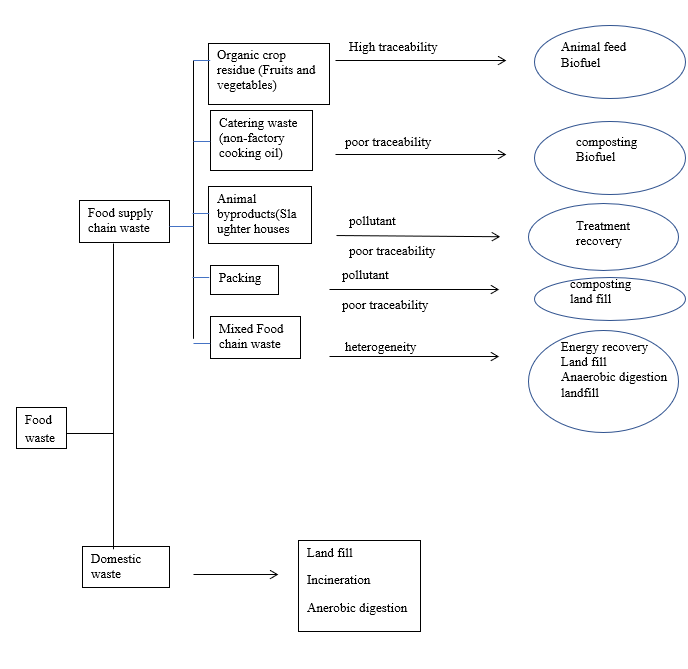
When compared to the value of processed fruit, food processing waste (FPW) is thought to be negligible. Figure 1 is a pictorial representation of food waste management flow chart. Scientific interest in research on food waste management has increased over the past few decades, especially about the production of valuable goods from vegetable waste. One attempt to make the treatment process more ecologically friendly is the production of numerous value-added products from food waste [32]. In addition to reducing the environmental impact of food waste, this also minimizes the number of losses and encourages “reuse” and “recycling” of the same.
Methods of Food-Waste Recycling
The primary determinant of the food waste’s degradability as a substrate is its chemical makeup. The complex substrate’s diverse structure and region-specific constituents make it difficult to determine the precise percentage of each component. As the simplest and least expensive waste treatment method, food waste is primarily disposed of by being dumped in landfills. This approach, however, opens the door for extremely alarming air and land contamination (and occasionally even water pollution). Because they are less expensive than anaerobic digestion, composting and incineration are additional waste treatment techniques that are used more frequently [33]. Large volumes of greenhouse gases and other dangerous chemicals are produced by these processes, and when they are discharged into the environment, they can create a variety of imbalances and malfunctions [34]. Food waste dumping is responsible for about 7% of global greenhouse gas emissions [35]. According to Tonini, et al. [8], approximately 70.5% of the waste produced by the food processing industry and 50% of the waste gathered from the wholesale and retail industries are burned; 21% of the waste from the foodservice industry is burned, whereas 54% is disposed of in landfills; and 33.4 percent of the total amount of food waste accumulated from households is burned. 27.5 percent of it is dumped in landfills [36].
Table 2 describes the advantages and disadvantages of different food waste treatment methods.
| Advantages | Disadvantages | |
|---|---|---|
| Landfill | Low cost, simple technology, more used in developing countries | Pollution of groundwater, occupying a large amount of land and no resource recovery |
| Incineration | High degree of reduction, suitable for handling hazardous or toxic garbage | High cost, long capital recovery cycle, and low economic efficiency |
| Anaerobic digestion | High degree of automation, diversified products, high economic value | Need to screen suitable microorganisms, complex technology, discontinuous cycle, and difficult-to-treat biogas residue |
| Compost | High technology maturity, low cost | Low product value, environmental pollution, long cycle |
| Hydrothermal treatment | The product has high energy utilization value, simple process, low cost and short cycle | Hydrothermal treatment products need to be further optimized |
Anaerobic Digestion
A few researchers have investigated the possibility of using food waste as a bio methanation substrate. It is the most widely utilized therapeutic approach worldwide. A two-stage anaerobic digestion of fruit and vegetable wastes was proven by Júnior, et al. [37], who obtained a methane production of 530 mL/g VS and a 95.1% volatile solids (VS) conversion. Using about 54 different food types, Thakur H, et al. [38], found that the methane yield varied depending on the waste’s origin, ranging from 180 to 732 mL/g VS. Enzymatic hydrolysis, acid generation, and gas production are the three main stages of anaerobic digestion [39]. In the first stage, hydrolases released by facultative or obligatory anaerobic bacteria break down big polymer molecules that microbes cannot carry to cell membranes.
The second stage, known as acidogenesis, involves the fermentation of hydrolytic products to produce volatile fatty acids, including butyrate, valerate, acetate, propionate, and isobutyrate, as well as carbon dioxide, hydrogen, and ammonia. Facultative anaerobic bacteria use carbon and oxygen during acidification, establishing an anaerobic environment for methanogenesis. The acid phase products are converted into acetates and hydrogen by acetogenic bacteria that are members of the genera Syntrophomonas and Syntrophobacter. By employing hydrogen as an electron source to reduce carbon dioxide, a small number of acetate molecules are also produced. Methanogens, which are members of the Archaea, are responsible for methanogenesis, which occurs in the final stage. Carbon dioxide can be reduced, or acetic acid can be fermented to make methane.
The degree of polymerization, crystallinity, lignin and pectin content, accessible surface area, and other characteristics of food waste impose recalcitrance [40]. As a result, the anaerobic digestion of food waste that contains raw starch with a high degree of crystallinity— which prevents its hydrolytic degradation—is limited in its hydrolysis step. Before anaerobic digestion, pretreatment technologies such as mechanical, thermal, chemical, and biological ones can be used to decrease crystallinity and improve methane production from food waste. Previous studies have examined the impact of various pretreatment techniques on the anaerobic digestion of food waste.
According to Izumi K, et al. [41], using food waste and treating it with a bead mill increased the amount of biogas produced by 28%. Compared to pig, cow, and whey manure, food waste as a substrate has the potential to provide a high biogas production. The anaerobic process of producing methane is a suitable way to handle food waste. The method uses food waste as a renewable energy source and is less expensive and produces less residual waste [42]. Seeding, temperature, pH, the carbon-nitrogen (C/N) ratio, volatile fatty acids (VFAs), organic loading rate (OLR), alkalinity, total volatile solids (VS), hydraulic retention time (HRT), and nutrient concentration are all factors that affect the biomethanation process [43]. Subsequently, the amounts of water-soluble substances including sugar, protein, amino acids, and minerals also affect the results. The stability of the digestive process may be accelerated by seeding. The microbial activity and efficiency of anaerobic digestion are influenced by the pH of a bioreactor [44]. Microorganisms use nitrogen to construct their cell walls and carbon to meet their energy needs. According to Alrowais, et al. (2019), methanogens do best at temperatures of about 35°C (mesophilic) and 55°C (thermophilic). Additionally, bacteria need a tiny number of micronutrients for heavy metal ions for biomethanation and for the manufacture of enzymes as well as for sustaining enzyme function.
According to Cioabla AE, et al. [45], the ideal pH range is 6.3–7.8; an overabundance of carbon dioxide causes the pH to decrease to 6.2, which then stabilizes between 7 and 8 after ten days. According to Wang X, et al. [46], the ideal C/N ratio would be between 25 and 30:1. The amount of feed digested daily per unit volume of reactor is referred to as the organic loading rate. According to Bacab FC, et al. [47] a loading rate of 0.5 kg to 2 kg of total VS/m³/d results in regulated digestion. As OLR rose to 3.7, 5.5, 7.4, and 9.2 kg- VS9.2 kg-VS m3/d, respectively, in an experiment by Nagao N, et al. [48], the volumetric biogas production rate climbed to roughly 2.7, 4.2, 5.8, and 6.6 L/L/d and remained constant. Biodegradation of protein or other nitrogen rich substrate produces ammonia and exists in the form of ammonium ion (NH4 +) and NH3 which is beneficial for the growth of microbes or sometime have detrimental effect on them [49]. The biochemical methane potential is a crucial test for understanding anaerobic digestion. Methane generation was approximately 472 ml/Gvs in an experiment conducted for mixed food waste, such as boiled rice, cabbage, and cooked beef, which were digested with cellulase.
The overall reduction in VS was up to 86% [50]. The researchers have implemented the biomethanation process using a variety of anaerobic reactor types, including solid state anaerobic reactors, up flow anaerobic solid-state reactors, semidry reactors, single stage and two stage reactors, and hybrid reactors.
The process’s configuration has a significant impact on how efficiently methane is produced. According to De Gioannis G, et al. [51], a single reactor may perform all stages of anaerobic digestion concurrently, including hydrolysis, acidogenesis, acetogenesis, and methanogenesis. Whereas Silva FMS, et al. [52], reported that a two-stage anaerobic digester produces both hydrogen and methane in two separate reactors from food waste.
In this type of system, in the first stage, acidogens and hydrogen-producing microorganisms, which have a faster growth rate, are enriched for hydrogen production and volatile fatty acid. In the second stage, acetogens and methanogens are built up where volatile fatty acids are converted into methane and carbon dioxide. Hybrid reactors have also been proposed by some researchers.
In a study performed by Mousania Z, et al. [53], food waste was digested at 35°C for 16 days in a hybrid reactor, resulting in treatment efficiencies of 77–80% of total organic content removal, 59–60% volatile solid removal, and 79– 80% total chemical oxygen demand (COD) reduction. Also, high methane content (68–70%) from the methanogenic phase favours the application of a hybrid anaerobic solid- liquid bioreactor to practical solid waste management.
Composting
According to Manea EE, et al. [54], composting is a technique for managing environmental waste that entails the biological breakdown of organic materials. By stacking rows of biodegradable materials, aerobic windrow composting is a method for producing compost [55]. Microbial communities are essential to the composting process of organic waste. Given that it varies depending on its origins and the consumer’s eating habits, composting food waste may be difficult [56]. Different kinds of organisms that can interact with one another in their shared environment make form a microbial community. Compost is the result of microorganisms breaking down organic waste into its most basic components. Within four to six weeks, a humus-like structure will form [57]. Windrows aerated static heaps, and in-vessel systems are examples of composting techniques [58]. To handle the large amount of trash, composting facilities typically use large-scale composting techniques (>100 kg/day). Appropriate composting parameters, including moisture content, carbon-to-nitrogen ratio, particle size, and aeration, must be satisfied in order to guarantee composting efficiency [59]. Results are consistent and the process is controllable. To keep the combination moist, bulking agents such as sawdust, yard debris, and animal manures are added.
This gives the mixture structure and porosity, which is necessary for adequate aeration and to maintain microbial activity [60]. In this part, we summarize the key findings in this context using university composting data. Composting significantly lowers dorm trash while requiring little funding and oversight at Islamic International University Malaysia Kuantan campus [61].
Soiled napkins and food scraps from establishments with on-campus foodservice operations are used for composting at Penn State University, an in-state university [62]. According to a comparison of other universities, food waste production at Anna University was 350 kg per day, while at Kean University (KU) it was 125 kg per day, and at one of the University Malaysia Sabah cafeterias, it was 25.5 kg per day. Bulking agents and landscape applications are examples of composting techniques.
According to Sangamithirai KM, et al. [63], food waste was successfully converted on Anna University’s campuses. Waste and paper waste were successfully turned into compost in a cylindrical in-vessel composter for 105 days.
The basic compost requirements of less than 30:1 are met by most of the C: N ratios in the different composts. At University Malaysia Sabah (UMS), food waste and dry leaves were composted for 55 days using the windrow method of in-vessel composting [40]. Kwame Nkrumah University of Science and Technology and the University of Minnesota, Morris also used windrow food waste composting. Ghana. According to Kaaba H, et al. [64], the composting method helps the green campus of University Technology Malaysia by turning organic waste into useful items like organic fertilizer. Table 3 summarizes the composting of food waste and sewage sludge at a few universities.
| Waste generated | Feedstock for composting | Composting methods | Compost characteristics | |||||
|---|---|---|---|---|---|---|---|---|
| Sewage Sludge | ||||||||
| Kwame Nkrumah University of Science and Technology, Ghana | NA | Sewage sludge: organic waste solid (food leftover, fruit waste, vegetable waste) | Open window pile | C/N:9.1-10.2 | ||||
| Kwame Nkrumah University of Science and Technology, Ghana | NA | Sewage sludge: organic waste solid (food leftover, fruit waste, vegetable waste) | (Dimension: 1m height×1.5m wide) | pH:5.2-8.0 | ||||
| Kwame Nkrumah University of Science and Technology, Ghana | NA | Sewage sludge: organic waste solid (food leftover, fruit waste, vegetable waste) | (Manual turning) | OM (%):46.7-56.7 | ||||
| Kwame Nkrumah University of Science and Technology, Ghana | NA | Sewage sludge: organic waste solid (food leftover, fruit waste, vegetable waste) | Ash (%):43.3-57.0 | |||||
| Kwame Nkrumah University of Science and Technology, Ghana | NA | Sewage sludge: organic waste solid (food leftover, fruit waste, vegetable waste) | N (%):2.7-3.5 | |||||
| Kwame Nkrumah University of Science and Technology, Ghana | NA | Sewage sludge: organic waste solid (food leftover, fruit waste, vegetable waste) | P (%):0.7-1.7 | |||||
| Kwame Nkrumah University of Science and Technology, Ghana | NA | Sewage sludge: organic waste solid (food leftover, fruit waste, vegetable waste) | K (%):0.2-0.8 | |||||
| Kwame Nkrumah University of Science and Technology, Ghana | NA | Sewage sludge: organic waste solid (food leftover, fruit waste, vegetable waste) | Indian Institute of Technology Guwahati, India | 150kg | Sewage sludge, cattle manure, sawdust | Rotary drum composter (550L capacity, batch mode) (Manual training) | M/C (%):43.2-55.2 | |
| C/N:8.5-11.9 | ||||||||
| pH:7.4-7.6 | ||||||||
| OM (%):NA | ||||||||
| Ash (%):NA | ||||||||
| N (%):1.5-2.1 | ||||||||
| P (%):3.2-4.4 | ||||||||
| K (%):8.3-9.9 | ||||||||
| Food waste | ||||||||
| Anna University, Chennai, India | 350kg/day | Food waste, yard waste, paper waste | Indian Institute of Technology Guwahati, India | 150kg | Sewage sludge, cattle manure, sawdust | Rotary drum composter (550L capacity, batch mode) (Manual training) | In-vessel | MC:49.9-63.1% |
| Anna University, Chennai, India | 350kg/day | Food waste, yard waste, paper waste | Indian Institute of Technology Guwahati, India | 150kg | Sewage sludge, cattle manure, sawdust | Rotary drum composter (550L capacity, batch mode) (Manual training) | In-vessel | C/N:0.1-47.2 |
| Anna University, Chennai, India | 350kg/day | Food waste, yard waste, paper waste | Indian Institute of Technology Guwahati, India | 150kg | Sewage sludge, cattle manure, sawdust | Rotary drum composter (550L capacity, batch mode) (Manual training) | In-vessel | pH:6.1-7.6 |
| Anna University, Chennai, India | 350kg/day | Food waste, yard waste, paper waste | Indian Institute of Technology Guwahati, India | 150kg | Sewage sludge, cattle manure, sawdust | Rotary drum composter (550L capacity, batch mode) (Manual training) | In-vessel | N:0.4-2.9% |
| Anna University, Chennai, India | 350kg/day | Food waste, yard waste, paper waste | Indian Institute of Technology Guwahati, India | 150kg | Sewage sludge, cattle manure, sawdust | Rotary drum composter (550L capacity, batch mode) (Manual training) | In-vessel | P:0.1-0.3% |
| Anna University, Chennai, India | 350kg/day | Food waste, yard waste, paper waste | Indian Institute of Technology Guwahati, India | 150kg | Sewage sludge, cattle manure, sawdust | Rotary drum composter (550L capacity, batch mode) (Manual training) | In-vessel | K:0.1% |
| Anna University, Chennai, India | 350kg/day | Food waste, yard waste, paper waste | Indian Institute of Technology Guwahati, India | 150kg | Sewage sludge, cattle manure, sawdust | Rotary drum composter (550L capacity, batch mode) (Manual training) | In-vessel | GI:45.0-120.0% |
| Kean University (KU) Union Campus, United States | 125kg/day | Food waste: wood chips | Indian Institute of Technology Guwahati, India | 150kg | Sewage sludge, cattle manure, sawdust | Rotary drum composter (550L capacity, batch mode) (Manual training) | In-vessel | NA |
| V J Technological institute | NA | Food waste, vegetable waste, fruit waste | In-vessel | MC:32.2-33.4% | ||||
| V J Technological institute | NA | Food waste, vegetable waste, fruit waste | In-vessel | C/N:36.0-45.0 | ||||
| V J Technological institute | NA | Food waste, vegetable waste, fruit waste | In-vessel | pH:5.5-7.5 | ||||
| V J Technological institute | NA | Food waste, vegetable waste, fruit waste | In-vessel | N:0.9-1.0% | ||||
Table 3: Sewage sludge and food waste composting of few higher education institutions.
Table 3: Sewage sludge and food waste composting of few higher education institutions. Thermal Treatment Thermal oxidation, which includes incineration, is the process of producing heat from waste materials [65]. Heat is transferred to the steam engine boiler during this operation, and trash that contains hydrocarbons is burned during incineration to produce carbon dioxide, water, and other contaminants. Understanding a material’s basic components is crucial to determining its composition of carbon, hydrogen, oxygen, nitrogen, sulfur, and ash before creating an efficient combustion process [66]. According to Konstantinos M, et al. [67], thermal waste processing can swiftly decrease vast amounts of waste and transform it into electrical energy that the community may use.
One highly effective thermochemical conversion method for turning biomass into useful biofuels or value-added goods is hydrothermal treatment [68]. Hydrothermal technique is used in several food waste treatment facilities worldwide. Unsorted, highly organic waste is fed into the reactor and subjected to steam for 30 minutes at a temperature of 220 °C and a pressure of 2.5 MPa. One byproduct of this process is hydrochar, which is a material that resembles powder. According to data on the boiler’s gas emissions, air pollution is minimal [69]. The applicability of this technology on an industrial scale is promising. The most significant influencing variables are the financial costs associated with material collection and transportation [70].
The hydrothermal process is separated into three categories based on the range of temperatures and pressures: hydrothermal carbonization, hydrothermal liquefaction, and hydrothermal gasification [71]. Biomass is mostly converted into carbon materials via hydrothermal carbonization at temperatures between 180 and 260 C and pressures between 1 and 8 MPa. Fuel particles are created by hydrothermally carbonizing food waste; these solid particles can be used as domestic fuel since they have strong combustion qualities [72]. According to Mariyam S, et al. [73], hydrothermal liquefaction typically takes place around
260–374C under 10–22.1MPa. High-energy bio-oil (a blend of alcohol, sugar, furan, and other compounds) is the primary product. Furthermore, food waste contains a lot of organic material that can be hydrothermally liquefied to produce valuable products. For example, the extraction rate of pectin was as high as 11.63% by microwave-assisted hydrothermal treatment, and pectin could be used as a thickener and had important commercial value [74]. The, temperature, time and catalyst affect the reaction process based on the raw material composition.
The most significant influencing factor in the hydrothermal process is temperature, and raising the temperature typically results in less food waste [75]. The amount of hydrochar produced will decrease as the temperature rises, but the hydrochar’s ability to burn will improve. Additionally, temperature influences the carbohydrates and other components in the solution, controls the distribution of materials, and is crucial for the generation of bio-oil [76]. As the temperature rises, ammonia is more easily removed and the nitrogen content is enhanced, forming aromatic heterocyclic molecules in the hydrochar [77]. Table 4 summarizes the Food waste hydro char production and calorific value.
| Temperature (℃) | Hydrochar Yield (%) | Heating value (MJ/kg) | |
|---|---|---|---|
| Dog food | 234-295 | 55 | 26 |
| Rabbit food | 250 | 43.8 | 29.1 |
| Restaurant food waste | 225-275 | 45 | 33.6 |
| Sweet corn | 250 | 50 | 11 |
| Grape pomace | 175-275 | 46.5 | 24.3-28.3 |
| Food waste from a student’s hostel mess | 200 | 48.5 | 30 |
| Food waste and yard waste | 220 | 59.8 | 27.6 |
Table 4: Hydrochar yield of food waste and its calorific value.
It raises the amounts of volatile compounds, calcium, magnesium, and other minerals, as well as carbon, hydrogen, and methane. According to Phromphithak S, et al. [78], the primary constituents of bio-oil generated through the hydrothermal liquefaction of kitchen waste are C6–C22 compounds. Food waste is converted into biogas using hydrothermal gasification, hydrothermal pretreatment, fermentation, and other methods. Another factor influencing hydrothermal products is time [79]. One significant influencing factor is the activation energy of the hydrothermal reaction, which is decreased by the addition of catalysts such as alkaline, acid, metal-related, and biocatalysts [80]. The hydrothermal process of food waste is affected differently by each type of catalyst. The oil production and different product compositions and qualities are significantly impacted by the biochemical makeup of food waste. In an investigation to ascertain how the chemical makeup of cellulose, hemicellulose, and lignin affects hydrochar’s characteristics [81]. Lignin hydrochar had a rough surface, a high yield, and more benzene rings. According to Kakar, et al. [82], hydrothermal pretreatment may speed up the fermentation process and boost the yield of volatile fatty acids from vegetable protein products. The process by which raw materials react under hydrothermal conditions to yield the desired products is known as the hydrothermal conversion mechanism. Numerous parallel chemical reactions are involved in the complex reaction mechanisms and composition of food waste. The conversion process mainly involved five steps: hydrolysis, dehydration, decarboxylation, condensation, polymerization, and aromatization. Lipid, protein, cellulose, hemicellulose, and lignin are hydrolyzed into oligomers or monomers at relatively low temperatures. Dehydration and decarboxylation as well as the polymerization process also occur during the hydrolysis process. In addition, the increase in temperature caused the decarboxylation reaction and Maillard reaction to proceed, decomposing the monomer material.
Fermentation
A crucial part of many waste treatment programs is fermentation, which is the biological degradation of organic materials by microbes. Fermentation’s contribution to the circular food economy is a crucial advantage of integrating it into food waste recycling. Fermentation lessens the environmental impact of traditional disposal methods by turning food waste into useful products including compost, biofertilizers, and biogas. Because the procedure doesn’t require outside inputs, it encourages self-sufficient and sustainable waste management systems. This improves productivity and resource efficiency while also lessening the financial burden of trash disposal.
During fermentation, microbial populations interact dynamically to efficiently break down organic materials and produce advantageous byproducts [83]. Certain bacteria thrive in low-temperature fermentation environments, adjusting to the conditions and affecting the overall makeup of microorganisms. On the other hand, anaerobic bacteria cannot survive under conditions created by aerobic fermentation and high temperatures. The fermentation process’s bioseparation and extraction procedures improve the overall effectiveness of recycling food waste. By making it easier to extract valuable molecules from the fermented material, these procedures increase the recycling system’s overall economic viability and allow for the extraction of bioactive substances [84].
Liquefaction
The ability of liquefaction to convert organic waste into useful resources while reducing its negative effects on the environment has attracted attention recently [85]. The process of liquefaction involves heating food waste to high temperatures, usually between 150 and 400°C, while a solvent or water is present. This process leads to the breakdown of complex organic compounds into simpler molecules. A significant environmental advantage of this method lies in the eradication of pathogenic bacteria, present in food waste [11]. Thus enhancing the safety of the process reduces the risk of contamination and the spread of diseases. Liquefaction has been explored to produce biocrude oil, involving the conversion of organic matter into a liquid fuel which could be utilized as an energy source. Feasibility of employing food waste as a feedstock for biocrude oil production through liquefaction processes is reported by Bagchi, et al. [86]. High-temperature conditions enable production of valuable byproducts such as soil amendment to enhance fertility and sequester carbon. Liquefication is a multifaceted approach that enables the simultaneous production of bioenergy and valuable byproducts, creating a more sustainable and resource-efficient food waste recycling system.
Food Waste Upcycling
The upcycling of food waste has proven to have the potential to contribute to the responsible production and consumption agenda of optimizing food resources through the conversion of food waste to either alternative food products or novel food products by utilizing various upcycling technologies (Thorsen, et al., 2024). Broadly food waste upcycling are categorized into: integrated bio refinery technologies, microbial electrochemical technologies, Pyrolytic technologies, green extraction technologies, and conventional bio-waste valorization technologies.
Integrated Bio Refinery Technology
To increase the amount of value-added goods extracted from food waste, this strategy integrates various waste treatments and conversion procedures [87]. This comprises pre-treatment methods such enzymatic hydrolysis, acid, and milling to break down food waste biomass for upstream processing. With the use of suitable technologies, this is subsequently fed into the integrated bio-refinery system to extract the most value possible from the waste streams. In integrated biorefinery systems, technologies and processes such fractionation, fermentation, anaerobic digestion, cogeneration, biochemical and thermochemical conversion, separation, and purification have been employed. These technologies have been utilized to create bioelectricity and bioenergy as well as co-products such charcoal, bioethanol, bio-hydrogen, and biodiesel.
Microbial Electrochemical Technologies
This process transforms chemical energy in food waste biomass into electrical energy by using biocatalysts, which include microorganisms like electro-trophic bacteria, fermentative bacteria, and electro-active bacteria like Geobacter sp.To create value-added goods, this technique can be applied as a stand-alone procedure or integrated into several systems as a component of a hybrid process. The technologies employ microorganisms to catalyze the electrochemical conversion of food waste into value-added products, including organic acids, lipids for the generation of biodiesel, biogas, biohydrogen, and bioelectricity [88]. Technologies that use pyrolysis. The method turns food waste into new goods, either with or without catalytic agents [89]. Food waste is transformed into three primary products via thermochemical processes: biochar, bio-oil, and combustible gas [90]. It entails heating biomass made from food waste to a temperature higher than 400°C with either partial or no oxygen present. Fast and slow pyrolysis, which is categorized, based on their process conditions and parameters are the most widely utilized pyrolysis techniques [91]. Pre-treating food wastes before to the pyrolysis process will provide higher-quality products, according to Czajczyńska et al. [92].
Further the study describes pyrolysis as an excellent technique for managing food waste because of the value- added products it can generate. Several food wastes: potato peel (Solanum tuberosum), lettuce (Lactuca sativa), cabbage (Brassica rapa subsp. pekinensis), cauliflower (Brassica oleracea), and coriander (Coriandrum sativum), and onion (Allium cepa) have been valorized using pyrolysis, to manufacture several industrial goods, such as biochars, which have the potential for augmenting the carbon and water holding capacity of soils and making them effective soil conditioners.
Green Extraction Technologies
It is a new extraction technique that uses green solvents instead of traditional solvents to extract natural bioactive compounds and/or value-added products from food waste [93]. The approach has been utilized to extract natural bioactive components and compounds from agro- food waste, including pigments, enzymes, and antioxidants (flavonoids, polyphenols, etc.) [94]. Because of its lower power requirements, less or nonexistent use of organic solvents, and ecologically friendly nature, it is seen to be a superior option than traditional extraction technologies. They are predicated on the utilization of sustainable and renewable bioresources, green solvents like water, ethanol, supercritical CO₂, lower energy consumption, the production of co-products from the waste, compact unit operations, and the generation of non-denatured and eco-friendly extracts [95]. The most used green extraction technologies include microwave-assisted extraction (MAE), ultrasound- assisted extraction (UAE), hydrodynamic cavitation-assisted extraction (HCAE), and others [96]. Table 5 is a comparison of various methods for food waste upcycling and their value- added products.
| Description | Techniques/Processes | Examples of value-added Products | |
|---|---|---|---|
| Integrated Biorefinery Technologies | Combines biological, chemical and thermal processes for maximum resource extraction from food waste. | Milling, acid/enzymatic hydrolysis, fermentation, anerobic digestion, thermochemical conversion, co-generation, separation, and purification. | Bioethanol, biodiesel, biohydrogen, biochar, and organic acids. |
| Microbial Electrochemical Technologies | Uses electro-active microorganisms to convert chemical energy in food waste into bioenergy or chemicals. | Microbial fuel cells (MFV), Microbial electrolysis cells (MEC), using Geobacter, Clostridium, etc. | Bioelectricity, biohydrogen, biogas, organic acids, and lipids for biodiesel. |
| Pyrolytic Technologies | Thermochemical conversion of food waste into bio-oil, biochar and gas, with or without catalysts. | Fast Pyrolysis (800-1300℃/s); catalytic or non-catalytic. | Bio-oil, biochar, and combustible gases. |
| Green Extraction Technologies | Environmentally friendly extraction of bioactives using alternative solvents and energy-efficient processes | Microwave-Assisted Extraction (MAE), Ultrasound-Assisted Extraction (SFE), Liquid Biphasic Flotation (LBFE), PEF, HCAE. | Polyphenols, flavonoids, antioxidants, pigments, enzymes (e.g. quercetin, catechin, cellulase, and pectinase). |
| Conventional and Supporting Techniques | Commonly used techniques in food waste upcycling, applied in various stages, such as pre-treatment, separation, or concentration of materials. | Fermentation, centrifugation, precipitation, crystallization, coagulation, reverse osmosis, microfiltration, ultrafiltration, and flotation. | Pectins, dietary fiber, citric acid, protein isolates, organic acids, and concentrated nutrients. |
Table 5: Comparison of various methods for food waste upcycling and their value-added products Table 5: Comparison of various met
Valorization of Food Waste to Produce Value-Added Products
Single-Cell Protein Single Cell Protein (SCP)
One abundant source of organic matter that can be transformed into goods with added value is food waste. One promising strategy for waste management and sustainable production is the conversion of food waste into single-cell protein biofuel, bioplastics, and other value-added goods [97]. (SCP) is thought to be revolutionary for sustainable food production and is a promising nutritional source with impact, especially when made from waste materials [98]. Numerous microbes, including bacteria, fungus, and yeast, are the source of SCP [99]. Utilizing microbes, the process transforms various substrates into microbial cell mass. Applications for the resultant microbial protein, or SCP, include animal feed, human meals, nutritional supplements, and more [100].
SCP technology is useful because it allows co-products from farms or the agro-food industry to be upcycled. Protein content in SCP biomass ranges from 50 to 80% on a dry weight basis, indicating a high protein concentration [101]. This approach adds substantial value to the production chain by removing the need to treat the organic material for its Biological Oxygen Demand (BOD) [102]. Sustainable and effective protein sources are desperately needed as the world’s population grows, and SCP may be able to meet this demand. Numerous businesses use SCP to produce high-protein flours and essential foods like bread and pasta through sustainable practices, like the US-based food biotech company Equii Foods fermentation ranging from wheat, multigrain, and fiber-enriched varieties, providing 8–10 grams of protein per slice. Another company, FeedKind, produces SCP made from natural gas via microbial fermentation [103].
Bioethanol and Biodiesel
Using a variety of appropriate methods, food waste can be used extensively as a raw material for the generation of biofuel. Using food waste to produce biofuel offers a viable sustainable alternative in light of the growing need for sustainable energy sources. According to Xavier, et al. [104], biofuels made from food waste can lessen greenhouse gas emissions, lessen dependency on fossil fuels, and advance the ideas of the circular economy. Three primary phases are involved in turning food waste into bioethanol: fermentation, enzymatic hydrolysis, and pretreatment [105]. To optimize sugar recovery from food waste, mechanical, chemical, and biological techniques are used in the pretreatment process. Enzymatic hydrolysis follows, in which a combination of appropriate enzymes (mostly cellulase, β-glucosidase, and pectinase) is used to break down the polysaccharides into fermentable sugars. The final step is microbial fermentation to convert sugars into bioethanol [106]. However, the technology poses few challenges, such as the handling of biomass and the application of pretreatment methods to improve the conversion of lignocellulosic materials into fermentable sugars [107]. The production of biodiesel from food waste is gaining attention worldwide. Various types of food waste, including waste cooking oil, grease trap waste, and lipid-rich food waste, are being explored for biodiesel production.
The extracted lipids are then purified to remove any impurities [108]. During transesterification, extracted lipids are treated with alcohol (usually methanol or ethanol) in the presence of a catalyst to produce biodiesel.
Major challenges associated with biodiesel production from food waste include the variability in the composition of food waste, the need for efficient lipid extraction methods, and the need for effective catalysts for the transesterification process. Despite these challenges, the production of biodiesel from food was 5 Biogas. The process of converting food waste into biogas involves a set of microbiological reactions and physico-chemical processes known as anaerobic digestion (AD) [109]. Biohydrogen—Dark fermentation and photosynthesis are the two main biological processes utilized in the technology used to produce biohydrogen from food waste [110]. In the process known as “dark fermentation,” bacteria break down organic materials without the presence of light, resulting in the production of hydrogen gas as a byproduct [111]. Conversely, photosynthesis is the process by which light energy—typically from the sun—is transformed into chemical energy within plants, which powers the plant’s operations. Dark-photo-sequential fermentation is a relatively new approach that entails exposing the food waste to dark fermentation and then photosynthesis.
9.3. Bioplastics—with notable progress in recent years, the field of producing bioplastics from food and agricultural waste is expanding quickly [112]. Bioplastics are biodegradable plastics that can be produced more cheaply and sustainably by using biological materials instead of petroleum. Utilizing agri-food waste as a substitute substrate for the production of biopolymers is one of the main areas of concentration in this research. For example, a well-studied strain of Haloferax mediterranei may produce polyhydroxybutyrate (PHB), a form of bioplastic, in high- salinity conditions without sterilizing.
Value-Added Products through Hydrothermal Treatment
Food waste can be used and hydrothermally treated to produce solid, liquid, and gaseous products. Formate can be made from food waste by hydrothermally carbonizing it; up to 78% of food wastes could be turned into formate [113]. Formate is an excellent hydrogen storage carrier and battery material [114]. Furthermore, the fluorescence properties and high compatibility of eggshells and carbon dots make them useful for photo catalysis, environmental monitoring, and biomedicine [115]. Additional uses include multi-color from carbon dots hydrochar [116] and hydroxyapatite recovered from pomelo peel that has characteristics similar to the structure of crystalline hydroxyapatite in human bones. Inexpensive graphene flakes made from leftover bread. Hydrochar made from food waste has the potential to be a highly effective adsorbent for water contaminants [117]. About 0.96% and 2.30% of fertilizers based on nitrogen and phosphorus, respectively, might be substituted with the hydrochar and liquid products made from food waste [118]. Additionally, food waste was effectively utilized as a resource by producing high-quality bio-oil by a hydrothermal treatment [66]. Green biodiesel can be effectively produced using the hydrothermal liquefaction of waste edible oil. Through hydrothermal treatment, food waste can also be transformed into materials for industrial uses. For example, vegetable waste can be hydrothermally treated to produce acetic acid and calcium acetate, which can be used as a green deicing agent [119]. According to Ren K, et al. [120], the carbon-based Fe₃O₄ nanocomposite made from pomelo peel was also an effective fruit magnetic solid-phase extraction material. To create bioethanol, the chili post-harvest residue underwent fermentation and hydrothermal pretreatment with surfactants. Green biodiesel can be effectively produced by hydrothermally liquefying waste edible oil without the requirement for extra treatment procedures. Hydrothermal treatment of mango peel could achieve efficient extraction of pectin, a thickening agent (11.63%). Hydrothermal treatment helps with resource disposal and food waste reduction. Hydrothermal gasification of cellulose allows for the selective production of hydrogen at a comparatively low hydrothermal temperature. Finally, hydrothermal pretreatment of food waste can break down cellulose into simple substances such as glucose and can increase the ratio of protein to carbohydrate, which is beneficial for subsequent fermentation and other processing [121].
Food Waste Disposal and Environmental Effects of Food Waste
Food Waste Disposal and Classification is primarily divided into three categories: Volume Based Waste Fee (VBWF), Food Waste, and Recycling Waste [122, 123]. Food waste includes agricultural, fishery, and food leftovers generated during the production, distribution, and cooking processes. Recycling waste comprises plastics, cans, glass bottles, paper, and scrap metal, which should be sustainability leftovers generated during the production, distribution, and cooking processes. All other general waste is placed in VBWF garbage bags for disposal. The food waste separation rate is an indicator of the proportion of food waste that is collected separately rather than mixed with general waste here fore, it reflects the efficacy of the VBWF system.
The four metrics of global warming potential, nutritional enhancement, photochemical ozone production, and acidity are the major criteria used to assess the environmental impact of any method of disposing of food waste [124]. When food is wasted rather than eaten, the environmental effects of food production and consumption are further compounded. Around 57.02 kg of CO2-equivalent/tonne from anaerobic digestion and 18.3 kg CO2-equivalent/tonne, through incineration of biogas waste was their respective contribution to global warming potential [125]. Further, methane emission from both anaerobic digestion and in vessel composting leachate treatment processes constitutes a significant source of environmental burden for photo chemical ozone formation. Advancements in the biogas residue management process could reduce global warming potential [126].
New applications in Food Waste Management
Mathematical Models
Models are used to study the mechanics of anaerobic digestion, the engineering process, the parameters that affect biomethanation, and how they interact. Anaerobic digestion activity has been mathematically modeled and optimized using theoretical, empirical, and statistical methods. Digestion without air anaerobic digestion is classified as either liquid-state anaerobic digestion (L-AD) (TS ≤ 15%) or solid-state anaerobic digestion (SS-AD) (TS ≥ 15%) according to the total operational solid content. Solid loading capacity, increased volumetric biogas productivity, and lower energy requirements are the benefits of SS-AD. According to Mo et al. 2023, SS-AD systems are currently operated experimentally and lack mechanistic tools for process control. Application of statistically derived models can predict the system behaviour and are especially useful when there are a limited number of targeting outputs [127]. On the other hand, theoretical models provide more insight into the complex system mechanisms, while simplification is required to find general applications [128]. AI-driven systems have demonstrated significant reductions in food waste, offering economic savings and environmental benefits [129].
Metagenomic Tools and Techniques for Advanced Practices
Researchers have used a variety of 16S- and 18S-rRNA- based fragment studies to examine the microbiome and its diversity in the handling of food waste [130]. Eukarya, Bacteria, and Archaea comprise the major microbial communities. There are 4133 methanogenic bacteria in the Archaea domain overall, with the most noticeable groups being Crenarchaeota and Euryarchaeota. Acetotrophic methanogens are the primary required anaerobes in the genus Methanosarcina that convert acetate into carbon dioxide and methane. Hydrogen-binding methanogenic bacteria belong to the Methanobacteriaceae family. The two primary families of hydrogenotrophic bacteria involved in the anaerobic digestion of fruit and vegetable wastes are Methanosphaera stadtmaniae and Methanobrevibacter wolinii [131]. The knowledge of the link between taxonomical and functional diversity and species richness can be a key for better understanding of ecosystem functioning in waste food treatment. Molecular methods like PCR, RFLP, microarrays, and sequencing have been increasingly utilized in the field of waste management in the last decade [132].
Metagenomics
Ability of NGS to functionally characterize microbial communities on a large scale and its strength in studying collections of diverse microbes were demonstrated by the large-scale functional characterization of ecological systems captured through metagenomics [133]. The use of this strategy in FW management can raise the caliber of management and treatment goods while also deepening our understanding of treatment. By investigating the available microbial resources and making strategic use of the latest metagenomics techniques, microbial communities can be employed in food waste management more effectively. Metagenomics research is aided by the development of sequencing and computing technologies, which expanded the reach of bioinformatics in microbial informatics and testing [134].
Microbial Community Analysis
Particularly at high organic load rates (OLRs), anaerobic digesters frequently experience a variety of instabilities related to inhibition, foaming, and acidification [135]. The traits and dynamics of the microbial communities engaged in the anaerobic digestion process are typically linked to these instabilities. In order to maximize stable and effective process operations, microbial community analysis— which looks at the makeup and behavior of microbial communities—can be useful. New directions for studying microbial populations during anaerobic digestion have also been made possible by high-throughput sequencing technology. In their study of the microbial community for both single-phase and two-phase anaerobic digestion of Food waste. Hagen, et al. [136] discovered that the two- phase continuous stirred tank reactor had a higher diversity of bacteria and a preponderance of Firmicutes resulting in a methane production that is 23% larger than that of single-phase anaerobic digestion. The archaeal community of single-phase and two-phase reactors was dominated by Methanosaeta. Using the Ribosomal Database Project classifier software categorization of the nucleotide sequences and demonstrated that the most prevalent microorganisms during the anaerobic digestion process were Proteobacteria, Firmicutes, and Bacteroidetes [137]. The addition of Synergistetes, Tenericutes, Spirochaetes, and Actinobacteria during active methanogenesis resulted in a considerable increase in the variety of microorganisms compared to day 0. Using Illumina sequencing, Khan, et al. [138] examined how digestate recirculation affected the microbial population. The predominant bacterial phyla in both digester design types (with and without recirculation) were determined to be Proteobacteria, Firmicutes, Chloroflexi, and Bacteroidetes. Methanosaeta and Methanobacterium were dominant genera among the archaeal population, accounting for 65% and 32% of Euryarchaeota’s reads in the mesophilic digester without recirculation, while, in the digester with digestate recirculation, Methanosaeta accounted for 91% of all Euryarchaeota.
Pulsed Electric Field (PEF) and Ultrasound- Assisted Extraction (UAE)
In recent years it has been shown that PEF is able to extract bioactive from a number of sources. Carpentieri, et al., [139] generated vanillin, caffeine, and limonene yields improvements from agro waste such as cocoa shells and citrus peels. High purity β carotene and polyphenols in the carrot and tomato waste with minimum post processing was recovered from UAE [140].
Other hybrid methods include the Enzyme assisted microwave extraction utilizes enzyme pretreatment which specifically degrades plant cell wall components followed by microwave assisted extraction that increases the release of intracellular compounds by localization heat and pressure. The hybrid strategy is specifically applicable for agro-wastes containing substantial lignocellulosic such as rice bran, wheat straw, and fruit pomace [141]. The Ohmic Heating Combined (OH) with Solvent-Free Extraction is the method of passing electric current through moist biomass and generating internal heat due to electrical resistance of the sample. Safarzadeh, et al. [142] used this method on olive mill wastewater (OMWW) and recovered high purity hydroxytyrosol and tyrosol at 60–70 °C.
Discussion
Food waste has become a global scourge that requires actionable and innovative solutions to combat the scourge and its attendant effects. These staggering figures within the food system are an indication on its social, economic, and environmental impacts requiring intervention. Food waste has been reported to account for 8–10% of global greenhouse gas emissions with attendant negative impact on farm produce yield, nutritional quality, and food supply chain disruption. The SDG 12 underscores the importance of responsible food consumption and waste reduction/ management to promote the sustainable food production agenda (sdgs/un). The initial important steps, therefore, are approaches and policies geared towards waste repurposing and upcycling and foster effective food resource management. Waste upcycling strategies are a circular bioeconomy allowing food waste to be repurposed by converting food waste biomass into a value-adding product or ingredients [24]. These products can be consumed directly or used as platform products as raw materials for other consumer products. Several methods have been available to treat food waste, including food donation, animal feed, composting, thermal or biological conversion, or landfilling. Each of these methods is based on the substrate and their inherent treatment procedure and capacity. For example, landfilling represents the dominant method (35%) of food waste treatment. Alternatively, methods include pyrolysis, which has negative carbon emission footprints. Advantage of thermal treatment method in the absence of oxygen and the byproduct solid char with high carbon content can be stored, utilized as energy or soil additive. Several innovations and scope for research are needed in each of these methods to scale-up the method of food waste treatment. The present trend in cooking is the high dependence on firewood for cooking in villages and fossil fuels in towns and cities [143]. AD of manure and crop residues can substitute 50-60% of final energy for cooking in villages and about 10% of final energy for cooking in towns and cities. Additional financial support through Research, Development and Demonstration programme will provide impetus at the resource levels. Compost and digestate play minor roles in comparison to fertilizers in India (et al., 2023), thus encouraging small- to medium-scale composting and AD plants should be promoted. Local participation, NGO and combined initiatives and of provision of affordable/dry, free land will also promote food management at the community level. As a result of incorrect and common food disposal practices, which have detrimental environmental effects, a significant amount of greenhouse gas (GHG) emissions and foul odor discharge occur. India produces a lot of food waste, but its techniques for disposing of it are quite inadequate; instead, organic garbage is typically dumped at landfills [144]. Landfills are the most common method of food waste disposal in developing nations including India, which accounts for approx. 90% of the total food waste [144]. But this practice is not encouraged due to its increased probability of producing disease vectors and releasing greenhouse gases [145]. Plausible solution includes Manure and crop residues (20- 40%) are abundant in villages and still mostly untapped as energy source of crop residues remain unused as animal feed or fertilizer. Their collection and treatment may be feasible in some places, especially with water-saving dry AD. Byun, et al. [15] highlighted the feasibility of green vehicles running using green energy produced from food wastes in near future. There have been proposals for internal combustion engine cars (ICEVs) powered by biomethane and bioethanol, fuel cell vehicles (FCVs) powered by biohydro gen, and plug- in electric vehicles (PEVs) powered by bioelectricity. These efforts will contribute towards sustainability [146, 147, 148, 149, 150, 151, 152, 153, 154, 155, 156].
It is noteworthy to note from the increased number of publications that globally several research and private firms are showing interest in this area of food chain and government policies and legislation indicating the concern to minimize food waste [157, 158, 159, 160]. Microbial ecological analysis in the near future will need a paradigm shift from data generation and management to innovative and hypothesis driven research. Application of new microbial sources to facilitate treatment through Genetic engineering, metagenomics and high-through put methods is required to enhance the out-put at several levels. Further, in silico generated knowledge coding, mining, and networking will aid new knowledge discovery to attain sustainable food waste management. Judicious use of food at source in the society at several levels in the food chain, home, hotels, universities contribute immensely to reducing food waste at source. Second systematic management of food waste through proper inventory, redistribution of unused food and conscious use of food products will lower the waste [161, 162, 163, 164, 165]. Awareness of environmental pollution and initiatives such as the ’Swachh Bharat (clean India) Mission’ will help create wider awareness through audio-visual, print media. Awareness through Gram-panchayath and taluk level will promote better waste management. Thus, the collective efforts of public, private and several allied food chain sectors along with policies and awareness will ensure reduction and management of global food waste [165, 166, 167, 168, 169, 170, 171, 172, 173, 174].
References
-
Roe BE, Bender K, Qi D (2021) The impact of COVID-19 on consumer food waste. Appl Econ Perspect Policy 43 (1): 401-411.
-
Ristic D, Bender D, Jaeger H (2024) Towards a definition of food processing: conceptualization and relevant parameters. _Food Prod Process and Nutr_ 6(1): 79.
-
Lam CM, Yu IKM, Hsu SC, Tsang DCW (2020) Life-cycle assessment of food waste recycling. Waste Biorefinery. In: Bhaskar T, et al. (Eds.), Elsevier, pp: 481-513.
-
Paritosh K, Kushwaha SK, Yadav M, Pareek N, Chawade A, et al. (2017) Food Waste to Energy: An Overview of Sustainable Approaches for Food Waste Management and Nutrient Recycling. _BioMed Research International_ (1): 2370927.
-
Yahia EM, García-Solís P, Celis MEM (2019) Chapter 2 - Contribution of Fruits and Vegetables to Human Nutrition and Health. In: Elhadi M, (Eds.), Postharvest Physiology and Biochemistry of Fruits and Vegetables, Woodhead Publishing, pp: 19-45.
-
Baykoca B, Yılmaz S (2025) Understanding food loss patterns across developed and developing countries using a GDP, growth rate, and health expenditure-based typology. _Sci Rep_ 15 (1): 27597.
-
Guggisberg S (2021) Transparency in the activities of the food and agriculture organization for sustainable fisheries Marine Policy. Article 136: 104498.
-
Tonini D, Albizzati PF, Astrup TF (2018) Environmental impacts of food waste: learnings and challenges from a case study on UK. Waste Manag 76: 744-766.
-
Balaji M, Arshinder K, (2016) “Modeling the causes of food wastage in Indian perishable food supply chain,”. Resources, Conservation & Recycling, Elsevier, 114: 153-167.
-
Di Marcantonio F, Twum EK, Russo C (2021) Covid-19 pandemic and food waste: an empirical analysis. Agronomy 11(6): 1063.
-
Pappalardo G, Cerroni S, Nayga RM, Yang W (2020) Impact of Covid-19 on household food waste: the case of Italy. Front Nutr 7: 585090.
-
Al-Rumaihi A, McKay G, Mackey HR, Al-Ansari T (2020) Environmental Impact Assessment of Food Waste Management Using Two Composting Techniques. Sustainability 12(4): 1595.
-
Fava F, Totaro G, Diels L, Reis M, Duarte J, et al. (2015) Biowaste biorefinery in Europe: opportunities and research & development needs. New Biotechnology 32(1): 100-108.
-
Sinha S, Tripathi P (2021) Trends and challenges in valorisation of food waste in developing economies: a case study of India. Case Stud Chem Enviro Eng 4: 100162.
-
Byun J, Kwon O, Park H, Han J (2021) Food waste valorization to green energy vehicles: sustainability assessment. Energy Environ Sci 14: 3651-3663.
-
Arancon R, Lin C, Chan KM, Kwan TH, Luque R (2013) Advances on waste valorization: new horizons for a more sustainable society. Energy Sci & Engg 1 (2): 53-71.
-
Rakesh S, Sunil K, Amit M, Amit V, Subodh KS, et al. (2021) Roadmap for Ethanol Blendingin India 2020-25Publishing Agency: NITI Aayog Year of Publication, pp: 978-981.
-
Cheng JY, Lo I (2016) Investigation of the available technologies and their feasibility for the conversion of food waste into fish feed in Hong Kong. Environ Sci Pollut Res 23(8): 7169-7177.
-
Roger S (2017) Commercial feasibility of banana waste utilisation in the processed food industry. Hort Innovation.
-
Kumar H, Bhardwaj K, Sharma R, Nepovimova E, Kuča K, et al. (2020) Fruit and Vegetable Peels: Utilization of High Value Horticultural Waste in Novel Industrial Applications. Molecules 25(12): 2812.
-
Durkin A, Vinestock T, Miao G (2024) Towards planetary boundary sustainability of food processing wastewater, by resource recovery & emission reduction: A process system engineering perspective. Carbon Capture Science & Technology 13: 100319.
-
Mendo J, Mendo T, Gil-Kodaka P, Martina J, Gómez I, et al. (2022) Bycatch and discards in the artisanal shrimp trawl fishery in Northern Peru. PLoS ONE 17(6): e0268128.
-
Karwowska M, Łaba S, Szczepański K (2021) Food Loss and Waste in Meat Sector—Why the Consumption Stage Generates the Most Losses? Sustainability 13(11): 6227.
-
Pal P, Singh AK, Srivastava RK, Rathore SS, Sahoo UK, et al. (2024) Circular Bioeconomy in Action: Transforming Food Wastes into Renewable Food Resources. Foods 13(18): 3007.
-
Todd E, Faour-Klingbeil D (2024) Impact of Food Waste on Society, Specifically at Retail and Foodservice Levels in Developed and Developing Countries. Foods 13(13): 2098.
-
Kaman GS, Bozkurt I, Rabia B, Özhasar Y, Demi̇rci̇ B, et al. (2024) The strategy food waste in restaurants: A systematic literature review. Trends in Food Science & Technology 151: 104625.
-
Choudhury AG, Roy P, Kumari S, Singh VK (2022) Utility of Fruit-Based Industry Waste. Handbook of Solid Waste Management, pp: 757-784.
-
Teshome E, Tilahun AT, Ruchira N, Jyoti R, Voukang HD, et al. (2023) Fruit By-Products and Their Industrial Applications for Nutritional Benefits and Health Promotion: A Comprehensive Review. Sustainability 15 (10): 7840.
-
Caldeira C, De Laurentiis V, Corrado S, Van Holsteijn F, Sala S (2019) Quantification of food waste per product group along the food supply chain in the European Union:a mass flow analysis. Resour, Conserv, Recycl 149: 479- 488.
-
Papargyropoulou E, Lozano R, Steinberger J, Wright N, Ujang Z (2014) The food waste hierarchy as a framework for the management of food surplus and food waste. Journal of Cleaner Production.
-
Pappalardo G, Cerroni S, Nayga RM, Yang W (2020) Impact of Covid-19 on household food waste: the case of Italy. Front Nutr 7: 585090.
-
Ganesh KS, Sridhar A, Vishali S (2022) Utilization of fruit and vegetable waste to produce value-added products: Conventional utilization and emerging opportunities-A review. Chemosphere 287: 132221.
-
Li Z, Fan TW, Lun MS, Li Q, Hong Q, et al. (2025) Study on implementation of anaerobic digestion and composting technologies for kitchen waste management: A case study in Macau. Heliyon 11: 10.
-
Wani NR, Rather RA, Farooq A (2024) New insights in food security and environmental sustainability through waste food management. Environ Sci Pollut Res 31(12): 17835-17857.
-
Bux C, Zizzo G, Roe BE, Amicarelli V (2025) A comparative assessment of food waste and carbon footprint toward a more sustainable healthcare foodservice. Journal of Cleaner Production 495: 145102.
-
Todd ECD, Klingbeil DF (2024) Impact of Food Waste on Society, Specifically at Retail and Foodservice Levels in Developed and Developing Countries. Foods 13(13): 2098.
-
FCG da Silva, P de Souza Almeida, CA de Menezes, MS Duarte, TP Silva, et al. (2025) Anaerobic Digestion of the Liquid Fraction of Fruit and Vegetable Waste: Two-Stage versus Single-Stage Process. _ACS Omega_ 10(22): 22847- 22857.
-
Thakur H, Ira R, Verma NK, Sharma V, Kumar S, et al. (2023) Anaerobic co-digestion of food waste, bio- flocculated sewage sludge, and cow dung in CSTR using E(C2) Tx synthetic consortia. Environmental Technology & Innovation 32: 103263.
-
Pilarska AA, Kulupa T, Kubiak A, Wolna MA, Pilarski K, et al. (2023) Anaerobic Digestion of Food Waste A Short Review. Energies 16(15): 5742.
-
Zhao, Xuebing , Zhang, Lihua , Liu, et al. (2012) Biomass recalcitrance. Part I: The chemical compositions and physical structures affecting the enzymatic hydrolysis of lignocellulose. Biofuels Bioproducts and Biorefining 6: 465-482.
-
Izumi K, Yu-ki O, Nagao N, Niwa C, Yamamoto S, et al. (2010) Effects of particle size on anaerobic digestion of food waste. International Biodeterioration & Biodegradation 64(7): 601-608.
-
Keng ZX, Chong S, Ng CG, Ridzuan NI, Hanson S, et al. (2020) Community-scale composting for food waste: a life-cycle assessment-supported case study, Journal of Cleaner Production 261: 121220.
-
Strazzera G, Battista F, Garcia NH, Frison N, Bolzonella D (2018) Volatile fatty acids production from food wastes for biorefinery platforms: A review. Journal of Environmental Management 226: 278-288.
-
Elsayed A, Kakar FL, Abdelrahman AM, Ahmed N, AlSayed A, et al. (2024) Enhancing anaerobic digestion Efficiency: A comprehensive review on innovative intensification technologies. Energy Conversion and Management 320: 118979.
-
Cabala AE, Lionel I, Dimitra GA, Popes cu F (2012) Comparative study on factors affecting anaerobic digestion of agricultural vegetal residues. Biotechnol Biofuels 5: 39.
-
Wang X, Lu X, Li F, Yang G (2014) Effects of temperature and carbon-nitrogen (C/N) ratio on the performance of anaerobic co-digestion of dairy manure, chicken manure and rice straw: focusing on ammonia inhibition. PLoS One 9(5): e97265.
-
Bacab FC, Gamboa EE, Espinoza JER, Bautista RML, Tussell RT, et al. (2020). Two Phase Anaerobic Digestion System of Municipal Solid Waste by Utilizing Microaeration and Granular Activated Carbon. Energies 13: 933.
-
Nagao N, Tajima N, Kawai M, Niwa C, Kurosawa N, et al. (2012) Maximum organic loading rate for the single- stage wet anaerobic digestion of food waste. Bioresource Technology 118: 210-218.
-
Astals, Sergi, Peces, Miriam, Batstone, et al. (2018) Characterising and modelling free ammonia and ammonium inhibition in anaerobic systems. Water Research 143: 127-135.
-
Kumar DJP, Mishra RK, Chinnam S, Binnal P, Dwivedi N (2024) A comprehensive study on anaerobic digestion of organic solid waste: A review on configurations, operating parameters, techno-economic analysis and current trends. Biotechnology Notes 5: 33-49.
-
Georgia DG, Aldo M, Alessandra P, Raffaella P, Daniela S (2017) Energy recovery from one- and two-stage anaerobic digestion of food waste. Waste Management 68: 595-602.
-
Silva FMS, Mahler CF, Oliveira LB, Bassin JP (2018) Hydrogen and methane production in a two-stage anaerobic digestion system by co-digestion of food waste, sewage sludge and glycerol. Waste management 76: 339-349.
-
Mousania Z, Rafiee R, Moeinaddini M, Atkinson JD (2024) Anaerobic digestion of the organic fraction of municipal solid waste in a simulated bioreactor to improve predictive modeling of landfill systems. Journal of Hazardous Materials Advances 13: 100396.
-
Manea EE, Bumbac C, Dinu LR, Bumbac M, Nicolescu CM (2024) Composting as a Sustainable Solution for Organic Solid Waste Management: Current Practices and Potential Improvements. Sustainability 16(15): 6329.
-
Degefe G, Ayele C, Shimekit F (2025) Windrow composting: a viable option for the management and conversion of various agro industrial organic wastes in Ethiopia. Journal of Applied and Natural Science 17(2): 671-676.
-
Jones, Eliot, Basalis, Serafim , Flintham, et al. (2022) Consumer Behavior and Food Waste: Understanding and Mitigating Waste with a Technology Probe. Foods 11: 2048.
-
Ning T, Zheng X, Liang J, Wang W, Zhang G, et al. (2025) Effect of different bulking agents on the quality, microbial community structure and metabolic functions during human feces composting in foam composting device. Front Microbiol 16: 1556537.
-
Bera R, Saha S, Datta A, Mukhopadhyay K, Barik AK, et al. (2024) “Review of Different Composting Methods towards End Product Quality, Cost of Production, Process Adoptability Potential, Post Soil Application Efficacy and GHG Mitigation Potential Fundamental Factors Behind Attending Objectivities of Any Regenerative Far”. Asian Journal of Environment & Ecology 23(12): 23-46.
-
Li, Guoxue, Schuchardt, Frank, Chen, et al. (2012) Effect of aeration rate, C/N ratio and moisture content on the stability and maturity of compost. Bio resource technology 112: 171-178.
-
Pirsaheb M, Hossaini H, Hossini H, Amini J (2025) Improving structural stability and maturity of sludge– MSW compost via controlled lime amendment in in- vessel systems. Results in Engineering 28: 107595.
-
Salah MAA, Yuns K, Kamal DWM, Hussain MRM, Basra RH (2021) Food wastes management: practice of composting process at the IIUM Kuantan campus, Natural Food Products and Waste Recovery. Apple Academic Press, New Jersey, USA.
-
Goldstein N (2003) University makes strides with food residuals composting. Biocycle 44(8): 22-26.
-
Sangamithirai KM, Jayapriya J, Hema J, Manoj R (2015) Evaluation of in-vessel co-composting of yard waste and development of kinetic models for co-composting, International Journal of Recycling of Organic Waste in Agriculture 4(3): 157-165.
-
Kamyab H, Lim JS, Khademi T, Ho WS, Ahmad R, et al. (2015) Greenhouse gas emission of organic waste composting: a case study of Universiti Teknologi Malaysia green campus flagship project. Journal Tekn. ologi 74(4): 113-117.
-
Rucha VM, Pratibha G, Sunil K (2019) Chapter 4 - Waste Treatment Processes/Technologies for Energy Recovery. In: Sunil K, et al. (Eds.), Current Developments in Biotechnology and Bioengineering. Elsevier, pp: 53-77.
-
Lokahita B, Aziz M, Takahashi, Fumitake (2020) “Current Status of Hydrothermal Treatment for Energy and Material Recovery Toward a Sustainable Post-consumer Material Cycle”. Makara Journal of Technology 24(1).
-
Moustakas K, Loizidou M (2010) Solid Waste Management through the Application of Thermal Methods.
-
Zhang X, Qin Q, Sun X, Wang W (2022) Hydrothermal treatment: An efficient food waste disposal technology. Front Nutr 9: 986705.
-
Tong Y, Guo X, Guo F, Yue T (2025) Advances in Primary Air Pollutant Emissions of Industrial Boilers in China: Emission Characteristics, Emission Inventories and Mitigation Potentials_._ Sustainability 17(5): 1987.
-
Hantoro R, Septyaningrum E, Siswanto BB, Izdiharrudin MF (2020) Hydro chars Production through the HTC Process: Case Study of Municipal Solid Waste Samples in East Java, Indonesia. Solid Fuel Chemistry 54: 418-426.
-
Rui HT, Arya SM, Sona MR, Norhuda AM, Suan S, et al. (2024) A review on hydrothermal treatments for solid, liquid and gaseous fuel production frombiomass. Energy Nexus 14.
-
Khan MA, Hameed BH, Siddiqui MR, Alothman ZA, Alsohaimi IH (2022) Hydrothermal Conversion of Food Waste to Carbonaceous Solid Fuel-A Review of Recent Developments. Foods 11(24): 4036.
-
Sabah M, Mohammad A, Gordon M, Tareq AA (2025) A systematic review on hydrogen production via hydrochar-based gasification. International Journal of Hydrogen Energy, pp: 166.
-
Matharu AS, Houghton JA, Lucas TC (2016) Acid-Free Microwave-Assisted Hydrothermal Extraction of Pectin and Porous Cellulose from Mango Peel Waste – Towards a Zero Waste Mango Biorefinery. Green Chem.
-
Bayat H, Dehghanizadeh M, Jarvis JM, Brewer CE, Jena U (2021) Hydrothermal Liquefaction of Food Waste: Effect of Process Parameters on Product Yields and Chemistry. Frontiers in Sustainable Food Systems 5.
-
Li W, Xin X, Tang CZ, Li Y, Li L, et al. (2016) The Distribution of Bio-Oil Components with the Effects of Sub/Supercritical Ethanol and Free Radicals during Cellulose Liquefaction. Bio Resources 11.
-
Jinchuan W, Li Z, Jinping W, Juntao W, Delian X, et al. (2023) Retention and transformation of nitrogen in hydrochars from co-hydrothermal carbonization of fiberboard and glucose. Fuel 352.
-
Phromphithak S, Onsree T, Saengsuriwong R, Tippayawong N (2021) Compositional analysis of bio- oils from hydrothermal liquefaction of tobacco residues using two-dimensional gas chromatography and time- of-flight mass spectrometry. Sci Prog 104(4).
-
Reshma B, Gustavo C, Massimo B, Marcello P, Antonio C (2023) Effect of varying hydrothermal temperature, time, and sludge pH on sludge solubilisation. Carbon Resources Conversion 6(2): 142-149.
-
Kamrun N, Ibrahim GH, Ken C, Andrew SB, Kalpit S (2025) Catalytic and co-hydrothermal treatment of sewage sludge: Hydrochar properties and fate of heavy metals and per and polyfluoroalkyl substances (PFAS). Journal of Water Process Engineering 72.
-
Khan N, Mohan S, Dinesha P (2020) Regimes of hydro char yield from hydrothermal degradation of various lignocellulosic biomass: A review. Journal of Cleaner Production 288.
-
Kakar Fl, Koupaie EH, Hafez H, Elbeshbishy E (2019) Effect of Hydrothermal Pretreatment on Volatile Fatty Acids Production from Source-Separated Organics. Processes 7(9): 576.
-
Todhanakasem T, Van TN, Pornpukdeewattana S, Charoenrat T, Young BM, et al. (2024) The Relationship between Microbial Communities in Coffee Fermentation and Aroma with Metabolite Attributes of Finished Products. Foods 13(15): 2332.
-
Peron G, Ferrarese I, Carmo DSN, Rizzo F, Gargari G, et al. (2024) Sustainable Extraction of Bioactive Compounds and Nutrients from Agri-Food Wastes: Potential Reutilization of Berry, Honey, and Chicory Byproducts. Applied Sciences 14(23): 10785.
-
Zhou C, Wang Y (2020) Recent progress in the conversion of biomass wastes into functional materials for value- added applications. Sci Technol Adv Mater 21(1): 787- 804.
-
Bagchi SK, Patnaik R, Prasad R (2021) Feasibility of Utilizing Wastewaters for Large-Scale Microalgal Cultivation and Biofuel Productions Using Hydrothermal Liquefaction Technique: A Comprehensive Review. Frontiers in Bioengineering and Biotechnology 9.
-
Tsegaye B, Jaiswal S, Jaiswal AK (2021) Food Waste Biorefinery: Pathway towards Circular Bioeconomy. Foods 10(6): 1174.
-
Xue NRL, Richard OS, David W, Chen D, Benteng W, et al. (2021) Emerging bioelectrochemical technologies for biogas production and upgrading in cascading circular bioenergy systems. Science 24(9).
-
Awodun K, He Y, Wu C, Soltani SM(2025) Catalytic pyrolysis of bio-waste in synthesis of value-added products: A systematic review. Fuel Processing Technology 275(1): 108258.
-
Amalina F, Razak ASA, Krishnan S, Sulaiman H, Zularisam AW, et al. (2022) Biochar production techniques utilizing biomass waste-derived materials and environmental applications – A review. Journal of Hazardous Materials Advances 7: 100134.
-
Pahnila M, Koskela A, Sulasalmi P, Fabritius T (2023) A Review of Pyrolysis Technologies and the Effect of Process Parameters on Biocarbon. Properties Energies 16(19): 6936.
-
Czajczyńska D, Anguilano L, Ghazal H, Krzyżyńska R, Reynolds AJ (2017) Potential of pyrolysis processes in the waste management sector. Thermal Science and Engineering Progress 3: 171-197.
-
Kumar K, Yadav AN, Kumar V (2017) Food waste: a potential bioresourcefor extraction of nutraceuticals and bioactive compounds. Bioresour and Bioprocess 4: 18.
-
Chaves JO, de Souza MC, da Silva LC, Lachos-Perez D, Torres-Mayanga PC (2020) Extraction of Flavonoids From Natural Sources Using Modern Techniques. Front Chem 8: 507887.
-
More PR, Jambrak AR, Arya SS (2022) Green, environment-friendly and sustainable techniques for extraction of food bioactive compounds and waste valorization. Trends in Food Science & Technology 128: 296-315.
-
Majid I, Khan S, Aladel A, Dar AH, Adnan M, et al. (2023) Recent insights into green extraction techniques as efficient methods for the extraction of bioactive components and essential oils from foods. CyTA - Journal of Food 21(1): 101-114.
-
Kaur M, Singh AK, Singh A (2023) Bioconversion of food industry waste to value added products: Current technological trends and prospects. Food Bioscience 55: 102935.
-
Sekoai PT, Roets-Dlamini Y, O’Brien F, Ramchuran S, Chunilall V (2024) Valorization of Food Waste into Single-Cell Protein: An Innovative Technological Strategy for Sustainable Protein Production. Microorganisms 12(1): 166.
-
Gundupalli MP, Ansari S, Costa JPVD, Qiu F, Anderson J, et al. (2024) Bacterial single cell protein (BSCP): A sustainable protein source from methylobacterium species. Trends in Food Science & Technology 147: 104426.
-
Li YP, Ahmadi F, Kariman K, Lackner M et al. (2024) Recent advances and challenges in single cell protein (SCP) technologies for food and feed production. npj Sci Food 8: 66.
-
Onyeaka H, Anumudu CK, Okpe C, Arthur O, Ihenetu F, et al. (2022) Odeyemi and Amarachukwu Anyogu Single Cell Protein for Foods and Feeds: A Review of Trends. The Open Microbiology 16(1): e187428582206160.
-
Hassan M, Iraj N, Manoochehr T (2004) Improvement of SCP production and BOD removal of whey with mixed yeast culture. Electronic Journal of Biotechnology 7(3).
-
Chamodi KKD, Vu NT, Domingos JA, Loh JY (2025) Cellular Solutions: Evaluating Single-Cell Proteins as Sustainable Feed Alternatives in Aquaculture. Biology 14(7):764.
-
Xavier JA, Oliveira MC, Bassin ID, João PB (2025) Biofuel from Food Waste: A Sustainable Energy Solution. Resource Recycling & Management of Food waste, pp: 337-364.
-
Conde-Mejía C, Jiménez-Gutiérrez A, El-Halwagi M (2012) A comparison of pretreatment methods for bioethanol production from lignocellulosic materials. Process Safety and Environmental 90(3): 189-202.
-
Roukas T, Parthena K (2022) From food industry wastes to second generation bioethanol: a review. Reviews in Environmental Science and Bio/Technology 21: 299-329.
-
Mohammed AH, Behrendt F, Methner FJ (2017) Conversion of Lignocellulosic Material into Fermentable Sugars. Al-Khwarizmi Engineering Journal 12(4).
-
Camilo GL, Queiroz A, Ribeiro AE, Gomes MCS, Brito P (2024) Review of biodiesel production using various feedstocks and its purification through several methodologies, with a specific emphasis on dry washing. Journal of Industrial and Engineering Chemistry 136: 1-15.
-
Ankathi SK, Chaudhari US, Handler RM, Shonnard DR (2024) Sustainability of Biogas Production from Anaerobic Digestion of Food Waste and Animal Manure. Applied Microbiology 4(1): 418-438.
-
Cha M, Park MS, Kim SJ (2025) Biological Routes for Biohydrogen Production: A Clean and Carbon-Free Fuel. Biotechnol J 20(7): e70074.
-
Bari HEl, Lahboubi N, Habchi S, Rachidi S, Bayssi O, et al. (2022) Biohydrogen production from fermentation of organic waste, storage and applications. Cleaner Waste Systems 2: 100043.
-
Mandal M, Roy A, Mitra D, Sarkar A (2024) Possibilities and prospects of bioplastics production from agri-waste using bacterial communities: Finding a silver-lining in waste management. Current Research in Microbial Sciences 7: 100274.
-
Le HS, Chen WH, Ahmed SF, Said Z, Rafa N, et al. (2022) Hydrothermal carbonization of food waste as sustainable energy conversion path. Bioresource Technology 363: 127958.
-
Calabrese M, Russo D, Benedetto A, Marotta R, Andreozzi R (2023) Formate/bicarbonate interconversion for safe hydrogen storage: A review. Renewable and Sustainable Energy Reviews 173: 113102.
-
Kannouma RE, Kamal AH, Hammad MA, Mansour FR (2024) Incorporation of eggshell waste in the preparation of carbon quantum dot nanoprobes for the determination of COVID-19 antiviral drug; molnupiravir. Microchemical Journal 200: 110397.
-
Zhou Y, Liu Y, Li Y, He Z, Chen Y, et al. (2018) Multicolor carbon nanodots from food waste and their heavy metal ion detection application. RSC Advance 8: 23657-23662.
-
Pasipanodya D, Seedat N, Patel B (2025) Production of hydrochar from the hydrothermal carbonisation of food waste feedstock for use as an adsorbent in removal of heavy metals from water. _Biomass Conv Bioref_ 15: 11819–11833.
-
Idowu IM (2018) Hydrothermal Carbonization of Food Waste for Nutrient Recovery and Reuse. (Master’s thesis).
-
Jin F, Zhang G, Jin Y, Watanabe Y, Kishita A, et al. (2010) A new process for producing calcium acetate from vegetable wastes for use as an environmentally friendly deicer. Bioresour Technol 101(19): 7299-7306.
-
Ren K, Zhang W, Cao S, Wang G, Zhou Z (2018) Carbon- Based Fe3O4 Nanocomposites Derived from Waste Pomelo Peels for Magnetic Solid-Phase Extraction of 11 Triazole Fungicides in Fruit Samples. Nanomaterials 8(5): 302.
-
Martín C, Dixit P, Momayez F, Jönsson LJ (2022) Hydrothermal Pretreatment of Lignocellulosic Feedstocks to Facilitate Biochemical Conversion. Front Bioeng Biotechnol 10: 846592.
-
Lee E, Shurson G, Oh S-H, Jang J-C (2024) The Management of Food Waste Recycling for a Sustainable Future: A Case Study on South Korea. Sustainability 16(2): 854.
-
Le C, Fujiwara T, Pham Phu ST, Habuer (2024) Understanding driving forces of food waste separation intention to enhance regional and local solid waste planning: application of PLS-SEM and multi-group analysis. Environ Sci Pollut Res 31: 50654-50669.
-
Oyoo R, Leemans R, Mol AP (2014) Comparison of environmental performance for different waste management scenarios in East Africa: the case of Kampala City, Uganda. Habitat Intern 44: 349-357.
-
Zhou H, We L, Wang D, Zhang W (2022) Environmental impacts and optimizing strategies of municipal sludge treatment and disposal routes in China based on life cycle analysis. Environment International 166: 107378.
-
Golmakani A, Nabavi SA, Wadi B, Manovic V (2022) Advances, challenges, and perspectives of biogas cleaning, upgrading, and utilization. Fuel 317: 123085.
-
Mihi M, Ouhammou B, Aggour M, Daouchi B, Naaim S, et al. (2024) Modeling and forecasting biogas production from anaerobic digestion process for sustainable resource energy recovery. Heliyon 10(19): e38472.
-
Hmaissia A, Bareha Y, Vaneeckhaute C (2024) Correlations and impact of anaerobic digestion operating parameters on the start-up duration: Database construction for robust start-up guidelines. Journal of Environmental Management 359: 121068.
-
Clark QM, Kanavikar DB, Clark J, Donnelly PJ (2024) Exploring the potential of AI-driven food waste management strategies used in the hospitality industry for application in household settings. Frontiers in Artificial Intelligence 7.
-
Parab C, Yadav K, Prajapati V (2023) Genomics and microbial dynamics in green waste composting: A mini review. Ecological Genetics and Genomics 29: 100206.
-
Ali Shah F, Mahmood Q, Maroof Shah M, Pervez A, Ahmad Asad S (2014) Microbial ecology of anaerobic digesters: the key players of anaerobiosis. Scientific World Journal.
-
Kishneth P, Muhammad A, Norhashim N, Mohamad- Fauzi N, Fang PH (2020) Food Waste Composting and Microbial Community Structure Profiling. Processes 8: 723.
-
Pérez-Cobas AE, Gomez-Valero L, Buchrieser C (2020) Metagenomic approaches in microbial ecology: an update on whole-genome and marker gene sequencing analyses. Microb Genom 6(8): 000409.
-
Hiraoka S, Yang CC, Iwasaki W (2016) Metagenomics and Bioinformatics in Microbial Ecology: Current Status and Beyond. Microbes Environ 31(3): 204-212.
-
Li L, He Q, Ma Y (2016) A mesophilic anaerobic digester for treating food waste: process stability and microbial community analysis using pyrosequencing. Microb Cell Fact 15: 65.
-
Hagen LH, Vivekanand V, Linjordet R, Pope PB, Eijsink VG, et al. (2014) Microbial community structure and dynamics during co-digestion of whey permeate and cow manure in continuous stirred tank reactor systems. Bioresour Technol 171: 350-359.
-
Loughrin JH, Parekh RR, Agga GE, Silva PJ, Sistani KR (2023) Microbiome Diversity of Anaerobic Digesters Is Enhanced by Microaeration and Low Frequency Sound. Microorganisms 11(9): 2349.
-
Khan MA, Khan ST, Sequeira MC, Faheem SM, Rais N (2021) Illumina sequencing of 16S rRNA genes reveals a unique microbial community in three anaerobic sludge digesters of Dubai. PLoS One 16(4): e0249023.
-
Carpentieri S, Režek Jambrak A, Ferrari G, Pataro G (2022) Pulsed electric field-assisted extraction of aroma and bioactive compounds from aromatic plants and food by-products. Frontiers in Nutrition 8: 792203
-
Roselli V, Pugliese G, Leuci R, Brunetti L, Gambacorta L, et al. (2024) Green methods to recover bioactive compounds from food industry waste: A sustainable practice from the perspective of the circular economy. Molecules 29(11): 2682.
-
Ali A, Riaz S, Sameen A, Naumovski N, Iqbal MW, et al. (2022) The disposition of bioactive compounds from fruit waste, their extraction, and analysis using novel technologies: A review. Processes 10(10): 2014.
-
Safarzadeh MF, Teixeir JA, Rocha CMR (2022) Effect of ohmic heating on the extraction yield, polyphenol content and antioxidant activity of olive mill leaves. Clean Technologies 4(2): 512-528.
-
Mohit Bansal RP, Saini DK, Khatod (2013) Development of cooking sector in rural areas in India—A review. Renewable and Sustainable Energy Reviews 17: 44-53.
-
Thi NBD, Kumar G, Lin CY (2015) An overview of food waste management in developing countries: current status and future perspective. J Environ Manag 157: 220-229.
-
Siddiqua A, Hahladakis JN, Al-Attiya WAKA (2022) An overview of the environmental pollution and health effects associated with waste landfilling and open dumping. Environ Sci Pollut Res Int 29(39): 58514- 58536.
-
Jaewon B, Jee-hoon H (2023) Economic feasible hydrogen production system from carbohydrate-rich food waste. Applied Energy 340: 121044.
-
Ansuman S, Akanksha D, Parvati M, Umesh K. Rajesh KS, et al. (2023) Insights into the management of food waste in developing countries: with special reference to India. Environmental Science and Pollution Research, 31(12): 17887-17913.
-
Paritosh, Kunwar, Kushwaha, Sandeep K, Yadav, et al. (2017) Food Waste to Energy: An Overview of Sustainable Approaches for Food Waste Management and Nutrient Recycling. BioMed Research International 2370927: 19.
-
Suan HN, Phei EK, Yim HS, Chen PT, Wei YH, et al. (2020) Recent advances on the sustainable approaches for conversion and reutilization of food wastes to valuable bioproducts. Bioresource Technology 302: 122889.
-
Airways R, said N, Al-Otaibi A, Hatata AY, Essa MA, et al. (2023) Comparing the effect of mesophilic and thermophilic anaerobic co-digestion for sustainable biogas production: An experimental and recurrent neural network model study. Journal of Cleaner Production 392: 136248.
-
Paul SS, Parameswari E, Sabarish K, Kalaiselvi P, Balamurugan R, et al. (2025) Hydrothermal carbonization approach for transforming biomass waste to value added hydrochar and its applications in water remediation. Desalination and Water Treatment 322.
-
Toufiq RM, Angeles BG, Benjamin W (2014) Optical texture of hydrochar from maize silage and maize silage digestate. International Journal of Coal Geology 134: 74- 79.
-
El HL, Elias V, Chamoun V, Halawi M, Cayot P, et al. (2025) Maillard Reaction: Mechanism, Influencing Parameters, Advantages, Disadvantages, and Food Industrial Applications: A Review. Foods 14(11): 1881.
-
Esteban N, Vives EJ, Dosta J, Astals S, Peces M (2024) Resilience towards organic load and activated sludge variations in co-fermentation for carboxylic acid production. Bioresource Technology 406.
-
Arun KP, Sheetal T, Rahul M, Raj SSK, Maman P, et al. (2025) Transforming Agri-food waste: Innovative pathways toward a zero-waste circular economy. Food Chemistry 28.
-
Zhaohua W, Shuxuan W, Hao L, Yang L, Bin Z, et al. (2023) Synergistic effects of economic benefits, resource conservation and carbon mitigation of kitchen waste recycling from the perspective of carbon neutrality. Resources, Conservation and Recycling, pp: 199.
-
Rumaihi A, McKay G, Mackey HR, Ansari T (2020) Environmental Impact Assessment of Food Waste Management Using Two Composting Techniques. Sustainability 12(4): 1595.
-
Hussain SSI, Seehar TH, Raashid M, Nawaz R, Masood Z, et al. (2024) Biocrude from hydrothermal liquefaction of indigenous municipal solid waste for green energy generation and contribution towards circular economy: A case study of urban Pakistan. Heliyon 10(17): 36758.
-
Mingjiao T (2023) Conversion of agricultural biomass into valuable biochar and their competence on soil fertility enrichment. Environmental Research 234.
-
Muhammad U, Shuo C, Sasipa B, Jeffrey SC (2024) From biomass to biocrude: Innovations in hydrothermal liquefaction and upgrading. Energy Conversion and Management 302.
-
Margaret T, Miranda M, Sheila S, Smith F, Phil B (2023) Upcycled food: How does it support the three pillars of sustainability? Trends in Food Science & Technology 143.
-
Muhammad MJA (2025) Advances in Green Technologies for Bioactive Extraction and Valorization of Agro-Waste in Food and Nutraceutical Industries. Haya Saudi J Life Sci 10(5): 184-195.
-
Prakash KS, Akhilesh KS, Sashi S, Krushna PS, Rajesh KS, et al. (2023) Biorefinery solutions for food processing wastes: A sustainable bioeconomic perspective. Industrial Crops and Products 205.
-
Xiaomin Li, Longjun D, Haiyan Y, Xiaoming L, Yongguan Z (2020) Identification of potential electrotrophic microbial community in paddy soils by enrichment of microbial electrolysis cell biocathodes. Journal of Environmental Sciences 87: 411-420.
-
Ning X, Lin R, O’Shea R, Wall D, Deng C, et al. (2021) Emerging bioelectrochemical technologies for biogas production and upgrading in cascading circular bioenergy systems. iScience 24(9): 102998.
-
Shaobo L, Yinglei H, Liqing W, Armando M (2015) Production and characterization of bio-oil and bio-char from pyrolysis of potato peel wastes. Biomass Conversion and Biorefinery 5: 237-246.
-
Geetika S, Thakur J, Shivani C, Rajveer R (2025) Eco-Friendly Extraction: Innovations, Principles, and Comparison with Traditional Methods. Separation & Purification Reviews 54(3): 241-257.
-
Diana-Elena R, Neacsu IA, Grumezescu AM, Andronescu E (2022) Novel Trends into the Development of Natural Hydroxyapatite-Based Polymeric Composites for Bone Tissue Engineering. Polymers 14(5): 899.
-
Panahi-Kalamuei M, Amiri O, Salavati-Niasari M (2020) Green hydrothermal synthesis of high quality single and few layers graphene sheets by bread waste as precursor. Journal of Materials Research and Technology 9(3): 2679-2690.
-
Raveendran S, Parameswaran B, Anil M, Amith A, Ashok P, et al. (2018) An effective surfactant-assisted hydrothermal pretreatment strategy for bioethanol production from chili post-harvest residue by separate hydrolysis and fermentation. Bioprocess and Biosystems Engineering 41: 565-571.
-
Syaftika N, Matsumura Y (2018) Comparative study of hydrothermal pretreatment for rice straw and its corresponding mixture of cellulose, xylan, and lignin. Bioresource Technology 255: 1-6.
-
Mo R, Guo W, Batstone D, Makinia J, Li Y (2023) Modifications to the anaerobic digestion model no. 1 (ADM1) for enhanced understanding and application of the anaerobic treatment processes-A comprehensive review. Water Research 244: 120504.
-
Pooja S, Ambreen B, Kajal V, Mamta Y, Sunita V, et al. (2023) Food waste digestate as biofertilizer and their direct applications in agriculture. Bioresource Technology Reports 23: 101515.
-
Yilmaz S (2025) The Impact of Environmental Protection Expenditures on Reducing Greenhouse Gas Emissions. Sustainability 17: 3192.
- The Role of Podocyte Apoptosis and the Involvement of SIRT1 in Diabetic Nephropathy
- Dealcoholization of Beer by Osmotic Distillation for the Beverage Industry
- Biopolymer-Based Edible Packaging- Biomaterials, Methods, and Applications in Food Industry: An Updated Review
- Influence of Bioprocessing Methods on 'China Rice' (Gawal R1), and Soyabean Supplementation on the Quality of Complementary Food
- Cassava (Manihot esculenta) Varietal Growth, Yield and Cyanide Content Performance in Three Sites in the South- Eastern Semi Arid Regions of Kenya
- Frankincense (Boswellia sacra) of Oman: Chemical Composition, Uses, and Sustainable Management for Food, Pharmaceutical, and Industrial Applications