
Cassava (Manihot esculenta) Varietal Growth, Yield and Cyanide Content Performance in Three Sites in the South- Eastern Semi Arid Regions of Kenya
Cassava (Manihot esculenta) is an important drought-tolerant root crop suitable for arid and semi-arid lands (ASALs), yet its adoption in Eastern Kenya remains limited, contributing less than 10% to national cassava production. This study evaluated eight cassava varieties across three ASAL sites namely, Southeastern Kenya University (Kitui County), Lukenya University (Makueni County), and Scott Christian University (Machakos County), to identify high-yielding and well-adapted cultivars. Field experiments covering five acres per site were established using a randomized complete block design with four replicates. The evaluated materials included four farmer-selected landraces (Kasukari, Mzungu, Kitwa, and a local check) and four improved cultivars, including Migyera and two KALRO-developed lines. Growth parameters, yield components, and hydrogen cyanide (HCN) concentrations in tubers were assessed and analysed using analysis of variance (ANOVA) and least significant difference (LSD) tests at α = 0.05. Significant varietal differences (p < 0.01) were observed in plant height, leaf morphology, tuber number, and yield. Kasukari, Mzungu, and Migyera consistently exhibited superior performance, achieving plant heights exceeding 2.5 m and yields ranging from 15 to 18 tons per hectare. These varieties also recorded lower HCN levels (45–55 mg/ kg) compared to others that exceeded 70 mg/kg. Although all varieties surpassed the recommended safe food threshold (10 mg/kg), appropriate processing can mitigate cyanide toxicity. No major pest or disease outbreaks were observed. The results identify Kasukari, Mzungu, and Migyera as promising cultivars for ASAL conditions, with potential to enhance food security and promote cassava-based value addition in Kenya’s drylands
Abbreviations
HQCF: High-Quality Cassava Flour; HCN: Hydrogen Cyanide; CMD: Cassava Mosaic Disease; RCBD: Randomized Complete Block Design
Introduction
Cassava is a climate-resilient root crop that plays a vital role in food security across the tropics [1]. However, there is limited knowledge on how specific environmental factors affect productivity of different cassava varieties. Globally, cassava production exceeds 270 million tons annually [2], and it is a staple for millions in Africa. In Kenya, cassava ranks among the top food crops, but its production is concentrated in western and coastal regions (60% and 30% of national output, respectively). Eastern Kenya (a largely semi-arid region) contributes less than 10% of national cassava output despite the crop’s suitability for drought-prone areas. Cassava’s attractiveness in arid regions lies in its extreme drought tolerance and ability to grow in poor, sandy or acidic soils where other staples fail [3, 4]. The plant can survive long dry spells by shedding leaves and has flexible harvest times, providing a food reserve during famine. Moreover, cassava roots produce more carbohydrate per unit area than most cereals [3], and the crop’s leaves are rich in vitamins and minerals [4], underscoring its potential to improve diets and livelihoods in marginal communities.
However, traditional cassava production systems in Kenya have low productivity (~7–10 tons/ha on farms vs. >20–30 tons/ha potential). Factors such as use of low-yield local landraces, disease pressures, limited access to clean planting material, and minimal value addition contribute to these yield gaps. Cassava Mosaic Disease (CMD) and cassava brown streak disease are major constraints, though breeding programs have released improved varieties with resistance since the early 2000s (e.g. KME series from KALRO Katumani) [3]. Another challenge is cassava’s content of cyanogenic glucosides, which release toxic hydrogen cyanide (HCN) when consumed improperly processed. Bitter varieties often contain high HCN in roots, requiring thorough drying, soaking, or fermentation to reduce toxicity. Sweet varieties have lower cyanide, but even they can exceed safe limits if eaten raw. The World Health Organization recommends cassava products contain ≤10 mg HCN per kg for safe consumption . Thus, selection of low-HCN, high-yielding cultivars coupled with farmer education on processing is critical for promoting cassava in food-insecure ASAL regions.
There is increasing demand for cassava as a raw material which extends beyond food consumption to include uses in food processing industries, animal feeds, biofuel production, and the manufacture of biodegradable products (Sawangkeaw and Ngamprasertsith, 2013). Recent initiatives in Kenya have recognized cassava’s potential to strengthen food security and spur rural industrialization [4, 5]. The current study was conceived to “transform traditional cassava production systems into sustainable food security strategies and value- added products” in South-Eastern Kenya. Specifically, we conducted a multi-site varietal screening trial to evaluate cassava varieties for: (1) agronomic performance (growth vigor, plant height, and morphological traits), (2) yield potential (tubers per plant and fresh root yield per hectare), and (3) root cyanide content under semi-arid conditions. Eight varieties were selected, comprising farmer-preferred landraces and improved clones from research institutions. By testing these genotypes at three distinct sites, we aimed to identify stable top performers and any genotype × environment interactions in the region. Ultimately, the study seeks to recommend varieties suited for widespread cultivation in Kenya’s ASAL and discuss their implications for food security and cassava value chains (flour, animal feed, starch-based industries, etc.). The findings will inform breeding programs, extension services, and policy on promoting cassava production in marginal areas as a climate- resilient crop for food and income.
Materials and Methods
Study Sites
Field trials were established at three sites in South- Eastern Kenya, representing semi-arid agro-ecologies: Southeastern Kenya University (SEKU) Farm in Kitui County Located at ~1,100 m above sea level, with coordinates around 1.170°S, 37.770°E. The climate is semi-arid, receiving ~500–700 mm annual rainfall (bimodal). Soils are sandy loams of low fertility. The site experiences high temperatures (mean 24–30°C) and prolonged dry seasons (June–Sept) typical of ASAL conditions.
Lukenya University Farm in Makueni County Located near Mtito Andei (approx. 2.2559°S, 37.8937°E , 980 m asl). The area has well-drained light-textured (sandy loam) soils. Rainfall is bimodal (~150–650 mm per season) with long rains in March–May and short rains in Oct–Dec, and distinct dry months. Mean annual temperatures range from 14.3°C (min) to 35.1°C (max).
Scott Christian University (SCU) Farm in Machakos County Situated near Machakos town (~1.517°S, 37.263°E, ~1,600 m asl). Rainfall is bimodal but slightly higher than the other sites (~700–800 mm/year), and soils are reddish clay- loams. This site provided a comparatively more moderate semi-arid environment.
All three sites fall in Kenya’s Lower Midland to Inner Lowland agro-ecological zones, suitable for cassava. Prior to planting, the fields were cleared and ploughed. No cassava had been grown recently at these sites, minimizing disease inoculum. Each site provided ~5 acres for the trial, allowing ample area for replication and isolation of plots.
Planting Materials and Experimental Design Eight cassava varieties (treatments) were evaluated, comprising four local landraces and four improved varieties. The local varieties were selected based on farmer popularity and adaptability in Eastern Kenya: Kasukari (a sweet-fleshed landrace, name meaning “sugar”), Mzungu (also called Musungu, a local, white-fleshed cultivar), Kitwa (a locally preferred cultivar in Kamba region), and a Makueni local landrace (an unnamed farmer variety used as a check). The improved varieties included Migyera (an improved cassava introduced from Uganda, known for mosaic disease resistance ) and two high-yielding lines obtained from KALRO (Kenya Agricultural & Livestock Research Organization) Kiboko station, here referred to as KME1 and KME2. These KALRO varieties were bred for early bulking, drought tolerance and disease resistancefile-skxc2x5tsoghjx4txnyyqp. One had been propagated through tissue culture (denoted TC clone) to ensure disease-free planting material.
Stem cuttings of each variety were sourced as follows: Kasukari, Mzungu, Kitwa and the local landrace cuttings were obtained from farmers in Makueni/Machakos counties; Migyera cuttings came from KALRO Katumani; and the KME1, KME2 cuttings (including the TC clone) were obtained from KALRO Kiboko. Figure 1 all cuttings were ~30 cm long with 8–12 nodes, taken from healthy, disease-free mother plants. Before planting, cuttings were treated with wood ash to prevent fungal rot and sorted into uniform sizes.
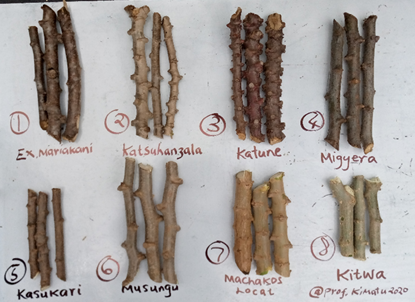
At each site, the experiment was laid out in a Randomized Complete Block Design (RCBD) with four blocks (replicates). Each block contained plots for all eight varieties randomly assigned. Per variety per replicate, a plot of 10 m × 10 m (100 m²) was planted, containing 100 plants (10 rows × 10 plants) at a spacing of 1 m × 1 m. Planting was done on raised ridges about 30 cm high, spaced 1 m apart, as is recommended for cassava in semi-arid soils. Cuttings were planted at a 45° angle with two-thirds of the cutting buried and one-third above ground. This orientation encourages root development. The trials were planted at the onset of the long rains (late March 2022 for Lukenya and Machakos, early April 2022 for Kitui site).
Crop Management
Uniform agronomic practices were applied at all sites to minimize management variability. Basal fertilizer was not broadly applied because cassava can grow in low- fertility soils; however, each site received a moderate starter application in poorer patches (60 kg N/ha as urea), in line with recommendations for cassava on depleted soils. Supplemental irrigation was provided at planting and during the first 3 months (up to ~June) to ensure good establishment since rains were erratic. Thereafter, crops relied on rainfall except at SEKU where a brief irrigation was applied during an extended mid-season dry spell. Weed control was done via hand weeding at 3, 8, and 24 weeks after planting. Earthing up (hilling) was performed at 2 months to cover exposed tubers and improve root development. No pesticides were applied; instead, fields were monitored for pests and disease. Only minimal pest incidence (occasional grasshopper defoliation) was observed and controlled manually. Likewise, no significant cassava mosaic virus symptoms were noted on the improved varieties; a few plants of the local landraces at SCU showed mild foliar mosaic which did not spread. This indicated the planting materials were disease-free and/ or varieties like Migyera have genetic resistance. The crops grew for a full season (12 months) to allow late-maturing varieties (bitter types) to bulk, as sweet types typically mature by 8–10 months. Harvest was done in March–April 2023 at all sites.
Data Collection
Phenotypic Growth Traits A sample of plants in each plot was measured to characterize growth and morphology. At 6 months after planting (mid-season), plant height (from ground to top of canopy) was measured for 10 representative plants per plot using a measuring pole. The number of primary branches per plant was counted (with growth habit classified as either erect (no branching) or branched). We also recorded foliage traits: for each variety, the color of leaves and petioles, and the stem cortex color and internode pattern were noted qualitatively, following descriptors. For example, petiole colors ranged from green or cream to reddish or purple among varieties. The number of leaf leaflets was counted on fully expanded leaves (5th–10th leaf from the apex) for 5 plants per plot. These morphological observations helped distinguish varieties and assess any stress effects (e.g. leaf retention).
Yield Parameters At harvest (12 MAP), all plants in each plot were harvested to determine yield. The number of marketable storage roots per plant was counted for 10 plants per plot (randomly selected). Total root weight from those plants was recorded using a field scale. From these, the average tuber weight and tubers per plant were computed. Yield in tons per hectare (t/ha) was then calculated for each plot by extrapolating the average per-plant yield over the planting density (10,000 plants/ha).
Yield/ha was also verified by weighing total harvests from each plot and converting to t/ha. Any unmarketable roots (diseased or <2 cm diameter) were excluded from yield. Throughout the growing season, notes were taken on any biotic stresses, notably, presence of cassava mosaic disease (CMD) symptoms, cassava green mite damage, or wildlife/herbivore damage, to complement yield data with pest resistance observations.
Hydrogen Cyanide (HCN) Analysis To assess cyanide levels, tissue samples were collected at 6 MAPS (when roots were developing but before full maturity). From each variety plot, we sampled the first fully expanded leaf from the top of a plant plus the next two leaves, and a piece of root (~10 cm³) from an actively bulking tuber. These samples were immediately placed in labelled paper bags, sun-dried slightly in the field, and then oven- dried at 60°C in the lab to a constant weight. Dried samples were milled into powder for HCN testing. We followed the picrate paper method (Field cyanide test) as described by Bradbury (1999) for semi-quantitative analysis, with spectrophotometric confirmation. In brief, ground samples were mixed with phosphate buffer and linamarase enzyme to release cyanide, which was captured on alkaline picrate paper. The color change was compared to standards to estimate total HCN content. Additionally, a subset of samples was analysed using a UV-Visible spectrophotometer (at 485 nm) via the acid hydrolysis/ninhydrin method for precise quantification. Analytical blanks and known cyanide standards were run to calibrate the measurements. HCN concentration was expressed in mg HCN per kg fresh weight of the root or leaves (parts per million). Each variety’s root HCN was the average of three replicate samples.
Statistical Analysis Data from the three sites were initially analyzed separately and then combined for an overall analysis. Analysis of Variance (ANOVA) was performed using SAS (v9.4). For individual sites, one-way ANOVA tested varietal effects on growth and yield metrics. For the combined dataset, two-way ANOVA (General Linear Model) was used with variety and site as factors, to assess consistency of varietal performance and any variety×site interactions. Mean differences were evaluated using Fisher’s Least Significant Difference (LSD) at 5% significance level. Traits recorded as counts (e.g. tubers/ plant) were square-root transformed before ANOVA to meet assumptions but are presented as back-transformed means. The cyanide data were analyzed in a split-plot manner with plant part (leaf vs root) as a subplot factor; a significant variety × plant part interaction on HCN distribution was observed, so root HCN was analyzed separately for varietal differences. Pearson’s correlation analysis was conducted to determine relationships among key variables (leaflet number, height, tuber count, yield, and HCN) Maitha, et al. [6]. Results are reported as mean ± standard error. Significance is reported at p<0.05 unless stated otherwise.
Results
Agronomic Performance Across Varieties and Sites
Plant Growth and Morphological Traits
The cassava varieties showed distinct growth habits and morphology. Petiole and stem colors varied by genotype, matching farmer descriptions: Kasukari had purple petioles, Kitwa cream, Makueni local dark brown, and Mzungu red. Stem cortex color ranged from grey green in Kasukari/Kitwa to brownish in Mzungu/local. All varieties had the typical palmate leaf shape, but leaflet counts differed significantly (p<0.001) among varieties. Kasukari and Mzungu had the most leaflets per leaf (usually 7–9 leaflets), indicating robust foliage, whereas the local landrace had fewer (mostly 5–7). This corresponded with observed canopy density: Kasukari and Mzungu developed a dense leaf canopy, whereas the local variety and one KALRO clone had sparser leaves, partly due to some early leaf drop in the dry season.
Plant Height: Varied markedly by genotype (ANOVA p<0.001). Figure 1 illustrates the average plant height at 6 MAPS for each variety across sites. The best performers, Kasukari and Mzungu, were among the tallest plants, reaching 2.3–2.7 m in height by mid-season. Migyera was similarly tall (~2.5 m). In contrast, the tissue-cultured KALRO clone (KME1-TC) was significantly shorter, averaging only ~1.6 m at 6 MAP. Kitwa and KME2 were intermediate (~2.0–2.2 m). These differences persisted until harvest, as taller varieties maintained a height advantage. The branching pattern also differed: Kasukari typically grew erect with minimal branching until late in the season (often a single stem with a branchy crown at top), while Mzungu and Kitwa produced a few basal branches earlier (2–3 primary branches per plant on average). The local check had an intermediate habit (some plants branched; others did not). Despite these differences, all varieties established well. By 3 MAPS, survival was over 90% in all plots, indicating good adaptation and the effectiveness of supplementary irrigation in establishment.
Site Conditions: Influenced overall growth vigor, but the ranking of varieties was similar. The SCU site (Machakos) had slightly taller and more branched plants on average, likely due to better soil fertility. For instance, Kasukari reached ~3 m at SCU vs. ~2.5 m at the drier SEKU site. Meanwhile, the SEKU site (Kitui) experienced more moisture stress; all varieties were somewhat shorter and had smaller canopies there. Nonetheless, the top varieties (Kasukari, Mzungu, Migyera) maintained their superiority in height and leafiness at each location. No significant variety × site interaction was found for plant height (p>0.1), indicating that varietal differences in height were consistent across the different environments.
Yield and Tuber Characteristics: There were highly significant differences in cassava yield among the eight varieties (p<0.01). Table 1 summarizes the yield performance at each site and the overall means. Across all sites, Kasukari, Mzungu, and Migyera achieved the highest fresh root yields, each averaging 15–18 tons per hectare (t/ha). In individual site analyses, these three were top ranked with yields often double those of the lowest variety. For example, at Lukenya University, Mzungu produced 18.2 t/ha and Kasukari 17.5 t/ ha, significantly outperforming the local check (9.8 t/ha). Migyera, tested at SEKU and SCU, yielded similarly high (e.g. 16.0 t/ha at SEKU, the highest at that site). In contrast, the Makueni local landrace and one KALRO improved line recorded the lowest yields, between 8–11 t/ha. The tissue- culture propagated KME1 clone yielded poorly especially at Lukenya (only ~8 t/ha), corresponding to its stunted growth. Kitwa and the second KALRO line were intermediate, typically 12–14 t/ha. An LSD test (α=0.05) grouped Kasukari, Mzungu, and Migyera together as “a” (highest yield), significantly above the local check and TC clone which were group “c” (lowest), with Kitwa and the other improved line as “b” group.
| Variety | Lukenya (Makueni) | SCU (Machakos) | SEKU (Kitui) | Mean |
|---|---|---|---|---|
| Kasukari | 17.5a | 16.3a | 15.2a | 16.3a |
| Mzungu | 18.2a | 15.1a | 13.5ab | 15.6a |
| Migyera | – (not tested) | 15.8a | 16.0a | 15.9a |
| Kitwa | 13.0b | 13.5b | 11.2b | 12.6b |
| KALRO KME2 | 12.4b | 14.0ab | 12.0b | 12.8b |
| Local (Makueni) | 10.5c | 11.7c | 9.8c | 10.7c |
| KALRO KME1 (TC) | 8.3c | 12.2bc | 10.1c | 10.2c |
| Site Mean | 13.6 | 14.1 | 12.5 | – |
Table 1: Fresh root yield of eight cassava varieties at three sites (tons per hectare). Different letters indicate significant di
Table 1: Fresh root yield of eight cassava varieties at three sites (tons per hectare). Different letters indicate significant differences among varieties per site (LSD, p<0.05). Source: Field trial data, 2022–2023. (Note: Migyera was not planted at Lukenya site; “–” indicates no data.) Overall, the Machakos site had the highest mean yield (14.1 t/ha), followed by Makueni (13.6) and Kitui (12.5). Yields at SCU were slightly higher for most varieties, likely due to better soil and possibly lower heat stress at the higher altitude. Kitui’s lower rainfall limited yields, though Migyera notably still achieved 16 t/ha there, reflecting its drought tolerance. The combined ANOVA showed a significant effect of site (p<0.05) and variety (p<0.01) on yield, but the variety × site interaction was not significant (p=0.34), indicating the yield ranking of varieties was relatively stable across the different environments.
In terms of yield components, Kasukari, Mzungu, and Migyera’s superior yields were mainly attributable to more and larger storage roots per plant. These varieties averaged 6–8 marketable tubers per plant, each weighing ~1.5–2.0 kg. In contrast, the local check had fewer tubers (3–5 per plant) and some were small (<1 kg). Kitwa and the KALRO lines had intermediate tuber counts (5–6) and weights. The differences in tuber number were statistically significant (p<0.001). For instance, Kasukari produced the most tubers per plant (mean 7.8) while the local produced 4.1. Tuber size differences were evident anecdotally (with Kasukari often called “Kasukari” because of its plump, sugar-sweet roots), but within the marketable category, average root weight did not differ as sharply as counts. All varieties produced elongate fusiform roots typical of cassava. Kasukari’s roots had pale cream pulp; Mzungu’s were brown-skinned; Kitwa and local had white pulp, and Migyera’s roots were yellow- cream inside (suggesting moderate beta-carotene content, though not measured).
No serious pest or disease damage was observed that could confound yield. Only a few plants (mostly of susceptible local variety) at SCU showed mild cassava mosaic virus symptoms; these plants had slightly lower yield, but because incidence was <5%, the overall yield trends by variety still reflected genetic potential rather than disease pressure. The improved variety Migyera (bred for virus resistance) showed no CMD symptoms at all, confirming its known resistance. There were also no significant issues with wild animals or theft, as the plots were fenced and guarded, ensuring a fair assessment of varietal yield.
Hydrogen Cyanide (HCN) Levels in Roots: The cassava varieties differed significantly in cyanogenic potential (HCN content) of their tissues (p<0.001 for variety effect) . In all cases, cassava leaves had higher HCN than roots, but we focus on root HCN since that affects edible safety. The HCN concentration in fresh cassava roots showed by variety. Kasukari had the lowest root cyanide level, averaging 46.9 mg HCN per kg fresh root, which was significantly lower than most other varieties. Mzungu was the second lowest at ~50.5 mg/kg, not statistically different from Kasukari (LSD
8.4 mg/kg). In contrast, the bitter landraces Kitwa and the Makueni local had the highest cyanide concentrations at 76.4 and 69.1 mg/kg respectively. These were about 1.5 times the levels in Kasukari/Mzungu and were statistically grouped as the highest HCN (see, where Kitwa and Local are labelled “a” vs “b” for Kasukari/Mzungu). The improved variety Migyera showed moderate HCN content (~60 mg/kg) based on samples from two sites. The KALRO clones had intermediate cyanide as well: for instance, the TC clone in Makueni had ~55–60 mg/kg. Across all varieties and sites, root HCN ranged from a minimum of ~45 mg/kg to a maximum of ~80 mg/kg in this trial. It is noteworthy that all varieties exceeded the recommended safe limit of HCN for cassava flour (10 ppm, equivalent to 10 mg/kg) [7]. This means none of the cassava roots are safe to eat raw and must be processed (soaked, dried, or cooked) to reduce cyanide to safe levels. The varieties traditionally considered “sweet” (e.g. Kasukari) indeed had less cyanide than known “bitter” ones (Kitwa, etc.), but even the sweet ones had total HCN well above 10 mg/kg fresh weight. However, local preparation methods (peeling, drying, prolonged boiling) can reduce cyanide by 80–90%, making these roots safe for consumption after processing [8].
The distribution of HCN between leaves and roots differed by variety. Leaves generally had higher HCN than roots in most varieties, but interestingly, Kasukari showed a much higher leaf-to-root HCN ratio (its leaves had ~79 mg/ kg vs 47 mg/kg in roots), suggesting Kasukari retains more cyanide in foliage (perhaps as defense) and less in the edible root – a desirable trait. Mzungu showed a similar but smaller gap (69 in leaves vs 50 in roots) . In Kitwa and the local landrace, leaf and root HCN were both high (~80 in leaves and ~70–76 in roots), indicating these varieties are uniformly cyanogenic. The variety × plant part interaction was significant (p<0.001), confirming that the reduction of cyanide from leaves to roots was much greater in Kasukari and Mzungu than in Kitwa/local. This trait of partitioning cyanide more to leaves (and peels) is characteristic of so- called “sweet” cassavafile-fktguv8zzpama6twywmb8w. It means that in Kasukari and Mzungu, peeling and discarding leaves greatly lowers the cyanide hazard, whereas in Kitwa even the peeled roots contain substantial HCN. Migyera and the KALRO lines were also observed to have most cyanide in the peels (field taste tests found Migyera roots to be quite bitter in peels but less so in pulp, like a sweet cultivar). These findings align with laboratory analyses in similar environments: for example, Maitha, et al. also reported Kasukari’s root HCN as ~47 mg/kg and Kitwa’s ~76 mg/kg, consistent with our results.
In summary, Kasukari, Mzungu, and Migyera can be classified as lower-cyanide (relatively sweet) varieties, whereas Kitwa, the local landrace, and to some extent the KALRO clones are higher-cyanide (bitter) varieties. All require processing, but the risk of acute toxicity is greater with the latter group if not properly processed. This has important implications for adoption – farmers and consumers may favor Kasukari and Mzungu not only for yield but also for taste and safety, as evidenced by Kasukari’s name (meaning “sugary” in local language, reflecting low bitterness).
Cross-Site Comparison: While the overall performance trends were similar at the three sites, some environmental influences were evident. Yields were on average ~10–15% lower at the driest site (SEKU, Kitui) compared to the wetter site (SCU, Machakos) Nonetheless, the top three varieties (Kasukari, Mzungu, Migyera) maintained high yields even in Kitui, indicating good drought tolerance. Migyera, for instance, showed remarkable stability – yielding ~16 t/ha in Kitui, virtually the same as in Machakos (where rainfall was higher). In contrast, the local variety’s yield dropped more sharply under drought (from 11.7 t/ha in Machakos to 9.8 t/ha in Kitui), suggesting it is less drought resilient. Kasukari and Mzungu, being landraces from the region, handled the stress well and even in Kitui yielded >13 t/ha, still outperforming others. Soil differences may have also played a role: the Machakos site’s slightly higher fertility likely boosted yields of moderate performers like Kitwa and KALRO clones (they yielded ~1–2 t/ha more at SCU than at the other sites). However, Kasukari and Migyera were less affected by soil differences, possibly due to better nutrient foraging or efficient use of available moisture. No significant site-by-variety interaction for yield was detected statistically, which means the ranking of varieties did not change drastically across sites – an encouraging result for recommending the best varieties widely in the region.
In terms of HCN, we observed anecdotally that plants grown under greater water stress (Kitui) had slightly elevated cyanide levels compared to more favourable conditions (this aligns with reports that drought can increase cassava’s cyanogenic glucoside production). For example, the local variety roots from Kitui were extremely bitter and likely had HCN at the higher end of the range (~75–80 mg/kg), whereas in Machakos the same variety’s roots, while still bitter, seemed a bit less so (~65–70 mg/kg). Kasukari’s cyanide stayed relatively low across sites, which is advantageous. Thus, selecting inherently low-CN genotypes like Kasukari is beneficial especially in stress-prone ASAL environments where environmental triggers might otherwise raise cyanide content.
No major differences in pest or disease incidence occurred across sites. All sites remained largely free of cassava mosaic disease, likely due to the use of resistant varieties and disease-free cuttings. At SCU (Machakos), a very slight presence of foliar mosaic on a few local plants under a shaded edge was recorded, whereas none was seen at Kitui or Makueni. The lack of widespread disease pressure meant that improved varieties like Migyera did not have a visible advantage in that aspect during this trial – but in areas with higher virus pressure, Migyera’s resistance would be critical.
Correlation Analysis: Pearson correlation coefficients were calculated pooling data across varieties and sites. There was a strong positive correlation between number of leaflets and plant height (r = 0.590, p<0.05) and likewise between leaflet number and tubers per plant (r = 0.562, p<0.05) . This indicates that vigorous vegetative growth (more leaflets, taller plants) translated into higher yield (more tubers), which is logical as a bigger canopy can produce and translocate more photosynthate to roots. Plant height was also positively correlated with tuber count (r ≈ 0.67, p<0.05, data not shown), reinforcing that taller, well-branched plants yielded more. These relationships were exemplified by varieties like Mzungu and Kasukari, which had both lush canopies and high tuber counts. On the other hand, the HCN concentration in roots showed a slight negative correlation with tuber yield (r ≈ –0.045, n.s.), hence not statistically significant, but a trend whereby high-cyanide varieties tended to yield less. For example, Kitwa and the local landrace (high HCN) were among the lower yielders, whereas Kasukari and Mzungu (low HCN) were top yielders. This inverse trend (though weak here) aligns with the idea that “sweet” cassava often results from breeding for human consumption traits which may coincide with better agronomics, whereas some bitter varieties prioritize defense (cyanide) at the expense of yield. The correlation between HCN and leaf traits was also examined: there was a positive correlation between leafiness and HCN in leaves (since vigorous plants have more cyanogenic glucosides overall), but importantly, high leaflet count correlated with lower proportion of cyanide in roots (since Kasukari had many leaves but low root HCN). These nuances suggest that selecting for strong vegetative growth and yield does not necessarily increase cyanide risk in the edible roots – as seen in Kasukari. In summary, the correlation analysis supports the agronomic findings that yield-related traits cluster together, and it hints that low cyanide and high yield can co-exist in certain genotypes.
Discussion
This varietal screening in three semi-arid locations demonstrated that significant improvements in cassava productivity and food safety can be achieved in ASAL areas by choosing the right varieties. The stand-out performers, namely, Kasukari, Mzungu, and Migyera combined desirable agronomic traits (vigorous growth, high yield) with comparatively lower cyanide content, making them well- suited for resource-limited farmers and consumers in these regions.
The strong performance of Kasukari and Mzungu, both farmer-selected landraces, underscores the value of traditional germplasm adapted to local conditions. These varieties likely evolved under the harsh climate of Eastern Kenya, resulting in traits like drought resilience (e.g. maintaining yield under Kitui’s dryness) and partitioning of cyanide to non-edible parts (petioles, leaves) as a natural safety mechanism [6]. Kasukari’s name, meaning “sugar,” reflects farmers’ recognition of its low bitterness and palatability. Our data validate this folk knowledge – Kasukari had the lowest root HCN (~47 mg/kg) among tested varieties and was one of the highest yielders (~16 t/ha). These attributes make Kasukari a prime candidate for scaling up in ASAL regions. Its one drawback might be moderate susceptibility to diseases (it has no known improved resistance); although we did not face a severe disease outbreak, continued monitoring is needed if Kasukari is widely planted. Nonetheless, in low- disease environments, its yield and quality advantages shine.
Mzungu similarly proved to be a high-yield, relatively sweet variety. Farmers often name cassava “Mzungu” (Swahili for “European”) to denote a variety introduced or favoured by colonial-era farmers – possibly hinting at its long history and acceptance. Mzungu’s yields were on par with Kasukari’s, and it had slightly higher HCN (50 mg/kg) but still much lower than bitter varieties. Its red petiole and vigorous canopy are distinguishing features that farmers can observe for selection. Given its performance, Mzungu can be promoted alongside Kasukari to diversify the varietal options and hedge against risks (one variety might handle a specific micro-climate or soil type slightly better than the other).
The success of Migyera in this trial is encouraging as it validates research-led improvements. Migyera was originally developed in Uganda in the 1990s to combat mosaic disease and boost yields. Its high, stable yield across sites (15–16 t/ha even under stress) and complete absence of CMD symptoms demonstrate its value as a resilient cultivar. Migyera did have somewhat higher cyanide (estimated ~60 mg/kg) than Kasukari, classifying it as a bitter variety by taste. This is not unusual – many improved African cassavas (e.g. TMS varieties) are high-yielding but have higher cyanogenic content, necessitating processing. Farmers might initially be wary of Migyera’s bitterness, but with proper training on processing (soaking, fermenting into flour, etc.), this can be managed. Additionally, Migyera’s virus resistance and yield may outweigh the cyanide concern if introduced properly. Our findings suggest Migyera can serve well in areas with known CMD presence or when farmers need a hardy, high- output crop for industrial use (where cyanide can be leached out during processing into starch, ethanol, or feed).
On the other hand, the local “check” variety (an old unnamed landrace widely grown in Makueni) and Kitwa (another local cultivar) were outperformed and found to have very high cyanide levels. These varieties are likely kept by farmers for their reliability in poor conditions, but our data show that better alternatives exist. For instance, the local check yielded barely ~10 t/ha and had ~70 mg/ kg HCN – offering neither yield advantage nor safety. Kitwa, while having slightly better yield (~12 t/ha), was the most cyanogenic (~76 mg/kg). Interestingly, Kitwa is reportedly a preferred cultivar in some communities possibly due to specific culinary qualities (some communities prefer the taste/texture of bitter cassava for certain dishes, or it stores longer in ground). However, from an agronomic and health perspective, it would be advisable to replace Kitwa and similar bitter landraces with improved or sweet varieties. The fact that farmers’ top picks (Kasukari, Mzungu) were also the best in our trials indicates farmers are already moving in that direction, favouring less toxic and higher yielding types when available.
The two KALRO-bred clones (KME1 and KME2) had mixed results. One (KME2) performed moderately well (12– 14 t/ha) and had intermediate cyanide (~55–60 mg/kg), making it a possible second-tier choice. The other (KME1, tissue-cultured) was disappointingly low in vigor at Lukenya – its poor height growth and yield could be due to a variety of reasons: perhaps it was a genotype that requires specific management, or the tissue culture plantlets experienced transplant shock or virus indexing issues. It’s also possible that the KME1 clone is a late-bulking type that needs a longer season or different fertilizer regime. The high cyanide in these improved lines aligns with studies at Katumani which found early bulking improved clones can have increased cyanogenic potential at higher elevations. Breeders often face a trade-off, where selecting for stress tolerance and yield may inadvertently select for higher cyanide (a defensive trait). This highlights the need for breeding programs to actively include cyanide screening as part of selection criteria, to develop varieties that are both high-yielding and low-HCN. Fortunately, our results with Kasukari/Mzungu show such a combination is possible, likely through tapping genetic resources of sweet cassava.
Across the sites, we observed that environmental stresses did not dramatically change variety rankings, which is important for recommendation stability. The lack of a strong G × E interaction in yield implies that these top varieties can be recommended broadly in similar ASAL contexts without fear that one will fail in a slightly different locale. Nonetheless, the slight yield reduction at the driest site for all varieties suggests that timely interventions (e.g. water harvesting, supplementary irrigation at establishment) and soil management (mulching, adding manure) could further enhance cassava yields in the harshest zones. Cassava’s ability to produce some yield even under drought (e.g. local check still giving ~10 t/ha in Kitui) is a testament to its resilience, but harnessing its full potential (15–18 t/ha or more) in ASAL will require improved varieties (as shown) and improved agronomic practices.
Another noteworthy aspect is the food security and nutritional implication of these results. With Kasukari and Mzungu yielding 15+ t/ha, a farmer can harvest significantly more calories per hectare compared to maize under the same conditionsfile-gnyqlfb2hqrmsqjntwgs8m. Cassava produces ~250 kcal per 100g of dried roots; at 15 t/ha fresh (assuming ~30% dry matter), that’s roughly 4.5 t dry matter, equating to ~11,250,000 kcal/ha – several times what a failed or low-yield maize crop would provide. Thus, adoption of these varieties in ASAL could greatly cushion farm families against cereal crop failures due to drought. Moreover, cassava roots from these varieties can be processed into shelf-stable products like flour, dried chips, or high-quality cassava flour (HQCF) for baking, which can enhance food availability in the off-season. One caveat is the cyanide – if not processed properly, increased cassava consumption could pose health risks (e.g. konzo or chronic cyanide poisoning). The uniformly high HCN levels we found reaffirm the necessity of sensitizing farmers and processors on proper cassava processing techniques [6]. The good news is traditional methods (soaking, fermenting, sun-drying) can reduce HCN to safe levels, and modern techniques (grating and pressing, enzymatic treatments) are also available. Education and training should accompany the distribution of planting material for these varieties, as recommended in our extension plan.
Our findings also have implications for cassava value addition and commercial use in Kenya. High yielding varieties like Migyera, Kasukari, and Mzungu can supply raw material for various industries if cultivated at scale. For instance, the flour and starch industry can use bitter varieties too, since cyanide is removed in processing. Migyera, with its high starch content, could be directed to industrial starch or bioethanol production, supporting initiatives to use cassava for ethanol cooking fuel and reducing reliance on imports. The sweet varieties can be promoted for direct human consumption products, e.g. composite flours for ugali (porridge), or in baking. There is already interest in cassava-based breads, biscuits and other baked goods to substitute wheat. Our trial’s top varieties would be prime candidates for HQCF production due to their yield and (in Kasukari’s case) better taste profile. Additionally, cassava chips for animal feed could be another outlet; the expanding livestock feed sector in Kenya is starting to incorporate cassava as a carbohydrate source. With yields up to ~18 t/ha, farmers in ASAL could generate surplus cassava beyond home consumption to sell to such markets, improving incomes. This diversification into value chains aligns with the government’s Big 4 agenda on food security and manufacturingfile-his94jsgkuxgzexsopc9ei file-fktguv8zzpama6twywmb8w.
In comparison to similar studies, our results agree with Maitha, et al. [6] who reported significant varietal differences in cassava growth and cyanide levels in Makueni County. They likewise found that local sweet varieties (Kasukari, Mzungu) had lower cyanide and ample tuber production, whereas bitter types had high HCN and fewer tubers. These parallels strengthen the evidence base for recommending sweet cassava in semi-arid Kenya. Other research [9] has noted that cyanogenic potential of cassava can increase when moving from lowland to highland zones. Our multi-site data did not show a major location-driven spike in cyanide except minor differences, suggesting that within the altitude range of 1000–1600 m our varieties maintained their relative cyanide expression. Nonetheless, breeding programs should continue to pursue low-HCN traits [10, 11, 12].
One limitation of our study is that we focused on fresh root yield and cyanide but did not analyze other quality parameters such as dry matter content, starch yield, or nutrient content (like provitamin A). These aspects can be important for specific end-uses and nutrition. For instance, Migyera’s slightly yellow flesh hints at higher beta-carotene, which could be a nutritional bonus. Future analyses of these varieties could assess dry matter % (which affects processing yield) and chip quality. Additionally, while we observed disease resistance in Migyera (for CMD), we did not specifically challenge these varieties with diseases or pests. A follow-up trial or on-farm observations in areas with prevalent cassava diseases would be useful to confirm resilience (especially of the landraces which may be susceptible to mosaic or brown streak) [13, 14].
Overall, the trial demonstrates that by combining traditional knowledge (landrace selection) and modern breeding (improved lines), cassava productivity in marginal environments can be significantly improved. The synergy of Kasukari, Mzungu, and Migyera – two local and one improved – provides a robust package for farmers: they can choose based on preference and all three will give good yields. This also guards against risk – e.g. if a new disease were to hit, Migyera’s resistance might save the day, or if processing facilities are limited, Kasukari’s low cyanide makes it safer for home use. The findings contribute to ongoing efforts to mainstream cassava in Kenya’s drylands as a food security crop and raw material for agro-industries. With climate change making rains more erratic, crops like cassava that can tolerate drought will become increasingly important. Our data-driven recommendations can help guide agricultural extension and policy to invest in cassava promotion in ASAL areas, analogous to how West African countries boosted cassava production to ensure food security during drought periods.
Conclusion
Cassava cultivation in Kenya’s ASAL regions stands to benefit greatly from the adoption of improved and well- adapted varieties. This study identified Kasukari, Mzungu, and Migyera as the top-performing cassava varieties across three semi-arid test sites, excelling in growth, yield, and agronomic desirability. These varieties produced fresh root yields on the order of 15–18 t/ha – significantly higher than the local checks – and maintained performance under varying rainfall and soil conditions. They also exhibited favourable plant traits (tall stature, extensive leafing) which correlated with their superior productivity. Crucially, Kasukari and Mzungu had lower inherent cyanide levels in their roots relative to other cultivars, making them safer and more palatable for direct human consumption after basic processing. Migyera, while higher in cyanide, brings invaluable disease resistance and yield stability, embodying the gains of modern breeding.
All tested cassava varieties contained HCN above safe limits in raw form, reiterating that proper processing is non-negotiable before consumption. Traditional “bitter” landraces like Kitwa and the generic local variety, which had the highest HCN and lowest yields, are not ideal for improving food security – they pose health risks and underperform in yield. In contrast, promoting the identified best varieties can simultaneously increase food availability and reduce dietary cyanide exposure in farming communities.
In conclusion, the results support a shift in ASAL cassava production towards improved sweet cultivars and elite landraces that marry resilience with productivity. By scaling up Kasukari, Mzungu, and Migyera, Kenya can enhance cassava’s contribution to food security in arid regions, reduce reliance on less drought-tolerant staples, and open up new avenues for cassava commercialization. The study also highlights the importance of accompanying varietal dissemination with farmer training on processing and utilization to fully realize cassava’s benefits. These findings will be communicated to local agricultural offices and stakeholders to inform variety release decisions and extension programs [10].
Recommendations
Based on the study findings, we make the following recommendations to stakeholders (farmers, extension agents, breeders, and policy makers) for advancing cassava production in ASAL areas and leveraging it for food security and value addition:
Distribute and promote top-performing varieties: Efforts should be made to multiply and distribute Kasukari, Mzungu, and Migyera planting materials to farmers in semi-arid regions. These varieties should be prioritized in seed bulking programs (e.g., through KALRO or county nurseries) and officially released/recommended for ASAL counties. Their demonstrated yield advantage can substantially improve household food supply.
Farmer training in cassava processing and utilization: Since all varieties have appreciable cyanide content, extensive farmer education is needed on safe processing techniques. We recommend conducting village-level workshops on methods like soaking, fermenting, drying, and proper cooking of cassava to reduce HCN. Introducing simple tools like graters, presses, or solar dryers would facilitate processing. This will ensure that as cassava production increases, consumption remains safe and risk of cyanide poisoning is minimized.
Integrated Crop Management Practices: To exploit the yield potential of the improved varieties, extension services should teach best agronomic practices for cassava in ASAL. This includes timely planting with the rains, ridge planting at 1 m × 1 m spacing (as used in this trial), early weeding (at 3–4 and 8 weeks), and possibly intercropping with legumes for weed suppression and soil health. Moisture conservation techniques (mulching, zai pits, etc.) and supplemental irrigation during establishment are recommended in drier zones to secure the high yields observed in trials.
Post-Harvest Value Addition Initiatives: To transform increased cassava production into economic gains, promote value addition enterprises. Local cooperatives or youth groups can be supported to process cassava from these varieties into flour, starch, animal feed, and snacks. For example, HQCF (high-quality cassava flour) can be used in bakery products like bread, cakes, and biscuitsfile- fktguv8zzpama6twywmb8w, which offers a market for farmers and reduces wheat import dependence. Training and small grants could help establish rural cassava milling centers. Additionally, given Migyera’s high starch, linkages with starch and ethanol producers should be explored (e.g., for biofuel or brewing industries).
Further Research and Breeding: Plant breeders should use the information from this study to guide future cassava improvement. Specifically, incorporating the low-HCN trait of Kasukari into new breeding lines would be valuable, as would combining Migyera’s disease resistance with Kasukari’s eating quality. On-farm trials should be conducted to confirm performance under farmer management and to gather feedback on traits like taste and cooking quality. We also recommend breeding for even shorter-season varieties that can mature in 6–8 months in ASAL conditions – this could allow two cropping cycles if irrigation is available, or avoidance of late-season drought. Continual participatory selection with farmers will ensure new varieties meet local preferences.
Strengthen Seed Systems and Clean Planting Material Supply: To sustain cassava production growth, a system for rapid multiplication and dissemination of disease-free cuttings is crucial. We recommend investment in cassava seed systems, such as community nurseries, decentralized vine multipliers, and possibly tissue culture labs for large- scale propagation of clean stock (similar to our use of a TC clone, albeit with mixed results that should be refined). Certification and distribution networks should be established to get quality planting material of the preferred varieties into the hands of smallholders. This will also help prevent spread of diseases through infected cuttings.
Policy Support for Cassava in ASAL Development: County governments in Eastern Kenya should integrate cassava promotion into their agricultural development plans. This can include input support (subsidized cuttings of Kasukari, Mzungu, Migyera), inclusion of cassava in food security programs, and funding for cassava processing facilities. Given the national importance of diversifying staples, the Ministry of Agriculture should consider cassava a priority crop in ASAL, like how it is regarded in Western Kenya. Policies that encourage cassava flour blending in breads (as Nigeria has done) or use of cassava in school feeding programs could stimulate demand and production.
Implementing these recommendations will help realize the potential of cassava as a reliable, climate-smart crop for Kenya’s arid and semi-arid lands. By coupling the right varieties with good agronomy and market linkages, cassava can substantially contribute to improved food security, nutrition, and incomes in these traditionally marginalized regions.
References
-
Pushpalatha R, Gangadharan B (2020) Is cassava (Manihot esculenta Crantz) a climate “smart” crop? A review in the context of bridging future food demand gap. Trop Plant Biol 13: 201-211.
-
FAOSTAT (2022) Crops and livestock products in Production and Trade sections. Food and Agriculture Organization of the United Nations (FAO), Rome, Italy.
-
El-Sharkawy MA (2004) Cassava biology and physiology. Plant Molecular Biology 56(4): 481-501.
-
Howeler RH (2017) Sustainable cassava production in Asia. International Center for Tropical Agriculture (CIAT).
-
Nduwumuremyi A, Melis R, Sibiya J (2016) Overview of cassava in Africa: Importance, challenges and opportunities. African Journal of Root and Tuber Crops 13(1): 1-8.
-
Maitha PM, Kamau S, Kimatu JN, Hunja CW (2022) An Analysis of the Hydrogen Cyanide Concentration in Four Cassava Varieties Grown in Lukenya University Farm, Makueni County, Kenya. Journal of African Interdisciplinary Studies 6(11): 225-237.
-
FAO/WHO (1991) Joint FAO/WHO Food Standards Programme. Co34. Dex Alimentarius Commission. Food and Agriculture Organization/World Health Organization. FAO, Rome, Italy, pp: 12(Suppl 4).
-
FSANZ (2009) Standard for cyanogenic glycosides in cassava products. Food Standards Australia New Zealand.
-
Githunguri CM, Migwa YN, Ragwa SM (2007) Cyanogenic potentials of early bulking cassava planted at Katumani, a semi-arid area of Eastern Kenya. African Journal.
-
Capital FM (2023) Kenya’s cassava demand exceeds production by 200pc. Capital Business.
-
(WHO)/ FAO) (2020) Joint FAO/WHO Food Standards Programme: Discussion paper on maximum levels for hydrocyanic acid in cassava and cassava-based products.
-
Ramanujam T, Biradar RS (1987) Correlation of cassava leaf petiole length with leaf area and root yield. Journal of Root Crops 13(1): 25-28.
-
Githunguri CM, Migwa YN, Ragwa SM, Karoki MM (2003) Cassava and sweet potato agronomy, physiology, breeding, plant protection and product development in Kenya. Proceedings of the 7th Triennial Symposium of the International Society for Tropical Root Crops – Africa Branch (ISTRC-AB), Nairobi, Kenya.
-
Phanthanong P, Promnikorn K, Kongsil P, Kraichak E, Jenweerawat S (2025) Variety-specific responses to climatic and edaphic factors in cassava productivity. Front Agron 7: 1476033.
- The Role of Podocyte Apoptosis and the Involvement of SIRT1 in Diabetic Nephropathy
- Dealcoholization of Beer by Osmotic Distillation for the Beverage Industry
- Biopolymer-Based Edible Packaging- Biomaterials, Methods, and Applications in Food Industry: An Updated Review
- Influence of Bioprocessing Methods on 'China Rice' (Gawal R1), and Soyabean Supplementation on the Quality of Complementary Food
- Food Waste Treatment, Recycling, Management and Production of Value-Products-An Update on Methodologies and Current Trends
- Frankincense (Boswellia sacra) of Oman: Chemical Composition, Uses, and Sustainable Management for Food, Pharmaceutical, and Industrial Applications