
Assessment of Cucumber and Paper Contamination by Pesticides Residues in Khartoum State Using Quechers Method and Gas Liquid Chromatography-Mass Spectrometry
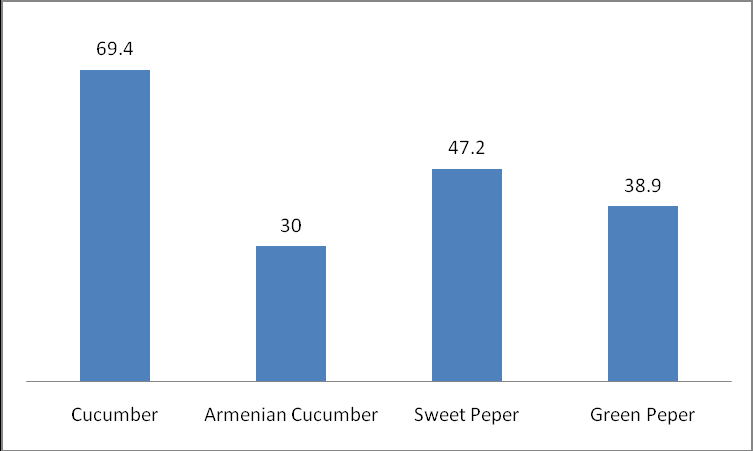
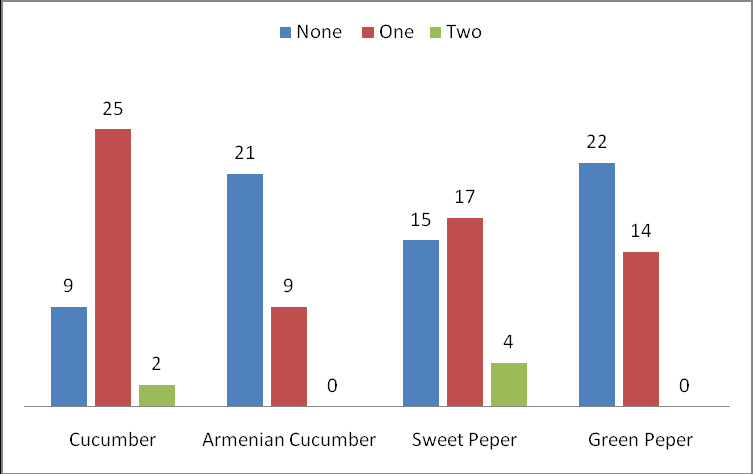
In this paper, we present the investigation of 30 pesticides in total of 138 samples of different fresh cucumber and paper from central markets in Khartoum state using the quick easy cheap effective rugged and safe (QuEChERS) multi-residue extraction, followed by gas chromatography-mass spectrometry (GC-MS). Pesticide residues were not detected in 68 samples (49.3%), while 70 samples (50.7%) contained detectable amount of pesticide residues. The percentages of contaminated vegetable samples are 69.4%, 47.2%, 38.9% and 30% for cucumber, sweet paper, green paper and armenian cucumber respectively. Multiple pesticides residues were detected on 6 samples with percentage of (4.3%) from total analyzed samples. Multiple residues with two pesticides were present in 2 and 4 samples of cucumber and sweet paper. Seven pesticides diazinon, cypermethrin, lamdacyhalothrin, dimethoate, pendimethalin, malathion and tetramethrin were detected in the analyzed vegetable samples with concentration range between 0.013-0.652 mg/kg and mean range between 0.0222-0.1927mg/kg of contaminated samples. It is necessary continuous monitoring of pesticide use on vegetables. Summer season was the highly contaminated with pesticides.
Salah Eldeen A Ali1,2*, Mohamed E Abdel Aziz3 and Salah E Mohamed1
Keywords: Pesticide Residues; Cucumber; Pepper; Quechers; GC-MS; Khartoum; Sudan
Introduction
Large groups of organic compounds that present extremely diverse of physico-chemical properties and widely had been used to control undesirable moulds, insects or weeds or prevention of diseases in various crops, such as fruits, vegetables and cereals to ensure their safety for consumers. A pesticide defines as “any substance or mixture of substances intended for preventing, destroying, attracting, repelling, or controlling any pest including unwanted species of plants or animals during the production, storage, transport, distribution, and processing of food, agricultural commodities, or animal feeds or which may be administered to animals to control of ectoparasites [1, 2].
Pesticides have been used in agriculture to increase productivity and rising food production, most of pesticides are applied directly to the soil or sprayed over crop fields and hence are release directly to the environment. However, the continued use of pesticides specially insecticides increases the possibility of residues to be found in some vegetables, threatening the alimentary security. Pesticide residue refers to the pesticides that may remain on or in food after they are applied to food crops, pesticide residues in agriculture have been a crucial worldwide problem that directly threatened the environment and people’s health for that numerous legislations such as codex directives and European Commission have established maximum residue limits (MRLs) for pesticides in foodstuffs [3, 4, 5].
Pesticide residues in different samples have been a major subject because of their toxic potential risk for human health, persistence and tendency to bioaccumulate. Determination of pesticides residues at low levels in vegetables samples using gas chromatography (GC) using selective detectors: flame photometric, nitrogen phosphorus, and electron capture detectors (FPD, NPD, and ECD). For confirmation in matrixes GC coupled with mass spectrometry (MS) was required [6, 7]. Many investigations studies were reported that different type of pesticides left residual amounts in fruit and vegetables with residues levels in rang of mg/kg, also many methods and studies have reported the use of GC/MS and LC/MS with either full scan or selected ion monitoring (SIM) to control pesticide residues in matrixes such as fruit, vegetables, milk, and soils [8, 9, 10, 11, 12].
During the last years, the Quick, Easy, Effective, Cheap, Rugged, and Safe (QuEChERS) approach, has become very popular for the determination of pesticides on diverse food matrices include fruits and vegetables, this method has been readily accepted by many pesticide residue analysts because of its low organic solvent consumption, low cost per sample, fast, the accurate procedures non time consuming, and have high analyte recoveries [13, 14].
Pepper (Capsicum annuum L.) is the second most consumed vegetable worldwide and is characterized by its high levels of vitamin C (ascorbic acid), pro-vitamin A (carotene) and calcium, it is also rich in carotenoids, compound with antioxidant and anti-carcinogenic capacity. Furthermore, either immature or mature fruits contain a high concentration of antioxidant phenolic compounds. Cucumber plant (Cucumis sativus) is one of the most important vegetable crops, this vegetable infested by several pests causing serious quantitative and qualitative damages [15, 16].
Materials and Methods
Sample Collection and Study Area
A total of 138 vegetables samples including cucumber, armenian cucumber, sweet paper and green paper samples were collected from central markets of Khartoum state during summer, winter and autumn seasons in 2017.The sampling was performed in accordance with the general principles and methods of the European Commission (EC) directive 2002/63/EC [17].
Chemicals, Reagents and Pesticide Standard Solution
Different pesticide reference standards were purchased from Sigma Aldrich GmbH (Augsburg, Germany), Supelco and Bayer Crop Science with certified purity ranging from 95% to 99%. QuEChERS Finisterre micro centrifuge tubes were obtained from Teknokroma (Barcelona, Spain). All the organic solvents used were high performance liquid chromatography (HPLC) grade. Pesticide standard stock solutions (1000 mg/L), mixed pesticide standard solution of 50 mg/L, intermediate mixed pesticide standard solution of 10 mg/L and matrix-matched calibration standards in range of 0.005 to 0.50 mg/kg were prepared. All of the standards were kept in a freezer at −20 °C until use.
Sample Extraction and Cleanup
To extract the samples acetonitrile, anhydrous MgSO4, sodium chloride, trisodium citrated dehydrate and disodium hydrogen citrated sesquihydrate were used, then cleanup for extract by micro centrifuge tube containing 150mg anhydrous MgSO4, 25mg PSA and 2.5mg GCB for armenian cucumber or containing 150mg anhydrous MgSO4, 25mg PSA and7.5mg GCB for cucumber, sweet paper and green paper, the extract was stored at −20 °C until analysis.
Detection and Quality Control
For detection of different analytes Shimadzu (QP 2010 GC-MS) gas chromatography equipped with mass selective detector using electron ionization (EI) and a RTX- 5MS column were used. Sample injection was performed in the split less mode. Helium (99.999% purity) used as a carrier gas. The performance of the QuEChERS method was evaluated by performing recovery studies. Sensitivity was evaluated by determining the limit of detection (LOD) and limit of quantification (LOQ) [18].
Results and Discussion
Pesticide Residues and Multiple Residues in Analyzed Samples
The level of pesticide residues in 138 vegetable samples was determined. Pesticide residues were not detected in 70 samples (50.3%), while 68 samples (49.7%) contained detectable amount of pesticide residues. The percentage of contaminated vegetable samples was high for both cucumber (69.4 %) and sweet pepper (47.2%), armenian cucumber has the lowest percentage of contaminated samples (Figure 1). Multiple pesticides residues were detected on 6 samples with percentage of (4.3 %) from total analyzed samples. Only four samples of sweet pepper and two samples of cucumber representing (11.1%) and (5.5%) from 36 samples from each types contain multiple pesticides resides. No multiple pesticide residues were detected in green pepper and armenian cucumber (Figure 2). In study by Abd Elaziz, et al. [19] 100%of the green house cucumber samples have been contaminated with pesticides residues using GC/FID. In other study by Alamgir, et al. [20] only 57.14% of cucumber samples have been contaminated with pesticides.
Detection Frequencies of Pesticides in Analyzed Samples
From the 30 pesticides studied, only 7 pesticides were detected in the analyzed vegetable samples. The most common pesticides detected were cypermethrin in 34 samples with concentration range between 0.013- 0.652mg/ kg and mean of 0.027 mg/kg followed by diazinon was in 14 samples with concentration range of 0.015-0.284mg/ kg and mean of 0.009 mg/kg. Only three samples found to be contaminated with malathion with concentration range between 0.015-0.51 mg/kg and mean of 0.004mg/kg (Table1). In study Abd Elaziz, et al. [19] the most incident pesticides in the samples was dimethoate in the range of 1.15 - 3.59 mg/kg which is high regarding our present study but in the other study by Alamgir, et al. [20] cucumber samples contain diazinon in the range of 0.007-0.060 mg/kg which is little similar to this study. In study by Osman, et al. [21] carbaryl was found in cucumber and pepper with amount exceeds the MRL which is different to this study.
| Pesticides | Sample Information | Range mg/kg | Mean of (+) samples | Mean of total samples | Std D | Mean Std .Error | ||
|---|---|---|---|---|---|---|---|---|
| Total No | No of (+) | % of (+) | ||||||
| Cypermethrin | 138 | 34 | 24.6 | 0.013-0.652 | 0.1106 | 0.0273 | 0.0892 | 0.0075 |
| Diazinon | 138 | 14 | 10.1 | 0.015-0.284 | 0.0951 | 0.0096 | 0.0387 | 0.0033 |
| Dimethoate | 138 | 9 | 6.5 | 0.017-0.122 | 0.0817 | 0.0053 | 0.0218 | 0.0019 |
| Lamdacyhalothrin | 138 | 8 | 5.8 | 0.015-0.092 | 0.0545 | 0.00316 | 0.0142 | 0.0012 |
| Pendamethalin | 138 | 6 | 4.3 | 0.037-0.073 | 0.0578 | 0.00251 | 0.0121 | 0.0010 |
| Tetramethrin | 138 | 5 | 3.6 | 0.018-0.028 | 0.0222 | 0.00080 | 0.0042 | 0.0004 |
| Malathion | 138 | 3 | 2.2 | 0.015-0.510 | 0.1927 | 0.00419 | 0.0436 | 0.0037 |
Table 1: Means and ranges of Pesticides that found in analyzed vegetable samples.
Comparison of Pesticides Residues in Markets and Seasons in Analyzes Samples
In cucumber five kind of pesticides have been found include cypermethrin, diazinon, dimethoate, pendimethalin, and malathion. Cypermethrin was the most incident in all samples; dimethoate was detected in one sample from each season in the three markets. Diazinon and malathion were not detected in omdurman and khartoum north markets in all seasons. Pendamethalin was detected in two samples in each market. In Khartoum central marked in summer season all five pesticides were found but in the other season’s diazinon and pendimethalin were no detected in autumn and winter respectively. One sample of each season contains malathion; cypermethrin was the high incident pesticide in khartoum central market. In Omdurman market cypermethrin was the most incident in all seasons, pendamethalin was detected in autumn only. In khartoum north market dimethoate was the most incident pesticides, pendimethalin and cypermethrin were no detected in autumn and summer respectively. In Armenian Cucumber two kinds of pesticides were detected cypermethrin and diazinon, winter season in each marker was free of any kind of pesticides, diazinon was found in summer season only in the three markets, summer in omdurman and autumn in khartoum north markets were not shown contamination by cypermethrin.
| Pesticide | Khartoum central market | Omdurman | Khartoum north | No above MRL | CODEX MRL [22] | |||||||
|---|---|---|---|---|---|---|---|---|---|---|---|---|
| Pesticide | S | A | No above MRL | CODEX MRL [22] | W | S | A | W | S | A | W | |
| Cucumber | Cypermethrin | 1 | 1 | 2 | 2 | 1 | 2 | 0 | 1 | 1 | - | - |
| Cucumber | Cypermethrin | 0.033 | 0.041 | 0.028 | 0.064 | 0.118 | 0.025 | - | 0.056 | 0.073 | ||
| Cucumber | Cypermethrin | - | - | 0.065 | 0.092 | - | 0.043 | - | - | - | ||
| Cucumber | Diazinon | 1 | 0 | 1 | 0 | 0 | 0 | 0 | 0 | 0 | 0 | 0.1 |
| Cucumber | Diazinon | 0.024 | - | 0.048 | - | - | - | - | - | - | ||
| Cucumber | Dimethoate | 1 | 1 | 1 | 1 | 1 | 1 | 1 | 1 | 1 | - | - |
| Cucumber | Dimethoate | 0.121 | 0.092 | 0.017 | 0.051 | 0.084 | 0.068 | 0.078 | 0.085 | |||
| Cucumber | Pendamethalin | 1 | 1 | 0 | 0 | 2 | 0 | 1 | 0 | 1 | - | - |
| Cucumber | Pendamethalin | 0.053 | 0.037 | - | - | 0.064 | - | 0.062 | - | 0.058 | ||
| - | Pendamethalin | - | - | - | 0.073 | - | - | - | - | |||
| Malathion | 1 | 1 | 1 | 0 | 0 | 0 | 0 | 0 | 0 | 1 | 0.2 | |
| Malathion | 0.51 | 0.053 | 0.015 | - | - | - | - | - | - | |||
| Malathion | ||||||||||||
| Armenian Cucumber | Cypermethrin | 2 | 1 | 0 | 0 | 1 | 0 | 1 | 0 | 0 | - | |
| Armenian Cucumber | Cypermethrin | 0.032 | 0.058 | - | - | 0.038 | - | 0.063 | - | - | ||
| Armenian Cucumber | Cypermethrin | 0.036 | - | - | - | - | - | - | - | - | ||
| Armenian Cucumber | Diazinon | 2 | 0 | 0 | 1 | 0 | 0 | 1 | 0 | 0 | 0 | 0.2 |
| Armenian Cucumber | Diazinon | 0.048 | - | - | 0.015 | - | - | 0.025 | - | - | ||
| 0.058 | Diazinon | - | - | - | - | - | - | - | - | |||
| Sweet Pepper | Cypermethrin | 2 | 1 | 1 | 1 | 1 | 0 | 1 | 2 | 0 | 0 | 0.1 |
| Sweet Pepper | Cypermethrin | 0.053 | 0.042 | 0.013 | 0.043 | 0.039 | - | 0.085 | 0.064 | - | ||
| Sweet Pepper | Cypermethrin | 0.073 | - | - | - | - | - | - | 0.092 | - | ||
| Sweet Pepper | Diazinon | 2 | 1 | 1 | 1 | 1 | 0 | 1 | 1 | 0 | 7 | 0.05 |
| Sweet Pepper | Diazinon | 0.052 | 0.234 | 0.048 | 0.094 | 0.076 | - | 0.176 | 0.284 | - | ||
| Sweet Pepper | Diazinon | 0.152 | - | - | - | - | - | - | - | - | ||
| Lamdacyhalothrin | 1 | 1 | 1 | 1 | 1 | 0 | 1 | 1 | 1 | 0 | 3 | |
| Lamdacyhalothrin | 0.092 | 0.052 | 0.022 | 0.092 | 0.057 | - | 0.059 | 0.097 | 0.015 | |||
| Lamdacyhalothrin | ||||||||||||
| Green Pepper | Cypermethrin | 2 | 1 | 0 | 1 | 1 | 1 | 1 | 2 | 0 | 0 | 10 |
| Green Pepper | Cypermethrin | 0.058 | 0.536 | - | 0.069 | 0.375 | 0.072 | 0.095 | 0.472 | - | ||
| Green Pepper | Cypermethrin | 0.064 | - | - | - | - | - | - | 0.652 | - |
Table 2: Comparison between markets and seasons in pesticides residues found in vegetables samples. S (Summer), A (Autumn), W (Wi
In sweet pepper samples three kinds of pesticides were detected include cypermethrin, diazinon and lamdacyhalothrin, winter season in omdurman marker was free of any kinds of detected pesticides. Lamdacyhalothrin was the only pesticides found in winter in khartoum north market. In green pepper samples only cypermethrin and tetramethrin were been found, no any kind of these pesticides were detected in winter in khartoum central and khartoum north markets, in omdurman market tetramethrin was detected in autumn only (Table 2) [22].
Most of pesticides that detected in the four kinds of vegetables samples were below of the codex MRL except one sample of cucumber contaminated with malathion from khartoum central market in summer. All the sweet pepper samples analyzed were contain diazinon exceeded the codex MRL except one sample from khartoum central market in winter season (Table 2). There were some pesticides that detected in the samples have no codex MRL like tetramethrin, pendamethalin (in cucumber) and cypermethrin in both cucumber and armenian cucumber. In study by Magdoleen [23] no pesticides found in pepper and armenian cucumber in winter and summer is the highest season in contamination and this results is similar to this study but there is different in pesticides found except dimethoate which detected in summer cucumber in both. In previous studies some vegetables and fruit from Ghana [24], China [25] and Kuwait [26] contain one or more organochlorine pesticides which were banned or restricted in majority of countries but in this study no any kind of vegetables analyzed contained organochlorine pesticides residues. Some organophosphorus like malathion and diazinon have been detected in cucumber green house in khartoum state and most of them above the codex MRL [27]. The diversity of classes of pesticide residues such as organophosphorus (Dimethoate, Malathion, and Diazinon), pyrethroids (Tetramethrin, Cypermethrin, Pendamethalin, and Lamdacyhalothrin) detected in this study show that the proposed method to determine residues of pesticides in various vegetables is rapid, simple, sensitive and uses smaller amount of organic solvents, reducing the risk for workers and the environment.
Conclusion
This study assessed the levels of pesticide residues in vegetables (cucumber, armenian cucumber, green pepper and sweet pepper) and compared this level between seasons and markets in Khartoum state in Sudan. The results indicated that 50% of the samples were contaminated with pesticide residues, some pesticides residues concentrations in few samples of cucumber and sweet pepper have been found above the MRLs established by Codex. The observed levels of pesticide residues may pose a potential health risk to consumers. Therefore, to reduce this risk, farmers should be sensitized to better pesticide safety practices and the need for continuous pesticide residue monitoring is highly recommended.
References
-
Stepán R, Tichá J, Haj_slová J, Kovalczuk T, Kocourek V (2005) Baby food production chain: pesticide residues in fresh apples and products. Food Additives and Contaminants 22(12): 1231-1242.
-
Bruzzoniti MC, Sarzanini C, Costantino G, Fungi M (2006) Determination of Herbicides by Solid Phase Extraction Gas Chromatography-Mass Spectrometry in Drinking Waters. Analytica Chimica Acta 578(2): 241-249.
-
Bai Y, Zhou L, Wang J (2006) Organophosphorus pesticide residues in market foods in Shaanxi area, China. Food Chemistry 98(2): 240-242.
-
FAO/WHO (2009) Food and Agricultural Organization of the United Nations/World Health Organization.
-
European Commission (2019) Pesticide Residue Online Database in/ on Vegetables.
-
Stephen W, Chung C, Benedict L, Chen S (2011) Determination of Organochlorine Pesticide Residues in Fatty Foods: A critical Review on the Analytical Methods and their Testing Capabilities. Journal of Chromatography A 1218(33): 5555-5567.
-
Guan SX, Yu ZG, Yu HN, Song CH, Song ZQ (2011) Multi-walled carbon nanotubes as matrix solid-phase dispersion extraction adsorbent for simultaneous analysis of residues of nine organophosphorus pesticides in fruit and vegetables by rapid resolution LC-MS-MS. Chromatographia 73: 33-41.
-
Pan J, Xia X X, Liang J (2008) Analysis of pesticide multi-residues in leafy vegetables by ultrasonic solvent extraction and liquid chromatography-tandem mass spectrometry. Ultrasonics Sonochemistry 15(1): 25-32.
-
Masahiro O, Kitagawa Y, Akutsu K, Hirotaka O, Yukio T (2005) Rapid method for the determination of 180 pesticide residues in foods by gas chromatography/ mass spectrometry and flame photometric detection. J Pestic Sci 30: 368-377.
-
Zorka K, Serdar M (2009) Screening of fresh fruit and vegetables for pesticide residues on Croatian market. Food Control 20(4): 419-422.
-
Qu LJ, Zhang H, Zhu JH, Yang GS, Aboul-Enein HY (2010) Rapid determination of organophosphorus pesticides in leeks by gas chromatography-triple quadrupole mass spectrometry. Food Chem 122: 327-332.
-
Mol H GJ, Van Dam RCJ, Steijger OM (2003) Determination of polar organophosphorus pesticides in vegetables and fruits using liquid chromatography with tandem mass spectrometry: selection of extraction solvent. J Chromatogr A 1015(1-2): 119-127.
-
Zheng HB, Zhao Q, Mo JZ, Huang YQ, Luo YB (2013) Quick, easy, cheap, effective, rugged and safe method with magnetic graphitized carbon black and primary secondary amine as adsorbent and its application in pesticide residue analysis. J Chromatogr A 1300: 127- 133.
-
Christia C, Bizani E, Christophoridis C, Fytianos K (2015) Pesticide residues in fruit samples: comparison of different QuEChERS methods using liquid chromatography-tandem mass spectrometry. Environ Sci Pollut Res 22: 13167-13178.
-
Howard LR, Talcott ST, Brenes CH, Villalon B (2000) Changes in phytochemical and antioxidant activity of selected pepper cultivars (Capsicum species) as influenced by maturity. Journal of Agricultural and Food Chemistry 48(5): 1713-1720.
-
Palma JM, Navajas Jiménez AI, Corpas F, Mateos RM, Martí CM (2011) Role of ascorbate on the fruit physiology of pepper (Capsicum annuum L.) Function Plant Science and Biotechnology 5: 56-61.
-
European Commission E (2002) Commission Directive 2002/63/EC of 11 July 2002 establishing community methods of sampling for the official control of pesticide residues in and on products of plant and animal origin and repealing directive 79/700/EEC. Official Journal of European Communities L187: 30-43.
-
Lehotay SJ, Son KA, Kwon H, Koesukwiwat U, Fu W, et al. (2010) Comparison of QuEChERS sample preparation methods for the analysis of pesticide residues in fruits and vegetables. J Chromatogr A 1217(16): 2548-2560.
-
Ahmed Aldawi MM, Abdelbagi AO, Ahmed Ishag AES, Ali Hammad AM(2019) The Level of Pesticide Residues in Cucumber Fruits Collected from Central Vegetable Markets in Khartoum State. EC Pharmacology and Toxicology 7(1): 60-68.
-
Alamgir Zaman CM, Fakhruddin AN, Nazrul Islam Md, Moniruzzaman M, Gan SH, et al. (2013) Detection of the residues of nineteen pesticides in fresh vegetable samples using gas chromatographyemass spectrometry. Food Control 34: 457-465
-
Osman KA, Al-Humaid AI, Al-Rehiayani SM, Al-Redhaiman KN (2011) Estimated daily intake of pesticide residues exposure by vegetables grown in greenhouses in Al- Qassim region, Saudi Arabia. Food Control 22(6): 947- 953.
-
FAO/WHO (2019) Codex Pesticides Residue Online Database in/on Vegetables. Food and Agricultural Organization of the United Nations.
-
Magdoleen AA (2007) Seasonal variation of pesticides residues in some salad vegetables in Khartoum State- Sudan M Sc Thesis, University of Khartoum.
-
Bempah CK, Donkor A, Yeboah PO, Dubey B, Osei Fosu P (2011) A preliminary assessment of consumer’s exposure to organochlorine pesticides in fruits and vegetables and the potential health risk in Accra Metropolis, Ghana. Food Chem 128: 1058-1065.
-
Qin G, Zou K, Li Y, Chen Y, He F, et al. (2016) Pesticide residue determination in vegetables from western China applying gas chromatography with mass spectrometry. Biomed Chromatogr 30(9): 1430-1440.
-
Mustapha Jallow FA, Awadh DG, Albaho MS, Vimala Y Devi, Ahmad N (2017) Monitoring of Pesticide Residues in Commonly Used Fruits and Vegetables in Kuwait. International Journal of Environmental Research and Public Health 14(8): 833.
-
Abdelbagi AO, Ismail REA, Ishag AESA, HammadAMA (2018) Pesticide Residues Detected on Tomato and Cucumber Fruits Grown in Greenhouse farms in Khartoum State, Sudan. International Journal of Life Sciences Research 6(3): 472-481.
- The Role of Podocyte Apoptosis and the Involvement of SIRT1 in Diabetic Nephropathy
- Dealcoholization of Beer by Osmotic Distillation for the Beverage Industry
- Biopolymer-Based Edible Packaging- Biomaterials, Methods, and Applications in Food Industry: An Updated Review
- Influence of Bioprocessing Methods on 'China Rice' (Gawal R1), and Soyabean Supplementation on the Quality of Complementary Food
- Cassava (Manihot esculenta) Varietal Growth, Yield and Cyanide Content Performance in Three Sites in the South- Eastern Semi Arid Regions of Kenya
- Food Waste Treatment, Recycling, Management and Production of Value-Products-An Update on Methodologies and Current Trends