
Indigenous Knowledge of Farmer on Grain Storage and Management Practice in Ethiopia
Maize is the primary staple crop grown, nearly in all agro-ecological zones of Ethiopia. Despite the steady production of maize, post-harvest losses of maize remained a serious challenge. In Ethiopia, traditionally farmers use different storages structure for their grain. Gombisa is one of above ground storage structure used by most of farmers. However, those traditional storage structures were not effective in protecting the grain from insect, microbial infestation and environmental factors. Farmers have indigenous knowledge of storage management practices to cop up with this post-harvest loss. The traditional wisdom and methods of storage can protect commodities from insect infestation for substantially longer periods. Among the farmers’ practices; sun drying, use of botanicals, hanging over fire, mixing with wood ash, mixing with partially ground chillies (hot pepper), and storing unshelled maize were some of the storage practice proven effective in minimizing storage infestation. Some of these practices were also effective in controlling mould development that leads to the occurrence of aflatoxin. This review suggested that, modifying traditional storage structure and providing improved storage systems that are affordable for smallholder farmers, could be a possible option to mitigate post-harvest loss.
Introduction
Agriculture is the backbone of the economy in most Sub- Saharan African (SSA) countries, contributing significantly to Gross Domestic Product [1]. In this sector, grains are major product World Bank [2] of which maize is the main contributor. Globally, Maize (Zea mays L.) is the third most important crop after rice and wheat [3]. Maize is a basic staple food grain for large parts of world including Africa, Latin America, and Asia [4]. It is an important cereal grain grown widely in sub-Saharan Africa as a staple food crop [5] contributes to food security of small-scale farmers [6]. In Ethiopia, maize is the second most widely cultivated crop and grown under diverse agro-ecologies and socioeconomic conditions typically under rain-fed [7]. In Ethiopia, maize production increased due to improved input use and extension services [8] however, undeniable losses arise by the time of storage, mostly due to storage insects [9].
Post-harvest losses are one of the major challenges for food security in the developing world. Among the key constraints to improve food security in Africa, losses resulting from poor post-harvest management of grains are the major factor [10]. A substantial amount of food grains is being damaged after harvest due to lack of adequate storage and processing facilities [11]. In many developing and the sub-Saharan African countries, grain storage practices involve traditional structures, which are largely ineffective in the prevention of deterioration of stored products and insect attack [12, 13].
Post-harvest losses of dry durable commodities in sub Saharan Africa are estimated to range from 20 to 40% [14]. Losses up to 50% in cereals and 100% in pulses have been reported, although average losses stand at about 20% [13]. Indeed, it was estimated that, 10-88% of the total maize produced each season in the region is lost due to field and storage pests [15, 16].
In Ethiopia, grain storage losses due to insect pests were estimated to be in the range of 10-21% [12] which is consistent with losses in other sub-Saharan countries. Tefera, et al. [17] reported that, the post-harvest loss of grain in Ethiopia range from 20 to 30%. The majority of framers in Ethiopia use traditional storage containers that exposes stored grains to storage insect pest, mould and other lose factors [18]. Study findings reported that on-farm storage practices and structures in South-western Ethiopia could make maize susceptible to different types of damage, including storage pests and mould development [19, 20]. Many scientific finding specified that mycotoxins are common contaminants of stored maize in Sub-Saharan Africa [21]. While a number of efforts are being implemented to help alleviate ravages caused by field pests [22], post-harvest losses resulting from insects remain a huge challenge. Complementing indigenous knowledge with modern technology is important to overcome the challenge of post-harvest loss. Traditional methods of storage are a type of knowledge that has evolved into the community and has been passed on from one generation to another generation [23]. Certain traditional methods of grains storage practices are unique to the culture of society and vary among countries, villages, locals and even communities. These indigenous practices are originating from the cultural connection with specific environmental conditions and are based on traditional societies having intimate consciousness of their environment.
Farmers’ indigenous pest management knowledge is site- specific and could be used as the basis for developing integrated pest management (IPM) techniques [24, 25]. In order to reduce the losses incurred after harvesting, farmers take measures such as sufficiently drying maize before storage, using storage structures which are moisture proof and are adequately aired [26]. Different management practices are taken by smallholder farmers to protect stored maize from insect damage. Farmers use such storage insect management practices as mixing the seed with botanicals and inert dust, and physical methods such as smoking and drying [27, 28]. Different finding confirmed that, farmers had used different traditional methods to protect their seeds from infestation with storage insects [29, 30].
The purpose of this review is to assess available information regarding different traditional storage structure and recommend effective storage structure that could minimalize loss. The review also focuses on traditional storage management practices that could be effective in storage pest control. Moreover, the review also suggested strategies that could be used to reduce post-harvest loss. Post-Harvest Handling Practice of Maize Harvesting: World Bank suggested that, the appropriate time of harvesting for grain is at a moisture content of 20- 30% [2]. Harvesting following physiological development is a significant part of overseeing maize weevil invasion [31]. However, in most of the developing countries harvesting and post-harvest handling methods were manual dominated which is quite labour intensive [32]. Moreover, the farmers did not use the moisture tester to harvest maize at optimum moisture content for safe storage [33]. Maize harvesting follows two methods. In some places, harvesting is done by detaching the ears from the stalk standing in the field (either de-husked or left in sheaths). Maize is harvested by cutting the stalks by sickle and stacking them with ears in the field in an upright position for some time for further drying.
In Ethiopia, the harvesting time of maize varies with ecology. Garbaba, et al. [33] reported that, harvesting of maze around southwest Ethiopia started in September and lasted until end of December. In Jimma zone, harvesting of dry cobs is done from October to December depending on the variety and time of planting, while the early maturing local varieties can be harvested for green cobs in July [34]. Farmers in Shashogo and Sankura woredas Hadiya zone, South Ethiopia harvested maize between November and January [35].
Although moisture tester and other scie0ntific instruments were not used, farmers use varies technique to determine the stage of harvesting. Farmers used visual observation, crop calendar method, shelling and observing kernel dryness; and checking seed hardness with the proportion to determine the dryness of the crop for harvesting. Most of the farmer uses visual observation to harvest their maize [33]. Farmers determine the right time of harvesting based on their long-established practices; crop calendar, color change of leaves, harvestable parts, and texture of the seed or kernels [36]. Similarly, a study conducted in fourteen, selected woreda’s of Ethiopia by FAO [28] indicated farmers determine the right harvesting time of maize based on observable physical and physiological factors like; dryness of leaves and stalks, drooping of the head, the easiness of removing seeds from the cobs while shelling, and time the crop has stayed in the field. The cob of maize bends and hangs downwards as a natural sign of readiness of the crop for harvest, if not, it is an indication that the optimum moisture content for harvest is not yet reached [28].
Pre-Storage Treatment and Drying
Selection of insect-free maize cobs at harvest or storage, winnowing and screening of shelled/threshed grain sun drying of grain spread in thin layers on the ground, exposure of grain to low night-time temperatures (spread in thin layers on the ground). Farmers used traditional methods to test moisture content in grains such as biting dry grains or shaking grains in a can and listening to the sound produced to determine whether the crops were dry or not [37]. Harvested maize cobs are sometimes stacked in the field before being transferred to the homestead for immediate storage or threshing/shelling and storage. Most of the farmers practiced on-farm drying with the cobs still attached to the stalk, the drying process was usually done by heaping up or spreading out the cobs on bare ground.
Farmers in Tanzania tested for grain dryness by biting or listening to the sound produced by the maize grains [38]. In Ghana, the farmers were reported to check for maize dryness using their teeth by biting [39]. In Guatemala, farmers have different practices; use of fingernail tests (32%), mouth test (16.9%), and a combination of visualization and sound (45.4%) tests to check for maize dryness before storage [40]. Farmers use traditional methods to test moisture content in grains; biting dry grains or shaking grains in a can and listening to the sound produced to determine whether the crops were dry or not [40]. Study conducted in Kenya indicated that, about 88.8% of the study participant practiced aeration/sun-drying as a means of mitigating insect infestation [10]. Such traditional practices are not accurate and might lead to maize being stored while still having high moisture content, hence making it susceptible to fumonisin and aflatoxin contamination [41].
Ethiopian Traditional Maize Storage
Storage plays an important role in postharvest food supply chains. The smallholder farms in Africa usually store their produce for home consumption or as seed until they sell it in local markets [42]. Various studies conducted in Ethiopia showed that farmers use different traditional storage containers [43, 44]. There are different forms of traditional storage structures, generally made of locally available materials such as bamboo split, wooden walls, mud, and thatched grass roofs. In different parts of Africa smallholder farmers uses different storage structure to store their grain [10, 45].
Underground Storage (Pit)
Grains such as sorghum and maize are stored underground in some parts of the Ethiopia [28], but it is unusual for teff to be stored in such pits. Underground pit grain storage is common in dry lands of Ethiopia where there is shortage of wood and other materials for construction of above ground storage bins [46, 47]. The pit gate is covered with a combination of locally available materials such as strips of timber, stone, soil, animal dung and mud [48]. It can be constructed outside or inside of farmers’ house. Farmers have different criteria that they used to select a place to make storage pits. These include closeness to residences; choice of a more raised place to avoid leakage or percolation of moisture during rainy season; soil type and property, etc [34].
Different literature indicated little variation in dimension of the pit and estimated capacities of pits vary greatly. According to Dejene [48] the average capacity of pits in East and West Hararghe varied from 0.4 to 3.08 tons. The common pit capacities varied from 1ton to 1.5 tons. A nation- wide survey conducted by Abraham [47] showed that, more than 12% of the interviewed farmers reported that they use pit stores. Boxall [46] indicated that in Hararghe province about 70-75% of the farmers used underground storage pits exclusively and 8-12% used it in combination with other storage methods. Similarly Dejene [48] indicate most peasants in Hararghe store their sorghum and sometimes maize in traditional underground pits. The survey conducted in Jijiga area designated that only pits and bags were used as storage containers used in all of the sites visited [49].
Farmers justified that underground pit storage can protect the grain from fire, theft, insect pests, and domestic and wild animals. Indigenous underground pit storages are considered as cheap and cost effective for storing grain for consumption [50]. Similarly, Dejene [48] reported that, low cost of pit dug or preparation was the major reason for choosing underground pit storage in areas where wood for aboveground bin construction was not available. Farmers also believe that God and bountiful, bless grain stored in underground pit [48].
Above Ground Traditional Storage Structure
Gombisa (Gotera): Gombisa and gotera are the same. Gombisa’ in Afan Oromo and gotera’ is in Amharic. Studies conducted in various parts of Ethiopia indicated that, Gombisa is one the most common maize storage structure used by majority of the farmers across all agro-ecological settings [18, 43]. Gombisa is an above ground cylindrical shaped traditional storage bin used to store maize cob. It is the type of circular granary, made by interweaving locally available materials; mostly bamboo split by local artisans . It is outdoor containers made from split or whole bamboo poles or other tree sticks and its roof thatched by dry grass/ hay or corrugated iron sheet and usually raised off the ground on stones or a wooden platform.
The constructions of gombisa differ according to local available materials and traditions. The size of a gombisa can vary depending upon the volume of production, and the capacity is usually between one and four tons . The height and diameters of Gombisa varied from 124 to 155 and 148 to 304 cm respectively. Gombisa is used for storage of shelled grain and for maize on the cob. Plastered gotera is used for shelled maize while, without plastering is used for storage of unshelled maize, while which requires further drying. Figure 1A, 1B, 1C & 1D indicate plastered and unplastered respectively. The most critical problem observed in gombisa was not climatically controlled structure, resulting in high moisture leakage during the rainy season and the common formation of mould on stored maize .
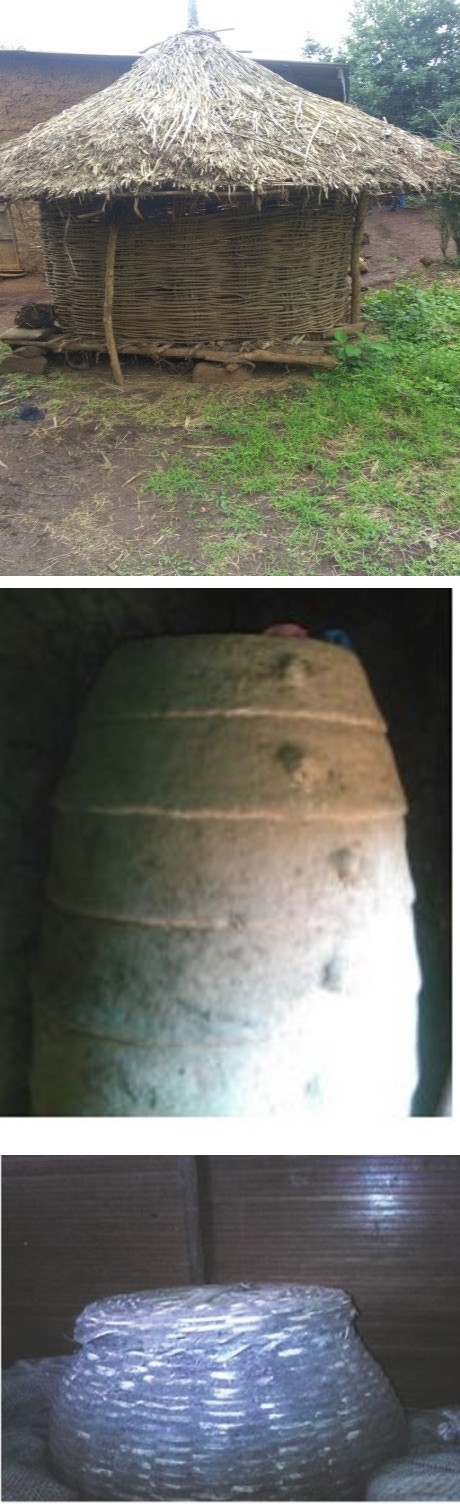
Figure 1A Figure 1B
Figure 1C Figure 1D
Gumbi: Gumbi, Gota, dibignit, godo, and gushgush are names given to similar types of containers (capacities may vary) in different parts of the country. Gumbi is a structure made from short cylindrical ring structures constructed from a mixture of mud reinforced with straw and fixed into one another using mud as a mortar to make a bigger container [9]. Gumbi is used almost exclusively for storage of shelled grain [51]. Their sizes vary, and they are usually kept indoors. The small size gumbi is made of a single piece, whereas the big ones (with a capacity of more than three tons) are usually made of rings (known as dengel in some localities) stacked one above the other so that the vessel can be taken apart and reassembled elsewhere.
Kefo, Togogo or Kirchat: are also similar to gumbi but these are usually made up of splitted reeds, bamboo or twigs, may be plastered with cow-dung from inside, and are kept indoors or outside abutting on the wall of the house [52].
Bags and Polypropylene Sack: Bags are flexible to store different types and different quantities of seed, the commodity can easily be removed for consumption, and the stores can be easily inspected [27, 53]. In Ethiopia and other African countries, the use of bag has been reported as the main storage container [20, 54], which might be due to availability in the local market and cost. A polypropylene Sack is the other type of storage container to store shelled maize after treating it with either of traditional or modern pesticides. It is made of woven synthetic fiber and low cost indoor storage container that can hold 50 to 100 kg of shelled maize grain, which is a readily available [18].
Diya: Diya is one of a traditional storage structure common in southwest Ethiopia. It is used to store grain. Figure 1D showed that, diya is constructed from locally available bamboo split and the outer part plastered with cow dung.
Losses of Maize in Traditional Storage Structure
Insect Infestation
Storage plays an important role in the food supply chain. Literatures have shown that during storage, maximum losses will occur [55, 56, 57]. Many insect pests attack maize during all stages of growth from seedling to storage . However, high percentage of post-harvest loss of maize is associated with storage pest. Approximately 30% of the losses in maize grains in Africa are a result of postharvest insect pests, which cause nearly 40% weight loss in maize grains [17, 53]. Costa [58] estimates a loss of up to 59.5% in maize grain after storage for 90 days in traditional storage structures (grain/ polypropylene bags). Similar finding has showed, insect pests were reported to result in approximately 40% grain loss, with the maize weevil and grain borer being perceived to be the most dangerous [10].
Prevention of pests is important as losses during storage reduce food availability, quality, and the stability of farmers’ food supply and income [52]. Insect attack has been reported to contribute significantly to the loss of maize grains. Traditional storage facilities may predispose the grain to different deterioration agents and cannot guarantee the protection of stored grains for longer durations [59]; thus, such grain losses are considered as one main cause of food insecurity for smallholder farmers in developing countries [60]. This suggests a need for improved storage systems such as hermetic silos and PICS bags, which help reduce grain storage losses and maintain grain quality [59]. Similarly, varies study indicated that farmers experienced serious postharvest losses due to insect/rodent attack and spoilage attributed particularly due to improper storage structure [61, 62]. Farmers and experts opined that, high temperature and poor storage conditions could favour insect infestations, while the presence of spilled grains and trash around grain storage structures facilitates rodent infestation. Traditional storage structures in the southwest Ethiopia did not protect the stored maize from external environmental conditions and pest problems make the grains liable to develop mould during the rainy season.
Underground pit grain stores exhibited with significant infestation of maize with common storage pest; maize weevil (S. zeamais), Angoumois grain moth (S. cerealella) and flour beetle (T. castenum), flat grain beetles (C. ferugineus) and Sawtoothed grain beetle (O. surinamensis), maize weevil (S. zeamais), angoumois grain moth (S. cerealella) were highly abundant and damaging in major stored items [63]. Generally, literature indicated that traditional storage structures are liable for environmental factors like moisture and humidity, which create suitable conditions for the growth of insect pest and mould development. Thus, it leads to quality and quantity loss, which is the challenge for food security in the country. Beside this contamination with fungi and mold during traditional storage, methods may impose to the occurrence of afflation that can impose health problem during consumption. The higher level of insect infestation, and the associated percentage grain damage, weight loss and germination loss has occurred in all of farmer’s traditional storages methods in southern Ethiopia [64].
Mycotoxin Contamination
Mycotoxin contamination is a challenge in traditional storage methods especially in the case of maize, which makes the food, unfit for human consumption or for animal nutrition. About 25 to 40% of cereal seeds are contaminated by mycotoxins produced by storage fungi all over the world [42, 65]. Mycotoxins cause loss of seed quality and pose a threat in the food chain. Research findings have shown that, poor postharvest practices and storage were the major cause of for the maize contamination with aflatoxin and fumonisins. Numerous findings had indicated; Ethiopian traditional storage structures make the grain prone for fungi contamination. Dubale reported that A. flavus, A. niger, D. halodes and F. oxysporum are the major pathogens of maize stored in traditional storage structures (Gombisa and Sacks).
Traditional storage structures cannot protect the stored maize from external environmental conditions. thus among the seven fungi genera identified, Fusarium, Penicillium and Aspergillus spp. were the predominant fungi occurring in the maize along the supply chain, these were the top three fungi able to produce mycotoxins and cause health hazards both to humans and animals that feed on it. Similarly, Tsedaley reported that, Aspregilus spp. is the most dominant storage fungi followed by Fusarium spp. in Jimma zone. These fungi are important in producing secondary metabolites, which are carcinogenic to both humans and animals. Since these storage fungi are very important in causing postharvest yield losses and production of Mycitoxins.
Storage duration and storage types play important role and influence on the aflatoxin contamination in maize. Several reports indicated that mycotoxins are common contaminants of stored maize in Sub-Saharan Africa [21]. Proper initial drying and subsequent moisture-proof storage are crucial to minimizing the growth of toxigenic fungi and toxins development [66]. In Africa however, many factors including environmental conditions, pest-infestation, pre and postharvest handling, influence infection of stored products by toxigenic fungi and contamination of maize by mycotoxins. Because of the traditional post-harvest practices and the prevailing environmental conditions in Ethiopia, the risk of maize grain contamination with fungi is expected to be high. Farmers confirmed that grain stored underground was invariably affected by mould and that the level of damage depended on whether or not the pit was filled completely and on the frequency of opening. Damage may be minimal in pits that are completely full and remain undisturbed for long periods but will be greater in partially filled pits [51].
Inspection of Storage By Farmers
Most of the farmers responded that they inspect their grain store for pest damage. On average farmers reported to inspect their store for about 16 times per annum. As to the method of inspection farmers replied to use multiple methods; Almost all farmers (99% use visual observation to inspect their store. About 69% of the farmers smell stored maize to check for pest infestation. They also inspect their stored maize by taste (50%) and others (28%) [67].
Traditional Storage Management Practices
Insect attack has been reported to contribute significantly to the loss of maize grains. In a study by Midega, et al. [10] insect pests were reported to result in approximately 40% grain loss, with the maize weevil and grain borer being perceived to be the most dangerous. To mitigate the problem farmers, use different storage control methods in order to minimize and avoid storage losses. Farmers preference to select a given control method depended on different factors mainly on traditional practices, ease of use, locally availability of the material, control effectiveness and affordability of the price of the methods.
Cultural Practice
Separation of apparently damaged and infested grain from the rest of the harvest is a common to reduce best infestation. Rapid harvesting, separation of uninfected grain, proper drying before storage and storage hygiene among others are important cultural practices reported for the management of storage pests [68]. Repairing and thorough cleaning of storage containers before filling with grain alone kept the grain for longer time in the traditional (well-built and well managed) experimental stores at Melkassa [47]. In South-western Ethiopia storage hygiene, exposing grain to sun, treatment of grains with cow urine and admixing with salt are frequently used cultural practices [69]. Exposures to sunlight followed by sieving of the grains usually at monthly interval are also well known technique among farmers and create an unfavourable environment for weevils [70]. Farmers treat their maize seed by drying the seed before store and cleaning storage structures, if same previous storage were used [71]. About 94.8% of farmers in southwest Ethiopia stored their new maize separate from the old maize (if available) . A study in Tanzania found that most farmers cleaned their storage facilities and cleared old maize grain stock before loading them with a new stock . This was also the practice by the majority of the farmers in Guatemala, where 98% of the farmers were reported to clean their maize storage facility before storing freshly harvested stock [40]. The study conducted in Kenya also confirmed that, cleaning the stores and drying the maize grains before storage were associated with minimal losses [72].
Botanical
Botanical refer to the chemicals that are produced by plants, and repel approaching insects, deter feeding and oviposition on the plant or disrupt the behavior and physiology of insects in various ways [73]. These include spices, medicinal, weeds and 10 other plants [74].
The utilization of botanicals to protect stored commodities against insect pest attack have a very long history [29, 75]. The use of such locally available plant materials for stored-product protection is a common practice and has been believed to have more potential in subsistence and traditional farm storage conditions in developing countries like Ethiopia [76]. The use of green pesticides, particularly for stored grains such as maize insect pests is being recommended globally [77]. Various research findings have showed that botanical plants are commonly used in Ethiopia to prevent infestation during storage. Traditionally farmers use various cultural practices and herbal products for the control of postharvest insect pests [80] indicated that there is great potential in using botanical plant powders as seed protectants against S.zeamais. The powder from J curcas seed and A. indica seed was exhibited total (100%) control of S. zeamais within a short period.
The use of botanicals as storage pest control is also common in different parties of Africa. Study conducted in Northern Malawi and Eastern Zambia indicated that, most of the farmers were knowledgeable about the use of pesticidal plants in controlling pests of stored maize and beans [45]. A study conducted in Tanzania indicated that about 23% the farmers use botanicals and 20% use wood ash, while 51% use insecticide chemicals, considered to be a modern pest control method [25]. Midega, et al. [10] reported that farmers indicated use of plants as grain protectants and mentioned Lantana camara L. (Verbenaceae) and Tephrosia vogelli Hook (Fabaceae) as being effective against the maize weevil. Similarly, Utono, et al. [81] indicated that improvements to the main storage structure used by farmers and using locally available plant materials and cultural methods instead of chemicals could help to improve farmer’s food security. Wood Ash Wood ash has been used since time immemorial as a botanical pesticide against maize storage insect pests. Many research findings have demonstrated that, mixing sufficient quantities of 20% or more w/w of wood as with grain can effectively protect grain against insect attack. The ash dust is believed to act by inhibiting insect behavior, affecting movement and reproduction by blocking air and space between grains Gemu suggesting the need for higher doses in order to submerge the grain. In addition, the abrasive nature of the ashes may desiccate the pests. Ash contains silica, which interferes with insect feeding and hinders fungal pathogen multiplication. Ash dust reduces the relative humidity of the storage condition and dries the seed surface. Egg laying and larval development of the storage pests could be hampered because ash dust covers the grain seeds [82]. Khaire reported that mixing ash with grain makes the entry of insects in grain a difficult task and causes physical and physiological injuries to the insects. Besides, ash is a fine powder chemically inactive but with insecticidal power. In Cameroon, some farmers dusted their cowpeas lightly with ash; others used a large amount of ash over the grains while still others used alternate layers of cowpeas and ash [83]. This has led to varied and sometimes contradictory reports on the effectiveness of ash during storage.
Mixing With Sand and Dust
Inert dusts are chemically unreactive and thus, used for protecting insects of stored grains by physical means [84]. Inert dusts act as a desiccant, absorbing water from the insect body and may have an abrasive action. Water is lost because the dusts remove the waxy layer of the cuticle of the exoskeleton by adsorption. Accordingly, insect’s pests coated with inert dusts show massive dehydration and die very soon [85]. The use of chemically inert materials such as sand, wood ashes or minerals in large amounts fill up the interstitial space in grain bulks and offer an obstacle to insect movement.
There has been a considerable amount of historical data concerning desiccant dusts and their insecticidal effects on stored-product insects [86]. Treatments of local inert dusts applied at the rates of 5% and 10% induced significantly higher protection of maize against maize weevils. Thus, these inert dusts could be used in the management of maize weevils as safe, ecologically sound and cheap management alternative to synthetic chemicals under subsistence farmer’s storage conditions in Ethiopia [35]. About 30% provided adequate protection to grain for a short-term storage (about 4 months) [87]. Some farmers may add fine sand to hinder the pest activity of the newly hatched insect [70].
Storing Unshelled Maize
Maize cobs that are completely covered by the husk are less infested than those whose tips are slightly exposed [88]. Farmers claimed that shelled grains were more susceptible to pest attack, especially in polypropylene sacks and storing unshelled maize can minimize pest attack. Storing maize in unshelled form seemed to result in less pest attack (other than larger grain borer) [10]. Hiruy [35] has showed that unshelled form of maize with the husk intact stored for 7-9 months period had only medium levels of insect pest’s infestation as the cobs covered with husks provide better protection than de husked & shelled form. Storage of maize with cobs reduced weevil infestation and damage of maize in storage. Utono, et al. [81] reported that, cobs were indicated to be the most commonly stored form of maize for the fact that cobs allow better conservation against insect pests, of various forms of maize stored by farmers.
Mixing With Small Size Grain
Many farmers in Ethiopia Tadesse & Basedow [43] have reported the role of mixing teff with maize grain for the protection from insect attack. Teff admixture with maize provided effective protection of grain from insect pests in storage [48]. This protection is from the small size of the teff grain, fills micro pores between the maize grains, and thus hinders the movement of insects as well as cause shortage of air movement in the container. McFarlane and Dobie showed that, teff is unlikely to be infested by Sitophilus zeamais, Rhizopertha dominica and Sitotroga cerealella due to its small size (ca. 1 mm long) and hard seed coat. The results of Demmirew et al. [78] indicated the potential of teff admixture as well as botanical plants for the control of maize storage insect pests. Research conducted in other African countries also indicated blending maize with amaranth (50/50 by volume) during 160 d of storage reduced maize weevil population by 46% compared to maize stored alone [89]. Some farmers also mix sorghum with small-seeded cereals, such as teff and finger millet and layering of teff over sorghum with different proportion [90]. According to Adugna ,et al. [91] finding, farmers in Eritrea use a mixture of small sized grain and fine sand to control of grain storage pests. According to the farmers’ experience, these treatments lower the temperature of the storage condition.
Hang On Fire Places (Smoking)
In most rural farming communities, the majority of the farmers stored food grains near the kitchen where the heat and smoke of burning firewood penetrate to keep the food grains free from insect pest infestation. Smallholder farmers usually store food grain crops above the kitchen fire in the farm hut or in open where the high temperature due to direct solar radiation may also kill the developing larvae in the seeds. Farmers in most parts of Ethiopia, commonly hang heads of grain such as sorghum, barely, wheat and cobs of maize mainly selected for seed from the rafters of the dwelling huts where heat and smoke from the fire promote further drying and, possibly reduce insect infestation. Farmers believe hanging on fireplaces is keeping seed quality [71]. Some farmers kept maize cobs over fires, especially those meant to be stored for longer periods such as seed for the following cropping season; these cultural grain preservation methods are common in eastern Africa [24]. Farmers suspend a bunch of cobs in smoke over fire and such stored maize was less damaged [92]. This retards development and prevents re- infestation by migrating insects, because of the heat and smoke and because drying of the harvested product is accelerated. The stored ears rapidly reduce their moisture content to 8-10%.
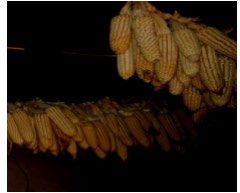
Traditionally, smoke is used to minimize insect damage as well as to reduce moisture content to a suitable level [93, 94]. It has been argued that the combined effect of smoke and high temperatures during smoking has a permanent effect on seed testa which prevents oxygen rise around the embryo during storage thus increasing hermetic conditions as far as the embryo is concerned [93]. Farmers store the grain above the kitchen fire in their hut especially maize and such stored maize was less damaged [92]. Figure 2 above indicate how farmer hang maize over fire. Storing maize in this way can minimize infestations the gaseous generated form the maize can be toxic for insect and deteriorating microorganism.
Salt and Hot Paper Spray
Farmers use common ingredients such as table salt that has hygroscopic and insecticidal properties to minimize loss of stored products. Abdirahman [49] reported that traditional pest management practices in Jijiga area include spraying salt or hot pepper solutions on the grain. It absorbs moisture and helps the grain to keep dry and aid in its safe storage by retarding spoilage [95]. Ibrahim & Sisay [90] indicated that, mixing sorghum with partially grounded chilies (hot pepper) at the rates of 1 and 2% w/w gave potential control method against stored sorghum insect pests which is comparable with Malathion 5%.
Resistant Variety Selection
Grain varieties and landraces differ among themselves in their susceptibility to stored grain insect pests. The variation might be due to the existence of some levels of resistance in local grain varieties, which are attributed to the morphological or biochemical bases of resistance in grain varieties [96]. Resistant varieties are integral part of integrated pest management of storage pests. Variety selection is one of the storage management practice that farmers use to protect the grain from infestation. Substantial data has been accumulated from varietal screening researches in Ethiopia. Differences in resistance among maize genotypes to weevils have been reported [97]. Differences in resistance among maize genotypes to weevils Demissew Kitaw, et al_._ [97] have been reported. Finding has shown that, Farmers have knowledge on selecting resistant varies of maize from their experiences. Mendesil, et al. [69] reported that in West Ethiopia farmers classified sorghum varieties according to their levels of resistance to stored sorghum insect pests.
Traditional Storage Management Practice against Microbial Infestation
Studies indicated that proper drying prior to harvest and storage is very crucial to control infestation of the maize during storage. Smoking keeps the seeds dry and reduces insect and disease damage [98]. The report from Nigeria indicated that farmers use smoke to preserve their grain and this this practice was related to lowering level of aflatoxin in farmers [99]. Hanging maize over can minimize infestations; the gaseous generated form the maize can be toxic for insect and deteriorating microorganism. In addition, free airflow can reduce the moisture to safe level.
Strategist to Reduce Traditional Storage Loss
Majority of the farmers in Ethiopia uses traditional storage structures, which are ineffective in preserving the grain from damage by storage insect pest, rodents and mould contamination. To overcome the challenges of storage loss of grain, improvements in traditional grain storage methods is very crucial to maintain the quality and viability of seeds. Awareness creation about using improved grain storage technologies; like metal silo, PICS bags and modified traditional storage structure is required to minimise post-harvest loss. Tesfaye & Tirivayi [100] also observed that improved storage technologies in Ethiopia could enhance food and nutritional security in the country. Improved storage systems that are affordable by smallholder farmers, such as hermetic storages, can be a possible option to mitigate post-harvest loss . Appropriate initial drying and following moisture-proof storage are vital to reduce the growth of toxigenic fungi and toxins development [66]. Tadesse also suggested that a little improvement in storage structures coupled with sound hygienic measures and other cultural practices can lead to significant reduction in storage loss. In order to reduce postharvest losses and maintain the quality of stored grain, it is very important to improve postharvest systems in general and storage structures in particular. Generally, proper post-harvest handling practices combined with improved traditional storage structures are very important to store safe and quality seed for long periods [101, 102, 103, 104, 105, 106, 107, 108, 109, 110, 111].
Conclusion
Literatures indicated that, farmers use different traditional storage management practices to reduce storage loss of cereal. Storage management practice like salting, hot pepper spray, handing over fire and mixing with wood ash and teff were proven effective in controlling storage infestation. Some of farmer’s storage management practices are also effective in controlling fungi, which are responsible for the occurrences of afflation. It can be concluded that many traditional knowledge measures exist in Ethiopia, which can reduce the attack of stored maize by insect pests significantly. Improvement in traditional storage structure is also important to reduce infestation during storage.
Attention is needed in upgrading indigenous knowledge of storage management besides adopting modern technologies. Integrating traditional knowledge and practice with modern technology is very crucial to reduce storage losses and insuring food security.
References
-
Africa Agriculture Status Report (2017) The Business of Smallholder Agriculture in Sub-saharan Africa, AGRA, Nairobi, Kenya, 5th (Edn).
-
World Bank (2011) Missing food: the case of post- harvest grain losses in sub-saharan Africa. World Bank, Washington, DC, USA.
-
Marta HES, Ruswandi D (2017) Chemical Composition and Genetics of Indonesian Maize Hybrids. American Journal of Food Technology 12(2): 72-85.
-
Yaouba A, Tatsadjieu N, Jazet DPM, Mbo- fung CM (2012) Inhibition of fungal development in maize grains under storage condition by essential oils. International Journal of Bioscience 2 (6): 41-48.
-
Tefera TL, Perret S, Kirsten JF (2004) Diversity in livelihoods and farmers’ strategies in the Hararghe Highlands, eastern Ethiopia. International Journal of Agricultural Sustainability 2(2): 133-146.
-
Baoua IB, Amadou L, Ousmane B, Baributsa D, Murdock DD (2014) PICS bag for postharvest storage of maize grain in West Africa. J Stored Prod Res 58: 20-28.
-
Tsedeke A, Bekele S, Abebe M, Dagne W, Yilma K, et al. (2015) Factors that transformed maize productivity in Ethiopia: Food Sciences 7: 965-998.
-
Abate T, Shiferaw B, Menkir A, Wegary D, Kebede Y, et al. (2015) Factors that transformed maize productivity in Ethiopia. Food Security 7: 965-981.
-
Hengsdijk H, de Boer WJ (2017) Postharvestmanagement and postharvestlosses of cereals in Ethiopia. Food Security 9: 945-958.
-
Midega CA, Murage AW, Pittchar JO, Khan ZR (2016) Managing storage pests of maize: Farmers’ knowledge, perceptions and practices in western Kenya. Crop Protection 90: 142-149.
-
Arun KC, Aggarwal PK, Joshi PK, Vyas S (2017) Farmers’ prioritization of climatesmart agriculture (CSA) technologies. Agric Syst 151: 184-191.
-
Abraham T, Amare A, Emana G, Tadele T (2008) Review of research on post-harvest pests, In: Abraham T (Ed.), Increasing Crop Production through Improved Plant Protection-Volume I. Proceedings of the 14th Annual Conference of the Plant Protection Society of Ethiopia (PPSE). Addis Ababa, Ethiopia, Plant Protection Society of Ethiopia (PPSE) and Ethiopian Institute of Agricultural Research (EIAR), Addis Ababa, Ethiopia, pp: 475-593.
-
Nukenine E (2010) Stored product protection in Africa: Past, present and future. In: Carvalho MO, Fields PG, Adler CS, Arthur FH, Athanassiou CG, et al. (Eds), proceedings of the 10th International Working Conference on Stored-Product Protection, Estoril, Portugal 425: 26-41.
-
Zorya S, Morgan N, Diaz Rios L, Hodges R, Bennett B, et al. (2011) Missing food: the case of postharvest grain losses in sub-Saharan Africa. Joint publication of the Natural Resource Institute, Greenwich University, UK; Food and Agriculture Organization of the United Nations, Rome, Italy; and The International Bank for Reconstruction and Development, The World Bank, Washington DC, USA, pp: 96.
-
Ogendo JO, Deng AL, Belmain SR, Walker DJ, Musandu AO, et al. (2004a). Pest status of Sitophilus zeamais Motschulsky, control methods and constraints to safe maize grain storage in western Kenya. Egert J Sci Tech 5: 175-193.
-
Ojo JA, Omoloye AA (2012) Rearing the maize weevil, Sitophilus zeamais, on an artificial maize-cassava diet. J Insect Sci 12: 1-9.
-
Tefera T, Kanampiu F, De Groote H, Hellin J, Mugo S, et al. (2011) The metal silo: an effective grain storage technology for reducing post-harvest insect and pathogen losses in maize while improving smallholder farmers’ food security in developing countries. Crop Prot 30: 240-245.
-
Dubale B, Waktole S, Solomon A, Geremew B, Setu MR (2012) Influence of Agro-ecolog, traditional storage containers and major insect pest on stored maize (Zeamayas L.) in selected woredas of Jima zone. Asian Journal of Plant Science 11: 226-234.
-
IFPRI (2010) Maize value chain potential in Ethiopia constraints and opportunities for enhancing the system. Washington DC.
-
Befikadu D (2014) Factors affecting the quality of grain stored in Ethiopian traditional storage structures and opportunities for improvement. IJSBAR 14: 235-257.
-
Probst C, Bandyopadhyay R, Cotty PJ (2014) Diversity of aflatoxin-producing fungi and their impact on food safety in sub-Saharan Africa. International Journal of Food Microbiology 174: 113-122.
-
Midega CAO, Bruce TJ, Pickett JA, Khan ZR (2015) Ecological management of cereal stemborers in African smallholder agriculture through behavioural manipulation. Ecol Entomol 40(1): 70e81.
-
Natarajan M, Santha G (2006) Indigenous agricultural practices among tribal women. Indian J Tradit. Knowl 5: 114-117.
-
Abate T, Huis A van, Ampofo JKO (2000) Pest Manage- ment Strategies in Traditional Agriculture: An African Perspective. Annual Reivew of Entomology 45: 631- 659.
-
Abass AB, Ndunguru G, Mamiro P, Alenkhe B, Mlingi N, et al. (2014) Postharvestfood losses in a maize-based farming system of semi- arid savannah area of Tanzania. Journal of Stored Products Research 57: 49-57.
-
Nduku TM, De Groote H, Nzuma JM (2013) Comparative analysis of maize storage structures in Kenya. In: Contributed Paper Prepared for Submission to the 4th Conference of the African Association of Agricultural Economists (AAAE), Tunisia.
-
Dessalegn T, Tesfaye S, Gebrekristos T, Abiy S, Shure S, et al. (2017) Post-harvest wheat losses in Africa: an Ethiopian case study. In: P Langridge (Ed.), Achieving sustainable cultivation of wheat Volume 2: Cultivation techniques Burleigh Dodds Science Publishing pp: 85- 104.
-
FAO (2017) Postharvest loss assessment of maize, wheat, sorghum and haricot bean: Survey study in selected fourteen _woredas_ of Ethiopia. FAO, Rome, Italy.
-
Belmain SR, Stevenson PC (2001) Ethnobotanicals in Ghana: reviving and modernizing age-old farmer practice. Pestic Outloo 12: 233-238.
-
Tadesse A, Eticha F, Adler C, Schoeller M (2000) Insect pests of farm-stored maize and their management practices in Ethiopia. Integrated Protection of Stored Products 23: 45-57
-
Eticha F, Tadesse A (1999) Insect pests of farm-stored sorghum in the Bako area. Pest Management Journal of Ethiopia 3(1&2): 53-60.
-
Tibagonzeka J, Akumu G, Kiyimba F, Atukwase A, Wambete J, et al. (2018) Post-Harvest Handling Practices and Losses for Legumes and Starchy Staples in Uganda. Agricultural Sciences 9: 141-156.
-
Garbaba CA, Denboba LG, Mendesil E, Ocho FL, Hensel O (2018) Actors’ post-harvest maize handling practices and allied mycoflora epidemiology in southwestern Ethiopia: Potential for mycotoxin-producing fungi management. Journal of Applied Botany and Food Quality 91: 237-248.
-
Gorman M, James P (2005) Implications of an Extension Package Approach for Farmers’ Indigenous Knowledge: The Maize Extension Package in South-western Ethiopia. Negussie Efa 12(3).
-
Hiruy B (2018) Status, Species Composition and Management of Stored Maize Grain Insect Pests in Hadiya and Silte Zones of Southern Ethiopia.
-
Mohammed A, Tadesse A (2018) Review of Major Grains Postharvest Losses in Ethiopia and Customization of a Loss Assessment Methodology. USAID/Ethiopia Agriculture Knowledge, Learning, Documentation and Policy Project, Addis Ababa, Ethiopia.
-
Mohamed M (2017) Factors influencing aflatoxin contamination in maize at harvest and during storage in Kongwa district, Tanzania.
-
Kamala A, Kimanya M, Haesaert G, Tiisekwa B, Madege R, et al. (2016) Local post-harvest practices associated with aflatoxin and fumonisin contamination of maize in three agro ecological zones of Tanzania. Food Additives & Contaminants: Part A 33(3): 551-559.
-
Akowuah JO, Mensah LD, Chan C, Roskilly A (2015) Effects of practices of maize farmers and traders in Ghana on contamination of maize by aflatoxins: Case study of Ejura-Sekyeredumase Municipality.
-
Mendoza JR., Sabillón L, Martinez W, Campabadal C, Hallen-Adams HE, et al. (2017) Traditional maize post- harvest management practices amongst smallholder farmers in Guatemala. Journal of stored products research 71: 14-21.
-
Hell K, Fandohan P, Bandyopadhyay R, Kiewnick S, Sikora R (2008) Pre-and postharvest management of aflatoxin in maize: An African perspective. Mycotoxins: Detection methods, management, public health and agricultural trade, pp: 219-229.
-
Kumar R, Mishra AK, Dubey N, Tripathi Y (2007) Evaluation of Chenopodium ambrosioides oil as a potential source of antifungal, anti aflatoxigenic and antioxidant activity. Int J Food Microbiol 115: 59-164.
-
Tadesse A, Basedow T (2004) A survey of insect pest problems and stored product protection in stored maize in Ethiopia in the year 2000. Zeitschrift Fuer Pflanzenkrankheiten Und Pflanzenschutz 111: 257- 265.
-
Haile A (2006) On-farm storage studies on sorghum and chickpea in Eritrea. African Journal of Biotechnology 5(17).
-
Kamanula J, Sileshi GW, Belmain SR, Sola P, Mvumi BM, et al. (2010) Farmers’ insect pest management practices and pesticidal plant use in the protection of stored maize and beans in Southern Africa. International Journal of Pest Management 57(1): 41-49.
-
Boxall RA (1974) Underground storage of grain in Harar Province, Ethiopia. Tropical stored products information.
-
Abraham T (2003) Studies on some non-chemical insect pest management options on farm-stored maize in Ethiopia. PhD Thesis, Justus Liebig University of Giessen, Germany.
-
Dejene M (2004) Grain storage methods and their effects on sorghum grain quality in Hararghe, Ethiopia. Epsilon Open Archive 454: 1401-6249.
-
Abdirahman A (2002) Survey of insects associated with stored sorghum and maize and methods of grain storage in Jijiga Wereda. M. Sc. Thesis. Alemaya University.
-
Mulu A, Belayneh Z (2016) Comparative Evaluation of Underground Pit Storage Systems for Grain Quality Attributes in Jigjiga and Awubarre Districts of Fafen Zone, Ethiopia. Advances in Crop Science and Technology.
-
Boxall R (1998) Grains post-harvest loss assessment in Ethiopia. Final report.
-
Tadesse A, Ayalew A, Getu E, Tefera T (2006) Review of research on post-harvest pests. Increasing crop production through improved plant protection 2: 475- 563.
-
Boxall RA, JR Brice, SJ Taylor, RD Bancroft (2002) Technology and Management of Storage. In: P Golob, G Farrell, and JE Orchard (Eds.), Crop Post-Harvest: Science and Technology: Principles and Practices.1: 141-232.
-
Bachewe F, Minten B, Taffesse AS, Pauw K, Cameron A, et al. (2018) Farmers’ grain storage and losses in Ethiopia: Measures and associates. Journal of Agricultural & Food Industrial Organization.
-
Aulakh J, Regmi A, Fulton JR, Alexander C (2013) Estimating post-harvest food losses: developing a consistent global estimation framework. In: Proceedings of the Agricultural & Applied Economics Association’s 2013 AAEA & CAES joint annual meeting, Washington, DC, USA.
-
Gliński J, Horabikk J, Lipiec J, Sławiński C (2014) Agrophysics. Processes, properties, methods. Institute of Agrophysics Bohdan Dobrzański, Polish Academy of Sciences, Lublin.
-
Majumder S, Bala B, Arshad FM, Haque M, Hossain M(2016) Food security through increasing technical efficiency and reducing postharvest losses of rice production systems in Bangladesh. Food Secur 8: 361- 374.
-
Costa SJ (2014) Reducing food losses in sub-Saharan Africa (Improving post-harvest management and storage technologies of smallholder farmers). UN World Food Programme, Kampala.
-
Kumar D, Kalita P (2017) Reducing postharvest losses during storage of grain crops to strengthen food security in developing countries. Foods 6(1): 8.
-
Manandhar A, Milindi P, Shah A (2018) An Overview of the Post-Harvest Grain Storage Practices of Smallholder Farmers in Developing Countries. Agriculture 8(4): 57.
-
Olayemi FF, Adegbola JA, Bamishaiye EI, Awagu EF (2012) Assessment of post-harvest losses of some selected crops in eight LGAs of River State, Nigeria. Asian Journal of Rural Development 2(1): 13-23.
-
Agada MO, Ijih BO (2019) Analysis of Post-Harvest Management Practices among Maize Farmers in Oju, Benue State, Nigeria, Journal of Agriculture and Environmental Sciences 8(1): 191-198.
-
Tadeos S (2018) Occurrence of Stored Grain Insect Pests in Traditional Underground Pit Grain Storages of Eastern Ethiopia. Agri Res & Tech: Open Access J 13(2): 555879.
-
Hiruy B, Getu E (2018) Efficacy of solvent extracts of Calpurnia aurea (Ait.) Benth and Milletia ferruginea (Hochest) Baker leaves against maize weevils, Sitophilus zeamais (Motsch.) of stored maize in Ethiopia. Journal of Stored Products and Postharvest Research 9: 27-35.
-
Rachoń L, Bobryk-Mamczarz A, Szumiło G (2016) Mycotoxin contamination of grain of selected winter wheat genotypes. Pol J Agron 25: 13-18.
-
Bradford KJ, Dahal P, Van Asbrouck J, Kunusoth K, Bello P, et al. (2018) The dry chain: Reducing postharvest losses and improving food safety in humid climates. Trends in Food Science & Technology 71: 84-93.
-
Yibrah Beyene, Dereje Ayalew (2015) Postharvest Loss Assessment Survey-in Ethiopia Baseline Information on Maize (Zea mays L.) Postharvest Loss Assessment.
-
Tadesse A and Eticha F (1999) Insect pests of farm- stored maize and their management practices in Ethiopia. IOBC Bulletin 23: 47-57.
-
Mendesil E, Abdeta C, Tesfaye A, Shumeta Z, Jifar H (2007) Farmers perceptions and management practices of insect pests on stored sorghum in southwestern Ethiopia. Crop Protection 26(12): 18171825.
-
Girma T, Wondimu B, Adane T (2000) Indigenous crop pest management techniques in Welo. Pest Management Journal of Ethiopia 4(142): 97-103.
-
Girma B (2018) Assessment of Maize (Zea mays) seed Storage Techniques in West Guji Zone Southern Oromia, Ethiopia. Acad Res J Agri Sci Res 6(7): 423-428.
-
Mwangi JK, Mutungi CM, Midingoyi SKG, Faraj AK, Affognon HD (2017) An assessment of the magnitudes and factors associated with postharvest losses in off- farm grain stores in Kenya. Journal of Stored Products Research 73: 7-20.
-
Shankar U, Abrol DP (2012) Integrated Pest Management in Stored Grains. Integrated Pest Management: Principles and Practice, pp: 386.
-
Said PP, Pashte VV (2015) Botanicals: the protectants of stored grains pests. Trends in Bio Sci 8: 3751-3755.
-
Isman MB (2006) Botanical insecticides, deterrents, and repellents in modern agriculture and an increasingly regulated world. Ann Rev Entom 51: 45-66.
-
Obeng Ofori D (2007) The use of botanicals by resource poor farmers in Africa and Asia for the protection of stored agricultural products. Stewart Posthar Rev 6: 1-8.
-
Dubey NK, Srivastava B, Kumar A (2008) Current status of plant products as botanical pesticides in storage pest management. Journal of biopesticides, 1(2): 182-186.
-
Demmirew SK, Edosa TT, Gutema EA (2018) Ecofriendly management of storage insect pests of maize in Jimma Zone. International Journal of Advanced Scientific Research 3(6): 34-38.
-
Waktole Sori (2014) Effect of Selected Botanicals and Local Seed Storage Practices on Maize Insect Pests and Health of Maize Seeds in Jimma Zone. Singapore Journal of Scientific Research 4: 19-28.
-
Almekinders CJM, Louwaars NP (1999) Farmers’ seed production. New approaches and practices. IT publications, London, pp: 290.
-
Utono I.M, Gibson G, Coote C (2013) A survey of systems of grain storage and management of insect pests in stored grain in Kebbi state. IOSR J Agri & Vet Sci 3: 51- 61.
-
Rekha BK, Padmakar CK (2014) Indigenous food grain storage practices followed by tribal farmers of nandurbar district. Golden Research Thoughts 4(4): 2-4.
-
Wolfson JL, Shade RE, Mentzer PE, Murdock LL (1991) Efficacy of ash for controlling infestations of Callosobruchus maculates (F.) (Coleoptera: Bruchidae) in stored cowpeas. Journal of Stored Products Research 27(4): 239-243.
-
Abd EL-Aziz SE (2011) Control strategies of stored products pests J Entom 8: 101-122.
-
Upadhyay RK, Ahmad S (2011) Management strategies for control of stored grain insect pests in farmer stores and public warehouses. World J Agri Sci 7: 527-549.
-
Subramanyam BH, Swanson CL, Madamanch N, Norwood S (1994) Effectiveness of Insecto, a new diatomaceous earth formulation, in suppressing several stored-grain insect species. In: Highley E, Wright EJ, Banks HJ, Champ BR (Eds.), Proceedings of the 6th International working conference on stored product protection. Canberra, Australia, pp: 650-659.
-
Tadesse A, Basedow T (2005) Laboratory and field studies on the effect of natural control measures against insect pests in stored maize in Ethiopia 112(2): 156-172.
-
Ivbiljaro MF (2009) The resistance of new varieties of maize to post harvestation by _Sitophilus_ _zeamays_ (Motchulski) and _Sitophilus_ _oryzae_ (L.). Journal of Agricultural Science 96: 479-481.
-
Bbosa Denis (2014) Pesticide free methods of maize weevil control in stored maize for developing countries.
-
Ibrahim A, Sisay A (2012) Farmers’ Practices and combinations of Malathion and neem seed powder management options against sorghum and maize insect pests during Storage at Bako, West Shoa Zone, Ethiopia. East African Journal of Sciences 6(1): 55-64.
-
Adugna H, Dangnew G, Biniam Z, Biniam A (2003) On Farm storages studies in Eritrea. Dry land coordination Group.
-
Emana G (1993) Studies on the distribution and control of Angoumois grain moth, _Sitotroga cerealella_ (Oliv.) (Lepidoptera: Gelechiidae), in Sidama Administrative Region. M.Sc. Thesis, Alemaya University of Agriculture, Alemaya, Ethiopia.
-
Modi AT (2004) Short term preservation of maize landrace seed and taro propagules using indigenous storage methods. South African Journal of Botany 70(1): 16-23.
-
Wright M, Donaldson T, Cromwell E and J New (1994) The retention and care of seeds by small-scale farmers.
-
Gupta HC, Verma JP, Bareth SS, Mathur BN (1989) Evaluation of some non-edible oils as grain protectant in wheat and their subsequent effect on germination. Indian J Entomol 50: 147-150.
-
Mboya R (2011) Study of the Effects of Storage Methods on the Quality of Maize and Household Food Security in Rungwe District, Tanzania, pp: 255.
-
Demissew Kitaw, Firdissa Eticha and Abraham Taddese. (2004). Response of commercial varieties and other genotypes of maize for resistance to the maize weevil (_Sitophilus_ _zeamays_ Motsch.) (Coleoptera: Curculionidae). Proceedings of the Seventh Eastern and Southern Africa Regional Maize Conference, Nirobi, Kenya.
-
Kone S (1993) Traditional storage of farm products. ILEIA Newsletter 9(3): 12-13.
-
Udoh JM, Cardwell KF, Ikotun T (2000) Storage structures and aflatoxin Content of maize in five agro- ecological zones of Nigeria. Journal of Stored Products Research 36: 187-201.
-
Tesfaye W, Tirivayi N (2018) The impacts of postharvest storage innovations on food security and welfare in Ethiopia. Food Policy 75: 52-67.
-
Abass A, Fischler M, Schneider K, Daudi S, Gasper A, et al. (2017) On-Farm Comparison of Different Maize Postharvest Storage Technologies in Central Tanzania: Grain Post-Harvest loss Prevention Project (GPLP) Action Research in Tanzania.
-
Alemnew, Yeshiwork (2017) Studies on the man- agement of maize weevil (Sitophilus zeamais L.) using botanicals on maize grain in storage. Diss Addis Ababa University.
-
Blum A, Bekele A (2001) Ethiopian farmers’ prac- tices of on-farm grain storage. Tropical Science 41: 23- 30.
-
Food and Agriculture Organization (2018) Maize Production in Sub-Saharan Africa 2013/2014 Production Year.
-
Ibrahim, Ahmed (2015) Effects of Malathion Dust and Mexican Tea Powder (Chenopodium ambrosoides) Combinations on the Maize Weevil, Sitophilus zeamais Mostch. (Coleoptera: Curculionidae) on Maize. Science Technology and Arts Research Journal 4(1): 57-62.
-
Koskei P, Bii CC, Musotsi P, Muturi Karanja S (2020) Postharvest Storage Practices of Maize in Rift Valley and Lower Eastern Regions of Kenya: A Cross-Sectional Study. International Journal of Microbiology 2020: 10.
-
Mascarenhas A (2003) Indigenous knowledge, livelihood and development: is a high rate of sustainable growth achievable? Paper read at the Inaugural Tanzanian Biennial Development Forum, Dar es Salaam Tanzania, pp: 24-25.
-
Boxall RA (2002) Damage and loss caused by the larger grain borer _Prostephanus truncates._ Integrated Pest Management Reviews 7(2): 105-121.
-
Rodriguez-Carrasco Y, Fattore M, Albrizio S, Berrada H, Mañes J (2015) Occurrence of Fusarium mycotoxins and their dietary intake through beer consumption by the European population. Food Chem 178: 149-155.
-
Tadesse A (1991) The biology, significance and control of the maize weevil, Sitophilus zeamais Motsch. (Coleoptera:Curculionidae) on stored maize. M.Sc. Thesis, AUA, Alemaya University of Agriculture, Alemaya, Ethiopia.
-
Warren D (1991) Using Indigenous Knowledge in Agricultural Development. World Bank Discussion, Washington DC.
- The Role of Podocyte Apoptosis and the Involvement of SIRT1 in Diabetic Nephropathy
- Dealcoholization of Beer by Osmotic Distillation for the Beverage Industry
- Biopolymer-Based Edible Packaging- Biomaterials, Methods, and Applications in Food Industry: An Updated Review
- Influence of Bioprocessing Methods on 'China Rice' (Gawal R1), and Soyabean Supplementation on the Quality of Complementary Food
- Cassava (Manihot esculenta) Varietal Growth, Yield and Cyanide Content Performance in Three Sites in the South- Eastern Semi Arid Regions of Kenya
- Food Waste Treatment, Recycling, Management and Production of Value-Products-An Update on Methodologies and Current Trends