
Development of a New Product with a High Added Value: Biscuit with Carob Beans and/or with Oak Acorns Coffees
Research on the development of carob and oak acorn recovery processes is very well developed today. Our research has resulted in the implementation of technologies for transforming carob and oak into various by-products such as; coffee production from carob beans and oak acorns. We have studied the physicochemical characteristics, nutritional, microbiological, biological activity and caffeine analysis of our samples of coffees produced from locust bean and oak acorn. Subsequently, these two coffees were integrated into the production of an organic biscuit in order to develop an innovative product with high added value. The results obtained show us that the sensory analysis has shown that the cookies have satisfactory organoleptic characteristics. The sensory analysis showed that the biscuit with the mixture of the two coffees has the highest percentage of appreciation by the tasting panel. Microbiological analysis showed that the cookies are free from coliforms, yeasts and molds. They contain a low level of total flora. Cookies can therefore be stored for a long time and could be sold as an important bio product for human health.
Introduction
The carob tree (Ceratonia siliqua L.) is widely cultivated in the Mediterranean area. The carob pod consists of 90% of pulp and 10% of seeds [1]. The carob pulp contains different valuable component such as sugars, dietary fibers, and a great diversity of polyphenols and other minor components [2]. Carob fruit provides a variety of “healthy” foods for human nutrition. The seeds are utilized to obtain locust bean gum used in food industry as E 410 additive [2, 3]. The seeds were found to have lower sugar content and more fat compared to the pulp. Minerals, such as calcium, phosphorus and potassium have also been detected in carob pods, proposing carob pods as an alternative source of minerals [4]. The health effects of phenolic compound is well documented [5, 6, 7] and their important role of food matrix has been described [8, 9]. In recent years carob pulp has been used to produce value-added products such as mannitol, while the seeds are used for the extraction of galactomannan to obtain locust bean gum [10]. Acorns are the fruits of oak species that have various biological activities [11, 12] and is nutritionally rich in carbohydrates, proteins, minerals and some vitamins [13, 14]. Acorns were used for the production of traditional flat breads [15] and for the production of a coffee substitute [16]. Due to the absence of gluten, acorn flour is proposed for producing gluten-free foods, such as bread and biscuits [13, 17] also proposed in the production of wheat and barley- based bread [18] and sponge cakes [19]. The research on the development of the processes for carob valorization and for oak glans is very well developed today. Thus; this study aims to develop a new product with a high added value such as the biscuit with a coffee produced from carob beans and from oak acorns.
Material and Methods
Plant Material
The plant material chosen in this study is represented by two types of organic natural fruit: carob seeds (Ceratonia siliqua) ripe and acorns of kermes oak (Quercus coccifera). The ripe carob pods are harvested from the Kasserine forest North West of Tunisia country in July 2018. The oak acorns are harvested from the mountain of El Hawaria (Nabeul) north east of Tunisia in November 2018. The seeds were separated from the carob pod.
Physico-Chemical Characteristics of Coffees
Determination of pH according to the standard NF ISO 1842 [20].
Determination of titratable acidity according to NF V 05-101 [21].
Humidity or water content according to NF V03-903 [22].
Determination of fat content according to ISO 659 [23].
Determination of total sugars by the Dubois method [24].
Determination of protein content according to NT 76.05 [25]
Determination of raw fiber content according to NT 76.10 [26]
Determination of total flavonoids method of Djeridane, et al. [27]
Determination of Condensed Tannins: Method of Swain And Hillis
T(%) =(5.2 × 10⁻²× DO × V)/P T%: percentage of the rate of condensed tannins. 5.2 x 10⁻²: constant expressed in cyanidin equivalent. DO: optical density. V: volume of extract used. P: weight of the sample [28].
Determination of Hydrolysable Tannins by the Method of Mole and Waterman
Mixing the tannic extract with the ferric chloride reagent causes the complexion to turn purple red [29], resulting in the formation of ions (Fe3+) [30]. T(%) =(DO × M × V)/(P × Emoles) T%: percentage of hydrolysable tannins. DO: Optical density. M: 300 V: volume of extract used. Emoles: 2169 gallic acid. P: weight of the sample.
Determination of Antioxidant Power
Anti-radical power: The reduction capacity of DPPH was carried out according to the method described by Mansouri, et al. [31]. % R of DPPH =((DO control - DO sample ))/(DO control)×100 % R of DPPH (percentage reduction or inhibition of DPPH). DO control: Optical density of the control. DO sample: Optical density of the antioxidant.
Mycotoxins Determination Aflatoxins Determination: The test sample is extracted with a mixture of water and methanol. The sample extract is filtered, diluted with water and placed on an immune affinity column containing antibodies specific for Aflatoxins B1, B2, G1 and G2. Aflatoxins are isolated, purified and concentrated on the column and released from antibodies with methanol. Aflatoxins are quantified by high performance liquid chromatography with fluorescence detection and post- column by-pass Immuno affinity column. The Immuno affinity (IAC) contains antibodies to Aflatoxins B1, B2, G1 and G2. The minimum binding capacity of the IA column must not be less than 100 mg of Aflatoxin B1 and the recovery for Aflatoxins B1, B2 and G1 must not be less than 80% and 60% for Aflatoxins G2 when a standard solution of 5 mg of each toxin in 15 ml of a mixture of methanol and water is applied to the AI column, the AI column should include a reservoir of suitable solvent. The IACs contain a gel, the particles of which are associated with antibodies specific for the toxin being researched. These antibodies capture the mycotoxins present in a sample before releasing them during the washing phase.
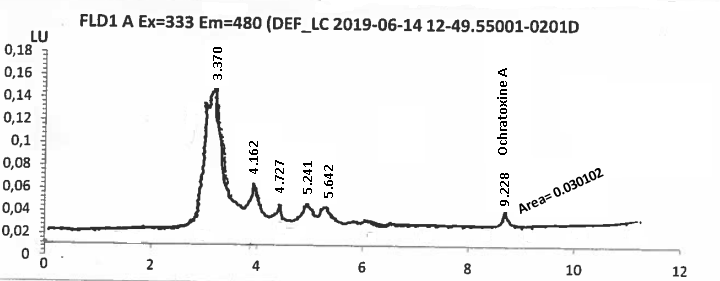
Ochratoxins Determination Principle: Aflatoxins are quantified by high performance liquid chromatography with fluorescence detection and the test sample is extracted with a mixture of water and methanol. The sample extract is filtered, diluted with water and placed on an immune affinity column containing antibodies specific for Ochratoxins A. Ochratoxins are isolated, purified and concentrated on the column and released by post-column bypass.
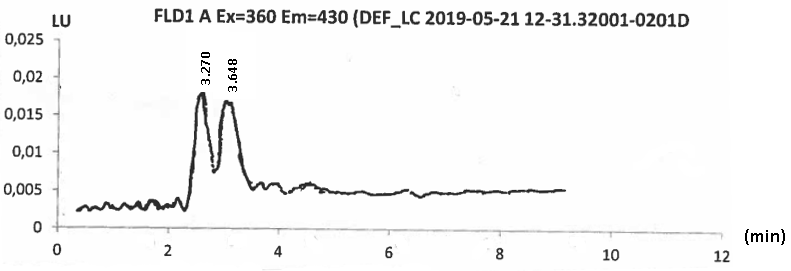
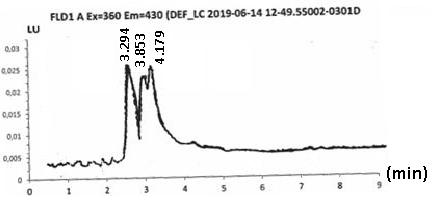
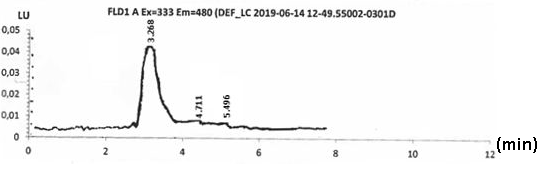
Analysis and Separation Conditions by HPLC: The separation of mycotoxins is carried out by HPLC in reverse phase using a C18 column, dimension 250 mm x 4.6 mm with a particle size of 5 μm. The elution is in isocratic mode. The volume injected is 50 μl for AF and 100 μl for OTA. The elution rate is maintained at 1 ml/min under a pressure developed by the pump of the order of 120 bars. The separation takes place at a temperature of 39°C. Fluorimetric detection is performed with excitation at 360 nm and emission at 430 nm for AF, and with excitation at 333 nm and emission at 430 nm for OTA. Injections are performed every 11 min.
Determination of Caffeine: Caffeine is extracted from solid food by hot water and then it is dosed by CLHP (Reverse Phase Sharing Chromatography).
Cc (mg / kg) = Ccaf (Ac /Acaf) (10/M) Cc: caffeine concentration of the sample. Ccaf: caffeine concentration in the standard solution (mg/l). Ac: peak caffeine area of the sample. Acaf: peak caffeine area of the standard solution. M: test taken in g. Caffeine concentration is calculated directly using STAR chromatographic data acquisition and integration software. The chromatograms and spread sheets provided by the computer are edited and classified to ensure the traceability of the analysis.
Organoleptic Characteristics of Coffees: The cookies were produced following a protocol according to Ben kadri [32].
Ingredients and Origins: Organic coffees without caffeine, gluten free based on carob seeds or oak acorns. Gluten-free flour: The gluten-free flour used in this work for making gluten-free cookies is purchased from the local market. Sugar : Organic sugar is distinguished by its beautiful subtle golden color, cane flavor, does not undergo refining which allows to best preserve its natural richness in mineral salts and trace elements, purchased from the local market.
Biological butter: Color varying from pale yellow to dark yellow. It depends on the diet of the cows, purchased from the farmer in a 350g.
The powder of carob seeds roasted in the laboratory is obtained according to the procedure Ghnimi, et al. [36] while the powder of roasted oak acorns is obtained according to Poiret [37]. The tasting is carried out by a group of coffee purchasing specialists. Table 1 reports the organoleptic characteristics of the coffees obtained from carob and oak acorns. The carob bean coffee is characterized by a very chocolate smell and taste more pleasant in comparison with the traditional commercial coffee less full-bodied and sweeter probably this is due to its sugar content. Very rich in sugars (40-60%) in particular, sucrose (27-40%), fructose (3-8 %) and glucose (3-5%) [38]. For oak acorn coffee, it has an exceptional quality very close to the marketed coffee. Indeed, their bitterness probably due to its richness in polyphenols and a balanced acidity depending on the roasting which has a significant impact on the balance of flavor. The effects of heating time on physical changes (weight, volume, texture and color) of coffee beans (Outspan and Guaxupe coffee) were investigated. Total weight loss at the end of the roasting process was 14.43% (light roasted) and 17.15% (medium to dark roasted) for Outspan and Guaxupe coffee beans, respectively [39]. More a coffee is roasted; more its bitter taste is pronounced and less its acid taste is noted [40].
Almond: purchased from the local market in a 250 g. Used in the manufacture of cookies thanks to their high protein content.
Natural yogurt with no added flavor purchased from the local market in 330g.
Organic eggs highly nutritious eggs purchased from organic farming Dark chocolate: extra fine dark chocolate bought from the local market.
Microbiological Analyzes: Enumeration of coliforms according to NF ISO 4832 [33] Enumeration of total aerobic mesophilic germs (30°C) ISO 4833-1 [34] Enumeration of yeasts and molds according to NF V08-59 [35]
Sensory Analysis of Cookies: A panel of 40 tasters was chosen to carry out the test, preferably by comparison. It was made up of men and women. The hedonic test required a panel of 24 tasters of all sexes and ages. The panel which was used to carry out the descriptive test was quite specific. It was made up of 06 tasters; it’s a panel with good experience in sensory analysis of food. In order to characterize the coffee of carob seeds and that of oak acorns, organoleptic parameters were determined flavor, color, smell and physical appearance. The samples were coded using 03-digit codes. These codes were chosen using random allocation tables. 200: organic cookie (almond flavor) 201: organic cookie (chocolate flavor) witness 202: organic cookie with carob seed coffee 203: organic cookie with oak acorn coffee 204: organic cookie (Bio) with carob bean coffee + oak acorn coffee Sample Preparation: While avoiding any alteration to the cookies, all the samples tested underwent the preference test, the hedonic test and the sensory profile under the same conditions.
Tasting Tests: Minimum training is given to tasters: scoring or evaluation principle, filling in the scoring sheet, nature of the sample, parameters to be evaluated. The tasting cards are designed according to each sensory test to be carried out.
Results and Discussion
Physico-Chemical Analyzes
| Carob seeds coffee | Oak acorn coffee | |
|---|---|---|
| Flavor | Chocolate-sweet | Medium acidity and bitterness |
| Color | Dark brown | Dark brown |
| Odor | Flavored | Flavored |
| Physical appearance | Ground (medium) | Ground (medium) |
Table 1: Organoleptic characteristics of carob bean coffees and oak acorns. Table 2 reported the physicochemical parameters of th
Table 1: Organoleptic characteristics of carob bean coffees and oak acorns. Table 2 reported the physicochemical parameters of the 2 coffees studied. The 2 investigated coffees in our study have pH values: 4.41 for roasted carob bean and 4.38 for roasted oak acorn. Our findings are in agreement with those obtained by Ghnimi, et al. [36] on date kernel coffee and are in agreement with pH found in roasted carob powder [41]. Our products are compliant [42]. The Unroasted carob powder has a pH of 4.81 [41]. Chemical composition of the beverages of Arabica and Robusta coffees beans were investigated by Bicchi, et al. [43]. They conclude that the pH found is function of roasting time. The roasting of coffees is carried out at T1=T2=T3=220°C±10°C, and the times of roasting are 7, 9 and 11min respectively. The pH values for Arabica are 5.12; 4.98 and 5.39 for T1 (7 min), T2 (9 min) and for T3 (11 min) respectively. For Robusta coffee, the pH values are 5.27; 5.24 and 5.47 for 7, 9 and 11 min respectively [44].
| Carob Seed Coffee | Oak Acorn Coffee | |
|---|---|---|
| pH | 4.41 ± 0.01 | 4.38 ± 0.29 |
| Titratable acidity (%) | 0.20 ± 0.05 | 2.61 ± 0.02 |
| Water content (%) | 3.83 ± 0.01 | 2.5 ± 0.01 |
| Ash content (%) | 3.4 ± 0.01 | 2.2 ± 0.01 |
Table 2: Physicochemical characteristics of roasted carob seeds and for roasted oak acorn coffees. *All the analyses were carried
Table 2: Physicochemical characteristics of roasted carob seeds and for roasted oak acorn coffees. *All the analyses were carried out in triplicates. On another hand, the effect of roasting process on phenolic, antioxidant and browning properties of carob powder were investigated by Hilal, et al. [45] they noted that the pH decrease from 5.2 to 4.2 and this decrease is correlated with the temperature and the roasting time, the roasting temperature and the time affected significantly the quality characteristics of the product where the roasting time was found to be a critical factor in determining the overall quality of the product [45]. Benjakul, et al. [46] also reported a gradual decrease in the pH of a model system with increasing heating time. According to Boublenza I [44], Benjakul, et al. [46] and Diviš [47] the pH of the roasted products decreases just a little.
The total acidity (%) in unroasted carob pods is 0.24 [48], titrable acidity (%) for 3 varieties ripe unroasted carob are between 0.55; 0.56 and 0.53 for Wild, Sisam and Fleshy respectively [49]. As you can see Table 2, the titrable acidity of carob roasted seeds coffee is 0.20g of citric acid per 100g of carob seeds. This value is lower than that of oak acorn coffee which is 2.61g of citric acid per 100g of oak acorns. The high value of acidity of oak acorn coffee may be due to the hydrolysis of certain organic acids during the roasting process as well as the duration and storage conditions [50]. Ghnimi, et al. [36] found an acidity value of 2.8g of citric acid per 100g of the coffee in date pits. The same authors Ghnimi, et al. [36] noted that the roasting of varieties date seeds was accompanied by a decrease in pH and increase in titrable acidity. The pH dropped markedly and the titratable acidity increased in varieties of roasted date seeds (Phoenix dactylifera, L) tested as a result of decreased moisture and possibly due to hydrolysis of some of the organic acids present in the seeds [36]. However, Vasconcelos, et al. [51] explained this phenomenon by the decomposition of amines in coffee beans.
The water content provides information on the stability of the product against the risk of spoilage during storage [52]. According to the obtained result (Table 2) we noticed that the moisture content of roasted carob bean coffee is 3.83%. This found value is higher than that of roasted oak acorn coffee (2.5%). The moisture % for carob beans is lower than found by Yousif and Alghzawi [41] who noted that the roasted carob powder contains 9.03%. Boublenza, et al. [44] investigated the possible synergistic effects of the mentioned parameters on final roasted carob powders dried at 110,130 and 150°C for the same processing time (20 min) and noted that the moistures decrease from 9% (initial %) to 6.3 , 4.3 and to 3.5% respectively . Concerning oak acorns, Rakic [53] thermally treated nut at 200°C-15 min noted that the % of moisture range between 3.72 to 7.89%. This % is higher than our finding (2.5%) in roasted oak acorn. The difference of moisture between the roasted carob (3.83%) and the roasted oak acorn (2.5%) could be due to the properties of carob seeds (water retention, hardness...). The moisture content values decreased with increase in roasting temperature and time resulting from dehydration of the date seeds during the roasting process [54]. The deducted dry matter contents are 96% and 97.50% for carob seeds coffee and for oak acorns coffee respectively (Table 2). Concerning the regulation our samples are rich in dry matter contents 96.18 and 97.5% for carob and for oak acorns respectively and poor in water < 5% and are in agreement with the executive decree (N°92- 30 of January 20, 1992) relating to the specifications and the presentation of the coffees which stipulates that the ground coffee must have a moisture content lower than 5%.
The Ash content represented the total amount of mineral salts proteins, organic acids etc… present in the samples. Ash content in seeds from 3 sources of unroasted carob from Algeria varies from ≈ 3% to 4% [55]. As seen Table2, roasted carob bean coffee has ash content (3.4%) and roasted oak acorns coffee has (2.2 %). The value of the total ash was in agreement with previous results [56]. According to Boublenza, et al. [44] the initial carob powder ash content was dried at different temperatures 110, 130 and 150°C for the same time (20 min), they noted that the increase of ash contents is correlated with the temperature. Thus the initial concentration of 3.22% reached 3.78, 4.1, 4.92 for 110, 130 and 150°C respectively. On another hand, the nut was roasting during 15 min at 200°C has initially an ash contents 2.07% increases after roasting to 8.41% [53]. The increase of ash may be explained by the loss of organic matter in favor of mineral matter during thermal treatment [53]. In our study, the difference between the ash of roasted carob coffee content and the ash of roasted oak acorns (Table2) is probably related to the soil and climatic conditions (geographical origin) [57]. Concerning the regulations, only the low ash contents of the products are acceptable for human consumption. Our coffees are in a close agreement with Executive Decree (No. 92-30 of January 20, 1992) relating to the specifications for roasted coffee and intended for consumption which must not contain more than 6% of total ash. In conclusion analyzed physicochemical parameters (pH, ash, water) have shown that our coffees comply with the standards in force.
Quantitative Determination of Primary Metabolites
According to Nutrition analyzes we realized the quantitative determination of the primary metabolites (Total sugars and reducing contents, fat, proteins, fibers) as well as secondary metabolites (Content of polyphenols, flavonoids, condensed and hydrolysable tannins) as well as the evaluation of antioxidant activities (FRAP) and (DPPH). The results are presented in Table 3 (primary metabolites) and Table 4 (secondary metabolites). Naila [55] noted that the % of total sugars in unroasted carob seeds range 14-35%. Total sugar % in unroasted cork oak acorns (Quercus suber L.) grown in three regions in Tunisia is between 4.55-7.08%. In our study, Table 3 shows a richness of roasted carob seed coffee in sugars compared to the roasted oak acorn coffee. Indeed, total sugars (24.5>9.2). Also, as seen Table 3, the roasted carob bean coffee contains more sugars than the control coffees (Date cores, Chicory, Nescafe and coffee x). According to Yousif & Alghzawi [41] the unroasted carob powder contains 45 % while the roasted carob powder contains 38.7% of total sugars, thus, the loss of total sugar according their study represents 4.3%. The loss of total sugar increased with the roasting temperatures [44].The decreases were noted for sucrose, glucose and fructose under the same conditions [44]. The decrease of sugar may be explained by Maillard and polymerization reactions. Maillard reaction requires temperatures superior to 50°C and it is favored by pH 4-7 while caramelization is favored by temperatures superior to 120°C and pH between 3-9 [58]. In our study, the carob seed sample is roasted at 200°C for 6 hours and pH is 4.41 while the oak samples roasted at 150-200°C for 10 min, with a pH is 4.38. Thus, under these conditions, probably, we favorize both reactions (Maillard and caramelization). But, we specify that according the high temperatures used in our study some others browning reactions were made such as melanoids [59]. These reactions give the brown color to the carob and to the oak acorns coffees.
| Carob seeds | Oak acorns | Date cores | Nescafe | Chicory | Coffee X | |
|---|---|---|---|---|---|---|
| Total sugars (mg/g) | 24.5 ± 1.5 | 9.2 ± 1 | 7.2 ± 0.2 | 5.3 ± 2.0 | 7.1 ± 0.4 | 9.1±0.1 |
| Sucrose (mg/g) | 20.3 ± 0.7 | 8.7 ± 0.95 | 7 ± 0.19 | 5 ± 1.99 | 6.9±0.34 | 8.9±0.02 |
| Fat (%) | 5.86 ± 0.12 | 6.28 ± 0.09 | - | - | - | - |
| Protein (%) | 19.97±0.1 | 22.21 ± 0.32 | 5.79 ± 0.05 | 4.35 ± 0.08 | 9.78±0.1 | 16.16±0.16 |
| Fiber (%) | 10.52 ± 0.4 | 5.64 ± 0.22 | 7.22 ± 0.01 | 0.2 ± 0.01 | 9±1 | 0 |
Table 3: Nutritional parameters (primary metabolites) of different coffee samples.
Lipids Composition
Bouzouita, et al. [60] demonstrated that the seed was poor in minerals, in fibers and in proteins but contains an appreciable quantity of lipids. Non roasted carob seeds contain 5.8-6.8% according to Naila [55]. Ayaz, et al. [61] reported that carob seeds have a higher fat content than the pulp (4.44%). This is due probably to the fact that the seed constitutes a stockpile of nutrients. In our investigation, roasted oak acorn coffee has a fat content (6.28%) comparing to roasted carob seeds (5.86%). Roasted carob seeds content is higher than the finding of Yousif & Alghzawin [41] who found 0.74% in roasted carob powder. According to the Yousif AK, et al. [41] the content of crude fat is 0.30% in unroasted carob powder and 0.74% in roasted carob powder. Thus, we noted an increase of crude fat due probably to the process effect (extraction) or the carob variety. However, according to Boublenza, et al. [44], lipids yields decrease as the roasting temperature increases; it is due to the oxidation under the high temperature and the formation of products reacting with amino acids or proteins causing brown pigments, such as melanoidins [62, 63]. In conclusion, for a low fat content carob may be considered as a healthy food source [64, 65] and also acorn fruit can be an interesting nutritional source [66].
Crude Protein
Crude protein is one of the criteria used to assess the nutritional value of a food. The values (29.75-31%) of crude protein are noted in unroasted carob seeds [55]. Concerning oak acorns, in our study, we noted that the roasted oak acorns coffee has more protein content than roasted carob beans coffee (22.21>19.97%) (Table 3). Result of protein in carob coffee (19,97%) is higher than that found by Yousif & Alghzawi [41] who noted 5.82% of protein in roasted carob pod. Also the % of protein in roasted oak acorn found (22,21 %) is higher than the % noted by Rakic [53] in roasted oak acorn content (4.18 %). Besides, we noted that our 2 coffees (carob and oak acorns) have a higher protein contents than the control coffees (date kernel, Nescafe, Chicory and coffee x, (5.79, 4.35, 9.78, 16.16%) respectively. It seems that the geographic origin and the genotype are among the main causes of the differences noted between our results and the results of Yousif & Alghzawi [41] for roasted carob and of Rakic [53] for roasted acorns. As known, the composition of proteins content has also been shown to be profoundly changed by the roasting of the green coffee bean [67]. According to the literature, the % of protein decreases after the roasting process by Maillard reaction which is chemical reaction between reducing carbohydrates and various amino acids, peptides, and proteins, processing of foods, this means roasting leads to protein denaturation with degradation. Coffee bean protein subunits are integrated into the polymeric structure of melanoidins formed during roasting give to the coffees the brown color. Flyenn, et al. [68] have shown that locust bean has good nutritional quality and is rich in glutamic and arginine acids. It can be an excellent ingredient in sports food, because these two amino acids increase muscle mass, collagen synthesis and glycogen production. In conclusion, carob may be considered as healthy because of amounts of protein (up to 7.6%) and a low fat content (0.2-2.3%) [69, 70]. However, acorn fruit can be classified as energy food and can be an interesting nutritional source [66].
For fibers, several studies have been carried out on locust bean fibers and have revealed some benefits effects [71] as well as for carob fiber [71, 72]. Total fiber % in unroasted carob seeds is of 4% [55]. The results of our study (Table 3) show that the roasted carob beans coffee has a fiber content (10.52%) and roasted oak acorn coffee (5.64%). Besides, according to the obtained results we noted that the carob seeds coffee has a higher fiber content than other control coffees (Date Nuts, Nescafe, Chicory and Coffee x) with the values (7.22; 0.2; 9 and 0%) respectively. Yousif & Alghzawi [41] have shown that carob beans coffee is rich in fiber and does not contain caffeine or the theobromine. According to Ooestervold, et al. [73] the roasting process causes a decrease in soluble fiber content and the decrease is strongly correlated with the degree of roasting.
Quantitative Determination of Secondary Metabolites
Polyphenols have potential health benefits [74, 75]. Recently, attention was focused on locust bean pulp because of its polyphenolic content and dietary fiber which are the source of various benefits for human health [76]. Polyphenols contents in unroasted carob seeds from 3 different areas range between 4.02-4.87 mg/g dry matter and in unroasted carob pulp from the same sources the contents range between 5.07-5.45 mg/g dry matters [55]. The TPC of acorn kernel is 75.2 g standard equivalent/kg according to Ferraz de Oliveira, et al. [77]. Table 4 shows that the contents of polyphenols in roasted carob bean and in roasted oak acorns coffees are 15.29 and 7.5 mg/g respectively. Also, Table 4 shows that the coffee of roasted oak acorns has the highest content of polyphenols (15.29 mg/g) compared to the control coffees (Date cores, Nescafe, Chicory and coffee x) (3.51, 6.4, 6.3 and 8.4 mg/g) respectively. As known, the roasting process increases the level of total phenolic compounds. Indeed, according to Fikry, et al. [54] the total phenolic content of the brew made from defatted roasted date seed powder increased with an increase in roasting temperature and time. Boublenza, et al. [44] noted that the increasing of total phenolic compounds is correlated with the temperature. Clearly, the increase of total polyphenol content (g TAE/100g)
in roasting of two acorns varieties are (+0.1) and (+1.80) for Q. branti under 120 and 150°C respectively and (+1.95) and (+3.69) for Q. castaneifolia under 120 and 150°C respectively [78]. Sahin, et al. [45] noted that the increase in the total phenolic compounds of the brews could be attributed to the formation of Maillard reactions with phenolic such as pro anthocyanidins (condensed tannins) and gallic acid, during the roasting process). It can be suggested that the non-enzymatic browning and pyrolysis reactions occurring during the roasting process, which enhance the development of brown pigments, consequently give a darker color [79]. Our studycan help devolop new food products with better nutritional quality and beneficial health aspects.
| Carob seeds | Oak acorns | Date cores | Nescafe | Chicory | Coffee x | |
|---|---|---|---|---|---|---|
| Polyphenols (mmg/g) | 7.5 ±0.5 | 15.29 ±0.2 | 3.51 ±0.16 | 6.4 ±0.12 | 6.3 ±0.3 | 8.4 ±0.4 |
| Flavonoids (mg/g) | 3.4 ±0.27 | 3.49 ±0.45 | 1.14 ±0.5 | 1.74 ±0.1 | 1.25 ±0.08 | 2.7 ±0.01 |
| condensed tannins (mg/g) | 0.31 ±0.1 | 0.20 ±0.05 | 0.02 ±0.001 | 0.02 ±0.001 | 0.02 ±0.001 | 0.04 ±0.002 |
| hydrolysable tannins (mg/g) | 0.16 ±0.08 | 0.42 ±0.3 | 0.11 ±0.002 | 0.20 ±0.05 | 0.22 ±0.04 | 0.29 ±0.05 |
Table 4: Nutritional parameters (secondary metabolites) of different coffee samples.
In unroasted carob seeds, Naila [55] noted that the values of tannins contents are between 0.12-0.13 mg/g DM for condensed tannins while hydrolysable contents tannins are between 0.03-0.06 mg/g DM (dry matter). Average of extractable tannins of acorn kernel from Q. suber along 6 shedding periods is 73.4 (g standard equivalent/kg acorn kernel). In our study (Table 4), the contents of condensed tannins are 0.31 and 0.20 mg/g respectively and the hydrolysable tannins contents are 0.16 and 0.42 mg/g in roasted carob seeds and in roasted acorns respectively. The content of tannins increases from 3.15% in unroasted carob powder to 3.75% in roasted carob powder [41]. Besides, according to the obtained results in our study, we noted that the control coffees contain a low amount of tannins (Table4) by comparison with the roasted carob and roasted acorns. In general, polyphenols influence the structural, functional, nutritional and digestibility properties of proteins [80].
Today, antioxidative properties of the plants have become of a great interest due to their possible uses as natural additives for replacing synthetic ones. Antioxidant activities of plant polyphenols have beneficial health functions for retarding, aging, and preventing cancer and cardiovascular diseases [81]. Carob pulps present a significant concentrations of bioactive principles that often reflect a considerable antioxidant potential [82] and confer an important medicinal and functional properties [83, 84]. The acorns of all species must be tested and adjusted for their antioxidant activity. For these reasons and for others reasons not cited, the natural antioxidants have recently become a major area of researches [85, 86]. The values activities noted in unroasted carob seeds are between 93-97% according to Naila [55]. However, in native acorn material from unleashed acorn nuts have been very efficient inhibitors (94-96%) [87]. In our case, the result of DPPH (%) (Table 5) shows a very significant activity ranging from 90 % for roasted oak acorn and a low activity (34. %) for roasted carob seeds, 90 and 34% are higher than those of controls (date kernels, Nescafe, Chicory and Coffee x) (23.94%, 16.40%, 7.76% and 25.27%) respectively.
| Carob seeds | Oak acorns | Date cores | Nescafe | Chicory | Coffee X | Total tube | Reference tube | |
|---|---|---|---|---|---|---|---|---|
| DPPH activity (%) | 34.03 ±0.03 | 89.99 ±0.01 | 23.94 ±0.08 | 16.40 ±0.01 | 7.76 ±0.06 | 25.27 ±0.1 | 100 | 84,075 |
| FRAP activity (%) | 47.77 ±0.1 | 50.70 ±0.09 | 56.15 ±0.15 | 50.45 ±0.01 | 52.27 ±0.02 | 54.17 ±0.01 | 100 | 97.93 |
Table 5: Biological activities of different coffees. The difference in roasted carob seeds activity (34%) and for oak (90%) is du
Table 5: Biological activities of different coffees. The difference in roasted carob seeds activity (34%) and for oak (90%) is due to the phenolic contents between seeds from carob and from oak acorns (Table 4). Indeed, roasted carob seeds contain 7.5 while roasted oak acorn seeds contain 15 mg/ml of total phenolic compounds. Some researches demonstrated that the DPPH activity is linked to the concentration of phenolic compounds [44, 45]. Regarding the antioxidant activity (FRAP), we noted that there is no significant difference between the two investigated coffees (carob and oak acorns) and the control coffees. The values of 47.77 and 50.77 were noted for the roasted carob beans and for the roasted oak acorns respectively. Nadezhda, et al. [88] noted that the antioxidant activity of carob flour (FRAP) is 84.23±5.08 ((mMTE/g dw). Several factors influence the antioxidant potential and the reduction kinetics, in particular the reaction conditions (time, antioxidant/DPPH ratio, type of solvents, pH) and in particular the phenolic profile. In conclusion, consumers have the right to expect food that they buy and that they eat good healthy food. Mycotoxins are presenting a health risk are aflatoxins, ochratoxins, patulin, trichothecenes, fumonisins (FB), and zearalenone (ZEN) [89]. A recent publication García-Moraleja A [90] reported the co-occurrence of a large number of mycotoxins in roasted, soluble and portioned coffee products sold in Spain.
Ochratoxin A is the only mycotoxin for which regulatory limits have been established in coffee (e.g. 5 μg/kg in roasted coffee beans and ground roasted coffee, 10 μg/kg in soluble coffee products in the EU). The European legislation [91] is often considered as the most stringent. In our study, we did not detect aflatoxins (G2, G1, B2, B1) in carob bean coffees (Figure 1) where the retention times are 6.370; 7.150; 7.500 and 8.570 min. for G2; G1; B2 and aflatoxin B1 respectively. Besides, we did not detect aflatoxins (G2, G1, B2, B1) in oak acorns (Figure 2) where the retention times are 6.370; 7.150; 7.740 and 8.844 min for G2, G1, B2, and B1 respectively. Besides, we did not detect aflatoxins (G2, G1, B2, B1) in oak acorns (Figure 2) where the retention times are 6.370; 7.150; 7.740 and 8.844 min for G2, G1, B2, and B1 respectively.
The calculated amount of OTA is 3.947 mg/µl in coffee carob seeds (Figure 3) within retention time equal to 9.228 min.
So, we don’t detected OTA in oak acorns (Figure 4) with a retention time equal to 9.329 min. Our results comply with the current standards. A study conducted by Vaclavik, et al. [92] investigated the occurrence of a wide range of mycotoxins in coffee by a new liquid chromatography tandem mass spectrometry (LC-MS/MS) method. Ochratoxin A, ochratoxin B, fumonisin B1 and mycophenolic acid were found in 36%,
32%, 10%, and 16% of tested products respectively. The OTA content of 30 roasted coffees purchased in French supermarkets was evaluated by two validated different methods. All samples containing OTA ranged from trace to 11.9 µg/kg. The improper storage of coffee beans can allow the development of mycotoxins which give coffee an earthy and musty flavor, of which OTA is the most worrying [93].
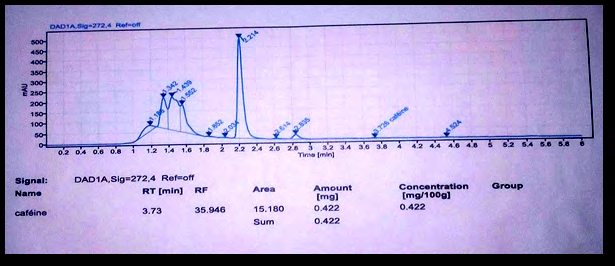
Caffeine has been proven to improve night time driving performance under simulated [94, 95] and real-life conditions [96]. Bright light therapy combined with caffeine at the beginning of the night has a favorable effect on lane drifting at the end of the night [97]. According to the French coffee committee, decaffeinated coffee is not completely free of caffeine. It actually contains varying amounts of caffeine, usually around 3 mg per cup. According to the results in Figure 5, our carob coffee contain a very low caffeine level (0.422 mg/100 g) but according our HPLC analyse we did not detect caffeine in oak acorns. So our coffees carob beans and oak acorns coffee can be classified as naturally decaffeinated coffees.
Integration of Coffees Carob Beans and Oak Acorns in Biscuit
Carob flour (from carob seeds) is used to make dietetic products and products for celiac patients (gluten-free products) [98]. On the other hand, acorns, the fruits of oak, have been used for edible purposes as a staple food for centuries [99]. Another use of the acorn was the production of a coffee substitute [16]. In this study, to make a cake with coffees based on carob seeds and/or oak acorns; attempts made to integrate coffee as a flavoring agent. Tests have made it possible to determine the optimal dose of coffee to be integrated which is in this study 50 mg/50 mg. The rheology of the dough is of considerable importance in the manufacture of cookies [100]. In this work, we discuss the two main steps namely kneading and cooking. The optimal kneading time chosen is 10 min which gives consistency, a non-sticky dough with good malleability [32]. By experience, the thickness of the dough is less than 0.5 cm in order to avoid any influence on the tasters. According to Manley [101], the cooking time of the cake can vary from 6 to 10 minutes for a temperature between 180 and 220°C. To be reassured, several cooking tests were carried out. The selected temperature is between 140/150°C for 15 to 20 minutes, which gave golden cookies. After cooling, the trays are then removed from the oven and cooled under air conditioning at a temperature of 25°C. Finally, the cookies are packaged in plastic jars each sample weighs on average 20 g ± 2 g.
The microbiological quality of the raw materials (coffee of carob seeds, coffee of oak acorns) and the samples of cookies, we carried out microbiological analyzes such as the enumeration of the total germs, the research of yeasts and mold and total coliforms. The results of the enumeration of the microorganisms are given in Table 6. In light of the results, we can conclude that the number of total mesophilic flora <5.105 CFU/ml which is in agreement with the standard. The total absence of yeasts and molds is the very low coliform number <10 CFU/g. This very low of coliform number <10 CFU/g comply with the standard (10² CFU/ g) fixed by regulation EC 2073/2005) [102]. The obtained results are due to the heat treatment applied and compliance with good manufacturing practices (GMP) especially for coliform which are hygiene indicator germs. This low level of microorganisms gives the cookies good sanitary quality and promotes long-term conservation. Concerning sensory analyzes, (Preference test). The roasting time was a key factor in determining the overall quality of the product inducing some changes such of the color parameters of the carob powders [103].
| Germs | |||
|---|---|---|---|
| Samples | Total Germs 10⁵ UFC/ ml | Yeast 10² UFC/ ml | Total Coliforms UFC/ ml |
| Carob seeds coffee | <10⁵ | 0 | 0 |
| Oak acorns coffee | <10⁵ | 0 | 0 |
| Organic cookie (almond flavor) | <10⁵ | 0 | 0 |
| Organic cookie (chocolate flavor) | <10⁵ | 0 | 0 |
| Organic cookie with carob seeds coffee | <10⁵ | 0 | 0 |
| Organic cookie with oak acorns coffee | <10⁵ | 0 | 0 |
| Organic cookie with carob seeds coffee + oak acorns coffee | <10⁵ | 0 | 0 |
Table 6: Microbiological characteristics of different samples of coffees and cookies.
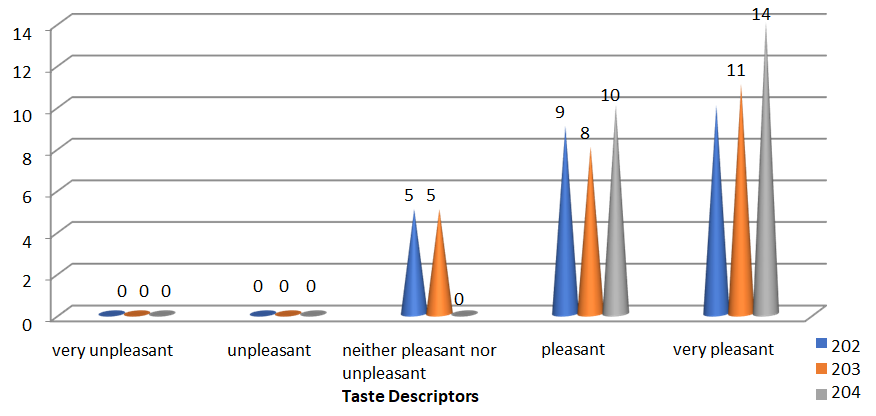
The sensory evaluation was conducted by trained panelists with variable number of judges who answer specific questions. Some judges are coffee purchase negotiators. Table 7 shows the percentage of overall appreciation of the different products. Indeed, the different samples of cookies with roasted carob seeds coffee (202) or with roasted oak acorn coffee (203) have higher % of appreciation than the control cookies chocolate taste (201) and then almond taste (200) where18 > 10% and 22 > 10% respectively. The sample of cookies with oak acorn coffee (203) is better appreciated than the cookies with carob seeds coffee (202) (22>18%) because the aroma and the flavor resulting from the roasted acorns coffee. On the other hand, the majority of tasters preferred the cookie with the mixture (carob+oak acorns) (204) (40%). As you can see Table 7, this % is much higher than the % of standard samples (chocolate flavor cookies (201): 10%; and almond-flavored cookies (200): 10%). Besides, this % is higher than the % of cookies with carob (202) (18%) and cookies with oak acorns (203) (22%). We can say that the cookie with the mixture of 2 coffees (204) is preferred by the majority of tasters resulting from the cumulative sensory profiles (Aromas, flavor, taste) of roasted carob seeds and of the roasted oak acorns. Antonella, et al. [104] evaluated the effect of added acorn flour on the physico-chemical and sensory properties of biscuits, they conclude that some volatile compounds were observed in the acorn-added biscuits. Nevertheless, according to studies [54, 105, 106, 107] we conclude that for this part further formulations are necessary to obtain the best formula for the bio cookies. Concerning the pleasantness or unpleasantness characteristics of the cookies are measured through the hedonic test. The results of the test (Figure 6) show that no taster mentioned the cookies as unpleasant or very unpleasant. According to Viesturs, et al. [108] green unroasted coffee beans contain about 250 different compounds, whereas roasted coffee beans have about 655−800 compounds influencing the flavor. In our study, we noted a little difference between the cookies with the carob coffee (202) (71%) and with the oak acorn coffee cookie (203) (78%). This is probably due to the presence of an undesirable taste in roasted carob seeds caused by the process effects (200°C/6H). The majority of tasters (100%) prefer cookies (204) (mixture of roasted carob seeds and with roasted oak acorns) probably because cumulative effects of flavor and aroma from the mixture.
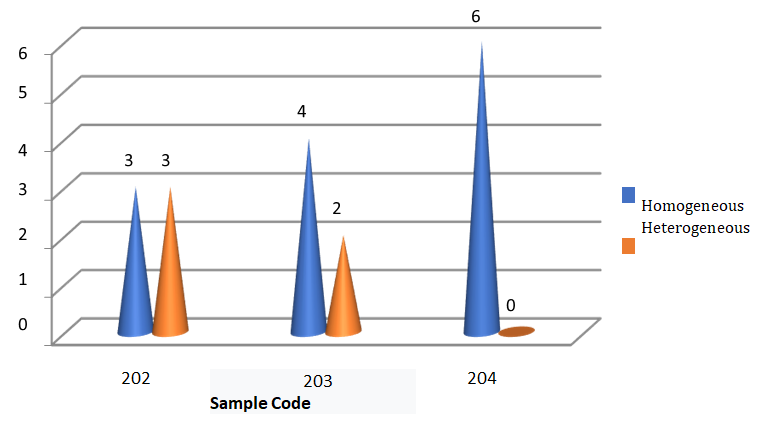
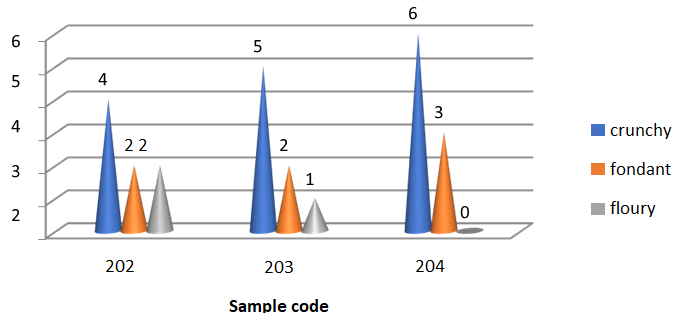
According to Fikry, et al. [54] the aroma is considered as an important indicator of the quality of brewing date seeds. Diaz-rojas, et al. [109] identified the odor-active volatiles of the powder of roasted acorns (Quercus humboldtii Bonpl), they concluded that some compounds were identified such as buttery/caramel, smoke/roasted, and fruity odor notes which are common to those of roasted coffee. The 3 cookies (202, 203, and 204) have good taste characteristics and are appreciated with a preference for 204 (mixture). In conclusion, further investigations should be made now, for homogeneous or heterogeneous cookies textures. Textural changes of coffee beans are affected by roasting conditions [110]. Mouth-feel or texture is a further important sensory index for coffee [111]. As you can see Figure 7 the oak acorn coffee cookies (203) were noted homogeneous for 66%. This may be due to the appearance and the color of the oak acorn coffee. Antonella, et al. [104] noted that for appearance, the acorn-added biscuits were darker, larger, more voluminous and more friable than control biscuits. However, the biscuit enriched with carob bean coffee (202) was noted as homogeneous for 50%. The distribution of particles is related to the particle size of the carob bean coffee. Taha, et al. [112] investigated the chemical, functional and sensory properties of carob juice. They conclude that particle and powder carob juices significantly differed from grape juice for sweet and stringency intensity, and this difference could be due to the fact that carob pods contain high amounts from carbohydrate. According to Figure 7, only the cookie with the mixture of two coffees (204) has a completely homogeneous appearance for 100 % according to the tasters. In fact, we noticed that when the powder of two coffees is mixed with the other ingredients, the brown color spreads evenly over the whole dough. Habibzadeh and Seyedain [105] evaluated several proprieties of wafer cream by replacing cocoa powder with carob pod and chicory root powders noted for texture, that the rheological properties decreased with increasing carob pod. Concerning crunchy, melting, floury characteristics of cookies. According to Fikry, et al. [54] physicochemical, quality, is found to be significantly influenced by the roasting temperature and time. Figure 8 shows the evolution of descriptive parameters of cookies textures. The cookie (203) (enriched with oak acorn coffee) has the following characteristics: crunchy for 83%; fondant: 33% and floury 16%. However, the cookie coded (202) enriched with carob bean coffee has a physical characteristic similar to the cookie enriched with oak acorn coffee: Crunchy (66%), melting (33%) and floury (33%). The cookie coded (204) (enriched with carob and with oak acorn coffees) is appreciated for crunchy criteria: 100%, fondant: 50%, and floury; 0%. The cookie coded (204), therefore presents the crunchy, melting and non-floury aspect. Barroso, et al. [113] evaluated chemical and sensory properties of sandwich cookies made with carob powder noted that sandwich cookies only with carob powder had lower texture score in comparison with sandwich cookies containing textured soy protein and sandwich cookies only with cocoa powder. The effect of water activity aw on the textural properties of cookies is of great importance [114].
| Number of tasters who preferred the sample (N) | |
|---|---|
| Code 200 (for the organic almond flavor cookie) | 4 (10%) |
| Code 201 (for the organic chocolate flavor cookie) | 4 (10%) |
| Code 202 (for the organic cookie with carob seed coffee) | 14 (18%) |
| Code 203 (for organic cookie with oak acorn coffee) | 16 (22%) |
| Code 204 (for the organic cookie with carob seed coffee + oak acorn coffee) | 22 (40%) |
Table 7: Results of the cookie preference test.
Conclusion
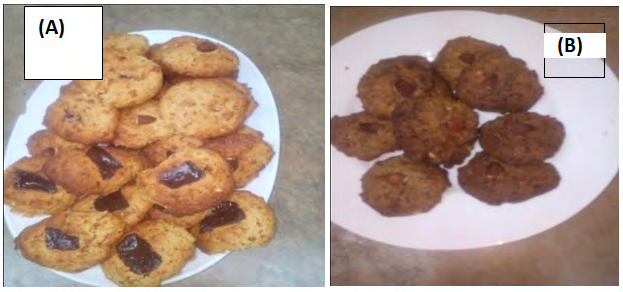
Two objectives fixed from this study; the first one is to developing a strategy of valorization for varieties of carob seeds and oak acorns by a biotechnological process and the second objective is to make an “bio” cookie by integrating organic coffee without caffeine. According to the obtained results, particularly a high content of dry matter, biological activities (antioxidant and anti-radical activity) and nutritional quality with a wealth of proteins, fibers, polyphenols from carob seeds and from oak acorns, reveal real potential for the production of caffeine-free coffee. The results of the process of integrating organic coffees without caffeine in “bio” cookies reveal that the cookies obtained have an appreciated pleasant, with a crisp appearance, a little melting and homogeneous to varying degrees depending on the type of cookie. The cookie with the mixture is the most appreciated by the tasting panel for characteristics such as flavor and taste. Figure 9 shows to us the cookies witness (A) and cookie with coffees (B). These cookies could be sold as an important bio product for human health. However, further researches are needed.
References
-
El Bouzdoudi B, Saïdi R, Embarch K, El Mzibri M, Nejjar El Ansari Z, et al. (2017) Mineral composition of mature carob (Ceratonia siliqua L.) pod: study. Int Food Sci Nutr Engl 7(4): 91-103.
-
Goulas V, Stylos E, Chatziathanasiadou M, Mavromoustakos T, Tzakos A (2016) Functional components of carob fruit: linking the chemical and biological space. Int J Mol Sci 17(11): 1875.
-
Barak S Mudgil D (2014) Locust bean gum: processing, properties and food applications-a review. Int J Biol Macromol 66: 74-80.
-
Ayaz FA, Torun H, Ayaz S, Correia PJ, Alaiz M, et al. (2007) Determination of chemical composition of Anatolian carob pod (Ceratonia siliqua L.): sugars, amino and organic acid, minerals and phenolic compounds. J Food Qual 30(6): 1040-1055.
-
Pinto J, Spinola V, Llorent-Martinez EJ, Fernandez-de Cordova ML, Molina-Garcia L, et al. (2017) Polyphenolic profile and antioxidant activities of Madeiran elderberry (_Sambucus lanceolata_) as affected by simulated in _vitro_ digestion. Food Res Int 100(3): 404-410.
-
Lingua MS, Wunderlin DA, Baroni MV (2018) Effect of simulated digestion on the phenolic components of red grapes and their corresponding wines. J Funct Foods 44: 86-94.
-
Qin Y, Wang L, Liu Y, Zhang Q, Li Y, Wu Z (2018) Release of phenolic compounds from _Rubusidaeus idaeus L_. dried fruits and seeds during simulated in vitro digestion and their bio-activities. J Funct Foods 46: 57-65.
-
Ydjedd S, Bouriche S, Lopez-Nicolas R, Sanchez- Moya T, Frontela-Saseta C, et al. (2017) Effect of in vitro gastrointestinal digestion on encapsulated and nonencapsulated phenolic compounds of carob (Ceratonia siliqua L.) pulp extracts and their antioxidant capacity. J Agric Food Chem 65(4): 827-835.
-
Rodriguez-Roque MJ, De Ancos B, Sanchez-Moreno C, Cano MP, Elez-Martinez P, et al. (2015) Impact of food matrix and processing on the in _vitro_ bioaccessibility of vitamin C, phenolic compounds, and hydrophilic antioxidant activity from fruit juice-based beverages. J Funct Foods 14: 33-43.
-
Haddarah A, Ismail A, Bassal A, Hamieh T, Ioannou I, et al. (2013) Morphological and chemical variability of Lebanese carob varieties. Eur Sci J E S J 9(18).
-
Akcan T, Gökçe R, Asensio M, Estevez M, Morcuende D (2017) Acorn (_Quercus spp_.) as a novel source of oleic acid and tocopherols for livestock and humans: discrimination of selected species from Mediterranean forest. J Food Sci Technol 54(10): 3050-3057.
-
Xu J, Cao J, Yue J, Zhang X, Zhao Y (2018) New triterpenoids from acorns of Quercus liaotungensis and their inhibitory activity against α-glucosidase, α-amylase and protein 554 tyrosine phosphatase 1B. J Functional Foods 41: 232-239.
-
Korus J, Witczak M, Ziobro R, Juszczak L (2015) The influence of acorn flour on rheological properties of gluten-free dough and physical characteristics of the bread. Eur Food Res Technol 240: 1135-1143.
-
Cantos E, Espin J, Lopez C, Barberan FA (2003) Phenolic compounds and fatty acids from acorns (Quercus spp.): The main dietary constituent of free ranged Iberian pigs. J Agric Food Chem 51(21): 6248-6255.
-
Pinna C (2013) Acorn bread: A traditional food of the past in Sardinia (_Italy_). J Cult Herit 14(3): 71-74.
-
Pignone D, Laghetti G (2010) On sweet acorn (_Quercus_ spp.) cake tradition in Italian cultural and ethnic islands. Genet Res Crop Evol 57(8): 1261-1266.
-
Korus A, Gumul D, Krystyjan M, Juszczak L, Korus J (2017) Evaluation of the quality, nutritional value and antioxidant activity of gluten-free biscuits made from corn-acorn flour or corn-hemp flour composites. Eur Food Res Technol 243: 1429-1438.
-
Svec I, Hruskova M, Kadlcíkova I (2018) Features of flour composites based on the wheat or wheat-barley flour combined with acorn and chestnut. Croat J Food Sci Technol 10(1): 89-97.
-
Molavi H, Keramat J, Raisee B (2015) Evaluation of the cake quality made from acorn wheat flour blends as a functional food. J Food Biosci Technol 5(2): 53-60.
-
NF ISO 1842 (1992) Products derived from fruits and vegetables-Measurement of pH.
-
NF V05-109 (1970) Products derived from fruit and vegetables-Conventional determination of the soluble dry residue (refractometric method).
-
NF V03- 903 (1966) Oil seeds. Determination of water and volatile matter content.
-
ISO 659 (1998) Oil seeds-Determination of oil content (Reference method).
-
Dubois M, Gilles KA, Hamilton JK, Rebers PA, Smith F (1956) Colorimetric method for determination of sugars and related substances. Anal chem 28(3): 350-356.
-
NT 76.05 (1983) Animal feeding stuffs-Determination of nitrogen content and calculation of protein content.
-
NT 76.10 (1983) Animal feeds-Determination of cellulose content.
-
Djeridane A, Yousfi M, Nadjemi B, Boutassouna D, Stocker P, et al. (2006) Antioxidant activity of some Algerian medicinal plants extracts containing phenolic compounds. Food Chem 97(4): 654-660.
-
Swain T, Hillis WE (1959) The phenolic constituents of _Prunus domestica_ _I._ -The quantitative analysis of phenolic constituents. J Sci Food Agric 10(1): 63-68.
-
Mole S, Waterman PG (1986) Tannic acid and proteolytic enzymes: Enzyme inhibition or substrate derivation. Phytochemistry 26(1): 99-102.
-
Bate-Smith EC (1973) Haemanalysis of tannins: The concept of relative astringency. Phytochemistry 12(4): 907-912.
-
Mansouri A, Embarek G, Kokkalou E, Kefalas P (2005) Phenolic profile and antioxidant activity of the Algerian ripe date palm fruit (_Phoenix dactylifera_) Food Chem 89(3): 411-420.
-
BENKADRI S (2010) Contribution à la diversification de l’alimentation pour enfants cœliaque: fabrication de farine-biscuit sans gluten. Thèse de Magister en science alimentaire. Option: Biochimie et Technologies alimentaires. INATAA Université Mentouri-Constantine, pp: 88.
-
NF ISO 4832 (2006) V08-015 Microbiology of food and animal feeding stuffs-Horizontal method for the enumeration of coliforms-Colony count technique.
-
NF EN ISO 4833-1 (2013) Microbiology of the food chain-Horizontal method for the enumeration of microorganisms - Part 1: colony-count at 30 °C by the pour plate technique.
-
NF V08-59 (2002) Microbiology of food animal feeding stuffs-Enumeration of yeasts and moulds by colony- count technique at 25°C-Routine method.
-
Ghnimi S, Almansoori R, Jobe B, Hassan MH, Kamal- Eldin A (2015) Quality evaluation of coffee-like beverage from date seeds (_Phoenix dactylifera L_.). J Food Process Technol 6(12).
-
Danie Poiret (2015) Dossier santé, Nutrition santé, Remedes Naturels, Tisanes et infusions.
-
Avallone R, Plessi M, Baraldi M, Monzani A (1997) Determination of chemical composition of carob (_Ceratonia siliqua_): protein, fat, carbohydrates, and tannins. J Food Compos Anal 10(2): 166-172.
-
Marija RJ, Natalija RD, Biljana RC, Slavica G, Božana O (2012) Changes of physical properties of coffee beans during roasting. Acta Period Technol 43: 21-31.
-
Wintgens IN (2009) Coffee: growing, processing, sustainable production. A guidebook for growers, processors, traders and researchers. (Edition), Wiley- VCH, Weinheim, Germany, pp: 766-796.
-
Yousif AK, Alghzawi HM (2000) Processing and characterization of carob powder. Food chem 69(3): 283-287.
-
William MAD, Frank KI, Victor KL (2004) Nutrition et performances sportives. (Edition), De Boeck supérieur, France, pp: 99.
-
Bicchi CP, Panero OM, Pellegrino GM, Vanni AC (1997) Characterization of roasted coffee and coffee beverages by solid phase microextraction−Gas chromatography and principal Component analysis. J Agric Food Chem 45(12): 4680-4686.
-
Boublenza I, Abderrahmane LH, Ghaffari L, Ruiz K, Fabiano-Tixier AS, et al. (2017) Influence of Roasting on Sensory, Antioxidant, Aromas, and Physicochemical Properties of Carob Pod Powder (_Ceratonia siliqua L._). J Food Qual 2017: 10.
-
Sahin-Nadeem H, Topuz A, Pischetsrieder M, Ozdemir F (2009) Effect of roasting process on phenolic, antioxidant and browning properties of carob powder. Eur Food Res Technol 230(1): 155-161.
-
Benjakul S, Lertittikul W, Bauer F (2005) Antioxidant activity of Maillard reaction products from a porcine plasma. Food Chem 93(2): 189-196.
-
Divis P, Porizk J, Krikala J (2019) The effect of coffee beans roasting on its chemical composition. Potr SJF Sci 13(1): 344-350.
-
Turhan I, Tetik N, Aksu M, Karhan M, Certel M (2006) Liquid solid extraction of soluble solids and total phenolic compounds of carob bean (_Ceratonia siliqua L_.). J Food Process Eng 29(5): 498-507.
-
Benchikh Y, Paris C, Louaileche H, Charbonnel C, Ghoul M, et al. (2016) Comparative characterization of green and ripe carob (Ceratonia siliqua L.): physicochemical attributes and phenolic profile. J Food Sci Technol 1(3).
-
Nicoli MC, Severini C, Dalla RM, Lerici CR (1991) Effect of some extraction conditions on brewing and stability of coffee beverage. 14th International Colloquium on Coffee Science (ASIC), San Francisco.
-
Vasconcelos ALS, Franca AS, Glόria MBA, Mendonça JCF (2007) A comparative study of chemical attributes and levels of amines in defective green and roasted coffee beans. Food chem 101(1): 26-32.
-
Lecheb F (2010) Extraction et charactérisation physico- chimique et biologique de la matière grasse du noyau des dattes : essai d’incorporation dans une crème cosmétique de soin. Mémoire de Magister. Université M’Hamed Bougara Boumerdès, pp : 179.
-
Rakic S, Povrenovic D, Tesevic V, Simic M, Maletic R (2006) Oak acorn, polyphenols and antioxidant activity in functional food. J Food Eng 74(3): 416-423.
-
Fikry M, Yusof YA, Al-Awaadh AM, Abdul Rahman R, Chin NL, et al. (2019) Antioxidative and Quality Properties of Full-Fat Date Seeds Brew as Influenced by the Roasting Conditions. Antioxidants 8(7): 226.
-
Gaouar Naila (2011) Etude de la valeur nutritive de la caroube de différentes variétés Algériennes. Diplôme de Magister en Agronomie Option: Nutrition. Universite Abou Bekr Belkaid- Tlemcen.
-
Rakic S (2000) Effect of oak acorn extracts and lipid oxidation kinetics. J Agric Sci 45(2): 139-145.
-
Bezzala A (2005) Essai d’introduction de l’arganier dans la zone de M’doukel et évaluation de quelques paramètres de résistance à la sècheresse. Magister en Sciences Agronomiques, Université El Hadj Lakhdar, Batna.
-
Kroh LW (1994) Caramelisation in food and beverages. Food Chem 51(4): 373-379.
-
Bastos MD, Monaro E, Siguemoto E, Séfora M (2012) Maillard reaction products in Processed Food: Pros and Cons. (Edn.), Food industrial processes. Methods and Equipment, Benjamin Valdez, São Paulo University, Brazil.
-
Bouzouita N, Khaldi A, Zgoulli S, Chebil L, Chekki R, et al. (2007) The analysis of crude and purified locust bean gum: A comparison of samples from different carob tree populations in Tunisia. Food Chem 101(4): 1508-1515.
-
Ayaz, FA, Torun H, Glew RH., Bak ZD, Chuang LT, et al. (2009) Nutrient content of carob pod (Ceratonia siliqua L.) flour prepared commercially and domestically. Plant Food Hum Nutr 64: 286-292.
-
Iipumbu L (2008) Compositional analysis of locally cultivated carob (_Ceratonia siliqua_) cultivars and development of nutritional food products for a range of market sectors. Thesis (Msc Food Sc (Food Science)) University of Stellenbosch, Stellenbosch.
-
Nursten H (2005) The Maillard Reaction Chemistry, Biochemistry and Implications. J Am Chem Soc 127(41): 14527-14528.
-
Biner B, Gubbuk H, Karhan M, Aksu MS, Pekmezci M (2007) Sugar profiles of the pods of cultivated and wild types of carob bean (_Ceratonia siliqua L._) in Turkey. Food Chem 100(4): 1453-1455.
-
Sigge GO, Lipumbu L, Britz TJ (2011) Proximate composition of carob cultivars growing in South Africa. S Afr J Plant Soil 28(1): 17-22.
-
Christos NR, Zoi MP, Apostolos PK, Eleni MA (2017) Nutritional quality of kermes oak (Quercus coccifera L.) acorns as affected by altitude in a typical Mediterranean area. Arch Anim Breed 60: 71-78.
-
Feldman RS, Ryder WS, Kung JT (1969) Importance of nonvolatile compounds to flavor of coffee. J Agric Food Chem 17(4): 733-739.
-
Flynn NE, Meininger CJ, Haynes TE, Wu G (2002) The metabolic basis of arginine nutrition and pharmacotherapy. Biomed Pharmacoth 56(9): 427-438.
-
El Batal H, Hasib A, Dehbi F, Zaki N, Ouatmane A, et al. (2016) Assessment of nutritional composition of carob pulp (Ceratonia Siliqua L.) collected from various locations in Morocco. J Mater Environ Sci 7(9): 3278- 3285.
-
Makris DP, Kefalas P (2004) Carob pods (Ceratonia siliqua L.) as a source of polyphenolic Antioxidants. Food technol 42(2): 105-108.
-
Gruendel S, Otto B, Garcia AL, Wagner K, Mueller C, et al. (2007) Carob pulp preparation rich in insoluble dietary fibre and polyphenols increases plasma glucose and serum insulin responses in combination with a glucose load in humans. Br J Nutr 98(1): 101-105.
-
Ruiz-Roso B, Quintela JC, De la Fuente E, Haya J, Pérez- Olleros L (2010) Insoluble carob fiber rich in polyphenols lowers total and LDL cholesterol in hypercholesterolemic sujects. Plant Foods Hum Nutr 65(1): 50-56.
-
Oosterveld AGJ, Voragen HAS (2003) Effect of roasting on the carbohydrate composition of _Coffea arabica_ beans. Carbohydr Polym 54 (2): 183-192.
-
Li JW, Fan LP, Ding SD, Ding XL (2007) Nutritional composition of five cultivars of Chinese jujube. Food Chem 103(2): 454-460.
-
Klenow S, Glei M (2009) New insight into the influence of carob extract and gallic acid on hemin induced modulation of HT29 cell growth parameters. Toxicol In Vitro 23(6): 1055-1061.
-
Gabriela BGM, Roque R, Roseiro LB, Duarte LC, Girio F, et al. (2011) Supercritical extraction of carob kibbles (_Ceratonia siliqua L_.). J Supercrit Fluids 59: 36-42.
-
Ferraz de Oliveira MI, Machado G, Cancela d’Abreu M (2012) Acorn chemical composition depending on shedding date and Quercus species: 7th International Symposium on the Mediterranean Pig Zaragoza (Edn.), CIHEAM 101: 677.
-
Ghaderi-Ghahfarrokhi M, Sadeghi-Mahoonak AR, Alami M, Mousavi KA (2017) Effect of processing treatments on polyphenols removal from kernel of two Iranian acorns varieties. Int Food Res J 24(1): 86-93.
-
Massini R, Nicoli M, Cassarà A, Lerici CR (1990) Study on physical and physico-chemical changes of coffee beans during roasting. Ital J Food Sci 2(1): 123-130.
-
Ozdal T, Capanoglu E, Altay F (2013) A review on protein- phenolic interactions and associated changes. Food Res Int 51(2): 954-970.
-
Scalbert A, Johnson IT, Saltmarsh M (2005) Polyphenols: antioxidants and beyond. Am J Clin Nutr 81: 215-217.
-
Ozcan MM, Arslan D, Gökçalik H (2007) Some compositional properties and mineral contents of carob (Ceratonia siliqua) fruit, flour and syrup. In J Food Sci Nutr 58(8): 652-658.
-
Rtibi K, Selmi S, Grami D, Amri M, Eto B, et al. (2017) Chemical constituents and pharmacological actions of carob pods and leaves (_Ceratonia siliqua_ L.) on the gastrointestinal tract: A review. Biomed Pharmacother 93: 522-528.
-
Custódio L, Escapa AL, Fernandes E, Fajardo A, Aligué R, et al. (2011) Phytochemical Profile, Antioxidant and Cytotoxic Activities of the Carob Tree (_Ceratonia siliqua_ L.) Germ Flour Extracts. Plant Foods Hum Nutr 66(1): 78-84.
-
Li S, Chen G, Zhang C, Wu M, Wu S, et al. (2014) Research progress of natural antioxidants in foods for the treatment of diseases. Food Sci Hum Well 3(3-4): 110- 116.
-
Kalaisezhiyen P, Sasikumar V (2015) Evaluation of free radical scavenging activity of various extract sof leaves from _Kedrostis foetidissima_ (Jacq.) Cogn. Food Sci Hum Well 4: 42-46.
-
Papoti VT, Kizaki N, Skaltsi A, Karayannakidis PD, Papageorgiou M (2017) The phytochemical rich potential of acorn (Quercus aegilops) products and by products. Food Sci Biotechnol 27(3): 819-828.
-
Nadezhda P, Ivanka P, Ivan I, Rumen M, Raina H, et al. (2017) Nutritional and antioxidant potential of carob (Ceratonia siliqua) flour and evaluation of functional properties of its polysaccharide fraction. J Pharm Sci Res 9(11): 2189-2195.
-
AFSSA (2009) Évaluation des risques liés à la présence de mycotoxines dans les chaînes alimentaires humaine et animale.
-
García-Moraleja A, Font G, Mañes J, Ferrer E (2015) Simultaneous determination of mycotoxin 546 in commercial coffee. Food Control 57: 282-292.
-
EC (2006) Commission Regulation No 1881/2006 of 19 December 2006 setting maximum levels for 517 certain contaminants in foodstuffs. Official Journal of the European Union L 364: 5-24.
-
Vaclavik L, Vaclavikova M, Begley TH, Krynitsky AJ, Rader JI (2013) Determination of Multiple Mycotoxins in Dietary Supplements Containing Green Coffee Bean Extracts Using Ultrahigh-Performance Liquid Chromatography-Tandem Mass Spectrometry (UHPLC- MS/MS). J Agric Food Chem 61(20): 4822-4830.
-
Taniwaki MH (2006) An update on ochratoxigenic fungi and ochratoxin A in coffee. Advances in Food Mycology 571: 189-202.
-
Devalck E, Cluydts R (2001) Slow-release caffeine as a countermeasure to driver sleepiness induced by partial sleep deprivation. J Sleep Res 10: 203-209.
-
Reyner LA, Horne JA (2000) Early morning driver sleepiness: effectiveness of 200 mg caffeine. PSPHAF 37(2): 251-256.
-
Philip P, Taillard J, Moore N, Delord S, Valtat C, et al. (2006) The effects of coffee and napping on nighttime highway driving: a randomized trial. Ann Intern Med 144(11): 785-791.
-
Hartley SL, Barbot F, Machou M, Lejaille M, Moreau B, et al. (2013) Combined caffeine and bright light reduces dangerous driving in sleep-deprived healthy volunteers: A Pilot Cross-Over Randomised Controlled Trial. NCCN 43(3): 161-169.
-
Tsatsaragkou K, Gounaropoulos G, Mandala I (2014) Development of gluten free bread containing carob flour and resistant starch. LWT-Food Sci Technol 58(1): 124- 129.
-
Hoeche U, Kelly A, Noci F (2014) Acorn: staple food from the past or novel food for the future? An investigation into the desirability and acceptability of acorn flour products. Dublin Gastronomy Symposium, Dublin, Ireland, pp: 1-14.
-
Manohar RS, RAO PH, (2002) Interrelationship between rheological characteristics of dough and quality of biscuits; use of elastic recovery of dough to predict biscuit quality. Food Res Int 35(9): 807-813.
-
Manley D (1998) Biscuits, cookies and crackers manufacturing manuals. (Edition), Woodhead publishing, Cambridge, pp: 15-20.
-
European Commission (2005) EC N° 2073/2005 of the commission of November 15, 2005 concerning the microbiological criteria for food stuffs.
-
Şahin-Nadeem H, Topuz A, Arslan KA, Torun M, Özdemir F (2017) Colour change and weight loss during the roasting process for production of carob powder. GIDA 42(3): 252-260.
-
Pasqualone A, Makhlouf FZ, Barkat M, Difonzo G, Summo C, et al. (2019) Effect of acorn flour on the physico-chemical and sensory properties of biscuits. Heliyon 5(8). e02242.
-
Habibzadeh D, Seyedain ASM (2019) Evaluation of physicochemical, rheological and sensory properties of wafer cream by replacing cocoa powder with carob pod and chicory root powders. Int Food Res J 26(3): 1059- 1068.
-
Salem EM, Fahad AOA (2012) Substituting of cacao by pod powder in milk chocolate manufacturing. AJBAS 6(3): 572-578.
-
El-Kholy A (2015) Impact of carob pods powder on the physical and sensory properties of ice cream. IJDS 2(1): 7-11.
-
Viesturs K, Fredijs D, Velga M, Ingmars C (2011) 6th Baltic Conference on Food Science and Technology, Jelgava Latvia.
-
Díaz-Rojas L, Galán BN, Forero DP, Linares EL, Marín LJC, Osorio C (2019) Characterization of odour- active volatiles and sensory analyses of roasted oak (_Quercus humboldtii Bonpl_) acorns, a coffee substitute / Caracterización de los compuestos activos olfativamente y análisis sensorial de los frutos tostados del roble (Quercus humboldtii Bonpl), como una bebida sustituta de café. Vitae (Medellín) 26(1): 44-50.
-
Pittia P, Dalla RM, Lerici CR (2001) Textural Changes of Coffee Beans as Affected by Roasting Conditions. LWT- Food Sci Technol 34(3): 168-175.
-
Alexia NG, Barbara S, Babette K, Lucio D, Karin C, et al. (2013) Comparison of nine common coffee extraction methods: instrumental and sensory analysis. Eur Food Res Technol 236: 607-627.
-
Rababah TM, Al-U’datt M, Ereifej K, Almajwal A, Al-Mahasneh M, et al. (2013) Chemical, functional and sensory properties of carob juice. J Food Qual 36(4): 238-244.
-
Barroso LS, De Oliveira VR, Garcia AV, Doneda D, Ouriques LA, et al. (2015) Physicochemical and sensory evaluation of sandwich cookies made with carob powder. Adv J Food Sci Technol 9(4): 290-295.
-
Pittia P, Nicoli MC, Sacchetti G (2007) Effect of moisture and water activity on textural properties of raw and roasted coffee beans. J texture stud 38(1): 116-134.
- The Role of Podocyte Apoptosis and the Involvement of SIRT1 in Diabetic Nephropathy
- Dealcoholization of Beer by Osmotic Distillation for the Beverage Industry
- Biopolymer-Based Edible Packaging- Biomaterials, Methods, and Applications in Food Industry: An Updated Review
- Influence of Bioprocessing Methods on 'China Rice' (Gawal R1), and Soyabean Supplementation on the Quality of Complementary Food
- Cassava (Manihot esculenta) Varietal Growth, Yield and Cyanide Content Performance in Three Sites in the South- Eastern Semi Arid Regions of Kenya
- Food Waste Treatment, Recycling, Management and Production of Value-Products-An Update on Methodologies and Current Trends