
Effect of pH on Foaming Properties (FC and FS) of Protein Isolates from Two Varieties (DAS & BS) of Nigerian Cultivated Solojo Cowpea (Vigna Unguiculata L. Walp)
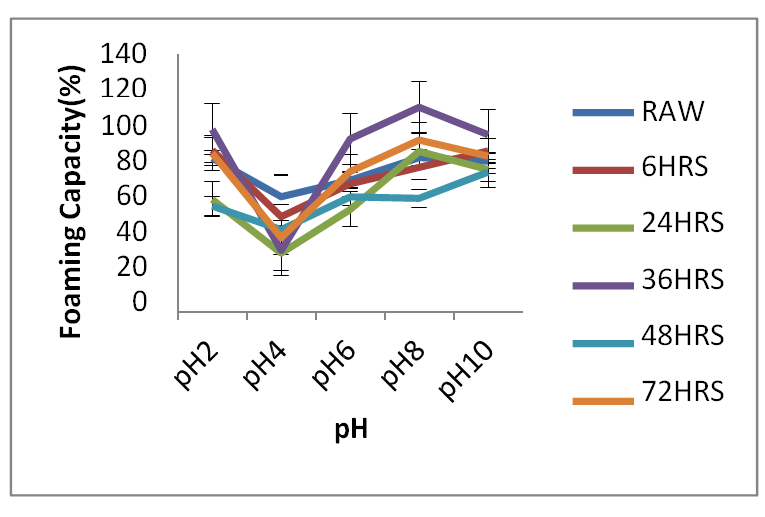
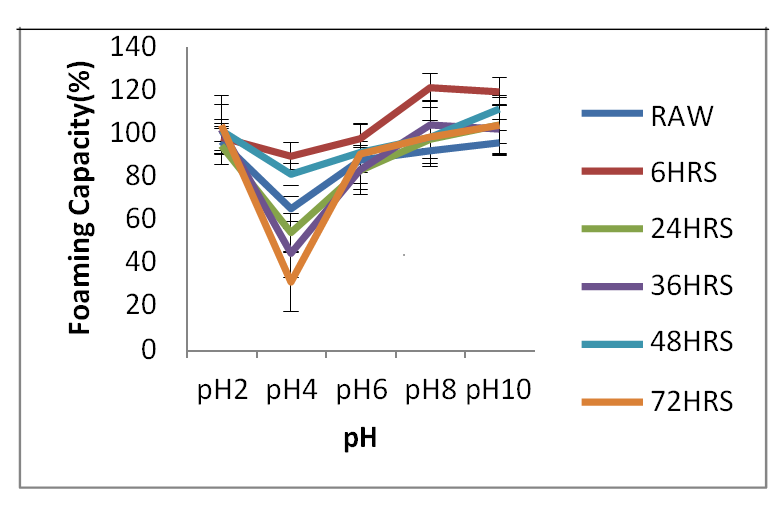
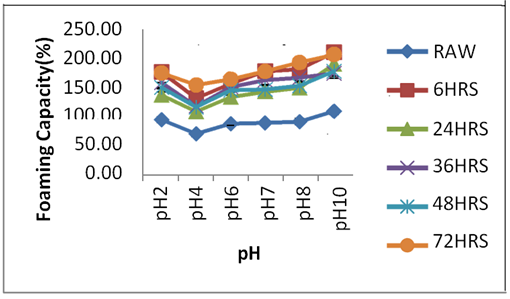
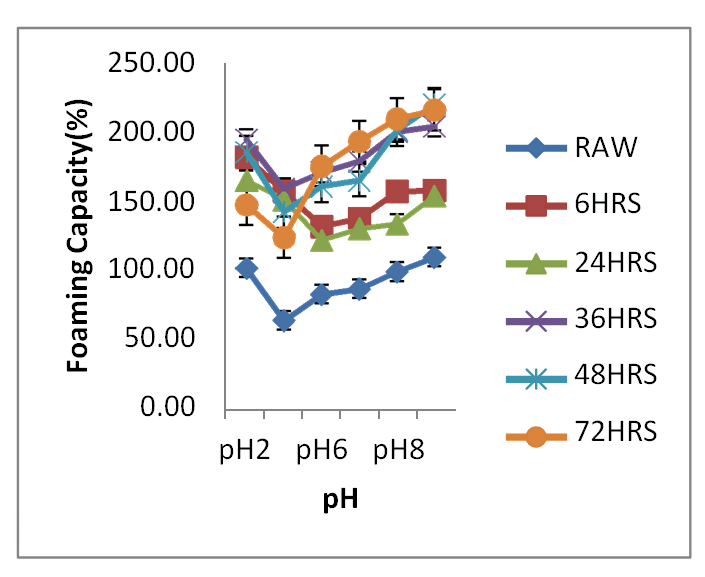
Effect of pH on the foaming properties (FC and FS) of protein isolates from two Varieties (DAS & BS) of Nigerian cultivated Solojo cowpea (Vigna Unguiculata L. Walp) was investigated. Results show that the foaming capacity (FC) followed the solubility trend, with a high foaming capacity at pH 2, which slowly reduced between pH 4 - 6 and gradual increase again with pH as the pH approached 10, where it had another high value. As shown in Figures 1-6 noticeable changes in FC were detected as the pH of the protein solution progressed from pH 2 to 10, with minimum foaming capacity at pH 4 in all cases except for DFDAS flour and BS protein isolate (pH 6). The foaming capacity value for 6 h soaked and 48 hr germinated flours, at pH 4 were observed to be greater than at pH 2 and 6. While the maximum was observed in some cases at pH 8 and some pH 10 but FFDAS Raw, 36 and 48 hr; FFBS, 6 hr; DFBS, Raw and 72 hr; BS, 6 and 24 hr germinated, all had their own max values at pH 2. Defatting was also observed to improve the foaming capacity values of all the treatment. The foaming capacity ranged between 15.19 to 121.16%; 44.76 to 127.36%; 31.23 to 110.93%; 30.84 to 121.16%; 64.97 to 210.00%; 62.67 to 222.00% for FFDAS, DFDAS, FFBS, DFBS, DAS, and BS, respectively. The pattern of FC change followed the pH dependent solubility flow of the test material, showing the importance of solubility on foam formation which confirms that solubility of protein has a great influence on the activities of foam also increasing the pH from 4 to 10 improved the foaming characteristics of flour. This observation proved the authenticity that foaming property depends on protein solubility. The foaming capacity of cowpea protein isolates was pH dependent and high at alkaline pH in comparison to acid region.
Introduction
The Foaming stability (FS) is a very essential characteristic of a whisking agent; is the ability of a foam to be sustained for a period of time [1]. Studies by Ivanova, et al. [2] on Sunflower showed a pH-dependent solubility pattern with the FC. Saavedra, et al. [3] for Lupinus protein isolate reported that foam capacity was high at pH 2, low between pH 4 to pH 6 equivalent to the iso-electric point, continues to increase towards the alkaline pH. Eltayeb, et al. [4] also reported a minimum FC value at pH 6, which also increase with increase and decrease of pH.
Some other researchers likewise observed a reduction in FC at pH 4 when compared with that at other pHs. The pattern of FC change followed the pH dependent solubility flow of the test material, showing the importance of solubility on foam formation. This information supports the findings of Lawal, et al. [5] which says solubility of protein has a great influence on the activities of foam. Raikos, et al. [1] likewise observed an increase in FC of five different flours with increase of pH (4-12). They concluded that increasing the pH from 4 to 10 improved the foaming characteristics of flour especially Buckwheat and Cannabis sativa. Olawuni, et al. [6] also observed an enhancement in the FC of both flours (full fat and defatted) of long-podded cowpea within this same range.
The high foaming capacity (FC) at highly acidic and alkaline pH was probably as a result of the rise in total charge on the protein, bringing about the lowering of the non-polar interactions but increasing protein pliability, making the protein to disperse speedily to the junction between air and water enclosing particles of air thereby encouraging formation of foam [7, 8]. This observation proved the authenticity that foaming property depends on protein solubility. Khalid, et al. [9] also reported that foaming capacity of cowpea protein isolates was pH dependent and high at alkaline pH in comparison to acid region. Increased temperature induces the denaturation of native protein leading to the formation of disulphide bonds and the exposure of non-polar residues of the amino acid [10].
Materials and Methods
Location of Study and Raw Material
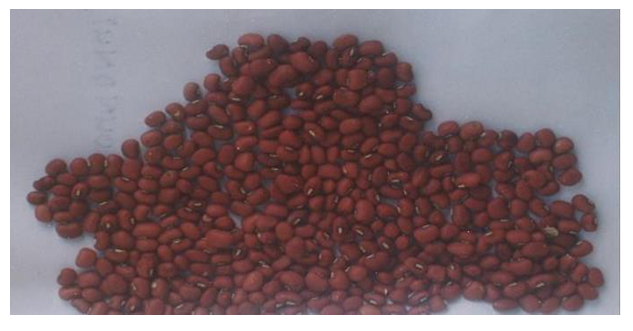
This research study is a fragment of a PhD research work carried out in the Department of Chemistry, University of Ibadan, Western Nigeria. Two varieties (seeds) of the underutilized cowpea (V. unguculata) obtained from Bodija market in Ibadan, the south west region of Nigeria where it is called ‘Solojo’ were used.
Preparation of Raw Materials for Chemical Analysis
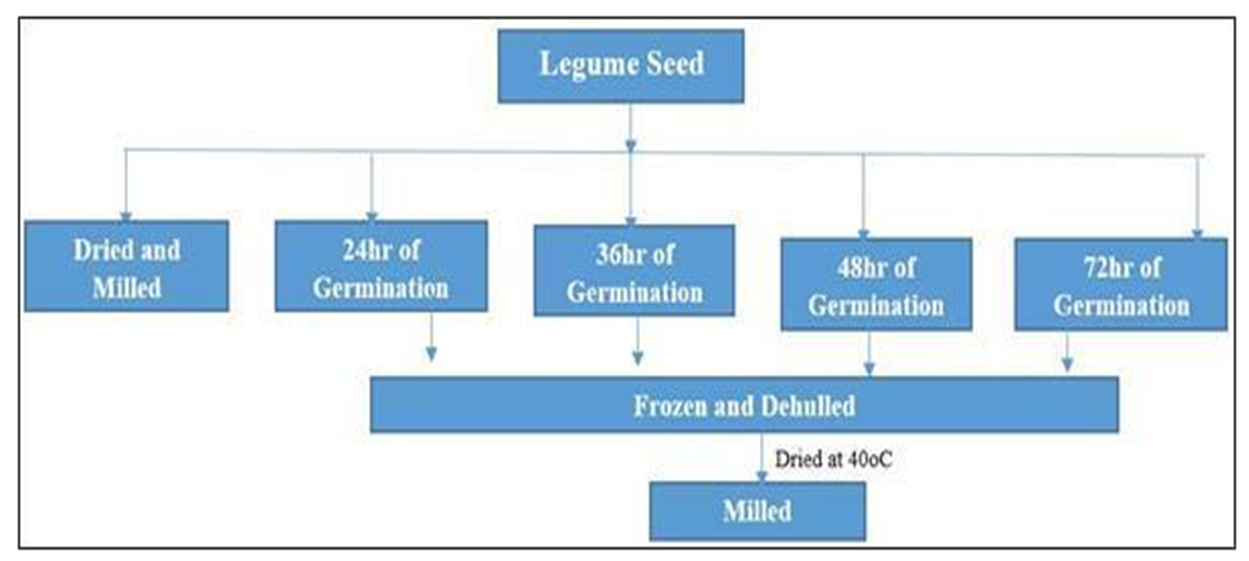
The Samples were screened to get rid of every irrelevant materials and unwholesome seeds. The beans were then portioned into six (6). The Solojo seeds for germination were sterilized by soaking in 0.07 % Sodium hypochlorite for 30 min, then, it was rinsed thoroughly. The Solojo seeds were then immersed for 6 hr in distilled water at ambient temperature (1:10 w/v) (~25ºC), then placed in a colander and germinated under subdued light in an open laboratory for, 24, 36, 48 and 72 h.
Preparation of Flours
Raw flour: The grains were segregated to remove the spoilt ones; then dry dehulled with a mechanical dry dehuller (Fabricated in FIIRO), dried at 40ºC and later milled dry to powder then sifted using 80 µm mesh. The flour was stored in flexible bags and preserved at 4ºC preceding utilization in a refrigerator freezer.
6 h Soaked Flour
The seeds were segregated to remove the unwholesome ones, then immersed for 6 hr in the ratio (1:10 w/v) (seed/ water). The grains were then frozen to prevent germination from setting in, then the hull was removed manually, dried for 48 hr at 40ºC later milled dry to smooth powder prior to sieving using 80 µm mesh screen. The resulting flour was packaged in plastic pack and preserved in a fridge- freezer at 4ºC pending utilization.
Germination of Seed
This was implemented by the method of Mubarak AE [11] with minor adjustment. The seeds for germination were disinfected by soaking in 0.07 % Sodium hypochlorite Rumiyati, et al. [12] for 30 mins, then, it was rinsed painstakingly. The Solojo seeds were then immersed for 6 hours at ambient temperature in water in the ratio (1:10 w/v) (seed/water) (~25ºC), then placed in a colander and germinated under subdued light in an open laboratory Rusydi MR, et al. [13] for various hours such as 24, 36, 48 and 72 hr. The process of germination was terminated by freezing, the seeds were manually dehulled, dried in a draught oven (Schutzart DIN EN 60529-IP 20. Memmert, Germany) at 40ºC for 48 hr, cooled, milled and packaged in an air tight plastic bag in there frigerator pending analysis.
Result and Discussion
The foaming capacity (FC) followed the solubility trend, with a high foaming capacity at pH 2 which slowly reduced between pH 4 - 6 and gradual increase again with pH as the pH approached 10, where it had another high value. As shown in Figures 4-9 noticeable changes in FC were detected as the pH of the protein solution progressed from pH 2 to pH 10, with minimum foaming capacity at pH 4 in all cases except for DFDAS flour and BS protein isolate (pH 6).
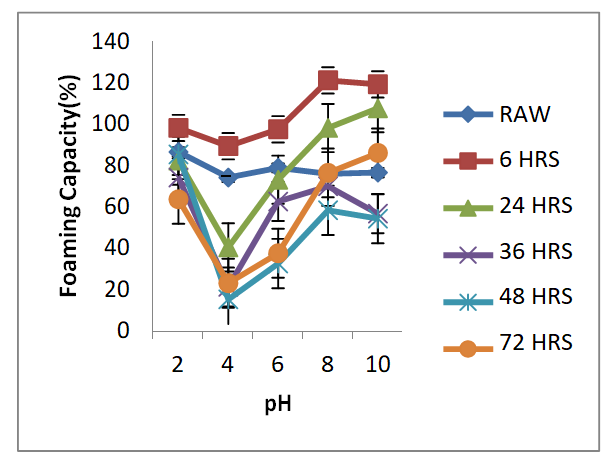
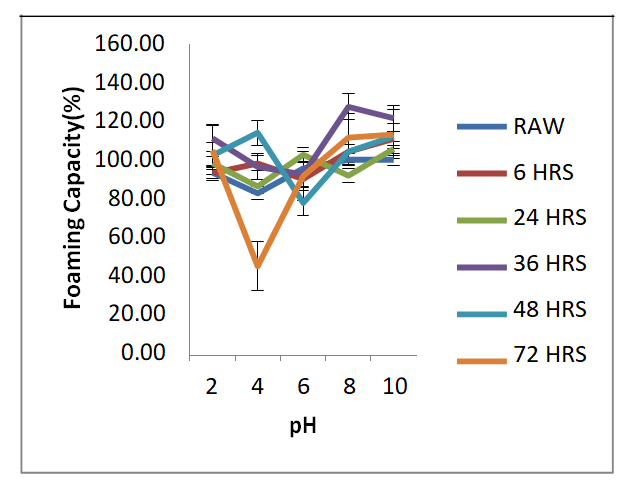
The Foaming capacity value for 6 hr soaked and 48 h germinated flours, at pH 4 were observed to be greater than at pH 2 and pH 6. While the maximum was observed in some cases at pH 8 and some pH 10, but FFDAS Raw, 36 hr and 48 hr; FFBS, 6 hr; DFBS, Raw and 72 hr; BS, 6 hr and 24 hr germinated, all had their own max values at pH 2. Defatting was also observed to improve the foaming capacity values of all the treatment. The foaming capacity ranged between 15.19 to 121.16%; 44.76 to 127.36%; 31.23 to 110.93%; 30.84 to 121.16%; 64.97 to 210.00%; 62.67 to 222.00% for FFDAS, DFDAS, FFBS, DFBS, DAS, and BS respectively.
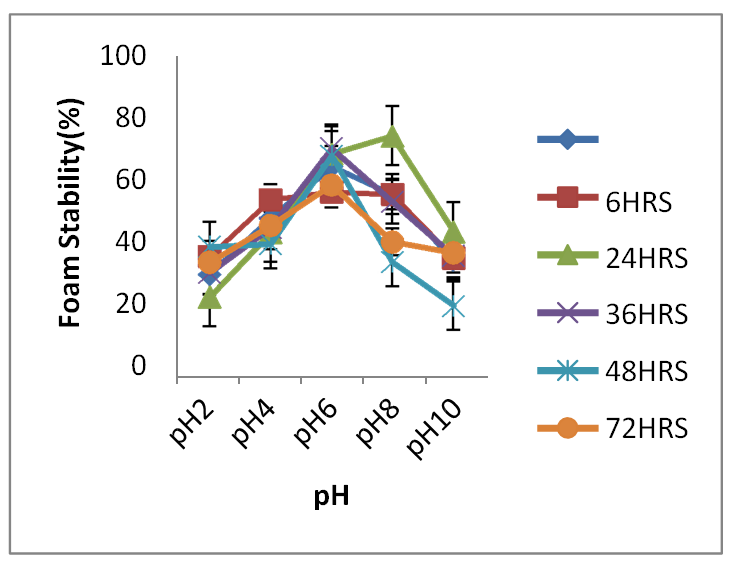
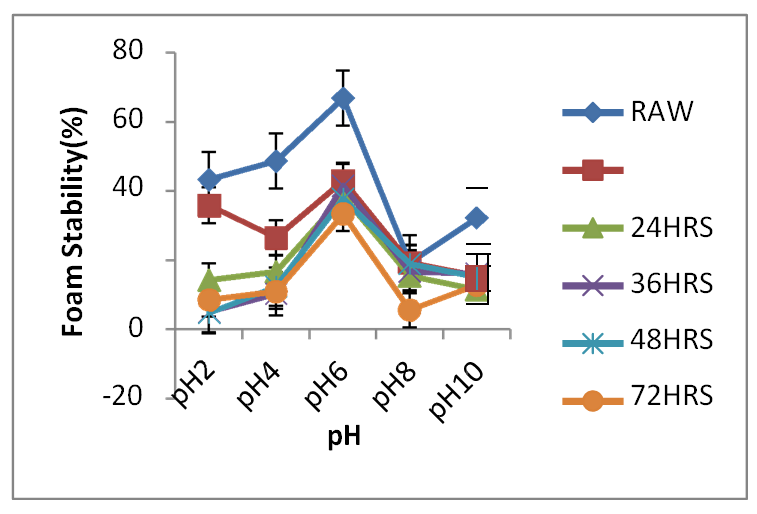
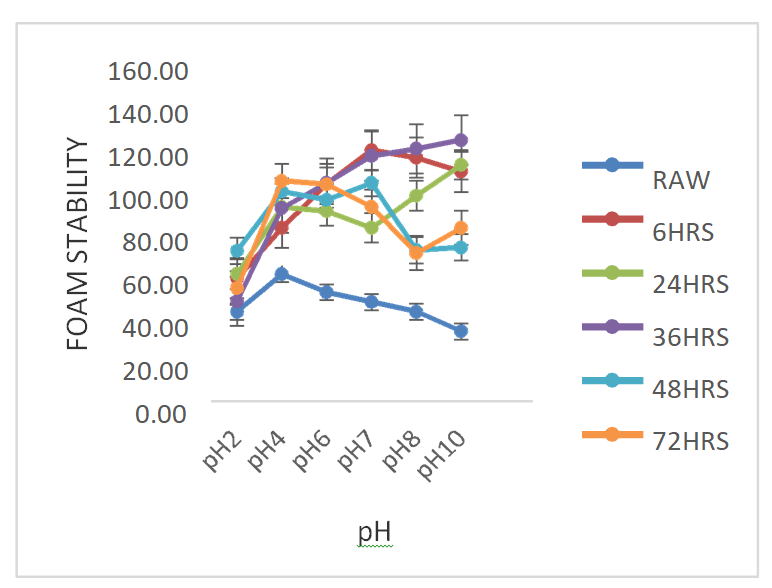
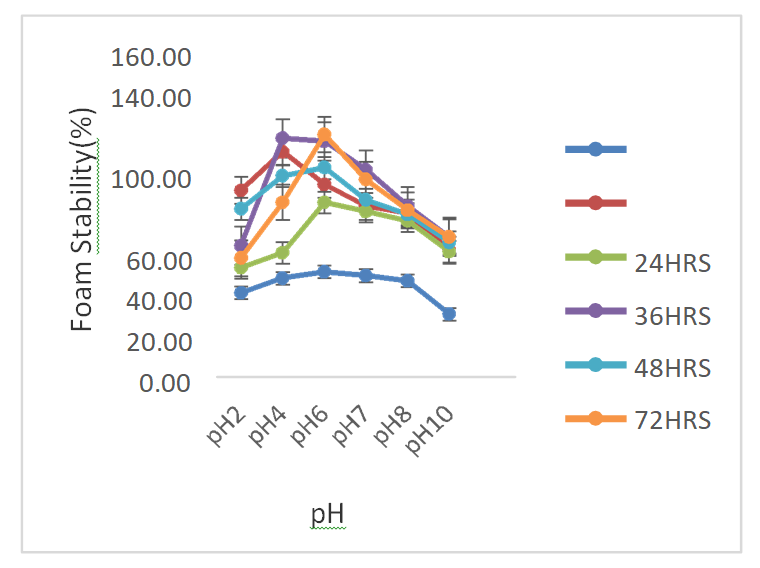
The Foaming stability (FS) was found to increase with increase in pH until the iso-electric point and reduce at the alkaline region for most treatments except for 36, 48 and 72 hr FFDAS germinated samples, which had the FS lowest at the iso- electric point as shown in Figure 7-12.
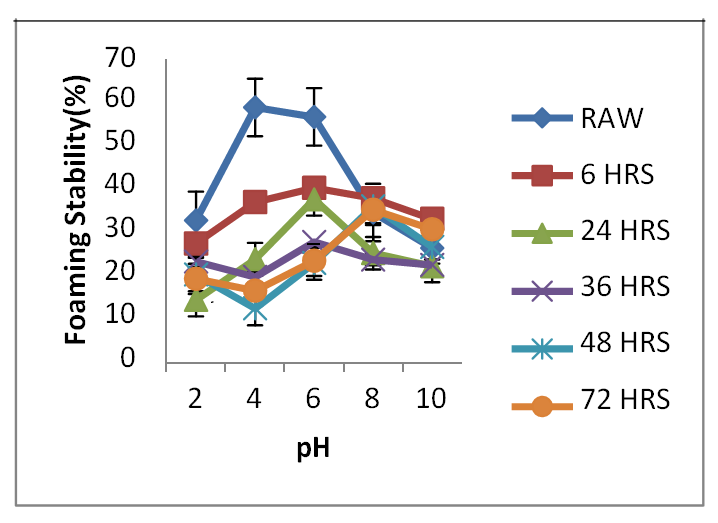
This is in accordance with the discoveries of Lawal, et al. [14] for native and chemically modified Pigeon pea protein concentrate which suggest that foam stability is improved at iso-electric precipitation region
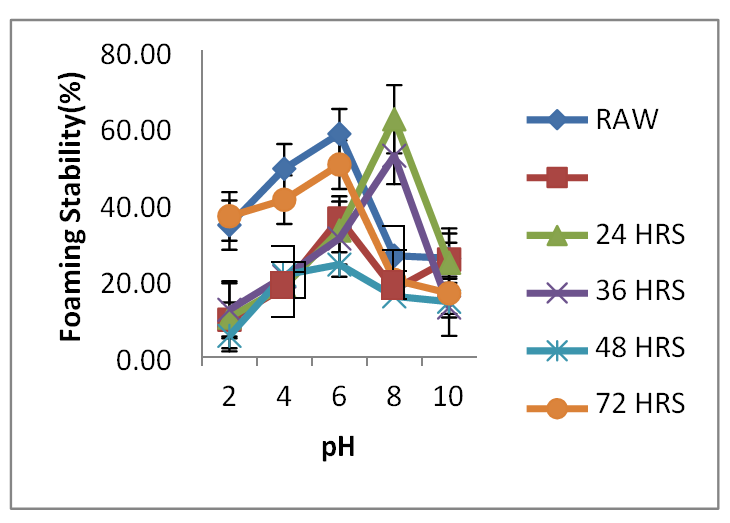
This could be due to the formation at this region of stable molecular layer in the air- water interface of the foam. Protein adsorption and viscoelasticity at an air-water interface is maximal or near at the isoelectric pH, which contributes to the formation of stable molecular layers in the air- water interface, this contributes greatly to foam stability A similar result was also found by Lawal, et al. [14] for chemically modified bambarra groundnut. Wani, et al. [15] had a similarly observation for native and hydrolyzed kidney bean (Phaseolus vulgaris L.) protein isolates. Barac, et al. [16] also observed improvement in FS of thermally treated adzuki isolate at pH range of pH 3-7
Conclusion and Recommendation
This research work shows that germination had a profound and significant (p<0.05) effect on the nutritional composition of Solojo beans, revealing great improvement and thus making Solojo a potential substitute to other important legumes. The foam stability ranged between 11.39 and 57.82%; 6.60 and 63.30%; 18.98 and 73.64%; 4.76 and 66.78%; 31.33 and 122.43; 30.00 and 120.00% for FFDAS, DFDAS, FFBS, DFBS, DAS and BS respectively. It was observed that the minimum foam stability was found at pH 4 which corresponded to the iso-electric point.
This research work also shows that biochemical modification (Germination/Malting/ Sprouting) had an enormous impact on the nutritional composition, functional properties, mineral bioavailability, anti-nutrient content and amino assay of Solojo bean, thus, it could be used as protein supplement in infant, young children and geriatric foods. Efforts should be increased to promote the cultivation, encourage the consumption and industrial application of this under-utilized legume by the Government, especially in the south-western region where it can survive the rain fall level. Large scale production of this legume which is gradually going into extinction should be encouraged in order to fight the menace of malnutrition in developing countries where animal protein price is exorbitant; This will ensure food security and also creation of jobs, because people can engage in different aspects of the production process and thereby reducing the rate of unemployment.
References
-
Raikos V, Neacsu M, Russell W, Duthie G (2014) Comparative Study of the Functional Properties of Lupin, Green pea, Fava bean, Hemp and Buckwheat Flours as affected by pH. Food Science and Nutrition 2(6): 802- 810.
-
Ivanova P, Chalova V, Koleva L (2014) Functional Properties of Proteins Isolated from Industrially Produced Sunflower Meal. International Journal of Food Studies 3(2): 203-212.
-
Saavedra JP, Guemez-Vera N, Montanez-Soto JL, Fernandez-Martinez MC, Yanez-Fernandez J (2013) Comparative study of functional properties of protein isolates obtained from three lipinus species. Advances in Biorearch 4(4): 106-116.
-
Eltayeb ASM, Ali OA, Abou-Arab AA, Abu-Salem FM (2011) Chemical composition and functional properties of flour and protein isolate extracted from Bambara ground nut (Vigna subterranean). African journal of Food Science 5(2): 82-90.
-
Lawal O (2005) Functionality of reactive and succinylated lab lab bean (Lab lab Purpureus) protein concentrate. Food Hydrocolloids 19(1): 63-72.
-
Olawuni I, Ojukwu M, Iwouno JO, Amandikwa C, Ibeabuchi C, et al. (2013) Effect of pH and Temperature on Functional Physico-chemical Properties of Asparagus bean (Vigna sesquipedalis) Flours. International Journal of Basic and Applied Sciences 2(1): 1-16.
-
Adebowale YA, Henle T, Schwarzenbolz U (2009) Acetylated and Succinylated Derivatives of African Yam Beans (Sphenostylis sternocarpa. Hochst. Ex A. Rich/ Harms) Protein Isolates. Journal of Mobile Communication 3(2): 34-46.
-
Ahmed SH, Ahmed IAM, Eltayeb MM, Ahmed SO, Babiker EE (2011) Functional Properties of Selected legumes flour as Influenced by pH. Journal of Agricultural Technology 7(5): 1291-1302.
-
Khalid II, Elhardallou SB (2015) The Effect of pH on Foaming Properties of Cowpea (Vigna ungiculata L. walp) Flour and Protein Isolates. Journal of Nutrition and Food Science 5(4): 385.
-
Söderberg J (2013) Functional properties of legume proteins compared to egg proteins and their potential as egg replacers in vegan food. Sweden University of Agricultural Sciences 378.
-
Mubarak AE (2005) Nutritional composition and antinutritional factors of Mung bean seeds (Phaseolus auneus) as affected by some home traditional processes. Food Chemistry 89(4): 489-495.
-
Rumiyati, James AP, Jayasena V (2012) Effect of Germination on the Nutritional and Protein Profile of Australian Sweet Lupin (Lupinus angustifolius L.). Food and Nutrition Science 3(5): 621-626.
-
Rusydi MR, Noraliza CW, Azrina A, Zulkhairi A (2011) Nutritional changes in germinated legumes and rice varieties. International food Research Journal 18: 705- 713.
-
Lawal OS, Dawodu MO (2007) Maleic anhydride derivatives of a protein isolate: preparation and functional evaluation. European Food Research and Technology 226: 187-198.
- The Role of Podocyte Apoptosis and the Involvement of SIRT1 in Diabetic Nephropathy
- Dealcoholization of Beer by Osmotic Distillation for the Beverage Industry
- Biopolymer-Based Edible Packaging- Biomaterials, Methods, and Applications in Food Industry: An Updated Review
- Influence of Bioprocessing Methods on 'China Rice' (Gawal R1), and Soyabean Supplementation on the Quality of Complementary Food
- Cassava (Manihot esculenta) Varietal Growth, Yield and Cyanide Content Performance in Three Sites in the South- Eastern Semi Arid Regions of Kenya
- Food Waste Treatment, Recycling, Management and Production of Value-Products-An Update on Methodologies and Current Trends