
The World Must Put Hunger to Shame: The Hidden Story of Homowo, Ngmayem and Ngma
This message calls our world to put hunger to shame using the revealed examples of Homowo and ngmayem, an original ethnic food systems in Ghana. The occurrence of hunger over the centuries can be understood from hunger’s proverbial mood. The results of hunger on humans due to its numerous causes and it associated lessons compelled early Ga-Adangbe settlers in Ghana to independently initiate the concepts of ‘Homowo’ (hoot at hunger) and ‘Ngmayem’ (celebrate life foods) as food systems. The hidden systems and basics in these unique food systems of ‘hoot at hunger’ and that of ‘celebrate life foods’ was studied. Some notable findings from the concept of ‘hoot at hunger’ involves a comprehensive layout of hooting at hunger using sustainable agriculture and the following principles: an appropriate food with or without therapeutic effect, applicable technology, basic knowledge in food and nutrition, building a suitable organizational system driven by skilled humans across several communities, by recalling historical records of hunger in society, a set day of remembrance, eating good foods all day, by the story of who we are and where we come from, with unity of purpose as a community lead by honest leaders, and also by proper symbols, designs and expressions. A remarkable outcome from ‘celebrate life foods’ norm was that it showed a notable historical record about a people, their decisions, actions, dealings and group effort in time during a hunger crisis. Once again, both concepts call for the establishment of specialized centers for advanced studies on unique food systems of old and hunger around the world with a museum chronicling the past stories of hunger challenges among a people, district, nation and the world, their probable causes and its impact on their health, and how they invented exceptional systems and products to solve those problems. All these concepts are intended to transform or strengthen food systems.
Introduction
The adverse impact of Covid 19 pandemic and the Russia-Ukraine conflict on global food systems have given the world a shocking awakening due to reported global hunger figures in 2023 [1]. Despite these challenges, we can still zero hunger by 2030 using the unique models of ‘hoot at hunger’ and that of ‘let celebrate life foods’, a positive ethnic food system in practice in Ghana. A food system that is principled is inclusive of positive local norms and practices, and these Conceptual Paper have been suggested to contribute greatly to zero hunger [2]. Past account reveals some pioneering Ga-Adangbe groups of Ghana to have experienced severe hunger challenges when they migrated to the Accra plains. Similarly, the ‘Klo’ and ‘Se’ groups from the same pioneering Adangbe grouping also faced hunger and had begun a thankfulness concept for celebrating ngma (food) after harvest, which became a local practice in Ghana. Food in the Adangbe dialect is Ngma and yem imply to celebrate or to eat. Similarly, the Ga phrase ‘homo yi womo’ out of which the word ‘Homo Wo’ (Homo
in Ga is hunger and Wo imply to hoot, boo, jeer, etc) was invented, point to ‘hoot at hunger or put hunger to shame or boo at hunger, jeer at hunger etc’ is another indigenous food system practice in Ghana.
It must be noted that a troubling enigma as observed in weaned Ga-Adangbe children at the time of colonization brought forth ‘Kwashiorkor’ as first reported by Williams CD in 1933 [3] and as such the unseen principles and ideas in these concepts of ‘Homowo’ and ‘Ngmayem’, a pioneering food system used to mitigate hunger in their original and unmixed societies over the centuries is worthy of study. These very important concepts of ‘hoot at hunger’ and ‘let celebrate life food’ now a local food system practice in Ghana are irreplaceable examples where good foods were used under a system to fight hunger for a public good and must therefore be modernized, adapted and used to transform indefensible food systems for the benefit of all people. Therefore, the hidden principles of ‘Homowo’ and ‘Ngmayem’ as shown in this paper, aims to informed better food system strategies and campaigns against global hunger in this trying episode in our world affairs.
Footnotes
The Ga-Adangbe Migration Story
The two local norms and practices are traced to Ga- Adangbe pioneers who migrated to today Ghana in around AD 1000. Oral history is recounted that Ga –Adangbes migrated from a place in Egypt, then partly to Sudan, and around the Lake Chad area, they came to settle briefly in lle Ife, Nigeria (a place of dispersion). Some groups led by Priest journeyed westward from lle Ife carrying their foods (millet, corn etc) and oil in earthen wares extracted from the wild palm trees and also settled briefly in an area in Togo before migrating to cross the Volta Lake and settling in a place called Tagologo in the plains of Shia hills building their communities. After cohabiting for years as a group, a misunderstanding occurred among the clan leaders. Some of the clan leaders led groups towards the east of Tagologo (the Kpotoes and Agotime people in now Volta), others (the clans making the Ada group) went south toward Togbloku, a lagoon place. The Klo group went towards north of Tagologo into the hilly and forested lands, the Se group occupied the immediate and some North West areas of Tagologo plains. The others (La, Osu, Teshie, Kpone, Ga Mashie, Nungua, Ningo, Gbugbla, Toman mei) having sent explorers to survey the lands journeyed south west of Tagologo towards the coast of Gulf of Guinea to build settlements along the coast, one group after the other. The reasons for their brief settling in places was to multiply their grain stocks (millet and corn) when encountering the rainy season on their journey as advised by their priests after his consultation with his spiritual guide.
Homowo Story in Brief
As the groups (La, Osu, Teshie, Kpone, Ga Mashie, Nungua, Ningo, Gbugbla, Toman mei) that moved south west of Tagologo in the plains one group after the other and had settled along the coast there was a huge famine due to lack of rains for a prolong period. With a dwindling food stock (corn/ millet grains), the clans had lamented to their respective priest and clan heads in their locality. After the priests consulted their God, they were given special directions on the crop, corn/ millet. With some seeds planted by all the settler communities, they meet good rains and harvested plentiful grains. In their joy as a people, they hooted, shouted, yelled and boo (yi womo in Ga dialect) at the hunger (homo in Ga-dialect) they had experienced thus homo yi womo (in Ga dialect) with a specially prepared corn-based diet with or without palm oil and fish known as Kpokpoi or Kpekple in Ga-Adangbe dialect thus the birth of Homowo as an ethnic food system in some Ga-Adangbe communities. Ngmayem Story in Brief The Klo group that went toward the North of Tagologo into the hill and forested lands and the Se group that also occupied the immediate areas of Tagologo plains had also experience famine due to lack of rains for a prolong periods. After consulting their Gods, their prayers were met with good rains after they planted their millet (ngma) and encountered a plentiful harvest. In their gratefulness to God as a people, they scream and cheered at the millet (ngma) harvest thus the basis for celebrating ngma (a life food) thus Ngmayem, to eat or celebrate ngma (millet-based food) in Ga-Adangbe dialect.
With these victories over hunger, a ceremony was instituted as directed by their priest to the respective clan heads to be observed annually by households under their authority to recall this historic feat in the towns.
Ngma (Food)
Generally, in Ga-Adangbe dialect ngma is the general term that represent foods as a whole or group be it processed or whole/ unprocessed. Other word used to imply food is neyeni/neƐ by Ga-Adangbes. Although most individual foods have specific names example corn (abele in Ga/ Belefo in Adangbe), yam (yele in Ga/ ye in Adangbe) etc. Collectively, corn, yam among others can also be termed ngma in Ga- Adangbe dialect. Again, when cooking or preparing food one needs the inputs of various food ingredients to make ngma thus the more diverse the ingredients in the diets the better or good the ngma. Further, food in Adangbe folkloric perspective comes from the same root word as write or inscribe (ngma in Ga-Adangbe dialect). With respect to Ga- Adangbe folkloric view, food is nature’s written or scripted product that we consume (must be consumed) to nourish our (the) body with its beneficial secret letters aiding as nutrients or therapeutic agents. In principle, lack of this true unadulterated and beneficial intrinsic letters from natures’ scripted food into our human system in proportionate amounts is the cause of all associated forms of hunger.
Assessing Hunger’s Proverbial ‘State of Mind’ in Around AD 1000 and Also in Early 2020
Why should millions of people in the world over the centuries have more to eat while many others be hungry? This paradox of those having more to eat and some others famishing here on earth is a focal point to understanding hunger’s proverbial mood. Hunger is an uncomfortable or painful physical sensation caused by insufficient consumption of dietary energy [4]. From this description, hungers disposition can have a high and low points in its dynamic live on earth. There are good and bad times in hungers journey on earth. Hungers bad times are observed when significant people from all backgrounds consumed sufficient dietary energy to meet a normal, active and healthy life. On the other hand, the reverse holds for hungers good times due to certain causes. Hunger’s good times often characterize it victims with certain known indications such as loss of weight, stunting, etc. Further, hunger isn’t without eyewitnesses on earth, beneath the soils, at the local, regional, national, continental circle and even in the hemisphere and heavenly places.
The lands are ready to testify for hunger so are the birds. The sun is ready to be a star witness for hunger. The winds and oceans are also ready to give their evidences. Once more, so are the poor, bushfires, plants, river bodies, microbes, lighting, unsolved phenomenon, pests, poor methods and technology, poor governance, cultures, bad values, false knowledge, floods, corruption, conflicts, drought, pandemics, cyclones, earthquakes, deforestation, lack of respect for laws, among others. These factors feature promptly in the history of hunger on earth as either independently or mostly combined. From the narration of Homowo and Ngmayem, it can be realized that long migration of the masses or displacements and drought factors were unified and was a probable driver of hunger among Ga- Adangbe explorers and settlers in AD1000. Fast forward to 2020, amid climate change concerns in the world, we experienced a pandemic (Covid 19) which intersected with the climate and economic issues and was followed by a needless conflict in Ukraine, a key global food basket due to lack of respect for laws in the world. These events in unison placed great anxiety on hungers’ proverbial nature as seen in a dramatic 10% rise in global hunger figures over those reported in 2022 [1]. The Concepts of Hoot at Hunger, Zero Hunger and Let Celebrate Life Foods as Food Systems Explained What do we mean by Hoot at hunger? Is a system for solving hunger issues with good food using basic knowledge of food and nutrition to create suitable food products derived from sustainable agriculture with the potential to nourish famished persons of all forms from the household level to the global stage. It entails using appropriate technologies to invent ready to eat types of nourishing foods and proper organizational systems driven by skilled humans to implement the solutions across various groups. Again, it entails a day set aside to simulate the model of hooting at hunger in a year with proper designs, symbols, and expressions. On another hand, it can be defined as hooting at hunger in all forms based on the ideas and principles of food and nutrition to create appropriate food that is good and nutritious, with materials derived from sustainable agriculture using an applicable technology, a suitable organizational system across a wide population, skilled humans, a historical data of hunger in society, a day of remembrance, eating good foods all day, by the story of who we are and where we come from, with unity of purpose as a community of families led by honest leaders, and also by proper symbols, designs and messages. It involves a process of painting an image with respect to hunger of where we come from as a people and how we got here. Again, it can be defined as that remarkable oral historical record about a people, their actions, decisions, reactions and group effort of ending hunger in all forms in time. Lastly, it is birth from the pioneering understandings of grassroots people’s painful experiences about hunger and their answers to the problem in time. It is rooted in the principles of hoot at hunger as a person, persons, a family, families, a clan, clans, a township, and towns and as the world with outlined processes. In principle, we must hoot at hunger with our collective talents and might as a world, you be a farmer, musician, nutritionist, nurse, child, trader, mothers, fathers, leaders, drivers, dancers, writers, painters, scientist, engineers, teachers, security personnel, among others. In effect, one of the effective ways to hoot at hunger is to zero it. Other ways are to negate, encircle or ring it, some would half it, quarter it among others. Other approach to hoot at hunger is to appreciate and celebrate the good nutrition in foods by eating good foods and avoiding the wasting of food.
What do we mean by zero hunger? The challenge to zero hunger is defined to mean: 100% access to adequate food for all year round, zero stunted children less than 2 years, all food systems are sustainable, 100% increase in the smallholder productivity and income, and the zero loss or waste of food [5]. Of these priorities, a principled food system was proposed as a strategic key to dramatically zero hunger across the developing world [2].
What do we mean by let celebrate life foods? The meaning is based on the ideas and principles of eating the right foods with right nutrition, using applicable technology to grow and making them available all year, having good knowledge about the right foods, a proper organizational system driven which are by skilled human resources, a historical data of hunger in society, a day set for remembering the role of life’s foods over the period, by the story of who we are and where we come from, with unison of purpose as a township and a people led by honest leaders, and also by proper symbols, designs and expressions. It also consists of a process of painting a picture of where we come from as a people and how we got here. Further, it can be said to be a notable historical data about a people, their decisions and actions and group effort during hunger crisis. The ‘let celebrate with life food’ concept is birth from the pioneering understandings of the grassroots people painful experiences in time about hunger and their answer to celebrate the nutrition in life foods or cheering with the nutrition in life’s food as a person, persons, a family, families, a clan, clans, a township, and towns and as the world via an outlined process. It must be noted that their basis for celebrating life foods was because of the excellent nutrition good foods provides humankind, for a normal, active and healthy living.
Differences and Similarities Between the Concepts and Systems of Hoot at Hunger, Let Celebrate Life Food and Zero Hunger
Similarities between ‘Hoot at Hunger’ and that of ‘Let Celebrate Life Food’ concepts
- Were set to celebrate their triumph over hunger by giving thanks to God of nature for a good harvest
- Both were led by honest local leaders
- Cereal grains were their base materials
- Both are rooted in basic knowledge of food and nutrition
- Both concepts are communal based involving all persons of different skills and households, and is a local norm and practice
- A known day is set for the celebration
- Both concepts were birth from normal people’s painful hunger experiences driven by natural causes
- Both concepts have it roots in time probably AD1000
- Both also involves the spoken word poetry ‘weimo lala’
- Both concepts have artistic expressions of red, green white and gold as colours
- Both involves a detailed design of beautiful expressions
- Both concepts show a history of a people, their actions and decisions when faced with hunger
- Both concepts include sustainable agriculture as part of the solution to hunger (Tables 1-3)
| Hoot at hunger | Let celebrate life’s food | UN Zero hunger | |
|---|---|---|---|
| Justification | Put community hunger to shame by recalling the uncomfortable experience of hunger in time | A symbol of thankfulness to God for a plentiful harvest thus let cheer with life food | Second SDG (Zero global hunger by 2030) [6] |
| Starting period | Around AD 1000 | Around AD 1000 | UN [6] |
| Food types | Cereal grains (maize and millet), vegetable oil and fish | Cereal grains (millet and maize), Leafy vegetables, Tubers (Yam, cocoyam etc) | All foods types [6] |
| Logo | - | - | Hot food in a bowl with spoon [6] |
| Product and Process technology | Moderate (Involves a native corn based diet with protein, with or without oil, Kpokpoi (a low energy food without palm oil) and Kpekple (an energy dense food, has palm oil) Dependent on rain fed Agriculture | Elementary (Initially involves Ngma, a millet based diet with leafy protein) The Ngma now used is made from mostly a mashed tuber based diet with palm oil and fish (energy dense food) Dependent on rain fed Agriculture | Advance technologies (Mostly includes the solutions of RUTF, RUSF, RUCF, genetic engineered crops, greenhouse technologies, irrigation technologies etc.) |
| Features | Hoot at hunger | Let celebrate life’s food | UN Zero hunger |
| Implementation partners | Traditional Authorities Priest, Clan and Family heads, elders, women and natives with different skills | Traditional Authorities, Priest, Clan and Family heads, elders, women and natives with different skills | FAO, World food program, Nation states and NGOs [6] |
| Symbolism | Spread the food messages in key corners of towns and the street (Local norm and practice) | Local norm and practice | Zero World Hunger (Continental norm) |
| Notable message | Hoot at hunger with good foods (Ngma) | Cheer with a good food (Ngma) | 5 priorities (food security, Good nutrition, Sustainable agriculture, Poverty eradication, Zero waste of food) [6] |
| Geographical coverage | Very Local (About 7-9 Ga-Adangbe communities) | Very local (About 4 Adangbe communities) | All nations [6] |
Table 1: Differences between the Concepts of Hoot at hunger, Zero hunger and Let celebrate life food.
| Hoot at hunger | Let celebrate life’s food | UN Zero hunger | |
|---|---|---|---|
| Period | In August, | In March/October | October 14, World Food Day |
| Expression | Artistic and colorful (red, green, yellow, red, white and gold, navy blue) | Artistic and colorful (red, green, red, yellow, white and gold, sea blue) | Two colures (Light brown and white) [6] |
| Key leaders | Traditional Authority (Priest, Chiefs and Family heads) | Traditional Authority (Priest, Chiefs and Family heads) | United nations [6] (Diplomats and political leaders) |
| Sources of food | Foods were derived from natives in sustainable farming and fishing | Foods are derived from natives in sustainable agriculture | Foods are derived from sustainable agriculture and fishing at all levels in the global markets [6] |
| Food system Plan | Homegrown and customary | Home grown and customary | Dependent on existing national, regional and continental food systems |
Table 2: Differences between the Concepts of Hoot at hunger, Zero hunger and Let celebrate life’s food.
Possible Applications from the Concepts of ‘Hoot At Hunger’ and that of ‘Let Celebrate Life Foods’ Food Systems Towards A Zero Global Hunger: We anticipate future uses of the ideas in hoot to transform food systems by creating an awareness about all forms of hunger using products, persuasive messages and symbols in the global food and nutrition marketplaces as follows:
Possible Promotional Messages as Related to Food, Nutrition and Hunger Hoot at hunger TM persuasive messages intended to be trademarked includes: Fruits hoot at Hunger, Vegjes hoot at hunger, milk hoot at hunger and Whole grains hoot at hunger among others.
Likewise, the use of the phrase put hunger to shame TM is intended to promote the role of foods in hunger fight i.e. Quality vegjes put hunger to shame, our whole grains put hunger to shame, and safe eggs put hunger to shame, safe milk put hunger to shame among others. Additionally, jeer at hunger TM and boo at hunger TM are also intended to be trademarked. Hunger in the phrase indicate famine, malnutrition, among other suitable terms. On the other hand, words and phrases from the ‘let celebrate life food’ concepts intended to be trademarked includes ngma TM and other with derivative phrases like good ngma, dda ngma, lav ngma, among others. Again, the following phrases and words such as Nutricne is Cheers TM, Nutri your thanks TM, In nutritio we celebrate TM, Nutri Cheers TM, Nutricne is the hero TM, Nutricne is fine pawa TM among others are intended to be trademarked from the concept.
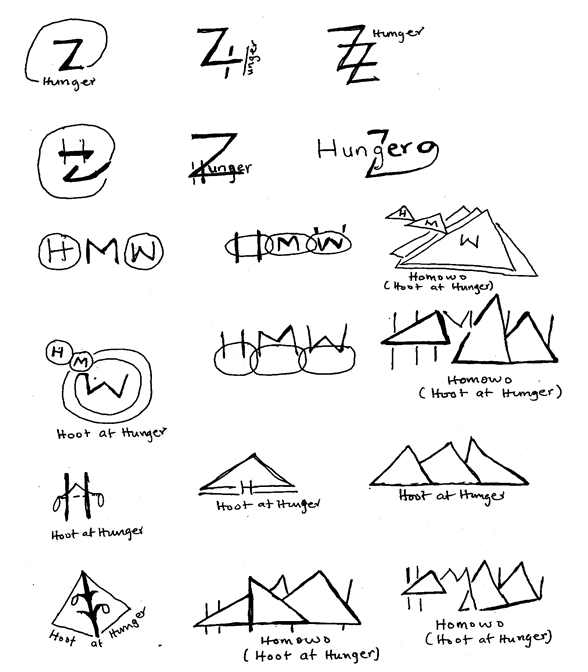
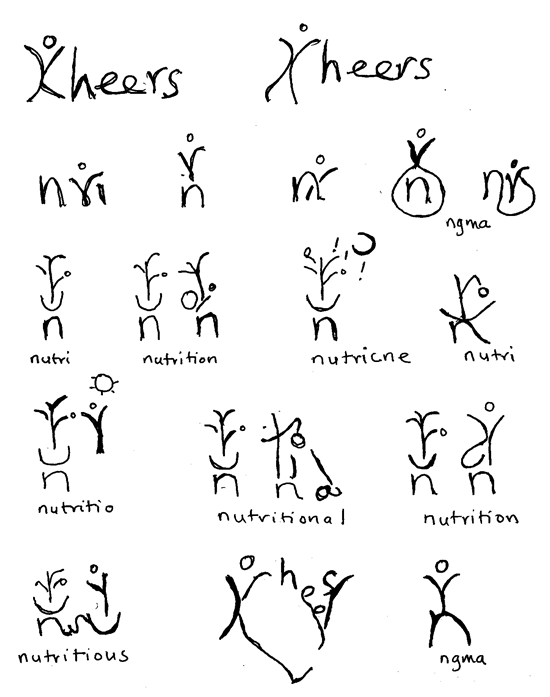
Possible Representation of Hoot at Hunger and Let Celebrate Life Foods Concepts
Let celebrate life foods illustrations can represent the cheering heart or cheering people, tree or forest, or someone picking a fruit from a tree etc.
Possible Expressions and Designs for Branding Different Food Products These phrases, words, symbols and others shall be arranged beautifully to create an expression worthy to represent the hoot at hunger and that of let celebrate life foods concepts. The designs will have the following colours such as white, green of different shade, blue of different shade, yellow, gold, red of different shades, orange of different shades and black either solely or in combination. The colours can also be in a combination of vertical and horizontal (about 70%) strips with some also in rings.
A Certification Program to Raise Funds from the Proposed ‘Hoot at Hunger’ Symbol from the Food Industry to Help Train Groups of Special Volunteers from Different Backgrounds to Help Zero Hunger. One needs a multifaceted or many- sided mind (s) to be able to zero hunger at the local or national or world stage. From the stories of ‘hoot at hunger’ and ‘let celebrate life foods’ concepts, we deduced that one needs the minds of mother nature, farmers, breeders, doctors, nurses, migrants, agriculturists and fisher folks, painters, accountants, commoners, transporters, security men, malnourish persons, religious leaders, priest, poets, cooks, creative art persons, mothers, fathers, attorneys and judges, local leaders, policymakers, weather forecasters, inventors, scientist, teachers among others thus one need a manifold mind (s) to zero global hunger.
The concepts call for the establishment of specialized centers around the world for advanced studies on unique food systems and hunger with a museum chronicling the past stories of hunger challenges among a people, district, nation and the world, their possible causes and its impact on their health, and how they invented or innovated unique food systems and products to solve those problems. The Homowo and Ngmayem concepts call for a model museum specifically dedicated to chronicling past hunger challenges of the pioneering Ga-Adangbe people to now Ghana and their unique innovations with respect to the hunger challenge. These innovations in their ethnic food systems as follows: food and nutrition, systems and design thinking, poetry as a therapeutic work, cultural legislation, organizational strategies, persuasive messages, art, storytelling as a therapeutic work, a safe method of food storage, leadership, traditional governance, agriculture etc. This model museum will be a sign of triumph over hunger in this times.
The concepts calls for the developments of numerous kinds of efficacious food and nutrition products with healing effects to be known as Nutrpeutti TM, Eten-4- healthTM and Eet-2-healthTM foods to meet the various hunger needs of people based on age, sex and other conditions. They invented a corn based therapeutic or supplementary diet known in Ga–Adangbe dialect as Kpekple (a high energy dense food formulated with palm oil) or kpoikpoi (a low energy dense food). Similarly, a millet based therapeutic/ supplementary diet in adangbe dialect known as ngma was made.
To help solve the Global hunger challenge we have to think again about the concept of food from the folkloric perspectives of various ethnic groups or countries more especially in hunger stricken regions once upon a time. According to Adangbe folkloric perspective, food is nature’s written or scripted products that contains beneficial secrets or letters aiding as nutrients or therapeutic agents that must be consumed for a healthy living. How others in the world view food as a source of physical or spiritual wealth, security, love, cash, badge of honor, medicine etc must be explored. The perspective of food from various societies indirectly will show how they are easily susceptible to hunger challenges when adversity strikes. Hence, folkloric outlook of food from various ethnic or societal groupings will help in understanding hunger in different parts of the world whether it of primary or secondary induced.
Both concepts define their unique traditional food systems ultimate purposes as to ‘hoot at hunger’ and that of ‘celebrating life foods’. This understanding will inform how other food systems currently in operation in certain communities, nations and regions of the world were intended to achieve. The Ga - Adangbes who initiated the concept of Homowo and Ngmayem in their original and unmixed kingdoms at the time of famine modeled their traditional food systems to result in hunger been hooted at and also life food been celebrated from the individual households to the highest levels in their community. One must ascertain the purposes to which certain communities, national and regional food systems were intended for, as to whether they were meant to satisfy export demands primarily etc. This awareness enhances our understanding of the dynamics of hunger in the world based on the real purposes of some national or regional food systems.
Conclusion
We observed that hunger over the centuries has its own proverbial frame of mind, and so the inferred principles of ‘hoot at huger’ and that of ‘celebrate with life food’ provides an insight about how hunger can be solved more sustainably with appropriate foods or food products with or without therapeutic benefits, using applicable technology to sustainably produce foods, involving basic knowledge in food and nutrition to make safe and nutritious foods, build a suitable organizational system driven by the collective efforts of honest and all skilled humans, by recalling historical records of hunger in society, a set day of remembrance, promote eating of good foods all day through the story of who we are and where we come from and also by using proper symbols, designs and expressions as shown. These hidden messages of Homowo, Ngmayem and Ngma as disclosed would help transform or build up present food systems when implemented.
Financial support and sponsorship
None
Conflict of Interest
The author declares no conflict of interest
References
-
ECHO (2023) Global food crisis: What you need to know in 2023. European Commission.
-
Otubuah BTN (2019) Zeroing Hunger as a Public Concern: Where Rests Developing Countries Priorities? Food Sci Nutr Technol 4(5): 000196.
-
Heikens TG, Manary M (2009) 75 years of Kwashiorkor in Africa. Malawi Med J 21(3): 96-100.
-
FAO (2024) Hunger and food insecurity.
-
UN (2017) Report of the Inter-Agency and Expert Group on sustainable development Goal indicators (E/CN.3/2017/2-Annex III Revised list of Global SDG indicators.
-
UN (2015) About the Sustainable Development Goals.
- The Role of Podocyte Apoptosis and the Involvement of SIRT1 in Diabetic Nephropathy
- Dealcoholization of Beer by Osmotic Distillation for the Beverage Industry
- Biopolymer-Based Edible Packaging- Biomaterials, Methods, and Applications in Food Industry: An Updated Review
- Influence of Bioprocessing Methods on 'China Rice' (Gawal R1), and Soyabean Supplementation on the Quality of Complementary Food
- Cassava (Manihot esculenta) Varietal Growth, Yield and Cyanide Content Performance in Three Sites in the South- Eastern Semi Arid Regions of Kenya
- Food Waste Treatment, Recycling, Management and Production of Value-Products-An Update on Methodologies and Current Trends