
Evaluation of Paper and Cardboard Waste and Their Possible Applications in Producing Fuel Briquettes
The increasing generation of paper and cardboard waste poses significant environmental challenges, necessitating innovative waste management strategies. This study evaluated the potential of utilizing paper and cardboard waste as feedstock for producing fuel briquettes, a sustainable alternative to conventional fossil fuels. The research investigated the physical and chemical properties of various paper and cardboard waste types, including their moisture content, calorific value, fixed carbon content and ash content of the briquettes. Moisture Content is relatively low at 3.80% with the alkali treated briquettes whereas acidic-treated briquettes are slightly higher at 4.18% this increased affected combustion efficiency, 40.0% fixed carbon indicated a significant portion of the briquette is made up of carbon that can attributed to heat generation showing some variability when treated with acidic solution whereas from alkali treated briquettes is higher at 45.99%. The study also explores the economic viability and environmental benefits of this approach, highlighted its potential to reduce firewood consumption and contributed to renewable energy production. The findings suggested that integrating paper and cardboard waste into fuel briquette production and promotes sustainable energy solutions, paving the way for further research and development in this field.
Introduction
Milk which secreted at the first birth of mammalians and its products has been consumed by billions of people every day around the world. It considered a balanced diet due to it gives energy and necessary nutrients for the neonate at the weaning erpio [1, 2]. It has a various composition according to the requirements of each type. Many bioactive components in milk support meeting the nutritional demands of consumers besides preventing plentiful disorders [1]. The main component in milk is moisture which about 85-90% and all components are less than moisture. The responsibility for the development of the brain and nervous system lies with the disaccharide sugar which is composed of glucose and galactose and called lactose [3].
The most widespread milk species is cow milk which comprises about 85% of worldwide production. The ratios of the other milk species types which are buffalo, goat, sheep and camel milk were (11, 2.3, 1.4 and 0.2%) [4]. Furthermore, Roy, et al. [5] demonstrated that there is a lack of worldwide data on domestic animal species like horses, donkeys, and yaks in terms of their achievement to milk production universally, which is less than 0.1%. Some sources have suggested that reindeer, llama, and zebra milk have been considered as prospective mammalians. The proportion of these lesser- known milk species has increased from approximately 9% in 1961 to 19% in 2018 of the overall world milk production.
Milk proteins have many of beneficial physiological properties, including providing amino acids and nitrogen to nourish small mammals. The short chain amino acids which are formed of 2-20 acids; is called bioactive peptides; their state is inactive while part of the parent protein sequence. However, when they are released through in vitro processing or during gastrointestinal digestion, they become active and act as regulatory compounds, promoting positive effects on bodily functions. These bioactive peptides have the potential to provide various health benefits such as fighting cancer, combating microbes, reducing high blood pressure, easing inflammation, lowering blood sugar levels, and regulating the immune system [1, 6].
The most types of milk which used at the dairy manufacture are buffalo, goat, sheep, and camel and become more prevalent and gainful for manufacturers. Lately, large and medium dairy factories, as well as small producers, have tended to follow a new strategy in using un-common milk species for producing several dairy outcomes. Furthermore, the relatively digestion and less allergenic of these species like goat, sheep, camel, horse, and donkey have taken into consideration than cow milk [5].
This review is an attempt to spot a light on the fundamental differences between milk species and their proteins composition. Digestibility of these milk types and try to highlight the possibility of producing some dairy products by non- prevalent milk to benefit with its biological properties.
Milk and Milk Proteins Definition
Milk is defined as a pale liquid that consists of milk proteins, fat, lactose, and a variety of vitamins & minerals as stated in free dictionary. The mammary glands of overripe female mammals generate milk through the process of lactation post childbirth. Colostrum milk which produces in the early days following birth; serves an important purpose in fulfilling the body’s requirements, promoting bone development, preserving overall health and well-being by virtue of its diverse components [2, 7, 8]. As per the guidelines established by the “Codex Alimentarius Commission”, a joint effort by the Food and Agriculture Organization of the United Nations (FAO) and the World Health Organization (WHO), who defined milk as the natural liquid produced by mammary glands of animals during milking sessions. Milk is distinguished by being either drunk directly or used in the manufacture of many products [9].
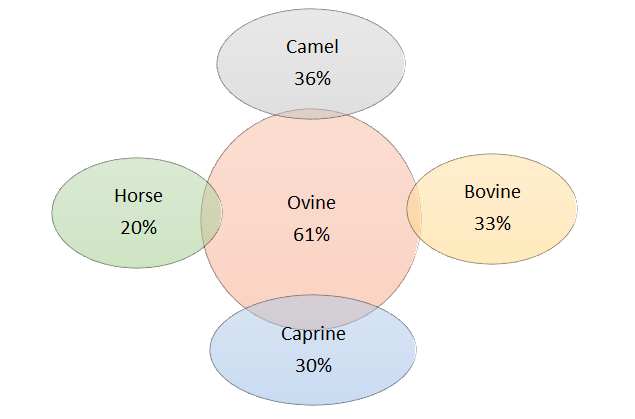
All the basic components of milk, namely fat, protein, lactose and ash, are present in all types of milk, but their proportions vary according to the animal kind, as shown in Table 1 [2, 5, 10]. Several factors are affected on these components’ ratios such as breed, lactation stage, milking frequency, feed type, and environmental conditions. Furthermore, Figure 1 illustrated the protein ratios in milk from different species.
| Milk g/100g | Total Dry Matter (TDM) | Fat | Protein | Lactose | Ash | Energy KJ/100g |
|---|---|---|---|---|---|---|
| Human | 10-13 | 2.1-4.0 | 0.9-1.9 | 6.3-7.0 | 0.2-0.3 | 270-290 |
| Mare | 9-12 | 0.4-7.2 | 1.3-2.0 | 6.0-7.2 | 0.3-0.5 | 109-210 |
| Donkey | 8-12 | 0.3-1.8 | 1.4-2.0 | 5.8-7.4 | 0.3-0.5 | 160-180 |
| Buffalo | 16-17 | 5.3-15.0 | 2.7-4.7 | 3.2-4.9 | 0.8-0.9 | 420-480 |
| Cow | -13 | 3.3-6.4 | 3.0-4.0 | 4.4-5.6 | 0.7-0.8 | 270-280 |
| Goat | 12-16 | 3.0-7.2 | 3.0-5.2 | 3.2-4.5 | 0.7-0.9 | 280-290 |
| Ewe | 18-20 | 4.9-9.0 | 4.5-7.0 | 4.1-5.9 | 0.8-1.0 | 410-440 |
| Camel | 11.9-15 | 2.4-6.0 | 2.4-4.2 | 3.5-5.1 | 0.69-0.9 | 241-328 |
| Ilama | 13.1 | 2.7-4.7 | 3.4-4.3 | 5.9-6.5 | 0.5-0.9 | 270-335 |
| Yak | 13.5-1804 | 5.3-9.5 | 4.2-5.9 | 3.3-6.2 | 0.4-1.0 | 381-429 |
| Reindeer | 20.1-27.1 | 10.2-21.5 | 7.5-13.0 | 1.2-4.7 | 1.2-2.7 | 554-843 |
Table 1: Milk composition of different animal species - interval values (minimum and maximum) reported in mentioned literatures.
Casien and whey proteins are the two main proteins which their ratios are varies among different mammalian species. This ratio in human milk is 40:60, equine milk is 50:50, while in cow, sheep, goat, and buffalo milk, are 80:20 according to the research by Roy D, et al. [5] in Table 2.
Casein micelles consist of α Sl -casein (αSl -CN), αS2 - casein (αS2 -CN), β-casein, and k-casein. As well, whey proteins encompass significant fractions such as β-lactoglobulin (β-lg), α-lactalbumin (α-lac), blood serum albumin (BSA), immunoglobulins (Igs), proteoses and peptones (PP), lactotransferin, serotransferrin, osteopontins, vitamin binding proteins, lactoferrin, and around 60 indigenous enzymes [11].
| Protein Fractions | Ruminants | Non-ruminants | Human | ||||||
|---|---|---|---|---|---|---|---|---|---|
| Cow | Buffalo | Goat | Sheep | Deer | Camel | Horse | Donkey | ||
| Total Casein | 24.6– 28 | 32–40 | 23.3- 46.3 | 41.8- 52.6 | ~57-84 | 22.1-26.0 | 9.4- 13.6 | 6.4-10.3 | 2.4-4.2 |
| Total Whey Proteins | 5.5–7.0 | 6 | 3.7-7.0 | 10.2- 16.1 | ~11-15 | 5.9-8.1 | 7.4- 9.1 | 4.9-8.0 | 6.2-8.3 |
| Casein-to-whey protein ratio | 82:18 | 82:18 | 78:22 | 76:24 | ~80:20- 85:15 | 73:27- 76:24 | 52:48 | 56:44 | 29:71-33:67 |
| Major Caseins | |||||||||
| αs -Casein 1 | 8–10.7 | 8.9 | 0-13.0 | 2.4- 22.1 | - | 4.9-5.7 | 2.4 | Present | 0.77 |
| αs -Casein 2 | 2.8–3.4 | 5.1 | 2.3- 11.6 | 6 | - | 2.1-2.5 | 0.2 | Present | Absent |
| β-Casein | 8.6–9.3 | 12.6- 20-9 | 0-29.6 | 15.6- 39.6 | - | 14.4-16.9 | 10.66 | Present | 3.87 |
| k-Casein | 2.3–3.3 | 4.1-5.4 | 2.8- 13.4 | 3.2- 12.23 | - | 0.8-0.9 | 0.24 | Present | 0.14 |
| Major Whey Proteins | |||||||||
| β-Lactoglobulin | 3.2–3.3 | 3.9 | 1.5-5.0 | 6.5- 13.5 | - | Absent | 2.55 | 3.3 | Absent |
| α-Lactalbumin | 1.2–1.3 | 1.4 | 0.7-2.3 | 1-1.9 | - | 0.8-3.5 | 2.37 | 1.9 | 1.9-3.4 |
Table 2: Protein profile (g L−1) of milk from different mammalian species.
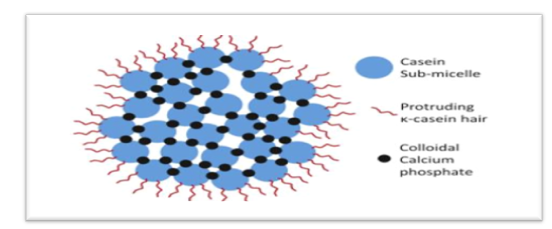
Additionally, milk proteins which take into consideration the building blocks of living tissues have all the essential amino acids and elements which human body cannot make [7]. Conversely, αs1-, αs2- and β-caseins are predominantly situated within the micelles, where they form connections with calcium phosphate nano-clusters through their phosphoserine domains [12]. Casein is a type of phosphoprotein that exists in a suspended state as colloidal molecules. These molecules have the ability to come together in a spherical form with a diameter ranging from approximately 50 to 500 nanometers. These structures are commonly known as ‘Casein micelles’, which are made up of smaller units known as sub-micelles Figure 2 by Anema [13]. The bonding between sub-micelles is facilitated by calcium bridges and hydrophobic interactions. Within the micelle structure, κ-Casein is predominantly located on the surface, specifically in the hydrophilic C-terminal region. These κ-caseins are grouped together in clusters, making them vulnerable to interaction with chymosin for further processing [14, 15, 16].
Total protein (TP) determines the market value of milk, the higher the TP value, the more money the producer will get. Here is an attempt to display the composition of different milk protein species:
Some Types of Milk Species
Human (Breast) Milk
According to the World Health Organization (WHO), the best way to breastfeed is to start early, exclusively breastfeed for the first 6 months, feed frequently, breastfeed for two years, and increase breastfeeding during times of illness [17]. Early initiation of breastfeeding means starting to breastfeed within one hour of childbirth. This practice has many benefits, such as boosting the baby’s immune system, lowering diarrhea risk, and progress the overall child survival rates. At the first month of birth there were about 2.7 million newborns passed away in 2015 worldwide, with more than a third of these deaths occurring on the first day. This number of deaths could be minimized to 33% when mothers practice early initiation of breastfeeding [17, 18, 19, 20].
Several data had illustrated the impact of 12 months of lactation on obesity, blood pressure, type 2 diabetes with low risk of ovarian and breast cancers, decreases blood pressure and the rates of postpartum depression for mother. This practice had an impact on the sleep patterns of not only the children but also their mothers. It is important to highlight that breastfeeding through skin-to-skin contact can offer solace to both mothers and children in moments of tension or unease [21, 22, 23, 24, 25]. There are some diverse roles of breast milk proteins like aiding digestion, boosting the immune system, protecting against harmful bacteria, viruses, and yeasts, as well as supporting the growth and function of the gastrointestinal tract [26].
Globally, in 2022 it was assessed that the potential of breastfeeding saved 574 billion USD (0.7% of global Gross Domestic Product, GDP), and more than 10% of household’s wages by not having to purchase infant formula [27]. Colostrum that rich in immunoglobin G; is the first milk formed in the beginning days after birth that is very paramount for protecting against newborns infections. It prevents many of bacterial, viral, fungal and protozoa infection for the babies. Some researches explained that children who didn’t feed colostrum could suffered from various infections such as stunting, underweight, and wasting [17, 28, 29, 30]. In general, colostrum has high ratios of growth factors and immunologic components such as secretory immunoglobulin A (sIgA), lactoferrin, and leukocytes, and contains relatively low concentrations of lactose, lipids, and energy. So, it could be concluded that the substantial mission of colostrum is trophic and immunologic more than nutrition [30]. Hsu, et al. [31] indicated a shortage in secretory immunoglobulin levels, with a constant concentration in calcium, lactoferrin, and lysozyme based on the stage of lactation. Specifically, protein concentrations were noticeably elevated in extremely premature milk (less than 28 weeks) compared to moderately premature and full-term milk. In contrast to full- term milk, premature milk is distinguished by higher levels of immune proteins and lower levels of nutritive proteins [32]. However, breast milk protein which don’t have fractions like αs1-casein, αs2-casein and β-lg; has low level compared to a high ratio of protein in cow milk which contained β-CN as the major casein fractions as shown in Table 3, but contain a high content of lactoferrin (LF). The exceptional digestibility rate of approximately 95%, along with its superior amino acid profile, establishes milk protein as a top-tier protein source in terms of quality [33, 34], but contain a high content of lactoferrin (LF). It also owns high digestibility of ~ 95%, combined with a superior amino acid composition, makes milk protein a “high quality protein” [35].
| Protein Types | Breast Milk (mg/ ml) | Cow Milk (mg/ ml) |
|---|---|---|
| αs1-casein | 0 | 11.6 |
| αs2-casein | 0 | 3 |
| β-casein | 2.2 | 9.6 |
| Κ-casein | 0.4 | 3.3 |
| γ-casein | 0 | 1.6 |
| β-lg | 0 | 3 |
| α-la | 2.2 | 1.2 |
| BSA | 0.4 | 0.4 |
| Ig | 0.8 | 0.6 |
| Lactoferrin | 1.4 | 0.3 |
| Lyzozyme | 0.5 | Traces |
Table 3: Composition of the main proteins in breast and cow milk.
Bovine (Cow) Milk
Bovine milk the copious milk which consumed for thousands of years had been recorded in ceramic pieces dating back 7500 years [36]. Nevertheless, many high- producing dairy cows have the ability to effectively manage lactational issues while maintaining good health [37]. Milk composition alters between breeds of cows, but generally includes protein (both casein and whey proteins), fat, lactose, alongside extolled minerals and vitamins. The cow’s milk protein is highly nutritious, as it is copious in essential amino acids such as leucine, isoleucine, valine, lysine, histidine, methionine, and phenylalanine. These amino acids contribute to various health functions and provide significant nutritional value [9].
Bovine proteins are assorting to 4 categories: caseins (including αS1-, αS2-, β- and k-caseins) and whey proteins, also renowned as serum proteins, which consist of different fractions as mentioned in table 4. Among these fractions, α-lactalbumin (α-La) acts as a component of lactose synthase and has antimicrobial and anticancer properties, while β-lactoglobulin (β-Lg) serves as an immunoglobulin carrier till colostrum formation. Bovine serum albumin (BSA) exhibits anticancer with immunomodulatory effects, and Lactoferrin (LF) is a glycoprotein with iron-binding capabilities similar to transferrin, along with antimicrobial, antiviral, immunomodulatory, antioxidant, and antitumor properties. Lysozyme also plays a role in antimicrobial defense, while immunoglobulins save the mammary gland from infections. Additionally, minor whey proteins such as proteose peptones (low molecular weight peptides derived from caseins), proteose peptone component3 (PP3), milk fat globule membrane (MFGM), and lacto-peroxidase exhibit antimicrobial and antioxidant properties Table 4 [9, 38].
| Protein Type | Concentration (g/L) |
|---|---|
| αs1-casein | 10 |
| αs2-casein | 2.6 |
| β-casein | 9.3 |
| Κ-casein | 3.3 |
| γ-casein | 0.8 |
| β-lg | 3.2 |
| α-la | 1.2 |
| BSA | 0.4 |
| Ig | 0.8 |
| Pp, 8F, 8S | 0.5 |
| PP3 | 0.3 |
| Lactoferrin | 0.1 |
| Transferrin | 0.1 |
| MFGM | 0.4 |
| Total | 33 |
There is nearly 30-35 g protein/L in ordinary bovine milk, the ratio of this protein is divided into 80% for casein micelles and 20% for whey proteins. Milk protein can precipitate by lowing pH to 4.6 at 20ᵒC or using chymosin enzyme into casein and whey proteins. It was recognized that there were 7 variants of αs1-CN, 4 of αs2-CN, 9 of β-CN and 6 of κ-casein. αs1-, αs2- and β-CN are called calcium sensitive fraction, whilst κ-casein is called “protective colloid” as it stabilizes casein micelles [33].
In the same vein, Brophy, et al. [39] expounded that four fractions of casein bovine milk which are αs1-, αs2-, β-, and κ-casein, aggregated into large colloidal micelles and also managed physicochemical properties of milk such as structure and stability.
Thus, improvement of milk characteristics could increase by growing casein concentration. As it known that κ-casein; which coats the surface of the micelles has a serious part in improving heat stability and enhancement the properties of cheese product. Further, good processing characteristics correlated with high content of β-case in which contain minimized rennet clotting time and boosted whey ejection.
As well as β-casein has two familiar variants (A1 and A2); A1 has His67 whilst A2 has Pro67. There had been known that many of biological effects can output from β-casein; the famous on is called casomorphin-7 between the position of 60 to 66 amino acid [40]. Compared to human, cow milk has less amount of α-la, lactoferrin, immunoglobulins and lysozyme as seen in previous Table 3.
Buffalo Milk
Buffalo (Bubalus bubalis) milk production is stated the second largest source after bovine milk in the world. Total universal milk production is around 13% (87.5million tones/ year), and also has high annual growth rates. It has high ratios of fat, protein, lactose, total solids and some minerals compared to cow, human, goat and camel milk [41].
One of the most countries that produces buffalo milk is Pakistan with 35.5 billion liters annual milk production (67.04%) followed by cow (31.56%) milk [42, 43].
Buffalo milk has all useful compounds, like peptides, fatty acids, vitamins, and other bioactive compounds. It characterized with elevated concentrations of total protein, medium chain fatty acids, CLA, vitamins A, D, C, B6, minerals (calcium, magnesium, phosphorus, potassium, zinc and iron) and contents of retinol and tocopherols than cow milk. Buffalo milk contains high ratios of immunoglobulins (Ig) which identified of (IgGa, IgA1, IgA2 and IgM) against cow and breast milk. Cow milk has lower content of lactoferrin than in buffalo milk, as displayed in Table 5 which compared both to human milk [44, 45].
| Buffalo Milk | Cow Milk | Human Milk | |
|---|---|---|---|
| Total Casein (CN) | 32-40 | 24.6-28 | 2.4-4.2 |
| α-S1 CN | 8.9 | 8-10.7 | 0.77 |
| α-S2 CN | 5.1 | 2.8-3.4 | - |
| β-CN | 12.6-20.9 | 8.6-9.3 | 3.87 |
| K-CN | 4.1-5.4 | 2.3-3.3 | 0.14 |
| Γ-CN | - | 0.8 | - |
| β-lg | 3.9 | 3.2-3.3 | - |
| α-la | 1.4 | 1.2-1.3 | 1.9-3.4 |
| Serum albumin | 0.29 | 0.3-0.4 | 0.4-0.5 |
| Lactoferrin | 0.03-3.4 | 0.02-0.5 | 1.5-2.0 |
| Lysozyme | 120-152×10-6 | 70-600×10-6 | 0.1-0.89 |
| Immunoglobulins (Ig) | 10.66 | 0.5-1.0 | 0.96-1.3 |
Table 5: Differentiation between protein fractions (g/l) of buffalo, cow and human milk.
Buffalo milk protein has ~80% caseins and ~20% whey proteins with traces of minor proteins, so BM is more preferred to consumer [46]. It possesses more colloidal calcium and phosphorus accompanied with high ratio of calcium than cow one. Contrast cow milk which contained 90- 95% of casein micelles; BM owns the casein in the micelles form. In addition, buffalo milk contains slightly higher ratios of β-lactoglobulin than cow milk, which is absent in human milk [41].
Also, same Table appeared that buffalo milk (BM) had higher content of α-s2-CN and κ-casein. The excessive amounts of κ-CN in BM can be believed that it acts as a laborer to accelerate the enzymatic phase of rennet coagulation and therefore it will be needed little quantity of chymosin in cheese manufacture [44].
There was great homology (97.2%) between αs1-CN of BM which contains a single 199 residue polypeptide chain compared to variant B of αs1-CN of bovine milk. Buffalo αs2-CN is considered of a single polypeptide chain with 207 residues in length and has very high homology (97.9%) compared with cow αs2-CN. Table 6 gave an outline of amino acid substitutions in both of buffalo and cow milk [47].
| Amino Acid Sequences | |||||||||||||
|---|---|---|---|---|---|---|---|---|---|---|---|---|---|
| αs1-CN | 4 | 4 | 42 | 74 | 115 | 119 | 148 | 174 | 192 | ||||
| Buffalo | Gln | Gln | Thr | Ile | Leu | Gln | Gln | Pro | Gly | ||||
| Cow | His | His | Lys | Asn | Ser | Arg | Glu | Thr | Glu | ||||
| αs2-CN | 2 | 2 | 44 | 147 | 157 | 170 | 175 | 176 | 182 | 199 | |||
| Buffalo | His | His | Ile | Ile | Asp | His | Thr | Try | Try | Asn | |||
| Cow | Asn | Asn | Val | Phe | Glu | Arg | Ala | Leu | His | Lys | |||
| β- CN | 25 | 25 | 57 | 84 | 108 | 164 | |||||||
| Buffalo | His | His | Met | Lys | Ile | Pro | |||||||
| Cow | Arg | Arg | Thr | Asn | Val | His | |||||||
| κ-CN | 14 | 14 | 80 | 96 | 126 | 128 | 138 | 140 | 147 | 149 | 156 | 162 | 168 |
| Buffalo | Glu | Glu | Pro | Thr | Val | Val | Ile | Asn | Ala | Ser | Val | Ala | Val |
| Cow | Asp | Asp | Ser | Ala | Ala | Gly | Val | Ser | Asp | Pro | Pro | Val | Ala |
| β-lg | 1 | 1 | |||||||||||
| Buffalo | Ile | Ile | |||||||||||
| Cow | Leu | Leu | |||||||||||
| α-la | 17 | ||||||||||||
| Buffalo | Asp | ||||||||||||
| Cow | Gly |
Table 6: Amino acids sequences of buffalo and cow milk protein fractions.
Goat Milk
As mentioned in a number of researches, about 500 breeds of goats live in the high mountains and deserts in the world which found more 95% of its population in developing countries [48]. India is the largest producers of goat milk in the world (26.3%) followed by Bangladesh (14.3%), and leaders among the European countries are France (3.8%) and Greece (3.3%). According to the rapid population growth, production of goat milk becomes a substantial issue to human nutrition in the tropical developing countries [49, 50]. United Nations explained that goat milk can be used as an important application to attain the 2030 Agenda for sustainable development goals [51]. Sharma, et al. [52] exhibited goat milk proteins which are composed of 80% casein the major protein and 20% whey protein; have remarkable variations in their compositions against milk of other mammalian species. They are a family of acidic, proline-rich phospho-proteins designed to form spherical, large, micelles structures in colloidal suspension with calcium phosphate. Moreover, the obvious differences between cow’s milk and goat’s milk in digestion is that the latter has a shorter clotting time, lower resistance to heat, weaker curd hardness and lower cheese yield what has been explained by the “homogeneity” of goat’s milk fat [53]. Feeding on goat milk; which contains about 1.2g calcium and 1 g phosphate/L furnishes a worthy ratio of them similar to those in cow milk. The soft curd and high buffering capacity of goat milk may be perfect for adult humans suffering from gastrointestinal disturbances and ulcers [50].
An important nutritional property of goat’s milk for infants, adults, or those with a cow’s milk allergy is that it has a high biological value digestive and physiological capacity [54]. Due to lower content of αs1-casein (5% of the total casein) in goat milk that makes it less susceptible to cause allergic reaction compared to cow milk and therefore decreases the sensitivity to the other allergen protein, which is β-lactoglobulin. As well, data declared that the best composition of exogenous amino acids can be found in goat and sheep milk. In general, goat milk compared to cow milk is less rich in lactose, fat and proteins, but has similar mineral content [49].
GM which its density ranges between 1.026 and 1.042; gained alkaline pH 6.3 to 6.7 verses to cow milk which is tend to acidity. It has a white-matte color, no β-carotene and a sweet and pleasant distinctive “freshly milked taste”; however, it can sometimes, at the end of lactation or after a period of storage in a cold environment, acquire a certain flavor one can describe as “animalic” [54]. The intense of goat milk flavor may be cause of the release of short-chain fatty acids during the handling of milk [50].
One of the key benefits of utilizing goats for milk production is their ability to thrive in challenging environmental conditions compared to cows. This makes goats a practical choice for milk production, especially during times of climate change that can negatively impact livestock. The unique qualities of goats make them a preferred option for milk production, particularly for vulnerable populations and those with financial constraints. The growing global acceptance of goat milk for human consumption is evident in the rapidly expanding goat milk market worldwide. Therefore, promoting research on goat milk production is crucial for enhancing food security and combating hunger on a global scale. Despite the lack of existing research on the importance of goat milk in enhancing food security, it is clear that further scholarly research on this topic is essential [55].
Goat milk has a higher concentration of non-protein nitrogen compounds compared to sheep and cow milk. Additionally, it contains fewer types of casein proteins. This unique composition results in a softer texture in goat milk yogurt, as opposed to sheep milk which has a stronger ability to coagulate. The differences in casein proteins in sheep milk are the primary reasons for its quicker curd formation and firmer rennet coagulation. Both goat and sheep milk also boast higher levels of essential minerals and vitamins compared to cow milk [54].
Sheep Milk
Sheep milk production is prominent in Asia, Africa, and Europe, with a global output of 10.61 million tons. China, Turkey, and Greece are among the top producers of sheep milk. The Mediterranean region is a key area for sheep milk production, where important dairy sheep breeds like Awassi, East Friesian, and Lacunae are commonly found [56]. However, family-scale farms are a major part of the goat and sheep milk production. Sheep milk is higher in total solids, fat, protein and caseins and also has larger amount of minerals and vitamins. Sheep milk, in addition shows more marked white opacity and has a special odor originally called “suarda” or “sheepy”. This feature is relatively less evident in milk that is stored in good hygienic condition [54].
Sheep milk (SM) is characterized by a high percentage of whey proteins 1.02g/100g and similar to buffalo milk in casein content 4.18g/100g [57]. Additionally, SM when compared to cow milk; it comprises higher ratios of macro-nutritional fractions; like protein, fat and total solid. Recently, it was detected that sheep milk has higher ratios of both essential and trace minerals such as of Ca, P, Mg, Zn, Mn, Cu, and Na compared to cow milk. Consequently, the consumption of SM may support bone health compared to cow one [58].
Furthermore, Pandya, et al. [59] illustrated that sheep milk contains a variety of beneficial components such as peptides, oligosaccharides, fucosylated oligosaccharides, hormones, growth factors, mucin, gangliosides, and endogenous peptides, lipids, vitamins and minerals. These elements are naturally present in milk upon secretion and serve to enhance health in a way that complements synthetic pharmaceutical drugs rather than replacing them. Sheep milk is considered a natural functional milk due to its exceptional nutritional content, easy digestibility, and therapeutic and dietary properties.
Sheep and goat casein micelles have higher mineralization levels, and they are less hydrated, solvated, and heat stable than bovine casein micelles [54]. Moreover, the molecular form and amino acid sequence of the milk proteins may differ from one species to another (e.g. at neutral pH β-lg is present as monomer in horse milk, but as dimer in ruminant milk; which additionally affects the protein digestibility, nutritional quality and thermo-stability [60]. Sheep milk differs from goat one in the casein fractions ratios. α-S1 CN content is higher in sheep milk than in goat milk which contains more content of κ-casein. The concentration of protein fractions for both sheep and goat milk were displayed in Table 7 [44]. A comparative evaluation of amino acids in sheep milk compared to goat, cow and buffalo milk declared in Table 8 [61].
| Sheep milk | Goat milk | |
|---|---|---|
| Total Casein (CN) | 41.8-46 | 23.3-46.3 |
| α-S1 CN | 15.4-22.1 | 0.0-13.0 |
| α-S2 CN | - | 2.3-11.6 |
| β-CN | 15.6-17.6 | 0.0-29.6 |
| K-CN | 3.2-4.3 | 2.8-13.4 |
| β-lg | 6.5-8.5 | 1.5-5.0 |
| α-la | 1.0-1.9 | 0.7-2.3 |
Table 7: Some Protein fractions (g/l) of sheep and goat milk.
| Amino Acids (g/100g) | Cow Milk | Goat Milk | Buffalo Milk | Sheep Milk |
|---|---|---|---|---|
| Aspartic acid | 7.8 | 7.4 | 7.13 | 6.5 |
| Threonine | 4.5 | 5.7 | 5.714 | 4.4 |
| Serine | 4.8 | 5.2 | 4.65 | 3.4 |
| Glutamic acid | 23.2 | 19.3 | 21.4 | 14.5 |
| Proline | 9.6 | 14.6 | 12 | 16.2 |
| Cystine | 0.6 | 0.6 | 0.586 | 0.9 |
| Glycine | 1.8 | 2.1 | 1.93 | 3.5 |
| Alanine | 3 | 3.6 | 3.03 | 2.4 |
| Valine | 4.8 | 5.7 | 6.76 | 6.4 |
| Methionine | 1.8 | 3.5 | 0.928 | 2.7 |
| Isoleucine | 4.2 | 7.1 | 5.714 | 4.6 |
| Leucine | 8.7 | 8.2 | 9.792 | 9.9 |
| Tyrosine | 4.5 | 4.8 | 3.858 | 3.8 |
| Phenylalanine | 4.8 | 6 | 4.713 | 4.3 |
| Histidine | 3 | 5 | 2.73 | 6.7 |
| Lysine | 8.1 | 8.2 | 7.497 | 7.8 |
Table 8: Amino acid profile of cow, goat, sheep and buffalo milk.
She-Camel Milk
Camel is an animal can be used for multi-purposes with high productions. In deserts camel can live and faces the problems like raise of global warming and scarcity of food and water. In 2018, the estimated global population was roughly 30 million, with the majority residing in Africa. Specifically, around 80% of the population calls Africa home, with 60% of that number concentrated in the Horn of Africa, notably in Somalia [62]. Four North East African countries Somalia, Sudan, Kenya and Ethiopia own about 60% of the dromedary camel population. Somalia has the largest herd in the world with over 6 million heads. Daily yields between 3 to 10 kg in a lactation period of 12 to 18 months are common [63]. Camel milk is drunk throughout Arabia, and it has low fat and high nutritious value. Lately, the European Union has also allowed import of camel milk from African and Asian countries into the EU [64].
Fresh camel milk has an ordinary odor, opaque white color, smooth texture due to homogenized milk fat and salty taste because camel is fond of grazing on salty vegetation. The chemical composition of camel milk compared to cow one is cleared in Table 9. Camel as cow milk has highly obvious protein compared to human milk but lower than buffalo milk. It has a similar low-fat content as human than buffalo and cow milk. Camel milk is similar to goat milk in protein and lactose contents. It has a comparable content of fat, moisture, total solids and carbohydrate with cow and goat milk. So, the composition of camel milk is closer to human milk and of high nutritional value and therapeutic effects [64, 65].
| Parameters | Camel milk | Cow milk |
|---|---|---|
| Water % | 90 | 85 |
| Total Solids % | 10 | 13 |
| Fat % | 2 | 4 |
| Insulin (µu/ml) | 40.5 | 16.3 |
| β-lg mg/ml | 0 | 3500 |
| α-la mg/ml | 3500 | 1200 |
| Κ-casein % | 5 | 14 |
| Whey protein % | 1 | 0.8 |
| Omega-6 % | 3.5 | 5.2 |
Table 9: Comparison between camel and cow milk in some parameters.
Lactose concentration is about 4.8%, but this sugar is easily metabolized by persons suffering from lactose intolerance. Camel milk also is suitable for allergic patients with absence of β-lg high amount of α-la and a different beta- casein. Camel milk is considered harmonious with human one due to it consists of a number of Igs. Camel milk dose not has β-LG makes it similar to human milk, so it is able to substitute human milk for infant diet formulation compared to cow milk. High level of whey proteins fractions in camel milk might supply great advantages of functional properties to camel milk consumers [66].
On the hand, this milk includes high ratios of Fe, Cu and chloride which make its salty taste. One of the most important features is long-shelf life; 3 days for raw milk, 10 days for pasteurized one. This property is naturally coming from its antibacterial system (lysozyme, lactoferrin and hydrogen peroxide) [67].
Even though camel whey proteins have higher heat stability than bovine whey proteins at temperatures between 63 and 90ᵒC, bovine milk coagulates much slower at higher temperatures. This could be related to the absence or very low levels of β-lg and k-casein in camel milk as milk is more resistant to heat when it is characterized by a molar β-lg to k-casein ratio close to 1 [44].
Equine (Mare) Milk
The global horse population exceeds 60 million, with a majority found in America and Asia. In Europe, horses are primarily concentrated in the eastern regions. In impoverished and developing nations, horses are commonly used as a means of transportation, whereas in developed countries they serve various purposes, including milk production, especially in Europe. Compared to cow milk, horse milk has lower levels of total solids, fat, and protein, but higher levels of lactose, making their composition more similar to that of human milk [68, 69]. Mongolia, Kazakhstan, Kyrgyzstan or Tajikistan; these four countries are known of consuming mare’s milk [70]. Although that the exact production amount of mare’s milk is not accurately known, there are about 30 million people all over the world are regularly consuming this type of milk. As well in Italy, Hungary, The Netherlands and Germany; it has gained more value due to its positive health impacts; almost 1 million kg of mare’s milk are produced in Europe [71].
So, mare’s milk casein is in a moderate level between human and bovine milk. The ratio of casein to whey proteins in horse is around 1.1:1, which more closely likes human milk [70]. Compared to cow milk; the stingy existence of k‐casein in mare milk is causing higher average size of the micelle and showing various mechanisms for micelle stability [72]; these factors with the low total casein content, are maybe caused the weak coagulation properties. Table 10 had illustrated a comparison between equine, bovine and human milk either colostrum or mature milk [73].
| Equine | Bovine | Human | |
|---|---|---|---|
| Colostrum | |||
| Protein, g kg-1 | 128.9 (63-191) | 99.6 (33-135.8) | 20.0 (12-36) |
| Immunoglobulins, g kg-1 | 79.2 (49-107) | 52.3 (31-87) | 18.79 |
| Fat, g kg-1 | 14.5 (6.9-29 | 46.3 (36-65) | 34.3 (28-38) |
| Lactose, g kg-1 | 39.5 (33-46) | 34.7 (25-48) | 63.0 (51-70) |
| Milk | |||
| Gross energy, kJ kg-1 | 2008 | 2820 | 2832.5 |
| Protein, g kg-1 | 21.5 (15-28) | 32.5 (31-38) | 15.2 (9-21.4) |
| NPN × 6.38, % | 11.21 | 5.23 | 20.42 |
| Casein, % | 50 | 77.23 | 26.06 |
| Whey protein, % | 38.79 | 17.54 | 53.52 |
| Casein: Whey Protein | 1.1:1 | 4.7:1 | 0.4:1 |
| b-Lactoglobulin, % | 30.75 | 20.1 | Absent |
| α-Lactalbumin, % | 28.55 | 53.59 | 42.37 |
| Immunoglobulins, % | 19.77 | 11.73 | 18.15 |
| Serum albumin, % | 4.45 | 6.2 | 7.56 |
| Lysozyme, % | 6.59 | Trace | 1.66 |
| Lactoferrin, % | 9.89 | 8.38 | 30.26 |
| Fat, g kg-1 | 12.1 (5-20) | 36.1 (35-9) | 36.4 (35-40) |
| Lactose, g kg-1 | 63.7 (58-70) | 48.8 (44-49) | 67 (63-70) |
| Ash, g kg-1 | 4.2 (3-5) | 7.8 (7-8) | 2.2 (2-3) |
Table 10: Comparison between equine, bovine, and human colostrum, and mature milk.
In the same line, Mare milk has major biological value than bovine milk. Content of threonine, valine, cystine, tyrosine, and lysine amino acids decreased, but both of glutamic acid and proline raised with time after delivery. There are little reports about equine milk protein variation, especially for the balance between casein and whey protein which considered the main cause of cow milk allergy [74, 75]. Affirmative impact of mare milk consumption on diseases like atopic dermatitis had been displayed. Many studies recommended mare milk as a suitable substitute for cow milk in cases of severe IgE-mediated cow milk allergy [76].
Although horse milk contains a high percentage of calcium compared to cow’s milk, horse milk is weak in the acid and enzymatic coagulation process. Many studies mentioned that horse casein doesn’t coagulate by calf chymosin at pH 6.6 or by various enzymes but some micellar flocculation not gel formation [69]. One study used Withania coagulans extracted from fruit had coagulated milk, but they did not report any details of the physical and chemical properties of the curd obtained [77].
Donkey (Jenny) Milk
Eight million heads which considered being the highest donkey population all over the world are in China; also, major populations are in Pakistan and Ethiopia. In the EU, there are around 288,000 donkeys, most of which live in Spain, France, Romania, and Italy. Jenny milk has been processed to meet nutritional requirements of definite people; this has improved income from donkey enterprises [62, 78].
Owing to its similarity to human milk, jenny milk is given an increasing attention, especially in Europe. Jenny milk has low contents of fat and cholesterol, even so it is considered most identical to human milk in protein and lactose contents. Human milk includes lower protein content compared to cow, buffalo, yak, camel, goat, sheep, and reindeer milk. Jenny milk, if modified appropriately, could be used as an alternative substitute in infant formulas to evade cow milk allergies [75, 79].
Inadequate information accrued about chemistry and nutritional properties of jenny milk contrast to mare milk. Obtainable results stated that jenny milk is nearly like mare milk with low total solids (8-10%) and protein (1.5- 1.8%) and high lactose (6-7%) and fat varies within 0.28- 1.82%. Likewise, its protein is low in casein (47.3%) and whey protein (36.9%), but it is rationally high in lactose and β-lactoglobulin (30%). The casein/ total protein ratio is once more similar to breast milk. It has Immunoglobulins (IgGs) in high content compared with human and bovine milk [75, 80].
Jenny milk owns high level in valine and lysine comparing cow, buffalo, goat, ewe, camel, and mare milk. It also included greater serine (6.2% vs. 4.8% and 5.1%), glutamic acid (22.8% vs. 23% and 17.8%), arginine (4.6% vs. 3.3% and 4%), and valine (6.5% vs. 4.8% and 6%) and lower cystine (0.4% vs. 0.6% and 1.7%) than cow and human milks, respectively. Its protein mostly contains αS1- and β-caseins, lysozyme, α-lactalbumin, β-lactoglobulin. β-lactoglobulin and α-lactalbumin contents were in average of 3.75 and 1.8 mg/ ml, respectively. Overall, jenny milk is characterized by low casein and high lysozyme content (1.0 mg/ml), compared with other milk [78, 81].
Although the characteristics of donkey milk are similar to those of breast milk, the expansion of its production on a commercial scale is uncertain. With all these special properties of donkey milk and some economic possibilities it can support children’s food [81].
Yak Milk
Yak milk is predominantly produced in the Qinghai-Tibet region of China, where yaks thrive in the challenging cold and high-altitude environments. China boasts a yak population of approximately 13 million, representing over 90% of the global yak population. The global production volume of yak milk is not officially documented, with estimates varying significantly from 0.7 to 40 million tons, as noted by Zhang, et al, [82]. Compared to cow milk, yak milk contains higher levels of dry matter, fat, and protein. The casein profile is similar, with slight variations in the concentrations of β and κ fractions. Notably, the casein micelle in yak milk is more hydrated and contains more colloidal calcium phosphate. While the average size of the micelle and fat globules in yak milk is slightly larger than in cow milk, as highlighted by Faccia, et al. [69].
The unique composition of yak milk lends itself to easy coagulation using rennet, a characteristic not commonly found in other types of milk. Bovine chymosin can effectively hydrolyze k-casein in yak milk, although the gel formation process is slower compared to cow milk. The firmer gel structure of yak milk is attributed to its elevated levels of colloidal calcium phosphate, facilitating the linking of casein micelles in multiple directions. Additionally, the larger size and higher hydration of yak micelles contribute to reduced curd syneresis and enhanced moisture retention. Yak milk’s coagulation properties are particularly advantageous for producing hard cheese in comparison to Holstein milk, owing to its higher concentrations of casein and calcium. By incorporating lactic acid bacteria starter, rennet, and CaCl2, high-quality hard cheese can be successfully crafted from yak milk, as detailed in the study by Faccia, et al. [69].
Digestibility of Different Milk Protein Species
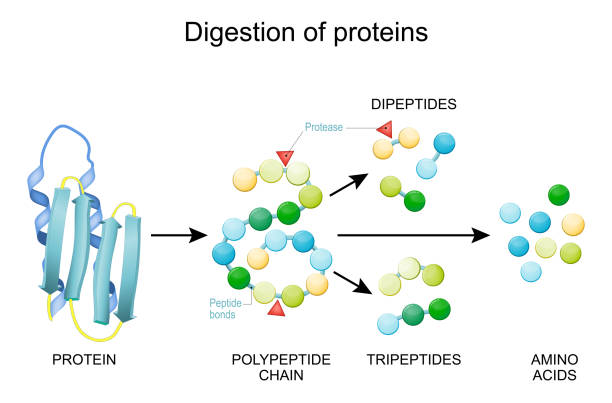
The collapse of proteins initiates in the stomach with the assistance of pepsins, then by further digestion in the intestines facilitated by enzymes such as trypsin, chymotrypsin, and various peptidases. In some cases, newborns may possess a chymosin-like enzyme alongside pepsin in their gastric fluid, although this enzyme typically diminishes around the eleventh day post-birth. Both chymosin and pepsin belong to the group of aspartic proteinases that utilize aspartic acid residues in their active center.
These enzymes exhibit a preference for breaking down the Phe105–Met106 bond in κ-casein, with pepsin also displaying non-specific proteolytic activity towards bonds containing Trp, Tyr, Leu, or Val residues. Consequently, pepsin depict higher proteolytic activity compared to its milk clotting activity in contrast to chymosin. The mechanism of action for both chymosin and pepsin is anticipated to be similar in clotting milk, as they both target the same site [5].
The stability and effectiveness of chymosin and pepsin are influenced by pH levels. Chymosin is most stable within a pH range of 5.3–6.3 but loses effectiveness under acidic conditions below pH 3–4 and at high alkaline pH levels above 9.8. In contrast, pepsin exhibits the highest proteolytic activity at a pH of 2, with an optimal range of 2–5, remaining active within a pH range of 5.5–7.5 and becoming irreversibly deactivated at pH levels above 7.5.
The breakdown of milk proteins in humans and the transportation of peptides or intact proteins into the bloodstream are not fully understood. Research indicates that whey proteins tend to reach the upper jejunum more rapidly than caseins, suggesting that whey proteins are more easily released into the duodenum compared to caseins, which form a clot in the acidic stomach environment. This leads to caseins being classified as “slow” digested proteins and whey proteins as “fast” digested proteins [5, 35, 83]. The study by Ye, et al. [84] elucidates that pepsin exhibits specificity in targeting different sites for protein breakdown compared to intestinal proteases such as trypsin and chymotrypsin. Specifically, pepsin shows a preference for acting on κ-casein within casein micelles, leading to the coagulation of the casein component of milk proteins in acidic conditions. This action results in the separation of the casein fraction from the soluble whey protein fraction, underscoring the crucial role of the stomach in initiating protein digestion.
The composition of casein in the type of milk consumed, as well as the ratio between casein and whey proteins, plays a significant role in determining the rate of protein digestion in the stomach. Cow’s milk, characterized by high casein content, forms a dense coagulum that slows down protein breakdown and promotes absorption. On the other hand, milk from mares, jennies, camels, and goats forms softer curds in the stomach, facilitating easier digestion [44].
Additionally, mother’s milk creates soft and fragile protein aggregates in the infant’s stomach [85]. Research indicates that the rates of tryptic hydrolysis for micellar caseins from cattle, human, goat, and horse milk are approximately 76–90%, 100%, 96%, and 92%, respectively. The higher susceptibility of human and goat milk to hydrolysis is attributed to their smaller micellar aggregates and elevated levels of β-casein in their micellar structures, in contrast to cattle milk, which contains higher levels of αs1- casein [5].
Also, variations in protein composition, casein micelle structure, processing temperature, and time can indeed influence the structure of curd in the stomach. These factors play a crucial role in determining the rate at which proteins are released to the small intestine and their absorption efficiency, as highlighted in the study by Roy, et al. [5]. It is important to consider these variables when evaluating the impact of dairy products on digestion and nutrient absorption in order to optimize nutritional outcomes.
The digestibility of different protein fractions varies significantly across various milk sources. For instance, β-lg in mare milk is more easily digested compared to goat β-lg, while β-lg in goat and sheep milk is easier to digest than bovine β-lg.
Conversely, α-lactalbumin from all species is known to be more challenging to digest. Whey protein fractions like lactoferrin and serum albumin found in breast and mare milk are easily digested, similar to bovine and goat milk, as noted in the study by Inglingstad, et al. [35]. Milk proteins play a critical role not only in nutrition but also in various biological functions.
The bioactive peptides released during milk protein digestion are considered a promising alternative, along with the released amino acids. However, the complete understanding of how milk proteins are metabolized in the human body and how different peptides are utilized remains a topic that is not fully elucidated, as highlighted by Inglingstad, et al. [35] Figure 3.
Different Milk species in Some Dairy products
The variation in the composition of milk protein species makes their applicability in the industry different as well. In this section, it will be presented the most important dairy products in which the common species are interfered and the extent to which other species can be applied.
Fermented Dairy Products
The development of fermented dairy products using a combination of milk species, such as goat and camel with cow milk, has led to improved quality and the introduction of new products to the market. Yogurt, as noted by Aryana, et al. [86], is a widely consumed fermented dairy product globally, with annual production increasing significantly over the years. In 2015, yogurt production reached £4742.1 million, a substantial increase from £982.6 million in 1990. Despite the biological benefits and similarities to breast milk, donkey milk remains relatively underutilized in the dairy market. However, a study by Chivari, et al. [87] successfully demonstrated the production of a fermented beverage using donkey milk and probiotic bacteria like Lactobacillus rhamnosus and Lactobacillus casei. This study showcased the potential of incorporating jenny milk into fermented beverages enriched with probiotics, featuring a high lysozyme content and appealing taste profile.
Furthermore, research by Wang, et al. [88] highlighted that donkey milk possesses lower allergenic properties compared to cow milk and is rich in essential amino acids and polyunsaturated fatty acids (PUFAs) such as a-linolenic acid and linoleic acid. These findings underscore the nutritional value and potential health benefits of donkey milk as a viable alternative in the dairy industry.
The research findings suggest that utilizing sheep’s milk to create set yogurt with varying fat concentrations can yield superior quality and enhanced flavor. Specifically, sheep yogurt with low fat content, derived from 6.6% milk fat, demonstrated improved quality and reduced syneresis compared to yogurt with higher fat content. Furthermore, as the fat ratio decreased, the firmness of the curd also decreased, as indicated by Kaminarides, et al. [89]. This information underscores the potential benefits of producing sheep yogurt with lower fat content for optimal quality and texture.
The research study on yogurt production using sheep, camel, and goat milk highlighted the unique characteristics of camel milk that necessitate a longer incubation time of 16-18 hours compared to the 3-4 hours required for sheep and goat milk. This extended coagulation time in camel milk can be attributed to several factors, including the larger size of casein micelles, which results in a less efficient aggregation process and weaker gel formation, leading to a softer coagulum. Additionally, the antibacterial properties present in camel milk may interfere with the activity of lactic acid bacteria crucial for fermentation. Furthermore, camel milk exhibits lower levels of K-casein and total solids in comparison to sheep and goat milk [90]. In a similar study by Galeboea, et al. [91], it was found that when camel yogurt was enhanced with calcium chloride, gelatin, and skim milk powder, it exhibited comparable chemical and microbiological characteristics to cow yogurt. However, cow yogurt was preferred in terms of sensory properties. The addition of exopolysaccharides was also noted to improve yogurt texture more effectively than other additives [92].
The study made by Khalifa, et al. [93] on the production of set yogurt using various milk sources, including buffalo, camel, goat, and their combinations in different ratios, yielded significant findings. Camel milk was observed to contribute to a more liquid-like structure, while goat milk resulted in a mildly firm texture in comparison to the firm curd produced by buffalo milk. Blending buffalo milk with camel and goat milk in ratios of 50:50, 60:40, and 90:10 was found to enhance the characteristics of the curd, prolong its shelf life, and boost consumer acceptance. This research highlights the potential benefits of utilizing different milk sources and their combinations in yogurt production to improve product quality and consumer satisfaction.
The incorporation of mixed goat and cow milk in yogurt production has been shown to offer various benefits. Studies by Temerbayeva, et al. [94] demonstrated that blending goat and cow milk resulted in a yogurt product with higher levels of vitamins and protein, while reducing fat content. Additionally, the sensory attributes of the yogurt improved when combining goat and cow milk compared to using goat milk alone, with a ratio of 70% goat milk and 30% cow milk. Similarly, research conducted by Trentin, et al. [95] on yogurt produced from sheep and bovine milk, as well as their combinations, revealed that sheep milk contributed to a better nutritional profile in the final product. These findings suggest that incorporating different milk sources in yogurt production can enhance nutritional value and sensory qualities, highlighting the potential for innovation in dairy product development.
Kumis, a traditional drink made from mare’s milk, is renowned in various Asian countries for its perceived medicinal properties. It is believed to offer benefits to the nervous and immune systems, as well as aid in the treatment of conditions affecting the cardiovascular, respiratory, gastrointestinal, and urinary systems. This is attributed to its rich composition of enzymes, trace elements, antibiotics, and a diverse array of vitamins such as A, B1, B2, B12, D, E, and C. Research suggests that kumis can be beneficial for individuals recovering from certain illnesses and for pregnant women, as recommended by Jastrzebska, et al. [96]. It is important to consider these potential health benefits when incorporating kumis into dietary practices.
Cheese Product
The utilization of camel milk for cheese-making present’s challenges due to lower cheese yield and inferior product quality compared to traditional dairy sources. However, various efforts have been made to overcome these obstacles and produce different types of camel milk cheeses. One strategy involves using camel gastric enzymes instead of chymosin for cheese processing. Research studies have indicated that camel-derived chymosin exhibits superior clotting activity and κ-casein cleavage potential in comparison to chymosin sourced from other animals [97, 98]. This highlights the potential for utilizing camel gastric enzymes to enhance the cheese-making process and improve the quality of camel milk cheeses.
The research conducted by Khan, et al. [99] highlights the successful creation of soft white cheese from camel’s milk through a modified approach. By lowering the pH to 5.5 using citric acid or starter cultures and incorporating calcium chloride before rennet, they were able to produce cheese from camel milk. Despite a lower yield compared to cow or buffalo milk, the cheese made with starter cultures was preferred over acidification. This suggests that traditional cheese-making methods may not be optimal for camel milk and that alternative techniques are necessary for successful incorporation of camel milk into cheese production.
The study by Konuspayeva, et al. [100] highlights key factors influencing the use of camel milk in cheese production. The lactation period significantly impacts curd formation, with initial 12 days post-delivery showing no curd formation, followed by a soft coagulation phase starting after 24 days, suitable for cheese production. Optimal coagulation temperature was identified at 36ᵒC with a lower pH of 5.78, contrasting with 20ᵒC and a higher pH of 6.26. The introduction of a new coagulant, “Chy-Max M,” derived from Hansen™ (Denmark) containing camel chymosine, demonstrated effectiveness in cheese production. Various additives have been explored to enhance the quantity and quality of camel milk cheese. For example, the addition of calcium chloride during cheese manufacturing has shown to reduce coagulation time, improve cheese yield, and maintain organoleptic quality. Substituting camel rennet for bovine rennet has shown enhanced coagulation effects and reduced coagulation time, potentially due to the presence of pepsin enzyme in the rennet preparation. Incorporating yogurt culture or other lactic acid bacteria (LAB) with rennet in camel milk has accelerated coagulation by increasing lactic acid content, leading to improved texture and firmness of the curd. However, the addition of LAB or yogurt culture alone without rennet did not yield significant improvements in coagulation efficiency, as noted by Arain, et al. [98].
The challenges in cheese production from jenny milk, similar to camel milk, are attributed to its high whey protein and lysozyme content. A study by Iannella [101] utilized pure camel chymosin and starter cultures to create donkey cheese, yielding lower results compared to cow cheese, but with potential for improvement in the future. Goat cheese is widely produced globally, particularly in Mediterranean regions such as Turkey, Greece, Syria, and Iran. Initially focused on soft cheese, the production has evolved to include hard and ripened varieties. Factors influencing the sensory properties of goat milk-based products include genetic heredity of the animal, environmental conditions, and processing technologies [54]. Table 11 provides an overview of the potential applications of various milk species in different dairy products, highlighting the diversity and possibilities within the dairy industry.
| Fermented Product | Cheese Product | |
|---|---|---|
| Cow | Very common | Very common |
| Buffalo | Very common | Common |
| Goat | Slightly firm | Common |
| Sheep | Firm | Common |
| Camel | Liquid (need some modification) | Can produce |
| Mare | Common (Kumis) | Need Some Modification |
| Donkey | Can used | Can produce (need some modification) |
Table 11: Summary of the possibilities of various milk species in some dairy products.
The study conducted by Saadi, et al. [102] focused on the production of soft cheese using camel milk and aimed to address production challenges. They experimented with soft cheese formulations using camel milk, sheep milk, and various combinations of both. The data analysis indicated significant variations in total solids, fat, and protein content among camel soft cheese, sheep soft cheese, and their blends.
Notably, camel cheese exhibited the highest total solids content, while the cheese produced from a 50:50 ratio of the two milk types showed the lowest concentration. It was observed that camel milk experienced a notable loss of proteins, leading to reduced total solids content during storage. In contrast, sheep milk demonstrated an increase in total solids and cheese yield over the storage period. These findings underscore the importance of understanding the compositional differences between camel and sheep milk in soft cheese production and highlight the potential impact on product quality and stability during storage. Further research and optimization of processing techniques may be necessary to address protein loss issues associated with camel milk and enhance the overall quality of soft cheese formulations.
Conclusion
Milk is indeed a valuable source of nutrients essential for human growth and development, provided by nature for various species. Each species’ milk is uniquely tailored to meet the specific needs of its offspring. In the past, certain milk species were underutilized due to limited production and a lack of awareness regarding their distinct properties. However, there is a growing trend in the dairy industry to explore and capitalize on the benefits of these lesser-known milk species. As a result, an increasing number of food and dairy products are being manufactured using non-traditional milk sources, with the aim of introducing these products to a wider audience globally. This shift towards utilizing a variety of milk species in the production of dairy products reflects a recognition of the diverse nutritional benefits and unique properties that each type of milk can offer.
Future Perspectives and Recommendations
- It is essential to prioritize research and awareness initiatives focused on the benefits of breastfeeding and increasing maternal understanding of its importance based on scientific evidence.
- Additionally, further comprehensive research is needed to improve the nutritional and sensory qualities of camel milk products to compete with those derived from other livestock.
- Moreover, the development of innovative technologies and refining processing techniques are critical for diversifying camel milk into various dairy products, including low-fat milk, skim milk, and flavored options tailored for specific dietary or medical needs.
- Increasing consumer awareness of the advantages of alternative milks such as camel, horse, and donkey milk is key to fostering acceptance and consumption. It is imperative to conduct scientific studies to address challenges associated with incorporating these unfamiliar milks into dairy products that align with consumer preferences and demands.
References
-
Hsieh CC, Ledesma BH, Tome SF, Weinborn V, Barile D, et al. (2015) Milk Proteins, Peptides, and Oligosaccharides: Effects against the 21st Century Disorders. Biomed Res Int 2015: 146840.
-
Kaskous S (2020) A1- and A2-Milk and Their Effect on Human Health. Journal of Food Engineering and Technology 9(1): 15-21.
-
Hassan LK, Abd-Wahhab KG, Abd El-Aziz M (2022) Lactose Derivatives: Properties, Preparation and Their Applications in Food and Pharmaceutical Industries. Egypt J Chem 65(6): 339-356.
-
Gerosa S, Skoet J (2012) Milk availability: Trends in production and demand and medium-term outlook. FAO, United Nations, Rome (Italy).
-
Roy D, Ye A, Singh H, Moughan PJ (2020) Composition, structure, and digestive dynamics of milk from different species-a review. Front Nutr 6(7): 577759.
-
Koirala P, Dahal M, Rail S, Dhakal M, Nirmal NP, et al. (2023) Dairy Milk Protein–Derived Bioactive Peptides: Avengers Against Metabolic Syndrome. Curr Nutr Rep 12(2): 308-326.
-
Guetouache M, Guessas B, Medjekal S (2014) Composition and nutritional value of raw milk. Issues in Biological Sciences and Pharmaceutical Research 2(10): 115-122.
-
Fiecko RP, Sadowska AMK (2020) The Comparison of Nutritional Value of Human Milk with Other Mammals’ Milk. Nutrients 12(5): 1404.
-
Pratelli G, Tamburini B, Badami GD, Pizzo ML, Blasio AD, et al. (2024) Cow’s Milk: A Benefit for Human Health? Omics Tools and Precision Nutrition for Lactose Intolerance Management. Nutrients 16(2): 320.
-
Crowley SV, Kelly AL, Lucey JA, O’Mahony JA (2017) Potential applications of nonbovine mammalian milk in infant nutrition. In: Park YW, et al. (Eds.), Handbook of Milk of Non-Bovine Mammals. Oxford: John Wiley & Sons Ltd, United Kingdom, pp: 625-654.
-
Huma N, Ghaffar F, Rafiq S, Pasha I, Sameen A, et al. (2018) Characterization of Milk Proteins from Different Animal Species through Gel Electrophoresis. Pakistan J Zool 50(5): 1983-1986.
-
Horne DS (2003) Casein micelles as hard spheres: Limitations of the model in acidified gel formation. Colloids and Surfaces A: Physicochemical and Engineering 213(2-3): 255-263.
-
Anema SG (2020) The whey proteins in milk: Thermal denaturation, physical interactions, and effects on the functional properties of milk. In: M Boland, et al. (Eds.), 3rd (Edn.), Milk Proteins, pp: 325-384.
-
Kruif CGD, Holt C (2003) Casein micelle structure, function and interactions. In: Fox PF, et al. (Eds.), Advanced Dairy Chemistry, Volume 1: Proteins, Kluwer Academic/Plenum Publishers, Springer, New York, USA, pp: 233-276.
-
Dalgleish DG, Spagnuolo PA, Goff HD (2004) A possible structure of the casein micelle based on high-resolution field emission scanning electron microscopy. Int Dairy J 14(12): 1025-1031.
-
McMahon DJ, Oommen BS (2008) Supra molecular structure of the casein micelle. J Dairy Sci 91(5): 1709- 1721.
-
WHO (2017) 10 facts on breastfeeding. World Health Organization.
-
Edmond KM, Zandoh C, Quigley MA, Etego SA, Agyei SO, et al. (2006) Delayed breastfeeding initiation increases risk of neonatal mortality. Pediatrics 117(3): e380-e386.
-
Oot L, Sommerfelt A, Sethuraman K, Ross J (2015) Estimating the effect of suboptimal breastfeeding practices on child mortality: A model in PROFILES for country-level advocacy. FANTA.
-
Abie BM, Goshu YA (2019) Early initiation of breastfeeding and colostrum feeding among mothers of children aged less than 24 months in Debre Tabor, northwest Ethiopia: a cross‑sectional study. BMC Res Notes 12(1): 65.
-
Gebretsadik GG, Tkuwab H, Berhe K, Mulugeta A, Mohammed H, et al. (2020) Early initiation of breastfeeding, colostrum avoidance, and their associated factors among mothers with under one year old children in rural pastoralist communities of Afar, Northeast Ethiopia: a cross-sectional study. BMC Pregnancy and Childbirth 20(448): 2-9.
-
Ebina S, Kashiwakura I (2012) Influence of breastfeeding on maternal blood pressure at one month postpartum. Int J Women’s Health 4: 333-339.
-
González-Jiménez E, García PA, Aguilar MJ, Padilla CA, Álvarez J (2013) Breastfeeding and the prevention of breast cancer: a retrospective review of clinical histories. J Clin Nurs 23: 2397-2403.
-
Grote V, Verduci E, Scaglioni S, Vecchi F, Contarini G, et al. (2016) Breast milk composition and infant nutrient intakes during the first 12 months of life. European Journal of Clinical Nutrition 70: 250-256.
-
Vieira E, Caldeira NT, Eugênio DS, Lucca MM, Silva IA (2018) Breastfeeding self-efficacy and postpartum depression: a cohort study. Rev Latino-Am Enfermagem 26: 3035.
-
Corsello A, Agostoni C (2024) The debate continues on the best age to stop breastfeeding. Acta Paediatrica 113: 25-27.
-
Zabotti B, Buchini S, Milinco M, Cattaneo A, Pani P, et al. (2024) The economic value of human milk from three cohort studies in Friuli Venezia Giulia, Italy. International Breastfeeding Journal 19: 11.
-
Conneely M, Berry DP, Murphy JP, Lorenz I, Doherty, et al. (2014) Effect of feeding colostrum at different volumes and subsequent number of transition milk feeds on the serum immunoglobulin G concentration and health status of dairy calves. J Dairy Sci 97(11): 6991-7000.
-
Liben ML, Abuhay T, Haile Y (2016) The role of colostrum feeding on the nutritional status of preschool children in Afambo District, Northeast Ethiopia: descriptive cross- sectional study. Eur J Clin Biomed Sci 2(6): 87-91.
-
Menchetti L, Traina G, Tomasello G, Casagrande PP, Leonardi L, et al. (2016) Potential benefits of colostrum in gastrointestinal diseases. Front Biosci 8(1): 331-351.
-
Hsu YC, Chen CH, Lin MC, Tsai CR, Liang JT, et al. (2014) Changes in preterm breast milk nutrient content in the first month. Pediatr Neonatol 55(6): 449-454.
-
Chung M (2014) Factors Affecting Human Milk Composition. Pediatrics and Neonatology 55(6): 421- 422.
-
Fox PF (2003) Advanced dairy chemistry. In: Fox PF, et al. (Eds.), 3rd (Edn.), Part A. Plenum Publishers, New York, USA, pp: 5-30.
-
Rangel AHN, Sales DC, Urbano SA, Galvao JGB, Neto AJC, et al. (2016) Lactose intolerance and cow’s milk protein allergy. Food Science and Technology 3: 2.
-
Inglingstad RA, Devold TG, Eriksen EK, Holm H, Jacobsen M, et al. (2010) Comparison of the digestion of caseins and whey proteins in equine, bovine, caprine and human milks by human gastrointestinal enzymes. Dairy Sci. Technol 90: 549-563.
-
Leonardi M, Gerbault P, Thomas MG, Burger J (2012) The evolution of lactase persistence in Europe. A synthesis of archaeological and genetic evidence. International Dairy Journal 22(2): 88-97.
-
Gross JJ (2023) Dairy cow physiology and production limits. Animal Frontiers 13(3): 44-50.
-
Remblay L, Laporte MF, Leonil J, Dupont D, Paquin P (2003) Quantification of proteins in milk and milk products. In: Fox PF, et al. (Eds.), Advanced dairy chemistry, Proteins, Kluwer Academic/Plenum Press, New York, USA 12: 49-138.
-
Brophy B, Smolenski G, Wheeler T, Wells D, L’Huillier P, et al. (2003) Cloned transgenic cattle produce milk with higher levels of β-casein and κ-casein. Nature Biotechnology 21(2): 57-162.
-
Caroli AM, Savino S, Bulgari O, Monti E (2016) Detecting β-Casein Variation in Bovine Milk. Molecules 21(2): 141.
-
Khedkar CD, Kalyankar SD, Deosarkar SS (2016) Buffalo Milk. The Encyclopedia of Food and Health 1: 522-528.
-
FAOSTAT (2010) Food and Agriculture Organization of the United Nations.
-
Tahira I, Mahmood A, Saqlain M, Hanif NQ, Raja GK (2014) Study of beta-lactoglobulin milk protein variants in buffalo Pakistan. J Zool 46: 549-552.
-
Claeys WL, Verraes C, Cardoen S, De Block J, Huyghebaert A, et al. (2014) Consumption of raw or heated milk from different species: An evaluation of the nutritional and potential health benefits. Food Control 42 (1): 188-201.
-
Evangelista C, Bernabucci U, Basirico L (2022) Effect of Antioxidant Supplementation on Milk Yield and Quality in Italian Mediterranean Lactating Buffaloes. Animals 12(15): 1903.
-
Ahmad S, Anjum FM, Huma N, Sameen A, Zahoor T, et al. (2013) Composition and Physico-chemical Characteristics of Buffalo Milk with Particular Emphasis on Lipids, Proteins, Minerals, Enzymes and Vitamins. The Journal of Animal and Plant Sciences 23(1): 62-74.
-
Salam AE, Shibiny E (2011) A comprehensive review on the composition and properties of buffalo milk. Dairy Sci and Technol 91: 663-699.
-
Bagley MN (2006) Meat goat breeds, breeding management, and 4-H Market Goat Management. J Dairy Sci 28: 30-35.
-
Barlowska J, Szwajkowska M, Litwinczuk Z, Krol J (2011) Nutritional Value and Technological Suitability of Milk from Various Animal Species Used for Dairy Production. Comprehensive reviews in food science and food safety 10(6): 291-302.
-
Getaneh G, Mebrat A, Wubie A, Kendie H (2016) Review on Goat Milk Composition and its Nutritive Value. Journal of Nutrition and Health Sciences 3(4): 401-410.
-
Desa U (2016) Transforming our world: The 2030 agenda for sustainable development.
-
Sharma G, Rout PK, Singh G (2017) Characterization of goat milk protein and comparison of milk proteins using polyacrylamide gel electrophoresis. International Journal of Scientific Engineering and Applied Science 3(4): 13-18.
-
Soliman GZA (2005) Comparison of Chemical and Mineral Content of Milk from Human, Cow, Buffalo, Camel and Goat in Egypt. The Egyptian Journal of Hospital Medicine 21: 116-130.
-
Park YW, Juarez M, Ramos M, Haenlein GFW (2007) Physico-chemical characteristics of goat and sheep milk. Small Ruminant Research 6(8): 88-113.
-
Idamokoro EM (2023) The signifcance of goat milk in enhancing nutrition security: a scientiometric evaluation of research studies from 1966 to 2020. Agriculture & Food Security 12: 34.
-
FAO (2021) World Food and Agriculture - Statistical Year book.
-
Dario C, Carnicella D, Dario M, Bufano G (2008) Genetic polymorphism of β-lactoglobulin gene and effect on milk composition in Leccese sheep. Small Rumin Res 74(1): 270-273.
-
Burrow K, Young W, Carne A, McConnell M, Hammer N, et al. (2019) Consumption of sheep milk compared to cow milk can affect trabecular bone ultrastructure in a rat model. Food Funct 10(1): 163-171.
-
Pandya AJ Gokhale AJ Mallik JM (2020) Overview of Functionality of Goat and Sheep Milk. International Journal of Current Microbiology and Applied Sciences 9(10): 2750-2764.
-
Salimei E, Fantuz F (2012) Equid milk for human consumption. International Dairy Journal 24: 130-142.
-
Khan IT, Bule M, Ullah, R, Nadeem M, Asif S, et al. (2019) The antioxidant components of milk and their role in processing, ripening, and storage: Functional food. Vet World 12(1): 12-33.
-
FAOSTAT (2020) Live Animal Livestock Primary Livestock Processed. Food and Agriculture Organization of the United Nations.
-
Farah Z, Mollet M, Younan M, Dahir R (2007) Camel dairy in Somalia: Limiting factors and development potential. Livestock Science 110(1-2): 187-191.
-
Aref A (2018) Camel Milk as a Complementary and Alternative Medicine. International J of Scientific Research 7(1): 435-439.
-
Galali Y, Al-Dmoor HM (2019) Miraculous Properties of Camel Milk and Perspective of Modern Science. J Fam Med Dis Prev 5(1): 95.
-
Hailu Y, Hansen EB, Seifu E, Eshetu M, Ipsen R, et al. (2016) Functional and technological properties of camel milk proteins: a review. Journal of Dairy Research 83(4): 422-429.
-
Al-gboory H, Muhialdin B (2018) Identification of low molecular weight antimicrobial peptides from Iraqi camel milk fermented with Lactobacillus plantarum, Pharma. Nutr 6(2): 69-73.
-
Miraglia N, Salimei E, Fantuz F (2020) Equine milk production and valorization of marginal areas—A review. Animals 10(2): 353.
-
Faccia M, D’Alessandro AG, Summer A, Hailu Y (2020) Milk Products from Minor Dairy Species: A Review. Animals 10(8): 1260.
-
Uniacke-Lowe T, Huppertz T, Fox PF (2010) Equine milk proteins: Chemistry, structure and nutritional significance. International Dairy Journal 20(9): 609-629.
-
Fox PF, Uniacke T (2010) Chemical and physico-chemical properties of equid milk. Book of Abstracts of the 61st Annual Meeting of the European Association for Animal Production, Wageningen Academic Pub, Heraklion-Crete Island, Greece, pp: 39.
-
Licitra R, Chessa S, Salari F, Gattolin S, Bulgari, et al. (2019) Milk protein polymorphism in Amiata donkey. Livestock Sci 230: 103845.
-
Reiter AS, Reed SA (2023) Lactation in horses. Animal Frontiers 13(3): 103-107.
-
Lara-Villoslada M, Olivares M, Xaus J (2005) The Balance Between Caseins and Whey Proteins in Cow’s Milk Determines its Allergenicity. J Dairy Sci 88(5): 1654- 1660.
-
Nikkhah A (2011) Equidae, Camel, and Yak Milks as Functional Foods: A Review. Journal of Nutrition & Food Sciences 1(5): 1-7.
-
Foekel C, Schubert R, Kaatz M, Schmidt I, Bauer A, et al. (2009) Dietetic effects of oral intervention with mare’s milk on the Severity Scoring of Atopic Dermatitis, on faecal microbiota and on immunological parameters in patients with atopic dermatitis. Int J Food Sci Nutr 60 (Suppl 7): 41-52.
-
Ebrahimnejad H, Hekmatynia F, Mansouri, S (2019) A comparison study on the cow and mare milk‐clotting activity of Withania coagulans. Iranian J Vet Sci Technol 11(2): 11-20.
-
Guo HY, Pang K, Zhang XY, Zhao L, Chen SW, et al. (2007) Composition, Physiochemical Properties, Nitrogen Fraction Distribution, and Amino Acid Profile of Donkey Milk. Journal of Dairy Science 90(4): 1635-1643.
-
El-Agamy EI (2007) The challenge of cow milk protein allergy. Small Ruminant Research 68(1-2): 64-72.
-
Salimei E, Fantuz F, Coppola R, Chiofalo B, Polidori P (2004) Composition and characteristics of ass’s milk. Anim Res 53(1): 67-78.
-
Vincenzettia S, Polidori P, Marianib P, Cammertonib N, Fantuzb F, et al. (2008) Donkey’s milk protein fractions characterization. Food Chem 106(2): 640-649.
-
Zhang Y, Li Y, Wang P, Liang Q, Zhang Y, et al. (2019) The factors influencing rennet‐induced coagulation properties of yak milk: The importance of micellar calcium during gelation. LWT 111: 500-505.
-
Lacroix M, Bos C, Léonil J, Airinei G, Luengo C, et al. (2006) Compared with casein or total milk protein, digestion of milk soluble proteins is too rapid to sustain the anabolic postprandial amino acid requirement. Am J Clin Nutr 84(5): 10700-1079.
-
Ye A, Cui J, Dalgleish D, Singh H (2016) Formation of a structured clot during the gastric digestion of milk: impact on the rate of protein hydrolysis. Food Hydrocolloids 52: 478-486.
-
De Olivera SC, Bellanger A, Menard O, Pladys P, Le Gouar Y, et al. (2017) Impact of human milk pasteurization on gastric digestion in preterm infants: a randomized controlled trail. Am J Clin Nutr 105(2): 379-390.
-
Aryana KJ, Olson DWA (2017) 100-Year Review: Yogurt and other cultured dairy products. J Dairy Sci 100(12): 9987-10013.
-
Chivari C, Coloretti F, Nanni M, Sorrentino E, Grazia L (2005) Use of donkey’s milk for a fermented beverage with lactobacilli. Lait 85(6): 481-490.
-
Wang SI, Naumovski N, Ajlouni S, Ayyash M, Silva R, et al. (2023) Nonbovine milk and its products as source of probiotics delivery: An overview of its viability, functionality and product quality characteristics. International journal of dairy technology 76(3): 482- 511.
-
Kaminarides S, Stamou P, Massouras T (2007) Comparison of the characteristics of set type yoghurt made from ovine milk of different fat content. International Journal of Food Science and Technology 42(9): 1019-1028.
-
El-Zubeir IEM, Basher MAE, Alameen MH, Mohammed MAS, Shuiep ES (2012) The processing properties, chemical characteristics and acceptability of yoghurt made from non-bovine milks. Livestock Research for Rural Development 24(3).
-
Galeboea O, Seifua E, Sekwati-Monang B (2018) Production of camel milk yoghurt: physicochemical and microbiological quality and consumer acceptability. International journal of food studies 7(2): 51-63.
-
El-Aziz MA, Kassem JM, Assem FM, Abbas HM (2022) Physicochemical properties and health benefits of camel milk and its applications in dairy products: A review. Egyptian Journal of Chemistry 65(5): 101-118.
-
Khalifa MI, Zakaria AM (2019) Physiochemical, Sensory Characteristics and Acceptability of a New Set Yogurt Developed from Camel and Goat Milk Mixed with Buffalo Milk. Advances in Animal and Veterinary Sciences 7(3): 172-177.
-
Temerbayeva M, Rebezov M, Okuskhanova E, Zinina O, Gorelik O, et al. (2018) Development of Yoghurt from Combination of Goat and Cow Milk. Annual Research & Review in Biology 23(6): 1-7.
-
Trentin MM, Becker AF, Hanauer D, Bianchi A, Borges L, et al. (2022) Development of yogurts with mixture of sheep and bovine milk: effect on chemical physical characteristics, protein profile and antioxidant activity. Research, Society and Development 11(16): e192111637531.
-
Jastrzębska E, Wadas E, Daszkiewicz T, Pietrzak-Fiećko R (2017) Nutritional Value and Health-Promoting Propertiesof Mare’s Milk - a Review. Czech J Anim Sci 62(12): 511-518.
-
Boukria O, Hadrami EE, Boudalia S, Safarov J, Leriche F, et al. (2020) The Effect of Mixing Milk of Different Species on Chemical, Physicochemical, and Sensory Features of Cheeses: A Review. Foods 9(9): 1309.
-
Arain MA, Rasheed S, Jaweria A, Khaskheli GB, Barham GS, et al. (2023) A review on processing opportunities for the development of camel dairy products. Food Sci Anim Resour 43(3): 383-401.
-
Khan H, Athar IH, Aslam M (2004) Evaluation of Cheese Prepared by Processing Camel Milk. Pakistan J Zool 36(4): 323-326.
-
Konuspayeva G, Camier B, Gaucheron F, Faye B (2014) Some parameters to process camel milk into cheese. Emir J Food Agric 26(3): 280-288.
-
Iannella G (2015) Donkey cheese made through pure camel chymosin. African Journal of Food Science 9(7): 421-425.
-
Saadi AM, Ali FF, Jasim AY (2019) Study of the Soft Cheese Composition Produced from a Mixture of Sheep and Camel Milk at Different Storage Periods Using the Enzyme Trypsin and Calcium Chloride. Annals of Agri- Bio Research 24(2): 316-320.
- The Role of Podocyte Apoptosis and the Involvement of SIRT1 in Diabetic Nephropathy
- Dealcoholization of Beer by Osmotic Distillation for the Beverage Industry
- Biopolymer-Based Edible Packaging- Biomaterials, Methods, and Applications in Food Industry: An Updated Review
- Influence of Bioprocessing Methods on 'China Rice' (Gawal R1), and Soyabean Supplementation on the Quality of Complementary Food
- Cassava (Manihot esculenta) Varietal Growth, Yield and Cyanide Content Performance in Three Sites in the South- Eastern Semi Arid Regions of Kenya
- Food Waste Treatment, Recycling, Management and Production of Value-Products-An Update on Methodologies and Current Trends