
Jugular-Applied Coherent Low-Level Laser Therapy Enhances Systemic Mitochondrial Metabolic Function and Antioxidant Response
This controlled experimental study evaluated whether a single session of jugular-applied coherent low-level laser therapy (LLLT) could modulate mitochondrial metabolic function and redox balance in dogs with early-stage chronic kidney disease (CKD). Laser-treated dogs demonstrated a marked reduction in the lactate-to-pyruvate (L/P) ratio (−47%) and thiobarbituric acid reactive substances (TBARS; −16%), accompanied by significant upregulation of key antioxidant enzymes (SOD +20%, CAT +36%, GSH +25%) relative to placebo controls. These results suggest that the observed improvements in mitochondrial oxidative phosphorylation and systemic antioxidant responses were likely mediated by the activation of circulating freefloating mitochondria following jugular LLLT.
Sammons T¹* and Sosa Teste I²
¹Erchonia Corporation, Fountain Inn, SC, USA ²National Center for Laboratory Animal Production (CENPALAB), USA *Corresponding author: Travis M Sammons, Erchonia Corporation, 112 Southchase Blvd. , Fountain Inn, SC 29644, USA, Tel: 888-242-0571; Fax: 321.473.1608; Email: tsammons@ erchonia.com
Abbrevations
LLLT: Level Laser Therapy; CKD: Chronic Kidney Disease.
Introduction
Chronic kidney disease (CKD) is a progressive and widespread condition in companion and performance animals, particularly dogs, cats, and horses. In aging canine and feline populations, it is one of the leading causes of morbidity and is marked by declining glomerular function, metabolic acidosis, and heightened oxidative stress conditions closely tied to underlying mitochondrial dysfunction and impaired cellular respiration [1].
This study is the first to explore whether circulating free-floating mitochondria can be therapeutically activated using coherent low-level laser therapy (LLLT). While traditional LLLT has primarily focused on delivering light directly over the area of injury or pathology, this study instead targets high-flow vascular structures—specifically, the jugular vein—to initiate systemic mitochondrial activation and antioxidant defense. Using Beagle dogs with early-stage CKD, the study evaluates the acute metabolic effects of jugular-applied coherent LLLT, with particular emphasis on changes in mitochondrial efficiency and redox balance.
Methods
Ten adult Beagle dogs diagnosed with IRIS stage 1 CKD were randomized into LLLT or placebo groups. The LLLT group received one 20-minute session of coherent red 640 nm LLLT (Erchonia Corp.) applied over the jugular vein; controls received identical handling with an inactive device. Blood samples were collected pre-treatment and 10 minutes post- treatment to measure lactate, pyruvate, L/P ratio, TBARS, and antioxidant enzymes (SOD, CAT, GSH) using validated
Results
spectrophotometric assays. All biochemical analyses were performed at the National Center for Laboratory Animal Production (CENPALAB). All procedures were conducted under a double-blind protocol; veterinarians applying laser treatments and collecting samples were not involved in biochemical analyses. Statistical analysis employed Wilcoxon signed-rank and Mann–Whitney U tests with significance at p < 0.05.
| Parameter | Δ LLLT (mean) | Δ Placebo (mean) | p vs Placebo |
|---|---|---|---|
| Lactate | -1.28 | 0.02 | 0.008 |
| Pyruvate | 0.04 | 0 | 0.008 |
| Lactate/Pyruvate ratio | -11 | 1.1 | 0.008 |
| TBARS | -0.58 | 0.08 | 0.011 |
| SOD | 24 | 1.6 | 0.011 |
| GSH | 120 | 5 | 0.007 |
| CAT | 9.4 | 2 | 0.012 |
Table 1: Mean acute changes (Δ post–pre) following tri‑phasic LLLT versus placebo.
Table 1: Mean acute changes (Δ post–pre) following tri‑phasic LLLT versus placebo.
Table 1 demonstrates that Laser-treated dogs exhibited significant reductions in L/P ratio (−47%, p = 0.008) and TBARS (−16%, p = 0.011), with notable increases in SOD (+20%, p = 0.011), CAT (+36%, p = 0.012), and GSH (+25%, p = 0.007). No significant changes were observed in the placebo group (Figures 1 & 2).
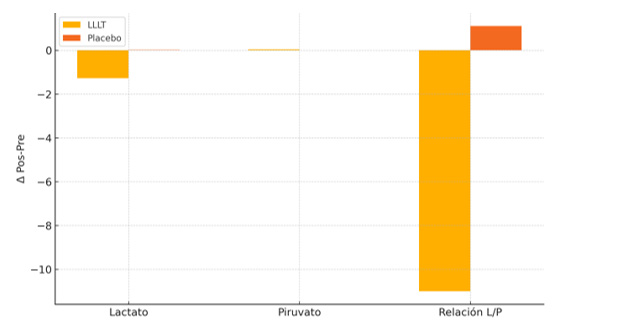
Figure 1: Acute changes in aerobic metabolic parameters after tri‑phasic LLLT.
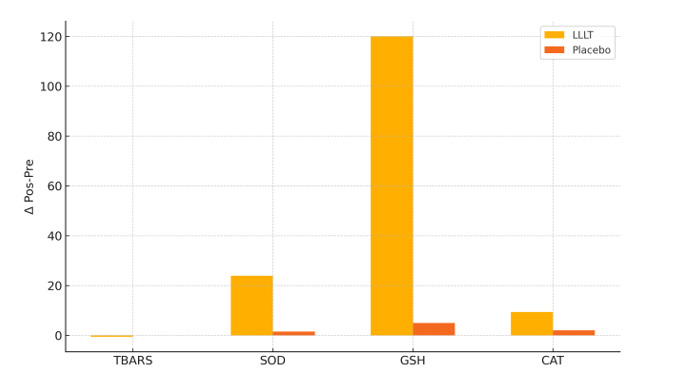
Figure 2: Changes in oxidative stress and antioxidant activity markers.
Discussion
Coherent low-level laser therapy (LLLT) emits highly organized light that interacts efficiently with mitochondrial enzymes, promoting ATP synthesis and enhancing electron transport activity. Its structured nature mirrors the coherent electron transfer processes within the mitochondrial electron transport chain (ETC) [2], potentially amplifying overall bioenergetic output.
When applied over high-flow vascular regions such as the jugular vein, coherent light may induce systemic effects by activating both intracellular mitochondria and circulating free-floating mitochondria, viable organelles capable of restoring energy balance throughout the body. Additionally, coherent light may entrain mitochondrial biophoton emissions, enhancing intercellular energy signaling and promoting antioxidant activation [3].
Free-floating mitochondria, which have been detected in the bloodstream, are increasingly recognized for their role in systemic bioenergetic support, immune modulation, and tissue repair [4]. Their ability to circulate through the vasculature allows them to interact with all major organ systems, including the brain, heart, kidneys, liver, muscles, and immune system, providing a unifying mechanism for widespread physiological regulation and cellular recovery.
In addition to its effects on mitochondria, coherent LLLT may influence systemic physiology by interacting with other light-sensitive molecules circulating in the blood. Hemoproteins and porphyrin-containing compounds— such as hemoglobin, myoglobin, cytochrome enzymes, and neuroendocrine chromophores—are capable of absorbing specific wavelengths of light, triggering downstream biochemical signaling. A well-established example of light- driven systemic regulation is vitamin D synthesis, in which ultraviolet light converts 7-dehydrocholesterol in the skin into cholecalciferol. This precursor is subsequently processed in the liver and kidneys into its active form, calcitriol, which binds to vitamin D receptors (VDRs) in the nucleus to regulate gene expression linked to immune function, inflammation, calcium balance, and tissue repair. Similarly, light absorbed by other circulating photoacceptors may influence gene transcription, hormonal signaling, and broader physiological processes through both genomic and non-genomic pathways. This suggests that LLLT, especially when applied to vascular regions rich in photoresponsive biomolecules, could modulate neuroendocrine function, circadian rhythm (via melatonin), stress response (via cortisol), or vascular tone (via nitric oxide) in ways comparable to endogenous hormone signaling pathways.
The significant reduction in the lactate-to-pyruvate (L/P) ratio observed following jugular LLLT suggests enhanced mitochondrial oxidative phosphorylation, likely reflecting improved coupling between glycolysis and electron transport. This enhancement in mitochondrial efficiency may have broader implications for conditions characterized by bioenergetic deficits, such as cardiovascular, neurodegenerative, septic, and inflammatory diseases [5]. In addition to metabolic improvements, the observed decline in TBARS indicates a reduction in lipid peroxidation and oxidative stress. This was accompanied by a significant upregulation of key antioxidant enzymes—superoxide dismutase (SOD), catalase (CAT), and glutathione (GSH)— suggesting a reinforced endogenous defense system. These enzymes are critical for neutralizing reactive oxygen species, preserving cellular integrity, and promoting resilience under oxidative pressure [6]. Of particular note is the increase in GSH, a master regulator of intracellular redox balance, which may enhance detoxification capacity, immune response, and cellular repair [7]. Elevated SOD and CAT activity further contribute by breaking down superoxide radicals and hydrogen peroxide, preventing secondary oxidative damage. Collectively, these biochemical shifts indicate a transition toward a more robust and adaptive physiological state, with potential benefits for immune readiness, neuroprotection, cardiovascular stability, and healthy aging—especially in the context of chronic inflammation or degenerative disease.
Conclusion
Jugular-applied coherent LLLT acutely improves mitochondrial metabolic function and antioxidant capacity in dogs with early-stage CKD, likely via activation of circulating mitochondria. This therapeutic strategy may have broader clinical implications for systemic conditions involving mitochondrial dysfunction.
References
-
Dadousis C, Whetton AD, Mwacalimba K, Merlo A, Wright A, et al. (2024) Renal Disease in Cats and Dogs-Lessons Learned from Text-Mined Trends in Humans. Animals (Basel) 14(23): 3349.
-
Dorner R, Goold J, Heaney L, Farrow T, Roberts P, et al. (2011) Quantum coherent contributions in biological electron transfer from Quantitative Biology. Biomolecules.
-
Moro C, Liebert A, Hamilton C, Pasqual N, Jeffery G, et al. (2022) The code of light: do neurons generate light to communicate and repair?. Neural Regeneration Research 17(6): 1251-1252.
-
Miliotis S, Nicolalde B, Ortega M, Yepez J, Caicedo A (2019) Forms of extracellular mitochondria and their impact in health. Mitochondrion 48: 16-30.
-
Li X, Yang Y, Zhang B, Lin X, Fu X, et al. (2022) Lactate metabolism in human health and disease. Signal Transduction and Targeted Therapy 7(1): 305.
-
Jomova K, Alomar SY, Alwasel SH, Nepovimova E, Kuca K, et al. (2024) Several lines of antioxidant defense against oxidative stress: antioxidant enzymes, nanomaterials with multiple enzyme-mimicking activities, and low- molecular-weight antioxidants. Archives of Toxicology 98(5): 1323-1367.
-
Forman HJ, Zhang H, Rinna A (2009) Glutathione: overview of its protective roles, measurement, and biosynthesis. Molecular Aspects of Medicine 30(1-2): 1-12.
- An Efficient and Affordable Method for Isolating Bone Marrow- Derived Mesenchymal Stem Cells from Swiss Albino Mice
- Superposition of Cryo-EM and AlphaFold Predictions of Dengue Antigen-Antibody Complexes
- Role of OMC32 Polypeptide in Acrosin-Mediated Exocytosis during the Bovine Sperm Acrosome Reaction
- Association of Galectin-3 but not Laminin in Tamoxifen-Induced Growth Suppression in Breast Cancer MCF-7 Cells
- Effect of Different Wavelengths of Light on the Rate of Photosynthesis
- Nutritional, Therapeutic, and Environmental Effect of Oyster Mushrooms: An Editorial