
Detection and Confirmation of Transfluthrin in Viscera- A Case Study
Mosquito repellents such as vaporizers, mats, coils and creams are being used in the household to reduce the risk of dengue, chickungunya and other infectious diseases. Nowadays liquid mosquito repellent is very common in the society due to easy availability, low cost and easy to use it remains available in most of the houses but its misuse in suicide/homicides cases cannot be ruled out. Toxicity of repellents results mainly in central nervous system (CNS) symptoms like headache, dizziness, drowsiness, status epilepticus and respiratory failure. A case of unknown poisoning was reported in 62 year old deceased and an empty repellants bottle was found at scene of crime. In this study various solvent systems have been tried to detect transfluthrin in biological material by using thin layer chromatography (TLC). It was observed that Benzene: Hexane (1:1) solvent system found very close Rf value with reference to standard transfluthrin in comparison to other solvent systems. The confirmation compound was carried out by FTIR and Gas Chromatography Mass Spectrometry (GC-MS) methods. The developed solvent system was found the quick, easy and cost effective for detection of transfluthrin in biological material. It has also been found that the concentration of the transfluthrin prevalent in the in tissues of liver and kidney, lowest levels was found in the brain.
Introduction
In India, the patterns of ingestion poison have been changed. The earlier days common poison like opium, arsenic, oleander and dhatura, etc. were used for poisoning purpose [1]. Nowadays it has been replaced by insecticides like organophosphorous, organochlorine, carbamate and pyrethroids [2, 3, 4]. Pyrethroids are effective pest control chemical with low mammalian toxicity are increasingly used in Indian agriculture and household purpose. Due to quarrel in the families are routine matter, but poisoning by transfluthrin in house is unusual thing [4, 5]. Analysis of insecticides in body fluids is the choice of research from very long time before to know the impact of its on living beings.
The analytical methods of insecticides have been improved in last few years by advance and sophisticated techniques [6]. Amarnath, et al. have reviewed several techniques for the qualitative as well as quantitative analysis of insecticides ranging from conventional chromatographic methods to the modern GC-MS methods, in order to suggest a better, efficient, fast and result oriented method that can be utilized in future work of analysis [7]. The method of approach to an analysis of biological material for the presence of drugs depends very much on the type of material provided. Dhingra, et al. have detected ranitidine in visceral material by thin layer chromatography methods.
Transfluthrin (C15H12Cl2F4O2; M.W: 371.15 g/mol
IUPAC: 2,3,5,6-tetrafluorobenzyl-(1R,S)-trans-3-(2,2- dichlorovinyl)-2,2-dimethyl-cyclopropanecarboxylate) is a colourless crystal, this pyrethroid pesticide with a broad spectrum, acting by contact, inhalation and repellent by its strong deadly capability, and is effective to prevent and cure hygienic and storage pests (Figure 1). It has swift deadly effect to pests of diptera such as mosquitoes, and very good residual effect to cockroaches and bedbugs. It can be used to produce coil, aerosol preparation and mats [8].
Uses of Transfluthrin
Transfluthrin widely used as mats, coils and liquid mosquito repellent and vaporizer, its solutions designed for aerosols and in the formulation of liquid pesticides. It can be purchased at different types of retail outlets [9].
Transfluthrin is a fast acting pyrethroid with low persistency, may cause symptoms of poisoning including nervousness, anxiety, tremor, convulsions, skin allergies, sneezing, running nose and irritation. No specific antidotes are known, but symptomatic treatment with antihistamines may help to control any allergies. It has been reported by Panwar, et al. the use of liquid mosquito repellent vaporizer is common in setting of infections like malaria and dengue [10]. These products contain derivatives of pyrethrins as mosquito repellent and kerosene as the solvent. Pyrethrins have poor dermal absorption and rapid metabolism. Popular brands use 0.88% of the chemical that was transfluthrin in the present case. Toxicity results mainly in central nervous system (CNS) symptoms like headache, dizziness, drowsiness, status epilepticus and respiratory failure. These chemicals act by prolonging the opening of sodium channels leading to increased influx of sodium ions and thus hyper-excitation of the nervous system. Cardiac dysfunction has also been described, but lung injury is not commonly reported [11].
The poisoning cases due to transfluthrin have been seen in past history but none were fatal and patients survived by the symptomatic treatment. The fatal poisoning case is rare. It has been revealed from the literature survey that various solvent systems and analytical techniques were reported for detection and confirmation of transfluthrin pyrethroid. It has been tried to develop various solvent systems for analysis of pesticide residues in biological material. For routine toxicological analysis thin layer chromatographic method was developed for analysis of biological and non-biological sample.
Case History
A 62 year old male patient was admitted in the emergency ward of All India Institute of Medical Sciences (AIIMS), New Delhi, in unconscious state by his relatives. The relatives have informed that the patient had taken chicken curry with his family at night and went to sleep and it was observed by his relatives in unconscious state at 3.00AM. The patient had a history of thyroid and high blood pressure as informed by the relatives. The doctors have observed that pinpoint pupils, increased respiratory rate, breathing difficulty and bronchospasm. There were excess secretions, saliva and sweat and muscle twitching, convulsions. The live saving treatment was given, the patient was not found fit to give statement during entire treatment. The condition deteriorated and patient was declared dead at 11.00 AM by the doctors. The postmortem was conducted the viscera was send to Forensic Science Laboratory in sealed condition for toxicological examinations.
The findings of postmortem indicated towards suspected poisoning by organophosphorus compounds but none of the organophosphorus poison could be detected however, a transfluthrin a pyrethroid was detected. The review of literature indicated that incidents of accidental poisoning of transfluthrin is rare but this is the first fatal case of transfluthrin poisoning was detected.
Experimental
Chemicals and Reagents
Acetic Acid, Acetone, Benzene, Chloroform, Diethyl ether, Ethyl Acetate, n-Hexane, Methanol, Anhydrous Sodium Sulphate, Rhodamine B, Sodium Carbonate were used E Merck analytical grade.
Apparatus/Instruments
Separating funnel, volumetric flask, conical flask, pipettes, sprayer, sample applicator, TLC plates pre-coated with silica gel 60 F256 (Merck), FTIR and GC-MS.
Preparation of Solvent System
The use of liquid-liquid extraction technique for the extraction of transfluthrin has been carried out and further subjected to different solvent systems and spraying reagent. The solvent system has been developed for identification of the compound by TLC methods.
Preparation of Reagents
Spraying Reagent: Spray 1: 0.05g of Rhodamine B was dissolved in 50 ml methanol. Spray 2: 0.2g of sodium carbonate in distilled water. Sprayed the developed plate first with spraying reagent 1 then air dried and sprayed with spraying reagent 2.
Preparation of Standard Solution: Standard stock solutions (1000 µg/mL) were prepared individually by dissolving different pyrethroids in n-hexane (HPLC Grade). The standards used are Transfluthrin, Cypermethrin, Allethrin and Pyrethrin.
Extraction of Transfluthrin from Viscera
In a portion of 100 gmbiological tissues marked ‘1A’(containing stomach and small intestine), in conical flask added 10 gm of anhydrous ammonium sulfate powder for deproteinization purpose, after shaking pH was adjusted to 7.0 by the addition of ammonical buffer solution. The exhibits were extracted with 100 ml of ethyl acetate in a separating funnel. The ethyl acetate extract was transferred to an evaporating dish and the aqueous phase re-extracted twice with 25 ml of ethyl acetate and the solution was passed through anhydruous sodium sulphate to remove moisture. The extract was evaporated to dryness. The residue then dissolved in 2.0ml of n-Hexane. The same process was carried out with the 100 gm of biological tissue marked ‘1B’ (containing portion of liver, spleen and kidney) and ‘1D’ (containing portion of brain) (Clarke’s1969).
The extraction was done from blood sample marked ‘1C’ by taking 10ml of it in conical flask and deproteinizing it with sulphuric acid and solution of sodium tungstate and pH was adjusted to 7.0 by adding ammonical buffer solution. The extraction analyte was done using ethyl acetate and residue was dissolved by n-Hexane.
The detection of the transfluthrin was carried out from the extracted exhibits i.e. ‘1A’, ‘1B’ and ‘1C’ and ‘1D’ by TLC methods and confirmation was done using instrumental techniques (FTIR and GC-MS).
Preparation of TLC System
The sample (S-1) extracted from the viscera was spotted on a TLC plate along with the standard solution of insecticides.
Spotting of Sample and Standard on TLC Plate: The
samples extracted from the viscera were spot on a TLC plate along with the standard solution of insecticides. Development of TLC Plate: The spot plates were placed inside the chromatographic chamber, which was previously saturated with solvent system used as mobile phase and was allowed to run, later on the plate was removed from the TLC chamber and air-dried. The different ratios of used solvent systems were as follows.
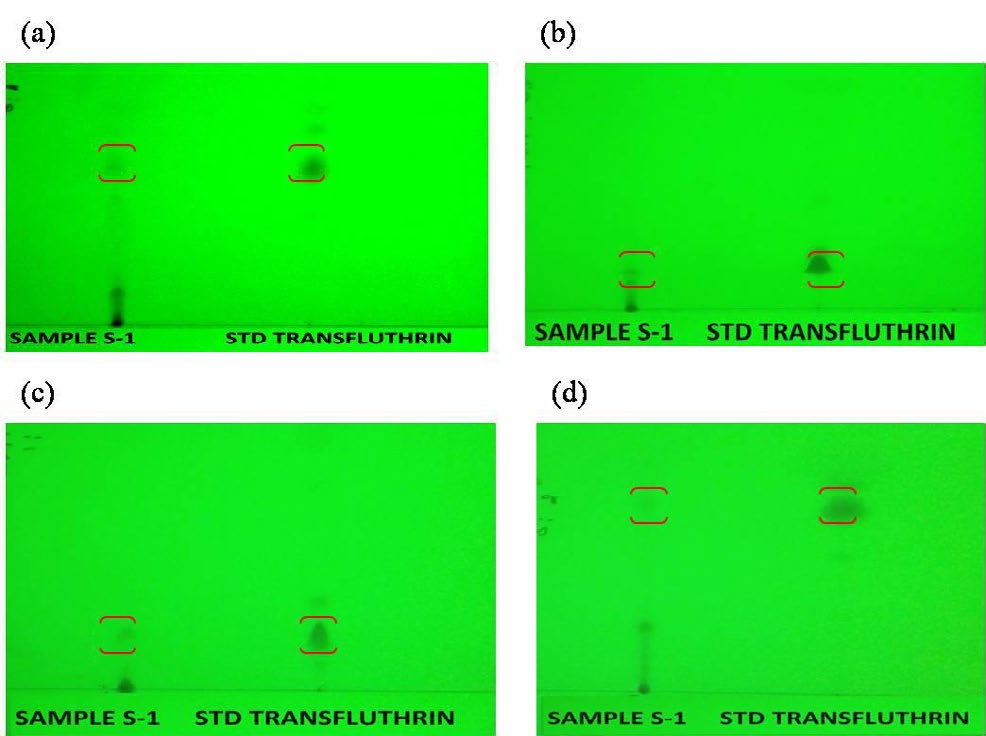
Solvent System: Various solvent systems has been used as Hexane: Acetone (8:2) Hexane :Chloroform :Acetic Acid(9:5:0.5) Hexane : Ethyl Acetate (8:2) Benzene : Hexane (1:1) Visualization of TLC Plates: The developed plates were sprayed with the spraying reagents and their Rf values were calculated and compared with the standard transfluthrin. The developed plates were first observed under 256 nm of UV light and then sprayed with the spraying reagents and their Rf values were calculated and compared with the standard (STD) transfluthrin (Figure 2).
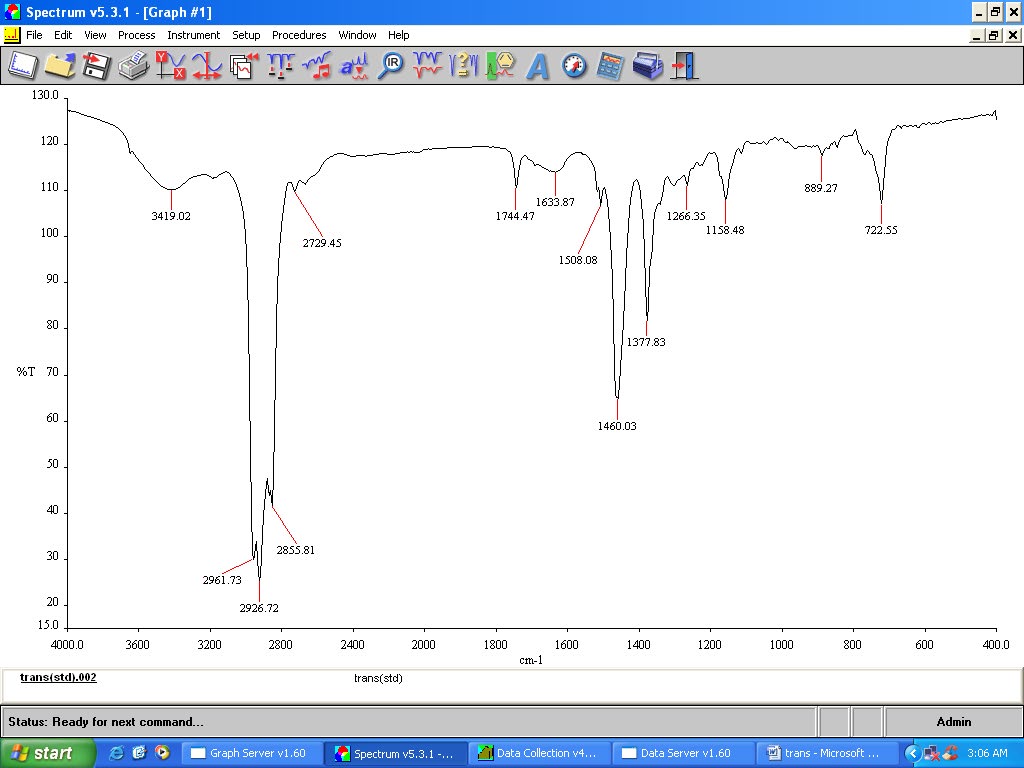
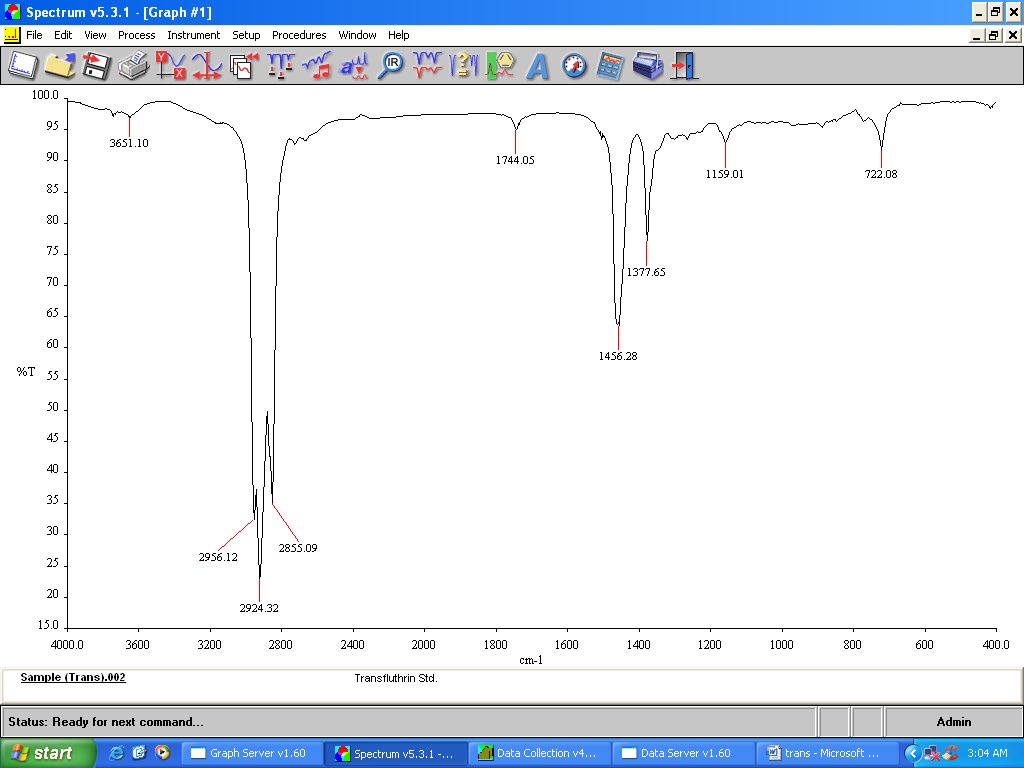
FTIR Analysis: The moisture free extracted sample was analyzed using Fourier Transform Infrared Spectroscopy along with standard solutions of transfluthrin. The sample and standard taken and prepared pellets with KBr and compared the spectra of the both standard and sample.
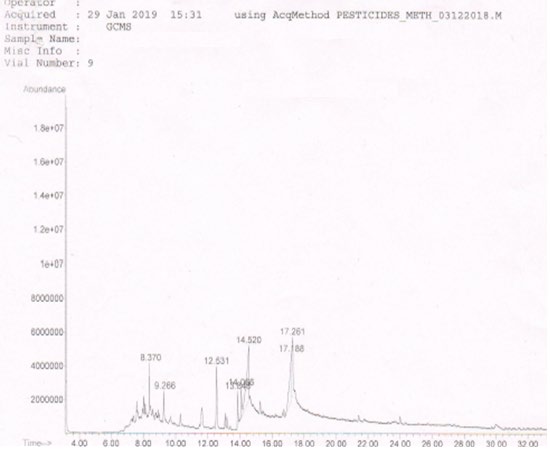
GC-MS Analysis: The GC-MS analysis has been carried out for confirmation of the transfluthrin. GC-MS System; Carrier gas : Helium; GC injector temperature: 275° C; Oven : 50°
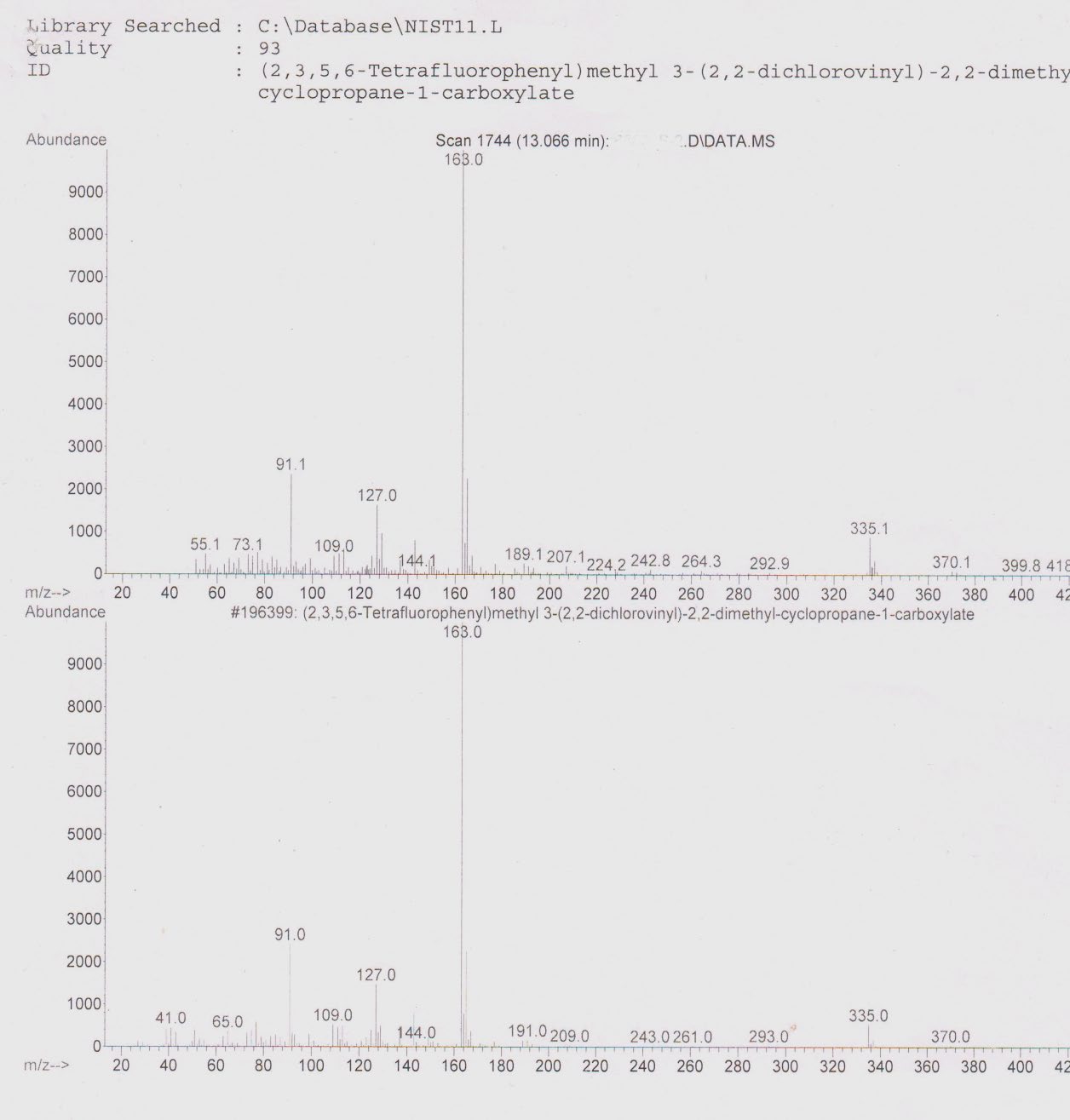
C(1min); 25° C/min to 150° C(0 min); 3° C/ min to 200° C; 8° C/min to 280° C (10 min); post run : 320° C (5min); Injection mode:split less; Injection volume:1µL; Total run time: 40 min.; Mass (Shimadzu), Polarity: EI+, Electron energy (ev): 70; MS temperature: 200° C (Source); Transfer line temperature : 275° C; Trap (µA): 200; Repellor (v): 8.0; Solvent delay:4 min. Column: MS: DB5 MS; Polarity: EI +, Electron energy (ev): 70; MS temperature: 200° C (Source); Transfer line temperature: 275° C; Trap (µA): 200; Repellor (v):8.0, Solvent delay:4 min. The auto sampler was used to inject 1.0 µl of each extracted sample into the GC-MS. The retention time was 13.06 min.
Results and Discussion
Transfluthrin is a pyrethroid used in liquid mosquito repellent vapoziser and has been seen in non-fatal poisoning cases [12]. In this study a fatal case of suspected organophosphorous poisoning was revealed by the investigating officer but after analysis finally detected Transfluthrin insecticide belong to the pyrethroids group by using TLC, GC-MS and FTIR techniques in the biological material [13].
An attempt has been made to detect transfluthrin using thin layer chromatography with better distinction from other pyrethroid (Cypermethrin, Allethrin and Pyrethrin) as earlier conventional solvent systems were giving almost similar Rf value making the detection process difficult. The solvent system Hexane: Benzene (1:1) was found to deliver best results as close Rf values obtained for standard transfluthrin and sample (S-1). This solvent found reliable and suitable for the detection transfluthrin using thin layer chromatographic methods. The method developed for analysis of transfluthrin by using TLC with Hexane: Benzene (1:1) as solvent system in viscera has delivered best results as compared to other solvent system used in this study. The TLC method is very cheap, less time consuming and can be performed in any laboratory efficiently.
The extracted samples were further confirmed for transfluthrin by FTIR and GC-MS technique [14, 15]. The elution time and Total Ion Chromatogram (TIC)obtained was compared with that of transfluthrin standard. The FTIR spectra was analyzed for presence of prominent peaks and compared with spectra of the transfluthrin standard. The analysis of both the instrumental techniques confirmed the presence of transfluthrin in the Biological materials of the deceased [16] (Figure 3-6).
Conclusion
In this case study, Transfluthrin has been detected in viscera of deceased which may responsible for cause of death. The findings of postmortem indicated towards suspected poisoning by organophosphorus compounds but none of the organophosphorus poison was detected however, transfluthrin a pyrethroid pesticide was detected. The review of literature indicated that incidents of accidental poisoning of transfluthrin is rare but this is the first fatal case of transfluthrin poisoning was detected. The developed solvent system for detection of transfluthrin is quick, cheap, effective and safe.
Acknowledgement
Authors are thankful to Mrs. Deepa Verma, Director and Mr Sri Narain, Head of Division (Chemistry), Forensic Science Laboratory, Rohini, Delhi, for their encouragement and support for conducting this research work.
References
-
Djilani A, Legseir B, Soulimani R, Dicko A, Younos C (2006) New extraction technique for alkaloids. J Braz Chem Soc 17(3): 518-520.
-
Ray AK, Ghosh MC (2006) Aquatic Toxicity of Carbamates and Organophosphates. In: Ramesh CG (Ed.), Toxicology of Organophosphate & Carbamate Compounds. Academic Press, pp: 657-672.
-
Fukuto TR (1990) Mechanism of action of organophosphorus and carbamate insecticides. Environ Health Perspect 87: 245-254.
-
Peter JV, John G, Cherian AM (1996) Pyrethroid poisoning. J Assoc Physicians India 44(5): 343-344.
-
Scott JG (1988) Pyrethroid insecticides. ISI Atlas Sci Pharmacol 2(2): 125-128.
-
F Musshoff, H Junker, B Madea (2002) Simple determination of 22 organophosphorous pesticides in human blood using headspace solid-phase microextraction and gas chromatography with mass spectrometric detection. J Chromatogr Sci 40(1): 29-34.
-
Mishra A, Shukla SK, Gupta AK (2015) Analysis of Insecticides in Body Fluids: A Review. J Chromatograph Separat Techniq 5(4): 1-3.
-
Pauluhn J, Ozaki K (2015) Transfluthrin: Comparative efficacy and toxicity of reference and generic versions. Regul Toxicol Pharmacol 71(1): 78-92.
-
Jeyalakshmi T, Shanmugasundaram R, Kannadasan J, Geetha S, Hilda S, et al. (2014) Efficacy of a commercial liquid vaporiser ( Transfluthrin 0 . 88 % ( w / v )) under various room sizes against Culex quinquefasciatus Say. J Entomol Zool Stud 2(3): 220-224.
-
Panwar M, Usha G, Kumath M (2013) Status epilepticus: An association with pyrethroid poisoning. Indian J Crit Care Med 17(2): 119-120.
-
Bhaskar EM, Moorthy S, Ganeshwala G, Abraham G (2010) Cardiac Conduction Disturbance Due To Prallethrin ( Pyrethroid ) Poisoning. J Med Toxicol 6(1): 27-30.
-
Andrés M, Lorenz LM, Mbeleya E, Moore SJ (2015) Modified mosquito landing boxes dispensing transfluthrin provide effective protection against Anopheles arabiensis mosquitoes under simulated outdoor conditions in a semi-field system. Malar J 14(1).
-
Nunes MJ, Camões MF, Fournier J (1997) Analysis of organophosphorus, organochlorine and pyrethroid insecticides in medicinal plants. Chromatographia 44(9- 10): 505-513.
-
Clarke EGC (1970) Isolation and Identification of Drugs in Pharmaceuticals, Body Fluids and Post Mortem Material. J Med Chem 13(2): 338.
-
Neti N, Zakkula V (2013) Analysis of chlorpyrifos degradation by Kocuria sp . using GC and FTIR. Curr Biot 6(4): 466-472.
-
Glaser LC (1999) Organophosphorus and Carbamate Pesticides. U.S. Geological Survey, Reston, VA, USA, pp: 287-294.
- Narcotics and Digital Forensics: Bridging Crimes in the Digital Age
- Ethics in Forensic Psychiatry: Principles, Dilemmas, and Human Rights
- Impact of Acute Stress on Attentional Orienting to Social Cues
- Head Injury and Intracranial Hemorrhage in Western Region of Libya
- A Forensic Study on Handedness: Examination of Handwriting Features in Right and Left Handed Writers
- Techniques for Latent Fingerprint Development Using Natural and Synthetic Powders: A Review