
Microbiome and Metagenome Signatures: The Potential Toolkit for Futuristic Forensic Investigations
Advancements in genome sequencing technologies, improvements in microbial sampling methods and recent approaches in bioinformatics have driven the rise in microbiomics and metagenomics. Diverse ranges of microbial communities are hosted by human bodies which interact with its environment and cause change in it. Human and environmental microbial profiles can be extracted and analyzed to get information of these interactions and they are likely to be applicable in forensics. In this review we explain microbiome and metagenomics with emphasis on its application in forensics and for identification purposes, and factors affecting the microbiome diversity in the light of previous studies. No doubt this field is still in its beginning but the use of microbiomics and metagenomics signature for this purpose has potential to increase the forensic toolkit. Most of time, studies have been affected by sample size limitation and model accuracies which leads to less exploration of the complete potential of microbiomics in forensics. Furthermore, currently the information obtained from microbial forensics is not considered in dubious by the law enforcement agencies. However, extensive research is needed to overcome these challenges to make evidences based on microbiome served to futuristic revolutionary forensic investigations.
Introduction
Microbiology plays a diminutive role in forensic science for over 100 years [1]. It is considered as a valuable emerging tool in forensics due to the technological advancement’s rapidity in PCR mediated genotyping. It is suggested that it opens up a major area for the application in forensic science [2]. Due to the lack of cost-effective sequencing technologies microbial forensics has been constrained to restriction of many forensic applications to individual taxa analysis [3, 4]. In last few decades a new field of microbiomics has set after the advancements in genomic sequencing technologies and processing of complex community datasets by new methods. Microbial forensic kit Development is enhanced after the Combination of microbiome with Meta genomics [5, 6, 7, 8]. It was suggested that for complement traditional investigation methods forensically relevant microbial profiles can be used as evidence [9, 10, 11, 12]. Different computational tools are being currently used for analysis of microbial profiles as evident but still this field is in its infancy [13, 14]. In this review potential applications of microbiomics in forensics are discussed and also factors affecting the diversity of human microbiome are explained.
Oral Microbes
Leeuwen hook discovered bacteria in 16th century. Later on, culturing, isolation and characterization of many microbial species were studied [15]. A large number of microbial cells are hosted by human body [16]. The total genetic content of microbes present in human body is known as microbiome [17]. Microbiome varies in number and species composition in different body sites and location [16]. Five major sites are observed by microbial colonization in human body which is shown in Figure 1. Oral cavity contains diverse composition of microbiome. Almost 1000 species of bacteria are present in oral microbiome which represents different phyla [18]. Types of microbes present in mouth are ecologically different from other surfaces mouth characteristics do not allow all microorganisms to persist and colonize. Furthermore, due to the different ecological condition in mucosal surface (cheeks, tongue, lips, palate, teeth) mouth habitat supports the growth of only few microbial communities. During the life of an individual, microbial habitat will change. After birth only mucosal surface is present for colonization of microbes but teeth eruption supports the accumulation of larger mass of microbes. In an individual ecology of mouth vary due to any dental treatment or placements of orthodontics band .Oral microbiome of human is very complex in nature composed of fungi and bacteria. 74 cultivable and 11 non cultivable fungal genera are present in oral cavity [19, 20]. There is need to identify al large no of oral microbiome which are still uncultivable [19]. Six major phyla that include Firmicutes, Actinobacteria, Bacteroidetes, Proteobacteria, Spirochaetes, and Fusobacteria, contain 96% of oral bacteria while phyla Euryarchaeota, Chlamydia, Chloroflexi, SR1, Synergistetes, Tenericutes and TM7 contain only 4% of oral bacteria [21]. The major entrance to human body is oral cavity which contains viruses, fungi and many other species of bacteria. Numerous microbial habitats are offered by oral cavity with mucosa or solid surface. Specific ecological niche which selects distinct microbes present on different habitats such as the sulcus, dental surface, the tongue and different non keratinized and keratinized mucosal surfaces [22]. According to a hypothesis 100M microbial cells are present in one ml of human saliva from a healthy adult. In every 24hrs about 8×10¹⁰ bacteria shed from oral cavity in normal salivary flow rate which is 750ml per day [23]. Human oral microbiome constitutes almost 200 bacterial taxa and great number of opportunistic pathogens. As Second most diverse microbial community is represented by oral microbes which play very important role in determining human health, diseases and forensic investigation. Complexity of oral microbes is much understood with the advent of DNA sequencing advances [24]. Microbial community present in oral microbiome is different among different individuals. It is very unique in each individual and highly individualizing [25]. Therefore, traces of oral microbes are collected from crime scene which leads investigation in criminal and civil cases.
![Figure 1: Oral cavity contains diverse composition of microbiome. Almost 1000 species of bacteria are present in oral microbiome which represents different phyla [18]. Types of microbes present in mouth are ecologically different from other surfaces mouth characteristics do not allow all microorganisms to persist and colonize. Furthermore, due to the different ecological condition in mucosal surface (cheeks, tongue, lips, palate, teeth) mouth habitat supports the growth of only few microbial communities. During the life of an individual, microbial habitat will change. After birth only mucosal surface is present for colonization of microbes but teeth eruption supports the accumulation of larger mass of microbes. In an individual ecology of mouth vary due to any dental treatment or placements of orthodontics band .Oral microbiome of human is very complex in nature composed of fungi and bacteria. 74 cultivable and 11 non cultivable fungal genera are present in oral cavity [19,20]. There is need to identify al large no of oral microbiome which are still uncultivable [19]. Six major phyla that include _Firmicutes,_ _Actinobacteria, Bacteroidetes, Proteobacteria, Spirochaetes,_ and _Fusobacteria_, contain 96% of oral bacteria while phyla _Euryarchaeota,_ _Chlamydia,_ _Chloroflexi_, SR1, _Synergistetes, Tenericutes_ and TM7 contain only 4% of oral bacteria [21]. The major entrance to human body is oral cavity which contains viruses, fungi and many other species of bacteria. Numerous microbial habitats are offered by oral cavity with mucosa or solid surface. Specific ecological niche which selects distinct microbes present on different habitats such as the sulcus, dental surface, the tongue and different non keratinized and keratinized mucosal surfaces [22]. According to a hypothesis 100M microbial cells are present in one ml of human saliva from a healthy adult. In every 24hrs about 8×10¹⁰ bacteria shed from oral cavity in normal salivary flow rate which is 750ml per day [23]. Human oral microbiome constitutes almost 200 bacterial taxa and great number of opportunistic pathogens. As Second most diverse microbial community is represented by oral microbes which play very important role in determining human health, diseases and forensic investigation. Complexity of oral microbes is much understood with the advent of DNA sequencing advances [24]. Microbial community present in oral microbiome is different among different individuals. It is very unique in each individual and highly individualizing [25]. Therefore, traces of oral microbes are collected from crime scene which leads investigation in criminal and civil cases.](/fulltextimages/9255/fig_1.png)
Skin Microbes
A large number of microbes are harbored by human skin which can be easily transferred and displaced to other surfaces after touching, Therefore proper hygiene is very important [26, 27]. As some of the bacteria are resistant to moisture, temperature, UV radiations and environmental stresses so they can present on touched surface for extended period [28, 29]. So, during our daily activities a large number of skin associated bacteria is deposited on those surfaces which we touched. Surprisingly a diverse range of microbial communities is present in skin microbes which have high degree of variation at different skin locations [30, 31]. Between two individuals 13% of bacterial phylotypes are shared on the palm surfaces. There is much stability in skin microbial community with time even after washing hands with in few hours microbial community of palm surface is recovered [32]. Individual’s skin microbes can be used as a fingerprint for forensic investigation due to the stability, uniqueness and transferable property of these bacterial communities. For linking of skin bacteria of specific individual to its touched surface following requirements are needed. Acceptable characterization and contrast of bacterial DNA must be done after recovery from touched surface, Surface whom are touched must be linked with individual who touched it and there must be long term persistence of skin microbial communities on that surface. So, currently different objects are linked with specific individuals by comparing with the microbial community of that objects to the hand of owner. A data set is present which contains microbial community information for more than 250 hands [33].
Gastro Intestinal Tract Flora
One of the largest interfaces between environmental factors, host and antigen in the human body is represented by human gastrointestinal (GI) tract. A huge threat was imposed on gut integrity by the abundance of microorganisms which passes through GI tract with food [34]. Less diversity is existing in gut microbiota as compared to the microbial communities of other body sites [35]. Gastro intestinal tract flora is basically a collection of archaea, bacteria and eukaryotes which co evolved with host over thousands of years [36, 37]. It is estimated that number of microorganisms in GI tract exceeds 1014 which is 100 times of microbiome genomic content of human genome and it incorporates bacterial cells which are 10 times of human cells [36]. But later on, it was estimated that human bacterial cells ratio is near to 1:1 [38]. Many benefits are offered by gut Microbiota which perform following physiological functions such as involvement in shaping of intestinal epithelium, strengthening the gut integrity, protection against pathogens, host immunity regulation and energy harvesting [39, 40]. Culture independent approaches like High-throughput and low-cost sequencing methods improves the ability to survey the breadth of gut microbiota in which bacterial 16SrRNA gene targeting is popular approach because of its high variability and its existence in all archaea and bacteria [41, 42]. Recently the focus of scientist from sequencing of 16SrRNA is shifted towards analysis in greater depth of shorter sub regions of gene [42]. But error can be induced by the use of shorter read lengths. Whole genome shotgun metagenomics is a technique which provided reliable estimation of microbiota composition and diversity because of its high sensitivity and resolution [41].
Applications of Human Microbiome
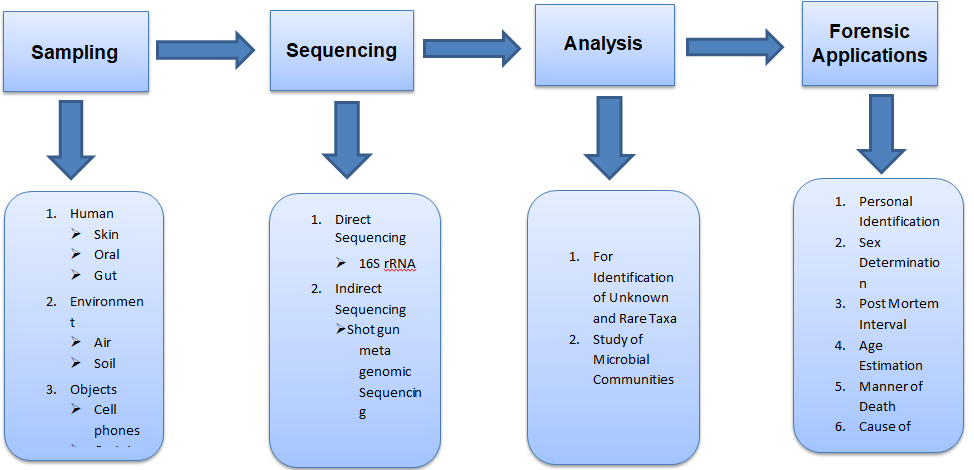
Massive parallel sequencing (MPS) have promote significant progress in microbial forensics such as microflora helps in criminal investigation as additional evidence, cause of death, for post mortem interval estimation and estimation of geographical diversity. For the purpose of forensic applications human micro biota sampling, sequencing techniques used and analysis has been shown in Figure 2:
Personal Identification for Forensic Purposes
Microbial composition must be same in collected samples or suspect’s oral cavity for forensic purposes. If salivary microbiomes change over time and variations occur then there is a chance of failure in match due to which real preparatory is excluded from the investigation. In early 2000s characterization of salivary microbes firstly studied on the base of genetic finger printing technique including denaturing gradient gel electrophoresis (DGGE).
For characterization and profiling of bacterial communities DGGE is widely used for qualitative and semi quantitative information of microbial population and change in community composition. After that taxonomic data is obtained from the gel by the excision of amplified band [43]. It was suggested that stable autochthonous microbial profiles can be used for unique identification of human individuals which have a considerable impact on forensic sciences in conditions when investigator does not have sufficient amount of human DNA for identification purposes. But it is still unknown whether microbial community variation between people is enough for unique identification of individuals within large populations. For answering of these questions specific microbial profiles on different body sites were tested and attempts are made to match them with microbial profile of the person during his first and second visit to the sampling site. Authors found that at initial sampling time of these microbial profiles were able to distinguish among individuals. Even several months later 30% of the individuals were uniquely identified. Up to year later 80% of individuals were pinpointed by gut microbiome samples. No doubt these results still have relative high variability but can be used mostly in shorter time scale but before the use of such methods in forensic settings improvements are still required in its methods and sampling efforts [44].
High resolution melting analysis has potential for differentiation between individual’s which target 16SrRNA gene from oral swab. Accurate identification of individuals on the base of skin swab samples from different site of body n = 14 is demonstrated by Schmedes and his coworkers and results was surprising. 97% accuracy is achieved by shirts sampling and 96% accuracy is achieved by palm samples based on diversity of bacterial genome. 100% classification accuracy was achieved by researcher when classification is based on maximum neighbor distance for diversity. For classification of publicly available skin microbiome samples from individuals was used and identification accuracy is 78% which is not sufficient for forensic applications [10]. However, for the determination of personal identification microbiomics use as a forensic tool which has a potential and technological feasibility and can be used in conditions when sufficient amount of DNA is not retrieved by the investigator and findings show shortage of proofs. But still there is requirement of improvements in model sensitivity and specificity and methodology to prevent contamination issues. Also, better u understanding of forensic value of microbial dynamics is required across time and space [45].
Biological Sex Determination
Microbiomics has another contribution in biological sex determination when sufficient amount of DNA is not retrieved by investigators for personal identification for examples in indoor environments air borne bacterial communities have been characterize [46]. Airborne fungal and bacterial diversity is investigated from different dormitory rooms of university by Luongo and his colleagues and Biological sex of occupants of rooms is predicted with 79% accuracy on the base of relative abundance of microbiota by using machine learning techniques [47]. It was found that high relative abundance of microbiota exhibited by males that can be due tothe use of less cosmetic barriers or may be males shed more biological particles. Bell and his coworkers also demonstrated the biological sex related differences in humans [48]. Amplicon signature of 10 individuals in corpse heart tissues is compared by using 16SrRNA gene in V1-2 and V4 region and an important difference is found in between males and females. In male heart tissues exclusively Streptococcus spp was found while in females Pseudomonas spp is in high occurrence. So, this approach can help us in determination of corpse biological sex and source of its body parts. Another study depicts the the sex on the base of pubic hair microbiomes analysis. In female participants they found that Lactobacillus spp were unique and they suggest that insulation of pubic hair is from the environment and their colonization is with niche specific microbiota which can be effectively used for forensic investigation [49]. Study by Willams and Gibson, et al. determine biological sex and identified individuals on the base of pubic hair microbiota with very less error ratio. However, for all these studies sample size is different so for any reliable conclusion it is necessary to further validate these studies with larger sample size [50].
Researcher analyzed skin microbes for determination of sex in both genders and found that female biological sex can be predict on the base of absence of genus Alloiococcus and it is showed that connection is present between personal characteristics and certain biological species. They use leave one out cross validation analysis for prediction of sex with 67% accuracy to discovered the microbiota presence and absence from fingermarks which are left on the surfaces [12]. For further exploring the potential of this approach sample size improvements and machine learning accuracy is required. It is also necessary to research that certain bacterium are only distinct to females or to check either they are related to external factors.
Trace Evidence (Touch Evi)
Interest in Forensic study of microbial profiles of different surfaces after touching is increasing day by day. It is showed by numerous studies; High level of microbiome is present on personal objects of any person [51, 52, 53]. So, interest is increasing to study these left behind microbial profiles. Additionally, it is showed that distinct microbiomes are supported by Personal associated items such as mobile phones and shoes [54, 55]. Potential usefulness of Mobile phones is investigated as personal microbiome sensors, for this purpose 17 individuals were selected and samples were taken from three surfaces (Index finger, Thumb and cell phones touch surface). It was found that Microbiome samples of mobile phones is more associated with the owners than other person. 22% of participants finger taxa also found on their phones and 17% of participants taxa is shared with other person’s mobile phones. A person index finger taxa share 82% with their phones and 55 more OTUs was shared by a person index finger to its mobile phone than other mobile phones. But still there is need to increase sample size and accuracy of results in future [56]. Postmortem of skin microbiomes shows that it can be associated with high degree of accuracy to the personal objects. Bottles, Medical devices, eyeglasses and steering wheels can be associated with 100% accuracy while cell phones, remote control devices and computer devices can be associated with 67% accuracy. Skin microbiome is suggested as a reliable way to link objects to the scene. Moreover, it is suggested that postmortem microbes are stable and similarity exist between postmortem and antemortem skin microbes for up to 60h of postmortem [57]. Salzmann and his co-workers investigate Microbial profiles of different body fluids source specific microbial signatures were identified from these body fluids as in saliva and vaginal secretions higher occurrence of Firmicutes were showed while in semen and skin high prevalence of Phyla Proteobacteria was found [58]. It is suggested by Dobay, et al. that sample possesses site specific microbial signatures even after 30 days exposure of body fluids to the indoor conditions [59]. Recently it was investigated by Neckovic, et al. between individuals and substrates skin microbes are potentially transferred. Through direct contact skin microbiota is reliably transferred but microbiome is also transmitted through indirect contact. It is suggested by authors that these analyses can be helpful in investigation of sexual assault cases and other contact related crimes. It is suggested by authors that it must consider in further research on this which is pressure, friction, area of contact and the time of contact [60].
Bite Mark Analysis
The critical factor in forensic investigation is human identification. Correct identification of preparator and victim either dead or living is very important. Bite marks can be used as evidence for identification of preparator in sexual assault cases. Saliva sample of bite can be used for extraction of DNA But there is chances of degradation due to presence of enzymes [61]. According to Locards exchange principal bacteria is also transferred to the skin during bite infliction as saliva also contains bacteria. A new way for identification is found by analysis of bacterial DNA as bacteria can resist harsh conditions like putrefaction, degradation and drying [43]. Oral microbial community is totally different from skin microflora. Most isolated bacteria from bite mark are Alpha- hemolytic streptococcus. In dental plaque streptococcus group of bacteria is present. The major species found in saliva is streptococcus salivarius. 45-50% of bacteria are lost from site of infliction per hour. From dead individuals’ microbes can be found for more duration then living individual [43]. The oral streptococcus from bite mark DNA samples of individuals shows significant results through PCR followed by DGGE denaturing gradient gel electrophoresis [62]. RNA polymerase beta subunit (RpoB) and 16s RNA shows that streptococcus as most common genus in saliva. RpoB2 gene analysis shows that Rothia as most abundant genes in saliva. All these experiment shows that oral microbial profile of two individuals is not same. All individuals’ samples are different from each other [63]. For detection of polymorphism of 16s rRNA gene of bacteria and comparison of bite marks to the suspect teeth Restriction Fragment length Polymorphism (RFLP) is very important techniques [61]. For isolation and differentiation of microbial species Multi Locus Sequence Typing (MLST) has been developed for oral streptococci [64]. The most satisfactory results are given by rpoB gene while ITS and 16SrRNA has less discrimination power (Kennedy, 2011). Following species are present in infected human bite mark with abundance of streptococcus, staphylococcus aureus, prevotell, veilonella, streptococcus, fuscobacterium [65]. Hence for identification purpose microbial profile can be used for extraction of bacterial DNA because it resists the degradation and two individuals can be differentiated on the base of this. Identical twins can also be distinguished on the base of oral microbes because genetics do not have effect on this [43].
Oral Microbial DNA Analysis for Expirated Blood Spatter
Expirated blood spatter (EBS) is the blood which comes from nose, mouth and chest after any wound. The differentiation of EBS from impact spatter is a new front in forensic science. For this purpose, a new PCR method is developed for detection of DNA from streptococcal bacteria as biomarker which is specific to human mouth or saliva. The sensitivity of this method is too much that it can even detect 60fg of target DNA. Oral cavity bacteria can be used as marker for blood stain detection and can differentiate blood stains from expirated blood spatter [66]. 184cm distance can be travelled by saliva from the mouth of any person during laughing, talking or coughing [67]. So, the surface associated with human outside the mouth contains small number of oral microbes but for short time period 2-6 days [68]. Streptococcal DNA which is present on unstained material can be detected either it is in small amount but, the ratio of detection is five folds less than the stained sample detection. Streptococcal DNA can be used for distinguishing mouth expirated blood spatter from other types of EBS such as which comes from nose because it does not contain oral microbes [66]. Streptococcal DNA can be detected from denim even after washing [69].
Prediction of Body Fluids Saliva by Oral Microbes
Saliva is collected from crime scene and analysis of salivary microbial composition can helps to point out the preparator and can exclude or associate the individuals and suspect with crime. Monozygotic twins in which genetic makeup is same can be distinguished by salivary microbial analysis [70]. Salivary microbiome profile can be helpful in forensic identification of those cases in which preparator DNA is mixed with victim DNA or preparator DNA is not detectable like in sexual assault cases. Illumina high throughput sequencing can be used for the identification of salivary sample from two different individuals. It was studied that salivary microbe’s composition is different in different geographical and climatic areas which helps in narrow down the suspect [71]. Rasiah, et al. study reports that the bacterial composition of saliva is stable. Although some transient changes were observed or conclude that pressure imposed by environment can cause the change in oral bacterial communities [72]. Lazarevie, et al. compared the salivary sample of 5 different individuals and results showed that microbial community of saliva appear to be stable almost for 5 days [73]. Stahringer, et al. checked the oral microbe’s variability on twins and siblings. He also examined the composition of microbes to check how it is varied by gender, age, weight, class and human genotype. In total he collected 264 saliva samples. Main bacterial phyla in saliva are actinobacteria, proteobacteria, Bacteroidetes, Fusobacteria and fumicutes [70]. Following genera were observed in almost 955 of samples fusobacterium, Rothia, Preutella, Granulicatella, Neisseria, Gamella, Veillonella and strepto coccus. In more than 505 populations additional 13 genera were also detected. Usually, body fluids are found at crime scene in trace amount as biological evidence. Different presumptive test is performed which shows result by change in color for identification of the type of body fluids to understand the nature of crime. Most commonly used presumptive test for saliva detection is Phadebas test. Sometimes these results are false positive because salivary enzyme may exist in other body fluids (sweat, semen, vaginal fluids, feces, breast milk) also. Another test which is used for detection is SALIGaE test which is more sensitive than Phadebas test but still false positive results can be observed [74]. So, for detection of saliva specific gene products have been recently introduced [75]. Microbial community is well established in mouth and nose or varies with individuals and with age or health condition. Detection of oral streptococcus species by amplifying ribosomal RNA gene and by amplification of streptococcus specific glucosyl transferase gene is successfully used for identification of these bacteria in detection of saliva [74]. Taxonomic profiling of microbes is an alternative method for body fluids (saliva, semen, feces, menstrual blood, and vaginal secretion) detection. For discrimination of saliva collected from human body or crime scene 16sRNA microbial gene were sequenced. Oral streptococcus such as S. salivaeius, S. mutans used as a new marker for saliva detection because it is only found in saliva or not in other body fluids [75].
Age Estimation by Microbial Flora
When current method of human DNA typing is not utilized then human identification can be done through the analysis of inter individual’s variation of salivary microbiome. Narrowing of suspects can be done through age prediction. Microbial analysis of saliva could point out subject age within 5 years. Low bacterial count and diversity shows that suspect’s age is more than 65 years [76]. Personal habits like smoking indicated by oral microbial analysis because it alters the microbial composition and increase pathogens in oral cavity [77].
Manner and Cause of Death
Manner of death is generally determined by the person who is involved in the investigation. Generally considered manner of deaths are five which are suicide, natural, accidental, undetermined and homicide [78]. 256 cadavers were collected from three different countries and found that these cadavers are different in manners of deaths. Sediminibacterium, lactobacillus, Rhizobiales and Enterobacteriaceae are associated with different manners of deaths but with further research these maybe developed as predictive markers for determination of manner of death and researcher also noted that Rhizobialed and Sediminibacterium can be contaminated by environment which is need to be control for its reliability in determination of manner of death [79]. It was found that different biomarkers are associated with manner of death in a cases related to hospital death. Xanthomonadaceae was more predominant and in suicidal cases. Researcher modeled beta dispersion test with association of microbiome data set of postmortem cases for testing of cause and manner of death. Researchers found that demographic data and beta dispersion can differentiate cause and manner of death. Specifically, they demonstrated that in 79% of cases cardio vascular diseases and drugs related deaths are found. After knowing the results of this study, it is showed that postmortem microbes have potential to indicate the manner of death. Furthermore, large database is required for training of models with high success rate before using it into in practical forensics [80]. In case of determining cause of death Due to any disease or injury researcher started to investigate microbiological testing importance. After studying the autopsy results it was found that in 42% cases cause of death can be determined by microbiological analysis [81]. Different factors were highlighted for indication of microbiological related cause of death for example, CRP measurements which can be implicated in case of SIDS as cause of death [82, 83].
Another application of microbiome is determining death by drowning, because worldwide it is the major leading cause of unnatural deaths [84]. No doubt for over a year diatoms analysis has been used as gold standard but its reliability is questionable [85, 86]. Death diagnosis by drowning can be done through Real time PCR assays of bacterial species (Aeromonas spp) which are associated with aquatic environment [87, 88]. It is recommended that in case of death by drowning in sea water bioluminescent bacteria may be worked as a biomarker. A simple assay was developed for identification of bioluminescent colonies (Vibrio harveyi, vibrio fischeri) by targeting the 16SrRNA gene [85]. Recently Lee, et al. developed a marker for death diagnosis of drowning by analyzing the microbial composition and surfactant protein (SP-A) expression. Microbiota and histological appearance of experimental rats were analyzed for both drowned and experimental groups, Fresh water and marine water treatments were compared and studies conclude that 5480 and 5513 OTUs were unique to fresh and marine water respectively [89]. Another study points out that current focus is on presence of streptococcal bacteria, coliforms and fecal bacteria which helps us in determination of death by drowning. Sampling of these bacteria can be done from right and left ventricles, femoral artery and veins. It was considered that in drowned subjects’ fecal bacteria is always present as compared to other in which other cause of deaths is diagnosed [90].
Estimation of Postmortem Interval by Using Oral Microbes
Traditionally used methods for estimation of postmortem interval (PMI) are gross changes, temperature changes and entomology study of cadaver. Microbial succession can also be used for PMI estimation [91]. Cellular autolysis is started after death by hydrolytic enzymes. Putrefaction started by the activity of enzymes and bacteria present in and outside of body during the time of death. So, therefore, both microbes (gut and oral cavity) play role in decomposition of carcass. Variation in mouth microbial population is occurred due to decomposition so; oral microbial composition is used for calculation of time after death [18]. Actinobacteria and fumicutes are the major phyla observed in cadaver at starting stage. Lactobacilli; staphylococcus aureus, veilonella, and streptococcus are the main species which observed in early stage of cadaver. Accurate time of the death of dead victims can be estimated by carefully analyzing the oral micro flora. An important part for criminal investigation is determining the PMI [91, 92]. It was suggested from initial studies successional changes occur in microbial composition which helps in determining the PMI [18]. Estimation of PMI can be provided by sequencing of 16S rRNA gene of achiral and bacterial communities and 18S rRNA gene of micro eukaryotes over the period of decomposition [9]. 94.4% accuracy is showed by decomposition of pig cadavers the PMI within
2-3 hr of the time of death [93]. A large-scale study was performed on microbiome samples which show stability in postmortem microbiomes. Anaerobic, spore forming firmicute bacteria and clostridium sp. is most abundant taxa found in post mortem microbial communities. Evaluation of post mortem human microbiome was performed to evaluate that the microbiome found in first hour of death is related with health state of individual before death. Samples were collected with post mortem intervals for different hours till 73 hours. And results shows that in different anatomical region strong differentiation occur in microbiome and it is also suggested that in first hour after death the state of human health can be indicated by ante mortem microbial communities which persists. There is limitation in value of past-postmortem microbiome at 48hr of death and reduction in time ranges occur with high temperature which enhance the proliferation of specific taxa of microbes [94]. A study was carried on two bodies which were found in freezer samples were analyzed at three different states frozen, partially frozen and thawed condition from eyes, ear canals, mouth, navel, nostrils and rectum. Increase in microbial diversity of nostrils, eyes and rectum was mostly observed during thawing process [95]. Another study was performed on 66 samples from liver, blood, oral cavity, heart, spleen and brain and it was observed that change in microbiome is dependent upon sex of corpse and PMI [92]. Clostridial and pseudomonas is dominant in female cadavers while clostridial, streptococcus and clostridium are present in high abundance in male cadavers. Pseudomonas is most abundant in Female cadaver’s while rother is only identified in male.
Factors Affecting the Diversity of Oral Microbes
Multiple factors (spatial and temporal) have effect on human microbiomes as it is highly dynamic system. Variation in oral microbes occurred with respect to age,. After few hours of birth bacterial colonization is started in oral cavity. Throughout the life span of human micro flora of oral cavity is change due to physiological changes [96]. Extreme environment, diet, pH of oral cavity can affect the microflora of oral cavity. Microbial shift is occurred due to low pH changes of oral cavity. Immune system of the individual affects the growth of bacteria and prevent from diseases by keep in control. Various combinations of bacteria are led by all these conditions and due to this every individual is unique. Microbiome condition is more similar if there is a similarity in the genome of individuals. Oral microbe heritability is affected by enzymes (amylase, lysozyme), Immune molecules, biomolecules (histatins, cystatins, defensins), proline proteins and mucin which controls the microbiome composition [97].
Geolocation/ Geographical and Altitudinal Soil Etc
There is difference in composition and function of microbial community due to different environmental conditions (rainfall, altitude, climate and soil condition) across different geolocations and cities [98, 99]. Geographic location can be specified by knowing microbial composition of host and its environment [100]. For example, different strains of bacteria are only linked to specific geographical settings such as Helicobacter pylori [95, 101, 102]. Now Human trafficking cases can be assisted by microbiome data of humanitarian programs which helps in linking the children to their families on the base of microbiome geographical signatures and intermediate locations by which that child is trafficked [103]. Even there is a different geographical bacterial signature are present in buildings and 16S rRNA bases taxa is varies between offices of different states of America [100]. According to different studies Harvesting of microbiome of different body sites of host can be linked to its country origin. It is confirmed that nonliving things can retain specific microbes of its geographic locations. For geographic information’s most commonly examined microbiome is gut microbiome which can be collected from toilets [104, 105]. Specific microbial signatures and 16SrRNA based taxa can be used for differentiation of individuals in different geographical locations [106, 107]. Along with gut microbe’s microbiome of saliva and skin can be successfully used for getting geolocation information [71]. For differentiation of geographic locations of random forest analysis, the most commonly used technique is machine learning. Any change occurs due to illness, diet, travel Can alter the microbial composition over only days [108]. But still the most robust geographical signature can be derived from gut microbiome [109].
Forensic Microbiome Databases/Database of Human Oral Microbe
A human microbiome analysis tool which compares the 16SrRNA datasets (obtained from different body sites) to metadata for forensics analysis is basically forensic microbiome database (FMD). The aims of FMD are:
- Provision of evidence-based tool to the forensics scientist after documentation of provided microbial sample sequences.
- Results, metadata and related analysis are maintained in the form of database.
- Development of websites which allow users to evaluate, interpret, compare and quantification of the data.
The FMD 16SrRNA gene data is obtained from different body sites is used by forensic scientist as a human microbiome analysis resource.The most studied human microflora is human oral microbiome. Oral microbes which are found in human oral cavity is present in human oral microbiome database. Taxonomic and genomic information are the two main types of information provided by Human oral microbiome database (HOMD). The main aim of creating HOMD is to provide comprehensive database of microbial community present in oral cavity. Phenotypic, genotypic, phylogenetic, clinical and bibliographic information for each taxon is interlinked by human oral taxon number (HOT). For studying the function of human associated microbes in health and disease first characterized database of human region is human oral microbiome database (HOMD). Almost 700 species present in HOMD which provide information to the research community. In the last 20 years 600 16s RNA gene were sequenced and 35000 clone sequence were collected. Currently HOMD collection consists of almost 150 genera and 700 species and genomes of 400oral taxa and 1300 species of microorganisms. Information coming from cultural and non-cultural inhabitants are compiled in HOMD [43]. Abundant group is streptococcus which has 43 species in HOMD.30 oral taxa and 202 streptococcus species also found in HOMD [110]. Main focus of HOMD is cultivation of microorganisms but 20-60% of oral microbe data is uncultivated due to limited growth condition [43].
Conclusion
Human microbiome consists of bacteria, fungi and viruses which are found inside human body. 2-3Ibs of human body mass is counted by these microorganisms only. They have immense importance in forensics as it works as an evidence- based tool for developing relation and exclusion of people to any illegal activity. With the advancements in forensic investigation using micrbiota the forensic community will need education on the difficulties of utilizing microbiome data, as well as the proper use of databases and informatics tools, as microbiome research gains traction in the field of forensics. Further research is needed to explore the effectiveness of human microbe as general and particularly use of oral microbes in research and for forensic purposes. A variety of human-related metadata, including ethnicity, geographic origin, nutrition, and social information, must be included in reputable microbiome databases before they may be used more widely in forensics. The existing legal criteria for genetic privacy need far more samples to be gathered and processed in a manner that is acceptable to the community.
Conflict of Interest
All authors declare no conflict of interest.
Ethical Declarations
This article does not contain any studies with human participants or animals performed by any of the authors.
References
-
MacCallum WG, Hastings TW (1899) A case of acute endocarditis caused by Micrococcus zymogenes (nov. spec.), with a description of the microorganism. J Exp Med 4(5-6): 521-534.
-
Van Belkum A (1994) DNA fingerprinting of medically important microorganisms by use of PCR. Clin Microbiol Rev 7(2): 174-184.
-
Berglund EC, Kiialainen A, Syvänen AC (2011) Next- generation sequencing technologies and applications for human genetic history and forensics. Investig Genet 2(1): 1-15.
-
Kuiper I (2016) Microbial forensics: next‐generation sequencing as catalyst: The use of new sequencing technologies to analyze whole microbial communities could become a powerful tool for forensic and criminal investigations. EMBO Rep 17(8): 1085-1087.
-
Statnikov A, Henaff M, Narendra V, Konganti K, Li Z, et al. (2013) A comprehensive evaluation of multicategory classification methods for microbiomic data. Microbiome 1(1): 1-12.
-
Capasso L, Vento G, Loddo C, Tirone C, Iavarone F, et al. (2019) Oxidative stress and bronchopulmonary dysplasia: evidences from microbiomics, metabolomics, and proteomics. Front Pediatr 7: 30.
-
Clarke TH, Gomez A, Singh H, Nelson KE, Brinkac LM (2017) Integrating the microbiome as a resource in the forensics toolkit. Forensic Sci Int Genet 30: 141-147.
-
Marcell JTH, Lopez JV, Gilbert JA (2017) The human microbiome: an emerging tool in forensics. Microbial Biotechnology 10(2): 228.
-
Metcalf JL, Xu ZZ, Bouslimani A, Dorrestein P, Carter DO, et al. (2017) Microbiome tools for forensic science. Trends Biotechnol 35(9): 814-823.
-
Schmedes SE, Woerner AE, Budowle B (2017) Forensic human identification using skin microbiomes. Applied and environmental microbiology 83(22): e01672- 01617.
-
Richardson M, Gottel N, Gilbert JA, Lax S (2019) Microbial similarity between students in a common dormitory environment reveals the forensic potential of individual microbial signatures. MBio 10(4): e01054-01019.
-
Phan K, Barash M, Spindler X, Gunn P, Roux C (2020) Retrieving forensic information about the donor through bacterial profiling. Int J Legal Med 134(1): 21-29.
-
Goudarzi M, Mak TD, Jacobs JP, Moon BH, Strawn SJ, et al. (2016) An integrated multi-omic approach to assess radiation injury on the host-microbiome axis. Radiat Res 186(3): 219-234.
-
Komaroff AL (2018) The microbiome and risk for atherosclerosis. JAMA 319(23): 2381-2382.
-
Dworkin J, Shah IM (2010) Exit from dormancy in microbial organisms. Nat Rev Microbiol 8(12): 890-896.
-
Methe BA, Nelson KE, Pop M, Creasy HH, Giglio MG, et al. (2012) A framework for human microbiome research. Nature 486(7402): 215.
-
Marchesi JR, Ravel J (2015) The vocabulary of microbiome research: a proposal. Microbiome 3: 31.
-
Garriga JA, Quijada N, Hernandez M, Lázaro Dr, Steadman D, et al. (2017) Dynamics of the oral microbiota as a tool to estimate time since death. Mol Oral Microbiol 32(6): 511-516.
-
Avila M, Ojcius DM, Yilmaz Ö (2009) The oral microbiota: living with a permanent guest. DNA Cell Biol 28(8): 405- 411.
-
Ghannoum MA, Jurevic RJ, Mukherjee PK, Cui F, Sikaroodi M, et al. (2010) Characterization of the oral fungal microbiome (mycobiome) in healthy individuals. PLoS Pathog 6(1): e1000713.
-
Verma D, Garg PK, Dubey AK (2018) Insights into the human oral microbiome. Arch Microbiol 200(4): 525- 540.
-
Zaura E, Keijser BJ, Huse SM, Crielaard W (2009) Defining the healthy “core microbiome” of oral microbial communities. BMC Microbiology 9(1): 1-12.
-
Curtis MA, Zenobia C, Darveau RP (2011) The relationship of the oral microbiotia to periodontal health and disease. Cell Host Microbe 10(4): 302-306.
-
Zheng X, Cheng X, Wang L, Qiu W, Wang S, et al. (2015) Combinatorial effects of arginine and fluoride on oral bacteria. J Dent Res 94(2): 344-353.
-
Leake SL, Pagni M, Falquet L, Taroni F, Greub G (2016) The salivary microbiome for differentiating individuals: proof of principle. Microbes Infect 18(6): 399-405.
-
Jarvis W (1994) Handwashing-the Semmelweis lesson forgotten?. The Lancet 344(8933): 1311-1312.
-
Pittet D, Allegranzi B, Boyce J, Experts WHOWAfPSFGPSCCGo (2009) The World Health Organization guidelines on hand hygiene in health care and their consensus recommendations. Infect Control Hosp Epidemiol 30(7): 611-622.
-
Smith SM, Eng R, Padberg Jr FT (1996) Survival of nosocomial pathogenic bacteria at ambient temperature. J Med 27(5-6): 293-302.
-
Hurster MM (2009) Investigation of bacterial pathogens on seventy frequently used environmental surfaces in a large urban United States university and potential pathogens and effective disinfectants on public telephones at a large urban United States university. J Environ Health 71(6): 53-54.
-
Grice EA, Kong HH, Conlan S, Deming CB, Davis J, et al. (2009) Topographical and temporal diversity of the human skin microbiome. Science 324(5931): 1190- 1192.
-
Grice EA, Kong HH, Renaud G, Young AC, Bouffard GG, et al. (2008) A diversity profile of the human skin microbiota. Genome Res 18(7): 1043-1050.
-
Fierer N, Hamady M, Lauber CL, Knight R (2008) The influence of sex, handedness, and washing on the diversity of hand surface bacteria. Proc Natl Acad Sci U S A 105(46): 17994-17999.
-
Lozupone C, Knight R (2005) UniFrac: a new phylogenetic method for comparing microbial communities. Appl Environ Microbiol 71(12): 8228-8235.
-
Bengmark S (1998) Ecological control of the gastrointestinal tract. The role of probiotic flora. Gut 42(1): 2-7.
-
Schluter J, Foster KR (2012) The evolution of mutualism in gut microbiota via host epithelial selection. PLoS Biol 10(11): e1001424.
-
Backhed F, Ley RE, Sonnenburg JL, Peterson DA, Gordon JI (2005) Host-bacterial mutualism in the human intestine. Science 307(5717): 1915-1920.
-
Neish AS (2009) Microbes in gastrointestinal health and disease. Gastroenterology 136(1): 65-80.
-
Sender R, Fuchs S, Milo R (2016) Revised estimates for the number of human and bacteria cells in the body. PLoS Biol 14(8): e1002533.
-
Natividad JM, Verdu EF (2013) Modulation of intestinal barrier by intestinal microbiota: pathological and therapeutic implications. Pharmacol Res 69(1): 42-51.
-
Gensollen T, Iyer SS, Kasper DL, Blumberg RS (2016) How colonization by microbiota in early life shapes the immune system. Science 352(6285): 539-544.
-
Poretsky R, Rodriguez-R LM, Luo C, Tsementzi D, Konstantinidis KT (2014) Strengths and limitations of 16S rRNA gene amplicon sequencing in revealing temporal microbial community dynamics. PloS one 9(4): e93827.
-
Man OM, Davenport ER, Gilad Y (2013) Taxonomic classification of bacterial 16S rRNA genes using short sequencing reads: evaluation of effective study designs. PloS one 8(1): e53608.
-
Patel BC, Soni MG (2020) Oral Microbes: A Hidden Yet Powerful Evidence for Futuristic Forensic Investigation. Forensic DNA Typing: Principles, Applications and Advancements, pp: 497-517.
-
Franzosa EA, Huang K, Meadow JF, Gevers D, Lemon KP, et al. (2015) Identifying personal microbiomes using metagenomic codes. Proc Natl Acad Sci U S A 112(22): E2930-2938.
-
Watanabe H, Nakamura I, Mizutani S, Kurokawa Y, Mori H, et al. (2018) Minor taxa in human skin microbiome contribute to the personal identification. PLoS One 13(7): e0199947.
-
Chan PL, Yu PH, Cheng YW, Chan CY, Wong PK (2009) Comprehensive characterization of indoor airborne bacterial profile. Journal of environmental sciences 21(8): 1148-1152.
-
Luongo JC, Barberán A, Cary RH, Morgan EE, Miller SL, et al. (2017) Microbial analyses of airborne dust collected from dormitory rooms predict the sex of occupants. Indoor air 27(2): 338-344.
-
Bell CR, Wilkinson JE, Robertson BK, Javan GT (2018) Sex-related differences in the thanatomicrobiome in postmortem heart samples using bacterial gene regions V1-2 and V4. Lett Appl Microbiol 67(2): 144-153.
-
Tridico SR, Murray DC, Addison J, Kirkbride KP, Bunce M (2014) Metagenomic analyses of bacteria on human hairs: a qualitative assessment for applications in forensic science. Investig Genet 5(1): 16.
-
Williams DW, Gibson G (2017) Individualization of pubic hair bacterial communities and the effects of storage time and temperature. Forensic science international Genetics 26: 12-20.
-
Koroglu M, Gunal S, Yildiz F, Savas M, Ozer A, et al. (2015) Comparison of keypads and touch-screen mobile phones/devices as potential risk for microbial contamination. J Infect Dev Ctries 9(12): 1308-1314.
-
Koljalg S, Mandar R, Sõber T, Roop T, Mandar R (2017) High level bacterial contamination of secondary school students’ mobile phones. Germs 7(2): 73-77.
-
Kurli R, Chaudhari D, Pansare AN, Khairnar M, Shouche YS, et al. (2018) Cultivable Microbial Diversity Associated With Cellular Phones. Front Microbiol 9: 1229.
-
Coil DA, Neches RY, Lang JM, Jospin G, Brown WE, et al. (2020) Bacterial communities associated with cell phones and shoes. PeerJ 8: e9235.
-
Lax S, Marcell JTH, Gibbons SM, Colares GB, Smith D, et al. (2015) Forensic analysis of the microbiome of phones and shoes. Microbiome 3: 21.
-
Meadow JF, Altrichter AE, Green JL (2014) Mobile phones carry the personal microbiome of their owners. PeerJ 2: e447.
-
Kodama WA, Xu Z, Metcalf JL, Song SJ, Harrison N, et al. (2019) Trace Evidence Potential in Postmortem Skin Microbiomes: From Death Scene to Morgue. J Forensic Sci 64(3): 791-798.
-
Salzmann AP, Russo G, Aluri S, Haas C (2019) Transcription and microbial profiling of body fluids using a massively parallel sequencing approach. Forensic science international Genetics 43: 102149.
-
Dobay A, Haas C, Fucile G, Downey N, Morrison HG, et al. (2019) Microbiome-based body fluid identification of samples exposed to indoor conditions. Forensic Sci Int Genet 40: 105-113.
-
Neckovic A, Oorschot RAHV, Szkuta B, Durdle A (2020) Investigation of direct and indirect transfer of microbiomes between individuals. Forensic Sci Int Genet 45: 102212.
-
Spradbery P (2010) Restriction fragment length polymorphisms of mutans streptococci in forensic odontological analysis. Bioscience Horizons 3(2): 166- 178.
-
Hsu L, Power D, Upritchard J, Burton J, Friedlander R, et al. (2012) Amplification of oral streptococcal DNA from human incisors and bite marks. Curr Microbiol 65(2): 207-211.
-
Rahimi M, Heng NC, Kieser JA, Tompkins GR (2005) Genotypic comparison of bacteria recovered from human bite marks and teeth using arbitrarily primed PCR. J Appl Microbiol 99(5): 1265-1270.
-
Do T, Gilbert SC, Clark D, Ali F, Parolo CCF, et al. (2010) Generation of diversity in Streptococcus mutans genes demonstrated by MLST. PLoS One 5(2): e9073.
-
Talan DA, Abrahamian FM, Moran GJ, Citron DM, Tan JO, et al. (2003) Clinical presentation and bacteriologic analysis of infected human bites in patients presenting to emergency departments. Clin Infect Dis 37(11): 1481- 1489.
-
Donaldson AE, Taylor MC, Cordiner SJ, Lamont IL (2010) Using oral microbial DNA analysis to identify expirated bloodspatter. Int J Legal Med 124(6): 569-576.
-
Port NJ, Bowyer VL, Graham EA, Batuwangala MS, Rutty GN (2006) How long does it take a static speaking individual to contaminate the immediate environment? Forensic science, medicine, and pathology 2(3): 157- 163.
-
Hoshino T, Kawaguchi M, Shimizu N, Hoshino N, Ooshima T, et al. (2004) PCR detection and identification of oral streptococci in saliva samples using gtf genes. Diagn Microbiol Infect Dis 48(3): 195-199.
-
Sweet D, Lorente M, Valenzuela A, Lorente JA, Alvarez JC (1996) Increasing DNA extraction yield from saliva stains with a modified Chelex method. Forensic Sci Int 83(3): 167-177.
-
Stahringer SS, Clemente JC, Corley RP, Hewitt J, Knights D, et al. (2012) Nurture trumps nature in a longitudinal survey of salivary bacterial communities in twins from early adolescence to early adulthood. Genome Res 22(11): 2146-2152.
-
Li J, Quinque D, Horz HP, Li M, Rzhetskaya M, et al. (2014) Comparative analysis of the human saliva microbiome from different climate zones: Alaska, Germany, and Africa. BMC Microbiol 14: 316.
-
Rasiah IA, Wong L, Anderson SA, Sissons CH (2005) Variation in bacterial DGGE patterns from human saliva: over time, between individuals and in corresponding dental plaque microcosms. Archives of oral biology 50(9): 779-787.
-
Lazarevic V, Whiteson K, Hernandez D, François P, Schrenzel J (2010) Study of inter- and intra-individual variations in the salivary microbiota. BMC genomics 11: 523.
-
Harbison S, Fleming RI (2016) Forensic body fluid identification. Research and Reports in Forensic Medical Science 2016(6): 11-23.
-
Nakanishi H, Kido A, Ohmori T, Takada A, Hara M, et al. (2009) A novel method for the identification of saliva by detecting oral streptococci using PCR. Forensic Sci Int 183(1-3): 20-23.
-
Huang S, Haiminen N, Carrieri AP, Hu R, Jiang L, et al. (2020) Human Skin, Oral, and Gut Microbiomes Predict Chronological Age. mSystems 5(1).
-
Kato I, Vasquez AA, Moyerbrailean G, Land S, Sun J, et al. (2016) Oral microbiome and history of smoking and colorectal cancer. J Epidemiol Res 2(2): 92-101.
-
Advenier AS, Guillard N, Alvarez JC, Martrille L, Lorin de la Grandmaison G (2016) Undetermined Manner of Death: An Autopsy Series. J Forensic Sci 61(1): S154-158.
-
Zhang Y, Pechal JL, Schmidt CJ, Jordan HR, Wang WW, et al. (2019) Machine learning performance in a microbial molecular autopsy context: A cross-sectional postmortem human population study. PLoS One 14(4): e0213829.
-
Kaszubinski SF, Pechal JL, Smiles K, Schmidt CJ, Jordan HR, et al. (2020) Dysbiosis in the Dead: Human Postmortem Microbiome Beta-Dispersion as an Indicator of Manner and Cause of Death. Frontiers in Microbiology 11: 555347.
-
Christoffersen S (2015) The importance of microbiological testing for establishing cause of death in 42 forensic autopsies. Forensic science international 250: 27-32.
-
Rambaud C, Guibert M, Briand E, Keros LG, Coulomb- L’Herminé A, et al. (1999) Microbiology in sudden infant death syndrome (SIDS) and other childhood deaths. FEMS immunology and medical microbiology 25(1-2): 59-66.
-
Szydlowski L, Skierska A, Loskot GM, Mazurek B, Morka A, et al. (2013) The role of Interleukin-6, its −174 G>C polymorphism and C-reactive protein in idiopathic cardiac arrhythmias in children. Advances in medical sciences 58(2): 320-325.
-
Cenderadewi M, Franklin RC (2019) Pattern of intentional drowning mortality: a total population retrospective cohort study in Australia, 2006-2014. BMC Public Health 19(1): 207.
-
Kakizaki E, Kozawa S, Sakai M, Yukawa N (2009) Bioluminescent bacteria have potential as a marker of drowning in seawater: two immersed cadavers retrieved near estuaries. Leg Med 11(2): 91-96.
-
Huys G, Coopman V, Varenbergh DV, Cordonnier J (2012) Selective culturing and genus-specific PCR detection for identification of Aeromonas in tissue samples to assist the medico-legal diagnosis of death by drowning. Forensic Sci Int 221(1-3): 11-15.
-
Uchiyama T, Kakizaki E, Kozawa S, Nishida S, Imamura N, et al. (2012) A new molecular approach to help conclude drowning as a cause of death: simultaneous detection of eight bacterioplankton species using real-time PCR assays with TaqMan probes. Forensic Sci Int 222(1-3): 11-26.
-
Rutty GN, Bradley CJ, Biggs MJ, Hollingbury FE, Hamilton SJ, et al. (2015) Detection of bacterioplankton using PCR probes as a diagnostic indicator for drowning; the Leicester experience. Leg Med (Tokyo) 17(5): 401-408.
-
Lee SY, Woo SK, Lee SM, Ha EJ, Lim KH, et al. (2017) Microbiota Composition and Pulmonary Surfactant Protein Expression as Markers of Death by Drowning. J Forensic Sci 62(4): 1080-1088.
-
Lucci A, Campobasso CP, Cirnelli A, Lorenzini G (2008) A promising microbiological test for the diagnosis of drowning. Forensic Sci Int 182(1-3): 20-26.
-
Burcham ZM, Hood JA, Pechal JL, Krausz KL, Bose JL, et al. (2016) Fluorescently labeled bacteria provide insight on post-mortem microbial transmigration. Forensic Sci Int 264: 63-69.
-
Javan GT, Finley SJ, Can I, Wilkinson JE, Hanson JD, et al. (2016) Human Thanatomicrobiome Succession and Time Since Death. Scientific reports 6: 29598.
-
Pechal JL, Crippen TL, Benbow ME, Tarone AM, Dowd S, et al. (2014) The potential use of bacterial community succession in forensics as described by high throughput metagenomic sequencing. Int J Legal Med 128(1): 193- 205.
-
Pechal JL, Schmidt CJ, Jordan HR, Benbow ME (2018) A large-scale survey of the postmortem human microbiome, and its potential to provide insight into the living health condition. Sci Rep 8(1): 5724.
-
Nagasawa S, Saitoh HM, Inoue H, Iwase H (2013) Geographic diversity of Helicobacter pylori in cadavers: forensic estimation of geographical origin. Forensic Sci Int 229(1-3): 7-12.
-
Xu H, Hao W, Zhou Q, Wang W, Xia Z, et al. (2014) Plaque bacterial microbiome diversity in children younger than 30 months with or without caries prior to eruption of second primary molars. PLoS One 9(2): e89269.
-
Gomez A, Espinoza JL, Harkins DM, Leong P, Saffery R, et al. (2017) Host Genetic Control of the Oral Microbiome in Health and Disease. Cell Host Microbe 22(3): 269-278. e263.
-
Kembel SW, Meadow JF, O’Connor TK, Mhuireach G, Northcutt D, et al. (2014) Architectural design drives the biogeography of indoor bacterial communities. PLoS One 9(1): e87093.
-
Chase J, Fouquier J, Zare M, Sonderegger DL, Knight R, et al. (2016) Geography and Location Are the Primary Drivers of Office Microbiome Composition. mSystems 1(2).
-
Hewitt KM, Gerba CP, Maxwell SL, Kelley ST (2012) Office space bacterial abundance and diversity in three metropolitan areas. PLoS One 7(5): e37849.
-
McNulty SL, Mole BM, Dailidiene D, Segal I, Ally R, et al. (2004) Novel 180- and 480-base-pair insertions in African and African-American strains of Helicobacter pylori. J Clin Microbiol 42(12): 5658-5663.
-
Kersulyte D, Kalia A, Gilman RH, Mendez M, Herrera P, et al. (2010) Helicobacter pylori from Peruvian amerindians: traces of human migrations in strains from remote Amazon, and genome sequence of an Amerind strain. PLoS One 5(11): e15076.
-
Katsanis SH, Kim J, Minear MA, Chandrasekharan S, Wagner JK (2014) Preliminary perspectives on DNA collection in anti-human trafficking efforts. Recent Adv DNA Gene Seq 8(2): 78-90.
-
Lozupone CA, Stombaugh JI, Gordon JI, Jansson JK, Knight R (2012) Diversity, stability and resilience of the human gut microbiota. Nature 489(7415): 220-230.
-
Flores GE, Bates ST, Knights D, Lauber CL, Stombaugh J, et al. (2011) Microbial biogeography of public restroom surfaces. PLoS One 6(11): e28132.
-
Yooseph S, Kirkness EF, Tran TM, Harkins DM, Jones MB, et al. (2015) Stool microbiota composition is associated with the prospective risk of Plasmodium falciparum infection. BMC Genomics 16(1): 631.
-
Yatsunenko T, Rey FE, Manary MJ, Trehan I, Bello MGD, et al. (2012) Human gut microbiome viewed across age and geography. Nature 486(7402): 222-227.
-
David LA, Materna AC, Friedman J, Baptista MIC, Blackburn MC, et al. (2014) Host lifestyle affects human microbiota on daily timescales. Genome biology 15(7): R89.
-
Escobar JS, Klotz B, Valdes BE, Agudelo GM (2014) The gut microbiota of Colombians differs from that of Americans, Europeans and Asians. BMC Microbiol 14: 311.
-
Butler JM (2011) Forensic DNA testing. Cold Spring Harbor protocols 2011(12): 1438-1450.
- Forensic Implications of Adverse Drug Reactions in Schizophrenia A Case Series
- Narcotics and Digital Forensics: Bridging Crimes in the Digital Age
- Ethics in Forensic Psychiatry: Principles, Dilemmas, and Human Rights
- Impact of Acute Stress on Attentional Orienting to Social Cues
- Head Injury and Intracranial Hemorrhage in Western Region of Libya
- A Forensic Study on Handedness: Examination of Handwriting Features in Right and Left Handed Writers