
Human Rights and Identification of Human Skeletal Remains by Digital Skull-Photographic Comparisons in Uruguay
Scientists make unique contributions in human rights cases by applying scientific and forensic techniques to criminal investigations. In human rights cases, evidence is often based solely on the oral testimonies of victims or witnesses. There is little doubt concerning the importance of oral testimonies. However, spoken evidence is much more effective when it is corroborated by physical evidence. In Latin America countries, experts such as forensic anthropologists, pathologists, and archaeologists contribute to human rights cases by aiding in death investigations and in the identification of victims remains. Forensic anthropologists are often called on for cases in which trauma analysis and identification of human skeletal remains is necessary. After 1984, Argentina, Chile and Guatemala have developed national forensic anthropology teams but they are not part of their judicial system as they are not governmental organizations. But, since 1992 in Uruguay, there is an official Forensic Anthropology Laboratory integrated to the judicial system directed by the author. Since 1992 at the present, this Laboratory has made more than 1700 official forensic anthropology report of cases and identified more than 200 people with ages ranging from 5 to 90 years old at time of death using traditional forensic anthropology techniques.
Introduction
The formation of forensic anthropologists have been a very important media where all the forensic scientists could show to the people their work in the different branch of the Forensic Science around the World. In fact, several of my colleagues had published very important articles in this field. But, forensic scientists can make unique contributions to human rights cases even after a number of years, through the application of archaeology and anthropology as they have been applied to the recovery and subsequent identification of these victims’ skeletal remains, especially in Latin America countries [1, 2, 3].
In human rights cases evidence is often based solely on verbal testimonies from victims or other witnesses. There is little double concerning the importance of oral testimonies. However, spoken evidence is much more effective when it is corroborated by physical evidence. This last one has even greater value when there is conflict between the testimonies of several parties, for that reason it can be used to support or further clarify these statements. The application of forensic sciences to human rights investigations can be especially central in proving that such violations occurred and in obtaining judicial redress for criminal activities. Experts such as forensic anthropologists and pathologists contribute to human rights cases by aiding in death investigations and in the identification of victims [4].
The most critical need for material verification is when no other evidence exists. Either the events in question were not witnessed by any living person, or the witnesses are unwilling to testify. In these situations, the material evidence is the only path to the truth. Then scientific analysis is essential for evaluation of physical evidence. A well trained forensic scientist maintains a careful chain of custody, preserves the security of the evidence, explains the methods used in analysis, reports any and all results, and testifies about the methods, results and conclusions within a court of law [5].
Forensic anthropologists are called especially in cases where trauma analysis and personal identification of human skeletal remains is required. But, sometimes buried bodies require careful archaeological excavation in order to expose the remains and associated evidence such as clothes, coins, personal documents and so on. Generally the entire site must be treated like a crime scene and the archaeologist must be careful to obtain the greatest amount of information from the site. This is crucial since an excavation destroys the site. Identification and other studies must be done in the laboratory by forensic anthropologist to interpret the events surrounding the death [6].
This set a precedent that further validates and promotes the use of forensic anthropology in human rights work. A basic multidisciplinary group should include forensic anthropologists, archaeologist, odontologists, pathologists, radiologists and photographers. Other specialists may be added to the basic team according to the needs of the case [7].
The purpose of this paper is to discuss the beginning of the investigations, recovery and identification of victims of human rights violations during a dark era in the history of Uruguay (1973-1984). This discussion also illustrates how forensic anthropologists can make very important contributions to the understanding of human rights violations even after many years through the application of skull-photo comparison and traditional anthropological techniques to the recovery and subsequent identification of the victims.
Beginning of Forensic Studies to Find Disappeared People in Uruguay
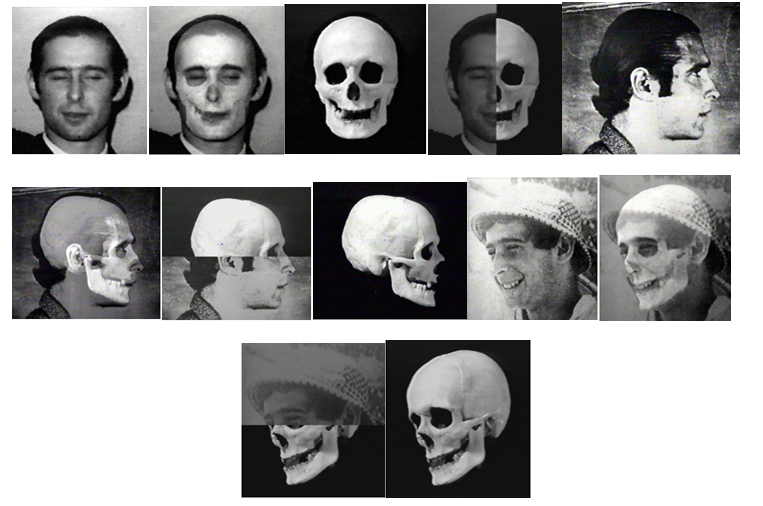
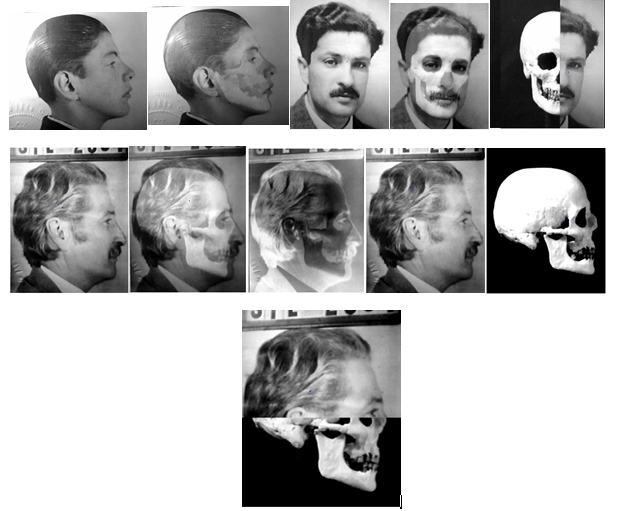
Before the beginning of archaelogical excavations in Uruguay, the skeletal remains of Robwerto Gomensoro Josman, a disappeared people were recovered and identified. He was tortured and killed in 1973 during the last dictatorial regime (1973-1984). His skull was analyzed and later identified by digital skull-photograph comparison (Figures 1) by the author in early July, 2002 [8].
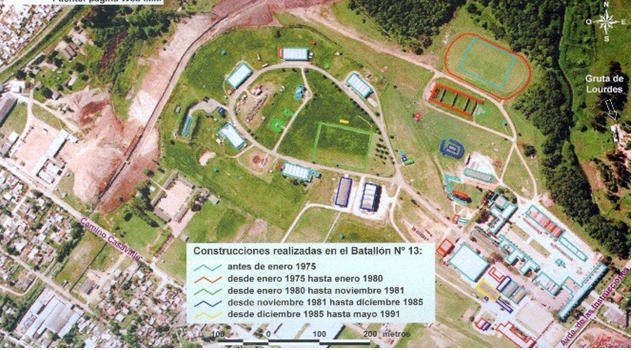
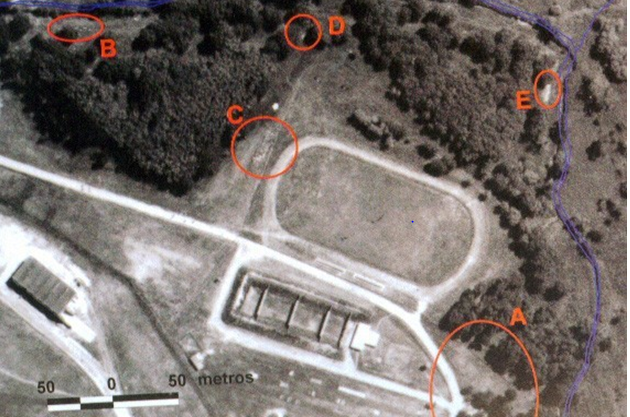
On December 3, 2003, during the administration of President Jorge Batlle, Alejandro Recarey, judge in charge of Elena Quinteros case (a disappeared school teacher) asked the author as forensic anthropologist of the Judicial Morgue of Montevideo if any forensic study of the grounds of the 13th Infantry Headquarter without entering the property was possible, since a traditional survey was not yet possible. Prior to the passage of law No. 15.848, inspection of military installations without the express authorization of the president was forbidden. Therefore, the author as forensic anthropologist of the Judicial Morgue of Montevideo assembled a team of experts including a geologist, a geomorphologist; and an archaeologist, to determine whether human remains might be buried inside the facilities of the 13th Infantry Headquarters. The multidisciplinary team reported to Judge Recarey that it was possible to study the grounds of the headquarters using aerial photographs. Then, the grounds of the 13th Infantry Headquarters were scanned with aerial photographs to observe if there were any anomalous structures (Figure 2). The images revealed there were five locations that needed to be investigated. These sites were identified by letters A-E; (Figure 3) each showed evidence of soil removal that did not correspond to any construction of buildings, roads, or other facilities one would expect to find on a military installation. To determine if this site held burials, the team began comparing several aerial photographs taken over the last 60 years. Following the analysis, on February 2, 2003, a complete report from the multidisciplinary team was presented to Judge Recarey. Later, in June 2004, the multidisciplinary team was asked by titular Judge Cavalli and Prosecutor Guianze to explain several technical points of its report and as to whether a similar type of study could be done on the grounds of the 14th Headquarters. Aerial photographs revealed several significant locations that might be excavated once the forensic team had the permission to enter the military grounds. Access to the sites suspected to contain clandestine burials was granted following the election of Tabaré Vázquez Rosas as the new President of the Republic. On October, 31, 2004, the socialist candidate of the Encuentro Progresista Frente Amplio, Tabare Vazquez Rosas, won the presidential election and on March 1, 2005, declared that the people who had disappeared during the last regime should be found. The search was to include places that were previously off limits but where some individuals were thought to have been held during the dictatorial governments that were in place between 1973 and 1984. A new team of archaeologists, led by José Lopez Mazz, was assembled to continue the work begun by the previous team assembled by the author almost three years ago. The new team included several students of Archaeology, professional archaeologists, later, medical examiners and the author were added to the group, these last ones representing Poder Judicial in the excavations [9].
Burials Grounds
Journalistic investigations had exposed evidence that torture and interrogation had been carried out inside the 13th Infantry Headquarters during the period of the last dictatorial regime in Uruguay. Previously, classified data and witness testimonies confirmed rumors that several bodies had been buried inside the 13th Infantry Headquarters, the 14th Paratroop Infantry, and on a farm near Pando City [10, 11, 12].
The first forensic team found several bones near site marked as A. This site yielded small bone fragments, which were analyzed by university specialists and a pathologist from the Judicial Morgue of Montevideo City. These tiny bone fragments were examined histologically, and none of the specialists could determine whether they belonged to a human or animal. The skeletal fragments were stored for later analysis [13, 14].
Continuing with the search and based on confidential information, a second forensic team leaded by José López Mazz began its search at a farm near Pando City for the bodies of two missing persons, specifically Ubagesner Chaves Sosa and Jose Arpino Vega, who were reportedly buried at this location [15]. At the same time, this new team began the excavations into 13th Headquarters previously marked zones A to E.
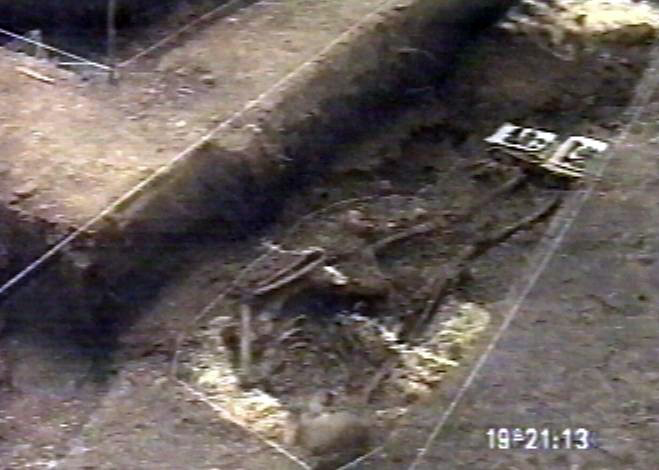
On November 29, 2005, the first complete skeleton was recovered on a private farm near the city of Pando, located about 30 km northeast of Montevideo (Figure 4). This skeleton was later identified as Ubagesner Chaves Sosa by anthropological analysis [16]. The remains of Jose Arpino Vega have never been found. On December, 2, 2005, a second set of human skeletal remains was recovered from inside the 13th Infantry Headquarters in Montevideo City (Figure 5). These remains were later identified by anthropological methods and confirmed by DNA analysis to be those of Fernando Miranda [17, 18].
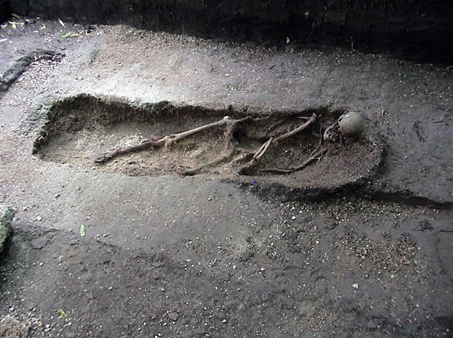
Another discovery was also made inside the 13th Infantry headquarters, which consisted of a portion of a left radius that was situated next to the casing of a 9mm bullet. The bone was analyzed by the staff radiologist and anthropologist at the Judicial Morgue of Montevideo City [19, 20].
Analysis of the Skeletal Remains
All skeletal materials were exhumed using established archaeological methods of excavation. Once all skeletal remains were excavated, they were placed in a secure room into the Laboratory of Forensic Anthropology at the Judicial Morgue of Montevideo City, Following standard methods for handling forensic evidence those remains were analyzed to determine cause of death, stature, age at death, racial affinity, gender, and eventually identity [21].
The excavated single radius with a missing proximal epiphysis was determined to be that of an adult female over 25 years of age at time of death [22] and a stature of about 155.0 cm +/- 4.0 cm [23]. One of the individuals reported missing was a school teacher, Elena Quinteros. The partial radius was suspected to have come from her. Therefore, three DNA analysis were carried out, one at the EAAF laboratory of Cordoba City, Argentina [24]; a second analysis by the Technical Police of Montevideo City, Uruguay [25]; and a third, conducted through the University of Granada, Spain [26]. None of the DNA analysis gave definitive results to the identity of the individual because scientists were unable to extract any usable mitochondrial DNA material.
With the exception of the single radius, the excavated skeletons were nearly complete but badly preserved. Once the broken bones were repaired, anthropometric dimensions, and morphological observations were obtained from the skeletons. Using a combination of morphological and metric characteristics, it was determined that the skeletal remains found at a farm near Pando City belonged to a white man with an age range 40 to 50 years old, and 166 tall [27, 28, 29, 30, 31, 32, 33, 34].
The condition of the second skeleton found inside the 13th Infantry Headquarter was not as good as those of the first one, even though the grave itself was covered by a concrete slab. The reason for this was the humidity of the soil and the time elapsed since burial, combined with the fact that the bones were in an area that was frequently in use as a roadway for military equipment, which sent vibrations deep into the ground that damaged the bones as vehicles drove over and near the grave. However, the concrete slab may have provided a small amount of protection for the body. Several bones, specifically those of the chest, were completely fragmented. A small cord was found around the victim’s neck, possibly from an identification tag which may have been used as a means of cataloging the prisoners. Any tag that might have contained a form of identification had long since disintegrated due to the long burial time and environmental conditions. The hands and feet did not contain any identifying information. The vertebral column was also badly preserved; only the lumbar vertebrae were available for analysis. The arms and legs were of a condition which also allowed inspection. The sex of the second skeleton was determined by morphological [22] and discriminant functions analysis [28]. Stature was calculated by appropriate long bone lengths applied to the regression formulae listed in Trotter’s tables [34]. Race was determined according to discriminant function formulae [27]. Estimation of age at death was calculated using pattern of suture closure [30, 31] medullary cavity of the humerus [33] pubic symphysis analysis [32, 33, 34, 35]. Overall assessment revealed that the remains belonged to a white male with an age range of 45 to 60 years and 168 tall.
Identification of the Skeletons
The identification of a victim from skeletal remains is one of the most challenging aspects of forensic sciences [5, 6, 7] The technique of skull-photo superimposition has been used to assist in the identification of numerous victims and is accepted in courts in a number of countries [36, 37, 38, 39, 40, 41, 42, 43, 44, 45, 46]. The use of a computer in this technique has added a number of advantages to the process [47, 48, 49, 50, 51, 52, 53].
According to my experience, images superimposition and facial approximation have a useful role in identification. However, there are some tools to be considered for a positive identification like: biological profile, craniometry, standard data, skull photo, unique characteristics in the skull, and pre morten data of disappeared people. Individual’s
craniomethric facial features showed in the photograph, like earlobe, facial morphometry, and cephalometric plans must also be considered. Subsequently, all of them shall be validated and compared to the photos taken by digital media like cameras, videos and other tools. The results are very effective. Available photographs of these people were recollected in both frontal and profile views for comparison and superimposition of the unknown skulls. Unique characteristics were observed in the photographs, like facial morphological type, deformities or some deviation in the septum. Equally, metric measures were taken for the scanned skull and photographs by a digital slip gauge, taking into account the eight examining lines proposed by Cai and Lan [54].
- Glabella line: It covers from the glabella anatomic point to the upper orbital rim.
- Cheilion line: It includes a horizontal line from mouth (cheilion)
- Sub-nasal line: It includes the lower rim of the pear- shaped opening
- Ectocanthion line: It comprises the lines among the unions of the external orbital rims.
- Gnathion line: It comprises the lower rim of chin
- Entocanthion vertical line: It covers the left canine with the left lacrimal bone.
- Entocanthion vertical line: It covers the right canine with the right lacrimal bone.
- Central line: It comprises the mean sagittal line.
There are other cranial metric points to be taken into account, such as the distances from the zygion point, papillary distances, supraorbital, diagonal, sub-nasal to right and left zygion, nasio-lateral, and nasion to sub-nasal. The use of this technique requires very experience and basically standard equipment consisting of one digital video camera, standard high resolution monitor, digital video mixer, personal computer, capture and process imaging software. In each case, the two skeletons were 100% identified using photo to skull comparison by digital video superimposition like those of Ubagerner Chaves Sosa and Fernando Miranda [55]. The identities were later confirmed by DNA analysis [18]. At the present, another three skeletons were found inside military Headquarters by a third team of anthropologists.
Discussion
Inquiry into the widespread lack of protection for human rights continues on a global level without any sign of resolution. Two things, however, are obvious: 1. there are no easy answers to this problem, and, 2. solutions cannot be discovered without information and evidence collection. This is where the scientist is not only useful, but essentials The work must begin by acknowledging the relationship between science and human rights. Scientists make unique contributions to human rights through the application of scientific methods and techniques of investigation into these kinds of abuses as well as other violations. In such cases, evidence is often based solely on oral testimony from victims or other eyewitnesses. There is no doubt about the importance of oral testimony; however, this form of evidence is far more effective when corroborated by material proof. Physical evidence has an even greater value when there are conflicting testimonies from several different parties. It can be used to support, contradict, or further explain other circumstances. The most critical need for material verification is when no other evidence exists. Either the events in question were not witnessed by any living person, or the witnesses are unwilling to testify. In these situations, the material evidence is the only path to the truth. Scientific analysis is essential for evaluation of physical evidence. A well-trained forensic scientist maintains a careful chain of custody, preserves the security of the evidence, explains the methods used in analysis, reports any and all results, and testifies about the methods, results and conclusions within acourt of law. Human rights work, for the professional forensic scientist, is his or her daily routine.
In cases of human rights violations, forensic scientists are the people in authority, cultural assumptions just do not apply, and the scale of the work is far greater. One unexpected difference is the lack of support disciplines. Within the most industrialized countries, the Universal Declaration of Human Rightsis largely up held by domestic law. Therefore, on home soil, human rights tend to be identified with law enforcement and forensic investigations. In many other parts of the world, however, human rights are not upheld by civil or criminal law. The only recourse for action is through the application of international human rights covenants. Under such conditions, the only people available to enforce human rights covenants are those employed by private and international human rights organizations. The application of the forensic sciences to human rights investigation can be crucial in proving that such violations occurred and in obtaining judicial redress for criminal activity [56].
Forensic anthropologists, both physical anthropologists and archaeologists, contribute to human rights primarily by aiding in death investigations. All of them join with other forensic scientists in revealing evidence of mass murder, genocide, torture, execution, and in cases of political disappearances. Forensic anthropologists are called in especially in cases where trauma analysis and personal identification of human skeletal remains is required. Sometimes the bodies require careful archaeological excavation in order to expose the remains and associated evidence such as clothes, coins, personal documents, and so on. Generally the entire site must be treated like a crime scene, and the archaeologist must be careful to obtain the greatest amount of information from the site. This is crucial since an excavation destroys the site. Identification and other studies must be done in the laboratory to interpret the events surrounding the death. In Uruguay these investigations were delayed for a long time due to legal issues and military autonomy barring the examination of armed forces facilities suspected to be involved in the disappearance of many individuals during the period of 1973-1984. In the present study, the analysis of both individuals found in 2005 indicated that conformity was found between the skull and all recognizable proportions of head, face, eyes, nose and mouth on the photographs. The outlines of the soft tissue on the skulls were congruent with the facial contours in each of the photographs. Therefore, the comparisons revealed these skulls as being those of Ubagesner Chaves Sosa and Fernando Miranda. Several images of superimpositions and pictures sections (vertical and horizontal) were obtained showing excellent matches between all photographs and the unknown skulls (Figure 6).
Therefore, a positive identification could be made by comparison of photo-skull. The COPAZ, in its final report, said that “all the remains have been cremated and thrown into the sea in 1984” [57] but, the discovery of human skeletal remains inside the 13th Infantry Headquarters and a civilian location near Pando City also demonstrate that the information given by the Commission for Peace (COPAZ) about the final destination of missing people during the last dictatorial regime was false or at least incorrect.
Conclusions
In Uruguay more than 1700 forensic anthropology cases have been developed from 1992 to the present from the Forensic Medicine Department to the Public Prosecutor’s Office. Since 1992 at the present more than two hundred people were identified by skull-photograph comparisons, with ages ranging from 5 to 90 years old at time of death. The first set of skeletal remains of a disappeared person to be recovered and identified from the time of the dictatorial Uruguayan regime (1973-1984) was that of Roberto Gomensoro Josman. His remains were analyzed and identified by the author in early July 2002 [8]. Later, Miranda and Chaves Sosa´s skeletons were identified into human rights politicals carried out by several Uruguayan governments [58].
Many times positive identification may starting with a skull visualized by a computer monitor using several image superimposition techniques. The method achieved 100% success as verified by established genetic analysis. The digital method has a significant advantage over the others because the identifications are completed more speedily, saving up to more times, with no loss of accuracy. The use of this method is a significant contribution to the humanitarian impact of the work into human rights and possibly speed the processes of justice. Therefore, according to my Uruguayan experience, the technique of superimposition of images showed very good results altogether with anthropological analysis of characteristics like sex, biological age, height and other from the identification of skeletal remains of missing people. Then, we agree that superimposition of images starting from a skull verified with an alleged photograph, using forensic anthropological techniques, a personal computer software and, taken account unique characteristics of skull and facial photograph, it represents a useful method of obtaining positive and effective identification of missing people.
References
-
Iscan MY, Solla HE (2000) Forensic Anthropology in Latin America. Forensic Science International 109(1): 15-30.
-
Solla HE (2016) Identification and Reconstruction of Human Skeletal Remains in Uruguay. The Forensic Examiner 1(1): 1-8.
-
Solla HE (2005) Study and Identification of Human Remains in Uruguay (1950-2001). The Forensic Examiner 14(4): 20-5.
-
Iscan MY (1998) Progress in forensic anthropology: the 20th century. Forensic Sci Int 98(1-2): 1-8.
-
Iscan MY (1988) Rise of forensic anthropology. Yearbook Of Physical Anthropology 31: 203-30.
-
Hannibal K (1992) Taking up the challenge: promotion of human rights. A guide for the Scientific Community. Science and Human Rights Program. American Association for the Advancement of Science Publication pp: 92-328.
-
Iscan MY (1995) Forensic anthropology around the world. Forensic Sci International 74(1-2): 1-3.
-
Solla HE, Iscan MY, McCabe B (2005) A victim of a dictatorial regime: Identification of Mr. Roberto Gomensoro Josman. Forensic Sci Int 151(2-3): 213-220.
-
Solla HE (2018) Forensic Anthropology: Case Study 2. Montevideo. Byblos Publishing House.
-
(1990) La Republica newspaper. A former soldier from the 5th Road Construction Battalion tells how they found the bodies and what happened to them. Montevideo.
-
(2003) La Republica newspaper. Former military told La República the exact place where the graves were dug in Battalion No. 13. Montevideo.
-
(1997) Postscript Magazine. I buried them, Montevideo pp: 14-17.
-
Echenique M (2005) Report on remains of small bones. Montevideo Department of Pathological Anatomy, I.T.F., Judiciary.
-
Tróccoli JA (2005) Expert report on fragments of skeletal remains. Montevideo. Electronic Molecular Microbiology Service, Faculty of Sciences, University of the Republic.
-
(2004) Association of Mothers and Relatives of the Detained-Disappeared. To All of Them. Montevideo.
-
Solla HE (2005) Plaice HE Report No. 535a. Forensic Anthropology Laboratory. Department of Forensic Medicine ITF Montevideo.
-
Solla HE (2006) Report No. 540. Forensic Anthropology Laboratory (Official report) Department of Forensic Medicine. I T F. Montevideo.
-
(2007) Presidency of the Oriental Republic of Uruguay. Historical Investigation on Disappeared Detainees. Montevideo.
-
Solla HE (2005) Laboratorio de Antropología Forense (Official report). Departamento de Medicina Forense.
-
Taranto G (2005) Informe de pericia radiológica. (Official report). Departamento de Medicina Forense.
-
Burns RK (1999) Forensic Anthropology Training Manual. New Jersey, Prentice Hall.
-
Krogman WM (1986) The Human Skeleton in Forensic Medicine. 2nd (Edn.) Springfield, IL, Charles C Thomas, Publisher pp: 301-327.
-
Steele G (1970) Estimation of stature from fragments of long limb bones. In: TD Stewart (Ed.), Personal Identification in Mass Disasters. Washington, DC National Museum of Natural History, pp: 85-97.
-
Vullo CM (2006) Investigation to identify bone remains (Official report). Cordova.
-
Domínguez V, Pagano S (2006) Expert report matter No. 00021/06. Laboratory Report No. 611/05 and 6/06, (Official report). Montevideo, National Directorate of Technical Police.
-
Lorente Acosta JA (2006) Criminalistics report C03/06. (Official report). Genetic Identification Laboratory, University of Granada Granada.
-
Giles E, Elliot O (1962) Race identification from cranial measurements. J Forensic Sci 7: 147-157.
-
Giles E (1970) Discriminant functions sexing of the human skeleton. In: T.D. Stewart (Edn.), Personal Identification in Mass Disasters, National Museum of Natural History Washington DC, USA, pp: 99-107.
-
Iscan MY, Loth SR, Wright RK (1984) Age estimation from the rib by phase analysis: white males. J Forensic Sci 29(4): 1094-1104.
-
Meindl RS, Lovejoy CO (1985) Ectocraneal suture closure: A revised method for the determination of skeletal age at death and blind tests of its accuracy. Am J Phys Anthropol 68(1): 57-66.
-
Solla HE (1994) A New Method for Anagraphic Age Determination in Human Bone Remains. In: International Journal of Population Biology Bogota 2(2): 1-13.
-
Todd TW (1920) Ages changes in the pubic bone The male pubis. Am J Phys Anthropol 4(1): 285-334.
-
Soto H, Castellanos R, Toribio R (2012) Estudio métrico del canal medular del húmero como indicador de la edad. En: Estudios de Antropología Biológica. México City, pp: 143-148.
-
Trotter M (1970) Estimation of stature from intact limb bones. In: T.D. Stewart (Edn.), Personal Identification in Mass Disasters, National Museum of Natural History Washington DC, USA, pp: 71-84.
-
Snow CC (1983) Equations for estimating age at death from thepubic symphysis: a modification of the McKern- Stewart method. J Forensic Sci 28(4): 864-870.
-
Glaister J, Brash JC (1937) The Medico-Legal Aspects of the Buck Ruxton Case. Edinburgh E and S Livingston (Eds.), Forensic anthropology 284.
-
Basauri C (1967) A body identified by forensic odontology and superimposed photographs. Int Crimin Pol Rev 204: 37-43.
-
Simpson K (1943) Rex v. Dobkin The Baptist church cellar murder. Medico-Legal Society 11(3).
-
Eckert WG, Teixeira WR (1985) The identification of Josef Mengele. A triumph of international cooperation. Am J Forensic Med Pathol 6(3): 188-191.
-
Curran WJ (1986) The forensic investigation of the death of Josef Mengele. Engl J Med 315(17): 1071-1073.
-
Helmer R (1986) Identification of the cadaveric remains of Josef Mengele. Arch Kriminol 177(5-6): 130-144.
-
Helmer R (1987) Identification of the Cadaver Remains of Josef Mengele. J Forensic Sci 32(6): 1622-1644.
-
Soto H, Barcos C (1989) Identification of the victims of a sexual psychopath in the Republic of Ecuador. In: Studies in Biological Anthropology. Mexico City, UNAM pp: 727- 37
-
Ivanov LP, Abramov SS (1995) Authentication of the Skeletal Remains of the Last Russian Tsar and Royal Family. Cooperation between Forensic Craneofacial Specialists and DNA Experts. Paper presented at the 6th Annual Meeting of the International Association for Craniofacial Identification. I.A.C.I. Program 8-11, pp: 24- 25.
-
Ubelaker DH (1996) The remains of Dr. Carl Austin Weiss: Anthropological Analysis. J Forensic Sci 41(1): 60-79.
-
Solla HE, Iscan MY (2001) Skeletal Remains of Dr. Eugenio Antonio Berríos Sagredo. Forensic Sci Int 116(2-3): 201- 211.
-
Delfino VP, Colonna M, Vacca E, Potente F, Introina F (1986) Computer-aided skull/face superimposition. Am J Forensic Medicine and Pathology 7(3): 201-212.
-
Nickerson BA, Fitzhorn PA, Koch SK, Charney M (1991) A methodology for near optimal computational superimposition of two dimensional digital facial photographs and three-dimensional cranial surface meshes. J Forensic Sci 36(2): 480-500.
-
Ubelaker DH, Bubniak E, Donnell GO (1992) Computer assisted photographic superimposition. J Forensic Sci 37(3): 750-762.
-
Bajnoczky I, Kiralyfalvi L (1995) A new approach to computerized comparison of skull and photograph. Int J Legal Med 108(3): 157-161.
-
Shahrom AW, Vanezis P, Chapman RC, Gonzales A, Blenkinsop C et al. (1996) Techniques in facial identification: computer-aided facial reconstruction using a laser scanner and video superimposition. Int J Legal Med 108(4): 194-200.
-
Smeets B, De Valck E (1996) Use of the computer in dentistry: video superimposition and facial reproduction using the expedience of the computer interface. Rev Belgian Med Dent 51(4): 272-283.
-
Yohino M, Matsuda H, Kubota S, Imaizumi K, Miyasaka S, et al. (1997) Computer- assisted skull identification system using video superimposition. Forensic Sci Int 90(3): 231-244.
-
Chai DS, Lan YW, Tao C, Gui RJ, Mu YC, et al. (1989) A study on the standard for forensic anthropologic identification of skull image superimposition. J Forensic Sci 34(6): 1343-1356.
-
Solla H, Iscan MY, Mc Cabe B (2010) Skeletal Remains of Ubagesner Chaves Sosa and Fernando Miranda Perez: Victims of a Dictatorial Regime in Uruguay. In: The Forensic Examiner 19(2): 28-33.
-
Hannibal K (1992) Taking up the challenge: Promotion of human rights. A guide for the Scientific Community. Scienceand Human Rights Program. American Association for the Advancement of Science pp: 92-328
-
(1994) “Disappearances” and political killings: Human rights crisis of the 1990s A Manual for Action. Amnesty International, Amsterdam pp: 1-226.
-
(2003) Commission for Peace. Final report. Press and Diffusion Secretary. Montevideo, Presidency of the Republic.
- Forensic Implications of Adverse Drug Reactions in Schizophrenia A Case Series
- Narcotics and Digital Forensics: Bridging Crimes in the Digital Age
- Ethics in Forensic Psychiatry: Principles, Dilemmas, and Human Rights
- Impact of Acute Stress on Attentional Orienting to Social Cues
- Head Injury and Intracranial Hemorrhage in Western Region of Libya
- A Forensic Study on Handedness: Examination of Handwriting Features in Right and Left Handed Writers