
The Characterization of Firing Squad Execution Walls Part II Assessment of the Walls of Fort Platte Saline
Presented is a case study of masonry walls of Fort Platte Saline (FPS), a small fort on Alderney, one of Britain's channel islands off the coast of French occupied territory. The site of known slave labor camps, established in WWII during five years of German Army occupation. This study was carried out to test the hypothesis proposed in Part I of the author’s research concerning the formations of firing squad execution walls, and to prove or disprove the authors’ postulation of the existence of a Firing Squad Execution Wall Paradigm (FSEWP). FPS walls were first examined for the presence of potential probative trace evidential materials within the voluminous number of bullet impact craters (BICs) present on the fort’s walls. Due to the passage of time, and WWII relic hunters, no trace evidence was found embedded in the BICs. However, distinctive patterns of small arms ballistics damage were clearly evident on the fort’s masonry walls that led to the theory that the ballistics damage present on FPS interior wall was created during firing squad executions, thus leading to the establishment of a hypothesis that the damage was evidence of a firing squad execution wall pattern (FSEWP).
Abbreviations
FPS: Fort Platte Saline; FSEWP: Firing Squad Execution Wall Paradigm; BICs: Bullet Impact Craters; FSEx: Firing Squad Executions.
Introduction
The authors of this research were contacted by a noted fine artist whose work involves the documentation of the destruction of cultural heritage artifacts during times of war. He had been working on a project for nearly a decade, studying the damage of an interior wall found in a small fort known as Fort Platte Saline (FPS) located on Alderney, one of Britain’s Channel Islands occupied by the German Army during WWII. He believes that the subject wall was used by Nazi soldiers as a backdrop for the firing squad executions (FSEx) of slave laborers during WWII. The artist asked if we would examine FPS interior wall to logically establish how the damage on the wall was made. First glance of the photographic evidence of the subject wall exhibited major signs of small arms ballistics damage. Unfortunately, the current forensic literature was found lacking any studies or research covering FSEx and the physical evidence that is left behind at the locations they are conducted. However, the historic literature covering firing squad executions was replete with information and visual records covering this topic.
On June 23, 1940, as the sun was rising, the local church bells rang loudly to alert the residents that six Royal Navy ships which would transport them to the British mainland were approaching Braye Harbor. Nearly 1,400 residents of Alderney were evacuated before the Germans could reach the island. Soon after the population of Alderney was evacuated, the German army arrived and began to follow their orders to fortify Alderney as part of Hitler’s Atlantic Wall. The Nazi soldiers forced POWs and slave laborers to construct four camps on Alderney: two work camps, and two concentration camps to house prisoners of war, and to build the German infrastructure, headquarters, housing, and fortifications. Thousands of slave workers, from thirty countries including Russia, Spain, France, Poland, and Algeria, were housed in four camps (Lagers Helgoland, Norderney, Borkum and Sylt) and built hundreds of bunkers, anti-tank walls, as well as many tunnel complexes.
The Germans surrendered Alderney on May 16, 1945, eight days after the Allies formally accepted the unconditional surrender of the armed forces of Nazi Germany. Seven days after the liberation of Guernsey and Jersey, 2,332 German prisoners of war were removed from Alderney on May 20, 1945.
A study and analysis of the ballistics damage observed, documented, and collected during a visit to a small fort located on Alderney Island. Figure 1a is a recent drone photograph taken of Fort Platte Saline (FPS), the subject fort, showing its location on the central, Northern tip of Alderney Island. Figure 1b is an enlarged photographic image made from the original aerial photograph provided by Heritage Drones. A clear, non-obstructed, highly detailed, overhead view of FPS is evidence of its current use and condition.
On the return to their island, Alderney evacuees had no knowledge of the crimes committed on their island during the occupation. By December 1945, the first date civilians could return home, all the slave laborers had been repatriated.
Nonetheless, evidence of atrocities was present all over the island, in old forts, within hidden underground tunnels, in mass graves, and a large graveyard full of graves holding the bodies of prisoners of war and slave laborers. One small fort in particular, Fort Platte Saline (FPS), located on Alderney Island, had hundreds of bullet impact craters (BICs) on three of its masonry, stone and concrete walls. Due to their previous work with shooting reconstructions, the authors were asked by a noted artist, whose art involves the study of artifacts destroyed during wartime, to try to determine the cause of this extensive damage [1, 2]. The artist who was self-funding the project for several years was now in need of a thorough forensic investigation to be conducted in order to evaluate and ascertain the action and/or mechanism which produced the patterns of ballistic damage present on this small fort’s walls. Because of the potential historical significance of this project, the authors agreed to a pro bono arrangement [3, 4, 5, 6, 7, 8].
Case Study - Assessment of the Walls of Fort Platte Saline (FPS)
Survey, Search, Documentation of FPS
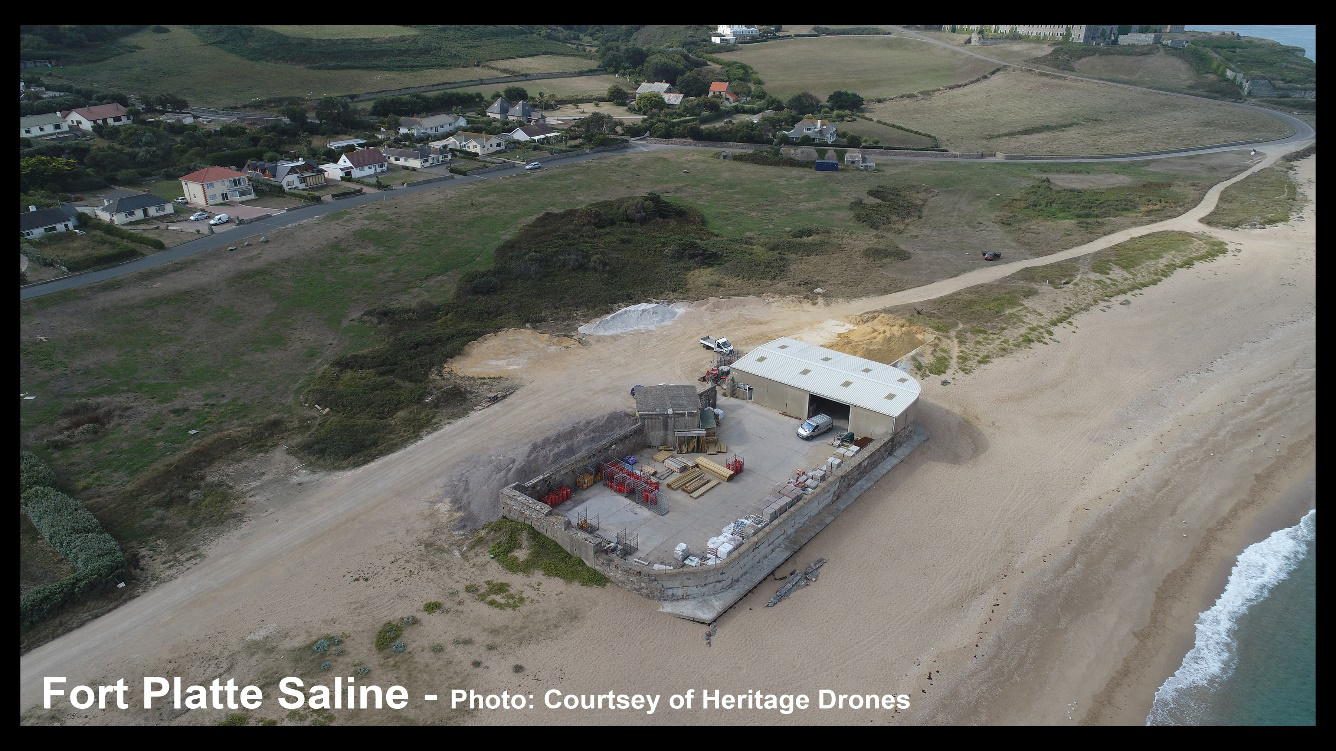
Figure 1a: An Aerial Drone Photograph of FPS. This Photograph is Courtesy of Heritage Drones.
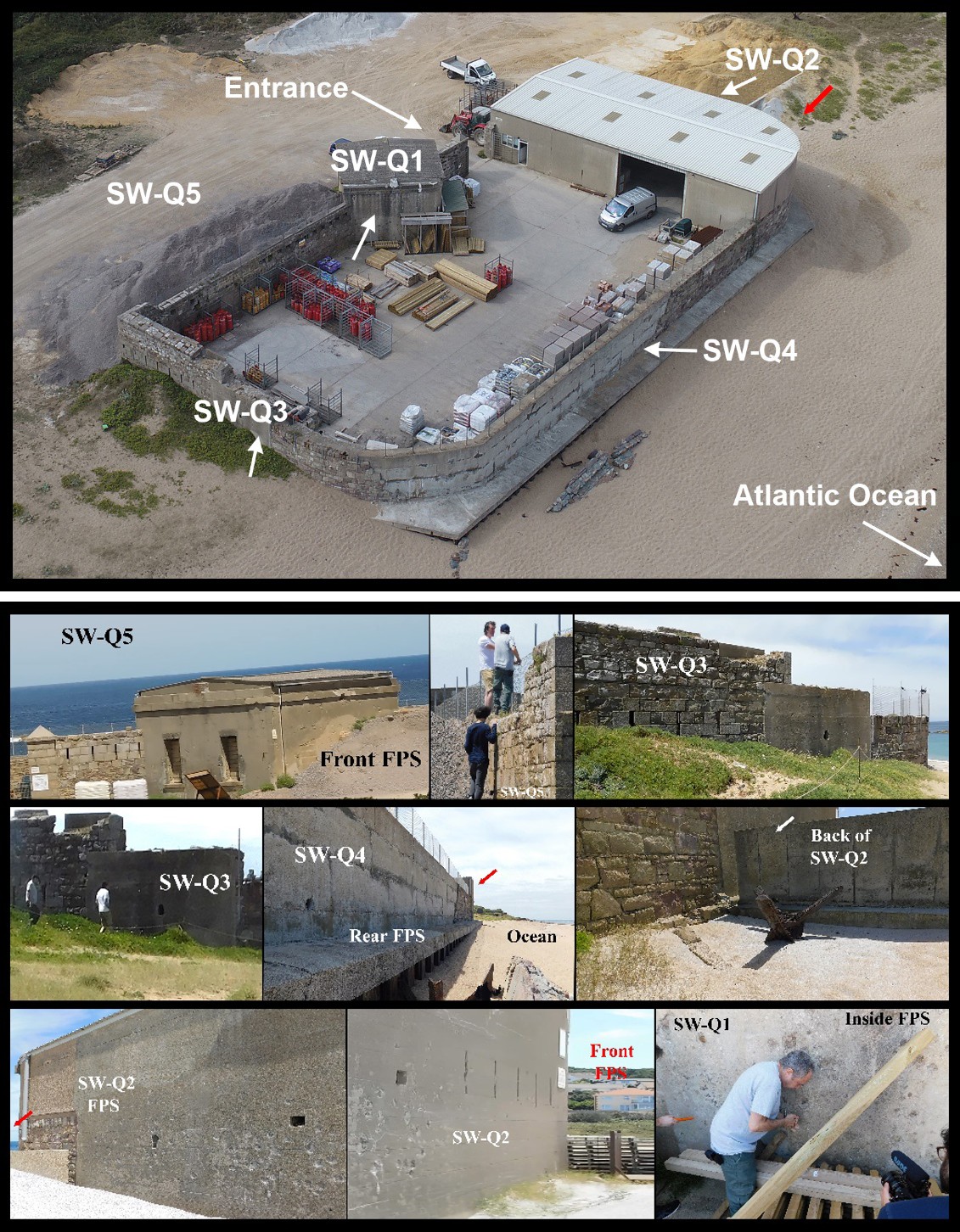
Figure 1b: An Enlargement of FPS Made from the Original Aerial Drone Image, Showing the Five Subject Questioned Walls (SW).
Upon first arriving at FPS, a grid search pattern was initially employed to conduct the preliminary walk- through of the entire fort. The search was conducted to ascertain the condition of the fort’s structure, and to locate any potential probative evidence that would assist the forensic examiners to determine how the damage to the Fort’s walls occurred. Figure 2 shows eight stages of the initial walk-through searching process as well of the locations of the subject walls.
The former fort is used as a construction materials storage site. The first search revealed that three of the four exterior walls making up FPS outer structure show obvious ballistics damage to their outer surfaces. The only interior wall inside FPS that had ballistics damage was designated SW-Q1, while the four exterior walls of FPS were designated SW-Q2, SW- Q3, SW-Q4, and SW-Q5.
On the next day, the forensic investigation team revisited Fort Platte Saline, to conduct a thorough forensic search, examination and documentation of the fort and the subject questioned walls. Copious notes, photographs and videos were taken of the ballistics damage seen on three of the walls and their surfaces. Observations and measurements of the damage were made, recorded, and evaluated.
Each BICs were carefully measured, recorded, and documented, their sizes, shapes and overall geometry was of particular interest. The forensic team tried to locate projectiles and trace evidence embedded within the BICs. Figures 3a-3d illustrate portions of the search, examination, and documentation processes conducted by the team.
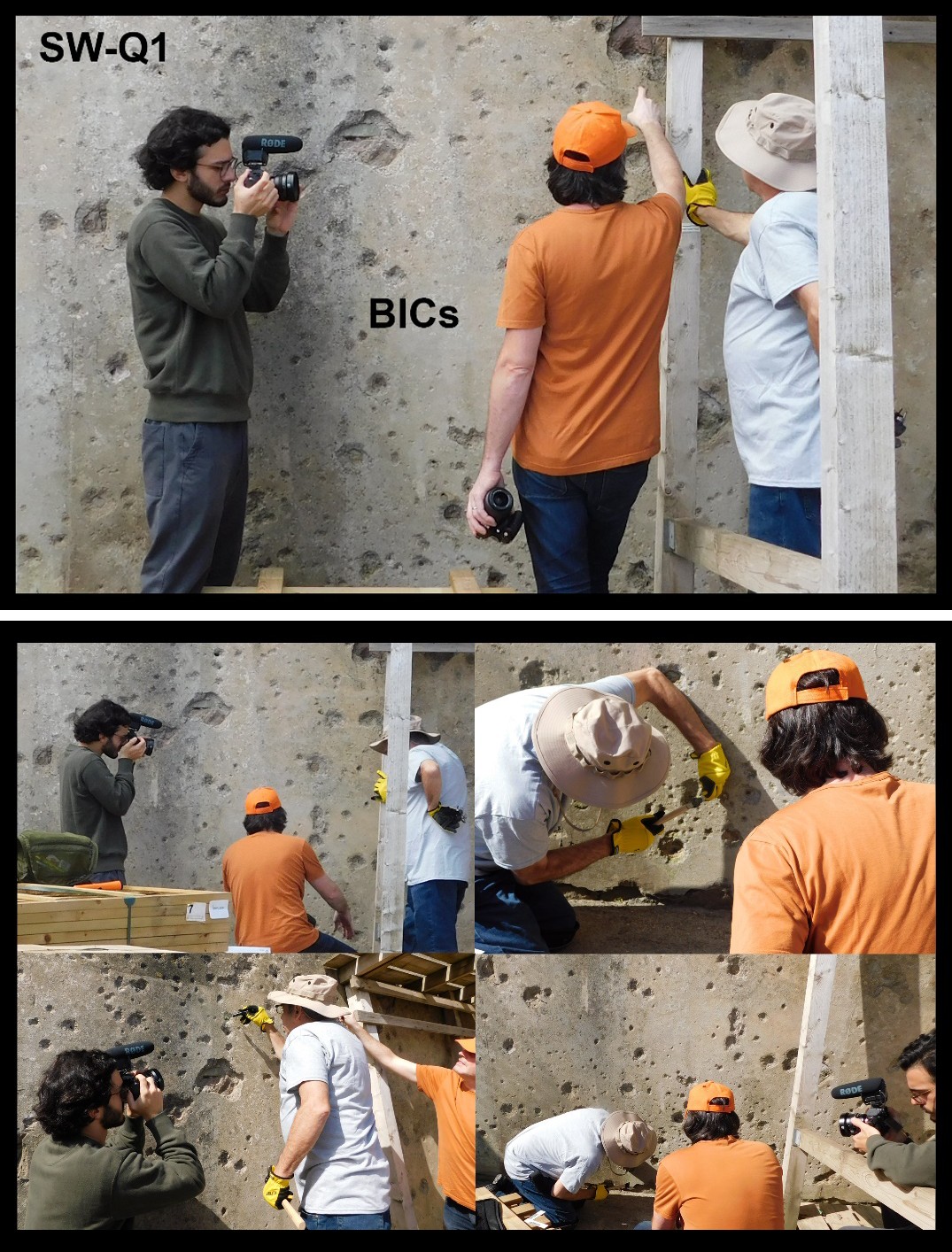
Figure 3a: Examination and Documentation of the Wall Designated SW-Q1.
Figure 3b: Searching SW-Q1 for Possible Embedded Projectiles and Other Categories of Trace Evidence Such as Pieces of Projectiles, Metal Fragments, Pieces of Textile, and Gunshot Residue. One of the Team’s Members, a Professional Photographer/ Videographer/Film Maker, Meticulously Recorded and Documented the Entire Process.
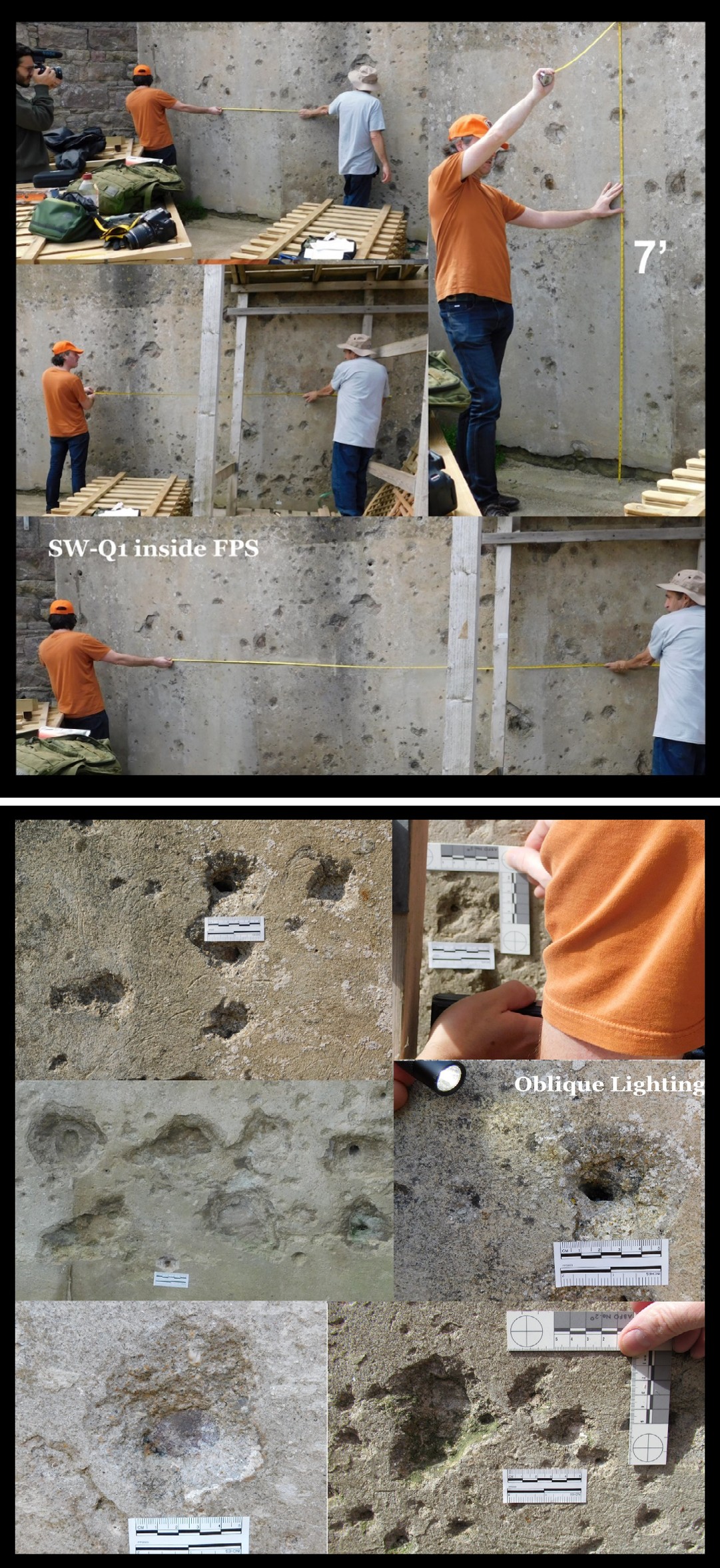
Figure 3c: Documentation and Measurements of SW-Q1’s, Height, Length, and Overall Appearance.
Figure 3d: Measuring the Diameters of a Selection of Bics Present on SW-Q1 in Order to Assess their Size, Shape, and Structure. All these Bics were Examined for Trace Evidence .
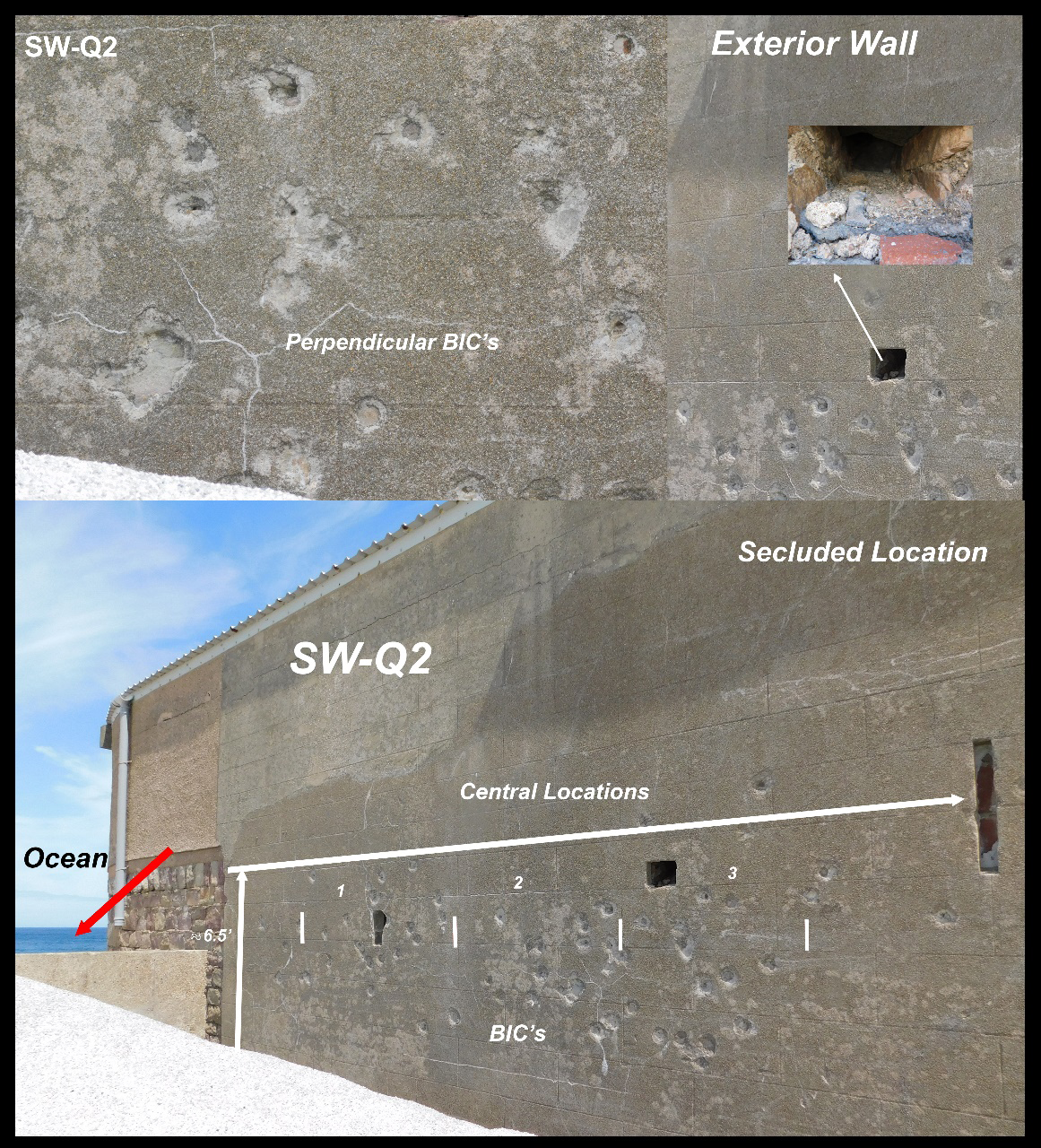
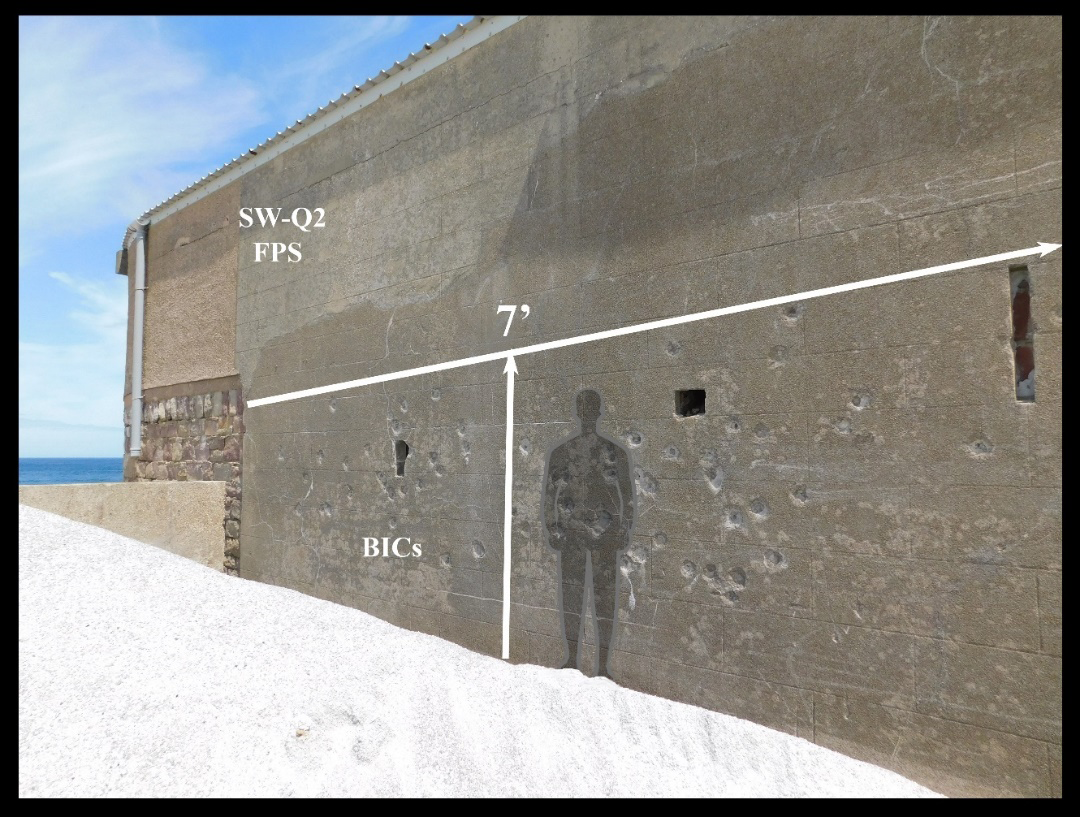
The examination and documentation of the ballistics damage present on SW-Q2 the exterior, Note the presence of a FSEWP towards the lower portion seen in Figure 4. SW-Q2 is situated in a hidden and obscure, secluded area, with a small wall position between the ocean and the front of FPS. Note the presence of a white line approximately 6.5 feet off the ground’s surface, running along the wall, parallel to the ground with a large number of round shaped BICs concentrated in the central portion of SW-Q2.
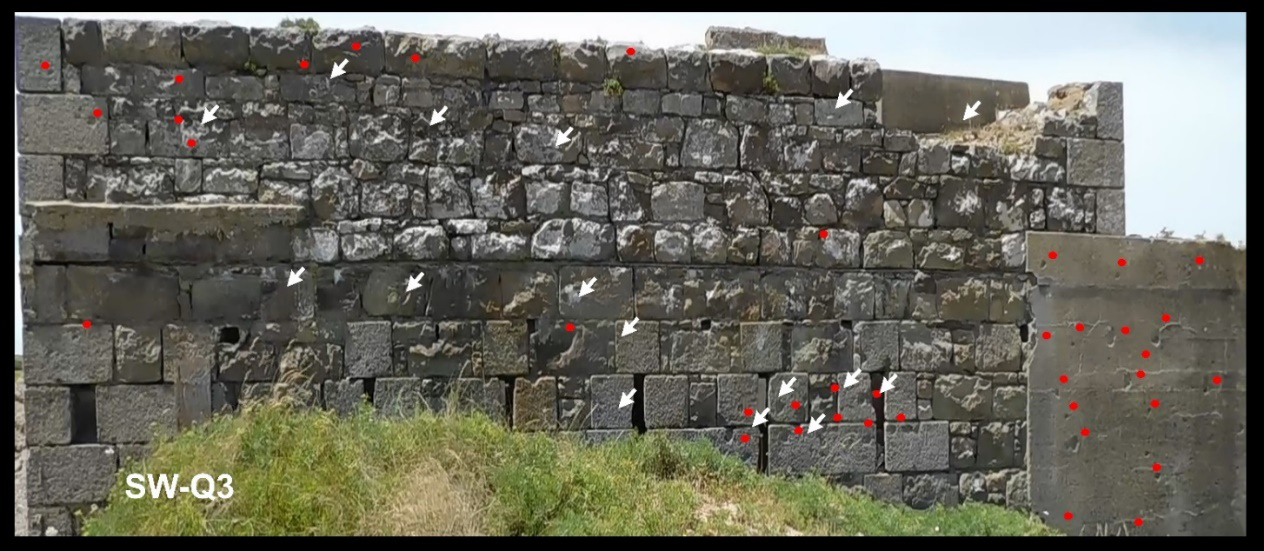
Examination and documentation of the ballistics damage present on FPS’s masonry wall designated SW-Q3. Figure 5a shows that there are a large number of BICs (marked with a white arrow) present on the wall’s outer, exterior, concrete block, masonry, and stone surfaces as well as damage to the top portion of the wall, marked with a black arrow. The adjacent concrete wall shown in Figure 5b exhibits a large number of randomly distributed BICs (marked with a black x) present on this section of the exterior wall of FPS. Note the lack of a FSEWP on either side of this wall.
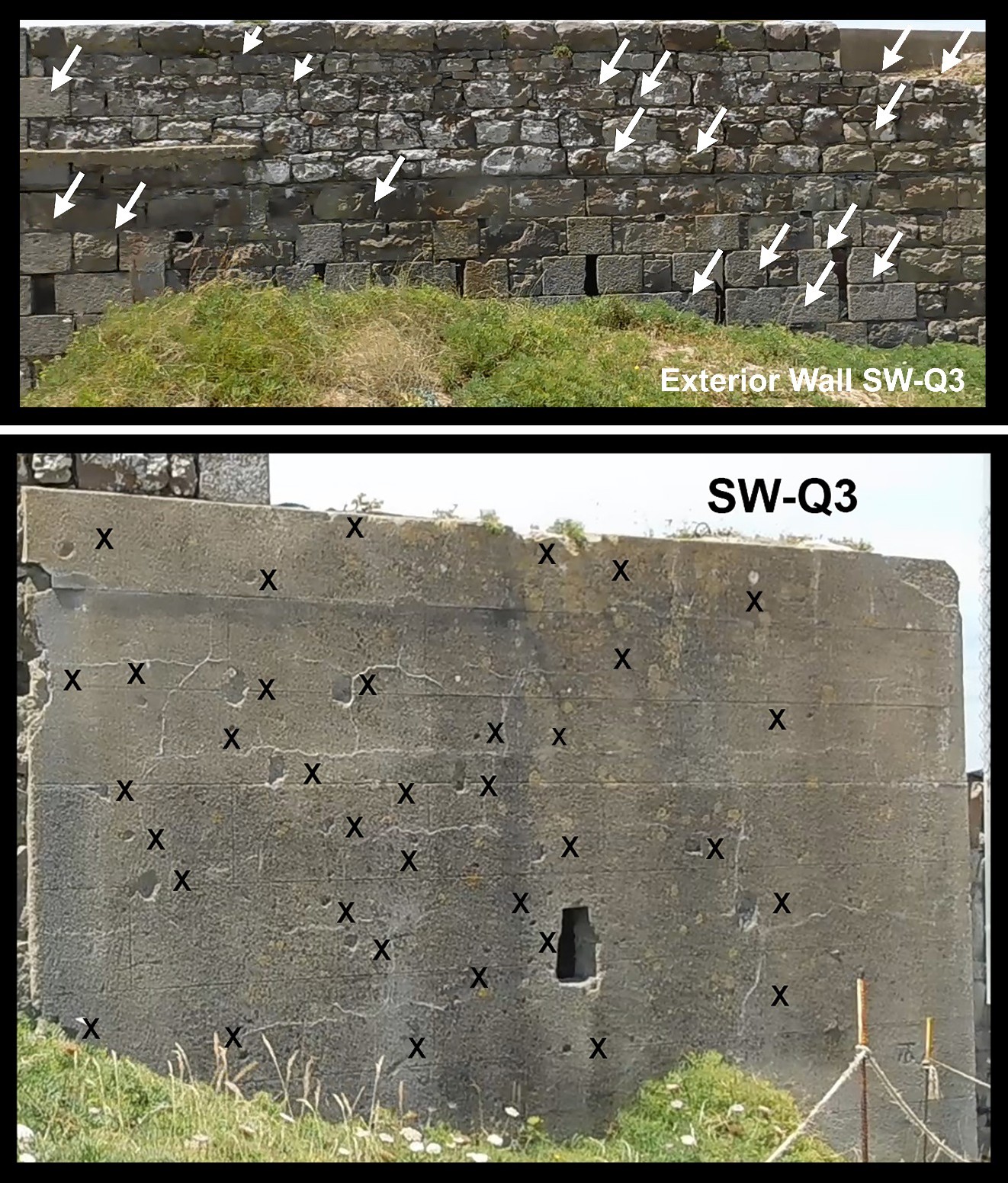
Figure 5a: Examination and Documentation of the Potential Probative Evidence on the Exterior FPS Wall Designated SW-Q3. A White Arrow Designates the Presence of Bics and Considerable Ballistics Damage to the Wall’s Outer Surface. Note the Lack of a FSEWP on this Concrete and Stone Wall’s Outer Surface.
Figure 5b: Documentation of a Large Number of Randomly Distributed BICS (Marked with a Black X) Present on the Exterior Wall of FPS Designated SW-Q3. Note the Lack of a FSEWP on this Masonry Wall’s Outer Surface.
Examination and Testing of Silicone Mold
The examination of a silicone mold made prior to this forensic investigation is shown in Figure 6a. Portions of the mold were examined and tested for various forms of trace materials including residues of lead and copper all of which could be used to help reconstruct the events of the past. In all, nine questioned items of trace evidence were collected from the mold of SW- Q1. The questioned metal fragments collected from a nearby “Anti-Tank Wall” just to the East of Fort Platte Saline. The questioned metal fragments were designated Q10 and Q11, see Figure 6b. All questioned items transferred to forensic laboratories for future analysis.
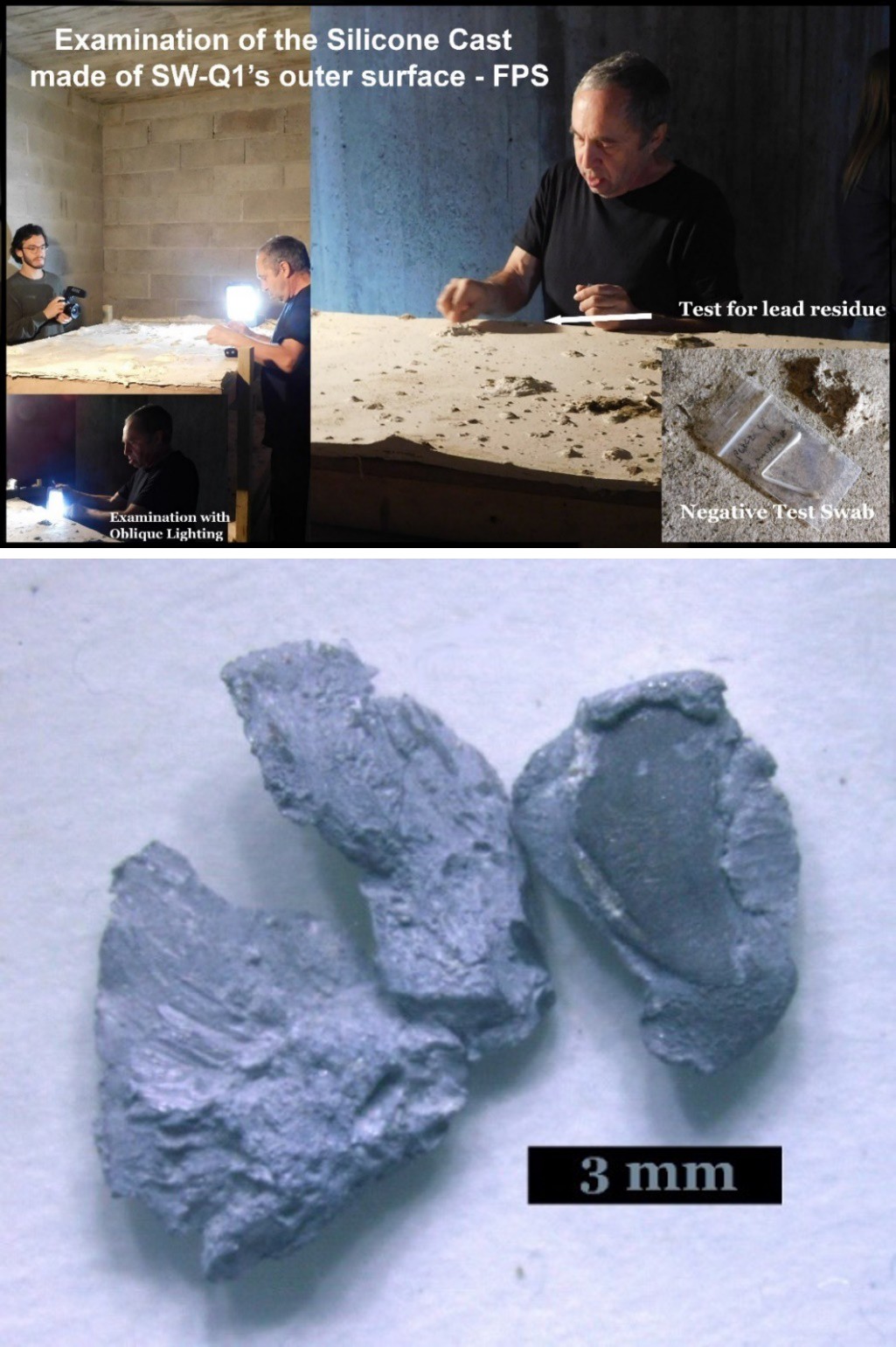
Figure 6a: Shown is the Oblique Lighting Examination and Search of a Silicone Mold of the SW-Q1 Located inside FPS for Trace Evidence. Areas of the Mold are Tested for Lead (Sodium Rhodizonate) and Copper ( Rubeanic Acid) Residues with Negative Results.
Figure 6b: Lead Bullet Fragments from the Platte Saline “Anti-Tank” Wall East of the Fort, Later Identified with XRF Spectroscopy.
Construction Simulated Masonry Walls and Test Firing German Small Arms
To study the effects and to simulate the BICs formed in masonry walls when firing authentic, German army issue WWII 9mm Luger pistol round or a genuine WWII German army issue 8mm WWII Mauser rifle rounds into concrete, three small test walls were prepared. Test wall one (TW1) a concrete block wall measuring 34” H, 32” W and 8” thick, reinforced with concrete poured into the blocks’ cores, and finished with a skim layer of fresh concrete and allowed to cure, see Figure 7a. Next, a second small test wall (TW2) was constructed by pouring concrete into a metal form, allowing it to cure see Figure 7b, a third small test wall (TW3) constructed from a block of granite skim coated with a fresh layer of mortar made with sand obtained from the beach adjacent to FPS see Figure 7c. In total seven genuine, WWII Mauser and Luger rounds were discharged into the three test walls.
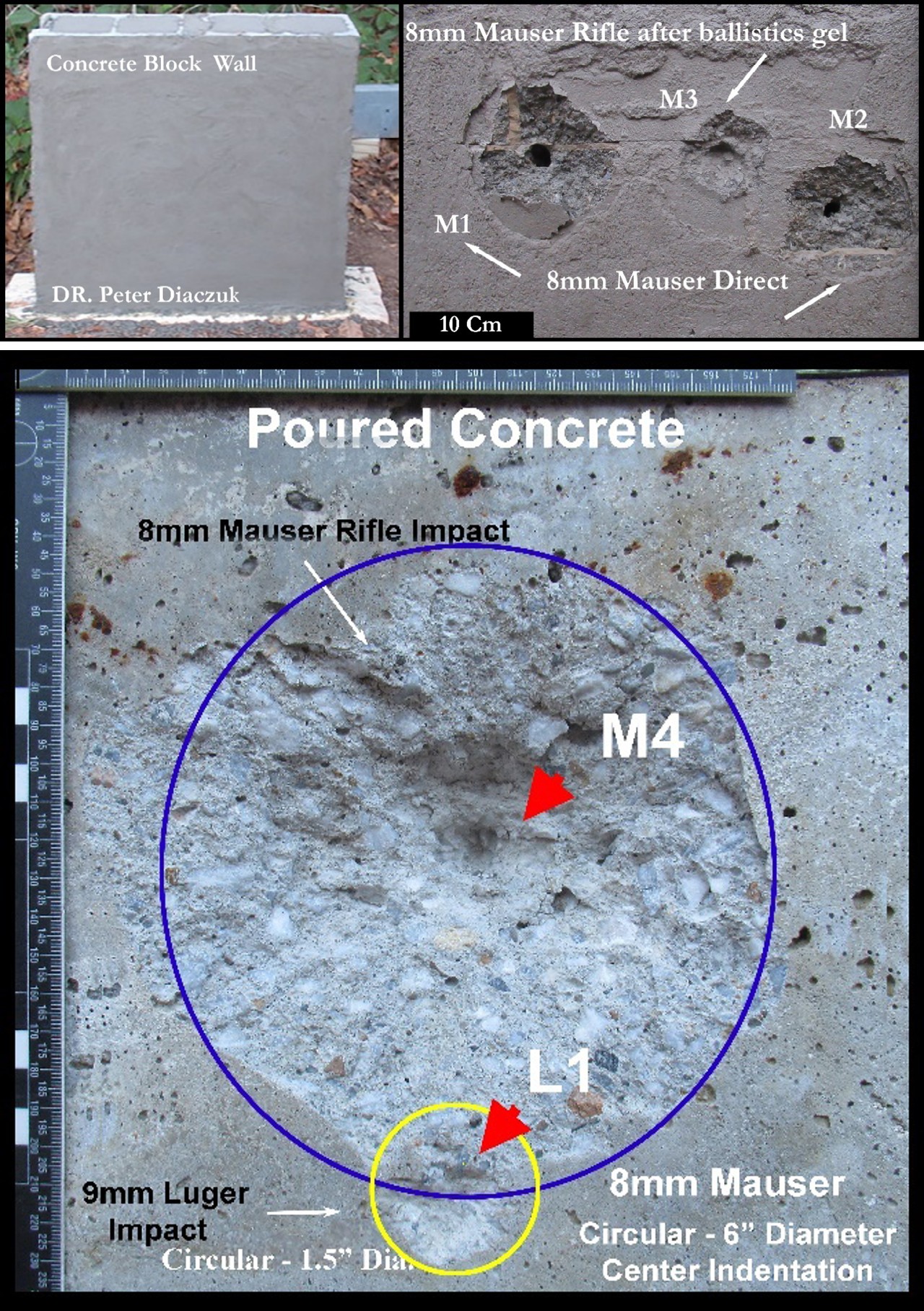
Figure 7a: Test Wall 1: On the Left, is a Concrete Block Wall (Coated with Rendering Mortar) into which Three 178 Gr Mauser Rifle 8mm Rounds were Fired from Forty Feet (40’). On the Right, M1 Designates The ≈5” Diameter, Inverted Cone Shaped, Circular Crater Produced by the First 8mm Rifle Round. On the Right, M2 Designates the ≈5” Diameter, Inverted Cone Shaped, Circular Crater Produced by the Second 8mm Rifle Round. In the Middle, M3 Designates the ≈3” Diameter, Inverted Cone Shaped, Circular Crater Produced by the Third 8mm Rifle Round which First Passed through a Block of Ballistics Gel (Perma- Gel™) Before Striking the Concrete Block Wall.
TW1: On the right, M1 designates the ≈5” diameter, inverted cone shaped, circular crater produced by the first 8mm Mauser rifle round. On the right, M2 designates the ≈5” diameter, inverted cone shaped, circular crater produced by the second 8mm rifle round. In the middle, M3 designates the ≈3” diameter, inverted cone shaped, circular crater produced by the third 8mm rifle round which first passed through a block of ballistics gel (Perma-Gel™) before striking the concrete block wall. The ballistics gel is designed to simulate the passage of a projectile through a human body (Figure 7a).
Figure 7b: Test Wall 2: A Poured Concrete Wall 2’ High X 1.5’ Wide X 1.0’ Thick Weighing ≈500 Lbs. Depicting Two Bics. In the Middle, M4 Designates, the ≈6” Diameter, Inverted Cone Shaped, Circular Crater Produced when a WWII German Mauser Rifle 178 Gr, 8mm Round Fired Directly into it From a Distance of 40’. On the Bottom, L1 Designates the ≈1.5” Diameter, Inverted Cone-Shaped, Circular Crater Produced when a WWII German Luger 9mm Pistol Round Fired Directly into the Wall from a Distance of 40’.
TW2: A poured concrete wall 2’ high x 1.5’ wide x 1.0’ thick weighing ≈500 lbs. depicting two BICs. In the middle, M4 designates, the ≈6” diameter, inverted cone shaped, circular crater produced when a WWII German Mauser rifle 178 gr, 8mm round fired directly into it from a distance of 40’. On the bottom, L1 designates the ≈1.5” diameter, inverted cone- shaped, circular crater produced when a WWII German Luger 9mm pistol round fired directly into the wall from a distance of 40’ (Figure 7b).
TW 3: A metamorphic, granite, gneiss rock slab coated with rendering mortar made with sand from the beach adjacent to FPS. Shown is M5, a BIC and its impact zone, present on the surface of the granite block created by an 8mm, 178 gr, Mauser rifle round fired from 40’ at a 90o angle directly through a block of ballistics gel before striking the granite block. The same direct shot without ballistics gel was made from 20’ with no apparent changes in the appearances of the second BIC (Figure 7c).
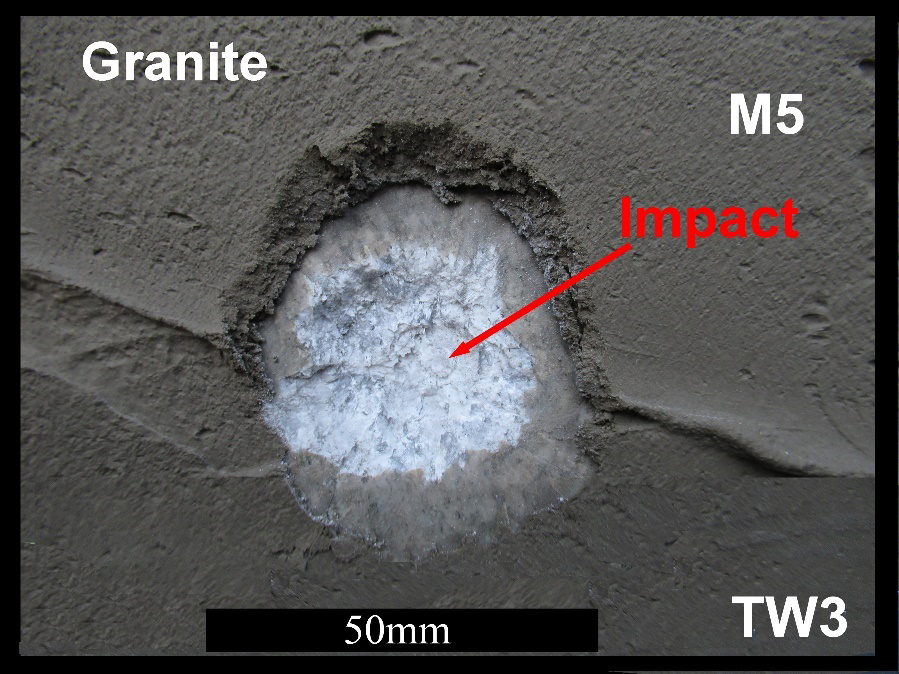
Figure 7c: Test Wall 3: A Granite Slab Coated with Rendering Mortar Made with Sand from the Beach Adjacent to FPS. Shown is a BIC, Present on the Surface of the Granite Block Created by an 8mm, 178 Gr, Mauser Rifle Round Fired from 40’ at a 90o Angle Directly through a Block of Ballistics Gel Before Striking the Granite Block.
Examination of Questioned Specimens on Mold
The questioned specimens Q1-Q9 collected from the silicone mold of SW-Q1 in FPS were examined macroscopically, as well as with wet chemistry reagents for lead and copper residues, all of these items were found to be of no value to this investigation. The metal fragments designated Q10 and Q11 were submitted for advanced instrumental analysis. Each metal fragment was consistent with originating from a lead projectile.
Discussion
Evaluation of the BICs and BIC Patterns on FPS Questioned Walls
The individual BICs present on the three questioned walls designated SW-Q1, SW-Q2, and SW-Q3 are all circular shaped, inverted cone structures, with a central impact zone radiating upwards towards the wall’s outer surface. The BICs vary in size and depth, with an average diameter of 1.5” to 6.0” inches as seen in Figure 3d, Figure 4, Figure 5b, Figures 8a-8b, and Figure 9. Based on the controlled experiments conducted using a WW2 Mauser and WW2 ammunition, the 6.0-inch impacts were more likely missed shots, perhaps in between the individuals standing in front of the wall, whereas the smaller size impacts, from 1.5 inches to just under 6 inches, were from bullets that first hit the individuals standing in front of the wall. This hypothesis was confirmed during the controlled experiments by the use of ballistic gelatin in front of the test walls. Combining the results of the controlled experiments and the pattern of the impact marks on the walls, the authors believe those walls were used for executions during the occupation.
The BIC patterns on the three questioned walls designated SW-Q1, SW-Q2, and SW-Q3 were each evaluated as follows. Two of the subject walls SW-Q1, and SW-Q2 were found to have recurring FSEWP previously described. Both walls contain a copious number of bullet impact craters (BICs), concentrated in their central region, arranged in a straight line, ≈7’ above each wall’s footing, running parallel to the wall’s base, thus meeting the criteria set forth in the authors’ hypothesis for the designation of FSEWP.
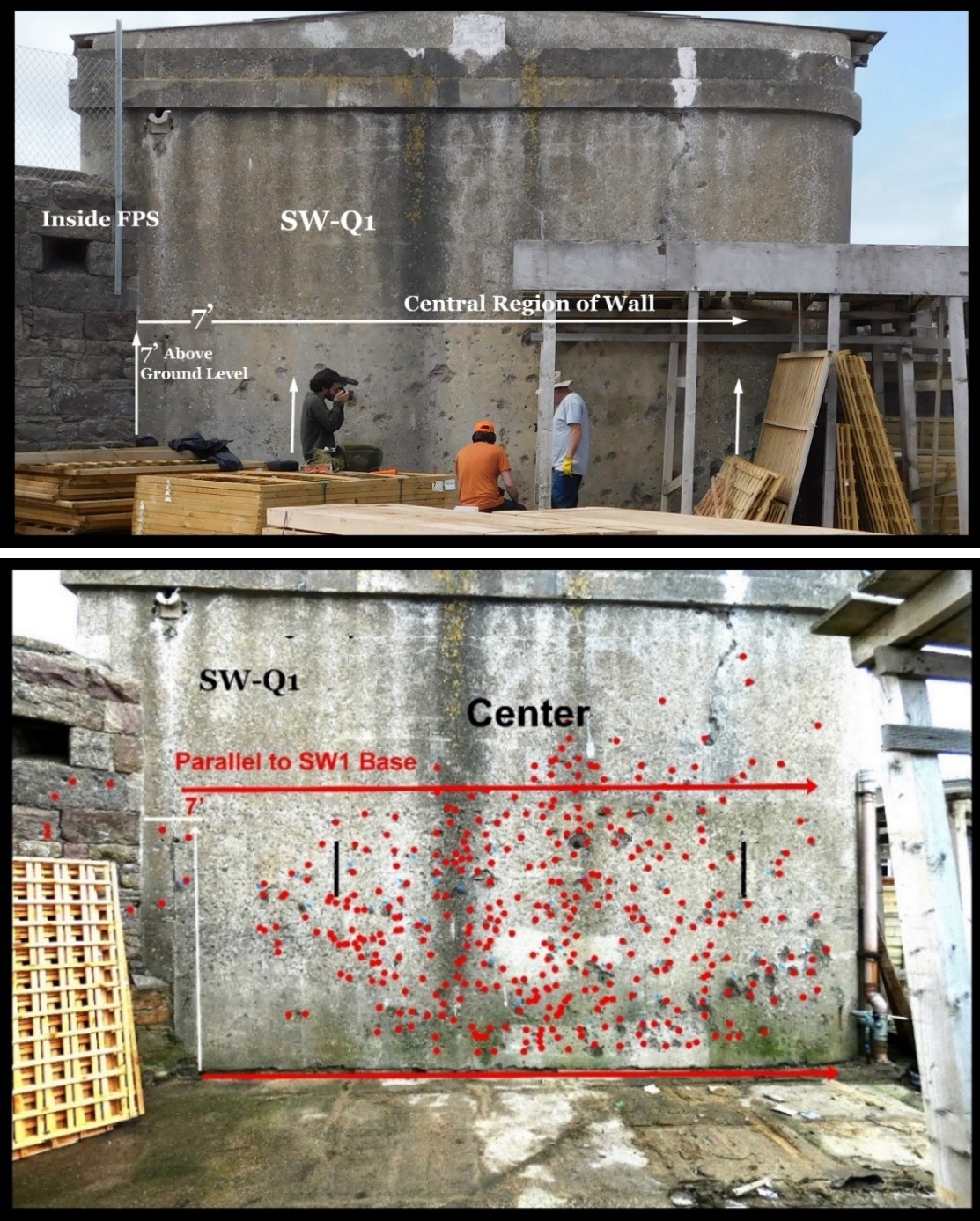
Figure 8a: A View of SW-Q1 Clearly Showing the Structured FSEWP of Bics Running Along the Wall Parallel to the Ground.
Figure 8b: A View of the Interior Wall SW-Q1 Photographed Before the Silicone Mold was Made. The Majority of BICS are Marked with a Red Dot. The FSEWP Present on SW-Q1 is Plainly Seen.
The questioned wall designated SW-Q3 also has a profuse quantity of BICs. However, SW-Q3 contains no recognizable pattern, all of the BICs are randomly distributed over the wall’s entire surface. Many of these BICs are oval, not round shaped, which denotes that the bullets struck the surfaces from above, and at an angle greater than 90o as seen in Figure 10. Bullets on a downward trajectory, after traveling a long distance, would leave such non-circular impact marks.
The FSEWP criteria used to differentiate the two different patterns observed during the examination were as follows: BIC sizes from 1.5 to 6 inches in diameter, all clustered between 3 to 5 feet with a few extending beyond down to 2 feet and as high as 6.5 feet.
Table summarizing BIC measurements
| Location | Bic Diameter | Bic Depth | Bic Distribution |
|---|---|---|---|
| SW-Q1 | From 1.5 To 6” | From 1 To 3” | Concentrated Between 3 To 5 Feet |
| SW-Q2 | From 1.5 To 6” | From 1 To 3” | Concentrated Between 3 To 5 Feet |
| SW-Q3 | From 4 To 5” | From 1.5 To 2” | Random Spacing From Footing To Top |
Table 1: Table Summarizing BIC Measurements.
Conclusion
The theory which hypothesized that a characteristic pattern of damage is produced on masonry walls, and other walled backdrops when a firing squad execution is conducted was thoroughly researched, assessed and tested. A review of the historical written and visual record which contains many books, articles, papers, and hundreds of artists’ illustrations, paintings, and photographs involving this topic was performed. Written records, modern videos, and images from the last five centuries as well as past and current official military procedures were carefully studied and analyzed. A distinctive pattern of ballistics damage produced by small arm firearms on the lower surfaces of these backdrops emerged from this research.
The distinctive recognizable pattern, designated as a Firing Squad Execution Wall Pattern (FSEWP) is formed on the surface of the backdrop used for FSEx by the accumulation of 1.5” to 6” circular shaped BICs over time. The BICs cluster together on the backdrops in a central area, along a straight line running parallel to the ground’s surface. The line is formed approximately 7’ above the ground, with most of the BICs being concentrated roughly 3’ to 5’ off the ground directly on the backdrop’s surface. In particular, masonry walls clearly exhibit this distinctive pattern of small arms ballistic damage.
Two of the questioned masonry walls composing Fort Plante Saline designated SW-Q1, and SW-Q2, display the characteristic small arms ballistics damage commonly seen at sites where FSEx are performed. Both subject walls SW-Q1 and SW-Q2 exhibit the theorized FSEWP: Numerous clusters of 1.5” to 6” circular shaped BICs, arranged in a straight line, about 7’ from ground level, running parallel to the ground, with most of the BICs concentrated 3’ to 5’ off the ground directly merged into the backdrop’s surface. Thus the authors of this research study believe that the small arms ballistics damage patterns present on SW-Q1 and SW-Q2 clearly indicates that firing squad executions were performed at these two secluded Fort Platte Saline locations.
The authors hope that this preliminary research study will foster the funding necessary to further study this forensically important topic. It is their wish that any grant funds are used to carry out LiDAR technology studies to create 3D models of the many still existing firing squad execution walls around the globe, and that the data collected during these studies be used to prove or disprove their hypothesis.
References
-
Petraco NP, De Forest PR (1990) Trajectory reconstructions. I: Trace evidence in flight. J Forensic Sci 35(6): 1284-1296.
-
Kubic TA, Diaczuk P (2008) Shooting investigation and scene reconstruction at Camp Kigali, Rwanda, Jan. U.N. Criminal Tribunal for Rwanda, Trial Chamber II.
-
Pantcheff T (1945) Report on the atrocities committed in 1942–1945, Report No. PWIS(H)/KP/702. The National Archives, United Kingdom.
-
Centre of Archaeology (n.d.) The “Lost” Pantcheff Report. Centre of Archaeology, United Kingdom.
-
Bessel R (2009) Germany 1945: From war to peace. Harper Collins, United Kingdom.
-
Bunting M (1995) The model occupation: The Channel Islands under German rule, 1940–1945. Harper Collins, United Kingdom.
-
Carr G, Colls CS (2016) Taboo and sensitive heritage: Labour camps, burials and the role of activism in the Channel Islands. Int J Herit Stud 22(9): 702-715.
-
Colls CS, Coll KS (2022) Adolf’s island: The Nazi occupation of Alderney Island. Manchester University Press, United Kingdom.
- Forensic Implications of Adverse Drug Reactions in Schizophrenia A Case Series
- Narcotics and Digital Forensics: Bridging Crimes in the Digital Age
- Ethics in Forensic Psychiatry: Principles, Dilemmas, and Human Rights
- Impact of Acute Stress on Attentional Orienting to Social Cues
- Head Injury and Intracranial Hemorrhage in Western Region of Libya
- A Forensic Study on Handedness: Examination of Handwriting Features in Right and Left Handed Writers