
Influence of Surface Material, Cleaning Frequency and Swab Type on Touch DNA Recovery from Entrance Door Handles: A Simulated Study
Touch DNA has become an increasingly valuable tool in forensic investigations, particularly in the absence of bodily fluids. However, its recovery is highly variable and influenced by multiple factors, including surface type, swabbing technique, and environmental conditions. Understanding how these variables interact is essential for optimizing evidence collection and interpreting complex DNA mixtures. This study systematically evaluated the effects of surface material (brass, stainless steel, plastic, wood), cleaning frequency (none, weekly, daily), swab type (IsoHelix® vs. rayon), and transfer mode (primary vs. secondary contact) on the quantity and composition of touch DNA recovered from door handles. A total of 240 samples were collected using a full factorial design. DNA was extracted, quantified, and profiled using standard forensic workflows, and statistical analyses were used to assess differences in yield and contributor dominance. IsoHelix® swabs consistently outperformed rayon swabs, recovering two to three times more DNA across all surfaces. Wood and plastic handles yielded significantly higher DNA quantities than metal handles, with brass showing the lowest recovery. Increased cleaning frequency substantially reduced DNA yield and elevated the presence of background or unknown contributors. Mixture analysis revealed that the last person to touch a handle was the major contributor in 74% of wood, 71% of plastic, 55% of stainless steel, and 49% of brass samples. Logistic regression confirmed surface material and cleaning regime as significant predictors of contributor dominance, while swab type had a stronger influence on DNA yield than on contributor attribution. Overall, touch DNA recovery is governed by a complex interplay of surface characteristics, sampling tools, and environmental history. While IsoHelix® swabs demonstrated superior performance for door handle sampling, their effectiveness may not generalize to all exhibit types. These findings highlight the importance of selecting context-appropriate swabbing methods, documenting surface hygiene history, and applying probabilistic frameworks when interpreting lowtemplate or mixed DNA profiles. The study provides practical guidance for forensic casework and contributes to the refinement of trace DNA sampling strategies.
Abbreviations
AUC: Area Under the ROC Curve; UV: Ultraviolet; OR: Odds Ratio.
Introduction
Touch DNA, often referred to as trace DNA, has become a critical source of forensic evidence and plays a pivotal role in linking individuals to criminal activity, particularly in the absence of bodily fluids [1, 2, 3, 4, 5, 6].
This form of DNA is typically deposited through casual or repeated contact with frequently handled objects such as clothing, tools, and door handles [2, 7, 8, 9]. It originates from biological material shed during contact, including keratinocytes, epithelial cells from sweat or saliva, and cell-free DNA present in sebum [2]. However, the low abundance—often measured in picograms per swab-and potential degradation of such traces make downstream DNA profiling challenging and susceptible to stochastic effects and allele dropout [2]. A major challenge in touch DNA analysis stems from the inherent variability in both the quantity and quality of recovered DNA. Several factors contribute to this, including the physicochemical characteristics of the surface substrate [10, 11], environmental conditions such as humidity and temperature [12, 13, 14], and inconsistency in sampling techniques [10, 11, 15, 16, 17, 18]. Additionally, variability in the choice and application of wetting agents, as well as the number of adhesive lifts used during sampling, further complicates recovery efficiency [19, 20, 21, 22, 23, 24, 25].
Beyond collection variability, differences in DNA extraction and quantification methodologies [2, 4, 12, 26, 27, 28, 29, 30], potential contamination, and inter-individual differences in DNA shedding rates add another layer of complexity to interpretation [31, 32, 33, 34, 35, 36, 37, 38]. Effective recovery is closely linked to the selection of appropriate collection tools. Studies have shown that swabbing tools-such as cotton, nylon, or synthetic swabs—and adhesive tapes must be matched to the surface type for optimal results [10, 11]. For example, smooth and non-porous materials like plastic or glass are more amenable to swabbing techniques [10, 20], whereas porous or fibrous surfaces such as fabric often require adhesive lifting to capture sufficient DNA [39, 40, 41, 42, 43, 44, 45].
In recent years, several innovations have emerged to address these limitations. Hybrid sampling approaches-such as pairing traditional cotton swabs with microFLOQ® swabs for direct amplification—and the use of microbial wet- vacuum systems or advanced decontamination agents have demonstrated promise in enhancing trace DNA recovery [23, 46]. These developments reflect a broader shift toward high-efficiency, adaptive sampling technologies in forensic science. Notably, the marked variability in DNA recovery across different surface types and environmental conditions highlights the need for context-specific sampling protocols tailored to the forensic environment [47, 48, 49, 50, 51, 52].
To remain effective in evolving forensic contexts, it is essential to align emerging casework practices with flexible, science-driven workflows. This reinforces the importance of integrating technological advancement with adaptable evidence collection strategies [53, 54, 55]. Traditional workflows—particularly those relying on silica column- based extraction—are susceptible to DNA loss, making them suboptimal for low-template or degraded samples [1, 56]. In response, direct amplification strategies that bypass extraction and quantification have gained traction for their ability to conserve material and streamline processing, especially when working with limited DNA quantities [17, 22, 57].
Another critical consideration is the mechanism of DNA transfer. While direct transfer occurs through physical contact with a surface, DNA can also be deposited indirectly through secondary or tertiary transfer events-such as after a handshake or via shared objects [58]. Distinguishing among these transfer modes is challenging, as DNA can persist on surfaces for extended periods, accumulate through repeated contact, or be partially removed by routine cleaning.
The type of surface plays a significant role in DNA recovery potential. Metallic surfaces, particularly brass, pose unique challenges: copper ions can accelerate DNA degradation, and the strong binding between DNA and metal ions can hinder elution, leading to reduced recovery even after multiple contacts [59].
Given the broad range of possible DNA transfer scenarios and the complexity introduced by surface and environmental factors, there is a growing consensus within the forensic science community on the need for further empirical research to support interpretation [60]. For example, in forensic investigations where determining the last individual to exit a scene is relevant-such as in residential burglaries- entrance door handles are often targeted for DNA sampling. However, regular contact by residents throughout the day may lead to dominant background DNA profiles that mask the most recent contributor. This challenges the assumption that the last person to touch a handle will necessarily be the major contributor in a DNA profile.
In light of these challenges, there is a clear need to integrate current knowledge on surface characteristics, cleaning frequency, swab materials, and DNA transfer mechanisms into a cohesive interpretive framework. This study addresses that gap by employing a simulated experimental model to systematically examine how these variables interact to affect both the quantity of DNA recovered and the composition of resulting mixtures on entrance door handles. The findings aim to improve sampling strategies and support more robust activity-level interpretations in trace DNA casework.
Materials and Methods
Materials
Door Handle Substrates: To model touch DNA deposition across real-world environments, four commonly encountered door-handle materials were selected: brass, stainless steel, plastic, and wood. These materials were sourced from commercial hardware suppliers and were selected based on consistent dimensions, including length, thickness, and curvature, to minimize variability in the contact area. Each handle was affixed to a laboratory-constructed mock door made of particleboard with a standardized finish. Uniform mounting procedures were used to ensure that contact pressure and grip angle were comparable across all test conditions.
Cleaning Agents and Regimes: Three cleaning regimens were implemented to reflect varying environmental hygiene conditions. The first regimen involved no cleaning at all, simulating neglected or rarely cleaned spaces. The second consisted of weekly cleaning, representative of typical household maintenance. The third involved daily cleaning, designed to mimic high-contact environments such as offices, hospitals, or public facilities.
Cleaning followed a consistent two-step protocol. Initially, a mild household soap solution was applied to each handle using a lint-free cloth to remove gross residue. This was followed by disinfection with 70% ethanol, a commonly used agent in forensic cleaning procedures. The ethanol was allowed to fully evaporate before any subsequent contact events. To validate the effectiveness of the cleaning process, post-cleaning swabs were taken from each handle. DNA extraction and quantification were performed on these samples to ensure that no detectable DNA was present before the start of each deposition cycle.
Swab Types: Two swab types were selected for DNA collection: IsoHelix® SK-2S synthetic swabs and traditional rayon swabs. The IsoHelix® swabs were pre-wetted with 100 μL of molecular-grade isopropanol using a calibrated micropipette, ensuring consistent saturation without over- wetting. Isopropanol was chosen for its demonstrated efficacy in facilitating DNA release from metallic surfaces. Rayon swabs were moistened with 100 μL of sterile distilled water delivered through a fine-mist spray bottle [24] and allowed to equilibrate before use to ensure even saturation.
Both swab types were handled with new gloves during each sampling event and kept individually packaged until use. To detect potential contamination, negative control swabs—pre-moistened but not used on any surface-were exposed to ambient laboratory conditions and processed alongside experimental samples.
Human DNA Deposition Sources: Volunteer participants with varying natural DNA shedding tendencies were recruited to provide biological deposition. To minimize variability, all participants were instructed not to wash their hands for one hour prior to each experiment and to refrain from physical activity that might alter shedding rates. Deposition was conducted using two distinct transfer scenarios. In the primary transfer condition, participants directly grasped the handle with a natural grip and moderate pressure for approximately 3-5 seconds. In the secondary transfer condition, two volunteers first shook hands for ten seconds; immediately afterward, one of them touched the handle to simulate indirect DNA transfer through interpersonal contact. Participants were instructed to avoid coughing, sneezing, or speaking near the handles during deposition to minimize aerosolized DNA contamination.
Experimental Design
Study Matrix: A full factorial design was employed to systematically evaluate the effects of surface material, cleaning regime, swab type, and transfer mode on DNA recovery. The experimental matrix included four handle materials (brass, stainless steel, plastic, and wood), three cleaning regimes (no cleaning, weekly, daily), two swab types (IsoHelix® and rayon), and two transfer modes (primary and secondary). Each unique condition was repeated five times, resulting in a total of 240 samples (4 × 3 × 2 × 2 × 5). The order of testing was randomized to prevent systematic bias. In addition to the experimental runs, negative controls were included for every combination of swab type and cleaning condition to monitor for contamination and procedural consistency.
Contact and Sampling Protocol: Participants were instructed to grasp the handle using a natural and consistent grip, applying pressure equivalent to that used when opening a door. Sampling was carried out immediately following contact. Each swab was applied across the contact area using two perpendicular passes while being rotated to ensure complete surface coverage and effective cellular uptake. The force and speed of swabbing were kept as consistent as possible across all replicates.
After sampling, swabs were placed into pre-labeled sterile collection tubes and transported to the laboratory for processing. Where immediate extraction was not feasible, samples were stored at 4 °C for no longer than 24 hours before analysis.
Sample Analysis
DNA Extraction and Quantification: Swab heads were transferred into 2 mL microcentrifuge tubes and lysed using a combination of lysis buffer and proteinase K from the PrepFiler Express™ kit. Samples were incubated at 56°C with agitation for 30 minutes to ensure complete cellular breakdown. DNA extraction was automated using the AutoMate Express™ instrument, and eluates were recovered in 50 μL of elution buffer and stored at −20°C until further analysis.
Quantification was performed using the Quantifiler® Trio DNA Quantification Kit on a QuantStudio 5 Real-Time PCR System. Each quantitation run included appropriate DNA standards, internal positive controls, and negative controls to monitor assay performance. DNA concentrations were recorded in nanograms per microliter (ng/μL), and total yield per swab was calculated accordingly.
DNA Amplification and Electrophoresis: Amplification of extracted DNA was conducted using the GlobalFiler™ PCR Amplification Kit on an ABI GeneAmp® 9700 thermocycler. Each 25 μL PCR reaction contained 1.0 μL of template DNA and underwent 29 thermal cycles optimized for low- template DNA recovery. Every batch included a positive control (2800M DNA) and a no-template negative control.
Amplified products were analyzed by capillary electrophoresis on an ABI 3500 Genetic Analyzer, using a 36 cm capillary array filled with POP-4™ polymer. Each injection consisted of 1.0 μL of PCR product mixed with 9.6 μL of Hi-Di™ Formamide and 0.4 μL of GeneScan™ 600 LIZ® Size Standard v2.0. Instrument injection parameters were set to 15 seconds at 1.2 kV. An allelic ladder was included in each run to ensure accurate sizing and allele calling.
Profile Analysis and Interpretation: Electropherograms were interpreted using GeneMapper® ID-X Software (v1.5). A validated analytical threshold of 75 RFU was applied to distinguish signal from background noise. Peaks below this threshold were excluded from analysis.
For mixed DNA profiles, probabilistic genotyping was performed using STRmix™ (v2.8.0). This software modeled complex mixtures to estimate the number of contributors, assess genotype probabilities, and compute likelihood ratios (LRs) under competing propositions. LRs were used to evaluate whether the last person to touch the handle could be considered the major contributor, supporting or refuting activity-level hypotheses.
Statistical Analysis Design
Descriptive and inferential statistics were used to analyze DNA yield data across all variables. Yield values were expressed as means, medians, standard deviations, and interquartile ranges. Due to the skewed distribution of touch DNA quantities, non-parametric statistical tests were employed. The Kruskal–Wallis test was used for multi- group comparisons, followed by Mann–Whitney U tests for pairwise post-hoc comparisons, with Bonferroni corrections applied to control for multiple testing.
A logistic regression model was constructed to predict the probability that the last individual to touch the handle was the major DNA contributor. Predictor variables included surface material, swab type, cleaning frequency, and transfer mode. The model’s performance was assessed using the area under the ROC curve (AUC) and standard goodness-of-fit indices.
Ethical Considerations
All procedures involving human participants were approved by an institutional ethics review board. Volunteers provided written informed consent after receiving clear explanations about the study objectives, sample handling procedures, and privacy protections. Personal identifiers were not recorded; instead, anonymized participant codes were used throughout the study.
Strict contamination control procedures were maintained at every stage. All consumables—including swabs, tubes, and pipette tips—were certified DNA-free. Laboratory surfaces and equipment were decontaminated using DNA-degrading agents and ultraviolet (UV) light between processing batches. Personnel wore clean lab coats, face masks, and changed gloves between each sample. Negative controls, including unused swabs and blank extraction tubes, were processed alongside experimental samples. Only those data sets in which all controls showed no detectable DNA were included in the final analysis, ensuring the validity and integrity of results.
Results
Swab Type and Surface Material Effects
Across the 240 collected samples, DNA yield was significantly influenced by both swab type and handle material. IsoHelix® swabs consistently outperformed rayon swabs on all surfaces. For example, on uncleaned wood, IsoHelix® recovered a mean of 3.52 ± 0.42 ng per swab, compared to 1.47 ± 0.31 ng for rayon. This performance gap was similarly observed on plastic (3.03 ± 0.35 ng for IsoHelix® vs. 1.17 ± 0.27 ng for rayon), stainless steel (2.56 ± 0.39 ng vs. 1.05 ± 0.28 ng), and brass (2.06 ± 0.37 ng vs. 0.81 ± 0.22 ng), as shown in Figure 1.
A Kruskal–Wallis test confirmed that swab type had a statistically significant effect on DNA yield (H = 27.4, df = 1, p = 0.0001). Further analysis showed that surface material also had a significant influence (H = 30.8, df = 3, p < 0.0001), with wood and plastic producing higher yields than stainless steel or brass.
Post hoc comparisons using the Mann–Whitney U test (Bonferroni corrected) revealed that IsoHelix® swabs significantly outperformed rayon swabs on all surface types (p < 0.01 for all comparisons). Among the IsoHelix® samples, wood yielded significantly more DNA than both brass (U = 42.5, p = 0.002) and stainless steel (U = 46.0, p = 0.004), while plastic and wood did not differ significantly (U = 52.0, p = 0.09). No significant difference was found between brass and stainless steel for IsoHelix® (U = 60.0, p = 0.34).
For rayon swabs, DNA yields from wood and plastic surfaces were not statistically different (U = 55.0, p = 0.15), but both materials yielded significantly more DNA than brass and stainless steel (p < 0.01 for all comparisons).
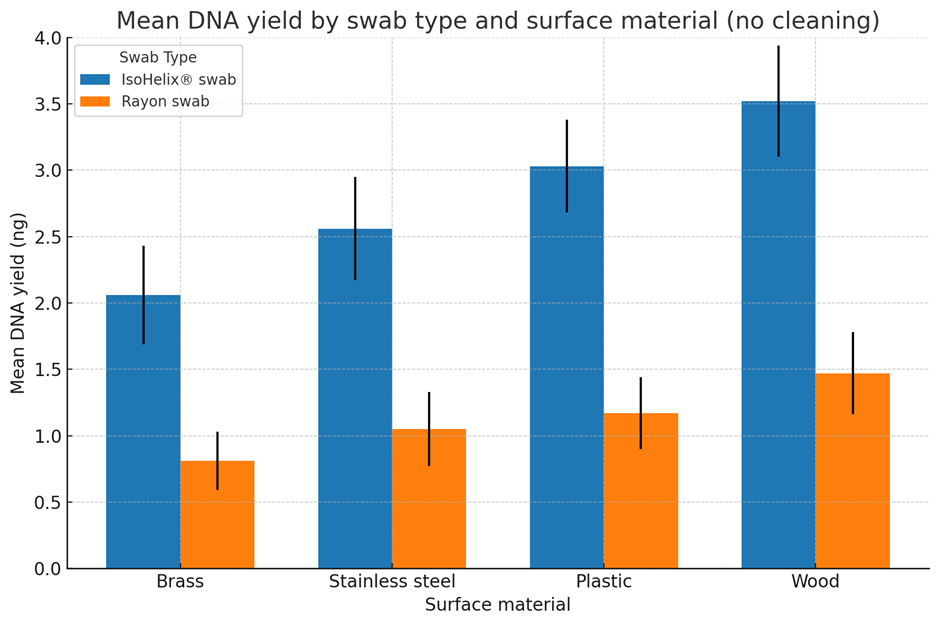
Figure 1: Mean DNA Yield (Ng) by Swab Type and Surface Material Under no Cleaning Conditions. This Bar Chart Displays the Mean DNA Yield Recovered from Uncleaned Door Handles Using Two Swab Types: Isohelix® (Blue) and Rayon (Orange), Across Four Substrate Materials-Brass, Stainless Steel, Plastic, and Wood. Error Bars Indicate ±1 Standard Deviation. Isohelix® Swabs Significantly Outperformed Rayon Swabs Across All Materials (P < 0.01, Mann–Whitney U Tests, Bonferroni Corrected). Mean DNA Yields for Isohelix® Ranged from 2.06 Ng On Brass To 3.52 Ng on Wood, While Rayon Swabs Yielded between 0.81 Ng and 1.47 Ng. Surface Material also Influenced Recovery: Wood and Plastic Produced Significantly Higher Yields than Brass and Stainless Steel (P < 0.01, Kruskal–Wallis and Post Hoc Tests). These Findings Confirm that Both Swab Type and Surface Characteristics Critically Impact DNA Recovery Under Low-Touch Environmental Conditions.
Influence of Cleaning Frequency
Cleaning frequency had a marked effect on DNA recovery across both swab types, as illustrated in Figure 2. When no cleaning was performed, IsoHelix® swabs recovered a mean of 2.80 ± 0.50 ng per swab, while rayon swabs yielded 1.13 ± 0.28 ng. Weekly cleaning reduced yields by approximately 25% (IsoHelix®: 2.07 ± 0.45 ng; rayon: 0.81 ± 0.23 ng), and daily cleaning further halved DNA recovery (IsoHelix®: 1.41 ± 0.33 ng; rayon: 0.54 ± 0.18 ng).
The effect of cleaning regimen on DNA yield was statistically significant for both swab types. For IsoHelix®, the Kruskal–Wallis test yielded H = 22.9 (df = 2, p < 0.0001), and for rayon, H = 18.5 (df = 2, p = 0.0001). Post hoc comparisons showed that DNA yields following no cleaning were significantly higher than yields after weekly or daily cleaning for both swab types (all p < 0.01). Additionally, weekly cleaning still resulted in significantly higher yields than daily cleaning (IsoHelix®: U = 48.0, p = 0.007; rayon: U = 50.0, p = 0.011).
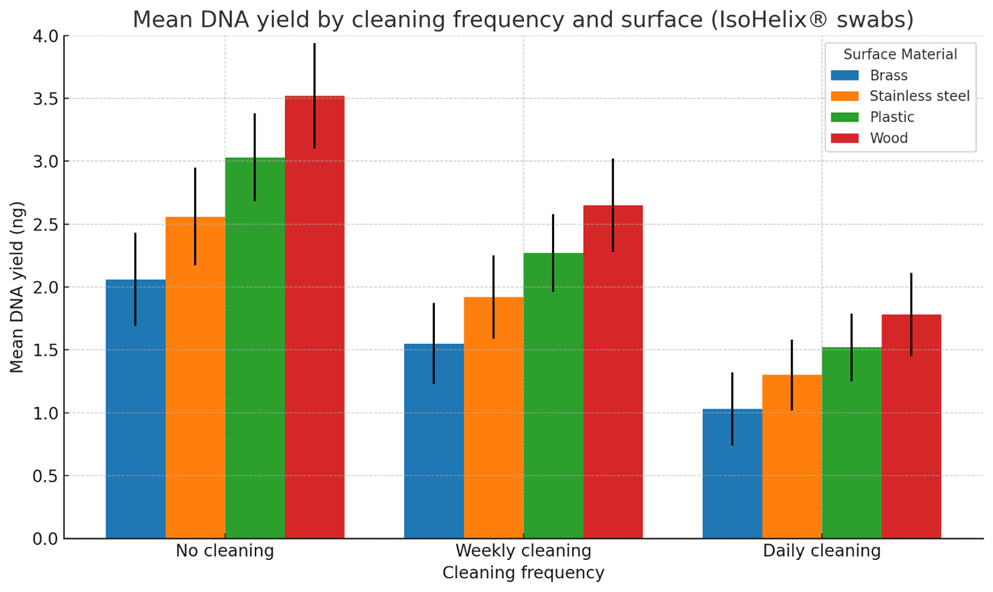
Figure 2: Mean DNA Yields Recovered Using Isohelix® Swabs from Four Door-Handle Materials-Brass, Stainless Steel, Plastic, and Wood-Under Three Cleaning Regimes (no Cleaning, Weekly Cleaning, and Daily Cleaning). Without Cleaning, Wood and Plastic Yielded the Highest DNA Quantities (3.52 Ng and 3.03 Ng, Respectively), While Brass Yielded the Least (2.06 Ng). Weekly Cleaning Reduced Yields by Approximately 25%, and Daily Cleaning Halved them Across all Surfaces. Despite the Reduction, Wood and Plastic Consistently Outperformed Metal Substrates. A Kruskal–Wallis Test Confirmed a Significant Effect of Cleaning Frequency on DNA Recovery (H = 22.9, Df = 2, P < 0.0001), and Bonferroni-Corrected Post Hoc Comparisons Revealed Significant Differences between all Cleaning Levels (All P < 0.01). These Findings Highlight the Strong Influence of Environmental Hygiene Practices on the Efficacy of Touch DNA Recovery from Common Surface Materials.
Mixture Composition and Contributor Attribution
Analysis of STR profiles indicated that the probability of the last person to touch the handle being the major DNA contributor varied significantly depending on surface material and cleaning regimen (Figure 3). Wooden handles yielded the highest proportion of last-contact dominance, with 74% of profiles (95% CI: 65–83%) showing the most recent contact as the major contributor. Contributions from previous occupants were present in 21% of samples, while unknown contributors were detected in 5%.
Plastic surfaces showed similar trends, with last-contact dominance observed in 71% of profiles (95% CI: 62–80%). In contrast, stainless steel and brass yielded considerably lower rates of last-touch dominance: 55% (95% CI: 44–66%) and 49% (95% CI: 39–59%), respectively. On these metal surfaces, previous and unknown contributors accounted for a larger proportion of the DNA profiles.
A chi-square test revealed a statistically significant association between handle material and the composition of contributor profiles (χ² = 18.1, df = 6, p = 0.006), indicating that substrate type plays a crucial role in determining which individual dominates a recovered DNA mixture.
To further investigate these patterns, a logistic regression model was constructed to assess the probability that the last person to touch a handle was the major DNA contributor. The model included surface material, cleaning frequency, swab type, and transfer mode as independent variables. Overall, the model explained 42% of the variance (Nagelkerke R² = 0.42) and demonstrated good predictive performance with an area under the ROC curve (AUC) of 0.81.
Several predictors were found to be statistically significant. Surface material, dichotomized as metal vs. non- metal, emerged as a strong predictor (odds ratio [OR] = 0.32, 95% CI: 0.20–0.51, p < 0.001), indicating that metal handles substantially reduced the likelihood of last-contact dominance. Cleaning frequency also had a significant effect, with each increase in cleaning frequency reducing the odds of last-contact dominance (OR = 0.71, 95% CI: 0.55–0.92, p = 0.01). Swab type, though having a clear effect on yield, showed a modest but statistically non-significant effect on contributor dominance (OR = 1.26, 95% CI: 0.92–1.74, p = 0.15) after controlling for other variables.
These findings collectively indicate that both surface material and cleaning practices significantly influence the likelihood that the last individual to touch a handle will be the major contributor in a touch DNA profile. While swab type plays a more substantial role in the quantity of DNA recovered, it has a lesser-though not negligible-impact on mixture composition.
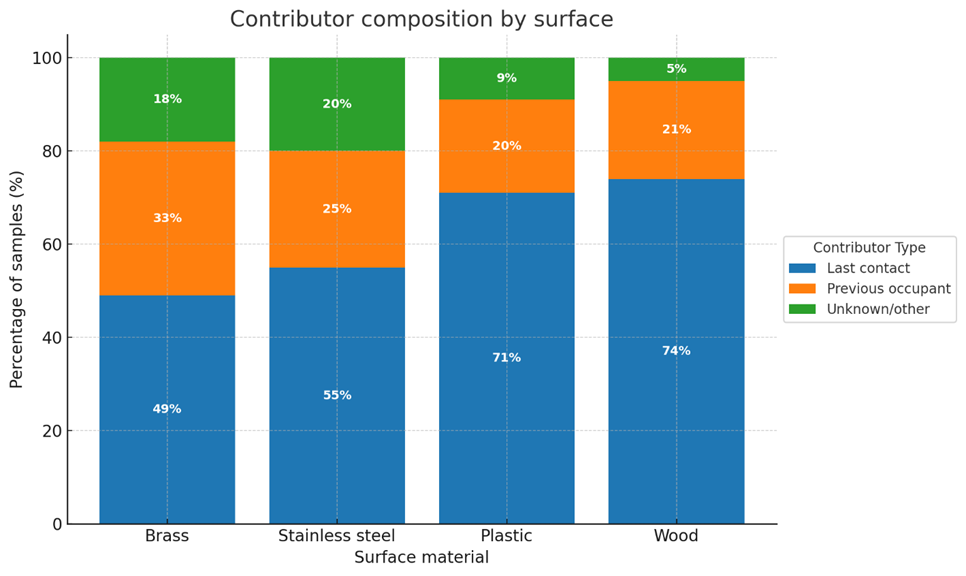
Figure 3: Stacked Bar Chart Showing the Contributor Composition of DNA Profiles Recovered from Four Different Door-Handle Materials-Brass, Stainless Steel, Plastic, and Wood. Each Bar Represents 100% of Samples for that Surface and is Segmented by the Identity of the Major DNA Contributor: Last Contact (Blue), Previous Occupant (Orange), Or Unknown/Other Contributors (Green). The Dominance of Last-Touch DNA Varied Significantly by Material, with Wood and Plastic Handles Yielding Last- Contact Major Contributors in 74% And 71% of Samples, Respectively, While Brass and Stainless Steel Showed Reduced Last- Contact Dominance (49% and 55%, Respectively) and Increased Contributions from Prior Handlers and Unknown Sources. A Chi-Square Test Confirmed a Significant Association Between Surface Material and Contributor Composition (Χ² = 18.1, Df = 6, P = 0.006). These Results Suggest that Surface Type Plays a Key Role in the Temporal Resolution of Touch DNA, with Porous or Textured Materials Favoring Recovery from the Most Recent Contact, While Metallic Surfaces Retain More Complex or Persistent Mixtures.
Discussion
Overview and Context
This study provides new evidence on the influence of surface material, swab type, and cleaning frequency on the recovery of touch DNA from door handles. It reinforces and extends previous findings by demonstrating that environmental and sampling variables interact in complex ways to affect both the quantity and quality of recovered DNA profiles. The findings are particularly relevant for forensic scenarios involving high-contact objects like door handles, where the source, persistence, and composition of DNA profiles can be easily misunderstood or misinterpreted.
Influence of Surface Material
As consistently reported in the literature, surface composition plays a pivotal role in DNA recovery. In our study, metal handles-especially brass and stainless steel-yielded significantly less DNA than plastic or wood. This finding is consistent with the hypothesis that metal substrates promote accelerated DNA degradation through oxidative stress and nuclease activity, particularly in copper-containing alloys such as brass [61]. These surfaces also exhibit stronger DNA– metal binding, which can reduce the effectiveness of elution buffers. In contrast, plastic and wood surfaces, with their greater roughness and porosity, provide microenvironments that better retain epithelial cells and shield them from rapid desiccation, resulting in enhanced DNA persistence. The elevated recovery from these substrates echoes earlier work showing higher DNA yields from porous materials, which offer greater surface area for cellular adhesion and trap DNA more effectively [61].
Swab Type: IsoHelix™ vs. Rayon
Swab composition was another key determinant of DNA recovery efficiency. IsoHelix™ swabs, composed of a non-woven synthetic matrix and pre-moistened with isopropanol, consistently outperformed rayon swabs in our experiments across all tested surfaces. Their open fiber structure and larger tip size allow for enhanced collection and release of cellular material. The isopropanol wetting agent likely improves recovery by disrupting hydrogen bonds and solubilizing surface-bound salts, particularly on metal substrates.
These findings align with previous work demonstrating that IsoHelix™ swabs recovered significantly more DNA (0.5–3.3 ng) from metal surfaces than rayon swabs moistened with water (0.13–1.2 ng), with the difference reaching statistical significance (p = 0.04) [59]. However, while IsoHelix™ swabs clearly demonstrated superior performance in this study, it is important to note that our comparison was conducted solely on door handles—a relatively large and smooth substrate. The larger surface area of IsoHelix™ swab heads may have conferred a mechanical advantage in this context, enhancing surface coverage and biological collection.
When swabs are applied to smaller, confined, or textured substrates (e.g., fingernails, tools, jewelry), rayon or other smaller-tipped swabs might perform comparably or even better. This substrate- and context-dependency is echoed in recent systematic reviews. A comprehensive analysis of swab types across various substrates found that performance varied widely depending on the combination of swab material, DNA source, and surface characteristics [62]. While synthetic and flocked swabs often outperform traditional cotton or rayon on nonporous substrates, foam swabs may yield better results on rougher or absorbent surfaces like wood. Moreover, swabs made from the same material but different manufacturers can behave differently, emphasizing the need for standardized evaluation protocols and evidence- based swab selection [62].
Taken together, these results suggest that forensic practitioners should avoid one-size-fits-all approaches to swab choice and instead tailor their sampling strategy to the specific context of each case.
Effects of Cleaning Frequency
Cleaning frequency was found to have a strong negative effect on DNA recovery. Surfaces cleaned daily yielded approximately 50% less DNA than uncleaned surfaces. This finding aligns with previous observations that frequent disinfection-particularly during the COVID-19 pandemic— reduced the amount of recoverable touch DNA from public and office surfaces [59]. Ethanol, a commonly used disinfectant, not only removes loosely adhered cells but also degrades residual cell-free DNA, thereby reducing the quantity of recoverable genetic material.
Moreover, cleaning also affects the qualitative composition of DNA profiles. As our results show, increased cleaning reduced the dominance of the most recent handler and increased the relative contributions from background or unknown contributors. This suggests that cleaning introduces both biological and interpretive complexity, especially in high-contact environments. In practical forensic settings, the collection and documentation of cleaning history may provide crucial context when interpreting low-template or partial profiles, especially in cases where activity-level assessments are critical.
Mixture Composition and Last-Touch Attribution
Our mixture composition analyses revealed that on non- metal surfaces such as wood and plastic, the last person to touch the handle was the major contributor in over 70% of cases. However, this dominance dropped to 55% for stainless steel and just 49% for brass. These findings are in agreement with studies showing that DNA profiles on high-contact surfaces often reflect habitual users more than recent handlers [63]. In a controlled office simulation, the primary occupant remained the dominant DNA contributor in nearly 80% of samples, even when intruders had documented direct contact with objects in the space [63].
This challenges the common forensic assumption that the major DNA profile always corresponds to the most recent contact. Secondary transfer, DNA persistence, and individual variability in shedding all play important roles in the final profile composition. These dynamics suggest the need for probabilistic modeling and activity-level interpretation in forensic casework involving touch DNA.
Real-World Investigations: Door Handle Casework
The forensic relevance of these findings is underscored by real-world data. In a study of 52 burglary investigations, researchers examined DNA profiles collected from the inside door handles of residential properties [61]. They found that only 63% of interpretable profiles matched the last known person to touch the handle, while 23% matched other inhabitants and 15% matched unknown individuals— possibly visitors or intruders. Notably, across 70 sampled residents, DNA from approximately 100 individuals was detected, suggesting a high level of background or indirect transfer. These results emphasize the difficulty of establishing contributor identity on shared, high-touch items and the risk of over-interpreting “last touch” assumptions without proper contextual data.
Transfer Mechanisms and Interpretation Challenges
The broader challenge of understanding DNA transfer pathways-primary, secondary, or tertiary-continues to pose difficulties for forensic science. As highlighted in a recent review, there is still no standardized framework for interpreting the likelihood of various transfer scenarios [60]. As a result, expert assessments may be based on subjective probability rather than a robust empirical foundation. Studies like ours are essential for filling these knowledge gaps by quantifying the effects of key environmental and procedural variables under controlled, yet realistic, conditions.
To advance the field, future research must go beyond surface-level DNA quantification and explore dynamic models of transfer, persistence, and mixture formation. Incorporating such data into probabilistic genotyping systems and activity-level propositions will enhance the interpretive power of forensic DNA analysis, especially in cases involving low-template or complex mixtures.
Limitations and Future Research
While this study provides robust and practical insights into the influence of surface material, swab type, and cleaning frequency on touch DNA recovery, several limitations should be noted. First, only two swab types were tested. Although IsoHelix™ and rayon swabs represent commonly used materials, other promising tools-such as nylon flocked swabs, foam applicators, adhesive tapes, and micro-vacuum devices-were not included. Future studies should expand the range of collection methods to evaluate their performance across diverse substrates.
Second, all sampling was performed under controlled laboratory conditions. While this ensured experimental consistency, real-world environments introduce additional variables such as fluctuating humidity, surface contamination, and uncontrolled human behavior that can influence DNA transfer and persistence. Validation of findings in operational or field settings would enhance their applicability.
Third, although the study captured variation in surface type and contact mode, it did not systematically account for donor variability, such as differences in DNA shedding rates, hand condition, or frequency of contact. These factors are known to affect DNA deposition and may influence results in practical scenarios.
Finally, the study focused on total DNA yield and contributor composition but did not evaluate the interaction between swab material and DNA extraction or amplification chemistries. Further work is needed to explore how different combinations of swabs, extraction kits, and wetting agents influence downstream yield and profile quality.
Future research should address these gaps by comparing a broader array of sampling tools, evaluating transfer under real-life conditions, and expanding activity- level experiments to include more volunteers and contact scenarios. Longitudinal sampling of commonly touched surfaces in public and residential spaces could also help establish realistic background DNA levels and improve the interpretation of touch DNA evidence in complex cases.
Conclusion
This study demonstrates that the recovery and interpretation of touch DNA from door handles are strongly influenced by the interplay between surface material, swab type, and cleaning frequency. IsoHelix® swabs significantly outperformed rayon swabs in terms of DNA yield across all surfaces, particularly on wood and plastic substrates. Metal handles, especially brass, yielded the lowest DNA quantities—consistent with known challenges related to DNA degradation and binding on metallic surfaces. Regular cleaning further reduced DNA recovery and altered mixture composition, decreasing the likelihood that the most recent handler was the major contributor.
These findings reinforce the importance of using high- efficiency swabbing tools, tailoring sampling strategies to the substrate, and considering surface hygiene history during interpretation. Although IsoHelix® swabs proved highly effective in this context, their performance advantage may be partially attributable to their larger head size, and may not generalize to smaller or more complex exhibit types. As such, swab selection should remain context-dependent and informed by empirical evidence.
The study highlights the limitations of assuming that the last individual to touch an object will be the major DNA contributor and supports the use of probabilistic interpretation frameworks when evaluating touch DNA
evidence. As forensic DNA analysis continues to increase in sensitivity, rigorous evaluation of collection methods, transfer mechanisms, and contributor dynamics will be essential. This work offers practical guidance for forensic practitioners and lays a foundation for further research to improve the reliability and evidential value of touch DNA in real-world casework.
Acknowledgements
The authors thank the Biology and DNA Section of the General Department of Forensic Science and Criminology, Dubai Police, for their technical support and collaboration. Appreciation is also extended to the School of Law and Policing at the University of Lancashire for their academic input. This research was made possible through the efforts of volunteer participants and the institutional backing of both organizations, underscoring the importance of interdisciplinary cooperation in forensic science.
Conflict of Interest
The authors declare no financial or personal conflicts that could have influenced any aspect of this study. All research activities were carried out independently to ensure objectivity and maintain the integrity of the findings.
Ethics Statement
The study received ethical approval from the General Department of Forensic Science and Criminology, Dubai Police. All participants provided informed consent, and procedures followed international guidelines for ethical research, including the handling of biological materials, confidentiality, and data protection.
Author Contributions
S.K.A. conceived and designed the study, coordinated the experimental work, carried out the forensic DNA analyses, performed statistical analysis, and led the writing and finalization of the manuscript. V.S.S. and P.A.S. contributed to sample collection, laboratory procedures, and provided critical input during data interpretation and manuscript revision. All authors reviewed and approved the final version of the manuscript and take full responsibility for its content.
Data Availability Statement
Not applicable.
Funding
This research received no external funding.
References
-
Alketbi SK (2018) The affecting factors of touch DNA. J Forensic Res 9(3): 424.
-
Alketbi SK (2023) Analysis of Touch DNA. Doctoral thesis, University of Central Lancashire, UK.
-
Burrill J, Daniel B, Frascione N (2019) A review of trace “Touch DNA” deposits: Variability factors and an exploration of cellular composition. Forensic Sci Int Genet 39: 8-18.
-
Alketbi SK (2023) The role of DNA in forensic science: A comprehensive review. Int J Sci Res Arch 9(2): 814-829.
-
Recipon M, Agniel R, Kunemann P, Ponche A, Carreiras F, et al. (2024) Detection of invisible biological traces in relation to the physicochemical properties of substrate surfaces in forensic casework. Sci Rep 14: 13271.
-
Alketbi SK (2024) Emerging technologies in forensic DNA analysis. Perspect Legal Forensic Sci 1(1): 10007.
-
Pfeifer CM, Wiegand P (2017) Persistence of touch DNA on burglary-related tools. Int J Legal Med 131: 941-953.
-
Alketbi SK (2020) Collection of Touch DNA from rotten banana skin. Int J Forensic Sci 5(4): 000204.
-
Daly DJ, Murphy C, McDermott SD (2012) The transfer of touch DNA from hands to glass, fabric, and wood. Forensic Sci Int Genet 6(1): 41-46.
-
Alketbi SK, Goodwin W (2019) The effect of surface type, collection, and extraction methods on touch DNA. Forensic Sci Int Genet Suppl Ser 7(1): 704-706.
-
Verdon TJ, Mitchell RJ, Van Oorschot RAH (2014) Swabs as DNA collection devices for sampling different biological materials from different substrates. J Forensic Sci 59(4): 1080-1089.
-
Alketbi SK, Goodwin W (2019) The effect of sandy surfaces on Touch DNA. J Forensic Legal Investig Sci 5: 034.
-
Martin B, Kaesler T, Kirkbride KP, Linacre A (2022) The influences of dusty environments on the STR typing success of post-detonation touch DNA samples. Forensic Sci Int Genet 57: 102651.
-
Alketbi SK, Goodwin W (2019) The effect of time and environmental conditions on Touch DNA. Forensic Sci Int Genet Suppl Ser 7(1): 701-703.
-
Comte L, Manzanera M (2019) Touch DNA collection- Performance of four different swabs. Forensic Sci Int Genet 43: 102113.
-
Alketbi SK, Goodwin W (2025) Enhancing trace DNA recovery from disposable face masks: Insights from the COVID-19 era and beyond. Int J Legal Med.
-
Alketbi SK, Goodwin W (2023) Collection methods for Touch DNA direct amplification. J Forensic Legal Investig Sci 9: 072.
-
Tozzo P, Mazzobel E, Marcante B, Delicati A, Caenazzo L (2022) Touch DNA sampling methods: Efficacy evaluation and systematic review. Int J Mol Sci 23(24): 15541.
-
Alketbi SK, Goodwin W (2019) Validating Touch DNA collection techniques using cotton swabs. J Forensic Res 10: 445.
-
Alketbi SK, Goodwin W (2021) Touch DNA collection techniques for non-porous surfaces using cotton and nylon swabs. J Sci Tech Res 36(3): 28608-28612.
-
Aloraer D, Hassan NH, Albarzinji B, Goodwin W (2017) Improving recovery and stability of touch DNA. Forensic Sci Int Genet Suppl Ser 6: e390-e392.
-
Alketbi SK (2022) An innovative solution to collect Touch DNA for direct amplification. J Forensic Sci Crim Invest 16(1): 555928.
-
Schulte J, Rittiner N, Seiberle I, Kron S, Schulz I (2023) Collecting touch DNA from glass surfaces using different sampling solutions and volumes: Immediate and storage effects on genetic STR analysis. J Forensic Sci 68(4): 1133-1147.
-
Alketbi SK (2023) Collection techniques of touch DNA deposited on human skin following a strangulation scenario. Int J Legal Med 137: 1347–1352.
-
Alketbi SK, Carta L (2025) Uncovering the persistence of touch DNA on human skin and its implications for violent crime investigations. World J Biol Pharm Health Sci 21(03): 234-244.
-
Nimbkar PH, Bhatt VD (2022) A review on touch DNA collection, extraction, amplification, analysis, and determination of phenotype. Forensic Sci Int 336: 111352.
-
Francisco DO, Lopez LF, Gonçalves FT, Fridman C (2020) Casework direct kit as an alternative extraction method to enhance touch DNA samples analysis. Forensic Sci Int Genet 47: 102307.
-
Alketbi SK, Goodwin W, Alghanim HJ, Sanqoor SH, Alshehhi SA, et al. (2025) Comparing extraction and direct amplification methods for enhanced Touch DNA profiling. 30th Congress of the International Society for Forensic Genetics, Universidade de Santiago de Compostela, pp: 1035-1042.
-
Aljanahi NS, Alketbi SK, Almheiri MM, Alshehhi SA, Sanqoor AN, et al. (2025) Enhancing trace DNA profile recovery in forensic casework using the amplicon RX post-PCR clean-up kit. Sci Rep 15: 3324.
-
Alketbi SK (2023) An evaluation of the performance of two quantification methods for trace DNA casework samples. J Forensic Sci Crim Invest 16(5): 555950.
-
Alketbi SK (2023) Maintaining the chain of custody: Anti-contamination measures for trace DNA evidence. Int J Sci Res Arch 8(2): 457-461.
-
Ballantyne KN, Salemi R, Guarino F, Pearson JR, Garlepp D, et al. (2015) DNA contamination minimisation-finding an effective cleaning method. Aust J Forensic Sci 47(4): 428-439.
-
Alketbi SK (2024) Preventing DNA contamination in forensic laboratories: An illustrated review of best practices. Am J Biomed Sci Res 24(1): 7-16.
-
Alketbi SK (2024) DNA contamination in crime scene investigations: Common errors, best practices, and insights from a survey study. Biomed J Sci Tech Res 58(5): 50970-50982.
-
Basset P, Castella V (2019) Positive impact of DNA contamination minimization procedures taken within the laboratory. Forensic Sci Int Genet 38: 232-235.
-
Alketbi SK, Carta L (2025) Safeguarding DNA integrity: The critical role of PPE in preventing contamination in forensic laboratories. J Forensic Sci Crim Invest 19(2): 556010.
-
Alketbi SK, Goodwin W (2024) Temporal assessment of DNA shedding from human hands after handwashing: Implications for touch DNA recovery. Biomed J Sci Tech Res 59(5): 51977-51985.
-
Szkuta B, Ballantyne KN, Van Oorschot RAH (2017) Transfer and persistence of DNA on the hands and the influence of activities performed. Forensic Sci Int Genet 28: 10-20.
-
Alketbi SK (2022) The impact of collection method on Touch DNA collected from fabric. J Forensic Sci Crim Invest 15(5): 555922.
-
Alketbi SK, Goodwin W (2022) The impact of deposition area and time on Touch DNA collected from fabric. Forensic Sci Int Genet Suppl Ser 8(1): 45-47.
-
Verdon TJ, Mitchell RJ, Van Oorschot RAH (2014) Evaluation of tapelifting as a collection method for touch DNA. Forensic Sci Int Genet 8(1): 179-186.
-
Alketbi SK, Goodwin W (2022) The impact of area size and fabric type on Touch DNA collected from fabric. J Forensic Sci Crim Invest 16(1): 555926.
-
Kanokwongnuwut P, Kirkbride KP, Linacre A (2020) An assessment of tape-lifts. Forensic Sci Int Genet 47: 102292.
-
Alketbi SK, Alsoofi S (2022) Dual recovery of DNA and fingerprints using minitapes. J Forensic Sci Crim Invest 16(1): 555929.
-
Alketbi SK, Goodwin W (2025) Evaluating the impact of sandy surface contamination on trace DNA recovery from wearable fabrics: A comparative study of collection methods and extraction kits. World J Adv Res Rev 26(03): 2399-2410.
-
Blackmore L, Cabral de Almada CH, Poulsen F, Prasad E, Kotzander J, et al. (2024) Evaluation of the microbial wet-vacuum system (M-Vac®) for DNA sampling from rough, porous substrates, and its compatibility with fully automated platforms. Forensic Sci Int 361: 112233.
-
Radgen-Morvant I, Curty C, Kummer N, Delémont O (2024) Effects of chemical and biological warfare agent decontaminants on trace survival: Impact on DNA profiling from blood and saliva. Forensic Sci Int 364: 112206.
-
Zaarour L, Padula M, Van Oorschot RAH, McNevin D (2025) Mass spectrometry-based proteomics for source- level attribution after DNA extraction. Forensic Sci Int Genet 74: 103168.
-
Khan AA, Alketbi SK (2025) Integrating DNA and chemical profiling to trace illicit drug manufacture and distribution. Perspect Legal Forensic Sci 2(2): 10009.
-
Bibbo E, Taylor D, Van Oorschot RAH, Goray M (2024) Air DNA forensics: Novel air collection method investigations for human DNA identification. J Forensic Sci.
-
Goray M, Taylor D, Bibbo E, Patel D, Fantinato C, et al. (2024) Up in the air: Presence and collection of DNA from air and air conditioner units. Electrophoresis 45(9- 10): Special Issue: Innovation in Forensic Analysis.
-
Noor S, Akhtar S, Khan MF, Rehman RA, Salman M, et al. (2024) Preliminary study on mitochondrial DNA analysis from different sports items. Forensic Sci Int 361: 112077.
-
Alketbi SK (2024) A journey into the innovations and expertise of Dubai Police and the General Department of Forensic Science and Criminology. World J Adv Res Rev 22(2): 1391-1399.
-
Aidarous NI, Alketbi SK, Abdullahi AA, Alghanim HJ, Alawadhi HM, et al. (2025) Investigating Touch DNA success rates in vehicle sites for hit-and-run casework. Perspect Legal Forensic Sci 2(2): 10008.
-
Alketbi SK, Goodwin W, Alghanim HJ, Abdullahi AA, Aidarous NI, et al. (2025) Trace DNA recovery: Insights from Dubai Police casework. Perspect Legal Forensic Sci 2(1): 10001.
-
Barta JL, Monroe C, Kemp BM, Teisberg JE, Winters M, et al. (2014) One of the key characteristics of ancient DNA, low copy number, may be a product of its extraction. J Archaeol Sci 46: 281-289.
-
Alketbi SK, Goodwin W (2024) Evaluation of microFLOQ™ Direct Swab for Touch DNA recovery. Forensic Legal Investig Sci 10: 093.
-
Meakin GE, Jamieson A (2013) DNA transfer: Review and implications for casework. Forensic Sci Int Genet 7(4): 434-443.
-
Bonsu DOM, Rodie M, Higgins D, Henry J, Austin JJ (2021) Comparison of Isohelix™ and rayon swabbing systems for touch DNA recovery from metal surfaces. Forensic Sci Med Pathol 17(4): 577-584.
-
Gosch A, Courts C (2019) On DNA transfer: The lack and difficulty of systematic research and how to do it better. Forensic Sci Int Genet 40: 24-36.
-
Tièche CC, Dubach M, Zieger M (2022) DNA on the inside door handles of entrance doors. Forensic Sci Int Genet Suppl Ser 8: 48-49.
-
Conte J, Morgan L, Johnson T (2025) Evaluation of swab materials in forensic DNA testing: A systematic review. Egypt J Forensic Sci 15: 27.
-
Zacher M, Van Oorschot RAH, Handt O, Goray M (2024) Transfer and persistence of intruder DNA within an office after reuse by owner. Forensic Sci Int Genet 73: 103130.
- Forensic Implications of Adverse Drug Reactions in Schizophrenia A Case Series
- Narcotics and Digital Forensics: Bridging Crimes in the Digital Age
- Ethics in Forensic Psychiatry: Principles, Dilemmas, and Human Rights
- Impact of Acute Stress on Attentional Orienting to Social Cues
- Head Injury and Intracranial Hemorrhage in Western Region of Libya
- A Forensic Study on Handedness: Examination of Handwriting Features in Right and Left Handed Writers