
Foraging Behaviour based Management Strategy to Minimize Crop Damage Caused by Indian Pea Fowl (Pavo cristatus)
Gradual increase of Indian peafowl population across low country dry zone of Sri Lanka and expansion of their distribution throughout the country caused many problems. Their omnivorous feeding habit leads to economic loss to the farmers. Objectives of the study were to investigate a management strategy based on the foraging behaviour (FB) to minimize crop damage and to understand the cultural significance in controlling them. A survey was conducted in 4 Divisional Secretariat (DS) Divisions in Vavuniya district based on a structured type questionnaire (n=160). Foraging behaviour was studied for 3 months covering morning (006-008 hrs), mid-day (11:30-13:30 hrs) and evening (1600- 1800 hrs) by direct visual scans of male, female and juvenile bird categories. There were significant differences (p
Introduction
Peafowl is arguably the most beautiful bird on the Earth with its bright blue, green and grey display included in the genera Pavo and Afropavo of the Phasianidae family; the pheasants and their allies. There are two Asiatic species; the blue or Indian peafowl originally of the Indian subcontinent and the green peafowl of Southeast Asia. Male peafowl are known for their piercing call and their extravagant plumage. The latter is especially prominent in the Asiatic species, who have an eye-spotted "tail" or "train" of covert feathers which they display as part of a courtship ritual [1].
Indian peafowl is respected by the people in these areas due to cultural reasons. Therefore, these birds are well secured and protected. These birds are admired for their beauty and have been kept as pets for centuries. In the past, peacocks and peahens were brought to live on the estates of wealthy people to act as a kind of natural decoration to enhance the surrounding landscape. Peafowl have since reproduced and traveled throughout neighboring areas, which is why they are no longer found solely in their native countries.
Though peafowl is considered as a sacred animal, different problems are connected with them. Peacocks can be noisy; they have a very loud high-pitched mellow like call, they roost on roves where they can cause damage. Peafowl for some reasons are fond of cars enjoy standing on them and also attack their reflection and cause damage by scratching and pecking them. Also peafowl often dig up flower beds and cause damage to gardens while foraging for food. Peafowl may cause crop losses and can be nuisance. Peafowl are susceptible to approximately 80 infectious diseases and parasites including fowl pox, haemorrhagic enteritis, avian tuberculosis, fowl typoid, fowl cholera, coccidiosus, pigeon malaria, salmonella, tapeworm, mites and lice [2].
Migration of peafowl apart from damaging properties has become a serious problem for many crops such as rice, vegetables and leafy vegetables [3]. The feeding habit as an omnivorous lead to economic losses to the farmers through crop damage. Especially due to the crop damage done by peafowl in rural vegetable gardens, the price of vegetables has been drastically increased during past decade. Therefore, studying the behaviour of peafowl with special emphasis on foraging behaviour is important to develop a proper management strategy to minimize crop damage. The objective of the study was to develop a management strategy to minimize crop damage based on the foraging behaviour of peafowl and to investigate the cultural significance of the people in controlling them.
Methodology
The study consisted of two parts; a survey with farmers in four DS Divisions (Vavuniya, Vavuniya South, Vavuniya North - Nedunkkerny and Venkalacheedikulam) in dry zone of Sri Lanka and a behaviour study of peafowl. In the survey, information was collected from 160 randomly selected farmers, using a pre-tested structured type questioner. Behaviour study with special emphasis on foraging behaviour was conducted for 3 months covering 4 days a week using an ethogram (Table 1).
| Behaviour | Description | ||||
|---|---|---|---|---|---|
| Stationary Standing | Animal is standing still awake or asleep | ||||
| Stationary Perching | Animal is seated of top of branch or post, awake or sleep | ||||
| Stationary Sitting | Animal is sitting on the ground or top of branch awake or asleep | ||||
| Locomotion Walking | Animal is walking, attending slow movement | ||||
| Locomotion Flying | Animal is flying, flapping wings and moving through the air | ||||
| Social Grooming | Two animals are close together and one or both are grooming each other | ||||
| Feeding upper vegetation | Ingestion of food at higher positions (> 5 ft) | ||||
| Feeding lower vegetation | Ingestion of food at lower positions (< 5 ft) | ||||
| Vocalization | Making noise | ||||
| Self- Preening | The bird is manipulating its own feathers with its beak, stretching, or any other maintenance behaviour including sunning | ||||
| Running | Animal is moving one place to another place speedily | ||||
| Not Visible | Animal is not able to be seen from where data collection is taking place | ||||
| Other Behaviour | Any other behaviour events were recorded through adlibitum observation |
Undisturbed continuous behavior was recorded at three sessions of the day; morning (006-008 hrs), midday (11:30-13:30 hrs) and evening (1600-1800 hrs). One bird was focused from a flock at a time and direct focal scans were made for the behaviour study.
Further to the behaviour observations focused to get information on foraging behaviour, data were collected on plant and animal materials eaten by peafowl, flock size, most active time period and the nature of roosting and perching. Survey was mainly focused to investigate the damages caused by peafowl and the cultural relationships of different ethnic groups (Sinhala, Tamil and Muslims) in controlling them. Data were analyzed using Minitab software and descriptive statistics was applied.
Results and Discussion
Abundance, Active Time and Roosting
Among the encounters, the most frequently observed category was the solitary individuals followed by pairs and groups of 3 to 4. Similar results were found by Santiapillai and Wijeyamohan conducting a study in Mannar District in Sri Lanka which is having similar geographical and climatic condition [4]. They also found solitary, paired and smaller groups of either 3 or 4 peafowl at a time during their study. According to the Southwell and Yasmin, the variation in group size is a reflection of a species ability to adapt to its environment [5, 6]. Further, various factors such as changes in habitat structure, spatio-temporal distribution of food and predation pressure could have an impact on group size in mammals as found by Barrette [7]. This finding is applicable for peafowl as well. According to Trivedi, group size appears to vary due to habitat structure and special variation of food [8]. It can also affect due to the behaviour of individuals during their breeding season [6]. Further, resource abundance may change with changing seasons and variation in group size is therefore expected to be changed with the season. After the civil war, the vegetation, cultivations and the immerging habitats have been changed and that may determine the abundance of peafowl in different regions in Vavunia district.
Peafowl can be encountered at any time during the day but their abundance varies. Irrespective of the region, the main period when the most birds are actively engaged in feeding (63%) is between 0600-0800 hrs. Therefore, morning is the prominent time of the birds that can be seen in open areas foraging. However, there is a slight peak in activity (36%) in the evening (1600-1800 hrs). The least active time period (1%) was recoded around
1100 hrs. Because they find shelter in forests in the hottest part of the day. Although the peacock’s large body and brilliant plumage would make it extremely vulnerable for predation, peafowl can be seen either singly or in groups feeding in open areas. It was observed that amongst the peafowl arrived in the morning, the most peafowls were female (40%) than that of males (24%) and juvenile birds (36%). Similarly in the evening also female (42%) birds were dominating over male (29%) and juvenile birds (29%). Santiapillai and Wijeyamohan (2015) also found the dominancy of female over male during different time periods of their study period [4].
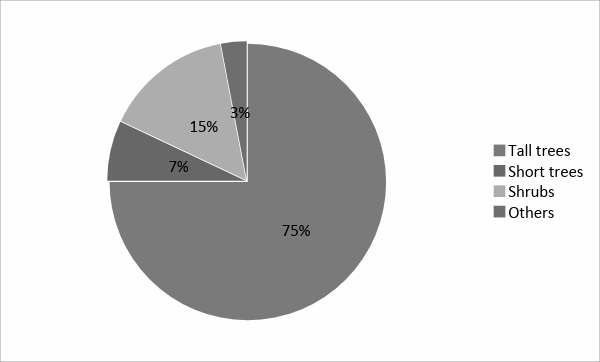
Peafowl forage and nest on the ground and roost on tree tops. The most preferred roosting place by peafowl was trees (97%) and comparatively reduced interest was recorded for buildings (2%) and for other properties (1%). Furthermore, the variation of the preference for different trees indicated that the majority of the encounters of peafowls (75%) were preferred taller trees (>10 feet). Shrubs (15%), short trees (7%) and other trees types (3%) were recorded as second, third and fourth preferred tree types for roosting respectively (Figure 1).
Further to that, amongst the trees, the highest preference (77%) was recorded for >10 feet tree height. Second preferred (20%) height was 7-10 ft. Third (1%) and fourth (0.5 %) preferences were shown for 2-5 ft and 5-7 ft heights respectively. Most preferred trees for roosting were Coconut (Cocus nusifera), Davata (Carallia brachiate), Jack Fruit (Articarpes hrtrophyllus ), Hora (Dipterocarpus Zeylanicus), Mango (Mangifera indika), Bee-Tree (Ficus religious), Jaggary Palm (Caryota urenus ) Albizia (Albizia julibrissin) and Mahogany (Swietenia mahogany).
After eating, the birds were frequently visited either water holes or streams to drink water during the day and also visit sandy areas to dust bathe. Similar observations have been reported by Santiapillai and Wijeyamohan [4]. After the evening peak of activity, the birds were filed into comparatively tall trees that provided an uninterrupted view of the terrain, to roost.
Damage Caused by Peafowl for Different Crops and Other Properties
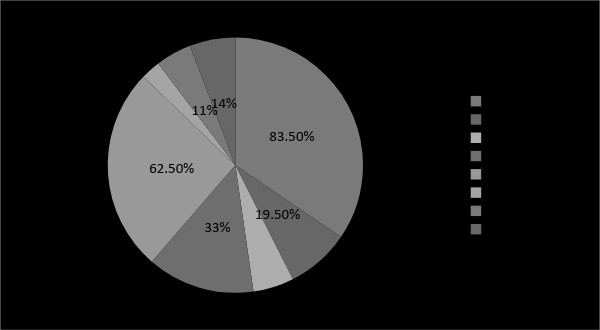
It was found that the food eaten is diverse and consisted of a mixture of plant and animal matter that includes grain, grass-blades, leaves of certain plants, tubers, beetles, snakes, snails and worms etc. Therefore, observations of the current study suggest that the bulk diet of the Peafowl constitutes of plant material while animals make up only a small proportion. Similar results were found by Henry as they found peafowl diet consisted of mainly a vegetation part and a smaller proportion of animal part [9]. Behaviour data revealed that the damage intensity of peafowl causes to the crop types showed that a higher damage for rice (83.5%), cereal crops (62.50%), spicy crops (33%) and leafy vegetables (19.5%). Whereas comparatively a less damage was observed for plantation crops (14%), tubers (6%) and legumes (11%) (Figure 2).
Furthermore, young peafowl ate comparatively a higher rate (90%) of lower level plant parts over upper level plant parts (10%) and adult peafowl showed the opposite preference where more eating was recorded for upper level plant parts (67%) over lower level plant parts (33%). In addition, behaviour observations reveled that peafowls were more preferred to eat beetles (86.5 %), then snakes (83.5%), snails (72.5%) and worms (29%) as their second, third and fourth choices.
Beyond the crop damages, peafowls were nuisance to different ways for human. Peafowls were identified for spreading different parasites (40%) and harmful to human and pet animals. They damage vehicles (29.75%) and rooves of buildings (6.5%). This bird has pitch voice, it made noisy as reported by 39.5 % respondents. Peacock calls were spread throughout the day. The usual call note is a very loud, penetrating nasal series of wails, starting with peahawn, peahawn uttered by both sexes that can be heard miles away. On taking off, the bird would utter a loud kokkokkok [9]. According to Takashashi and Hasegawa, a variety of calls given by peafowl of which seven are made only by males, out of which three call types are related to breeding and six call types are uttered by both sexes [10]. However, survey data showed that peafowl got threatened by mongoose, snakes, iguana and many other animals. It was found that the highest percentage of the peafowl population got threatened by mongoose (51.50 %). Second, third and fourth places were received for snakes (27.5%), iguana (12%) and other animals (8.5%) respectively.
Cultural Significance
The peafowl has been associated with man represented by different ethnic groups for thousands of years. Therefore, it is reasonably abundant and widespread in Sri Lanka. One of the species that have benefitted from the decades long civil conflict in the Vavunia district has been the Indian peafowl, which enjoyed good distribution. The increase in the range and number of peafowl is largely attributed to the creation of substantial areas of grassland and scrub lands through the removal of tree cover along the main highways as a security measure. However, the return of the refugees represented by different ethnic groups and the resumption of agriculture would pose some threats to the peafowl. As different ethnic groups are living in Vavunia district, it was investigated the cultural significance of ethnic groups on peafowl control in crop damage where Tamil ethnic group showed the highest (77.75%) compared to Muslims (14%) and Sinhala (8.25%) ethnic groups.
Management Strategies and Conservation
Different kinds of management strategies were used by farmers for minimizing crop damage. Most popular method was chasing out (65.50%), while some farmers used hitting (9.5%) and trapping (2.25%). Very few (1%) people were recorded to use killing as a control method. These management strategies were seemed very much linked with their cultural significance.
Peafowl is regarded as one of the serious pests of agriculture. Usage of pesticides in agricultural practices poses a threat especially to the chicks as found by McGowan and Garson [11]. Also Peafowl are under threat for their magnificent tail feathers, and also for extracting peacock oil. Another threat observed was once peafowls enter into either agricultural settings or home gardens, peafowl are attacked by dogs. Vavunia is an area of high potential for agriculture, now the Government has launched different development plans to rehabilitate the war affected areas specially by promoting agricultural activities [12, 13]. As a result, there would be increased pressure on fallow lands to be brought under the plough. Such conversion of land for agriculture would greatly reduce the habitat for peafowl and will bring the species into conflict with farmers. While minimizing crop damage, to ensure long-term survival of peafowl, the reduction of such conflicts and maintenance of large tracts of scrub forest and associated grasslands with undisturbed access to water bodies must be ensured.
Conclusion
It is concluded that the peafowl mostly attack to cultivations during morning period. Peafowl became a major threat for crop cultivation and need proper management strategy to avoid the damage while conserving peafowl. Fixing water sprinklers around agricultural settings and operating them in the morning together with cultivating replant plants around seed beds are suggested to minimize crop damage. To conserve peafowl it is also suggested to maintain large tracts in scrub forests and associated grasslands with water bodies.
References
-
Harikrishan S, Vasudevan K, Sivakumar K (2010) Behaviour of Indian Peafowl Pav ocristatus Linn. 1758 During the Mating Period in a Natural Population. Open Ornithol J 3: 13-19.
-
Sanchez-Migallon D, Marcy JS, Jana MB, Sherry KC, Nicholas S, et al. (2011) Antinociceptive effects after oral administration of tramadol hydrochloride in Hispaniolan Amazon parrots (_Amazona ventralis_). Am J Vet Med Association 73(8): 1148-1152.
-
Koshila HWS, Atapattu NSBM, Gunawardana WWDA (2018) Recent geographical migration pattern of Indian peafowl (_Pavocristatus_) in Galle and Matara District. Proceedings Int Symposium Agricul Environ pp: 51-54.
-
Santiapillai C, Wijeyamohan S (2015) The Indian Peafowl (_Pavo citratus_) in the Visinity of the Giant’s Tank in Mannar District. Ceylon J Sci 44(1): 61-66. _5._ Southwell CJ (1984) Variability in groupings in the eastern grey kangaroo, _Macropus giganteus_, Group density and group size. Australian Wildlife Research 11(3): 423-435.
-
Yasmin S (1997) Group size and composition of Indian Peafowl (_Pavo cristatus)_ in an agro- ecosystem at Aligarh, Utter Pradesh. J Bombay Nat History Society 94(3): 478-482.
-
Barrette C (1991) The size of Axis deer fluid group in Wilpattu National Park, Sri lanka. Mammals 55(2): 207-220.
-
Tivedi P (1993) Habitat selection by Indian Peafowl (Pavo cristatus Linn.) in Gir Forest. M.Sc. dissertation, Saurashta University, India.
-
Henrey GM (1971) A guide to Birds of Ceylon. Oxford University Press. London.
-
Takahashi M, Hasegawa T (2008) Seasonal and diurnal use of eight different call types by Indian peafowl (_Pavo citratus_). J Ethol 26(3): 375-381.
-
McGowan PJR, Garson P (1995) Status survey and conservation action plan (1995-1999): Pheasants. IUCN & Worlds Pheasant Association, Gland, Switzerland.
-
Ramesh K, McGowan P (2009) On the current status of Indian Peafowl _Pavo cristatus_ (Aves: Galliformes: Phasianidae): Keeping the common species common. J Threatened Taxa 1(2): 106-108.
-
Yasmin SA, Yahiya HSA (1996) Correlates of mating success in Indian Peafowl. The Auk 113(2): 490-492.
- In Situ Evaluation of the Anthelmintic Effect of the Aqueous Extract of Syzygium aromaticum (L) Merr and Perry on Bovine Strongyles
- Successful in Vitro Embryo Production with Oocytes Aspirated from Live White-Tailed Deer (Odocoileus Virginianus Texanus) Donors under Captivity in Northeast Mexico
- Bangladeshi Finches with their Evolutionary Thoughts (Aves: Passeriformes)
- Note on the Survival Status of Przewalski’s Horse, Equus ferus przewalskii (Perissodactyla: Equidae)
- In-Situ and Ex-Situ Protection of White-Breasted Waterhen (Amaurornis Phoenicurus) (Pennant, 1769) (Aves: Rallidae)
- Meat Examination in the Laboratory, the Acceptability and the Human Health