
A Narrative Review on the Stereo Behaviours of Zebras (Perissodactyla: Equidae)
Unlike horses, zebras are somewhat the asses or donkeys. Zebras are very flighty animals, so they cannot tame easily. To protect this cute hoofed mammal, we should understand their all behaviours. Any reviews on this fact may help to accumulate all sorts of behaviours. Out of 10 behaviours of zebra, the result suggested that 8 were instinct behaviour (social, reproductive, escaping, feeding, migratory, aggressive, joyful, painful), learning behaviour was 1, and 1 so-called abnormal behaviour (dustbathing). To assess the instinct behaviours is more significant than the other expressions that allow their conservation in wild or captivity.
Introduction
Zebras exhibit the two mating systems [1, 2, 3, 4]. For example, plains zebras (Figure 2) live in closed membership family groups (which is called harems), compared to stallion, females, their infants, and juveniles. On the other hand, Grevy’s zebras (Figure 3) live in open groups where males and females change their partners frequently. Sometimes, the group of Grevy’s zebra consists of only adult females, some with young and others without; while at other times females associate with a male whose territory they occupy [5]. Female plains zebras are monandrous and remain tightly bonded to one male for long periods, while Grevy’s zebra (females) are polyandrous since they move among males during single reproductive episodes [6]. Reproductive success is measured by the age of independence and the survival rate of the young [7, 3]. Throughout Africa, habitats of plains zebras are being fragmented. In central Kenya, especially in Laikipia, plains zebras have been increasing over the last decade, apart from temporary declines associated with a La Nina-driven drought in 2000 [8]. Since over 70% of Kenya’s wildlife still inhabits private lands [9], human activity on their shared lands is likely to be a problem. The objective of this study is to observe all behaviours of zebra for their successful handling in any natural or captive habitat.
Classification
Phylum: Chordata Subphylum: Vertebrata Class: Mammalia Order: Perissodactyla Family: Equidae Genus: Equus Species:
Stereo Behaviors in the Zebra Community
Instinct Behaviour (Table 1)
Social Behaviour: It is most commonly seen between mothers and foals as well as in their siblings. Social grooming is used to strengthen social bonds as a whole [13]. Female- female bonds in all zebras are weak [14].
Reproductive Behaviour: This is a very natural and universal fact in all animals. Through this process not only zebras but also all living creatures give birth. Through a courtship, the zebra performs many sexual displays like copulatory, parenting, and caring behaviour to the foals. In the breeding season, it may take weeks for the mares to accept the new stallion [13].
Escaping Behaviour: This helps for escaping from the predators in the wild. Crocodiles, lions, tigers, or other carnivore animals are the enemy of zebras. When any predators come in front of zebras group will adjust their running speed to suit the weak individuals and the stallion will guard the rear and attack any pursuing predators [12]. When zebras take a rest, just stand oppositely their stripes exhibit as the branches of the trees. This type of behaviour leads to camouflage, so predator animals do not understand the location of these zebras.
Feeding Behaviour: After taking sufficient food, their all physiological functions run well for producing adequate energy. Some chemical reactions promote their attraction to such foods. In husbandry, we need to provide adequate nutrients to zebras or other equids [15].
Aggressive Behaviour: At the time of taking food they can show aggressiveness to others if they have heavily hunger. After fulfilling some food materials into their stomach, this behaviour may disappear. Fighting is most common between terrestrial stallions; it mostly involves biting and wrestling [13]. The initiating female repeatedly kicked and bit the mother, reacted aggressively and by guarding her foal [16].
Joyful Behaviour: This can be shown after the birth of colt. When a colt runs, it looks very joyful. Sudden running of the adults is somewhat this type of behaviour. Sometimes, this type of behaviour could be observed in the post-mating stage [17].
Painful Behaviour: When zebras are affected by diseases or any injuries they cannot take food properly and vertigo appears. Due to lacking their facial muscles, they cannot show this expression but their normal attitude explains such pains. Silent sitting and semi- or close-eyed are seen in this illness behaviour [17].
Migratory Behaviour: The zebras travel a 300-mile round- trip to find their water and fresh grass [18].
Learning Behaviour (Table 1)
Learning Behaviour: Zebra is a restless and flighty animal at all [15]. This type of behaviour applies to the animals that have a well-developed brain and zebra is not an exception here. Zebras have serious nervousness, so, till now, zebras could not tame properly. Zebra is a feral animal like horse. In any circus show, the playful activities of zebras are a common act.
Abnormal Behaviour (Table 1)
Dust-bathing: This activity is mandatory for removing their ectoparasites from the body. This behaviour is not abnormal as a whole. Zebra maintains their grooming by this activity. Dust-bathing and rubbing on trees, rocks, and termite mounds are routinely used in plains zebra bathing rituals [13].
| Features | Example | References |
|---|---|---|
| Social behaviour | Due to living in the various environments animals show different behaviour | Estes, et al. [13]; Nunez, et al. [14] |
| Reproductive behaviour | This behaviour is very common and obvious at all | Estes, et al. [13] |
| Escaping behaviour | At the time of frightening, escape is the only way | Estes, et al. [13] |
| Feeding behaviour | In a day, animals show feeding behaviour accordingly | Husher, et al. [15] |
| Aggressive behaviour | The most common phenomenon in all animals | Estes, et al. [13] |
| Joyful and painful behaviour | Except humans, animals do not have facial muscles, so they cannot express their emotions | Kabir, et al. [17] |
| Migratory behaviour | Only for the fresh grass and water, zebra migrates | [18] |
| Learning behaviour | Zebra have well-developed brain, so they could receive any trainings by humans | Husher, et al. [15] |
| Dust-bathing behaviour | For maintaining zebras social bonding, this is important | Estes, et al. [13] |
Table 1: Various features of zebras with their significant data.
Several Factors on Such Behaviours
Environment: The coldness and heat of the environment influence the colour of animals. For instance, research suggests that in cooler environment black stripes of zebras decrease and in hotter it becomes increase (Table 2; Figures 1-3). In addition, in hot weather animals’ brains secretes many unwanted chemicals that show excessive angriness. In contrast, in cold weather, their peptic juice which is responsible for digestion exhibits a slower function that could lead to their different behaviour.
Genetic: Aggressive behaviour [13] is a genetic phenomenon in the animal kingdom. They get it from their ancestor and are common and very obvious at the first sight. Hormonal secretion and other chemical components depend on the genetic basis of the generation.
Training: Animals can be habituated to take a lesson from humans. During pet or in circus team [19, 20], animal trainers ensure training of their pursued animals. Since zebra is a very nervous animal and cannot tame easily but in that show, they could perform.
Different Habitats: Habitat of course influences the feeding behaviour of zebra. The races of zebra are somewhat different in their behaviour for living in different habitats (Table 2) [21].
Diseases: If zebras are affected by any diseases their physiological functions will be hampered, so they show abnormal behaviour to humans or other animals in the wild. Any types of illnesses [17] or infections within the brain, spinal injury, rabies attack, and indigestion effects on their behaviour.
Food: If they get sufficient food they will show very polite behaviour otherwise show angriness.
Hormonal Disturbance: For faulty diet or autoimmune diseases their hormonal secretion can be slowed down, so they could be focused on abnormal behaviour. This behaviour can be visualized in their breeding season.
Predator: Lions, tigers, hyaenas, crocodiles are the major predators in the jungle. Zebras are always get feared by these predators. For coping with these predators, zebras pass very vulnerable life in the wild. Maybe there are some links between these predators and the nervousness of zebra. To control such attacks biological control could be the best [22].
Medicines: Some medicines that are prescribed by the veterinarian could change their behaviour. Antidepressants, relaxants, and antibiotics have side effects, so they show abnormal behaviour at all [21].
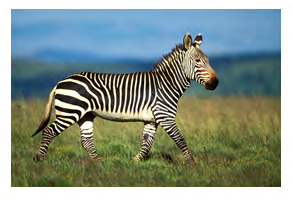
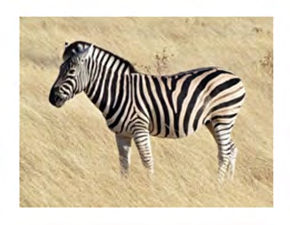
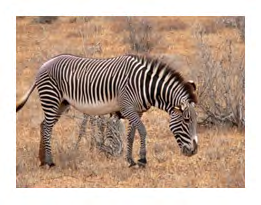
| Features | Mountain zebra, Equus zebra | Plains zebra/Common zebra, E. quagga (formerly E. burchellii) | Grevy’s zebra/Imperial zebra, E. grevyi |
|---|---|---|---|
| Stripes | Reverse stripes start from the thigh of the hindlimb | Reverse stripes start from the mid of the belly | All stripes are comparatively nar- rower than others |
| Size | Head and body length 208- 259 cm | Head and body length 217-246 cm | The largest and tallest zebra species (229 cm); Large pinna |
| Habitat | Hot, rock, mountain, dry habitat | Treeless grasslands, woodlands | Semi-arid grassland |
| Subspecies | 2 | 6 | - |
| World status | Vulnerable | Near threatened | Endangered |
Table 2: Races of zebra with their present status [21].
Concluding Remarks
Zebras have much behaviour like other animals, but their nervousness or flighty attitude creates puzzles in captivity. There might have a relation between predators and this nervousness. There is no alternative to keep this animal without further studies on these behaviours. In addition, their present status in the world is not mentionable. Immediately we should give more emphasis on these groups of animals.
References
-
Klingel H (1969a) Reproduction in the plains zebra, Equus burchelli boehmi: behavior and ecological factors. J Reprod Fertil 6(Suppl): 339-345.
-
Klingel H (1969b) The social organisation and population ecology of the plains zebra (Equus quagga). Zool Afr 4(2): 249-263.
-
Rubenstein DI (1986) Ecology and sociality in horses and zebras. In: Rubenstein DI, Wrangham RW (Eds.), Ecological Aspects of Social Evolution. 13th (Edn.), Princeton University Press, Princeton, pp: 282-302.
-
Rubenstein DI (1993) The ecology of female social behavior in horses, zebras and asses. Physiology & Ecology Japan 29(1-2): 13-28.
-
Rubenstein DI (2010) Ecology, social behavior, and conservation of zebras. Advances in the Study of Behavior 42: 231-258.
-
Ginsberg JR, Rubenstein DI (1990) Sperm competition and variation in zebra mating behavior. Behav Ecol Sociobiol 26: 427-434.
-
Nunez CMV, Adelman JS, Mason C, Rubenstein DI (2009) Immunocontraception decreases group fidelity in a feral horse population during the non-breeding season. Appl Anim Behav Sci 117(1-2): 74-83.
-
Georgiadis NJ, Olwero JGN, Ojwang GR, Romanach SS (2007) Savanna herbivore dynamics in a livestock- dominated landscape: I. Dependence on land use, rainfall, density, and time. Biol Conserv 137(3): 461-472.
-
Western D, Russell S, Cuthill I (2009) The status of wildlife in protected areas compared to non-protected areas of Kenya. PLoS One 4(7): e6140.
-
Google search (Mountain zebra).
-
File:Equus grevyi mare Kenya.jpg.
-
File:Common zebra 1.jpg.
-
Estes RD (1991) The Behavioural Guide to African Mammals. University of California Press, pp: 611.
-
Nunez CMV, Asa CS, Rubenstein DI (2010) Zebra reproduction. In: Mckinnon A, et al. (Eds.), Equine Reproduction. 2nd(Edn.), Blackwell Publishing Ltd.
-
Husher S (2010) Husbandry Guidelines for the Plains Zebra Equus quagga (formerly Equus burchelli).
-
Fischhoff IR, Sundaresan SR, Larkin HM, Sellier MJ, Cordingley JE, et al. (2010) A rare fight in female plains zebra. J Ethol 28: 201-205.
-
Kabir MA (2019) Expression of the emotions in pigeons. J of Ethology & Animal Science 2(1): 1-6.
-
Zebras make longest migration, about 300 miles, in Africa.
-
Kabir MA (2013) Circus tradition of Bangladesh and fate in its animals. South Pacific J of Pharma and Bio Science (1): 51-57.
-
Kabir A (2020) Animal update in the Great Rowshan Circus of Bangladesh. Intl J of Research Studies in Zoology 6(1): 20-22.
-
How many Types of Zebras are there? (https://www. worldatlas.com/articles/how-many-types-of-zebras- are-there.html)
-
Kabir MA (2018) Common wildlife pests in pigeon keeping of Bangladesh. J Dairy Vet Anim Res 7(5): 227- 229.
- In Situ Evaluation of the Anthelmintic Effect of the Aqueous Extract of Syzygium aromaticum (L) Merr and Perry on Bovine Strongyles
- Successful in Vitro Embryo Production with Oocytes Aspirated from Live White-Tailed Deer (Odocoileus Virginianus Texanus) Donors under Captivity in Northeast Mexico
- Bangladeshi Finches with their Evolutionary Thoughts (Aves: Passeriformes)
- Note on the Survival Status of Przewalski’s Horse, Equus ferus przewalskii (Perissodactyla: Equidae)
- In-Situ and Ex-Situ Protection of White-Breasted Waterhen (Amaurornis Phoenicurus) (Pennant, 1769) (Aves: Rallidae)
- Meat Examination in the Laboratory, the Acceptability and the Human Health