
Behavioral Effects of Extracts and Compounds Isolated from Erythrina Velutina (Mulungu) in Rats.
In many countries and also Brazil, the extracts or infusions of fresh plants are used to treat common infections or diseases, mainly in the countryside and among the indigenous people. The popular knowledge of the medicinal plants contributes a lot to the benefit of the human health, and directly could help for new discoveries of medicines. The antinociceptive effect is an important target for new active compounds to be searched, in part due to the increase in human life expectation, on the other hand for new cheaper compounds to the low income population, and finally, with new properties or less side effects. In the current work, extracts obtained from Erythrina velutina seeds, commonly used against snake bites, were tested for the capacity to neutralize the nociceptive effects induced by the hot plate test and anxiety behavior with combination of the open field and the elevated plus maze. Tested animals (rats) with different extracts of seed demonstrated analgesic effect with the animal on hot plate. The animals also increased wandering in the open field and even the numbers of entries and the time spent in the open arms of the elevated plus maze. That demonstrated that lesser anxiety levels allow longer and more frequent exploration periods of the open arms, suggesting that Erythrina velutina has strong anxiolytic properties compared to the control anxiolytic diazepam, it could serve as a new approach for the treatment anxiety.
Introduction
Herbal medicines were the first approach to cure diseases in mankind, from them many pharmaceutical were firstly developed. They are still widely used in underdeveloped countries, and particularly in Brazil, plant extracts of fresh or infusion to treat infections common were still used specially in places away from urban centers and also among indigenous people, these extracts that do not have the scientific evidence.
Several researches are being carried out, using plants as raw material, especially those with the popular knowledge that they indicate directions for discovery of new drugs based on biodiversity, new found molecules could be used directly or used as templates to develop new pharmaceuticals.
These findings can also help in future therapies for diseases that do not happen through contact with virus or bacteria, or even in large cities where new disease conditions increased significantly; such as stress, hypertension, panic attacks related to increase of age such as Alzheimer, obesity, pain and others. With the increase in life expectancy and the consequent reduction of the income of this population of 3rd age is a need to discover drugs more accessible and hopefully less likelihood of side effects.
Erythrina spp, was used for pharmaceutical purposes and some previous tests have been performed, with reports of antiviral properties, antibactericidal, sedatives, analgesics, tranquilizers and relaxing [1, 2, 3, 4, 5, 6, 7, 8, 9, 10, 11, 12, 13, 14, 15].
The species Erythrina variegata is used in folk medicine, its pharmacological activity includes the inhibition of exchange of sodium and hydrogen, anti-inflammatory and antibacterial effects [16, 17]. The Erythrina mulungu is used to calm the agitation and other manifestations of the nervous system and insomnia [18]. The plant is also used as anticonvulsant, hypotensive agent, hypnotic and anesthetic [14, 19, 20]. The E. mulungu also has anxiolytic effects in defensive behavior related to anxiety and panic [21, 22, 23].
The Erythrina velutina willd studied in this paper belongs to the Leguminosae family, Papilionidae; a thorny plant native to the northeastern Brazil, especially in caatinga [24, 25]. The plant is used for ornamentation and therapeutic, as an analgesic, asthma, insomnia, hypnotic, sedative, anxiolytic and dried fruit as a local anesthetic [24, 26, 27, 28].
Recently, trypsin and chymotrypsin inhibitors from Erythrina velutina seeds have been isolated. In previous studies using a sepsis model, we demonstrated the antitumor and anti-inflammatory action of these compounds. The results show that protein isolates from E. velutina seeds have potential gastroprotective effects, placing these compounds as natural candidates for gastric ulcer prevention [29].
The aim of this work was to evaluate the effects of Erythrina velutina mainly analgesic, anxiolytic effects in rats and try to relate these effects with the previous identified compounds.
Materials and Methods
Extraction
The Erythrina velutina (EV) seeds were collected in region of Ibitita and Irecê, Bahia, Brazil, dried in a drying oven (Fanem, Brazil) at 40ºC for 24 hours. After drying, they were macerated in a bowl and kept under stirring overnight with distilled water hundred times (w/v). After the mixture was filtered on a filter paper with the aid of a vacuum pump and subsequently lyophilized. The same procedure was performed with the extracts obtained with absolute ethanol and acetonitrile. The ethanol and acetonitrile solution was placed in a water bath at 40°C to evaporate and then lyophilized.
After lyophilization all extracts were resuspended in distilled water and filtered using disc filtration and lyophilized again. Only after this second lyophilization, the material was resuspended (100mg/ml) distilled water.
The acetonitrile extract was filtered with 30,000kDa filter and centrifuged for 90 minutes, the resulting permeate was followed by another 5000kDa filter filtration for 210 minutes (2500 rpm at 5 °C) (Ultrafree, Millipore, USA). Resulting permeate samples namely 5kDa range, 5 to 30kDa and> 30kDa, components below 5Kda; components between 5-30kDa and components over 30kDa respectively. After these, permeates were lyophilized and diluted with water and 0.9% saline. All the samples analyzed were performed in hot plate tests. After the tests, only the samples of <30kDa and 5-30KDa were analyzed in HPLC, obtaining between 5 and 12 fractions, respectively.
The filtered materials <30kDa were analyzed in the animals using the hot plate assay with a satisfactory result, were applied to the HPLC (High performance liquid chromatography) system using a 1.5 semi-preparative C18 column (2 x 50 mm) and fractions> 30 kDa, each of the fractions obtained was tested again on the hot plate. The fraction 5 indicated in the chromatogram in figure 2 showed the most expressive result and this material was again applied to the HPLC system using the same system as before with different solvents. The separation of fraction 5 again obtained 12 fractions that were retested. Only fraction 4 had a satisfactory effect. These fractions were tested again in the rats for the behavior of the hot plate. Lyophilization was resuspended in distilled water and 0.9% saline 10 mg / ml. The solution, 250μl (2.5 mg), was injected intraperitoneally. The fraction< 30kDa was fractionated by HPLC with semi- preparative column and 6 fraction were obtained. These fractions did not obtain significant data in the tests. Data not shown.
Animals
Males Wistar-Hannover rats (Rattus norvegicus), experimentally naïve, weighing 160-220gr, from the Animal House of the Instituto Butantan and allocated in Animal House of Experimentation Laboratory of Biochemistry and Biophysics 48 hours before the experiments. The animals housed in groups of five in polypropylene cages (490x 340 x 160 mm) containing pine shavings of white self-clave were kept in conventional Animal House environmental conditions with temperature between 22 ± 2ºC, with 50% ± 20% relative humidity and 100% air exchange per hour with 15 complete exchanges per hour. The automatic light/dark cycle for 12 hours (with clear phase of 6:00 to 18:00) with free access to food and water. The experiments were performed in the clear phase of the cycle between 8:00 and 13:00. All management and experimental procedures performed on animals were approved by the Ethics Committee of Instituto Butantan (CEUAIB), following the standards recommended by the Brazilian College of Animal Experimentation (COBEA) and the Care and Use of Laboratory Animals - NRC 200.
Equipments
HPLC (High performance liquid chromatography): Reversed-phase binary HPLC system (Merck Hitachi) was used to the sample separation. Fraction was loaded in a C18 column (4.6 mm × 250 mm) as described below (4.4.1).
Hot plate: For the hot plate, tests were performed with rats weighing 160-180gr. The solution, 250µl (2,5mg), was injected intra-peritoneal and intravenous in rats, initially in the evening, passing the following to the morning.
The hot plate (Fanem model 186, SP, Br) was settled in a temperature of 47-50ºC. After the administration of control solutions (saline), ethanol or acetonitrile extracts and time out of rats, they were placed over a hot plate. Were observed in the first lap and when the individual paw frantically licking the feet, this was removed from the hot plate. The time lapse when this behavior occurs was annotated.
Open field: The arena in Open Field (OF), consists of a circular area painted white, measuring 100 x 100 x 35cm, divided into 25 squares (A1 to E5), by lines painted in gray, approximately equal, demarcated by 3 concentric circles of different radii (1x 14x, 20cm), intersected by segments of straight radia as described previously by Calvin S. Hall.,1940.
Rats used were males weighing approximately 180 – 200 gr, respectively. Participants were from the Central vivarium was left at least one day to rest before starting the test arena. The tests were performed in the morning because they are less active in this period.
Solutions from acetonitrile extract of EV were injected intraperitoneally (2,5mg/250µl) in the animals. The activity of the animal was assessed by direct observation in an open field, assessed with 3 behavior parameters: crossings (CR), rearing’s (RE), duration of stop (stop).
Each animal was observed individually on the open field, for 5 minutes during the nocturnal period. The CR is the act of entering animal with 4 legs in one of the rooms of the arena floor, each unit of RE is the posture of the animal remain supported only in the hind paws, with the trunk perpendicular to the ground, with the head directed to up and playing, or not, to the ground with the feet after the walls of the OF. The behavioral parameter Stop is considered as the time, in seconds, during which the animal has no motor activity, remains static with respect to the head, trunk and limbs. After each individual observation in the open field, was made to clean the same with paper soaked in 5% alcoholic solution.
Elevated plus maze: The elevated plus maze (EPM), is a device made of wood painted with black ink, consisting of two opposed open arms, also in a position opposite of the same size two closed arms with walls of 50cm of height. The open and closed arms of the apparatus forming a perpendicular crossing with the central area of 10 x 10 cm. The labyrinth was in a room alone, with its structure elevated 50cm of soil and lit by lamps of 60 watts located at the center of the apparatus at 150cm. The experimental sessions followed the specifications of Pellow, et al. (1985), and were monitored by an observer who performed the procedures of registration for this trial.
Open Field and elevated plus maze: We used rats weighing 180 to 200gr and injected with solutions extracted organic material, with time to rest for 30 minutes. Tested is the behavior of the animal for about five minutes Rearing’s, Stop and Crossings. After the open field test, it was led into the elevated plus maze. It examined the behavior of time and how many times the animal looked the side open arm and side closed arm.
Drugs: Experimental Design: We used extracts of the plant Erythrina velutina (2,5mg/250µl.), diazepam (1,25mg), sodium chloride (0,9%) and trypsin(0,15 mg/kg).
Procedure Experimental
All animals were tested in the clear phase of the cycle between 8:00 and 13:00. The animals were transferred to the testing room for 12 hours before the start to minimize the influence of stress by transport. All procedures were performed in an environment of half-light.
HPLC analysis: Reversed-phase binary HPLC system (Merck Hitachi) was used to the sample separation. The SPE eluted fraction was loaded in C18 column ( 4.6 mm × 250 mm) in a two-solvent system: (A) trifluoroacetic acid (TFA)/H2O (1:1000) and (B) TFA/acetonitrile (ACN)/H2O (1:900:100). The column was eluted at a flow rate of 1.0 mL/min with a 5-90%, 20-75% gradient of solvent B over 45 min. The HPLC column eluates were monitored by their UV absorbance at
214 nm. For fraction purification, further chromatographic steps were necessary, using the same column with optimized gradients over 45 min.
Steps: 1st step: Gradient of 5-90% of B in 45 min 1mL/min. 2nd step: Gradient of 20-75% of B in 45 min 1mL/min.
The HPLC analysis was separated in different pools and analyzed.
Hot plate test: For the hot plate test were performed in rats weighing 160-180gr. The solution, (2,5mg/250µl), was injected in rats intraperitoneally. After the administration of control solutions (saline), extracts obtained from organic material and the rest period, the rats were placed over a hot plate of 47-50ºC. Examined in the first lap and when the individual paw frantically licking the feet, this was removed from the hot plate.
Exposition in open field: A group of 65 rats weighing 180- 220gr received different treatments and then tested for thirty (30) to forty-five (45) minutes after intra-peritoneal. Animals received 250μl saline for the control group, 100μl of diazepam according to the weight of the animal and used as a control group and 250μl acetonitrile of the extract of E. velutina seed. Each animal was exposed for five minutes in the open field were observed when the patterns of crossings (CR), which is the intersection between the quadrants of the arena, and exploratory activity of animals, which was the record of activity, to rearings (RE), which is the number of episodes in which animals have the body supported by the hind legs and the time to stop (stop), episode in which the animal remained standing on four legs.
Exposition on elevated plus maze (EPM): Thirty to forty- five minutes after intra-peritoneal injection of 200μl of saline for the control group, 250μl of diazepam (1,25mg) according to the weight of the animal, and 250μl (2,5mg) of the acetonitrile extract of E. velutina, each animal was exposed for five minutes to the EPM, when they were observed and recorded the number of entries and length of stay in both arms. From these percentages were calculated for entry and time spent on open arms.
Trypsinization test: Tests performed with acetonitrile extracts of EV and trypsin to determine if the sample was a peptide or protein with amino acids such as lysine and arginine. The control was used with the inactive trypsin extract of the plant with trypsin (0,15mg/Kg), and the test with the active extract of the sample. The samples tested were 8 and 16 hours in rats in OF and EPM.
HCL test: The tests were performed with extracts of EV and HCL. The experimental was used as a saline control treated with HCL (pH 2.5) and neutralized with NaOH (pH 7.0). But the test, the extract of the plant was treated with HCl (pH 2.5) and neutralized with NaOH (pH 7.0). Rats were used in the OF and EPM.
Statistical Analysis
The data were submitted to parametric analysis of variance (One-way ANOVA) followed by Tukey test when necessary with p < 0.05 significance level.
Results
Toxicity Test
Tests with extracts of Erythrina velutina seeds (10 mg / mL) obtained from the extraction using water, ethanol and acetonitrile. The saline solution was used as a negative control. Tests with extracts of Erythrina velutina (10mg/ mL, 2,5 mg/250 µl injection) seed obtained from water, ethanol, acetonitrile and saline, have not shown the toxicity, all animals tested survived. No toxic signs were observed during the open field test such as piloerection, prostration or convulsions. Previous testing in open field (Locomotion) and hot plate (time to get out the paw) showed that extracts obtained with acetonitrile and ethanol move more than the rats treated with aqueous water extract (Figure 1).
Test with Crude Acetonitrile Extract of Erythrina velutina (2 Compared to Diazepam
Exposure on the open field: On the open field, the comparison multiple of the factor crossings between the control groups, Erythrina velutina (2,5mg/250 µl) and diazepam (1.25mg/250 µl) were statistically significant (F = 9.82, P = 0.004). Only the animals treated with diazepam more move in relation to the control groups (Q = 4.91, P <0.05) and extract of EV (Q = 5.96, P <0.01). The results observed in rats parameter rearing’s (F = 1.27, P = 0.32) and Stop (F = 1.75, P = 0.22) were not statistically significant.
Exposure to elevated plus maze: The groups of animals treated with diazepam exposed to the environment of elevated plus maze have shown a tendency to seek the open arm. A comparison of multiple groups with the control and EV group treated with diazepam was statistically significant; they stay less time in closed arms (Table 1). Samples of control groups, EV and DZP, compared with each other, showed that the animal tried both the open and the closed arms (F =. 12:09; p = 0.00, GL = 17), (nsaline = 7, nE.velutina = 7, ndiazepam = 6). Statistically significant comparing to the control group and diazepam, the rats tried both the open arm as the closed. Animals treated with diazepam and E.velutina have searched and stay more in the open arm than in the closed (Table 1).
| Open | Closed | |||
|---|---|---|---|---|
| Number | Time (s) | Number | Time (s) | |
| Control | 44.61± 9.94 | 38.85± 30.93 | 49.34±21.74 | 60.23± 29.82 |
| Diazepam | 84.12±13.28 | 72.61±30.27* | 15.87±13.29 | 26.94±29.60* |
| E. velutina | 54.7±15.62 | 34.48±19.59 | 45,3±15.62 | 65.81±19.69 |
* (Q= 10.82, p<0.01). Table 1: Mean and standard deviation made in the exposure Elevated Plus-Maze (EPM) in rats (Rattus norvegicus) under the experimental treatments: saline, diazepam and E. velutina. n = 20 (Control: saline 0,9%, Diazepam 1,25mg/250µL and E. velutina 2,5mg/250µL).
Tripsinization
Results of treatment of the sample of EV with trypsin. The rats tested with 8 hours (F = 7:03, p = 0.03, Q = 3.75, GL = 6, p <0.05) on open field were more still than those treated with 16 hours (F = 15.3, P = 0.008, Q = 5.53, GL = 6, p <0.01). Animals tested with trypsin, 16 hours of incubation to move more (F = 14.79, p = 0.009, Q = 5.44, P <0.01). But the test with EPM, the rats tested with trypsin, 8 and 16 hours of incubation remained more time in closed arm (F = 32.38, p = 0.00, Q = 10.39, p <0.01), (F = 58.57, p = 0.00, Q = 13.46, p <0.01) suggesting that tripsinization has effect in the active compounds present the fraction, probably by degrading active proteins.
Testing with Samples Treated with HCL
Tests with HCL showed that there was no significance when comparing the control group of animals tested and the samples treated with HCl in both OF and EPM in the open arm (F = 0.59, p = 0.54), and in the closed (F = 0.57, p = 0.53). Statistical tests were significant, only to compare the permanence time in the open arm (Q = 0.80, p <0.05) and / or closed arm (p> 0.05, Q = 1.17). Animals tested with HCl (F = 12.61, p = 0.0003, Q = 7:52, p <0.05, gl = 14), stay and remain more time in the closed arm. Acidic treatments with HCl show no effects on the active compounds of the fraction.
Hot Plate and Open Field Test with Different Molecular Weight Fractions Obtained from Acetonitrile
Testing of the seed extract of EV obtained with acetonitrile filtrate after HPLC purification with semi- preparative column showed results (Figure 2) and the fraction P5 <30 (Table 2) revealed effects. This fraction was rechromatographed on HPLC with C 18 column (Figures 3 & 4). The fractions 4 (P4<30KDa), 5 (P5<30KDa) and 6 (P6<30KDa) obtained from the chromatograms were tested and revealed antinociceptive effects effect when compared to Control (Saline 0,9%) (Table 3) other fractions have no effects (data not shown).
High Performance Liquid Chromatography – HPLC With <30 Kda Material
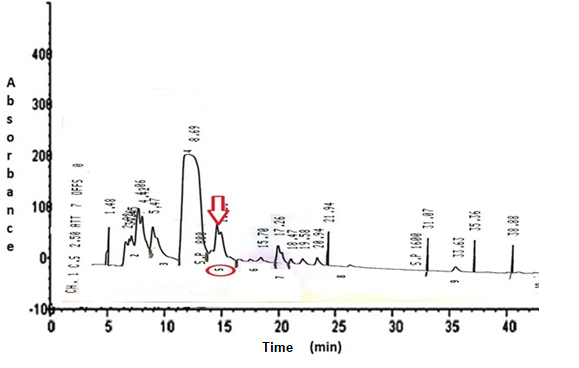
| Sample | Licking | Removal |
|---|---|---|
| Control (n=2) | ||
| X±DP | 0.90±0.54 | 6.07±0.05 |
| P4<30 KDa (n=2) | ||
| X±DP | 0.54±0.07 | 9.09±0.10 |
| P5<30 KDa (n=3) | ||
| X±DP | 1.45±0.31 | 10.48±0.50 |
| P6<30 KDa (n=3) | ||
| X±DP | 2.71±1.78 | 9.55±4.05 |
Table 2: The fraction 5 (P5<30KDa) Time in seconds of the behavior of the rat on licking the paw of the animal and removal of hot
High Performance Liquid Chromatography – HPLC with P5 <30 Kda Material
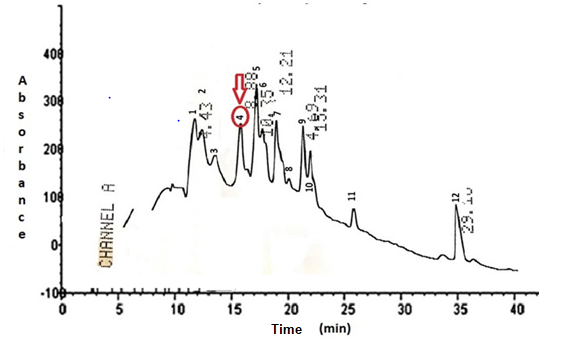
| Sample- 20/07/05 | Licking | Removal |
|---|---|---|
| Control- (=4) | ||
| Average ±DP | 1.16±0.89 | 5.58±3.22 |
| Fraction 8- (n=3) | ||
| Average ±DP | 1.75±1.48 | 7.56±3.04 |
| Fraction 2- (n=3) | ||
| Average ±DP | 0.83±0.73 | 10.85 ±2.13 |
| Fraction 4- (n=3) | ||
| Average ±DP | 1.30±1.19 | 12.10 ±6.06 |
| Fraction 6- (n=3) | ||
| Average ±DP | 1.61±0.71 | 5.81±3.05 |
Table 3: Time in seconds of the behavior of the rat on licking the paw of the animal and removal of hot plate (47 - 50°C) of frac
Sds-Page
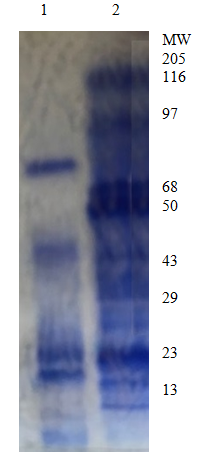
Discussion
In Brazil, the wide traditional use of medicinal plants and their pharmacological potential have increasingly attracted the interest of pharmaceutical industries and governmental. Since the use of medicinal plants is growing steadily, studies to establish the toxicological and pharmacological profile as well as the quality control of the whole production process for herbal medicines is urgently required [30].
Caatinga (etymology: white forest) is the main phytophysiognomy occurring in Brazilian Semi-Arid region, occupying more than 70% of Brazilian Northeastern. These lands encompasses several dry forests that shows, as the main characteristics, low rainfall (below 800 mm yr−1) concentrated in the firsts 3–4 months of the year and high temperature averages. The plant biodiversity in Caatinga is very high with the predominance of Fabaceae (Leguminosae) family, with 82 genera and 617 already cataloged species. There are not many studies with the seed of Erythrina velutina (EV) and this study showed that the Erythrina velutina (EV) seed extracts had no toxic effects on the body of the animal and exhibit behavioral and antinociceptive effects.
Hot plate tests showed that animals treated with acetonitrile extract obtained from seed Erythrina velutina seems to tolerated the pain more than control animals or administered with other extracts (aqueous or ethanol). Purification of the raw showed that antinociceptive effect is present in fraction 5 from, Marchioro M, et al. [31] working with aqueous extract from Erythrina velutina from leaves obtained similar effetcs, and also by Raupp IM, et al. [32]. Components obtained from theses extracts with mass spectrometry revealed components from flavonoid family that are present in Erythrina velutina seed, these compounds could act in synergy enhancing antinociceptive effect. Flavonoids represent a large family of compounds that are synthesized by plants and that comprise 15 carbons with two aromatic rings connected by a three-carbon bridge (C6-C3-C6). Naturally occurring anxiolytic flavonoids were first described in 1990s. Flavonoids have been investigated using in vivo models, where their effects on the central nervous system (CNS) have established. More recently their antioxidant activity, which are attributed to their ability to inhibit the production of free radicals, and their neuroprotective effects were found to be related. Moreover, there has been intense interest in the potential of flavonoids to modulate neuronal function and to improve memory, as well as their activation of microglia and astrocytes that might shape synaptic plasticity by Oliveira DR, et al. [33].
Animals tested with EV on Elevated Plus maze (EPM) showed that there was evidence of similar effects to an anxiolytic component, the animal operated and passed between his arms open and closed constantly, similar results were observed in other studies by Raupp et al, 2008. Other studies also showed that anxiolytic effect, but with stem bark extract of EV, and tested in elevated T-maze [28]. Some alkaloids isolated from E. mulungu also showed anxiolytic effects with elevated T-maze [23], since this type of model checks the behavior of the animal’s anxiety. Anxiolytics are drugs, synthetic or not, used to decrease anxiety and tension, with a calming effect, discovered in 1950, affecting areas of the brain that control anxiety and alertness by relaxing muscles.
In recent years, there has been a great advance in the pharmacological treatment of anxiety disorders. Particularly in relation to generalized anxiety disorder (TAG), until a few years ago, the only alternative was benzodiazepines (BZD). However, since the introduction of buspirone, the only azapyrone (azaspirone, azaperone e azaspirodecanedione) available in Brazil, the range of effective drugs in TAG has expanded.
Results demonstrated that anxiety was not statistically significant between control and extract of the plant, but it was the opposite between the plant and diazepam, this result could be related to the yield obtained after extraction or by the presence of compounds that acts simultaneously providing final effects [21, 22]. The extract of the EV was in a range intermediate between control and diazepam. The research achieved with hydroalcoholic extract of E mulungu in ETM was the reverse, was not found anxiolytic effect [28]. With EV, it had a sedative effect (EPM and open field tests) [25, 34]. In literature there are divergent results on anxiety, probably the anxiolytic drugs that act in the serotonergic system does not have anxiolytic effect, but may present anxiogenic effect [35, 36] Vasconcelos SMM, et al. [37]. showed that the intraperitoneally and orally administered extract of EV and E. mulungu does not change the anxiety of mice in the EPM, but we cannot exclude the potential of EV.
The animal in the open field had an increase of the exploratory behavior, therefore, substances associated with that seed could be present it different amounts in the extract obtained (aqueous, ethanol, acetonitrile), related to their relative solubility in this solvents.
The open field tests showed that animals treated with the extract of E. velutina obtained with acetonitrile move constantly. The behavior of the animal was a trend intermediate between the control group of saline and diazepam, found similar results in Ribeiro MD, et al. [28]. It differs from the acute treatment with hydroalcoholic extract of E. velutina and E mulungu that decreased the activity of mice in open field [23, 32, 33, 34, 35, 38].
When analyzing the results obtained in the tripsinization test in the open field, the animal in the parameter still was statistically significant otherwise acidic treatment with HCl do not altered the effects of the extract suggesting that active compounds were stable in acid pH. Main components present in acetonitrile extract were below 13 kDa, 20 and 23 kDa, 45 and 70KDa as shown by SDS-PAGE mainly hydrophobic proteins present in the seed.
On the other hand E.velutina compounds demonstrated an anxiolytic effect [23] Onusic GM et al. [21] and the tests obtained in OF and EPM, indicates that there is also a sedative effect, agreeing with Dantas MC, et al. [34] and Vasconcelos SM, et al. [25]. Authors suggests a potential for cognitive impairment [32]; research with stem bark of E. velutina have an anxiolytic effect that depending on the dose to be administered, has no effect on amnesia or sedative, but has a potential for clinical use in the treatment of anxiety [32] it also demonstrated the property to extend the sleep [39], Dantas MC, et al. [34], sedation and muscle relaxation was also related [40].
Main studies on Erythrina Mulungu compounds showed two classes ol alkaloid compounds (dienoids and acenoids) using mass spectrometry [41]. To Phytochemical studies have revealed also that Erythrina velutina possesses many components just in lectins, alkaloids, flavonoids, steroids, phenols, tannins, and xanthones [42, 43, 44, 45, 46, 47].
In conclusion, was found that with acetonitrile extract of E. velutina sowed an antinociceptive effect and also showed an anxiolytic properties; these two features were useful for pharmaceutical use. Further studies using natural Erythrina isolated compounds as templates as docking and molecular modeling to develop more active and suitable compounds seem to be a good path to develop a new pharmaceutical compounds related to pain relief with anxiolytic affect as recently discussed by Rambo DF, et al. [48, 49, 50].
Anxiety and tension seem to abound in our modern culture and the current trend is to escape the unpleasantness of its impact. But when has life ever been exempt from stress? In the long run is it desirable that a population be ever free from tension? Should there be a pill for every mood or occasion? It has been noted that when the drug is used satisfactorily in an emergency, there is a tendency among some persons to regard more and more of life’s situations as emergencies until the pattern results in everyday usage of tranquilizing drugs. Their use is said to be becoming more and more common among persons in certain occupations, for this reason, there is always a search for new herbal medicines, with fewer side effects and the study with the seed of EV is promising.
Acknowledgments
Mr. Sebastião Nascimento de Jesus for the collection of the material in the area of Ibitita and Irecê, State of Bahia, Brazil. Material identification by Dr. Paulo Takeo Sano, Botany Department- USP. João Conceição de Moraes for seed preparation Support: FUNDAP, FAPESP, CNPQ and Butantan Foundation.
Conflicts of Interest
There are no conflicts of interest.
References
-
Aguilar MEG, Ramirez LM, Hernandez MS, Toro GVD, Vasquez MM (2000) Effect of crude extracts of _Erythrina_ _americana_ Mill on aggressive behavior in rats. J Ethnopharm 69(2): 189-196.
-
Aguilar MEG, Luna JE, Hernandes MS, Vázquez MM (2000) Effect of crude extracts of _Erythrina americana_ Miller on aggressive behavior in rats. J Ethnopharmacology 69: 189-196.
-
Holetz FB, Pessini GL, Sanches N.R, Cortez DA, Nakamura CV, et al. (2002) Screening of some plants used in the Brazilian folk medicine for the treatment of infectious diseases. Memórias do Instituto Oswaldo Cruz 97: 1027- 1031.
-
Cardoso JHL, Fonteles MC (1999) Pharmacological effects of essential oils of plants of the northeast of Brazil. Anais da Academia Brasileira de Ciências 71(2): 207-213.
-
Nakamura CV, Nakamura TU, Bando E, Melo AF, Cortez DA, et al. (1999) Antibacterial activity of Ocimum gratissimum L. essential oil. Memórias do Instituto Oswaldo Cruz 94(5): 675-678.
-
Alves TMA, Silva AF, Brandão M, Grandi TSM, Smânia EF, et al. (2000) Biological screening of Brazilian medicinal plants. Memórias do Instituto Oswaldo Cruz 95(3): 365- 373
-
Bever BO (1986) Medicinal plants in tropical west Africa III. Anti-infection therapy with higher plant. J Ethnopharmacol 9(1): 1-83.
-
Saidu K, Onach J, Orisadipe A, Olusola A, Wambembe C, et al. (2000) Anti plasmodial, analgesic and anti- inflammatory activities of the aqueous extract of the stem bark of _Erythrina senegalesis_. Journal Ethnopharmacology 71: 275-280.
-
Rabe T, Staden JV (1997) Antibacterial activity of South African plants used for medicinal purposes. Journal of Ethnopharmacology 56: 81-87.
-
Tanaka H, Sato M, Fujiwara S, Hirata M, Etoh H, et al. (2002) Antibacterial activity of isoflavonoids isolated from _Erythrina variegata_ against methicillin-resistant Staphylococcus aureus. Letters in Applied microbiology 35: 494-498.
-
Maillard M, Gupta MP, Hostettmann K (1987) A new antifungal prenylated flavanone from Erythrina berteroana. Planta medica 53(6): 563-564.
-
Mateos RG, Hernández MS, Kelly D (1998) Alkaloids from six Erythrina species endemic to México. Biochemical Syst. Ecology 26(5): 545-551.
-
Mckee TC, Bokesch HR, McCormick JL, Rashid MA, Spielvogl D, et al. (1997) Boyd M.R. Isolation and characterization of new anti-HIV and cytotoxic leads from plants, marine, and microbial organisms. Journal of Natural Products 60(5): 431-438.
-
Hargreaves RT, Jonhson RD, Millington DS, Mondal MH, Beavers W, et al. (1974) Alkaloids of American species of Erythrina. Lloydia 37(4): 569-580.
-
Argueta A, Cano AL, Rodarte MA (1994) Colorin. In: Instituto Nacional Indigenista. I Atlas de las plantas de la medicina traditional mexicana. México.
-
Telikepalli H, Gollapudi SR, Shokri A, Velazquez L, Sandamann RA, et al. (1990) Isoflavonoids and a cinnamyl phenol from root extracts of _Erythrina_ _variegata_. Phytochemistry 29(6): 2005-2007.
-
Hegde VR, Dai P, Patel MG, Puar MS, Das P, et al. (1997) Phospholipase A2 inhibitors from an Erythrina species from Samoa. Journal of Natural Products 60: 537-539.
-
Rodrigues VEG, Carvalho DA (2001) Indicação parte e preparo de plantas medicinais. Plantas medicinais do cerrado.
-
Ghosal S, Dutta SK, Bhattacharya SK (1972) Erythrina- chemical and pharmacological evaluation.II: Alkalois of _Erythrina variegata_ L. J Pharm Sci 61(8): 1274-1277.
-
Craig (1981) The alkaloids, chemistry and physiology 19.
-
Onusic GM, Nogueira RI, Pereira AMS, Viana MB (2002) Effect of acute treatment with a water-alcohol extract of _Erythrina mulungu_ on anxiety-related responses in rats. Brazilian Journal of Medical and Biological Research 35(4): 473-477.
-
Onusic GM, Nogueira RI, Pereira AMS, Viana MB, Flausino OA (2003) Effects of chronic treatment with a water- alcohol extract from _Erythrina mulungu_ on anxiety- related responses in rats. Biol. Pharma. Bull 26(11): 1538-1542.
-
Flausino OA, Pereira AM, Bolzani VDS, Souza RLND (2007) Effects of erythrinian alkaloids isolated from _Erythrina mulungu_ (Papilionaceae) in mice submitted to animal models of anxiety. Biol Pharm Bull 30(2): 375- 378.
-
Lorenzi H (1992) Árvores brasileiras- Manual de identificação e cultivo de plantas. Plantarum, SP BR.
-
Vasconcelos SM, Macedo DS, Melo CTD, Monteiro AP, Rodrigues AC, et al. (2004) Central activity of hydroalcoholic extracts from _Erythrina velutina_ and _Erythrina mulungu_ in mice. J Pharm Pharmacol 56(3): 389-393.
-
Lorenzi H, Matos FJA (2002) Plantas medicinais no Brasil: nativas e exóticas cultivadas. SP. Instituto Plantarum de estudos da Flora ltda.
-
Rabelo LA, Agra MF, DaCunha EL, Silva MS, Barbosa Filho JM (2001) Homohesperetin and phaseollidin from _Erythrina velutina_. Biochemical Systematics and Ecology 29(5): 543-544.
-
Ribeiro MD, Onusic GM, Poltronieri SC, Viana MB (2006) Effect of _Erythrina velutina_ and Erythrina mulungu in rats submitted to animal models of anxiety and depression. Brazilian Journal of Medical and Biological Research 39: 263-270.
-
Lima VCOD, Machado RJDA, Monteiro NKV, Lyra IL, Camillo CS, et al. (2017) Gastroprotective and antielastase effects of protein inhibitors from _Erythrina velutina_ seeds in an experimental ulcer model. Biochem Cell Biol 95(2): 243- 250.
-
Silva AH, Fonseca FN, Pimenta AT, Lima MS, Silveira ER, et al. (2016) Pharmacognostical Analysis and Protective Effect of Standardized Extract and Rizonic Acid from _Erythrina velutina_ against 6-Hydroxydopamine- Induced Neurotoxicity in SH-SY5Y Cells. Pharmacogn Mag 12(48): 307-312.
-
Marchioro M, Blank MFA, Mourão RHV, Antoniolli AR (2005) Anti-nociceptive activity of the aqueous extract of _Erythrina velutina_ leaves. Fitoterapia 76: 637-642.
-
Raupp IM, Sereniki A, Virtuoso S, Ghislandi C, Silva ELC, et al. (2008) Anxiolytic-like effect of chronic treatment with _Erythrina velutina_ extract in the elevated plus-maze test. Journal of Ethnopharmacology 118(2): 295-299.
-
Oliveira DR, Zamberlam CR, Gaiardo RB, Rêgo GM, Cerutti JM, et al. (2014) Flavones from _Erythrina falcata_ are modulators of fear memory. BMC Complement Altern Med 14: 288.
-
Dantas MC, Oliveira FS, Bandeira SM, Batista JS, Silva CD, et al. (2004) Central nervous system effects of the crude extract of _Erythrina velutina_ on rodents. Journal of Ethnopharmacology 94(1): 129-133.
-
Handley SL, Macblane JW (1993) 5-HT drugs in animals models of anxiety. Psychopharmacology 112(1): 13-20.
-
Graeff FG, Viana MB, Tomaz CV (1993) The elevated T-maze: a new experimental model of anxiety and memory: effect of diazepam. Brazilian Journal of Medical and Biological Research 26: 67-70.
-
Vasconcelos SMM, Oliveira GR, Carvalho MM, Rodrigues ACP, Silveira ER, et al. (2003) Antinociceptive activities of the hydroalcoholic extracts from _Erythrina velutina_ and _Erythrina mulungu_ in mice. Biological and Pharmaceutical Bulletin 26(7): 946-949.
-
Vasconcelos SM, Lima NM, Sales GT, Cunha GM, Aguiar LM, et al. (2007) Anticonvulsant activity of hydroalcoholic extracts from _Erythrina velutina_ and _Erythrina mulungu_. J Ethnopharmacol 110(2): 271-274.
-
Ozawa M, Honda K, Nakai I, Kishida A, Ohsaki A (2008) Hypaphorine, and índole alkaloi from Erythrina velutina, sleep on normal mice. Bioorganic & Medical Chemistry Letters 18(14): 3992-3994.
-
Bernard PS Benett DA, Pastor G, Yokoyama N, Leibman JM (1995) Cgs-9896-agonist – antagonist benzoadiazepine receptor activity revealed by anxiolytic, anticonvulsant and muscle-relation assessment in redents. Journal of Pharmacology and Experimental Therapeutics 235: 98- 105.
-
Feitosa LGP, Guaratini T, Lopes JLC, Lopes NP, Bizaro AC, et al. (2012) Aplicação de espectrometria de massas com ionização por elétron na análise de alcaloides de mulungu- Química Nova 35(11): 2177-2180.
-
Stojanovic D, Fernandez M, Casale I, Trujillo D, Castes M (1994) Characterization and mitogenicity of a lectin from _Erythrina velutina_ seeds. Phytochemistry 37(4): 1069-74.
-
Moraes SMD, Cavad B, Moreira RA, Barreira MCR, Oliveira RS, et al. (1996) Purification, physicochemical characterization and biological properties of a lectin from _Erythrina velutina_ forma aurantiaca seeds. Brazilian Journal of Medical and Biological Research 29(8): 977- 985.
-
Oliveira JTA, Moraes SMDA, Cavada BS, Moreira RA, Vasconcelos IM, et al. (1998) Protein and lectin mobilization during germination of Erythrina velutina forma aurantiaca seeds. Revista Brasileira de Fisiologia Vegetal 10(1): 25-30.
-
Folkers K, Shavel J (1951) Erythrina alkaloids. XII. Chromatographic analyses of erysodine, erysovine and “Erysocine” and technique for preparative isolation. Journal of American Chemical Society. 64: 1892-1896.
-
DaCunha EVL, Dias C, Filho JMB, Gray AL (1996) Eryvellutinone, isoflavanone from the stem bark of _Erythrina velutina_. Phytochemistry 42: 1371-1373.
-
Carvalho ACCS, Almeida DS, Melo MGD, Cavalcanti SCH, Marçal RM (2009) Evidence of the mechanism of action of _Erythrina velutina_ Willd (Fabaceae) leaves aqueous extract. J Ethnopharmacology 122(2): 374- 378.
-
Rambo DF, Biegelmeyer R, Toson NSB, Dresch RR, Moreno PRH, et al. (2019) The genus Erythrina L.: A review on its alkaloids, preclinical, and clinical studies. Phytotherapy Research 33(5):1258-1276
-
Rates SMK (2001) Plants as source of drugs. Toxicon 39: 603-613.
-
Calixto JB (2001) Medicamentos fitoterápicos. In: Yunes R, Calixto JB, Plantas medicinais sob a ótica da quimica medicina moderna 1. Ed. Chapecó. SC. Argos Editora Universitária. UNOESC. Cap 7: 297-315.
- In Situ Evaluation of the Anthelmintic Effect of the Aqueous Extract of Syzygium aromaticum (L) Merr and Perry on Bovine Strongyles
- Successful in Vitro Embryo Production with Oocytes Aspirated from Live White-Tailed Deer (Odocoileus Virginianus Texanus) Donors under Captivity in Northeast Mexico
- Bangladeshi Finches with their Evolutionary Thoughts (Aves: Passeriformes)
- Note on the Survival Status of Przewalski’s Horse, Equus ferus przewalskii (Perissodactyla: Equidae)
- In-Situ and Ex-Situ Protection of White-Breasted Waterhen (Amaurornis Phoenicurus) (Pennant, 1769) (Aves: Rallidae)
- Meat Examination in the Laboratory, the Acceptability and the Human Health