
Multiple Functions of Microbes to Improve Food and Soil Nutrition in Support of Environment Management to Maintain Global Agricultural Practices
Plant-microbe interactions are interesting phenomena Soil microbial biomass is considered the living part of the soil organic matter, which acts as an agent of transformation of organic matter and is a source of available nutrients. Activities of soil microbes can change the soil environment rapidly and influence the rate of nutrient cycling. Soil microbes also play a significant role in the formation of macro aggregates. The potential of soil microorganisms has been recognized widely for the improvement of soil quality, soil formation, aggregation, and revegetation. Soil microbes are involved in various ecosystem processes, such as litter decomposition, phosphate solubilization, nitrogen fixation, oxidation of various inorganic components of soil or mineralization of inorganic components, and mycorrhizal symbiosis. Implications of plants and their symbionts like mycorrhizal fungi, nitrogen-fixing bacteria, and free-living rhizosphere populations of bacteria promote plant establishment and growth. Therefore, active soil microbial biomass is an essential component for long-term soil fertility. The application of microbial technology which we can refer to as green technology has become an integral element of forestry as well as agriculture and has substantially contributed to forest and agricultural productivity and ensuring the ecosystem’s sustainability. This article reviews some of the important aspects of microbial applications in agriculture and forestry and discusses different facets of microbial functions, their interaction with plants and soil, and their role in the sustainability of natural resources, forests, and agroecosystems.
Introduction
Microbes and plants share a very special relationship, which is referred to as symbiosis, where both partners mutually co-exist and benefit each other in various ways.
Microbes being ubiquitous in nature are natural constituents of soil and play a very significant role in the composition, functioning, stability, and sustainability of the ecosystem. Soil-plant-microbes interaction has been considered the basis of the ecological functioning the terrestrial ecosystems, be it natural forests, planted forests, or agri-ecological systems. As far as nutrient availability to plants is concerned, rhizospheric microbial activity is of great importance. Due to the Rhizospheric activity of microbes, the root exudates are released by plants, which are rich sources of carbon, thus carbon fluxes in soil are crucial determinants of rhizosphere function. The release of root exudates and decaying plant material provide sources of carbon compounds for the heterotrophic soil biota, in the form of either growth substrates or structural material for root-associated microbial flora [1]. Nitrogen-fixing microbes can exist as free-living organisms in associations with different degrees of complexity with other microbes and plants. The most abundant element (N) in the atmosphere is very often the limiting element for the growth of most organisms. To overcome this limitation, numerous soil organisms interact with each other. The combination of nitrogen-fixing organisms ensures the fixing of atmospheric nitrogen in the soil and its availability to the plants. Recently, Prasad, et al. [2] reported positive effects of Rhizobium inoculation in combination with species of Azotobacter, Pseudomonas, Fraturia, Arbuscular Mycorrhizal Fungi (AMF), and Azospirillum inoculants for different plant species.
Symbiosis is a biological phenomenon involving dynamic changes in the genome metabolism and signalling network [3]. Most of the legumes possess two types of microbial symbionts namely mycorrhizal fungi and nitrogen-fixing bacteria, thereby establishing the triple association, capable of supplying N and P contents to the plants [4, 5, 6]. Both, mycorrhizal fungi and Rhizobium act as microbial biofertilizers and have the unique ability to convert nutritionally important elements from unavailable to available forms through the biological process [7, 8]. For improving the quality of microbial biofertilizers, a depth study of microbial characteristics, effectiveness, consistency, and limitations are required, not only at the laboratory and production level but also at the field level. The microbial biofertilizers are 100% natural, low cost, require eco- friendly organic inputs, and could act as supplementary to chemical fertilizers. The best quality organic fertilizers are known to provide all the nutrients required by plants and help to improve the quality of soil in a natural microbial environment. The uniqueness of microbes and their often- unpredictable nature and biosynthetic capabilities, given a specific set of environmental conditions, has made them likely candidates for solving particularly difficult problems in the biological sciences and other fields as well. Over the past 50 years, to advance medical technology, human and animal health, food processing, food safety, genetic engineering, ecological protection, agricultural biotechnology, and more efficient treatment of agricultural and municipal waste. Microorganisms have been used in a variety of ways. This is the most impressive achievement. However, in recent years, microbial technology has been applied to various agricultural and environmental problems with great success. Microbes are effective only when they are treated with suitable and optimum conditions for metabolizing their substrates, including available water, oxygen, pH, and temperature in their environment.
Microbes are usable in different post-harvest agricultural processes, in manure production, or even in the control of pest diseases. The extraction of costly minerals from poor or left-over mines or the production of raw materials for the production of chemicals of immense utility or even the production of fuel gases like methane or hydrogen are all modern achievements in the field of microbial research. Possibly thousands of other technologies may be waiting behind the screen for their release in development programmers for green technologies in the future. Microbes are useful in eliminating problems associated with the use of chemical fertilizers and pesticides; they are now widely applied in natural farming and organic agriculture [9, 10]. Environmental pollution caused by excessive soil erosion and the consequent deposition of sediments into surface and ground waters, transport of chemical fertilizers and pesticides, and improper disposal of human and animal waste is a serious environmental problem worldwide and causing social problem. Often scientist’s groups have attempted to solve these problems using established chemical and physical methods. Nevertheless, they have usually found that such problems cannot be solved without using microbial methods and technologies in coordination with agricultural production [11, 12]. Soil microbiologists and microbial ecologists have tended to differentiate soil microbes as beneficial or harmful according to their functions viz., affect soil quality, plant growth, yield, and plant health. In the present article, various aspects of microbial inputs application in forestry and agriculture and their role in ecosystem sustainability and economic importance for sustainable development have been discussed and reviewed.
Integrities of Natural Ecosystems and the Application of Positive and Active Microbes
The mismanagement and extreme use of chemical fertilizers and pesticides have often adversely affected the environment and created food safety and human and animal health issues. Consequently, there has been a growing interest in natural and organic agriculture by consumers, microbiologists, and ecologists, as possible alternatives to chemical-based conventional agriculture. Agricultural systems that follow natural ecosystem principles are currently attracting significant attention in both developed and developing countries. For alternative and sustainable agriculture, soil quality improvement, integrated pest, and nutrient management, and beneficial microorganisms are being explored by agricultural research establishments [12, 13]. Although these concepts and related methods are promising, they also have limitations. The main limitation of using microbial inoculants is the problem of reproducibility and lack of consistent results. Unfortunately, certain microbial cultures have been promoted by their suppliers as being effective for controlling a wide range of soil-borne pathogens when in fact they were effective only on specific pathogens under very specific conditions. Some suppliers have suggested that their particular microbial inoculant is similar to a pesticide that would suppress the general soil microbial population while increasing the population of a specific beneficial microorganism. The use of consortium cultures of beneficial microbes as soil inoculants is based on the principles of natural ecosystems which are sustained by their constituents; that is, by the quality and quantity of their inhabitants and specific ecological parameters, i.e., the greater the diversity and number of the inhabitants, the higher the order of their interaction, the more stable the ecosystem. The consortium culture approach is simply an effort to apply these principles to agricultural soils, and to shift the biological equilibrium in Favor of increased plant growth, productivity, and disease protection [12].
Soil Microflora for Optimum Crop Production and Protection
The new horizons in the development of biological sciences have enabled us to use microbial flora as inoculants, and organic amendments in agricultural management practices to create a more favorable soil biological environment for optimum productivity, and simultaneously protection of the forest and agriculture resources. The increasing trend of using biofertilizers and bio-pesticides is obvious and gaining importance as ecologically safe technologies. For a century, microbiologists have known that organic wastes and residues including animal manures, crop residues, green manures, and municipal wastes contain their own indigenous populations of microorganisms often with broad physiological capabilities. It is also known that organic wastes and residues are applied to soils many of these introduced microorganisms can function as biocontrol agents by controlling or suppressing soil-borne pathogens through their competitive and antagonistic activities. In actual practice, the results have been unpredictable and inconsistent, and the role of specific microbes has not been well defined.
The diversity and population factors associated with soil microbiota have prevented scientists from supervising research to develop control approaches. Many believe that, even when beneficial microbes are cultured and inoculated into soils, their number is relatively small compared with the indigenous soil inhabitants, and they would likely be rapidly overwhelmed by the established soil microflora. Subsequently, many would argue that the application of beneficial microbes is successful under laboratory conditions. It would be virtually impossible to achieve the same success under actual field conditions. Such thinking still exists today and serves as a principal constraint to the concept of controlling the soil micro flora [14], but currently, scientists, ecologists, and microbiologists agree to achieve after uses of bio inoculants in laboratories and nurseries as well as field conditions and found positive results more overall agricultural crops.
Microbial Technology for Restoration of Degraded Ecosystems
The soils of disturbed sites are low in available nutrients and lack the nitrogen-fixing bacteria and mycorrhizal fungi usually associated with root rhizospheres. As such, land restoration in tropical, sub-tropical, and semi-arid areas faces a number of constraints related to soil degradation and water shortage. As mycorrhizae may enhance the ability of the plant to cope with water stress associated with nutrient deficiency and drought. The use of arbuscular mycorrhizal fungi (AMF) can also increase the establishment rate of desired vegetation by reducing the amount of fertilizer required for vegetation establishment and stimulating the expansion of useful microbes in the rhizosphere. Soil inoculation with a consortium of AMF and Plant growth promoting rhizobacteria (PGPR) has significantly enhanced plant growth and biomass production in degraded lands. The consortium of beneficial bacterial and arbuscular mycorrhizal inoculants accelerates nitrogen fixation and phosphatase enzyme activity in the rhizosphere of plants which ensures the supply of nitrogen and phosphorus in the soil. Thus, the potential of soil microorganisms has been recognized widely in the improvement of soil quality, soil formation, aggregation, and revegetation through their activities in litter decomposition and nutrient cycling. Microbial activities such as phosphate solubilization, nitrogen fixation, oxidation of various inorganic components of soil, mineralization of inorganic components, and mycorrhizal symbiosis are major beneficial activities that play a very important role in soil system functioning. An active soil microbial biomass is an essential factor in the long-term fertility of soils.
Microorganisms improve the nutrient status and texture with the addition of organic matter [15]. Microorganisms alter the pH of the habitat making it suitable for the establishment of higher plants. These microbes alter the soil pH by acidifying their surrounding environments acidic, allowing them to complete with other microbes. Fungi, on the other hand, are more common in forest acidic soils because they prefer at least slightly acidic pH conditions [16]. The pH alteration among the various microorganisms, vesicular and arbuscular mycorrhizal fungi, nitrogen fixers, and phosphate solubilizers are very important for all plants. Phosphorus is an important plant nutrient next to nitrogen for plant growth. The most important aspect of the phosphorus cycle is microbial mineralization, solubilization, and immobilization besides the chemical fixation of phosphorus in the soil. Phosphorus solubilizing microorganisms convert insoluble inorganic phosphate compounds into soluble forms. Significantly high concentrations of phosphate-soluble bacteria are often found in rhizosphere soils. Fungal genera with this ability also include Penicillium and Aspergillus [17]. Pseudomonas is a typical plant growth-promoting rhizobacteria and their interactions with AM fungi mutually enhance each other’s colonization and achieve additive plant growth enhancement [18]. Another mechanism of activity of PGPR on plant development is the generation of siderophores. Siderophores are produced by most fungi and bacteria, including Pseudomonas, Rhizobacteria, and Azotobacter [19]. AM fungi which are an important group of soil-borne microorganisms; contribute substantially to the establishment, productivity, and longevity of natural or man- made ecosystems. Some of the microorganisms are being applied as biofertilizers and have proved promising agents for the recovery of wastelands. The plantation supplemented with beneficial microbial inoculants has a greater influence on the natural regeneration process of degraded wastelands.
Microbes and Agro-Ecosystem’s Sustainability
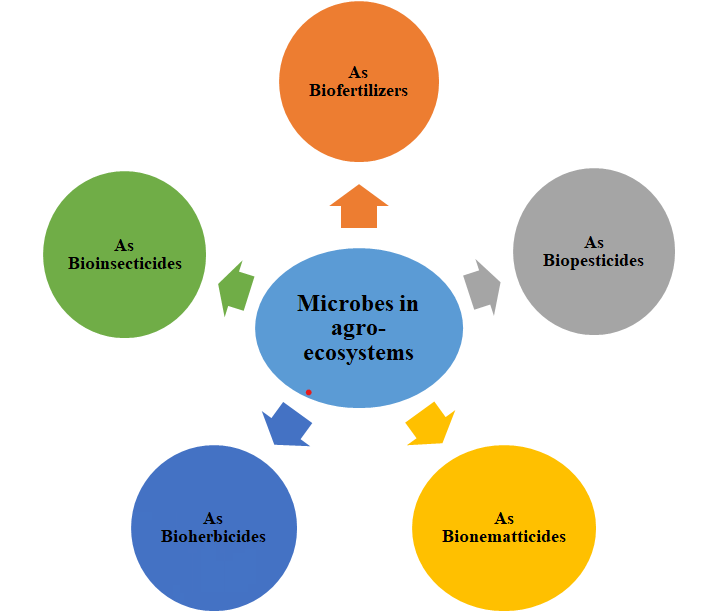
Microbes are necessary for the soil for improving productivity and soil health. Microbiologists and foresters use naturally occurring organisms to develop biofertilizers, bio-pesticides, bio-herbicides, bio-insecticide, and bio- nematicides to assist plant growth, survival, and control weeds, pests, and diseases (Figure 1). Microbes that live in the soil actually help plants to absorb more nutrients. Plants and friendly microbes are involved in nutrient recycling. In return, plants donate their waste by-products for the microbes to use as food. Scientists use these friendly microbes to develop biofertilizers. Phosphate, nitrogen, and potash are important macronutrients for plant development [20, 21, 22]. These compounds exist actually within the environment, but plants have a constrained capacity to extricate them. Phosphate plays an imperative part in trim push resistance, development, quality, and specifically or by implication, in nitrogen obsession.
Species of Pseudomonas and Penicillium help to unlock phosphate from the soil. Rhizobium is a bacteria used to make bio fertilizers. This bacterium lives on the plant’s roots called nodules. The nodules are biological factories that can take atmospheric nitrogen and convert it into an organic form that the plant can use. Potassium is an essential macronutrient that plays a vital role in the growth, metabolism, and development of plants. With a large population of friendly bacteria on the root’s rhizosphere, the legume can use naturally occurring nitrogen instead of the expensive traditional nitrogen fertilizer. Moreover, biofertilizers help plants use all resources available in the soil and air, thus permitting farmers to reduce the number of chemical fertilizers. Important applications of microbes in agro ecosystems are given below:
As Bio Fertilizers
Bio fertilizers are the source of microbial inoculants, which have confidence supported by many countries both economically and environmentally. Therefore, in developing countries like India, microbial biofertilizers can solve problems of high input cost of chemical fertilizers, and thus may save the economy of the country [23]. Microbial bio fertilizers directly provide nutrition to crop plants. These are cultures of microbes (bacteria and fungi) packed in liquid formulations or in the carriers as wettable powder formulations. Thus, the critical input in biofertilizers is the microbes. They help plants indirectly through better uptake of macro and micronutrients and improving nutrient availability in the soil ecosystems. Microbial biofertilizers can be defined as microbial inoculants containing live colony-forming units (cells) or spores of selected strains of nitrogen-fixing, phosphate and zinc solubilizing, potassium mobilizing microbes, applied to seed, soil, or compost to accelerate certain microbial processes; thus, augmenting the availability of nutrients in an easily assailable form to plants. Soil bacteria, nitrogen fixing soil bacteria, cyanobacterium, phosphate solubilizing soil bacteria, molds, and fungi are some of the most common biological fertilizers [24].
Biological Nitrogen Fixation (BNF)
Several bacterial species belonging to genera Acetobacter, Acinetobacter Azotobacter, Azospirillum, Flavobacterium, Erwinia, Burkholderia, Alcaligenes, Arthrobacter, Enterobacter, Rhizobium, Bradyrhizobium, and Serratia are associated with the plant rhizosphere and can exert a positive effect on plant development [20, 21]. Plants play a significant role in selecting and enriching particular types of bacteria through the constituents of their root exudates. Hence, the bacterial community within the rhizosphere is created depending on the nature and concentrations of natural constituents of exudates, and the comparing capacity of the microscopic organisms to utilize these as sources of vitality [25]. There is a continuum of bacterial communities in the soil rhizosphere, rhizoplane and inside the plant tissues [25]. Rhizosphere bacterial communities however have efficient systems for uptake and catabolism of organic compounds present in root exudates [26]. Several bacteria help to derive maximum benefit from root exudates by their ability to attach to the root rhizoplane.
Since associative interactions of plants and microbes must have come into existence as a result of co-evolution, the utilization of the last-mentioned gather as bio inoculants must be preadapted so that it fits into a long-term maintainable agricultural system. PGPRs are commonly used as bioinoculants for improving the growth and yield of crops and offer an attractive way to replace chemical fertilizers, pesticides, and supplements [27]. The use of biofertilizer, bio enhancer BNF bacteria, and beneficial microbes can reduce chemical fertilizer and consequently lower production costs. Application of PGPR to increase productivity may be a viable alternative to organic fertilizers which also helps in reducing pollution and preserving the environment in the spirit of ecological agriculture [28]. Thus, rhizospheric bacteria can be a promising tool for promoting plant growth in agro ecosystems [29]. Moreover, PGPR or combinations of PGPR and AMF can improve the nutrient use efficiency of fertilizers and allow reduced application rates of chemical fertilizers [30, 31, 32].
Symbiotic Nitrogen Fixer (SNF) Bio Fertilizer
Two groups of nitrogen-fixing bacteria (NFB) have been studied extensively, which include Frankia and Rhizobia. Frankia forms root nodules on more than 280 species of woody plants from 8 different families [33]. However, its symbiotic relationship is not as well understood. Frankia is known to form an effective symbiosis with the species of Alnus and Casuarina [1, 34, 35]. Several individual species may improve plant nutrition by releasing plant growth regulators, siderophores, and hydrogen cyanide or may increase phosphate availability [36]. An increase in rhizosphere populations has been reported after crop rotation with non-legumes [37]. With abundance benefiting subsequent crops [26, 38]. In rhizobial taxonomy, thirteen genera (viz., Azorhizobium, Bradyrhizobium, Mesorhizobiumm, Methylobacterium, Rhizobium, and Phyllo bacterium, Microvigra, Ochrobacterium, Devosia, Shinella, Burkholderia and Sinorhizobium) are derived, based on the polyphasic taxonomic methodology. Under different agro- climatic conditions, legumes of economic importance are grown in India, and the presence of native rhizobia has therefore been anticipated. Rhizobium and Bradyrhizobium are the most important NFBs used in developing countries.
Rhizobium
Rhizobium is a gram-negative nitrogen-fixing bacteria (BFB). The genus is capable of enhancing the ability of legumes to fix atmospheric nitrogen into ammonia and acts as a natural biofertilizer for leguminous crops. Rhizobium forms a symbiotic association with leguminous crops to develop nitrogen-fixing nodules in the roots of host crops such as lentils, beans, lupine, cowpea, pea, mung bean, red gram, soybean, alfalfa, beans, leguminous trees, etc., thereby, playing a vital role in agriculture [39, 40, 41, 42, 43]. The name rhizobia refer to Rhizobium, Bradyshzodium, Sinorhizobium, Azorhizobium, and Mesorhizobium. They can exert direct or indirect influence on plant hormones or decrease the inhibitory effect of pathogens by way of nitrogen fixation [44]. Different strains are found to be active in arranging a continuous supply of nitrogen to the plants. Strains are cultured as mass inoculum production under aseptic artificial conditions. Culture broth is applied as liquid formulation or mixed in definite strength with carrier materials such as charcoal, fly ash, talc powder, and molasses as wettable powder formulation.
The liquid and wettable powder formulations packed in sterilized bottles and/ or aluminum packets are marketed for application in the case of the specific crop either by treatment of the seeds of the legumes or sometimes by drenching of the base of the plants. Nodules formed in the roots of leguminous plants after the association of root and inoculum culture. These nodules are the active sites of nitrogen fixation. They help in increasing the productivity of pulses by assimilating atmospheric nitrogen and fixing it in the root nodule. Active nodules contain a red pigment called leghaemoglobin. Leghaemoglobin pigment regulates oxygen diffusion within the nodule. Intensities of nitrogen fixation are directly proportional to the amount of haemoglobin present in nodules [45]. They fix atmospheric nitrogen and thus not only increase the production of the inoculated crops but also leave a fair amount of nitrogen in the soil, which benefits the subsequent crops. Rhizobium is the best biofertilizer for leguminous crops in the worldwide ecosystem. Rhizobium can fix approximately 50-230 Kg N ha-1 and improve by 10-35% crop productivity. Numerous studies have demonstrated that a variety of free-living rhizospheric and endophytes can promote nodulation and nitrogen fixation of various rhizobium strains, leading to increased plant leguminous plant growth (Table 1).
| Rhizobia species | Co-Inoculation | Host Plants | References |
|---|---|---|---|
| R. tropici CIAT899 | Paenibacillus polymyxa (DSM 36) | Phaseolus vulgaris | [46] |
| R. tropici CIAT899 | Pseudomonas fluorescens YsS6 | Phaseolus vulgaris | [47] |
| Rhizobium spp. | Bacillus aryabhattai Sb | Trifolium repens | [48] |
| Rhizobium leguminosarum bv. Tri foli | Bacillus insolutis, Bacillus brevis Agrobacterium rhizogene | Trifolium pratense | [49] |
| Rhizobium | Bacillus subtilis OSU-142 | Phaseolus vulgari | [50] |
| Rhizobium leguminosarum PR1 | Bacillus thuringiensis KR1 | Pisum sativum; Lens culinaris | [51] |
| Bradyrhizobium japonicum | B. subtilis NEB4 and NEB5 B. thuringiensis NEB1 | Glycine max | [52] |
| B. japonicum | Nonomuraea rubra | Glycine ma | [53] |
| Sinorhizobium melilot | Exiguobacterium sp. M2N2c and B1N2b | Trigonella foenum- graecum | [54] |
| E. adhaerens | Paenibacillus taichungensis M10 Paenibacillus | Vigna radiata | [55] |
| Mesohizobium spp. Ca181 and Ca313 | Pseudomonas sp. CRP55b and CRS68 | Cicer arietinum | [56] |
| Cupriavidus taiwanensis | Pseudomonas fluorescens | Mimosa pudica | [57] |
| Mesorhizobium ciceri | Anabaena | Cicer arietinum | [58] |
| Ensifer (Sinorhizobium) medicae | Pseudomonas fluorescens | Medicago truncatula | [59] |
| Rhizobium etli | Paenibacillus polymyxa | Phaseolus vulgaris | [60] |
Table 1: Beneficial interactions between consortia of rhizobia and non-rhizobial bacteria and their positive effects in the symbi
It is well known that nitrogen plays a very significant role in plant growth and crop productivity. Apart from symbiotic nitrogen fixation, non-symbiotic nitrogen fixation has great significance in agricultural development but one main limitation that it faces is the availability of carbon and energy sources for the energy-intensive nitrogen fixation process. However, this limitation can be compensated by moving closer to or inside the plants, viz, in diazotrophs present in the rhizosphere, rhizoplane, or those growing endophytically.
Plant Growth Promoting Rhizobacteria (PGPR)
The PGPR, a group of beneficial plant bacteria is potentially useful for stimulating plant growth and increasing crop productivity. It is frequently used successfully in field crops for increasing productivity through improved nutrient uptake [61]. Commercial applications of PGPR are being tested and are successful; however, a better understanding of the microbial interactions that result in improving plant growth will greatly increase the success rate of field applications [62]. PGPR, a root-colonizing bacterium, is known to influence plant growth through a variety of direct and indirect mechanisms. Some chemical changes in soil are associated with PGPR. Some bacterial strains directly regulate plant physiology by mimicking the synthesis of plant hormones, whereas others increase mineral and nitrogen availability in the soil as a way to augment growth. The isolates could exhibit more than two or three PGPR trials, which may promote plant growth directly or indirectly, or synergistically [63].
The plant growth stimulating effect of bacterial inoculants is influenced by soil nutritional status. Bacterial inoculation has a much better stimulatory effect on plant growth in nutrient-deficient soil than in nutrient-rich soil [21]. The diazotroph bacterial inoculation significantly increases the seed cotton yield, plant height, and microbial population in soil [64]. Bacteria isolated from composts such as agricultural waste compost (FWC), rice straw compost (RSC), Gliricidia vermicompost (GVC), and FWC- associated macrofauna exhibit synergistic effects on millet growth when used in combination with compost [65]. The use of PGPR with P-enriched compost in an integrated manner improves the growth, yield, and nodulation in chickpeas [66]. Useful bacteria can contribute to maintain plant’s intrinsic resistance to these challenges; therefore, the inoculation of bacterial consortium into crops can reduce the negative influence of biotic or abiotic stress conditions on plants [67] (Table 2).
| Crop | Stress | Outcome | References | |
|---|---|---|---|---|
| Pseudomonas fluorescens and Azospirillum | Cotton | Rhizoctonia bataticola | Increased seed cotton yield, Decreased root rot incidence | [68] |
| Pseudomonas aeruginosa PHU094 and Mesorhizobium sp. RL091 | Chickpea | Sclerotium rolfsii | Plant growth promotion (increased shoot length and total biomass | [69] |
| Pseudomonas spp. | Potato | Phytophthora infestans | Reduction of mycelial growth Decreased release of zoospores induced systemic resistance (ISR) activation (reduced the number of pathogen spores) | [70] |
| Xanthomonas sp.Stenotrophomonas sp, and Microbacterium sp | Arabidopsis thaliana | Hyaloperonospora arabidopsidis | Plant growth promotion, ISR activation (peroxidase (PO), polyphenol oxidase (PPO), phenylalanine ammonia-lyase | [71] |
| Pseudomonas putida CRN-09 and Bacillus subtilis CRN-16 | Mung bean | Macrophomina phaseolina | Plant growth promotion (increased shoot and root length, shoot and root fresh weight) | [72] |
| Ochrobactrum pseudogrignonense RJ12, Pseudomonas sp. RJ15, and Bacillus subtilis RJ46 | Black gram and Pea | Drought | Plant growth promotion (increased seed germination percentage, root length, shoot length, and dry weight) Elevated production of ROS scavenging enzymes and cellular osmolytes Higher leaf chlorophyll content | [73] |
| Bacillus cereus AR156, Bacillus subtilis SM21, and Serratia sp. XY21 | Cucumber | Drought | Increased the leaf proline content Significantly enhanced the superoxide dismutase (SOD) activity | [74] |
| Brevibacillus fluminis, Brevibacillus agri, and Bacillus paralicheniformis | Brinjal, potato, tomato, and chilli | Salinity | Increased germination percentage Plant growth promotion (an increase in shoot length, root length, dry and fresh weight | [75] |
| B. megaterium CAM12 and P. agglomerans CAH6 | Mung bean | Aluminum and drought | Reduced Al uptake in plants Plant growth promotion (increased plant biomass) Higher content of carotenoids, chlorophyll | [76] |
Table 2: Bacterial consortia and their beneficial effects on crop plants under biotic and abiotic stresses.
However, novel methods are needed to explore bacterial- microbe and plant-microbe interactions under abiotic and biotic stress conditions to identify potential bacteria that are resistant to stress or stress tolerance bacteria to improve plant growth and 0 [77].
Phosphate Solubilizing Bacteria (PSB)
Phosphorus is the second most important key element after nitrogen as a mineral nutrient in terms of quantitative plant requirements. The improvement of soil fertility is one of the most common strategies to increase agricultural productivity. In addition to BNF, Phosphate solubilization is equally important for crop efficiency and soil health. Phosphorus is an essential macronutrient important for the growth and development of living organisms. Microorganisms offer a biological rescue system capable of solubilizing the insoluble inorganic P of soil and making it available to plants. PSB is capable of converting insoluble inorganic phosphorus into an available soluble form by producing organic acids and acid phosphatases which play a major role in the mineralization of organic phosphorus. The rhizospheric phosphate utilizing bacteria could be a promising source for PGPR in agriculture [28]. Several studies have reported that the PGPR inoculants increase P uptake by plants [78, 79].
Among the heterogeneous and naturally abundant microbes inhabiting the rhizosphere, the phosphate solubilizing microbes (PSM) including bacteria have provided an alternative biotechnological solution in sustainable agriculture to meet the P demands of plants. These organisms not only supply phosphorus to plants, but also promote plant growth through other mechanisms. Current developments in our understanding of the functional diversity, rhizosphere colonizing ability, mode of actions, and careful application are likely to facilitate their use as reliable components in the management of sustainable agricultural systems [31, 80]. The most proficient PSM belong to genera Bacillus, Rhizobium, and Pseudomonas, amongst bacteria, and Aspergillus and Penicillium, amongst fungi. Within rhizobia, two species modulating chickpea, Mesorhizobiumm ciceri, and Mesorhizobiumm editerraneum, are known as good phosphate solubilizers [81]. Identification and characterization of soil PSB for effective plant growth promotion broadens the spectrum of phosphate solubilizers available for field application. Moreover, the application of PSM and PGPR together can reduce chemical P by up to 50% without any significant reduction of grain yield in corn [45]. It also enhances vegetative growth and fruit quality, in addition to the reduction in the pollution of the environment [82].
Potash Mobilizing Bacteria (PMB)
Potassium is the third most essential macronutrient that plays a dynamic role in regulating the opening and closing of stomata and enhancing CO2 uptake of Adenosine Triphosphate (ATP). ATP is the main molecule for storing and transferring energy within cells. ATP is produced in mitochondria and chloroplast crystals. The cell wall also bonds with another cell wall to form the structure of the plant. ATP is an important energy source for the growth metabolism and development of plants. It can be used to store energy for future reactions or be withdrawn to pay for reactions when energy is required by the plant cells. Although our soils are rich in potassium, the availability of potassium for absorption by plants is very low. PMB plays a vital role in the formation of amino acids and proteins from ammonium ions, which are absorbed by roots, from the soil. It also plays a role in transporting carbohydrates and proteins from the ground to the roots. PMB also plays an energetic role in the uptakes of other elements, particularly nitrogen, phosphorus, and calcium, and regulates the permeability of the cellular membrane.
Arbuscular Mycorrhizal Fungi (AM Fungi)
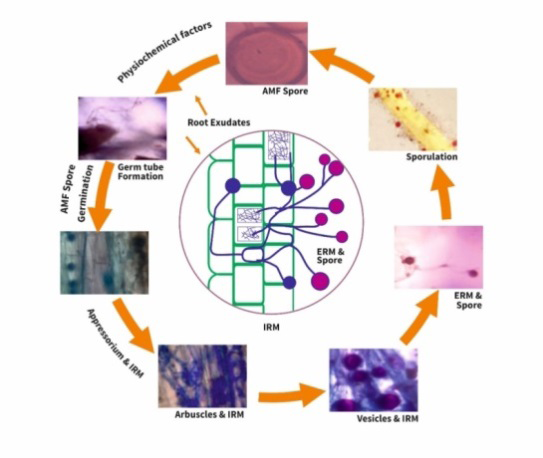
Mycorrhiza literally means ‘fungus root’. The term was coined a century ago to describe the symbiotic association of plant roots and certain fungi. There are several types of mycorrhizal fungi, orchids and ericaceous plants have their particular brand but those fungi which colonize in vivo, and in vitro commodities are referred to as AM fungi. AM fungi have been colonizing the root system of most native land plants essentially ever since plants have grown on land. The fungal hyphae extend from root surfaces like tiny conduits out into the soil, greatly enhancing the absorptive surface area of the root system. Under natural conditions, most plants live in a close beneficial association with soil microorganisms like AM fungi. The AM fungi colonize plants’ roots form an essential link between the plant and its soil environment, and work as an effective biological tool for creating a healthy ecosystem [83, 84].
According to Prasad [10], approximately 90% of all plant species form an association with AM fungi. These plant species constitute a broad range of agro-forestry and horticultural crops, vegetables, oilseeds, grains crops, millets, and ornamental and forage crops [85]. The roots of most plant species form a symbiotic association with specialized fungi (Glomus, Gigaspora, Acaulospora, Enterophospora, and Sclerocystis) known as mycorrhiza. AMF is the most abundant kind of mycorrhizal fungi described as universal plant symbioses. Studies on AMF conducted during the last few decades envisaged their occurrence in a wide variety of hosts, and different habitats, and have reported variability in their quality and quantity [24, 85, 86]. Prasad and Kaushik [87] have described the ecology, physiology, biochemistry, and taxonomy of mycorrhizal fungi. During the last few decades, mycorrhizae have been frequently applied in many trees, crops, and ornamental plants worldwide. Mycorrhiza increases by 20-50% yield and enhances the uptake of especially P, K, Zn, S, Fe, Cu, and water. Even, it can survive in harsh conditions in soil ecosystems. AMF is usually inoculated to seedlings, coated on seeds as well as directly applied to the soil. Moreover, AMF is applied for re-vegetating wasteland, and for the management of plant diseases and pests [88, 89].
| Arbuscular Mycorrhizal Fungi | ||||||||||
|---|---|---|---|---|---|---|---|---|---|---|
| Beneficial Relationships | Aculospora scrobiculata | Rhizophagus intraradices | Rhizophagus fasciculatum | Glomusetunicatum | Glomus aggregatum | Gigaspora margarita | Gigaspora decipiens | Funneliformis geosporus | Funneliformis mosseae | Scutellospora heterogana |
| Plant Nutrition Attributes | ||||||||||
| Increased Phosphorus (P) uptake | Yes | Yes | Yes | Yes | Yes | Yes | Yes | Yes | Yes | Yes |
| Increased Nitrogen (N) uptake | Yes | Yes | Yes | Yes | Yes | Yes | Yes | Yes | Yes | Yes |
| Access Organic forms of N and P | Yes | Yes | Yes | Yes | Yes | Yes | Yes | Yes | Yes | Yes |
| Increased Potassium (K) uptake | Yes | Yes | Yes | Yes | Yes | Yes | Yes | Yes | Yes | Yes |
| N, P, Ca, K, Mg, Fe, Mn, maximum accumulation in root & Shoot | Yes | Yes | Yes | Yes | - | Yes | - | Yes | Yes | - |
| Zn maximum accumulation in root | - | Yes | Yes | Yes | Yes | - | - | Yes | Yes | - |
| Increased Micronutrient (Fe, Zn, Ca, Mn, Cu, S, Mg, B) uptake | Yes | Yes | Yes | Yes | Yes | Yes | Yes | Yes | Yes | Yes |
| Increase P, N, Zn, B maximum uptake in the shoot | Yes | Yes | Yes | Yes | Yes | Yes | Yes | Yes | Yes | Yes |
| Increase photosynthetic activity | Yes | Yes | Yes | Yes | Yes | Yes | Yes | Yes | Yes | Yes |
| High levels of Enzyme Activity Benefiting Nutrient and Micronutrient Acquisition | Yes | Yes | - | Yes | - | Yes | - | Yes | Yes | Yes |
| Tolerant of High Fertility Levels | - | Yes | Yes | - | Yes | - | Yes | Yes | - | - |
| Extracts minerals from long distances from the root systems (beyond 8 cm) | Yes | Yes | Yes | Yes | Yes | Yes | Yes | Yes | Yes | Yes |
| Increases Mineral Uptake | Yes | Yes | Yes | Yes | - | Yes | - | Yes | - | - |
| Effective Root Colonization with time-release Fertilizers | - | Yes | Yes | - | Yes | - | Yes | - | Yes | Yes |
| Plant Growth and Its Establishment | ||||||||||
| Increased Feeder Root Systems | Yes | Yes | Yes | Yes | Yes | Yes | Yes | Yes | Yes | Yes |
| Improved Plant Establishment | Yes | Yes | Yes | Yes | Yes | Yes | Yes | Yes | Yes | |
| Increased Immune power of the Crop | Yes | Yes | Yes | Yes | Yes | Yes | Yes | Yes | Yes | Yes |
| Increases Production of Vegetable Crops | Yes | Yes | Yes | - | - | - | - | - | Yes | Yes |
| Increases Crop Yields | Yes | Yes | Yes | Yes | Yes | Yes | Yes | Yes | Yes | Yes |
| Very Effective in Agricultural soils | Yes | Yes | Yes | Yes | - | Yes | Yes | Yes | Yes | Yes |
| Improved Growth of Grain Crops | Yes | Yes | Yes | Yes | Yes | Yes | Yes | Yes | - | - |
| Improved Growth of Tropical and Sub-tropical Fruits | Yes | Yes | Yes | Yes | Yes | Yes | Yes | Yes | Yes | Yes |
| Improved Performance of Woody Perennials | Yes | Yes | Yes | Yes | - | Yes | Yes | Yes | Yes | Yes |
| Increases Fruiting and Flowering | Yes | Yes | Yes | Yes | Yes | Yes | Yes | Yes | ||
| Improves Plant Performance in Sandy Soils | - | - | - | - | Yes | - | - | - | - | - |
| Improves Performance of Palms and Fruit Trees | Yes | Yes | Yes | Yes | Yes | Yes | - | Yes | - | - |
| Improves Growth and Performance of Turf Grasses, Agricultural Crops and Nursery Stock | - | Yes | Yes | Yes | - | - | Yes | - | Yes | Yes |
| Well-adapted to a Wide Variety of Plants and Soil Conditions | Yes | Yes | Yes | - | - | - | - | - | Yes | Yes |
| Enhances Crops product Quality | Yes | Yes | Yes | Yes | Yes | Yes | Yes | Yes | Yes | |
| Enhance Seed’s minerals and Vitamins | Yes | Yes | Yes | Yes | - | Yes | Yes | Yes | Yes | Yes |
| Suppression of plant pathogens and root diseases | ||||||||||
| Stimulates Root Development | Yes | Yes | Yes | Yes | - | Yes | Yes | Yes | Yes | Yes |
| Keeps Root Systems Healthier | Yes | Yes | Yes | Yes | Yes | Yes | Yes | Yes | Yes | |
| Nematode Protection of Roots | - | Yes | - | Yes | - | - | - | - | Yes | Yes |
| Promotes Disease Suppression | Yes | Yes | Yes | Yes | - | Yes | Yes | Yes | Yes | Yes |
| Effectively Suppressed Verticillium wilt | - | - | Yes | Yes | - | - | - | - | Yes | - |
| Heat and Drought Tolerance | ||||||||||
| Active during periods of low water availability | Yes | Yes | Yes | Yes | - | Yes | Yes | Yes | Yes | |
| Greatly improves drought tolerance | Yes | Yes | Yes | Yes | - | Yes | Yes | Yes | Yes | |
| Drought protection of crops | Yes | Yes | Yes | Yes | Yes | Yes | Yes | Yes | Yes | |
| Soil Physical and Chemical Conditions | ||||||||||
| Protects Against Heavy Metal Toxicity | - | Yes | Yes | Yes | Yes | Yes | Yes | Yes | Yes | |
| Effective in Mine Reclamation | Yes | Yes | Yes | Yes | Yes | Yes | Yes | Yes | Yes | |
| Salt Tolerance | Yes | Yes | Yes | Yes | - | - | Yes | Yes | Yes | |
| Tolerance in Plants Growing on Cr Contaminated Soils | - | Yes | Yes | Yes | - | Yes | Yes | Yes |
Table 3: AM fungi Potential Attributed and Their Beneficial Relationship with Land Plants.
Mycorrhizae for Plant Growth
Mycorrhizae play a positive role in phosphate uptake by plants (Table1). In most soils, a large part of P is held in mineral lattices and therefore, is not immediately exchangeable with ions in soil solution. The massive synthesis of cytoplasm is proportional to the increase in plasmalemma area in the arbuscular region. Roots of mycorrhizae-inoculated plants generally uptake more P from soil. When a phosphate threshold is reached, only mycorrhizal roots are able to absorb P from soil [33, 35, 81, 90, 91]. However mycorrhizal plants do not gain access to insoluble P in soil. Currently, it has been made clear that replenishment of the supply of P from distant soil (beyond the 8 cm distance from roots) to root surfaces being low, the mycorrhizal hyphae, having an organic connection with the root, extend to this distance and absorb P [35].
This arbuscular mycorrhizae-mediated phosphate transport takes place in three phases namely uptake by fungal hyphae in soil, movement to hyphae inside the root cortex, and release in the host plant. Usually, the fungus uptake P from the soil in the form of orthophosphate ions from the labile pool, and its translocation to the root is believed to take place mainly by cytoplasmic streaming of polyphosphate granules in the vacuoles of the mycorrhizal fungus. Whereas, examining the role of AMF to utilize various less available P sources, such as rock phosphate, several studies [92], have reported that possibly due to greater physical contact between phosphate particles and hyphae, than between host roots and these particles, more P become available to mycorrhizal plants [93, 94, 95, 96, 97, 98]. Currently, mycorrhizae are being considered a system of diverse importance in agriculture. Their effects in causing shifts in chlorophyll and plant hormone gradients, resistance to water stress, and decreased leakage of electrolytes from injured or diseased cells are gaining importance and drawing the attention of scientists [99, 100, 101, 102, 103]. Scientists observed enhanced and improved productivity for various crops when infected with different species of AMF. Moreover, the rotation of crops influences the stability of mycorrhizal flora in soil ecosystems.
The importance of AMF as a tool for improving growth and productivity in diverse groups of plants was recognized only after the work of Baylis [104] and Mosse [105]. However, during the last five decades, a lot of information has been gathered about the taxonomy, ecology, physiology, and anatomy of AM fungi and their relationship with the hosts, especially with reference to the uptake of water, phosphorous and other macro and micronutrients, hormone production, wasteland management, and control of diseases [29, 30, 106, 107, 108, 109, 110, 111]. Currently, attempts are being made to cultivate them in culture and use them in different plant production systems [75, 112, 113, 114, 115].
As Bio Pesticides
Biopesticides are certain types of pesticides derived from natural organisms, such as bacteria, fungi, viruses, or protozoans. Microbes are the active ingredient of biopesticides. Biological pesticides can control many different types of pests, but the individual active ingredients are relatively specific to the target pest. Microbes found in the soil are not so friendly to plants. These pathogens can cause disease and damage plants. Biopesticides are generally inherently less toxic than traditional pesticides. They usually only affect organisms closely related to the target pest. Biopesticides are effective in very small quantities and decompose quickly, resulting in lower exposures, and largely avoiding pollution problems. They critically reduce the use of conventional pesticides, and crop yields are high after the application of biopesticides. The major group of microbes used as biopesticides include bacteria genera, Chromobacterium, Pseudomonas, and Yersinia, fungal genera Beauveria, Paecilomyces, Verticillium, Hirsutella, Metarhizium, and Lecanicillium and nematodes belonging to the genera Steinernema and Heterorhabditis [116, 117, 118].
As Bio Herbicides
Weeds are a problem for humans, animals, and the environment. Not only do they compete with crops for water, nutrients, sunlight, and space, but they also act as a breeding ground for insects and pests, clog irrigation and drainage systems, affect crop quality, and store weed seeds in crops. Bioherbicides are an environment-friendly alternative to harmful and chemical pesticides. The microbial population of herbicides is defined as bioherbicides that can control weeds. Bioherbicides are another way of controlling weeds without the environmental hazards posed by synthetic herbicides. In this approach, indigenous plant pathogens isolated from weeds are cultured to produce a large number of infected propagules which are applied at a rate that could cause a high level of infection leading to suppression of the target weed. It is estimated that there are over 100 plant pathogens that have or are under evaluation for their potential as bioherbicides. These include fungi and bacteria that cause foliar diseases, soilborne fungi, bacterial pathogens, and deleterious rhizobacteria. Bio herbicide compounds are derived from microbes such as bacteria, protozoa, fungi, mites, and other biological agents to kill weeds, insects, and pathogens. Biological herbicides are available in the form of some suspensions which are biodegradable and show no effect on the environment. Microorganisms have invasive genes that attack the weed’s defense genes, allowing them to kill the weed. The benefit of using bioherbicides is that they can survive in the environment long enough for the next growing season when there will be more weeds to infect. Because they are cheaper than synthetic pesticides, they have the potential to significantly reduce agricultural costs. Bioherbicides are not harmful to the environment compared to conventional herbicides.
As Bio insecticides: Presently, the world population heavily depends on the agricultural production of plants and animals for daily food needs. Without this food source, many of us would not be able to survive. Pests are common in agriculture, and we use special substances called pesticides to control or kill them. Bioinsecticides are made from natural living microorganisms (bacteria, fungi viruses, etc.) found in nature. Insect pests are most dangerous for agricultural crops and lead to a reduction in crop productivity. Bioinsecticides can help in developing alternative controls to synthetic insecticides to fight against insect pests. There are microbes in the soil that attack fungi, viruses, or bacteria, which cause root diseases. Bioinsecticide coatings on the seed which carry these beneficial organisms can be developed to protect the plants during the critical seedling stage. Biological pesticides do not persist long in the environment and have a short shelf life. It is effective in small quantities, and safer for humans and animals compared to synthetic insecticides. They are highly specific, often affecting only a single species of insect, have a highly specific mode of action, act slowly, and the timing of their application is relatively critical. Fermentation technology is used for the mass production of bioinsecticide. Spores are harvested and packaged as liquid and suitable A powder that can be sprayed after being combined with water to create a suspension is referred to as a wettable powder formulation for application of insect- ridden fields. After spores are applied, they use enzymes to break through the outer surface of the insects’ bodies. Once inside the body, they begin to multiply and eventually lead to death. Bioinsecticides have the best potential for long- term insect control compared to conventional insecticides. Such as Bacillus thuringiensis, B. sphaericus is the potent bioinsecticide [119].
As Bionematicides: Crops are severely damaged by root nematodes, causing significant economic losses worldwide. Nematodes infection is one of the major problems in agriculture and horticulture crops including vegetables. Nematodes cause severe damage to the plant roots, thereby reducing water and nutrient absorption which leads to a decline in crop productivity. Also, the infested plant becomes more susceptible to other stress factors such as heat, water shortage, nutritional deficiencies and plant diseases. It has been observed that the nematode control becomes difficult with the application of common chemical pesticides, therefore biological nematicides have been suggested as the better option for the control of plant pathogenic nematode pests that infects agricultural crops. Pasteuria pentrans [120] Bacillus subtilis, B. cereus, B. pasteurii, B. amyloliquefaciens, B. mycoides, B. pumilus, B. sphaericus, P. fluorescence, Rhizobium leguminosarum, P. putida, S. marcescens can provoke ISR [121]. Important fungi that parasitize nematodes and reduce their population include Aspergillus niger, Paecilomyces lilacinus, Trichoderma harzianum, Arthrobotryso ligospora, and Paecilomyces lilacinus [122].
The term bio-compost means plant matter (waste of the sugar industry) that has been decomposed and recycled as a fertilizer or manure. Bio-compost is considered a key ingredient in organic farming. It is very rich in nutrients. The process of bio-composting is done by simply piling up waste in the field or any outdoor place and then leaving it undisturbed for three to six months or more. The modern- day bio-composting process has many steps like monitoring the composting at regular intervals. The plant waste is decomposed using several human and plant-friendly bacteria and fungi. It is usually done by shredding the plant matter, adding sufficient water to maintain proper moisture level, and then regularly turning the mixture to provide better aeration. The addition of worms and fungi helps in the process of decomposition. They break up the complex compounds into simpler ones and during the process, lots of heat, carbon dioxide, and ammonium are produced. This ammonium is recycled by microorganisms and made available to plants as nitrite and nitrate. Bio compost consists of nitrogen, phosphate-solubilizing bacteria, and plenty of useful decomposing fungi. This biofertilizer helps the farmers to improve the physical structure, enriches the soil with helpful microbes, increases soil fertility, and improves water holding capacity, thereby increasing the crop’s growth, shoot and root biomass, and productivity. Soil- borne pathogens are observed to be suppressed after the application of organic amendments. Moreover, bio-compost in the ecosystems is very useful for controlling soil erosion, constructing wetlands, and using them as landfill cover.
Beneficial and Effective Microorganisms: A New Dimension for Green Technology
Generally, microbiologists consider that the number of soil microbes can be improved by applying organic amendments to the soil. It is commonly true because most soil microbes are heterotrophic. They require complex organic molecules of carbon and nitrogen for metabolism and biosynthesis [123]. Applications of organic inputs (seaweed, microbes, organic fertilizers, fish meal, crushed crab shells, etc.) not only help to balance the micronutrient content in soil but also increase the population of beneficial antibiotic- producing actinomycetes. It changes the soil to a disease- suppressive condition within a relatively short period. Beneficial microbes are predominant in organic farming or natural farming methods; however, their function will depend on the ecosystem and environmental conditions. It can take several hundred years for various species of higher and lower plants to interact and develop into a definable and stable ecosystem [27, 124]. The ultimate goal is to select microorganisms that are physiologically and ecologically compatible with each other and that can be introduced as consortium cultures into the soil where their beneficial effects can be realized [14].
Conclusion and Future Prospective
The soil microbial community functions in several biogeochemical processes that are fundamental to soil development and plant growth. With an extensive literature assessment, it can be concluded that the microbes are utilized in agriculture and forestry for various purposes. A significant consideration in the application of useful microbes to soil is the optimization of their synergistic properties. Beneficial microbes become effective after inoculation into the soil, their initial populations must be maintained at a certain critical threshold level. The highest reliable approach is to inoculate the soil with favourable microorganisms as part of a mixed culture, at a sufficiently high inoculum density to maximize the potential for modification to environmental and environmental conditions. There is an increasing global trend of organic farming which encourages the application of biofertilizers and bio-pesticides to assist plant growth and control weeds, pests, and diseases. Amidst the growing concerns of environmental deterioration, going green is probably the only way out for environment- friendly sustainable agriculture and maintaining the natural properties of the soil. Optimizing the application of microbial fertilizers or inoculants is possibly the pertinent strategy for the efficient utilization of natural resources ensuring the sustainability of the natural resources and ecosystems. This approach will be suitable for agriculturalists, forestry practitioners, and organic nutritive crop growers with their low-input farming practices and simultaneously help to improve soil health and preserve the environment for the present and future generations.
Conflict of Interest
Authors have no conflict of interest.
References
-
Werner D (1998) II Grain legumes: Biological nitrogen fixation. Handbook of plant cultivation, volume tubers and root crops, grain and fodder legumes. In: Keller, et al. (Eds.), Verlag Eugen Ulmer, Stuttgart, pp: 554-562.
-
Prasad K, Warke RV, Khadke K (2019) Management of soil borne pathogens to improve productivity of pulses using organic technologies for sustainable agriculture. International Journal of Research and Analytical Reviews 6(2): 82-101.
-
Kawaguchi M, Minamisawa K (2010) Plant-Microbe Communications for Symbiosis. Plant Cell Physiology 51(9): 1377-1380.
-
Gautam SP, Prasad K (2001) Mycorrhiza-Importance and biotechnological application. Innovative Approaches in Microbiology. In: Maheshwari DK, et al. (Eds.), Bishon Singh Mahendra Pal Singh, Dehradun, India, pp: 83-114.
-
Prasad K (2015) Bio fertilizers: A new dimension for agriculture and environmental development to improve production in sustainable manner. Journal of Basic and Applied Mycology 11(1& II): 5-13.
-
Prasad K, Meghavanshi MK (2005) Interaction between indigenous Glomus fasciculatum (AM fungus) and Rhizobium and their stimulatory effect on growth, nutrient uptake and nodulation in Acacia nilotica. Del Flora and Fauna 11(1): 51-56.
-
Vessey JK (2003) Plant growth promoting rhizobacteria as biofertilizers. Plant and Soil 255(2): 571-586.
-
Prasad K (2000) Growth responses of Acacia nilotica (L.) Del. inoculated with Rhizobium and Glomus fasciculatum VAM fungi. Journal of Tropical Forestry 16(1): 22-27.
-
Parr JF, Hornick SB (1993) Assessment of the 3rd International Conference on Kyusei Nature Farming: Round Table Discussion by USDA Scientists. Nature Farming Research and Development Foundation, USA, pp: 1994.
-
Prasad K (2017) Biology, Diversity and Promising Role of Mycorrhizal Entophytes for Green Technology. In: Maheshwari DK (Ed.), Endophytes: Biology and Biotechnology, Volume 1, Series Sustainable Development and Biodiversity 15. Springer International Publishing AG, Switzerland, pp: 267-301.
-
Raymond KN, Dertz EA, Kim SS (2003) Enterobactin: An archetype for microbial iron transport. Proceedings of the National Academy of Sciences 100(7): 3584-3588.
-
Parr JF, Hornick SB (1992) Agricultural use of organic amendments: A historical perspective. Amer J Alternative Agric 7: 181-l89.
-
National Academy of Sciences (1989) Committee on the Role of Alternative Agriculture Farming Methods in Modern Production Agriculture. Alternative Agriculture. National Academy Press, Washington, USA, pp: 1-16.
-
Higa T (1994) Effective Microorganisms: A new dimension for Nature Farming. Proceedings of the Second International Conference on Kyusei Nature Farming, USA, pp: 20-22.
-
Palaniappan SP, Natarajan (1993) Practical aspects of organic matter maintenance in soils. Organics in soil health and crop production. In: Thompson PK (Ed.), Tree crops development foundation, India, pp: 23-41.
-
Zifcakova L (2020) Factors affecting soil microbial processes. In: Datta R, et al. (Eds.), Carbon and Nitrogen cycling in soil, Springer, Singapore, pp: 439-461.
-
Suh JS, Lee SK, Kim KS, Seong KY (1995) Solubilisation of Insoluble Phosphates by Pseudomonas putida, Penicillium sp. and Aspergillus Niger isolated from Korean Soils. Korean Journal of Soil Science and Fertilizer 28(3): 278-286.
-
Singh A, Jain A, Sarma BK, Upadhyay RS, Singh SB (2014) Rhizosphere competent microbial consortium mediates rapid changes in phenolic profiles in chickpea during Sclerotium rolfsii infection. Microbiol Res 169: 353-360.
-
Meyer RJ, Linderman RG (1986) Response of subterranean clover to dual inoculation with vesicular arbuscular mycorrhizal fungi and plant growth promoting rhizobacterium Pseudomonas putida. Soil Biol Biochem 18(2): 185-190.
-
Okon Y, Labandera (1994) Agronomic applications of Azospirillum. Improving Plant Productivity with Rhizosphere Bacteria. In: Ryder MH, et al. (Eds.), Bowen GD Common wealth Scientific and Industrial Research Organization, Australia, pp: 274-278.
-
Hurek T, Handley LL, Hurek RB, Pich Y (2007) Azoarcus grass endophytes contribute fixed nitrogen to the plant in an unculturable state. Mol Plant Microb Interact 15: 233-242.
-
Dobbelaere S, Vanderleyden J, Okon Y (2010) Plant growth-promoting effects of diazotrophs in the rhizosphere. Crit Rev Plant Sci 22: 107-149.
-
Mohanty P, Singh PK, Chakraborty D, Mishra S, Pattnaik R (2021) Insight into the role of PGPR in sustainable agriculture and environment. Front Sustain Food Syst 5: 667150.
-
Umesha S, Singh PK, Singh RP (2018) Microbial biotechnology and sustainable agriculture. In Biotechnology for Sustainable Agriculture, Elsevier, Amsterdam, The Netherlands, pp: 185-205.
-
Tilak KVBR, Ranganayaki N, Pal KK, De R, Saxena AK (2005) Diversity of plant growth and soil health supporting bacteria. Current Science 89(1): 136-150.
-
Egamberdiyeva D (2005) Plant-growth- promoting rhizobacteria isolated from a Calcisol in a semi-arid region of Uzbekistan: biochemical characterization and effectiveness. Journal of Plant Nutrition and Soil Science 168(1): 94-99.
-
Curl EA, Truelove B (1986) The Rhizosphere. Springer Verlag, Berlin-Heidelberg, Germany, pp: 288
-
Hallmann J, Hallmann A, Mahaffee WF, Kloepper JW (1997) Bacterial endophytes in agricultural crops. Canadian Journal of Microbiology 43(10): 895-914.
-
Barriuso J, Solano BR (2008) Ecology, Genetic Diversity and Screening Strategies of Plant Growth Promoting Rhizobacteria (PGPR) Journal of Plant nutrition 56: 1-17.
-
Ashrafuzzaman M, Hossen FA, Ismail MR, Hoque MA, Islam MZ (2009) Efficiency of plant growth- promoting Rhizobacteria (PGPR) for the enhancement of rice growth. African Journal of Biotechnology 8(7): 1247- 1252.
-
Stefan M, Mihasan M, Dunca S (2008) Plant growth promoting Rhizobacteria can inhibit the in vitro germination of Glycine Max L seeds. Scientific Annals of University “Alexandru Ioan Cuza” Iasi. Section Genetics and Molecular Biology 3: 105-110.
-
Prasad K (2022) Stimulation Effect of Rhizospheric Microbes’ Plant Growth Promoting Rhizobacteria. Glycoprotein Producing AM Fungi and Synthetic Fertilizers Application on Growth, Yield, Nutrient’s acquisition and Alliin Content of Garlic Cultivation under Field Conditions in Southeast Region of Rajasthan, India, Adv Earth & Env Sci 3(2): 1-15.
-
Adesemoye A, Torbert H, Kloepper J (2009) Plant growth promoting Rhizobacteria allow reduced application rates of chemical fertilizers. Microbial Ecology 58(4): 921- 929.
-
Warke RV, Prasad K, Khadke K (2018) Impact of arbuscular mycorrhizal fungi (ROC-WA329) and phosphate solubilizing bacteria (WA302) on Zea Mays cultivated at Satara district of Maharashtra, India. Plant and soil health management: New Challenges and Opportunity, ICAR- Indian Institute of Pules Research, Kanpur, pp: 179.
-
Khadke K, Warke RV, Prasad K (2018) Interaction effects of arbuscular mycorrhizal fungi and free-living bacteria on soybean (Glycine max. L.) and evaluation of their efficacy. Plant and soil health management: New Challenges and Opportunity, ICAR- Indian Institute of Pules Research, Kanpur, India, pp: 293.
-
Schwintzer R, Tjepkema JD (1990) The Biology of Frankia and Actinorrhizal Plants. Academic Press, USA, pp: 99.
-
Wheeler CT, Miller JM (1990) Current and potential uses of actinorrhizal plants in Europe. The Biology of Frankia and Actinorrhizal Plants, Academic Press, USA, pp: 365-389.
-
Huss-Danell K (1990) The physiology of actinorrhizal roots. The Biology of Frankia and Actinorrhizal Plants. Academic Press San Diego, USA, pp: 128-156.
-
Antoun H, Beauchamp CJ, Goussard N, Chabot R, Lalande R (1998) Potential of Rhizobium and Bradyrhizobium species as plant growth promoting rhizobacteria on non- legumes: Effect on radishes (Raphanus sativus L). Plant and Soil 204 (1): 57-67.
-
Yanni YG, Rizk RY, Corich V, Squartini A, Ninke K, et al. (1997) Natural endophytic association between Rhizobium leguminosarum var. trifolii and rice roots and assessment of its potential to promote rice growth. Plant and Soil 194(1-2): 99-114.
-
Sahgal M, Johri BN (2003) The changing face of rhizobial systematics. Current Science 84(1): 43-48.
-
Kloepper JW, Leong J, Teintze M, Schroth MN (1980) Enhanced plant growth by siderophores produced by plant growth- promoting rhizobacteria. Nature 286: 885-886.
-
Kloepper JW, Reddy MS, Kabana R, Kenney DS, Kokalis- Burelle N (2004) Application of Rhizobacteria in transplant production and yield enhancement. Acta Horticulturae 631: 217-229.
-
Glick BR (1995) The enhancement of plant growth by free living bacteria. Canadian Journal of Microbiology 41(2): 109-114.
-
Mabrouk Y, Hemissi I, Salem IB, Mejri S, Saidi M (2018) Potential of rhizobia in improving nitrogen fixation and yields of legumes. Symbiosis, pp:107-122.
-
Prasad K (2022) Potential Impression of Arbuscular Mycorrhizal Fungi on Agricultural Growth, Productivity, and Environment toward Global Sustainable Development for Green Technology. In Applied Mycology: 111-136.
-
Rahimzadeh S, Pirzad A (2019) Pseudomonas and mycorrhizal fungi co-inoculation alter seed quality of flax under various water supply conditions. Industrial Crops and Products 129: 518-524.
-
Ji L, Tan W, Chen X (2019) Arbuscular mycorrhizal mycelial networks and glomalin-related soil protein increase soil aggregation in Calcaric Regosol under well- watered and drought-stress conditions. Soil and Tillage Research 185: 1-8.
-
Ghorchiani M, Etesami H, Alikhani HA (2018) Improvement of growth and yield of maize under water stress by co-inoculating an arbuscular mycorrhizal fungus and a plant growth promoting rhizobacterium together with phosphate fertilizers. Agriculture, Ecosystems and Environment 258: 59-70.
-
Mayer Z, Juhasz A, Trung AV, Posta K (2019) Impact of arbuscular mycorrhizal fungi on some defense enzyme activities at early stage of maize (Zea mays L.) under different abiotic stresses. Applied Ecology and Environmental Research 17(3): 6241-6253.
-
Figueiredo MVB, Martinez CR, Burity HA, Chanway CP (2008) Plant growth-promoting rhizobacteria for improving nodulation and nitrogen fixation in the common bean (Phaseolus vulgaris L.). World J Microbiol Biotechnol 24: 1187-1193.
-
Nascimento FX, Tavares MJ, Franck J, Ali S, Glick BR, et al. (2019) ACC deaminase plays a major role in Pseudomonas fluorescens YsS6 ability to promote the nodulation of Alpha-and Betaproteobacteria rhizobial strains. Arch Microbiol 201: 817-822.
-
Matse DT, Huang CH, Huang YM, Yen MY (2020) Effects of coinoculation of Rhizobium with plant growth promoting rhizobacteria on the nitrogen fixation and nutrient uptake of Trifolium repens in low phosphorus soil. J Plant Nutr 43: 739-752.
-
Sturz AV, Christie BR, Matheson BG, Nowak J (1997) Biodiversity of endophytic bacteria which colonize red clover nodules, roots, stems and foliage and their influence on host growth. Biol Fertil Soils 25: 13-19.
-
Elkoca E, Turan M, Donmez MF (2010) Effects of single, dual and triple inoculations with Bacillus subtilis, Bacillus megaterium and Rhizobium leguminosarum bv. phaseoli on nodulation, nutrient uptake, yield and yield parameters of common bean (Phaseolus vulgaris l. cv. ‘Elkoca-05’). J Plant Nutr 33: 2104-2119.
-
Mishra PK, Mishra S, Selvakumar G, Bisht JK, Kundu S (2009) Co-inoculation of Bacillus thuringeinsis-KR1 with Rhizobium leguminosarum enhances plant growth and nodulation of pea (Pisum sativum L.) and lentil (Lens culinaris L.). World J Microbiol Biotechnol 25: 753-761.
-
Bai Y, Zhou X, Smith DL (2003) Enhanced Soybean Plant Growth Resulting from Co-inoculation of Bacillus Strains with Bradyrhizobium japonicum. Crop Sci 43: 1774-1781.
-
Nimnoi P, Pongsilp N, Lumyong S (2014) Co-inoculation of soybean (Glycine max) with actinomycetes and Bradyrhizobium japonicum enhances plant growth, nitrogenase activity and plant nutrition. J Plant Nutr 37: 432-446.
-
Rajendran G, Patel MH, Joshi SJ (2012) Isolation and characterization of nodule associated Exiguobacterium sp. from the root nodules of fenugreek (Trigonella foenum-graecum) and their possible role in plant growth promotion. Int J Microbiol 230: 34-45.
-
Pandya M, Rajput M, Rajkumar S (2015) Exploring plant growth promoting potential of non rhizobial root nodules endophytes of Vigna radiata. Microbiol (Russ Fed) 84: 80-89.
-
Harwani D, Meghavanshi MK, Prasad K, Mahna SK, Werner D (2006) Stimulatory effect of adonitol on the redifferentiation potential of soybean root nodules bacteroids. Current Science 90(11):1474-1475.
-
Meghavanshi MK, Prasad K, Mahna SK (2005) Identification of pH tolerant Bradyrhizobium japonicum strains and their symbiotic effectiveness in soybean (Glycine max (L.) Merr.) in low nutrient soil. African Journal of Biotechnology 4(7): 663-666.
-
Farzana Y, Saad ROS, Kamaruzaman S (2009) Growth and storage root development of Sweet potato inoculated with rhizobacteria under glasshouse conditions. Australian Journal of Basic and Applied Sciences 3(2): 1461-1466.
-
Yazdani M, Bahmanyar MA, Pirdashti H, Esmaili MA (2009) Effect of Phosphate Solubilization Microorganisms (PSM) and Plant Growth Promoting Rhizobacteria (PGPR) on yield and yield components of Corn (Zea mays L). World Academy of Science, Engineering and Technology 49: 90-92.
-
Joseph B, Patra RR, Lawrence R (2007) Characterization of plant growth promoting Rhizobacteria associated with chickpea (Cicer arietinum L). International Journal of Plant Production 1(2): 141-152.
-
Anjum MA, Sajjad MR, Akhtar N, Qureshi MA, Iqbal A (2007) Response of cotton to plant growth promoting Rhizobacteria (PGPR) inoculation under different levels of nitrogen. Journal of Agricultural Research 45(2): 135- 143.
-
Hameeda B, Rupela O, Reddy G, Satyavani K (2006) Application of plant growth-promoting bacteria associated with composts and macro fauna for growth promotion of Pearl millet (Pennisetum glaucum L). Biology and Fertility of Soils 43(2): 221-227.
-
Parmar N, Dadarwal KR (1999) Stimulation of nitrogen fixation and induction of flavonoid-like compounds by rhizobacteria. J Appl Microbiol 86: 36-44.
-
Nascimento FX, Tavares MJ, Franck J, Ali S, Glick BR (2019) ACC deaminase plays a major role in Pseudomonas fluorescens YsS6 ability to promote the nodulation of Alpha- and Betaproteobacteria rhizobial strains. Arch Microbiol 201: 817-822.
-
Prasanna R, Ramakrishnan B, Simranjit K, Ranjan K, Kanchan A (2017) Cyanobacterial and rhizobial inoculation modulates the plant physiological attributes and nodule microbial communities of chickpea. Arch. Microbiol 199: 1311-1323.
-
Fox SL, Hara GW, Brau L (2011) Enhanced nodulation and symbiotic effectiveness of Medicago truncatula when co-inoculated with Pseudomonas fluorescens WSM3457 and Ensifer (Sinorhizobium) medicae WSM. Plant Soil 348: 245-254.
-
Petersen DJ, Srinivasan M, Chanway CP (1996) Bacillus polymyxa stimulates increased Rhizobium etli populations and nodulation when co-resident in the rhizosphere of Phaseolus vulgaris. FEMS Microbiol Lett 142: 271-276.
-
Marimuthu S, Ramamoorthy V, Samiyappan R, Subbian P (2013) Intercropping System with Combined Application of Azospirillum and Pseudomonas fluorescens Reduces Root Rot Incidence Caused by Rhizoctonia bataticola and Increases Seed Cotton Yield. J Phytopathol 161: 405-411.
-
Vrieze DM, Germanier F, Vuille N, Weisskopf L (2018) Combining Different Potato-Associated Pseudomonas Strains for Improved Biocontrol of Phytophthora infectants. Front Microbiol 9: 2573.
-
Berendsen RL, Vismans G, Yu K, Song Y, Jonge R, et al. (2018) Disease-induced assemblage of a plant-beneficial bacterial consortium. ISME J 12: 1496-1507.
-
Sharma CK, Vishnoi VK, Dubey RC, Maheshwari DK (2018) A twin rhizospheric bacterial consortium induces systemic resistance to a phytopathogen Macrophomina phaseolina in mung bean. Rhizosphere 5: 71-75.
-
Shahzad SM, Khalid A, Arshad M, Khalid MK, Mehboob I (2008) Integrated use of plant growth promoting bacteria and p-enriched compost for improving growth, yield and nodulation of chickpea. Pak J Bot 40(4): 1735- 1441.
-
Vimal SR, Singh JS, Arora NK, Singh S (2017) Soil- Plant-Microbe Interactions in Stressed Agriculture Management: A Review. Pedosphere 27: 177-192.
-
Kumar A, Verma JP (2008) Does plant-Microbe interaction confer stress tolerance in plants: A review? Microbiol Res 207: 41-52.
-
Chen YP, Rekha PD, Arun AB, Shen FT, Lai WA, et al. (2006) Phosphate solubilizing bacteria from subtropical soil and their tricalcium phosphate solubilizing abilities. Applied Soil Ecology 34(1): 33-41.
-
Igual JM, Valverde A, Cervantes E, Velazquez E (2001) Phosphate-solubilizing bacteria as inoculants for agriculture: use of updated molecular techniques in their study. Agronomie 21(6-7): 561-568.
-
Zaidi MS. Khan M, Ahemad M (2009) Plant growth promotion by phosphate solubilizing bacteria. Acta Microbiologicaet Immunologica Hungarica 56(3): 263- 284.
-
Rivas R, Peix A, Mateos PF, Trujillo ME, Martinez ME (2006) Biodiversity of populations of phosphate solubilizing rhizobia that nodulates chickpea in different Spanish soils. Plant and soil 287(1-2): 23-33.
-
Attia M, Ahmed MA, El-Sonbaty MR (2009) Use of biotechnologies to increase growth, productivity and fruit quality of Maghrabi Banana under different rates of phosphorous. World Journal of Agricultural Sciences 5(2): 211-220.
-
Prasad K (1993) Thesis. BR Ambedkar Bihar University, Muzaffarpur, Bihar, India.
-
Prasad K, Deploey JJ (1999) Incidence of arbuscular mycorrhizae and their effect on certain species of trees. Journal of the Pennsylvania Academy of Science 73(3): 117-122.
-
Prasad K, Pandey AK (2012) Mycorrhizal Symbiosis: A new dimension for agriculture and environmental development to improve production in sustainable manner. In: Bagyaraj DJ, et al. (Eds.), Microbial Diversity and Function. New India Publishing Agency, New Delhi, India, pp: 389-402.
-
Garcia JAL, Probanza A, Ramos B, Palomino MR, Manero FJG (2004) Effect of inoculation of Bacillus licheniformis on tomato and pepper. Agronomie for Sustainable Development 24(4): 169-176.
-
Trappe JM (1987) Phylogenetic and ecologic aspects of mycotrophy in the angiosperms from an evolutionary standpoint. Ecophysiology of VA Mycorrhizal Plants. CRC Press, Florida, US, pp: 5-25.
-
(2019) Jim Deacon the Microbial World. Mycorrhizas.
-
Prasad K, Kaushik S (2004) Ecology, physiology, biochemistry and taxonomy of arbuscular mycorrhizal fungi. In: Gautam SP, et al. (Eds.), Biological diversity: current trends. Shree Publication & Distributors, New Delhi, pp: 134-141.
-
Prasad K, Rajak RC (2000) Biotechnological application of mycorrhizae in reclamation of mined dumps. In: MK Rai, et al. (Eds.), Integrated Management of Plant Resources. Scientific Publishers, India, pp: 283-292.
-
Prasad K, Rajak RC (2001) Microbes and wasteland management: Challenge ahead. In: AK Roy, et al. (Eds.), Wasteland Management and Environment. Scientific Publishers, Jodhpur, India, pp: 27-39.
-
Prasad K, Rajak RC (2002) Management of plant pests through biological entities: Possibilities and prospects. In: Trivedi PC (Ed.), Plant Pest Management. Aavishkar Publishers, India, pp: 75-99.
-
Prasad K (2002) Effect of arbuscular mycorrhizae on biomass yield, uptake and translocation of nitrogen, phosphorus and potassium in Azadirachta indica L. In: Manohara C, et al. (Eds.), Frontier of Microbial Biotechnology and Plant Pathology. Scientific Publishers, India, pp: 187-191.
-
Prasad K (2013) Arbuscular mycorrhizal fungus plays a major role in agriculture and natural ecosystems to improve production in sustainable manner. In: Jamaluddin, et al. (Eds.), Microbes and Sustainable Plant Productivity. Scientific Publication, India, pp: 113-138.
-
Garcia JL, Probanza, A, Ramos B, Manero FJG (2001) Ecology, genetic diversity and screening strategies of plant growth promoting rhizobacteria. Journal of Plant Nutrition and Soil Sciences 164: 1-7.
-
Bieleski RL (1973) Phosphate pools, phosphate transport, and phosphate availability. Annu Rev Plant Physiol 24: 225-252.
-
Prasad K (2002) Application of arbuscular mycorrhizae fungal biofertilizer on biomass yield and nutrients uptake of Azadirachta indica. Agrobios Publication, Jodhpur, India, pp: 73-78.
-
Prasad K (2007) Improvement in Bioavailability of Nutrition and Biomass production to Azadirachta indica (Neem) by Arbuscular Mycorrhizal Symbiosis. Journal of Basic and Applied Mycology 6(I&II): 96-101.
-
Meghavanshi MK, Prasad K, Harwani D, Mahna SK (2008) Response of soybean cultivars towards inoculation with three Arbuscular Mycorrhizal Fungi (AMF) and Bradyrhizobium japonicum in alluvial soil. European Journal of Soil biology 44: 316-323.
-
Meghavanshi MK, Prasad K, Mahna SK (2010) Symbiotic potential, competitiveness and compatibility of indigenous Bradyrhizobium japonicum isolates to three soybean genotypes of two distinct agro-climatic regions of Rajasthan, India, Saudi Journal of Biological Sciences 17: 303-310.
-
Cordell D, Drangert JO, White S (2009) The story of phosphorus: global food security and food for thought. Glob Environ Change 9: 292-305.
-
Prasad K (1998) Biological control of rhizospheric microflora of Saccharum officinaum L. plant through vesicular arbuscular mycorrhizal (Glomus fasciculatum) fungi. Biome 8(1-2): 131-136.
-
Prasad K, Warke RV (2018) Arbuscular mycorrhizal fungi pay a promising role towards green technology and soil health Management. Plant and soil health management: New Challenges and Opportunity, ICAR- Indian Institute of Pules Research, Kanpur, pp: 191-192.
-
Prasad K, Meghavanshi MK, Harwani D, Mahna SK, Werner D (2005) Synergistic effect of arbuscular mycorrhizal fungi and Bradyrhizobium japonicum on growth, yield and nutrient status of Soybean (Glycine max (L.) Merrill). Anusandhan, pp: 23-29.
-
Prasad K, Khare A, Rawat P (2022) Glomalin Arbuscular Mycorrhizal Fungal Reproduction, Lifestyle and Dynamic Role in Global Sustainable Agriculture for Future Generation. Fungal Reproduction and Growth, pp: 1-22.
-
Joshi FR, Desai DK, Archana G, Desai AJ (2009) Enhanced survival and nodule occupancy of Pigeon pea nodulating Rhizobium sp. ST1 expressing feg, A gene of Bradyrhizobium japonicum 61A152. Online Journal of Biological Sciences 9(2): 40-51.
-
Prasad K, Pandey AK (2012) Mycorrhizal symbiosis: A new dimension for agriculture and environmental development to improve production in a sustainable manner. In: Bagyaraj DJ, et al. (Eds.), Microbial Diversity and Function. New India Publishing Agency, India, pp: 389-402.
-
Baylis GTS (1959) Effect of vesicular-arbuscular mycorrhizas on growth of Griselinialittoralis (Cornaceae). New Phytol 58(3): 274-278.
-
Mosse B (1962) The Establishment of Vesicular- Arbuscular Mycorrhiza under Aseptic Conditions. J gen Microbial 27(3): 509-520.
-
Siddiqui S, Alamri S, Alrumman S, Meghavanshi MK, Chaudhary KK, et al. (2015) Role of Soil Amendment with Micronutrients in Suppression of Certain Soil-Borne Plant Fungal Diseases: A Review. Organic Amendments and Soil Suppressiveness in plant Disease Management, pp: 363-380.
-
Rewari RB, Tilak (1988) Microbiology of pulses. In: Baldev B (Ed.), Pulse Crops, Oxford & IBH Publishing Company, New Delhi, pp: 373-411.
-
Bitterlich M, Franken P, Graefe J (2019) Atmospheric drought and low light impede mycorrhizal effects on leaf photosynthesis-A glasshouse study on tomato under naturally fluctuating environmental conditions. Mycorrhiza 29: 13-28.
-
Mathur S, Tomar RS, Jajoo A (2019) Arbuscular mycorrhizal fungi (AMF) protect photosynthetic apparatus of wheat under drought stress. Photosynthesis Research 139: 227-238.
-
Prasad K (2021) Glycoprotein Producing AM Fungi lifecycle and Potential Role in Agricultural Plant Lifespan and Global Environmental Changes for Sustainable Green Technology. J Ecol & Nat Resour 5(2): 000249.
-
Chang JH, Choi JY, Jin BR, Roh JY, Olszewski JA, et al. (2003) An improved baculovirus insecticide producing occlusion bodies that contain bacillus thuringiensis insect toxin. J Invertebr Pathol 84: 30-37.
-
Kumar V, Singh S, Upadhyay N (2019) Effects of organophosphate pesticides on siderophore producing soils microorganisms. Biocatal Agric Biotechnol 21: 101359.
-
Adeleke BS, Ayangbenro AS, Babalola OO (2022) In vitro screening of sunflower associated endophytic bacteria with plant growth-promoting traits. Front Sustain Food Syst 6: 903114.
-
Ciancio A (2018) Biocontrol potential of Pasteuria spp. for the management of plant parasitic nematodes. CABI Reviews 13(1-13): 5.
-
Gupta S, Dikshit AK (2010) Biopesticides: An ecofriendly approach for pest control. Journal of Biopesticides 3(1): 186-188.
-
Vejan P, Abdullah R, Khadiran T, Ismail S, Boyce AN (2016) Role of Plant Growth Promoting Rhizobacteria in Agricultural Sustainability-A Review. Molecules 21: 573.
-
Liu X, Xiang M, Che Y (2009) The living strategy of nematophagous fungi. Mycoscience 50: 20-25.
-
Li S, Duan YX, Zhu XF, Chen LJ, Wang YY (2011) The effects of adding secondary metabolites of Aspergillus niger on disease resistance to root-knot nematode of tomato. China Vegetables 1: 44-49.
- Plant Diversity, Regeneration Dynamics, and Socio-Ecological Impacts at the Forest-Savanna Transition Zone, Cameroon
- Bird Community, Feeding Guilds and Habitat Associations Along the Proposed River Dibombe Hydropower and Transmission Line Project in Nkam and Moungo Divisions, Cameroon
- Plant Diversity and Carbon Storage Potential Across Different Land Use Types in Infrastructure Development Landscapes in Cameroon: Implications for no Net Loss of Biodiversity
- Optimization and Modelling for the Remediation of Brilliant Green Dye and Ni2+ ions from Water Using Advanced gC3N4/PVA@ Alginate Bio-Polymeric Hydrogel Beads
- The Negative Implications of Using Cell Phones on Human Health and Environment
- A Comprehensive Survey of Population Ecology in Insects