
Zanzibar Yam Poisoning - A Rare and Debilitating Condition
Background: Zanzibar Yam poisoning is not common worldwide, much less so in Singapore. This species of plant has been imported for experimental purposes but have since been propagated in the wild locally due to its efficient asexual reproduction. Toxins produced are highly alkaloid and was used in Africa as poison for fishing and cross bow hunting. We describe a case of intentional ingestion and poisoning of this high toxic plant. Case details: A 67-year-old male with past history of diabetes mellitus presented to the Emergency Department after ingestion of said plant which he harvested with vomiting and diarrhoea. Other than transaminitis and hyperlactataemia, his physical examination was unremarkable. ICU admission was warranted with worsening lactatemia upon further observation. A tumultuous 12 day ICU stay ensued during which he quickly developed severe rhabdomyolysis with hyperlactataemia resulting in acute kidney injury (AKI) and eventual anuria. This was initially treated with IV hydration as well as IV N-acetylcysteine,sodium thiosulphate and hydroxocobalamin but quickly progressed to Renal Replacement Therapy. Intubation was necessary on day 2 of ICU stay due to worsening acidosis and 2 further reintubation attempts were needed due to flash pulmonary oedema and hypercarbia induced loss of consciousness respectively. He also developed adjustment disorder which required psychiatric evaluation and treatment. He was eventually discharged after successful extubation and correction of underlying biochemical abnormalities to the community hospital for continuation of IV antibiotics and renal replacement. Conclusions: Zanzibar yam poisoning is a rare event and anagement is largely supportive from initial resuscitation to subsequent intensive care management. When severe, this can lead to significant end organ damage, be it temporary or permanent. More awareness needs to be raised to prevent further such incidents from happening.
Introduction
Toxic wild plant ingestion is not common in Singapore especially Zanzibar Yam (Dioscorea sansibarensis) ingestion.
Zanzibar Yam (Dioscorea sansibarensis) was imported from Africa for experimental purposes but has escaped cultivation since [1] it does not flower or bear fruits but it spreads efficiently asexually. It is a climber with bat shaped leaf blades. It produces miniature, tuber like bulbils in leaf angle which can grow into new plants when they drop onto ground [2]. Even though other Yams (Dioscorea spp) are food sources in Africa during food shortage or hunger_, Dioscorea_ sansibarensis (DS) is toxic is not edible and is used instead as poison for fishing and cross bow hunting [3]. There is possible involvement of Dioscorea sansibarensis in human death after ingestion as reported in Tanzania [4].
The toxic component identified are toxic alkaloid, dioscorine, dioscine histamine, cyanogen, oxalate in Dioscorea spp plant [5, 6, 7, 8, 9, 10]. To date, there are no case reports of Dioscorea sansibarensis poisoning in the last few decades with no known presentation and management. We will present case of Dioscorea sansibarensis poisoning in Singapore.
Case Details
We describe a case of a 67-year-old male with past history of diabetes mellitus who presented to the Emergency Department (ED) for vomiting and diarrhoea after ingestion of a root vegetable which was harvested from the local nature reserve. Physical examinations were unremarkable in ED. Intravenous hydration and antiemetic (metoclopramide was given in ED). He was observed in the ED for food poisoning with mild elevated Aspartate transaminase (AST) of 117U/L (normal range 10-30 U/L) and hyperlactatemia (lactate 7.2mmol/l Normal range 0.5-2.2mmol/l). He was referred to the Intensive Care Unit (ICU) as he had worsening lactatemia. The root vegetable which was brought along was swiftly identified by the primary team to be DS or Zanzibar yam (ZM) through a series of phone calls to the local authorities and photographic confirmation by the patient himself (Figure 1). Corroborative history from the patient revealed that he had cursorily washed and boiled it, thinking that it was just common yam. Within the next few hours, he was symptomatic with vomiting and diarrhoea.
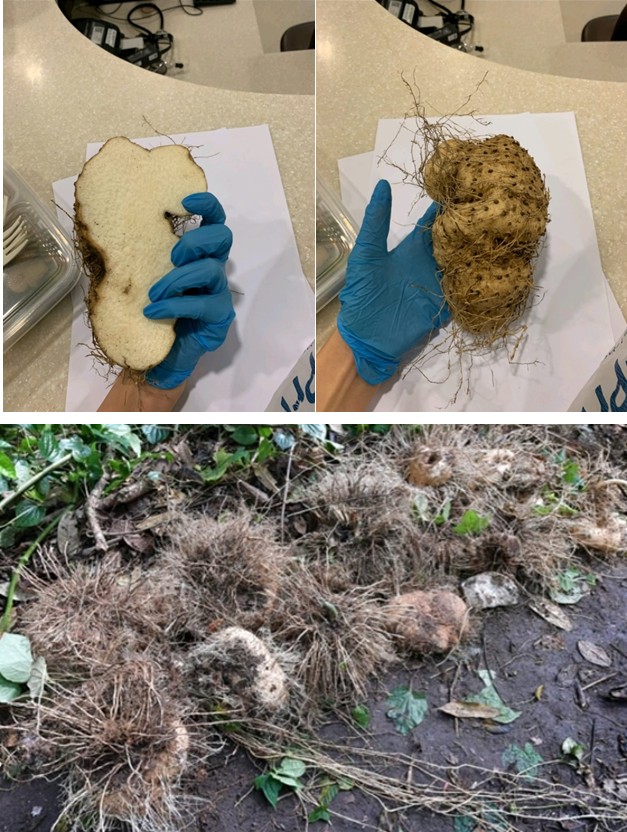
Figure1: Pictures of the Zanzibar yam brought to ED by patient.
Photos of the plant in the wild (Credit The Straits Times).
Upon admission to ICU, the patient had a tumultuous 12-day stay. Upon arrival to ICU, he was shown to have developed severe rhabdomyolysis with hyperlactataemia resulting in acute kidney injury (AKI) and eventual anuria. This was initially treated with IV N-acetylcysteine, sodium thiosulphate, hydroxocobalamin as well as Non Invasive ventilation (NIV) for his worsening acidosis (high anion gap) which was further compounded by acute transaminitis (see above).
He quickly decompensated on day 2 of ICU stay and was intubated. Continuous renal replacement therapy (CRRT) was started to off load the high myoglobin and acid load as well as fluid removal as he swiftly developed cardiomyopathy associated heart failure (bedside echo showed regional wall abnormalities on the inferior wall). This was compounded by development of hospital acquired pneumonia on day 3 which was treated with appropriate antibiotics (second generation cephalosporins to Tazocin and subsequently to carbapenems). With good fluid removal and improvement of acid base status, he was extubated on day 4.
He would require 2 further intubation attempts, one on day 4 (secondary to flash acute pulmonary oedema) and day 9 (sudden GCS drop secondary to hypercarbia/high urea) Throughout the entire stay he would remain anuric and dialysis dependent, eventually weaning from CRRT to slow low efficiency dialysis (SLED) of up to negative 2 litres daily. Eventually he was successfully extubated on day 11 to NIV and then to supplementary oxygen on day 12. Discharge was effected on day 12.
Throughout his ICU stay he developed adjustment disorder which required psychiatric evaluation and support. This was continued during his general ward stay as he declined further dialysis despite being dependent. With proper psych and familial support, a temporary tunnelled dialysis catheter was inserted for haemodialysis. He was discharged to the community hospital for continuation of antibiotics (de-escalated to oral quinolones) and renal replacement which eventually ceased as his renal function stabilised to Stage 3A Chronic Kidney Disease.
Discussion
Dioscorea spp ingestion can cause central nervous system (CNS) irritability, liver failure with hypogylcemia and renal failure [9] Dioscorine and dioscine have convulsive, local anaesthetic adrenal potentiating action, anti-acetylcholine or nicotinic antagonist activity and antidiuretic effect [10]. Our patient suffered from renal failure, however there was no seizure, CNS irritability or liver failure with hypoglycaemia.
Dioscorine and dioscine are nicotinic antagonists which cause muscle paralysis subsequently leading to rhabdomyolysis. It also causes respiratory muscle paralysis due to nicotinic antagonism; this may form another rationale for requiring reintubation two times apart from acute pulmonary oedema and coma due to elevated urea per se. It could cause nicotinic syndrome which initially started with hypertension, tachycardia, diarrhoea, vomiting, then hypotension, bradyarrhythmia, paralysis and coma in later stages. In a nutshell, nicotinic syndrome is initially stimulatory progressing to depressant curare like effects e.g. paralysis [11]. It is important to distinguish this from the common plant anti-muscarinic toxidromes where patients will present with delirum, tachycardia, hypertension but no muscle weakness or paralysis. In comparison patients with dioscorea ingestion will present with muscle weakness or paralysis. Neostigmine can be considered in such scenario for reversal or treatment [12]. Nerve conduction studies or Electromyography should be considered to ascertain the pattern of paralysis to aid in diagnosis. In this patient, both anticholinergic syndrome or antimuscarinic toxidromes (patient had no confusion) were not suspected and thus not involved in the subsequent neurological state.
Blood sugar management for this patient has been uneventful. His Hba1c on presentation was 6.2%. A baseline insulatard was started in view of his blood sugar level highest was 14 mmol/dl and this was down titrated quickly over the first week.
Rhabdomyolysis causes acute tubular necrosis which lead to acute kidney injury and hence haemodialysis is required to remove myoglobin. It forms the cornerstone of management in this case. Cyanogen is the culprit which causes prolonged hyperlactatemia whereby antidotes for cyanide are effective (such as hydroxocobalamin and sodium thiosulphate in this case).
The usual management of rhabdomyolysis consists mainly of IV hydration, alkalinisation of the urine via administration of IV sodium bicarbonate, use of diuretics such as mannitol as well as correction of hyperkalaemia. However once acute kidney injury has been established and severe acidosis and hyperkalaemia set in, such as in this case, renal replacement therapy (RRT) would be required. RRT in this case would achieve a few things: correction of acidosis, excretion of excess potassium and purines in the serum as well as removal of myoglobin load, a by-product of rhabdomyolysis. It may also confer the added advantage of improving the rate of renal recovery as well as stabilising haemodynamics and metabolic status as an indirect benefit.
With regards to RRT as a modality for rhabdomyolysis, evidence is scant. There is limited evidence favouring improved renal parameters but overall mortality and length of stay remains elusive [13]. Different dialysis modes, flows and filters have also been investigated. However, the studies are small and lack evidence and thus are inconclusive [14, 15].
A recent prediction score has been introduced for the purpose of risk stratifying rhabdomyolysis patients for the need to institute RRT. The McMahon score, consisting of a combined index of metrics, is calculated at admission for the purpose of prognostication [16]. A score greater than or equal to 6 is predictive of a need for high-volume fluid resuscitation, RRT, and death. Further stratification reveals the score is 86% sensitive and 68% specific for patients who will require RRT.
Although the initial ALT was increased, we attributed this to the severe rhabdomyolysis that occurred in at the onset. Liver enzymes trend show a slow decline and eventually recovery by Day 13 of ICU stay and the INR was never elevated above 1.5 during the entire ICU stay. There have been reports of liver failure post ingestion of Dioscorea bulbifera [17] but this was not the plant in question in our patient.
Adjustment disorders in the community have usually been attributed to age, health related disorders, unemployment status as well as urban residence [18], effectively describes our patient. In addition, this could be considered in the greater context of Post Intensive Care Syndrome (PICS) defined as new or worsened mental health, cognitive, or physical impairments after treatment in an intensive care unit (ICU) [20], fulfilling the risk factors of old age and disease severity [19]. As such, awareness of the syndrome is important and taking steps to mitigate it in the form of early psychiatric review and the use of the ABCDE bundle [21] may be the way forward in minimising its impact on the patient.
Conclusion
Zanzibar yam poisoning is a very rare but debilitating condition. Sequelae from the poisoning mimics many other toxicology “syndromes” and management is largely supportive from initial resuscitation and subsequent intensive care management. When severe, this can lead to significant end organ damage, be it temporary or permanent. More awareness needs to be raised to prevent further such incidents from happening.
Consent to Participate
Patient consent was obtained for inclusion in this case report as per local ethics guidelines.
Consent to Publish
Patient consent was obtained for the information to be published in this journal. No patient identifiable information, photographs or figures have been included in this case report.
Funding
None
Availability of Data and Materials
Not applicable
Competing Interests
Nil
Authors Contributions
W Choo and KV Loo worked on the manuscript. G Cham and F Khan edited the manuscript.
Acknowledgements
We would like to thank the Departments of Emergency Medicine and Intensive Medicine for their support in this endeavour.
References
-
Holttum RE (1964) Plant Life in Malaya. Longmans, Green and Co, London, United Kingdom.
-
Peter NGKL, Richard C, Tan, Hugh TW (2011) Raffles Museum of Biodiversity Research. Singapore biodiversity: an encyclopedia of the natural environment and sustainable development pp: 266.
-
Edmond D (1993) Wild yams of the African forests as potential food resources pp: 163-176.
-
Issae AR, Nonga H, Ngomuo A(2017) Possible involvement of Dioscorea species in human poisoning at Bwakila Juu in Morogoro rural district, Tanzania. Tanzania Veterinary Journal 35: 163-168.
-
Bhandari MR, Kawabata J (2005) Bitterness and toxicity in wild yam (_Dioscorea_ spp.) tubers of Nepal. Plant foods for human nutrition _(Dordrecht, Netherlands_) 60(3): 129-135.
-
Joob B, Wiwanitkit V (2014) Asiatic bitter yam intoxication. Asian Pacific journal of tropical biomedicine 4(1): S42.
-
Aplin P (2017) Chapter 110 Overview of plant and herbal toxicity in Critical Care Toxicology: Diagnosis and Management of the Critically Poisoned Patient. Springer International Publishing.
-
Neuwinger HD (1996) African Ethnobotany. Poisons and Drugs, London: Chapman & Hall.
-
Steenkamp V, Stewart MJ (2005) Nephrotoxicity associated with exposure to plant toxins, with particular reference to Africa. Therapeutic drug monitoring 27(3): 270-277.
-
Broadbent Jl, Schnieden H (1958) A comparison of some pharmacological properties of dioscorine and dioscine. British journal of pharmacology and chemotherapy 13(3): 213-215.
-
Graem AK (2017) Chapter 65: Toxic plant ingestion in Auerbach’s wilderness medicine. In: 7th (Edn.), Elsevier.
-
Anil A, Singh S, Bhalla A, Sharma N, Agarwal R, (2010) Role of neostigmine and polyvalent antivenom in Indian common krait (_Bungarus caeruleus_) bite. J Infect Public Health 3(2): 83-87.
-
Zeng X, Zhang L, Wu T, Ping Fu (2014) Continuous renal replacement therapy (CRRT) for rhabdomyolysis Cochrane Database Syst Rev (6): CD008566.
-
Peltonen S, Ahlstrom A, Kylavainio V, Honkanen E, Pettila V (2007) The effect of combining intermittent hemodiafiltration with forced alkaline diuresis on plasma myoglobin in rhabdomyolysis. Acta Anaesthesiol Scand 51(5): 553-558.
-
Mikkelsen TS, Toft P (2005) Prognostic value, kinetics and effect of CVVHDF on serum of the myoglobin and creatine kinase in critically ill patients with rhabdomyolysis. Acta Anaesthesiol Scand 49: 859-864.
-
McMahon GM, Zeng X, Waikar SS (2013) A risk prediction score for kidney failure or mortality in rhabdomyolysis. JAMA Intern Med 173(19): 1821-1828.
-
Ma X, Peng JH, Hu YY (2014) Chinese Herbal Medicine- induced Liver Injury. J Clin Transl Hepatol 2(3): 170-175.
-
Zelviene P, Kazlauskas E, Maercker A (2020) Risk factors of ICD-11 adjustment disorder in the Lithuanian general population exposed to life stressors. Eur J Psychotraumatol 11(1): 1708617.
-
Lee M, Kang J, Jeong YJ (2020) Risk factors for post– intensive care syndrome: A systematic review and meta- analysis, Australian Critical Care 33(3): 287-294.
-
Rawal G, Yadav S, Kumar R (2017) Post-intensive Care Syndrome: an Overview. J Transl Int Med 5(2): 90-92.
-
Kress JP (2013) Sedation and mobility: changing the paradigm. Crit Care Clin 29(1): 67-75.
- Ramsay Hunt Syndrome Presenting as Gait Imbalance without Facial Paralysis: A Case Report
- Unveiling Hidden Culprits: An Observational Study of Upper Gastrointestinal Endoscopy Findings in Symptomatic Cholelithiasis Patients
- Assessing Health Care Providers’ Proficiency in International Patient Safety Goals: A Study to Assess the Knowledge &Practice on Patient Safety in a Tertiary Care Teaching Hospital in Gujarat
- Challenges in Diagnosing Child Language Disorders
- Stunting Service Management Model in the South-Central Timor Region, East Nusa Tenggara, Indonesia
- Acute Small Bowel Obstruction Presenting as Gangrenous Jejunal Loop Secondary to Intestinal Endometriosis – A Rare Case Report