
Resource Assessment and Marketing of Caterpillar Fungus (Ophiocordyceps sinensis) in the Buffer Zone of Makalu Barun National Park, Nepal
Yarsagumba (Ophiocordycecps sinensis) is one of the highly expensive and potential medicinal mushrooms in the world. Owing to the herb's high efficacy and potency in curing various diseases, it is well known as an important nourishing tonic. The study has attempted to gather the information regarding Yarsagumba, its associated species, various medicinal uses, and marketing channel. Out of 15 plots, only 3 plots were recorded the Yarsagumba with the frequency of 0.2 which was very low compared to other medicinal plants. We randomly recorded the Yarsagumba with Mean and Variance ration of 0.04 with a density of 833 (No)/ha equal to 0.5 kg/ha in the effective area. There was an imbalance between the population of moths and spores of Caterpillar fungus. There were increasing trends of Cordyceps sinensis market, heavily depended on Chinese buyers. The Chinese companies send agents to collect Yarsagumba directly from the fields. And they pay US$ 10/piece to villagers (according to the latest field study, June 2018). China is the largest producer of Yarsagumba and meets 95 per cent of the world demand. Nepal is the second largest supplier of the fungus. Expansion of marketing channel is essential for getting more benefits focusing on local Yarsagumba`s collectors. It was observed that only 14.51 percent of men were participated to collect the Yarsagumba because the majority of men migrated to India and overseas for searching the jobs. Therefore, women would play a vital role in the sustainable harvesting of Yarsagumba. Different pharmacological actions such as antiasthma, antineoplastic, antibacterial as well as actions on the heart and blood vessels, and on the smooth muscles of the intestine and uterus have been reported. Government of Nepal should prepare a national Yarsagumba management policy and local Yarsagumba management guidelines to address conflicts by clearly defining the roles, responsibilities and rights of local institutions and actors. The Makalu Barun National Park should also prepare the separate management plan for sustainable harvesting so that local people would enhance their income, and the government would also increase income through royalties.
Introduction
Yarsagumba was first described scientifically in 1843 as Sphaeria sinensis. The fungus was known as Cordyceps sinensis until 2007, and after a molecular phylogenetic study, Sung et al. separated the mega genus Cordyceps into four genera as it was polyphyletic, viz. Cordyceps (40 spp.), Ophiocordyceps (146 spp.), Metacordyceps (6 spp.) and Elaphocordyceps (21 spp.), while the remaining 175 spp. were left in Cordyceps. As a result, C. sinensis was transferred to Ophiocordyceps, hence renamed as O. sinensis. Yartsagunbu is the Tibetan name for O. sinensis given by Nyamnyi Dorje (1439–1475) in the 15th century, which means summer grass – winter worm [1]. The local name was yarsagumba (or yartsagumba) in Sikkim and Tibet. This is also the most common name in Nepal, Bhutan and India. A few other names are also popular in Nepal, such as Jingani, Jivan Buti, Kira Chhyau, Kira Jhar, Saram Buti and Saram Buti Jadi . It is also famous by the name Hamalayan Viagra 11.
Cordyceps sinensis was discovered in Tibet by herdsmen who observed that their livestock became energetic after eating a certain mushroom. It has been used for around 2000 years for its reputed abilities to treat many diseases related to lungs, kidney, fatigue, cancer and although such use is mainly based on traditional Chinese medicine and anecdote. A recent study seems to show anti-aging and anti-tumor effects. Its current high international profile and demand developed only sometime in 1993 when many Chinese long-distance runners broke world records. There was the initial suspicion of the use of performance enhancing drugs, but this was unfounded. The Chinese instead boasted of taking Cordyceps and it was then ‘presented in the popular press as a ‘wonder herbal’, and the last ten years has seen an increase in its market’.
It is believed that medicinal use of the caterpillar fungus apparently originated in Tibet and Nepal. In rural areas of these. Yarsagumba has become the most important source of cash income. The fungi contributed 40% of the annual cash income to local households and 8.5% to the GDP in 2004 in Tibet and were a source of annual income to many Himalayans dwelling people of Nepal from west to east. Every year during May and June, thousands of villagers from remote areas risking their own lives head for high mountains to collect Yarsagumba. It is estimated that one villager can earn up to Rs 2,500 approximately to $35 a day by collecting Yarsagumba which is beyond the monthly salary of many Nepalese households. Dolpa-a remote district in western Nepal with high steep valleys and dry climate is one of the foremost areas for collecting Yarsagumba. Almost 50% of the annual supply of Yarsagumba comes from Dolpa alone. Here, not only the adults but school goers also take unofficial holidays in search of the gold rush [2].
Chinese caterpillar fungus is reported from 27 northern districts of Nepal and of those is widely collected from only seven districts [3, 4]. Dolpa district is regarded as a major warehouse of Chinese caterpillar fungus in Nepal, contributing 40% of Chinese caterpillar fungus supply in 2011 in Nepal (GoN, 2011). Caterpillar fungus, with the current market price of US$ 140,000/ kg for the best quality product in China constitutes as one of the most expensive biological resources in the world, it is harvested by hundreds of thousands of some of the poorest people in Nepal, China, Bhutan, and India [5].
Usually, Yarsagumba is collected in large quantity before it attains the maturity. The first reason is that it is sold based on its weight. It attains the highest weight just before the maturity due to the compactness of the inner tissue. In Nepal during summer, mature fruiting bodies of Yarsagumba release millions of spores that again infect the larvae in the surrounding areas, grow inside them during winter and sprout from the dead larvae the next summer. Every year, the herb is collected in Nepal during May-July and sold to the business people directly in order to sustain the livelihood in rural areas [6]. The study simply describes the existing resources, and marking condition in the buffer zone Makalu Barun National Park, Nepal.
Rational of the Study
Yarsagumba is a type of caterpillar fungus, which is one of the most expensive insect-herbs that are used for medical purpose. It is rare fungus that parasites on the body of a caterpillar that grows only at higher altitudes in Nepal. Due to the expensive characters of the Yarsagumba, it is declining year by year. Yarsagumba production declined by 50% in 2011 as compared to the production in the year 2009. Due to lack of strong government policy on Yarsagumba collection, it is very unmanageable by people, as a result high deforestation, damage grassland, and some affect to wild animals found in high Himalayans regions. In addition, climate change plays significant role affecting season growth and shifting collection sites above altitudes after warming and snow melting in high Himalayan regions.
Yarsagumba has become the most important source of cash income. The fungi contributed 40% of the annual cash income to local households and 8.5% to the GDP in
2004. In 2004, the value of a kilogram of caterpillars was estimated at about 30,00 to 60,00 Nepali rupees and in 2011 the value of a kilogram of caterpillars was estimated at about 350,00to 450,00Nepali rupees. From 1997 to 2008 the market price climbed by 900% in Tibet and from 2001 to 2011 by 2300% in Nepal [7].
Apart from over-harvesting and harvesting of immature individuals, other factors may be contributing to the decline of populations. These include (a) decrease in the moth and larval populations due to loss or degradation of host plant resources for moths and larvae; (b) modification of the soil microhabitats congenial to fungal spores by the harvesters; (c) increased grazing intensity in high-altitude pastures as local harvesters take their cattle with them; and (d) climate changes. In Japan, along with market demand, loss of favorable habitat particularly mortality of host tree (Japanese Red Pine) has been implicated as the primary cause of decline of the mycorrhizal mushroom—Matsutake (Tricholoma matsutake) [8].
Materials and Methods
Study Area
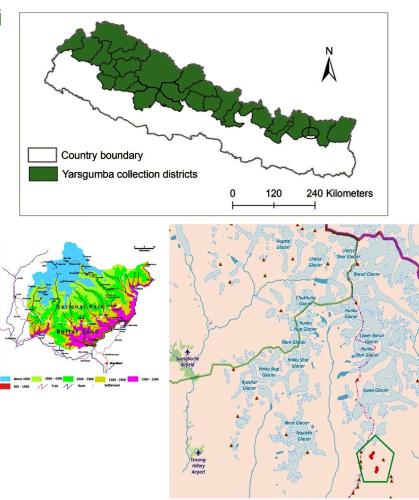
The research was carried out in the buffer zone of Makalu Barun National Park focusing on the highland pasture, locally known as Kharka named as YangleKharka, Shankhuwa Sheer Kharka, Jor Ghyang Kharka, Eakle Pokhari Kharka, Kaal Pokhari Kharka, Dooray Kharka, Dikling Kharka, Mera Tham Kharka, Tangra Khu Kharka. The findings have been based on research results in areas focusing on biophysical components (Figure 1).
Key Methods
Different localities and settlements of MBNP were surveyed in May-June, 2018. The information was collected from Tamku, Bala, Sisuwakhola, Mangtewa and Makalus settlements. Focus Group Discussions (No: 2) were conducted in such a way that one was in the field during collection, and another was with the group of people who had returned after collection. The highland pasture , locally known as Kharka named as YangleKharka, Shankhuwa Sheer Kharka, Jor Ghyang Kharka, Eakle Pokhari Kharka, Kaal Pokhari Kharka, Dooray Kharka, Dikling Kharka, Mera Tham Kharka, Tangra Khu Kharka were visited as the part of field observation, and questionnaires were made with the collectors. The open-ended questionnaire was administered to respondents individually as a semi- structured interview. They were consulted for their local names, methods of collection, traditional, local and commercial utilization, impacts of collection in response to the environment and local livelihood. Information was cross checked at different places with other respondents. Three rural municipalities of the buffer zone of MBNP were selected for resource assessment, and ecological study was carried out by laying out the plot of 2mX2m with the sampling intensity of 0.5% in the effective areas. Direct observation of the collection process including all other activities was done in the period of the site Yarsagumba collection site visit. Aspects like pollution, use of natural resources, disturbance to wildlife and other features related to conservation were also monitored. Before starting inventory works, requisite number of plots and location of transects at different habitats were determined by participatory methods after discussion with local key informants and other stakeholders, especially during the one-day local workshop. Secondary sources of information were also reviewed from information from the MBNP office, journals, magazines, newspapers, and information from different Buffer Zone User Committees of MBNP.
Results and Discussion
Existing Practices of Harvesting
Caterpillar fungus is traditionally harvested by the poorest of the poor living in the high mountain regions of the Himalayans during May/July. The annual harvest of Yarsagumba per person ranged between 51-180. After acquiring collection permit from the nearest MBNP sector office, collectors have to walk a minimum of three days with heavy loads to reach the closest Yarsagumba collection site. Collectors scour the grassland above
3500m as early as the morning begins. Harvesting of these highly priced fungi takes immense patience as it is identified by the tip of the stoma which is camouflaged in the grass. Usually many people do not find more than 10 in a day and some even return to their tent empty handed after a full day's back aching hunch. During the field visit some lucky people having sharp eyesight were able to collect around 25 pieces in a day. As soon as a Yarsagumba is found, the collector bites the tip of stroma to prevent it from growing. They believe that as the parasite stroma grows the host insects body will start decomposing resultingly in the degradation in quality of that individual and thus fewer prices. In the evening, collected pieces are cleaned with a help of tooth brush and given a final touch ready to sell to a merchant who will some time come to the tent. Until then, Yarsagumbas is air dried or hanged safely inside their tents. According to the data available from MBNP headquarters a total of 36.13 kilograms of dry Yarsagumba registered as collected from the park's area till the end of fiscal year 2014/2015.
Sample distribution
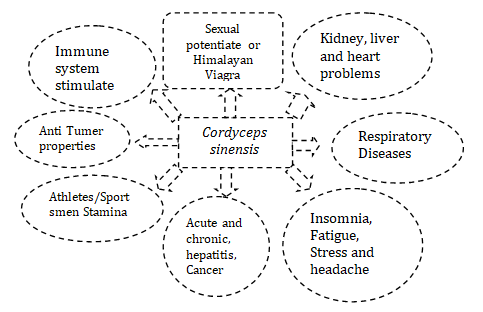
The GPS points show distribution of sample plots in the study areas (Figure 2).
Consumption of Yarsagumba
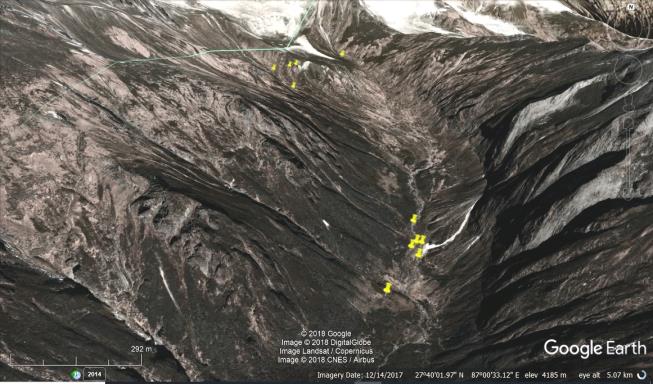
O.1 to 0.5 percent of local people uses Yarsagumba for their own consumption in the buffer zone of Makalu Barun National Park (MBNP). Due to high demand in the international market, local people sell their collected Yarsagumba to the local traders for their livelihoods. However, the important of Yarsagumba has primarily been used the following purposes (Figure 3).
Price Trends of Yarsagumba
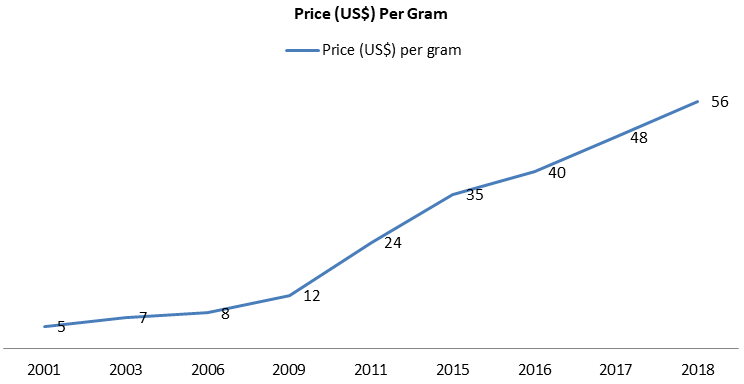
The Yarsagumba price is increasing day by day due to its most valuable chemical constituents, recognized as Himalayan Viagra. Year 2018 was the highest prices for the Yarsagumba according to the information from International market analysis. The price for 1 kg Yarsagumba was US$56000. Since 2001, the Yarsagumba price has been increasing as compared to previous years. The collectors get at least NRs 1100/piece in their sites. The price difference of Yarsagumba between local and international markets is very high. Local harvesters were paid only nominal fraction of its actual market value. It might be useful to adopt the public auction system practiced in Bhutan to maximize local benefits, which in turns might provide financial incentives for locals to harvest less. This might be supportive for sustainable management. Finally, there is a huge gap between legal provision and practice of Yarsagumba collection and trade. Given the huge jump in price of Yarsagumba up to 2300% in last 11 years, the revenue policy made almost 12 years ago is now completely outdated and need revision [9, 10, 11] (Figure 4).
According to focus group discussion in the study area, people reported that they received US$ 11/piece, which is about US$ 20000/kg in that rate.
Information about Collectors
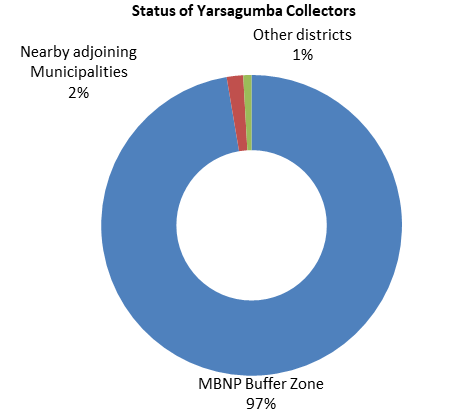
The local people desperately wait for MBNP office to formally announce the commencement of Yarsagumba collection. This year the office announced the collection period from 1st of Jest to the end of Ashar. Each individual willing to seek this highly valuable Mushroom, had to take a permit from the MBNP office which was valid for 3 days only. They were also requested to carry all the necessary survival logistics on their own. This year a total of 1585 people were recorded taking permit o for the collection expedition out of which 14.51% were female and the men's majority was 85.49% (Figure 5).
There was very interesting result on gender-wise analysis. It was observed that only 14.51 percent males were participated to collect the Yarsagumba. Due to searching for employment in India and overseas, majority of males migrated for searching for the jobs. It was like as national context, during our research, we interviewed with female collectors. Therefore, women play the vital role for sustainable harvesting of Yarsagumba.
Resource Assessment
Out of 15 plots, only 3 plots has been recorded the Yarsagumba in the study area. Therefore, frequency of the Yarsagumba is 0.2 which is very low. We recorded the Yarsagumba as randomly (Mean/Variance = 0.04). The population density per hectare of Yarsagumba was found as 833.33 in the buffer zone of Makalu Barun National park. The data reveal that conservation efforts or sustainable harvesting is essential in the study area.
| Plots | Present Number (x) | Frequency | Area (4m2) | Density (Number/m2) | Density (Number/Ha) |
|---|---|---|---|---|---|
| Plot 1 | 0 | 0 | 4 | 0 | 0 |
| Plot 2 | 2 | 0.13 | 4 | 0.5 | 5000 |
| Plot 3 | 0 | 0 | 4 | 0 | 0 |
| plot 4 | 0 | 0.13 | 4 | 0 | 0 |
| Plot 5 | 0 | 0 | 4 | 0 | 0 |
| Plot 6 | 2 | 0.13 | 4 | 0.5 | 5000 |
| Plot 7 | 0 | 0.13 | 4 | 0 | 0 |
| Plot 8 | 0 | 0 | 4 | 0 | 0 |
| plot 9 | 0 | 0.13 | 4 | 0 | 0 |
| Plot 10 | 1 | 0.07 | 4 | 0.25 | 2500 |
| Plot 11 | 0 | 0 | 4 | 0 | 0 |
| Plot 12 | 0 | 0.13 | 4 | 0 | 0 |
| Plot 13 | 0 | 0 | 4 | 0 | 0 |
| Plot 14 | 0 | 0.13 | 4 | 0 | 0 |
| Plot 15 | 0 | 0 | 4 | 0 | 0 |
| Average | 0.065 | 0.083 | 833 (0.5Kg/Ha) |
Table 1: Associated Species of Yarsagumba.
Associate species
We have clearly observed that alpine grassland is the best suitable habitat for Yarsagumba. Therefore, these species are the indicator of Cordyceps sinensis. During the research period, the following species have been recorded in Yarsagumba Habitat:
| S.N | . | Name of the Species | Family | Local Name | |||||||
|---|---|---|---|---|---|---|---|---|---|---|---|
| 1 | Aconitum species | Ranunculaceae | Bikh Jara | ||||||||
| 2 | Anaphalis monocephala | Compositae | Jhullyaa | ||||||||
| 3 | Anemone polyanthes | Ranunculaceae | Kakrey Ghans | ||||||||
| 4 | Artragalus species | Papillionoideae | Tantancy | ||||||||
| 5 | Bistoria macrophylla | Polygonaceae | Lama Phool | ||||||||
| 6 | Cyperus species | cyperaceae | Sun Buki | ||||||||
| 7 | Draba species | Cruciferae | Koseli Ghans | ||||||||
| 8 | Geranium species. | Geraniaceae | Doshro Chari Bish | ||||||||
| 9 | Heracleum nepalensis | Umbelliferae | Seto Phool | ||||||||
| 10 | Pedicularis capitata | Polygonaceae | Chyangdangka | ||||||||
| 11 | Potentilla fruticosa | Rosaceae | Palu | ||||||||
| 12 | Potentilla species | Rosaceae | Goru Kajera | ||||||||
| 13 | Primula denticulata | Primulaceae | Doeli Phool | ||||||||
| 14 | Salix species | Salicaceae | Likhey | ||||||||
| 15 | Saussurea species | Compositae | Phoee | ||||||||
| 16 | Saxifraga parnassifolia | Saxifragaceae | Pahelo Buki Phool | ||||||||
| 17 | Swertia cuneata | Gentianaceae | Telailee Dudhey Ghans |
Table 2: Associated Species of Yarsagumba.
Marketing of Yarsagumba
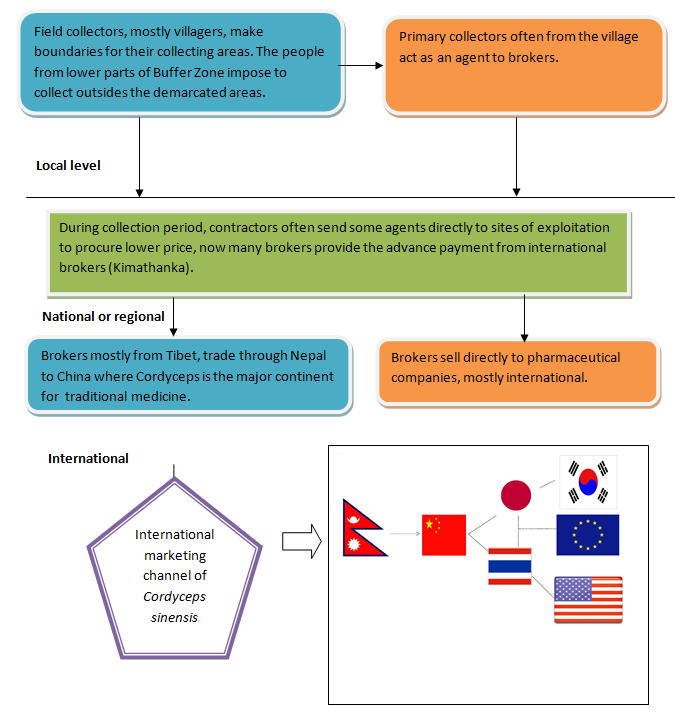
Yarsagumba, is one of the most valued Herbal Medicines - Natural Rejuvenator. Its effects on the nervous system, glucose metabolism, the respiratory, hepatic, cardiovascular, and immune systems, immunologic disease, inflammatory conditions, cancer, and diseases of the kidney are researched and found helpful. Most of the Nepalese people didn’t know about its medicinal purpose and value when Chinese trader buy in cheap until 2000 A.D. It has been revealed that the body of Yarsagumba contains:- Proteins, Peptides and all essential amino acids, Polyamines Sterols, Cordycepin acid, D mannitol, Eleven nucleoside (including Adenine, Uracil, Uridine, Guanosine, Thymidine, and Deoxyuridine), Saccharides and Sugar Derivatives, Vitamin A, Vitamin B1, B2, B6, B12,E, and K, Inorganic, including K, Na, Ca, Mg, Fe, Cu, Mn, Zn,Pi, Se, Al, Si, Ni, Sr, Ti, Cr, Ga, V, and Zr (Verve International, 2015). China is the largest producer of Yarsagumba and meets 95 per cent of the world demand. Nepal is the second largest supplier of this fungus, with official annual production standing at three tones. India, on the other hand, supplies 1.7 to 2.8 tons of Yarsagumba per year, while Bhutan's annual production hovers around 0.5 to 1.5 tones. While talking about marketing channel of Cordyceps sinensis, Chinese buyers collected from Nepal using agents. The details marketing channel has been presented in the flowchart.
Marketing Channel of Cordyceps sinensis (Figure 6)
Impact on Livelihood
While talking about livelihood of the people, the collectors from Sankhuwasawa earn an average of NRs12,000 during the season (Field survey, 2018). Since entire families in rural areas rush to pick up the fungus during the peak season, each of them stands to earn NRs 500,00 which is almost eight times Nepal's per capital income of NRs 76,065.It has become the most important source of income in most of the Himalayan regions of Nepal.
Risk Factors to Collectors
The struggle in collecting such highly rated medicinal plant, is as expensive as the price it fetches in the commercial market. The collectors have to struggle with high altitude, arduous steep slopes, heavy back pack, and harsh weather and challenging survival for the period they remain in the alpine grassland. A minimum of three days and nights have to be passed through dense forests, heavy rain and wet, slippery and steep foot trails. Night halts are made in sheds (if available), caves or the personal tents as per the situation and requirement. Some of the serious risks and dangers in expedition to Yarsaumba are listed below:
- Liable to altitude sickness
- Attack to parasites like leech and fly, etc
- Danger of encounter with wild animals like bear
- Very steep and rocky topography
- Dangerously narrow and slippery walking trails
- Cold weather with frequent rain and constant fog
- Chance of landslide and avalanche
- Likely to get lost in the vast alpine grassland
- Fatiguing journey uphill and down hill
- Risk to joint pain muscle pain
- Unhygienic food and living tents
- Possibility of attack and loot If someone gets ill or injured, the nearest health center is 3 days of walk away; rescue from helicopter would be possible only if the weather favors. Several news of landslide was heard but none of them were reported to affect alpine pastures. Many people set out for Yarsagumba collection went missing across the county but in this park nothing like that happened. But a total of 11 people severely fell ill and were then rescued back to village by their fellows this year. Most were victim to high altitude sickness. Four people lost their lives in the expedition (During Field survey, 2018).
Impact on Environment
Massive human pressure during the harvesting season is bad for the fragile ecosystem as well. The debris and garbage left behind by harvesters pollutes and affects the environment and pasture needed for Yarsagumba formation. Water resources do not remain untouched from pollution as these are the major attraction for people to establish their temporary abode. This could also be a reason people fall ill. People who have been going to the expedition every year are confirmed that the accumulation of debris particularly plastic is in the rise; usually in the places where camps and halts are made. MBNP provides Yarsagumba collection permit with verification that people will go to the alpine pasture being self-sufficient in kerosene and will not harvest any woody natural resources for fuel wood. But the scene in the field is different from expected. People cut down Sunpati (Rhododendron lepidotum), and Dhupi (Juniper species) in large quantity as they have the property to burn well even when green. Besides this, some people are opportunist enough to establish traps for game bird species and animals like musk deer.
Value Addition
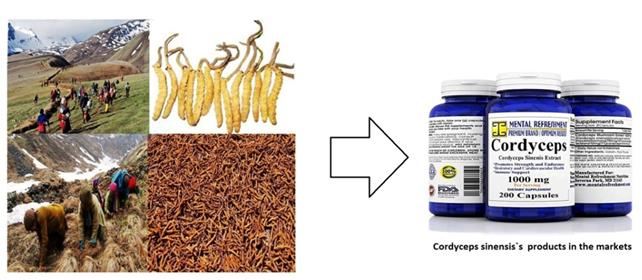
Due to unique nature of usefulness of this species, marketing of Yarsagumba has been increasing which can be found in different marketing sites like www.amazon.com, www.alibaba.com, www.ebay.com, etc. The Cordyceps tea is very famous in the online market (Price: US$50-700/packet). The winery companies have also started to mix up the Cordyceps sinensis during the formulation process for increasing the value of wines (Figure 7).
Conclusion and Recommendation
•Out of 15 plots, only 3 plots has been recorded the Yarsagumba in the study area. Therefore, frequency of the Yarsagumba is 0.2 which is very low. We recorded the Yarsagumba as randomly (mean/variance = 0.04).
•The population density per hectare of Yarsagumba was found as 833.33 in the buffer zone of Makalu Barun National Park. The study concluded that Juncus thomsonii and Bistorta macrophylla exhibited a wide range of distribution in the pastures of Sankhuwasabha (Buffer zone of Makalu Barun National park), Nepal.
•China is the largest producer of Yarsagumba and meets
95 per cent of the world demand. Nepal is the second largest supplier of the fungus, with official annual production of 3 tones. India, on the other hand, supplies 1.7 to 2.8 tons of Yarsagumba per year, while Bhutan's annual production hovers around 0.5 to 1.5 tones. Expansion of marketing channel is essential for getting more benefits focusing on local Yarsagumba`s collectors.
•Healthily grassland creates the favorable condition for caterpillar development. There was an absence of Yarsagumba in degraded lands. Plantations of Betula utilis, Rhododendron species, and Junipers species should be established at lower forests to supplement growing stock depleted by the extraction of fuel wood during collection seasons. To maintain a healthy pasture environment, over trampling effects and over grazing should be minimized and checked.
•Conservation education and campaign among public should be carried out for the sustainable harvesting of Yarsagumba. Detailed scientific exploration to monitor ecological factors and regeneration pattern should be carried out in other parts of the country covering iso- potential areas for C. sinensis. Conditions favoring high production of the host moths and caterpillar should be searched further so that the productivity of contamination by the Cordyceps fungi over larvae of the moths increases. Storing and packaging facilities should be developed to facilitate marketing of quality products.
Acknowledgements
I would like to thank Tribhuvan University, Institute of Forestry (IOF) for providing me the technical suggestions while conducting the field works, especially for Prof. Yusuf Ansari, A. Prof. Vijay Kumar Yadav, and A. Prof. Yogendra Yadav. I am very grateful to Mr. Kamal Kafle (Ranger, Manalu Barun National Park), Mr. Manjit Bist and Mr. Jeevan Khadka for assisting me as field supervisors.
References
-
Winkler D (2008) Yartsa Gunbu-Cordyceps sinensis, Economy, Ecology & Ethno-Mycology of a Fungus Endemic to the Tibetan Plateau (Eds. A. Boesi and F. Cardi). Wildlife and plants in traditional and modern Tibet: Conceptions, Exploitation and Conservation.
-
Verve International (2018) Yarsagumba (Cordyceps sinensis).
-
Devkota S (2010) Ophicordyceps sinensis (Yarsagumba) from Nepal Himalaya: status, threats and management strategies. In: Hao-wei ZP (Eds.), Cordyceps Resources and Environment. Grassland Supervision Center by the Ministry of Agriculture, People’s Republic of China, pp: 91-108.
-
Thapa BB, Panthi S, Rai RK, Shrestha UB, Aryal A, et al. (2014) An assessment of Yarsagumba (Ophiocordyceps sinensis) collection in Dhorpatan hunting reserve, Nepal. J Mt Sci 11(2): 555-562.
-
Xuan C (2012) How long can the caterpillar fungus craze last? China dialogue.
-
Shrestha UB (2011) Asian medicine: a fungus in decline. Nature 482(7383): 35.
-
Weckerle CS, Yang Y, Huber FK, Li Q (2010a) People, money, and protected areas: the collection of the caterpillar mushroom Ophiocordyceps sinensis in the Baima Xueshan Nature Research Southwest China. Biodiversity and Conservation. 19(9): 2685- 2698.
-
Saito H, Mitsumat G (2008) Bidding customs and habitat improvement for matsutake (Tricholoma matsutake) in Japan. Econ Bot 62(3): 257-268.
-
Shrestha UB, Bawa KS (2013) Trade, harvest, and conservation of caterpillar fungus (Ophiocordyceps sinensis) in the Himalayas. Biological Conservation 159: 514-520.
-
Chaudhary A, Singh N (2011) Contribution of world health organization in the global acceptance of Ayurveda. J Ayurveda Integr 2(4): 179-186.
-
Zhu, JS, James R (2004) Presented at the American Physiological Society's (APS). Scientific conference, Experimental Biology, Washington, DC.
- Management of Ear Keloid with Ksharsutra: A Case Study
- Yoga and Global Sustainability: A Holistic Path to One Earth, One Health
- Autoimmune Diseases in Ayurveda: A Narrative Review with Classical and Modern Perspectives
- Management of Cluster Headache Associated with Pituitary Apophysitis by CERT (Chakrasiddh Energy Release Technique): A Case Report on Energy Rebalancing
- Zygophyllum Geslini Coss : Biochemicals and Antioxidant Activity
- Observations of a Beginner Vaidya