
Role of Dhanyamla Sarvang Dhara in the Management of Obesity: Case Study
Modernization, affluence, science and technological development leads to still more sedentary life styles, which lead to many disorders in which obesity is considered as multifactorial disease. Obesity increases the likelihood of various diseases and conditions, particularly CVS, Respiratory Diseases, Type 2 diabetes, obstructive sleep apnea, certain types of cancer, osteoarthritis and depression. It is more common in women than men. WHO considers obesity as a global epidemic and public health problem. It estimated most common caused by a combination of excessive food intake, lack of physical activity and genetic susceptibility. It is physiological, psychological and social disorder. In Ayurveda obesity correlated with Sthaulya and Medorog. In modern, treatment is dietary changes and physical exercise and other drug which has many side effects. But Ayurveda consists of daily internal medications, doing fasts in the form of light diet and Shodhan Chikitsa which comprises of Panchakarma therapy, which is the most effective one in less time. Ayurveda also clearly mention Bahirparimarjan Chikitsa to decrease Medo Dhatu as continuous Parishek Sweda in form of Dhara. It is unique process which can pacify Kapha and Meda Dhatu without aggravating Vata Dosh. 40 years female house wife came to Dept of Panchakarma O.P.D D in Rishikul campus, Haridwar with complain of increase weight gain after pregnancy, Heaviness in body along with pain in lower back region and both knee joints for 5 years. During and after it she got moderate relief in obesity symptoms and objective parameters like weight, BMI, waist circumference, Hip circumference, waist hip ratio by Dhanyamla Sarvang Dhara.
Introduction
Obesity is a complex disease involving an excessive amount of body fat. According to WHO overweight and obesity are the fifth leading risk for global death [1]. Obesity is not just a cosmetic concern. It increases your risk of diseases and health problems, such as heart disease, diabetes, cardiovascular disease and certain cancers. Usually, obesity results from a combination of inherited factors, combined with the environment and personal diet and exercise choices. In 2019, an estimated 38.2 million children under the age of 5 years were overweight or obese [2]. Most of people diets are too high in calories-often from fast food and high-calorie beverages.
People with obesity might eat more calories before feeling full, feel hungry sooner, or eat more due to stress or anxiety [3]. Leptin genes are responsible for controlling appetite through its action on central nervous system [4]. TNF alpha is also link factor between fat accumulation and metabolic disorders [5]. In modern science there is no definite treatment for obesity. In Ayurveda obesity can be categorized in Santarpanjanya Vikaar specially Atisthaulya. In Charaka Samhita in Sutra Sthan Sthaulya as a complicated health condition, duly recognizing it as Nindita (underirable) condition. In Sthaulya, Jatharagni is found in Tikshna state whereas Medodhatvagni is found in Mandagni state. So person indulges in more food, which produce excessive Meda and vicious cycle go on.
It is also described that Atisthaulya is responsible for varies complications and morbid condition of the body [6]. In Charaka Samhita itself obesity is classified under Medo Avrit, which is difficult to treat but its impact on the health due to its morbidity and motility is common in both conditions [7]. It is clear obesity develop due to hypo functioning of catalysts that are responsible for breakdown of structural material of the cell. In Ayurveda this condition is called Agnimandhya Avastha. Main treatment of Sthaulya consisting of dietary and physical exercise which is described in Charaka Samhita [8]. In Ayurveda two types of treatment are clearly emphasized for the prevention, cure & rehabilitation of the patient called Bahirparimarjan and Antahaparimarjan, both treatments have unique property in quality of pacification of Doshas [9]. Charaka and Sushruta both have clearly mention different type of Bahirparimarjan Chikitsa to decrease Medodhatu as Ushna Jal Pareshek, Udvartan, Abyanga and continuous Parishek in form of Dhara [10]. Dhara is unique treatment which can pacify Kapha and Meda Dhatu without aggravating Vata Dosh. The drug used in process of Dhara also add its property to elimination of Doshas. Dhanyamla has Ushna, Tikshna Guna and Ushna Veerya which destroy vitiated Vata, Kapha and Vatakapha and improve circulation and correct the metabolism [11].
Case Report
A 40 year female Patient came to Panchakarma OPD, Rishikul campus Haridwar, and diagnosed case of obesity for 10 years. She had complaint of overweight for 10 years. Patient complained of heaviness in body, along with generalized weakness, lethargy and excessive sweating for 5 years. Associated symptoms like pain in both knee joints, lower back region. As per the patient, she was asymptomatic before 10 years, then she gradually started to gain weight. For 5 years patient began to experience heaviness in body, along with generalized weakness, lethargy and dyspnea. When symptoms became more aggravated along with increment of associated symptoms she came to Rishikul campus Department of Panchakarma OPD on 2/3/2019 for better management.
Past History
- No H/O any significant family history.
- No H/O HTN, DM,
- H/O drug administration: Patient took local medication on & off when pain in both knee joints since 5 years.
Personal History
• Appetite: Normal
• Diet: Mixed
• Thirst: Normal
• Micturition: Normal
• Bowel: Regular
• Sleep: More than normal (9hrs/night and 2 hrs/day)
General Examination
Pulse – 70/min
B.P. -110/70 mm/Hg
Temp –Afebrile
Weight – 95 kg
Pallor – not present
Icterus – not present
Clubbing – not present
Cyanosis– not present
Edema –Present in bilateral knee joints.
Systemic Examination
P/A
Inspection: - No scar, rashes & lesion present, Umbilical centrally placed.
Palpation: - Soft, no tenderness present, no organomegaly present.
Percussion: - Resonance sound present.
Auscultation: - Normal bowel sound heard
CVS
S1 S2 heard normally, no added sound present.
R/S
• Inspection: - No scar seen bilateral chest movement present.
• Auscultation: - Bilateral chest wall clear no added sound present.
• Central nervous system: –Patient are well oriented to time, place, and person.
• Cranial nerve: – All cranial nerve is intact with their normal function.
• Higher function: – Appearance and behavior, memory, orientation and intelligence all are intact.
• Investigation: – March 4/3/2019 (Table 1).
| Sample | Particulars | B.T. |
|---|---|---|
| Blood | Hb gm%/ ABO Rh | 11.66gm%, B +ve |
| TLC/mm3 | 8900/mmꝪ | |
| DLC - N% | 62% | |
| B% | 0% | |
| E% | 4% | |
| L% | 36% | |
| M% | 3% | |
| ESR mm/hr | 22mm/hr | |
| Blood sugar | Fasting | 93.69 mg/dl |
| PP | 125 mg/dl | |
| Lipid profile | S.cholestrol | 163.5 mg/dl |
| S.triglycerides | 83.40 mg/dl | |
| VLDL | 17 mg/dl | |
| HDL | 58.40 mg/dl | |
| LDL | 99.23 mg/dl | |
| Thyroid | T 3 | 141 ng/dL |
| T 4 | 8.9 ug/dL | |
| TSH | 4.27 ulU/mL |
Table 1: Sample measures of particulars and BT.
Therapeutic Intervention
Dhanyamla Dhara drug-Tandula, Pruthaka, Kulatha, Laja, Kangubeeja, Kodrava, Nagara, Nimbu, Deepyaka and water.
Procedure of Dhanyamla Sarvang Dhara
Patient were treated were Dhanyamla Sarvang Dhara with 2 sittings (each sitting will be completed in 15 days), between the 2 sitting will be interval of 15 days.
Purvakarma–Sarvang Abhyanga and Shiro Pichu
Pradhan Karma
The patient is made to sit straight on the Droni with legs and hands extended. The Dhanyamla is kept for warming maintaining a constant temperature. This is taken (at an optimum temperature for the body) in 4 nozzled pitches or kindis and made to pour by 4 attenders on the upper and lower parts of the body on either side. The other hand should be moved in the Anuloma direction running behind the Dhara. While pouring the other 4 pitches should be kept ready with warm Dhanyamla by another attender to maintain a constant flowing without break. It is then collected through the hole in the leg end of the Droni and again warmed for Dhara. The temperature should be around 400C. Dhara should be poured at a medium speed and from a height of 6 -12 cm. The process is done in seven positions of Abhyanga.Dhara should be continued till the Samyak Swed- Aagam - Lakshanas.
Paschat Karma
Take bath in warm water using powder (usually green gram, Mudag Yoosha).
Follow Up
After completion of therapy, patient was advised to visit OPD after one month. Patients were given few common instructions to follow from the date of initiation of treatment till completion of the follow-up period. She was satisfied with treatment and also felt improvement after one month and also relief in associated symptoms like knee joints and low back region pain. There was no relapse of symptoms. She was able to perform her day to day activities properly.
Assessment Criteria
To assess the effect of the therapy, Subjective and objective criteria taken.
Observation and Results (Table 2-4)
| Symptoms | BT | AT |
|---|---|---|
| Jawaprodh (Lack of enthusiam | +++ | + |
| Daurbalyam (General weakness) | ++++ | + |
| Dauryagandham (Bad body odour) | ++ | + |
| Swedaabadh (Excessive sweating) | +++ | + |
| Kshudaatimatram (Excessive hunger) | ++++ | + |
| Pipasaatiyog (Excessive thirst) | Nil | Nil |
| Chalatva (Protubrant abdomen) | ++++ | + |
Table 2: [Special Note-Grading of Symptoms zero (not present) mild (+) moderate (++) severe (+++) very severe (++++)].
| Parameters | BT | AT |
|---|---|---|
| BMI | 39.58 kg/m3 | 35.41 |
| Weight | 95 kg | 86 kg |
| Mid arm circumference | 40cm | 30cm |
| Waist circumference | 110cm | 100cm |
| Hip circumference | 130cm | 117cm |
| Waist hip ratio | 0.84cm | 0.85cm |
| Date | Clinical event and intervention | |
| 2010 | Patient begins to experience overweight, diagnosed as obese | |
| 2015 | Heaviness in body, generalized weakness, lethargy | |
| 2017 | Pain in both knee joints and lower back region | |
| 02-03-2019 | Above mentioned symptoms began to disturb her daily activities, so came for Ayurveda treatment Dhanyamla Sarvang Dhara planned. | |
| 20-03-2019 | After completion of 15 days of Dhanyamla Sarvang Dhara, weight reduction of 5 kg, lightness in body, Gain of enthusiasm | |
| 06-04-2019 | At follow up, reduction of weight was 4 kg, BMI reduced to 35.41kg/m3,improvements in all symptom like pain in knee joints | |
Table 3: Parameters of BT/AT.
Discussion
Effect of Drug
Due to its Ushna Guna and Ushna Veerya, Dhanyamla destroys the vitiated Vata or Kapha or Vata - Kapha, Dhanyamla antagonistic to Ama and Meda, removes the blocks in the cell and channels of transportation and nutrition. Due to Amla Rasa of Dhanyamla it acts as Deepan and gets rid of Ama and also corrects metabolism. Chemical action - Glucoside called hesperidin present in Dhanyamla has the ability to prevent in capillary bleeding and reduces inflammation. It has also hypoglycaemic and anti hyperlipedaemic actions. Thus it is useful in eliminating metabolic disorder like obesity [12].
In Ayurveda
Dhanyamla drug (form of Sarvang Dhara) in Dhanyamla most of the drugs have Amla, Katu Rasa, Ushna. Tikshan, Ruksha Guna, Ushna Veerya and Katu Vipaka. By all these properties Dhanyamla Dhara works on Sthaulya, further discussion are as follows:- • Rasa–Amla Rasa’s Vatanulomaka, Jarayati (digests the food) [13] and Kapha Vilayana [14] property which improves vitiated Vata which further improve Utarotar Dhatu Posan and Badha Meda. Katu Rasa has Deepana and Pachana property which improves Tikshnagni and reduce obesity. It also has Kleda Mala Upahanti and Medasamupahata [15] property, by this property it helps in the elimination of waste product and removal of extra fatty tissue in obese. Katu Rasa’s Mamsa Vilikhati [16]
property scrapes away unwanted growth in muscle tissue and cure obesity. • Guna - By Ruksha Gunas’s Medososhaka, Kaphahar [17] property it helps in drying of the Meda and easily reduces of Kapha. Due to Laghu Guna’s Lekhana, Kaphahara [18]
property it helps in scrapping of Badha Meda (extra subcutaneous fat) and correct the metabolism. Tikshna Guna has Sodhana, Lekhana, Kaphahara, [19] property by these properties it helps easily and fast removal of vitiated Meda and Kapha from the body.
- Veerya–Ushna Veerya has Pachana, Vatakaphara, Swedana [20, 21] properties which improves digestion and maintain Vata - Kapha Dosha, elimination of waste products respectively.
- In Dhanyamla present of these properties medicine reaches Twagmamsantar Aashrit then correct Dhatavagni Mandyata and decrease Badha Meda by Dravikaran of Meda (liquefaction of fat).
Effect of Therapy
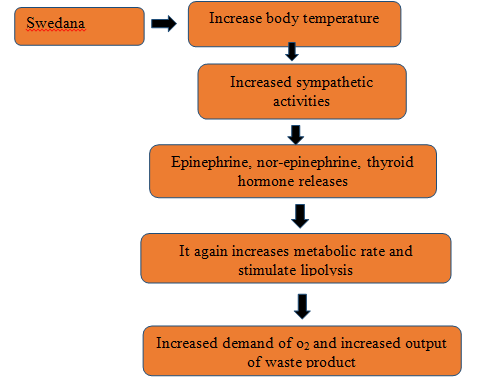
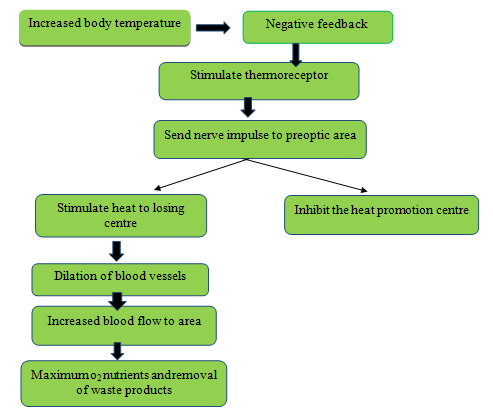
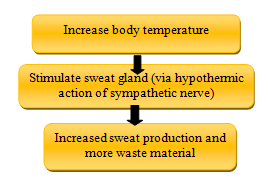
When decoction is poured over the body it helps in proper perspiration of the body which thereby detoxifies the body. The drug in Dhara comes in contact with the skin pores. Since the procedure is performed from a particular height and a particular temperature is maintained, there will be formation of energy by which the medicine can easily enter pores through friction and thermal action it stimulated Proprioceptor and thermoreceptor. The permeability of the medicine through the skin pores is enhanced. Because the temperature vasodilation happens, which leads to increased blood flows through the area so that necessary oxygen and nutrition materials are supplied and disease-causing toxins like excessive subcutaneous fat, sweat are removed (Figures 1-3).
Due to Swedana, it is type of Parishek Swed there is:
- Increased metabolic rate; It can be co-related with digestion of Ama.
- Vasodilation: It can be co-related with Shrotomukha Vishodhana.
- Stimulation of sweat glands: Swedana corrects Swedavaha
Sroto Dushti
Conclusion
It can be concluded from present case study that Panchkarma treatment provided marked relief in Sthaulya (obesity) along with knee joints pain with special importance given to manual external therapies with a limited period of time. This shows the stable efficacy of treatment as there was no recurrence after 60 days of treatment. Jawaprodh, Daurbalyam, Dauryagandham, Kshudaatimatram, Chalatva, waist circumference, waist hip ratio Dhanyamla Sarvang Dhara had good result. So, we can say Dhanyamla Sarvang Dhara is very effective in obesity and joints pain.
References
-
Obesity fact sheet. https://en.wikipedia.org/wiki/Obesity
-
Luppino FS, de Wit LM, Bouvy PF, Stijnen T, Cuijpers P, et al. (2010) overweight and obesity and depression: A systemic review and meta-analysis of longitudinal studies. Arch Gen Psychiatry 67(3): 220-229.
-
(2020) Obesity, Patient Care & Health Information, Diseases & Conditions.
-
Leptin-an-overview. www.sciencedirect.com>topics> agriculture
-
(2015) Biological-sciences, Integrative Approaches for Health.
-
Bertin E, Nguyen P, Guenounou M, Durlach V (2000) Plasma levels of Tumor Necrosis Factor-alpha (TNF-??) is essentially dependent on visceral fat amount in type 2 diabetic patients. Diabetes & Metabolism 26(3): 178- 182.
-
Shastri SSN (2009) Charaka Samhita of Agnivesha, revised by Charaka and Drdhabal, elaborated Vidyotini hindi commentary by Pt. Kasinatha Shastri & Dr. Gorakha natha chaturvedi, editorial board Pt. Rajeswaradatta Shastri, Part-1, Chaukhamba Bharti Academy Varanasi, Cha. Su. 21/3.
-
Shastri SSN (2009) Charaka Samhita of Agnivesha, revised by Charaka and Drdhabala, elaborated Vidyotini hindi commentary by Pt. Kasinatha Shastri & Dr. Gorakha natha chaturvedi,editorial board Pt. Rajeswaradatta Shastri, Part-1, Chaukhamba Bharti Academy Varanasi, Cha.Chi 28/65.
-
Shastri SSN (2009) Charaka Samhita of Agnivesha, revised by Charaka and Drdhabala, elaborated Vidyotini hindi commentary by Pt. Kasinatha Shastri & Dr. Gorakha natha chaturvedi, editorial board Pt. Rajeswaradatta Shastri, Part-1, Chaukhamba Bharti Academy Varanasi, Cha.Su. 21/20, 28 pp: 414-415.
-
Deva RRK (1967) Shabda Kalpa druma, part 3, 3rd (Edn.), Chowkhamba Sanskrit Series Office, PB No 8, Varanasi 1, pp: 709.
-
Acharya VJT (2005) Susruta Samhita Chikitsa 24/30-Dalhana, 8th (Edn.), Chowkhamba orientalia, PBNo 1032, Varanasi, pp: 488.
-
Raghuram YS (2016) Dhanyamla Dhara, Kanjidhara: Benefits.
-
Ranasingh RLDS, Ediriweera ERHSS (2015) Department of Nidan chikitsa, institute of indigenous medicine, university of Colombo. Sri Lanka Research article “A pharmacological appraisal od Dhanyamla” IAMJ journal 3(3): 1-20.
-
Hedge PL, Harini A (2005) A text book of Dravyaguna Vijnana’ (according to the syllabus of central council of Indian Medicine, New Delhi Vol 1st Chaukhambha publications New Delhi, chapter 5, pp: 230.
-
Hedge PL, Harini A (2005) ‘A text book of Dravyaguna Vijnana’ (according to the syllabus of central council of Indian Medicine, New Delhi Vol 1st Chaukhambha publications New Delhi, chapter 7, pp: 309.
-
Hedge PL, Harini A (2005) ‘A text book of Dravyaguna Vijnana’ (according to the syllabus of central council of Indian Medicine, New Delhi Vol 1st Chaukhambha publications New Delhi, chapter 5, pp: 231-232.
-
Shastri SSN (2009) Charaka Samhita of Agnivesha, revised by Charaka and Drdhabala, elaborated Vidyotini hindi commentary by Pt. Kasinatha Shastri & Dr. Gorakha natha chaturvedi, editorial board Pt. Rajeswaradatta Shastri, Part-1, Chaukhamba Bharti Academy Varanasi, Cha.Su. 26/43.
-
Bhisagacarya PHSSP (2010) Ashtanga Hridaya witthe commentaries Sarvangasundara of Arundatta and Ayurveda Rasayana of Hemadri, edited by Chaukhamba Orientalia, Varanasi, A.H.Su.1/18-Himadri.
-
Acarya JT (2012) Sushruta Samhita-Nibandhasangraha Commentary of Shri Dalhanacarya, Chaukhamba Orientalia Varanasi, part 1st 7th (Edn.), Su.Su. 46/419.
-
Acarya JT (2012) Sushruta Samhita-Nibandhasangraha Commentary of Shri Dalhanacarya, Chaukhamba Orientalia Varanasi, part 1st 7th (Edn.), Su.Su. 46/516.
-
Hedge PL, Harini A (2005) ‘A text book of Dravyaguna Vijnana’ (according to the syllabus of central council of Indian Medicine, New Delhi Vol 1st Chaukhambha publications New Delhi, chapter 4, pp: 167.
- Management of Ear Keloid with Ksharsutra: A Case Study
- Yoga and Global Sustainability: A Holistic Path to One Earth, One Health
- Autoimmune Diseases in Ayurveda: A Narrative Review with Classical and Modern Perspectives
- Management of Cluster Headache Associated with Pituitary Apophysitis by CERT (Chakrasiddh Energy Release Technique): A Case Report on Energy Rebalancing
- Zygophyllum Geslini Coss : Biochemicals and Antioxidant Activity
- Observations of a Beginner Vaidya