
An Outlook of Plantar Fasciitis with Correlation in Ayurveda as Vatakantaka
Pain is an unfavourable sensation that brings an individual to the physician due to a halt from his routine works. Heel pain is commonly found in society which experiences severe pain, tenderness and restricted movements fortunately in some of these pain subsides within short period, but unfortunately as many as these pains reoccur and may get converted in diseases like VATAKANTAKA (PLANTAR FASCIITIS). Vatakantaka can be properly compared to plantar fasciitis based on its pathophysiology and clinical presentation, and it responds quite well to ayurvedic treatment. Ayurveda defines “Vatakantaka” as being brought on by vitiated Vata at Gulfa Sandhi Pradesh, as stated by Acharya Charaka, Sushruta, and Vagbhata .Chronic plantar fascia irritation and fibrous tissue deterioration without new fibrous tissue development are the pathology of plantar fasciitis. Vatakantaka can be properly compared to plantar fasciitis based on its pathophysiology and clinical presentation, and it responds quite well to ayurvedic treatment.
Introduction
Pada (_foot) being one of the _Karmendriya, most of the activities of day today life depends on this any problems of foot adversely affect the routine of an individual. Plantar fasciitis is the most common cause of heel pain [1]. Approximately 15% of all foot complaints coming to the attention of health care professionals can be attributed to this cause [2].
This condition also accounts for 8% of all injuries in athletes in running-related sports [3]. Hence, it can be said that this condition is common in both sedentary and athletic population. It is attributed to chronic weight bearing and repeated overload of the foot in daily activities or sports [1].
There is very less references available regarding Padagata vyadhi in Samhitas but amongst Vatavyadhi , Vatakantaka is one condition which affects the foot of a person. Vatakantaka is a Vata Pradhana Vyadhi particularly caused by walking on uneven surfaces or by Atishrama, which produces pain in Khuduka Pradesha (Paarshni or Padajanghasandhi). Except Charaka Acharya, all Bhruhatrayee’s and Laghutrayee’s accepted Vatakantaka as Vata Nanatmaja Vyadhi. Patients suffering with Vatakantaka experience severe pricking (Kantakavata) pain in Padatalapradesha [4].
As the pain is seen more during morning and after a period of inactivity in patients, it indicates the Samsarga of Kapha or presence of Ama with the Vata. Here production of the Ama is expected from the Avarana of Koshtagni by aggravated Vata as explained by Charaka in Nidana sthana [5]. With this pathology and clinical presentation Vatakantaka can be effectively paralleled with plantar fasciitis. Pathology reveals chronic inflammation of plantar fascia and degeneration of fibrous tissue with or without fibroblast proliferation.
Plantar fasciitis, reportedly the most common cause of pain in the inferior heel. Estimated to account for 11 to 15 percent of all foot symptoms requiring professional care among adults, 5-18 % of runners and also common among military personnel [6]. * Ref -National centre for complementary and integrative health The incidence reportedly peaks in people between the ages of 40- 60 years in the general population and in younger people among runners.
Plantar Fasciitis
Ayurvedic Terminology
Vatakantaka, Padakantaka, Khudaka vata, Parshni ashrit vata Kantak – refers to pain
Aetiopathogenesis
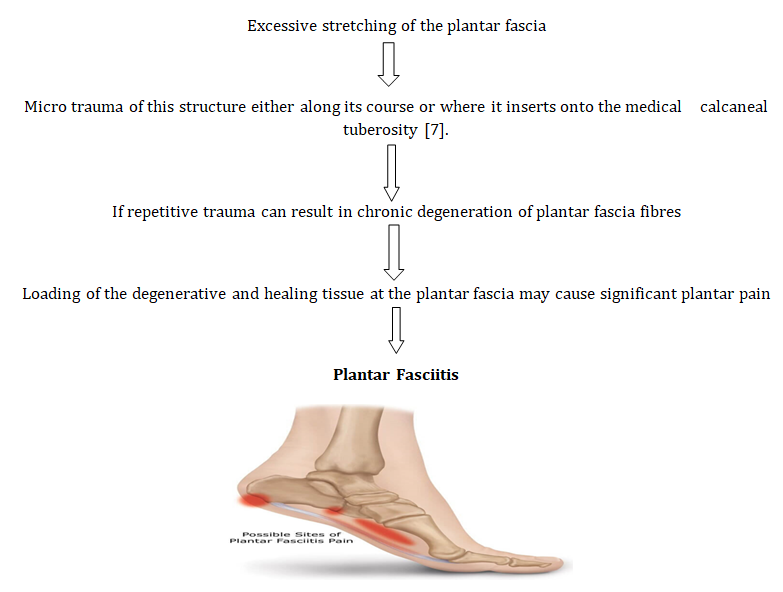
Excessive stretching of the plantar fascia Micro trauma of this structure either along its course or where it inserts onto the medical calcaneal tuberosity [7]. If repetitive trauma can result in chronic degeneration of plantar fascia fibres Loading of the degenerative and healing tissue at the plantar fascia may cause significant plantar pain
Aetiology
Although the cause is unclear, there are a number of independent studies that show the following risk factors for repetitive micro damage to the plantar fascia:
- The most frequent cause of plantar fascia is the tendon that connects the calf muscle to the heel is tight, which prolongs foot flexion and shortens the plantar fascia, so when the person stands, the plantar fascia stretches and the pain intensifies [8].
- Obesity or pregnancy- related excessive abrupt weight stress on the foot. The risk of plantar fasciitis is shown to be two times higher when the body mass index (BMI) is higher than 25kg/m2.
- Diabetes Mellitus, Hypothyroidism, Osteoarthritis.
- Plantar fasciitis has been linked to mechanical imbalances of the foot problems that are caused by foot itself or by excessive walking in footwear with poor arch support, such as ill-mannered shoes, heels . Flat foot, high arches and reduced ankle dorsiflexion are examples of foot and arch issues.
- Heel spurs have been mentioned as a Plantar Fasciitis risk factor. Recent research shows a significantly substantial correlation between Plantar Fasciitis and calcaneal spur.
- Jobs that require standing, walking and working on hard surfaces for the majority of the day have risk of Plantar
Fasciitis. • Prolonged foot flexion causes the plantar fascia to shorten, which is the most typical cause of plantar fasciitis. The condition is brought on by a tight Achilles tendon, which connects the calf muscle to the heel .as a result; standing causes the plantar fascia to stretch and intensifies pain.
According to the Ayurveda, the vitiation of both Vata Dosha and Kapha Dosha is the cause of this ailment. Common causes of Vata Dushti include:
- Constant exercise
- Walking barefoot, which results in Vata Dushti
- Not enough sleep
Symptoms
- It is characterized by the intense pain that occurs along with the first step in the morning which gradually decreases along with the movements.
- Reoccurrence of pain after long period of standing, after exercise or rising from sitting position, or driving the car for a prolonged period.
- When the heel is pressed from inside there is discomfort and perhaps pain along the arch.
- Plantar fascia stretching could be uncomfortable.
Diagnosis
The diagnosis is made on the basis of medical history and physical examination.
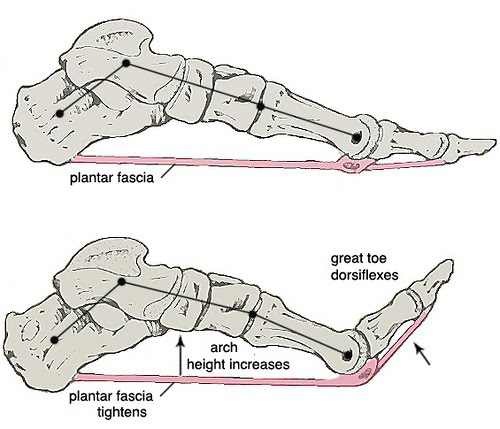
Windlass Test
- It is a special test for plantar fasciitis, a:’Windlass” meaning is the tightening of a rope or cable.
- Passively dorsiflexing the toes of a patient with heel pain. Reproduction of pain at the insertion of the plantar fascia is suggestive of plantar fasciitis.
- The windlass test achieves a direct stretch on the plantar aponeurosis which can be effective in examining dysfunction of the plantar fascia.
- The test can be important in the decision making process involved in the evaluation and treatment of plantar fasciitis.
Investigations
Radiograph of ankle joint antero-posterior, mortise and lateral view.
- Hb %, ESR
- Blood sugar
- S.uric acid
- AST, ALT, S.bilirubin
- S.creatinine, B.urea
- NCV
- EMG
- Neurosensory testing
Prevention
- Maintain a healthy weight.
- Always do a warm-up before exercise.
- Wear supportive shoes that support your arch and heel
- Don’t wear worn- out athletic shoes
- Apply ice
- Stretch your arches.
Treatment
| Conservative | Intermediate | Surgical |
|---|---|---|
| Nsaids | Extracorporeal Shockwave Therapy ( Eswt) | Endoscopic Plantar Fasciotomy |
| Corticosteroid Injections | Cast Immobilization | Open Fasciotomy |
| Stretching | Plantar Fasciorraphy (Autologous Platelet Concentrate Injections) | Spur Resection |
| Taping And Padding | ||
| Heel Pads | ||
| Night Splints | ||
| Orthotic Devices |
Ayurveda has described treatment of vatakantaka [9] in vatavyadhi chikitsa, Acharya Chakradatta has mentioned the specific treatment of vatakantaka as In Vatakantaka (pain in ankle), bloodletting should be done frequently or castor oil should be taken or the part should be cauterized with needles.
Treatment for it requires both Bahya and Abhyantra Chikitsa, as well as regional Ishtika Sweda, Valuka Sweda, Snehana, Upanaha, Raktavsechana, Bandhana, and Suchikarma (Viddhakarma) and Abhyantara Eranda Snehapana [10].
Panchkarma Plays a Vitol Role in Treatment of Vatakantaka
Raktamokshana: Letting out blood for therapeutic use. People, who undergo raktamokshana, will not suffer from any kind of twakdosha, granthi, sopha and roga due to dushta rakta as the dushya in vatakantaka is also a rakta.
Siravyadha: When the treatments fail, siravyadha has to be done for raktaprakopaja vikaras. Upnaha Sweda: Swedan is commonly mentioned as purvakarma in ayurvedic classics, however it is also used as pradhan karma in treating many conditions like vata and kapha disorders.
- Upnaha is mentioned as Bahya and Ekanga swedan. It is specifically indicated for vantage disorders. Upnaha is best for vatavyadhi with predominance of shoola, sankocha and stambha. Agnikarma: Agnikarma chikitsa introduces agni (heat) in the affected area.
- Physical heat from red hot shalaka is transferred as therapeutic heat to twakdhatu by producing samyak dagdha vrana.
- The ushan , tikshna, laghu, sukshma, vyavayi, vikashi and ashukari properties of agni helps to remove the srotavarodha , pacifies the vitiated vata kapha dosha and maintains their equilibrium thus break the samprapti.
Discussion
In Ayurveda, according to Acharya Sushruta and Acharya Vagbhata Vatakantaka is a disease of Khuda (heel) Asthi characterised by Pada Ruk (heel pain).
Over exertion and walking on an irregular surface as well as due to improper placement of foot over the ground, aggravated Vata which takes Ashraya in the Gulpha Sandhi or Khudagh causes pain in Padatala Pradesha especially in the morning and after a long period of inactivity.
Symptomatically it can be correlated to signs and symptoms of plantar fasciitis.
Plantar fasciitis is one of the most common causes of heel pain. In this condition there is inflammation in plantar fascia which is the thick band of tissues that lies on the bottom of the foot and connects the heel to the toes and provides support to arch of the foot. It also acts as shock absorber.
Conclusion
The Plantar fasciitis is treated as Vatakantaka. Chronic plantar fasciitis is mostly required analgesic and anti- inflammatory and surgical correction to stabilize the patient as well as to cure the condition, but in developing countries such type of treatment modalities were avoided because of complications of NSAIDs, longer hospitalization and also economical expenses.
So there is a scope for non surgical treatment modalities with less economical expenditure as well as minimum hospitalization with the help of Panchkarma procedure like Abhyanga,Swedana, Raktavsechana, Agnikarma etc. are helpful in Plantar fasciitis (Vatakantaka) with the use of this therapy, we are able to alleviate the patient’s Vata vitiation and provide alleviation.
References
-
Jain NN, Jain PS, Chandurkar VS (2019) a unique herbal combination with _agnikarma i_n the management of _vatakantaka-_a case study. International journal of Research- Granthaalayah 7(8): 34-38.
-
Vijayalakshmi S, Muralidhara A, Mahesh TN, Byresh A (2014) Clinical Efficacy of Valuka Sweda With Amlakanji In Vatakantaka: A Case Study. International Journal of Ayurveda and Pharma Research 2(7): 22-24.
-
Nagnath SR (2013) Critical appraisal of Agnikarma and its therapeutic aspects. Int res J Pharm 4(5): 75-77.
-
Shastri AD (2018) Sushrut Samhita with Ayurved Tattav Sandipika Hindi commentary by Ambika dutt Shastri, Nidan sthan 1/79 Chaukhamba Sanskrit sansthan, Varanasi, India, pp: 304.
-
Shukla AV, Tripathi RD (2015) Agnivesha, Charaka Samhita, Vidyotini Hindi commentary by Acharya Vidyadhar Shukla and Proff. Ravidatt Tripathi. chikitsa sthan 28/19 Chaukhamba Sanskrit Pratishthan, Varanasi, India, pp: 780.
-
U.S. Department of Health & Human Services (2023) National centre for complementary and integrative health. Bethesda, Maryland, USA.
-
Fauci A, Braunwald E, Kasper D, Hauser S, Longo D, et al. (2008) Harisson`s Principles of Internal Medicine. 17th(Edn.), McGraw Hill, NewYork, USA, 1: 2958.
-
Warner EC (2005) Savill’s system of Clinical medicine. 14th (Edn.), CBS, India, pp: 1496.
-
Cakradatta, Sharma PV (2013) kashi Ayurveda series 17, ch-22, vatavyadhi 22/66, chaukhambha orientalia edition, Varanasi, India, pp: 191.
-
Shastri AD (2013) _Sushrut Samhita Ayurved_ Tattav Sandipika _Hindi_ commentary by Dr. Ambika dutt Shastri, _chikitsa sthan_ 4/8, chaukhambha publishers, Varanasi, India, pp: 34.
- Management of Ear Keloid with Ksharsutra: A Case Study
- Yoga and Global Sustainability: A Holistic Path to One Earth, One Health
- Autoimmune Diseases in Ayurveda: A Narrative Review with Classical and Modern Perspectives
- Management of Cluster Headache Associated with Pituitary Apophysitis by CERT (Chakrasiddh Energy Release Technique): A Case Report on Energy Rebalancing
- Zygophyllum Geslini Coss : Biochemicals and Antioxidant Activity
- Observations of a Beginner Vaidya