
Efficacy of Virechana Karma in Psoriasis (Ek Kushta) – A Case Study
Psoriasis is a common autoimmune disease of the skin and joints that is chronic and recurrent. On the physical, emotional, and psychological wellbeing of the affected patients, it may have a profoundly detrimental effect. By alleviating symptoms, modern medicine has significantly improved the treatment of psoriasis. Finding the best course of action for some patients can be challenging since they do not respond to treatment or the treatment loses its initial efficacy. Modern medications also come with long-term negative effects of their own. Ayurveda classify the condition as Ek kushta, a Vata-Kapha predominant Kushta. Here, a traditional Ayurvedic regimen was attempted to treat a 41-year-old male with long-standing moderate to severe erythrodermic psoriasis who had previously received systemic therapy in modern medicine without receiving an adequate response. Samshodhana coupled with Samshamana medications are the cornerstones of treatment for all varieties of Kushta, hence in this study, Virechana was administered first, followed by 30 days of Samshamana medicine. At the conclusion of treatment, a skin lesion assessment was performed.
Introduction
Psoriasis is a chronic dermatosis, characterized by an unpredictable course of remissions and relapses and presence at typical sites of well-defined, erythematous, indurated papules and plaques, which are surmounted by large, loose, silvery scale. Roughly 1% of population affected. It occurs with almost equal frequency in males and females [1]. Ayurveda diagnosis is Ek kushta, a Vata- Kapha predominant Kushta presenting with Aswedanam, Mahavastu, and Matsyashakalopamam [2]. Samshodhana, followed by Samshamana medications, is the basis of treatment for all varieties of Kushta [3].
Case Report
A male patient aged 41 years, visited OPD of Rishikul Campus (Reg. No: 32549/5756), Haridwar, Department of Panchakarma, with complaints of reddish white irregular dry, scaly lesions over both lower limbs and forearm since 10 years. Also, he complains having extreme itching, especially in the colder months. He had allopathic care and has been using topical steroids for the last past 10 years, but only brief alleviation.
History of Past Illness
No history of DM/HTN/Other systemic disorders.
Personal History
- Diet- mixed
- Appetite- good
- Bowel- irregular
- Micturition- normal
- Sleep- disturbed
Family History
NAD
Dashavidhapareeksha
• Prakruti- Vata Pitta
• Vikruti – Kapha Rakta
• Sara- Madhyama
• Pramana – Madhyama
• Satwa – Pravara
• Satmya – Madhyama
• Ahara Shakti – Madhyama
• Vyayama Shakti – Madhyama
• Vaya – Madhyama
General Examination
• Pallor – Absent
• Icterus – Absent
• Koilonychias – Absent
• Lymphadenopathy – Absent
• Edema – Absent
Systemic Examination
- CNS – conscious, well oriented
- CVS – S1, S2 heard normal
- R.S – normal vesicular breathing sounds heard
Skin Examination
- Lesions – well defined erythematous papules and plaques with silvery white scales
- Surface – dry/rough
- Discharge – Absent
- Temperature – normal
- Auspitz sign – Positive
- Koebner’s phenomenon – absent
Investigation
• Hb – 14.27 g/dl
• TLC – 8.10/L
• DLC – Neutrophils: 72.85%
Lymphocytes: 19.12% Monocytes: 5.82% Eosinophils: 2.01% Basophils: 0.20%
- Glucose (Fasting) – 92.1mg/dl
- TSH – 1 microIU/Ml
- SGOT – 39.7 U/L
- SGPT – 26 U/L
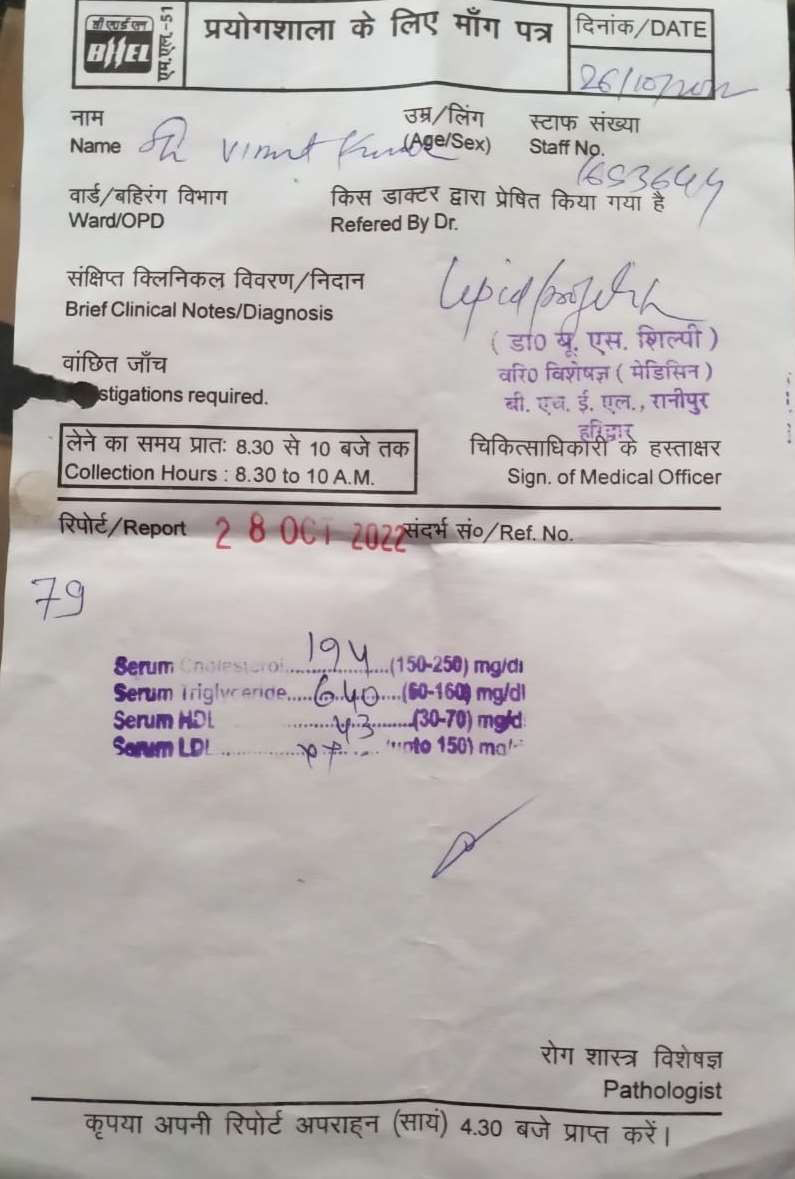
- Serum Cholesterol – 194 mg/dl
- Serum Triglyceride – 640 mg/dl
Nidana
Excessive intake of Kshira, Dadhi, Kulatha, Masha, Katu Rasa Ahara, Virudha Ahara, Shoka, Chinta and Ratri Jagarana.
Samprapti
According to Acharya Charaka seven Dravyas are involved in the Samprapti. It includes all the three Doshas (Vata, Pitta, Kapha) along with four Dushyas i.e. Twaka, Rakta, Mamsa and Lasika. Acharya Charaka has stressed upon the dual part played by Nidana i.e., simultaneous vitiation of Tridosha and disturbance of normal configuration i.e., ‘Shaithiya’ in Dhatus. This leads to the final manifestation of Kushtha.
Samprapti Ghataka
| Dosha | Tridosha (Vata-Kapha Pradhana) |
|---|---|
| Dushya | Twakaa, Rakta, Mamsa, Lasika |
| Srotasa | Rasa, Rakta, Mamsa, Meda |
| Srotodushti | Sanga and Vimargagamana |
| Agni | Jatharagni and Dhatwagnimandya |
| Udbhavasthana | Amashaya, Pakwashaya |
| Sancharsthana | Tiryag Sira |
| Adhishthana | Twacha |
| Vyadhimarga | Bahya |
| Swabhava | Chirkari |
Vyavachedakanidana
| Eka Kushta | Kitibha |
|---|---|
| Aswedanam Mahavastu Matsyashakalopamam | Shyavam Kinakharasparsham Parusham |
Vyadhi Vinischaya
Eka Kushta
Therapeutic Intervention
| Duration | Medication | Dose | Route | Frequency | Anupana |
|---|---|---|---|---|---|
| November 10,2022 – | Chitrakadi Vati | 2 tb. | Oral | Twice a day after meal | Warm water |
| November 14,2022 | Ajmodadi Churna | 2 gm | |||
| November 15,2022 | Panchatikta Ghrita | 30 ml | Oral | Morning empty stomach | Warm water |
| November 16,2022 | Panchatikta Ghrita | 60 ml | Oral | Morning empty stomach | Warm water |
| November 17,2022 | Panchatikta Ghrita | 90 ml | Oral | Morning empty stomach | Warm water |
| November 18,2022 | Panchatikta Ghrita | 120 ml | Oral | Morning empty stomach | Warm water |
| November 19,2022 | Panchatikta Ghrita | 150 ml | Oral | Morning empty stomach | Warm water |
| November 20,2022 | Panchatikta Ghrita | 180 ml | Oral | Morning empty stomach | Warm water |
| November 21,2022 | Panchatikta Ghrita | 200 ml | Oral | Morning empty stomach | Warm water |
| November 22,2022 | Coconut oil and Dashmool Kwath Nadi Swedana | - | External | Morning | |
| November 23,2022 | Coconut oil and Dashmool Kwath Nadi Swedana | - | External | Morning | |
| November 24,2022 | Coconut oil and Dashmool Kwath Nadi Swedana | - | External | Morning | |
| November 25,2022 | Trivrit Avleha | 60 gm | Oral | Morning | Warm water |
No. of Vegas – 24 Shuddhi – Uttama Antiki Shuddhi – Kaphanta Peyadisamsarjana Karma was followed after Virechana for next 7 days.
Life style modification
Advised to sleep early and wake up early, morning walk and to follow ideal daily routine, timely intake of food, to
Results
take green leafy vegetables, pomegranate fruit, and barley. Also advised to avoid rice, curd, tea, pickles, fried food and excessive salt.
| Signs and symptoms | Before treatment | After treatment |
|---|---|---|
| Dryness | Present | Absent |
| Itching | Present | Absent |
| Scaling of skin | Present | Absent |
| Excessive sweating | Present | Reduced |
| Discoloration of skin | Present | Reduced |
| Investigation | Before treatment | After treatment |
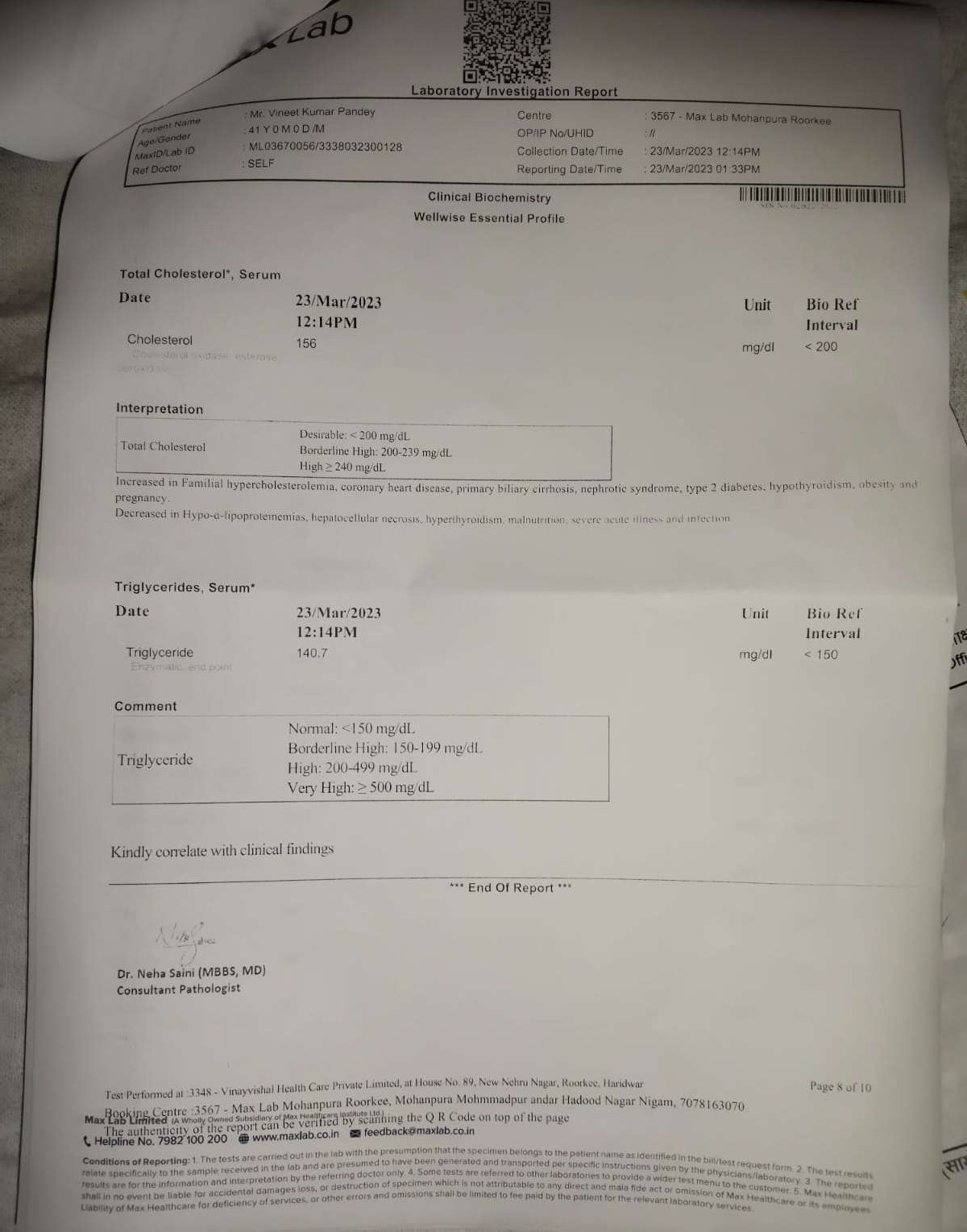
| Serum Triglyceride | 640 mg/dl | 140.7mg/dl |
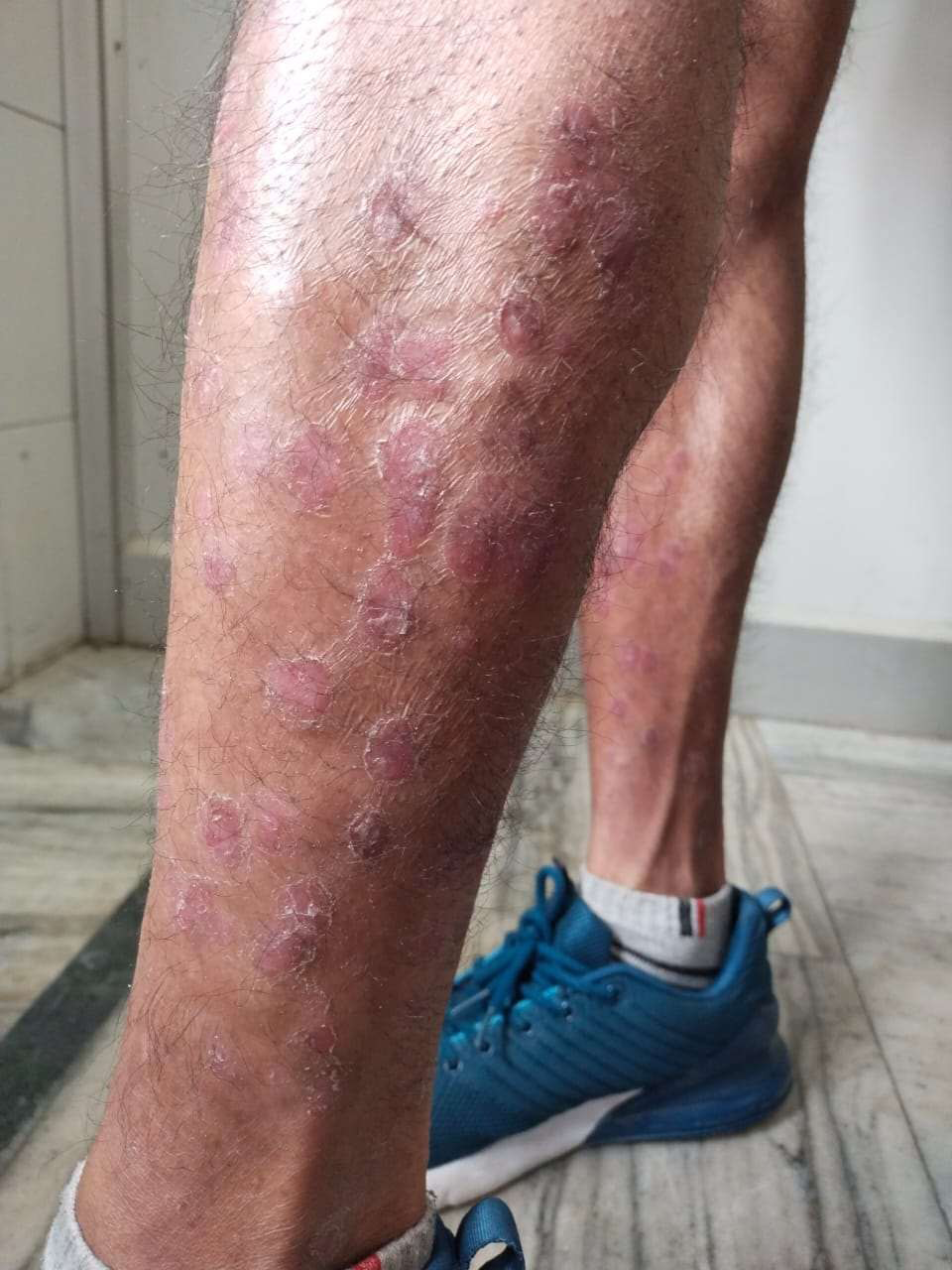
Figure1: Before treatment.
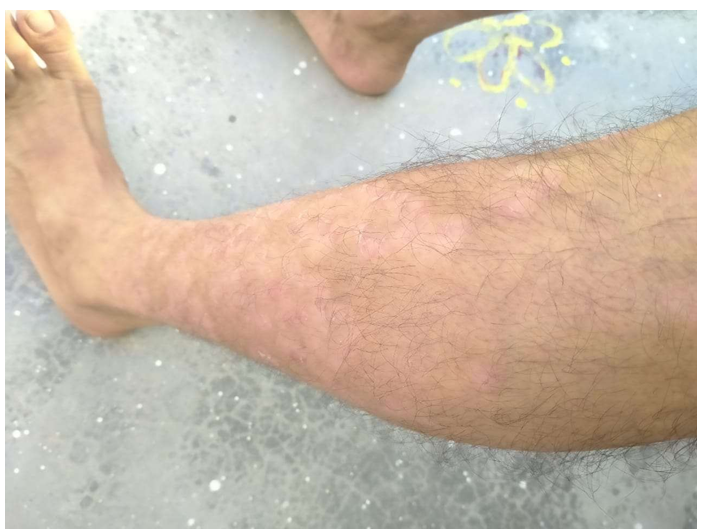
Figure2: After treatment.
Discussion
According to the Ayurvedic perspective, psoriasis is viewed as a Raktaja condition with Dosha vitiation. Pre-operative, operative, and post-operative care during Virechana Karma is most crucial to produce better results in psoriasis. Virechana Karma is one of the treatment modalities for this condition. The Dosha situated in Twak. In order to normalize the deranged Agni, it is important to take Deepana and Pachana medicine before Snehapana. Typically, Arohana Snehapana is taken for up to seven days or Samyak Snigdha Lakshana. Sneha’s ability to disrupt the pathogenesis of psoriasis by gradually increasing dosage helps to loosen the connection between the Dosha, Dushya.
Panchatikta Ghrita was used for the Snehapana. The ingredients of Panchatikta Ghrita include Triphala, Guduchi, Patola, Nimba and Patola. The medication contains Ushna, Tikshna, Vyavayi, Vikasi, Katu, Tiktarasatmaka, and Katu Vipaka. It was found that the Deepana, Pachana, Amapachaka, Shrotoshodhaka, Raktaprasadhana, Raktashodhaka, Kandughna, Kushthaghna, and Varnya mode of action were mostly responsible for the effects of these medications. It also soothed the signs of exacerbated Vata and Kapha Doshas, such as itchiness, discoloration, and dryness.
Trivrit Avleha was used for the Virechana Yoga. The primary ingredient in this preparation is Trivrit, which is included in the group of “ten purgative herbs” (Bhedaniya Mahakashaya), “ten antidote herbs” (Vishaghna Mahakashaya), “ten herbs supportive for therapeutic enema” (Ashthapanopaga Mahakashaya), “colon cleanser, antitumor & antidote herbs” (Shyamadi Gana), Adhobhagahara Gana is of the class of “herbs removing toxins (i.e., vitiated Dosha) from lower half of the body” (Anantaram Sharma, 2008).
Virechana medications bring out the therapeutic purgation due to its Prabhava (potency). These medications can aid in the induction of purgation because they have a natural inclination to go downhill due to the dominance of Jala and Prithvi Mahabhuta. The waste products can be brought into the intestine to maintain homogeneity from where they can be eliminated out of the body by the action of the intestine, which is induced by the Virechana drug, as has already been mentioned. This process can occur wherever the waste products are present in the body, whether they are extracellular, intracellular, or in plasma. The supplied medication’s active ingredients will activate the mucosal membrane and momentarily alter the normal permeability of the mucosal lining, causing morbid pollutants that were transported from the cellular to the gut levels via Snehana and Swedana Karma to exude through the anal pathway.
Conclusion
The majority of the psoriasis condition seems to be a keratinization issue. In a psoriatic lesion, fast epidermis displacement is the primary problem (3-4 days in-stead of 28 days in normal skin). There is proof that biological mechanisms involving hormones and the immune system work together. The increased levels of arachidonic acid metabolites in psoriasis patient’s afflicted skin are associated with the clinical alterations. According to Ayurveda, psoriasis can be treated with Shodhana and Shamana therapy. Virechana Karma is frequently recommended in the treatment of psoriasis because it assists in addressing the fundamental pathogenic elements of Pitta, Rakta, Agni, and Twak. In this specific example, symptoms improved by 60% during Shodhana therapy and by 80% following the administration of an oral medication for two months. As a result, purgation therapy followed by internal drugs is seen to be the best course of treatment for skin conditions.
References
-
Shah N Siddharth API (2009) Textbook of Medicine. 8th (Edn.), 2: s1400.
-
Agnivesha (2001) Charaka Samhita with Ayurveda dipika commentary of Chakrapanidatta. In: Acharya YT (Ed.), Revised by Charaka and Dridhabala, Chaukhamba Sanskrit Sansthan, 5th(Edn.), Chikitsa Sthana 22(7): 451.
-
Agnivesha (2001) Charaka Samhita with Ayurveda dipika commentary of Chakrapanidatta. In: Acharya YT (Ed.), Revised by Charaka and Dridhabala, Chaukhamba Sanskrit Sansthan, 5th(Edn.), Chikitsa Sthana 41(7): 452.
- Management of Ear Keloid with Ksharsutra: A Case Study
- Yoga and Global Sustainability: A Holistic Path to One Earth, One Health
- Autoimmune Diseases in Ayurveda: A Narrative Review with Classical and Modern Perspectives
- Management of Cluster Headache Associated with Pituitary Apophysitis by CERT (Chakrasiddh Energy Release Technique): A Case Report on Energy Rebalancing
- Zygophyllum Geslini Coss : Biochemicals and Antioxidant Activity
- Observations of a Beginner Vaidya