
Review of Metabolic Syndrome (Santarpana Janya Vyadhi) and its Management by Virechana Karma and Vyoshadi Saktu
Ayurveda, considered the oldest form of healthcare globally, aligns individuals with the inherent principles of nature to maintain overall well-being by harmonizing body, mind, and spirit. In the contemporary age of rapid modernization and hectic lifestyles, people lead busy and stressful lives, marked by a growing consumption of high-calorie fast food. The prevalence of sedentary habits contributes to an increase in total body fat and cholesterol. It leads to health issues such as hypertension, heart diseases, hyperlipidemia, and truncal obesity. Metabolic syndrome (MetS) is a disorder of energy and storage containing of risk factor for various complications such as Type 2 diabetes mellitus and cardio vascular disease. Being an alarming disease, it requires effective management. In recent years several synthetic drugs have been introduced for the treatment of metabolic syndrome. Clinical trials have shown that antihypertensive, antidiabetic, antilipidemic drugs alone have limited long term efficacy and one cannot avoid major side effects such as drug dependence, drug resistance, sedation etc. Ayurvedic medicine provides a range of measures. In Ayurvedic literature, Acharya Charaka has mentioned group of diseases which arises due to over intake of heavy meals and sedentary life style collectively called as Santarpana Janya Vyadhi which can be symptomatically co-related with metabolic syndrome. Acharya Charaka has specified treatment methods involving substances (Dravyabhuta Chikitsa) and non-substances (Adravyabhuta Chikitsa) for conditions caused by over-nourishment, such as Vaman, Virechana, Raktmokshana, Vyayama (exercise), Dhooma(fumigation), Swedana(sudation), and Rooksha Anna Sewana (intake of dry substances). This paper aims to review metabolic syndrome in Ayurveda and its corresponding management strategies.
Introduction
Metabolic syndrome is a multi-factorial disease, frequently associated with a cluster of pathologies including obesity, hypertriglyceridemia, impaired glucose tolerance, and insulin resistance, collectively referred to as the metabolic syndrome (formerly known as syndrome X and insulin resistance syndrome). Ayurveda, being a life science and not merely a medical science, is the appropriate choice for treating metabolic disorders. Metabolic syndrome, resulting from improper metabolism, is described in Ayurveda as Agnivaishamya (Disturbed Agni) indicating issues in digestion and absorption. According to Ayurveda, this condition arises from the vitiation of digestive fire, often caused by an imbalance in Doshas. Blockages in the individual channels of metabolism lead to excess or improper digestion and absorption, giving rise to diseases. Metabolic syndrome encompasses a combination of interconnected physiological, biochemical, clinical, and metabolic factors that significantly elevate the risk of cardiovascular diseases, type 2 diabetes mellitus (DM), and all-cause mortality. It includes abdominal obesity, insulin resistance, hypertension, and hyperlipidemia [1]. Various diagnostic criteria exist for quantifying MetS, with the International Diabetic Federation (IDF) and the National Cholesterol Education Program Adult Treatment Panel III (NCEP ATP III) [2] being widely used. Metabolic syndrome poses a complex metabolic disorder and emerges as a clinical challenge in today’s society, affecting 11% - 41% of Indians and approximately 1 in 4 adults worldwide [3]. Ayurvedic treatment encompasses addressing the root cause (Nidan Parivarjan) and utilizing medications for treating diseases resulting from excessive nourishment (Santarpana Janya Vyadhi), similar to modern medicine. However, the fundamental difference lies in the approach of eliminating Doshas and clearing congested Srotasa (channels) to eliminate harmful chemical by-products from the body. This approach not only serves to prevent the ailment but also eradicates the underlying cause, averting the potential development of more intricate conditions and hindering the recurrence of the current ailment.
Ayurvedic Review
In Ayurvedic literature, Acharya Charaka has mentioned group of diseases which arises due to over intake of heavy meals and sedentary life style collectively called as Santarpana Janya Vyadhi [4] which can be symptomatically co-related with metabolic syndrome, especially Medaavrit Vata [5] described in Charaka Samhita. In Ayurveda, the consideration of obesity and lipid disorders revolves around the concepts of Medo Roga and Prameha. Ayurvedic terminology describes Santarpana Janya Vyadhi as diseases resulting from over-sustenance and diseases arising from a lack of sustenance. The premise is that improper dietary habits and disrupted functions of various Agni [6] sets contribute to the formation of Ama [6] (a reactive antigenic factor). When Meda Dhatu interacts with the formed Ama, it undergoes changes, affecting the quality of fatty tissues, including cholesterol. The convergence of Ama and fatty tissues leads to the formation of poorly structured Meda Dhatu, known as Sama Meda Dhatu. As this ill-formed Meda Dhatu circulates throughout the body, it may cause the obstruction of micro-channels, swift antigenic reactions, and trigger a series of inflammatory events in the body. Interaction between such categories of Ama and Meda Dhatu can result in various metabolic disorders, with metabolic syndrome being one of them. In essence, metabolic syndrome is a Dushya dominant disorder, and Meda plays a major role in the pathogenesis of Santarpana Janya Vyadhi.
| Samanya - Kapha predominant Vishesha - Kledaka Kapha | |
|---|---|
| Dushya | Medo dhatu & Rasa Dhatu |
| Agni | Jatharagnimandyata & Medodhatwagnimandyata |
| Srotasa | - Rasavaha & Medovaha |
| Adhisthana | Sarva Shareer gata Dhamani and Udara, Sphiga |
| Udabhava sthana | Aamashaya |
| Prasara | Rasayani |
| Rogamarga | Bahya & Madhyama |
| Swabhava | Chirkari |
Table 1: Samprapti Ghataka (Pathogenesis).
Modern Review
The first formal definition of the MetS was put forth in 1998 by the World Health Organization (WHO). This definition focused primarily on the presence of insulin resistance, identified by hyperinsulinemia, impaired glucose tolerance (IGT), or the diagnosis of T2D, which had to be present to make the diagnosis. In addition, two of the following also had to be present: dyslipidemia (reduced HDL-C and increased triglycerides), hypertension, and microalbuminuria. Metabolic syndrome defines the clustering in an individual of multiple metabolic abnormalities. World Health Organization and programs including the National Cholesterol Education Program (NCEP) and Adult Treatment Program III (ATP III) have now agreed to consider metabolic syndrome as a disease and defined it as A subject has metabolic syndrome if he or she has three or more of the following criteria [2]:
- Abdominal obesity: WC ≥102 cm in men and ≥88 cm in women.
- Hyper triglyceridemia: ≥150 mg/dl (1.695 mmol/L).
- Low HDL-C: <40 mg/dl in men and <50mg/dl in women.
- High blood pressure (BP): ≥130/85 mmHg.
- High fasting glucose: ≥100 mg/dl.
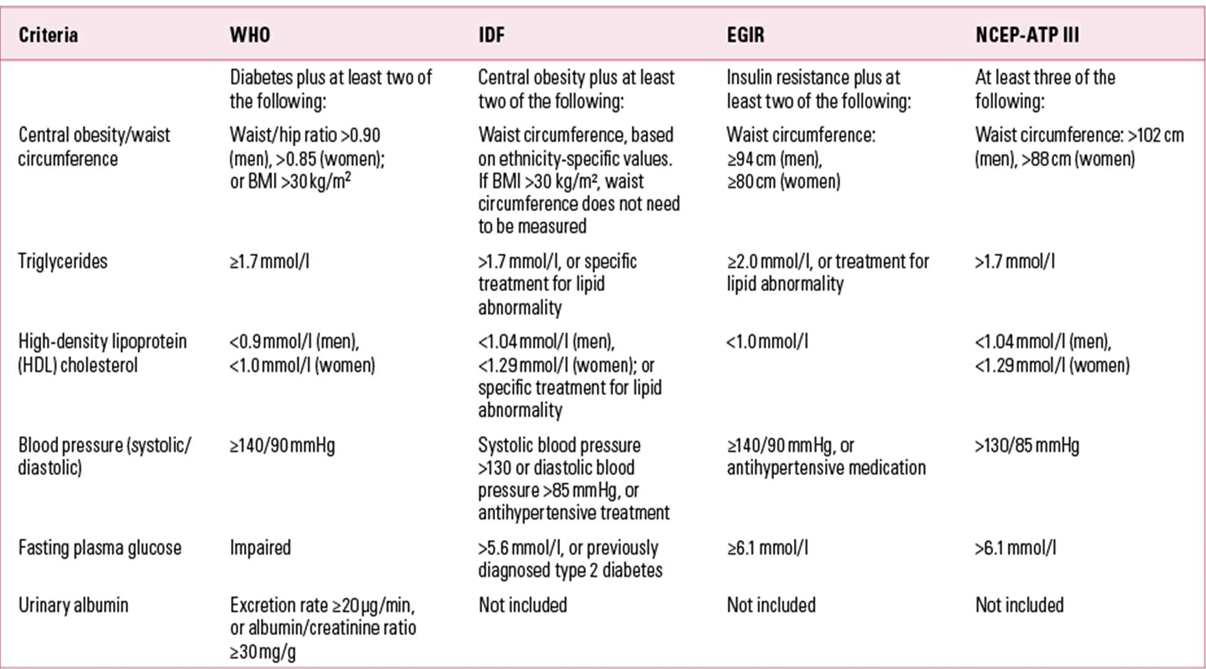
I took the National Cholesterol Education Program (NCEP) and Adult Treatment Program III (ATP III) criteria for my research on metabolic syndrome (Santarpana Janya Vyadhi). I will select patients who meet three or more of these criteria.
Management of Metabolic Syndrome with Ayurveda
Metabolic Syndrome can be managed effectively by following Ayurvedic principles of treatment enumerated below
- Nidana Parivarjana (avoidance of cause)
- Langhana (Fasting)
- Vyayama & Pranayama (physical & breathing exercise)
- Kapha Medo nashaka Chikitsa/ Deepan Pachana Chikitsa (hypolipidaemic and digestive)
- Shodhana Chikitsa (bio-purification)
- Samshamana Chikitsa (drug therapy) Recognizing the significance of the cleansing process in treating metabolic syndrome, we have opted for one important detoxification procedure, “Virechana Karma [4] and “Vyoshadi Saktu [7] as Sanshaman Chikitsa as described in Ayurvedic texts for the treatment.
| Ahara | Vihara | |
|---|---|---|
| Pathya | Jirne Bhojana (to take food after complete digestion of previous food) | Daily exercise |
| Pathya | Maximum use of Yava (Barely) and Purana Godhuma (Old Wheat) for food preparation. | Daily exercise |
| Apathya | High calorie diet, like fast foods | Lack of exercise |
| Apathya | Fatty, heavy and oily food substances | Divaswapna |
| Apathya | Excessive and daily use of meat | Adhyasana |
| Apathya | Excessive use of milk/dairy products like curd, paneer, ghee, sweets | Vishamashana |
Table 2: Pathya-Apathya.
Discussion
Discussion of Disease
The concept of Metabolic Syndrome as a disease entity is not explicitly recognized in Ayurveda. However, Ayurveda does discuss the etiological factors that initiate the disease process, such as faulty dietary habits, lifestyle errors, and defects in genes, along with various epigenetic factors, all within the framework of health and disease. According to Ayurvedic principles, Metabolic Syndrome results from overnutrition due to defective tissue metabolism. Ayurveda extensively addresses obesity and lipid disorders in the context of Medoroga and Prameha. Ayurveda emphasizes the role of the liver (Yakrita) in the qualitative derangement of lipids and cholesterol when Meda Dhatu interacts with preformed Ama.
The interaction of Ama with fatty tissues, known as Sama Meda Dhatu, is considered the main cause of Medo Roga. This interaction may lead to the blockade of microchannels, triggering antigenic reactions and a series of inflammatory events throughout the body. Ayurveda suggests that when this category of Ama interacts with Meda Dhatu, it can result in metabolic disorders. Furthermore, Ayurveda proposes that this form of Meda checks the function of Vata at the tissue level, potentially leading to insulin resistance and, ultimately, type 2 Diabetes mellitus.The deposition of Baddha Meda in the subcutaneous region, or unused regions, is responsible for increased waist circumference, ultimately leading to central obesity—a key causative factor for Metabolic Syndrome.
Discussion on mode of action of Virechana Karma in Metabolic Syndrome.
Virechana:
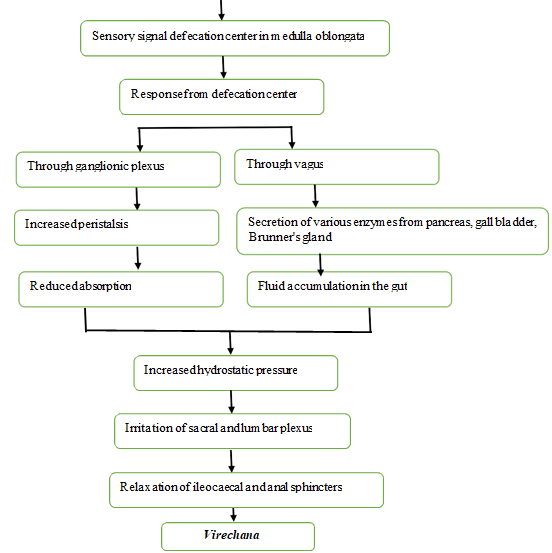
Virechana Karma acts on the liver, which is the seat for all microsomal enzymal activity. It improves metabolism which in turn reduces FFA accumulation. This in turn results into weight loss and reduction in waist circumference. All these conditions together help in pacifying symptoms of Metabolic Syndrome.
Discussion on Mode of action Vyoshadi Saktu of in Metabolic Syndrome
In Vyoshadi Saktu maximum part is Yava Saktu which is Sheeta Veerya, appetizer, light to digest, laxative. It pacifies Kapha and Pitta, also depletes fats. If the Saktu is dissolved in water and drunk, it gives strength, enhances semen, nourishes body, expels hardened faeces, satisfies, sweet in taste, promotes taste and yields energy on digestion. It relieves aggravated Kapha and Pitta, alleviates fatigue due to walking and exercises. Madhu due to its Guru, Ruksha Guna, Kashaya, Madhura Rasa, Ushna Veerya & Katu Vipaka shows Vata Kaphhara Properties and can be used as ―Guru & Aptarpana drug.
The Vyoshadi Saktu contains 28 drugs. Majority of these drugs are Katu, Tikta, Kashaya Rasa Pradhana with predominance of Laghu, Ruksha, Teekshna and Ushna Gunas. Most of the drugs poses Ushna Veerya with Katu Vipaka. While reviewing the pharmaco- therapeutic actions of these drugs most of the components of Vyoshadi Saktu have Kapha-Vatahara, Tridoshahara, Deepana, Pachana, Anulomana, Lekhana, Bhedana, Chedana and Medohar activities. Majority of drugs also have Srotovishodhaka, Balya and Vrishya. Most of the drugs reported Anti-lipidemic, Hypolipidemic, Anti-obesity, Antihyperglycemic, Anti- diabetic, Anti-atherosclerotic, Cardioprotective properties which are beneficial in treatment of metabolic syndrome.
| Drug | Latin Name | Family | Rasa Pachaka | Karma |
|---|---|---|---|---|
| Haritaki | Terminalia Chebula | Combretaceae | Rasa-Kashaya, Tikta, Madhura,Katu, Amla | Tridosha Shamaka |
| Guna -Laghu, Rooksha | ||||
| Veerya -Ushna | ||||
| Vipaka-Madhura | ||||
| Bibhitaki | Terminalia Bellirica | Combretaceae | Rasa-Kashaya, | Tridosha Shamaka Esp. Kapha |
| Guna -Laghu, Rooksha | ||||
| Veerya -Ushna | ||||
| Vipaka-Madhura | ||||
| Amalaki | Phyllanthus Emblica | Phyllanthaceae | Rasa-Kashaya, Tikta, Madhura,Katu, Amla | Tridosha Shamaka Esp. Pitta |
| Guna-Guru Rooksha | ||||
| Veerya-Sheeta | ||||
| Vipaka-Madhura | ||||
| Pippali | Piper Longum | Piperaceae | Rasa- Katu | Vata Kapha Shamaka |
| Guna- Laghu, Snigdha | ||||
| Veerya- Anushnasheeta | ||||
| Vipaka-Madhura | ||||
| Maricha | Piper Nigrum | Piperaceae | Rasa- Katu | Vata Kapha Shamaka |
| Guna- Laghu, Tikshana | ||||
| Veerya -Ushna | ||||
| Vipaka-Katu | ||||
| Shunthi | Zingiber Officinale | Zingiberaceae | Rasa- Katu | Vata Kapha Shamaka |
| Guna- Laghu, Snigdha | ||||
| Veerya -Ushna | ||||
| Vipaka-Madhura | ||||
| Chitraka | Plumbago Zeylanica | Plumbaginaceae | Rasa- Katu | Vata Kapha Shamaka |
| Guna -Laghu, Rooksha | ||||
| Veerya -Ushna | ||||
| Vipaka-Katu | ||||
| Yavani | Trachyspermum Ammi | Umbelliferae | Rasa- Katu, Tikta | Vata Kapha Shamaka |
| Guna- Laghu, Rooksha, Tikshana | ||||
| Veerya- Ushna | ||||
| Vipaka- Katu | ||||
| Dhanyaka | Coriandrum Sativum | Umbelliferae | Rasa-Kashaya, | Tridosha Shamaka Esp. Pitta |
| Tikta, Madhura, Katu | ||||
| Guna- Laghu, Snigdha | ||||
| Veerya -Ushna | ||||
| Vipaka-Madhura | ||||
| Hingu | Ferula Asafoetida | Umbelliferae | Rasa- Katu | Vata Kapha Shamaka |
| Guna- Laghu, Tikshana | ||||
| Veerya -Ushna | ||||
| Vipaka-Katu |
| Kashaya | Vata Kapha Shamaka | |||
|---|---|---|---|---|
| Guna- Laghu, Tikshana, Rooksha | Vata Kapha Shamaka | |||
| Veerya -Ushna | Vata Kapha Shamaka | |||
| Vipaka-Katu | Vata Kapha Shamaka | |||
| Jeeraka | Cuminum Cyminum | Apiaceae | Rasa- Katu | Vata Anulomana |
| Jeeraka | Cuminum Cyminum | Apiaceae | Guna -Laghu, Rooksha | Vata Anulomana |
| Jeeraka | Cuminum Cyminum | Apiaceae | Veerya -Ushna | Vata Anulomana |
| Jeeraka | Cuminum Cyminum | Apiaceae | Vipaka-Katu | Vata Anulomana |
Table 4: Some Important Ingredients of Vyoshadi Saktu.
Conclusion
The study concludes that excessive intake of high-calorie fatty foods, sedentary lifestyle, Divaswapna, and mental factors like stress play a major role in the etiopathogenesis of Santarpana Janya Vyadhi. Nidan Parivarjana and regular physical exercise are essential in managing Metabolic Syndrome. Amapachaka, Agnideepaka, and Srotosodhaka drugs that specifically work at the level of Jathragni and Medodhatwagni are the preferred choices in the management of Metabolic Syndrome. The claim of absence of hazardous effects in Ayurvedic management is a significant benefit for patients.
References
-
Jaspinder K (2014) A Comprehensive Review on Metabolic Syndrome. Cardiology Research and Practice, Hindawi Publishing Corporation, pp: 22.
-
Lipsy RJ (2003) The National Cholesterol Education Program Adult Treatment Panel III Guidelines. Journal of _Rasa- Katu,_ _Vata Kapha Shamaka_ _Kashaya_ _Guna- Laghu, Tikshana, Rooksha_ _Veerya -Ushna_ _Vipaka-Katu_ _Rasa- Katu_ _Vata Anulomana_ _Guna -Laghu, Rooksha_ _Veerya -Ushna_ _Vipaka-Katu_ Managed Care Pharmacy 9(S1): 1-4.
-
Khan Y, Lalchandani A, Gupta AC, Khadanga S, Kumar S (2018) Prevalence of metabolic syndrome crossing 40% in Northern India: Time to act fast before it runs out of proportions. J Family Med Prim Care 7(1):118-123.
-
Kasi Nath S, Gorakha Natha C (2016) Agnivesha, Charak Samhita-Vidhyotani teka. Charaka sutra, Chaukhambha Bharti Academy, Varanasi, India, 23/8-9, pp: 437.
-
Kasi Nath S, Gorakha Natha C (2016) Agnivesha, Charak Samhita-Vidhyotani teka. Charaka sutra, Chaukhambha Bharti Academy, Varanasi, India, 28/65, pp: 789.
-
Atrideva G (2005) Vidyotini Hindi Commentary, Astanga Hridayam, Sutrasthana, Chaukhambha Sanskrit Sansthana, Varanasi, India, 13/27.
-
Kasi Nath S, Gorakha Natha C (2016) Agnivesha, Charak Samhita-Vidhyotani teka. Charaka sutra, Chaukhambha Bharti Academy, Varanasi, India, 23/19-24, pp: 438.
- Management of Ear Keloid with Ksharsutra: A Case Study
- Yoga and Global Sustainability: A Holistic Path to One Earth, One Health
- Autoimmune Diseases in Ayurveda: A Narrative Review with Classical and Modern Perspectives
- Management of Cluster Headache Associated with Pituitary Apophysitis by CERT (Chakrasiddh Energy Release Technique): A Case Report on Energy Rebalancing
- Zygophyllum Geslini Coss : Biochemicals and Antioxidant Activity
- Observations of a Beginner Vaidya