
Unveiling the Healing Potential of Gorakh Mundi (Sphaeranthus Indicus Linn.): A Comprehensive Analysis of its Ayurvedic Significance
In recent times, humans have become prone to multiple chronic diseases due to a faulty lifestyle. These conditions not only affect people’s physical health but also their mental well-being. Therefore, there is a growing demand for versatile drugs, and Ayurveda offers excellent options. One such solution lies in the medicinal plant Sphaeranthus indicus Linn., which has been utilized for centuries. Different parts of this plant, including its leaves, stems, bark, roots, flowers, and seeds, have been used in traditional medicine to treat various ailments. This is attributed to the diverse range of phytochemicals present in Sphaeranthus indicus, such as eudesmanolides, sesquiterpenoids, and flavone glycosides, which have been found in various parts of the plant. Additionally, the flowers and entire plant contain essential oils with compounds such as monoterpene hydrocarbons and oxygenated sesquiterpenes that possess beneficial effects on different bodily systems. This plant has also been used as a folk remedy for allergic skin diseases. Sphaeranthus indicus Linn.Linn.is traditionally used in Ayurvedic medicine for conditions such as epilepsy, mental illness, skin diseases, jaundice, joint disorders, and it also possesses rasayana properties. This review aims to provide a comprehensive overview of the plant’s morphology, ethnobotanical uses, phytochemical constituents and reported pharmacological activities and therapeutic effect in order to highlight its significant medicinal potential.
Introduction
Sphaeranthus indicus Linn is a bitter herb that belongs to the Asteraceae family and is mostly found in Southern India, particularly in rice fields. It has various medicinal properties such as being stomachic, stimulant, alterative, pectoral, demulcent, and externally emollient [1]. The distilled water made from this herb is recommended by Hakims for treating bilious affections and dispersing tumors. The roots and seeds of the herb possess stomachic and anthelmintic properties, useful for treating worms, indigestion, and cough when taken with honey. The flower heads are highly valued for their alterative, depurative, refrigerant, and tonic properties, especially as blood-purifiers for skin diseases. The root bark, when ground and mixed with whey, is effective in treating bleeding piles. The root oil, prepared by steeping it in water and boiling it in sesame oil, is a potent aphrodisiac when taken on an empty stomach every morning for 41 days. It is also helpful in treating glandular swellings in the neck and jaundice. The dried leaves, when powdered and taken in doses of 20 grains, are effective in chronic skin diseases, acting as an antisyphilitic and nervine tonic.
Vernacular Names
Sphaeranthus indicus Linn is known in different names in different Indian languages as mentioned below:
Sanskrit: Mundi, Śhrāvani, Kadambapuspikā, Alambusha, Bhukadambika Bengalese: Murmuriya, Chagul Nadi Gujarati: Gorakhmundi Hindi: Mundi Kannada: Mirnagnee, Atookamanni Marathi: Mundi, Baras Bondi Oriya: Buikadam Punjabi: Gorakhmundi English: East Indian globe thistle The plant Sphaeranthus indicus Linn is known as Mundi because it removes lymphatic growths and other unwanted growths [2, 3]. It is an annual spreading herb (Bhikshu)it grows after the harverst of paddy rice field. The Plant flowers
Nighantu period
in winter and there after bears fruits in Sravana constellation that’s why it is also known as sravahi, sravanahva and sravanasirsika [4].
Classical References
Charaka Samhita
Acharya Charaka described Mundi in the name of Sravani in Madhuraskanda [5].
Sushruta Samhita
Acharya Sushruta has described Mundi in Surasadigana, in the name of Kulahala, the same has been commented by Acharya Dhalana as Mundi [6].
Ashtanga Hrudaya
Acharya Vagbhata has explained Mundi in Madhuraskanda Gana, and told as Sravaniyugam. (Sravani and Mahasravani) [7].
| Nigantu’s | Vargas |
|---|---|
| Dhanwantri Nigantu [8] | Guducyadi Varga |
| Madanpal Nigant [9] | Harithakyadi Varga |
| Rajnigantu [10] | Parpatadi Varga |
| Kaydev Nigantu [11] | Oushadhi Varga |
| Bhavprakash Nigantu [12] | Guducyadi Varga |
| Sodhal Nigantu [13] | Guducyadi Varga |
| Priyavat [14] | Shathapushpadi Varga |
| Nigantu Adarsh [15] | Sahadeviyadhi Varga |
Table 1: Nighantu Period.
Botanical Description
Mundi (Sphaeranthus indicus Linn) is abundantly found in damp area in the plains all over India, ascending to an altitude of 1500m in the hills, especially as a weed in the rice field.
Types of Mundi
- Mundi (Sphaeranthus indicus Linn)
- Maha Mundi (Sphaeranthus africanus Linn) [10]
Mundi (Sphaeranthus Indicus Linn.)
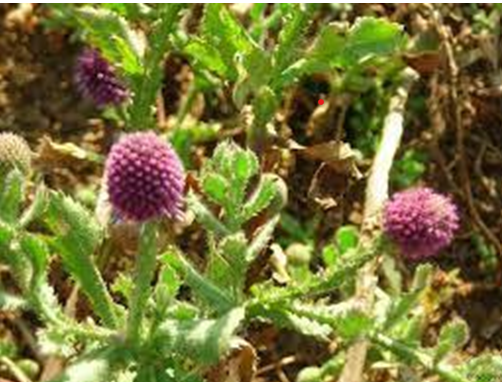
Stem: Erect, prostrate, deccurent winged stem toothed aromatic herb and branches Root: Usually tap root system and branched. Sometimes tuberous or thicker. Leaves: These are sessile, deccurent, 2-7cm long and 1- 1.5cm wide, obovate-oblong, narrowed to the base, dentate, or serrate hairy, villous greenish brown, slightly aromatic when fresh, aroma disappearing on long storage. Flowers: Cluster 0.5 inches in diameter Globose, head about 1.5cm long and about one cm in diameter, purplish-pink with linear involucral bracts - Spatulate, acute which are shorter than the head and ciliate at apex, peduncle with toothed wings, outer female flowers 12 to 16, inner bisexual 2 or 3, Corolla of female-2 toothed, Ovary-inferior, Carpels - 2, style arms connate. Fruit: Achene, Smooth, Stalked, Angular and Sub- Glabrous [16].
Maha Mundi (Sphaeranthus Africanus Linn.)
Substitute and Adulterant: In Kerala, the roots of this plant
Phytochemical Studies
are used as a substitute for those of the Sphaeranthus indicus Linn.plant.
| Class | Part used | Compounds |
|---|---|---|
| Essential oil | Plant | Ocimene, a-terpinene, methyl-chavicol, a-citral, geraniol, a-ionone, p-ionone, 8-cadinene, p-methoxyciunamaldehry de, sphaeranthine, stigmasterol, P-sitosterol, hentriacontane, sesquiterpene lactone, sesquiterpine glycoside, sphaeranthanolide, flavone and isoflavone glycosides [17,18] |
| Phytochemical evaluation | Aerial parts | 5-hydroxy-7-methoxy-6-C-glycosylflavone, n-pentacosan, hentriacontane, n-triacontanol,B-sitosterol, stigmasterol, B-D-glucoside of B-sitosterol, sphaeranthine and a phenolic glycoside [19] Essential oil, alkaloid, tannin, glycoside, reducing |
| Phytochemical evaluation | Flowers | Essential oil, alkaloid, tannin, glycoside, reducing sugar, semidrying fatty oil and albumin [13] |
| Isoflavone glycoside and alkaloid | Aerial parts | 5,4-dimethoxy-3-prenylbiochanin 7-0-0-galctoside and sphaeranthine [7] |
| Essential oil | Plants | Methyl chavicol, a-ionone, 8-cadinene, p methoxy-cinnamaldehyde, thymoquinol-dimethy! ether, modephene-2 and T-cadinol. |
| Sesquiterpenoids | Flower | Cryptomeridiol and 4-epicryptomeridiol [19] |
Table 2: Biologically active compounds that have been isolated from Sphaeranthus indicus Linn.
Sphaeranthus indicus Linn has been subjected to chemical investigations extensively and a number of chemical constituent have been reported with different type of metabolites belonging to different groups,tannins , phenolic compound, saponin and alkaloids .The major phytoconstituent in Sphaeranthus indicus Linn mainly includes eudesmanolides, sesquiterpenoids, sesquiterpene
Ethnobotanical uses [17]
lactones, sesquiterpene acids, flavone glycosides, flavonoid C glycosides, isoflavone glycoside, sterols, sterol glycoside, alkaloid, peptide alkaloids, amino acids and sugars.The essential oils obtained from the flowers and whole plants were analyzed and reported the presence of many monoterpene hydrocarbons, oxygenated monoterpenes, sesquiterpene hydrocarbons and oxygenated sesquiterpenes.
| Part used | Traditional uses |
|---|---|
| Oil of root | Treatment of scrofula, aphrodosaic |
| Herb paste | Treatment of pruritis, oedma, arthritis, filariasis, gout, adenopathy |
| Seeds and roots | Stomachic and anthelmintic |
| Flower heads | Blood purifier in skin disease |
| Powdered leaves | Treatment of chronic skin disease, uretal discharges and jaundice . |
| Leaves | Anxiolytic, maceofilaricidal, antimicrobial, and insecticidal activities |
| Plant juice | Liver and gastric disorders |
Pharmacological Activity
Anti-Allergic Activity (Mast cell stabilizing activity)
Different extracts of the Sphaeranthus indicus Linn plant were tested for their protective effect against mast cell degranulation. The ethanol extract at doses of 150 mg/kg and 300 mg/kg, and the ethyl acetate extract at doses of 100 mg/kg, 150 mg/kg, and 300 mg/kg showed better protection (77-86%) against mast cell degranulation compared to ketotifen (75%). These extracts also exhibited better mast cell stabilizing activity (77-88%) than the standard drug (69%) in peritoneal mast cells treated with compound 48/80. The results suggest that Sphaeranthus indicus Linn has potent mast cell stabilizing effects, inhibiting the release of mediators from mast cells [20].
Hepato Protective Activity
The protective effects of the methanolic extract of Sphaeranthus indicus Linn (MES) against CCl4-induced hepatotoxicity were investigated in animal models, showing a significant decrease in serum aspartate aminotransferase, alanine aminotransferase, and alkaline phosphatase levels. The methanolic extract also exhibited significant antioxidant activity by increasing levels of superoxide dismutase, catalase, and glutathione peroxidase, while reducing malondialdehyde. Similarly, ethanolic and aqueous extracts of different parts of Sphaeranthus indicus Linn. Linn L were also found to have hepatoprotective activity against paracetamol-induced liver damage in rats. The aqueous extract of the root at a dose of 300 mg/kg showed comparable hepatoprotective activity to the standard drug silymarin [21].
Analgesic and Anti Pyretic Activity
The analgesic and antipyretic activity of various extracts of the whole plant were tested on rats. The extracts showed significant analgesic and antipyretic activity, with the chloroform and ethanol extracts being the most effective.
Ayurvedic Properties and Pharmacological Effect
According to ayurveda literature
These extracts showed potential antipyretic activity from 1 hour onward, while the aqueous extract showed activity from 2 hours onward. The results were compared to the standard drugs diclofenac sodium and paracetamol [22].
Immunomodulation
The immunostimulant activity of sphaeranthanolide was tested using the Jerne plaque assay method, and it was found to be an immune modulator. The methanol extract and its fractions from flower heads were effective in increasing phagocytic activity, hemagglutination antibody titer, and delayed type hypersensitivity. The remaining methanol fraction also normalized white blood cell levels in mice with cyclophosphamide-induced myelosuppression. This study suggests that sphaeranthanolide has promise as an immunomodulatory agent that stimulates humoral and cellular immunity and phagocytic function. The bioactive fraction demonstrated dose-dependent improvement in both humoral and cell-mediated immunity, protecting against immunosuppression caused by cyclophosphamide. The petroleum ether extract from flower heads also showed effectiveness in stimulating humoral and cellular immunity and phagocytic function [18].
Anxiolytic activity
The anxiolytic activity of flower extracts from Sphaeranthus indicus Linn was evaluated in mice using petroleum ether (10 mg/kg), alcohol (10 mg/kg), and water (30 mg/kg) extracts. It was found that the petroleum ether extract exhibited significant anxiolytic effects [19].
Neuroleptic activity
Neuroleptic activity of extract of flowers was evaluated in apomorphine induced cage climbing and catalepsy in mice models. The petroleum ether extract (300 mg/kg, i.p.) reduced total time spent in apomorphine induced cage climbing. Aqueous and alcoholic extracts showed catalepsy while petroleum ether extract was devoid of it [23].
| Nigantus | Rasa | Guna | Virya | Vipaka |
|---|---|---|---|---|
| D.n.[8] | Tikta, Katu | Katu | ||
| Ma.n.[9] | Tikta, Katu | Laghu | Mahura | Katu |
| R.n.[10] | Kashaya | Ushna | Katu | |
| K.n.[11] | Madhura, Tikta, Kashaya | Ushna | Katu | |
| B.p.n.[12] | Madhura | Laghu | Ushna | Katu |
| P.n.[14] | Tikta | Ushna | ||
| Ni.a[15] | Madhura, Katu, Tikta, Kashaya | Ushna | Katu |
Indications
| Nigantus | Indications |
|---|---|
| D.N[8] | Aama, Aruchi, Apasmara, Ganda, Slipada. |
| Ma.N.[9] | Medhya, Ganda, Apachi, Kruchra, Krimi, Yoniroga, Pandu. |
| R.N.[10] | Aamatisara, Kasa, Visha, Chardi. |
| K.N.[11] | Ganda, Apachi, Pleeha, Medha, Apasmara, Pandu, Sleepada, Aruchi, Yoniroga, Kasa, Kruchra, Guda and Krimirogas. |
| B.P.N.[12] | Medoroga, Ganda, Apachi ,Pleeha ,Apasmara ,Pandu, Sleepada Aruchi ,Yoniroga,Kruchra and Krimiroga. |
| P.N.[14] | Raktashodaka, Vrana, Ganda, Vidradhi, Sleepada, Aruchi, Raktadusti |
Note: All Nighantus are highlighted the indication of Mundi in Gandamala, Slipada, Ma.N and B.P.N has mentioned in Mutrakruchra.
Posology
- Swaras
- Puspa churna
- Kwatha [24]
Parts Used Medicinally
Roots, leaves, seeds, flowers almost Panchanga(whole plant) is used to treat various diseases.
Therapeutic Uses
- Cotton tampon soaked in Mundi oil can be used to relieve vaginal pain.(raj martand).
- A paste made from the root of Mundi mixed with powdered Sarja and cooked in mustard oil can also be effective.
- Mundi powder , Grita , and Madhu , taken with Guduchi Kwata can help with Vatarakta.
- The juice of Mundi leaves can be used as a gargle to treat sore throat.
- It can be applied locally in a condition called Vicchi, which involves tearing of the rectal orifice.
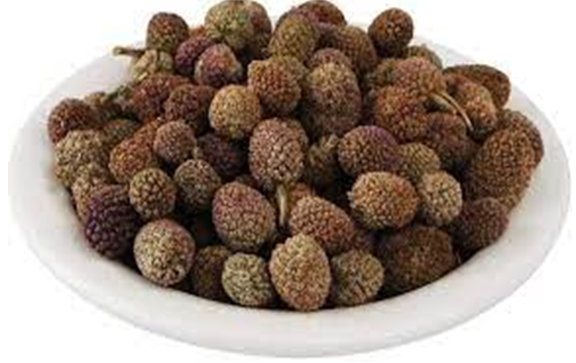
- The paste of Mundi herb made with oil can be applied for itch relief. The powdered seeds and roots of Mundi can be given as an anthelmintic.(Figures 1&2)
- A decoction of the root is used to treat chest pains, cough, and bowel complaints. Ground papery bark mixed with whey can be applied to alleviate piles.
- The juice of the Mundi plant, boiled with milk and sugar candy, can be used for cough.
- The juice of the plant can also be used for vitiated conditions of Vata, epilepsy, hemicrania, jaundice, hepatopathy, and gastropathy [15].
Conclusion
Based on the current available literature, it is recommended that clinical practitioners consider incorporating mundi as a potential treatment option for multiple disease. Sphaeranthus indicus Linn is extensively distributed across India and demonstrates a wide range of potential therapeutic effects on numerous ailments. Research has explored its anxiolytic, neuroleptic, immunomodulatory, anti- inflammatory, mast cell stabilizing, hepatoprotective, and other miscellaneous activities. Chemical analysis reveals the presence of eudesmanoids, eudesmanolides, sesquiterpene lactone, sterol glycosides, flavonoids, and essential oils within various parts of the plant. Pharmacological investigations support the therapeutic potential of Sphaeranthus indicus Linn. However, there is limited information available regarding its clinical efficacy, toxicity, and phytoanalytical properties. While numerous phytochemical studies have been conducted, further progress is necessary. With foundational data in hand, future research avenues could include clinical trials, detailed phytochemical analysis, and toxicity assessments. While the plant has been preclinically evaluated to some extent, scientifically substantiating these claims through clinical trials could unlock its potential as a source of effective remedies for various ailments.
- Management of Ear Keloid with Ksharsutra: A Case Study
- Yoga and Global Sustainability: A Holistic Path to One Earth, One Health
- Autoimmune Diseases in Ayurveda: A Narrative Review with Classical and Modern Perspectives
- Management of Cluster Headache Associated with Pituitary Apophysitis by CERT (Chakrasiddh Energy Release Technique): A Case Report on Energy Rebalancing
- Zygophyllum Geslini Coss : Biochemicals and Antioxidant Activity
- Observations of a Beginner Vaidya