
Everything is in the Vagus Nerve what is the Relationship between Chronic Fatigue Syndrome (CFS) and Coronavirus?
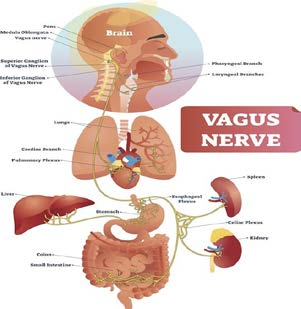
The vagus nerve, also known as the pneumogastric nerve, is the tenth pair of cranial nerves, involved in many functions of the body. The sensory vagus nerve contains chemoreceptorssensitive to the presence of pro-inflammatory cytokines (Figure 1). It innervates the tissues that are often the first points of contact for foreign pathogens, such as the lining of the esophagus, the gastrointestinal lining, the lungs and lymph nodes. The vagus nerve also innervates most other important organs of the trunk such as the spleen, liver, heart, bladder, and pancreas.
Clinical Note
Definition
The vagus nerve, also known as the pneumogastric nerve, is the tenth pair of cranial nerves, involved in many functions of the body.
The sensory vagus nerve contains chemoreceptors Clinical Note
sensitive to the presence of pro-inflammatory cytokines (Figure 1). It innervates the tissues that are often the first points of contact for foreign pathogens, such as the lining of the esophagus, the gastrointestinal lining, the lungs and lymph nodes. The vagus nerve also innervates most other important organs of the trunk such as the spleen, liver, heart, bladder, and pancreas.
Chronic Fatigue Syndrome
Chronic Fatigue Syndrome (CFS) is often a state of constant intense exhaustion that is not alleviated by rest or sleep. A diagnosis of CFS is given in the absence of alternative diagnostics. The prognosis is poor. The cause of CFS is unknown and the source of much controversy and debate. Previous studies on CFS patients have reported a variety of viral and even bacterial agents), as well as numerous immune system abnormalities. This hypothesis focuses on the location of an infection, along the sensory (afferent) of the vagus nerve. Hence CFS is explained by the sensory vagus nerve.
In the Normal State
The vagus nerve signals the body to rest when it detects a peripheral infection, this signal of fatigue is pathologically exaggerated when an infection is localized on the vagus nerve itself. More specifically, immune cells, including neuro- immune cells called glial cells; the vagus nerve detects infection and initiates the same basic neuro-excitatory response regardless of the type of infection. When the glial cells that surround the sensitive vagus nerve are activated by any virus or bacterial infection, their neuroexciting secretions intensify the signaling of the afferent vagus nerve, which is misinterpreted by the brain as evidence of a serious peripheral infection. The brain then initiates disease behavior, which includes fatigue and many other symptoms of CFS than it does:
• Tired
• Insomnia
• Fever
• Loss of appetite
• Musculoskeletal pain (myalgia)
• Hyperalgesia
• Cognitive impairments
• Depression / malaise
• Zinc depletion
• Loss of smell
Conclusion
Chronic Fatigue Syndrome (CFS) is a specific mechanism for explaining the symptoms of covid-19, which should be used as a basis for treatment strategies. The vagus nerve is the conductor of all immune defense mechanisms.
The basic use of biomedical imaging research for the location of an active viral infection such as covid-19 along the vagal pathway from the peripheral to the central nervous system would be of great importance in determining effective treatment.
Functional studies of the vagus nerve should compare highly symptomatic patients with healthy controls.
- Capacity Constraints in Pediatric Inpatient Psychiatric Care: A Cross-Sectional Analysis of Bed Availability and Geographic Access in North Carolina
- Why Healthcare Analytics Still Optimizes the Wrong Things
- Coding, Coverage, and Care: The Infrastructure of Transgender Health Inequities
- The Effect of Classroom Attendance on Academic Achievement of Management and Leadership Discipline of Nursing Students at Instituto Superior Cristal and Universidade de Dili, Timor-Leste, 2024: A Case Study
- The Role of Social Bonds in Facilitating Shared Investments and Resource Allocation: Addressing the “Wrong Pocket Problem” in Public Health and Healthcare
- Social-Cultural Factors Contributing to Antimicrobial Resistance in Livestock Farmers and Community Households in Kayonza District, Rwanda