
Digital Health in Low Resource Setting: Overview of Telehealth Market in Cameroon
The Sub-Saharan region of Africa finds itself in economic and health crisis. Cameroon, being a part of this region, faces challenges in its health sector which include; unequal distribution of facilities and healthcare workers in different geographical localities of the country, poor workforce management system and a weak IT infrastructure. The country is also burdened with huge debts and considerable corruption in its political system. It comes at number 18 out of 54 African countries as per the rankings of Global Health Security index. Lack of laboratories and diagnostic facilities are the primary causes contributing to the lowering of its position in the GHS index. In addition to these, there is also unequal distribution of facilities in different geographical locations of the country. On the positive side, the country has shown a great compliance with international commitment over the past few years. It has been pretty active in cooperating with international organizations in sharing research and biological specimens. Cameroon sees a great potential in the digital healthcare system to fight its health crisis. Telemedicine services can be a great initiative to innovate the healthcare system in the country. The market is pretty unsaturated at the moment as there are very few players in it. It will not only help Cameroon establish a functional healthcare system but, it will also bridge the gap of the in-availability of facilities in rural and urban areas. PEST analysis of the country shows that there are economic and technological hurdles that can impede the growth of telemedicine services. In the course of resolving these challenges, telemedicine companies might end up bearing high cost. In order to make the digital healthcare system a success, the government needs to play a constructive role. The IT infrastructure of the country and overall computer literacy of the population needs to be improved. This article provides an insight on the telehealth market and the potential role of digitalization in strengthening the health system in Cameroon.
Introduction
Digitalization of healthcare system is a hot issue these days. Seeing it success in the developed countries like the Conceptual Paper US and Canada, low- and middle-income countries are also trying to innovate their healthcare system. Cameroon is a lower middle-income country which is experiencing huge challenges to run its healthcare system. Its population is huge and vulnerable to life-taking diseases like AIDS. The country is also under considerable economic crisis. In this research, the feasibility of digital healthcare system in general and telemedicine in particular is discussed. The research gives insights into the obstacles that come in the way of digitalizing healthcare system and appropriate solutions to these obstacles. Overall environment of the country is also analyzed to calculate the potential support it offers to the telemedicine services.
Overview of Health Sector in Cameroon
Lying in Central Africa, Cameroon is a home to more than 27 million people [1], with a human development index (HDI) of 0.504, ranking 152nd out of 187 countries per the 2013 evaluation results. In 2014, 37.5% of the population lived below the monetary poverty line. The epidemiological profile remains dominated by communicable diseases. HIV/ AIDS, malaria and tuberculosis represent about 23.7% of total morbidity and 25% of deaths. The prevalence of HIV is estimated at 4.3% with numerous differences between regions, age groups and sexes. For youths from 15 to 24 years, it stood at 1.7% in 2011 [2]. Similarly, the number of chronic diseases has also been rising including cancer, diabetes, respiratory diseases and cardiovascular diseases. Data reveals that in 2002, chronic diseases and infectious diseases accounted for 43% and 56% of deaths respectively. Chronic diseases are emerging in both urban and rural regions of Cameroon [3]. Potentially epidemic diseases (cholera, meningococal cerebrospinal meningitis, yellow fever, measles), worsen the morbidity and mortality of the population from time to time, even though some of them have decreased over the 2011-2015 period [2]. The upsurge of health emergencies is generally related to epidemics, traumas, movements of populations, and floods. Food insecurity due to the Sahel crisis, armed conflicts and terrorist attacks in the Far North region, and the influx of refugees running away from armed conflicts in the CAR and Nigeria, also constitute other humanitarian crises [2]. Cameroon has been adversely affected with the shortage of health personnel. According to a survey conducted by WHO in 2010, there were only 1.1 physicians and 7.8 nurses available for every 10,000 Cameroonians. Cameroon is facing major challenges in health sector
- There is an unequal distribution of the national health workforce among different geographical locations. In rural areas, the distance between one hospital ranges from 80 km to 400 km [4].
- There are no regulations and accreditation systems for training and development of the health workforce.
- Workforce management is being done poorly. Extremely centralized recruitment process, lack of planning and evaluation, lack of relevant reward system and weak project management are some of the problems to be mentioned.
Health Policies and Systems
The health system is organised at three levels: the operational level (health district), the intermediary level of technical support and the central level in charge of the design of strategies of health development. The health system has a variety of problems: The needs in quality health care and services remain unsatisfied, the coverage of minimum packages and complementary packages of health activities remaining poor, and specialised care remaining expensive. Despite efforts to recruit staff, quantitative and qualitative deficit in health-related human resources remains very important [2]. This problem is aggravated by a non-optimal management of personnel, with low rationalization of the use of personnel, retention in areas with difficult access and motivation (sources of unethical behaviour of personnel). The National Board of Supply in Essential Drugs witnesses a loss of steam for which an evaluation is necessary, and there is no autonomous system for the regulation of the pharmaceutical sector permitting to have quality medical products (including vaccines) [2].
To achieve national and international objectives in matters of health (MDGs, GESP) and progress towards Universal Health-care Coverage, Cameroon has equipped itself with a Strategy for the Health Sector (SSH) 2016-2027. Its vision is as follows: “A country wherein universal access to quality health services is guaranteed for all social groups by 2035 with the full participation of communities”. It will be translated in the strengthening of the health system and the implementation of essential basic and specialised priority health intervention packages. This policy relies on government documents, especially GESP and the 2035 vision for the emergence of the country by 2035 [2].
Challenges
Global Health Security (GHS) Index gives great insights to understand the global position of Cameroon healthcare system. According to the report, Cameroon ranks at 115 out of 195 countries to have favorable healthcare systems (Figure 1).
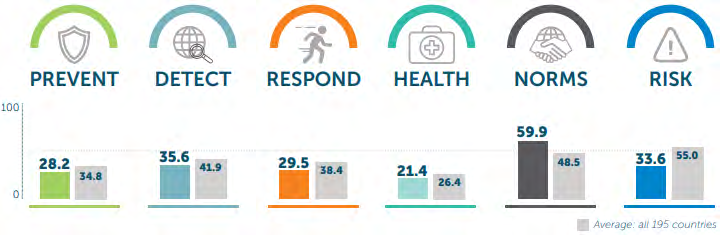
Prevention: Cameroonians possess pretty good immunity to diseases but the lack of biosecurity and biosafety are making it hard for them to prevent diseases.
Detection and reporting system: A low detecting score shows that there is lack of equipment required for the diagnosis of ailment. Laboratory and real-time surveillance systems are not quite up to the mark. Response: It measures the response rate of the overall healthcare system. The country lacks emergency response planning and emergency response operations. Risk communication is also low due to lack of access to communication infrastructure. Health system: It refers to the overall healthcare system of the country. As shown in figure 1, Cameroon has a lower score than the average score of all 195 countries. It is because of unjust geographical distribution of facilities and resultantly, the majority of the people do not have access to major healthcare facilities. Unavailability of equipment, lack of infection control practices and scarce resources to test and approve new medical countermeasures are the factors making the situation worse. Compliance with Norms: Cameroon is doing a little good when it comes to complying with international norms. It has a high score on this one because it cooperates with global bodies like International Health Relations (IHR) for disaster risk reduction and cross-border agreements on public and animal health emergency response. The country has also been committed to share biological data and specimens Risk: As stated above, political support is there to cooperate with the healthcare bodies. The risk lies in socio-economic resilience and environment [5].
Research Objectives
General Objective: To provide insight on the telehealth market and the potential role of digitalization in strengthening the health system in Cameroon.
Specific Objectives The specific objectives of this study are:
- Identifying the obstacles to implementation of both digital and telemedicine health systems in Cameroon,
- Identifying actors of digital health and their experiences,
- Analyze the impact of the overall environment in enhancing acceptability of digital health and telemedicine system and
- Examining government policy, stakeholder, public and private sector attitudes and their potential to influence approval and introduction of both digital and telemedicine systems in Cameroon.
Methodology
Search Strategy
A computerized literature search was performed in MEDLINE (PubMed), the Cochrane Library, African Journals Online and Google Scholar databases from 2000 till Dec 2021. The literature search was performed by including following keywords: “mobile health”, “Mobile phone”, “digital health”, “telemedicine”, “health care”, “interventions” And combined with “Cameroon”. Additionally, Telehealth company profiles searches were performed on Google, Twitter, and LinkedIn.
Overview of Current Telemedicine Providers in Cameroon
Telemedicine or telehealth is a part of digital healthcare system in which health-related services and information are rendered via electronic information and telecommunication technologies. It is used by doctors and health professionals to provide consultancy to long-distance patients which can improve patient health status.
Telemedicine Worldwide
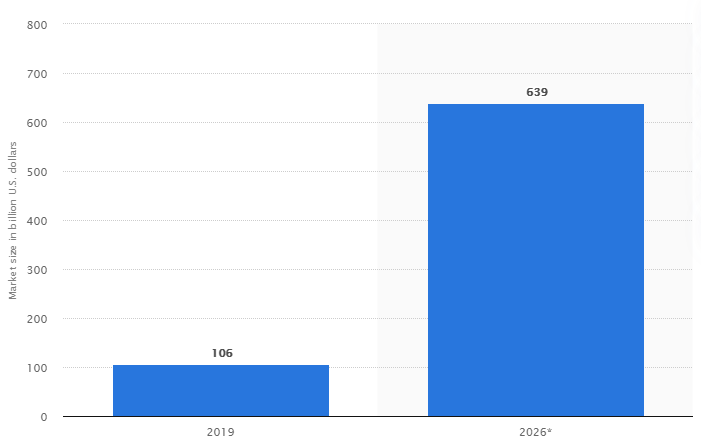
Technology has been seen to find its ways in every profession these days. Digitalization has revolutionized healthcare and made the limitations of geographical boundaries hazy. The size of the digital health market is growing globally at a very fast rate. According to Stewart [6], the digital health market is all set to hit the mammoth target of 640 billion U.S. dollars with an expected growth rate of 28.5 percent (Figure 2) [7].
Telemedicine in Cameroon
Shortages of skilled health personnel in remote areas, deficient infrastructures and equipment as well as the limited purchasing power of a large proportion of the population are factors that threaten the health of many in Cameroon. Because of this, people in rural and remote areas have great difficulty in accessing basic health care and appropriate treatment. Telemedicine (care and health services, social services, preventive or curative, done remotely via technology and communication) has the potential to reduce inequality on health care quality between urban and rural areas [8]. Cameroon is classified by WHO as a country with critical shortage of health personnel. However, the Cameroonian government proclaims healthcare as one of the nation’s Millennium Development Goals [9]. Telemedicine in Cameroon has not been able to find its feet, although it has the potential to make up for the shortage of health personnel and treat patients in the country.
There are few big names providing telemedicine services in the country;
Leading Service Providers
Genesis Telecare SA – The project is composed of a team of general practitioners, nurses, engineers and skilled technicians in advanced technology. Their collaboration provides a real-time interaction between physicians and patients through a highly secure computer system where each patient has a complete electronic medical record. Founded in 2009 as the first telemedicine company in Cameroon with the objectives of
- Bringing the physician closer to the patient so wait time can be reduced and effective medical consultations can be conducted.
- Enabling rural access to examinations and specialized services such as medical support for cardiovascular disease, or monitoring of difficult pregnancies or other treatments during early childhood.
In 2011, the company recorded the consultation of 13000 people during the phase of one of its activities from 11th of May to 1st of December [8].
To date, there are six telemedicine sites in several localities in Cameroon: Yaounde (where the technical platform is found), the regional hospital of Abong Mbang (in the East), Regional Hospital Yagoua (in the Far North), the health center at the SOSUCAM Nkoteng (in the central region) and the medical Center in Akonolinga of the Endom district (in the central region). For each center, nurses are trained specifically to the technologies used [8].
Benefits
- Easy access to medical specialists without having to travel long distances + electronic medical records
- Low care costs which are affordable for the poor
- More than 15,000 patients consulted since April 2009; 2000 electrocardiograms and 1500 ultrasounds performed (8).
Waspito
It is a Cameroonian startup founded in 2020 which believes healthcare technology can be a driving force to unlock Africa’s absolute potential. It connects the African healthcare ecosystem via an application for telehealth services distribution. We are the platform that engages Africa into the conversation and action to drive affordable and accessible quality healthcare across the continent. Waspito is a developer of a telehealth app intended to make basic healthcare more accessible and affordable. The company helps to select from a pool of certified medical doctors from different specialties, have a video call visit to get the care needed, receive a prescription on the phone as a pdf, get health tips, thereby enabling the customers to avail themselves healthcare services and information from anywhere [10].
Wellcam – “The future of healthcare in Cameroon” is what wellcam stands for. It is a digital healthcare application which can easily be downloaded from any application store and is extremely easy to use. Both patients and doctors can join this platform by following simple steps. Wellcam provides online consultation for almost all types of ailments.
Mission
- Connect patients with doctors on-demand
- Remove geographic barriers to health access
- Reduce costs to quality health care in Cameroon [11] Himore Medical Equipment – This Company has been around for more than 10 years. It is one of the leading providers of healthcare services globally. Besides providing telehealth services, Himore also manufactures medical equipment and provides home based examinations [12].
- It designs Touchscreen and internet-enabled Equipment used in diagnosis and examination of patients. Different software that run on PC or mobile devices are also being developed by the company.
- Cardio-pad is one of the company’s early products which was made to resolve the cardiologist deficit problem that exists in developing countries. Since then, it has considerably grown in the field of telemedicine.
- Himore’s devices has the options which allows home based follow up visits so the patients can be saved from traveling problems.
• Klarah: The Cameroonian start-up Klarah, based in Buea and specialising in e-health and founded by Cameroonian Innocentia Kwalar, was one of the winners of a competition organised by the Norvatis Foundation and the Norrsken Foundation. Kwalar is a platform that enables health professionals in the diaspora to provide high-quality care to their loved ones in Africa [13].
Nuriflex inc. A blockchain-based payment platform (the “DPP”): The scope of NuriFlex Inc.’s services as an official technical partner in Cameroon’s Universal Health Coverage Project (the “Project”) has been expanded. Along with the deployment of a blockchain-based payment platform (the “DPP”), it now includes a telemedicine service platform (the “Tara”). On January 17th, 2020, NuriFlex and New Tech Management Cameroon S.A. (the “Promotor”) announced a strategic partnership to develop a blockchain-based payment platform [14].
PDMD
It is an innovative concept supported by a complete technical platform. It looks to integrate medical imaging service, clinical biology laboratory, diagnosing mechanism and consultation in one place. PDMD is offering these services to Cameroon by collaborating with the Columbia Asia Hospitals. It is an Indian hospital group which is already in the business of providing tele-radiology services to remote areas in Indonesia, France, Uganda and other countries.
“This partnership with Columbia Asia will help me provide international quality services to my patients as well as help my country, Cameroon in a particular and the countries of the sub region such as Chad, Central Africa Republic, Gabon, Congo Brazzaville and even Guinea Conakry in general,” said Paul Guimezap, CEO, PDMD & President, IUC- L’Institut Universitaire de la Côte, Cameroon.
“Through PDMD, we will deliver internationally benchmarked medical practices to the people of Cameroon and surrounding region. In addition to tele-radiology and consultation, we will also help build capabilities in the country by collaborating to provide radiology skill development through the educational institute run by PDMD,” said Dr Harsha Rajaram, VP - Telemedicine, Columbia Asia Hospitals [15].
Digital MedLab GmbH – It is a Switzerland-based startup founded by a Cameroonian doctor, Patricia Sigam, in 2012. One of its notable services which is also available in Cameroon is +WoundDesk mobile app. This application is designed for wound management. It conducts semi-automatic wound management processes based on the patient’s health record [16].
+WoundDesk-+WoundDesk is a mobile app designed for wound management. It captures patient’s health records and conducts semi-automatic wound management processes. It has a decision support system mechanism that incorporates alerts and notifications. And is already in use in a French nursing home in France and a rural hospital in Cameroon (Table 1). With this app, doctors are able to exchange data with colleagues in a secure and confidential environment. The app has the capacity to reduce the number of wound patients that need to travel for these services [16].
| Telehealth companies | Webpage | Address | Services | Leadership | Comments |
|---|---|---|---|---|---|
| Genesis Telecare SA | http://www.oickribi. com/genesis-telecare/ | 1493, Yaoundé / Cameroun. | Real-time interaction between physicians and patients through a highly secure computer system where each patient has a complete electronic medical record. | Genesis Telecare opened the first telemedicine center in Cameroon in April 2009 by Jacques Bonjawo (CEO) | The project is composed of a team of general practitioners, nurses, engineers and skilled technicians in advanced technology. More than 15,000 patients consulted since April 2009 ;2000 electrocardiograms and 1500 ultrasounds performed |
| WASPITO | http://www.waspito. com/ | 3PQP+26H, Douala, Cameroon | A developer of a telehealth app intended to make basic healthcare more accessible and affordable. The company helps to select from a pool of certified medical doctors from different specialties | Privately held founded in 2020 | This app enables the customers to avail themselves healthcare services and information from anywhere |
Paramount Street Molyko Buea, SW, PO BOX 63
Wellcam https://www.wellcam. net/ https://www. prnewswire.com/in/ news-releases/pdmd- ties-up-with-columbia- asia-hospitals-for- telemedicine-services-in- cameroon-612243433. html B.P.: 3001, Douala, Cameroon PDMD Himore Medical Equipment Obobogo Yaoundé, Cameroon https://himore-medical. com/ Buea, South West Province, Cameroon Klarah https://klarah.com/
- Konrad strasse 17,
- 8005 Zürich,
- Switzerland digital
- MedLab GmbH https://digitalmedlab. com/
Table 2: Telehealth Service Providers in Cameroon.
Wellcam provides online consultation for almost all types of ailments. WELLCAM allows your employees to access health care from their mobile phones, tablets or even computer. Any and all of your staff can readily access some of the best doctors in the country at anytime the need arises.
It is a digital healthcare application which can easily be downloaded from any application store and is extremely easy to use. Both patients and doctors can join this platform by following simple steps Dr. Cedrick Batchateu, CEO It is an innovative concept supported by a complete technical platform. It looks to integrate medical imaging service, clinical biology laboratory, diagnosing mechanism and consultation in one place PDMD is offering these services to Cameroon by collaborating with the Columbia Asia Hospitals It designs Touchscreen and internet-enabled Equipment used in diagnosis and examination of patients. Different software that run on PC or mobile devices are also being developed by the company.
• Cardio-pad is one of the company’s early products which was made to resolve the cardiologist deficit problem that exists in developing countries. Since then, it has considerably grown in the field of telemedicine Marc Arthur Zang Through this app experienced nurses to be able to care for patients in their homes through the use of mobile applications and multisided dashboards It is a platform that enables health professionals in the diaspora to provide high- quality care to their loved ones in Africa founded by Cameroon ian Innocentia Kwala +WoundDesk is a mobile app designed for wound management. It captures patient’s health records and conducts semi-automatic wound management processes. It has a decision support system mechanism that incorporates alerts and notifications. And is already in use in a French nursing home in France and a rural hospital in Cameroon.
One of its notable services which is also available in Cameroon is +WoundDesk mobile app. This application is designed for wound management. It conducts semi-automatic wound management processes based on the patient’s health record founded by a Camer oonian doctor, Patricia Sigam, in 2012
ACPA Launches Telemedicine Service for Cameroon
In keeping with its mission to impact health care delivery in Cameroon, the Association of Cameroonian Physicians in the Americas (ACPA) has launched a telemedicine service to serve Cameroon. The service links physicians in Cameroon directly with ACPA physician members in the United States. Through this service, ACPA now provides valuable expert medical advice to assist doctors in Cameroon in caring for their patients. Another goal of this service is to assist our physician partners on the ground with additional consult services that may not always be readily available especially for providers outside of the urban areas of Douala and Yaounde. These may include medical opinions of board- certified adult and pediatric specialists as well as general surgery and surgical subspecialists. Examples of services available include but are not limited to endocrinologists, gastroenterologists, rheumatologists, cardiologists, OBGYNs, critical care intensivists, general surgeons, orthopedists, spine surgeons, internists, family physicians, radiologists, dermatologists, oncologist, hematologists, ophthalmologists, and psychiatrists [17].
Current Significance of Telemedicine during COVID-19 Crisis
Some health facilities in Cameroon are turning to telemedicine as patients have been keeping away from and fleeing medical facilities for fear of contracting the coronavirus Covid-19, which has so far killed 313 people in the country. Mr Edwin Biyeh Abi, Country Manager of Unite for Health Foundation, a local NGO that assists Cameroonians to access healthcare through its micro-clinics, said there has been a drastic decline in the number of patients visiting their health centres since the coronavirus figures soared (Eugene, 2020). Even pregnant women are not going for routine prenatal care visits, he said. As a result of the far-reaching drop in patient turnover, the organisation, which operates two clinics in the capital Yaoundé and one in Bamenda in the Northwest, said it has resorted to telemedicine. The telemedicine programme will also be used to screen for and educate patients on Covid-19. The central African country has been struggling with the pandemic with a fragile healthcare system and limited financial resources. Several other health facilities have also adopted telemedicine [18].
Startup Funding
Cameroonian e-health startup Healthlane, which connects users with quality and affordable healthcare services, has raised US$2.4 million in funding to expand its user base and add new features. Founded early this year by Alain Nteff, Healthlane allows users to book appointments with more than healthcare providers across Cameroon and Nigeria via its mobile app. Its user base has already grown to more than 60,000. Healthlane plans to use the funding to continue to build out its ecosystem of medical services based on existing offline infrastructure. It also plans to add new features to its app, such as telemedicine and medicine ordering [19].
“Unlike many startups that rely only on telemedicine, Healthlane’s solution combines remote and face-to-face health services. Furthermore, the service’s customers become not only users but also doctors, hospitals, pharmacies, and other market participants. In the future, this all-in-one approach will enable the company to expand the list of services by adding, for example, insurance products,” Alan Vaksman, founder and managing partner of Digital Horizon said [19].
Telemedicine Centre Inaugurated In Yaounde
Information and communication technologies (ICT) have been recognised in the past decades as an essential tool for the scientific, economic and social development of a country. In the health sector these technologies have proven to be a significant factor for an effective and comprehensive planning, management and estimation of healthcare. The increased development of and use of these technologies in health delivery systems in the industrialised countries led to an improvement of the quality of service, security as well as to cost reduction for patients. It is for this reason that a centre for Francophone African Network for Telemedicine (RAFT UNFM) was inaugurated at the Yaounde central Hospital yesterday. The collaboration between RAFT and UNFM is an important asset in the long and short run for the development of telemedicine in Cameroon [20].
RAFT: African Network for Telemedicine (RAFT UNFM) Inaugurated
The RAFT is a telemedicine network created by the University hospitals and the University of Geneva (HUG and UNIGE) in French-speaking Africa (Mali) in 2001. A small central team in Geneva ensures the general coordination. The RAFT is a collaborating center of World Health Organization (WHO) for eHealth and telemedicine and collaborates with other institutions such as the Université Numérique Francophone Mondiale (UNFM) [20].
PEST Analysis of Cameroon for Telemedicine Services
Introducing a digital healthcare system in Sub- Saharan countries like Cameroon can be a challenging task. Developed countries like the Germany have been able to successfully digitalize their healthcare system because they have an overall supportive system (Digital Health Law and regulations, investment in necessary infrastructure, and reimbursement policies) in their countries. In the absence of such support, it becomes tough for the investors to run a profitable tech-based healthcare system. In the following discussion, Political, Economic, Social and Technological (PEST) systems of Cameroon are analyzed in the context of providing Telemedicine services in the region.
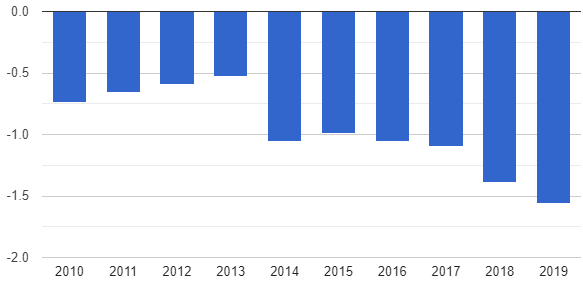
Political: It is always the decision of the government and upper regulating bodies of a country to digitalize any sector of a country. Greater and stable governments are more likely to invest in the digital health systems. Investments made on governmental scale are more effective and fruitful as compared to cyclical/individual initiatives. Political stability is on a downfall for the past five years in Cameroon (Figure 3). Unstable political governments cannot take long term decisions because with every cabinet reshuffling, comes in new authority, it changes policies according to their priorities.
On the positive side, Cameroon has cooperated with the international healthcare bodies to share valuable biological and specimen information for research purposes. Cameroon is also working towards its aim of achieving universal health coverage by 2035. Cameroon has also partnered with OECD to carry out research and bring reforms to its administrative system.
Economic: Economic condition of a country plays a crucial role not only in deciding the buying power of consumers but also the ability of its economy to initiate different development and welfare programs. Healthcare demands a lot of funds and investments to sustain it, which can be a burden to many economies. Following highlights can be used to analyze the economic situation in Cameroon
- GDP per capita in Cameroon for the year 2019 was $1522 US. Average GDP per capita in African countries is $14962.
- In 2018, Cameroon spent 3.53 percent of its total GDP on healthcare which is far less than the 9.5 percent of GDP that the countries linked with OECD spend on their healthcare system [21].
- The country is under the burden of external debt of $9.375 billion and the inflation rate jumped from 1.1 percent in 2018 to 2.4 percent in 2019. Critics say that the rather low inflation rate is very deceiving, since there is no system in Cameroon that actually monitors GDP and consumer expenditures. The stock market does not work. A very tight monetary policy makes it look as though the economy is performing whereas, public and private investments are minimal [22].
- According to Alobwede, et al. [23], the economic crisis is the most prominent problem not only in Cameroon but in almost all of the African countries. These economic challenges do not make Cameroon a viable option to penetrate but telemedicine being a cheaper substitute of the healthcare system has strong potential of improving on health service delivery, depending on how successful the Cameroun-National Strategic Plan Digital Health is implemented [24].
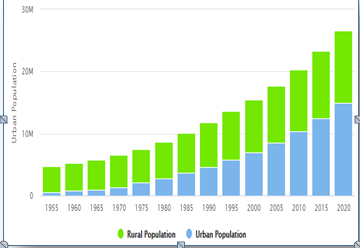
Social: Social structure of a society plays an important role in deciding the success of any system. The bigger part of the Cameroon population lives in rural areas, but the major cities are congested, and it is due to the consistent ongoing increase in migration people to the major cities (Figure 4) [25]. There are comparatively more healthcare facilities and other opportunities available in urban areas which is one of the main reasons of this increasing rate of migration. Telemedicine can be a great help in reducing the health service related rate of migration if people are given the same facilities in rural areas.
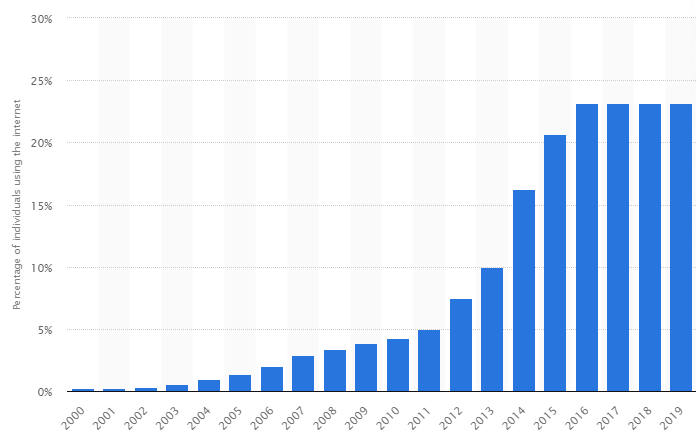
Technology: This one is perhaps the most important part of this PEST analysis because Telemedicine services are hugely dependent on the technological advancement of a country. A country must have a well-established IT and communication infrastructure for the digital healthcare system to flourish. Internet access and computer literacy are indispensable for any kind of telehealth application to work. According to Johnson, et al. [26], only 23.2 percent of the total population used the internet in 2019 (Figure 5). This goes to show how challenging it can be to launch a telemedicine program in Cameroon. A company might have to make other arrangements like establishing kiosks under the supervision of people who can operate it. It all will increase the cost and will burden the overall budget of the program.
Conclusion and Recommendations
The population in Cameroon is increasing at a fast rate and considering the scarce economic resources, it will not be possible for the country to take care of such a massive population with physical hospitals. Digital healthcare systems, of which telemedicine is a part, depicts a lot of potential to solve the health crisis in this region. As stated above, there is also a lack of healthcare workers in different geographical locations of the country. This unequal distribution of health workers between different geographical locations can be bridged by providing long distance consultancy and clinical help. However, there are some steps that need to be taken before starting telemedicine services and to ensure its success
- The Cameroon government should commit to take action to address health security risks. Leadership should closely coordinate and track in-country health security investments with an emphasis on coordinating them with improvements to routine public health and healthcare systems.
- New financing mechanisms to fill epidemic and pandemic preparedness gaps are urgently needed and should be established. These could include a new multilateral global health security financing mechanism such as; 1. Global health security matching fund, 2. Getting the available financial help from the World Bank International Development Association (IDA) for preparedness and developing new ways.
- Government must be on board with the telemedicine services providers. Established hospitals can also participate in this cause and make telemedicine services available for distant places. It will ensure that all the efforts are people oriented.
- ICT needs to improve as the telemedicine service has a great dependency on the IT infrastructure of the country. A population with a higher computer literacy rate has more chances of making a digital healthcare system a success.
References
-
(2021) Worldometer. Cameroon population.
-
(2018) WHO Country Cooperation strategy at a glance.
-
Echouffo Tcheugui JB, Kengne AP (2011) Chronic non-communicable diseases in Cameroon - burden, determinants and current policies. Global Health 7(44).
-
Marie R, Messi F, Ongolo Zogo P (2011) Retaining Human Resources for Health in Remote Rural Areas in Cameroon.
-
(2021) GHS Index Country Profile for Cameroon.
-
Stewart C (2020) Global digital health market size in 2019 and a forecast for 2026.
-
Statista (2020) Global digital health market size in 2019 and a forecast for 2026.
-
Bipiz (2011) Access to quality health care for all via Telemedicine with GENESIS TELECARE.
-
Yari F, Ayeni F, Yari S, Mbarika V,Katchoua G (2019) A Qualitative Inquiry and Review of Telemedicine: A Case Study of Cameroon. Biomedical Journal of Scientific & Technical Research 22(2): 16523-16528.
-
(2020) Himore Medical.
-
(2021) NuriFlex’s Service Scope to Be Broadened to Include a Telemedicine Platform for the Universal Health Coverage Project in Cameroon.
-
(2017) PDMD Ties-up With Columbia Asia Hospitals for Telemedicine Services in Cameroon. Columbia Asia Hospitals Pvt Ltd.
-
Muraga (2015) Cameroon: A telemedicine approach to wound management, IDG connect.
-
ACPA (2018) ACPA Launches Telemedicine service for Cameroon, ACPA Pulse, pp: 12-13.
-
(2020) Cameroon: Hospitals Turn to Telemedicine as Patients Flee Over COVID-19 Scare. The East African.
-
Jackson (2020) Cameroonian e-health startup Healthlane raises $2.4m funding. Disrupt Africa.
-
Bediang G, Perrin C, Ruiz de Castañeda R, Kamga Y, Swadogo A, et al. (2014) The RAFT Telemedicine Network: Lessons Learnt and Perspectives from a Decade of Educational and Clinical Services in Low- and Middle-Incomes Countries. Front Public Health 2: 180.
-
(2019) The Global Economy. Cameroon: Political stability.
-
(2021) The World Bank. Current health expenditure (% of GDP)–Cameroon.
-
Alobwede S N (2012) Challenges faced by telemedicine in Africa: case study from Cameroon. Master’s theses in telemedicine and e-health.
-
(2020) Minsante.
-
(2020) Worldometer Cameron Demographics.
-
Johnson J (2021) Percentage of population using the internet in Cameroon from 2000 to 2019. Statista.
- Capacity Constraints in Pediatric Inpatient Psychiatric Care: A Cross-Sectional Analysis of Bed Availability and Geographic Access in North Carolina
- Why Healthcare Analytics Still Optimizes the Wrong Things
- Coding, Coverage, and Care: The Infrastructure of Transgender Health Inequities
- The Effect of Classroom Attendance on Academic Achievement of Management and Leadership Discipline of Nursing Students at Instituto Superior Cristal and Universidade de Dili, Timor-Leste, 2024: A Case Study
- The Role of Social Bonds in Facilitating Shared Investments and Resource Allocation: Addressing the “Wrong Pocket Problem” in Public Health and Healthcare
- Social-Cultural Factors Contributing to Antimicrobial Resistance in Livestock Farmers and Community Households in Kayonza District, Rwanda