
Depressive Symptoms and Psychological wellbeing among Adolescents in Selected Schools of Ambalapuzha Block Panchayat: A Cross-Sectional Study
Depression is a common mental disorder seen across all age groups, including children and adolescents. Depression is often associated with significant disability in children and adolescents. This study is to determine the depressive symptoms and psychological wellbeing among adolescents studying in selected higher secondary schools of Amblapuzha block panchayat of Alappuzha district of South Kerala; to determine the relationship between depressive symptoms and psychological wellbeing among adolescents, to determine the association between depressive symptoms and socio personal variables among adolescents and to determine the association between psychological wellbeing and socio personal variables among adolescents. This cross-sectional study was conducted among 300 higher secondary students in Ambalapuzha block panchayat of Alappuzha district in South Kerala. Socio personal data sheet was used to collect socio demographic data of adolescents, Becks Depression Inventory II was used to assess depressive symptoms and General Health Questionnaire-12 was used to assess psychological wellbeing of adolescents. The result of the study showed that 67.05% of adolescents were having minimal depressive symptoms, 32.3% of were having mild depressive 7.3% were having moderate depressive symptoms and 2.3% were having severe depressive symptoms. In the present study 69.7% of adolescents were having good health and 30.3% were having worse health. There was a moderate positive correlation (r = +.64) between depressive symptoms with psychological wellbeing. There was a significant association between depressive symptoms and socio personal variables like gender, occupation of father, monthly family income, academic problems, family problems, peer group problems. Present study showed that there was a significant association between psychological wellbeing and socio personal variables including occupation of father, education of mother, occupation of mother and peer group problems.
Abbreviations
UNICEF: United Nations International Children’s Emergency Fund; WHO: World Health Organization.
Introduction
Adolescence is a developmental stage that bridges gap between childhood and adulthood. Adolescence is cumbersome period of life from social and sometimes physical point of view. The teen years represent a coming of age in most individual; a time of heightened emotionality [1].
Adolescence can be a stressful time for youngsters. Children are dealing with the challenges of going through puberty, meeting changing expectations and coping with new feelings. The period of adolescent is one of rapid growth, change, relocation and self-discovery, which are defining qualities of stressful experience.1 According to the estimates of World Health Organization, 322 million people, amounting to 4.4% of the world population, suffer from depression. Depression is one of the leading causes of disease burden worldwide and is ranked as the second leading cause of disability. It is also considered as a major contributor to the global burden of diseases. The global health data exchange estimate that 251-310 million people worldwide suffer from depression. The average age of onset of depression is just 14.5 years [2].
According to report of UNICEF, 1 out of 7 between age of 15 to 25 suffering from depression. Only 41% of adolescent population in India is getting support for mental health problems, others are suffering without adequate support and care [3]. According to the National Mental Health Survey in India during 2016 to 2018 revealed that prevalence of mental disorders in age group 13-17 years was 7.3% and nearly equal in both genders. Nearly 9.8 million of young Indians aged between 13-17 years are in need of active interventions. Prevalence of mental disorders was nearly twice (13.5%) as much in urban metros compared to rural (6.9%) areas. The most common prevalent problems were Depressive episode& recurrent depressive disorder (2.6%), agoraphobia (2.3%), intellectual disability (1.7%), autism spectrum disorder (1.6%), phobic anxiety (1.3%) and psychotic disorder (1.3%) [4]. Indian Journal of Mental Health 2017;4(1) their health and safety, A study from Kerala among adolescents reported that 11.2% of school dropouts had severe and extreme grades of depression as against 3% among school going adolescents. Another study from Noida Uttar Pradesh showed 38% of adolescents had depression. A psychiatric morbidity study among school adolescents in Tamil Nadu found that about 29% of girls and 23% of boys had depression. Another school-based study among adolescents from Tamil Nadu reported that 37.1% were mildly depressed, 19.4% were moderately depressed and 41 4.3% severely depressed. Feeling lonely ethnicity, using drugs, being bullied and lack of parental supervision were highly correlated with depression among adolescents. Higher levels of depression were found to be related to more external locus of control and a tendency to attribute outcomes to causes which are internal, stable, and global. Socio-demographics, life events, sexual abuse, physical abuse, and exposure to violence were found to be associated with depression among adolescents. Engagement in sexual activity, parental monitoring of adolescent activity and paternal affection and support were related with adolescent depression. Depression during adolescence is associated with academic difficulties, risky behaviour engagement, non- suicidal self-injury in later in adolescence and lower income levels, higher divorce rates, suicidality in adulthood [5].
India has a National Mental Health Program, which functions at the district level (District Mental Health Program) and is also working towards delivering mental health as a part of integrated primary care within the public healthcare system. The government of India has also started the National Adolescent Health Program (Rashtriya Kishor Swasthya Karyakram) which has mental health as the priority area. Still, there is a huge gap in addressing the mental health needs of adolescents in India [6].
Depression is found very common among adolescents now a day. Different factors are considered to be responsible for depression. Family is the basic unit of child development, so parents, siblings play very important role in the occurrence of depressive symptoms among adolescents.6Psychological wellbeing of adolescents plays an important role in the occurrence of depression. Psychological wellbeing was associated with demographic variables among adolescents, and these factors can contribute to the development of preventive and control strategies for depression [7]. On review of literature it is found that there is a paucity of studies done among adolescents in South Kerala region related to Depressive symptoms and psychological wellbeing and also their relation among adolescents so, following this study, we tend to give them proper counselling regarding the depressive symptoms through school health counsellors, also planned recreational activities and career development classes with the help of PTA for adolescents students following this study.
Materials and Methods
This study was conducted among 300 adolescents from plus one and plus two standards who fulfilling the selection criteria. Stratified random sampling technique was used for the selection of the students. The purpose of the study was explained to the adolescents and informed consent was obtained from their parents. After the following participant information sheet was distributed, if the student is willing to participate in the study, then the questionnaire sis given to each adolescent. Socio-personal data sheet, used for collecting the socio personal data’s, depressive symptoms were collected by Beck’s Depression Inventory Ⅱ, psychological wellbeing were assessed by using General Health Questionnaire-12. The technique of data collection was self-report. It took around 30 minutes to complete the three questionnaires. After completion the tools were collected back from adolescents and data were entered for analysis in SPSS. Karl Pearson correlation coefficient test used for testing the correlation between depressive symptoms and psychological wellbeing. Chi square test was used to find out the association between depressive symptoms and psychological wellbeing and association between psychological wellbeing and socio personal variables. The study was conducted after obtaining approval from Scientific Review Committee, Institutional Human Ethics Committee of Government College of Nursing Alappuzha, Kerala University of Health Science Thrissur, and Regional Deputy Director of Higher Secondary Education, Chengannur.
Results
In this study among the 300 adolescents 56.7% of the adolescents belonged to the age group of 15-16 years 43.3% were in the age of 17-18 years, it was identified that 53.7% of adolescents were females and 46.3% were males.
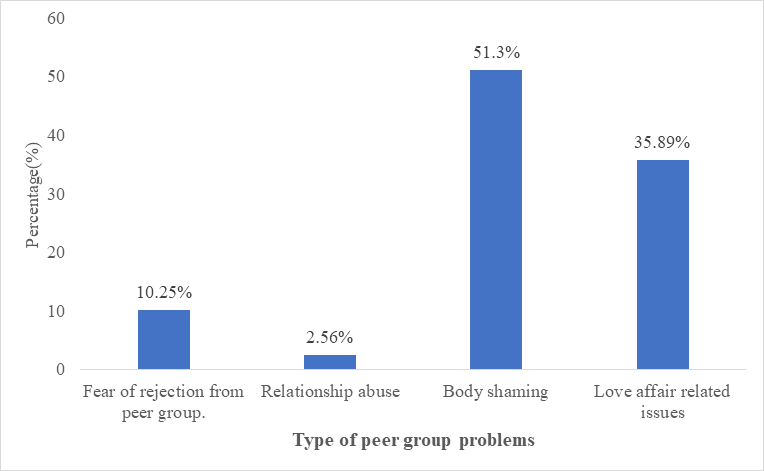
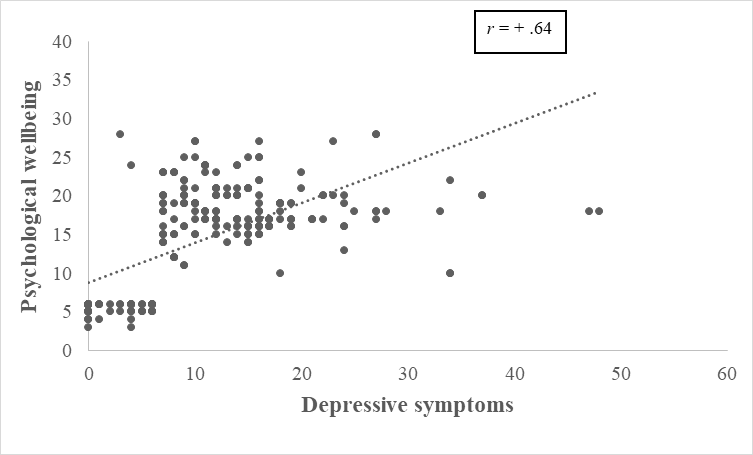
Regarding birth order 59.7% of adolescents Tables 1-4 were first born child and 36.3% were second born child and 4% were having only one sibling, 14.7% having two siblings. Regarding family problems 86.7% adolescents were not having family problems. Based on type of family problems 45% of adolescents having problem of high expectation from family, regarding type of peer group problem 51.3% of adolescents were experiencing body shaming from peer groups. It was inferred that there was a positive moderate correlation between depressive symptoms and psychological wellbeing(r=+.64). study revealed that there was a significant association between depressive symptoms with socio personal variables including gender, occupation of father, monthly family income, academic problems, family problems, peer group problem. Study findings showed that there was a significant association between psychological wellbeing and socio personal variables including occupation of father, education of mother occupation of mother, peer group problems (Figures 1 & 2).
(n=300)
| Depressive Symptoms | F | % |
|---|---|---|
| Minimal (0-13) | 201 | 67.1 |
| Mild (14-19) | 70 | 23.3 |
| Moderate (20-28) | 22 | 7.3 |
| Severe (29-63) | 7 | 2.3 |
Table 1: Frequency distribution and percentage of adolescents based on their depressive symptoms (n=300).
(n=300)
| Variable | Mean | SD | Maximum | Minimum |
|---|---|---|---|---|
| Depressive Symptoms | 10.09 | 8.5 | 48 | 0 |
Table 2: Mean and standard deviation of depressive symptoms among adolescents (n=300).
| Psychological wellbeing | F | % |
|---|---|---|
| Good health | 209 | 69.7 |
| Worse health | 91 | 30.3 |
Table 3: Frequency distribution and percentage of adolescents based on their psychological wellbeing (n=300).
(n=300)
| Variable | Mean | SD | Maximum | Minimum |
|---|---|---|---|---|
| Psychological wellbeing | 13.97 | 6.85 | 28 | 3 |
Table 4: Mean and standard of psychological wellbeing among adolescents (n=300).
Chi square test showed that there was a significant association between depressive symptoms and socio personal variables like gender, occupation of father, monthly family income, academic problems, family problems, peer group problems(p<0.001). In this study also found that there was a significant association between psychological wellbeing and socio personal variables including occupation of father, education of mother, occupation of mother and peer group problems(p<0.001).
Discussion
This descriptive cross-sectional study was conducted to assess the depressive symptoms and psychological wellbeing among adolescents. Related research studies showed that adolescents are highly vulnerable for developing depressive [8] symptoms. Prevalence of depression is found to be substantially high among adolescents. Early relationship problems and stress at school and family are all linked to depression among children and adolescents. Early identification and treatment are the keys to improving mental health and quality of life of such children and adolescents [9].
In the present study among 300 adolescents, 67.05% of adolescents were having minimal depressive symptoms, 23.3% of were having mild depressive symptoms, 7.3% of were having moderate depressive symptoms and 2.3% were having severe depressive symptoms. This finding was incongruent with another study findings, A descriptive study was conducted to assess the depression and severe suicidal ideation among 1640 higher secondary school students in Finland. The study found that, adolescents had 11% of severe depressive symptoms, 6% of moderate depressive symptoms, 83% of adolescents had mild depressive symptoms [10]. Another cross-sectional descriptive study was conducted among 519 adolescents’ students in 4 secondary schools in Mukono district, Uganda, regarding prevalence and factors associated with depression symptoms among adolescents. Study found that 21% of adolescents had significant depressive symptoms, 11% of them had severe depressive symptoms, 8% of adolescents had Dysthymia.60% of them had mild depressive symptoms, these findings are congruent with present study findings. Another cross-sectional study was conducted among 44 adolescents in Sydney, regarding relationship between loneliness and depressive symptoms in children’s and adolescents, study results showed that there was a positive correlation between loneliness and depressive symptoms among children and adolescents, (r=.48) [11], these findings are comparable with present study findings.
Another cross-sectional study was conducted in 875 adolescent students in regarding association between body image dissatisfaction and depressive symptoms among adolescents in Lima, Peru [12], study found that there was a positive association between depressive symptoms and body image dissatisfaction (p=0.02) these results were similar to present study findings.
Another cross-sectional study was conducted to assess the prevalence of depression among 125 adolescents in North India Bansal V [13] study results showed that there was a significant association between depressive symptoms and parental fights, (p=0.05), these findings are similar with present study findings. Limitations of this study found to be Possibility of participants dishonesty and lack of seriousness in answering questions and study was limited to specific dimensions of depressive symptoms only. Recommendations for this present study found to be it can be conducted as interventional study, Nursing students can arrange a health play regarding depressive symptoms and different ways to improve psychological wellbeing for adolescents and conduct health education, exhibitions in order to avoid stigma against with depressive symptoms., Comparative studies can be done among adolescents with different types of psychological problems., Depressive symptoms and psychological wellbeing among adolescents may differ in different environments and settings and therefore study may be conducted with representative samples from different schools across the Alappuzha district.
Conclusion
The present study revealed that 67.05% of adolescents were having minimal depressive symptoms, 32.3% of adolescents were having mild depressive symptoms 7.3% were having moderate depressive symptoms and 2.3% were having severe depressive symptoms. In the present study 69.7% of adolescents were having good psychological wellbeing and 30.3% were having worse psychological wellbeing. There was a moderate positive correlation (r=+.64) between depressive symptoms and psychological wellbeing. Here psychological wellbeing plays a more prominent role in suppressing depressive symptoms. There was a significant association between depressive symptoms and socio personal variables like gender, occupation of father, monthly family income, academic problems, family problems, peer group problems. Present study showed that there was a significant association between psychological wellbeing and socio personal variables including occupation of father, education of mother, occupation of mother and peer group problems. The findings of this study may provide information that, psychological wellbeing was positively affecting the adolescent’s mood status, and study findings suggests that investigating more on depressive symptoms among adolescents, identification of depressed adolescents and referring them to school counsellors were an effective strategy to maintain an optimum mood status among adolescents.
References
-
Kumari C (2017) Suicidal Ideation among Adolescents in Meerut: a Descriptive Study. Journal of Indian Academy of Applied Psychology 34(2): 259-265.
-
WHO (2019) Adolescent Mental Health.
-
UNICEF (2021) Adolescent Mental Health Statistics.
-
Murthy SR (2017) National Mental Health Survey of India 2015-2016. Indian J Psychiatry 59(1): 21-26.
-
Rastriya Kishor Swasthya Karyakram (RKSK) (2022) National Health Mission.
-
Suhas AM (2019) A Study on Depression in Adolescence from Urban and Rural Area and its Influencing Factors, Latur, India.
-
Bhat, Ahmad B (2018) A Study of Psychological wellbeing of Adolescents in Relation to School Environment and Place of Living. International Journal of Movement Education and Social Science (IJMESS) 7(2): 605-613.
-
Sagar R, Selvakumar N (2021) Prevalence of Depression in Indian Adolescents. Indian Journal of Pediatrics 4(1): 427-428.
-
Mohatha A, Malhothra S, Gupta SK, Mani K, Patra BN, et al. (2021) Depression among Adolescents in Rural Area of Haryana, India: A Community-Based Study Using Patient Health Questionnaire-9. Cureus 13(9): e18388.
-
Kaltiala-Heino R, Rimpela M, Marttunen M, Rimpela A, Rantanen P (1999) Bullying, Depression, and Suicidal Ideation in Finnish Adolescents: School Survey. BMJ 319(7206): 348-351.
-
Costello J, Erkanil A, Angold A (2017) Positive Mental Wellbeing and Depressive Symptoms among Adolescents in Australia. Journal of Child Psychology and Psychiatry 52(10): 1015-1025.
-
Flores-Cornejo F, Kamego-Tome M, Zapata-Pachas MA, Alvarado GF (2017) Association between Body Image Dissatisfaction and Depressive Symptoms among Adolescents. Braz J Psychiatry 39(4): 316-322.
-
Bansal V, Goyal S, Srivastava K (2009) Prevalence of Depression in Adolescent Students in North India. Ind Psychiatry J 18(1): 43-46.
- Teaching Cognitive Behavioral Therapy to Graduate Psychiatric Mental Health Nurse Practitioner Students: Utilizing A Mixed Methods Course Evaluation
- The Role of Pharmacogenetic Testing in Clinical Practice: A Path toward more Effective, Personalized and Cost-effective Care
- Implementing Screening with the GAD-7 in an Outpatient Mental Health Setting: A Quality Improvement Project
- Social Media and Health Promotion
- Impact of Covid-19 Pandemic on the Academic Performance and Attitude of Nursing Students towards E-Learning
- A Study to Assess the Knowledge Regarding Ill Effects of Tobacco Consumption on Health among Adolescents in Selected Higher Secondary School in Nadiad City