
Smart Approach for Preparing Nanosized Topiramate Loaded Bio-Flexy Films Using Film Former from Piper Nigrum and Screening its In-Vitro Performance
Purpose: To formulate nanosized bio-flexy films using a novel biopolymer isolated from Piper nigrum seeds containing Topiramate for epilepsy treatment. Soft palate drug delivery bypasses first-pass metabolism in gastrointestinal tract. Piper nigrum biopolymer possessed biodegradability, biocompatibility, non-toxicity, inertness, non-reactiveness on soft palatal surface, cost effectivity. Topiramate, anticonvulsant drug, augments the activity of neurotransmitter gammaamino butyrate (GABA). Thus, to minimize drug dose, frequency and side effects like suicidal thoughts and sudden unexpected death, this attempt of Bio-flexy films formulations was made. Methods: Bio-flexy films were prepared by solvent casting technique. Varying ratios of topiramate: Piper nigrum biopolymer were chosen for preparing formulations (FNO1-FNO5) and compared with Sodium carboxyl methyl cellulose standard films and evaluated. Results: The percentage yield of Piper nigrum biopolymer was found to be2.2%±0.02. Shear Stress study of Piper nigrum biopolymer showed promising mucoadhesivity than standard Sodium Carboxyl Methyl standard polymer. Thickness of formulations (FNO1-FNO5): 0.029±0.003 mm to 0.039±0.002 mm, Folding Endurance: 91-124, Surface pH: 7.02±0.02 to 7.02±0.01, Weight Uniformity:0.016±0.08 to 0.030±0.07, Drug Content Uniformity:89.7%±0.72 to 95.4%±0.54, Swelling Percentage: 66%±0.5 to 72%±0.4, Tensile Strength: 88.54 gm±2.5 to 102.05 gm±2.4, Percentage Moisture Uptake (PTU): 2.2%±0.13 to 2.4%±0.12, more mucoretentive on Capra aegagrus intestinal mucosa than standard Sodium Carboxyl Methyl Cellulose films. Conclusion: Formulation FNO4 (containing Topiramate: Piper nigrum biopolymer (1:6)) flexy film having R2=0.9892, Peppas Korsemeyer as best fit model, follows Fick an Diffusion (Higuchi Matrix) release mechanism, T50%: 6 hrs, T80%: 28 hrs, was selected as Best bio-flexy film.
Introduction
Soft Palate (velum) is a part of Oral mucosa, suspended from the posterior border of the hard palate, protects nasal passage, no bone, non-keratinized histology, more convenient means of drug administration, systemic absorption than oral administration to Gastro Intestinal Tract [1]. Surface area of the oral mucosa (200 cm2) relatively small compared with the Gastro Intestinal Tract (350,000 cm2 and skin (20,000 cm2).
Targeting of drugs to brain is difficult to achieve due to Blood Brain Barrier. Trans-Soft Palatal route offers a novel, unique Drug Delivery Platform for systemic drug delivery for Brain targeting [2]. It is for retentive drug delivery and is acceptable to patients. With the right dosage form design and formulation, the permeability and the local environment of the mucosa can be controlled and manipulated in order to accommodate drug permeation. Palatal drug delivery is a promising area for systemic delivery of orally inefficient drugs, potent peptide and protein drug molecules. Blood supply to Soft palate is by Middle Meningeal artery; Accessory Meningeal artery; Greater Palatine branch of maxillary artery; ascending palatine branch of facial artery; ascending pharyngeal artery [2]. Soft palate is innervated by mandibular branch of trigeminal nerve (Cranial nerve V); Lesser palatine nerve; greater palatine nerve; nasopalatine nerve; glossopharyngeal nerve; motor nerves. When nano sized drug is administered by this route, then via inter and intra neural pathway, it can directly reach into brain by trigeminal nerve that directly connects soft palate to brain [3].
Epilepsy ranks 7th position causing 3.3% total deaths worldwide, that is expected to rise up to 6th position causing 3.7% of total deaths till year 2030. Antiepileptic drug Topiramate available as tablets dosage forms only which shows delayed action due to First Pass Metabolism in Gastro Intestinal Tract. In this research work, an inert, biodegradable cost effective biopolymer obtained from Piper nigrum pulp was incorporated to avoid toxicity that is by synthetic polymers. Piper nigrum contains 3% essential oil, sabinene, beta-pinene, limonene, terpinene, alpha-pinene, myrcene, delta3-carene and monoterpene derivatives (borneol, carvone, 1,8-cineol, linalool) [4]. Drugs directly enter the systemic circulation [5]. This route is non-invasive, non-mobile with highly mucoretention ability, afford high bioavailability, drugs directly enter the systemic circulation, lower doses, avoidance of the first-pass metabolism by the liver and metabolism by gastrointestinal tract. Topiramate, anticonvulsant drug possesses t1/2:19-30 hours; protein binding: 13-17%; water solubility: 9.8 mg/L. It reduces glutamatergic neurotransmission. Adverse effects are abdominal pain, pharyngitis, suicidal thoughts and sudden unexpected death. Thus to decrease dose frequency and to minimize adverse drug reactions, nanosized Topiramate loaded Bio-flexy films were suitably formulated that can provide sustained drug action up to 48 hours. Importance and advantages of using biopolymer instead of using synthetic polymers like carboxyl methyl cellulose and hydroxyl propyl methyl cellulose.
- Isolated biopolymer exhibited significant biodegradability, mucoadhesivity, filmability, retardabi lity and comparable to synthetic polymers.
- Economically cheap and environment friendly.
- Suitable as a drug carrier for sustained release dosage forms with suitable modification.
- It can applicable in Pharmaceutical Industries and commercialized effectively.
- Piper nigrum biopolymer is having uniqueness of being pure, natural origin isolated from Black pepper seeds.
- Hydroxyl Propyl Methyl Cellulose, Carboxyl Methyl Cellulose are synthesized using various harmful chemicals. Thus, biopolymer avoids toxicity that is by synthetic polymers.
- Biopolymer serves as a suitable drug carrier for the formulation of bio-flexy films.
Materials and Methods
DRUG-Topiramate (procured from Sun Pharmaceuticals Industries Ltd., Gujarat) POLYMERS- Piper nigrum biopolymer (Black pepper seedsprocured from local market) Sodium Carboxyl Methyl Cellulose
(Central drug House (P) Ltd. New Delhi) All other reagents used were of highest purity and analytical grade. Double distilled water was used throughout the experimental work.
Isolation of Biomaterial from Piper nigrum
50 gm Black Pepper was stirred with 85 ml Methanol + 10 ml Glacial Acetic Acid + 5 ml Conc. Sulphuric Acid to the residue added 10 ml of Sodium Hydroxide solution. Magnetic Stirring was done for 30 mins, Residue was filtered. Added 50 ml of Methanol. Added Calcium Hydroxide (Slaked Lime) until pH 9 was obtained. Mixed, Filtered after 30 mins, Filtrate was concentrated. Added to 25 ml cold water for 5-10 mins, centrifuged. To the supernatant, 50 ml acetone was added and kept for refrigeration. To the precipitate obtained by centrifugation, added Water: Chloroform (1:2) Kept for 2 hrs of Magnetic Stirring, air dried to obtain biopolymer. Isolated biopolymer was powdered, passed through Sieve No. 120, packed and stored. Optimized six times, reported % yield.
Physicochemical Characterization
Physicochemical properties of isolated bio-material were characterized. Physical Parameters: Color, Odor, Texture and Color Changing Point. Color, Odor, Texture of Bio-polymer was examined physically. Color Changing Point was determined by Capillary method by Melting Point Apparatus. Firstly the bio-polymer was kept in a Capillary tube and it was fitted in a Melting Point Apparatus. Temperature at which bio-polymer melts and changes its color was determined by means of a Thermometer and reported. Chemical Parameters: Tests for Carbohydrates, Proteins, Starch and Reducing Sugar. a) Test for carbohydrates Molisch reagent test 2 mL of biopolymer solution (0.1gm dissolved in 2 mL of distilled water) was taken in a test tube. 2 drops of Molisch reagent (Solution of -napthol in 95% ethanol) was added. Solution was then poured slowly into a test tube containing 2mL of concentrated sulfuric acid. Two layers were formed. Purple color appeared at interface of the two layers due to formation of 5-hydroxy methyl furfural. b) Test for proteins Biuret test determines the presence of peptide bonds in protein content in the isolated biomaterial. 2 mL of $$ \mathrm {C l} ^ {-} $$ biomaterial solution (0.1 gm. dissolved in 2 mL of distilled water) was taken in a test tube. 1 mL of sodium hydroxide solution (1%) followed by 1% copper (II) sulphate solution was added drop wise. Test tube was then shaken vigorously. Allowed the mixture to stand for 5 minutes and observed the color change. Biuret test is based on the ability of Cu (II) ions to form a violet- colored chelate complex with the peptide bond (CONH groups) in alkaline conditions. The chelate complex absorb light at 540 nm so it appeared violet. Color change indicated presence of proteins. c) Test for Starch 2 mL of biomaterial solution (0.1 gm. dissolved in 2 mL of distilled water) was taken in a test tube. 1-2 drops of iodine solution was added. Then observed the color change. Appearance of an intense blue black color confirmed the presence of starch in isolated biomaterial (transfer of charge between starch and iodide ion changes the spacing between the energy orbitals, so starch-iodide complex absorb light at higher wavelength) d) Test for Reducing Sugar 2 mL of biopolymer solution (0.1 gm. dissolved in 2 mL of distilled water) was taken in a test tube. Added 1 mL each of Fehling’s A (7 g CuSO4.5H2O dissolved in distilled water containing 2 drops of dilute sulfuric acid) and Fehling's B (35 gm. potassium tartrate, 12gm. of sodium hydroxide in 100 mL of distilled water). The test tube was placed in a water- bath at 60°C. Appearance of brick red precipitate of insoluble copper oxide indicated the presence of reducing sugar in isolated biomaterial.
Drug-Excipient Interaction Study
Drug-excipient interaction study was performed by taking three different ratios of drug and bio-material 1:1, 1:3 and 3:1 [5]. The Ultraviolet (U.V.) absorbance of the three ratios was taken and compared with the absorbance of pure drug.
a) Wet method
Drug-excipient in the ratio of 1:1, 1:3 and 3:1 were taken in 3 different petridishes. 1 mL of distilled water was added to wet the mixtures. Mixtures were then subjected to drying in oven for 30 mins at 50°C, followed by dilution with 2 mL of methanol. Ultraviolet Spectroscopy study was performed. The shift in λmax was reported in comparison to that of pure Topiramate. b) Dry method Drug-excipient in the ratio of 1:1, 1:3 and 3:1 were taken in their physical forms (dry) in 3 different petridishes. Mixtures were kept at room temperature for 2 hrs, followed by dilution with 2 mL of methanol. Ultraviolet spectroscopy study was then performed. The shift in λmax was reported in comparison to that of pure Topiramate. c) Colorimetry Method: Drug: Polymer 1:1 were mixed with Potassium Permanganate on glass plate. Observed color change, scrapped, Diluted suitably with distilled water, analyzed by UV. Similarly repeated with Drug: Distilled Water and Drug: Potassium Permanganate. Importance of determination of drug-biopolymer interaction by Dry and Wet methods The two methods revealed that no interaction of drug- biopolymer occurred either in dry form on in presence of solvent. Since biopolymer is isolated from natural source and used in formulation, it has to be ascertained whether the biopolymer is inert in both dry (during storage) as well as wet (if used in oral drug delivery) conditions. Thus to confirm inertness and non-reactiveness of biopolymer with drug, these two methods had been performed. The drug was found to be intact with biopolymer
Spectral studies of isolated biopolymer
SEM Analysis: Morphological examination of the surface and internal structure of the biomaterial was performed by using a scanning electron microscope (SEM). A small amount of biomaterial was fixed on aluminum studs and it was coated with gold using a sputter coater under vacuum (pressure: 1 mm Hg). The biomaterial was then analyzed by SEM [5, 6]. FTIR Spectra: The physical form of isolated bio-material was solid. KBr disc method was employed for IR spectroscopy, and in this technique about 1mg of the solid sample was mixed with about 100 mg of pre dried and desiccated solid KBr. The mixture was finely ground in a mortar, preferably under an IR lamp to exclude any water vapors. The finely ground mixture was pressed under pressure of about 10 tons using a hydraulic pump to form a small pellet about 1-2mm in diameter. The resulting KBr disc was removed from the KBr die and is positioned in a special holder into the path of the IR radiation and its spectrum was recorded within the range of 4000-200cm-1. Differential Scanning Calorimetry: (DSC) is a thermo- analytical technique in which the difference in the amount of the heat required to increase the temperature of a sample and reference is measured as a function of temperature. It was performed for determination of Glass Transition temperature (GTT or Tg). For DSC the Perkin Elmer Instrument, Model- JADE DSC will be used, with the Heat flow of 50 - 250°C at the rate of 10°C/minute and Nitrogen flow rate of 20ml/minute will be used. NMR Spectral Analysis: Nuclear magnetic resonance (NMR) is a physical phenomenon in which magnetic nuclei in a magnetic field absorb and re-emit electromagnetic radiation. This energy is at a specific resonance frequency which depends on the strength of the magnetic field and the magnetic properties of the isotope of the atoms. Solvent used is DMSO (Dimethyl Sulfoxide). The spectrometer is connected to the process with a 5 mm diameter flow cell. The reaction mixture is pumped with high flow rates to the instrument, a valve switch to stop the flow is activated so the instrument can perform a quick measurement. Afterwards, the valve switches back and the flow cell in the instrument is rinsed again with the reaction mixture. After a measurement is finished, the spectrum is sent to the automation computer where it can be processed and analyzed. Preparation of standard curve of Topiramate: 10 mg of Topiramate was dissolved in 30mL of Phosphate Buffer (pH 7.4) in a 100 mL volumetric flask and diluted up to the mark with Buffer (pH 7.4) (100 µg / mL). Dilutions of Concentrations (0.5,1, 2, 3, 4 and 5µg/mL) were prepared in 10 mL volumetric flasks. Volume was made up to 10 mL with Phosphate Buffer (λmax = 244 nm). Absorbance was measured against solvent blankc [7, 8].
Nanosizing of Topiramate
Nanosizing of Topiramate by Standard Solvent Evaporation Method: 100 mg Topiramate was mixed with 10 mg dextrose, 5 mg fructose and 10 mL methanol in mortar pestle and triturated. The mixture was transferred into beaker, sonicated for 5 cycles (3mins/cycle in ultrasonic bath sonicator). Mixture was diluted with 50 mL distilled water and again sonicated for 5 cycles. Absorbance, % Transmittance, % Blockage (100% Transmittance) was noted after every 5 cycles up to 15 cycles. After 15th cycle, residue was collected, dried, packed and stored. Nanosizing of Topiramate by Sonication method: 100 mg Topiramate was mixed with 10 mg dextrose, 5 mg fructose and 10 mL distilled water in mortar pestle and triturated. The mixture was transferred into beaker, sonicated for 5 cycles (3mins/cycle in ultrasonic bath sonicator). Mixture was diluted with 50 mL distilled water and again sonicated for 5 cycles. Absorbance, % Transmittance, % Blockage (100- %Transmittance) was noted after every 5 cycles up to 15 cycles. After 15th cycle, residue was collected, dried, packed and stored.
The main purpose of Nanosizing Topiramate by two different methods was to compare novel sonication method with published standard solvent evaporation method (Figure 1).
%T (Without Nanosizing) % T (Novel method) %T (Std. method)
120.00%
100.00%
80.00% % Transmittance
60.00%
40.00%
20.00%
0.00%
200nm 300nm 400nm 500nm 600nm 800nm
λmax Figure 1: Comparative Graph between %Transmittance and λ max of pure Topiramate (without nanosizing) with nanosized Topiramate (by novel sonication and standard solvent evaporation methods).
Formulation of Bio-flexy Films (Solvent Casting Method)
Nanosized Topiramate (anticonvulsant) and Piper nigrum biopolymer (in ratios 1:1, 1:3, 1:5, 1:6, 1:10) (retardant, mucoadhesive agent, film former) were taken in mortar. To this mixture, dextrose (10 mg/mL), fructose (5 mg/mL) (flexicizers) were added and triturated. Added glycerine (10 µl) (plasticizer), pectin (3%) (Film initiator). Distilled water (20 mL) was incorporated, uniformly triturated for 2 mins. Mixtures were subjected to magnetic stirring for 15 mins, followed by sonication for up to 5 cycles (each cycle 3 minutes). Nano-dispersions were poured into petridishes and kept for drying. Prepared films were removed from petridishes by using 1% borax solution (hardening agent) Checked the filmability of prepared films. Same procedure was followed for formulations of Standard Polymer Films (Tables 1 & 2).
| Formulation | FNO1(1:1) | FNO2(1:3) | FNO3(1:5) | FNO4(1:6) | FNO5(1:10) |
| Topiramate (mg) | 100 | 100 | 100 | 100 | 100 |
| Piper nigrum (mg) | 100 | 300 | 500 | 600 | 1000 |
| Dextrose (mg) | 100 | 100 | 100 | 100 | 100 |
| Fructose (mg) | 50 | 50 | 50 | 50 | 50 |
| Glycerine (μl) | 10 | 10 | 10 | 10 | 10 |
| Pectin (gm.) | 0.6 | 0.6 | 0.6 | 0.6 | 0.6 |
| Distilled Water (mL) | 10 | 10 | 10 | 10 | 10 |
Table 1: Formulation of Bio-flexy films using (Piper nigrum) biopolymer.
| Formulation | FS01 (1:1) | FS02 (1:3) | FS03 (1:5) | FS04 (1:6) | FS05 (1:10) |
| Topiramate (mg) | 100 | 100 | 100 | 100 | 100 |
| Sodium Carboxyl Methyl Cellulose (mg) | 100 | 300 | 500 | 600 | 1000 |
| Dextrose (mg) | 100 | 100 | 100 | 100 | 100 |
| Fructose (mg) | 50 | 50 | 50 | 50 | 50 |
| Glycerine (μl) | 10 | 10 | 10 | 10 | 10 |
| Pectin (gm.) | 0.6 | 0.6 | 0.6 | 0.6 | 0.6 |
| Distilled Water (mL) | 10 | 10 | 10 | 10 | 10 |
Table 2: Formulation of Bio-flexy film using Sodium Carboxyl Methyl Cellulose Standard polymer.
Evaluation of Formulated Bio-Flexy Films
Thickness: The thickness of randomly selected bio-flexy films from every batch was determined using standard digital micrometer. The average thickness was determined and reported with appropriate standard deviation [8]. Folding Endurance: Folding endurance of bio-flexy films was determined by repeatedly folding one of the film at the same place till it broke or folded up to 300 times manually, which was considered satisfactory to reveal good properties. The number of times of film could be folded at the same place without breaking gave the value of the folding endurance. This test was done on randomly selected three flexy films from each batch. Surface pH Study: The surface pH of bio-flexy films was determined in order to investigate the possibility of any side effects in vivo. As an acidic or alkaline pH may causes irritation to the soft palatal mucosa, it was determined to keep the surface pH as close to neutral as possible. The bio-flexy films were allowed to swell by keeping it in contact with 1 ml of distilled water for 1 hour at room temperature. The pH was measured by bringing the electrode in contact with the surface of film and allowing it to equilibrate for 1 minute. The experiments were performed in triplicate and avg. values were reported. Surface pH of films was determined because prepared bio-flexy films will be directly placed in soft palatal region, thus it is essential for formulation (rather than polymeric solution) to be neutral to mucosal surface and compatible with soft palatal pH. Weight Uniformity Study: determined by taking weight of ten bio-flexy films of sizes 1 cm2 diameter from every batch and weight individually on electronic balance. The avg. weight was calculated.
Drug Content Uniformity: determined by dissolving the bio-flexy films (1 cm2 in diameter) in 100 ml of phosphate buffer (pH 7.4) for 24 hrs. Under occasional shaking. The 5 ml solution was taken and diluted with phosphate buffer pH 7.4 up to 20 ml, and the resulting solution was filtered through a 0.45 mm Whattman filter paper. The drug content was then determined after proper dilution using a UV spectrophotometer at λmax 750 nm. Swelling Percentage Study: calculated by function of weight and area increase due to swelling. Bio-flexy films of size (1 x 1 cm2) were weighed, kept in a petridish and 10 ml distilled water was added. After one hour, the films were weighed. The difference in the weights gives the weight increase due to absorption of water and swelling of patch. The study was conducted for 24 hours.
% S = (Xt – Xo / Xo) x 100
where, Xt = weight or area of the swollen bio-flexy film after time t Xo = original bio-flexy film weight or area at zero time Percentage moisture uptake (PMU) was carried out to check the physical stability of the bio-flexy films at high humid conditions. Three 1cm diameter bio-flexy films were cut out and weighed accurately then the films were placed in desiccator containing saturated solution of aluminium chloride, keeping the humidity inside the desiccator at 79.5 %. After 3 days the bio-flexy films were removed, weighed and percentage moisture absorption was calculated. Average percentage moisture absorption of three films was found. Percentage moisture uptake = [(Final weight – Initial weight)/ Initial weight] X 100
In-Vitro Mucoadhesivity study of Isolated Biopolymer: The mucoadhesive property of Piper nigrum polymer was assessed by Modified Shear Stress Method at different concentrations 1%, 2%, 4%, 6%, 8% and 10% of biopolymer. The weight required to slide a glass plate by using various concentrations of the biomaterial solutions from 0-30 mins was determined and compared with Sodium Carboxyl Methyl Cellulose (Sodium CMC) (1%). Mucoadhesion study of formulated bio-flexy films by rotating cylinder method: In Rotating Cylinder method, the mucoadhesive property of bio-flexy films was evaluated by Capra aegagrus (goat) intestinal mucosa. Bio-flexy films of area 1cm2 of each formulation were cut down using sharp blade. Tied the goat intestinal mucosa over the rotating basket of i-disso apparatus. The Dissolution medium was composed of 900 ml buffer pH 7.4, maintained at 37°C, subjected for rotation at 50 rpm. It was applied over the inner surface of goat intestinal mucosa until it got dislodged. The detachment and dislodgement of film from mucosal substrate was noted at regular intervals. Mucoretention study of formulated bio-flexy films: Bio-flexy films of area 1cm2 of each formulation were cut down using sharp blade. Tied the Capra aegagrus (goat) intestinal mucosa over slanting condenser over which buffer was allowed to flow from a burette. It was applied over the inner surface of goat intestinal mucosa until it got dislodged. The detachment and dislodgement of film from mucosal substrate was noted at regular intervals. In-vitro drug release (by modified M .S. apparatus) [9, 10]: A thermostatically controlled compartment with vials containing buffer pH 7.4 was prepared. Egg membranes tied to donor compartment (contained formulations) inserted into receiver compartment. Temperature was maintained at 37ºC using orbital shaker incubator. Samples were withdrawn at regular intervals ranging from 10 mins to 30hrs. Complete Replacement of buffer each time. Ultra Violet Spectral analysis was performed. Stability studies: Stability studies were conducted as per ICH Guidelines. Stability testing of pharmaceutical product is done to ensure the efficacy, safety and quality of active drug substance and dosage forms and shelf life or expiration period. The stability studies of the formulations were conducted at 40ᵒC ± 2°C and ± 45± 5% RH, 25± 2°C and 60 ± 5% RH and 2 ± 5°C temperature and RH values respectively. After every 15 days, the aggregation, nature, color change, and in-vitro drug release of formulations was determined [11, 12].
Results and Discussion
Isolation of Biomaterial
The biopolymer was isolated from pulp of Piper nigrum by simplified economic process. The optimization of biopolymer isolation process was repeated six times for and the % yield was calculated. During optimization the results obtained were reproducible with insignificant variation and can be adopted for scaling up in bulk manner. The % yield for biomaterial from Piper nigrum was found to be 2.2%±0.02.
Physicochemical Properties of Isolated Biomaterial
It was tested positive i) for proteins and carbohydrates, amino acids were not present.
(i) Physical Properties: The biomaterial obtained from pulp of Piper nigrum was obtained in powdered texture that was dark brown in color, pungent odour, soluble in methanol. Its colour changing point was found to be 190ºC±1. (ii) Chemical Properties (a) Test for Carbohydrates: Isolated biomaterial showed presence of Carbohydrates. (b) Test for Protein: Isolated biomaterial showed presence of Protein. (c) Test for Starch: Isolated biomaterial showed absence of Starch. (d) Test for Reducing Sugar: Isolated biomaterial showed presence of Reducing Sugar.
Drug Excipient Interaction Studies
Drug-polymer interaction study of biomaterial isolated was done by UV techniques. The drug interaction study was performed by using wet and dry method.
a) Wet method λmax was observed at 752 nm, no significant difference than that of pure drug. b) Dry method λmax was observed at 752 nm, no significant difference than that of pure drug. Thus, no drug-excipient interaction occurred. c) Colorimetry 0.05 gm. Topiramate showed color change with potassium permanganate from pink to brown, indicating the reaction of potassium permanganate because of saturation of double bonds. Drug (0.05 g) +bio-polymer (0.05 g) also showed a drug. As no interaction was found, it can be concluded that the biomaterial may be useful in the formulation of Bio-Flexy films. Drug: Polymer 1:1 were mixed with Potassium Permanganate on glass plate. Observed color change, scrapped, Diluted suitably with distilled water, analyzed by UV. Similarly repeated with Drug: Distilled Water and Drug: Potassium Permanganate. Drug showed color change from pink to brown with Potassium Permanganate while polymer showed no color change. No significant difference in shift of λmax than that of pure Topiramate was observed (Table 3).
similar color change with potassium permanganate. This indicated that the drug was not entrapped. With the use of U.V. method λmax of the drug–excipient mixture was found to be close to that of the pure drug. Thus, the drug–excipient interaction study revealed no interaction between the drug and the biomaterial and the biomaterial was found to be compatible with the
| Potassium Permanganate | Crystal Violet | Iodine | Copper Sulphate | Potassium Dichromate | Methyl Red | Methyl Orange | Ferrous Sulphate |
| Pink to brown color change | Purple | Light brown | Blue | Light color change | Red | Brown | Light brown |
Table 3: Drug polymer interaction with different reagents.
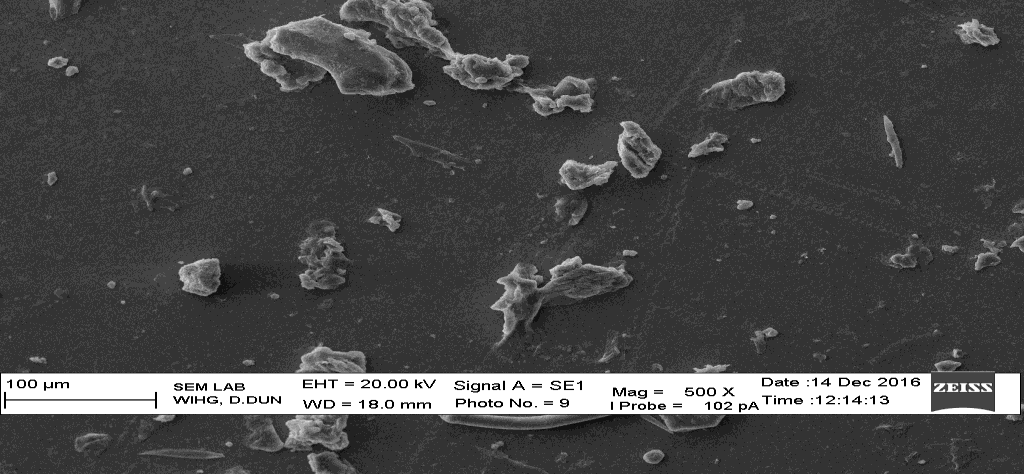
100µm. SEM showed flakes type fine structure with smooth texture (Figure 2).
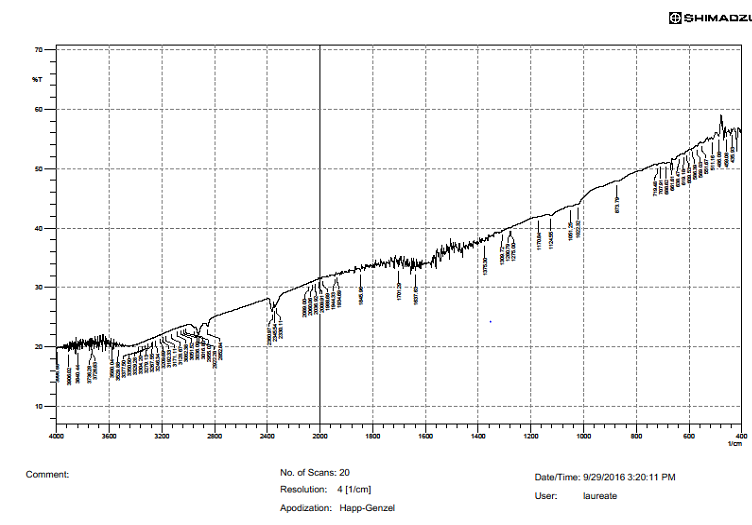
inbuilt mucoadhesive property with functional groups RCOOH, RCH2OH, RCONH2, S=O, C=C-COOH, RNH2 (Figure 3).
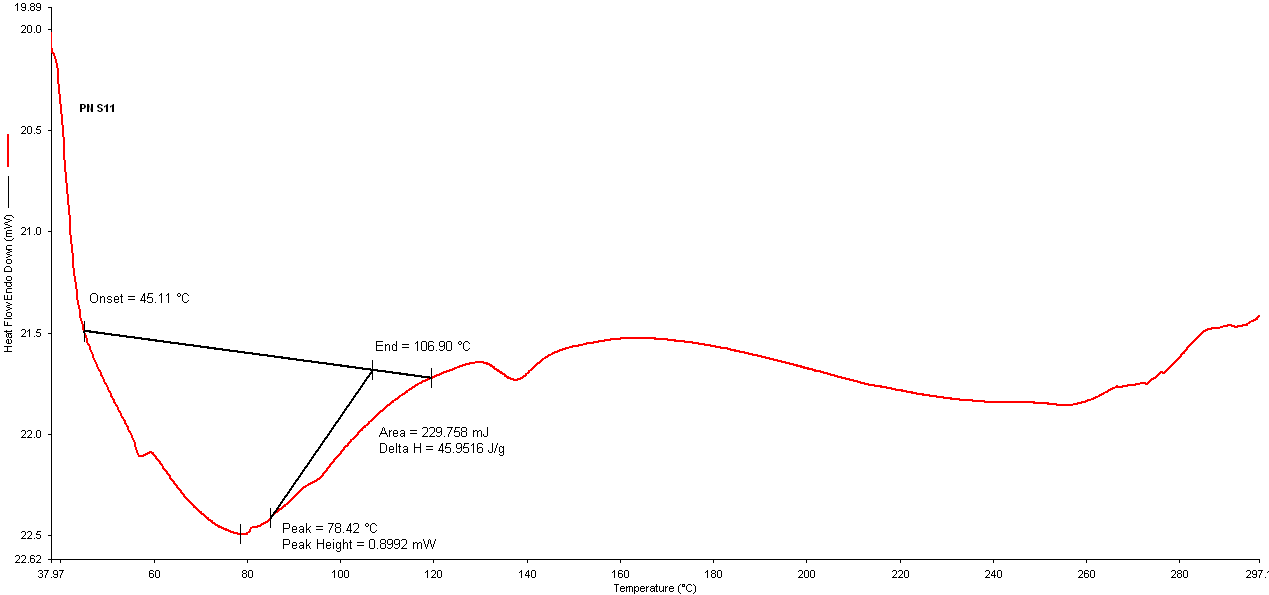
Polymer’s Melting Temperature Tm is 130°C. Thus bio- polymeric nature was confirmed (Figure 4).
NMR Spectral Analysis: The presence of proton and their environment was confirmed by 1HNMR. The 1HNMR Spectra confirms the presence of carbohydrates residue within the biopolymer extracted as the shift of carbohydrate ring protons are 3-6 ppm and the spectra when compared reflects the peak at 3.4191 ppm (Figure 5).
Preparation of Calibration Curve of Drug: Calibration curve of Topiramate was prepared in Buffer (pH 7.4) showed linearity. $R^2$ value was found to be 0.9945 (Figure 6).
Nanosizing of Topiramate
The main purpose of Nanosizing Topiramate by two different methods was to compare novel method with published Standard Solvent Evaporation method which showed nanosized drug showed increase in % Transmittance with increasing Wavelength in UV while non-nanosized drug showed almost constant % Transmittance (Figure 1).
Weight uniformity of formulations: Weight of nanosized Topiramate loaded bio-flexy films containing Piper nigrum biopolymer (FNO1-FNO5) was found to be in range of 0.020±0.05 to 0.031±0.04. Drug content uniformity: Drug Content Uniformity of nanosized Topiramate loaded bio-flexy films containing Piper nigrum biopolymer (FNO1-FNO5) was found to be in range of 90.4%±0.65 to 98.6%±0.60. This indicates that drug was uniformly dispersed in bio-flexy films. Swelling percentage study: Swelling Percentage Study of bio-flexy films containing Piper nigrum biopolymer (FNO1-FNO5) ranged from 70%±0.5 to 73%±0.3. Swelling increased on increasing biopolymer content. It indicates that drug released through bio-flexy films by swelling followed by erosion. Percentage Moisture Uptake (PTU) of bio-flexy films: Percentage Moisture Uptake (PTU) of bio-flexy films containing Piper nigrum biopolymer (FNO1-FNO5) was found to be in range of 2.2%±0.13 to 2.6%±0.12 Mucoadhesivity study of isolated biopolymer: Shear Stress study of Piper nigrum biopolymer revealed that 10% concentration showed promising mucoadhesivity comparable to standard Sodium Carboxyl Methyl (Sodium CMC) polymer (Table 4).
Evaluation Parameters of formulated Films
Thickness of formulations: Thickness of nanosized Topiramate loaded bio-flexy films containing Piper nigrum biopolymer (FNO1-FNO5) was in range 0.027±0.006 mm to 0.037±0.002 mm. As concentration of biopolymer was increased in formulations, thickness also increased although not much significant difference was found. Folding endurance of formulations: The folding endurance was obtained in the range of 102-167 for nanosized Topiramate loaded Bio-flexy films containing Piper nigrum biopolymer (FNO1-FNO5). As concentration of biopolymer was increased in formulations, folding endurance also increased as their flexibility got enhanced due to biopolymer. Surface pH of formulations: Surface pH of nanosized Topiramate loaded bio-flexy films containing Piper nigrum biopolymer (FNO1-FNO5) was found to be 7.01±0.05. Prepared formulations suitable for soft palatal delivery platform as they are in the range of physiological pH.
| Solutions | TIME (mins) | ||||||
|---|---|---|---|---|---|---|---|
| Solutions | 0 min | 5 mins | 10 mins | 15 mins | 20 mins | 25 mins | 30 mins |
| Water | 6.3 gm | 8.9 gm | 10.3 gm | 11.6 gm | 13.9 gm | 17.0 gm | 22.7 gm |
| Biopolymer 1% | 8.7 gm | 9.5 gm | 10.9 gm | 13.7 gm | 17.8 gm | 22.9 gm | 28.2 gm |
| Biopolymer 2% | 14.3 gm | 15.9 gm | 19.7 gm | 26.9 gm | 29.6 gm | 35.3 gm | 38.6 gm |
| Biopolymer 4% | 15.9 gm | 20.3 gm | 26.3 gm | 34.8 gm | 38.5 gm | 42.9 gm | 50.2 gm |
| Biopolymer 6% | 22.9 gm | 26.5 gm | 38.9 gm | 45.9 gm | 56.7 gm | 58.8 gm | 67.7 gm |
| Biopolymer 8% | 35.6 gm | 40.7 gm | 48.9 gm | 58.9 gm | 67.2 gm | 72.5 gm | 88.9 gm |
| Biopolymer 10% | 52.7 gm | 55.9 gm | 58.7 gm | 65.8 gm | 69.4 gm | 74.1 gm | 79.1 gm |
| Sodium CMC 1% | 49.1 gm | 52.5 gm | 59.5 gm | 75.3 gm | 98.6 gm | 116 gm | 129.2 gm |
Table 4: Mucoadhesivity of Piper nigrum biopolymer.
Mucoadhesion Study of Formulated nanosized Topiramate loaded Bio-flexy Films by Rotating Cylinder method (Table 5).
Dynamic Method
| S.No. | Formulation | Dislodgement Time (mins) | Formulation | Dislodgement Time (mins) |
|---|---|---|---|---|
| 1 | FN01 (1:1) | 60 | FS01 (1:1) | 15 |
| 2 | FN02 (1:3) | 90 | FS02 (1:3) | 20 |
| 3 | FN03 (1:5) | 120 | FS03 (1:5) | 30 |
| 4 | FN04 (1:6) | 180 | FS04 (1:6) | 45 |
| 5 | FN05 (1:10) | 210 | FS05 (1:10) | 60 |
Table 5: Dynamic Method.
| S.No. | Formulation | Dislodgement Time (mins) | Formulation | Dislodgement Time (mins) |
| 1 | FNO1 (1:1) | 90 | FS01 (1:1) | 30 |
| 2 | FNO2 (1:3) | 120 | FS02 (1:3) | 60 |
| 3 | FNO3 (1:5) | 180 | FS03 (1:5) | 90 |
| 4 | FNO4 (1:6) | 210 | FS04 (1:6) | 120 |
| 5 | FNO5 (1:10) | 240 | FS05 (1:10) | 150 |
Table 6: Static Method.
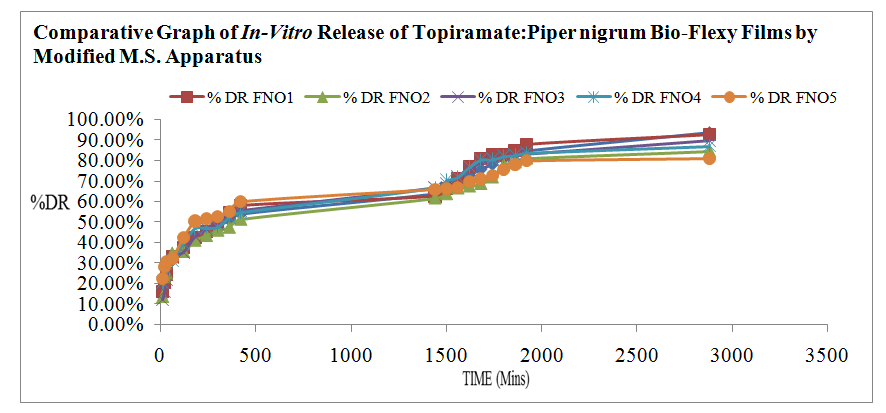
In-Vitro Drug Release of Formulations FNO1 to FNO5 by Modified M.S. Apparatus) and Figure 8 (comparative graph of In-Vitro Drug Release of Formulations FSO1 to FSO5 by Modified M.S. Apparatus) (Tables 7-10).
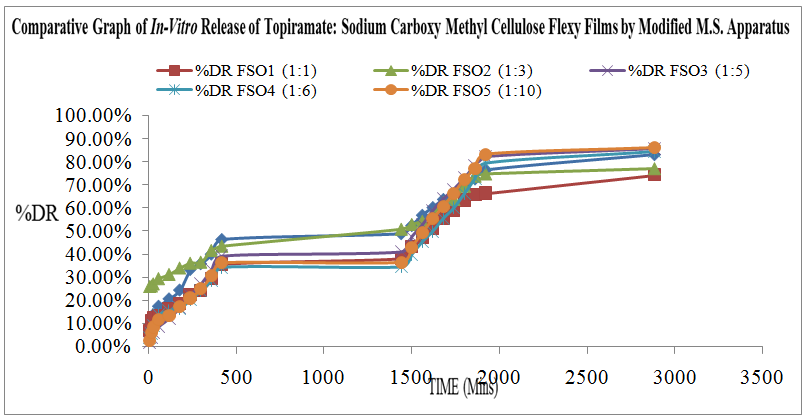
- Modified M.S. apparatus (Dynamic Method) (FSO1-FSO5).
- Release Kinetics Analysis Dynamic Method Formulation of Topiramate: Piper nigrum Bio-Flexy Films
- R2
- Formulations
- Best Fit Model
- Mechanism of Action
- Zero order 1st order Higuchi
- Matrix Peppas Hixon
- Crowell
- FNO1 (1:1)
- 0.8251 0.8259
- 0.9185 0.9776 0.8256
- Peppas Korsmeyer
- Fickian Diffusion (Higuchi Matrix)
- FNO2 (1:3)
- 0.8258 0.8266
- 0.9146 0.9643 0.8264
- Peppas Korsmeyer
- Fickian Diffusion (Higuchi Matrix)
- FNO3 (1:5)
- 0.8198 0.8206
- 0.9272 0.9689 0.8204
- Peppas Korsmeyer
- Fickian Diffusion (Higuchi Matrix)
- FNO4 (1:6) 0.8218 0.8226 0.9146 0.9892 0.8224 Peppas Korsmeyer Fickian Diffusion (Higuchi Matrix)
- FNO5 (1:10)
- 0.728
- 0.7289
- 0.9117 0.9736 0.7286
- Peppas Korsmeyer
- Fickian ion(Higuchi Matrix)
- Kinetic Release of Topiramate-Sodium Carboxyl Methyl Cellulose (Sodium CMC) flexy films
- Release Kinetics Analysis Dynamic Method Formulations of Topiramate: Sodium Carboxyl Methyl Cellulose
- Flexy Films
- R2
- Best Fit Model
- Mechanism of Action
- Zero
- Formulations
- 1st order Higuchi Matrix Peppas
- Hixon
- Crowell order
- FSO1 (1:1)
- 0.917 0.9172
- 0.9311
- 0.961
- 0.9171
- Peppas Korsmeyer
- Fickian Diffusion (Higuchi
- FSO2 (1:3)
- 0.8454 0.846
- 0.8947
- 0.9009
- 0.8458
- Peppas Korsmeyer
- Fickian Diffusion (Higuchi
- Matrix)
- FSO3 (1:5)
- 0.905 0.9051
- 0.9425
- 0.9698
- 0.9051 Peppas Korsmeyer
- Anomalous Transport
- FSO4 (1:6)
- 0.8963 0.8963
- 0.9319
- 0.9566
- 0.8963
- Peppas Korsmeyer
- Fickian Diffusion (Higuchi
- Matrix)
- FSO5 (1:10) 0.8989 0.8989
- 0.9371
- 0.9614
- 0.8989
- Peppas Korsmeyer
- Anomalous Transport
Table 7: Kinetic release of Topiramate-Piper nigrum polymer bio-flexy films.
| for header rows and for data cells. Use for bold text within cells. Preserve empty cells. Return ONLY the HTML , no other text. | ||
|---|---|---|
| Ratio | Ratio | Ratio |
| FS01(1:1) | 27 hrs. | 48 hrs. |
| FS02(1:3) | 24 hrs. | 48 hrs. |
| FS03(1:5) | 26 hrs. | 31 hrs. |
| FS04(1:6) | 27 hrs. | 32 hrs. |
| FS05(1:10) | 26 hrs. | 31 hrs. |
| Ratio | T50 % (hrs.) | T80 % (hrs.) | ||||||
|---|---|---|---|---|---|---|---|---|
| FSO1(1:1) | 27 hrs. | 48 hrs. | ||||||
| FSO2(1:3) | 24 hrs. | 48 hrs. | ||||||
| FSO3(1:5) | 26 hrs. | 31 hrs. | ||||||
| FSO4(1:6) | 27 hrs. | 32 hrs. | ||||||
| FSO5(1:10) | 26 hrs. | 31 hrs. |
Stability studies: The formulations showed no physical changes, related to the color, odor, taste etc. The drug content and in-vitro release was found to be the same, no significant change was observed. So it was concluded that the formulation bio-flexy films of Topiramate was found to be stable.
Discussion
The rationale of research work was to explore a novelistic route for brain specifically via Trans Soft Palatal route. The potential of nanosized Topiramate loaded bio- flexy films for Trans-Soft palatal to brain drug delivery was investigated. Biopolymer was isolated from natural edible sources of Piper nigrum pulp. Biopolymers was used to prepare flexy films because of its biodegradability, biocompatibility, non-toxic, non- irritant nature and no reaction on soft palatal surface. Drug polymer interaction was not observed because no change in wavelength of pure drug and drug to polymer ratio. Biopolymer was devoid of irritancy to soft palate because of their inertness, so biopolymers were selected for formulating nanosized topiramate loaded bio-flexy films. Biopolymers showed excellent film forming properties along with mucoadhesive and mucoretentive properties. Bio-Flexy films were prepared by easiest, economic and reproducible solvent casting technique. Bio-Flexy films formulations provided sustained drug action up to 48 hours. A smart conclusion was drawn that the isolated biopolymer possessed in-built filmability and mucoadhesive properties and served as bio-excipients for formulating nanosized drugs loaded bio-flexy films. Soft palatal drug delivery bypasses oral route and reduces economic and API dose burden in patients. As bio-flexy
films were prepared using biopolymer, it is more
economic and safer than synthetic polymers used in
marketed formulations. Bio-flexy films are easy to
administer and remove/ discontinue from site of
administration. Soft palate is non-keratinized, devoid of
salivary enzymes so minimal drug wastage occurs. Bio-
flexy films were prepared by solvent casting technique
which is the easiest and reproducible method to prepare
flexy film without need of any sophisticated instruments.
Drug to polymer ratio was chosen at five levels for Piper
nigrum; FNO1 (1:1), FNO2 (1:3), FNO3 (1:5), FNO4 (1:6),
FNO5 (1:10), and five levels for Sodium carboxyl methyl
cellulose FSO1 (1:1), FSO2 (1:3), FSO3 (1:5), FSO4 (1:6),
FSO5 (1:10). Prepared bio-flexy films of 1cm² were cut
using a round punch for evaluation parameters and
stability studies. The percentage yield of Solapur
melongen a biopolymer was found to be 0.58%±0.02.
Shear Stress study of Piper nigrum biopolymer revealed
that 10% concentration showed promising
mucoadhesivity comparable to standard Sodium Carboxyl
Methyl (Sodium CMC) polymer. Thickness of nanosized
Topiramate loaded bio-flexy films containing Piper
nigrum biopolymer (FMO1-FMO5) was ranging from
0.027±0.006 mm to 0.037±0.002 mm, Folding Endurance:
102-167, Surface pH: 7.01±0.05 to 7.01±0.03, Weight
Uniformity: 0.020±0.05 to 0.031±0.04, Drug Content
$$ \text{Uniformity:} 90.4 \% \pm 0.65 \text{ to} 98.6 \% \pm 0.60, \text{ Swelling} $$
Percentage: 70%±0.5 to 73%±0.3, Tensile Strength: 89.38
gm±2.8 to 100.05 gm±2.4, Percentage Moisture Uptake
(PTU): 2.2%±0.13 to 2.6%±0.12, more mucoretentive on
Capra aegagrus intestinal mucosa than standard Sodium
Carboxyl Methyl Cellulose films.
Based on all above mentioned evaluation parameters, FNO4 (containing Topiramate: Piper nigrum biopolymer (1:6)) flexy film having R2=0.9892, Peppas Korsemeyer as best fit model, follows Fick an Diffusion (Higuchi Matrix) release mechanism, T50%: 6 hrs., T80%: 28 hrs. using BITS Software 1.12.Stability study revealed stable bio-flexy films with no significant change in physical appearance and stable pH. Prepared formulations of Topiramate loaded bio-flexy films containing Piper nigrum biopolymer were suitable for Soft Palatal Delivery.
Conclusion
In this research work, nanosized Topiramate loaded bio-flexy films (containing Piper nigrum isolated biopolymer) were formulated and evaluated in comparison to standard Sodium Carboxyl Methyl Cellulose polymer containing Films of Topiramate. The study aims to determine suitability of isolated biopolymer as bio-excipient in formulating nanosized drug loaded bio-flexy films to be delivered by Soft Palatal route for Epilepsy treatment. The results of all evaluation parameters revealed that controlled drug release can be achieved by this drug delivery route up to 48 hrs. Formulation FNO4 (containing Topiramate: Piper nigrum biopolymer (1:6)) was selected as Best Film and was also suitable for Soft Palatal route. This study can be used as an alternative economic and safe therapy for treatment of Epilepsy in low dose. (as drug is nanosized so lesser amount of drug is used than normal oral dose).
Acknowledgement
We wish to acknowledge Prof. K.K. Raina (Vice Chancellor, DIT University) and Mr. Anuj Aggarwal, (Chairman, DIT University) for providing the platform for research.
References
-
http://en.wikipedia.org/wiki/soft
-
http://en.wikipedia.org/wiki/nerve
-
Shakya P, Madhav NVS, Shakya AK (2011) Palatal mucosa as a route for Systemic Drug Delivery: a Review. J Controlled Release 151(1): 2-9.
-
Ahmad N (2012) Biological role of Piper nigrum L. (Black pepper): A review Asian Pacific Journal of Tropical Biomedicine 2(3): 945-953.
-
Nilani P (2010) Formulation and Evaluation of Polysaccharide Based Biopolymer – an Ecofriendly Alternative for Synthetic Polymer. J Pharm Sci Res 2(3): 178-184.
-
Madhav NVS, Pangatey A (2015) has filed an Indian Patent. Development of Flexy Bioadhesive Film loaded with Nanosized Zidovudine for brain specificity via novelistic Soft Palatal route.
-
Hearnden V, Hull K, Juras DV, Greenberg M, Kerr AR, et al. (2012) New developments and Opportunities in Oral Mucosal Drug Delivery for local and systemic disease. Adv Drug Deliv Rev 64(1): 16-28.
-
Patil S, Asema SUK, Mirza S, Ahmed Zaheer, Maqdoom Farooqui (2008) Method Development and Validation for Quantitative Analysis of TIGABINE HCL by Ultraviolet Spectrophotometry. Int J Chem Sci 6(1): 413-416.
-
Madhav NVS, Tangri P (2012) Design and Evaluation of Insulin loaded Bio-films for Trans-Soft Palatal to Brain Delivery. Int J Therapeutic Applications 4: 10- 18.
-
Madhav NVS, Shakya AK, Singh K, Shakya P (2011) Histological and Mucoadhesion Studies on Trans- palatal Mucoadhesive disks of Rosiglitazone Maleate. International Journal of Drug Delivery 3(3): 456-466.
-
Madhav NVS, Shakya A, Shakya P, Singh K (2009) Oro- Transmucosal Drug Delivery Systems: A Review. J Controlled Release 140(1): 2-11.
-
Madhav NVS, Tangri P (2011) Oral Mucoadhesive Drug Delivery Systems: A Review. Int J Biopharmaceutics 2(1): 36-46.
-
Madhav NVS, Uma Shankar US, Emdad HE (2006) Soft Palate-A Novel Platform for Transmucosal Delivery of Amikacin. Proceedings of International Conference on Ethnopharmacology and Alternative Medicine, held at Amla Cancer Institute, Trissur.
- Solution-Processed Chiral Perovskites for Biomedical Applications
- Nanotechnology in Health Chemistry and Medicine: Current Challenges and Future Directions
- Human Exposure to Micro- and Nanoplastics: Pathways, Toxicity, and Intervention Strategies
- Exosome Nanomedicine for Cancer Therapy
- Micro and Nanoplastics–Plastisphere, Biotoxicity, Impact on Human Health, and Mitigation Strategies
- Process Validation of Cefixime Powder for Suspension Dosage Form, 50 mL