
Nanoparticles in Drug Delivery System: A Comprehensive Exploration from Classification to Neurodegenerative Therapies
Nanoparticles, defined as particles ranging from 1 to 100 nanometers, exhibit unique physical and chemical properties, distinct from their larger counterparts. Found widely in nature, nanoparticles have become the focus of interdisciplinary studies, including chemistry, physics, geology, and biology. This diverse class includes non-spherical shapes like prisms, rods, and cubes, with gold, silver, and platinum nanoparticles gaining significance for their optical properties. The exploration of nanoparticles began in the 1950s, evolving into practical applications such as drug delivery systems pioneered by Tatzkenitz Bangham in the mid-1960s, introducing liposomes. Various types of nanoparticles, including carbon-based, ceramic, metal, semiconductor, polymeric, and lipid nanoparticles, have been classified based on size, morphology, and physical properties. The role of nanoparticles in treating neurodegenerative disorders is promising, leveraging their unique features for targeted drug delivery, diagnostic imaging, antioxidant properties, gene therapy, biosensors for early detection, and neuroregeneration support. Despite the advantages, nanoparticles come with challenges such as biocompatibility concerns, potential toxicity, complex manufacturing processes, and regulatory hurdles. However, ongoing research aims to address these limitations, making nanoparticles a forefront technology in therapeutic interventions.
Mohd Muzaffer Hussain1*, Sehareesh Fathima2 and Gullapally Vignesh3
Introduction
A nanoparticle is a small particle that ranges between 1-100 nanometers in size. Undetectable by the human eye, nanoparticles can exhibit significantly different physical and chemical properties to their larger material counterparts.... These occur widely in nature and are objects of study in many subjects such as chemistry, physics, geology, biology non spherical nanoparticles example: prism, rods, cubes exhibit Shape, Size Development Properties. Non Spherical Nanoparticles of Gold, Silver and Platinum (Au, Ag & Pt) due to their fascinating optical properties are finding diverse applications [1]. Start in 1950`s with a polymer drug conjugate that was designed by Tatzkenitz Bangham discovered liposomes in mid 1960`s. Liposomes are self assembling nanoparticles forms by dispersion of phospholipids with hydrophilic head and hydrophobic tails, creating closed membrane structure [2].
Types of Nanoparticles
Nanoparticles can be classified into different types according to size, morphology, physical & chemical properties Carbon Based Nanoparticles: A carbon tube with a diameter in the nanometer range is called a carbon nanotube. They belong to the group of carbon allotropes. With diameters between 0.5 and 2.0 nanometers, single-walled carbon nanotubes are 100,000 times thinner than a human hair. Ceramic Nanoparticles: The main components of ceramic nanoparticles are metal oxides, carbides, phosphates, and carbonates, which include calcium, silicon, titanium, and other metalloids. Many advantageous qualities, including strong heat resistance and chemical inertness, give them a broad range of applications. Metal Nanoparticles: Metal nanoparticles, also known as NPs, are widely used in many scientific domains such as plasmonics, biochemistry, and optics. However, they are specifically utilized in heterogeneous catalysis to maximize the exposed area of a metal catalyst, which is usually a costly, rare late transition metal. The shape, size, atomic organization, and elementary composition of metal nanoparticles—various characteristics whose roles are frequently entwined—are closely related to their chemical reactivity. The essential detailed atomistic information of the unique structure and reactivity of metal NPs is provided by theoretical simulations on appropriate NP models, using effective computational chemistry algorithms and parallel computer codes. This paves the way for the creation of NPs with the desired chemistry [3]. Semiconductor Nanoparticles: Semiconductor nanocrystals are nanometer-sized light-emitting particles. Researchers have extensively examined these particles and developed them for a wide range of applications including solar energy conversion, optoelectronic devices, molecular and cellular imaging, and ultrasensitive detection [4]. Polymeric Nanoparticles: Polymeric nanoparticles are uniformly dispersed organic nanoparticles. Polymeric nanoparticles are biocompatible and biodegradable (Chitosan, human serum albumin, or bovine serum albumin) and have a significant role in therapeutic and receptor- mediated drug delivery [5]. Lipid Nanoparticles: Liposomes are “hollow” lipid nanoparticles which have a phospholipid bilayer as coat, because the bulk of the interior of the particle is composed of aqueous substance. In various popular uses, the optional payload is e.g. DNA vaccines, Gene therapy, vitamins, antibiotics, cosmetics and many others.
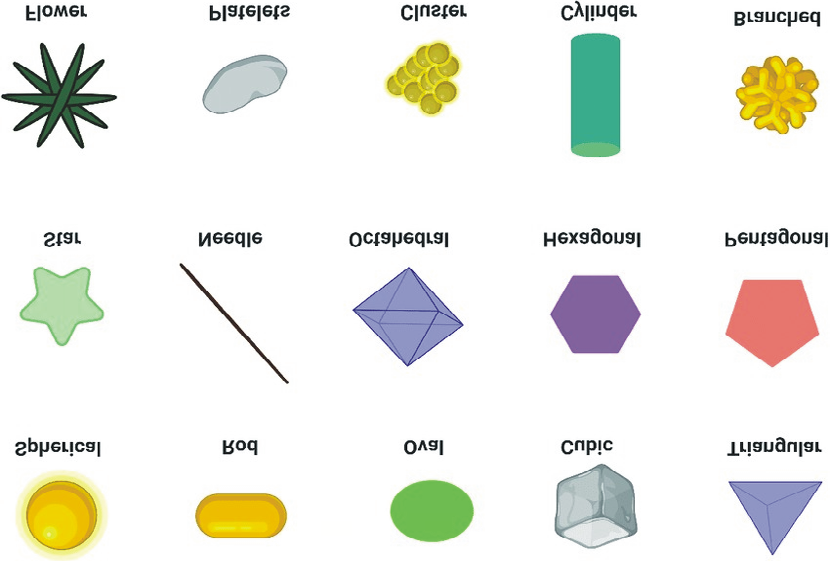
Shapes of Nano Particles:
- Spherical: Uniformly round particles, common in various nanoparticle formulations.
- Rod-shaped: Elongated structures with a cylindrical or rod-like appearance.
- Oval: Elliptical or egg-shaped nanoparticles.
- Cubic: Nanoparticles with a cubic or cube-like structure.
- Triangular: Nanoparticles with a three-sided, triangular shape.
- Star-shaped: Nanoparticles with multiple arms or branches radiating from a central core.
- Needle-shaped: Elongated particles resembling needles or spikes.
- Hexagonal: Nanoparticles with a six-sided polygonal structure.
- Pentagonal: Nanoparticles with a five-sided polygonal structure.
- Flower-shaped: Nanoparticles with petal-like structures, resembling a flower.
- Platelets: Thin, flat nanoparticles with a plate-like morphology.
- Cluster: Aggregated nanoparticles forming a cluster or group.
- Cylinder: Tubular or cylindrical-shaped nanoparticles.
- Branched: Nanoparticles with branches extending from a central core These diverse shapes influence the physical, chemical, and biological properties of nanoparticles, making them suitable for specific applications in medicine, materials science, and other fields shown in Figure 1.
Role of Nanoparticles in Treating Neurodegenerative Disorders
Nanoparticles play a promising role in treating neurodegenerative disorders due to their unique properties and capabilities. Neurodegenerative disorders, such as Alzheimer’s, Parkinson’s, and Huntington’s diseases, involve the progressive degeneration and death of neurons in the brain, leading to cognitive and motor impairments. Here are some ways in which nanoparticles can contribute to the treatment of neurodegenerative disorders [6].
Drug Delivery
Nanoparticles can be designed to encapsulate therapeutic drugs and deliver them to specific regions of the brain. This targeted drug delivery enhances the efficiency of treatment while minimizing side effects in other parts of the body.
Drug Delivery for Neurodegenerative Disorders, Nanoparticles Offer a Specific Set of Advantages:
- Targeted Drug Delivery: Nanoparticles can be engineered to encapsulate therapeutic drugs and deliver them specifically to the affected regions of the brain, ensuring that the medication reaches its intended target with minimal impact on healthy tissues [7].
- Blood-Brain Barrier Penetration: The blood-brain barrier (BBB) restricts the passage of many substances, including drugs, from the bloodstream to the brain. Nanoparticles can be designed to traverse the BBB, facilitating the delivery of drugs into the brain, which is crucial for effective treatment of neurodegenerative disorders.
- Improved Drug Stability: Nanoparticles protect encapsulated drugs from degradation, enhancing their stability and prolonging their effectiveness. This is particularly valuable for drugs that may be susceptible to enzymatic breakdown or have a short half-life.
- Sustained Release: Nanoparticles can be engineered to release drugs in a controlled and sustained manner. This allows for a prolonged therapeutic effect, reducing the frequency of drug administration and improving patient compliance [8].
- Reduced Side Effects: By delivering drugs directly to the target site within the brain, nanoparticles can minimize exposure to healthy tissues, thereby reducing systemic side effects associated with conventional drug administration.
Overall, the use of nanoparticles in drug delivery for neurodegenerative disorders holds great promise in enhancing the precision, efficacy, and safety of therapeutic interventions
Diagnostic Imaging
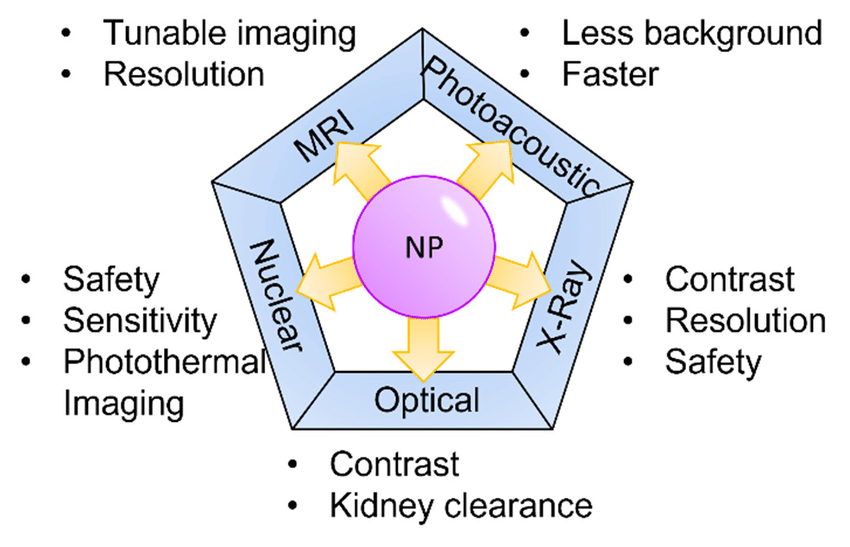
Nanoparticles can serve as contrast agents in diagnostic imaging techniques, such as magnetic resonance imaging (MRI) and positron emission tomography (PET). This enables early and accurate diagnosis of neurodegenerative disorders, allowing for timely intervention (Figure 2) [9].
Antioxidant Properties: Some nanoparticles possess inherent antioxidant properties. Given that oxidative stress is a common feature of neurodegenerative disorders, these nanoparticles can help mitigate oxidative damage and protect neurons from further degeneration [10]. Gene Therapy: Nanoparticles can be utilized for gene delivery, enabling the introduction of therapeutic genes into affected cells. Gene therapy holds potential for addressing the underlying causes of neurodegenerative disorders by promoting neuronal survival, inhibiting toxic protein accumulation, or enhancing neuroregeneration [11]. Biosensors for Early Detection: Nanoparticles can be engineered as biosensors to detect early biomarkers associated with neurodegenerative diseases. Early detection allows for prompt intervention and potentially slows down disease progression. Neuroregeneration Support: Nanoparticles can be designed to release growth factors or other neuroregenerative agents, promoting the repair and regeneration of damaged neurons and synapses.
It’s important to note that while nanoparticles show great promise, challenges such as biocompatibility, potential toxicity, and long-term safety need to be thoroughly addressed in the development of nanotherapeutics for neurodegenerative disorders. Ongoing research and advancements in nanotechnology continue to improve the understanding and application of nanoparticles in the field of neurodegenerative disease treatment [12].
Advantages
Increased Bioavailability: Enhances the absorption and bioavailability of drugs, especially poorly water-soluble ones. Tailored Release Profiles: Allows for precise control over drug release kinetics, optimizing therapeutic outcomes. Versatile Drug Loading: Accommodates a variety of drug types, including small molecules, proteins, and nucleic acids. Improved Pharmacokinetics: Prolongs drug circulation time, reducing the need for frequent dosing. Reduced Drug Toxicity: Minimizes off-target effects by selectively delivering drugs to specific tissues or cells. Enhanced Stability: Protects drugs from degradation, increasing their stability during storage and administration. Cost-Effective Formulation: Enables cost-effective production of drug formulations with reduced doses and fewer side effects. Responsive to Environmental Stimuli: Allows for the design of responsive nanoparticles that release drugs in response to specific cues, enhancing therapeutic precision. Easy Surface Functionalization: Facilitates surface modifications for improved targeting, stability, and biocompatibility. Integration with Imaging Agents: Combines drug delivery with diagnostic capabilities, offering real-time monitoring and personalized treatment. Potential for Combination Therapies: Facilitates the delivery of multiple therapeutic agents simultaneously, addressing complex diseases with multifactorial causes. Non-Invasive Administration: Allows for non-invasive administration routes, such as inhalation, reducing patient discomfort. Biodegradability: Offers biodegradable options, minimizing long-term accumulation and potential toxicity concerns. Customization for Personalized Medicine: Enables tailoring to patient-specific characteristics for personalized and targeted treatments. Facilitates Localized Therapy: Supports the design of nanoparticles for targeted and localized therapy, reducing systemic impact. Applications Beyond Pharmaceuticals: Extends to various applications, including imaging, diagnostics, and theranostics (combined therapy and diagnostics). Improved Cellular Uptake: Facilitates enhanced uptake of therapeutic agents by cells, improving treatment efficacy. Protection against Enzymatic Degradation: Shields encapsulated drugs from enzymatic degradation, preserving their pharmacological activity. Reduced Dosage Frequency: Enables sustained release, reducing the frequency of drug administration and improving patient compliance. Temperature and pH Responsiveness: Some nanoparticles can be engineered to respond to changes in temperature or pH, allowing for triggered drug release at specific sites. Facilitates Localized Hyperthermia: Can be used for hyperthermia treatments by selectively accumulating in target tissues and responding to external stimuli like heat. Enhanced Therapeutic Index: Improves the balance between the desired therapeutic effects and potential side effects, resulting in a higher therapeutic index. Protection of Labile Molecules: Preserves the stability of labile molecules, such as proteins and peptides, during transit to the target site. Ease of Scale-Up: Many nanoparticle formulations are amenable to scalable production, supporting large-scale manufacturing for widespread application. Reduced Resistance Development: Simultaneous delivery of multiple drugs can help combat drug resistance by targeting multiple pathways involved in disease progression. Long Circulation Time: Some nanoparticles exhibit prolonged circulation in the bloodstream, enhancing the chances of reaching the target site. Minimized First-Pass Metabolism: Protects drugs from rapid metabolism in the liver, allowing a larger fraction of the administered dose to reach systemic circulation. Enhanced Intracellular Drug Delivery: Facilitates the delivery of drugs into cells, overcoming cellular barriers for improved efficacy. Integration with Nanosensors: Incorporation of nanosensors enables real-time monitoring of therapeutic responses, allowing for adaptive treatment strategies. Reduced Drug Interactions: Minimizes drug interactions with other substances in the body due to targeted and controlled delivery [13, 14, 15, 16, 17].
Disadvantages
Biocompatibility Concerns: Some nanoparticles may evoke immune responses or toxicity, raising concerns about their long-term safety and compatibility with biological systems. Potential Toxicity: The materials used in nanoparticles, especially at high concentrations, may exhibit toxicity. Understanding and mitigating potential toxic effects are critical. Complex Manufacturing: The production of nanoparticles can be complex and may require specialized equipment and techniques, leading to increased manufacturing costs. Limited Standardization: Lack of standardized protocols for nanoparticle synthesis and characterization can hinder reproducibility and regulatory approval. Risk of Aggregation: Nanoparticles may agglomerate, affecting their stability and altering drug release profiles, potentially leading to inconsistent therapeutic effects. Difficulty in Quality Control: Ensuring consistent quality and reproducibility of nanoparticle formulations can be challenging due to variations in production processes. Biodegradation Challenges: Biodegradable nanoparticles may exhibit varying rates of degradation, potentially impacting drug release kinetics and biocompatibility. Clearance Issues: Rapid clearance by the mononuclear phagocyte system (MPS) can reduce the circulation time of nanoparticles, limiting their effectiveness. Potential for Unintended Biodistribution: Nanoparticles
may accumulate in unintended organs or tissues, leading to off-target effects and potential toxicity. Regulatory Hurdles: Regulatory agencies may have limited experience in evaluating and approving nanoparticle-based drug delivery systems, creating challenges in obtaining regulatory clearance. Ethical Concerns: Ethical considerations may arise due to the unknown long-term effects of nanoparticles on human health and the environment. Cost: Developing and producing nanoparticles for drug delivery can be expensive, impacting the overall cost of the therapeutic intervention. Limited Stability in Biological Fluids: Nanoparticles may undergo changes in composition or structure in biological fluids, affecting their stability and performance. Size-Related Challenges: Size-dependent clearance mechanisms and potential for tissue penetration limitations may arise due to the small size of nanoparticles [18, 19, 20, 21].
Conclusion
Nanoparticles have emerged as versatile entities with diverse applications in various scientific domains, particularly in the field of medicine. Their unique properties, including size, shape, and surface characteristics, make them promising candidates for drug delivery systems. In the treatment of neurodegenerative disorders, nanoparticles offer targeted drug delivery, diagnostic imaging capabilities, and support for therapeutic interventions at the cellular level. While the advantages are substantial, it is crucial to address the associated challenges, such as biocompatibility, toxicity, and regulatory considerations. The ongoing efforts to optimize nanoparticle-based technologies underscore their potential in revolutionizing medical treatments [22, 23, 24, 25, 26]. As research progresses, the integration of nanoparticles into personalized medicine and novel drug delivery systems holds the promise of improving patient outcomes and addressing complex diseases more effectively.
References
-
Buzea C, Pacheco I (2023) Chapter 2-Gold and silver nanoparticles: Properties and toxicity. Silver Nanoparticles pp: 59-82.
-
Liu P, Chen G, Zhang J (2022) A Review of Liposomes as a Drug Delivery System: Current Status of Approved Products, Regulatory Environments, and Future Perspectives. Molecules 27(4): 1372.
-
Viñes F (2018) Chapter 2 - Simulating heterogeneous catalysis on metallic nanoparticles: From under- coordinated sites to extended facets. In: Bromley ST, et al. (Eds.), Frontiers of Nanoscience 12: 101-128.
-
Smith AM, Nie S (2010) Semiconductor nanocrystals: structure, properties, and band gap engineering. Acc Chem Res 43(2): 190-200.
-
Nagati V, Tenugu S, Pasupulati AK (2022) Chapter 4 - Stability of therapeutic nano-drugs during storage and transportation as well as after ingestion in the human body. In: Talukdar AD, et al. (Eds.), Advances in Nanotechnology-Based Drug Delivery Systems pp: 83- 102.
-
Jagaran K, Singh M (2021) Nanomedicine for Neurodegenerative Disorders: Focus on Alzheimer’s and Parkinson’s Diseases. Int J Mol Sci 22(16): 9082.
-
Singh R, Lillard JW (2009) Nanoparticle-based targeted drug delivery. Exp Mol Pathol 86(3): 215-223.
-
Adepu S, Ramakrishna S (2021) Controlled Drug Delivery Systems: Current Status and Future Directions. Molecules 26(19): 5905.
-
Peter H, Min CH, Norimoto Y, Morgan H (2021) Nanotechnology, Nanomedicine, and the Kidney. Applied Sciences 11(16): 7187.
-
Ashok A, Andrabi SS, Mansoor S, Kuang Y, Kwon BK, et al. (2022) Antioxidant Therapy in Oxidative Stress-Induced Neurodegenerative Diseases: Role of Nanoparticle- Based Drug Delivery Systems in Clinical Translation. Antioxidants (Basel) 11(2): 408.
-
Siafaka PI, Okur ME, Erim PD, **Çağlar EŞ, Özgenç** E, et al. (2022) Protein and Gene Delivery Systems for Neurodegenerative Disorders: Where Do We Stand Today. Pharmaceutics 14(11): 2425.
-
Vashist A, Manickam P, Raymon AD, Arias AY, Kolishetti N, et al. (2023) Recent Advances in Nanotherapeutics for Neurological Disorders. ACS Applied Bio Materials 6(7): 2614-2621.
-
Gelperina S, Kisich K, Iseman MD, Heifets L (2005) The potential advantages of nanoparticle drug delivery systems in chemotherapy of tuberculosis. Am J Respir Crit Care Med 172(12): 1487-1490.
-
Kumar S, Kumar B, Sehgal R, Wani MF, Kumar V, et al. (2023) Advantages and Disadvantages of Metal Nanoparticles. In: Tiwari SK, et al. (Eds.), Nanoparticles Reinforced Metal Nanocomposites Springer, Singapore, pp: 209-235.
-
Arms L, Smith DW, Flynn J, Palmer W, Martin A, et al. (2018) Advantages and Limitations of Current Techniques for Analyzing the Biodistribution of Nanoparticles. Front Pharmacol 9: 802.
-
Jamkhande PG, Ghule NW, Bamer AH, Kalaskar MG (2019) Metal nanoparticles synthesis: An overview on methods of preparation, advantages and disadvantages and applications. Journal of Drug Delivery Science and Technology 53: 101174.
-
Parveen K, Banse V, Ledwani L (2016) Green synthesis of nanoparticles: Their advantages and disadvantages. AIP Conf Proc 1724(1): 020048.
-
Futschik SEK, Ortega RF (2021) Advantages and Disadvantages of Using Magnetic Nanoparticles for the Treatment of Complicated Ocular Disorders. Pharmaceutics 13: 1157.
-
Kaneko K, Osman N, Carini V, Scagnetti G, Saleem I (2020) Overview of the Advantages and Disadvantages of Different Mucosal Sites for the Delivery of Nanoparticles. In: Muttil P, Kunda N (Eds.), Mucosal Delivery of Drugs and Biologics in Nanoparticles. AAPS Advances in the Pharmaceutical Sciences Series 41: 61-82.
-
Ghasemiyeh P, Samani SM (2020) Potential of Nanoparticles as Permeation Enhancers and Targeted Delivery Options for Skin: Advantages and Disadvantages. Development and Therapy 14: 3271-3289.
-
Parisa G, Soliman MS (2018) Solid lipid nanoparticles and nanostructured lipid carriers as novel drug delivery systems: applications, advantages and disadvantages. Research in Pharmaceutical Sciences 13(4): 288-303.
-
Hamada AM, Radi AA, Al Kahtany FA, Farghaly FA (2024) A review: Zinc oxide nanoparticles: advantages and disadvantages. Journal of Plant Nutrition 47(4): 656- 679.
-
Murthy SK (2007) Nanoparticles in modern medicine: state of the art and future challenges. Int J Nanomedicine 2(2): 129-141.
-
Joseph TM, Mahapatra KD, Esmaeili A, Piszczyk L, Hasanin MS, et al. (2023) Nanoparticles: Taking a Unique Position in Medicine. Nanomaterials 13(3): 574.
-
Anjum S, Ishaque S, Fatima H, Farooq W, Hano C, et al. (2021) Emerging Applications of Nanotechnology in Healthcare Systems: Grand Challenges and Perspectives. Pharmaceuticals (Basel) 14(8): 707.
-
Yusuf A, Almotairy ARZ, Henidi H, Alshehri OY, Aldughaim MS (2023) Nanoparticles as Drug Delivery Systems: A Review of the Implication of Nanoparticles’ Physicochemical Properties on Responses in Biological Systems. Polymers 15(7): 1596.
- Solution-Processed Chiral Perovskites for Biomedical Applications
- Nanotechnology in Health Chemistry and Medicine: Current Challenges and Future Directions
- Human Exposure to Micro- and Nanoplastics: Pathways, Toxicity, and Intervention Strategies
- Exosome Nanomedicine for Cancer Therapy
- Micro and Nanoplastics–Plastisphere, Biotoxicity, Impact on Human Health, and Mitigation Strategies
- Process Validation of Cefixime Powder for Suspension Dosage Form, 50 mL