
Ultron and the Ultra-Age of Nanoparticles
Nanotechnology has advanced over the past 4 years and shows no signs of stopping. Nanotechnology-based technologies and products have completely changed every part of daily life, from the food sector to medical uses. With the use of nanoparticles, food products may now have much longer shelf life, hydrophobic medication distribution can be improved within cells, and the effectiveness of certain treatments, such anticancer medicines, can be increased. Consequently, the world economy has been influenced by nanotechnology in addition to the global level of life. This review discusses the properties of nanoparticles that give them appropriate and possibly harmful biological effects, as well as their uses in various biological fields, nanoparticlebased medications, and delivery systems in biomedicine, including nano-based medications that are currently FDA-approved. A potential remedy as well as the potential consequences of ongoing exposure to nanoparticles as a result of growing nanotechnology use are also discussed.
Introduction
The development, characterisation, study, and use of nanomaterials (1–100 nm) for scientific progress are the main areas of concentration in the quickly expanding discipline of nanotechnology within materials science. Because of their nanoscale size, these materials display distinct physical, chemical, and biological properties. In comparison to macro- sized materials, nanoparticles are smaller and have a bigger surface area. The main factors that determine their inherent qualities are their morphology, size, content, crystallinity and form. With uses in diagnosis, therapeutic drug delivery, and the creation of therapies for a range of diseases and disorders, nanoparticles have improved biosensors, biomedicine, and bionanotechnology. With potential medical applications in early illness diagnosis, treatment, and prevention, nanotechnology offers great promise for the design and development of innovative products [1].
Nanoparticles
It is usual to refer to a particle of matter as a nanoparticle or ultrafine particle if its diameter is between one and one hundred nanometers (nm). The word is occasionally used when discussing bigger particles up to 500 nm or fibers and tubes less than 100 nm in just two dimensions. When metal particles are smaller than 1 nm, they are commonly referred to as atom clusters [2].
Microparticles (1-1000 m), “fine particles” (sized between 100 and 2500 nm), and “coarse particles” (ranging from 2500 to 10,000 nm) are typically distinguished from nanoparticles because of their smaller size, which affects very different physical or chemical properties, such as colloidal properties, ultrafast optical effects, or electric properties [3]. Materials in the nanoscale range are used as diagnostic instruments or to administer therapeutic compounds to particular targeted regions in a controlled manner in the relatively young but quickly evolving field of nanomedicine and nano delivery systems. Through the targeted and site-specific administration of precise medications, nanotechnology has several advantages in the treatment of chronic human illnesses. There have recently been several notable uses of nanomedicine (including chemotherapeutic medicines, biological agents, immunotherapeutic agents, etc.) in the management of various disorders.
Nanotechnology is enabling technology that deals with nanometer-sized objects. It is expected that nanotechnology will be developed at several levels:materials, devices and systems. Nanotechnology is known as the field of research. So, nanotechnology was presented by Nobel laureate Richard P. Feynman during his 1959 lecture “There’s Plenty of Room at the Bottom” [4]. Nanotechnology is enabling technology that deals with nano-meter sized objects. It is expected that nanotechnology will be developed at several levels: materials, devices and systems. The nanomaterials level is the most advanced at present, both in scientific knowledge and in commercial applications.
International Organization for Standardization (ISO) defined a nanoparticle as a discrete nano-object where all three cartesian dimensions are less than 100nm in the year 2008. But in 2011 the commission of the European Union endorsed a more technical but wider-ranging Definition: a natural, incidental or manufactured material containing particles, in an unbound state or as an aggregate where, for 50% or more of the particles in the number size distribution, one or more external dimensions is in the size range 1nm- 100nm
The British Standards Institution Recently offered the Following Definitions for the Terminology used in Science
- Nanoscience: The study of matter at the nanoscale that focuses on comprehending its size- and structure- dependent features and examines the emergence of individual atoms or molecules or changes in bulk materials.
- Nanotechnology: Using scientific knowledge for a variety of industrial and healthcare purposes, it is the manipulation and control of matter on the nanoscale dimension.
Materials with any internal or exterior structures on the nanoscale dimension are considered nanomaterials.
A material with one or more peripheral nanoscale dimensions is referred to as a nano-object. Three exterior nanoscale dimensions are present in a nanoparticle, a nano- object. When nano- longest objects and shortest axes are different lengths, the words “nanorod” or “nanoplate” are used in place of “nanoparticle” (NP).
• Nanofiber: A nanomaterial is referred to as nanofiber if it has three dimensions total-two outside nanoscale dimensions that are comparable and one larger dimension.
A multiphase structure containing at least one nanoscale phase is referred to as a nanocomposite.
Nanostructure: a structure made up of interconnecting nanoscale building blocks.
Classification of Nanoparticles
Classification of nanoparticles is divided in to the following types- Classification of Nanomaterials based on their Dimensions: The advancement of many nations’ economies is currently being aided by the nanoscale manufacture of traditional goods, and this trend will continue. NPs and NSMs come in a wide variety of forms, and more are expected to develop in the future. As a result, the time is now for their classification. Gleiter, et al. proposed the initial concept for NM classification. Here, NMs were categorised depending on their crystalline morphologies and chemical makeup. However, because the dimensionality of the NPs and NSMs was not taken into account, the Gleiter scheme was not entirely comprehensive. Pokropivny and Skorokhod created a new classification system for NMs in 2007 that incorporated recently produced composites like 0D, 1D, 2D, and 3D Nms.
The electron flow along the dimensions in the NMs has a significant impact on this categorization. For instance, in 0D NMs, electrons are confined to an incompressible area, whereas in 1D NMs, electrons are free to flow along the x-axis, which is less than 100 nm. Similar to this, in 2D and 3D NMs, electrons move along the x-y and x, y, and z axes, respectively.
The usefulness of the NMs’ categorization depends on our capacity to forecast their characteristics. As stated in the “grain boundary engineering” notion in Gleiter’s categorization, the characteristics of NMs are highly dependent on grain boundaries. Therefore, grain boundary engineering will increase the traditional inner size effects, such as melting point decreasing and diffusion augmentation. According to the “surface engineering” approach and the categorization of Pokropivny and Skorokhod, the features of NMs are related to the particle shape and dimensions. These justifications, to broaden the use of NSMs, emphasise the engineering of particle form and dimensions as well as a grain boundary. Classification of Nanomaterials based on their Origin: NPs and NSMs can be divided into natural and synthetic categories in addition to classifications based on dimension and substance.
In nature, either life forms or human activity can yield natural nanomaterials. The creation of artificial surfaces with unique micro- and nanoscale templates and features for technological purposes is easily accomplished from natural sources. Regardless of human behaviour, found naturally NMs reside in all of the Universe’s spheres (such as the hydrosphere, atmosphere, lithosphere, as well as biosphere). Several NMs that comprise Earth’s spheres include the oceans, that is made up of seas, lakes, rivers, groundwater, and hydrothermal vents, the lithosphere, which is made up of rocks, soils, magma, or lava during specific phases of evolution, and the biosphere, which comprises lower and higher species including people and microorganisms.
Synthetic (designed) nanomaterials can be created by physical, chemical, biological, or hybrid means as well as through mechanical grinding, engine exhaust, and smoke. The use of engineered NMs in consumer and industrial industries, coupled with the growing development and subsequent release, has raised the topic of harm assessment methodologies recently. The behaviour and outcome of manufactured NMs across diverse environmental media may be predicted with great accuracy using these risk assessment methodologies. The main issue with designed NMs is determining when current information is sufficient to predict their behaviour or if they behave differently from wild NMs about their surroundings. Engineered NMs are now produced using a variety of sources that are relevant to possible uses.
Nanoparticle Morphology
The morphological properties of flatness, sphericity, and aspect ratio must be considered. High- and low-aspect- ratio particles can be broadly categorised. Nanotubes and nanowires with different geometries, such as helices, zigzags, belts, or maybe nanowires with diameter that changes with length, are examples of high-aspect-ratio nanoparticles. Spherical, oval, cubic, prismatic, helical, or pillar morphologies are examples of low-aspect-ratio shapes. Colloids, suspensions, and powders are all different types of particle collections.
Nanoparticle Composition: Nanoparticles can be made of a single basic material or a composite of several materials. While it is currently possible to readily create significant elements with a single composition, nanoparticles in nature are routinely accumulations of substances with various compositions. Nano Particle Uniformity and Agglomeration: Nanoparticles can exist as suspended/colloids, agglomerates, or dispersed aerosols depending on their chemistry and electromagnetic characteristics. For instance, unless their surfaces are covered with a nonmagnetic substance, magnetic nanoparticles tend to aggregate and create an agglomeration state. Depending on the size of the agglomeration, nanoparticles may act like bigger particles while they are in an agglomerate form. Therefore, it is clear that when evaluating health and environmental standards for novel materials, nanoparticle aggregation, size, and surface reactivity, along with shape and size, must be taken into account Buzea, et al. [5].
Types of Nanoparticles
The majority of the present NPs and NSMs may be categorised into four material-based groups. Recent reviews of these several kinds of NMs are cited in the sources. Carbon-based Nanomaterials: Typically made of carbon, these NM scan take the form of spheres, ellipses, or hollow tubes. The group of carbon-based NMs comprises fullerenes (C60), carbon nanotubes (CNTs), carbon nanofibers, carbon black, graphene (Gr), and carbon onions. The key manufacturing processes for the fabrication of this carbon- based material include laser ablation, arc discharge, and chemical vapour deposition (CVD) (except carbon black). Inorganic-based Nanomaterials: These NMs include metal and metal oxide NPs and NSMs. Metals like Au or Ag NPs, metal oxides like TiO2 and ZnO NPs, semiconductors like silicon, and ceramics may all be made from these NMs using synthetic methods. Organic-based Nanomaterials: Nanomaterials with a mostly organic composition are referred to as organic-based nanomaterials (NMs), as opposed to those with a carbon or inorganic composition. The self-assembly and design of molecules with the aid of noncovalent (weak) interactions enables the transformation of organic NMs into desirable structures including dendrimers, micelles, liposomes, and polymer NPs. Composite-based Nanomaterials: Composite NMs are multiphase NPs and NSMs having one phase on the nanoscale dimension. They can either combine NPs with other NPs or NPs with bigger or bulkier materials (for example, hybrid nanofibers) or more complex structures, such as metal- organic frameworks. The composites may combine metal, ceramic, or organic bulk components with carbon, metal, or organic NMs in any way
Applications of Nanoparticles
Cancer Therapy: Photodynamic cancer therapy is based on the destruction of the cancer cells by laser generated atomic oxygen, which is cytotoxic. A greater quantity of a special dye that is used to generate the atomic oxygen is taken in by the cancer cells when compared with a healthy tissue. Hence, only the cancer cells are destroyed then exposed to a laser radiation. Unfortunately, the remaining dye molecules migrate to the skin and the eyes and make the patient very sensitive to the daylight exposure. This effect can last for up to six weeks. Multicolour Optical Coding for Biological Assays: The ever increasing research in proteomics and genomic generates escalating number of sequence data and requires development of high throughput screening technologies. Realistically, various array technologies that are currently used in parallel analysis are likely to reach saturation when a number of array elements exceed several millions. A three-dimensional approach, based on optical “bar coding” of polymer particles in solution, is limited only by the number of unique tags one can reliably produce and detect. Single quantum dots of compound semiconductors were successfully used as a replacement of organic dyes in various bio-tagging applications. This idea has been taken one step further by combining differently sized and hence having different fluorescent colours quantum dots, and combining them in polymeric microbeads. A precise control of quantum dot ratios has been achieved. The selection of nanoparticles used in those experiments had 6 different colours as well as 10 intensities. It is enough to encode over 1 million combinations. The uniformity and reproducibility of beads was high letting for the bead identification accuracies of 99.99%. Manipulation of Cells and Biomolecules: Functionalised magnetic nanoparticles have found many applications including cell separation and probing; these and other applications are discussed in a recent review. Most of the magnetic particles studied so far are spherical, which somewhat limits the possibilities to make these nanoparticles multifunctional. Alternative cylindrically shaped nanoparticles can be created by employing metal electrode position into nanoporous alumina template. Depending on the properties of the template, nanocylinder radius can be selected in the range of 5 to 500 nm while their length can be as big as 60 μm. By sequentially depositing various thicknesses of different metals, the structure and the magnetic properties of individual cylinders can be tuned widely. Protein Detection: Proteins are the important part of the cell’s language, machinery and structure, and understanding their functionalities is extremely important for further progress in human well being. Gold nanoparticles are widely used in immunohistochemistry to identify protein- protein interaction. However, the multiple simultaneous detection capabilities of this technique are fairly limited. Surface enhanced Raman scattering spectroscopy is a well- established technique for detection and identification of single dye molecules. By combining both methods in a single nanoparticle probe one can drastically improve the multiplexing capabilities of protein probes. The group of Prof. Mirkin has designed a sophisticated multifunctional probe that is built around a13 nm gold nanoparticle.
Moreover, this molecule is catalytically active and will be coated with silver in the solution of Ag(I) and hydroquinone. After the probe is attached to a small molecule or an antigen it is designed to detect, the substrate is exposed to silver and hydroquinone solution. A silverplatingis happening close to the Raman dye, which allows for dye signature detection with a standard Raman microscope. Apart from being able to recognise small molecules this probe can be modified to contain antibodies on the surface to recognise proteins. When tested in the protein array format against both small molecules and proteins, the probe has shown no cross- reactivity.
Applications of Nanoparticles
Currently, nanoparticles may be found in a huge range of consumer goods. They can be used as UV protection fillers or coatings, which are crucial in windows, lenses, and sunscreen.
The well-known antibacterial qualities of substances like silver and copper can be added as nanoparticles to preserve the freshness of packaged meals or to lessen odor in socks. As a possible tool for targeted medication delivery and cancer detection in medicine, gold nanoparticles have received a lot of attention. The enormous increase in surface area that occurs when particle size decreases is what essentially drives nanoparticle efficacy in reaction catalysis when compared to bulk materials. This results in the catalyst material being used considerably more effectively. Surface plasmons, which may be employed for Surface Enhanced Raman Spectroscopy (SERS), a method of improving detection in Raman spectroscopy, are a frequent usage of nanoparticles in the field of plasmonics [4].
How do Nanoparticles become created?
The process of creating nanoparticles is generally top-down or bottom-up. Atomic-sized materials are nucleated into the final nanoparticles in a bottom-up manner. The precise synthesis technique will vary depending on the substance being produced, but some popular techniques include the Turkevich method (citrate reduction), gas phase synthesis, block copolymer synthesis, and more recently, microbial synthesis. Top-down techniques, such as milling, laser ablation, and spark ablation, physically break down a bulk material into smaller molecules [6].
Since they need batches of solvents and other chemicals, bottom-up synthesis techniques are frequently referred to as “wet” techniques. In order to prevent the particles from growing past the nanoscale range, they frequently need to be stabilized or capped in solution. For their use or characterization, the particles must subsequently typically be transported from their solutions. Drop-casting the solution onto the target substrate will accomplish this. However, when the nanoparticles have been fixed on the desired final support, it can also be essential in some applications, such as catalysis, to remove the stabilizers from their surface. These particles may be difficult to remove or perhaps impossible to remove, making them useless for their intended use [7]. Medicated Nanoparticle for Gene Delivery: The drug delivery system has significant challenges in getting the medication to the target location at the optimum concentration to provide therapeutic action. The shortcomings of the standard dose form are effectiveness, poor dispersion, and lack of selectivity. Recently, nanotechnology has received a lot of interest across a variety of industries, especially in the biomedical one. After surface modification, the material comprises organic, inorganic, polymeric, and lipid-based Nano biomaterials; they have been used for medication and gene delivery systems. Gene delivery methods using genetic components including DNA plasmids, RNA, and siRNA fall into two categories: viral and non-viral vectors [8]. The two primary obstacles to gene delivery are cellular and extracellular barriers. The fundamental technique of gene delivery is the introduction of a gene that codes for a functional protein that can change the expression of an endogenous gene or have the ability to treat or stop the course of a disease. The form and surface charge of nanoparticles play important roles in the transport of genes. Numerous factors, including the kind of polymer, particle size, solubility, biocompatibility, biodegradability, and surface characteristics of nanoparticles, must be taken into account to achieve site-specific delivery. Treatments for illnesses including cancer, AIDS, and cardiovascular conditions have all benefited from the use of gene delivery [9].
Organic, inorganic, polymeric, and lipid-based nanobiomaterials are used in drug and gene delivery systems. Surface modification can enhance the nanobiomaterials’ ability to bind to receptors on target cells and tissues. The solubility, immunological compatibility, and cellular absorption may all be improved by this surface modification (Figure 1) [8].
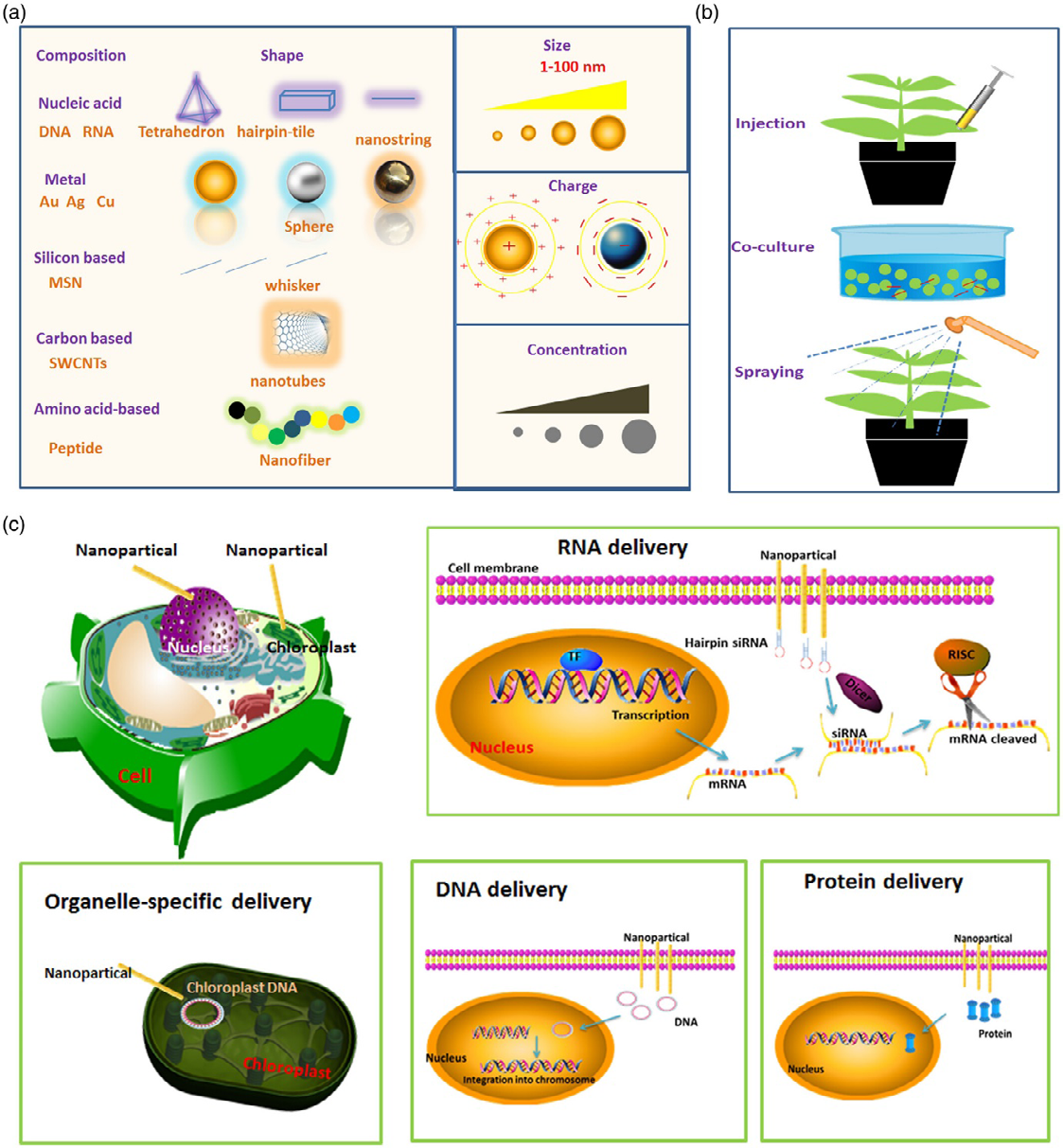
Nanogels, nanoparticles, nanotubes, and dendrimers are a few examples of the many nano drug delivery methods. Various kinds of biomacromolecules, including peptides, proteins, plasmid DNA, and synthetic oligodeoxynucleotides, can be delivered using them, in addition to small molecule medications. Small interfering RNA (siRNA) and antisense oligonucleotide (AS-ODN) have proved to be promising gene delivery and good therapeutic agents, but they cannot be employed immediately due to their limitations in terms of sequence size, length, charge, half-life, or solution stability. Humans can develop a number of illnesses as a result of gene deletions or mutations that affect the metabolic pathway, cell cycle control, protein function and structure, receptor function, and cell skeleton [10]. Effective gene delivery systems are available to treat this. Gene delivery, often known as transfection, is the process of delivering genetic material into target cells, such as DNA plasmids, RNA, and siRNA, either encapsulated inside or attached to NPs to express or inhibit protein production [11].
Pharmaceutical Delivery Systems and Nanomedicine in the Future
Currently, one of the most exciting fields of study is nanomedicine. 1500 patents have already been filed and several clinical studies have been successfully completed as a result of extensive research in this area over the past 20 years. As mentioned in the different sections above, the finest example of a condition for which non-medical technology have been beneficial for both diagnosis and treatment is cancer. The use of nanomedicine and nano-drug delivery systems is undoubtedly the trend that will continue to be the future field of research and development for decades to come by delivering the precise dosage of medication to the affected cells, such as the cancer/tumor cells, without disturbing the physiology of the normal cells.
The size of the nanoparticle examples included in this communication is not consistent; some really measure in nanometers while others are measured in sub-micrometers (more than 100 nm). The next area of research would be greater study of materials with more uniform uniformity and drug loading and release capability. A future expansion of the use of nanomedicines may result from the application of these metals, such as gold and silver, in both diagnostic and treatment. Gold nanoparticles, which appear to be efficiently absorbed in soft tumor tissues and make the tumor vulnerable to radiation-based heat treatment (e.g., in the near infrared area), are one important source of interest in this field [12].
Although nanomedicine and nano-drug delivery systems are well understood, their actual influence on the healthcare system—including in the treatment and detection of cancer— remains quite restricted. This is due to the topic being a young one in science, with just two decades of actual study, and the fact that many important, fundamental characteristics are still unknown. Future research will focus primarily on the basic molecular markers of sick tissues, particularly those that enable absolute targeting without impairing normal cellular function. Ultimately, the use of nanomedicine will develop with our growing understanding of illnesses at the molecular level or that reflect a nanomaterial-subcellular scale equivalent marker identification to open up paths for novel diagnosis/therapy. Therefore, future advancements in nanomedicine applications will result from knowing the molecular fingerprints of illness. Theoretical mathematical models of prediction, technology for the assessment of these events, pharmacological action in tissues/cellular level, and the notion of controlled release of specific medications at the troubled locations have not yet reached their full potential [13]. Numerous research in the field of nanomedicine are focused on formulation and biomaterial investigations, which seem to be the early phases of biomedicine applications. Animal studies and transdisciplinary research, which takes a lot of time and money, will yield valuable information that might be used in medication therapeutic and diagnostic investigations. The search for more accurate treatments and diagnoses is an increasing global trend, and the future of nanomedicine and nano-drug delivery technology appears to be promising. The creation of nanorobots (and nanodevices) that have complete external control mechanisms and act in tissue diagnostic and healing mechanisms has generated a lot of attention. This is still a futuristic research that has not yet come to pass but which humanity may someday achieve very soon. However, much like their advantages, the potential risks of nanomedicines to both individuals and the ecosystem as a whole need extensive research [14]. It is necessary to properly examine the potential acute or long-term harmful consequences of novel nanomaterials on people and the environment. Another area of study that requires greater research input as nanomedicines gain popularity is their cost.
The utilization of nano particles in the biomedical industry is debatable. Public health continues to be seriously threatened by cancer. Due to their ease of manufacture, distinctive optical properties, stability, electrical structure, nanostructure, biocompatibility, and versatility in sensing and detection, gold nanoparticles (AuNPs) are an obvious candidate for the therapy of cancer. All of the physiological processes in the human body are conjugable with AuNPs. Given the complexity of cancer cells and the limitations of the usual drug administration technique, many nanomaterials technologies have been employed to boost tumor selectivity, therapeutic index, and anticancer efficacy. Recent research has shown that AuNPs are easily adaptable to enable direct drug delivery to the target region. AuNPs can also distribute their contents once they have reached their target region in response to internal or external stimuli. Accordingly, we covered advanced AuNPs features that had a great deal of promise for enhancing precision therapies in both non- personalized and high-accuracy applications. We also emphasized the significant role of nanotechnology-based medication delivery as well as the most challenging aspect of medication effectiveness and safety.
Nanoparticles based Pharmaceutical Insights
Nanoparticles in pharmaceuticals offer various advantages, including targeted drug delivery, improved bioavailability, and reduced side effects. They can encapsulate drugs, protect them from degradation, and enhance their solubility. Additionally, nanoparticles enable controlled release, allowing for sustained drug delivery over time. Various types of nanoparticles, such as liposomes, polymeric nanoparticles, and solid lipid nanoparticles, are being explored for their potential in improving drug delivery and efficacy. However, challenges such as scalability, stability, and potential toxicity need to be addressed for widespread clinical application. Ongoing research aims to overcome these hurdles and unlock the full potential of nanoparticle-based pharmaceuticals.
Nanoparticles are widely used in pharmaceuticals for various purposes, including drug delivery, imaging, and diagnostic applications. Some common types of nanoparticles used in pharmaceuticals include: Liposomes: These are spherical vesicles composed of lipid bilayers and are used to encapsulate drugs, improving their solubility and stability while also enabling targeted delivery. Polymeric Nanoparticles: Made from biodegradable polymers such as PLGA (poly(lactic-co-glycolic acid)), these nanoparticles can encapsulate drugs and release them in a controlled manner, allowing for sustained drug delivery. Solid Lipid Nanoparticles (SLNs): These nanoparticles consist of solid lipids and are used to encapsulate lipophilic drugs, improving their bioavailability and stability. Gold Nanoparticles: These nanoparticles have unique optical properties and are used in imaging and diagnostic applications, such as contrast agents in X-ray imaging and as labels in immunoassays. Quantum Dots: Semiconductor nanoparticles with unique optical and electronic properties, quantum dots are used in imaging and diagnostic applications, such as fluorescence imaging and cell labeling. Magnetic Nanoparticles: These nanoparticles, often composed of iron oxide, are used in magnetic resonance imaging (MRI) as contrast agents and for targeted drug delivery using magnetic targeting strategies. Dendrimers: Highly branched nanoparticles with a well- defined structure, dendrimers are used for drug delivery and imaging applications due to their ability to encapsulate drugs and functionalize their surface for targeting specific tissues or cells.
These are just a few examples of the diverse range of nanoparticles used in pharmaceuticals, each with unique properties and applications tailored to specific therapeutic or diagnostic needs.
Nanoparticles Metal based Conjugated Delivery
Metal-based nanoparticles are increasingly being explored for conjugated delivery in pharmaceutical applications. Some common metal-based nanoparticles used for conjugated delivery include: Gold Nanoparticles (AuNPs): Gold nanoparticles are widely studied for drug delivery due to their biocompatibility, ease of functionalization, and unique optical properties. They can be conjugated with drugs, peptides, antibodies, or nucleic acids for targeted delivery to specific cells or tissues. Additionally, gold nanoparticles can serve as imaging agents or photothermal therapy agents, enhancing their utility in theranostic applications. Silver Nanoparticles (AgNPs): Silver nanoparticles possess antimicrobial properties and are utilized for drug delivery in wound healing applications. They can be conjugated with antimicrobial agents or growth factors to facilitate controlled release and enhance therapeutic efficacy. Iron Oxide Nanoparticles (IONPs): Iron oxide nanoparticles are used for magnetic resonance imaging (MRI) contrast enhancement and targeted drug delivery. By conjugating drugs or targeting ligands onto their surface, IONPs can be directed to specific sites within the body under the influence of an external magnetic field, enabling precise delivery and imaging. Copper Nanoparticles (CuNPs): Copper nanoparticles exhibit antimicrobial properties and are investigated for drug delivery in the treatment of infectious diseases. They can be functionalized with antibiotics or antimicrobial peptides to enhance their efficacy and reduce bacterial resistance. Platinum Nanoparticles (PtNPs): Platinum nanoparticles are explored for their potential in cancer therapy due to their cytotoxic effects. They can be conjugated with anticancer drugs or targeted ligands for enhanced tumor targeting and therapeutic efficacy.
Metal-based nanoparticles offer unique advantages such as tunable physicochemical properties, surface functionalization capabilities, and potential for multimodal imaging and therapy. However, their clinical translation requires thorough evaluation of biocompatibility, toxicity, and long-term safety profiles. Ongoing research aims to address these challenges and harness the full potential of metal-based nanoparticles for conjugated drug delivery in various therapeutic applications.
Future Of Nanoparticles and Nanomedicines
The future of nanoparticles and nanomedicines holds tremendous promise for revolutionizing healthcare by enabling targeted and personalized therapies, enhancing diagnostic capabilities, and improving patient outcomes. Some key trends and advancements expected in the future include: Targeted Drug Delivery: Nanoparticles will continue to play a crucial role in targeted drug delivery, allowing for precise delivery of therapeutics to specific cells, tissues, or organs while minimizing systemic side effects. Advancements in surface functionalization and targeting ligands will enable enhanced specificity and efficacy of nanoparticle-based drug delivery systems. Personalized Medicine: Nanotechnology will facilitate the development of personalized medicine approaches by enabling tailored therapies based on individual patient characteristics, such as genetic makeup, biomarker expression, and disease stage. Nanoparticles can be engineered to deliver therapeutics with optimal dosing regimens and treatment strategies customized to each patient’s needs. Theranostics: Theranostic nanoparticles, which combine therapeutic and diagnostic functionalities, will continue to emerge as powerful tools for disease management. Nanoparticles capable of simultaneous imaging and drug delivery will enable real-time monitoring of treatment response and adjustment of therapeutic interventions, leading to more effective and personalized patient care. Immunotherapy Enhancement: Nanoparticles will be utilized to enhance the efficacy of immunotherapy by modulating the immune response and overcoming tumor immune evasion mechanisms. Nanoparticle-based immunomodulatory agents and vaccines will help unleash the full potential of the immune system in combating cancer and infectious diseases. Precision Imaging: Nanoparticles with advanced imaging properties will enable high-resolution imaging techniques for early disease detection, accurate diagnosis, and precise localization of pathological lesions. Multifunctional nanoparticles capable of multimodal imaging (e.g., MRI, CT, fluorescence) will provide comprehensive diagnostic information for improved patient management. Minimally Invasive Treatments: Nanotechnology will enable the development of minimally invasive treatment modalities, such as targeted drug delivery through nanoscale devices or nanoparticles delivered via injectable formulations. These approaches will reduce the need for invasive surgical procedures and improve patient comfort and recovery times. Regulatory Considerations: As nanoparticle-based therapeutics continue to advance towards clinical translation, regulatory agencies will need to establish guidelines and standards for evaluating the safety, efficacy, and quality of these innovative products. Collaborative efforts between researchers, industry stakeholders, and regulatory bodies will be essential to ensure the timely and responsible development of nanoparticle-based nanomedicines.
Overall, the future of nanoparticles and nanomedicines holds great potential to transform healthcare by offering more precise, effective, and personalized treatment options across a wide range of medical conditions. Continued research, technological innovation, and interdisciplinary collaboration will be key drivers in realizing the full clinical impact of nanotechnology in medicine.
The age of Ultron ES-OVM-C
The Ultron ES-OVM-C column is used to separate chiral isomers (enantiomeric substances). Although chiral isomers share a same chemical structure, they cannot be separated by using ordinary HPLC columns and cannot be stacked on one another. The packing material of the Ultron ES-OVM-C column features multiple chiral recognition sites, allowing it to be used with a variety of enantiomeric chemicals. This column distinguishes the three-dimensional structure of the sample molecules as well as hydrogen-bonding, polar, ionic, and hydrophobic sites. The Ultron ES-OVM-C particles are silica-based, nominally 5 m in diameter, and have 120 m pores. Ovomucoid, a chiral-recognition protein, is chemically linked to the silica support. According to the USB recommendations for the analysis of clopidogrel, this Ultron- ES-OVM-C column has been tested to fulfill the necessary resolution criteria. The exact analysis, which is provided with your Ultron ES-OVM-C column, is presented below as a sample of the analysis.
A wide range of chiralisomers are separated using Ultron ES-OVM-C columns. The Ultron ES-OVM-C column is specifically tested for the analysis of Clopidogrel. Pharmaceuticals like the ß-blockers alprenolol and bunitrolol, antihistamines like chlorpheniramine, and nonsteroidal anti-inflammatory medications like ibuprofen are some more examples. Additionally, racemic amines, acidic substances, and agrichemicals are used.
Silica-based Ultron ES-Pepsin particles have 120 pores and a nominal 5 m diameter.
Summary and Perspective
As an effective, targeted, and regulated intracellular drug delivery mechanism, the nano-carrier has demonstrated distinct benefits in the detection and treatment of CVDs. As it progresses in the direction of a multifunctional and integrated approach to diagnosis and therapy, it can successfully address issues with targeting, local drug delivery, controlled release, sustained release, and toxicity reduction. With the advancement of nanotechnology and the intensifying research on the molecular pathogenic mechanisms of CVDs, the use of NDDSs will be encouraged and novel approaches and methods for clinical diagnosis and treatment will be made available. The research on these nano-carriers is still in its early stages, hence many issues are still unresolved. The fundamental issue that has to be resolved in the field of nano-biomedicine in the future is how to make nano-drug- loaded particles themselves or their breakdown products biocompatible.
Conflict of Interest: No
References
-
Nasrollahzadeh M, Sajadi SM, Sajjadi M, Issaabadi Z (2019) An introduction to nanotechnology. In Interface science and technology 28: 1-27.
-
Gomathi M, Rajkumar PV, Prakasam A, Ravichandran K (2017) Green synthesis of silver nanoparticles using Datura stramonium leaf extract and assessment of their antibacterial activity. Resource-Efficient Technologies 3(3): 280-284.
-
Guzman D (2006) Nanoparticle. A nanoparticle (NP) is defined as a material having a diameter of 1–100nm with any external dimension.
-
Khan I, Saeed K, Khan I (2019) Nanoparticles: Properties, applications and toxicities. Arabian journal of chemistry 12(7): 908-931.
-
Buzea C, Pacheco II, Robbie K (2007) Nanomaterials and nanoparticles: sources and toxicity. Biointerphases 2(4): 17-71.
-
Xu L, Yi Yi W, Huang J, Chun Yuan C, Zhen Xing W, et al. (2020) Silver nanoparticles: Synthesis, medical applications and biosafety. Theranostics 10(20): 8996- 9031.
-
Burdușel AC, Gherasim O, Grumezescu AM, Mogoantă L, Ficai A, et al. (2018) Biomedical applications of silver nanoparticles: an up-to-date overview. Nanomaterials 8(9): 681.
-
(2024) Different methods of Extraction Pharmaceutics Notes. Pharmaceutics, Pharmacy Notes.
-
(2022) Datura: Benefits, Uses, Formulations, Ingredients, Method, Dosage and Side Effects. Netmeds.
-
Fatimah I, Hidayat H, Nugroho B, Husein S (2023) Green Synthesis of Silver Nanoparticles Using Datura metel Flower Extract Assisted by Ultrasound Method and Its Antibacterial Activity. Recent patents on nanotechnology 17(1): 68-73.
-
Soni P, Siddiqui AA, Dwivedi J, Soni V (2012) Pharmacological properties of Datura stramonium L. as a potential medicinal tree: an overview. Asian Pacific journal of tropical biomedicine 2(12): 1002-1008.
-
Singh M, Kumar M, Kalaivani R, Manikandan S, Kumaraguru AK (2013) Metallic silver nanoparticle: a therapeutic agent in combination with antifungal drug against human fungal pathogen. Bioprocess and Biosystems Engineering 36: 407-415.
-
Ponarulselvam S, Panneerselvam C, Murugan K, Aarthi N, Kalimuthu K, et al. (2012) Synthesis of silver nanoparticles using leaves of Catharanthus roseus Linn G Don and their antiplasmodial activities. Asian Pacific journal of tropical biomedicine 2(7): 574-580.
-
Balouiri M, Sadiki M, Ibnsouda SK (2016) Methods for in vitro evaluating antimicrobial activity: A review. Journal of pharmaceutical analysis 6(2): 71-79.
- Solution-Processed Chiral Perovskites for Biomedical Applications
- Nanotechnology in Health Chemistry and Medicine: Current Challenges and Future Directions
- Human Exposure to Micro- and Nanoplastics: Pathways, Toxicity, and Intervention Strategies
- Exosome Nanomedicine for Cancer Therapy
- Micro and Nanoplastics–Plastisphere, Biotoxicity, Impact on Human Health, and Mitigation Strategies
- Process Validation of Cefixime Powder for Suspension Dosage Form, 50 mL