
Development of an Electroanalytical Method for the Determination Dicyclomine Hydrochloride Using Pencil Graphite Electrode
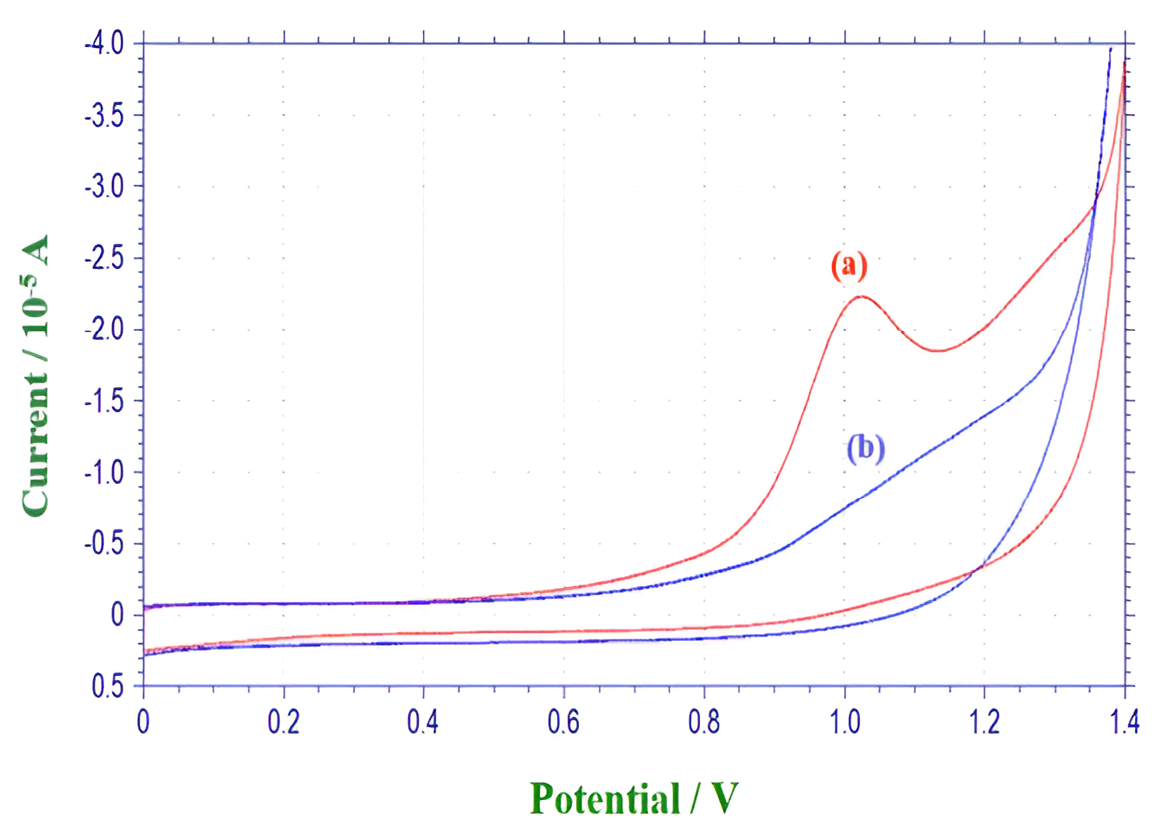
Electroanalytical methods are being used widely for the determination of pharmaceutically active ingredients as they are known for their sensitivity and selectivity. In the present study, the electrochemical behavior of dicyclomine hydrochloride is investigated at pencil graphite electrode for the first time and developed an alternative analytical method for its determination in analyte fortified samples. Dicyclomine hydrochloride exhibited an oxidation peak at 1.023 V in phosphate buffer of pH 7 in the forward scan and no peak in the backward scan suggesting that the electrochemical behavior is irreversible. Influence of pH of phosphate buffer solution and scan rate on electrochemical behavior of dicyclomine hydrochloride is explored. Under optimized conditions, an alternative analytical method is developed for the determination of Dicyclomine hydrochloride in bulk and analyte fortified urine samples. A linear response is observed between anodic peak current and concentration of Dicyclomine hydrochloride in the range of 0.1 to 0.9 μM with the limit of detection of 0.06 μM. Further, practical utility of the developed analytical method was established by determining the Dicyclomine hydrochloride in analyte fortified urine samples. Recovery values is found to be more than 97.14% indicated that the developed method is accurate for Dicyclomine hydrochloride determination.
Introduction
Dicyclomine hydrochloride (DH), chemically known as [bicyclohexyl]-1-carboxylic acid, 2-(diethylamino)ethyl ester hydrochloride (Scheme 1), anticholinergic/antispasmodic, being used to treat irritable bowel syndrome.1-3 Irritable bowel syndrome is a chronic disease that causing abdominal bloating, colics, diarrhea and constipation. DH relaxing the muscles in the stomach and intestines, thus relaxing cramps of the stomach, bladder and intestine [1, 2, 3]. DH mechanism of action involves a specific anticholinergic effect at acetylcholine receptor sites and has a direct effect on smooth muscles. Many quantitative analytical methods have been reported for the determination of DH in pharmaceutical dosage forms and biological samples. Off these, spectrophotometric [4, 5, 6, 7, 8, 9] chromatographic [10, 11, 12, 13, 14, 15, 16, 17, 18] and other methods [19]. However, the reported analytical methods for DH are suffering from either the involvement of tedious and costly procedure or sensitivity and selectivity. The electrochemical methods of analysis are very critical for the determination of many drugs and other ingredients present in pharmaceutical drug formulations and biological samples as they do not require sample pretreatment.19 The advancement in electrochemical techniques in the scope of examination and determination of drugs is because of their specificity, high sensitivity and short analysis times compared with other different techniques. The exploitation of carbon-based electrodes, especially the pencil graphite electrode (PGE), for electrochemical measurements has increased tremendously in recent years due to their simplicity, low cost and high sensitivity for the determination of pharmaceutically active ingredients, which is very important in the field of clinical and pharmaceutical analysis. The pharmaceutical activity and metabolic destiny of many drugs can easily be assessed by knowing their redox properties. In view of this, it is planned to explore the electrochemistry of DH at PGE and develop an alternative analytical method for its determination in bulk and analyte fortified biological samples. Scheme 2 demonstrates the use of pencil graphite electrode in investigating the electrochemical behavior of DH and its determination.
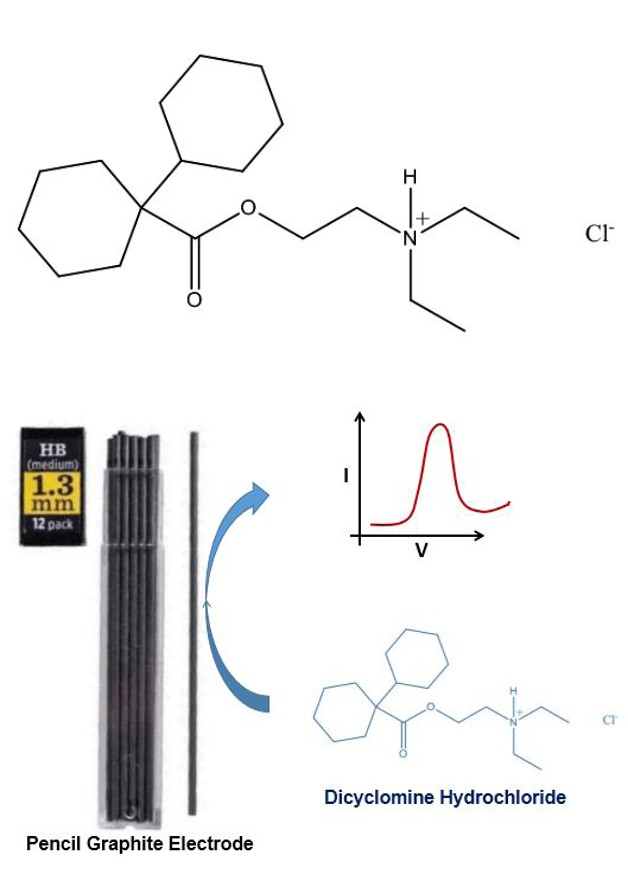
Scheme 1: Structure of Dicyclomine Hydrochloride.
Scheme 2: Demonstrates the Use of Pencil Graphite Electrode in Investigating the Electrochemical Behavior of DH and its Determination.
Instrumentation
Potentiostat, CHI 630D electrochemical analyzer (CH Instruments Inc., Austin, TX) was used carry out electrochemical measurements. Three electrode system was used, Ag/AgCl as a reference electrode, a platinum wire as counter electrode and a pencil graphite electrode (PGE) as the working electrode. The pH measurements were made on Elico LI 120 pH meter (Elico Ltd., India).
Reagents and Chemicals
Dicyclomine hydrochloride, purchased from Sigma- Aldrich India, stock solution (1.0mM) was prepared in Millipore water. Phosphate buffer solutions of pH 3 to 11 were prepared by referring Christian and Purdy method Christian GD, et al. [20] other reagents used were of analytical grade. Millipore water was used to prepared all other solutions.
Area of Electrode
The electrochemical active surface area was explored by using cyclic voltammetric technique. In the method 1 mM K3[Fe(CN)6] used as a probe. Cyclic voltammograms of 1 mM K3Fe(CN)6 was recorded for increasing scan rate values. The following Randles - Sevcik equation [21] was useg for reversible process.
Ip = (2.69x10⁵)n3/2ADo 1/2Cυ 1/2
where Ip is the peak current, n is the number of electrons involved, A is the electroactive surface area, D0 is diffusion coefficient, υ is the scan rate and C is the concentration of K3[Fe(CN)6]. For 1.0 mM K3[Fe(CN)6], n = 1. D0 = 7.6 × 10⁻⁶ cm2s−1, from the slope of the plot of Ip versus υ1/2, the electroactive surface area of pencil graphite electrode was evaluated to be 0.019 cm2.
Analytical Procedure
The appropriate amount of DH was taken in 2M phosphate buffer solution of pH 7 (10 ml) and then cyclic voltammograms were recorded between 0.0 V and 1.4 V, with a scan rate of 0.1 V s−1 to explore the electrochemistry of DH at pencil graphite electrode. Further, square wave voltammetry, initial potential, 0.6 V; final potential, 1.4 V; increase in potential, 0.004 V; amplitude, 0.025 V; frequency, 15 Hz; quiet time, 2s; sensitivity, 1.0×10⁻⁵ A/V, was utilized for the development of analytical method for the determination of DH in bulk and analyte fortified samples.
Results and Discussion
Electrochemical Behavior of DH
To explore the electrochemistry of DH at PGE, cyclic voltammogram of DH was recorded at PGE in phosphate buffer of pH 7.0. The corresponding voltammograms are shown in Figure 1. DH exhibited an anodic peak at 1.023 V in the forward cycle and no peak in the reverse scan suggesting that the electrochemical behavior of DH is irreversible. A well-defined anodic peak was noticed might be due to electrocatalytic behavior of PGE.
Effect of pH on Electrochemical Behavior of DH
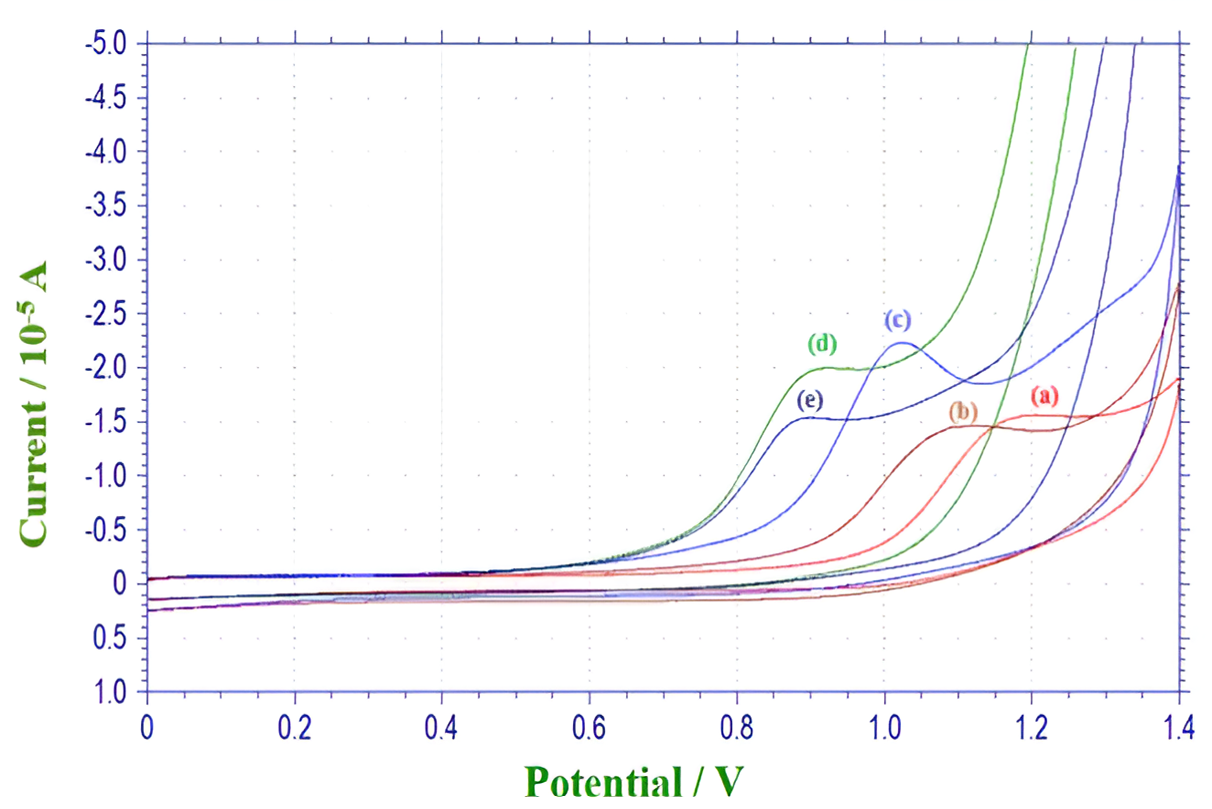
Influence of pH on electrochemical behavior of DH was investigated at PGE. Figure 2 displays the cyclic voltammograms of DH at PGE in phosphate buffer of different pH ranging from 3 to 11. As evident from Figure 3 that the oxidation peak of DH shifted towards less positive potentials with increasing pH of phosphate buffer solution indicated that the involvement of protons in the electrode process. The plot Epa vs. pH (Figure 3) yielded a straight line (Epa = 1.2969 - 0.0407 pH; r = 0.9373) with the slope of 40.7 mV/pH which is very close to the theoretical value of 30 mV/pH indicated that the involvement of two electrons and a proton involved in electrode reaction [22, 23, 24]. Further, from the plot of Ipa vs. pH (Figure 4), it is clear that the DH displayed well-defined oxidation peak with increased peak current in the phosphate buffer of pH 7. Phosphate buffer of pH 7 was used for further studies.
pH Figure 3: It Represents the Effect of Phosphate Buffer pH on Peak Potential of Dicyclomine Hydrochloride.
pH Figure 4: It Represents the Effect of Phosphate Buffer pH on Peak Current of Dicyclomine Hydrochloride.
Influence of Scan Rate on Electrochemical Behavior of DH
The effect of scan rate on electrochemical behavior of DH was investigated in phosphate buffer of pH 7 at different scan rate ranging from 0.1 and 0.3 Vs−1. The corresponding voltammograms are shown in Figure 5. The oxidation peak current of DH linearly increased with increase in the scan rate from 0.1 to 0.3 Vs−1 (Figure 6) indicated that the electrode process was found to be adsorption controlled [25]. The corresponding linear regression equation is shown below:
Ipa (µA) = 18.416 ν (Vs-1) + 0.2346; (r = 0.9357).
A linear relationship was observed between logIpa and logν (Figure 7) with the slope of 0.83 suggested that the electrode process was adsorption controlled.
Ipa (µA) = 0.8287 log v (Vs-1) + 1.1731; (r = 0.9320)
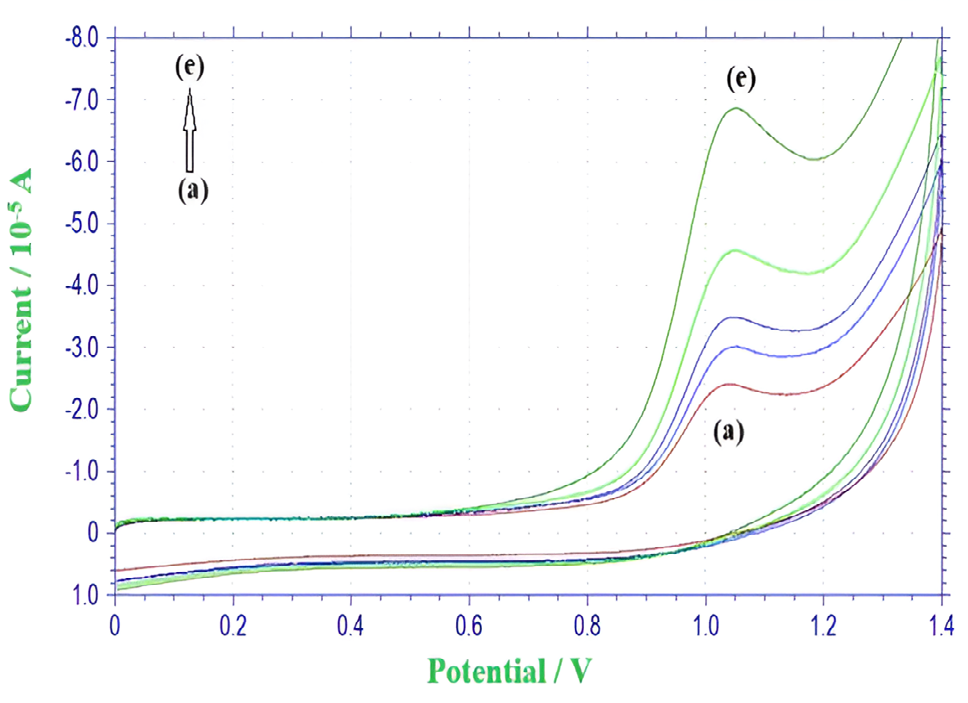
![Figure 5: The oxidation peak current of DH linearly increased with increase in the scan rate from 0.1 to 0.3 Vs−1 (Figure 6) indicated that the electrode process was found to be adsorption controlled [25]. The corresponding linear regression equation is shown below:](/fulltextimages/13696/fig_5.png)
Development of Analytical Method
Construction of Calibration Curve
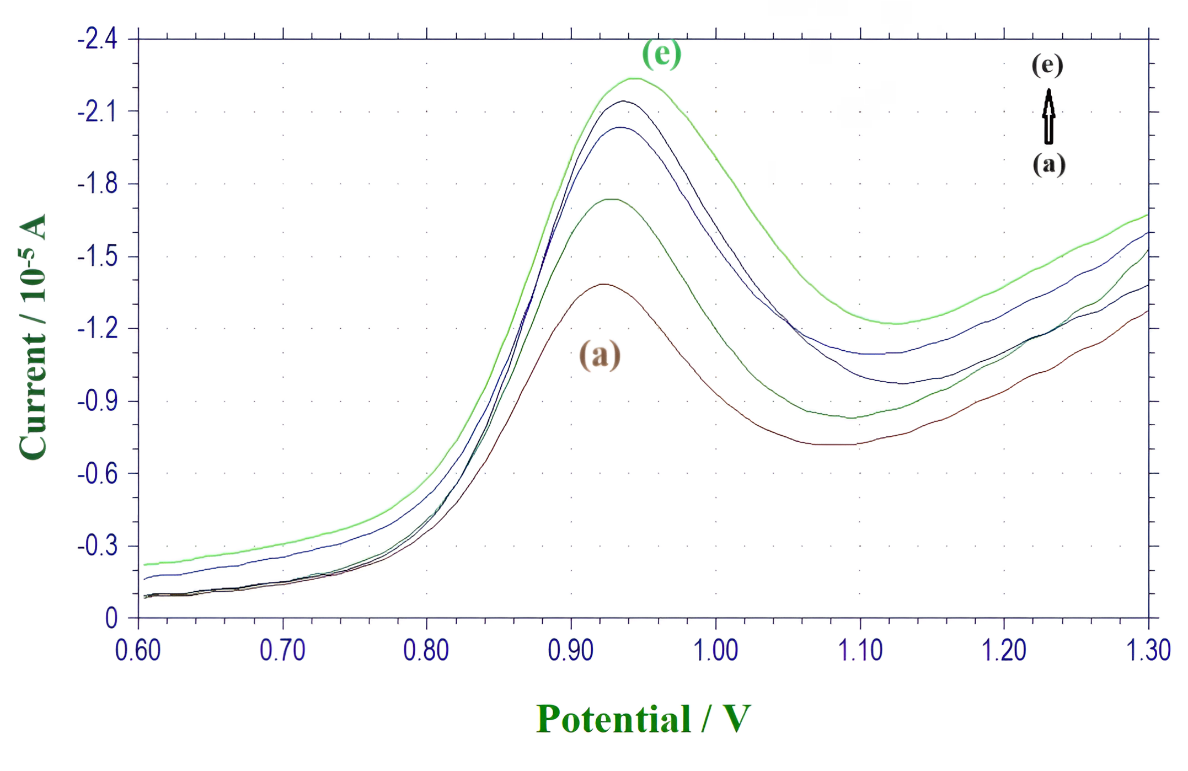
An alternative analytical method was developed for the determination of DH in analyte fortified biological samples. For this, square wave voltammograms was recorded for increasing concentration of DH and corresponding voltammograms are shown in Figure 8.
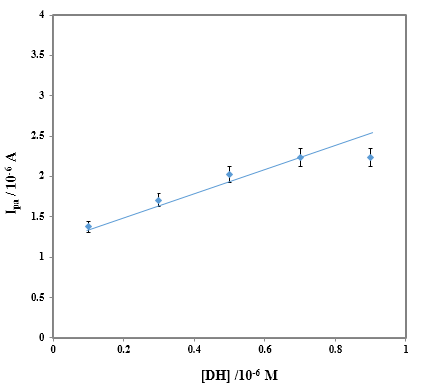
The linear relationship was obtained between the oxidation peak current and concentration of DH in the range of 0.1 to 0.9 µM (Figure 9). The corresponding regression equation is shown below:
Ipa (µA) = 1.4505µM + 1.2571; (r = 0.9911)
The analytical characteristics such as LOD and LOQ was evaluated using the following equations, LOD = 3s/m LOQ = 10s/m, where s is the standard deviation of the peak currents of the blank (five runs) and m is the slope of the calibration curve. LOD and LOQ was found to be 0.06×10⁻⁶ M and 0.2×10-
6 M, respectively.
Further, relative standard deviation for intra-day and inter-day was calculated to be less 3.2 % and 2.8 %, respectively suggested that the developed analytical method precise and accurate. Characteristics of calibration plot for DH is tabulated in Table 1.
| Square wave voltammetric (SWV) method | |
|---|---|
| Linearity range | 0.1 to 0.9 μM |
| Limit of detection (LOD) | 0.06 μM |
| Limit of quantification (LOQ) | 0.2 μM |
| Inter-day assay RSD* for 0.5 μM | 2.80% |
| Intra-day assay RSD* for 0.5 μM | 3.20% |
Table 1: Characteristics of Calibration Plot for DH.
*Average of 5 determinations. Table 1: Characteristics of Calibration Plot for DH.
Applications of Developed Analytical Method
Determination of DH in Analyte Fortified Biological Samples
The analytical applicability of developed analytical method was established by determining DH in analyte fortified biological urine samples. The recoveries from urine samples were measured by spiking drug free urine with known amounts of DH. The corresponding recovery values were evaluated to be more than 97.14 % indicated that the developed analytical method was accurate and precise for the determination of DH in analyte fortified urine samples. The results of analysis of analyte fortified urine samples is tabulated in Table 2.
| DH | DH | DH |
|---|---|---|
| added (µM) | found (µM) | recovery (%) |
| 0.5 | 0.49 | 98 |
| 0.7 | 0.68 | 97.14 |
| 0.9 | 0.89 | 98.88 |
Table 2: Determination of DH in Analyte Fortified Urine Samples.
Conclusions
Electrochemical behavior of DH was investigated at pencil graphite electrode. DH exhibited an oxidation peak in the forward scan and no peak in the backward scan suggesting that the electrochemical behavior is irreversible. Based on the electrochemical behavior, an alternative analytical method is developed for the determination of DH in bulk and analyte fortified urine samples. Linear response was observed between anodic peak current and concentration of DH in the range of 0.1 to 0.9 µM with the limit of detection of 0.06 µM. Further, practical utility of the developed analytical method was established by determining the DH in analyte fortified urine samples. Recovery values was found to be more than 97.14% indicated that the developed method is accurate for DH determination.
References
-
Beale JM, Block JH, Wilson, Gisvold (2011) Organic Medicinal and Pharmaceutical Chemistry. In: Beale JM, et al. (Eds.), Lippincott Williams & Wilkins, 12th (Edn.), Philadelphia: 589.
-
United States Pharmacopeial Convention (2007) The United States Pharmacopoeia: USP 30, The National formulary : NF 25. In: (Edn.), United States Pharmacopeial Convention, Rockville, Maryland, USA: 2.
-
Government of India (2010) The Indian Pharmacopoeia. In: 6th(Edn.), The Indian Pharmacopoeia Commission, Ghaziabad, Delhi, India: 2.
-
Sireesha T, Kumari KS, Durgasai RV (2014) Development and validation of new analytical methods for the simultaneous estimation of paracetamol and dicyclomine hydrochloride in bulk and pharmaceutical dosage forms by using RP-HPLC and UV methods. World J Pharm Res 3: 1584-1602.
-
Sinha M, Verma V (2014) Simultaneous estimation of Paracetamol and Dicyclomine HCL by spctrophotometric method. Am J Pharmtech Res 4(2): 136-144.
-
Bhamare DA, Patil GB, Bari SB, Patil DA (2015) A Review On Analytical Methods For Determination Of Dicyclomine Hydrochloride In Pharmaceutical Dosage Forms And Biological Samples. Anal ChemInd J 15: 410.
-
Malathi R, Amol D, Vaishali M, Vaidhum B (2015) Validated UV spectrophotometric method for estimation of fixed dose combination of Ciprofloxacin, Tinidazole and Dicyclomine hydrochloride in bulk and tablet formulation. World J Pharm Sci 4: 1117.
-
Singh L, Nanda S (2010) Validated Spectrophotometric Simultaneous Estimation of Nimesulide and Dicyclomine Hydrocloride in Combined Tablet Dosage Form. Res J Pharm Tech 3: 562.
-
Prajapati DN, Raj H (2012) Simultaneous estimation of Mefenamic acid and Dicyclomine HCL by spectrophotometric method. Int J Pharm Sci Res 3: 3766.
-
Hedpara RJ, Chhatarala V, Agola A (2013) A validated RP-HPLC method for the simultaneous estimation of paracetamol and dicyclomine hydrochloride in pharmaceutical formulations. Int J Pharm Sci Res 4: 2400.
-
Deshpande S, Biradar G, Patel V, Choudhari V (2015) Development and validation of stability indicating RP- HPLC-PDA method for simultaneous determination of Paracetamol and Dicyclomine hydrochloride in combined dosage. Int J Pharm Sci 5: 858.
-
Patel H, Panchal N, Patel H (2014) Association of OSTA index with bone mineral density (BMD) and its comparison with calcaneal quantitative ultrasound for the prediction of low BMD in peri-menopausal Indian women. Inventi J 14: 1495.
-
Donda ST, Baviskar VB, Deshmukh PK, Bari SB, Patil PO, et al. (2014) Development and validation of a reversed- phase HPLC method for the simultaneous estimation of dicyclomine hydrochloride and famotidine in bulk and tablets. J ChilChemSoc 59: 2662.
-
Dave CA, Tiwari SK, Brahmbhatt KD, Patel PM, Shah SB (2013) Development And Validation Of Rp-Hplc Method For Estimation Of Omeprazole And Dicyclomine Hydrochloride In Pharmaceutical Dosage Form. Int J Pharm Sci 4: 247.
-
Vijjigiri C, Daravath B, Kamarapu SK (2013) Method development and validation of RP-HPLC method for simultaneous estimation of dicyclomine hydrochloride and diclofenac potassium in tablet dosage forms. Int J Pharm BiolSci 3: 255.
-
Neelima K, Rajendra YP, Nikhila R (2013) Voltammetric determination of dicyclomine hydrochloride by carbon paste electrode modified with iron (III) oxide nanoparticles and activated glassy carbon electrode in pharmaceutical dosage form, human plasma and urine. Inventi J 13: 1173.
-
Prajapati D, Hasumati R (2012) Simultaneous estimation of mefenamic acid and dicyclomine hydrochloride by RP- HPLC method. Int J Pharma Bio Sci 3: 611.
-
Baokar S, Mulgund S, Ranpise N (2014) Development and validation of RP-HPLC method for simultaneous determination of dicyclomine and mefanamic acid. J Pharm Res 13: 16.
-
Kumar N, Bansal A, Lalotra R, Sarma GS, Rawal RK (2014) Chemometrics assisted quantitative estimation of synthetic and marketed formulations. Asian J Biomed Pharm Sci 4: 21.
-
Christian GD, Purdy WC (1962) The residual current in orthophosphate medium. J Electroanal Chem 3: 363.
-
Rezaei B, Damiri S (2008) Voltammetric behavior of multi-walled carbon nanotubes modified electrode- hexacyanoferrate(II) electrocatalyst system as a sensor for determination of captopril. Sens Actuators B 134: 324.
-
Dogan Topal B, Bozal B, Demircigil BT, Ulsu B, Ozkan SA (2009) Electro analysis of 3-Aminopyridine at poly Eriochrome black T modified glassy carbon electrode and its oxidation mechanism. Electroanalysis 21: 2427.
-
Wang J (1988) Electroanalytical Techniques in Clinical Chemistry and Laboratory Medicine. In: (Edn.), VCH, New York: 188.
-
Kissinger PT, Heineman WR (1996) Laboratory Techniques in Electroanalytical Chemistry. In: 2nd (Edn.), Marcel Dekker, New York.
-
Gosser DK (1993) Cyclic Voltammetry: Simulation and Analysis of Reaction Mechanisms. In: (Edn.), VCH, New York, pp: 43.
- Solution-Processed Chiral Perovskites for Biomedical Applications
- Nanotechnology in Health Chemistry and Medicine: Current Challenges and Future Directions
- Human Exposure to Micro- and Nanoplastics: Pathways, Toxicity, and Intervention Strategies
- Exosome Nanomedicine for Cancer Therapy
- Micro and Nanoplastics–Plastisphere, Biotoxicity, Impact on Human Health, and Mitigation Strategies
- Process Validation of Cefixime Powder for Suspension Dosage Form, 50 mL