
Nomophobia in India: A Psychological Disorder that Causes the Brain to Release Dopamine in Response to Tweets, Emoticons, and other Acts, Rewarding the Behaviour and Sustaining the Habit of using Social Media Addiction
The term nomophobia was first used in the 2000s, according to records. The first instance of nomophobia that OED found was in the Daily Mail (London) in 2008. College students frequently use the internet’s social media platforms in ways that could have a detrimental effect on several aspects of their lives. This study, one of the largest to be carried out in India and other nations, attempts to understand how tradition has been shifting to digital cultures and to assess the incidence of problematic addiction to social networking websites among college students through internet use. People who suffer from a phobia of losing their connection to their mobile phones are said to suffer from NOMOPHOBIA, or NO MObile PHone PhoBIA. An insatiable need to use or log on to social media, excessive concern for social media, and spending so much time and energy on social media that it interferes with other crucial aspects of life are the characteristics of social media addiction. According to numerous polls, every student at various universities owns a smartphone and uses it frequently both at home and on campus. Since addiction can result from excessive regular usage of anything, including digital devices, researchers have decided to categorize and identify smartphone addiction as “nomophobia.” This research assesses if and to what degree nomophobia is an issue at various university students using a mobile phone-based study of a self-assessment survey. The purpose of this study is to ascertain the degree of nomophobia among Indians between the ages of 15 to 35. According to this study, there is a serious concern for our “physical, mental, and social health” and a moderate to severe case of nomophobia.
Introduction
The past ten years have seen a rise in the popularity of checking and browsing social media. A tiny fraction of users develop an addiction to social networking sites and use them excessively or compulsively, although most people use social media in an unproblematic manner. Psychologists believe that between 5 and 10% of Americans currently fit the bill for social media addiction. An insatiable need to use or log on to social media, obsessive concern over social media, and spending so much time and energy on social media that it interferes with other crucial aspects of life are the hallmarks of social media addiction. Addictive social media use will resemble any other substance use disorder in that it can cause mood modification (i.e., using social media results in positive changes in emotional states), salience (i.e., behavioral, cognitive, and emotional obsession with social media), withdrawal symptoms (i.e., unpleasant physical and emotional symptoms when social media use is limited or stopped), conflict (i.e., social media use causes interpersonal problems), and relapse (i.e., addicted individuals quickly return to their excessive social media usage after an abstinence period). The dopamine-rich social contexts that social networking sites offer are primarily responsible for the phenomenon of social media addiction. To encourage users to utilize their products as often as possible, social media companies like Facebook, Snapchat, and Instagram create the same neural circuitry that is brought on by recreational drugs and gambling. Research has demonstrated that the continuous barrage of likes, shares, and retweets from these platforms sets off a similar chemical reaction in the brain’s reward center as drugs like cocaine. Social media activity has been likened by neuroscientists to a dopamine needle being inserted directly into the body.
Nomophobia
A collection of symptoms known as nomophobia occurs when a person feels dread or anxiety over losing their smartphone or internet access. Although it is not formally recognized, more researchers are requesting that it be classified as a particular kind of psychological disease [1]. The term “nomophobia,” which is short for “no mobile phone phobia,” refers to the worry that a person feels when they are unable to use their phone. According to a July study published in BMC Psychiatry, “people who display an addiction to their
- Anxiety Agitation Aggravated ADD
- Creativity Blocks Disorientation Insecurity
- Impaired relationships Loneliness Lower Concentration
- Perspiration Poor grades Psychological disorders
- Reduced Cognition Respiratory alterations Sleep deficit
- Tachycardia Trembling Tress
Four Dimensions of Nomophobia
The interviewees identified four themes that represent the various aspects of nomophobia. These four dimensions are: (1) losing communication; (2) becoming disconnected; (3) not having access to information; and (4) sacrificing convenience.
Use of social media and its Addition
Utilization of various social media through Internet penetration rates in developed North American and mobile phone are considered nomophobes” [2].
With the advent of new technology have come new types of addiction. Addictions to video games, the internet, and even mobile phones have emerged alongside the more conventional addictions to alcohol, narcotics, and gambling. As one of the newest types of digital addiction, mobile phone addiction also known as nomophobia has received less scientific attention than other types, like internet addiction, for example. But South Korean studies Kim 2013 & Kwon 2013 et al. [3] have discovered that smartphone addiction is far more common than internet addiction. The ease of usage of mobile devices was one of the reasons given for this. Therefore, one of the same elements that contribute to the interest and utility of mobile learning may also be contributing to the development of a risky addiction. It would therefore seem sensible to investigate this problem before further expanding the usage of mobile learning, as this school has aggressively encouraged students to use their mobile devices [4].
Usual symptoms and signs of NOMOPHOBIA
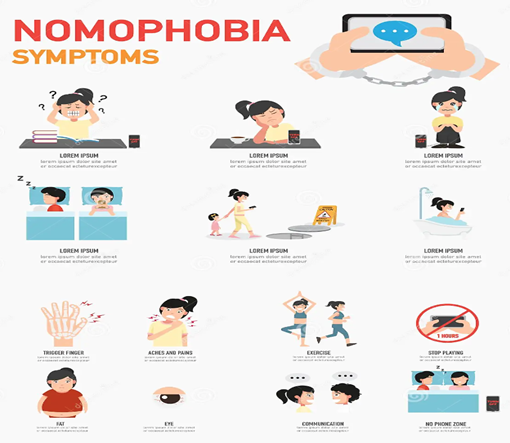
An obsession with smartphones is known as phone addiction in science. The term “nomophobia,” or the dread of being without a mobile device, is frequently used to describe behavioural addiction. In addition to physical issues like headaches, nomophobia the fear of living without a cell phone can cause worry, despair, and feelings of loneliness. Our families, friends, television, or books would probably not be the first things that come to mind when we ask ourselves what we look at the most during the day [4]. Phone addiction may lead to:
European countries (e.g., United States [US]: 88.5%) exceed 80%, while most Asian countries (e.g., Japan: 91.1%, South Korea: 85.7%, Singapore: 82.5%, and Hong Kong (HK)/ Macau: 74.1%) have penetration rates above 70%, according to Internet Live Statistics (2017) One [5].
Kinds of social media platforms used worldwide
Facebook: According to different research, 8.6% of Peruvian undergraduate students might be considered Facebook addicts [6]. It was discovered that approximately 28.6% of Macau’s college students used various social networking sites at risk [7]. By 2017, 37% of the world’s population was using social media, a growth that had occurred dramatically [8]. According to reports, 47% of Asian college students in Malaysia suffer from Facebook addiction, while 73% of students at both private and public universities in the country are addicted to social media [9]. Only 1% of students in Taiwan may be categorized as Facebook addicts, compared to more than one-quarter (26%) of postgraduate students in India [10]. In non-Asian nations, 15% of US college students were found to be at risk for Facebook addiction, while 10% of young adults who identified as African American had a Facebook addiction [11]. YouTube: YouTube was founded by Steve Chen, Chad Hurley, and Jawed Karim. The trio were early employees of PayPal, which left them enriched after the company was bought by eBay [12]. Hurley had studied design at the Indiana University of Pennsylvania, and Chen and Karim studied computer science together at the University of Illinois Urbana-Champaign. The social networking and video- sharing website YouTube is based in San Bruno, California in the United States. It was introduced on February 14, 2005, by Steve Chen, Chad Hurley, and Jawed Karim, and is accessible globally. After Google Search, it is the second most popular website globally and is owned by Google. With over 2.5 billion monthly users, YouTube has more than one billion hours of video watched daily [13]. More than 500 hours [14] of video content was being added to the platform every minute as of May 2019 [15, 16].
WhatsApp: Jan Koum and Brian Acton, who had previously worked together for 20 years at Yahoo, founded WhatsApp. Although WhatsApp became a part of Facebook in 2014, it is still a stand-alone application to create a messaging service that is quick and dependable everywhere in the world [17]. WhatsApp claims to have over 2.2 billion users globally as of 2021. With 487 million users, India leads the world in popularity, followed by Brazil with 118.5 million and Indonesia with 84.8 million. Because of its extensive use, WhatsApp is the most downloaded messaging program globally, with around 800 million more users than WeChat, its nearest rival [18]. Instagram: Kevin Systrom and Mike Krieger started working on Instagram as Burbn, a mobile check-in service, in San Francisco. March 5, 2010: While working on Burbn, Systrom closed a $500,000 (or $615,400 in 2021) seed fundraising round from Baseline Ventures and Andreessen Horowitz [19]. After determining that it was too like Foursquare, the developers refocused their app on photo sharing [20], which was already a function that many of its customers loved [21]. It was dubbed Instagram, a combination of the terms “instant camera” and “telegram” [22]. Instagram Direct had 375 million monthly users in 2017, The platform is estimated to reach over 2.5 billion by the end of 2023 [23].
FB Messenger: Meta Platforms created the American- proprietary instant messaging software and platform known as “Messenger” [23]. First created in 2008 as Facebook Chat, the firm redesigned its messaging platform in 2010, published stand-alone applications for iOS and Android in 2011, and in 2018 unveiled standalone Facebook Portal hardware for Messenger calls. Facebook decoupled the messaging feature from the main Facebook app in April 2015 and introduced Messenger.com, a dedicated online interface that users could use or download as a standalone app. Facebook launched the Messenger desktop software for Windows and macOS in April 2020. Messenger is used to communicate with bots, respond to messages from other users, send and receive messages, and share data, audio, stickers, videos, and images. Also supported by the service are voice and video calls. Games, end-to-end encrypted communications, and the use of numerous accounts are supported by the standalone apps. In 2023, there will be 931 million active Facebook Messenger users worldwide, or 28% of all users of messaging apps on mobile phones. WeChat: WeChat or in Chinese- pinyin or Weixin-listen. lit.’micro-message’, is the Chinese name for WeChat, also known as Weixin. Tencent created the Chinese instant messaging, social networking, and mobile payment app developed by Tencent. After its 2011 introduction, it grew to become the largest solo mobile app globally in 2018 [24]. With more than one billion active users each month [25, 26, 27]. WeChat’s many functionalities have earned it the moniker “app for everything” in China and “super-app.” WeChat offers mobile payments, location sharing, video conferencing, text and hold-to-talk voice messaging, broadcast (one-to-many) messaging, video games, and video sharing [28]. WeChat is predicted to have 1.374 billion monthly active users (MAU) globally by 2023. Comparing our estimates to the expected number of WeChat users from the previous year, we find a noteworthy YoY rise of 4.64% or 61 million more active users [29]. TikTok: The Cayman Islands served as the incorporation location for Beijing-based ByteDance and its Los Angeles- based subsidiary TikTok Ltd [30]. The owners of ByteDance are its founders, 20% of Chinese investors, 60% of other international investors, and 20% of its workforce [31]. TikTok Ltd. is the owner of four companies, with headquarters in the US, Australia, which also manages the business in New Zealand, the UK, which also has subsidiaries in the European Union [32], and Singapore, which operates in Southeast Asia and India [33]. As of 2023, TikTok boasted over 1.677 billion users worldwide, of which 1.1 billion were active users monthly. 16% more than the year before. QQ: In February 1999, Tencent QQ was initially introduced in China as OICQ, which was a play on the original instant messaging service ICQ (“Open ICQ”) [34]. The product was renamed QQ following the fear of a trademark infringement action from AOL-owned ICQ [35] (using “Q” and “QQ” to allude to “cute”) [36]. The program inherited from ICQ its core capabilities as well as extras like emoticons, user photos, and software skins. Originally, QQ was made available as a real-time communications solution for “network paging”. Later, further features including games, chat rooms, online storage, personal avatars (like “Meego” on MSN), and online dating services were added. On Aug. 17, 2023, QQ had over 571 million monthly active users in the second quarter of 2023, down from roughly 574 million in the same quarter of 2022 [29]. Telegram: In 2013, Nikolai and Pavel Durov, brothers, founded Telegram. The two had previously launched the Russian social network VK, which they abandoned in 2014 claiming the government had taken control of it [37]. Pavel Durov withstood government pressure, sold his remaining shares in VK, and departed Russia [38]. Pavel Durov supplied infrastructure and funding through his Digital Fortress fund, while Nikolai Durov developed the MTProto protocol, which serves as the messenger’s foundation [39]. According to Telegram Messenger, making money is not its ultimate purpose [40] yet it is not set up in a non-profit manner [41]. There are 550 million active Telegram users per month. 175 percent more than in 2018. In August 2021, Telegram ranked seventh in terms of downloads for both iOS and Android. 55.2 million people use Telegram every day [29]. Snapchat: Former Stanford University students Evan Spiegel, Bobby Murphy, and Reggie Brown [42] founded Snapchat. It is renowned for driving social media in the direction of mobile- first and emphasizing user interaction using augmented reality objects and virtual stickers. Snapchat had 293 million daily active users as of July 2021, up 23% in just a year. Every day, on average, almost four billion Snaps are sent [43]. For parents, Snapchat’s popularity among younger generations- especially those under 16 raises a lot of privacy worries [44]. The number of daily active users of the photo and video- sharing app Snapchat increased to 397 million worldwide as of the second quarter of 2023 from 383 million [29]. Pinterest: Ben Silberman and Paul Sciarra first developed an app called Tote [45] that functioned as a digital catalog substitute before Pinterest was born. Tote’s business suffered, mostly because of issues with mobile payments. The inability of mobile payment technology at the time to facilitate simple transactions while on the go prevented consumers from making a lot of purchases through the app. On the other hand, users of totes were gathering a lot of their favourite things and sharing them with other users. Silberman was moved by the behavior and decided to construct Pinterest instead, a platform that let people compile collections of various products and share them [46]. The website published the prototype as a closed beta in March 2010 after the development of Pinterest commenced in December 2009. Ten thousand people were using the website nine months after it launched. Silbermann claimed to have written to the first 5,000 users, extending an invitation to meet in person, and even provided his phone number. An iPhone software that was released in early March 2011 had more downloads than anticipated. An iPad app and Pinterest Mobile, a website version intended for non-iPhone users, followed this. Up until the summer of 2011, Silbermann and a few programmers ran the website from a tiny flat [47]. In our ranking of the most “active” social media sites worldwide, Pinterest came in at number 14 with 463 million monthly active members as of April 2023 [29]. Twitter: American social media firm Twitter, Inc. had its headquarters in San Francisco, California. The business formerly ran the live streaming platform Periscope and the short video software Vine [48]. It formerly controlled the social networking site Twitter. In March 2006, Jack Dorsey, Noah Glass, Biz Stone, and Evan Williams founded Twitter, which went live in July of the same year. By 2012, the service was processing 1.6 billion daily search queries, and over 100 million users were tweeting 340 million times a day. In Nov 2013 the company’s public offering. In 2019, there were over 330 million active users on Twitter per month [49]. By 2023, there will be around 528.3 million monetizable monthly active users on Twitter. By 2028, this number is projected to increase to 652.23 million. There are 237.8 million monetizable daily active users (mDAU) on Twitter as of right now [29].
The Brain’s Reaction to Social Media
Social media has a neurochemical effect on the brain that makes it physically and mentally addicting. Self-disclosure on social networking sites activates the same area of the brain that lights up while using addictive substances, per a new Harvard University study. The brain’s reward region and the chemical messenger routes that connect it influence perception and behavior. Neurons in the main brain regions that produce dopamine fire, raising dopamine levels when an individual uses an addictive substance or has a gratifying event. Consequently, the medication or action is associated with positive reinforcement, giving the brain a “reward” for using it [50]. This can be seen in how people use social media; when they receive a notice, such as a like or mention, their brain releases dopamine along reward pathways, making them feel good. With comparatively little work, social media offers an infinite supply of instant benefits in the form of other people’s attention. Through this kind of positive reinforcement, the brain rewires itself, leading people to crave likes, retweets, and emoticon reactions.
Other Factors
The brain’s reward regions firing at full capacity during self-promotion is another aspect contributing to the persistence of social media addiction. People talk about themselves a startling 80% of the time on social media, compared to an estimated 30 to 40% of the time in the non- virtual world where the focus is on showcasing one’s life and accomplishments. A person’s brain is stimulated to release dopamine when they share an image on social media, which reinforces the behavior and feeds the habit. When someone uses social media as a major coping strategy to deal with stress, loneliness, or despair, it can become problematic. These people use social media because it gives them ongoing benefits that they don’t get in real life, which leads to an increase in their usage. An individual’s negative moods may be made worse by this constant use, which eventually results in a variety of interpersonal issues, such as neglecting actual relationships, obligations at work or school, and physical health. As a result, people get even more involved in social networking as a coping mechanism for dysphoric mood states. Users of social networks become more psychologically dependent on social media when they continue this cycle of using social media to get rid of bad moods [50].
How to Identify an Addiction to Social Media
Few people are truly addicted to social media, even though many use it regularly. Asking these six questions can help you assess whether someone is at risk of becoming addicted to social media:
- Do they contemplate or plan to utilize social media for extended periods?
- Do they have increasing cravings to utilize social media?
- Do people utilize social media to put their issues out of their minds?
- Do they frequently make unsuccessful attempts to cut back on social media use?
- If they are unable to access social media, do they get agitated?
- Do their education or careers suffer because of their excessive usage of social media?
If you answered “yes” to more than three of these inquiries, you might have a social media addiction.
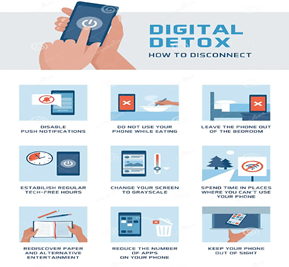
A prudent precaution could be to go on a “digital detox,” which is a period when one drastically cuts down on the amount of time, they spend using electronic devices like computers and cell phones. Simple actions like disabling sound alerts and limiting your hourly social networking site visits can help with this. Other adjustments can be setting self-imposed screen-free intervals during the day, including during meals, or putting the phone in a different room at night so that it doesn’t interfere with sleep. This lessens reliance on networking sites and permits a return to attention to in- person social contact [50].
Mental Health and social media
There is unquestionably a connection between using social media, poor mental health, and low self-esteem, according to research [50]. Although social media sites have advantages, using them excessively might lead to feelings of loneliness and unhappiness. The social drive to share things with others and the sites’ promotion of material comparisons of lifestyles and possessions both contribute to these negative emotional reactions. Users view information that has been carefully selected to appeal to them depending on their interests on Facebook and Instagram. This includes posts and adverts. Users could get encouraged or joyful when they see other people posting about their amazing homes, amazing partners, or amazing occupations. Others, on the other hand, can view these images and experience suicidal thoughts or feelings of depression or jealousy because their own lives are not as “perfect” as those they see on Facebook or Instagram.
According to recent studies, individuals who use social networks frequently tend to assume that other users are happier and more successful than themselves, particularly when they do not have a close personal relationship. It can be harmful to one’s mental health and sense of self to compare one’s perfect, filtered, and edited online persona to another person’s realistic offline self-thanks to social media. In addition to bringing users’ overall discontent with life and causing them to be unhappy, excessive social media use raises their chance of mental health problems like melancholy and anxiety. Regularly comparing oneself to others can cause anxiety disorders such as social anxiety disorder by making one feel self-conscious or driven to maintain order and perfectionism [50].
The fear of missing out (FOMO), or the intense worry of being left out or skipping a social gathering, is another facet of social anxiety brought on by using online media. Users may experience worry that no one would miss them because of seeing photos of events to which they were not invited or glimpses of enjoyable activities that they were unable to attend due to job or school obligations. They may also fear that their absence will be forgotten. FOMO can hurt one’s self-esteem and result in obsessive social media checking to make sure one isn’t missing anything [50]. These behaviors can lead to issues at work and in the classroom. According to a Harvard University study, long-term social media users’ emotional health and lives are severely harmed by the platform, which also hurts their interpersonal connections and academic performance.
Children and Youth at Risk
According to a California State University study, people who used social media less than nine times a week were three times less likely to feel melancholy and socially isolated than people who accessed any social media site at least 58 times a week. Young adults who are constantly exposed to carefully edited photographs on social media platforms may potentially develop eating disorders and low self-esteem. Even though many teenagers are aware that their friends only post the greatest photos and moments to social media, it may be quite challenging to resist drawing comparisons. Social networking sites’ constant exposure to unattainable beauty standards can have an impact on teens’ self-perceptions of their bodies. A University of Pittsburgh study discovered a link between negative body image feedback and the amount of time spent looking through social media apps [50]. Compared to their counterparts who used social media less, those who spent more time on the platform were 2.2 times more likely to report issues related to eating and body image. Users analyze and scrutinize everything, including apparent triumphs, living situations, and physical attractiveness. Teenagers who feel pressured to get likes on social media may change how they look and make decisions that they otherwise would not, such as taking on dangerous tasks and participating in bad habits. Online abuse may also result from the competition for likes and attention. Teenagers are more exposed to name-calling, rumours, and abuse on social media than they have ever been before, but these behaviours have always occurred. Although boys are not exempt, teenage girls are more vulnerable to cyberbullying due to their usage of social media. Cyberbullying has been more common in recent years, and it includes face-to-face bullying techniques as well as the dissemination and publishing of non-consensual sexual photos. A quarter of teenager’s report receiving sexual images in the mail without asking for them, and 7% claim that someone has published explicit photos of them online without getting their permission. The number of young adults taking their own lives has increased because of this kind of abuse and other forms of cyberbullying. Furthermore, these variables have also played a role in the rise in anxiety levels among teenagers and young adults. According to estimates, 27% of kids who use social media for three hours or more a day show signs of mental illness. Because their brains and social abilities are still developing, children and young adults are far more vulnerable to the negative effects of excessive usage of social networking sites. Studies have indicated that teenagers who use social media regularly from an early age have significantly impaired social interaction abilities. While people engage in conversations with one another on digital platforms, many of these exchanges don’t always translate well in real life. According to studies, these people exhibit decreased empathy and compassion for other people, heightened social anxiety in groups, higher rates of depression, and a negative body image.
Look for a Resolution
Many people use social media without any issues regularly, but those who are addicted to it are consumed by their need to use and interact with social networking sites. Fortunately, there are effective treatments for the illness, and many people have made a full recovery. Cutting back on-screen time is a fantastic strategy to address problematic social media use; but, if the addiction is too strong, you might need to seek professional assistance. If you find it difficult to limit your social media use and suspect you may be hooked, consider your reasons for using it as well as the benefits and drawbacks of your previous experience using other platforms. To use a popular phrase, it is, at the very least, nonsensical to keep doing the same thing repeatedly and expect a different outcome. The good news is that you are not alone in wanting to reduce your negative social media usage. We are all in this together, and it is quite feasible to have positive relationships with both our online neighbours and our social selves [50].
Review of Literature
Jahrami H, et al. (2023)
Since it was originally described in 2008, nomophobia also referred to as a 21st-century disorder has drawn a lot of interest and several research have been done to better understand it. A bibliometric analysis of publications linked to nomophobia was carried out to gain a better understanding of the current state of research and opportunities to support practitioners, legislators, and funding agencies in safeguarding the public from harm caused by nomophobia. We searched from 2008 to 2022 using dimensions.ai and Scopus. The data was analysed using the R software, HistCite, and VOS viewer to extract pertinent keywords that were indexed using mesh heading phrases in medical databases. 1,781 papers, 30 datasets, two grants, 6 patents, 4 clinical trials, and 5 policy documents were found between January 2008 and April 2022. The majority of the articles in this review were written in English and published after 2017. Finding out how common nomophobia is among different population groups such as students, clinical samples, and the adult population as a whole is the main goal of most research. Numerous research investigated the potential connections between symptoms of nomophobia and other mental or physical health conditions, including altered sleep patterns, difficulties paying attention in class, learning and memory problems, coping mechanisms, etc. The majority of the research on nomophobia that is now available contains epidemiologic and diagnostic work that has produced conflicting findings about the condition’s assessment and prevalence rates. There is also a dearth of meaningful information addressing the condition’s treatment and prevention [51].
K.Boukhris and Jahrami H et al. (2022)
A psychiatric ailment known as NOMOPHOBIA, or NO MObile PHone Phobia, causes people to fear losing their connection to their mobile phones. Establishing the prevalence of nomophobia symptoms in teenagers and young adults based on factors such as severity, nation, culture, demographic, measuring technique, and year of data collection was the aim of this review. 14 databases, 2 DPS services, and 3 content aggregator services were subjected to an electronic search from the date of each database’s creation until September 15, 2021. The analysis comprised 52 studies with 47,399 people from 20 different countries. According to validated assessments, the prevalence of nomophobia was defined as the percentage of people who scored at or above predetermined cut-offs. A random-effects meta-analysis revealed that roughly 20% of people had mild nomophobia symptoms, 50% had moderate symptoms, and 20% had severe symptoms. Our findings demonstrated that non-Western university students have the highest likelihood of experiencing severe symptoms. The prevalence rate of nomophobia has grown in 2021. The nomophobia questionnaire was the most effective tool for identifying nomophobia. Most people who own cell phones have mild to moderate nomophobia symptoms. Researchers and physicians should pay close attention to severe symptoms. Timely and efficient therapeutic therapy can be aided by a reliable approach to identifying those who have a significant addiction to mobile phones [52].
Rodriguez-Garcia et al. (2020)
The existing literature on nomophobia is reviewed, with special attention paid to the objectives, methodological design, major variables, sample details, and measurement methods. The review is conducted using the databases Scopus and Web of Science. To achieve this, we followed the Preferred Reporting Items for Systematic Reviews (PRISMA) standards and carried out a systematic literature review. Out of the 142 articles in the original sample, 42 met the inclusion criteria and underwent in-depth analysis. The results indicate that many studies investigating the incidence of nomophobia, primarily in teenagers and college students, are descriptive, nonexperimental, and cross-sectional. These studies indicate that the current research is in an exploratory phase. Yildrim and Correia’s Nomophobia Questionnaire (NMP-Q) is the most utilized measuring tool. Furthermore, studies indicate that nomophobia has a deleterious impact on personality, self-worth, stress, anxiety, academic achievement, and other mental and physical health issues. Thus, we have a health issue that has a detrimental impact on an individual, leading to behavioral, physical, and psychological issues [53].
Alosaimi, et al. (2016)
This opinion and the detrimental effects of smartphone addiction are supported by data from a Saudi Arabian study. In this study, university students reported living more unhealthy lifestyles, and experiencing sleep and energy deficits, and 25% of them linked smartphone use to a decline in academic performance [54].
Alijoma et al. (2016)
According to research by Alijoma et al. those with bachelor’s degrees are the most addicted. According to Alijoma et al there were noteworthy variations seen in the health aspect that favoured individuals with reduced monthly earnings [55].
1.6 Hawi and Samaha (2016) An association between excessive smartphone use and GPA ISBN: 978-989-8533-61-6 © 2017 100test results were also discovered by Hawi and Samaha (2016). It was observed that students’ propensity to multitask by using their smartphones instead of focusing on one subject at a time, even when doing homework, was contributing to this in part [56].
Emanuel, et al. (2015)
In a study conducted by Emanuel on US college students, it was discovered that almost half of the participants were excessively dependent on their smartphones, and one- fifth were completely dependent. The group most likely to be nomophobia is college-age students, according to their literature evaluation [57].
Al-Barashdi, et al. (2014)
In their assessment of the literature, Al-Barashdi et al. discovered that while some research revealed no gender differences in smartphone addiction, others revealed considerable variations between the sexes. A few research have looked at the connection between addiction and academic pursuits [58]. The first research on smartphone addiction and its determinants in young people from a European nation (Switzerland) was presented by Haug, et al. 2015 [59].
Kim (2013)
Kim’s research in South Korea revealed that smartphone addiction has real repercussions that have an impact on students’ academic performance. Without their cell phones, the sufferers experienced anxiety and loneliness, discovered that their interpersonal relationships weakened, and were unable to do their schoolwork [3].
Research Methodology
To meet the objectives of this research, Citation methodology was used to process the data. According to the relevance following elements, author profile, purpose, acceptance to use social media network sites, awareness of nomophobia addiction, retrieval of medical, educational, research, and internet usage have been adapted to analyses and evaluated to find the result. There are 96 research articles cited by the researchers related to social media networks and internet addictions starting from 2001 to 2023. The researcher reveals that 75% of the articles related to nomophobia, 10 % of educational, and 12% were game and internet addiction regarded. Articles are related to nomophobia and 10% of articles are related to the educational purpose of mobile phone usage.
Objectives of the Study
1) To determine which social networking sites are most widely used by undergraduate university students. 2) To identify the reasons behind the students’ use of social networking sites. 3) To understand the effects both positive and negative of social networking platforms. 4) To use social media websites and linked web portals to identify physical sickness and mental stress. 5) To recognise the range of mental stress and the symptoms that goes along with it. 6) To be aware of the results of state-level research on nomophobia as well as data from international publications. 7) To develop a program for raising awareness about nomophobia and to inform the relevant government authorities of the researchers’ proposals. 8) To understand the recommendations made by the researchers to the relevant government authorities.
Discussion and Data Analysis
Discussion
“The phobia of the 20th century” or “modern age phobia” is some names for the fear of not having a cell phone. There are currently over 5.22 billion mobile users globally, and that number is rising quickly. India has the second-largest user base in the world, with over 1 billion members. All age groups, from children to adults, depend on their mobile phones these days. In addition to their advantages, cell phones are bad for our physical and emotional well-being. According to a recent study, excessive mobile phone use has no negative effects on secondary school students’ mental health. They lost focus on their studies and became incredibly hostile towards anything minor. In addition, they noticed alterations in their sleep patterns; research revealed that driving while distracted raises the chance of traffic accidents by approximately 3.4 times. Because children’s neurological systems are still developing, this study also showed that youngsters have a higher risk of acquiring brain cancer than adults do. More susceptibility factors exist for cancer. We discovered that 21.4 % of participants in this study had severe levels of nomophobia, whereas 72.6% of people had moderate levels. According to various studies, nomophobia affects men more than women. People who live in metropolitan and urban areas and use their phones for more than five hours a day are extremely dependent on their phones and experience higher levels of nomophobia than other people.
Data Analysis
State-wise researchers’ publications and output related to nomophobia addiction and physical impairment, mental illness and other disputes arise [60, 61, 62, 63, 64, 65, 66, 67, 68, 69].
These are the sources of evidence regarding how mobile phones will impact upcoming generations. Therefore, in order to protect them from this type of addiction, parents, kids, teachers, and professors must raise awareness of the nomophobia associated with addiction to mental and physical diseases.
Every public figure, state, federal, local, and jurisdictional authority engages in their self-interest and helps them avoid addiction. The federal government allots a nominal sum for this activity to the improvement of the new generation to face new goals in the digital environment and new upcoming innovative services at the feature. The government authority implements a new policy through constitutional forums [70, 71, 72, 73, 74, 75, 76, 77, 78, 79].
| S.No | States | Male | Female | Physical impairment & other disputes |
|---|---|---|---|---|
| 1 | Assam | 73.10% | 20.55% | Depression 12%. Anxiety 3.3% |
| 2 | Bihar | 59% | 41% | Game/Mobile phone/online game/Twitter/Facebook and social network addiction. |
| 3 | Karnataka | 10.33% | 6.84% | Insomnia 26.8%. Sleepiness 20%. Eye Strain 19%. |
| 4 | Chandigarh | 52.15% | 47.85% | Lack of sleep 44.79%. Addiction 44.79%. |
| 5 | Delhi | 49% | 51% | Addiction, Defamation, victimization, misbehaviours. |
| 6 | Gujarat | 61.32% | 38.67% | Addiction 14.2%. Perceived stress 18.69%. Insomnia severity 72.90% |
| 7 | Kerala | - | - | Severely addicted 87%. Physical problems 56.4%. Reduced interaction with family members by 44%. Biological changes 51% |
| 8 | Kolkata | 55.50% | 44.50% | Unhealthy. Addiction 54.2%. |
| 9 | Mumbai | 35.60% | 64.40% | Anxiety, Depression, Shyness, Loneliness, Boredom. Addiction 38% |
| 10 | Pondicherry | - | - | 23.5% Nomophobia. Sadness, Anxiety, Dependency, lack of control, Frustration. Headache 23.6%. eyestrain 18.6%. Neck pain 18%. Sleepiness 16.7%. Fatigue 6%. |
| 11 | Uttar Pradesh | 38.60% | 42.60% | Decreased academic activities, Concentration, Physical illness, and fatigue. |
| 12 | Telangana | 19.60% | 39.80% | Nomophobia 16%, Ringxiety 18%, Taxite 2%. |
| 13 | Madhya pradesh | 53% | 47% | Losing compactness, not able to communicate, majority of had nomophobia. |
| 14 | Tamil Nadu | 50% | 50% | 56% severe nomophobia, 15 moderate nomophobia. |
| 15 | Andhra Pradesh | 51% | 49% | 8% were affected by nomophobia, lethargy, and headache 60%, 3% depression, |
| 16 | Bangladesh | 61% | 38% | 70% are affected by moderate levels of nomophobia. |
| 17 | Himachal Pradesh | 21% | 78% | 91% of addiction affected by nomophobia.29% severely affected |
| 18 | Jammu & Kashmir | - | - | 9% of Nomophobia. Hypertension, eye strain, neck, and back pain, |
| 19 | Odisha | Users are affected by psychosomatic health diseases. Insomnia. psoriasis, eczema, stomach ulcers, high blood pressure, heart disease, and mental stress. Headache, anxiety, and acidity. SNS Reduced academic performance. | ||
| 20 | Mizoram | 61.54% | 38.46% | Many of them are used for educational purposes. |
| 21 | Tripura | - | - | Problematic addiction 81%, Average addiction 4.8%. Depression 7%, Anxiety 21.2% |
Table 1: Gadgets used to access social networking sites.
Gadgets used to access social networking sites
The majority of users indicate in this table that they are interested in using smartphones due to their portability and small size.
| S.No. | Gadgets | Percentage |
|---|---|---|
| 1 | Smartphone | 97.54% |
| 2 | Laptop | 24.54% |
| 3 | Tablet | 6.13% |
| 4 | Personal Computer | 10.43% |
| Sources: Statista |
Table 2: Gadgets used to access social networking sites.
Social Media Platforms based on the active users
The global user strength of the several social media network facilitators is displayed in this table. Facebook is the platform that the majority of users actively use, followed by YouTube and WhatsApp. There are six million users who follow the Myspace network.
| S.No. | Social media Platforms | Active users |
|---|---|---|
| 1 | 2.853 billion | |
| 2 | You Tube | 2.291 billion |
| 3 | 1.6 billion | |
| 4 | 1.386 billion | |
| 5 | FB Messenger | 1.3 billion |
| 6 | 1.242 billion | |
| 7 | TikTok | 732 million |
| 8 | 606 million | |
| 9 | Douyin | 600 million |
| 10 | Telegram | 550 million |
| 11 | Sina Weibo | 530 million |
| 12 | Snapchat | 514 million |
| 13 | Kualshou | 481 million |
| 14 | 478 million | |
| 15 | 430 million | |
| 16 | 397 million | |
| 17 | Quora | 300 million |
| 18 | 141 million | |
| 19 | Myspace | 6 million |
| 20 | Blogger | 600 million |
| 21 | Tumblr | 135 million |
| Sources: Statista |
Table 3: Social Media Platforms.
Hypotheses
The following theories have been developed to achieve the goals of the current investigation.
- Ho1: Regarding social media utility through internet usage patterns, there won’t be any notable distinctions between engineering and medical students.
- Ho2: Most of the students studying medicine and engineering will significantly differ from one another in terms of their nomophobia addiction i.e., anxiety and depression, etc.
• Ho3: There will be a rise in the number of people who grow reliant on their phones and refuse to put them down when they feel like it. This can cause stress in both body and mind, increasing the risk of developing nomophobia.
Findings
The general adult population has a prevalence of severe nomophobia of about 52%. It seems that university students are particularly affected by the illness. Simultaneously elementary school’ children also may be affected. To give a better public health plan for prevention and screening in accordance with those findings, more research that focuses on a broader range of ages and geographical distribution is necessary. 1) Majority of medical college students have started to utilize the mobile phone for their general usage. Because many of the studies have been conducted based on nomophobia research. 2) North Indian states are severely affected by these kinds of physical and mental illnesses based on their researchers’ publications outputs. 3) Few of the users of them attempted suicide because of loneliness, it may cause mental stress and identified as nomophobia. 4) Nominal count of the aged person avoiding using the mobile phone because of brain strain and uncounted diseases. 5) Majority of the respondents are addicted to mobile because of social media network-related issues and time pass games. 6) Engineering graduate students are using mobile phones for their educational purposes and course-related work. 7) 18-25 year old students are not aware of nomophobia addictions, without knowing these they have been engaged in using mobile phones. The purpose of this study is to ascertain the degree of nomophobia among Indians between the ages of 15 to 35. 8) Elementary-level students are utilizing mobile phones for entertainment they are also eager to use mobile games and social media network pages and shorts. 9) The majority of researchers have finished their investigations on the addiction to nomophobia, and their research publications show that from both the national and international levels. Due to the natural demands of every living thing, which must be met through online means, nomophobia is on the rise everywhere. These are the initial occurrences. Social media networks have basic requirements, and users are required to watch their unwanted movies and advertisements, which can cause addiction. 10) When their smartphone’s battery runs low, 65% of users report feeling uncomfortable emotionally. These feelings include worry and anxiety, feeling alone, helplessness, and dread of missing out. 11) Social networking is the most popular form of entertainment on cell phones, according to 42% of respondents. 12) 82% of users restrict their use of social media, while 65% of users give up phone use to save battery life. 13) Research Director Tarun Pathak made the following statement on low battery anxiety: “Our smartphones have become our personal universes that enable us to stay connected, both personally and professionally, as well as for entertainment.” As a result, a lot of us have a phobia of not having our phones. People consequently frequently experience anxiety at the prospect of their phones running out of battery life and being unable to function. The working age group of 31 to 40 years old has the highest level of low battery anxiety, followed by the age group of 25 to 30 years old.
World Ratio Usage of Social Networks
Numerous researchers from around the globe looked at the occurrence of Social Network usage through IA82. IA is more commonly reported in boys between the ages of 18 and 25 and Asian nations. The frequency of IA varies throughout the world, according to reports by the social media sites from the World Internet Usage and Population Statistics. The greatest percentage of people using the Internet 94.6% for social media networks was in North America, followed by Europe 87.2%. Even though Asia was the region with the highest percentage of internet users, its average penetration rate was rather low at 55.1%. Africa is the continent with the lowest social media usage by Internet penetration rate, at 39.3% [80].
Recommendations and suggestions
App for Smartphone Detoxification
As absurd as it may seem, 4 apps for our smartphones can help us with detoxification: a plethora of apps exist that are designed to keep us within more than 20 cm and a few minutes [81]. Siempo: The most popular_, Siempo_, lets you hide some apps for a predetermined amount of time and only displays the absent notifications when the quarantine period is about to expire. Quality Time: is a smartphone software that lets us monitor our (poor) habits and actions; it also lets us set usage restrictions for certain apps and suggests that we take breaks when it notices abuse. Forest: With the help of an application called Forest, we can literally cultivate our concentration by planting seeds and watching them sprout. At the same time, we can contribute to the reforestation of the planet, making a positive impact on the environment. The application compares our attention to a growing tree. Blackout: More importantly, BlackOut lets us choose when the digital block begins and ends, giving us complete control over how we use “our” time.
Rules to Eliminating Detoxify Wing Nomophobia
Five basic guidelines form the foundation of the Digital Detox program’s winning nomophobia recipe [81]. Slowdown: Take it slowly and learn to live in the here and now rather than in memories of the past or predictions for the future. Reduce: Cut down on the excessive use of technologies that waste time, energy, and attention. Redraw: By repeating incorrect behaviors, we redraw the settings in which we often reside. Reprogram: Rewire our habits to be more healthful. Recharge: Recharge through interests, passions, hobbies, vacations, or just by looking after ourselves. Since it’s stated that it takes 21 days to break a habit, we would already be one step closer to freedom if we could just begin to look into our eyes and away from the phone screen in the next minutes.
Tips for Safe Use of Cell Phones to Reduce the Risk
Refrain from giving children cell phones as much as possible because young children are more susceptible to the harmful effects of radiation. 1) Since a child’s exposure to radiation is more than typical when there is a cell phone tower in your building, nearby, or even close to their school, you are encouraged to exercise extra caution. 2) Strictly forbid your kids from bringing phones to school. In the event of an emergency, provide the school with your phone number and preserve theirs. 3) At night, make sure your kids can’t see your cell phone and keep it securely in your possession. Little ones might stealthily attempt to obtain it and utilize it without your knowledge. 4) Parents ought to keep an eye on what their children are viewing on these gadgets. Additionally, parents must teach their children the advantages and disadvantages of smartphones.
Observation, Treatments and Recommendations
Observations 1) GABA Abnormalities: It has been demonstrated that prolonged phone use alters the brain’s reward circuitry chemically. Gamma-aminobutyric acid is one of the main neurotransmitters that is impacted (GABA). An inhibitory neurotransmitter that has a relaxing or exhilarating impact is called GABA. Even anxiety and dread are under its control. Due to its ability to reward substance use and reinforce addictive behaviours, the inhibitor plays a major role in addiction. Chronic phone use has been shown to either enhance or reduce GABA production. It has been demonstrated that disruptions to the GABA system constitute a red flag for addiction. Heavy phone use was associated with an unsettling ratio of GABA to other neurotransmitters, according to research published in the Radiological Society of North America. The teen test subjects’ brain chemistry returned to a ratio unaffected by addiction after receiving cognitive behavioral therapy (CBT) for the problem. 2) Reduced Grey Matter: The area of the central nervous system that gives people the ability to control their emotions, movement, and memory is linked to the grey matter in the brain. In a recent study, the grey matter in the brains of participants who were addicted to phones was found to have changed. Their brains mirrored drug addicts in size and shape, according to the researchers. Individuals with a phone addiction showed a reduction in grey matter volume in specific regions of their brains, a phenomenon often seen in those suffering from substance abuse disorders. 3) A suicide: It is significant to remember that phone addiction has been linked to an increase in teenage sadness and suicide in recent years. Teenage females are more vulnerable to the danger. The suicide rate increased by 65% between 2010 and 2015, according to the Centers for Disease Control and Prevention (CDC). Simultaneously, girls had a 58% rise in the rate of serious depression. Numerous experts surmise that the surge in suicides is a clear indication of the deleterious consequences of phone addiction.
Treatment 1) Treatment for Phone Addiction: Addiction to phones is widespread. However, there are strategies for managing and treating the illness. Specialized addiction treatment facilities are available to aid. To assist their patients in kicking their addiction to digital media, some of these detox facilities provide a range of programs. The following are a few methods that treatment centers employ to address phone addiction
- Behavioral and cognitive therapies
- group counselling
- counselling for married couples
- support from a group (like Internet Tech Addiction Anonymous)
- Psychoanalysis
- Interviews with motivation
- Treatment with medication assistance Recommendations to the Government 1) With the assistance of AIIMS or another accredited institution, the Ministry of Social Justice and Empowerment is voluntarily establishing a National Nomophobia Treatment Centre. The federal government advises all state governments to estimate the number of people using cell phones and experiencing various mental and physical ailments, as well as to keep track of the number of people receiving treatment at State Nomophobia Treatment Centres. 2) In order to combat mobile phone use, the Ministry issued an advisory to all States and UTs recommending that they create an action plan that includes, among other things, yearly preventative education and sensitization campaigns in schools and colleges. 3) The National Institute of Social Defence must establish a training facility, begin student training programs from 2024, and conduct awareness campaigns at various institutions, universities, and schools. 4) Every year on June 30th, also known as ‘Asteroid Day’, the ministry plans to commemorate the International Day against Nomophobia by arranging exhibitions and events to raise public awareness of the harmful effects of mobile phones. Additionally, national prizes are given to people and organizations that acknowledge, support, and work towards establishing treatment facilities for nomophobia and attempting to prevent it from occurring in the future. 5) The National Toll-Free De-Addiction Helpline number must be established by the ministry in order to support those impacted by nomophobia, their families, and the community at large. The helpline is open 24/7. 6) The central government would notify administrators of UGC, AICTE, and institutions and bout the graduate proposals. In accordance with the new scheme’s principles, the new research projects also suggested that the state and UT form a new screening committee that would be taken into consideration via this ministry’s web portal. The Ministry may establish the guidelines and articles of associations according to the distribution of its jurisdiction, with a primary focus on the activities related to mobile phone deaddiction. 7) Under the “Central Sector Scheme of Assistance for Prevention Deaddiction of Mobile Phone,” which is going to be implemented by this Ministry, eligible Non-Governmental Organisations, Panchayati Raj Institutions, Urban Local Bodies, etc., are eligible to receive financial support for a variety of purposes, including the establishment and upkeep of Integrated Rehabilitation Centres for mobile addicts. 8) These are the main recommendations by the researcher to be implemented by any government and reconstitute the committee against nomophobia. Within a couple of years, everyone has to analyses and be eager to search a medicines and naturopathy treatments against nomophobia. But there is a reason to stop because of self-confidence. Confidence is the best and end medicine to stop this nomophobia.
Nomophobia in India
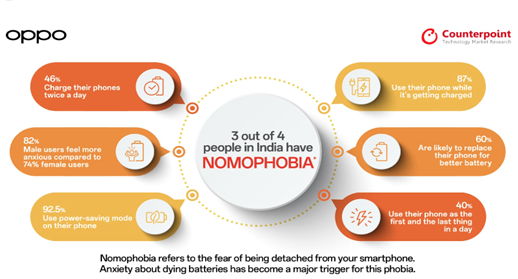
India, 2023: The multinational smart device company OPPO and the research firm Counterpoint released a consumer study on NoMoPhobia, which is caused by low battery anxiety. According to this study, three out of every four Indians suffer from nomophobia, or the fear of being cut off from their smartphone. The study, NoMoPhobia: Low Battery Anxiety Customer Study, examined customer attitudes to see how low battery life has turned into a significant cause for this phobia.
Nomophobia Rehabilitation Centres in India
One of India’s top rehab facilities for smartphone addiction is Trucare Trust. We are aware of the growing worry over cell phone addiction and the detrimental impacts it can have on people’s lives. At Trucare Trust, our mission is to assist people in regaining control of their lives and escaping the clutches of a mobile addiction. The excessive and obsessive use of mobile devices is the hallmark of mobile addiction, sometimes referred to as nomophobia or smartphone addiction. It can lead to several negative consequences, including strained social bonds, lower productivity, mental health difficulties, and even physical health issues. We acknowledge the severity of this addiction and the necessity of receiving specialist care to address the root causes of it.
In every nation, it must be required a De-Nomophobia center. But there are no centers created or run by the federal or state governments. This is the most effective approach to designing and carrying out the deaddiction centers for anti-nomophobia rehabilitation programs. These types of addictions are unknown in both developed and developing nations. In a year, mobile phones will cover and fill the entire planet. No one can quarrel with others after that. Since a person’s life is centered around their phone from birth to death, each one will live only with a mobile phone [81, 82, 83, 84, 85, 86, 87, 88, 89, 90].
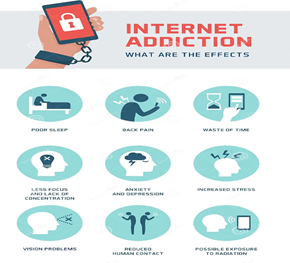
Internet Addiction and Digital Detox
Nomophobia Symptoms
Conclusion
In summary, our research indicates that teenagers with high levels of problematic social media usage through internet use of mobile phones may cause addiction and may also be more prone to nomophobia. An additional definition of nomophobia is “the fear of losing one’s mobile phone,” and it may rise in direct proportion to the rise in smartphone use. It is advised that adolescents’ levels of nomophobia be regularly assessed to identify the precise variables influencing them. It’s also necessary to conduct more interventional research to stop nomophobia. Our study concludes that social media or network addiction is common among college students in India, with a higher prevalence among men and students in highly wired environments. It also indicates that certain applications with interactive features—such as social networking for women and massively multiplayer online role-playing games for men are more addictive and can cause significant impairments to academic performance, social interactions, and physical health. Additional research is necessary to determine the course and outcome of this addiction and to develop effective treatment strategies. These kinds of utilities may gradually improve in features due to technological advancements. Everyone knows that these android approaches include the usage of mobile phones. People began developing countless physical and mental ailments as soon as they began using these cell phones. Therefore, governments must take up the task of educating children about nomophobia starting in elementary school and continuing through college. State and federal governments designate a certain area of study in their curriculum and raise awareness through non-governmental organizations. Every university and educational institution offers and promotes workshops, conferences, seminars, and nominal training to help students avoid using their phones for extended periods.
References
-
Tang CSK, Wu AMS, Yan ECW, Ko JHC, Kwon JH, et al. (2018) Relative risks of Internet-related addictions and mood disturbances among college students: A 7-country/region comparison. Public Health 165: 16-25.
-
Almeda MN, Díaz MD, Guiterrez CMR, García ACR (2022) A systematic review of the international evolution of online mental health strategies and recommendations during the COVID-19 pandemic. BMC Psychiatry 22: 621.
-
Emanuel R, Bell R, Cotton C, Craig J, Drummond D, et al. (2015) The truth about smartphone addiction. College student journal 49(2): 291-299.
-
Kim H (2013) Exercise rehabilitation for smartphone addiction. J Exerc Rehabil 9(6): 500-505.
-
Issa I (2018) The Online Revolution: Milton and the Internet in the Middle East. In: David Currell (Eds.). Digital Milton. 1st (Edn.), Palgrave Macmillan Cham, London, United Kingdom, pp: 181-205.
-
Wolniczak I, Cáceres DJA, Palma AG, Arroyo KJ, Solís VR, et al. (2013) Association between Facebook dependence and poor sleep quality: a study in a sample of undergraduate students in Peru. PloS one 8(3): e59087.
-
Young KS (2004) Internet addiction: A new clinical phenomenon and its consequences. American behavioral scientist 48(4): 402-415.
-
We Are Social (2017) Global digital snapshot.
-
Jamaluddin H, Jeyakumar R, Lee Y (2012) Determinants and prevalence of Social Networking addiction among varsity students in Malaysia. Madras Christian College, Chennai, India.
-
Tang JH, Chen MC, Yang CY, Chung TY, Lee YA, et al. (2016) Personality traits, interpersonal relationships, online social support, and Facebook addiction. Telematics and Informatics 33(1): 102-108.
-
Lee EB (2015) Too much information: Heavy smartphone and Facebook utilization by African American young adults. Journal of Black Studies 46(1): 44-61.
-
Wong B (2023) Top social media statistics and trends of 2023. Forbes.
-
Goodrow C (2017) You know what’s cool? A billion hours. YouTube Official Blog 27.
-
Hale J (2019) More than 500 hours of content are now being uploaded to YouTube every minute. Tube Filter 7.
-
Neufeld D (2021) The 50 most visited websites in the world. Visual Capitalist 27.
-
Silva DGC (2022) The platformization of the news: publishers’ relationships with messaging platforms and the adoption of these tools for news distribution and audience engagement. Doctoral dissertation, Université Paul Sabatier Toulouse III.
-
Lagorio C (2011) Kevin Systrom and Mike Krieger, Founders of Instagram. Inc Dostupno na.
-
Craig D, Lin J, Cunningham S, Craig D, Lin J, et al. (2021) Platforms. Wanghong as Social Media Entertainment in China: 59-103.
-
Siegler M (2010) Burbn’s Funding Goes Down Smooth. Baseline, Andreessen Back Stealthy Location Startup.
-
Sengupta S, Perlroth N, Wortham J (2012) Behind Instagram’s success, networking the old way. The New York Times.
-
Constine, Josh (2017) Instagram Direct unites ephemeral and permanent messaging for 375M users. TechCrunch AOL Retrieved April 23, 2017.
-
Stenovec, Timothy (2014) The Real Reason Facebook Is Forcing You to Download Messenger. The Huffington Post AOL Retrieved March 24, 2017.
-
Millward S (2014) It’s time for messaging apps to quit the bullshit numbers and tell us how many users are active. Techinasia.com 23.
-
Osgerby B (2020) Youth culture and the media: Global perspectives. Routledge.
-
_“_Tencent’s Profit Is Better Than Expected”_._ _Bloomberg._ _com__._ Archived _from the original on 15 November 2017_. Retrieved 2017_._
-
Long D (2017) WeChat users pass 900 million as app becomes integral part of Chinese lifestyle. The Drum November 15.
-
Chao E (2017) How WeChat became China’s app for everything. Fast company 2.
-
Statista web page
-
McDonald J, Soo Z (2023) Why does US see Chinese owned TikTok as a security threat? AP News.
-
Goujard, Clothilde (2023) “What the hell is wrong with TikTok?”. Politico.
-
Campo R (2023) Is TikTok a National Security Threat?. Chicago Policy Review (Online).
-
Mair V (2011) A new morpheme in Mandarin. Language Log 26.
-
Shead S (2020) “What a TikTok exec told the British government about the app that we didn’t already know”. CNBC.
-
McLaughlin R (2009) Understanding Chinese Web site names. Ryan-McLaughlin.com. Archived from the original on 2012-06-22. Retrieved 2012-04-14.
-
Jucha N (2012) QQ - China’s instant messenger. gbtimes. Archived from the original on 2013-06-07. Retrieved 2012-04-14.
-
“Pavel D (2014) left Russia after being pushed out”. Agence France-Presse. Archived from the original on 24 April 2014. Retrieved 2014 via Economic Times.
-
Hakim D (2014) Once celebrated in Russia, the programmer Pavel Durov chooses exile. The New York Times 2.
-
Shu C (2013) Meet Telegram, A Secure Messaging App from the Founders of VK, Russia’s Largest Social Network. Tech Crunch.
-
Hamburger E (2014) Why Telegram has become the hottest messaging app in the world. The Verge.
-
Dewey C (2015) The secret American origins of Telegram, the encrypted messaging app favored by the Islamic State. The Washington Post.
-
Gillette F (2014) Snapchat settles with its disappearing co-founder. Bloomberg LP Retrieved 26.
-
Lee N (2021) “Snapchat just announced its largest user growth in years”. Engadget. Archived from the original on July 22, 2021. Retrieved July 22, 2021.
-
Snap Inc. Announces First Quarter 2020 Financial Results (2020) investor.snap.com Archived from the original on September 22, 2020. Retrieved April 26, 2020.
-
Lee N (2021) Snapchat just announced its largest user growth in years. Engadget Archived from the original on July 22, 2021. Retrieved July 22, 2021.
-
The Pinterest Pivot (2012) Archived from the original on 17 October 2021. Retrieved 17 October 2021.
-
Griggs B (2012) Pinterest: Revamped profile pages, iPad app coming soon. CNN.
-
Humood A, Altooq N, Altamimi A, Almoosawi H, Alzafiri M, et al. (2008) The prevalence of nomophobia by population and by research tool: A systematic review, meta-analysis, and meta-regression. Psych 3(2): 249- 258.
-
“Twitter overcounted active users since 2014 (2022) shares surge on profit hopes”. USA Today. Archived from the original on January 1, 2020. Retrieved May 10, 2022.
-
Technologym.com Newsrooms: 4 apps and 5 rules to detoxify from smartphone.
-
Social Media Centre (2023) Your Guide for Addiction and Recovery of Social Media Addiction.
-
Jahrami H, Trabelsi K, Boukhris O, Hussain JH, Alenezi AF, et al. (2022) The prevalence of mild, moderate, and severe nomophobia symptoms: a systematic review, meta-analysis, and meta-regression. Behav Sci 13(1): 35.
-
Vyjayanthi S, Makharam S, Afraz M, Gajrekar S (2014) Gender differences in the prevalence and features of internet addiction among Indian college students. Media Innovatica 3(2): 47-51.
-
Jahrami H, Fekih RF, Pandi SR, BaHammam AS, Vitiello MV (2023) Global research evidence on nomophobia during 2008-2022: a bibliometric analysis and review. Psychology, Health & Medicine pp: 1-16.
-
Aljomaa SS, Qudah MFA, Albursan IS, Bakhiet SF, Abduljabbar AS, et al. (2016) Smartphone addiction among university students in the light of some variables. Computers in Human Behavior 61: 155-164.
-
Hawi NS, Samaha M (2016) To excel or not to excel: Strong evidence on the adverse effect of smartphone addiction on academic performance. Computers & Education 98: 81-89.
-
AlBarashdi H, Bouazza A, Jabur N (2015) Smartphone addiction among university undergraduates: a literature review. Journal of Scientific Research and Reports 4(3): 210-225.
-
Alosaimi FD, Alyahya H, Alshahwan H, Mahyijari AlN, Shaik SA (2016) Smartphone addiction among university students in Riyadh, Saudi Arabia. Saudi medical journal 37(6): 675-683.
-
Haug S, Castro RP, Kwon M, Filler A, Kowatsch T, et al. (2015) Smartphone use and smartphone addiction among young people in Switzerland. Journal of behavioral addictions 4(4): 299-307.
-
Rodríguez AM, Moreno AJ, Lopez BJ (2020) Nomophobia: An individual’s growing fear of being without a smartphone-a systematic literature review. Int J Environ Res Public Health 17(2): 580.
-
Saikia AM, Das J, Barman P, Bharali MD (2019) Internet addiction and its relationships with depression, anxiety, and stress in urban adolescents of Kamrup District, Assam. J family community med 26(2): 108-112.
-
Jachak K, Kumari P (2022) Effect of Social Networking Sites (SNSs) on the Post-Graduate students: A study of Pt. Ravishankar Shukla University, India. Journal of Indian Library Association 57(1): 146-155.
-
Jain S, Agrawal S (2021) Perceived vulnerability of cyberbullying on social networking sites: effects of security measures, addiction and self-disclosure. Indian Growth and Development Review 14(2): 149-171.
-
Patel VK, Chaudhary P, Kumar P, Vasavada DA, Tiwari DS (2021) A study of correlates of social networking site addiction among the undergraduate health professionals. Asian Journal of Social Health and Behavior 4(1): 30.
-
Thankachan A, Senthilkumar T, Joy A, Arthana E, Manuel A, et al. (2019) A study to assess the level of Social Media App Addiction among adolescents in a selected degree college, Kannur, Kerala. Asian Journal of Nursing Education and Research 9(3): 312-316.
-
Ghosh S, Chatterjee S (2018) Assessment of Internet Addiction among Undergraduate Medical Students: A Cross-Sectional Study in a Medical College of Kolkata. Journal of Clinical & Diagnostic Research 12(4): 05-09.
-
Pawar T, Shah J (2019) The Relationship between Social Media Addiction, Self Esteem, Sensation Seeking and Boredom among College students. Indian Journal of Mental Health 6(4): 1-7.
-
Jilisha G, Venkatachalam J, Menon V, Olickal JJ (2019) Nomophobia: A mixed-methods study on prevalence, associated factors, and perception among college students in Puducherry, India. Indian j psychol med 41(6): 541-548.
-
Kant R (2020) Social media: Attraction or addiction. Asia Pacific Journal of Education, Arts and Sciences 7(1): 01- 08.
-
Helft M, Richtel M (2006) Venture firm shares a YouTube jackpot. The New York Times 10.
-
Anusuya GS, Dinah H, Arumugam B, Karthik RC, Annamalai R, et al. (2021) A Cross-sectional Study on Nomophobia among Undergraduate Medical Students in Chennai, India. Journal of Clinical & Diagnostic Research 15(12): 09-12.
-
Kiran T, Nayere L (2022) Influence of Social Media on Academic Performance of University Students Amid Covid-19 Pandemic: A Case of Kurukshetra University India and Daystar University Kenya. Neuro Quantology 20(9):5712-5726.
-
Kumari GK, Pasha AM, Fathima A (2019) Prevalence of nomophobia and use of social networking sites and apps-a cross-sectional study among undergraduate medical students in SRMC, Nandyal. IOSR Journal of Dental and Medical Sciences 18(5): 31-34.
-
Tabassum M, Goni MA (2020) Exploring the nature of nomophobia among the students of BUP. BUP J 8(1): 41- 56.
-
Bhatt S, Gaur A (2019) Psychological risk factors associated with internet and smartphone addiction among students of an Indian dental institute. Indian J Public Health 63(4): 313-317.
-
Rather MK, Rather SA (2019) Impact of smartphones on young generation. Library philosophy and practice: 01- 09.
-
Behera DK, Gartia R, Pachori H (2022) Effects of social networking sites on students psychosomatic health in western Odisha universities during covid 19 pandemic: A statistical analysis: Indian Journal of Health Social Work 4: 01.
-
Kumar A, Singh MP (2017) Role of social media in scholarly communication: a study of faculty members of school of social science. mizoram university, aizawl.
-
Borak B, Srivastava A, Saikia N (2023) Association between social networks and substance use among male tribal adolescents in North-East India state of Tripura. medRxiv.
-
Kuss DJ, Lopez FO (2016) Internet addiction and problematic Internet use: A systematic review of clinical research. World j psychiatry 6(1): 143-176.
-
Health advisory on social media use in adolescence.
-
Jahagirdar V, Rama K, Soppari P, Kumar MV (2021) Mobile phones: Vital addiction or lethal addiction? Mobile phone usage patterns and assessment of mobile addiction among undergraduate medical students in Telangana, India. J Addict: 1-6.
-
Davie N, Hilber T (2017) Nomophobia: Is Smartphone Addiction a Genuine Risk for Mobile Learning?. International association for development of the information society.
-
Jahrami H, Fekih RF, Pandi SR, BaHammam AS, Vitiello MV (2023) Global research evidence on nomophobia during 2008-2022: a bibliometric analysis and review. Psychology, Health & Medicine :1-16.
-
Sethia S, Melwani V, Melwani S, Priya A, Gupta M, et al. (2018) A study to assess the degree of nomophobia among the undergraduate students of a medical college in Bhopal. Int J Community Med Public Health 5(6): 2442-2445.
-
Stats IW (2020) World internet usage and population statistics 2020. Internet World Stats.
-
Instagram Demographic Statistics: How Many People Use Instagram in 2024.
-
Top Social Media Statistics and Trends Of 2024.
-
Gopplusnews (2023) 3 out of 4 people in India have NoMoPhobia: OPPO-Counterpoint. Study Published 6 months ago on 15 May 2023.
-
Trucaretrust (2023) Mobile Addiction Treatment.
-
Nicola D (2018) Anxiety disorder. Nomophobia: The Modern-Day Pathology.
- A Review of Gene Therapy for Parkinson's Disease to Control Dopaminergic Neurons
- Late-Onset Myasthenia Gravis in a Patient with Recurrent Breast Cancer: A Case Report
- Covid-Induced Dystonia and Opsoclonus: A Case Report
- Generalized Tonic-Clonic Seizure in a Pediatric Patient with Sunflower Syndrome: A Case Report
- Comparison of Doppler Guided Seldinger Technique Versus Classic Palpatory Seldinger Technique for Radial Artery Cannulation-an Open Label Randomized Controlled Trial
- Brown Sequard Syndrome: Understanding the Complexities of Spinal Cord Injury