
Care Farming: A Natural Therapy for Healthy Life
Care farming is a form of 'Green Care' providing opportunities for those suffering from a range of health problems to work in horticultural/agricultural activities as a means of physical health, promoting mental and social wellbeing. This type of naturebased therapy or therapeutic intervention uses farms and agricultural landscapes to boost mental, social, and physical health through routine farming activities for people with a specified need.
Introduction
In care farming, care of the farm is combined with care of people. The tasks, pursuits, and direction are coordinated with the goals and capacities of the participants. Those who can work freely or others who need a lot of direction are both possible participants at the farm. Care Farms additionally give specific temporarily / relieve stay for in the weekend or holidays. Caring farms enhance the public perception of the agricultural industry. People can feel safe, respected, and involved in worthwhile activity on care farms. Farming for care is farming for wellbeing. It is specifically created, structured, and facilitated for them [1].
Care farming has been linked to health, physical skills, self-esteem, mood enhancement, social skills, and responsibility, among other benefits. Care farming is a sort of diversification that has demonstrated economic advantages. For those who require assistance and care, care farms offer daytime activities. The amount of care and direction required can vary significantly. There are farms that cater to those who require a lot of assistance, such as old persons with dementia, as well as farms that provide social stimulation, labour training, or work with supervision. Working on a farm frequently serves as a means of improving labour rhythm, making new friends, and learning new skills. It’s also possible that people visit the farm to meet new people, build relationships, have a productive day, relax, and think about their present and future. As a result, care farming involves collaboration between participants, health and social care providers, and farmers.
The necessary guidance to the participants/patients on the farm will be provided by professionals trained in agriculture and healthcare. Naturopathy is known in India as a practice in Ayurveda treatment, but exclusive use of plants, animals, and agriculture is absent. It is high time now that care farming is introduced in India with favourable cure it provides as stated above. Growing amounts of research show that being in contact with nature is beneficial to one’s health [2]. The value of getting outside and experiencing nature is being promoted by an increasing number of public institutions, governmental agencies, and non-profit groups. Care farms can provide participants with a wide range of opportunities depending on the situation, their goals, and their needs due to the productive integration of natural surroundings, animal interaction, and a fulfilling workplace. Excellent ambiance can be found at care farms, where people work hard but still take time for them. The modern civilization is ideal for care farms. Those with impairments or those who risk falling into social isolation have room for their unique needs, activation, integration, and re-socialization [3].
Care Farm and International Status
Care Farms are very popular in United States of America and European countries [4, 5]. In UK it is now termed as Social Farming. Care Farming is relatively unknown in India but the target groups already exist in large numbers. In addition to serving a vital care function, kindergarten farms, also known as rural nurseries, offer significant educational functions in that they have the potential to influence future generations’ food habits, food consumption, and agricultural practices. Children learn to respect and value nature and agriculture; they also learn about a balanced diet, where food comes from, and the connection between agricultural goods and food, which causes them to reconsider the societal role of farmers. This is an essential component of caring farming, as it enables future consumers to become knowledgeable about sustainable production and consumption, which is necessary to create sustainable food systems [6].
Care farming is an on-farm economic diversification technique in the European context, frequently started by a woman farmer in order to establish her own career [7]. Care farming gives underprivileged individuals the chance to engage in worthwhile and beneficial activities by valuing and emphasising their potential and abilities. Their activities are very similar to those of people who hold jobs (i.e. daily routine, social interaction, skills development, opportunities, payment for their work, etc.). By participating in a desirable activity, people with special needs build a sense of identity and competence around becoming gardeners or farm workers and reclaim a sense of purpose, self-esteem, and dignity. Also, being actively involved in nature has a significant impact on people’s health and wellbeing.
Naturopathy is known in India as a practice in Ayurvedic treatment, but exclusive use of plants, animals and agriculture is absent. Activities related to horticulture can also be a source of happiness, accomplishment, and satisfaction. Encourage people to become as independent as possible and enhance their well-being [8], reported that horticultural therapy helped a group of mistreated women with their sadness and self-esteem. Their results differed significantly from the control group in terms of scores. Physical activity during leisure time in green spaces and encounters with nature, such as walking, are especially significant since they are likely to bring about a number of advantages, especially for persons with mental difficulties like depression [9]. According to an evaluation of a garden project for veterans with post-traumatic stress disorder, clinical staff and patients saw “good therapeutic advantages” from the initiative [10].
Care Farm and National Status
India is a land of traditional knowledge on peace of mind (meditation, yoga, spiritual activity). Peace of mind can be achieved by communication, creativity, activity, acceptance, solitude, connection, and contribution. A large number people (IT professionals, employees without job satisfaction, unemployed graduates, corporate, housewives, poor and income) have mental stress in various degrees. There are a number of patients with psychiatric problems, autism, dementia, physical disabilities etc, who require special care. Urbanization and changes in culture and lifestyle have eroded peace of mind in many people.
Indigenous and ancient treatments like Ayurveda and Naturopathy deal with many therapies. Naturopathy is a drug-free, philosophy-based treatment system that combines the art and science of healthy living. We can find a number of references in our Vedas and other ancient texts. The list of therapies included under Naturopathy are, Acupuncture, Mud Therapy, Masso Therapy, Fasting Therapy, Diet Therapy, Chromo Therapy, Hydrotherapy, Acupressure, Air Therapy, and Magnet Therapy (http://ayush.gov.in/about-the- systems).
But curing certain diseases, mental health improvement by spending time with plants, animals and their systems is not popular in India. Care Farming is also needed for Indian Farmers to diversify their activities and enhance their income. This concept is also needed in the Honourable Prime Minister’s “Doubling the Farmers Income” project.
Target groups for Care Farming
- People with an intellectual restriction, psychiatric demand, physical restriction, people who because of addiction problems, youth care, people working in Information Technology and other Sectors, young people from special education, Elderly with dementia, Long-term unemployed persons, young people, regular day relief in the nursery and autistic persons, and adults with impairment from the autistic spectrum.
- Specific characteristics of the care farm that promote health and wellbeing.
Type of Care to be Provided
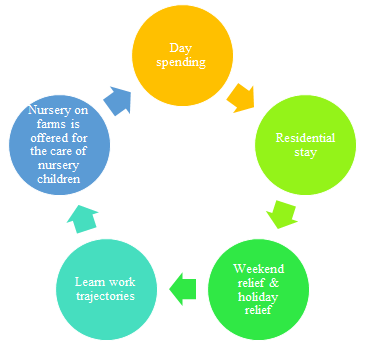
The Impact of Care Farm
- People learn / heal by experience.
- People experience and obtain skills and knowledge.
- People experience that work on a farm improves health, by working in nature and on a small scale basis.
- The time structuring and the discovering of one’s individual possibilities are beneficial.
- Many people with need for care are missing structure in their life. Care farms can offer the structure for people with need for care.
- People with psychiatric problems develop self-esteem, responsibilities, social skills etc.
- People with intellectual disabilities learn new skills, a job etc.
- Elderly with dementia participate more, eat and drink better
- People who have ‘work stress’ get a weekend relief
- Children and family get weekend experience with nature.
Conclusion
Care farming is becoming increasingly popular in Korea, Hong Kong, Japan and Europe, relatively unknown in but the most required for the people of India for all walks of life requiring peace of mind by spending time with plants, animals and agriculture. Being a nature based intervention, in India it will be much essential for improving the wellbeing of the citizens. The supportive environment it provides, and a homely farm with organic production will provide a wonderful opportunity to attain a client’s personal growth.
References
-
Dessein J (2008) Farming for Health. Proceedings of the Community of Practice Farming for Health. Belgium: ILVO, pp: 204.
-
Hartig T, Mitchell R, De Vries S, Frumkin H (2014) Nature and health. Annual review of public health 35: 207-228.
-
Hassink J, Elings M, Zweekhorst M, Nieuwenhuizen, Smit A (2010) Care farms: attractive empowerment-oriented and strengths-based practices in the community. Health and Place 16(3): 423-430.
-
Elsey H, Bragg R, Elings M, Cade JE, Brennan C, et al. (2014) Understanding the impacts of care farms on health and well-being of disadvantaged populations: a protocol of the Evaluating Community Orders (ECO) pilot study. BMJ 4(10).
-
Bassi I, Nassivera F, Pilani L (2016) Social farming: a proposal to explore the effects of structural and relational variables on social farm results. Agricultural and Food Economics 4: 13.
-
FAO (2014) Care farming: an innovative approach for promoting women’s economic empowerment, decent rural employment and social inclusion. What works in developing countries?. Global Forum on Food Security and Nutrition.
-
Dessein J, Bock BB (2010) The Economics of Green Care in Agriculture. COST 866 Green Cares in Agriculture.
-
Lee S, Kim MS, Suh JK (2008) Effects of horticultural therapy of self-esteem and depression of battered women at a shelter in Korea. Acta Horticulturae 790: 139-142.
-
Staniewska A (2022) Gardens of Historic Mental Health Hospitals and Their Potential Use for Green Therapy Purposes Land. Climate Change and Current Challenges for Landscapes and Cultural Heritage 11(10): 1618.
-
Atkinson J (2009) An Evaluation of the Gardening Leave Project for Ex-Military Personnel with PTSD and Other Combat Related Mental Health Problems. Iriss.
- Enhancement of Vegetative Growth and Fruit Yield in Cucumber (Cucumis sativus L.) via Spiritual Blessing (Biofield) Energy Intervention
- Production of Açaí (Euterpe oleracea Mart.) under Different Agroforestry System Management Intensities in Amazonian Floodplain (Varzea) Forests
- Coffee and the Production Region: What is the Secret to the Expression "Quality"?
- Experiential Agripreneurship Training in Sub-Saharan Africa: Integrating a Business Incubator into Postgraduate Livestock Education at the University of Buea
- Advances in Agricultural High-Quality Development
- Linking Compost Residue to ABAGE in Plants - a Short Note